WO2020032279A1 - Procédé de production d'oxyde d'éthylène et d'éthylène glycol - Google Patents
Procédé de production d'oxyde d'éthylène et d'éthylène glycol Download PDFInfo
- Publication number
- WO2020032279A1 WO2020032279A1 PCT/JP2019/031773 JP2019031773W WO2020032279A1 WO 2020032279 A1 WO2020032279 A1 WO 2020032279A1 JP 2019031773 W JP2019031773 W JP 2019031773W WO 2020032279 A1 WO2020032279 A1 WO 2020032279A1
- Authority
- WO
- WIPO (PCT)
- Prior art keywords
- tower
- ethylene oxide
- ethylene glycol
- wastewater
- carbon dioxide
- Prior art date
- Legal status (The legal status is an assumption and is not a legal conclusion. Google has not performed a legal analysis and makes no representation as to the accuracy of the status listed.)
- Ceased
Links
Images

Classifications
-
- C—CHEMISTRY; METALLURGY
- C07—ORGANIC CHEMISTRY
- C07D—HETEROCYCLIC COMPOUNDS
- C07D301/00—Preparation of oxiranes
- C07D301/02—Synthesis of the oxirane ring
- C07D301/03—Synthesis of the oxirane ring by oxidation of unsaturated compounds, or of mixtures of unsaturated and saturated compounds
- C07D301/04—Synthesis of the oxirane ring by oxidation of unsaturated compounds, or of mixtures of unsaturated and saturated compounds with air or molecular oxygen
- C07D301/08—Synthesis of the oxirane ring by oxidation of unsaturated compounds, or of mixtures of unsaturated and saturated compounds with air or molecular oxygen in the gaseous phase
- C07D301/10—Synthesis of the oxirane ring by oxidation of unsaturated compounds, or of mixtures of unsaturated and saturated compounds with air or molecular oxygen in the gaseous phase with catalysts containing silver or gold
-
- B—PERFORMING OPERATIONS; TRANSPORTING
- B01—PHYSICAL OR CHEMICAL PROCESSES OR APPARATUS IN GENERAL
- B01D—SEPARATION
- B01D3/00—Distillation or related exchange processes in which liquids are contacted with gaseous media, e.g. stripping
- B01D3/14—Fractional distillation or use of a fractionation or rectification column
- B01D3/141—Fractional distillation or use of a fractionation or rectification column where at least one distillation column contains at least one dividing wall
-
- B—PERFORMING OPERATIONS; TRANSPORTING
- B01—PHYSICAL OR CHEMICAL PROCESSES OR APPARATUS IN GENERAL
- B01D—SEPARATION
- B01D3/00—Distillation or related exchange processes in which liquids are contacted with gaseous media, e.g. stripping
- B01D3/14—Fractional distillation or use of a fractionation or rectification column
- B01D3/26—Fractionating columns in which vapour and liquid flow past each other, or in which the fluid is sprayed into the vapour, or in which a two-phase mixture is passed in one direction
- B01D3/28—Fractionating columns with surface contact and vertical guides, e.g. film action
-
- C—CHEMISTRY; METALLURGY
- C07—ORGANIC CHEMISTRY
- C07C—ACYCLIC OR CARBOCYCLIC COMPOUNDS
- C07C29/00—Preparation of compounds having hydroxy or O-metal groups bound to a carbon atom not belonging to a six-membered aromatic ring
- C07C29/03—Preparation of compounds having hydroxy or O-metal groups bound to a carbon atom not belonging to a six-membered aromatic ring by addition of hydroxy groups to unsaturated carbon-to-carbon bonds, e.g. with the aid of H2O2
- C07C29/04—Preparation of compounds having hydroxy or O-metal groups bound to a carbon atom not belonging to a six-membered aromatic ring by addition of hydroxy groups to unsaturated carbon-to-carbon bonds, e.g. with the aid of H2O2 by hydration of carbon-to-carbon double bonds
-
- C—CHEMISTRY; METALLURGY
- C07—ORGANIC CHEMISTRY
- C07C—ACYCLIC OR CARBOCYCLIC COMPOUNDS
- C07C29/00—Preparation of compounds having hydroxy or O-metal groups bound to a carbon atom not belonging to a six-membered aromatic ring
- C07C29/09—Preparation of compounds having hydroxy or O-metal groups bound to a carbon atom not belonging to a six-membered aromatic ring by hydrolysis
- C07C29/10—Preparation of compounds having hydroxy or O-metal groups bound to a carbon atom not belonging to a six-membered aromatic ring by hydrolysis of ethers, including cyclic ethers, e.g. oxiranes
- C07C29/103—Preparation of compounds having hydroxy or O-metal groups bound to a carbon atom not belonging to a six-membered aromatic ring by hydrolysis of ethers, including cyclic ethers, e.g. oxiranes of cyclic ethers
- C07C29/106—Preparation of compounds having hydroxy or O-metal groups bound to a carbon atom not belonging to a six-membered aromatic ring by hydrolysis of ethers, including cyclic ethers, e.g. oxiranes of cyclic ethers of oxiranes
-
- C—CHEMISTRY; METALLURGY
- C07—ORGANIC CHEMISTRY
- C07C—ACYCLIC OR CARBOCYCLIC COMPOUNDS
- C07C29/00—Preparation of compounds having hydroxy or O-metal groups bound to a carbon atom not belonging to a six-membered aromatic ring
- C07C29/74—Separation; Purification; Use of additives, e.g. for stabilisation
- C07C29/76—Separation; Purification; Use of additives, e.g. for stabilisation by physical treatment
- C07C29/80—Separation; Purification; Use of additives, e.g. for stabilisation by physical treatment by distillation
-
- C—CHEMISTRY; METALLURGY
- C07—ORGANIC CHEMISTRY
- C07C—ACYCLIC OR CARBOCYCLIC COMPOUNDS
- C07C29/00—Preparation of compounds having hydroxy or O-metal groups bound to a carbon atom not belonging to a six-membered aromatic ring
- C07C29/74—Separation; Purification; Use of additives, e.g. for stabilisation
- C07C29/76—Separation; Purification; Use of additives, e.g. for stabilisation by physical treatment
- C07C29/80—Separation; Purification; Use of additives, e.g. for stabilisation by physical treatment by distillation
- C07C29/84—Separation; Purification; Use of additives, e.g. for stabilisation by physical treatment by distillation by extractive distillation
-
- C—CHEMISTRY; METALLURGY
- C07—ORGANIC CHEMISTRY
- C07D—HETEROCYCLIC COMPOUNDS
- C07D301/00—Preparation of oxiranes
- C07D301/32—Separation; Purification
Definitions
- the present invention relates to a method for producing ethylene oxide and ethylene glycol.
- Ethylene oxide is today produced by catalytic gas phase oxidation of ethylene with a molecular oxygen-containing gas in the presence of a silver catalyst.
- the purification method in the ethylene oxide production process is roughly as follows (for example, see Patent Document 1).
- ethylene and a molecular oxygen-containing gas are subjected to catalytic gas phase oxidation on a silver catalyst to obtain a reaction product gas containing ethylene oxide (reaction step).
- reaction step the obtained reaction product gas is led to an ethylene oxide absorption tower, and is brought into contact with an absorption liquid containing water as a main component to recover ethylene oxide as an aqueous solution (absorption step).
- absorption step the recovered ethylene oxide aqueous solution
- the recovered ethylene oxide aqueous solution is sent to an ethylene oxide purification system, and high-purity ethylene oxide is obtained through several steps.
- This ethylene oxide purification system usually comprises a stripping step, a dehydration step, a light separation step, a heavy separation (purification) step, and the like.
- the production process of ethylene oxide includes a radiation step of diffusing the reaction product gas containing the ethylene oxide generated in the reaction step through an absorption step of absorbing the reaction product gas into an absorbent.
- a step of extracting a part of the absorption liquid is usually included in order to prevent accumulation of impurities in the absorption liquid (for example, see Patent Document 1). Since the extracted absorbent contains a large amount of by-produced ethylene glycol (hereinafter, by-produced ethylene glycol), an ethylene glycol concentrating step of collecting and concentrating by-produced ethylene glycol is further included.
- 1,4-dioxane which is by-produced at the same time as an impurity, is contained in the wastewater and released out of the system.
- processing equipment of the carbon dioxide-produced with ethylene oxide reaction step (CO 2) is provided together (e.g., see Non-Patent Document 1), like from CO 2 treatment facility 1,4 -Wastewater containing dioxane is generated.
- 1,4-Dioxane is considered to be difficult to decompose in the environment and difficult to remove. It is acutely toxic to animals, irritating to humans, and may cause damage to organs. It is considered. Therefore, in the production process of ethylene oxide and ethylene glycol, for example, a method of separating by-produced 1,4-dioxane by distillation, diluting with a large amount of water, introducing the wastewater into an activated sludge facility and treating with sludge bacteria, A method of adsorbing on activated carbon is employed.
- 1,4-dioxane is a biologically hardly decomposable substance
- 1,4-dioxane cannot be sufficiently removed by the activated sludge method and the activated carbon adsorption method used in conventional wastewater treatment facilities. is there.
- the capacity of the activated sludge may be exceeded. Therefore, in the production process of ethylene oxide and ethylene glycol, 1,4-dioxane is effective. The situation is that the treatment method of dioxane has not been established.
- a promotion oxidation treatment such as an ozone treatment or a combination of an ozone treatment and a hydrogen peroxide treatment is generally known.
- the organic substances other than 1,4-dioxane are also decomposed under the condition that organic substances other than 1,4-dioxane are present, such as wastewater generated in the ethylene glycol concentration step, so that the required ozone amount and chemical injection amount increase. , Processing costs increase.
- 1,4-dioxane it is possible to separate 1,4-dioxane by distilling the wastewater generated in the ethylene glycol concentration step, but in this case, it is necessary to install not only the tower body but also additional equipment including auxiliary equipment. Cost and installation area increase.
- a heating source such as steam is required, so that the processing cost is also high.
- bacteria having excellent resolution of 1,4-dioxane have been reported (Japanese Patent Application Laid-Open No. 2018-57356), but from the viewpoint of quantitativeness and stable treatment, an activated sludge method conventionally used in wastewater treatment facilities is used. However, it has not been applied to the activated carbon adsorption method.
- the present invention provides a process for producing ethylene oxide and ethylene glycol, which can reduce the concentration of 1,4-dioxane generated in the process of producing ethylene oxide and ethylene glycol to a new wastewater standard value (0.5 mg / L) or less.
- the aim is to provide a method.
- the present inventors have conducted intensive studies to reduce the concentration of 1,4-dioxane generated in the ethylene oxide production process in wastewater. As a result, they have found that the above problem can be solved by using a vertical division distillation column as a by-product ethylene glycol concentration column, and have completed the present invention.
- one embodiment of the present invention relates to a method for producing ethylene oxide and ethylene glycol.
- a reaction product gas containing ethylene oxide generated in an ethylene oxidation reaction step of subjecting ethylene to catalytic gas phase oxidation with a molecular oxygen-containing gas in the presence of a silver catalyst is supplied to an ethylene oxide absorption tower,
- the ethylene oxide-absorbing tower, the bottom liquid of the ethylene oxide-absorbing tower containing ethylene oxide is supplied to the ethylene oxide-dissipating tower, and the bottom of the ethylene oxide-dissipating tower is heated to thereby heat the ethylene oxide-dissociating tower.
- the by-product ethylene glycol concentrating column is characterized in that it is a vertical division type distillation column.
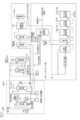
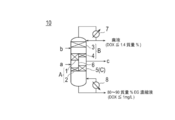
- FIG. 1 is a block diagram illustrating a configuration example of a manufacturing process for implementing a method for manufacturing ethylene oxide and ethylene glycol according to an embodiment of the present invention. It is a figure showing the outline of an ethylene glycol concentration tower. It is a block diagram showing composition of a manufacturing process adopted by an example and a comparative example.
- One embodiment of the present invention provides a reaction product gas containing ethylene oxide produced in an ethylene oxidation reaction step of subjecting ethylene to catalytic gas phase oxidation with a molecular oxygen-containing gas in the presence of a silver catalyst to an ethylene oxide absorption tower, Contacting the absorption liquid supplied to the absorption tower, the bottom liquid of the ethylene oxide absorption tower containing ethylene oxide is supplied to the ethylene oxide stripping tower, and the bottom of the ethylene oxide stripping tower is heated to heat the ethylene oxide stripping tower.
- Producing ethylene oxide comprising obtaining a vapor containing ethylene oxide from the top of the column, Part of the bottom liquid of the ethylene oxide stripping tower is withdrawn and supplied to a by-product ethylene glycol concentrating tower to concentrate ethylene glycol by-produced in the step of producing ethylene oxide and to produce by-products in the step of producing ethylene oxide.
- Distilling and separating 1,4-dioxane, Including The by-product ethylene glycol concentrating tower is a method for producing ethylene oxide and ethylene glycol, which is a vertical division distillation tower.
- 1,4-dioxane by-produced in the process of producing ethylene oxide is separated in the step of concentrating ethylene glycol which is by-produced at the same time
- 1,4-dioxane is produced by using a vertical division distillation column. Can be efficiently separated and removed. As a result, it is possible to reduce the concentration of 1,4-dioxane in wastewater discharged in the production process of ethylene oxide and ethylene glycol.
- reaction system a system for producing ethylene oxide by an ethylene oxidation reaction (hereinafter, also simply referred to as "reaction system") will be described with reference to FIG.
- reaction system a system for producing ethylene oxide by an ethylene oxidation reaction
- the process for producing ethylene oxide shown in FIG. 1 is roughly divided into four systems: a reaction system, a carbon dioxide system, a purification system, and an ethylene glycol system.
- reaction product gas containing ethylene oxide used in the present invention is produced in a step of subjecting ethylene to catalytic gas phase oxidation with a molecular oxygen-containing gas in the presence of a silver catalyst (hereinafter, also referred to as “ethylene oxidation reaction step”). Anything should do.
- the technology of the catalytic gas phase oxidation reaction itself is widely known, and in carrying out the present invention, conventionally known knowledge can be appropriately referred to.
- the specific form such as the composition of the reaction product gas is not particularly limited.
- the reaction product gas is usually 0.5 to 5% by volume of ethylene oxide, unreacted oxygen, unreacted ethylene, produced water, carbon dioxide, nitrogen, argon, methane, ethane, and other gases.
- a trace amount of organic acids such as aldehydes of acetaldehyde and acetic acid.
- a raw material gas containing ethylene and molecular oxygen is pressurized by a circulating gas compressor, heated by a heat exchanger, and supplied to an ethylene oxidation reactor (reactor).
- the ethylene oxidation reactor is usually a multitubular reactor having a large number of reaction tubes filled with a silver catalyst.
- the reaction product gas generated in the ethylene oxidation reaction step is cooled by passing through a heat exchanger and then supplied to an ethylene oxide absorption tower (hereinafter, also simply referred to as “absorption tower”). Specifically, the reaction product gas is supplied from the bottom of the absorption tower.
- an absorption liquid containing water as a main component is supplied from the top of the absorption tower.
- ethylene oxide (usually 99% by mass or more) contained in the reaction product gas is absorbed by the absorption liquid.
- ethylene oxide usually 99% by mass or more contained in the reaction product gas is absorbed by the absorption liquid.
- low boiling impurities such as formaldehyde generated in the ethylene oxidation reaction step, high acetaldehyde, acetic acid, etc.
- Boiling point impurities and also 1,4-dioxane are also absorbed in substantial amounts at the same time.
- the temperature of the reaction product gas supplied to the absorption tower is preferably about 20 to 80 ° C.
- the composition of the absorbing solution is not particularly limited, and propylene carbonate as disclosed in Japanese Patent Application Laid-Open No. 8-127573 may be used as the absorbing solution, in addition to one containing water as a main component.
- additives may be added to the absorbing solution as needed.
- the additive that can be added to the absorbing solution include an antifoaming agent and a pH adjuster.
- the defoaming agent any defoaming agent can be used as long as it is inert to ethylene oxide and by-produced ethylene glycol and has a defoaming effect of the absorbing solution.
- the water-soluble silicone emulsion is effective because it has excellent dispersibility in absorption liquid, dilution stability, and heat stability.
- Examples of the pH adjuster include compounds soluble in an absorbing solution, such as hydroxides and carbonates of alkali metals such as potassium and sodium, and potassium hydroxide or sodium hydroxide is preferable.
- the pH of the absorbing solution is preferably from 4 to 12, more preferably from 6 to 11.
- the absorption tower a tray tower type or packed tower type absorption tower can be usually used.
- the ethylene oxide concentration in the reaction product gas is 0.5 to 5% by volume, preferably 1.0 to 4% by volume, and the operating pressure of the absorption tower is 0.2 to 4.0 MPa gage. , Preferably 1.0 to 3.0 MPa gauge.
- the absorption operation is more advantageous at higher pressures, but the possible values can be determined depending on the operating pressure of the oxidation reactor.
- the molar flow ratio (L / V) of the absorbing solution to the reaction product gas is usually from 0.30 to 2.00.
- the spatial linear velocity (GHSV [NTP]) of the reaction product gas in the standard state is usually 400 to 6000 h -1 .
- At least a part of the gas (carbon dioxide-containing gas) discharged from the top of the absorption tower is pressurized by a pressurizing means such as a circulating gas compressor, and the carbon dioxide is supplied through a conduit. It is supplied to a gas absorption tower (CO 2 absorption tower).
- a pressurizing means such as a circulating gas compressor
- CO 2 absorption tower CO 2 absorption tower
- a carbon dioxide gas recovery system hereinafter, also simply referred to as “carbon dioxide gas system” which starts with introduction of gas into the carbon dioxide gas absorption tower will be described with reference to FIG.
- the gas pressure at that time is adjusted to about 0.5 to 4.0 MPa gauge, The gas temperature is adjusted to about 80 to 120 ° C.
- a carbon dioxide stripping tower (CO 2 stripping tower) is provided at the subsequent stage of the carbon dioxide absorbing tower. From the bottom of the carbon dioxide stripping tower, the alkaline absorbing liquid is supplied to the upper part of the carbon dioxide absorbing tower.
- the water Since the temperature of the gas discharged from the top of the carbon dioxide gas absorption tower during the heat exchange decreases, the water is usually condensed in a state containing a small amount of organic matter (for example, 1,4-dioxane or ethylene glycol), and the organic matter is condensed. It becomes contained water. Most of the organic substance-containing water is fed to the carbon dioxide stripping tower through a conduit, part of it is supplied to the by-product ethylene glycol concentration tower as CO 2 waste water to prevent impurities concentration in the carbon dioxide system.
- organic matter for example, 1,4-dioxane or ethylene glycol
- the absorbing solution (carbon dioxide rich absorbing solution) that has absorbed the carbon dioxide gas in the carbon dioxide absorption tower is extracted from the bottom of the carbon dioxide absorption tower, and then subjected to a pressure of 0.01 to 0.5 MPa @ gauge and a temperature of 80 to 120 ° C. It is adjusted to a degree and fed to the upper part of the carbon dioxide stripping tower.
- the carbon dioxide gas-rich absorbing liquid causes a pressure flush due to a pressure difference between the carbon dioxide gas absorbing tower and the carbon dioxide gas stripping tower.
- 10 to 80% by volume of carbon dioxide gas and most of the inert gas in the carbon dioxide gas-rich absorption liquid are separated from the absorption liquid and discharged as exhaust gas from the top of the carbon dioxide gas stripping tower.
- the method further includes a carbon dioxide gas recovery step of discharging the waste gas from the tower top as exhaust gas, and the wastewater discharged from the carbon dioxide gas recovery step is supplied to the by-product ethylene glycol concentration tower.
- the remaining carbon dioxide gas-absorbed liquid from which a part of the carbon dioxide gas has been separated by the above-described pressure flush enters a gas-liquid contact section (not shown) provided below the liquid supply section and mainly removes the carbon dioxide gas.
- a part of the carbon dioxide gas and most of the other inert gas in the absorbing solution are separated from the absorbing solution in countercurrent contact with the gas.
- the absorption liquid that has absorbed ethylene oxide in the ethylene oxide absorption tower is sent to an ethylene oxide purification system (hereinafter, also simply referred to as “purification system”) as a bottom liquid of the absorption tower.
- purification system ethylene oxide purification system
- the specific form of the purification system is not particularly limited, and conventionally known knowledge can be appropriately referred to.
- the purification system usually includes a stripping step, a dehydration step, a light separation step, a heavy separation (purification) step, and the like.
- the bottom liquid (absorbent) of the absorption tower Before the bottom liquid (absorbent) of the absorption tower is supplied to the ethylene oxide stripping tower (hereinafter, also simply referred to as “dissipating tower”), it is usually preheated to a temperature suitable for the stripping in the stripping tower. Specifically, the bottom liquid (absorbing liquid) of the absorption tower is supplied to a heat exchanger, in which heat exchange is performed with the bottom liquid of the stripping tower, and if necessary. It is heated by a heater or the like. For example, the bottom liquid (absorbent) of the absorption tower is heated to a temperature of about 70 to 110 ° C.
- the bottom liquid (absorbing liquid) of the absorption tower is further supplied to a gas-liquid separation tank (not shown), in which a gaseous inert gas partially containing an ethylene oxide and water is partially separated. Is separated and discharged through a conduit.
- the remaining absorbent after flashing the light gas is supplied to the upper part of the stripping tower through a conduit.
- ethylene oxide (usually 99% by mass or more) contained in the absorption liquid supplied from the top of the stripping tower is diffused, and is discharged from the top of the stripping tower via a conduit.
- the operating conditions of the stripping tower are such that the pressure at the top of the tower is usually 0.01 to 0.20 MPa @ gauge, preferably 0.03 to 0.06 MPa @ gauge. As the pressure at the top of the column is smaller, the temperature in the column decreases, and as a result, the by-product of ethylene glycol from ethylene oxide in the column tends to be suppressed.
- ethylene oxide is a substance that is relatively easy to ignite, from the viewpoint of preventing oxygen from leaking into the system, operation at or below atmospheric pressure is not usually performed, and slightly higher than atmospheric pressure as described above. Operated by pressure.
- the top temperature is usually 85 to 120 ° C.
- the bottom temperature is usually 100 to 130 ° C.
- the remaining absorbent after the ethylene oxide has been released can be withdrawn as the bottom liquid of the stripper, supplied to the upper part of the absorber as the absorbent in the absorber, and recycled.
- fresh water or, if necessary the above-mentioned additives may be supplied to the absorption tower through a separately provided conduit.
- the bottom liquid of the stripping tower does not substantially contain ethylene oxide.
- the concentration of ethylene oxide contained in the bottom liquid is preferably 10 ppm by mass or less, more preferably 0.5 ppm by mass or less.
- This bottom liquid contains ethylene glycol by-produced in the absorption liquid between the ethylene oxidation reaction step and the ethylene oxide stripping step, and a part of the bottom liquid is withdrawn through a conduit.
- the extracted liquid is supplied as an ethylene oxide (EO) -based wastewater 1 to be described later to an ethylene glycol concentration step for concentrating and recovering the contained ethylene glycol.
- EO ethylene oxide
- the bottom liquid of the stripping tower also contains low-boiling impurities such as formaldehyde, and high-boiling impurities such as acetaldehyde and acetic acid, as described above, a part of the liquid is taken out of the system to be absorbed.
- the advantage is also obtained that the accumulation of these impurities in the absorption liquid circulated through the column can be prevented.
- the absorption liquid partially extracted above contains 1,4-dioxane by-produced in the oxidation reaction step and the absorption / emission step, and 1,4-dioxane is also discharged out of the system through the ethylene glycol concentration step. Is done.
- the bottom liquid of the stripping tower not extracted through the conduit is cooled by heat exchange with the bottom liquid of the absorption tower by passing through a heat exchanger and circulated to the top of the absorption tower. .
- the effluent containing ethylene oxide released from the top of the stripping tower is preferably sent to a stripping tower condenser (not shown) through a conduit, and the condensate is returned to the top of the stripping tower through a conduit, and uncondensed vapor is removed. It is supplied to a dehydration tower through a conduit.
- a part of the bottom liquid of the dehydration tower is subjected to an ethylene glycol (EG) treatment, and then supplied to an ethylene glycol concentration step.
- the EG conversion treatment includes a step of reacting ethylene oxide with water to obtain an aqueous solution containing monoethylene glycol, diethylene glycol, triethylene glycol, tetraethylene glycol, and polyethylene glycol. It can be performed under similar conditions.
- EO wastewater 1 described below can be used as the water required in the EG conversion treatment. Therefore, the liquid obtained by the EG conversion treatment also contains 1,4-dioxane. This liquid is supplied as an EO-based wastewater 2 to be described later to an ethylene glycol concentration step for concentrating and recovering the contained ethylene glycol.
- the remainder of the bottom liquid of the dehydration tower is supplied to the stripping tower and used for circulation.
- the vapor containing ethylene oxide discharged from the top of the dehydration tower is sent to a dehydration tower condenser (not shown) preferably through a conduit.
- a part of the condensate discharged from the dehydration tower condenser is returned to the top of the dehydration tower through a conduit, and the uncondensed vapor (ethylene oxide-containing uncondensed gas) of the dehydration tower condenser is passed through the conduit to the ethylene oxide reabsorption tower.
- the ethylene oxide is reabsorbed by countercurrent contact with the absorbing liquid, as in the above-described absorption tower.
- the remainder of the condensate of the dehydration tower condenser is fed to the light fractionation tower through a conduit.
- Ethylene oxide vapor containing light components discharged from the top of the light fraction separation column is supplied to the above-mentioned ethylene oxide reabsorption column in order to recover ethylene oxide.
- the bottom liquid of the light fractionation tower is supplied to an ethylene oxide rectification tower (hereinafter, also simply referred to as “rectification tower”) through a conduit.
- rectification tower ethylene oxide rectification tower
- the rectification column is equipped with a reboiler (not shown) at the bottom for heating.
- purification is performed at a bottom temperature of the rectification column of 35 to 80 ° C. and a bottom pressure of the rectification column of 0.10 to 0.80 MPa gage, and a temperature of 12 to 75 ° C. is obtained from the top of the rectification column.
- ethylene oxide vapor having a tower top pressure of 0.10 to 0.80 MPa @ gage is obtained.
- ethylene oxide is liquefied using a rectification tower condenser (not shown), and a part of the liquefied ethylene oxide is supplied to the top of the rectification tower as a reflux liquid through a conduit, and is withdrawn as product ethylene oxide (EO).
- the bottom liquid of the rectification column is withdrawn as necessary through a conduit for separating heavy components such as acetaldehyde, water, and acetic acid from heavy components.
- ethylene oxide / ethylene glycol production process shown in FIG. 1 a product gas obtained by vapor-phase oxidation of ethylene with molecular oxygen in the presence of a silver-based catalyst is led to an ethylene oxide absorption tower, and subjected to contact absorption treatment with water. Then, an ethylene oxide aqueous solution is obtained as a bottom liquid.
- the aqueous solution of ethylene oxide contains a low molecular weight polymer of ethylene oxide (such as dioxane), by-products such as ethylene glycol which is a reaction product of ethylene oxide with water, and a reaction product of ethylene oxide with impurities.
- the ethylene oxide aqueous solution is led to the ethylene oxide stripping tower, and the ethylene oxide is stripped from the aqueous solution by heating the bottom of the ethylene oxide stripping tower with heated steam, so that the steam containing ethylene oxide is obtained from the top of the stripping tower.
- the emitted vapor contains low-boiling impurities such as formaldehyde and high-boiling impurities such as acetaldehyde and acetic acid in addition to ethylene oxide, water, carbon dioxide, and inert gas (nitrogen, argon, methane, ethane, etc.).
- purified ethylene oxide is obtained.
- an EO-based wastewater 1 is an aqueous solution that is partly extracted from the bottom liquid of the stripping tower and supplied to the ethylene glycol system.
- a part of the aqueous solution (EO-based wastewater 1) obtained from the bottom of the ethylene oxide stripping tower is concentrated in the by-product ethylene glycol concentrating tower, and is then preferably led to an ethylene glycol-based dehydrating tower.
- the aqueous solution obtained from the bottom of this ethylene oxide stripping tower contains monoethylene glycol as a main component, contains diethylene glycol, triethylene glycol, and the like, and also contains impurities such as dioxane contained in the above ethylene oxide aqueous solution.
- the ethylene oxide aqueous solution obtained by mixing water with the bottom liquid from the light fractionation tower is sent to an EG reactor maintained at a constant temperature.
- the reaction temperature is not particularly limited, but is, for example, 150 to 180 ° C.
- the reaction pressure is not particularly limited, it is, for example, 2.5 MPa or less.
- the concentration of the ethylene oxide aqueous solution is adjusted with water so as to have a target EG ratio, and the heat of reaction is recovered by increasing the temperature of the reaction solution.
- the lower the EO concentration in the reaction solution the higher the ratio of mono-EG and the lower the by-product di- and tri-EG, but from the viewpoint of preventing the energy for removing water from becoming too large, the reaction is generally carried out.
- the EO concentration in the liquid is 9 to 13% by mass. Most of the water is recovered in a multiple effect can and recycled to the EG reactor.
- As a heat source steam from an ethylene oxidation reactor in an ethylene oxide reaction system can be used.
- the concentrated EG aqueous solution taken out of the multi-effect can is mixed with the by-product EG concentrated in the by-product ethylene glycol concentration tower, and the water is removed in the dehydration tower.
- the operating conditions of the dehydration tower are not particularly limited, but the pressure is, for example, 50 to 500 hPa, and preferably 90 to 120 hPa.
- the tower top temperature is, for example, 30 to 80 ° C., preferably 40 to 55 ° C.
- the bottom temperature is, for example, 80 to 120 ° C., preferably 90 to 110 ° C.
- the wastewater containing water and ethylene glycol is distilled from steam obtained from the top of the dehydration tower, and supplied to the by-product ethylene glycol concentration tower as EG wastewater.
- an ethylene glycol liquid substantially free of water is obtained from the bottom of the dehydration tower.
- This is sequentially rectified by a monoethylene glycol rectification column (mono EG rectification column), a diethylene glycol rectification column (di EG rectification column), and a triethylene glycol rectification column (tri EG rectification column), and each purification is performed.
- Ethylene glycols are obtained.
- poly EG equal to or higher than tetra EG is discharged from the bottom of the column.
- Distillation in the monoethylene glycol rectification column is preferably performed at 10 to 70 hPa, more preferably 25 to 75 hPa, and at a tower top temperature of preferably 85 to 125 ° C., more preferably 100 to 120 ° C.
- Distillation in the diethylene glycol rectification column is preferably performed at 10 to 550 hPa, more preferably 15 to 70 hPa, and the tower top temperature is preferably 125 to 225 ° C, more preferably 135 to 195 ° C.
- Distillation in the triethylene glycol rectification column is preferably performed at 10 to 220 hPa, more preferably 10 to 22 hPa, and the column top temperature is preferably 159 to 230 ° C, more preferably 159 to 177 ° C.
- a part of the bottom liquid of the dehydration tower is subjected to ethylene glycol (EG) conversion treatment and then supplied to the by-product ethylene glycol concentration step (EO wastewater 2). That is, in one preferred embodiment of the present invention, an aqueous solution obtained by condensing vapor containing ethylene oxide obtained from the top of the ethylene oxide stripping tower is supplied to the dehydration tower, and the ethylene oxide concentration obtained from the top of the dehydration tower is adjusted. Guiding the fraction obtained by condensing the high vapor to the light fractionation column, heating the bottom liquid of the light fractionation column to separate the light fraction, and discharged from the bottom of the dehydration column.
- EG ethylene glycol
- ethylene glycol concentrating tower supplying a part of the wastewater to the by-product ethylene glycol concentrating tower.
- a part of the wastewater (bottom liquid) discharged from the bottom of the dehydration tower is subjected to EG conversion treatment and then supplied to the ethylene glycol concentration tower.
- the EG treatment include a step of reacting ethylene oxide with water to obtain an aqueous solution containing monoethylene glycol, diethylene glycol, triethylene glycol, tetraethylene glycol, and polyethylene glycol.
- ethylene glycol concentration step preferably, the bottom liquid of the stripping column (EO wastewater 1), EO wastewater 2, CO 2 wastewater, and EG wastewater is supplied to the by-product ethylene glycol concentration tower.
- the ethylene glycol concentrated in the by-product ethylene glycol concentrating tower is recovered through a purification step, and the trace amount of organic substance-containing water generated by the concentration removes 1,4-dioxane and contains 1,4-dioxane. After being reduced in quantity, it is discharged as wastewater.
- a vertical division distillation column is used as a by-product ethylene glycol concentration column.
- 1,4-dioxane can be concentrated in the column. Therefore, a concentrated liquid of 1,4-dioxane is extracted and burned by a waste liquid combustion device. Can be processed. Therefore, the 1,4-dioxane concentration in the wastewater from the by-product ethylene glycol concentrating tower can be reduced to 0.5 mg / L or less.
- the specific configuration of the vertical division distillation column is not particularly limited, and a known configuration can be appropriately adopted.
- FIG. 2 schematically shows a vertical division distillation column 10 used as an ethylene glycol concentration column in one embodiment of the present invention.
- the vertical distillation column 10 has a first distillation section A, a second distillation section B, and a third distillation section C.
- the first distillation section A has a concentrating section 1 for concentrating low-boiling and medium-boiling components above the feed a, and a collecting section for collecting low-boiling and medium-boiling components below the feed a. It has a part 2.
- the second distillation section B has a concentrating section 3 for concentrating low-boiling components and a collecting section 4 for collecting low-boiling components.
- the third distillation section C has a concentrating section 5 for concentrating medium boiling components.
- the concentrating unit 1 and the collecting unit 4 are vertically divided adjacent to each other, and the collecting unit 2 and the concentrating unit 5 are vertically divided adjacent to each other via the middle partition 6.
- the collection unit 4 and the concentration unit 5 are connected in a vertical direction and communicate with each other, and a discharge port c is formed at the connection portion.
- the enrichment unit 3 communicates with the upper part of the enrichment unit 1 and is connected in the vertical direction.
- each of the distillation sections A, B, and C is preferably filled with a packing material to form a packed tower.
- the distillation apparatus is constituted by the vertical division type distillation column 10, the condenser 7, the evaporator 8, and the like.
- feed liquid containing EG, water, and 1,4-dioxane When a feed liquid containing EG, water, and 1,4-dioxane is introduced from feed a of such a vertical division type distillation column 10, it is distilled in the first distillation section A and contains 1,4-dioxane and water. It is separated into low-boiling components and medium-boiling components, and middle-boiling components and high-boiling components including water and EG.
- the low-boiling component containing 1,4-dioxane is distilled in the second distillation section B, and 1,4-dioxane, which is a low-boiling component, can be taken out from the top of the column.
- 1,4-dioxane which is a low-boiling component
- This can be burned as waste liquid containing 1,4-dioxane, for example, in a waste liquid treatment facility.
- drainage in which the 1,4-dioxane component has been reduced can be taken out from the outlet c.
- 1,4-dioxane as a low-boiling component is extracted from the top of the column.
- the wastewater is discharged.
- concentration of 1,4-dioxane therein can be reduced to a level below the environmental standard value.
- the high-boiling components containing EG are distilled in the third distillation section C, and an ethylene glycol concentrate can be taken out from the bottom of the column.
- ethylene glycol which is a high boiling point component
- supply points of these feed solutions are changed to different positions according to the ethylene glycol concentration of the feed solution.
- a feed b is provided above the first distillation section A and below the low-boiling-point component concentration section 3 of the second distillation section B. Then, by supplying a feed liquid having a higher boiling point component than the feed liquid to the feed a from the feed b, distillation can be performed more efficiently. As a result, the amount of steam necessary for separation can be reduced.
- a feed liquid derived from an ethylene oxide production facility can be used.
- a part of the bottom liquid of the ethylene oxide stripping tower (EO wastewater 1) is used as the feed liquid derived from the ethylene oxide production facility, and a part of the bottom liquid of the dehydration tower is converted to ethylene glycol (EG).
- EO wastewater 2 wastewater after the treatment
- the feed liquid (EO-based wastewater 1 and EO-based wastewater 2) derived from an ethylene oxide production facility is composed of ethylene oxide and 1,4-dioxane as low boiling components, water as a middle boiling component, and ethylene glycol as a high boiling component. Including.
- the feed liquid derived from the ethylene oxide production facility contains 10 to 12% by mass of ethylene glycol, and the content of 1,4-dioxane is 43 mg / L or less.
- waste water discharged from the carbon dioxide recovery process described above is 1,4-dioxane to handle, may be fed directly to the activated sludge, a portion of the CO 2 waste water To the by-product ethylene glycol concentrating tower.
- CO 2 waste water is also 1,4-dioxane occurring in carbon dioxide recovery process, it is necessary to process for reducing the concentration of 1,4-dioxane before discharging out of the system. Therefore, the above-mentioned EO wastewater 1 (more EO wastewater 2)
- the CO 2 wastewater is not particularly limited, but preferably has an ethylene glycol content of less than 1% by mass and a 1,4-dioxane content of 20 mg / L or less.
- wastewater discharged in the ethylene glycol system or wastewater derived therefrom may be directly fed to activated sludge to treat 1,4-dioxane. It is preferable to include a step of supplying the wastewater to the by-product ethylene glycol concentration tower. Since the EG wastewater generated in the ethylene glycol system also contains 1,4-dioxane, it is necessary to perform a treatment for reducing the concentration of 1,4-dioxane before discharging it to the outside of the system.
- the above-mentioned EO wastewater 1 (more EO wastewater 2 and / or CO 2 wastewater)
- the treatment of 4-dioxane can be performed centrally. Further, ethylene glycol as a by-product can be recovered more efficiently.
- the EG-based wastewater is not particularly limited, but preferably has an ethylene glycol content of less than 1% by mass and a 1,4-dioxane content of 20 mg / L or less. At this time, it is preferable to use, as the wastewater discharged in the ethylene glycol system (EG system wastewater), wastewater generated in an ethylene glycol purification step of purifying concentrated ethylene glycol.
- the ethylene glycol purification step for purifying the concentrated ethylene glycol the above-described EG reactor, multiple effect can, dehydration tower, mono-EG rectification tower, di-EG rectification tower, tri-EG rectification tower, etc. were used.
- a purification step can be mentioned, and the wastewater obtained in one or more of these steps can be used in combination.
- the concentrated ethylene glycol is guided to a dehydration tower, and waste water containing water and ethylene glycol distilled from steam obtained from the top of the dehydration tower is used as EG-based waste water.
- the method according to one embodiment of the present invention further includes an ethylene glycol purification step of purifying the concentrated ethylene glycol, and a part of the wastewater generated in the ethylene glycol purification step is subjected to the by-product ethylene glycol concentration. Feed to tower.
- the operating conditions in the by-product ethylene glycol concentration tower are not particularly limited.
- the overhead pressure is -0.076 to 0.15 MPa @ gauge, preferably -0.070 to 0.11 MPa @ gauge.
- the overhead temperature is, for example, 65 to 130 ° C., preferably 70 to 125 ° C.
- the tower bottom temperature is, for example, 83 to 170 ° C., preferably 89 to 158 ° C.
- concentration of ethylene glycol at the bottom is, for example, 80 to 90% by mass, and preferably 82 to 88% by mass.
- the feed liquid is supplied to the by-product ethylene glycol concentrating tower 10 from the feed a in the middle part of the dividing section on the side of the tower.
- the ethylene glycol concentration in the bottom liquid is, for example, 80 to 90% by mass, and preferably 82 to 88% by mass.
- the 1,4-dioxane concentration of the bottom liquid is, for example, 1 mg / L or less, and preferably 0.1 mg / L or less.
- a part of the bottom liquid discharged from the bottom of the by-product ethylene glycol concentrating tower passes through the heat exchanger, circulates to the by-product ethylene glycol concentrating tower, and is supplied to the ethylene glycol-based dehydration tower.
- low-boiling components containing 1,4-dioxane as a top liquid are concentrated and discharged, sent to a heat exchanger through a conduit, and a part of the top liquid is supplied to a conduit.
- the concentrated liquid discharged from the top of the by-product ethylene glycol concentrating tower can be treated with wastewater combustion equipment, if necessary, together with wastewater from another system.
- the concentration of 1,4-dioxane (DOX) in the wastewater extracted from the overhead liquid is 31.1 mg / L.
- the concentration of 1,4-dioxane in the wastewater discharged from the side of the by-product ethylene glycol concentration tower is 0.5 mg / L or less. More preferably, the 1,4-dioxane concentration in the wastewater is 0.2 mg / L or less, and further preferably 0.12 mg / L or less.
- the 1,4-dioxane concentration in the wastewater discharged from the by-product ethylene glycol concentrating tower can be measured by gas chromatography analysis.
- the wastewater having a 1,4-dioxane content of 0.5 mg / L or less obtained as described above is, for example, partially returned to the ethylene oxide production step, and the residue is subjected to activated sludge treatment to remove organic matter. After reducing the wastewater, it is discharged out of the system as final wastewater together with the wastewater from other systems.
- the concentration of 1,4-dioxane in the final wastewater needs to be 0.5 mg / L or less, preferably 0.2 mg / L or less, more preferably 0 mg / L or less. .12 mg / L or less, particularly preferably 0.1 mg / L or less.
- Activated sludge treatment is a treatment to reduce organic matter concentration by decomposing organic matter in wastewater into carbon dioxide gas and the like. For example, it is described in Masao Shitara, "General Pollution for Pollution Prevention Managers" (Ohm, 1971) And the like.
- the total organic carbon (TOC) concentration in the wastewater discharged from the side of the by-product ethylene glycol concentration tower is preferably 200 ppm by mass or less.
- the TOC concentration in the wastewater discharged from the by-product ethylene glycol concentrating tower can be measured by a combustion oxidation type total organic carbon analysis.
- Ethylene oxide was produced by the ethylene oxide production process shown in FIG. 1, and the by-product EG was concentrated as shown in FIG.
- the feed liquid to the by-product EG concentration tower has four systems. That is, the feed solution to the byproduct EG concentration column is, EO wastewater 1,2 in Figure 1, CO 2 wastewater is EG wastewater. Then, EO wastewater 1 an extract partially bottoms liquid stripping tower, EO wastewater 2 that treated EG the bottom liquid of the dehydration column, CO 2 wastewater are removed from the CO 2 absorber The waste liquid and EG-based wastewater are wastewater generated in an ethylene glycol purification process for purifying concentrated ethylene glycol.
- two of the four feed liquids supplied to the by-product EG concentration tower are derived from the EO system, and the rest are derived from the carbon dioxide gas system and the EG system.
- the drainage of the four systems is divided into the “A” system containing high-concentration EG (two EO-based wastewater) and the “B” system containing low-concentration EG (carbon dioxide-based wastewater and EG-based wastewater). It is classified into two and described. That is, drainage of the system A is in a combination of the EO wastewater 1 (A-1) and EO wastewater 2 (A-2), the drainage system B is CO 2 waste water and (B-1) EG This is a combination of system wastewater (B-2).
- the composition of the drainage in the system A is 0.0023% by mass of 1,4-dioxane, 87.4% by mass of water, and 12.6% by mass of EG
- the composition of the wastewater in the system B is 0.14% by mass of 1,4-dioxane. 0015% by mass, 99.2% by mass of water, and 0.043% by mass of EG.
- the 1,4-dioxane was also contained in the B-system wastewater, so it was necessary to treat not only the A-system wastewater but also the 1,4-dioxane in the B-system wastewater. , A and B wastewater were unified.
- a plate tower was used as a by-product EG concentration tower.
- the operating pressure was 0.11 MPaG
- the top temperature was 122 ° C.
- the bottom temperature was 155 ° C.
- the bottom EG concentration was 85% by mass.
- Feeds A and B were both fed to the bottom of the by-product EG concentration tower.
- an extraction line was provided at the top and bottom of the column, and EOG wastewater as organic-containing water containing 1,4-dioxane was extracted from the top of the column, and a by-product EG concentrate was extracted from the bottom of the column.
- the concentration of 1,4-dioxane in the EOG wastewater was 31.1 mg / L.
- the TOC concentration in the EOG wastewater was 190 ppm by mass.
- the EOG wastewater refers to the wastewater discharged from the by-product ethylene glycol concentrating tower, and the wastewater discharged from the by-product ethylene glycol concentrating tower.
- EO-based wastewater 1, EO-based wastewater 2, EG-based wastewater , CO 2 -based waste water 1 is introduced into a by-product ethylene glycol concentrating tower, and refers to waste water sent to activated sludge after cutting by-product ethylene glycol, 1,4-dioxane, and the like.
- the treatment amounts of the drainage of the A system and the B system are as follows: A1 system: 230 m 3 per day, A2 system: 50 m 3 per day, B1 system: 30 m 3 per day, B2 system: 50 m 3 per day. there were.
- the 1,4-dioxane concentration was determined by the following method and conditions.
- TOC concentration was determined by the following method and conditions.
- the required steam amount in the by-product ethylene glycol concentrating tower was 20.2 t / h.
- the required amount of steam was obtained by an orifice type flow meter.
- the 1,4-dioxane concentration of the final wastewater after the activated sludge treatment of the EOG wastewater was 2.02 mg / L.
- the 1,4-dioxane concentration exceeded the discharge standard of 0.5 mg / L, and it was found that it was difficult to unify both the A and B wastewaters.
- the activated sludge treatment was performed using a full-scale activated sludge system at the Ukishima Plant of Nippon Shokubai Kawasaki Plant (10-12 Ukishima-cho, Kawasaki-ku, Kawasaki-shi, Kanagawa Prefecture).
- the sludge retention time (SRT: Solids retention time) was set to 2 days, and the hydraulic retention time (HRT: Hydraulic retention time) was set to 1 day.
- the amount of activated sludge suspended solids (MLSS) was appropriately adjusted to be about 3,000 to 8,000 mg / L.
- the dissolved oxygen amount (DO) was adjusted to 2 to 10 mg / L, the temperature was adjusted to 20 to 30 ° C., and the pH was adjusted to 6 to 8.
- Example 1 In Comparative Example 1, the type of the by-product EG concentration column was changed to a vertical division distillation column. (FIG. 3B) Ethylene oxide was produced in the same manner as in Comparative Example 1 with regard to the amount of treatment and the amount of steam, and the by-product EG was concentrated. The operating pressure was 0.11 MPaG, the top temperature was 122 ° C., the bottom temperature was 155 ° C., and the bottom EG concentration was 85% by mass. In addition, with the change to the vertical division type distillation column, the extraction point of the EOG drainage was changed from the top to the middle part of the column, and the equipment was configured to extract 1,4-dioxane concentrated water from the top. .
- Feeds A and B were both fed to the distribution section in the middle stage of the division section of the by-product EG concentration tower. Other conditions were the same as in Comparative Example 1.
- the 1,4-dioxane concentration in the EOG wastewater was 0.11 mg / L or less.
- the TOC concentration in the EOG wastewater was 190 mass ppm, and the required amount of steam in the by-product ethylene glycol concentration tower was 20.2 t / h.
- the 1,4-dioxane concentration of the final wastewater after the activated sludge treatment of the EOG wastewater was 0.090 mg / L or less.
- Example 2 In Example 1, the feed points of the feed A and the feed B of the by-product EG concentration tower were set to different positions. Then, ethylene oxide was produced in the same manner as in Example 1, and the by-product EG was concentrated (FIG. 3C).
- the 1,4-dioxane concentration in the EOG wastewater was 0.11 mg / L or less.
- the TOC concentration in the EOG wastewater was 190 ppm by mass, and the required amount of steam in the by-product ethylene glycol concentrating tower was 16.9 t / h.
- the 1,4-dioxane concentration of the final wastewater after the activated sludge treatment of the EOG wastewater was 0.090 mg / L or less.
- Example 3 In Example 2, the amount of steam supplied to the by-product ethylene glycol concentrating tower was the same as in Example 1. Then, ethylene oxide was produced in the same manner as in Example 2, and the by-product EG was concentrated. The 1,4-dioxane concentration in the EOG wastewater was 0.11 mg / L or less. Further, the TOC concentration in the EOG wastewater was 150 mass ppm. The 1,4-dioxane concentration of the final wastewater after the activated sludge treatment of the EOG wastewater was 0.09 mg / L or less.
- Table 1 below shows the operating conditions, the 1,4-dioxane concentration in the wastewater, and the amount of steam required for the operation (required steam amount, used steam amount) in each of Examples and Comparative Examples during steady operation.
- the EOG drainage refers to the drainage liquid (side cut liquid) from the discharge port c in FIG.
- Example 1 From the comparison between Comparative Example 1 and Example 1, the 1,4-dioxane concentration in the EOG effluent was changed to 31 as in Comparative Example 1 by changing the type of the by-product EG enrichment tower to a vertical division distillation column. 0.1 mg / L to 0.1 mg / L or less in Example 1. On this occasion, large-scale incidental equipment such as reboilers and condensers, for which high production costs are expected, do not need to be changed from the shelf tower shown in Comparative Example 1, so the construction cost is relatively low and the installation area is relatively small. Equivalent to Example 1. Further, in Example 1, the required amount of vapor was not increased from that of Comparative Example 1, and the 1,4-dioxane concentration could be reduced.
- feed A containing high-concentration ethylene glycol and feed B containing low-concentration ethylene glycol are supplied to different positions, and are generally divided into vertical portions that are not liquid feed points. It was found that by supplying the feed B to the distribution section of the type distillation column, the required steam amount, that is, the running cost could be significantly reduced. Further, from a comparison between Examples 2 and 3, it was found that the TOC concentration in the EOG drainage can be reduced by making the running cost the same as before changing the tower type.
Landscapes
- Chemical & Material Sciences (AREA)
- Organic Chemistry (AREA)
- Chemical Kinetics & Catalysis (AREA)
- Epoxy Compounds (AREA)
- Organic Low-Molecular-Weight Compounds And Preparation Thereof (AREA)
Abstract
Le problème décrit par la présente invention concerne la fourniture d'un procédé de production d'oxyde d'éthylène et d'éthylène glycol, la concentration de 1,4-dioxane inclus dans le drainage généré dans le procédé de production d'oxyde d'éthylène et d'éthylène glycol pouvant être réduite. La solution selon l'invention concerne un procédé de production d'oxyde d'éthylène et d'éthylène glycol, comprenant : une étape de production d'un oxyde d'éthylène prédéterminé; et une étape d'extraction d'une partie d'un liquide de fond d'une tour de stripping d'oxyde d'éthylène dans l'étape de production d'un oxyde d'éthylène et d'alimentation de la partie extraite vers une colonne de concentration d'éthylène glycol sous-produit, la concentration d'éthylène glycol formé en tant que sous-produit dans l'étape de production d'oxyde d'éthylène, et la séparation par distillation du 1,4-dioxane formé en tant que sous-produit dans l'étape de production d'un oxyde d'éthylène; la colonne de concentration d'éthylène glycol sous-produit étant une colonne de distillation de type à division verticale.
Priority Applications (5)
| Application Number | Priority Date | Filing Date | Title |
|---|---|---|---|
| JP2020535934A JP7021357B2 (ja) | 2018-08-10 | 2019-08-09 | エチレンオキシドおよびエチレングリコールの製造方法 |
| US17/266,564 US11618739B2 (en) | 2018-08-10 | 2019-08-09 | Method of producing ethylene oxide and ethylene glycol |
| CN201980053680.4A CN112566888B (zh) | 2018-08-10 | 2019-08-09 | 环氧乙烷及乙二醇的制造方法 |
| SG11202101413RA SG11202101413RA (en) | 2018-08-10 | 2019-08-09 | Method of producing ethylene oxide and ethylene glycol |
| EP19848651.6A EP3835283B1 (fr) | 2018-08-10 | 2019-08-09 | Procédé de production d'oxyde d'éthylène et d'éthylène glycol |
Applications Claiming Priority (2)
| Application Number | Priority Date | Filing Date | Title |
|---|---|---|---|
| JP2018-151727 | 2018-08-10 | ||
| JP2018151727 | 2018-08-10 |
Publications (1)
| Publication Number | Publication Date |
|---|---|
| WO2020032279A1 true WO2020032279A1 (fr) | 2020-02-13 |
Family
ID=69414268
Family Applications (1)
| Application Number | Title | Priority Date | Filing Date |
|---|---|---|---|
| PCT/JP2019/031773 Ceased WO2020032279A1 (fr) | 2018-08-10 | 2019-08-09 | Procédé de production d'oxyde d'éthylène et d'éthylène glycol |
Country Status (6)
| Country | Link |
|---|---|
| US (1) | US11618739B2 (fr) |
| EP (1) | EP3835283B1 (fr) |
| JP (1) | JP7021357B2 (fr) |
| CN (1) | CN112566888B (fr) |
| SG (1) | SG11202101413RA (fr) |
| WO (1) | WO2020032279A1 (fr) |
Cited By (1)
| Publication number | Priority date | Publication date | Assignee | Title |
|---|---|---|---|---|
| WO2024004833A1 (fr) | 2022-06-30 | 2024-01-04 | 住友化学株式会社 | Procédé de production d'un hydrocarbure insaturé en c2-c8, procédé de production d'un mélange d'hydrocarbures insaturés en c2-c8, procédé de production d'un polymère à base d'oléfine, procédé de production d'un composé, procédé de production d'un polymère, polymère à base d'oléfine et polymère |
Families Citing this family (1)
| Publication number | Priority date | Publication date | Assignee | Title |
|---|---|---|---|---|
| CN115636722B (zh) * | 2021-07-20 | 2024-04-30 | 中国石油天然气股份有限公司 | 乙二醇的制备方法 |
Citations (11)
| Publication number | Priority date | Publication date | Assignee | Title |
|---|---|---|---|---|
| US4622104A (en) * | 1984-05-15 | 1986-11-11 | Atochem | Process for the recovery of ethylene glycol in concentrated form |
| JPS6216472A (ja) * | 1985-07-12 | 1987-01-24 | Nippon Shokubai Kagaku Kogyo Co Ltd | エチレンオキシドの回収方法 |
| JPS62103072A (ja) | 1985-07-10 | 1987-05-13 | Nippon Shokubai Kagaku Kogyo Co Ltd | エチレンオキシドの精製方法 |
| JPS63170206A (ja) * | 1987-01-09 | 1988-07-14 | Nippon Shokubai Kagaku Kogyo Co Ltd | 高純度二酸化炭素の回収方法 |
| JPH08127573A (ja) | 1994-09-08 | 1996-05-21 | Mitsubishi Chem Corp | 酸化エチレンの回収方法 |
| JPH09299701A (ja) * | 1996-05-16 | 1997-11-25 | Kyowa Yuka Kk | 結合型蒸留塔 |
| US20050240037A1 (en) * | 2002-07-23 | 2005-10-27 | Basf Aktiengesellschaft | Method for the continuous intermediate separation of the solvent used in the oxirane synthesis with no coupling product |
| JP2011213663A (ja) * | 2010-03-31 | 2011-10-27 | Nippon Shokubai Co Ltd | エチレングリコールの精製方法 |
| WO2014157699A1 (fr) * | 2013-03-29 | 2014-10-02 | 株式会社日本触媒 | Procédé pour produire de l'oxyde d'éthylène |
| JP2018057356A (ja) | 2016-09-30 | 2018-04-12 | 国立研究開発法人産業技術総合研究所 | 1,4−ジオキサン分解菌を含む活性汚泥およびそれを用いた排水処理方法、ならびに1,4−ジオキサン分解菌を同定する方法 |
| JP2018151727A (ja) | 2017-03-10 | 2018-09-27 | 東芝メモリ株式会社 | 電源管理装置及びメモリシステム |
Family Cites Families (4)
| Publication number | Priority date | Publication date | Assignee | Title |
|---|---|---|---|---|
| CA1284334C (fr) * | 1985-06-27 | 1991-05-21 | Atochem | Methode de recuperation de l'oxyde d'ethylene |
| JPS62164726U (fr) * | 1987-01-30 | 1987-10-20 | ||
| CN104370704B (zh) * | 2014-12-01 | 2016-03-02 | 中石化上海工程有限公司 | 提纯和回收单乙二醇的方法 |
| CN106565635B (zh) * | 2015-10-12 | 2019-02-01 | 中国石化工程建设有限公司 | 一种分离回收环氧乙烷汽提塔顶气的方法及系统 |
-
2019
- 2019-08-09 WO PCT/JP2019/031773 patent/WO2020032279A1/fr not_active Ceased
- 2019-08-09 US US17/266,564 patent/US11618739B2/en active Active
- 2019-08-09 CN CN201980053680.4A patent/CN112566888B/zh active Active
- 2019-08-09 JP JP2020535934A patent/JP7021357B2/ja active Active
- 2019-08-09 SG SG11202101413RA patent/SG11202101413RA/en unknown
- 2019-08-09 EP EP19848651.6A patent/EP3835283B1/fr active Active
Patent Citations (11)
| Publication number | Priority date | Publication date | Assignee | Title |
|---|---|---|---|---|
| US4622104A (en) * | 1984-05-15 | 1986-11-11 | Atochem | Process for the recovery of ethylene glycol in concentrated form |
| JPS62103072A (ja) | 1985-07-10 | 1987-05-13 | Nippon Shokubai Kagaku Kogyo Co Ltd | エチレンオキシドの精製方法 |
| JPS6216472A (ja) * | 1985-07-12 | 1987-01-24 | Nippon Shokubai Kagaku Kogyo Co Ltd | エチレンオキシドの回収方法 |
| JPS63170206A (ja) * | 1987-01-09 | 1988-07-14 | Nippon Shokubai Kagaku Kogyo Co Ltd | 高純度二酸化炭素の回収方法 |
| JPH08127573A (ja) | 1994-09-08 | 1996-05-21 | Mitsubishi Chem Corp | 酸化エチレンの回収方法 |
| JPH09299701A (ja) * | 1996-05-16 | 1997-11-25 | Kyowa Yuka Kk | 結合型蒸留塔 |
| US20050240037A1 (en) * | 2002-07-23 | 2005-10-27 | Basf Aktiengesellschaft | Method for the continuous intermediate separation of the solvent used in the oxirane synthesis with no coupling product |
| JP2011213663A (ja) * | 2010-03-31 | 2011-10-27 | Nippon Shokubai Co Ltd | エチレングリコールの精製方法 |
| WO2014157699A1 (fr) * | 2013-03-29 | 2014-10-02 | 株式会社日本触媒 | Procédé pour produire de l'oxyde d'éthylène |
| JP2018057356A (ja) | 2016-09-30 | 2018-04-12 | 国立研究開発法人産業技術総合研究所 | 1,4−ジオキサン分解菌を含む活性汚泥およびそれを用いた排水処理方法、ならびに1,4−ジオキサン分解菌を同定する方法 |
| JP2018151727A (ja) | 2017-03-10 | 2018-09-27 | 東芝メモリ株式会社 | 電源管理装置及びメモリシステム |
Non-Patent Citations (1)
| Title |
|---|
| "Chemical process", 1998, TOKYO KAGAKU DOJIN, pages: 121 - 128 |
Cited By (1)
| Publication number | Priority date | Publication date | Assignee | Title |
|---|---|---|---|---|
| WO2024004833A1 (fr) | 2022-06-30 | 2024-01-04 | 住友化学株式会社 | Procédé de production d'un hydrocarbure insaturé en c2-c8, procédé de production d'un mélange d'hydrocarbures insaturés en c2-c8, procédé de production d'un polymère à base d'oléfine, procédé de production d'un composé, procédé de production d'un polymère, polymère à base d'oléfine et polymère |
Also Published As
| Publication number | Publication date |
|---|---|
| US20210309624A1 (en) | 2021-10-07 |
| EP3835283A4 (fr) | 2021-10-06 |
| SG11202101413RA (en) | 2021-03-30 |
| JPWO2020032279A1 (ja) | 2021-08-10 |
| EP3835283B1 (fr) | 2023-10-25 |
| CN112566888B (zh) | 2023-07-28 |
| US11618739B2 (en) | 2023-04-04 |
| CN112566888A (zh) | 2021-03-26 |
| JP7021357B2 (ja) | 2022-02-16 |
| EP3835283A1 (fr) | 2021-06-16 |
Similar Documents
| Publication | Publication Date | Title |
|---|---|---|
| RU2245847C2 (ru) | Способ очистки промышленных сточных вод, образующихся в процессе получения пропиленоксида | |
| JP5393713B2 (ja) | (メタ)アクリル酸の製造法 | |
| CN108793379B (zh) | 一种环氧氯丙烷生产废水的处理方法 | |
| TWI237631B (en) | Improved process for the purification and recovery of acetonitrile | |
| RU2666424C2 (ru) | Способ снижения содержания общего органического углерода в сточных водах | |
| JP2021100986A (ja) | 有機カルボン酸水溶液の製造方法および装置 | |
| JP4427189B2 (ja) | 高濃度モノエチレングリコールの製造方法 | |
| EP1888194B1 (fr) | Nouvelle configuration de colonne de distillation inverse pour la production d'oxyde d'ethylene | |
| KR100611284B1 (ko) | 고순도 모노에틸렌 글리콜의 제조 방법 | |
| JP7021357B2 (ja) | エチレンオキシドおよびエチレングリコールの製造方法 | |
| JP5101710B2 (ja) | エチレングリコールの精製方法 | |
| RU2480415C2 (ru) | Способ обработки водного потока, поступающего из реакции фишера-тропша | |
| CN105461532A (zh) | 一种丙烯氧化制备丙烯醛和丙烯酸的清洁生产的方法 | |
| KR100774803B1 (ko) | 폐기 기체로부터의 메탄올 제거 방법 | |
| TWI776054B (zh) | 醋酸之製造方法 | |
| CN115433061B (zh) | 一种高浓度苯酚废水的分离方法 | |
| US7321060B2 (en) | Method for production of acrylic acid | |
| CN214299720U (zh) | 一种酚钠盐分解废水处理装置 | |
| JP2001031600A (ja) | 高純度モノエチレングリコールの製法 | |
| KR102600551B1 (ko) | 아세트산의 제조 방법 | |
| JP2007284445A (ja) | アクリル酸の製造方法 | |
| MXPA01002968A (en) | Method for producing highly pure monoethylene glycol | |
| MXPA01002578A (en) | Method for producing highly pure monoethylene glycol |
Legal Events
| Date | Code | Title | Description |
|---|---|---|---|
| 121 | Ep: the epo has been informed by wipo that ep was designated in this application |
Ref document number: 19848651 Country of ref document: EP Kind code of ref document: A1 |
|
| ENP | Entry into the national phase |
Ref document number: 2020535934 Country of ref document: JP Kind code of ref document: A |
|
| NENP | Non-entry into the national phase |
Ref country code: DE |
|
| ENP | Entry into the national phase |
Ref document number: 2019848651 Country of ref document: EP Effective date: 20210310 |