WO2021241492A1 - 結晶性ポリエーテルニトリル - Google Patents
結晶性ポリエーテルニトリル Download PDFInfo
- Publication number
- WO2021241492A1 WO2021241492A1 PCT/JP2021/019592 JP2021019592W WO2021241492A1 WO 2021241492 A1 WO2021241492 A1 WO 2021241492A1 JP 2021019592 W JP2021019592 W JP 2021019592W WO 2021241492 A1 WO2021241492 A1 WO 2021241492A1
- Authority
- WO
- WIPO (PCT)
- Prior art keywords
- formula
- polyether nitrile
- units represented
- crystalline polyether
- repeating units
- Prior art date
- Legal status (The legal status is an assumption and is not a legal conclusion. Google has not performed a legal analysis and makes no representation as to the accuracy of the status listed.)
- Ceased
Links
Images


Classifications
-
- C—CHEMISTRY; METALLURGY
- C08—ORGANIC MACROMOLECULAR COMPOUNDS; THEIR PREPARATION OR CHEMICAL WORKING-UP; COMPOSITIONS BASED THEREON
- C08G—MACROMOLECULAR COMPOUNDS OBTAINED OTHERWISE THAN BY REACTIONS ONLY INVOLVING UNSATURATED CARBON-TO-CARBON BONDS
- C08G65/00—Macromolecular compounds obtained by reactions forming an ether link in the main chain of the macromolecule
- C08G65/34—Macromolecular compounds obtained by reactions forming an ether link in the main chain of the macromolecule from hydroxy compounds or their metallic derivatives
-
- C—CHEMISTRY; METALLURGY
- C08—ORGANIC MACROMOLECULAR COMPOUNDS; THEIR PREPARATION OR CHEMICAL WORKING-UP; COMPOSITIONS BASED THEREON
- C08G—MACROMOLECULAR COMPOUNDS OBTAINED OTHERWISE THAN BY REACTIONS ONLY INVOLVING UNSATURATED CARBON-TO-CARBON BONDS
- C08G65/00—Macromolecular compounds obtained by reactions forming an ether link in the main chain of the macromolecule
- C08G65/34—Macromolecular compounds obtained by reactions forming an ether link in the main chain of the macromolecule from hydroxy compounds or their metallic derivatives
- C08G65/38—Macromolecular compounds obtained by reactions forming an ether link in the main chain of the macromolecule from hydroxy compounds or their metallic derivatives derived from phenols
- C08G65/40—Macromolecular compounds obtained by reactions forming an ether link in the main chain of the macromolecule from hydroxy compounds or their metallic derivatives derived from phenols from phenols (I) and other compounds (II), e.g. OH-Ar-OH + X-Ar-X, where X is halogen atom, i.e. leaving group
- C08G65/4006—(I) or (II) containing elements other than carbon, oxygen, hydrogen or halogen as leaving group (X)
-
- C—CHEMISTRY; METALLURGY
- C08—ORGANIC MACROMOLECULAR COMPOUNDS; THEIR PREPARATION OR CHEMICAL WORKING-UP; COMPOSITIONS BASED THEREON
- C08G—MACROMOLECULAR COMPOUNDS OBTAINED OTHERWISE THAN BY REACTIONS ONLY INVOLVING UNSATURATED CARBON-TO-CARBON BONDS
- C08G65/00—Macromolecular compounds obtained by reactions forming an ether link in the main chain of the macromolecule
- C08G65/34—Macromolecular compounds obtained by reactions forming an ether link in the main chain of the macromolecule from hydroxy compounds or their metallic derivatives
- C08G65/38—Macromolecular compounds obtained by reactions forming an ether link in the main chain of the macromolecule from hydroxy compounds or their metallic derivatives derived from phenols
- C08G65/40—Macromolecular compounds obtained by reactions forming an ether link in the main chain of the macromolecule from hydroxy compounds or their metallic derivatives derived from phenols from phenols (I) and other compounds (II), e.g. OH-Ar-OH + X-Ar-X, where X is halogen atom, i.e. leaving group
-
- C—CHEMISTRY; METALLURGY
- C08—ORGANIC MACROMOLECULAR COMPOUNDS; THEIR PREPARATION OR CHEMICAL WORKING-UP; COMPOSITIONS BASED THEREON
- C08G—MACROMOLECULAR COMPOUNDS OBTAINED OTHERWISE THAN BY REACTIONS ONLY INVOLVING UNSATURATED CARBON-TO-CARBON BONDS
- C08G2250/00—Compositions for preparing crystalline polymers
-
- C—CHEMISTRY; METALLURGY
- C08—ORGANIC MACROMOLECULAR COMPOUNDS; THEIR PREPARATION OR CHEMICAL WORKING-UP; COMPOSITIONS BASED THEREON
- C08G—MACROMOLECULAR COMPOUNDS OBTAINED OTHERWISE THAN BY REACTIONS ONLY INVOLVING UNSATURATED CARBON-TO-CARBON BONDS
- C08G2650/00—Macromolecular compounds obtained by reactions forming an ether link in the main chain of the macromolecule
- C08G2650/28—Macromolecular compounds obtained by reactions forming an ether link in the main chain of the macromolecule characterised by the polymer type
- C08G2650/50—Macromolecular compounds obtained by reactions forming an ether link in the main chain of the macromolecule characterised by the polymer type containing nitrogen, e.g. polyetheramines or Jeffamines(r)
Definitions
- the present invention relates to a crystalline copolymerized polyether nitrile.
- Polyesternitrile is a type of crystalline super engineering plastic that has excellent heat resistance, chemical resistance, and flame retardancy, as well as excellent mechanical properties such as abrasion resistance and abrasion resistance.
- Polyethernitrile has the above-mentioned excellent properties, but on the other hand, it has a higher melting point than other thermoplastic resins, so the processing temperature when processing polyethernitrile such as injection molding and extrusion molding. Will be higher. Therefore, there is a demand for a polyether nitrile having high crystallinity but a low melting point.
- Patent Document 2 a method of copolymerizing two kinds of dihydroxy components which are constituent monomers is disclosed (see, for example, Patent Document 2 and Non-Patent Document 1).
- the active functional group terminal existing in the polymer is supposed to function as a reaction point of a polymer reaction or an interaction point with an additive, but it causes a decrease in thermal stability, so that the blockage is caused. It is being considered. Even in polyether nitriles, the hydroxyl group terminals that may be present in the polymer are considered to be the cause of the decrease in thermal stability.
- Patent Document 2 the crystallinity is completely impaired and becomes amorphous, so that the processability is inferior. In addition, there is no mention of how the copolymerization ratio affects the physical characteristics. In the method shown in Non-Patent Document 1, although the melting point is lowered, the crystallinity is also lowered, so that it is necessary to treat at a high temperature for several hours. Neither document describes the mechanism or factor that can control high crystallinity and low melting point.
- An object of the present invention is to provide a crystalline polyether nitrile having a low melting point and excellent thermal stability.
- the present invention has the following configuration.
- the difference between the melting point and the temperature-decreasing crystallization temperature is 40 ° C. or higher and 100 ° C. or lower, and there are N repeating units represented by the formula (I) and M repeating units represented by the formula (II).
- N and M are integers satisfying the relationship of 0.90 ⁇ [N / (N + M)] ⁇ 1.00, crystalline polyether nitrile.
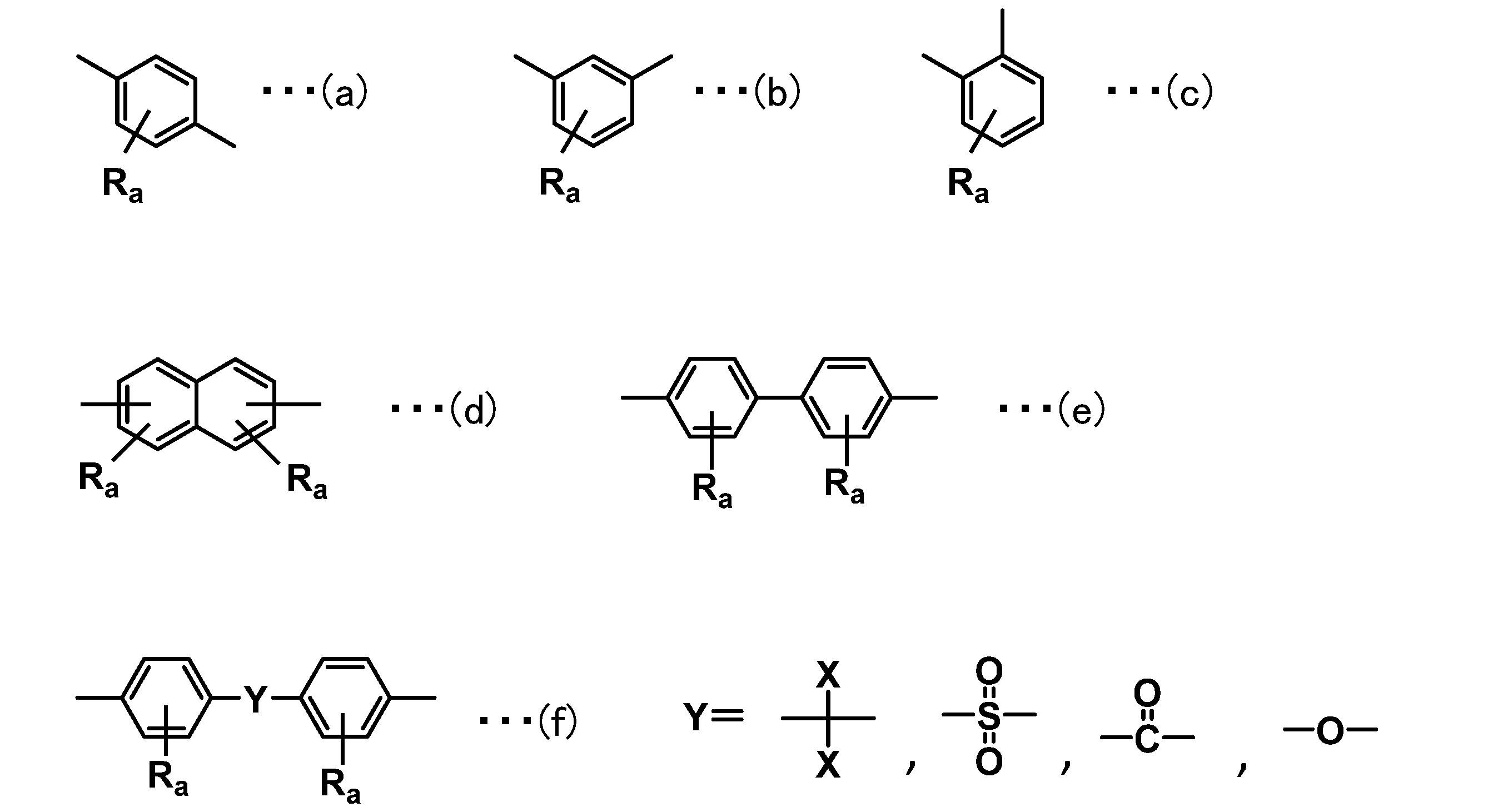
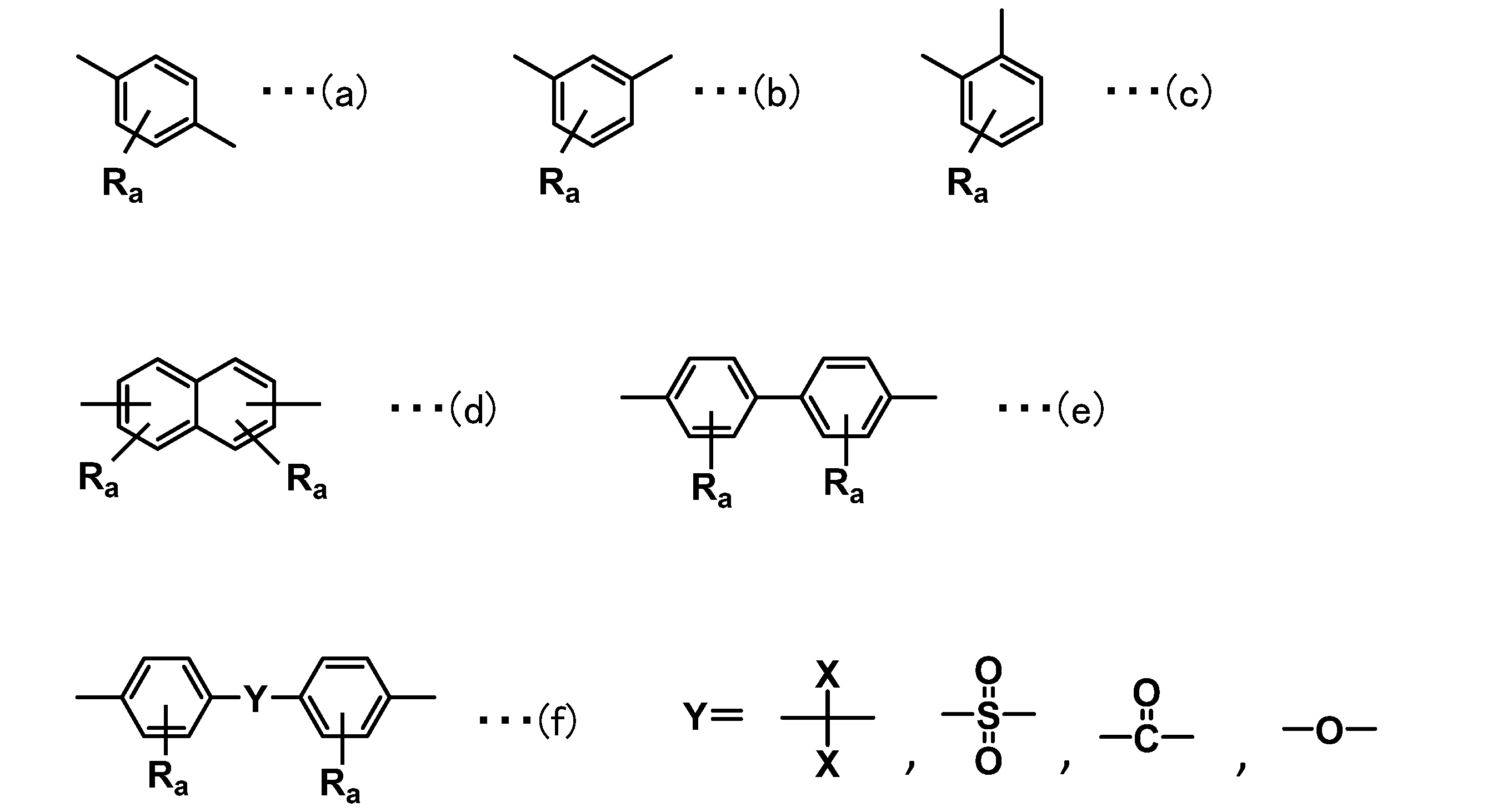
- Ar 1 and Ar 2 have one skeleton selected from the units represented by formulas (a) to (f). However, Ar 1 and Ar 2 are not the same.
- R is any of a linear organic group, a branched organic group, and a cyclic organic group having 1 to 6 carbon atoms, and is an oxygen atom, a nitrogen atom, or a sulfur atom. May contain one or more. It should be noted that R may be equal to or different from each other. a indicates the number of substituents of R and is an integer of 0 to 4. X is a hydrogen atom or a methyl group.
- N and M are 0.90 ⁇ [N / (N + M)] ⁇ 1.
- the crystalline polyether nitrile according to (1) which is an integer satisfying the relationship of .00.
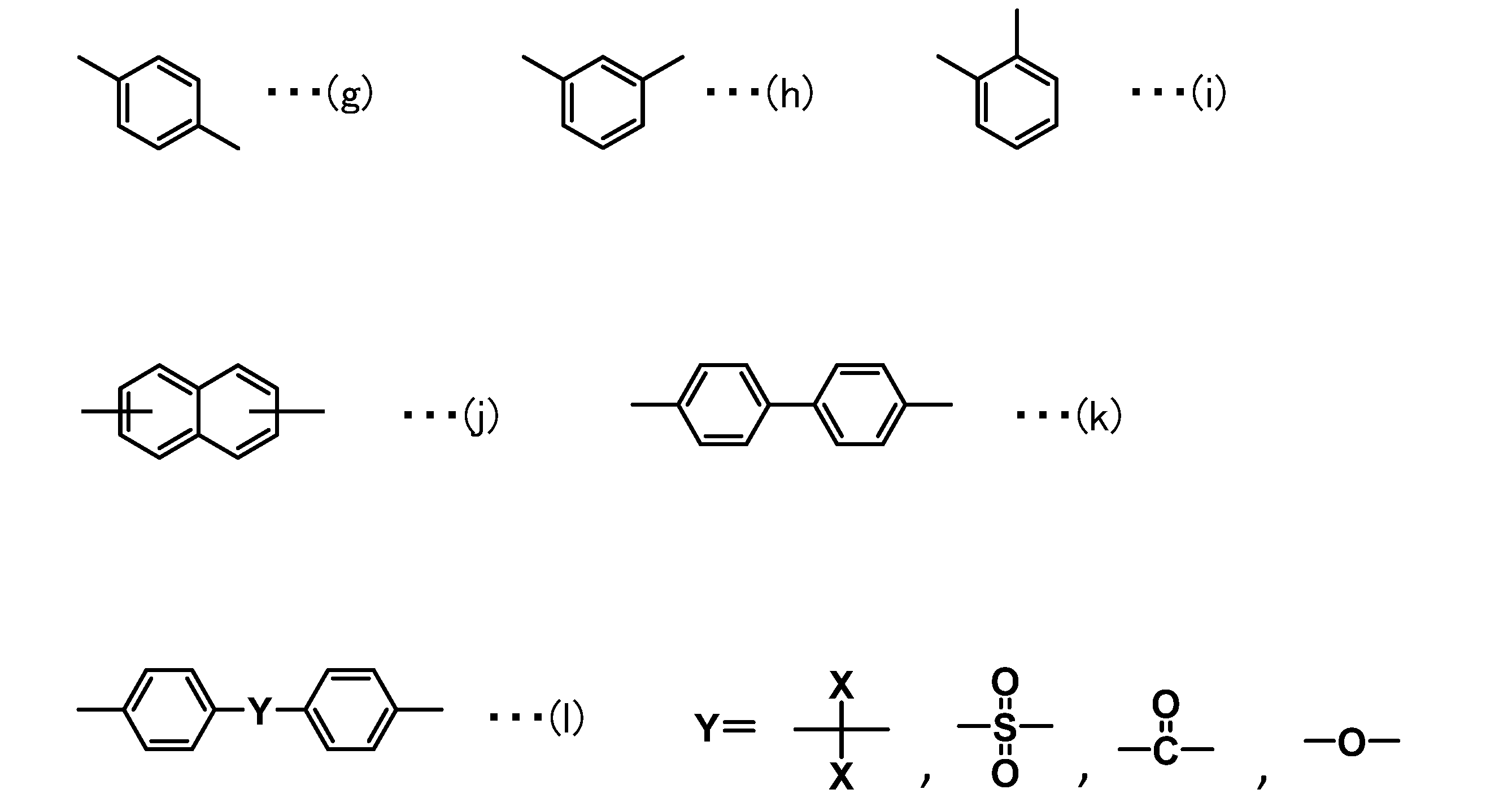
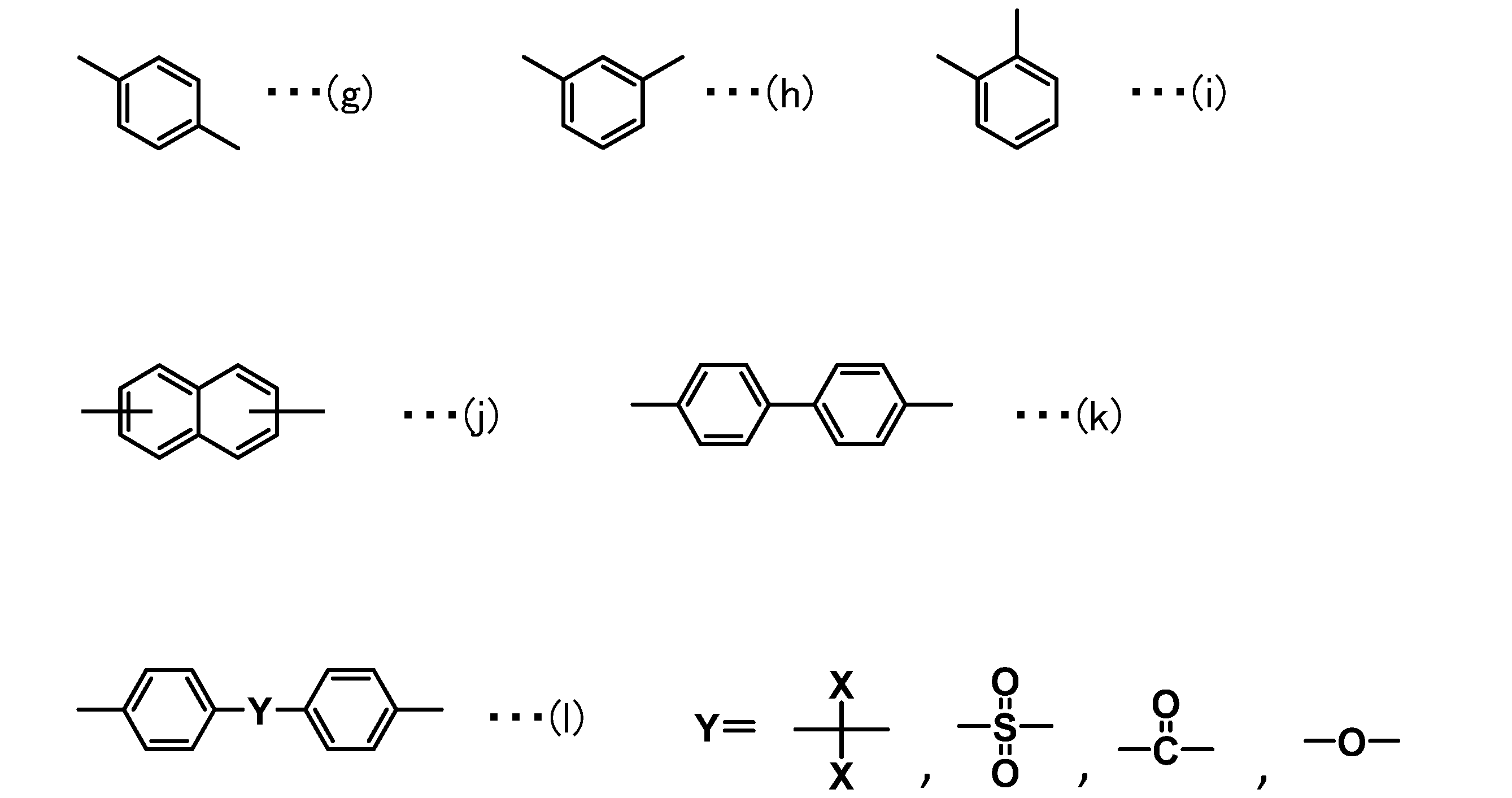
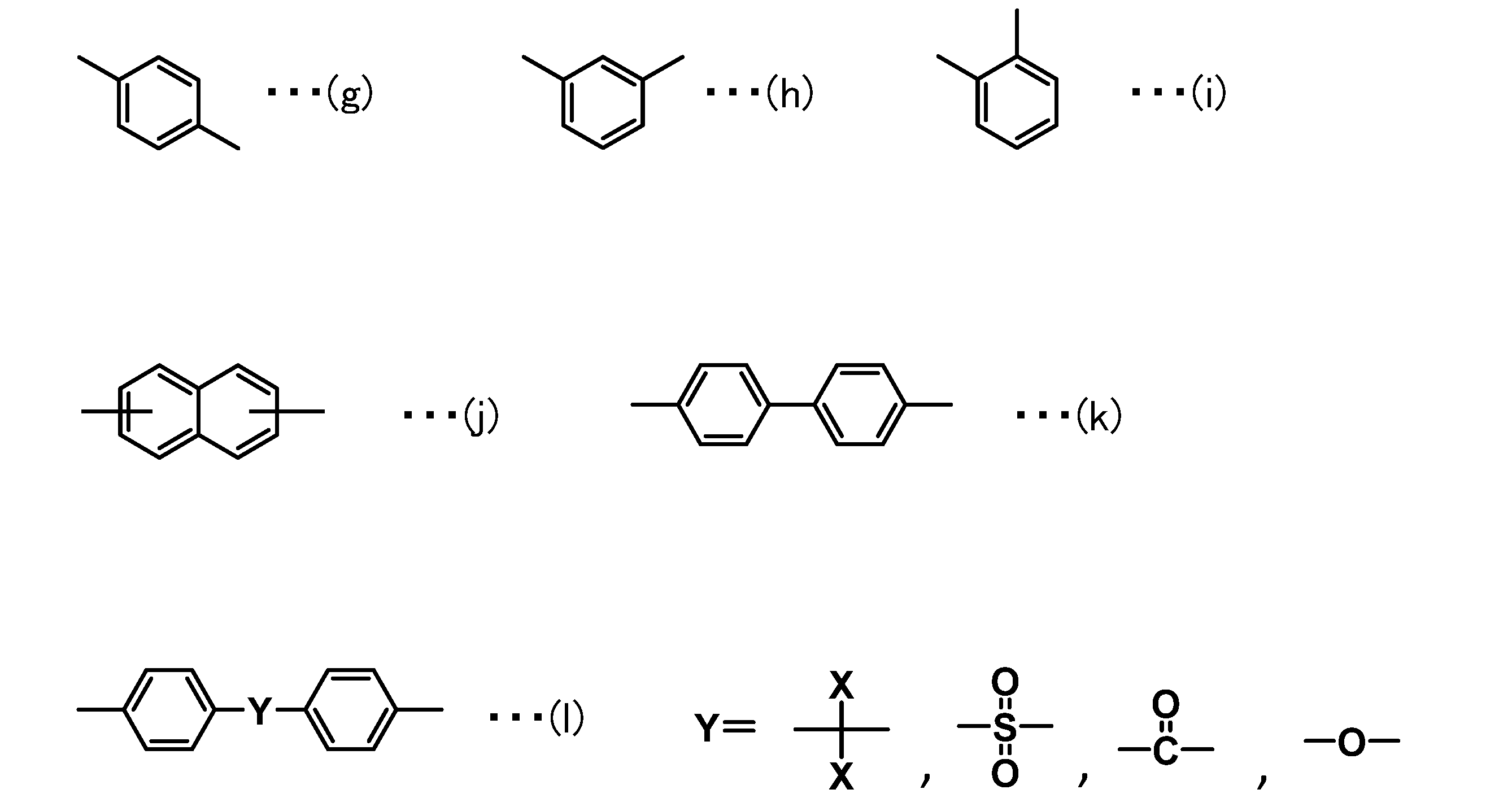
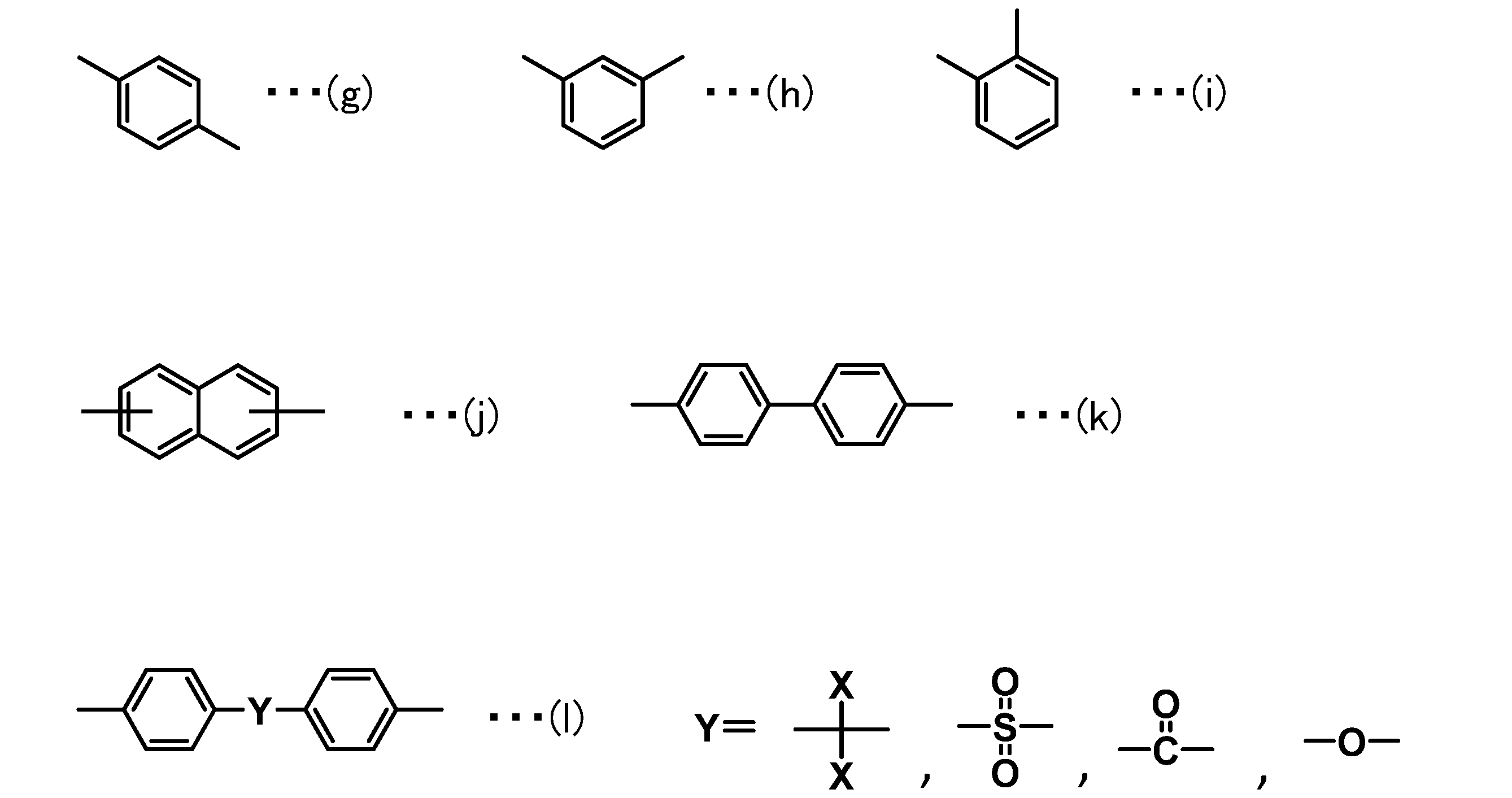
- Ar 1 and Ar 2 have one skeleton selected from the units represented by formula (g) to formula (l). However, Ar 1 and Ar 2 are not the same.
- X is a hydrogen atom or a methyl group.
- N and M are 0.90 ⁇ [N / (N + M)] ⁇ 1.
- the crystalline polyether nitrile according to (1) which is an integer satisfying the relationship of .00.
- Ar 1 and Ar 2 have one skeleton selected from the units represented by formula (g) to formula (l). However, Ar 1 and Ar 2 are not the same.
- X is a hydrogen atom or a methyl group.
- FIG. 1 is a diagram showing an NMR spectrum of the crystalline polyether nitrile obtained in Example 1.
- FIG. 2 is a diagram showing an infrared spectroscopic chart of the crystalline polyether nitrile obtained in Example 2.
- the crystalline polyether nitrile of the present invention has N repeating units represented by the formula (I) and M repeating units represented by the formula (II), and N and M. Refers to a polymer which is an integer satisfying the relationship of 0.90 ⁇ [N / (N + M)] ⁇ 1.00.
- Ar 1 and Ar 2 have one skeleton selected from the units represented by formulas (a) to (f). However, Ar 1 and Ar 2 are not the same.
- R is any of a linear organic group, a branched organic group, and a cyclic organic group having 1 to 6 carbon atoms, and is an oxygen atom, a nitrogen atom, or a sulfur atom. May contain one or more. It should be noted that R may be equal to or different from each other. a indicates the number of substituents of R and is an integer of 0 to 4. X is a hydrogen atom or a methyl group.
- the crystalline polyether nitrile according to the present invention has N repeating units represented by the formula (I) and M repeating units represented by the formula (II), and N and M are 0.90 ⁇ [N. / (N + M)] ⁇ Represents an integer that satisfies the relationship of 1.00.
- the upper limit of [N / (N + M)] is not particularly limited as long as it is less than 1.00, but the melting point becomes higher as it approaches 1.00, so 0.99 or less is preferable, and 0.97 or less is more preferable. ..
- the lower limit of [N / (N + M)] is not particularly limited if it is 0.90 ⁇ , but if it is less than 0.90, the crystallinity is lowered and it becomes amorphous, which is not suitable.
- N and M are integers satisfying the relationship of 0.90 ⁇ [N / (N + M)] ⁇ 0.99, and more preferably 0.90 ⁇ [N / (. N + M)] ⁇ 0.97 is an integer that satisfies the relationship, and more preferably 0.91 ⁇ [N / (N + M)] ⁇ 0.97.
- the upper limit of the sum of N and M is not particularly limited, but can be exemplified in the range of 5 to 10000, preferably in the range of 5 to 5000, more preferably in the range of 5 to 1000, and even more preferably in the range of 5 to 500.
- crystalline polyether nitriles of the present invention preferred repeating units are represented by formulas (III) and (IV).
- Ar 1 and Ar 2 have one skeleton selected from the units represented by the formula (g) to the formula (l). However, Ar 1 and Ar 2 are not the same.
- the crystalline polyether nitrile has N repeating units represented by the formula (III) and M repeating units represented by the formula (IV), where N and M are 0.90 ⁇ [N / (N + M). ] ⁇ It is an integer that satisfies the relationship of 1.00.
- X is a hydrogen atom or a methyl group.
- the crystalline polyether nitrile according to the present invention has N repeating units represented by the formula (III) and M repeating units represented by the formula (IV), where N and M are 0.90 ⁇ [N. / (N + M)] ⁇ Represents an integer that satisfies the relationship of 1.00.
- the upper limit of [N / (N + M)] is not particularly limited as long as it is less than 1.00, but the melting point becomes higher as it approaches 1.00, so 0.99 or less is preferable, and 0.97 or less is more preferable. ..
- the lower limit of [N / (N + M)] is not particularly limited if it is 0.90 ⁇ , but if it is less than 0.90, the crystallinity is lowered and it becomes amorphous, which is not suitable.
- N and M are integers satisfying the relationship of 0.90 ⁇ [N / (N + M)] ⁇ 0.99, and more preferably 0.90 ⁇ [N / (. N + M)] ⁇ 0.97 is an integer that satisfies the relationship, and more preferably 0.91 ⁇ [N / (N + M)] ⁇ 0.97.
- the upper limit of the sum of N and M is not particularly limited, but can be exemplified in the range of 5 to 10000, preferably in the range of 5 to 5000, more preferably in the range of 5 to 1000, and even more preferably in the range of 5 to 500.
- Ar 1 and Ar 2 have one skeleton selected from the units represented by the formula (g) to the formula (l).
- Ar 1 and Ar 2 are not the same.
- Ar 1 has a skeleton represented by the formula (g) and the formula (h), and more preferably, it is represented by the formula (g).
- Ar 2 is more preferably represented by the formula (g), the formula (h), the formula (i), the formula (k), and the formula (l), and when Ar 1 is the formula (g), the Ar 2 is The formula (h), the formula (i), the formula (k), and the formula (l) are preferable, and when Ar 1 is the formula (h), the Ar 2 is the formula (g), the formula (i), and the formula (k). , Equation (l) is preferred.
- X is a hydrogen atom or a methyl group.
- the crystalline polyether nitrile according to the present invention has N repeating units represented by the formula (V) and M repeating units represented by the formula (VI), and N and M are 0.90 ⁇ [N. / (N + M)] ⁇ Represents an integer that satisfies the relationship of 1.00.
- the upper limit of [N / (N + M)] is not particularly limited as long as it is less than 1.00, but the melting point becomes higher as it approaches 1.00, so 0.99 or less is preferable, and 0.97 or less is more preferable. ..
- the lower limit of [N / (N + M)] is not particularly limited if it is 0.90 ⁇ , but if it is less than 0.90, the crystallinity is lowered and it becomes amorphous, which is not suitable.
- N and M are integers satisfying the relationship of 0.90 ⁇ [N / (N + M)] ⁇ 0.99, and more preferably 0.90 ⁇ [N / (. N + M)] ⁇ 0.97 is an integer that satisfies the relationship, and more preferably 0.91 ⁇ [N / (N + M)] ⁇ 0.97.
- the upper limit of the sum of N and M is not particularly limited, but can be exemplified in the range of 5 to 10000, preferably in the range of 5 to 5000, more preferably in the range of 5 to 1000, and even more preferably in the range of 5 to 500.
- the crystalline polyether nitrile in the present invention is a crystalline polymer having excellent processability. Therefore, it is preferable that the difference between the crystallization temperature when the temperature is lowered from the molten state, that is, the temperature lowering crystallization temperature and the melting point is small to some extent, but if it is too small, the moldability deteriorates.
- the difference in crystallization temperature should be 40-100 ° C. If the temperature exceeds 100 ° C., the crystallinity is greatly reduced, which is not preferable. Further, if the temperature is lower than 40 ° C., the solidification rate of the molten polymer is high and the processability is lowered, which is not preferable.
- the difference between the melting point and the temperature-decreasing crystallization temperature is more preferably 50 to 90 ° C.
- the melting point of the crystalline polyether nitrile in the present invention is 280 to 360 ° C., preferably 280 to 350 ° C., more preferably 280 to 340 ° C. from the viewpoint of processability.
- the terminal group of the crystalline polyether nitrile in the present invention is a hydroxyl group, a metal salt of a hydroxyl group, a halogeno group, a linear organic group having 1 to 16 carbon atoms, a branched organic group, and a cyclic organic group.
- the structure of the terminal group affects the thermal stability.
- the thermal stability of the crystalline polyether nitrile of the present invention can be evaluated by thermogravimetric analysis (TG).
- thermogravimetric analysis when the mixture was held at 50 ° C. for 1 minute in a non-oxidizing atmosphere, then heated from 50 ° C. to a melting point of + 30 ° C. at a heating rate of 20 ° C./min, and held at a melting point of + 30 ° C. for 30 minutes.
- the weight loss rate of the above is preferably 5% or less, more preferably 4% or less, and further preferably 3% or less.
- the weight reduction rate is calculated based on the weight after holding at 50 ° C. for 1 minute.
- the terminal structure of the crystalline polyether nitrile in the present invention can be quantified by nuclear magnetic resonance (NMR) analysis, and the terminal of the polyether nitrile in the present invention may satisfy the above thermal stability.
- NMR nuclear magnetic resonance
- the sum of the hydroxyl groups and the terminal groups other than the metal salts of the hydroxyl groups that is, the halogeno group with respect to all the terminals, the linear organic group having 1 to 16 carbon atoms, the branched organic group, and the cyclic group is more preferable.
- the ratio of the sum of the organic groups is 0.2 or more and 1.0 or less.
- the method for producing the polyether nitrile used in the present invention is not particularly limited as long as it can synthesize the polyether nitrile satisfying the requirement of (1) above, and any production method can be used. Although it can be adopted, for example, an aromatic compound (M1) substituted with two hydroxyl groups and an aromatic compound substituted with two hydroxyl groups different from the aromatic compound (M1). It can be produced by heating (M2), an aromatic compound (M3) having a benzonitrile skeleton substituted with two halogeno groups, and a mixture of bases in an organic polar solvent.
- the aromatic compound (M1) substituted with two hydroxyl groups used in a preferred embodiment of the present invention, and the aromatic compound substituted with two hydroxyl groups different from the aromatic compound (M1).
- a compound (M2), an aromatic compound (M3) having a benzonitrile skeleton substituted with two halogeno groups, a base, an organic polar solvent, and reaction conditions will be described.
- Examples of (M2) include compounds represented by the following general formulas (m) to (r).
- R is any of a linear organic group, a branched organic group, and a cyclic organic group having 1 to 6 carbon atoms, and has 1 oxygen atom, 1 nitrogen atom, and 1 sulfur atom. It may contain one or more.
- a indicates the number of substituents of R and is an integer of 0 to 4. When there are a plurality of Rs, the Rs may be equal to or different from each other.
- the compounds (M1) and (M2) substituted with two hydroxyl groups are specifically resorcinol, 5-methoxyresorcinol, 2-methylresorcinol, 5-methylresorcinol, 2,4-dihydroxybenzaldehyde, 4-ethyl.
- Resorcinol 3,5-dihydroxyacetophenone, 4-butylresorcinol, 2-acetylresorcinol, 4-hexylresorcinol, 4-acetylresorcinol, 3,5-dihydroxybenzoic acid, 4-benzoylresorcinol, 4,6-diacetylresorcinol, 2 , 6-Dihydroxybenzoic acid, 2,4-dihydroxyresorcinol, 4-propionylresorcinol, 3,5-dihydroxybenzamide, 3,5-dihydroxy-4-methylresorcinol, 2-nitroresorcinol, 2,6-dihydroxy- 4-Methyl benzoic acid, 2,4-dihydroxybenzamide, hydroquinone, 1,4-dihydroxynaphthalene, catechol, 4,4'-dihydroxybiphenyl, methylhydroquinone, methoxyhydroquinone, 2,6-dimethylhydroquinone, 2,3-dimethyl Hydroquino
- Catechol, 4,4'-dihydroxybiphenyl, 2,7-dihydroxynaphthalene, 2,2'-bis (4-hydroxyphenyl) propane, bis (4-hydroxyphenyl) sulfone, 1,1'-bis (4-hydroxy) Phenyl) methane is preferred, with resorcinol, hydroquinone, catechol, 4,4'-dihydroxybiphenyl, 2,2'-bis (4-hydroxyphenyl) propane, and bis (4-hydroxyphenyl) sulfone being more preferred.
- the copolymer arrangement may be random or block, but it is preferable that the copolymer is random from the viewpoint of crystallinity, and the compound (M1) and the compound (M1) substituted with two hydroxyl groups are preferable. It is preferable that M2) is mixed in advance and then reacted.
- R is any one of a linear organic group having 1 to 6 carbon atoms, a branched organic group, and a cyclic organic group, and contains one or more oxygen atoms, nitrogen atoms, and sulfur atoms. You may. a indicates the number of substituents of R and is an integer of 0 to 4.
- X 1 and X 2 are independent halogen atoms, and may be the same or different. When there are a plurality of Rs, the Rs may be equal to or different from each other.
- Specific examples of the compound (M3) having a benzonitrile skeleton substituted with two halogeno groups are 2,6-dichlorobenzonitrile, 2,6-difluorobenzonitrile, and 2-chloro-6-fluorobenzonitrile.
- the compounds (M1) and (M2) are used with respect to 1.00 mol of the compound (M3).
- ) Is not particularly limited as long as it is in the range of 0.90 to 1.10 mol, but is preferably in the range of 0.95 to 1.05 mol, preferably 0.95 to 1.00 mol, from the viewpoint of polymer physical properties. The range of is more preferable.
- the amount of the compounds (M1) and (M2) used the relationship of 0.90 ⁇ [(M1) usage amount (mol) / (M1) and (M2) total usage amount (mol)] ⁇ 1.00.
- Examples of the base in the method for producing a crystalline polyether nitrile of the present invention include an organic base and an inorganic base. Specifically, 1,8-diazabicyclo [5.4.0] -7-undecene, 1,5-diazabicyclo [4.3.0] -5-nonen, 7-methyl-1,5,7-tria.
- Organic bases such as Zabicyclo [4.4.0] Deca-5-ene, 1,5,7-Triazabicyclo [4.4.0] Deca-5-ene, lithium carbonate, sodium carbonate, potassium carbonate, Alkali metal carbonates such as rubidium carbonate and cesium carbonate, carbonates of alkaline earth metals such as calcium carbonate, strontium carbonate and barium carbonate, lithium hydrogen carbonate, sodium hydrogen carbonate, potassium hydrogen carbonate, rubidium hydrogen carbonate, cesium hydrogen carbonate, etc.
- Examples thereof include hydroxides of alkali metals such as, calcium hydroxide, strontium hydroxide, and hydroxides of alkaline earth metals such as barium hydroxide, and among them, sodium carbonate from the viewpoint of ease of handling and reactivity.
- Carbonic acid such as potassium carbonate, and bicarbonate such as sodium hydrogen carbonate and potassium hydrogen carbonate are preferable, sodium carbonate and potassium carbonate are more preferable, and sodium carbonate is even more preferably used.
- aqueous mixture refers to an aqueous solution, a mixture of an aqueous solution and a solid component, or a mixture of water and a solid component.
- the amount of the base in the method for producing a crystalline polyether nitrile of the present invention depends on the amount of the sum of the aromatic compound (M1) and the aromatic compound (M2).
- the molar ratio of the base to the total number of moles of the hydroxyl groups of the compounds (M1) and (M2) is at least 1, and is preferably 1.2 or more from the viewpoint of reactivity. Since the base in the present invention can be produced without any problem even if it is used excessively, the upper limit is not particularly limited, but the practical upper limit is 100 with respect to the total number of moles of the hydroxyl groups of (M1) and (M2).
- the molar ratio of the base to the total number of moles of the hydroxyl groups of (M1) and (M2) is 1.2 to 10.
- the organic polar solvent used in the preferred method for producing the crystalline polyether nitrile of the present invention is not particularly limited as long as the reaction is not inhibited.
- organic polar solvent examples include N-methyl-2-pyrrolidone (NMP), N-methylcaprolactam, N, N-dimethylformamide (DMF), N, N-dimethylacetamide (DMAc), 1, Nitrogen-containing polar solvents such as 3-dimethyl-2-imidazolidinone (DMI), hexamethylphosphoramide, and tetramethylurea, sulfoxide-sulfone solvents such as dimethyl sulfoxide (DMSO), dimethyl sulfone, diphenyl sulfone, and sulfolane, Examples thereof include nitrile solvents such as benzonitrile, diaryl ethers such as diphenyl ether, ketones such as benzophenone and acetophenone, and mixtures thereof.
- NMP N-methyl-2-pyrrolidone
- DMF N-dimethylformamide
- DMAc N-dimethylacetamide
- Nitrogen-containing polar solvents such as 3-
- the amount of the organic polar solvent is preferably such that the total amount of the organic solvent contained in the mixture is 0.50 liter or more with respect to 1.0 mol of the total benzene ring component contained in the mixture, and more preferably 1. Examples thereof include those containing 00 liters or more, more preferably 2.0 liters or more.
- the upper limit of the amount of the organic polar solvent in the mixture is not particularly limited, but is preferably 100 liters or less, more preferably 50 liters or less, based on 1.0 mol of the total benzene ring component in the mixture.
- the amount of the organic polar solvent here is based on the volume of the solvent under normal temperature and pressure, and the amount of the organic polar solvent used in the mixture is determined from the amount of the organic polar solvent introduced into the reaction system by a dehydration operation or the like.
- the benzene ring component in the mixture is a benzene ring component contained in a raw material that can be a constituent component of a repeating unit in a crystalline polyether nitrile by a reaction, and the "number of moles" of the benzene ring component in these raw materials. "” Represents "the number of benzene rings constituting the compound”.
- a molecular weight modifier can be added.
- a compound represented by the following formula (t) can be used as the molecular weight adjusting agent.
- R is any one of a linear organic group having 1 to 10 carbon atoms, a branched organic group, and a cyclic organic group, and contains one or more oxygen atoms, nitrogen atoms, and sulfur atoms. You may. It should be noted that R may be equal to or different from each other.
- a indicates the number of substituents of R and is an integer of 0 to 4. Specific examples thereof include phenol, 4-phenylphenol, 4-tert-butylphenol, 4-cumylphenol, 4-phenoxyphenol, 4-ethylphenol, 4-methoxyphenol and 4-tert-octylphenol.
- water is by-produced as the reaction progresses.
- an organic compound that forms an azeotropic mixture with water can be added for the purpose of removing by-produced water.
- the organic compound is not particularly limited as long as it forms an azeotropic mixture with water, but a non-polar organic solvent having a boiling point lower than that of the reaction solvent is preferable, and specific examples thereof include toluene.
- the amount of the organic compound is not particularly limited as long as it does not inhibit the reaction, but is preferably in the range of 0 to 50% and more preferably in the range of 0 to 20% in terms of volume ratio with respect to the amount of the organic polar solvent.
- the range of 0 to 10% is preferable, and the range of 0 to 10% is more preferable.
- the method for producing a crystalline polyether nitrile of the present invention is carried out under a nitrogen atmosphere or under reduced pressure and under heating.
- the reaction temperature can be varied over a wide range, but is carried out at a temperature of at least 80 ° C., preferably at least 150 ° C., at a maximum of 400 ° C., and preferably at a maximum of 350 ° C. from the viewpoint of manufacturability. Is good.
- it is preferably carried out in the range of 150 ° C. to 350 ° C., more preferably in the range of 150 ° C. to 200 ° C. while gradually increasing the temperature. Further, for the purpose of improving the reactivity, it is more preferable to carry out with stirring.
- the reaction time in the method for producing a crystalline polyether nitrile of the present invention may vary widely depending on the reaction temperature, the properties of the reagents used and the presence of a solvent, but is preferably 0.1 to 100 hours, preferably 0.1 hours. From the viewpoint of manufacturability, it is 0.5 to 50 hours.
- the reaction container in the method for producing crystalline polyether nitrile of the present invention is not particularly limited as long as it can withstand the above reaction temperature, but a glass container or a stainless steel container can be used.
- the pressure applied to the reaction may be such that the reactant can be maintained in the liquid phase in the reaction medium, and a pressure in the range of 1 atm to 10 atm can be used, preferably. From the viewpoint of manufacturability, the pressure is 1 to 2 atm.
- the produced crystalline polyether nitrile can be obtained by separating and recovering from the reaction mixture obtained by the above-mentioned production method.
- the reaction mixture obtained by the above production method may contain at least crystalline polyether nitrile, and may contain unreacted raw materials, by-products, unreacted bases and the like as other components.
- the method for recovering the crystalline polyether nitrile from such a reaction mixture is not particularly limited. For example, if necessary, it is recovered by contacting it with a solvent having solubility in a by-product salt under heating as necessary. And a method of removing by-product salts and unreacted organic bases under reduced pressure can be exemplified.
- the solvent used is generally a relatively highly polar solvent.
- the preferred solvent differs depending on the type of base and by-product salt used, but for example, water, methanol, ethanol, propanol, isopropanol, butanol, alcohols typified by hexanol, acetone, ketones typified by methyl ethyl ketone, acetic acid.
- Acetate esters typified by ethyl, butyl acetate, etc., N-methyl-2-pyrrolidone (NMP), N-methylcaprolactam, N, N-dimethylformamide (DMF), N, N-dimethylacetamide (DMAc), 1 , 3-Dimethyl-2-imidazolidinone (DMI), hexamethylphosphoramide, tetramethylurea and other nitrogen-containing polar solvents, dimethylsulfoxide (DMSO), dimethylsulfone, diphenylsulfone, sulfone and other sulfoxide-sulfone solvents.
- NMP N-methyl-2-pyrrolidone
- DMF N-dimethylformamide
- DMAc N-dimethylacetamide
- DI 3-Dimethyl-2-imidazolidinone
- hexamethylphosphoramide hexamethylphosphoramide
- Acetic acid, hydrochloric acid, sulfuric acid, nitrate and other acids can be exemplified. From the viewpoint of availability and economy, water, methanol, acetone, acetic acid, hydrochloric acid, sulfuric acid and NMP are preferable, and water, acetic acid, hydrochloric acid and NMP are more preferable.
- it may be carried out in the range of 0.001 atm to 1 atm after the reaction is completed, and if necessary, under heating.
- the structure of the crystalline polyether nitrile in the present invention can be confirmed by infrared spectroscopy or nuclear magnetic resonance spectroscopy.
- the crystalline polyether nitrile according to the present invention is excellent in heat resistance, chemical resistance, flame retardancy, electrical properties and mechanical properties, and can be injection molded, injection compression molded, blow molded, or extruded.
- the crystalline polyether nitrile may be used alone, or if desired, an inorganic filler such as glass fiber, carbon fiber, titanium oxide, or calcium carbonate, an antioxidant, a heat stabilizer, or an ultraviolet absorber. , Colorants and the like can be added, and resins other than the crystalline polyether nitrile of the present invention can be blended.
- the crystalline polyether nitrile of the present invention may have a hydroxyl group at the terminal, and in that case, it has excellent adhesion to other resins and materials and the interaction between the additive and the hydroxyl group terminal. It can be expected to control the thermal characteristics by. Examples of such applications include electrical / electronic parts, household / office electrical product parts, optical equipment / precision machine-related parts, water-related parts, automobile / vehicle-related parts, and other industrial applications.
- the molecular weight of the crystalline polyether nitrile or the like of the present invention was determined by gel permeation chromatography (GPC) measurement, which is a kind of size exclusion chromatography (SEC), or NMR measurement.
- GPC gel permeation chromatography
- SEC size exclusion chromatography
- NMR NMR was calculated from the ratio of the integrated value of the peak derived from the terminal group to the integrated value of the peak derived from the main chain.
- the melting point (Tm), glass transition temperature (Tg), and temperature-decreasing crystallization temperature (Tc) of the crystalline polyether nitrile of the present invention were measured by differential scanning calorimetry (DSC).
- the DSC measurement was performed using Q20 manufactured by TA Instruments. The temperature is raised from 50 ° C. to 400 ° C. at 20 ° C./min, held at 400 ° C. for 1 minute, then lowered from 400 ° C. to 50 ° C. at 20 ° C./min, and again from 50 ° C. to 400 ° C. at 20 ° C./min. The temperature was raised, held at 400 ° C.
- melting point-decreasing crystallization temperature was calculated from the result obtained at the time of the second temperature rise, and the temperature lowering crystallization temperature was calculated from the result obtained at the time of the second temperature lowering. From the obtained melting point and temperature-decreasing crystallization temperature, "melting point-decreasing crystallization temperature" was calculated.
- TG Thermogravimetric analysis
- Equipment TGA7 manufactured by PerkinElmer Measurement atmosphere: Nitrogen airflow temperature rise program: (A) Hold for 1 minute at a programmed temperature of 50 ° C. (b) From a programmed temperature of 50 ° C., a heating rate of 20 ° C./min to a melting point of + 30 ° C. if the compound is crystalline and a glass transition point of + 100 ° C. if the compound is crystalline. (C) If the compound is crystalline, the melting point is + 30 ° C. If the compound is amorphous, the glass transition point is held at + 100 ° C. for 30 minutes. The weight loss rate was calculated from the weight after holding for 30 minutes at the melting point + 30 ° C. in the case of crystallinity and at the glass transition point + 100 ° C. in the case of amorphous.
- Aromatic compounds (M1) and (M2) substituted with two hydroxyl groups (M-1) Hydroquinone (Fuji Film Wako Pure Chemical Industries, Ltd.) (M-2) Resorcinol (Fuji Film Wako Pure Chemical Industries, Ltd.) (M-3) 4,4'-Dihydroxybiphenyl (Tokyo Chemical Industry Co., Ltd.) (M-4) 2,2-Bis (4-hydroxyphenyl) propane (Tokyo Chemical Industry Co., Ltd.) (M-5) 1,6-Dihydroxynaphthalene (Tokyo Chemical Industry Co., Ltd.) (M-6) Catechol (Tokyo Chemical Industry Co., Ltd.) A compound having a benzonitrile skeleton substituted with two halogeno groups (M3) (M3-1) 2,6-dichlorobenzonitrile (Tokyo Chemical Industry Co., Ltd.) (M3-2) 2,6-difluorobenzonitrile (Tokyo Chemical Industry Co.)
- Example 1 In a 300 mL separable flask equipped with a stirrer, a nitrogen introduction tube, and a Dean Stark tube, 8.37 g (76.0 mmol) of hydroquinone as an aromatic compound (M1) and 0.44 g (4. 0 mmol), 13.93 g (81.0 mmol) of 2,6-dichlorobenzonitrile as a compound (M3) having a benzonitrile skeleton, and 9.33 g (88.0 mmol) of sodium carbonate as a base, and NMP under a nitrogen atmosphere. 80 mL and 3 mL of toluene were added, and the reaction was carried out at 160 ° C. for 0.5 hours and then at 200 ° C. for 5 hours.
- Example 2 Example 1 except that the amount of hydroquinone used was 8.02 g (72.8 mmol), the amount of resorcinol used was 0.79 g (7.2 mmol), and the amount of sodium carbonate used was 8.48 g (80.0 mmol).
- 14.1 g of a white solid was obtained.
- the resulting solid using a result of IR measurement, 2230cm -1, 1580cm -1, 1460cm -1, 1240cm -1, 1020cm -1, 850cm -1, the 780 cm -1, crystalline polyether nitrile backbone A peak indicating the above was observed.
- Example 3 The same operation as in Example 1 was carried out except that the amount of hydroquinone used was 8.79 g (79.8 mmol) and the aromatic compound (M2) was 4,4'-dihydroxybiphenyl 0.04 g (0.2 mmol). By doing so, 14.8 g of a white solid was obtained.
- Example 4 By performing the same operation as in Example 1 except that 0.91 g (4.0 mmol) of 2,2-bis (4-hydroxyphenyl) propane was used as the aromatic compound (M2), 15.0 g of white color was used. Obtained a solid.
- Example 5 8.02 g (72.8 mmol) of hydroquinone as the aromatic compound (M1) and 4,4'-dihydroxybiphenyl as the aromatic compound (M2) in a 300 mL separable flask equipped with a stirrer, a nitrogen introduction tube and a toluene stark tube. 1.34 g (7.2 mmol), 4-tert-butylphenol 0.12 g (0.8 mmol) as a molecular weight modifier, and 2,6-dichlorobenzonitrile 13.93 g (81.) as a compound (M3) having a benzonitrile skeleton.
- Example 6 By performing the same operation as in Example 1 except that 8.37 g (76.0 mmol) of resorcinol was used as the aromatic compound (M1) and 0.44 g (4.0 mmol) of hydroquinone was used as the aromatic compound (M2). , 14.0 g of white solid was obtained.
- the molecular weight (Mn, Mw) was calculated by GPC measurement.
- Example 7 By performing the same operation as in Example 1 except that 0.44 g (4.0 mmol) of catechol was used as the aromatic compound (M2), 13.9 g of a white solid was obtained.
- Example 8 Same as Example 1 except that 14.86 g (79.8 mmol) of 4,4'-dihydroxybiphenyl was used as the aromatic compound (M1) and the amount of resorcinol used was 0.02 g (0.2 mmol). By performing the operation, 14.8 g of a white solid was obtained. The molecular weight (Mn, Mw) was calculated by GPC measurement. [Example 9] The amount of hydroquinone used was 8.02 g (72.8 mmol), 0.79 g (7.2 mmol) of resorcinol was used as the aromatic compound (M2), and the amount of 4-tert-butylphenol used was 0.24 g (1.6 mmol). ), The same operation as in Example 5 was carried out to obtain 13.8 g of a white solid.
- Example 1 except that the amount of hydroquinone used was 7.93 g (72.0 mmol) and 1.83 g (8.0 mmol) of 2,2-bis (4-hydroxyphenyl) propane as the aromatic compound (M2) was used. By performing the same operation as above, 15.0 g of a white solid was obtained.
- [Comparative Example 7] 14 The same procedure as in Example 1 was carried out except that the amount of hydroquinone used was 7.93 g (72.0 mmol) and 0.88 g (8.0 mmol) of catechol was used as the aromatic compound (M2). 0 g of white solid was obtained.
- the amount of the aromatic compounds (M1) and (M2) used was 0.90 ⁇ [(M1) used amount (mol) / (M1) and (M2) total used amount (M2).
- [N / (N + M)] becomes a range of 0.90 ⁇ [N / (N + M)] ⁇ 1.00, and the melting point and the temperature-decreasing crystal
- a crystalline polyether nitrile having excellent thermal stability was obtained.
Landscapes
- Chemical & Material Sciences (AREA)
- Health & Medical Sciences (AREA)
- Chemical Kinetics & Catalysis (AREA)
- Medicinal Chemistry (AREA)
- Polymers & Plastics (AREA)
- Organic Chemistry (AREA)
- Organic Low-Molecular-Weight Compounds And Preparation Thereof (AREA)
- Polyethers (AREA)
Abstract
Description
ポリエーテルニトリルは上記のような優れた特性を有するが、一方で、他の熱可塑性樹脂と比較しても融点が高いため、射出成形や押出成形など、ポリエーテルニトリルを加工する際の加工温度が高くなる。そのため、結晶性は高いが融点が低いポリエーテルニトリルが求められている。
また、一般に、ポリマーに存在する活性官能基末端は、高分子反応の反応点や添加物との相互作用点としての機能が想定される一方、熱安定性の低下原因となるため、その封鎖が検討されている。ポリエーテルニトリルにおいても、ポリマーに存在しうる水酸基末端は、熱安定性の低下原因と考えられる。ポリマーの熱安定性を向上するために、反応停止剤として一置換ハロゲン化合物を用いる方法(例えば、特許文献3参照)や、分子量調整剤として一価フェノールを用いる方法(例えば、特許文献4参照)が開示されている。
非特許文献1に示す方法では、融点は下がるものの結晶性も低下するため、高温下で数時間処理する必要がある。
なお、いずれの文献も、高結晶性と低融点を制御可能するメカニズムや要因などは述べられていない。
また、特許文献3や特許文献4に示す方法では、ポリマー末端を封鎖するために、モノマー以外の第3成分を用いる必要があり、プロセス性や経済性に改善の余地があった。
(1)融点と降温結晶化温度の差が40℃以上100℃以下であり、かつ式(I)で示される繰り返し単位をN個、および式(II)で示される繰り返し単位をM個有し、NとMは、0.90<[N/(N+M)]<1.00の関係を満足する整数である、結晶性ポリエーテルニトリル。



(5)融点が280℃以上360℃以下である、(1)~(4)のいずれかに記載の結晶性ポリエーテルニトリル。
(6)熱重量分析(TG)において非酸化性雰囲気下、融点+30℃で30分保持した際の重量減少率が、5%以下である、(1)~(5)のいずれかに記載の結晶性ポリエーテルニトリル。
(1)結晶性ポリエーテルニトリル
本発明の結晶性ポリエーテルニトリルは、式(I)で示される繰り返し単位をN個、および式(II)で示される繰り返し単位をM個有し、NとMは、0.90<[N/(N+M)]<1.00の関係を満足する整数であるポリマーを指す。

NとMの和の上限は、特に制限はないが、5~10000の範囲が例示でき、5~5000の範囲が好ましく、5~1000の範囲がさらに好ましく、5~500の範囲がより好ましい。


NとMの和の上限は、特に制限はないが、5~10000の範囲が例示でき、5~5000の範囲が好ましく、5~1000の範囲がさらに好ましく、5~500の範囲がより好ましい。

Ar2は、式(g)、式(h)、式(i)、式(k)、式(l)で示されるものがより好ましく、Ar1が式(g)のときは、Ar2は式(h)、式(i)、式(k)、式(l)が好ましく、Ar1が式(h)のときは、Ar2は式(g)、式(i)、式(k)、式(l)が好ましい。

NとMの和の上限は、特に制限はないが、5~10000の範囲が例示でき、5~5000の範囲が好ましく、5~1000の範囲がさらに好ましく、5~500の範囲がより好ましい。
本発明における、結晶性ポリエーテルニトリルの末端基は、水酸基、水酸基の金属塩、ハロゲノ基、炭素数1~16の直鎖状有機基、分岐状有機基、および環状有機基である。
本発明の結晶性ポリエーテルニトリルは、末端基の構造が熱安定性に影響する。本発明の結晶性ポリエーテルニトリルの熱安定性は、熱重量分析(TG)で評価することが可能である。熱重量分析(TG)において、非酸化性雰囲気下で50℃で1分保持した後に、50℃から融点+30℃まで昇温速度20℃/分で加熱し、融点+30℃で30分保持した際の重量減少率が、5%以下であることが好ましく、4%以下であることがより好ましく、3%以下であることが更に好ましい。なお、重量減少率は、50℃で1分保持後の重量を基準として算出する。
本発明における、結晶性ポリエーテルニトリルの末端構造は、核磁気共鳴(NMR)分析により、定量することが可能であり、本発明におけるポリエーテルニトリルの末端は、上記熱安定性を満たすものであれば、特に制限されないが、より好ましくは、水酸基および水酸基の金属塩以外の末端基の和、すなわち全末端に対するハロゲノ基と炭素数1~16の直鎖状有機基、分岐状有機基、および環状有機基の和の割合が0.2以上1.0以下である。
本発明で用いるポリエーテルニトリルの製造方法は、前記(1)の要件を満たすポリエーテルニトリルを合成出来るものであれば特に限定はされず、いかなる製法も採用することが可能であるが、例えば、2個の水酸基で置換された芳香族化合物(M1)と、前記芳香族化合物(M1)とは別の、2個の水酸基で置換された芳香族化合物(M2)と、2個のハロゲノ基で置換されたベンゾニトリル骨格をもつ芳香族化合物(M3)と、塩基の混合物とを有機極性溶媒中で加熱することにより、製造できる。
本発明の結晶性ポリエーテルニトリルの製造方法における、2個の水酸基で置換された芳香族化合物(M1)、および、前記(M1)とは別の、2個の水酸基で置換された芳香族化合物(M2)とは、下記一般式(m)~(r)で表わされる化合物が例示できる。


本発明の結晶性ポリエーテルニトリルの製造の好ましい手法において、用いる有機極性溶媒としては、反応が阻害されないものであれば特に制限はない。このような有機極性溶媒の具体例としては、N-メチル-2-ピロリドン(NMP)、N-メチルカプロラクタム、N,N-ジメチルホルムアミド(DMF)、N,N-ジメチルアセトアミド(DMAc)、1,3-ジメチル-2-イミダゾリジノン(DMI)、ヘキサメチルホスホルアミド、テトラメチル尿素などの含窒素極性溶媒、ジメチルスルホキシド(DMSO)、ジメチルスルホン、ジフェニルスルホン、スルホランなどのスルホキシド・スルホン系溶媒、ベンゾニトリルなどのニトリル系溶媒、ジフェニルエーテルなどのジアリールエーテル類、ベンゾフェノン、アセトフェノンなどのケトン類、およびこれらの混合物などが挙げられる。これらはいずれも反応の安定性が高いため好ましく使用されるが、なかでもNMP、DMSO、スルホランが好ましく、NMPが特に好ましく用いられる。これら有機極性溶媒は高温領域での安定性に優れ、さらに入手性の観点からも好ましい有機極性溶媒であると言える。
ここで必要に応じて、分子量調節剤を添加することができる。分子量調節剤としては、下記式(t)で表わされる化合物を使用することができる。

本発明の結晶性ポリエーテルニトリルの製造方法における反応容器は、上記反応温度に耐えられる容器であれば、特に制限されないが、ガラス製容器やステンレス製容器を用いることができる。
本発明の結晶性ポリエーテルニトリルの製造方法において、製造された結晶性ポリエーテルニトリルは、前述した製造方法により得られた反応混合物から分離回収することにより得ることが可能である。上記製造方法により得られた反応混合物には、少なくとも結晶性ポリエーテルニトリルが含まれ、その他成分として、未反応原料、副生塩、未反応の塩基などが含まれる場合がある。この様な反応混合物から結晶性ポリエーテルニトリルを回収する方法に特に制限はなく、例えば必要に応じて、副生塩に対して溶解性を有する溶剤と必要に応じて加熱下で接触させて回収する方法や、副生塩や未反応の有機塩基を減圧下除去する方法が例示できる。
副生塩や未反応の有機塩基を減圧下除去する方法においては、反応終了後に0.001気圧から1気圧の範囲で、必要に応じて加熱下で実施されてもよい。
本発明に係る結晶性ポリエーテルニトリルは、耐熱性、耐薬品性、難燃性、電気的性質並びに機械的性質に優れ、射出成形、射出圧縮成形、ブロー成形、押出成形することができる。この際、結晶性ポリエーテルニトリルを単独で用いてもよいし、所望に応じて、ガラス繊維、炭素繊維、酸化チタン、炭酸カルシウムなどの無機充填剤、酸化防止剤、熱安定剤、紫外線吸収剤、着色剤などを添加することもでき、本発明の結晶性ポリエーテルニトリル以外の樹脂を配合することもできる。
その用途としては、電気・電子部品、家庭・事務電気製品部品、光学機器・精密機械関連部品、水廻り部品、自動車・車両関連部品、その他産業用途が例示できる。
<構造確認>
本発明の結晶性ポリエーテルニトリル等の構造確認は、赤外分光法(IR)、または、核磁気共鳴分光法(NMR)を用いて行った。
IRは、島津製作所製IRPRestige-21を用いて、KBr錠剤法で測定した。NMRは、日本電子社製JNM-ECZ-500Rを用いて、重DMSO中、または、ペンタフルオロフェノール/重クロロホルム=5/3(体積比)の混合溶媒中で1H-NMR測定を行い、得られたスペクトルの積分値の比から、[N/(N+M)]、および、全末端に対する水酸基および水酸基の金属塩以外の末端の比率を算出した。
本発明の結晶性ポリエーテルニトリル等の分子量はサイズ排除クロマトグラフィー(SEC)の一種であるゲルパーミエーションクロマトグラフィー(GPC)測定、または、NMR測定により求めた。GPCは、センシュー科学社製SSC-7110を用いて、1-クロロナフタレン中250℃で測定し、ポリスチレン換算で算出した。NMRは、末端基由来のピークの積分値と主鎖由来のピークの積分値の比から算出した。
本発明の結晶性ポリエーテルニトリル等の融点(Tm)・ガラス転移温度(Tg)・降温結晶化温度(Tc)の測定は、示差走査熱量(DSC)測定により求めた。DSC測定は、ティー・エー・インスツルメント社製Q20を用いて行った。50℃から400℃まで20℃/分で昇温させそのまま400℃で1分間保持後、400℃から50℃まで20℃/分で降温し、再度、50℃から400℃まで20℃/分で昇温させ、400℃で1分間保持後、400℃から100℃まで20℃/分で降温させた。融点は2度目の昇温時に得られた結果から算出し、降温結晶化温度は2度目の降温時に得られた結果から算出した。得られた融点、降温結晶化温度から、「融点-降温結晶化温度」を算出した。
装置:パーキンエルマー社製 TGA7
測定雰囲気:窒素気流下
昇温プログラム:
(a)プログラム温度50℃で1分保持
(b)プログラム温度50℃から、化合物が結晶性の場合は融点+30℃、非晶性の場合はガラス転移点+100℃まで昇温速度20℃/分で加熱
(c)化合物が結晶性の場合は融点+30℃、非晶性の場合はガラス転移点+100℃で30分保持
重量減少率:50℃で1分保持後の重量を基準とし、化合物が結晶性の場合は融点+30℃、非晶性の場合はガラス転移点+100℃で30分保持後の重量から重量減少率を算出した。
2個の水酸基で置換された芳香族化合物(M1)および(M2)
(M-1)ヒドロキノン(富士フイルム和光純薬株式会社)
(M-2)レゾルシノール(富士フイルム和光純薬株式会社)
(M-3)4,4’-ジヒドロキシビフェニル(東京化成工業株式会社)
(M-4)2,2-ビス(4-ヒドロキシフェニル)プロパン(東京化成工業株式会社)
(M-5)1,6-ジヒドロキシナフタレン(東京化成工業株式会社)
(M-6)カテコール(東京化成工業株式会社)
2個のハロゲノ基で置換されたベンゾニトリル骨格をもつ化合物(M3)
(M3-1)2,6-ジクロロベンゾニトリル(東京化成工業株式会社)
(M3-2)2,6-ジフルオロベンゾニトリル(東京化成工業株式会社)
塩基
(B-1)炭酸ナトリウム(関東化学株式会社)
(B-2)炭酸カリウム(関東化学株式会社)
有機極性溶媒
(S-1)NMP(富士フイルム和光純薬株式会社)
分子量調節剤
(A-1)4-tert-ブチルフェノール(関東化学株式会社)
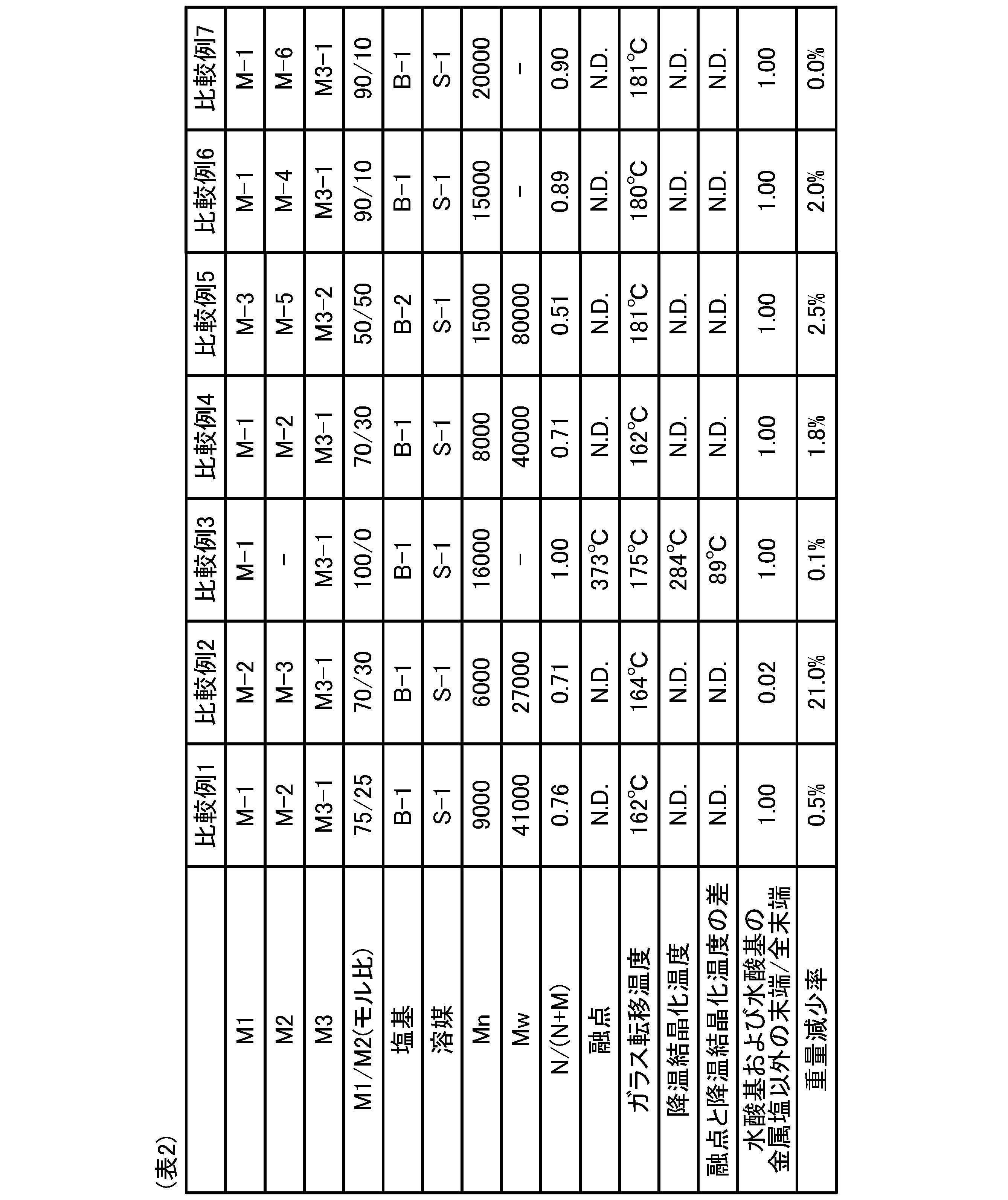
攪拌装置、窒素導入管、ディーンスターク管を備えた300mLセパラブルフラスコに、芳香族化合物(M1)としてヒドロキノン 8.37g(76.0mmol)、芳香族化合物(M2)としてレゾルシノール 0.44g(4.0mmol)、ベンゾニトリル骨格を持つ化合物(M3)として2,6-ジクロロベンゾニトリル 13.93g(81.0mmol)、塩基として炭酸ナトリウム 9.33g(88.0mmol)を仕込み、窒素雰囲気下で、NMP 80mL、トルエン 3mLを加え、160℃で0.5時間、次いで、200℃で5時間反応させた。反応終了後、室温まで冷却し、NMP 80mL、水600mLを加えた。得られた固形物をさらに温水(80℃)600mLで洗浄することにより、14.0gの白色固体を得た。NMR測定を行った結果、6.97-6.99ppmに、クロロ基末端由来のピーク、7.11-7.13ppmに、水酸基末端由来のピーク、7.16ppmに、レゾルシノール由来のピーク(2位のプロトン1個分)、7.41ppmに、ヒドロキノン由来のピーク(2位、3位、5位、6位のプロトン4個分)、7.59-7.62pmに主鎖のベンゾニトリル骨格のピーク(3位のプロトン1個分)が観察され、それぞれの積分値の比から、[N/(N+M)]、分子量(Mn)、および、両末端に対するハロゲノ基の比率を算出した。融点(Tm)は、341℃、ガラス転移温度(Tg)は、176℃、降温結晶化温度(Tc)は、265℃で、「融点-降温結晶化温度」は、76℃であった。融点+30℃で30分保持した際の重量減少率は0.2%であった。
ヒドロキノンの使用量を8.02g(72.8mmol)、レゾルシノールの使用量を0.79g(7.2mmol)、炭酸ナトリウムの使用量を8.48g(80.0mmol)とした以外は、実施例1と同様の操作を行うことで、14.1gの白色固体を得た。得られた固体を用いて、IR測定を行った結果、2230cm-1、1580cm-1、1460cm-1、1240cm-1、1020cm-1、850cm-1、780cm-1に、結晶性ポリエーテルニトリル骨格を示すピークが観察された。
ヒドロキノンの使用量を8.79g(79.8mmol)、芳香族化合物(M2)として4,4’-ジヒドロキシビフェニル 0.04g(0.2mmol)を用いた以外は、実施例1と同様の操作を行うことで、14.8gの白色固体を得た。
芳香族化合物(M2)として2,2-ビス(4-ヒドロキシフェニル)プロパン 0.91g(4.0mmol)を用いた以外は、実施例1と同様の操作を行うことで、15.0gの白色固体を得た。
攪拌装置、窒素導入管、ディーンスターク管を備えた300mLセパラブルフラスコに、芳香族化合物(M1)としてヒドロキノン 8.02g(72.8mmol)、芳香族化合物(M2)として4,4’-ジヒドロキシビフェニル 1.34g(7.2mmol)、分子量調節剤として4-tert-ブチルフェノール 0.12g(0.8mmol)、ベンゾニトリル骨格を有する化合物(M3)として2,6-ジクロロベンゾニトリル 13.93g(81.0mmol)、塩基として炭酸ナトリウム 9.33g(88.0mmol)を仕込み、窒素雰囲気下で、NMP 80mL、トルエン 3mLを加え、160℃で0.5時間、次いで、200℃で5時間反応させた。反応終了後、室温まで冷却し、NMP 80mL、水600mLを加えた。得られた固形物をさらに温水(80℃)600mLで洗浄することにより、14.0gの白色固体を得た。
芳香族化合物(M1)としてレゾルシノール 8.37g(76.0mmol)、芳香族化合物(M2)としてヒドロキノン 0.44g(4.0mmol)を用いた以外は、実施例1と同様の操作を行うことで、14.0gの白色固体を得た。分子量(Mn、Mw)は、GPC測定により算出した。
芳香族化合物(M2)としてカテコール 0.44g(4.0mmol)を用いた以外は、実施例1と同様の操作を行うことで、13.9gの白色固体を得た。
芳香族化合物(M1)として4,4’-ジヒドロキシビフェニル 14.86g(79.8mmol)を使用し、レゾルシノールの使用量を0.02g(0.2mmol)とした以外は、実施例1と同様の操作を行うことで、14.8gの白色固体を得た。分子量(Mn、Mw)は、GPC測定により算出した。
[実施例9]
ヒドロキノンの使用量を 8.02g(72.8mmol)、芳香族化合物(M2)としてレゾルシノール 0.79g(7.2mmol)を使用し、4-tert-ブチルフェノールの使用量を 0.24g(1.6mmol)とした以外は、実施例5と同様の操作を行うことで、13.8gの白色固体を得た。
ヒドロキノンの使用量を6.61g(60.0mmol)、レゾルシノールの使用量を2.20g(20.0mmol)、2,6-ジクロロベンゾニトリルの使用量を14.10g(82.0mmol)とした以外は、実施例1と同様の操作を行うことで、14.1gの白色固体を得た。分子量(Mn、Mw)は、GPC測定により算出した。
芳香族化合物(M1)としてレゾルシノール 6.17g(56.0mmol)、芳香族化合物(M2)として4,4’-ジヒドロキシビフェニル 4.47g(24.0mmol)を使用し、2,6-ジクロロベンゾニトリルの使用量を12.11g(70.4mmol)とした以外は、実施例1と同様の操作を行うことで14.2gの、白色固体を得た。分子量(Mn、Mw)は、GPC測定により算出した。
攪拌装置、窒素導入管、ディーンスターク管を備えた300mLセパラブルフラスコに、ヒドロキノン 8.81g(80mmol)、2,6-ジクロロベンゾニトリル 14.10g(82mmol)、炭酸ナトリウム 9.75g(92mmol)を仕込み、窒素雰囲気下で、NMP 80mL、トルエン 3mLを加え、160℃で0.5時間、次いで、200℃で5時間反応させた。反応終了後、室温まで冷却し、NMP 80mL、水600mLを加えた。得られた固形物をさらに温水(80℃)600mLで洗浄することにより、14.0gの白色固体を得た。
[比較例4]
ヒドロキノンの使用量を6.17g(56.0mmol)、レゾルシノールの使用量を2.64g(24.0mmol)、2,6-ジクロロベンゾニトリルの使用量を14.10g(82.0mmol)とした以外は、実施例1と同様の操作を行うことで、14.0gの白色固体を得た。分子量(Mn、Mw)は、GPC測定により算出した。
[比較例5]
芳香族化合物(M1)として4,4’-ジヒドロキシビフェニル 7.45g(40.0mmol)、芳香族化合物(M2)として1,6-ジヒドロキシナフタレン 6.41g(40.0mmol)、ベンゾニトリル骨格を有する化合物(M3)として2,6-ジフルオロベンゾニトリル 11.27g(81.0mmol)、塩基として炭酸カリウム 12.16g(88.0mmol)を使用した以外は、実施例1と同様の操作を行うことで、18.2gの白色固体を得た。分子量(Mn、Mw)は、GPC測定により算出した。
[比較例6]
ヒドロキノンの使用量を 7.93g(72.0mmol)、芳香族化合物(M2)として2,2-ビス(4-ヒドロキシフェニル)プロパン 1.83g(8.0mmol)を使用した以外は、実施例1と同様の操作を行うことで、15.0gの白色固体を得た。
[比較例7]
ヒドロキノンの使用量を 7.93g(72.0mmol)、芳香族化合物(M2)としてカテコール 0.88g(8.0mmol)を使用した以外は、実施例1と同様の操作を行うことで、14.0gの白色固体を得た。

Claims (6)
- 融点と降温結晶化温度の差が40℃以上100℃以下であり、かつ式(I)で示される繰り返し単位をN個、および式(II)で示される繰り返し単位をM個有し、NとMは、0.90<[N/(N+M)]<1.00の関係を満足する整数である、結晶性ポリエーテルニトリル。


- 式(III)で示される繰り返し単位をN個、および式(IV)で示される繰り返し単位をM個有し、NとMは、0.90<[N/(N+M)]<1.00の関係を満足する整数である、請求項1に記載の結晶性ポリエーテルニトリル。

- 式(V)で示される繰り返し単位をN個、および式(VI)で示される繰り返し単位をM個有し、NとMは、0.90<[N/(N+M)]<1.00の関係を満足する整数である、請求項1に記載の結晶性ポリエーテルニトリル。

- Ar1が、パラフェニレン骨格、または、メタフェニレン骨格である、請求項1~3のいずれかに記載の結晶性ポリエーテルニトリル。
- 融点が280℃以上360℃以下である、請求項1~4のいずれかに記載の結晶性ポリエーテルニトリル。
- 熱重量分析(TG)において非酸化性雰囲気下、融点+30℃で30分保持した際の重量減少率が、5%以下である、請求項1~5のいずれかに記載の結晶性ポリエーテルニトリル。
Priority Applications (5)
| Application Number | Priority Date | Filing Date | Title |
|---|---|---|---|
| KR1020227039053A KR20230016625A (ko) | 2020-05-28 | 2021-05-24 | 결정성 폴리에테르니트릴 |
| US17/927,327 US12570799B2 (en) | 2020-05-28 | 2021-05-24 | Crystalline polyethernitrile |
| CN202180037789.6A CN115667364A (zh) | 2020-05-28 | 2021-05-24 | 结晶性聚醚腈 |
| EP21812402.2A EP4159787A4 (en) | 2020-05-28 | 2021-05-24 | CRYSTALLINE NITRILE POLYETHER |
| JP2021530889A JP7666323B2 (ja) | 2020-05-28 | 2021-05-24 | 結晶性ポリエーテルニトリル |
Applications Claiming Priority (8)
| Application Number | Priority Date | Filing Date | Title |
|---|---|---|---|
| JP2020-092842 | 2020-05-28 | ||
| JP2020092843 | 2020-05-28 | ||
| JP2020092842 | 2020-05-28 | ||
| JP2020-092843 | 2020-05-28 | ||
| JP2020092844 | 2020-05-28 | ||
| JP2020-092844 | 2020-05-28 | ||
| JP2020215722 | 2020-12-24 | ||
| JP2020-215722 | 2020-12-24 |
Publications (1)
| Publication Number | Publication Date |
|---|---|
| WO2021241492A1 true WO2021241492A1 (ja) | 2021-12-02 |
Family
ID=78744393
Family Applications (1)
| Application Number | Title | Priority Date | Filing Date |
|---|---|---|---|
| PCT/JP2021/019592 Ceased WO2021241492A1 (ja) | 2020-05-28 | 2021-05-24 | 結晶性ポリエーテルニトリル |
Country Status (6)
| Country | Link |
|---|---|
| US (1) | US12570799B2 (ja) |
| EP (1) | EP4159787A4 (ja) |
| JP (1) | JP7666323B2 (ja) |
| KR (1) | KR20230016625A (ja) |
| CN (1) | CN115667364A (ja) |
| WO (1) | WO2021241492A1 (ja) |
Cited By (4)
| Publication number | Priority date | Publication date | Assignee | Title |
|---|---|---|---|---|
| WO2023188842A1 (ja) * | 2022-03-29 | 2023-10-05 | 東レ株式会社 | ポリエーテルニトリルフィルム、及びポリエーテルニトリルフィルムの製造方法 |
| WO2024053304A1 (ja) | 2022-09-06 | 2024-03-14 | 本州化学工業株式会社 | 結晶化速度の向上したポリエーテルニトリル及びその製造方法、ポリエーテルニトリル樹脂組成物及びその製造方法 |
| WO2025115696A1 (ja) * | 2023-11-28 | 2025-06-05 | 東レ株式会社 | ポリエーテルニトリルおよびポリエーテルニトリル含有炭素繊維複合材 |
| WO2025187485A1 (ja) * | 2024-03-05 | 2025-09-12 | 本州化学工業株式会社 | ポリエーテルニトリル及びその製造方法 |
Citations (9)
| Publication number | Priority date | Publication date | Assignee | Title |
|---|---|---|---|---|
| JPS6157619A (ja) | 1984-08-09 | 1986-03-24 | Idemitsu Kosan Co Ltd | 新規シアノアリ−ルエ−テル重合体とその製法 |
| JPS63270733A (ja) | 1987-04-30 | 1988-11-08 | Idemitsu Kosan Co Ltd | ポリシアノアリ−ルエ−テルの製造方法 |
| JPS6362526B2 (ja) | 1984-01-09 | 1988-12-02 | ||
| JPH0443019A (ja) * | 1990-06-08 | 1992-02-13 | Idemitsu Kosan Co Ltd | 耐熱性フィルムの製造方法 |
| JPH0578576B2 (ja) | 1986-03-25 | 1993-10-29 | Idemitsu Kosan Co | |
| JPH05339363A (ja) * | 1992-06-10 | 1993-12-21 | Idemitsu Kosan Co Ltd | 芳香族ポリエーテル系共重合体の製造法 |
| JPH0632893A (ja) * | 1992-07-15 | 1994-02-08 | Idemitsu Kosan Co Ltd | 芳香族ポリエーテル及びその製造法 |
| JPH0632892A (ja) * | 1992-07-15 | 1994-02-08 | Idemitsu Kosan Co Ltd | 芳香族ポリエーテル及びその製造方法 |
| JPH06279582A (ja) * | 1993-03-26 | 1994-10-04 | Idemitsu Kosan Co Ltd | 芳香族ポリエーテルの製造法及び芳香族ポリエーテル |
Family Cites Families (13)
| Publication number | Priority date | Publication date | Assignee | Title |
|---|---|---|---|---|
| US4703104A (en) * | 1985-02-22 | 1987-10-27 | Idemitsu Kosan Company Limited | Preparation of cyanoaryl ether copolymer |
| US4640974A (en) * | 1985-02-22 | 1987-02-03 | Idemitsu Kosan Company Limited | Polycyanoaryl ether films and fibers |
| JPS6362526A (ja) | 1986-09-01 | 1988-03-18 | Nissin Electric Co Ltd | 除湿装置 |
| EP0413257A3 (en) | 1989-08-14 | 1992-06-03 | The Dow Chemical Company | Cyclic poly(aryl ether) oligomers, a process for preparation thereof, and polymerization of cyclic poly (aryl ether) oligomers |
| JPH0578576A (ja) | 1991-09-19 | 1993-03-30 | Asahi Chem Ind Co Ltd | ポリアリーレンスルフイド樹脂組成物 |
| CN1058729C (zh) | 1994-12-13 | 2000-11-22 | 四川联合大学 | 一种聚芳醚腈及其制造方法 |
| CN101050277A (zh) * | 2006-06-30 | 2007-10-10 | 电子科技大学 | 一种含间苯链节的聚芳醚腈共聚物及其制备方法 |
| CN101948568B (zh) | 2010-09-16 | 2011-12-07 | 电子科技大学 | 一种聚芳醚腈树脂粉末的制备方法 |
| CN102492131B (zh) | 2011-11-28 | 2014-04-23 | 电子科技大学 | 聚芳醚腈树脂、聚芳醚腈薄膜及其制备方法 |
| CN102532516A (zh) * | 2011-12-16 | 2012-07-04 | 四川飞亚新材料有限公司 | 聚芳醚腈树脂、聚芳醚腈纤维及其制备方法 |
| CN102516528A (zh) | 2011-12-16 | 2012-06-27 | 四川飞亚新材料有限公司 | 一种聚芳醚腈树脂、聚芳醚腈纤维及其制备方法 |
| CN102766255A (zh) | 2012-07-19 | 2012-11-07 | 电子科技大学 | 聚芳醚腈树脂及其工业化合成方法 |
| CN110305312B (zh) | 2019-07-05 | 2021-11-23 | 电子科技大学 | 一种高分子量聚芳醚腈的合成方法 |
-
2021
- 2021-05-24 CN CN202180037789.6A patent/CN115667364A/zh active Pending
- 2021-05-24 EP EP21812402.2A patent/EP4159787A4/en active Pending
- 2021-05-24 KR KR1020227039053A patent/KR20230016625A/ko active Pending
- 2021-05-24 WO PCT/JP2021/019592 patent/WO2021241492A1/ja not_active Ceased
- 2021-05-24 US US17/927,327 patent/US12570799B2/en active Active
- 2021-05-24 JP JP2021530889A patent/JP7666323B2/ja active Active
Patent Citations (9)
| Publication number | Priority date | Publication date | Assignee | Title |
|---|---|---|---|---|
| JPS6362526B2 (ja) | 1984-01-09 | 1988-12-02 | ||
| JPS6157619A (ja) | 1984-08-09 | 1986-03-24 | Idemitsu Kosan Co Ltd | 新規シアノアリ−ルエ−テル重合体とその製法 |
| JPH0578576B2 (ja) | 1986-03-25 | 1993-10-29 | Idemitsu Kosan Co | |
| JPS63270733A (ja) | 1987-04-30 | 1988-11-08 | Idemitsu Kosan Co Ltd | ポリシアノアリ−ルエ−テルの製造方法 |
| JPH0443019A (ja) * | 1990-06-08 | 1992-02-13 | Idemitsu Kosan Co Ltd | 耐熱性フィルムの製造方法 |
| JPH05339363A (ja) * | 1992-06-10 | 1993-12-21 | Idemitsu Kosan Co Ltd | 芳香族ポリエーテル系共重合体の製造法 |
| JPH0632893A (ja) * | 1992-07-15 | 1994-02-08 | Idemitsu Kosan Co Ltd | 芳香族ポリエーテル及びその製造法 |
| JPH0632892A (ja) * | 1992-07-15 | 1994-02-08 | Idemitsu Kosan Co Ltd | 芳香族ポリエーテル及びその製造方法 |
| JPH06279582A (ja) * | 1993-03-26 | 1994-10-04 | Idemitsu Kosan Co Ltd | 芳香族ポリエーテルの製造法及び芳香族ポリエーテル |
Non-Patent Citations (2)
| Title |
|---|
| HIGH PERFORMANCE POLYMERS, vol. 31, 2019, pages 310 - 320 |
| See also references of EP4159787A4 |
Cited By (4)
| Publication number | Priority date | Publication date | Assignee | Title |
|---|---|---|---|---|
| WO2023188842A1 (ja) * | 2022-03-29 | 2023-10-05 | 東レ株式会社 | ポリエーテルニトリルフィルム、及びポリエーテルニトリルフィルムの製造方法 |
| WO2024053304A1 (ja) | 2022-09-06 | 2024-03-14 | 本州化学工業株式会社 | 結晶化速度の向上したポリエーテルニトリル及びその製造方法、ポリエーテルニトリル樹脂組成物及びその製造方法 |
| WO2025115696A1 (ja) * | 2023-11-28 | 2025-06-05 | 東レ株式会社 | ポリエーテルニトリルおよびポリエーテルニトリル含有炭素繊維複合材 |
| WO2025187485A1 (ja) * | 2024-03-05 | 2025-09-12 | 本州化学工業株式会社 | ポリエーテルニトリル及びその製造方法 |
Also Published As
| Publication number | Publication date |
|---|---|
| JP7666323B2 (ja) | 2025-04-22 |
| KR20230016625A (ko) | 2023-02-02 |
| EP4159787A1 (en) | 2023-04-05 |
| EP4159787A4 (en) | 2024-06-26 |
| JPWO2021241492A1 (ja) | 2021-12-02 |
| CN115667364A (zh) | 2023-01-31 |
| US20230220159A1 (en) | 2023-07-13 |
| US12570799B2 (en) | 2026-03-10 |
Similar Documents
| Publication | Publication Date | Title |
|---|---|---|
| JP7666323B2 (ja) | 結晶性ポリエーテルニトリル | |
| US4906784A (en) | Thermoplastic polyetherketones | |
| EP0192177B1 (en) | Copolymer and process for producing the same | |
| US4757126A (en) | Process for preparing crystalline aromatic polyetherketone | |
| US8501896B2 (en) | High temperature poly(aryl ether)s containing a phthalazinone moiety | |
| JP2022071959A (ja) | ポリエーテルニトリル | |
| JPH0196213A (ja) | 芳香族ポリエーテルケトン類の製造方法 | |
| JPH02272025A (ja) | 芳香族ポリエーテルケトン類の製造方法 | |
| JP2023062400A (ja) | 共重合ポリエーテルニトリル | |
| JPS627730A (ja) | 結晶性芳香族ポリエ−テルケトンの製造方法 | |
| JP2023145849A (ja) | ポリエーテルニトリル粒子 | |
| JP2022115276A (ja) | ポリエーテルニトリル | |
| CN103619909B (zh) | 聚苯醚醚酮的制造方法 | |
| JPH07138360A (ja) | 結晶性ポリエーテルの製造方法 | |
| JP2021050315A (ja) | 反応性ポリアリールエーテルケトン | |
| JP2023062393A (ja) | ポリエーテルニトリル | |
| JP2572268B2 (ja) | 芳香族エーテルケトン系共重合体 | |
| JP2024008813A (ja) | ポリエーテルニトリル及びそれからなるフィルム | |
| WO2023188842A1 (ja) | ポリエーテルニトリルフィルム、及びポリエーテルニトリルフィルムの製造方法 | |
| JP2540521B2 (ja) | 熱可塑性芳香族ポリエ−テルピリジンおよびその製造方法 | |
| JP6221311B2 (ja) | ポリフェニレンエーテルエーテルケトンの製造方法 | |
| JPH05339363A (ja) | 芳香族ポリエーテル系共重合体の製造法 | |
| WO2023167177A1 (ja) | ポリエーテルケトンケトン、及びその製造方法 | |
| JPS61168629A (ja) | 芳香族ポリスルホン/ポリチオエ−テルスルホン共重合体の製造方法 | |
| JPS59164326A (ja) | 芳香族ポリエ−テルケトン系共重合体 |
Legal Events
| Date | Code | Title | Description |
|---|---|---|---|
| ENP | Entry into the national phase |
Ref document number: 2021530889 Country of ref document: JP Kind code of ref document: A |
|
| 121 | Ep: the epo has been informed by wipo that ep was designated in this application |
Ref document number: 21812402 Country of ref document: EP Kind code of ref document: A1 |
|
| NENP | Non-entry into the national phase |
Ref country code: DE |
|
| ENP | Entry into the national phase |
Ref document number: 2021812402 Country of ref document: EP Effective date: 20230102 |
|
| WWG | Wipo information: grant in national office |
Ref document number: 17927327 Country of ref document: US |