WO2022118539A1 - 防錆塗料組成物、防錆皮膜、および物品、並びに、亜鉛系複合粒子、および亜鉛系複合粒子含有組成物 - Google Patents
防錆塗料組成物、防錆皮膜、および物品、並びに、亜鉛系複合粒子、および亜鉛系複合粒子含有組成物 Download PDFInfo
- Publication number
- WO2022118539A1 WO2022118539A1 PCT/JP2021/037790 JP2021037790W WO2022118539A1 WO 2022118539 A1 WO2022118539 A1 WO 2022118539A1 JP 2021037790 W JP2021037790 W JP 2021037790W WO 2022118539 A1 WO2022118539 A1 WO 2022118539A1
- Authority
- WO
- WIPO (PCT)
- Prior art keywords
- zinc
- rust
- mass
- preventive
- phosphoric acid
- Prior art date
- Legal status (The legal status is an assumption and is not a legal conclusion. Google has not performed a legal analysis and makes no representation as to the accuracy of the status listed.)
- Ceased
Links
Images



Classifications
-
- C—CHEMISTRY; METALLURGY
- C09—DYES; PAINTS; POLISHES; NATURAL RESINS; ADHESIVES; COMPOSITIONS NOT OTHERWISE PROVIDED FOR; APPLICATIONS OF MATERIALS NOT OTHERWISE PROVIDED FOR
- C09D—COATING COMPOSITIONS, e.g. PAINTS, VARNISHES OR LACQUERS; FILLING PASTES; CHEMICAL PAINT OR INK REMOVERS; INKS; CORRECTING FLUIDS; WOODSTAINS; PASTES OR SOLIDS FOR COLOURING OR PRINTING; USE OF MATERIALS THEREFOR
- C09D5/00—Coating compositions, e.g. paints, varnishes or lacquers, characterised by their physical nature or the effects produced; Filling pastes
- C09D5/08—Anti-corrosive paints
- C09D5/10—Anti-corrosive paints containing metal dust
- C09D5/106—Anti-corrosive paints containing metal dust containing Zn
-
- B—PERFORMING OPERATIONS; TRANSPORTING
- B22—CASTING; POWDER METALLURGY
- B22F—WORKING METALLIC POWDER; MANUFACTURE OF ARTICLES FROM METALLIC POWDER; MAKING METALLIC POWDER; APPARATUS OR DEVICES SPECIALLY ADAPTED FOR METALLIC POWDER
- B22F1/00—Metallic powder; Treatment of metallic powder, e.g. to facilitate working or to improve properties
- B22F1/06—Metallic powder characterised by the shape of the particles
- B22F1/068—Flake-like particles
-
- B—PERFORMING OPERATIONS; TRANSPORTING
- B22—CASTING; POWDER METALLURGY
- B22F—WORKING METALLIC POWDER; MANUFACTURE OF ARTICLES FROM METALLIC POWDER; MAKING METALLIC POWDER; APPARATUS OR DEVICES SPECIALLY ADAPTED FOR METALLIC POWDER
- B22F1/00—Metallic powder; Treatment of metallic powder, e.g. to facilitate working or to improve properties
- B22F1/10—Metallic powder containing lubricating or binding agents; Metallic powder containing organic material
-
- B—PERFORMING OPERATIONS; TRANSPORTING
- B22—CASTING; POWDER METALLURGY
- B22F—WORKING METALLIC POWDER; MANUFACTURE OF ARTICLES FROM METALLIC POWDER; MAKING METALLIC POWDER; APPARATUS OR DEVICES SPECIALLY ADAPTED FOR METALLIC POWDER
- B22F1/00—Metallic powder; Treatment of metallic powder, e.g. to facilitate working or to improve properties
- B22F1/10—Metallic powder containing lubricating or binding agents; Metallic powder containing organic material
- B22F1/102—Metallic powder coated with organic material
-
- B—PERFORMING OPERATIONS; TRANSPORTING
- B22—CASTING; POWDER METALLURGY
- B22F—WORKING METALLIC POWDER; MANUFACTURE OF ARTICLES FROM METALLIC POWDER; MAKING METALLIC POWDER; APPARATUS OR DEVICES SPECIALLY ADAPTED FOR METALLIC POWDER
- B22F1/00—Metallic powder; Treatment of metallic powder, e.g. to facilitate working or to improve properties
- B22F1/14—Treatment of metallic powder
- B22F1/145—Chemical treatment, e.g. passivation or decarburisation
-
- C—CHEMISTRY; METALLURGY
- C09—DYES; PAINTS; POLISHES; NATURAL RESINS; ADHESIVES; COMPOSITIONS NOT OTHERWISE PROVIDED FOR; APPLICATIONS OF MATERIALS NOT OTHERWISE PROVIDED FOR
- C09C—TREATMENT OF INORGANIC MATERIALS, OTHER THAN FIBROUS FILLERS, TO ENHANCE THEIR PIGMENTING OR FILLING PROPERTIES ; PREPARATION OF CARBON BLACK ; PREPARATION OF INORGANIC MATERIALS WHICH ARE NO SINGLE CHEMICAL COMPOUNDS AND WHICH ARE MAINLY USED AS PIGMENTS OR FILLERS
- C09C1/00—Treatment of specific inorganic materials other than fibrous fillers; Preparation of carbon black
- C09C1/04—Compounds of zinc
-
- C—CHEMISTRY; METALLURGY
- C09—DYES; PAINTS; POLISHES; NATURAL RESINS; ADHESIVES; COMPOSITIONS NOT OTHERWISE PROVIDED FOR; APPLICATIONS OF MATERIALS NOT OTHERWISE PROVIDED FOR
- C09C—TREATMENT OF INORGANIC MATERIALS, OTHER THAN FIBROUS FILLERS, TO ENHANCE THEIR PIGMENTING OR FILLING PROPERTIES ; PREPARATION OF CARBON BLACK ; PREPARATION OF INORGANIC MATERIALS WHICH ARE NO SINGLE CHEMICAL COMPOUNDS AND WHICH ARE MAINLY USED AS PIGMENTS OR FILLERS
- C09C3/00—Treatment in general of inorganic materials, other than fibrous fillers, to enhance their pigmenting or filling properties
- C09C3/06—Treatment with inorganic compounds
-
- C—CHEMISTRY; METALLURGY
- C09—DYES; PAINTS; POLISHES; NATURAL RESINS; ADHESIVES; COMPOSITIONS NOT OTHERWISE PROVIDED FOR; APPLICATIONS OF MATERIALS NOT OTHERWISE PROVIDED FOR
- C09C—TREATMENT OF INORGANIC MATERIALS, OTHER THAN FIBROUS FILLERS, TO ENHANCE THEIR PIGMENTING OR FILLING PROPERTIES ; PREPARATION OF CARBON BLACK ; PREPARATION OF INORGANIC MATERIALS WHICH ARE NO SINGLE CHEMICAL COMPOUNDS AND WHICH ARE MAINLY USED AS PIGMENTS OR FILLERS
- C09C3/00—Treatment in general of inorganic materials, other than fibrous fillers, to enhance their pigmenting or filling properties
- C09C3/06—Treatment with inorganic compounds
- C09C3/063—Coating
-
- C—CHEMISTRY; METALLURGY
- C09—DYES; PAINTS; POLISHES; NATURAL RESINS; ADHESIVES; COMPOSITIONS NOT OTHERWISE PROVIDED FOR; APPLICATIONS OF MATERIALS NOT OTHERWISE PROVIDED FOR
- C09D—COATING COMPOSITIONS, e.g. PAINTS, VARNISHES OR LACQUERS; FILLING PASTES; CHEMICAL PAINT OR INK REMOVERS; INKS; CORRECTING FLUIDS; WOODSTAINS; PASTES OR SOLIDS FOR COLOURING OR PRINTING; USE OF MATERIALS THEREFOR
- C09D183/00—Coating compositions based on macromolecular compounds obtained by reactions forming in the main chain of the macromolecule a linkage containing silicon, with or without sulfur, nitrogen, oxygen, or carbon only; Coating compositions based on derivatives of such polymers
- C09D183/02—Polysilicates
-
- C—CHEMISTRY; METALLURGY
- C09—DYES; PAINTS; POLISHES; NATURAL RESINS; ADHESIVES; COMPOSITIONS NOT OTHERWISE PROVIDED FOR; APPLICATIONS OF MATERIALS NOT OTHERWISE PROVIDED FOR
- C09D—COATING COMPOSITIONS, e.g. PAINTS, VARNISHES OR LACQUERS; FILLING PASTES; CHEMICAL PAINT OR INK REMOVERS; INKS; CORRECTING FLUIDS; WOODSTAINS; PASTES OR SOLIDS FOR COLOURING OR PRINTING; USE OF MATERIALS THEREFOR
- C09D183/00—Coating compositions based on macromolecular compounds obtained by reactions forming in the main chain of the macromolecule a linkage containing silicon, with or without sulfur, nitrogen, oxygen, or carbon only; Coating compositions based on derivatives of such polymers
- C09D183/04—Polysiloxanes
-
- C—CHEMISTRY; METALLURGY
- C09—DYES; PAINTS; POLISHES; NATURAL RESINS; ADHESIVES; COMPOSITIONS NOT OTHERWISE PROVIDED FOR; APPLICATIONS OF MATERIALS NOT OTHERWISE PROVIDED FOR
- C09D—COATING COMPOSITIONS, e.g. PAINTS, VARNISHES OR LACQUERS; FILLING PASTES; CHEMICAL PAINT OR INK REMOVERS; INKS; CORRECTING FLUIDS; WOODSTAINS; PASTES OR SOLIDS FOR COLOURING OR PRINTING; USE OF MATERIALS THEREFOR
- C09D201/00—Coating compositions based on unspecified macromolecular compounds
-
- C—CHEMISTRY; METALLURGY
- C09—DYES; PAINTS; POLISHES; NATURAL RESINS; ADHESIVES; COMPOSITIONS NOT OTHERWISE PROVIDED FOR; APPLICATIONS OF MATERIALS NOT OTHERWISE PROVIDED FOR
- C09D—COATING COMPOSITIONS, e.g. PAINTS, VARNISHES OR LACQUERS; FILLING PASTES; CHEMICAL PAINT OR INK REMOVERS; INKS; CORRECTING FLUIDS; WOODSTAINS; PASTES OR SOLIDS FOR COLOURING OR PRINTING; USE OF MATERIALS THEREFOR
- C09D5/00—Coating compositions, e.g. paints, varnishes or lacquers, characterised by their physical nature or the effects produced; Filling pastes
- C09D5/08—Anti-corrosive paints
- C09D5/10—Anti-corrosive paints containing metal dust
-
- C—CHEMISTRY; METALLURGY
- C09—DYES; PAINTS; POLISHES; NATURAL RESINS; ADHESIVES; COMPOSITIONS NOT OTHERWISE PROVIDED FOR; APPLICATIONS OF MATERIALS NOT OTHERWISE PROVIDED FOR
- C09D—COATING COMPOSITIONS, e.g. PAINTS, VARNISHES OR LACQUERS; FILLING PASTES; CHEMICAL PAINT OR INK REMOVERS; INKS; CORRECTING FLUIDS; WOODSTAINS; PASTES OR SOLIDS FOR COLOURING OR PRINTING; USE OF MATERIALS THEREFOR
- C09D7/00—Features of coating compositions, not provided for in group C09D5/00; Processes for incorporating ingredients in coating compositions
- C09D7/40—Additives
- C09D7/60—Additives non-macromolecular
- C09D7/61—Additives non-macromolecular inorganic
- C09D7/62—Additives non-macromolecular inorganic modified by treatment with other compounds
-
- C—CHEMISTRY; METALLURGY
- C09—DYES; PAINTS; POLISHES; NATURAL RESINS; ADHESIVES; COMPOSITIONS NOT OTHERWISE PROVIDED FOR; APPLICATIONS OF MATERIALS NOT OTHERWISE PROVIDED FOR
- C09D—COATING COMPOSITIONS, e.g. PAINTS, VARNISHES OR LACQUERS; FILLING PASTES; CHEMICAL PAINT OR INK REMOVERS; INKS; CORRECTING FLUIDS; WOODSTAINS; PASTES OR SOLIDS FOR COLOURING OR PRINTING; USE OF MATERIALS THEREFOR
- C09D7/00—Features of coating compositions, not provided for in group C09D5/00; Processes for incorporating ingredients in coating compositions
- C09D7/40—Additives
- C09D7/70—Additives characterised by shape, e.g. fibres, flakes or microspheres
-
- C—CHEMISTRY; METALLURGY
- C22—METALLURGY; FERROUS OR NON-FERROUS ALLOYS; TREATMENT OF ALLOYS OR NON-FERROUS METALS
- C22C—ALLOYS
- C22C1/00—Making non-ferrous alloys
- C22C1/04—Making non-ferrous alloys by powder metallurgy
- C22C1/0483—Alloys based on the low melting point metals Zn, Pb, Sn, Cd, In or Ga
-
- C—CHEMISTRY; METALLURGY
- C22—METALLURGY; FERROUS OR NON-FERROUS ALLOYS; TREATMENT OF ALLOYS OR NON-FERROUS METALS
- C22C—ALLOYS
- C22C18/00—Alloys based on zinc
-
- C—CHEMISTRY; METALLURGY
- C23—COATING METALLIC MATERIAL; COATING MATERIAL WITH METALLIC MATERIAL; CHEMICAL SURFACE TREATMENT; DIFFUSION TREATMENT OF METALLIC MATERIAL; COATING BY VACUUM EVAPORATION, BY SPUTTERING, BY ION IMPLANTATION OR BY CHEMICAL VAPOUR DEPOSITION, IN GENERAL; INHIBITING CORROSION OF METALLIC MATERIAL OR INCRUSTATION IN GENERAL
- C23C—COATING METALLIC MATERIAL; COATING MATERIAL WITH METALLIC MATERIAL; SURFACE TREATMENT OF METALLIC MATERIAL BY DIFFUSION INTO THE SURFACE, BY CHEMICAL CONVERSION OR SUBSTITUTION; COATING BY VACUUM EVAPORATION, BY SPUTTERING, BY ION IMPLANTATION OR BY CHEMICAL VAPOUR DEPOSITION, IN GENERAL
- C23C26/00—Coating not provided for in groups C23C2/00 - C23C24/00
-
- B—PERFORMING OPERATIONS; TRANSPORTING
- B22—CASTING; POWDER METALLURGY
- B22F—WORKING METALLIC POWDER; MANUFACTURE OF ARTICLES FROM METALLIC POWDER; MAKING METALLIC POWDER; APPARATUS OR DEVICES SPECIALLY ADAPTED FOR METALLIC POWDER
- B22F3/00—Manufacture of workpieces or articles from metallic powder characterised by the manner of compacting or sintering; Apparatus specially adapted therefor ; Presses and furnaces
- B22F3/24—After-treatment of workpieces or articles
- B22F2003/241—Chemical after-treatment on the surface
- B22F2003/242—Coating
-
- C—CHEMISTRY; METALLURGY
- C01—INORGANIC CHEMISTRY
- C01P—INDEXING SCHEME RELATING TO STRUCTURAL AND PHYSICAL ASPECTS OF SOLID INORGANIC COMPOUNDS
- C01P2004/00—Particle morphology
- C01P2004/20—Particle morphology extending in two dimensions, e.g. plate-like
-
- C—CHEMISTRY; METALLURGY
- C01—INORGANIC CHEMISTRY
- C01P—INDEXING SCHEME RELATING TO STRUCTURAL AND PHYSICAL ASPECTS OF SOLID INORGANIC COMPOUNDS
- C01P2004/00—Particle morphology
- C01P2004/30—Particle morphology extending in three dimensions
- C01P2004/32—Spheres
-
- C—CHEMISTRY; METALLURGY
- C08—ORGANIC MACROMOLECULAR COMPOUNDS; THEIR PREPARATION OR CHEMICAL WORKING-UP; COMPOSITIONS BASED THEREON
- C08G—MACROMOLECULAR COMPOUNDS OBTAINED OTHERWISE THAN BY REACTIONS ONLY INVOLVING UNSATURATED CARBON-TO-CARBON BONDS
- C08G77/00—Macromolecular compounds obtained by reactions forming a linkage containing silicon with or without sulfur, nitrogen, oxygen or carbon in the main chain of the macromolecule
- C08G77/02—Polysilicates
-
- C—CHEMISTRY; METALLURGY
- C08—ORGANIC MACROMOLECULAR COMPOUNDS; THEIR PREPARATION OR CHEMICAL WORKING-UP; COMPOSITIONS BASED THEREON
- C08K—Use of inorganic or non-macromolecular organic substances as compounding ingredients
- C08K3/00—Use of inorganic substances as compounding ingredients
- C08K3/02—Elements
- C08K3/08—Metals
- C08K2003/0893—Zinc
-
- C—CHEMISTRY; METALLURGY
- C08—ORGANIC MACROMOLECULAR COMPOUNDS; THEIR PREPARATION OR CHEMICAL WORKING-UP; COMPOSITIONS BASED THEREON
- C08K—Use of inorganic or non-macromolecular organic substances as compounding ingredients
- C08K9/00—Use of pretreated ingredients
- C08K9/02—Ingredients treated with inorganic substances
Definitions
- the present invention relates to a rust-preventive paint composition, a rust-preventive film, and an article.
- the present invention also relates to zinc-based composite particles useful for water-based paints and the like, and zinc-based composite particle-containing compositions.
- a rust-preventive coating composition containing zinc or zinc alloy particles or zinc or zinc alloy particles whose surface has been modified as a rust-preventive pigment in order to prevent corrosion of a metal or alloy such as iron. Things are widely known and used.
- Patent Document 1 describes a zinc having a pigment slurry obtained by mixing zinc flakes with alcohol and / or ketone and a zinc acid-based binder for binding zinc flakes as a main component.
- Rich paint a rust preventive paint containing a high concentration of zinc powder in an inorganic or organic binder
- Patent Document 2 discloses a coated zinc-containing metal flake having a colloidal silica film on the surface and a coating material containing the coated zinc-containing metal flake, which exhibits excellent rust preventive power.
- Patent Document 3 describes inorganic modified metal particles on the surface thereof, specifically, modified metal particles for corrosion prevention coating which are metal particles based on zinc or a zinc alloy having silicon dioxide, and the surface thereof.
- modified metal particles for corrosion prevention coating which are metal particles based on zinc or a zinc alloy having silicon dioxide, and the surface thereof.
- An anticorrosive coating composition containing modified metal particles is disclosed.
- Patent Document 4 and Patent Document 5 also contain a particulate metal containing zinc or a zinc alloy, a silane-based binder (silane-based binder), and a rust-preventive coating composition (corrosion-proof coating composition) containing water. Is disclosed.
- Patent Document 6 describes a scaly metal zinc powder containing 6 to 35% by weight of scaly metal aluminum powder in a binder aqueous solution containing an aqueous resin emulsion and a water-soluble silane coupling agent as a binder component.
- Weight average molecular weight obtained by hydrolyzing and shrink-polymerizing a coating film formed by coating the surface of a metal product to be coated with a non-chromium water-based metal rust preventive paint mixed as a rust preventive pigment and alkoxysilane using alcohol as a solvent.
- a rust-preventive coated metal product having a coating formed by applying a non-chromium surface treatment agent containing 1000 to 10000 of silane oligomers as a main component on the coating film.
- Japanese Unexamined Patent Publication No. 8-73778 Japanese Unexamined Patent Publication No. 6-9897 Japanese Unexamined Patent Publication No. 2018-70999 Special Table 2007-534794 Japanese Unexamined Patent Publication No. 2008-280538 Japanese Unexamined Patent Publication No. 2005-238001
- a water-based paint composition is required because it has a low impact on the environment.
- high stability of the rust-preventive pigment in water or an aqueous medium, and excellent rust-preventive performance and adhesion of the obtained rust-preventive film are required. It is extremely difficult to achieve both.
- the rust preventive pigment is zinc or zinc alloy particles, or zinc or zinc alloy particles having a thin silica (silicon dioxide) film on the surface, the stability of the rust preventive pigment in water or an aqueous medium.
- the stability of the rust preventive pigment in water or an aqueous medium is high, but sufficient rust preventive performance is obtained. Cannot be obtained.
- the rust-preventive pigment is zinc or zinc alloy particles or zinc or zinc alloy particles having a silica (silicon dioxide) film, the adhesion of the obtained rust-preventive film tends to be low.
- An object of the present invention is to provide a rust preventive pigment capable of achieving both high stability in water or an aqueous medium and excellent rust preventive performance and adhesion of the obtained rust preventive film. Further, the present invention provides a rust-preventive coating composition capable of obtaining a rust-preventive film having excellent stability of the rust-preventive pigment and excellent rust-preventive performance and adhesion, particularly a water-based paint composition containing water as a solvent. It also aims to provide.
- a rust-preventive coating composition comprising a rust-preventive pigment consisting of at least one of zinc or zinc alloy particles whose surface is at least partially treated with phosphoric acid.
- a rust preventive pigment composed of one or more of zinc or zinc alloy particles having a film containing at least one selected from inorganic phosphoric acid and inorganic phosphate on at least a part of the surface.
- Anti-rust coating composition [3] The rust-preventive coating composition according to the above [1] or [2], wherein the zinc or zinc alloy particles are substantially spherical or flake-shaped.
- the rust-preventive coating composition according to any one of the above [1] to [7] which further contains a hydrophilic organic solvent in addition to water.
- a zinc-based composite particle-containing composition comprising the zinc-based composite particles according to the above [12] or [13] and an amine compound.
- a rust preventive pigment capable of achieving both high stability in water or an aqueous medium and excellent rust preventive performance and adhesion of the obtained rust preventive film.
- a rust-preventive paint composition capable of obtaining a rust-preventive film having excellent stability of the rust-preventive pigment and excellent rust-preventive performance and adhesion, particularly a water-based paint composition containing water as a solvent. You can also provide things.
- a zinc-based composite particle having high stability even in water or an aqueous medium and a composition containing the zinc-based composite particle.
- the zinc-based composite particles can be particularly preferably used as a rust preventive pigment for an aqueous rust preventive paint composition.
- FIG. 1 shows changes over time in the amount of gas generated indicating decomposition of the rust-preventive pigments (phosphate-treated zinc flakes, untreated zinc flakes, or silica-treated zinc flakes) of Examples 1 and 2 and Comparative Examples 1 to 3 in water. It is a graph which shows.
- FIG. 2 shows the decomposition of the rust-preventive pigment (phosphoric acid-treated zinc flakes, untreated zinc flakes, or silica-treated zinc flakes) contained in the coating compositions of Examples 1 and 2 and Comparative Examples 1 to 3. It is a graph which shows the time-dependent change of the generation amount.
- FIG. 1 shows changes over time in the amount of gas generated indicating decomposition of the rust-preventive pigments (phosphate-treated zinc flakes, untreated zinc flakes, or silica-treated zinc flakes) of Examples 1 and 2 and Comparative Examples 1 to 3 in water. It is a graph which shows.
- FIG. 2 shows the decomposition of the rust-preventive pigment (
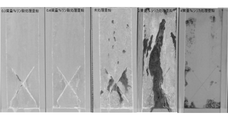
- FIG. 3 is a photograph of the iron plate on which the coating films of the coating compositions of Examples 1 and 2 and Comparative Examples 1 to 3 were formed, 500 hours after the start of the salt spray test.
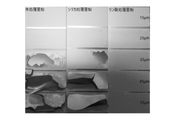
- FIG. 4 is a photograph showing the appearance of coating films having different film thicknesses formed from the coating compositions of Example 2 and Comparative Examples 1 and 3.
- FIG. 5 is a photograph of the iron plate on which the coating film of the coating composition of Example 3 and Comparative Example 4 was formed, 24 hours and 72 hours after the start of the salt spray test.
- the present embodiment a mode for carrying out the present invention (hereinafter, simply referred to as “the present embodiment”) will be described in detail.
- the following embodiments are examples for explaining the present invention, and are not intended to limit the present invention to the following contents.
- the present invention can be appropriately modified and carried out within the scope of the gist thereof.
- the rust-preventive pigment of the present embodiment consists of one or a mixture of zinc or zinc alloy particles having at least a part, preferably all of the surface treated with phosphoric acid.
- the rust-preventive pigment is used in the rust-preventive coating composition of the present embodiment, and is not limited to the zinc-based composite particles described later.
- the zinc alloy is not particularly limited as long as it is an alloy containing zinc, and is, for example, an alloy containing zinc and at least one selected from magnesium, aluminum, nickel, manganese, cobalt, tin, and chromium. Can be mentioned.
- the content of zinc in the zinc alloy is not particularly limited, but is usually preferably 50% by mass or more, and more preferably 55% by mass or more.
- zinc particles and particles of an alloy containing zinc and aluminum are preferable.
- the shape of the zinc or zinc alloy particles used in the present embodiment is not particularly limited, and examples thereof include a substantially spherical shape, a flake shape, a scaly shape, a thin plate shape, a lamellar plate shape, and the like, but usually, a substantially spherical shape or a substantially spherical shape or a lamellar shape. It is preferably in the form of flakes, and more preferably in the form of flakes. It should be noted that two or more kinds of zinc or zinc alloy particles having different shapes can be used in combination.
- the average particle size is usually preferably 15 ⁇ m or less, and more preferably 1 to 10 ⁇ m, although the average particle size is not particularly limited.
- the average particle size of the substantially spherical zinc or zinc alloy particles can be measured by a general laser diffraction particle size distribution device. Examples thereof include a laser diffraction / scattering particle size distribution measuring device LA-960V2 manufactured by Horiba, Ltd., and Microtrac (registered trademark) MT3000II manufactured by Microtrac Bell Co., Ltd.
- the average major axis thereof is usually preferably 2 to 50 ⁇ m, more preferably 3 to 30 ⁇ m, and the average thickness thereof is not particularly limited. Usually, it is preferably 5 ⁇ m or less, and more preferably 0.1 to 3 ⁇ m.
- the average aspect ratio (major axis / thickness) is usually preferably in the range of 1.5 to 500, and more preferably in the range of 10 to 200.
- the average major axis and average thickness of flaky zinc or zinc alloy particles can be measured with a general laser diffraction particle size distribution device. Examples thereof include a laser diffraction / scattering particle size distribution measuring device LA-960V2 manufactured by Horiba, Ltd., and Microtrac (registered trademark) MT3000II manufactured by Microtrac Bell Co., Ltd.
- the surface of the zinc or zinc alloy particles may or may not be smooth, and may have irregularities or the like formed on the surface, for example.
- the surface condition of the zinc or zinc alloy particles is not particularly limited.
- the zinc or zinc alloy particles may be obtained by subjecting the surface thereof to physical treatment such as unevenness formation, rolling, or chemical treatment such as oxidation. By performing such a physical treatment or a chemical treatment, it is possible to modify the physical characteristics of the particles, change the color such as blackening, and impart luster.
- the rust preventive pigment of the present embodiment is one in which at least a part, preferably the whole surface of the particles of zinc or a zinc alloy is treated with phosphoric acid, and at least a part, preferably the whole surface of the surface thereof.
- a preferred example is a layer modified with phosphoric acid, for example, one having a film containing at least one selected from inorganic phosphoric acid and inorganic phosphate.
- treated with phosphoric acid means that it is treated with phosphoric acid or phosphoric acid ion, and the compound used for the treatment is not limited to phosphoric acid, but is hydrolyzed to phosphorus. It may be a phosphoric acid compound that produces an acid ion.
- This surface treatment can be performed using an organic phosphate compound or an inorganic phosphate compound (phosphate or the like) that hydrolyzes to generate phosphate ions, but it is preferably performed using inorganic phosphate.
- the inorganic phosphoric acid for example, any of orthophosphoric acid, pyrophosphoric acid, triphosphoric acid, tetraphosphoric acid, metaphosphoric acid, phosphoric acid and the like can be preferably used, but orthophosphoric acid is more preferable.
- Inorganic phosphoric acid may be used alone or in combination of two or more.
- the zinc or zinc alloy particles which are the rust preventive pigments of the present embodiment and whose surface is at least partially, preferably entirely treated with phosphoric acid, are, for example, zinc or zinc alloy particles and inorganic phosphoric acid, preferably. Is suitably produced by surface-treating zinc or zinc alloy particles by uniformly kneading orthophosphoric acid, a hydrophilic organic solvent, a small amount of water, an amine compound, and a surfactant. be able to.
- the method for producing the rust preventive pigment of the present embodiment is not limited to this method.
- the hydrophilic organic solvent used preferably has an SP value of 8 to 12 (cal / cm 3 ) 1/2 as determined by the Fedors method. Further, it is preferable that the hydrogen bonding force term ⁇ h of the SP value obtained by the Hansen method is 6 (cal / cm 3 ) 1/2 or more.
- the hydrophilic organic solvent that can be used is not particularly limited, and for example, propylene glycol monomethyl ether, propylene glycol monoethyl ether, propylene glycol monobutyl ether, ethylene glycol monomethyl ether, ethylene glycol monoethyl ether (ethyl cellosolve), and the like. Examples thereof include ethylene glycol monobutyl ether (butyl cellosolve), ethanol, propanol, isopropanol, butanol, isobutanol, tert-butanol, diacetone alcohol, amyl alcohol, isoamyl alcohol, polyoxyethylene glycol and polyoxypropylene glycol.
- the hydrophilic organic solvent one kind may be used alone, or two or more kinds may be used in combination.
- the amine compound used is preferably a primary amine, and is preferably an aliphatic amine.
- the amine compound used is more preferably an aliphatic primary amine.
- the amine compound that can be used is not particularly limited, but for example, ethylamine, propylamine, butylamine, hexylamine, octylamine, decylamine, dodecylamine (laurylamine), tridecylamine, tetradecylamine, hexadecylamine, etc.
- Octadecylamine (stearylamine), isopropylamine, isobutylamine, 2-ethylhexylamine, isotridecylamine, dimethylamine, diethylamine, dipropylamine, dibutylamine, dihexylamine, dioctylamine, dilaurylamine, ditridecylamine, di Stearylamine, diisopropylamine, diisobutylamine, di (2-ethylhexyl) amine, diisotridecylamine, methylbutylamine, ethylbutylamine, ethylhexylamine, ethyllaurylamine, ethylstearylamine, isopropyloctylamine, isobutyl2-ethylhexylamine, trimethylamine , Triethylamine, Tripropylamine, Tributylamine, Trioctylamine, Trilau
- the surfactant to be used is preferably a nonionic surfactant (nonionic surfactant), preferably has an HLB value of 8 or more, and more preferably 8 to 13.
- the surfactant that can be used is not particularly limited, but for example, polyoxyethylene alkyl ether such as polyoxyethylene lauryl ether, polyoxyethylene alkyl phenyl ether, polyoxyethylene alkyl phenol ether, polyoxyethylene alkyl amide, and poly.
- the surfactant one type may be used alone, or two or more types may be used in combination.
- the amount of the inorganic phosphoric acid (preferably orthophosphoric acid) added is not particularly limited and may be appropriately selected, but usually 0.1 to 10 parts by mass is preferable with respect to 100 parts by mass of the zinc or zinc alloy particles. , 0.5 to 10 parts by mass is more preferable, and 0.5 to 5 parts by mass is particularly preferable. Further, the content of the phosphorus element in the film containing at least one selected from inorganic phosphoric acid and inorganic phosphate formed on the surface of zinc or zinc alloy particles is not particularly limited, but is usually zinc. Alternatively, the amount is preferably 0.05 to 2.5 parts by mass, and more preferably 0.2 to 1.5 parts by mass with respect to 100 parts by mass of the zinc alloy particles.
- the amount of the hydrophilic organic solvent added is not particularly limited and may be appropriately selected, but is usually preferably 5 to 100 parts by mass with respect to 100 parts by mass of the zinc or zinc alloy particles, and 10 to 60 parts by mass. More preferred.
- the amount of water added is not particularly limited and may be appropriately selected, but is usually preferably 0.05 to 10 parts by mass and 0.1 to 5 parts by mass with respect to 100 parts by mass of the zinc or zinc alloy particles. Is more preferable.
- the amount of the amine compound added is not particularly limited and may be appropriately selected, but is usually preferably 0.1 to 10 parts by mass and 0.5 to 5 parts by mass with respect to 100 parts by mass of the zinc or zinc alloy particles. Part is more preferable.
- the amount of the surfactant added is not particularly limited and may be appropriately selected, but is usually preferably 0.1 to 20 parts by mass and 0.3 to 10 parts by mass with respect to 100 parts by mass of the zinc or zinc alloy particles. Parts by mass are more preferred.
- the kneaded product may further contain a hydrophilic organic solvent and a solvent other than water (non-hydrophilic organic solvent), but usually, the smaller the content is, the more preferable, specifically. It is preferably 50 parts by mass or less with respect to 100 parts by mass of zinc or zinc alloy particles.
- the particles (composition) of commercially available zinc or zinc alloy dispersed in a dispersion medium such as an aliphatic or aromatic hydrocarbon oil may be left as it is, or if necessary, the solvent of the dispersion medium may be removed. It can be used for producing the rust preventive pigment of the present embodiment.
- the kneading can be carried out using a known device such as a mixer or a kneader.
- the kneading time and temperature are not particularly limited and can be appropriately selected.
- the surface treatment (kneading) with phosphoric acid of the present embodiment does not need to be performed at a high temperature, and can be performed at a relatively low temperature such as about 10 to 40 ° C. or room temperature.
- Flake-shaped zinc or zinc alloy particles (zinc flakes or zinc alloy flakes) industrially use fatty acids such as stearic acid as a lubricant to smooth out substantially spherical zinc or zinc alloy particles. Manufactured by. After flake the zinc or zinc alloy particles, it is difficult to completely remove the acid acid used as this lubricant, and surface treatment such as forming a conventional silica film may inhibit film formation. However, in the surface treatment with phosphoric acid of the present embodiment, such a problem does not occur because the fatty acid is efficiently removed from the surface of the zinc or zinc alloy particles.
- the zinc or zinc alloy particles which are the rust preventive pigment of the present embodiment and whose surface is at least partially, preferably entirely treated with phosphoric acid, are the rust preventive pigment of the present embodiment and hydrophilic organic. It can be obtained in the form of a paste or composition containing a solvent, water and the like.
- the rust-preventive pigment of the present embodiment may be separated from the obtained paste or composition by filtration or the like, but the obtained paste or composition containing the rust-preventive pigment of the present embodiment may be used as it is or may be required. If there is, the solvent can be removed, or a new solvent can be added and used for producing a rust-preventive coating composition.
- the rust-preventive coating composition of the present embodiment contains the rust-preventive pigment of the present embodiment as described above.
- the rust-preventive coating composition of the present embodiment may contain only one or more kinds of organic solvents, but the solvent is water or a mixture of water and one or more kinds of organic solvents (aqueous solvent). ) Is preferably the water-based coating composition. That is, the rust-preventive coating composition of the present embodiment preferably contains water as a solvent, and may further contain an organic solvent, preferably a hydrophilic organic solvent, in addition to water.
- the organic solvent used is preferably a hydrophilic organic solvent.
- the organic solvent contained in the rust-preventive coating composition of the present embodiment may be a hydrophilic organic solvent used in the production of the rust-preventive pigment of the present embodiment and contained in the obtained paste or composition. ..
- the organic solvent contained in the rust-preventive coating composition of the present embodiment also preferably has an SP value of 8 to 12 (cal / cm 3 ) 1/2 determined by the Fedors method, and is also determined by the Hansen method. It is preferable that the hydrogen bonding force term ⁇ h of the SP value is 6 (cal / cm 3 ) 1/2 or more.
- the organic solvent that can be used in the rust-preventive coating composition of the present embodiment is not particularly limited, but for example, ethylene glycol, diethylene glycol, triethylene glycol, tetraethylene glycol, propylene glycol, dipropylene glycol, tripropylene glycol and the like.
- Glycols, glycol ethers such as monomethyl ether, monoethyl ether, dimethyl ether, diethyl ether, and alcohols such as ethanol, propanol, isopropanol, butanol, isobutanol, tert-butanol, and diacetone alcohol. Examples thereof include ketones such as acetone and methyl ethyl ketone.
- glycols and glycol ethers are preferable.
- the organic solvent one type may be used alone, or two or more types may be used in combination.
- the content of water or an aqueous solvent in the rust-preventive coating composition of the present embodiment is not particularly limited, but is usually preferably 30% by mass or more, and more preferably 50 to 85% by mass.
- the content of water in the solvent is preferably 50% by mass or more, and the content of the organic solvent is preferably 50% by mass or less.
- the rust-preventive paint composition of the present embodiment usually further contains a binder.
- the binder is not particularly limited, and either an inorganic binder or an organic binder resin can be used.
- As the binder one kind may be used alone, or two or more kinds may be used in combination.
- the inorganic binder is not particularly limited, but for example, a silane compound such as a silane coupling agent, a silicate such as sodium silicate, potassium silicate, or lithium silicate, tetraethoxysilane, tetraethoxytitanium, tetraisopropoxytitanium, or tetra.
- a silane compound such as a silane coupling agent
- a silicate such as sodium silicate, potassium silicate, or lithium silicate
- tetraethoxysilane tetraethoxytitanium
- tetraisopropoxytitanium tetra.
- silicone resins such as propoxyzirconium, triisopropoxyaluminum and dimethoxyzinc
- silane coupling agent examples include vinylsilane coupling agents such as vinyltrimethoxysilane, acrylicsilane coupling agents such as methacryloxypropyltrimethoxysilane, and aminosilane cups such as 3-amino-propyltrimethoxysilane.
- vinylsilane coupling agents such as vinyltrimethoxysilane
- acrylicsilane coupling agents such as methacryloxypropyltrimethoxysilane
- aminosilane cups such as 3-amino-propyltrimethoxysilane.
- ring agents examples include ring agents, epoxysilane-based coupling agents such as ⁇ - (3,4-epoxycyclohexyl) ethyltrimethoxysilane and ⁇ -glycidoxypropyltrimethoxysilane.
- inorganic binders include titanium-based coupling agents such as isopropyltriisostearoyl titanate, aluminum-based coupling agents such as acetalkoxyaluminum diisopropyrate, and zirconium-based coupling agents such as zirconium tributoxymonoacetylacetonate. Can also be used.
- a silane-based binder such as a silane-based coupling agent is preferable.
- the organic binder resin is not particularly limited, and examples thereof include acrylic resin, epoxy resin, phenol resin, polystyrene resin, polyurethane resin, oxazoline group-containing polymer, and polyvinylpyrrolidone.
- the content of the binder in the rust-preventive coating composition of the present embodiment is not particularly limited and can be appropriately selected depending on the type of the binder and the like.
- the content of the silane-based binder in the rust-preventive coating composition of the present embodiment is not particularly limited, but is usually preferably 3 to 20% by mass, preferably 4 to 16% by mass. It is more preferable to have.
- the rust-preventive coating composition of the present embodiment is the rust-preventive pigment of the present embodiment, that is, one or two particles of zinc or a zinc alloy in which at least a part, preferably the whole surface, is treated with phosphoric acid. It contains more than a seed, but may further contain other metal pigments.
- the metal pigment other than the rust preventive pigment of the present embodiment (hereinafter, also referred to as “other metal pigment”) is not particularly limited, and is, for example, aluminum or aluminum alloy particles, manganese or manganese alloy particles, nickel or Nickel alloy particles, titanium or titanium alloy particles, tin or tin alloy particles, iron or iron alloy particles, magnesium or magnesium alloy particles, cobalt or cobalt alloy particles, tungsten or tungsten alloy particles, vanadium or vanadium Examples include alloy particles, molybdenum or molybdenum alloy particles, tantalum or tantalum alloy particles, niobium or niobium alloy particles, metal or alloy particles such as stainless steel particles, and the like. As for other metal pigments, one kind may be used alone, or two or more kinds may be used in combination.
- the shape of the particles of the metal or alloy, which is another metal pigment is not particularly limited, but is usually preferably substantially spherical or flake-shaped, and more preferably flake-shaped. Further, the other metal pigment may have at least a part of its surface treated with, for example, silica or an aliphatic carboxylic acid.
- the rust-preventive coating composition of the present embodiment preferably further contains aluminum or aluminum alloy particles in addition to the rust-preventive pigment of the present embodiment.
- the content of the rust-preventive pigment (the rust-preventive pigment and other metal pigments of the present embodiment) in the rust-preventive coating composition of the present embodiment is not particularly limited, but is usually preferably 10 to 50% by mass. ..
- the content ratio of the rust preventive pigment of the present embodiment to the aluminum or aluminum alloy particles in the rust preventive coating composition is usually not particularly limited.
- Anti-rust pigment: (aluminum or aluminum alloy particles)) is preferably 9: 1 to 5: 5 in terms of mass ratio.
- the rust-preventive coating composition of the present embodiment may further contain a metal oxide pigment or an organic pigment.
- the metal oxide pigment is not particularly limited, and is, for example, manganese oxide particles, molybdenum oxide particles, tungsten oxide particles, tin oxide particles, antimony oxide particles, iron oxide particles, aluminum oxide particles, and oxidation.
- the organic pigment is not particularly limited, but for example, ⁇ -naphthol pigment, ⁇ -oxynaphthoe pigment, pyrazolone pigment, acetoacetic acid allylide monoazo pigment, acetoacetic acid allylide disazo pigment, benzimidazolone monoazo pigment, etc.
- examples thereof include isoindolinone-based pigments, styrene-based pigments, isoindrin-based pigments, and phthalocyanine-based pigments.
- the rust preventive coating composition of the present embodiment may be, for example, a surfactant, a thickener, a repair agent (inhibitor), a lubricant, a dispersant, a wetting agent, a leveling agent, a rheology adjuster, and a pH adjuster, if necessary. It can also contain additives such as agents, pH stabilizers, film forming aids, stabilizers, shakers, defoamers, UV absorbers, flame retardants, preservatives, antistatic agents, colorants and the like. Further, the rust-preventive coating composition of the present embodiment may contain an amine compound used in the production of the rust-preventive pigment of the present embodiment and contained in the obtained paste or composition. The rust preventive pigment of the present embodiment is also excellent in dispersibility, and it is usually not necessary to add a dispersant, but a dispersant is used in order to stably disperse other metal pigments and additives. May be preferable.
- the adhesion and leveling property of the obtained rust-preventive film may be improved.
- the surfactant is not particularly limited, but for example, polyoxyethylene alkyl ether, polyoxyethylene alkylphenyl ether, polyoxyethylene alkylphenol ether, polyoxyethylene alkylamide, polyoxyethylene higher alcohol ether, polyoxyalkylene alkyl ether.
- Polyoxyethylene polyoxypropylene glycol polyethylene glycol fatty acid ester, glycerin fatty acid ester, propylene glycol fatty acid ester, alkyl glyceryl ether, sorbitan fatty acid ester, polyoxyethylene sorbitan fatty acid ester and other nonionic surfactants, mono, di or Cationic surfactants such as trialkylamine salts, alkyltrimethylammonium halides, dialkyldimethylammonium halides, alkyldimethylbenzylammonium chlorides, mono- or dialkyl phosphates, polyoxyethylene alkyl ether phosphates, polyoxyethylene alkyl phenyl ethers.
- the surfactant contained in the rust-preventive coating composition of the present embodiment is a surfactant contained in the obtained paste or composition used in the production of the rust-preventive pigment of the present embodiment. May be good.
- the content of the surfactant in the rust preventive coating composition of the present embodiment is not particularly limited, but is usually preferably 0.01 to 10% by mass.
- a thickener may be added to the rust-preventive coating composition of the present embodiment for the purpose of adjusting the viscosity.
- the thickener is not particularly limited, and is, for example, a cellulosic thickener such as ethers (cellulose ethers) such as methyl cellulose, hydroxymethyl cellulose, hydroxypropyl methyl cellulose, hydroxyethyl cellulose, ethyl hydroxyethyl cellulose, methyl ethyl cellulose, and hydroxypropyl cellulose.
- ethers such as methyl cellulose, hydroxymethyl cellulose, hydroxypropyl methyl cellulose, hydroxyethyl cellulose, ethyl hydroxyethyl cellulose, methyl ethyl cellulose, and hydroxypropyl cellulose.
- cellulose ethers are preferable as the thickener to be used.
- the thickener may be used alone or in combination of two
- the content of the thickener in the rust preventive coating composition of the present embodiment is not particularly limited, but is usually preferably 0.005 to 2% by mass.
- the repair agent (inhibitor) that can be added to the rust-preventive paint composition of the present embodiment means that the rust-preventive pigment and other metal pigments of the present embodiment are damaged in the composition, and the metal or alloy surface is exposed. When this is the case, it is a compound that can react with the exposed metal or alloy surface to form a film or modify the surface (repair).
- the repair agent is not particularly limited, but for example, a boron compound such as boric acid, an aluminum compound such as aluminum hydroxide, a gallium compound such as gallium hydroxide, a silicon compound such as sodium silicate, and an indium compound such as indium hydroxide.
- a boron compound such as boric acid
- an aluminum compound such as aluminum hydroxide
- a gallium compound such as gallium hydroxide
- a silicon compound such as sodium silicate
- an indium compound such as indium hydroxide.
- Tin compounds such as tin hydroxide, bismuth compounds such as bismuth hydroxide, vanadic acid compounds such as lithium vanadate, tungstate compounds such as lithium tungstate, molybdenum acid compounds such as potassium molybdenate, and cerium compounds such as cerium nitrate.
- Phosphates such as potassium phosphate, amine compounds such as polyethyleneimine, silicon compounds such as tetraethoxysilane and silane coupling agents, and the like.
- a phosphoric acid compound and a bismuth compound are preferable.
- one type may be used alone, or two or more types may be used in combination.
- a rust preventive pigment containing the above compound, a substance obtained by impregnating or supporting the above compound in zeolite, cellulose nanofibers, or the like, or a form in which the above compound is encapsulated and contained may be added. The method of addition is not particularly limited.
- the excess phosphoric acid or phosphoric acid compound used in the production of the rust-preventive pigment of the present embodiment and contained in the obtained paste or composition also functions as a repair agent in the rust-preventive paint composition. ..
- the content of the repair agent in the rust preventive coating composition of the present embodiment is not particularly limited and can be appropriately selected, but is usually preferably 10% by mass or less.
- a lubricant may be added to the rust-preventive paint composition of the present embodiment for the purpose of adjusting the friction coefficient of the surface of the rust-preventive film obtained from the rust-preventive paint composition of the present embodiment.
- the lubricant is not particularly limited, and is, for example, polyolefin and modified polyolefin (polyethylene, modified polyethylene, polypropylene, modified polypropylene, etc.), waxes such as paraffin, carnauba waxes, fluororesin, melamine cyanurate, hexagonal boron nitride. And so on.
- polyolefin and modified polyolefin polyethylene, modified polyethylene, polypropylene, modified polypropylene, etc.
- waxes such as paraffin, carnauba waxes, fluororesin, melamine cyanurate, hexagonal boron nitride.
- one type may be used alone, or two or more types may be used in combination.
- the content of the lubricant in the rust-preventive coating composition of the present embodiment is not particularly limited and can be appropriately selected so as to obtain a desired surface friction coefficient, but is usually 20% by mass or less. Is preferable.
- the rust-preventive paint composition of the present embodiment is a paste or composition containing the rust-preventive pigment of the present embodiment or the rust-preventive pigment of the present embodiment, and water and / or by a known method that is usually used. It can be produced by uniformly stirring and mixing paint components such as an organic solvent and a binder.
- the paste or composition containing the rust preventive pigment of the present embodiment used here contains zinc or zinc alloy particles, inorganic phosphoric acid, a hydrophilic organic solvent, and a small amount at the time of producing the rust preventive pigment of the present embodiment. It may be a paste or a composition obtained by uniformly kneading water or the like.
- the rust-preventive film of the present embodiment is obtained by drying or heat-treating the rust-preventive coating composition of the present embodiment as described above. Further, the article having the rust-preventive film of the present embodiment has the rust-preventive film obtained by drying or heat-treating the rust-preventive coating composition of the present embodiment as described above on the surface, for example, the present embodiment. It is obtained by applying the rust-preventive coating composition in the form to an object to be coated and drying or heat-treating it.
- the metal material or alloy material to which the rust-preventive coating composition of the present embodiment can be applied is not particularly limited, and examples thereof include aluminum, aluminum alloy, iron, iron alloy, carbon steel, alloy steel, and stainless steel. Further, for example, it can be applied to a metal surface or an alloy surface subjected to chemical conversion treatment such as plating, oxidation / nitride / carbonization, and surface treatment such as dry plating. Above all, when the object to be coated contains iron or an iron alloy, or has a film or layer containing iron or an iron alloy on the surface, an excellent effect of improving corrosion resistance can be obtained, which is particularly preferable. Can be applied.
- the object to be coated or the object to be coated may be a raw material (metal material or alloy material itself), an intermediate product, a final product, or the like, and is not particularly limited.
- the method for applying the rust-preventive coating composition of the present embodiment to the object to be coated is not particularly limited, and any known method can be used.
- a dip method immersion method
- a dip spin method centrifugation method
- the coating conditions are not particularly limited and can be appropriately selected.
- this is dried or heat-treated to form the rust-preventive film of the present embodiment. After drying at a relatively low temperature, heat treatment may be performed at a higher temperature.
- the drying / heat treatment method and conditions are not particularly limited and may be appropriately selected, but usually, the rust-preventive coating composition applied to the object to be coated is heated to 60 to 400 ° C. to remove the solvent and prevent it. It is preferable to form a rust film.
- the heating method is not particularly limited, and any known method such as a convection heating method, an infrared heating method, and an induction heating method can be used.
- the heat treatment conditions such as the heat treatment time and the heat treatment atmosphere are not particularly limited and can be appropriately selected. For example, the heat treatment may be performed in the atmosphere or in an inert gas such as nitrogen gas.
- the object to be coated may be degreased and washed with water, if necessary.
- Such degreasing / washing treatment can be performed by a known method.
- As the degreasing / water washing treatment for example, solvent degreasing using a hydrocarbon-based degreasing agent, water washing treatment using an alkaline aqueous degreasing agent, cleaning treatment using supercritical water, or the like can be appropriately selected and performed. ..
- the coating amount of the rust-preventive coating composition of the present embodiment is not particularly limited, but usually, the average film thickness of the rust-preventive film after drying is preferably 1 to 50 ⁇ m, and is preferably 5 to 30 ⁇ m. Is more preferable.
- the amount of zinc in the rust preventive film after drying is preferably 3 to 200 g / m 2 , more preferably 20 to 120 g / m 2 .
- the zinc-based composite particles of the present embodiment have flake-shaped zinc-containing particles and a film containing at least one selected from inorganic phosphoric acid and inorganic phosphate on the surface thereof, and are contained in the film.
- the content of the phosphorus element is 0.05 to 2.5 parts by mass with respect to 100 parts by mass of the flake-shaped zinc-containing particles.
- the zinc-based composite particle-containing composition of the present embodiment contains such zinc-based composite particles of the present embodiment and an amine compound.
- the film containing at least one selected from the inorganic phosphate and the inorganic phosphate is preferably formed on the entire surface (entire surface) of the flake-shaped zinc-containing particles, but hinders the effect of the present embodiment. As long as it is not within the range, it may be partially formed on a part of the surface of the flake-shaped zinc-containing particles.
- the film containing at least one selected from the inorganic phosphate and the inorganic phosphate formed on the surface of the flake-shaped zinc-containing particles is the inorganic phosphate adsorbed on the surface of the flake-shaped zinc-containing particles. And / Or, it contains an inorganic phosphate such as a zinc phosphate compound produced by reacting zinc (Zn) contained in flake-shaped zinc-containing particles with an inorganic phosphoric acid.
- an inorganic phosphate such as a zinc phosphate compound produced by reacting zinc (Zn) contained in flake-shaped zinc-containing particles with an inorganic phosphoric acid.
- the inorganic phosphoric acid for example, at least one selected from orthophosphoric acid, pyrophosphoric acid, triphosphoric acid, tetraphosphoric acid, and phosphoric acid can be used, and among them, orthophosphoric acid is preferably used.
- the inorganic phosphate include, but are limited to, zinc phosphate compounds produced by the reaction of zinc (Zn) contained in flake-shaped zinc-containing particles with inorganic phosphoric acid. is not.
- the content of the phosphorus element contained in the film containing at least one selected from inorganic phosphoric acid and inorganic phosphate formed on the surface of the flake-shaped zinc-containing particles Is 0.05 to 2.5 parts by mass, and particularly preferably 0.2 to 1.5 parts by mass with respect to 100 parts by mass of the flake-shaped zinc-containing particles.
- the content of the phosphorus element contained in the film is less than 0.05 parts by mass with respect to 100 parts by mass of the zinc-containing particles, sufficiently high stability of the zinc-based composite particles in water or an aqueous medium can be obtained. May not be.
- the content of the phosphorus element contained in the film exceeds 2.5 parts by mass with respect to 100 parts by mass of the zinc-containing particles, agglomerates of zinc-based composite particles may be generated, and the color may be deteriorated. Tend.
- the film thickness of the film is not particularly limited as long as the content of the phosphorus element contained in the film is within the above range.
- the flake-shaped zinc-containing particles are mainly composed of zinc or a zinc alloy.
- the zinc alloy usually, the zinc content may be 50% by mass or more, and examples thereof include an alloy of zinc and at least one selected from aluminum, manganese, magnesium, chromium and the like. Not limited.
- the average major axis of the flake-shaped zinc-containing particles is not particularly limited, but is usually preferably 2 to 50 ⁇ m, and more preferably 3 to 30 ⁇ m.
- the average thickness of the flake-shaped zinc-containing particles is not particularly limited, but is usually preferably 5 ⁇ m or less, and more preferably 0.1 to 3 ⁇ m.
- the average aspect ratio (major axis / thickness) is not particularly limited, but is usually preferably in the range of 1.5 to 500, and more preferably in the range of 10 to 200.
- the zinc-based composite particles of the present embodiment are in the form of a composition containing the zinc-based composite particles and a solvent, and preferably the zinc-based composite particles of the present embodiment containing the zinc-based composite particles of the present embodiment and an amine compound. Manufactured in the form of a composite particle-containing composition.
- the zinc-based composite particles of the present embodiment can be suitably produced by, for example, a method including a step of mixing and kneading flake-shaped zinc-containing particles and a solution in which inorganic phosphoric acid is dissolved in an organic solvent. .. By this step, a film containing at least one selected from inorganic phosphoric acid and inorganic phosphate can be formed on the surface of flake-shaped zinc-containing particles.
- the organic solvent used is not particularly limited, but a hydrophilic organic solvent is preferable because inorganic phosphoric acid is easily dissolved.
- the hydrophilic organic solvent include ethanol, n-propanol, isopropanol, n-butanol, isobutanol, diacetone alcohol, amyl alcohol, isoamyl alcohol, ethyl cellosolve, butyl cellosolve, polyoxyethylene glycol, polyoxypropylene glycol and the like. Can be mentioned.
- the hydrophilic organic solvent one kind may be used alone, or two or more kinds may be used in combination.
- the amount of the hydrophilic organic solvent added is usually preferably 5 to 100 parts by mass, more preferably 20 to 40 parts by mass with respect to 100 parts by mass of the flake-shaped zinc-containing particles.
- Flaky zinc-containing particles are commercially available, and some commercially available products contain, for example, aliphatic or aromatic hydrocarbon oils such as mineral spirit and solvent naphtha as a dispersion medium. Commercially available products can be used as they are for producing the zinc-based composite particles of the present embodiment and the zinc-based composite particle-containing composition of the present embodiment. However, usually, the smaller the content (usage amount) of the hydrocarbon oil is, the more preferable it is. Specifically, it is preferably 70 parts by mass or less, and more preferably 50 parts by mass or less with respect to 100 parts by mass of the flake-shaped zinc-containing particles. ..
- the solvent of the dispersion medium is removed if necessary, and the zinc-based composite of the present embodiment is removed. It can also be used for producing particles and the zinc-based composite particle-containing composition of the present embodiment.
- the solution in which the inorganic phosphoric acid is dissolved in the organic solvent may further contain a small amount of water. ..
- the amount of water added is usually preferably 10 parts by mass or less, more preferably 5 parts by mass or less, based on 100 parts by mass of the flake-shaped zinc-containing particles.
- the flake-shaped zinc-containing particles and the solution in which inorganic phosphoric acid is dissolved in an organic solvent in the presence of a surfactant and / or an amine compound.
- the surfactant prevents aggregation of the produced zinc-based composite particles of the present embodiment by adsorbing or intervening on the surface of a film containing at least one selected from inorganic phosphoric acid and inorganic phosphate. Play a role.
- the amine compound exerts a function of suppressing the generation of hydrogen.
- the surfactant to be used is not particularly limited, but is not limited to, for example, a nonionic surfactant such as polyoxyethylene alkylphenol ether, polyoxyethylene alkyl ether, polyethylene glycol fatty acid ester, sorbitan fatty acid ester, and polyoxyethylene sorbitan fatty acid ester ( Nonionic surfactant) and the like can be preferably used.
- a nonionic surfactant such as polyoxyethylene alkylphenol ether, polyoxyethylene alkyl ether, polyethylene glycol fatty acid ester, sorbitan fatty acid ester, and polyoxyethylene sorbitan fatty acid ester ( Nonionic surfactant) and the like can be preferably used.
- a nonionic surfactant such as polyoxyethylene alkylphenol ether, polyoxyethylene alkyl ether, polyethylene glycol fatty acid ester, sorbitan fatty acid ester, and polyoxyethylene sorbitan fatty acid ester ( Nonionic surfactant) and
- the amount of the surfactant added is not particularly limited, but is usually preferably 0.3 to 5 parts by mass, more preferably 1 to 4 parts by mass with respect to 100 parts by mass of the flake-shaped zinc-containing particles.
- the amine compound used is not particularly limited, but is, for example, ethylamine, propylamine, butylamine, hexylamine, octylamine, laurylamine, tridecylamine, stearylamine, isopropylamine, isobutylamine, 2-ethylhexylamine, and isotridecyl.
- Amines dimethylamines, diethylamines, dipropylamines, dibutylamines, dihexylamines, dioctylamines, dilaurylamines, ditridecylamines, distearylamines, diisopropylamines, diisobutylamines, di (2-ethylhexyl) amines, diisotridecylamines.
- amine compound to be used primary amines such as ethylamine, propylamine and laurylamine are preferable. By using a primary amine, the amount of hydrogen generated can be further reduced.
- Mixing / kneading of flake-shaped zinc-containing particles and a solution in which inorganic phosphoric acid is dissolved in an organic solvent can be carried out using a known device such as a mixer or a kneader.
- Mixing and kneading of flake-shaped zinc-containing particles and a solution in which inorganic phosphoric acid is dissolved in an organic solvent can be carried out under normal pressure, for example, at a relatively low temperature of about 10 to 40 ° C., and under normal temperature and pressure. However, it is not limited to this. Further, the time for mixing and kneading the flake-shaped zinc-containing particles and the solution in which the inorganic phosphoric acid is dissolved in the organic solvent is such that the film containing at least one selected from the inorganic phosphoric acid and the inorganic phosphate flake. The time may be sufficient for the zinc-containing particles to form on the surface of the zinc-containing particles, and can be appropriately selected.
- the zinc-based composite particles of the present embodiment are in the form of a composition containing the zinc-based composite particles and an organic solvent, and preferably, the zinc-based composite particle-containing composition of the present embodiment further containing an amine compound. Obtained in the form of an object.
- the organic solvent may be removed from the obtained composition to separate the zinc-based composite particles of the present embodiment in the form of a dry powder or the like, or the obtained composition may be used as it is or, if necessary, another It can also be used for various purposes by adding ingredients.
- the zinc-based composite particles of the present embodiment can be suitably used as a rust preventive pigment for a rust preventive paint composition, particularly for a water-based rust preventive paint composition. Further, the zinc-based composite particle-containing composition of the present embodiment can also be suitably used for a rust-preventive coating composition, particularly for a water-based rust-preventive coating composition, by adding various additives as necessary. The zinc-based composite particles of the present embodiment and the zinc-based composite particle-containing composition of the present embodiment can also be suitably used for the above-mentioned rust-preventive coating composition of the present embodiment.
- Example S-1> Manufacturing of zinc-based composite particle-containing composition
- 1000 g of commercially available zinc flakes (“Zinc Flake MA-ZA-F” manufactured by Mitsui Mining & Smelting Co., Ltd .; solid content 100%) with propylene glycol monomethyl ether, they are put into a mixer and kneaded to have a solid content of 88. % Cake.
- 10 g of laurylamine and 42 g of a nonionic (nonionic) surfactant (“Emulgen 105” and “Emulgen LS-106” manufactured by Kao Corporation) were added.
- the content of the phosphorus element contained in this composition was 0.24 parts by mass with respect to 100 parts by mass of zinc flakes (calculated from the amount of orthoric acid added).
- the amount of free phosphoric acid in the obtained zinc-based composite particle-containing composition was measured using an ICP emission spectroscopic analyzer (“Thermo Fisher ICP-OES iCAP6000” manufactured by Thermo Fisher Scientific Co., Ltd.). As a result, the amount of free phosphoric acid was less than 0.01% by mass with respect to the mass of zinc flakes in terms of phosphorus element.
- Example S-2 A composition containing zinc-based composite particles (1397 g (solid content 1062 g) was obtained in the same manner as in Example S-1 except that the amount of orthoric acid added was 10.0 g.
- the content of the phosphorus element contained in this composition is 0.32 parts by mass with respect to 100 parts by mass of zinc flakes (calculated from the amount of orthoric acid added).
- the amount of free phosphoric acid in the obtained zinc-based composite particle-containing composition was measured using an ICP emission spectroscopic analyzer (“Thermo Fisher ICP-OES iCAP6000” manufactured by Thermo Fisher Scientific Co., Ltd.). As a result, the amount of free phosphoric acid was less than 0.01% by mass with respect to the mass of zinc flakes in terms of phosphorus element.
- Example S-1 A composition containing zinc-based composite particles (1392 g (solid content 1058 g)) was obtained in the same manner as in Example S-1 except that the amount of orthoric acid added was 6.0 g.
- the content of the phosphorus element contained in this composition is 0.19 parts by mass with respect to 100 parts by mass of zinc flakes (calculated from the amount of orthoric acid added).
- the amount of free phosphoric acid in the obtained zinc-based composite particle-containing composition was measured using an ICP emission spectroscopic analyzer (“Thermo Fisher ICP-OES iCAP6000” manufactured by Thermo Fisher Scientific Co., Ltd.). As a result, the amount of free phosphoric acid was less than 0.01% by mass with respect to the mass of zinc flakes in terms of phosphorus element.
- Example 1> Manufacturing of 0.3% by mass phosphoric acid-treated zinc flakes 100 parts by mass of zinc flakes ("Zinc Flake MA-ZA-F” manufactured by Mitsui Mining & Smelting Co., Ltd.) was put into a mixer, and then 1 part by mass of laurylamine and a nonionic surfactant ("Emargen 105" manufactured by Kao Co., Ltd. " ) 4 parts by mass was charged. A solution prepared by mixing 0.3 parts by mass of orthophosphoric acid and 1 part by mass of deionized water with 30 parts by mass of propylene glycol monomethyl ether was added, and the mixture was kneaded at 25 ° C. for 30 minutes to obtain 0.3% by mass phosphoric acid. A paste of treated zinc flakes (solid content: about 73% by mass) was obtained.
- the amount of this gas generated is considered to be the amount of hydrogen generated by the reaction between zinc and water, and the increase in the amount of gas generated indicates the decomposition of phosphoric acid-treated zinc flakes, which are rust-preventive pigments, in water. Conceivable.
- the amount of gas generated was 10 mL or less even after 48 hours had passed, and the amount of gas generated was 30 mL or less even after 312 hours had passed.
- a coating composition was prepared by uniformly mixing the following components with the prepared 0.3 mass% phosphoric acid-treated zinc flakes using a high-speed stirrer (Homo Disper 2.5 type manufactured by PRIMIX).
- the amount of gas generated was 2 mL or less even after 7 days had passed, and the amount of gas generated was 30 mL or less even after 30 days had passed.
- FIG. 3 shows a photograph of the iron plate 500 hours after the start of the salt spray test.
- the coating film of the coating composition using 0.3% by mass phosphoric acid-treated zinc flakes is the first photograph from the left in FIG.
- the iron plate on which the coating film of the coating composition using 0.3% by mass phosphoric acid-treated zinc flakes was formed showed almost no red rust even after 500 hours, and the X-shaped cut portion made after the coating film was formed was made. Only a slight amount of red rust was confirmed. In addition, it was confirmed that white rust derived from zinc was deposited in the X-shaped notch formed after the coating film was formed due to the sacrificial corrosion of zinc. The accumulation of white rust derived from zinc indicates that the rust preventive effect of zinc is obtained.
- Example 2> Manufacturing of 0.6% by mass phosphoric acid-treated zinc flakes 100 parts by mass of zinc flakes ("Zinc Flake MA-ZA-F” manufactured by Mitsui Mining & Smelting Co., Ltd.) was put into a mixer, and then 1 part by mass of laurylamine and a nonionic surfactant ("Emargen 105" manufactured by Kao Co., Ltd. " ) 4 parts by mass was charged. A solution prepared by mixing 0.6 parts by mass of orthophosphoric acid and 1 part by mass of deionized water with 30 parts by mass of propylene glycol monomethyl ether was added, and the mixture was kneaded at 25 ° C. for 30 minutes to obtain 0.6% by mass phosphoric acid. A paste of treated zinc flakes (solid content: about 73% by mass) was obtained.
- a coating composition was prepared in the same manner as in Example 1 except that the prepared 0.6% by mass phosphoric acid-treated zinc flakes were used instead of the 0.3% by mass phosphoric acid-treated zinc flakes.
- the amount of gas generated was 3 mL or less even after 7 days had passed, and the amount of gas generated was 30 mL or less even after 30 days had passed.
- FIG. 3 shows a photograph of the iron plate 500 hours after the start of the salt spray test.
- the coating film of the coating composition using 0.6 mass% phosphoric acid-treated zinc flakes is the second photograph from the left in FIG.
- the coating film of the coating composition using 0.6 mass% phosphoric acid-treated zinc flakes has a dry film thickness of about 15 ⁇ m, about 25 ⁇ m, about 35 ⁇ m, about 45 ⁇ m, and about 55 ⁇ m from the top in the photograph on the right end of FIG. It is a photograph.
- the paint composition using 0.6% by mass phosphoric acid-treated zinc flakes did not cause peeling in any of the coating films having different film thicknesses, and was able to form a good film.
- the untreated zinc flakes that had not been surface-treated had a gas generation amount of 40 mL or more after 24 hours, and a gas generation amount of 150 mL or more after 204 hours.
- a coating composition was prepared in the same manner as in Example 1 except that untreated zinc flakes that had not been surface-treated were used instead of the 0.3% by mass phosphoric acid-treated zinc flakes.
- the amount of gas generated was 70 mL or more after 1 day, and the amount of gas generated was 300 mL or more after 6 days.
- FIG. 3 shows a photograph of the iron plate 500 hours after the start of the salt spray test.
- the coating film of the coating composition using untreated zinc flakes is the third photograph from the left in FIG.
- red rust was generated after 500 hours on the iron plate on which the coating film of the coating composition using untreated zinc flakes was formed.
- zinc-derived white rust was also confirmed over the entire surface of the iron plate, not limited to the X-shaped cut portion made after the coating film was formed.
- Example 2 Evaluation of adhesion of paint composition using untreated zinc flakes
- a coating composition using the prepared untreated zinc flakes was coated on an iron plate in the same manner as in Example 2 so that the dry film thickness was about 15 ⁇ m, about 25 ⁇ m, about 35 ⁇ m, about 45 ⁇ m, and about 55 ⁇ m. , 250 ° C. for 10 minutes to form a coating film.
- Photographs of the formed coating films having different film thicknesses are shown in FIG.
- the coating film of the coating film using the untreated zinc flakes is a photograph at the left end of FIG. 4, and is a photograph having a dry film thickness of about 15 ⁇ m, about 25 ⁇ m, about 35 ⁇ m, about 45 ⁇ m, and about 55 ⁇ m from the top.
- the coating film peeled off from the iron plate when the dry film thickness became about 35 ⁇ m or more.
- ⁇ Comparative Example 2> Manufacturing of 2% by mass silica-treated zinc flakes 10 parts by mass of zinc flakes (“Zinc Flake MA-ZA-F” manufactured by Mitsui Metal Mining Co., Ltd.) was put into a mixer, and while kneading, 65 parts by mass of ethanol, 20 parts by mass of deionized water, and 25% by mass of aqueous ammonia solution 2 A mass portion was added, and the mixture was kneaded at about 25 ° C. for 30 minutes.
- the 2% by mass silica-treated zinc flakes generated 7 mL or more of gas after 24 hours, and generated 70 mL or more of gas after 240 hours.
- a coating composition was prepared in the same manner as in Example 1 except that the prepared 2% by mass silica-treated zinc flakes were used instead of the 0.3% by mass phosphoric acid-treated zinc flakes.
- the amount of gas generated was 9 mL or more after 1 day, and the amount of gas generated was 255 mL or more after 30 days.
- FIG. 3 shows a photograph of the iron plate 500 hours after the start of the salt spray test.
- the coating film of the coating composition using 2 mass% silica-treated zinc flakes is the fourth photograph from the left in FIG.
- red rust was generated after 500 hours on the iron plate on which the coating film of the coating composition using 2% by mass silica-treated zinc flakes was formed.
- zinc-derived white rust was also confirmed over the entire surface of the iron plate, not limited to the X-shaped cut portion made after the coating film was formed.
- ⁇ Comparative Example 3> Manufacturing of 4% by mass silica-treated zinc flakes 10 parts by mass of zinc flakes (“Zinc Flake MA-ZA-F” manufactured by Mitsui Metal Mining Co., Ltd.) was put into a mixer, and while kneading, 65 parts by mass of ethanol, 20 parts by mass of deionized water, and 25% by mass of aqueous ammonia solution 2 A mass portion was added, and the mixture was kneaded at about 25 ° C. for 30 minutes.
- the amount of gas generated in the 4 mass% silica-treated zinc flakes was 1 mL or less even after 48 hours had passed, and the amount of gas generated was 2 mL or less even after 280 hours had passed.
- a coating composition was prepared in the same manner as in Example 1 except that the prepared 4% by mass silica-treated zinc flakes were used instead of the 0.3% by mass phosphoric acid-treated zinc flakes.
- the amount of gas generated was 0 mL even after 2 days, and the amount of gas generated was 20 mL or less even after 28 days.
- FIG. 3 shows a photograph of the iron plate 500 hours after the start of the salt spray test.
- the coating film of the coating composition using 4 mass% silica-treated zinc flakes is the fifth photograph from the left (first from the right) in FIG.
- Example 2 (Evaluation of Adhesion of Paint Composition Using 4% by Mass Silica-treated Zinc Flake) A coating composition using 4 mass% silica-treated zinc flakes prepared in the same manner as in Example 2 was placed on an iron plate so that the dry film thickness was about 15 ⁇ m, about 25 ⁇ m, about 35 ⁇ m, about 45 ⁇ m, and about 55 ⁇ m. And heated at 250 ° C. for 10 minutes to form a coating film. Photographs of the formed coating films having different film thicknesses are shown in FIG. The coating film of the coating film using 4 mass% silica-treated zinc flakes is a photograph in the center of FIG. 4, from above, with a dry film thickness of about 15 ⁇ m, about 25 ⁇ m, about 35 ⁇ m, about 45 ⁇ m, and about 55 ⁇ m. ..
- the coating film peeled off from the iron plate when the dry film thickness was about 35 ⁇ m or more.
- the 0.3% by mass phosphoric acid-treated zinc flakes and the 0.6% by mass phosphoric acid-treated zinc flakes have sufficient stability even in water and when used as a coating composition. Had had.
- the 4% by mass silica-treated zinc flakes had sufficient stability even in water and as a coating composition
- the 2% by mass silica-treated zinc flakes were used as a coating composition even in water. At times, the stability was inadequate.
- the untreated zinc flakes that had not been surface-treated had very low stability both in water and in the coating composition.
- the coating composition using 0.3% by mass phosphoric acid-treated zinc flakes and 0.6% by mass phosphoric acid-treated zinc flakes had excellent rust-preventive performance.
- both the coating composition using 2% by mass silica-treated zinc flakes and 4% by mass silica-treated zinc flakes and the coating composition using untreated zinc flakes without surface treatment have insufficient rust prevention performance.
- the coating composition using 4% by mass silica-treated zinc flakes which had high stability even in water and as a coating composition, had low rust prevention performance.
- the coating composition using the phosphoric acid-treated zinc flakes has excellent adhesion of the obtained coating film, and the coating film can be peeled off from the object to be coated regardless of whether it is a thick film or a thin film. Did not occur and the film was formed well.
- neither the coating composition using silica-treated zinc flakes nor the coating composition using untreated zinc flakes that had been surface-treated did not peel off the coating film from the object to be coated in the thin film.
- a thick film having a film thickness of about 35 ⁇ m or more the coating film was peeled off from the object to be coated, and good film formation could not be achieved. As the film thickness becomes thicker, the shrinkage of the coating film due to heating during film formation becomes large, and peeling from the object to be coated tends to occur easily.
- Example 3 Manufacture of paint composition using 0.3% by mass phosphoric acid-treated zinc flakes and organic binder resin
- a high-speed stirrer Homo Disper 2.5 type manufactured by PRIMIX
- the epoxy resin becomes an organic binder resin.
- Photographs of the iron plate 24 hours and 72 hours after the start of the salt spray test are shown in FIG.
- the second photograph from the left in FIG. 5 is a photograph of a coating film of a coating composition using 0.3 mass% phosphoric acid-treated zinc flakes and an organic binder resin 24 hours after the start of the salt spray test.
- the fourth photograph from the left of No. 5 is a photograph of a coating film of a coating composition using 0.3 mass% phosphoric acid-treated zinc flakes and an organic binder resin 72 hours after the start of the salt spray test.
- ⁇ Comparative Example 4> Manufacturing of a coating composition using an organic binder resin without using 0.3% by mass phosphoric acid-treated zinc flakes
- a coating composition was prepared in the same manner as in Example 3 except that 0.3% by mass phosphoric acid-treated zinc flakes were not used.
- Example 4> Manufacturing of 1.5% by mass phosphoric acid-treated zinc powder 1.5 parts by mass of orthoric acid, 1.5 parts by mass of deionized water, 5 parts by mass of nonionic surfactant ("Nonion ID-206" manufactured by Nichiyu Co., Ltd.), 30 parts by mass of triethylene glycol, and ethylene glycol mono
- 100 parts by mass of zinc powder (“Zinc powder # 1” manufactured by Sakai Chemical Industry Co., Ltd.) was added, and stirring and kneading was performed at 40 ° C. for 24 hours. ..
- the obtained slurry was filtered to separate phosphoric acid-treated zinc powder, washed with acetone, and then dried at 60 ° C. for 3 hours to obtain 1.5% by mass phosphoric acid-treated zinc powder.
- the amount of gas generated was 10 mL or more after 24 hours, and the amount of gas generated was 90 mL after 204 hours.
- Example 5> Manufacturing of a coating composition using 0.3% by mass phosphoric acid-treated zinc flakes and 1.5% by mass phosphoric acid-treated zinc powder
- 0.3% by mass phosphoric acid-treated zinc flakes instead of 20% by mass, 0.3% by mass phosphoric acid-treated zinc flakes (produced in the same manner as in Example 1) 12% by mass and 1.5% by mass phosphoric acid treatment.
- a coating composition was prepared in the same manner as in Example 1 except that zinc powder (produced in the same manner as in Example 4) was used in an amount of 8% by mass.
- Example 2 Evaluation of rust prevention performance of paint composition using 0.3% by mass phosphoric acid treated zinc flakes and 1.5% by mass phosphoric acid treated zinc powder
- a coating film of a coating composition using the prepared 0.3% by mass phosphoric acid-treated zinc flakes and 1.5% by mass phosphoric acid-treated zinc powder was formed on an iron plate, and JIS Z was formed.
- a salt spray test was conducted in accordance with -2371, and the rust prevention performance was evaluated.
- red rust was generated on the iron plate on which the coating film of the coating composition using the untreated zinc flakes and the untreated zinc powder was formed, after 500 hours.
- zinc-derived white rust was also confirmed over the entire surface of the iron plate, not limited to the X-shaped cut portion made after the coating film was formed.
- a rust preventive pigment capable of achieving both high stability in water or an aqueous medium and excellent rust preventive performance and adhesion of the obtained rust preventive film.
- a rust-preventive paint composition capable of obtaining a rust-preventive film having excellent stability of the rust-preventive pigment and excellent rust-preventive performance and adhesion, particularly a water-based paint composition containing water as a solvent. You can also provide things.
- the present invention it is also possible to provide a zinc-based composite particle and a zinc-based composite particle-containing composition having high stability even in water or an aqueous medium.
- the zinc-based composite particles can be particularly preferably used as a rust preventive pigment for an aqueous rust preventive paint composition.
Landscapes
- Chemical & Material Sciences (AREA)
- Organic Chemistry (AREA)
- Engineering & Computer Science (AREA)
- Materials Engineering (AREA)
- Life Sciences & Earth Sciences (AREA)
- Wood Science & Technology (AREA)
- Chemical Kinetics & Catalysis (AREA)
- Mechanical Engineering (AREA)
- Metallurgy (AREA)
- Inorganic Chemistry (AREA)
- General Chemical & Material Sciences (AREA)
- Nanotechnology (AREA)
- Paints Or Removers (AREA)
- Pigments, Carbon Blacks, Or Wood Stains (AREA)
Abstract
Description
[1] 表面の少なくとも一部がリン酸で処理されている亜鉛または亜鉛合金の粒子の1種以上からなる防錆顔料を含有することを特徴とする防錆塗料組成物。
[2] 表面の少なくとも一部に無機リン酸および無機リン酸塩から選ばれる少なくとも1種を含有する皮膜を有する亜鉛または亜鉛合金の粒子の1種以上からなる防錆顔料を含有することを特徴とする防錆塗料組成物。
[3] 前記亜鉛または亜鉛合金の粒子が、略球形またはフレーク状であることを特徴とする上記[1]または[2]に記載の防錆塗料組成物。
[4] 前記リン酸が、オルトリン酸であることを特徴とする上記[1]~[3]のいずれかに記載の防錆塗料組成物。
[5] 水をさらに含有することを特徴とする上記[1]~[4]のいずれかに記載の防錆塗料組成物。
[6] バインダーをさらに含有することを特徴とする上記[1]~[5]のいずれかに記載の防錆塗料組成物。
[7] 前記バインダーが、シラン系バインダーおよび有機系バインダー樹脂から選ばれる少なくとも1種を含有することを特徴とする上記[6]に記載の防錆塗料組成物。
[8] 水以外に、親水性有機溶剤をさらに含有することを特徴とする上記[1]~[7]のいずれかに記載の防錆塗料組成物。
[9] その他の金属顔料として、アルミニウムまたはアルミニウム合金の粒子をさらに含有することを特徴とする上記[1]~[8]のいずれかに記載の防錆塗料組成物。
[10] 上記[1]~[9]のいずれかに記載の防錆塗料組成物を乾燥または熱処理して得られることを特徴とする防錆皮膜。
[11] 上記[1]~[9]のいずれかに記載の防錆塗料組成物を乾燥または熱処理して得られる防錆皮膜を表面に有することを特徴とする物品。
前記皮膜に含有されるリン元素の含有量が、前記フレーク状の亜鉛含有粒子100質量部に対して0.05~2.5質量部であることを特徴とする亜鉛系複合粒子。
[13] 前記無機リン酸が、オルトリン酸、ピロリン酸、三リン酸、四リン酸、および亜リン酸から選ばれる少なくとも1種であることを特徴とする上記[12]に記載の亜鉛系複合粒子。
[14] 上記[12]または[13]に記載の亜鉛系複合粒子と、アミン化合物とを含有することを特徴とする亜鉛系複合粒子含有組成物。
[15] 前記アミン化合物が、1級アミンであることを特徴とする上記[14]に記載の亜鉛系複合粒子含有組成物。
[16] 界面活性剤をさらに含有することを特徴とする上記[14]または[15]に記載の亜鉛系複合粒子含有組成物。
[17] 前記界面活性剤が、非イオン性界面活性剤であることを特徴とする上記[16]に記載の亜鉛系複合粒子含有組成物。
本実施形態の防錆顔料は、表面の少なくとも一部、好ましくは全部がリン酸で処理されている亜鉛または亜鉛合金の粒子の1種、または2種以上の混合物からなる。なお、ここで、防錆顔料とは、本実施形態の防錆塗料組成物に用いられるものであり、後述の亜鉛系複合粒子に限定されない。
本実施形態の防錆塗料組成物は、上記のような本実施形態の防錆顔料を含有するものである。
本実施形態の防錆皮膜は、上記のような本実施形態の防錆塗料組成物を乾燥または熱処理して得られるものである。また、本実施形態の防錆皮膜を有する物品は、上記のような本実施形態の防錆塗料組成物を乾燥または熱処理して得られる防錆皮膜を表面に有するものであり、例えば、本実施形態の防錆塗料組成物を被塗布物に塗布し、これを乾燥または熱処理して得られるものである。
本実施形態の亜鉛系複合粒子は、フレーク状の亜鉛含有粒子と、その表面に無機リン酸および無機リン酸塩から選ばれる少なくとも1種を含有する皮膜とを有し、この皮膜に含有されるリン元素の含有量が、フレーク状の亜鉛含有粒子100質量部に対して0.05~2.5質量部である。本実施形態の亜鉛系複合粒子含有組成物は、このような本実施形態の亜鉛系複合粒子と、アミン化合物とを含有するものである。
(亜鉛系複合粒子含有組成物の製造)
市販の亜鉛フレーク(三井金属鉱業株式会社製「亜鉛フレークMA-ZA-F」;固形分100%)1000gをプロピレングリコールモノメチルエーテルで洗浄した後、ミキサーに投入し、混錬して、固形分88%のケーキとした。次いで、ラウリルアミン10gと、非イオン性(ノニオン系)界面活性剤(花王株式会社製「エマルゲン105」および「エマルゲンLS-106」)42gを投入した。ここに、オルトリン酸(正リン酸)7.5gをプロプレングリコールモノメチルエーテルに溶解した溶液を投入し、30℃で30分間混錬して、亜鉛系複合粒子を含有する組成物1394g(固形分1060g)を得た。この組成物に含有されるリン元素の含有量は、亜鉛フレーク100質量部に対して0.24質量部であった(オルトリン酸の添加量から計算)。
得られた亜鉛系複合粒子含有組成物の遊離リン酸量をICP発光分光分析装置(サーモフィッシャーサイエンティフィック株式会社製「Thermo Fischer ICP-OES iCAP6000」)を用いて、測定した。その結果、遊離リン酸量は、リン元素換算で、亜鉛フレークの質量に対して0.01質量%未満であった。
得られた亜鉛系複合粒子含有組成物22.5gをブチルセロソルブ90gに分散させた後、これに脱イオン水90gを加えて撹拌し、10質量%ジメチルエタノールアミン水溶液をさらに加えてpH10.5に調整して、試料を調製した。そして、調製した試料を40℃で7日間保持して発生したガスを捕集し、体積を測定した。その結果、ガス発生量は0mLであった。
オルトリン酸の添加量を10.0gとした以外は実施例S-1と同様にして、亜鉛系複合粒子を含有する組成物1397g(固形分1062g)を得た。この組成物に含有されるリン元素の含有量は、亜鉛フレーク100質量部に対して0.32質量部である(オルトリン酸の添加量から計算)。
得られた亜鉛系複合粒子含有組成物の遊離リン酸量をICP発光分光分析装置(サーモフィッシャーサイエンティフィック株式会社製「Thermo Fischer ICP-OES iCAP6000」)を用いて、測定した。その結果、遊離リン酸量は、リン元素換算で、亜鉛フレークの質量に対して0.01質量%未満であった。
得られた亜鉛系複合粒子含有組成物22.5gをブチルセロソルブ90gに分散させた後、これに脱イオン水90gを加えて撹拌し、10質量%ジメチルエタノールアミン水溶液をさらに加えてpH10.5に調整して、試料を調製した。そして、調製した試料を40℃で7日間保持して発生したガスを捕集し、体積を測定した。その結果、ガス発生量は0mLであった。
オルトリン酸の添加量を6.0gとした以外は実施例S-1と同様にして、亜鉛系複合粒子を含有する組成物1392g(固形分1058g)を得た。この組成物に含有されるリン元素の含有量は、亜鉛フレーク100質量部に対して0.19質量部である(オルトリン酸の添加量から計算)。
得られた亜鉛系複合粒子含有組成物の遊離リン酸量をICP発光分光分析装置(サーモフィッシャーサイエンティフィック株式会社製「Thermo Fischer ICP-OES iCAP6000」)を用いて、測定した。その結果、遊離リン酸量は、リン元素換算で、亜鉛フレークの質量に対して0.01質量%未満であった。
得られた亜鉛系複合粒子含有組成物22.5gをブチルセロソルブ90gに分散させた後、これに脱イオン水90gを加えて撹拌し、ジメチルエタノールアミン10%をさらに加えてpH10.5に調整して、試料を調製した。そして、調製した試料を40℃で7日間保持して発生したガスを捕集し、体積を測定した。その結果、ガス発生量は14mLであった。
(0.3質量%リン酸処理亜鉛フレークの製造)
亜鉛フレーク(三井金属鉱業株式会社製「亜鉛フレークMA-ZA-F」)100質量部をミキサーに投入し、次いで、ラウリルアミン1質量部とノニオン系界面活性剤(花王株式会社製「エマルゲン105」)4質量部を投入した。ここに、オルトリン酸0.3質量部と脱イオン水1質量部をプロピレングリコールモノメチルエーテル30質量部に混合した溶液を投入し、25℃で30分間混錬して、0.3質量%リン酸処理亜鉛フレークのペースト(固形分:約73質量%)を得た。
作製した0.3質量%リン酸処理亜鉛フレークのペースト20g(固形分換算)に界面活性剤(花王株式会社製「エマルゲン108」)2gを添加し、これを脱イオン水200gに添加して5分間混合した。そして、調製した分散液200gをガス洗浄瓶に入れ、約20℃に保ちながら、水置換法により、ガスの発生量を経過時間とともに測定した。その結果を図1に示す。なお、このガスの発生量は、亜鉛と水の反応による水素の発生量と考えられ、ガスの発生量の増加は、防錆顔料であるリン酸処理亜鉛フレークの水中における分解を示していると考えられる。
作製した0.3質量%リン酸処理亜鉛フレークを用い、高速攪拌機(PRIMIX製ホモディスパー2.5型)を用いて、以下の成分を均一に混合することにより、塗料組成物を調製した。
0.3質量%リン酸処理亜鉛フレーク 20質量%(固形分換算)
アルミニウムフレーク(東洋アルミニウム株式会社製「WXM5660」)
10質量%
シランカップリング剤(信越化学株式会社製「KBM403」)
8質量%
界面活性剤(花王株式会社製「エマルゲン108」)
2質量%
増粘剤(DOW株式会社製「CELLOSIZE(商標)QP-4400H」)
0.1質量%
脱イオン水 (残部)
調製した0.3質量%リン酸処理亜鉛フレークを用いた塗料組成物500gをガス洗浄瓶に入れ、約20℃に保ちながら、水置換法により、ガスの発生量を経過時間とともに測定した。その結果を図2に示す。なお、このガスの発生量は、亜鉛と水の反応による水素の発生量と考えられ、ガスの発生量の増加は、防錆顔料であるリン酸処理亜鉛フレークの分解を示していると考えられる。
バーコーターを用いて、調製した0.3質量%リン酸処理亜鉛フレークを用いた塗料組成物を、乾燥膜厚が約8μmとなるように、鉄板上に塗装し、250℃で10分間加熱して、塗膜を形成した。そして、この0.3質量%リン酸処理亜鉛フレークを用いた塗料組成物の塗膜を形成した鉄板に対して、JIS Z-2371に準拠して塩水噴霧試験を行い、防錆性能の評価を行った。塩水噴霧試験開始から500時間後の鉄板の写真を図3に示す。0.3質量%リン酸処理亜鉛フレークを用いた塗料組成物の塗膜は、図3の左から1番目の写真である。
(0.6質量%リン酸処理亜鉛フレークの製造)
亜鉛フレーク(三井金属鉱業株式会社製「亜鉛フレークMA-ZA-F」)100質量部をミキサーに投入し、次いで、ラウリルアミン1質量部とノニオン系界面活性剤(花王株式会社製「エマルゲン105」)4質量部を投入した。ここに、オルトリン酸0.6質量部と脱イオン水1質量部をプロピレングリコールモノメチルエーテル30質量部に混合した溶液を投入し、25℃で30分間混錬して、0.6質量%リン酸処理亜鉛フレークのペースト(固形分:約73質量%)を得た。
0.3質量%リン酸処理亜鉛フレークに代えて、作製した0.6質量%リン酸処理亜鉛フレークを用い、実施例1と同様にして、分散液を調製し、その約20℃におけるガスの発生量を経過時間とともに測定した。その結果を図1に示す。
0.3質量%リン酸処理亜鉛フレークに代えて、作製した0.6質量%リン酸処理亜鉛フレークを用いた以外は実施例1と同様にして、塗料組成物を調製した。
調製した0.6質量%リン酸処理亜鉛フレークを用いた塗料組成物について、実施例1と同様にして、その約20℃におけるガスの発生量を経過時間とともに測定した。その結果を図2に示す。
実施例1と同様にして、調製した0.6質量%リン酸処理亜鉛フレークを用いた塗料組成物の塗膜を鉄板上に形成し、JIS Z-2371に準拠して塩水噴霧試験を行い、防錆性能の評価を行った。塩水噴霧試験開始から500時間後の鉄板の写真を図3に示す。0.6質量%リン酸処理亜鉛フレークを用いた塗料組成物の塗膜は、図3の左から2番目の写真である。
バーコーターを用いて、調製した0.6質量%リン酸処理亜鉛フレークを用いた塗料組成物を、乾燥膜厚が約15μm、約25μm、約35μm、約45μm、約55μmとなるように、鉄板上に塗装し、250℃で10分間加熱して、塗膜を形成した。形成した膜厚が異なる塗膜の写真を図4に示す。0.6質量%リン酸処理亜鉛フレークを用いた塗料組成物の塗膜は、図4の右端の写真で、上から乾燥膜厚が約15μm、約25μm、約35μm、約45μm、約55μmの写真である。
(未処理亜鉛フレークの水中安定性の評価)
0.3質量%リン酸処理亜鉛フレークに代えて、表面処理を施していない未処理の亜鉛フレーク(三井金属鉱業株式会社製「亜鉛フレークMA-ZA-F」)を用い、実施例1と同様にして、分散液を調製し、その約20℃におけるガスの発生量を経過時間とともに測定した。その結果を図1に示す。
0.3質量%リン酸処理亜鉛フレークに代えて、表面処理を施していない未処理の亜鉛フレークを用いた以外は実施例1と同様にして、塗料組成物を調製した。
調製した未処理亜鉛フレークを用いた塗料組成物について、実施例1と同様にして、その約20℃におけるガスの発生量を経過時間とともに測定した。その結果を図2に示す。
実施例1と同様にして、調製した未処理亜鉛フレークを用いた塗料組成物の塗膜を鉄板上に形成し、JIS Z-2371に準拠して塩水噴霧試験を行い、防錆性能の評価を行った。塩水噴霧試験開始から500時間後の鉄板の写真を図3に示す。未処理亜鉛フレークを用いた塗料組成物の塗膜は、図3の左から3番目の写真である。
実施例2と同様にして、調製した未処理亜鉛フレークを用いた塗料組成物を、乾燥膜厚が約15μm、約25μm、約35μm、約45μm、約55μmとなるように、鉄板上に塗装し、250℃で10分間加熱して、塗膜を形成した。形成した膜厚が異なる塗膜の写真を図4に示す。未処理亜鉛フレークを用いた塗料組成物の塗膜は、図4の左端の写真で、上から乾燥膜厚が約15μm、約25μm、約35μm、約45μm、約55μmの写真である。
(2質量%シリカ処理亜鉛フレークの製造)
亜鉛フレーク(三井金属鉱業株式会社製「亜鉛フレークMA-ZA-F」)10質量部をミキサーに投入し、混錬しながらエタノール65質量部、脱イオン水20質量部、25質量%アンモニア水溶液2質量部を加え、約25℃で30分間混錬した。その後、テトラエトキシシラン(コルコート株式会社製「エチルシリケート28」)2質量部を加え、25℃で2時間混錬した。その後、混錬しながら80℃まで加熱し、1質量%の含水量になるまで乾燥させ、2質量%シリカ処理亜鉛フレーク(固形分:約99質量%)を得た。
0.3質量%リン酸処理亜鉛フレークに代えて、作製した2質量%シリカ処理亜鉛フレークを用い、実施例1と同様にして、分散液を調製し、その約20℃におけるガスの発生量を経過時間とともに測定した。その結果を図1に示す。
0.3質量%リン酸処理亜鉛フレークに代えて、作製した2質量%シリカ処理亜鉛フレークを用いた以外は実施例1と同様にして、塗料組成物を調製した。
調製した2質量%シリカ処理亜鉛フレークを用いた塗料組成物について、実施例1と同様にして、その約20℃におけるガスの発生量を経過時間とともに測定した。その結果を図2に示す。
実施例1と同様にして、調製した2質量%シリカ処理亜鉛フレークを用いた塗料組成物の塗膜を鉄板上に形成し、JIS Z-2371に準拠して塩水噴霧試験を行い、防錆性能の評価を行った。塩水噴霧試験開始から500時間後の鉄板の写真を図3に示す。2質量%シリカ処理亜鉛フレークを用いた塗料組成物の塗膜は、図3の左から4番目の写真である。
(4質量%シリカ処理亜鉛フレークの製造)
亜鉛フレーク(三井金属鉱業株式会社製「亜鉛フレークMA-ZA-F」)10質量部をミキサーに投入し、混錬しながらエタノール65質量部、脱イオン水20質量部、25質量%アンモニア水溶液2質量部を加え、約25℃で30分間混錬した。その後、テトラエトキシシラン(コルコート株式会社製「エチルシリケート28」)4質量部を加え、25℃で2時間混錬した。その後、混錬しながら80℃まで加熱し、1質量%の含水量になるまで乾燥させ、4質量%シリカ処理亜鉛フレーク(固形分:約99質量%)を得た。
0.3質量%リン酸処理亜鉛フレークに代えて、作製した4質量%シリカ処理亜鉛フレークを用い、実施例1と同様にして、分散液を調製し、その約20℃におけるガスの発生量を経過時間とともに測定した。その結果を図1に示す。
0.3質量%リン酸処理亜鉛フレークに代えて、作製した4質量%シリカ処理亜鉛フレークを用いた以外は実施例1と同様にして、塗料組成物を調製した。
調製した4質量%シリカ処理亜鉛フレークを用いた塗料組成物について、実施例1と同様にして、その約20℃におけるガスの発生量を経過時間とともに測定した。その結果を図2に示す。
実施例1と同様にして、調製した4質量%シリカ処理亜鉛フレークを用いた塗料組成物の塗膜を鉄板上に形成し、JIS Z-2371に準拠して塩水噴霧試験を行い、防錆性能の評価を行った。塩水噴霧試験開始から500時間後の鉄板の写真を図3に示す。4質量%シリカ処理亜鉛フレークを用いた塗料組成物の塗膜は、図3の左から5番目(右から1番目)の写真である。
実施例2と同様にして、調製した4質量%シリカ処理亜鉛フレークを用いた塗料組成物を、乾燥膜厚が約15μm、約25μm、約35μm、約45μm、約55μmとなるように、鉄板上に塗装し、250℃で10分間加熱して、塗膜を形成した。形成した膜厚が異なる塗膜の写真を図4に示す。4質量%シリカ処理亜鉛フレークを用いた塗料組成物の塗膜は、図4の中央の写真で、上から乾燥膜厚が約15μm、約25μm、約35μm、約45μm、約55μmの写真である。
(0.3質量%リン酸処理亜鉛フレークと有機系バインダー樹脂を用いた塗料組成物の製造)
実施例1と同様にして作製した0.3質量%リン酸処理亜鉛フレークを用い、高速攪拌機(PRIMIX製ホモディスパー2.5型)を用いて、以下の成分を均一に混合することにより、塗料組成物を調製した。なお、エポキシ樹脂が有機系バインダー樹脂になる。
0.3質量%リン酸処理亜鉛フレーク 5質量%(固形分換算)
アルミニウムフレーク(東洋アルミニウム株式会社製「WXM5660」)
1質量%
エポキシ樹脂(荒川化学株式会社製「モデピクス301」)
30質量%
界面活性剤(花王株式会社製「エマルゲン108」)
2質量%
潤滑剤(BASFジャパン社製「ポリゲンWE6」)
10質量%
防錆顔料(富士シリシア化学株式会社製「サイロマスク」)
3質量%
黒色顔料(御国色素株式会社「SAブラック3111」)
5質量%
増粘剤(三晶株式会社製「ケルザンAR」)
0.5質量%
脱イオン水 (残部)
バーコーターを用いて、調製した0.3質量%リン酸処理亜鉛フレークと有機系バインダー樹脂を用いた塗料組成物を、乾燥膜厚が約4μmとなるように、鉄板上に塗装し、100℃で20分間加熱して、塗膜を形成した。そして、この0.3質量%リン酸処理亜鉛フレークと有機系バインダー樹脂を用いた塗料組成物の塗膜を形成した鉄板に対して、JIS Z-2371に準拠して塩水噴霧試験を行い、防錆性能の評価を行った。塩水噴霧試験開始から24時間後と72時間後の鉄板の写真を図5に示す。図5の左から2番目の写真が、塩水噴霧試験開始から24時間後の0.3質量%リン酸処理亜鉛フレークと有機系バインダー樹脂を用いた塗料組成物の塗膜の写真であり、図5の左から4番目の写真が、塩水噴霧試験開始から72時間後の0.3質量%リン酸処理亜鉛フレークと有機系バインダー樹脂を用いた塗料組成物の塗膜の写真である。
(0.3質量%リン酸処理亜鉛フレーク不使用の、有機系バインダー樹脂を用いた塗料組成物の製造)
0.3質量%リン酸処理亜鉛フレークを用いなかった以外は実施例3と同様にして、塗料組成物を調製した。
実施例3と同様にして、調製した0.3質量%リン酸処理亜鉛フレーク不使用の、有機系バインダー樹脂を用いた塗料組成物の塗膜を鉄板上に形成し、JIS Z-2371に準拠して塩水噴霧試験を行い、防錆性能の評価を行った。塩水噴霧試験開始から24時間後と72時間後の鉄板の写真を図5に示す。図5の左から1番目の写真が、塩水噴霧試験開始から24時間後の0.3質量%リン酸処理亜鉛フレーク不使用の塗料組成物の塗膜の写真であり、図5の左から3番目の写真が、塩水噴霧試験開始から72時間後の0.3質量%リン酸処理亜鉛フレーク不使用の塗料組成物の塗膜の写真である。
(1.5質量%リン酸処理亜鉛粉の製造)
オルトリン酸1.5質量部、脱イオン水1.5質量部、ノニオン系界面活性剤(日油株式会社製「ノニオンID-206」)5質量部、トリエチレングリコール30質量部、およびエチレングリコールモノブチルエーテル70質量部を反応容器に投入し、混合した後、亜鉛粉(堺化学工業株式会社製「亜鉛粉#1」)100質量部を投入し、40℃で24時間攪拌・混錬を行った。得られたスラリーをろ過してリン酸処理亜鉛粉を分離し、アセトンで洗浄した後、60℃で3時間乾燥させて、1.5質量%リン酸処理亜鉛粉を得た。
0.3質量%リン酸処理亜鉛フレークに代えて、作製した1.5質量%リン酸処理亜鉛粉を用い、実施例1と同様にして、分散液を調製し、その約20℃におけるガスの発生量を経過時間とともに測定した。
(未処理亜鉛粉の水中安定性の評価)
0.3質量%リン酸処理亜鉛フレークに代えて、表面処理を施していない未処理の亜鉛粉(堺化学工業株式会社製「亜鉛粉#1」)を用い、実施例1と同様にして、分散液を調製し、その約20℃におけるガスの発生量を経過時間とともに測定した。
(0.3質量%リン酸処理亜鉛フレークと1.5質量%リン酸処理亜鉛粉とを用いた塗料組成物の製造)
0.3質量%リン酸処理亜鉛フレーク20質量%に代えて、0.3質量%リン酸処理亜鉛フレーク(実施例1と同様にして作製)12質量%と、1.5質量%リン酸処理亜鉛粉(実施例4と同様にして作製)8質量%とを用いた以外は実施例1と同様にして、塗料組成物を調製した。
実施例1と同様にして、調製した0.3質量%リン酸処理亜鉛フレークと1.5質量%リン酸処理亜鉛粉とを用いた塗料組成物の塗膜を鉄板上に形成し、JIS Z-2371に準拠して塩水噴霧試験を行い、防錆性能の評価を行った。
(未処理亜鉛フレークと未処理亜鉛粉とを用いた塗料組成物の製造)
0.3質量%リン酸処理亜鉛フレーク20質量%に代えて、未処理亜鉛フレーク(三井金属鉱業株式会社製「亜鉛フレークMA-ZA-F」)12質量%と、未処理亜鉛粉(堺化学工業株式会社製「亜鉛粉#1」)8質量%とを用いた以外は実施例1と同様にして、塗料組成物を調製した。
実施例1と同様にして、調製した未処理亜鉛フレークと未処理亜鉛粉とを用いた塗料組成物の塗膜を鉄板上に形成し、JIS Z-2371に準拠して塩水噴霧試験を行い、防錆性能の評価を行った。
Claims (17)
- 表面の少なくとも一部がリン酸で処理されている亜鉛または亜鉛合金の粒子の1種以上からなる防錆顔料を含有することを特徴とする防錆塗料組成物。
- 表面の少なくとも一部に無機リン酸および無機リン酸塩から選ばれる少なくとも1種を含有する皮膜を有する亜鉛または亜鉛合金の粒子の1種以上からなる防錆顔料を含有することを特徴とする防錆塗料組成物。
- 前記亜鉛または亜鉛合金の粒子が、略球形またはフレーク状であることを特徴とする請求項1または2に記載の防錆塗料組成物。
- 前記リン酸が、オルトリン酸であることを特徴とする請求項1~3のいずれかに記載の防錆塗料組成物。
- 水をさらに含有することを特徴とする請求項1~4のいずれかに記載の防錆塗料組成物。
- バインダーをさらに含有することを特徴とする請求項1~5のいずれかに記載の防錆塗料組成物。
- 前記バインダーが、シラン系バインダーおよび有機系バインダー樹脂から選ばれる少なくとも1種を含有することを特徴とする請求項6に記載の防錆塗料組成物。
- 水以外に、親水性有機溶剤をさらに含有することを特徴とする請求項1~7のいずれかに記載の防錆塗料組成物。
- その他の金属顔料として、アルミニウムまたはアルミニウム合金の粒子をさらに含有することを特徴とする請求項1~8のいずれかに記載の防錆塗料組成物。
- 請求項1~9のいずれかに記載の防錆塗料組成物を乾燥または熱処理して得られることを特徴とする防錆皮膜。
- 請求項1~9のいずれかに記載の防錆塗料組成物を乾燥または熱処理して得られる防錆皮膜を表面に有することを特徴とする物品。
- フレーク状の亜鉛含有粒子と、その表面に無機リン酸および無機リン酸塩から選ばれる少なくとも1種を含有する皮膜とを有し、
前記皮膜に含有されるリン元素の含有量が、前記フレーク状の亜鉛含有粒子100質量部に対して0.05~2.5質量部であることを特徴とする亜鉛系複合粒子。 - 前記無機リン酸が、オルトリン酸、ピロリン酸、三リン酸、四リン酸、および亜リン酸から選ばれる少なくとも1種であることを特徴とする請求項12に記載の亜鉛系複合粒子。
- 請求項12または13に記載の亜鉛系複合粒子と、アミン化合物とを含有することを特徴とする亜鉛系複合粒子含有組成物。
- 前記アミン化合物が、1級アミンであることを特徴とする請求項14に記載の亜鉛系複合粒子含有組成物。
- 界面活性剤をさらに含有することを特徴とする請求項14または15に記載の亜鉛系複合粒子含有組成物。
- 前記界面活性剤が、非イオン性界面活性剤であることを特徴とする請求項16に記載の亜鉛系複合粒子含有組成物。
Priority Applications (7)
| Application Number | Priority Date | Filing Date | Title |
|---|---|---|---|
| CN202180081425.8A CN116648486A (zh) | 2020-12-02 | 2021-10-12 | 防锈涂料组合物、防锈覆膜和物品以及锌系复合粒子和含有锌系复合粒子的组合物 |
| CA3197973A CA3197973A1 (en) | 2020-12-02 | 2021-10-12 | Rust preventive coating composition, rust preventive film, and article, and zinc-based composite particles and composition containing zinc-based composite particles |
| MX2023006301A MX2023006301A (es) | 2020-12-02 | 2021-10-12 | Composicion de revestimiento para evitar la oxidacion, pelicula y articulo para evitar la oxidacion y particulas de compuesto a base de zinc y composicion que contienen particulas de compuesto a base de zinc. |
| JP2022566770A JPWO2022118539A1 (ja) | 2020-12-02 | 2021-10-12 | |
| EP21900295.3A EP4257642A4 (en) | 2020-12-02 | 2021-10-12 | RUST-INHIBITING COATING COMPOSITION, RUST-INHIBITING FILM AND ARTICLES AND ZINC-BASED COMPOSITE PARTICLES AND COMPOSITION CONTAINING ZINC-BASED COMPOSITE PARTICLES |
| KR1020237015598A KR20230111603A (ko) | 2020-12-02 | 2021-10-12 | 방청 도료 조성물, 방청 피막, 및 물품, 및, 아연계 복합 입자, 및 아연계 복합 입자 함유 조성물 |
| US18/323,885 US20230323135A1 (en) | 2020-12-02 | 2023-05-25 | Rust preventive coating composition, rust preventive film, and article, and zinc-based composite particles and composition containing zinc-based composite particles |
Applications Claiming Priority (2)
| Application Number | Priority Date | Filing Date | Title |
|---|---|---|---|
| JP2020-200323 | 2020-12-02 | ||
| JP2020200323 | 2020-12-02 |
Related Child Applications (1)
| Application Number | Title | Priority Date | Filing Date |
|---|---|---|---|
| US18/323,885 Continuation US20230323135A1 (en) | 2020-12-02 | 2023-05-25 | Rust preventive coating composition, rust preventive film, and article, and zinc-based composite particles and composition containing zinc-based composite particles |
Publications (1)
| Publication Number | Publication Date |
|---|---|
| WO2022118539A1 true WO2022118539A1 (ja) | 2022-06-09 |
Family
ID=81853867
Family Applications (1)
| Application Number | Title | Priority Date | Filing Date |
|---|---|---|---|
| PCT/JP2021/037790 Ceased WO2022118539A1 (ja) | 2020-12-02 | 2021-10-12 | 防錆塗料組成物、防錆皮膜、および物品、並びに、亜鉛系複合粒子、および亜鉛系複合粒子含有組成物 |
Country Status (9)
| Country | Link |
|---|---|
| US (1) | US20230323135A1 (ja) |
| EP (1) | EP4257642A4 (ja) |
| JP (1) | JPWO2022118539A1 (ja) |
| KR (1) | KR20230111603A (ja) |
| CN (1) | CN116648486A (ja) |
| CA (1) | CA3197973A1 (ja) |
| MX (1) | MX2023006301A (ja) |
| TW (1) | TWI902967B (ja) |
| WO (1) | WO2022118539A1 (ja) |
Cited By (2)
| Publication number | Priority date | Publication date | Assignee | Title |
|---|---|---|---|---|
| WO2025110178A1 (ja) * | 2023-11-22 | 2025-05-30 | Nofメタルコーティングス株式会社 | 被覆亜鉛粒子、被覆亜鉛粒子の製造方法、及び防錆塗料組成物 |
| JP2025519616A (ja) * | 2022-06-10 | 2025-06-26 | エッカルト ゲゼルシャフト ミット ベシュレンクテル ハフツング | 黒色亜鉛粒子、その製造方法及び使用 |
Citations (12)
| Publication number | Priority date | Publication date | Assignee | Title |
|---|---|---|---|---|
| JPH01159302A (ja) * | 1987-08-31 | 1989-06-22 | Nippon Paint Co Ltd | 金属微粒子 |
| JPH03285964A (ja) * | 1990-04-02 | 1991-12-17 | Chugoku Marine Paints Ltd | 塗料配合用金属粉末 |
| JPH069897A (ja) | 1992-06-24 | 1994-01-18 | Nippon Dakuro Shamrock:Kk | コーティング亜鉛含有金属フレーク、その製造方法及び塗料 |
| JPH0873778A (ja) | 1994-08-31 | 1996-03-19 | Nippon Dakuro Shamrock:Kk | ジンクリッチペイント及びその製造方法 |
| JP2005238001A (ja) | 2004-02-24 | 2005-09-08 | Hoden Seimitsu Kako Kenkyusho Ltd | 防錆塗装した金属製品 |
| JP2006143809A (ja) * | 2004-11-17 | 2006-06-08 | Kansai Paint Co Ltd | 水性塗料及び塗膜形成方法 |
| JP2007534794A (ja) | 2004-02-11 | 2007-11-29 | ダクラール | 有機チタン化物及び/又は有機ジルコン化物を含有する水性分散液の形態である防錆塗料組成物 |
| JP2008280538A (ja) | 2000-11-13 | 2008-11-20 | Dacral | 腐食抑制剤としてのMoO3の使用とそのような抑制剤を含む被覆組成物 |
| JP2010121048A (ja) * | 2008-11-20 | 2010-06-03 | Akebono Brake Ind Co Ltd | 粉体塗料および粉体塗装方法 |
| JP2013014701A (ja) * | 2011-07-05 | 2013-01-24 | Akebono Brake Ind Co Ltd | 粉体塗料および粉体塗装方法 |
| JP2018070999A (ja) | 2016-10-28 | 2018-05-10 | エーヴァルト デルケン アーゲー | 腐食防止顔料及びその使用 |
| JP2020200323A (ja) | 2019-06-07 | 2020-12-17 | ダイキン工業株式会社 | (e)−1,2−ジフルオロエチレンを含む反応ガスの製造方法 |
Family Cites Families (11)
| Publication number | Priority date | Publication date | Assignee | Title |
|---|---|---|---|---|
| EP0513883A1 (en) * | 1991-04-12 | 1992-11-19 | Akzo Nobel N.V. | Two-pack waterborne zinc-rich anticorrosion primer |
| US5569687A (en) * | 1995-03-16 | 1996-10-29 | Rohm And Haas Company | Waterborne zinc-rich primer compositions |
| JPH09157541A (ja) * | 1995-12-12 | 1997-06-17 | Nippon Chem Ind Co Ltd | 白色防錆顔料及びこれを含有する防錆塗料 |
| JP2007297709A (ja) * | 2006-04-07 | 2007-11-15 | Nippon Paint Co Ltd | 表面調整用組成物及びその製造方法、並びに表面調整方法 |
| EP2007920B1 (en) * | 2006-04-07 | 2013-10-02 | Chemetall GmbH | Surface conditioning composition, method for producing the same, and surface conditioning method |
| ES2444406T3 (es) * | 2007-06-14 | 2014-02-24 | Atotech Deutschland Gmbh | Tratamiento anti-corrosión para capas de conversión |
| US20130143035A1 (en) * | 2010-08-27 | 2013-06-06 | Nissan Chemical Industries, Ltd. | Hydrophobic-organic-solvent dispersion of surface-modified colloidal particles of anhydrous zinc antimonate, coating composition containing the same, and coated member |
| CN102850853B (zh) * | 2011-09-28 | 2014-08-27 | 维新制漆(深圳)有限公司 | 一种用于水性防腐底漆的磷酸锌浆料及其制备方法 |
| CN103087612B (zh) * | 2013-01-30 | 2016-01-20 | 株洲飞鹿高新材料技术股份有限公司 | 室温快干高防腐双组分水性环氧涂料及其制备方法 |
| CN106424701B (zh) * | 2016-08-31 | 2019-06-04 | 中国东方电气集团有限公司 | 一种改性金属粉的制备方法 |
| CN117363208A (zh) * | 2023-10-24 | 2024-01-09 | 广东中城海创新材料有限公司 | 一种无机耐沾污隔热涂料及其制备方法 |
-
2021
- 2021-10-12 CA CA3197973A patent/CA3197973A1/en active Pending
- 2021-10-12 JP JP2022566770A patent/JPWO2022118539A1/ja active Pending
- 2021-10-12 EP EP21900295.3A patent/EP4257642A4/en active Pending
- 2021-10-12 KR KR1020237015598A patent/KR20230111603A/ko active Pending
- 2021-10-12 CN CN202180081425.8A patent/CN116648486A/zh active Pending
- 2021-10-12 MX MX2023006301A patent/MX2023006301A/es unknown
- 2021-10-12 WO PCT/JP2021/037790 patent/WO2022118539A1/ja not_active Ceased
- 2021-11-10 TW TW110141839A patent/TWI902967B/zh active
-
2023
- 2023-05-25 US US18/323,885 patent/US20230323135A1/en active Pending
Patent Citations (12)
| Publication number | Priority date | Publication date | Assignee | Title |
|---|---|---|---|---|
| JPH01159302A (ja) * | 1987-08-31 | 1989-06-22 | Nippon Paint Co Ltd | 金属微粒子 |
| JPH03285964A (ja) * | 1990-04-02 | 1991-12-17 | Chugoku Marine Paints Ltd | 塗料配合用金属粉末 |
| JPH069897A (ja) | 1992-06-24 | 1994-01-18 | Nippon Dakuro Shamrock:Kk | コーティング亜鉛含有金属フレーク、その製造方法及び塗料 |
| JPH0873778A (ja) | 1994-08-31 | 1996-03-19 | Nippon Dakuro Shamrock:Kk | ジンクリッチペイント及びその製造方法 |
| JP2008280538A (ja) | 2000-11-13 | 2008-11-20 | Dacral | 腐食抑制剤としてのMoO3の使用とそのような抑制剤を含む被覆組成物 |
| JP2007534794A (ja) | 2004-02-11 | 2007-11-29 | ダクラール | 有機チタン化物及び/又は有機ジルコン化物を含有する水性分散液の形態である防錆塗料組成物 |
| JP2005238001A (ja) | 2004-02-24 | 2005-09-08 | Hoden Seimitsu Kako Kenkyusho Ltd | 防錆塗装した金属製品 |
| JP2006143809A (ja) * | 2004-11-17 | 2006-06-08 | Kansai Paint Co Ltd | 水性塗料及び塗膜形成方法 |
| JP2010121048A (ja) * | 2008-11-20 | 2010-06-03 | Akebono Brake Ind Co Ltd | 粉体塗料および粉体塗装方法 |
| JP2013014701A (ja) * | 2011-07-05 | 2013-01-24 | Akebono Brake Ind Co Ltd | 粉体塗料および粉体塗装方法 |
| JP2018070999A (ja) | 2016-10-28 | 2018-05-10 | エーヴァルト デルケン アーゲー | 腐食防止顔料及びその使用 |
| JP2020200323A (ja) | 2019-06-07 | 2020-12-17 | ダイキン工業株式会社 | (e)−1,2−ジフルオロエチレンを含む反応ガスの製造方法 |
Non-Patent Citations (1)
| Title |
|---|
| See also references of EP4257642A4 |
Cited By (2)
| Publication number | Priority date | Publication date | Assignee | Title |
|---|---|---|---|---|
| JP2025519616A (ja) * | 2022-06-10 | 2025-06-26 | エッカルト ゲゼルシャフト ミット ベシュレンクテル ハフツング | 黒色亜鉛粒子、その製造方法及び使用 |
| WO2025110178A1 (ja) * | 2023-11-22 | 2025-05-30 | Nofメタルコーティングス株式会社 | 被覆亜鉛粒子、被覆亜鉛粒子の製造方法、及び防錆塗料組成物 |
Also Published As
| Publication number | Publication date |
|---|---|
| JPWO2022118539A1 (ja) | 2022-06-09 |
| TWI902967B (zh) | 2025-11-01 |
| EP4257642A4 (en) | 2024-12-11 |
| KR20230111603A (ko) | 2023-07-25 |
| MX2023006301A (es) | 2023-06-14 |
| EP4257642A1 (en) | 2023-10-11 |
| US20230323135A1 (en) | 2023-10-12 |
| CN116648486A (zh) | 2023-08-25 |
| CA3197973A1 (en) | 2022-06-09 |
| TW202225337A (zh) | 2022-07-01 |
Similar Documents
| Publication | Publication Date | Title |
|---|---|---|
| EP3845608B1 (en) | Rust preventive coating composition and use of same | |
| US20230323135A1 (en) | Rust preventive coating composition, rust preventive film, and article, and zinc-based composite particles and composition containing zinc-based composite particles | |
| JP4749007B2 (ja) | 光輝性顔料水性媒体分散液および光輝性塗料 | |
| JP5560390B2 (ja) | 防錆皮膜 | |
| EP1959031A1 (en) | Surface conditioners and method of surface condition | |
| JP2004238638A (ja) | 表面処理組成物および表面処理金属板 | |
| JP5572875B2 (ja) | 防錆皮膜 | |
| JP2006028372A (ja) | クロムを含まない防錆用水系コーティング組成物 | |
| JP7083614B2 (ja) | 腐食防止顔料及びその使用 | |
| JP5051978B2 (ja) | チタン酸膜コーティング樹脂基板の製造方法 | |
| JP2002115084A (ja) | 表面処理剤、表面処理膜、表面改質金属材料 | |
| JP5631868B2 (ja) | 亜鉛系黒色防錆剤、防錆皮膜及び防錆金属部材 | |
| WO2025110178A1 (ja) | 被覆亜鉛粒子、被覆亜鉛粒子の製造方法、及び防錆塗料組成物 | |
| JP5649394B2 (ja) | 高耐食性表面処理鋼板 | |
| JP7644819B2 (ja) | 防錆塗料組成物 | |
| JP2004190071A (ja) | 自動車車体の表面処理方法 | |
| JP4723370B2 (ja) | 被覆組成物用原液 | |
| JP5489961B2 (ja) | 金属表面処理用組成物、及び表面処理皮膜を有する金属基材 | |
| JP7163151B2 (ja) | 水性防錆表面処理組成物 | |
| JP2026060462A (ja) | 無機ジンクプライマー | |
| JP2026041178A (ja) | 防錆塗料用水系バインダー、防錆塗料組成物、及び防錆塗料用水系バインダーの製造方法 | |
| JP2026053894A (ja) | グラフェン複合体、グラフェン複合体を含む分散液、組成物および形成物 | |
| JP2004189801A (ja) | アルミニウム顔料およびそれを用いた塗料組成物 | |
| HK1091237B (en) | Chromium-free metal surface treatment agent | |
| HK1091237A1 (zh) | 无铬金属表面处理剂 |
Legal Events
| Date | Code | Title | Description |
|---|---|---|---|
| 121 | Ep: the epo has been informed by wipo that ep was designated in this application |
Ref document number: 21900295 Country of ref document: EP Kind code of ref document: A1 |
|
| DPE1 | Request for preliminary examination filed after expiration of 19th month from priority date (pct application filed from 20040101) | ||
| ENP | Entry into the national phase |
Ref document number: 2022566770 Country of ref document: JP Kind code of ref document: A |
|
| ENP | Entry into the national phase |
Ref document number: 3197973 Country of ref document: CA |
|
| WWE | Wipo information: entry into national phase |
Ref document number: 202317035422 Country of ref document: IN |
|
| WWE | Wipo information: entry into national phase |
Ref document number: 202180081425.8 Country of ref document: CN |
|
| NENP | Non-entry into the national phase |
Ref country code: DE |
|
| ENP | Entry into the national phase |
Ref document number: 2021900295 Country of ref document: EP Effective date: 20230703 |