WO2023007761A1 - Dispositif de création de carte et système de création de carte - Google Patents
Dispositif de création de carte et système de création de carte Download PDFInfo
- Publication number
- WO2023007761A1 WO2023007761A1 PCT/JP2021/044852 JP2021044852W WO2023007761A1 WO 2023007761 A1 WO2023007761 A1 WO 2023007761A1 JP 2021044852 W JP2021044852 W JP 2021044852W WO 2023007761 A1 WO2023007761 A1 WO 2023007761A1
- Authority
- WO
- WIPO (PCT)
- Prior art keywords
- node
- marker
- information
- route
- map
- Prior art date
- Legal status (The legal status is an assumption and is not a legal conclusion. Google has not performed a legal analysis and makes no representation as to the accuracy of the status listed.)
- Ceased
Links
Images













Classifications
-
- G—PHYSICS
- G05—CONTROLLING; REGULATING
- G05D—SYSTEMS FOR CONTROLLING OR REGULATING NON-ELECTRIC VARIABLES
- G05D1/00—Control of position, course, altitude or attitude of land, water, air or space vehicles, e.g. using automatic pilots
- G05D1/20—Control system inputs
- G05D1/24—Arrangements for determining position or orientation
- G05D1/246—Arrangements for determining position or orientation using environment maps, e.g. simultaneous localisation and mapping [SLAM]
- G05D1/2469—Arrangements for determining position or orientation using environment maps, e.g. simultaneous localisation and mapping [SLAM] using a topologic or simplified map
-
- G—PHYSICS
- G05—CONTROLLING; REGULATING
- G05D—SYSTEMS FOR CONTROLLING OR REGULATING NON-ELECTRIC VARIABLES
- G05D1/00—Control of position, course, altitude or attitude of land, water, air or space vehicles, e.g. using automatic pilots
- G05D1/20—Control system inputs
- G05D1/24—Arrangements for determining position or orientation
- G05D1/246—Arrangements for determining position or orientation using environment maps, e.g. simultaneous localisation and mapping [SLAM]
-
- A—HUMAN NECESSITIES
- A47—FURNITURE; DOMESTIC ARTICLES OR APPLIANCES; COFFEE MILLS; SPICE MILLS; SUCTION CLEANERS IN GENERAL
- A47L—DOMESTIC WASHING OR CLEANING; SUCTION CLEANERS IN GENERAL
- A47L11/00—Machines for cleaning floors, carpets, furniture, walls, or wall coverings
- A47L11/40—Parts or details of machines not provided for in groups A47L11/02 - A47L11/38, or not restricted to one of these groups, e.g. handles, arrangements of switches, skirts, buffers, levers
- A47L11/4011—Regulation of the cleaning machine by electric means; Control systems and remote control systems therefor
-
- A—HUMAN NECESSITIES
- A47—FURNITURE; DOMESTIC ARTICLES OR APPLIANCES; COFFEE MILLS; SPICE MILLS; SUCTION CLEANERS IN GENERAL
- A47L—DOMESTIC WASHING OR CLEANING; SUCTION CLEANERS IN GENERAL
- A47L11/00—Machines for cleaning floors, carpets, furniture, walls, or wall coverings
- A47L11/40—Parts or details of machines not provided for in groups A47L11/02 - A47L11/38, or not restricted to one of these groups, e.g. handles, arrangements of switches, skirts, buffers, levers
- A47L11/4061—Steering means; Means for avoiding obstacles; Details related to the place where the driver is accommodated
-
- A—HUMAN NECESSITIES
- A47—FURNITURE; DOMESTIC ARTICLES OR APPLIANCES; COFFEE MILLS; SPICE MILLS; SUCTION CLEANERS IN GENERAL
- A47L—DOMESTIC WASHING OR CLEANING; SUCTION CLEANERS IN GENERAL
- A47L9/00—Details or accessories of suction cleaners, e.g. mechanical means for controlling the suction or for effecting pulsating action; Storing devices specially adapted to suction cleaners or parts thereof; Carrying-vehicles specially adapted for suction cleaners
- A47L9/28—Installation of the electric equipment, e.g. adaptation or attachment to the suction cleaner; Controlling suction cleaners by electric means
- A47L9/2805—Parameters or conditions being sensed
- A47L9/2826—Parameters or conditions being sensed the condition of the floor
-
- A—HUMAN NECESSITIES
- A47—FURNITURE; DOMESTIC ARTICLES OR APPLIANCES; COFFEE MILLS; SPICE MILLS; SUCTION CLEANERS IN GENERAL
- A47L—DOMESTIC WASHING OR CLEANING; SUCTION CLEANERS IN GENERAL
- A47L9/00—Details or accessories of suction cleaners, e.g. mechanical means for controlling the suction or for effecting pulsating action; Storing devices specially adapted to suction cleaners or parts thereof; Carrying-vehicles specially adapted for suction cleaners
- A47L9/28—Installation of the electric equipment, e.g. adaptation or attachment to the suction cleaner; Controlling suction cleaners by electric means
- A47L9/2836—Installation of the electric equipment, e.g. adaptation or attachment to the suction cleaner; Controlling suction cleaners by electric means characterised by the parts which are controlled
- A47L9/2847—Surface treating elements
-
- A—HUMAN NECESSITIES
- A47—FURNITURE; DOMESTIC ARTICLES OR APPLIANCES; COFFEE MILLS; SPICE MILLS; SUCTION CLEANERS IN GENERAL
- A47L—DOMESTIC WASHING OR CLEANING; SUCTION CLEANERS IN GENERAL
- A47L9/00—Details or accessories of suction cleaners, e.g. mechanical means for controlling the suction or for effecting pulsating action; Storing devices specially adapted to suction cleaners or parts thereof; Carrying-vehicles specially adapted for suction cleaners
- A47L9/28—Installation of the electric equipment, e.g. adaptation or attachment to the suction cleaner; Controlling suction cleaners by electric means
- A47L9/2836—Installation of the electric equipment, e.g. adaptation or attachment to the suction cleaner; Controlling suction cleaners by electric means characterised by the parts which are controlled
- A47L9/2852—Elements for displacement of the vacuum cleaner or the accessories therefor, e.g. wheels, casters or nozzles
-
- A—HUMAN NECESSITIES
- A47—FURNITURE; DOMESTIC ARTICLES OR APPLIANCES; COFFEE MILLS; SPICE MILLS; SUCTION CLEANERS IN GENERAL
- A47L—DOMESTIC WASHING OR CLEANING; SUCTION CLEANERS IN GENERAL
- A47L9/00—Details or accessories of suction cleaners, e.g. mechanical means for controlling the suction or for effecting pulsating action; Storing devices specially adapted to suction cleaners or parts thereof; Carrying-vehicles specially adapted for suction cleaners
- A47L9/28—Installation of the electric equipment, e.g. adaptation or attachment to the suction cleaner; Controlling suction cleaners by electric means
- A47L9/2857—User input or output elements for control, e.g. buttons, switches or displays
-
- G—PHYSICS
- G01—MEASURING; TESTING
- G01C—MEASURING DISTANCES, LEVELS OR BEARINGS; SURVEYING; NAVIGATION; GYROSCOPIC INSTRUMENTS; PHOTOGRAMMETRY OR VIDEOGRAMMETRY
- G01C21/00—Navigation; Navigational instruments not provided for in groups G01C1/00 - G01C19/00
- G01C21/26—Navigation; Navigational instruments not provided for in groups G01C1/00 - G01C19/00 specially adapted for navigation in a road network
- G01C21/34—Route searching; Route guidance
-
- G—PHYSICS
- G05—CONTROLLING; REGULATING
- G05D—SYSTEMS FOR CONTROLLING OR REGULATING NON-ELECTRIC VARIABLES
- G05D1/00—Control of position, course, altitude or attitude of land, water, air or space vehicles, e.g. using automatic pilots
- G05D1/20—Control system inputs
- G05D1/22—Command input arrangements
- G05D1/221—Remote-control arrangements
- G05D1/222—Remote-control arrangements operated by humans
- G05D1/224—Output arrangements on the remote controller, e.g. displays, haptics or speakers
- G05D1/2244—Optic
- G05D1/2245—Optic providing the operator with a purely computer-generated representation of the environment of the vehicle, e.g. virtual reality
- G05D1/2246—Optic providing the operator with a purely computer-generated representation of the environment of the vehicle, e.g. virtual reality displaying a map of the environment
-
- G—PHYSICS
- G05—CONTROLLING; REGULATING
- G05D—SYSTEMS FOR CONTROLLING OR REGULATING NON-ELECTRIC VARIABLES
- G05D1/00—Control of position, course, altitude or attitude of land, water, air or space vehicles, e.g. using automatic pilots
- G05D1/20—Control system inputs
- G05D1/24—Arrangements for determining position or orientation
- G05D1/244—Arrangements for determining position or orientation using passive navigation aids external to the vehicle, e.g. markers, reflectors or magnetic means
-
- G—PHYSICS
- G05—CONTROLLING; REGULATING
- G05D—SYSTEMS FOR CONTROLLING OR REGULATING NON-ELECTRIC VARIABLES
- G05D1/00—Control of position, course, altitude or attitude of land, water, air or space vehicles, e.g. using automatic pilots
- G05D1/20—Control system inputs
- G05D1/24—Arrangements for determining position or orientation
- G05D1/244—Arrangements for determining position or orientation using passive navigation aids external to the vehicle, e.g. markers, reflectors or magnetic means
- G05D1/2446—Arrangements for determining position or orientation using passive navigation aids external to the vehicle, e.g. markers, reflectors or magnetic means the passive navigation aids having encoded information, e.g. QR codes or ground control points
-
- G—PHYSICS
- G05—CONTROLLING; REGULATING
- G05D—SYSTEMS FOR CONTROLLING OR REGULATING NON-ELECTRIC VARIABLES
- G05D1/00—Control of position, course, altitude or attitude of land, water, air or space vehicles, e.g. using automatic pilots
- G05D1/60—Intended control result
- G05D1/646—Following a predefined trajectory, e.g. a line marked on the floor or a flight path
-
- G—PHYSICS
- G08—SIGNALLING
- G08G—TRAFFIC CONTROL SYSTEMS
- G08G1/00—Traffic control systems for road vehicles
-
- A—HUMAN NECESSITIES
- A47—FURNITURE; DOMESTIC ARTICLES OR APPLIANCES; COFFEE MILLS; SPICE MILLS; SUCTION CLEANERS IN GENERAL
- A47L—DOMESTIC WASHING OR CLEANING; SUCTION CLEANERS IN GENERAL
- A47L2201/00—Robotic cleaning machines, i.e. with automatic control of the travelling movement or the cleaning operation
- A47L2201/04—Automatic control of the travelling movement; Automatic obstacle detection
-
- G—PHYSICS
- G05—CONTROLLING; REGULATING
- G05D—SYSTEMS FOR CONTROLLING OR REGULATING NON-ELECTRIC VARIABLES
- G05D2105/00—Specific applications of the controlled vehicles
- G05D2105/10—Specific applications of the controlled vehicles for cleaning, vacuuming or polishing
-
- G—PHYSICS
- G05—CONTROLLING; REGULATING
- G05D—SYSTEMS FOR CONTROLLING OR REGULATING NON-ELECTRIC VARIABLES
- G05D2109/00—Types of controlled vehicles
- G05D2109/10—Land vehicles
Definitions
- the present disclosure relates to a map creation device and a map creation system that create a route map by moving an untrodden route.
- the robot's self-position is acquired by an odometry sensor or the like. Therefore, even if the self-position is corrected by the markers, the wheels of the robot may idle depending on the condition of the floor surface, etc., causing errors in the information obtained from the odometry sensors, and the errors may accumulate. be.
- a route map may be created by recognizing that it is, and a route map different from the actual one may be created.
- the present disclosure provides a map creation device and a map creation system that can generate an accurate route map even when an error occurs in the recognized self-position.
- a map creation device of the present disclosure is a map creation device for creating a route map showing a plurality of intersecting routes, comprising: a node detection unit for detecting a node at which the route intersects or ends at a dead end; a node information acquisition unit for acquiring detection node information including position information of a detection node detected by a unit and route information indicating a positional relationship of a route connected to the detection node; A node determination unit that compares the detected node information and the reached node information, and determines whether the detected node information and the reached node information are identical.
- the node information addition unit that adds the node information to the route map as new arrival node information and the node determination unit determine that they match, the nodes corresponding to the detected node information and the arrival node information are determined to be the same. and a map correction unit that corrects the route map.
- a map creation system of the present disclosure includes a map creation device, a mobile device capable of moving along the route, a route information acquisition device for acquiring route information about the route around the mobile device, and a position of the mobile device. and a marker detection device for detecting a marker present at at least one location on the route, wherein the map creation device creates the route map based on the route information create.
- topologically accurate route maps can be created in unexplored areas.
- FIG. 1 is a side view showing an appearance of a moving device according to Embodiment 1;
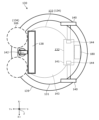
- FIG. 2 is a bottom view showing the appearance of the moving device according to Embodiment 1;
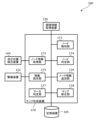
- FIG. 2 is a block diagram showing each functional unit of the map creation device according to Embodiment 1;
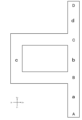
- FIG. FIG. 2 is a diagram showing a route for which a route map is created in Embodiment 1;
- FIG. It is a multi-graph recognized by the map creation device according to Embodiment 1 during map creation.
- 4 is a flow chart showing the flow of operations of the map creation device according to Embodiment 1.
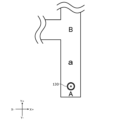
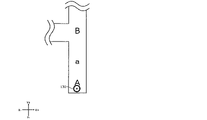
- FIG. 4 is a diagram showing an initial state of map creation operation in Embodiment 1.
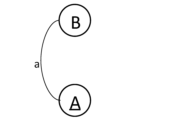
- FIG. 4 is a multigraph showing an initial state of map creation operation in Embodiment 1.
- FIG. 4 is a diagram showing stage 1 of the map creation operation in Embodiment 1;
- FIG. 4 is a diagram showing stage 2 of the map creation operation in Embodiment 1;
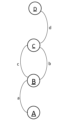
- 4 is a multigraph showing stage 2 of the map creation operation in Embodiment 1;
- FIG. 10 is a diagram showing stage 3 of the map creation operation in Embodiment 1;
- 4 is a multigraph showing stage 3 of the map creation operation in Embodiment 1; 4 is a modified multigraph according to Embodiment 1.
- FIG. FIG. 11 is a side view showing the appearance of a moving device according to Embodiment 2;
- FIG. 10 is a block diagram showing each functional unit of the map creation device according to Embodiment 2;
- FIG. 10 is a diagram showing a route for which a route map is created according to Embodiment 2;
- FIG. 10 is a flow chart showing the flow of operations of the map creation device according to Embodiment 2.
- FIG. FIG. 10 is a diagram showing an initial state of map creation operation in Embodiment 2;
- FIG. 12 is a side view showing the appearance of a moving device according to Embodiment 3;
- FIG. 11 is a bottom view showing the appearance of a moving device according to Embodiment 3;
- FIG. 13 is a block diagram showing each functional unit of the map creation device according to Embodiment 3;
- 10 is a flow chart showing the flow of operations of the map creation device according to Embodiment 3.
- FIG. 10 is a diagram showing an initial state of map creation operation in Embodiment 3;
- FIG. 10 is a diagram showing stage 1 of the map creation operation in Embodiment 3;
- FIG. 10 is a diagram showing stage 2 of the map creation operation in Embodiment 3;
- FIG. 12 is a diagram showing stage 3 of the map creation operation in Embodiment 3;
- FIG. 12 is a diagram showing stage 4 of the map creation operation in Embodiment 3; It is a figure which shows an example of a map production system.
- FIG. 10 is a diagram showing another example of the marker placement device; It is a figure which shows an example of a map production apparatus.
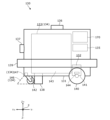
- FIG. 1 is a side view showing the appearance of mobile device 130 equipped with map creating device 170 according to the first embodiment.
- FIG. 2 is a bottom view showing the appearance of mobile device 130 equipped with map creating device 170 according to the first embodiment.
- mobile device 130 is a robot-type cleaner that performs cleaning while autonomously traveling.
- the mobile device 130 is a device capable of creating a route map while autonomously traveling in an unexplored area such as a floor to be cleaned for the first time.
- a device 144 and a mapping device 170 are provided.
- the moving device 130 further includes a body 131 on which various components are mounted, a cleaning unit 134 that collects dust, and a control unit 135 .
- the body 131 is a housing that houses the drive device 132, the route information acquisition device 136, the self-position detection device 144, the map creation device 170, the cleaning unit 134, and the control unit 135.
- a bumper 139 that is radially displaceable with respect to the body 131 is attached to the outer peripheral portion of the body 131 .
- a suction port 138 for sucking dust into the body 131 is provided on the bottom surface of the body 131 .
- the driving device 132 is a device that causes the moving device 130 to travel based on instructions from the control unit 135 .
- the drive device 132 has wheels 140 that travel on the path, a travel motor (not shown) that provides torque to the wheels 140, and a housing 141 that houses the travel motor.
- Casters 142 are provided on the bottom surface of the body 131 as auxiliary wheels. By independently controlling the rotation of the two wheels 140, the moving device 130 can freely travel such as straight ahead, backward, left rotation, and right rotation.
- the cleaning unit 134 is a unit for sweeping up dust and sucking the dust from the suction port 138.
- the cleaning unit 134 includes a rotating brush 146 arranged near the suction port 138, a brush driving motor 147 for rotating the rotating brush 146, and a suction unit. 133, etc.
- the suction unit 133 is a unit that sucks dust from the suction port 138 and holds the dust sucked inside the body 131 , and includes an electric fan (not shown) and a dust holding portion 143 .
- the electric fan sucks the air inside the dust holding portion 143 and discharges the air to the outside of the body 131 to suck the dust from the suction port 138 and store the dust in the dust holding portion 143 .
- the route information acquisition device 136 is a device that moves in cooperation with the mobile device 130 by being attached to the body 131 and detects a route along which the mobile device 130 can move around the mobile device 130 .
- the route information acquisition device 136 detects the directions and distances of obstacles such as walls and furniture existing around the body 131, and acquires 2.5-dimensional information. Further, it is also possible to grasp the self-position of the mobile device 130 from information on the direction and distance detected by the route information acquisition device 136 .
- the type of the route information acquisition device 136 is not particularly limited, but for example, LiDAR (Light Detection and Ranging) that detects the position and distance based on the light that is emitted and returned after being reflected by obstacles.
- LiDAR Light Detection and Ranging
- a ToF (Time of Flight) camera and the like.
- a compound eye camera that acquires illumination light or natural light reflected by an obstacle as an image and acquires a position and a distance based on parallax can be exemplified.
- the self-position detection device 144 is attached to the body 131 to move in cooperation with the moving device 130 and detects its own position relative to a predetermined position based on the track record of movement of the moving device 130 by the driving device 132 .
- the type of the self-position detection device 144 is not particularly limited, and for example, an odometry sensor such as an encoder that is provided in the drive device 132 and detects the rotation angle of each of the pair of wheels 140 that are rotated by the driving motor. I can give an example.
- an inertial sensor such as an acceleration sensor that detects acceleration when the mobile device 130 travels and an angular velocity sensor that detects angular velocity when the mobile device 130 turns may be provided as the self-position detection device 144 .
- the self-position detecting device 144 may be equipped with a GPS (Global Positioning System).
- the mobile device 130 may be equipped with a sensor other than the route information acquisition device 136.
- floor surface sensors may be provided at a plurality of locations on the bottom surface of the body 131 to detect whether or not there is a floor surface.
- a dust amount sensor that measures the amount of dust deposited on the floor surface may also be provided.
- a contact sensor may be provided to detect collision with an obstacle by detecting displacement of the bumper 139 .
- an obstacle sensor such as an ultrasonic sensor other than the route information acquisition device 136 that detects obstacles present in front of the body 131 may be provided.
- FIG. 3 is a block diagram showing each functional unit of the map creation device 170 according to the first embodiment.
- the map creation device 170 is a device that creates a route map indicating the route traveled based on the movement track record of the mobile device 130, and includes a node detection unit 172, a node detection unit 172, and a node An information acquisition unit 173 , a node determination unit 174 , a movement instruction unit 175 , a node information addition unit 176 and a map correction unit 178 are provided.
- Each processing unit will be described below, but the order of description does not match the processing flow of the map creation device 170 . Note that the processing flow of the map creation device 170 will be described later.
- the node detection unit 172 detects a node where the route intersects or ends based on the data acquired from the route information acquisition device 136 of the mobile device 130 that has reached the node.
- the path information acquisition device 136 such as LiDAR, detects the distance and direction of obstacles around the mobile device 130 .
- the node detection unit 172 detects a route along which the mobile device 130 can travel based on the position information of the detected obstacles, and when detecting a plurality of intersecting routes, detects the intersection of the routes as a node.
- a dead-end portion is also detected as a node.
- a turn may also be recognized as an intersection where two routes intersect and be detected as a node.
- FIG. 4 is a diagram showing the entire route for which the route map is created.
- Capital letters A, B, C, and D shown in the figure indicate nodes, and lower case letters a, b, c, and d indicate paths.
- the corners are not included in the nodes.
- the route map creation time can be shortened.
- the topological accuracy of the created route map is not inferior.
- the node information acquisition unit 173 acquires node information including position information of the detected node and route information indicating the positional relationship of routes connected to the node.
- the node information acquisition unit 173 causes the storage device 145 to store the acquired node information.
- Positional information of the node is acquired based on the positional information obtained from the self-position detecting device 144 .
- the route information is obtained based on route information obtained from the route information obtaining device 136 .
- Node information is, for example, information that identifies a node including an unknown candidate node that is connected ahead of a route connected to the node being detected. It includes information indicating the arrangement of candidate nodes counterclockwise, for example, centered on the node in which the node is located.
- a multigraph is a graph in graph theory that can have multiple edges, i.e. edges with the same end node.
- the node determination unit 174 determines detected node information, which is node information corresponding to the node detected by the node detection unit 172 after the mobile device 130 has reached the node, and node information that the mobile device 130 has already reached the node and stored. The detected node information is compared with the reached node information, which is node information, to determine whether or not the detected node information matches the reached node information.
- a specific determination method is not limited, but in the case of the first embodiment, the node determination unit 174 extracts the closest reached node information to the detected node. Then, when the distance between these two nodes is equal to or less than a predetermined distance threshold, the route information included in the extracted arrival node information is compared with the route information in the detected node information, and the number of multiple routes connected to the node is determined. match, it is determined that the detected node information matches the reached node information.
- the node determination unit 174 determines that they do not match. Also, the distance threshold may vary, such as in proportion to the distance traveled by the mobile device 130 .
- the movement instruction unit 175 controls the driving device 132 so as to move to the next candidate node when the node determination unit 174 makes a determination.
- the node information addition unit 176 adds the detected node information to the route map as new arrival node information and stores it in the storage device 145 .
- the information added to the route map is specifically node information.
- the node information adding unit 176 adds the distance between the node that was reached immediately before reaching the detected node and the detected node, and the direction line from the reached node to the detected node with respect to a predetermined reference line. Angles and the like may be included.
- the map creating device 170 creates a route map based on these pieces of information.
- the map correction unit 178 determines that the nodes corresponding to the determined detection node information and the reached node information are the same, and corrects the route map.
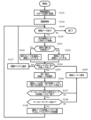
- FIG. 6 is a flow chart showing the operation flow of the map creation device 170. As shown in FIG.
- the moving device 130 is first placed at the start position (S101).
- the start position is the position where mobile device 130 is connected to the charging station.
- the node detection unit 172 detects the route around the mobile device 130 using the route information acquisition device 136 (S102).
- the map creation device 170 recognizes the multigraph as shown in FIG.
- the moving device 130 follows the unknown route a detected by the route information acquisition device 136 toward the next candidate node B. (S105).
- the node detection unit 172 detects the node B, and the node determination unit 174 determines whether the detected node matches the destination node (S106). At this stage, the destination node does not exist, so it is determined that there is no match (S106, No), and the node information adding unit 176 adds the detected node information to the route map as new destination node information (S107).
- node B at this stage has two candidate nodes as shown in FIG. 5 (S104, Yes), it moves to the next candidate node (S105). If there is a candidate node, it is a state in which there is a possibility that a node exists at the end of the route because there is a route that has not moved. Node B has two routes to the next candidate node, but the movement instruction unit 175 selects the route with fewer direction changes and moves the mobile device 130 to an unknown route. By suppressing the direction change of the moving device 130, the self-position error can be suppressed. At this stage, the movement instruction unit 175 selects the route b and moves the mobile device 130 to the next candidate node.
- the node detection unit 172 detects node C, and the node determination unit 174 determines whether the detected node matches the destination node (S106). At this stage, there is no destination node, so it is determined that they do not match (S106, No), and the node information adding unit 176 adds the detected node information to the route map as new destination node information (S107). At this stage, the map creation device 170 recognizes the multigraph as shown in FIG.
- Node C has two routes to the next candidate node, but the movement instruction unit 175 selects the route with fewer direction changes and moves the mobile device 130 to an unknown route. At this stage, the movement instruction unit 175 selects the route d and moves the mobile device 130 to the next candidate node.
- the node detection unit 172 detects the node D, and the node determination unit 174 determines whether the detected node matches the destination node (S106). Since there is no corresponding reach node information at this stage, it is determined that there is no match (S106, No), and the node information adding unit 176 adds the detected node information to the route map as new reach node information (S107).
- a unit 175 controls the driving device 132 .
- the movement instruction unit 175 controls the driving device 132 to move from the node D to the node C, via the node B, and then to the node C' shown in FIG.
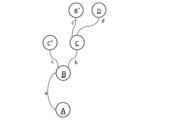
- the node detection unit 172 Upon reaching node C', the node detection unit 172 detects the node. At this stage, the map creation device 170 recognizes the multigraph as shown in FIG. The node determination unit 174 determines whether the detected node matches the destination node (S106). At this stage, it is determined that the detection node C' and the destination node C match (S106, Yes). As a result, node B', which was a candidate node shown in FIG. 13, is estimated to match node B and is no longer a candidate node, and the diagram shown in FIG. 13 is corrected to FIG. That is, it determines that the detection node and the reach node match, and updates the multigraph (S108). Then, in the diagram shown in FIG. 14, there are no more candidate nodes (S104, No), and the route map creation operation ends.
- the mobile device 130 by confirming the identity of nodes arriving via different routes, even in an unexplored area without a floor map, the connection relationship of the nodes can be accurately grasped. , a topological representation of the route can create an accurate route map. Especially when starting from a dead end node, a more accurate route map can be created.
- the map creating apparatus 170 according to the second embodiment determines whether or not there is an arrival node identical to the detection node, instead of the node determination unit 174 according to the first embodiment. judge. Then, when the node determination unit 174 determines that there is a reach node with the same identity, the node determination unit 174 determines whether the detected node and the reach node match or do not match by reconfirming the marker placed at the predetermined location. make a judgment. As a result, the map creation device 170 according to the second embodiment aims to improve the accuracy of the created route map. and a marker determination unit 177 .
- a marker is an object that allows the mobile device 130 to recognize the position corresponding to the marker when the mobile device 130 recognizes the existence of the marker.
- a specific type of marker is not particularly limited.
- a charging station that supplies power to mobile device 130 is used as the marker.
- a position where mobile device 130 is connected to a charging station for charging is set as a home position (origin).
- the charging station which is a marker, is arranged only at one place in the route. Note that there may be a plurality of charging stations that are markers.
- the marker may be an object with identification information.
- the method of carrying the identification information is not particularly limited.
- a one-dimensional code showing identification information, a two-dimensional code on the surface, a so-called RF (Radio Frequency) tag with identification information An element capable of carrying identification information electromagnetically, such as, can be exemplified.
- the marker may be one whose shape, color, figure, character, pattern, magnetic pattern, or the like attached to the marker functions as identification information. For example, a round, triangular, or square plate.
- the marker may be a shape made up of objects such as walls, ceilings, decorations, lighting fixtures, patterns, furniture, and electric appliances existing around the mobile device 130 .
- the marker may be a member that can be removed after the route map is created.
- the marker can be a member that can be attached to walls, doors, furniture, etc. that exist around the route, a pillar shape that can be placed on the floor, a cone shape, or an L-shaped cross section that can be placed at the corner of a corner. It may have a bar shape or the like.
- FIG. 15 is a side view showing the appearance of the moving device 130 according to the second embodiment.
- the marker detection device 137 is a device that is attached to the body 131 to move in cooperation with the movement device 130 and that detects a marker that exists at least one location on the route. In the case of the second embodiment, the marker detection device 137 detects the marker when the mobile device 130 is connected to the charging station.
- the marker detection device 137 may detect identification information for identifying the detected marker.
- the method by which the marker detection device 137 detects identification information is set according to the type of marker and is not particularly limited. For example, if the marker carries and presents identification information by a symbol displayed on its surface, the marker detection device 137 may employ a digital camera capable of detecting the symbol displayed on the marker as image data. can. Alternatively, the marker detection device 137 may read the code carried by the marker using a laser beam or the like. If the route information acquisition device 136 can detect identification information, the route information acquisition device 136 may function as the marker detection device 137 .
- FIG. 16 is a block diagram showing each functional unit of the map creation device 170 according to the second embodiment.
- a map creation device 170 according to the second embodiment includes a marker information acquisition unit 171 and a marker determination unit 177 in addition to the processing units shown in the first embodiment.
- the marker information acquisition unit 171 acquires marker information including information indicating whether or not the marker detection device 137 has detected a marker.
- the marker information acquisition unit 171 causes the storage device 145 to store the acquired marker information.
- the marker information includes information indicating whether or not the marker is detected and the position where the marker is detected.
- the shape around the mobile device 130 is acquired from the route information acquisition device 136 and the marker detection device 137, and the acquired shape is used to determine other locations.
- the marker information acquisition unit 171 may generate identification information that can be distinguished from the .
- the marker determination unit 177 determines whether or not the searched marker information, which is the marker information obtained by the search, and the known marker information, which is already acquired marker information, match.
- the determination method is not particularly limited, but in the case of the second embodiment, the marker is only one charging station. It is determined that Note that the marker determination unit 177 determines that the marker information does not match when the marker information is not obtained by the search.
- the marker determination unit 177 acquires the identification information included in the searched marker information by the marker detection device 137 from the marker discovered by the search, and the identification information included in the known marker information corresponding to the reached node stored in the storage device 145. If the two pieces of identification information match, it may be determined that the search marker information and the known marker information match each other.
- FIG. 17 is a diagram showing the entire route for which a route map is to be created, as in FIG. 4 of Embodiment 1.
- FIG. 17 Furthermore, the encircled Greek letter ⁇ shown in the figure indicates a marker.
- the movement instruction unit 175 that controls the driving device 132 to move the mobile device 130 instructs the mobile device 130 to search for a marker. to the driving device 132.
- the trigger for the movement instruction unit 175 to output a search instruction may be that the node determination unit 174 has determined that there is a reached node that is identical to the detected node.
- the node information addition unit 176 adds the detected node information to the new arrival Add to route map as node information.
- the map correction unit 178 determines that the nodes corresponding to the detected node information and the reached node information determined by the node determination unit 174 are the same, and corrects the route map.
- FIG. 18 is a flow chart showing the operation flow of the map creation device 170 according to the second embodiment. It should be noted that the description of processing that is substantially the same as that of the first embodiment may be omitted.
- the moving device 130 is first placed at the start position (S101).
- the start position is the position where mobile device 130 is connected to the charging station that functions as marker ⁇ .
- the marker information acquisition unit 171 recognizes the marker ⁇ and stores the position at which the marker ⁇ is recognized as known marker information.
- known marker information is stored with the position of mobile device 130 connected to the charging station as a reference position (for example, the origin).
- the node detection unit 172 detects the route around the mobile device 130 using the route information acquisition device 136 (S102). At this stage, the map creation device 170 recognizes the multigraph as shown in FIG. Since the candidate node B exists ahead of the detected route (S104, Yes), the moving device 130 follows the unknown route a detected by the route information acquisition device 136 toward the next candidate node B. (S105).
- the discovered new node is added as an unvisited node, and the new node is made a detected node (S202). If there is no new branch during the movement (S201, No), the candidate node is set as the detection node (S203).
- the node determination unit 174 determines whether or not there is a reaching node identical to the detection node within the area based on the distance threshold (S204). If the self-position detection device 144 can calculate the standard deviation of errors in self-position detection of the robot, the self-position detection device 144 obtains the distance between the detection node and the arrival node. If the distance between the detection node and the destination node does not exceed three times the standard deviation of the robot's self-location detection error, in step S204, the node determination unit 174 determines whether there is a destination node that is identical to the detection node.
- the node information adding unit 176 adds the detected node to the new reaching node (S107). If there is an identical reach node (S204, Yes), the node determination unit 174 selects one reach node from among one or more identical reach nodes (S205).
- a reach node that is identical to a detection node is a reach node that stores the same node information as the node information of the detection node acquired by the node information acquisition unit 173 .
- a reach node that is identical to the detection node may have the same number of branches in the route as the number of branches from the detection node, or may have the same reach nodes connected to the detection node by the route.
- the movement instruction unit 175 searches for the marker in the node where the marker exists (hereinafter referred to as "marker node” in the drawing).
- the instruction is output and the mobile device 130 goes to the marker node (S206).
- the node determination unit 174 determines whether the detected node matches a destination node between the selected identical destination node and the marker node in the route map ( S207). If it is determined that they do not match (S207, No), the mobile device 130 returns to the detected node (S209), and the node determination unit 174 determines whether or not there is a reached node that is identical to the detected node (S204). Try again.
- the mobile device 130 reaches a node assumed to be a marker node and searches for the marker. If no marker exists at the reached node (S208, No), the process returns to the detection node (S209) and executes step S204 again. Note that when the marker does not exist, the marker detection device 137 cannot detect the marker, and the marker detection device 137 detects the marker and the marker information acquisition unit 171 acquires the search marker information that has already been acquired. It also includes cases where the known marker information does not match. In the case of this embodiment, the marker is one charging station, so there is no case where the marker information does not match.
- a marker exists in the node assumed to be a marker node S208, Yes
- the marker information of the marker found by the search is acquired by the marker information acquiring unit 171 using the marker detection device 137, and the acquired marker information is If the search marker information matches the known marker information that is already acquired marker information, it is determined that the detection node matches the reach node, and the multigraph is updated (S108). Then, the process returns to determining whether there is a candidate node (S104). By repeating the above process until there are no more candidate nodes, a more accurate multigraph can be obtained.
- the self-position detected by the self-position detection device 144 may contain a large error depending on the condition of the floor on which the mobile device 130 travels. In the case of this embodiment, since the presence or absence of an error is determined based on the markers, the topology of the route map can be reproduced more accurately.
- the mobile device 130 according to the third embodiment reduces the distance traveled to check the markers by arranging the markers at all the nodes as compared with the case shown in the second embodiment.
- parts (parts) having the same actions, functions, shapes, mechanisms, and structures as those of the first and second embodiments are denoted by the same reference numerals, and description thereof may be omitted. Further, the following description will focus on points that are different from the first and second embodiments, and descriptions of the same contents may be omitted.
- FIG. 20 is a side view showing the appearance of the moving device 130 according to Embodiment 3.
- FIG. FIG. 21 is a bottom view showing the appearance of moving device 130 according to the third embodiment.
- the moving device 130 includes a marker placement device 180 in addition to the moving device 130 described in the second embodiment.
- the marker placement device 180 is a device that places markers on nodes.
- the structure of the marker placement device 180 is not particularly limited.
- the marker placement device 180 holds a plurality of card-shaped markers each carrying identification information, and ejects one card out of the body 131 when placement instruction information is acquired. to place the marker on the floor.
- the marker placement device 180 may cause the ejected marker to carry position information about its own position.
- the marker placement device 180 may include printing means, and print a two-dimensional code or the like including identification information and position information on the ejected marker so that the marker carries various information.
- FIG. 22 is a block diagram showing each functional unit of the map creation device 170 according to the third embodiment.
- the map creation device 170 according to the third embodiment includes an arrangement instruction section 179 as a processing section in addition to the map creation device 170 according to the second embodiment.
- the placement instruction unit 179 When the node information addition unit 176 adds the destination node information to the route map, the placement instruction unit 179 outputs placement instruction information for placing a marker at the corresponding node to the marker placement device 180 .
- the placement instruction unit 179 may control the driving device 132 via the movement instruction unit 175 so that the marker placement position is a predetermined position (for example, the central position of the node as much as possible). Also, the placement instruction unit 179 does not necessarily place markers at all the nodes for which the node information addition unit 176 adds the reach node information to the route map.
- FIG. 23 is a flow chart showing the operation flow of the map creation device 170 according to the third embodiment.
- the moving device 130 is first placed at the start position (S101).
- the node detection unit 172 detects the route around the mobile device 130 using the route information acquisition device 136 (S102). Since the starting position is a dead end node, the placement instruction unit 179 causes the marker placement device 180 to place the marker ⁇ at the node A as shown in FIG. 25 (S301).
- the mobile device 130 moves toward the next candidate node B detected by the route information acquisition device 136 based on the driving device 132 (S105).
- the node detection unit 172 detects the node B, and the node determination unit 174 determines whether the detected node matches the destination node (S106). Since no destination node exists at this stage, the node information addition unit 176 adds the detected node information to the route map as new destination node information (S107). Further, the placement instruction unit 179 causes the marker placement device 180 to place the marker ⁇ at the node B as shown in FIG. 26 (S302).
- the movement instruction unit 175 selects a route with few direction changes as the first priority, and moves the mobile device 130 to an unknown route. By suppressing the direction change of the moving device 130, the self-position error can be suppressed. At this stage, the movement instruction unit 175 selects the route b and moves the mobile device 130 to the candidate node.
- the node detection unit 172 detects node C, and the node determination unit 174 determines whether the detected node matches the destination node (S106).
- the node information adding unit 176 adds the detected node information to the route map as new reach node information (S107).
- the placement instruction unit 179 causes the marker placement device 180 to place the marker ⁇ as shown in FIG. 27 (S302).
- the node detection unit 172 detects the node D, and the node determination unit 174 determines whether the detected node matches the destination node (S106). Since there is no reaching node information at this stage, the node information adding unit 176 adds the detected node information to the route map as new reaching node information (S107). Also, the placement instruction unit 179 causes the marker placement device 180 to place the marker ⁇ as shown in FIG. 28 (S302).
- the mobile device 130 can determine that all the nodes have been reached on the drawing, but the map creation device 170 of the mobile device 130 finds that there are unexplored routes at node B and node C, (S104, Yes), it moves to the next node (S105).
- the mobile device 130 has reached the dead-end node D, so the movement instruction unit 175 moves the mobile device 130 to the node C by returning the already moved route.
- the node detection unit 172 detects a node, and the node determination unit 174 determines whether it is a candidate node or a reachable node (S106). Since node C is a reachable node, movement instruction unit 175 moves mobile device 130 to search for marker ⁇ (S303).
- the marker determination unit 177 determines whether or not the information obtained from the marker ⁇ as a search result matches the marker of the destination node (S304). If the marker determination results match (S304, Yes), that is, the marker information of the marker found by the search is acquired by the marker information acquisition unit 171 by the marker detection device 137, and the acquired marker information and the acquired marker information are already detected. If the acquired marker information matches the known marker information, it is determined that the detected node matches the reaching node, and the multigraph is updated (S108). Then, the process returns to determining whether there is a candidate node (S104). By repeating the above process until there are no more candidate nodes, a more accurate multigraph can be obtained. Note that there is no branch between node D and node C, so if the route map is not corrected, the marker search may not be performed.
- the candidate node since the candidate node remains (S104, Yes), it moves to the next node (S105).
- the mobile device 130 is present at the node C to which the unexplored route is connected, but there is another node B' to which the unexplored route is connected.
- the mobile device 130 is moved by returning to the route already moved to the node B closest to the start position (route whose both ends of the route are destination nodes) among the nodes that are the route that has been completed and the untrodden route remains.
- the movement instruction unit 175 moves the mobile device 130 to the node B by selecting the route b.
- the node detection unit 172 detects a node, and the node determination unit 174 determines whether or not the detected node matches the destination node (S106). Since node B matches the destination node, movement instruction unit 175 moves mobile device 130 to search for marker ⁇ (S303). The marker determination unit 177 determines whether or not the marker of the destination node matches based on the information obtained from the marker ⁇ as a result of the search (S304), and updates the multigraph if the marker matches (S108).
- the mobile device 130 is connected to the untrodden route and has reached the node B closest to the start position.
- the movement instruction unit 175 selects the untrodden route c because only the untrodden route c remains. An untrodden route with a small turning angle of the mobile device 130 is preferentially selected.
- Mobile device 130 takes two turns along the path to reach the node detected by node detector 172 .
- the node determination unit 174 determines whether the node is a candidate node or a reachable node (S106).
- the node determination unit 174 determines that the reached node is the arrival node C.
- the movement instruction unit 175 moves the mobile device 130 so as to search for the marker ⁇ (S303).
- the marker determination unit 177 determines whether or not the marker of the destination node matches based on the information obtained from the marker ⁇ as a result of the search (S304), and updates the multigraph if it determines that the marker matches (S304, No Yes). (S108).
- the node information addition unit 176 adds the detected node information to the route map as reached node information (S107). Also, the placement instruction unit 179 causes the marker placement device 180 to place the marker (S302).
- node C is reached after returning to node B because there is a candidate node. , from node C to the node via an unexplored path c'.
- the route map is corrected and the contradiction is resolved. If the candidate node is not determined to be node B, then there is a candidate node and the same process is repeated.
- identity is confirmed based on the markers for each of the nodes that have arrived via different routes.
- identity is confirmed based on the markers for each of the nodes that have arrived via different routes.
- the route map can be created automatically and efficiently without the need for workers to place markers at the nodes in advance. can be created.
- markers can be placed at the nodes reached, and the identity of each node can be accurately confirmed by the markers.
- a route map can be created in a short time.
- the present disclosure is not limited to the above embodiments.
- another embodiment realized by arbitrarily combining the constituent elements described in this specification or omitting some of the constituent elements may be an embodiment of the present disclosure.
- the present disclosure includes modifications obtained by making various modifications that a person skilled in the art can think of without departing from the gist of the present disclosure, that is, the meaning indicated by the words described in the claims, with respect to the above-described embodiment. be
- the mobile device 130 includes the map creation device 170
- the present disclosure can also be implemented in other aspects.
- part or all of the processing unit of the map creation device 170 may be realized by a device separate from the mobile device 130 .
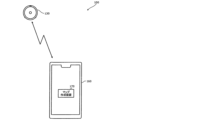
- the map creation device 170 may be implemented in the terminal device 160 by causing the processor of the terminal device 160 that can communicate with the mobile device 130 to execute a program.
- the map creation system 100 is formed by the mobile device 130 and the terminal device 160 .
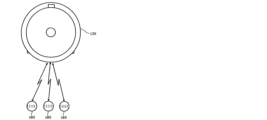
- the marker placement device 180 may be provided with a drive device that is separate from the moving device 130 and moves itself.
- each of the plurality of marker placement devices 180 carries identification information.
- one of the plurality of marker placement devices 180 is moved by the driving device and stopped on the floor surface of the node to function as a marker.
- a marker placement device 180 placed at a node that no longer has an unexplored path to connect to may move to another node and function as a marker.
- the marker placement device 180 may acquire a route map in the process of creation from the map creation device 170 and move autonomously. Further, it may be moved based on an instruction from the placement instruction section 179 of the map creation device 170 .
- the worker who reaches the node inputs route information connected to the node, and the node detection unit 172 acquires the route information.
- the node determination unit 174 determines whether the destination node matches or does not match based on the route information. If they match, the movement instruction unit 175 displays the position where the marker exists on the screen and instructs the worker to move.
- the operator takes an image of the two-dimensional code or the like attached to the marker, and the marker information acquisition unit 171 acquires the identification information of the marker from the image or the like. In addition, it acquires its own position by GPS or the like provided in the mobile terminal device. Other processing is the same as above, and the route map is created while correcting the route map in the process of creation.
- the mobile device 130 may be a device that moves three-dimensionally in the air or in water, such as a drone.
- the paths connected to the nodes may intersect three-dimensionally.
- the present disclosure can be used to create route maps for robots that move along predetermined routes, such as cleaning robots, guide robots, security robots, and transport robots.
- Map creation system 130 Moving device 131 Body 132 Driving device 133 Suction unit 134 Cleaning unit 135 Control unit 136 Route information acquisition device 137 Marker detection device 138 Suction port 139 Bumper 140 Wheel 141 Housing 142 Caster 143 Dust holder 144 Self position detection device 145 storage device 146 rotating brush drive motor 160 terminal device 170 map creation device 171 marker information acquisition unit 172 node detection unit 173 node information acquisition unit 174 node determination unit 175 movement instruction unit 176 node information addition unit 177 marker determination unit 178 map Correction unit 179 Placement instruction unit 180 Marker placement device
Landscapes
- Engineering & Computer Science (AREA)
- Radar, Positioning & Navigation (AREA)
- Remote Sensing (AREA)
- Physics & Mathematics (AREA)
- General Physics & Mathematics (AREA)
- Automation & Control Theory (AREA)
- Aviation & Aerospace Engineering (AREA)
- Mechanical Engineering (AREA)
- Control Of Position, Course, Altitude, Or Attitude Of Moving Bodies (AREA)
Abstract
Priority Applications (3)
| Application Number | Priority Date | Filing Date | Title |
|---|---|---|---|
| CN202180100828.2A CN117751397A (zh) | 2021-07-30 | 2021-12-07 | 地图制作装置以及地图制作系统 |
| JP2023538210A JP7752365B2 (ja) | 2021-07-30 | 2021-12-07 | マップ作成装置、およびマップ作成システム |
| US18/411,737 US12481291B2 (en) | 2021-07-30 | 2024-01-12 | Map generation device and map generation system |
Applications Claiming Priority (2)
| Application Number | Priority Date | Filing Date | Title |
|---|---|---|---|
| JP2021-125928 | 2021-07-30 | ||
| JP2021125928 | 2021-07-30 |
Related Child Applications (1)
| Application Number | Title | Priority Date | Filing Date |
|---|---|---|---|
| US18/411,737 Continuation US12481291B2 (en) | 2021-07-30 | 2024-01-12 | Map generation device and map generation system |
Publications (1)
| Publication Number | Publication Date |
|---|---|
| WO2023007761A1 true WO2023007761A1 (fr) | 2023-02-02 |
Family
ID=85086551
Family Applications (1)
| Application Number | Title | Priority Date | Filing Date |
|---|---|---|---|
| PCT/JP2021/044852 Ceased WO2023007761A1 (fr) | 2021-07-30 | 2021-12-07 | Dispositif de création de carte et système de création de carte |
Country Status (4)
| Country | Link |
|---|---|
| US (1) | US12481291B2 (fr) |
| JP (1) | JP7752365B2 (fr) |
| CN (1) | CN117751397A (fr) |
| WO (1) | WO2023007761A1 (fr) |
Families Citing this family (1)
| Publication number | Priority date | Publication date | Assignee | Title |
|---|---|---|---|---|
| US20250117017A1 (en) * | 2023-10-05 | 2025-04-10 | Petróleo Brasileiro S.A. – Petrobras | Rfid system for identifying equipment and positioning autonomous vehicles in an underwater environment |
Citations (2)
| Publication number | Priority date | Publication date | Assignee | Title |
|---|---|---|---|---|
| JPH08211936A (ja) * | 1995-02-02 | 1996-08-20 | Mitsubishi Heavy Ind Ltd | 移動体の誘導装置 |
| JPH09287968A (ja) * | 1996-04-23 | 1997-11-04 | Aisin Aw Co Ltd | 車両用ナビゲーション装置 |
Family Cites Families (7)
| Publication number | Priority date | Publication date | Assignee | Title |
|---|---|---|---|---|
| US6098015A (en) | 1996-04-23 | 2000-08-01 | Aisin Aw Co., Ltd. | Navigation system for vehicles and storage medium |
| JP4469790B2 (ja) * | 2004-12-27 | 2010-05-26 | パナソニック株式会社 | 地図情報更新装置および地図情報更新方法 |
| JP4727245B2 (ja) * | 2005-02-08 | 2011-07-20 | 三菱電機株式会社 | 地図情報処理装置 |
| JP4300199B2 (ja) | 2005-06-13 | 2009-07-22 | 株式会社東芝 | 移動ロボット、移動ロボットの位置姿勢算出方法、移動ロボットの自律走行システム |
| KR100749923B1 (ko) * | 2005-12-08 | 2007-08-21 | 한국전자통신연구원 | 카메라와 표식을 이용한 이동 로봇의 측위 시스템 및 방법 |
| KR102147211B1 (ko) * | 2018-10-22 | 2020-08-24 | 엘지전자 주식회사 | 인공지능 이동 로봇의 제어 방법 |
| KR102302575B1 (ko) * | 2019-07-16 | 2021-09-14 | 엘지전자 주식회사 | 이동 로봇 및 그 제어방법 |
-
2021
- 2021-12-07 WO PCT/JP2021/044852 patent/WO2023007761A1/fr not_active Ceased
- 2021-12-07 JP JP2023538210A patent/JP7752365B2/ja active Active
- 2021-12-07 CN CN202180100828.2A patent/CN117751397A/zh active Pending
-
2024
- 2024-01-12 US US18/411,737 patent/US12481291B2/en active Active
Patent Citations (2)
| Publication number | Priority date | Publication date | Assignee | Title |
|---|---|---|---|---|
| JPH08211936A (ja) * | 1995-02-02 | 1996-08-20 | Mitsubishi Heavy Ind Ltd | 移動体の誘導装置 |
| JPH09287968A (ja) * | 1996-04-23 | 1997-11-04 | Aisin Aw Co Ltd | 車両用ナビゲーション装置 |
Also Published As
| Publication number | Publication date |
|---|---|
| US12481291B2 (en) | 2025-11-25 |
| CN117751397A (zh) | 2024-03-22 |
| JPWO2023007761A1 (fr) | 2023-02-02 |
| JP7752365B2 (ja) | 2025-10-10 |
| US20240142992A1 (en) | 2024-05-02 |
Similar Documents
| Publication | Publication Date | Title |
|---|---|---|
| CN110652256B (zh) | 移动机器人以及控制方法 | |
| JP6054425B2 (ja) | 自己位置推定を自動的に実行する方法 | |
| CN109643128B (zh) | 移动体及移动体的控制方法 | |
| US20100076599A1 (en) | Manually driven determination of a region of interest (roi) or a path of interest (poi) for a robotic device | |
| JP7163782B2 (ja) | 自律走行台車 | |
| US20090310117A1 (en) | Method for Detecting Objects With a Pivotable Sensor Device | |
| JP7180218B2 (ja) | 自律走行台車 | |
| JP5016399B2 (ja) | 地図情報作成装置及びそれを備えた自律移動装置 | |
| JP6074205B2 (ja) | 自律移動体 | |
| KR101333496B1 (ko) | 과거 지도 데이터 기반의 이동 로봇 제어 장치 및 방법 | |
| US20190321979A1 (en) | Robot cleaner and control method thereof | |
| Behrje et al. | An autonomous forklift with 3d time-of-flight camera-based localization and navigation | |
| JPWO2015141445A1 (ja) | 移動体 | |
| CN108363391B (zh) | 机器人及其控制方法 | |
| JP2008052669A (ja) | 自律移動装置 | |
| JP7603220B2 (ja) | 移動ロボットシステム、端末装置、およびマップ更新プログラム | |
| JP7752365B2 (ja) | マップ作成装置、およびマップ作成システム | |
| JP2020042349A (ja) | 自律走行台車及び移動制御方法 | |
| JP2022119451A (ja) | 環境マップ作成方法及び装置 | |
| Jensfelt et al. | A mobile robot system for automatic floor marking | |
| JP6863049B2 (ja) | 自律移動ロボット | |
| WO2022168377A1 (fr) | Système de transport de bagages, ainsi que procédé et programme informatique utilisés dans un système de transport de bagages | |
| CN114450648A (zh) | 路径生成装置 | |
| JP7155216B2 (ja) | 移動体の制御装置及び制御方法 | |
| WO2025158779A1 (fr) | Chariot élévateur à fourche et groupe chariot élévateur à fourche |
Legal Events
| Date | Code | Title | Description |
|---|---|---|---|
| 121 | Ep: the epo has been informed by wipo that ep was designated in this application |
Ref document number: 21951954 Country of ref document: EP Kind code of ref document: A1 |
|
| WWE | Wipo information: entry into national phase |
Ref document number: 2023538210 Country of ref document: JP |
|
| WWE | Wipo information: entry into national phase |
Ref document number: 202180100828.2 Country of ref document: CN |
|
| NENP | Non-entry into the national phase |
Ref country code: DE |
|
| 122 | Ep: pct application non-entry in european phase |
Ref document number: 21951954 Country of ref document: EP Kind code of ref document: A1 |