WO2023074683A1 - ガスバリアフィルム及び包装材料 - Google Patents
ガスバリアフィルム及び包装材料 Download PDFInfo
- Publication number
- WO2023074683A1 WO2023074683A1 PCT/JP2022/039725 JP2022039725W WO2023074683A1 WO 2023074683 A1 WO2023074683 A1 WO 2023074683A1 JP 2022039725 W JP2022039725 W JP 2022039725W WO 2023074683 A1 WO2023074683 A1 WO 2023074683A1
- Authority
- WO
- WIPO (PCT)
- Prior art keywords
- layer
- gas barrier
- resin
- barrier film
- anchor coat
- Prior art date
- Legal status (The legal status is an assumption and is not a legal conclusion. Google has not performed a legal analysis and makes no representation as to the accuracy of the status listed.)
- Ceased
Links
Images
Classifications
-
- B—PERFORMING OPERATIONS; TRANSPORTING
- B32—LAYERED PRODUCTS
- B32B—LAYERED PRODUCTS, i.e. PRODUCTS BUILT-UP OF STRATA OF FLAT OR NON-FLAT, e.g. CELLULAR OR HONEYCOMB, FORM
- B32B27/00—Layered products comprising a layer of synthetic resin
- B32B27/32—Layered products comprising a layer of synthetic resin comprising polyolefins
-
- B—PERFORMING OPERATIONS; TRANSPORTING
- B32—LAYERED PRODUCTS
- B32B—LAYERED PRODUCTS, i.e. PRODUCTS BUILT-UP OF STRATA OF FLAT OR NON-FLAT, e.g. CELLULAR OR HONEYCOMB, FORM
- B32B27/00—Layered products comprising a layer of synthetic resin
- B32B27/06—Layered products comprising a layer of synthetic resin as the main or only constituent of a layer, which is next to another layer of the same or of a different material
- B32B27/08—Layered products comprising a layer of synthetic resin as the main or only constituent of a layer, which is next to another layer of the same or of a different material of synthetic resin
-
- B—PERFORMING OPERATIONS; TRANSPORTING
- B32—LAYERED PRODUCTS
- B32B—LAYERED PRODUCTS, i.e. PRODUCTS BUILT-UP OF STRATA OF FLAT OR NON-FLAT, e.g. CELLULAR OR HONEYCOMB, FORM
- B32B27/00—Layered products comprising a layer of synthetic resin
- B32B27/30—Layered products comprising a layer of synthetic resin comprising vinyl (co)polymers; comprising acrylic (co)polymers
-
- B—PERFORMING OPERATIONS; TRANSPORTING
- B32—LAYERED PRODUCTS
- B32B—LAYERED PRODUCTS, i.e. PRODUCTS BUILT-UP OF STRATA OF FLAT OR NON-FLAT, e.g. CELLULAR OR HONEYCOMB, FORM
- B32B9/00—Layered products comprising a layer of a particular substance not covered by groups B32B11/00 - B32B29/00
-
- B—PERFORMING OPERATIONS; TRANSPORTING
- B65—CONVEYING; PACKING; STORING; HANDLING THIN OR FILAMENTARY MATERIAL
- B65D—CONTAINERS FOR STORAGE OR TRANSPORT OF ARTICLES OR MATERIALS, e.g. BAGS, BARRELS, BOTTLES, BOXES, CANS, CARTONS, CRATES, DRUMS, JARS, TANKS, HOPPERS, FORWARDING CONTAINERS; ACCESSORIES, CLOSURES, OR FITTINGS THEREFOR; PACKAGING ELEMENTS; PACKAGES
- B65D65/00—Wrappers or flexible covers; Packaging materials of special type or form
- B65D65/38—Packaging materials of special type or form
- B65D65/40—Applications of laminates for particular packaging purposes
-
- C—CHEMISTRY; METALLURGY
- C08—ORGANIC MACROMOLECULAR COMPOUNDS; THEIR PREPARATION OR CHEMICAL WORKING-UP; COMPOSITIONS BASED THEREON
- C08J—WORKING-UP; GENERAL PROCESSES OF COMPOUNDING; AFTER-TREATMENT NOT COVERED BY SUBCLASSES C08B, C08C, C08F, C08G or C08H
- C08J5/00—Manufacture of articles or shaped materials containing macromolecular substances
- C08J5/18—Manufacture of films or sheets
-
- C—CHEMISTRY; METALLURGY
- C08—ORGANIC MACROMOLECULAR COMPOUNDS; THEIR PREPARATION OR CHEMICAL WORKING-UP; COMPOSITIONS BASED THEREON
- C08J—WORKING-UP; GENERAL PROCESSES OF COMPOUNDING; AFTER-TREATMENT NOT COVERED BY SUBCLASSES C08B, C08C, C08F, C08G or C08H
- C08J7/00—Chemical treatment or coating of shaped articles made of macromolecular substances
- C08J7/04—Coating
- C08J7/042—Coating with two or more layers, where at least one layer of a composition contains a polymer binder
- C08J7/0423—Coating with two or more layers, where at least one layer of a composition contains a polymer binder with at least one layer of inorganic material and at least one layer of a composition containing a polymer binder
-
- C—CHEMISTRY; METALLURGY
- C08—ORGANIC MACROMOLECULAR COMPOUNDS; THEIR PREPARATION OR CHEMICAL WORKING-UP; COMPOSITIONS BASED THEREON
- C08J—WORKING-UP; GENERAL PROCESSES OF COMPOUNDING; AFTER-TREATMENT NOT COVERED BY SUBCLASSES C08B, C08C, C08F, C08G or C08H
- C08J7/00—Chemical treatment or coating of shaped articles made of macromolecular substances
- C08J7/04—Coating
- C08J7/043—Improving the adhesiveness of the coatings per se, e.g. forming primers
-
- C—CHEMISTRY; METALLURGY
- C08—ORGANIC MACROMOLECULAR COMPOUNDS; THEIR PREPARATION OR CHEMICAL WORKING-UP; COMPOSITIONS BASED THEREON
- C08J—WORKING-UP; GENERAL PROCESSES OF COMPOUNDING; AFTER-TREATMENT NOT COVERED BY SUBCLASSES C08B, C08C, C08F, C08G or C08H
- C08J7/00—Chemical treatment or coating of shaped articles made of macromolecular substances
- C08J7/04—Coating
- C08J7/048—Forming gas barrier coatings
-
- C—CHEMISTRY; METALLURGY
- C08—ORGANIC MACROMOLECULAR COMPOUNDS; THEIR PREPARATION OR CHEMICAL WORKING-UP; COMPOSITIONS BASED THEREON
- C08L—COMPOSITIONS OF MACROMOLECULAR COMPOUNDS
- C08L23/00—Compositions of homopolymers or copolymers of unsaturated aliphatic hydrocarbons having only one carbon-to-carbon double bond; Compositions of derivatives of such polymers
- C08L23/02—Compositions of homopolymers or copolymers of unsaturated aliphatic hydrocarbons having only one carbon-to-carbon double bond; Compositions of derivatives of such polymers not modified by chemical after-treatment
- C08L23/04—Homopolymers or copolymers of ethene
- C08L23/06—Polyethylene
-
- B—PERFORMING OPERATIONS; TRANSPORTING
- B32—LAYERED PRODUCTS
- B32B—LAYERED PRODUCTS, i.e. PRODUCTS BUILT-UP OF STRATA OF FLAT OR NON-FLAT, e.g. CELLULAR OR HONEYCOMB, FORM
- B32B2250/00—Layers arrangement
- B32B2250/02—2 layers
-
- B—PERFORMING OPERATIONS; TRANSPORTING
- B32—LAYERED PRODUCTS
- B32B—LAYERED PRODUCTS, i.e. PRODUCTS BUILT-UP OF STRATA OF FLAT OR NON-FLAT, e.g. CELLULAR OR HONEYCOMB, FORM
- B32B2250/00—Layers arrangement
- B32B2250/24—All layers being polymeric
-
- B—PERFORMING OPERATIONS; TRANSPORTING
- B32—LAYERED PRODUCTS
- B32B—LAYERED PRODUCTS, i.e. PRODUCTS BUILT-UP OF STRATA OF FLAT OR NON-FLAT, e.g. CELLULAR OR HONEYCOMB, FORM
- B32B2250/00—Layers arrangement
- B32B2250/24—All layers being polymeric
- B32B2250/242—All polymers belonging to those covered by group B32B27/32
-
- B—PERFORMING OPERATIONS; TRANSPORTING
- B32—LAYERED PRODUCTS
- B32B—LAYERED PRODUCTS, i.e. PRODUCTS BUILT-UP OF STRATA OF FLAT OR NON-FLAT, e.g. CELLULAR OR HONEYCOMB, FORM
- B32B2255/00—Coating on the layer surface
- B32B2255/10—Coating on the layer surface on synthetic resin layer or on natural or synthetic rubber layer
-
- B—PERFORMING OPERATIONS; TRANSPORTING
- B32—LAYERED PRODUCTS
- B32B—LAYERED PRODUCTS, i.e. PRODUCTS BUILT-UP OF STRATA OF FLAT OR NON-FLAT, e.g. CELLULAR OR HONEYCOMB, FORM
- B32B2255/00—Coating on the layer surface
- B32B2255/20—Inorganic coating
-
- B—PERFORMING OPERATIONS; TRANSPORTING
- B32—LAYERED PRODUCTS
- B32B—LAYERED PRODUCTS, i.e. PRODUCTS BUILT-UP OF STRATA OF FLAT OR NON-FLAT, e.g. CELLULAR OR HONEYCOMB, FORM
- B32B2255/00—Coating on the layer surface
- B32B2255/26—Polymeric coating
-
- B—PERFORMING OPERATIONS; TRANSPORTING
- B32—LAYERED PRODUCTS
- B32B—LAYERED PRODUCTS, i.e. PRODUCTS BUILT-UP OF STRATA OF FLAT OR NON-FLAT, e.g. CELLULAR OR HONEYCOMB, FORM
- B32B2255/00—Coating on the layer surface
- B32B2255/28—Multiple coating on one surface
-
- B—PERFORMING OPERATIONS; TRANSPORTING
- B32—LAYERED PRODUCTS
- B32B—LAYERED PRODUCTS, i.e. PRODUCTS BUILT-UP OF STRATA OF FLAT OR NON-FLAT, e.g. CELLULAR OR HONEYCOMB, FORM
- B32B2272/00—Resin or rubber layer comprising scrap, waste or recycling material
-
- B—PERFORMING OPERATIONS; TRANSPORTING
- B32—LAYERED PRODUCTS
- B32B—LAYERED PRODUCTS, i.e. PRODUCTS BUILT-UP OF STRATA OF FLAT OR NON-FLAT, e.g. CELLULAR OR HONEYCOMB, FORM
- B32B2307/00—Properties of the layers or laminate
- B32B2307/30—Properties of the layers or laminate having particular thermal properties
-
- B—PERFORMING OPERATIONS; TRANSPORTING
- B32—LAYERED PRODUCTS
- B32B—LAYERED PRODUCTS, i.e. PRODUCTS BUILT-UP OF STRATA OF FLAT OR NON-FLAT, e.g. CELLULAR OR HONEYCOMB, FORM
- B32B2307/00—Properties of the layers or laminate
- B32B2307/30—Properties of the layers or laminate having particular thermal properties
- B32B2307/306—Resistant to heat
-
- B—PERFORMING OPERATIONS; TRANSPORTING
- B32—LAYERED PRODUCTS
- B32B—LAYERED PRODUCTS, i.e. PRODUCTS BUILT-UP OF STRATA OF FLAT OR NON-FLAT, e.g. CELLULAR OR HONEYCOMB, FORM
- B32B2307/00—Properties of the layers or laminate
- B32B2307/30—Properties of the layers or laminate having particular thermal properties
- B32B2307/308—Heat stability
-
- B—PERFORMING OPERATIONS; TRANSPORTING
- B32—LAYERED PRODUCTS
- B32B—LAYERED PRODUCTS, i.e. PRODUCTS BUILT-UP OF STRATA OF FLAT OR NON-FLAT, e.g. CELLULAR OR HONEYCOMB, FORM
- B32B2307/00—Properties of the layers or laminate
- B32B2307/30—Properties of the layers or laminate having particular thermal properties
- B32B2307/31—Heat sealable
-
- B—PERFORMING OPERATIONS; TRANSPORTING
- B32—LAYERED PRODUCTS
- B32B—LAYERED PRODUCTS, i.e. PRODUCTS BUILT-UP OF STRATA OF FLAT OR NON-FLAT, e.g. CELLULAR OR HONEYCOMB, FORM
- B32B2307/00—Properties of the layers or laminate
- B32B2307/50—Properties of the layers or laminate having particular mechanical properties
- B32B2307/538—Roughness
-
- B—PERFORMING OPERATIONS; TRANSPORTING
- B32—LAYERED PRODUCTS
- B32B—LAYERED PRODUCTS, i.e. PRODUCTS BUILT-UP OF STRATA OF FLAT OR NON-FLAT, e.g. CELLULAR OR HONEYCOMB, FORM
- B32B2307/00—Properties of the layers or laminate
- B32B2307/70—Other properties
- B32B2307/724—Permeability to gases, adsorption
- B32B2307/7242—Non-permeable
- B32B2307/7244—Oxygen barrier
-
- B—PERFORMING OPERATIONS; TRANSPORTING
- B32—LAYERED PRODUCTS
- B32B—LAYERED PRODUCTS, i.e. PRODUCTS BUILT-UP OF STRATA OF FLAT OR NON-FLAT, e.g. CELLULAR OR HONEYCOMB, FORM
- B32B2307/00—Properties of the layers or laminate
- B32B2307/70—Other properties
- B32B2307/732—Dimensional properties
- B32B2307/734—Dimensional stability
- B32B2307/736—Shrinkable
-
- B—PERFORMING OPERATIONS; TRANSPORTING
- B32—LAYERED PRODUCTS
- B32B—LAYERED PRODUCTS, i.e. PRODUCTS BUILT-UP OF STRATA OF FLAT OR NON-FLAT, e.g. CELLULAR OR HONEYCOMB, FORM
- B32B2307/00—Properties of the layers or laminate
- B32B2307/70—Other properties
- B32B2307/732—Dimensional properties
- B32B2307/737—Dimensions, e.g. volume or area
- B32B2307/7375—Linear, e.g. length, distance or width
- B32B2307/7376—Thickness
-
- B—PERFORMING OPERATIONS; TRANSPORTING
- B32—LAYERED PRODUCTS
- B32B—LAYERED PRODUCTS, i.e. PRODUCTS BUILT-UP OF STRATA OF FLAT OR NON-FLAT, e.g. CELLULAR OR HONEYCOMB, FORM
- B32B2307/00—Properties of the layers or laminate
- B32B2307/70—Other properties
- B32B2307/748—Releasability
-
- B—PERFORMING OPERATIONS; TRANSPORTING
- B32—LAYERED PRODUCTS
- B32B—LAYERED PRODUCTS, i.e. PRODUCTS BUILT-UP OF STRATA OF FLAT OR NON-FLAT, e.g. CELLULAR OR HONEYCOMB, FORM
- B32B2439/00—Containers; Receptacles
- B32B2439/70—Food packaging
-
- B—PERFORMING OPERATIONS; TRANSPORTING
- B32—LAYERED PRODUCTS
- B32B—LAYERED PRODUCTS, i.e. PRODUCTS BUILT-UP OF STRATA OF FLAT OR NON-FLAT, e.g. CELLULAR OR HONEYCOMB, FORM
- B32B2439/00—Containers; Receptacles
- B32B2439/80—Medical packaging
-
- B—PERFORMING OPERATIONS; TRANSPORTING
- B32—LAYERED PRODUCTS
- B32B—LAYERED PRODUCTS, i.e. PRODUCTS BUILT-UP OF STRATA OF FLAT OR NON-FLAT, e.g. CELLULAR OR HONEYCOMB, FORM
- B32B2553/00—Packaging equipment or accessories not otherwise provided for
-
- C—CHEMISTRY; METALLURGY
- C08—ORGANIC MACROMOLECULAR COMPOUNDS; THEIR PREPARATION OR CHEMICAL WORKING-UP; COMPOSITIONS BASED THEREON
- C08J—WORKING-UP; GENERAL PROCESSES OF COMPOUNDING; AFTER-TREATMENT NOT COVERED BY SUBCLASSES C08B, C08C, C08F, C08G or C08H
- C08J2323/00—Characterised by the use of homopolymers or copolymers of unsaturated aliphatic hydrocarbons having only one carbon-to-carbon double bond; Derivatives of such polymers
- C08J2323/02—Characterised by the use of homopolymers or copolymers of unsaturated aliphatic hydrocarbons having only one carbon-to-carbon double bond; Derivatives of such polymers not modified by chemical after treatment
- C08J2323/10—Homopolymers or copolymers of propene
- C08J2323/12—Polypropene
Definitions
- This disclosure relates to gas barrier films and packaging materials.
- Gas barrier films are mainly widely used as packaging materials for food, pharmaceuticals, etc., including heat sterilization such as boiling and retorting.
- heat sterilization such as boiling and retorting.
- mono-material packaging materials due to growing awareness of environmental issues, interest in packaging materials using a single material, so-called mono-material packaging materials, has increased in order to make packaging materials recyclable.
- Polypropylene, etc. is generally used as a laminate film for packaging materials, so in order to produce mono-material packaging using such films, it is necessary to use polypropylene, etc. as a base material for the gas barrier film as well. are required to do so.
- polypropylene films are excellent in transparency, mechanical strength, and heat resistance, but are inferior to films of other materials in terms of secondary workability such as metal vapor deposition, adhesiveness with other resins, and printability.
- various methods have been proposed. - A method of laminating an ⁇ -olefin copolymer or the like has been proposed.
- an object of one aspect of the present disclosure is to provide a gas barrier film from which a packaging material having sufficiently low oxygen permeability and excellent lamination strength can be produced even after heat sterilization.
- Another aspect of the present disclosure aims to provide a packaging material using such a gas barrier film.
- One aspect of the present disclosure comprises a substrate layer containing a polypropylene resin, a resin layer containing a copolymer of propylene and other monomers, an anchor coat layer, and a deposited layer of an inorganic oxide in this order.
- the gas barrier film comprises an anchor coat layer containing a (meth)acrylic resin and having a thickness of 0.1 to 0.7 ⁇ m.
- the thickness of the anchor coat layer is within a specific numerical range, and the interface between the resin layer and the deposited layer is stabilized by having the resin layer between the base material layer and the anchor coat layer. Even after the gas barrier film is used as a packaging material and subjected to heat sterilization, the gas barrier property and adhesion can be maintained. Therefore, a packaging material using this barrier film has sufficiently low oxygen permeability and excellent lamination strength even after heat sterilization.
- the gas barrier film has a maximum peak height Sp of 1.5 ⁇ m or less and 10 ⁇ m ⁇ 10 ⁇ m when a range of 250 ⁇ m ⁇ 250 ⁇ m is observed with a laser microscope at a magnification of 50 times on the vapor-deposited layer side surface of the resin layer.
- the arithmetic mean roughness Sa may be 5 nm or more.
- the gas barrier film may further include a gas barrier coating layer on the opposite side of the vapor deposition layer to the anchor coat layer.
- Another aspect of the present disclosure is a packaging material comprising the gas barrier film and a sealant layer containing polypropylene resin.
- gas barrier film from which a packaging material having sufficiently low oxygen permeability and excellent lamination strength can be produced even after heat sterilization.
- packaging materials using such gas barrier films can be provided.
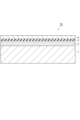
- FIG. 1 is a schematic cross-sectional view showing a gas barrier film according to one embodiment of the present disclosure
- FIG. 1 is a schematic cross-sectional view showing a gas barrier film according to one embodiment.
- the gas barrier film 10 according to this embodiment includes a substrate layer 1, a resin layer 2, an anchor coat layer 3, and a vapor deposition layer 4 in this order.
- the substrate layer is a film (base film) that serves as a support and contains a polypropylene resin.
- the substrate layer may be, for example, a uniaxially or biaxially oriented film obtained by sheeting a polypropylene resin and then stretching the sheet.
- the polypropylene resin may be a crystalline polypropylene resin.
- the polypropylene resin may be a homopolypropylene resin, which is a homopolymer of propylene, from the viewpoint of improving heat resistance.
- Polypropylene resins may contain, for example, random copolymers of propylene and ⁇ -olefins.
- the content of the polypropylene resin may be 90% by mass or more, 95% by mass or more, or 99% by mass or more based on the total mass of the base material layer.
- the content of the polypropylene resin may be substantially 100% by mass based on the total mass of the substrate layer (embodiment in which the substrate layer is made of polypropylene resin).
- the substrate layer may contain organic additives such as antioxidants, stabilizers, lubricants, and antistatic agents, and inorganic additives such as silica, zeolite, hydrotalcite, silicon particles, and siloids. You may
- the thickness of the base layer may be 3 ⁇ m or more, 6 ⁇ m or more, 10 ⁇ m or more, or 15 ⁇ m or more, and may be 200 ⁇ m or less, 100 ⁇ m or less, 50 ⁇ m or less, or 30 ⁇ m or less. From these viewpoints, the thickness of the base layer may be 3-200 ⁇ m, 6-100 ⁇ m, 10-50 ⁇ m, or 15-30 ⁇ m.
- the polypropylene used for the base material layer may be a resin polymerized from fossil fuels, may be a recycled resin, or may be a resin obtained by polymerizing raw materials derived from biomass such as plants. good. When using these resins, they may be used alone, or mixed with resins polymerized from fossil fuels and recycled resins or resins obtained by polymerizing raw materials derived from biomass such as plants. You may
- the resin layer contains a copolymer of propylene and other monomers.
- the resin layer may be directly formed on the surface of the substrate layer.
- the content of the copolymer may be 90% by mass or more, 95% by mass or more, or 99% by mass or more based on the total mass of the resin layer.
- the content of the copolymer may be substantially 100% by mass (an embodiment in which the resin layer is composed of a copolymer) based on the total mass of the resin layer.
- the content of propylene units in the copolymer may be 80 mol% or more, 90 mol% or more, 95 mol% or more, or 96 mol% or more, or 99.5 mol%, based on the total amount of monomer units. Below, it may be 99 mol % or less, 98 mol % or less, or 97 mol % or less.
- the content of propylene units in the copolymer may be 80 to 99.5 mol%, 90 to 99 mol%, 95 to 98 mol%, or 96 to 97 mol% based on the total amount of monomer units. .
- Other monomers may be, for example, ⁇ -olefins such as ethylene, 1-butene, 1-hexene.
- the copolymer may have ethylene units as other monomers.
- the copolymer may be a copolymer of propylene and multiple other monomeric units.
- the content of other monomer units in the copolymer is 0.5 mol% or more, 1 mol% or more, 2 mol% or more, or It may be 3 mol % or more. From the viewpoint of improving heat resistance, the content of other monomer units in the copolymer is 20 mol% or less, 10 mol% or less, 5 mol% or less, or 4 mol% or less based on the total amount of the monomer units. There may be. The content of other monomer units in the copolymer is 0.5 to 20 mol%, 1 to 10 mol%, 2 to 5 mol%, or 3 to 4 mol% based on the total amount of monomer units. good too.
- the copolymer used for the resin layer may be a resin polymerized from fossil fuels, may be a recycled resin, or may be a resin obtained by polymerizing raw materials derived from biomass such as plants. good too. When using these resins, they may be used alone, or mixed with resins polymerized from fossil fuels and recycled resins or resins obtained by polymerizing raw materials derived from biomass such as plants. You may
- the maximum peak height Sp may be 1.5 ⁇ m or less, 1.2 ⁇ m or less, or 1.1 ⁇ m or less.
- the maximum peak height Sp may be 0.1 ⁇ m or more or 0.5 ⁇ m or more.
- the maximum peak height Sp may be 0.1-1.5 ⁇ m, or 0.5-1.2 ⁇ m.
- the resin layer is observed with an atomic force microscope (AFM) in a range of 10 ⁇ m ⁇ 10 ⁇ m on the surface on the vapor deposition layer side.
- the arithmetic mean roughness Sa may be 5 nm or more, 5.5 ⁇ m or more, 6 nm or more, 6.5 nm or more, or 7 nm or more.
- the arithmetic mean roughness Sa may be 20 nm or less, 15 nm or less, 10 nm or less, 8 nm or less, or 7.5 nm or less from the viewpoint of easily sufficiently reducing the oxygen permeability of the packaging material even after heat sterilization.
- the arithmetic mean roughness Sa may be 5-20 nm, 5.5-15 nm, 6-10 nm, 6.5-8 nm, or 7-7.5 nm.
- the thickness of the resin layer may be 0.3 ⁇ m or more, 0.5 ⁇ m or more, or 0.7 ⁇ m or more from the viewpoint of easily relaxing the stress applied to the vapor deposition layer due to the shrinkage of the base material layer after heat sterilization. . From the viewpoint of improving heat resistance, the thickness of the resin layer may be 2.0 ⁇ m or less, 1.8 ⁇ m or less, or 1.5 ⁇ m or less. From these viewpoints, the thickness of the resin layer may be 0.3 to 2.0 ⁇ m, 0.5 to 1.8 ⁇ m, or 0.7 to 1.5 ⁇ m.
- the resin layer can be formed on the base layer by, for example, co-extrusion of a polypropylene resin forming the base layer and a copolymer of propylene and other monomers forming the resin layer.
- the resin layer may be formed only on one side of the substrate layer, or may be formed on both sides.
- the anchor coat layer contains (meth)acrylic resin and has a thickness of 0.1 to 0.7 ⁇ m.
- (meth)acrylic resin means at least one of "acrylic resin” and corresponding "methacrylic resin”.
- (Meth)acrylic resins include, for example, (meth)acrylic polymers obtained by polymerizing polymerizable monomers including (meth)acrylic monomers.
- the (meth)acrylic polymer may be a homopolymer or a copolymer with a polymerizable monomer other than the (meth)acrylic monomer.
- the (meth)acrylic resin may be a resin capable of thermal cross-linking such as urethane curing or epoxy curing.
- the (meth)acrylic resin may be a polyol having two or more hydroxyl groups in one molecule from the viewpoint of reactivity with an isocyanate compound used as a curing agent described later, and among them, a (meth)acrylic polyol. may
- (Meth)acrylic polyol is a (meth)acrylic copolymer obtained by copolymerizing a hydrocarbon (meth)acrylate and a hydroxyl group-containing monomer, or a hydrocarbon (meth)acrylate, a hydroxyl group-containing monomer, and other monomer components. (Other monomer components) may be a (meth)acrylic copolymer.
- a (meth)acrylic polyol containing a plurality of hydroxyl groups can be obtained by copolymerizing the above monomers.
- the anchor coat layer may contain a curing agent.
- the curing agent may be an isocyanate compound having two or more NCO groups in the molecule from the viewpoint of excellent reactivity with the (meth)acrylic resin.
- the isocyanate compound may be a monomeric isocyanate.
- monomeric isocyanates include aromatic or araliphatic isocyanates such as tolylene diisocyanate (TDI), diphenylmethane diisocyanate (MDI), xylene diisocyanate (XDI), tetramethylxylylene diisocyanate (TMXDI); hexamethylene diisocyanate; (HDI), bisisocyanatomethylcyclohexane (H6XDI), isophorone diisocyanate (IPDI), dicyclohexylmethane diisocyanate (H12MDI) and other aliphatic isocyanates.
- TDI tolylene diisocyanate
- MDI diphenylmethane diisocyanate
- XDI xylene diisocyanate
- TMXDI tetramethylxylylene diisocyanate
- HDI bisiso
- the isocyanate compound may be a polymer or derivative of the above monomeric isocyanate.
- the isocyanate compound may be, for example, an isocyanate having a structure such as a trimeric nurate type, an adduct type reacted with 1,1,1-trimethylolpropane or the like, or a biuret type reacted with biuret.
- the isocyanate compound may be an isocyanate having an aromatic ring from the viewpoint of excellent reactivity with (meth)acrylic resins.
- the content of the isocyanate compound may be such that the number of OH groups of the acrylic polyol and the number of NCO groups of the isocyanate compound are equal. .
- the anchor coat layer may contain a silane coupling agent from the viewpoint of further improving adhesion to the deposited layer.
- Silane coupling agents include epoxy-based silane coupling agents having an epoxy group such as 3-glycidoxypropyltrimethoxysilane; amino-based silane coupling agents having an amino group such as 3-aminopropyltrimethoxysilane; mercapto-based silane coupling agents having a mercapto group such as mercaptopropyltrimethoxysilane; and isocyanate-based silane coupling agents having an NCO group such as 3-isocyanatopropyltriethoxysilane. These silane coupling agents can be used singly or in combination of two or more.
- the thickness of the anchor coat layer is less than 0.7 ⁇ m and 0.65 ⁇ m or less from the viewpoint of easily sufficiently reducing the oxygen permeability of the packaging material after heat sterilization and from the viewpoint of excellent lamination strength of the packaging material after heat sterilization. It may be 0.6 ⁇ m or less, 0.4 ⁇ m or less, 0.2 ⁇ m or less, 0.18 ⁇ m or less, 0.16 ⁇ m or less, or 0.14 ⁇ m or less. The thickness of the anchor coat layer may be 0.11 ⁇ m or more, 0.12 ⁇ m or more, or 0.13 ⁇ m or more.
- the thickness of the anchor coat layer is 0.1 ⁇ m or more and less than 0.7 ⁇ m, 0.1 to 0.65 ⁇ m, 0.11 to 0.6 ⁇ m, 0.12 to 0.4 ⁇ m, or 0.13 ⁇ m. may be ⁇ 0.2 ⁇ m.
- the anchor coat layer is formed by, for example, applying a (meth)acrylic primer solution containing a (meth)acrylic resin or the like onto the resin layer by a method such as gravure coating, roll coating, or bar coating, and drying. be able to.
- a vapor deposition layer contains an inorganic oxide.
- the vapor deposition layer may be formed directly on the anchor coat layer from the viewpoint of improving gas barrier properties against water vapor, oxygen and the like.
- the vapor deposition layer may have transparency.
- inorganic oxides examples include aluminum oxide, silicon oxide, tin oxide, magnesium oxide, and mixtures thereof. From the viewpoint of excellent sterilization resistance, the inorganic oxide may be at least one selected from aluminum oxide and silicon oxide.
- the thickness of the vapor deposition layer may be 5 nm or more, 10 nm or more, or 15 nm or more from the viewpoint of uniform film thickness and excellent gas barrier properties, and even if an external force is applied after film formation, the vapor deposition layer is less likely to crack. From a viewpoint, it may be 300 nm or less, 150 nm or less, or 100 nm or less. From these points of view, the thickness of the deposited layer may be 5-300 nm, 10-150 nm, or 15-100 nm.
- the vapor deposition layer can be formed by, for example, a vacuum vapor deposition method, a plasma assist method, an ion beam assist method, a sputtering method, a reactive vapor deposition method, or the like.
- the deposited layer may be formed by a vacuum deposition method from the viewpoint of excellent productivity, and from the viewpoint of excellent adhesion between the deposited layer and the resin layer and from the viewpoint of improving the denseness of the deposited layer, a plasma assist method It may be formed by an ion beam assist method, or may be formed by a reactive vapor deposition method in which various gases such as oxygen are blown in from the viewpoint of excellent transparency of the vapor deposited film.
- Electron beam heating method, resistance heating method, induction heating method, etc. can be mentioned as heating means for the vacuum deposition method.
- the heating means for the vacuum evaporation method may be an electron beam heating method from the viewpoint of excellent selectivity of evaporation materials.
- the gas barrier film may further include a gas barrier coating layer on the opposite side of the vapor deposition layer to the anchor coat layer.
- a gas barrier coating layer By providing the gas barrier coating layer, the gas barrier film can protect the deposited layer and further improve the gas barrier property.
- the gas barrier coating layer may contain a silicon compound or a hydrolyzate thereof and a water-soluble polymer having a hydroxyl group.
- the silicon compound may be, for example, at least one selected from Si(OR 1 ) 4 and R 2 Si(OR 3 ) 3 .
- OR 1 and OR 3 are each independently hydrolyzable groups, and R 2 is an organic functional group. Examples of R2 include a vinyl group, an epoxy group, a methacryloxy group, a ureido group, an isocyanate group, and the like.
- Si(OR 1 ) 4 may be tetraethoxysilane (Si(OC 2 H 5 ) 4 ) from the viewpoint of being relatively stable in an aqueous solvent after hydrolysis.
- water-soluble polymers having hydroxyl groups examples include polyvinyl alcohol, polyvinylpyrrolidone, starch, methylcellulose, carboxymethylcellulose, and sodium alginate.
- the water-soluble polymer having a hydroxyl group may be polyvinyl alcohol from the viewpoint of excellent gas barrier properties.
- the gas barrier coating layer may further contain additives such as isocyanate compounds, silane coupling agents, dispersants, stabilizers, viscosity modifiers, and colorants.
- the thickness of the gas barrier coating layer may be 0.1 ⁇ m or more or 0.3 ⁇ m or more, and may be 5 ⁇ m or less or 1 ⁇ m or less.
- the thickness of the gas barrier coating layer may be 0.1-5 ⁇ m or 0.3-1 ⁇ m.
- the gas barrier coating layer is formed by, for example, dissolving a water-soluble polymer in water or a water/alcohol mixed solvent, mixing a silicon compound or a hydrolyzate thereof, and applying the mixed solution to gravure coating, roll coating, bar coating, or the like. It can be formed by applying it on the vapor deposition layer and drying it according to the method.
- the content of polyvinyl alcohol in the mixed solution is 20% by mass or more, or 25% by mass, based on the total solid content of the mixed solution, from the viewpoint of easy formation of the gas barrier coating layer. It may be 50% by mass or less or 40% by mass or less from the viewpoint of excellent gas barrier properties.
- the content of polyvinyl alcohol in the mixed solution may be 20 to 50% by mass or 25 to 40% by mass based on the total solid content of the mixed solution.
- ⁇ Packaging material> Another embodiment of the present disclosure is a packaging material comprising the above gas barrier film and a sealant layer containing polypropylene resin.
- the sealant layer may be, for example, a oriented or unoriented polypropylene film.
- the thickness of the sealant layer may be 10 ⁇ m or more or 20 ⁇ m or more, and may be 200 ⁇ m or less or 100 ⁇ m or less.
- the thickness of the sealant layer may be 10-200 ⁇ m or 20-100 ⁇ m.
- the packaging material may have an adhesive layer between the gas barrier film and the sealant layer.
- the adhesive layer may be formed of a polyurethane resin obtained by reacting, for example, a polyester polyol, a polyether polyol, an acrylic polyol, a carbonate polyol, or the like with a difunctional or higher isocyanate compound.
- the adhesive layer may contain a carbodiimide compound, an oxazoline compound, an epoxy compound, a phosphorus compound, a silane coupling agent, etc. in addition to the polyurethane resin.
- a packaging material that uses the above gas barrier film can have a sufficiently low oxygen permeability and excellent lamination strength even after heat sterilization.
- packaging materials made from such packaging materials can contain food, pharmaceuticals, and the like.
- the packaging material may be a bag-like packaging material (packaging bag) by folding one packaging material in two so that the sealant layers face each other, and then heat-sealing three sides other than the folded portion. After stacking the packaging materials so that the sealant layers face each other, the four sides may be heat-sealed to form a bag-like packaging material.
- the packaging material may have a spout attached.
- a packaging material with a spout may be fixed by sandwiching the spout between two gas barrier films forming a packaging bag, or may be fixed by making a hole in one surface of the packaging material and adhering the spout. .
- the spout may be provided on the top surface of the packaging material, or may be provided on the side surface, bottom surface, or obliquely upward of the packaging material.
- a straw that reaches the bottom of the packaging material may be provided in addition to an outlet plug (so-called spout) so that the contents can be sucked out by putting them directly into the mouth.
- Another form of packaging material with a spout is a bag-in-box in which a bag (inner bag) containing liquids such as soft drinks and alcoholic beverages is placed in a carton (outer box). That is, the packaging material according to the present embodiment can be used for bag-in-box bags, particularly bags provided with spouts (tubes) for pouring.
- the spout portion and the entire spout of the cap may be made of the same resin as the base layer of the gas barrier film.
- Example 1 A homopolypropylene resin and an ethylene-propylene random copolymer resin (ethylene unit content: 3.2 mol%, propylene unit content: 96.8 mol%) are coextruded to form a base layer containing homopolypropylene. , and a resin layer containing an ethylene-propylene random copolymer.
- the thickness of the base material layer was 19 ⁇ m, and the thickness of the resin layer was 0.8 ⁇ m.
- the acrylic polyol and tolylene diisocyanate were then added in an equal amount of NCO groups to the OH groups of the acrylic polyol and diluted with ethyl acetate to a total solids content of 5 wt %.
- 5 wt % of 3-glycidoxypropyltrimethoxysilane was added to the total solid content and mixed to obtain an acrylic primer solution.
- This acrylic primer solution was applied to the surface of the resin layer side of the laminate produced by the gravure coating method, and dried to form an anchor coat layer. When the thickness of the anchor coat layer was measured by the following method, it was 0.13 ⁇ m.
- a 30-nm-thick inorganic oxide vapor deposition layer was formed by vapor-depositing silicon oxide on the anchor coat layer in an oxygen atmosphere under reduced pressure by a reactive vapor deposition method using high-frequency excitation ion plating.
- a solution obtained by mixing the following A solution, B solution, and C solution at a blending ratio (% by mass) of 70/20/10 was applied by a gravure coating method, and was applied at 80° C. for 20 seconds.
- a gas barrier coating layer having a thickness of 0.3 ⁇ m was formed by drying with , thereby producing a gas barrier film.
- Solution A A hydrolyzed solution (solid content 5% by mass (in terms of SiO 2 )).
- Solution C Hydrochloric acid (1N) was gradually added to a mixed solution of ⁇ -(3,4 epoxycyclohexyl)trimethoxysilane and isopropyl alcohol (IPA solution), stirred for 30 minutes, and water/IPA solution (water/IPA weight Hydrolysis solution (solid content 5% by weight (as R 2 Si(OH) 3 )) hydrolyzed at a ratio of 1/1).
- IPA solution water/IPA weight Hydrolysis solution (solid content 5% by weight (as R 2 Si(OH) 3 )) hydrolyzed at a ratio of 1/1).
- Example 2 A gas barrier film was produced in the same manner as in Example 1, except that the thickness of the anchor coat layer was 0.6 ⁇ m.
- Example 1 A gas barrier film was produced in the same manner as in Example 1, except that the thickness of the anchor coat layer was 0.05 ⁇ m.
- Example 2 Same as Example 1, except that a 20 ⁇ m-thick base layer containing homopolypropylene was used instead of the laminate of the base layer containing homopolypropylene and the resin layer containing ethylene-propylene random copolymer. Then, a gas barrier film was produced.
- Example 3 A gas barrier film was produced in the same manner as in Example 1, except that the thickness of the anchor coat layer was 1.0 ⁇ m.
- Example 3 A gas barrier film was produced in the same manner as in Example 1, except that the thickness of the resin layer was 0.3 ⁇ m.
- the maximum peak height Sp of the surface of the resin layer on the deposition layer side was 1.0 ⁇ m, and the arithmetic mean roughness Sa was 7.8 nm.
- the produced gas barrier film was embedded using a photocurable resin to produce a block piece.
- a cross-section of the block piece was performed with a diamond knife of an ultramicrotome (EM UC7 manufactured by Leica Microsystems).
- the sectioned portion of the block piece was observed with a scanning electron microscope (SU8020, manufactured by Hitachi High-Tech Co., Ltd.) at an observation magnification of 20000 times, and the thickness of the anchor coat layer was measured from the observed image. Table 1 shows the measurement results.
- the lamination strength between the barrier film of the pouch and the unstretched polypropylene film was measured according to JIS Z-1707 for the pouch after the retort treatment.
- the lamination strength was measured at a test width of 15 mm, a peel speed of 300 mm/min, and a peel angle of 180 degrees. If the lamination strength was 3.0 N/15 mm or more, the pouch was judged to have excellent lamination strength even after retorting. Table 1 shows the measurement results.
Landscapes
- Chemical & Material Sciences (AREA)
- Chemical Kinetics & Catalysis (AREA)
- Medicinal Chemistry (AREA)
- Polymers & Plastics (AREA)
- Organic Chemistry (AREA)
- Health & Medical Sciences (AREA)
- Engineering & Computer Science (AREA)
- Manufacturing & Machinery (AREA)
- Inorganic Chemistry (AREA)
- Materials Engineering (AREA)
- Mechanical Engineering (AREA)
- Laminated Bodies (AREA)
- Wrappers (AREA)
Abstract
Description
図1は、一実施形態に係るガスバリアフィルムを示す模式断面図である。図1に示すように、本実施形態に係るガスバリアフィルム10は、基材層1と、樹脂層2と、アンカーコート層3と、蒸着層4と、をこの順に備える。
基材層は、支持体となるフィルム(ベースフィルム)であり、ポリプロピレン樹脂を含有する。基材層は、例えば、ポリプロピレン樹脂をシート化した後、延伸し、一軸又は二軸に配向したフィルムであってもよい。
樹脂層は、プロピレンと他のモノマーとの共重合体を含有する。樹脂層は、基材層の表面上に直接形成されていてもよい。ガスバリアフィルムが樹脂層を備えることで、加熱殺菌後の基材層の収縮に伴う蒸着層にかかる応力を緩和することができ、蒸着層の破壊を抑制することができる。
アンカーコート層は、(メタ)アクリル樹脂を含有し、厚さが0.1~0.7μmである。ガスバリアフィルムがアンカーコート層を備えることで、蒸着層との密着性を向上させることができる。なお、「(メタ)アクリル樹脂」とは、「アクリル樹脂」、及び、それに対応する「メタクリル樹脂」の少なくとも一方を意味する。
蒸着層は、無機酸化物を含有する。蒸着層は、水蒸気、酸素等に対するガスバリア性を向上させる観点から、アンカーコート層上に直接形成されていてもよい。蒸着層は、透明性を有するものであってもよい。
ガスバリアフィルムは、蒸着層に対してアンカーコート層とは反対側にガスバリア被覆層を更に備えてもよい。ガスバリアフィルムが、ガスバリア被覆層を備えることで、蒸着層を保護することができ、ガスバリア性が更に向上する。
本開示の他の実施形態は、上記のガスバリアフィルムと、ポリプロピレン樹脂を含有するシーラント層と、を備える包装材料である。シーラント層は、例えば、延伸又は未延伸のポリプロピレンフィルムであってもよい。
ホモポリプロピレン樹脂とエチレン-プロピレンランダム共重合体樹脂(エチレン単位の含有量:3.2モル%、プロピレン単位の含有量:96.8モル%)を共押出して、ホモポリプロピレンを含む基材層と、エチレン-プロピレンランダム共重合体を含む樹脂層との積層体を作製した。基材層の厚さは19μmであり、樹脂層の厚さは0.8μmであった。
樹脂層の蒸着層を形成する側の表面を以下の条件で観察し、最大山高さSpを測定したところ1.1μmであった。
装置名:LEXT OLS4000(Olympus製)
観察条件:観察倍率50倍
観察面積:250μm×250μmの範囲
フィルタ:表面補正
モード:表面粗さ
樹脂層の蒸着層を形成する側の表面を以下の条件で観察し、算術平均粗さSaを測定したところ7.5nmであった。
装置名:AFM5400L(日立ハイテク製)
使用針:MPP-11100-10
測定面積:10μm×10μmの範囲
試料凹凸:標準
軟らかさ:軟らかい
周波数:0.6
傾き補正:3次
A液:テトラエトキシシラン17.9gとメタノール10gとの混合溶液に塩酸(0.1N)72.1gを加え、30分間攪拌し加水分解させた加水分解溶液(固形分5質量%(SiO2換算))。
B液:ポリビニルアルコールの含有量が5質量%である水/メタノール溶液(水/メタノール重量比=95/5)。
C液:β-(3,4エポキシシクロヘキシル)トリメトキシシランとイソプロピルアルコール(IPA溶液)との混合溶液に塩酸(1N)を徐々に加え、30分間攪拌し、水/IPA溶液(水/IPA重量比=1/1)で加水分解させた加水分解溶液(固形分5質量%(R2Si(OH)3換算))。
アンカーコート層の厚さを0.6μmとした以外は、実施例1と同様にしてガスバリアフィルムを作製した。
アンカーコート層の厚さを0.05μmとした以外は、実施例1と同様にしてガスバリアフィルムを作製した。
ホモポリプロピレンを含む基材層と、エチレン-プロピレンランダム共重合体を含む樹脂層との積層体に代えて、ホモポリプロピレンを含む厚さ20μmの基材層を用いた以外は、実施例1と同様にしてガスバリアフィルムを作製した。
アンカーコート層の厚さを1.0μmとした以外は、実施例1と同様にしてガスバリアフィルムを作製した。
樹脂層の厚さ0.3μmとした以外は、実施例1と同様にしてガスバリアフィルムを作製した。樹脂層の蒸着層側の表面の最大山高さはSp1.0μmであり、算術平均粗さSaは7.8nmであった。
作製したガスバリアフィルムを、光硬化性樹脂を用いて包埋し、ブロック片を作製した。次いで、ウルトラミクロトーム(ライカマイクロシステムズ製EM UC7)のダイヤモンドナイフによりブロック片の断面出しを行った。ブロック片の断面出し部を走査電子顕微鏡(株式会社日立ハイテク製 SU8020)により観察倍率20000倍で観察し、観察画像からアンカーコート層の厚さを測定した。測定結果を表1に示す。
作製したバリアフィルムのガスバリア被覆層側に、2液硬化型ウレタン系接着剤を介してドライラミネート法により厚さ60μmの未延伸ポリプロピレンフィルムを積層し、ラミネートフィルム(包装材料)を作製した。作製したラミネートフィルムの3辺を190℃、1秒の条件でヒートシールして、内容物として水を充填した後、残った1辺をヒートシールして包装材(パウチ)を作製した。次いで、130℃30分の条件で加熱殺菌処理(レトルト処理)を行った。
レトルト処理後のパウチに対して、酸素透過度測定装置(Modern Control社製、OXTRAN 2/20)を用いて、温度30℃、相対湿度70%の条件で、JIS K-7126、B法(等圧法)、及びASTM D3985-81に準拠して、酸素透過率の測定を行った。酸素透過率が2.0cm3(STP)/m2・day・atm以下であれば、パウチはレトルト処理後であっても低い酸素透過率を有すると判断した。測定結果を表1に示す。
レトルト処理後のパウチに対して、パウチのバリアフィルムと未延伸ポリプロピレンフィルムとの間のラミネート強度をJIS Z-1707に準拠して、測定した。ラミネート強度の測定は、試験幅15mm、剥離速度300mm/min、剥離角度180度にて行った。ラミネート強度が3.0N/15mm以上であれば、パウチはレトルト処理後であっても優れたラミネート強度を有すると判断した。測定結果を表1に示す。

Claims (4)
- ポリプロピレン樹脂を含有する基材層と、プロピレンと他のモノマーとの共重合体を含有する樹脂層と、アンカーコート層と、無機酸化物の蒸着層と、をこの順に備え、
前記アンカーコート層が(メタ)アクリル樹脂を含有し、
前記アンカーコート層の厚さが0.1~0.7μmである、ガスバリアフィルム。 - 前記樹脂層の前記蒸着層側の表面を観察倍率50倍で250μm×250μmの範囲をレーザー顕微鏡により観察したときに、最大山高さSpが1.5μm以下であり、且つ、10μm×10μmの範囲を原子間力顕微鏡(AFM)により観察したときに、算術平均粗さSaが5nm以上である、請求項1に記載のガスバリアフィルム。
- 前記蒸着層に対して前記アンカーコート層とは反対側にガスバリア被覆層を更に備える、請求項1又は2に記載のガスバリアフィルム。
- 請求項1~3のいずれか一項に記載のガスバリアフィルムと、ポリプロピレン樹脂を含有するシーラント層と、を備える、包装材料。
Priority Applications (3)
| Application Number | Priority Date | Filing Date | Title |
|---|---|---|---|
| CN202280069617.1A CN118119509A (zh) | 2021-10-28 | 2022-10-25 | 阻气膜以及包装材料 |
| EP22887009.3A EP4424507A4 (en) | 2021-10-28 | 2022-10-25 | GAS BARRIER FILM AND PACKAGING MATERIAL |
| US18/648,303 US20240278546A1 (en) | 2021-10-28 | 2024-04-26 | Gas barrier film and packaging material |
Applications Claiming Priority (2)
| Application Number | Priority Date | Filing Date | Title |
|---|---|---|---|
| JP2021-176227 | 2021-10-28 | ||
| JP2021176227A JP2023065851A (ja) | 2021-10-28 | 2021-10-28 | ガスバリアフィルム及び包装材料 |
Related Child Applications (1)
| Application Number | Title | Priority Date | Filing Date |
|---|---|---|---|
| US18/648,303 Continuation US20240278546A1 (en) | 2021-10-28 | 2024-04-26 | Gas barrier film and packaging material |
Publications (1)
| Publication Number | Publication Date |
|---|---|
| WO2023074683A1 true WO2023074683A1 (ja) | 2023-05-04 |
Family
ID=86157925
Family Applications (1)
| Application Number | Title | Priority Date | Filing Date |
|---|---|---|---|
| PCT/JP2022/039725 Ceased WO2023074683A1 (ja) | 2021-10-28 | 2022-10-25 | ガスバリアフィルム及び包装材料 |
Country Status (5)
| Country | Link |
|---|---|
| US (1) | US20240278546A1 (ja) |
| EP (1) | EP4424507A4 (ja) |
| JP (1) | JP2023065851A (ja) |
| CN (1) | CN118119509A (ja) |
| WO (1) | WO2023074683A1 (ja) |
Cited By (1)
| Publication number | Priority date | Publication date | Assignee | Title |
|---|---|---|---|---|
| EP4424510A4 (en) * | 2021-11-29 | 2025-02-19 | Toppan Holdings Inc. | BARRIER FILM, LAMINATE AND PACKAGING BAGS |
Families Citing this family (2)
| Publication number | Priority date | Publication date | Assignee | Title |
|---|---|---|---|---|
| EP4324644A4 (en) * | 2021-04-13 | 2024-10-16 | Toppan Inc. | GAS BARRIER FILM, PACKAGING MATERIAL AND PACKAGING BAG |
| JP7489625B1 (ja) | 2023-05-29 | 2024-05-24 | artience株式会社 | 包装材及び包装材の製造方法 |
Citations (4)
| Publication number | Priority date | Publication date | Assignee | Title |
|---|---|---|---|---|
| JPS6158734A (ja) * | 1984-08-31 | 1986-03-26 | 東レ株式会社 | 包装材料 |
| JPH07329258A (ja) * | 1994-06-06 | 1995-12-19 | Toray Ind Inc | 二軸配向ポリプロピレン複合フイルム及び金属酸化物蒸着二軸配向ポリプロピレン複合フイルム |
| JP2001047552A (ja) * | 1999-06-03 | 2001-02-20 | Toray Ind Inc | 金属化二軸配向ポリプロピレンフィルムおよびそれを用いた積層体 |
| WO2021125100A1 (ja) * | 2019-12-16 | 2021-06-24 | 凸版印刷株式会社 | 積層体及びこのリサイクル方法、並びに再生樹脂組成物及びこれを含む物品 |
Family Cites Families (8)
| Publication number | Priority date | Publication date | Assignee | Title |
|---|---|---|---|---|
| JPH09290477A (ja) | 1996-03-01 | 1997-11-11 | Toppan Printing Co Ltd | バリア性フィルムおよびそれを用いた包装材料 |
| CN101253041A (zh) * | 2005-08-31 | 2008-08-27 | 三菱树脂株式会社 | 阻气性叠层膜 |
| JP7088138B2 (ja) * | 2019-07-29 | 2022-06-21 | 凸版印刷株式会社 | 積層体及び包装袋 |
| JP6902231B1 (ja) * | 2019-09-30 | 2021-07-14 | 大日本印刷株式会社 | バリア性積層体、該バリア性積層体を備えるヒートシール性積層体および該ヒートシール性積層体を備える包装容器 |
| JP2021091202A (ja) * | 2019-12-06 | 2021-06-17 | 凸版印刷株式会社 | ガスバリアフィルム |
| EP4070948A4 (en) * | 2019-12-06 | 2023-05-31 | Toppan Inc. | Gas barrier film |
| DE202020006147U1 (de) | 2020-03-05 | 2025-08-19 | Toppan Inc. | Gasbarrierefilm |
| WO2023219141A1 (ja) * | 2022-05-12 | 2023-11-16 | 凸版印刷株式会社 | ガスバリアフィルム、包装フィルム及び包装袋 |
-
2021
- 2021-10-28 JP JP2021176227A patent/JP2023065851A/ja active Pending
-
2022
- 2022-10-25 CN CN202280069617.1A patent/CN118119509A/zh active Pending
- 2022-10-25 WO PCT/JP2022/039725 patent/WO2023074683A1/ja not_active Ceased
- 2022-10-25 EP EP22887009.3A patent/EP4424507A4/en active Pending
-
2024
- 2024-04-26 US US18/648,303 patent/US20240278546A1/en active Pending
Patent Citations (4)
| Publication number | Priority date | Publication date | Assignee | Title |
|---|---|---|---|---|
| JPS6158734A (ja) * | 1984-08-31 | 1986-03-26 | 東レ株式会社 | 包装材料 |
| JPH07329258A (ja) * | 1994-06-06 | 1995-12-19 | Toray Ind Inc | 二軸配向ポリプロピレン複合フイルム及び金属酸化物蒸着二軸配向ポリプロピレン複合フイルム |
| JP2001047552A (ja) * | 1999-06-03 | 2001-02-20 | Toray Ind Inc | 金属化二軸配向ポリプロピレンフィルムおよびそれを用いた積層体 |
| WO2021125100A1 (ja) * | 2019-12-16 | 2021-06-24 | 凸版印刷株式会社 | 積層体及びこのリサイクル方法、並びに再生樹脂組成物及びこれを含む物品 |
Non-Patent Citations (1)
| Title |
|---|
| See also references of EP4424507A1 * |
Cited By (1)
| Publication number | Priority date | Publication date | Assignee | Title |
|---|---|---|---|---|
| EP4424510A4 (en) * | 2021-11-29 | 2025-02-19 | Toppan Holdings Inc. | BARRIER FILM, LAMINATE AND PACKAGING BAGS |
Also Published As
| Publication number | Publication date |
|---|---|
| US20240278546A1 (en) | 2024-08-22 |
| EP4424507A1 (en) | 2024-09-04 |
| EP4424507A4 (en) | 2025-02-19 |
| JP2023065851A (ja) | 2023-05-15 |
| CN118119509A (zh) | 2024-05-31 |
Similar Documents
| Publication | Publication Date | Title |
|---|---|---|
| US20240278546A1 (en) | Gas barrier film and packaging material | |
| US12269241B2 (en) | Gas barrier film | |
| EP4245534A1 (en) | Laminate, packaging bag, and standing pouch | |
| WO2020129291A1 (ja) | ガスバリアフィルム及びその製造方法、包装フィルム、並びに、包装袋 | |
| WO2023219141A1 (ja) | ガスバリアフィルム、包装フィルム及び包装袋 | |
| JP5560708B2 (ja) | 積層フィルム | |
| JP2026031676A (ja) | 積層体および包装材料 | |
| JP2021123042A (ja) | 積層体およびそれを用いたスタンディングパウチ | |
| JP2025185134A (ja) | ガスバリア性フィルム、積層体及び包装袋 | |
| JP2000238172A (ja) | 蒸着フィルムおよびこの蒸着フィルムを用いた包装材料 | |
| JP7040038B2 (ja) | ガスバリア積層体の製造方法 | |
| WO2022220200A1 (ja) | ガスバリアフィルム、包装材及び包装袋 | |
| EP4741159A1 (en) | Packaging film, packaging container, and packaging product | |
| JP2016210024A (ja) | 積層シート、包装材料および成形品 | |
| WO2023238825A1 (ja) | 包装用の積層体及び包装袋 | |
| JP2022159102A (ja) | ガスバリアフィルム、積層体および包装袋 | |
| CN116568495A (zh) | 层叠体、包装袋及自立袋 | |
| EP4691759A1 (en) | Barrier film, layered body, packaging container, and packaging product | |
| JP7736214B2 (ja) | 積層体及びそれを用いた包装製品 | |
| JP2025175964A (ja) | ガスバリア性フィルム、積層体及び包装袋 | |
| EP4741160A1 (en) | Packaging film, packaging container, and packaging product | |
| JP3797039B2 (ja) | 蒸着フィルム及びこの蒸着フィルムを用いた包装材料 | |
| JP2004255775A (ja) | 耐ピンホール性を有するガスバリア性積層体 | |
| JP2025104871A (ja) | 基材フィルム、ガスバリア性フィルム、積層体及び包装袋 | |
| JP2023021093A (ja) | 積層体、包装体及び包装物品 |
Legal Events
| Date | Code | Title | Description |
|---|---|---|---|
| 121 | Ep: the epo has been informed by wipo that ep was designated in this application |
Ref document number: 22887009 Country of ref document: EP Kind code of ref document: A1 |
|
| WWE | Wipo information: entry into national phase |
Ref document number: 202280069617.1 Country of ref document: CN |
|
| WWE | Wipo information: entry into national phase |
Ref document number: 2022887009 Country of ref document: EP |
|
| NENP | Non-entry into the national phase |
Ref country code: DE |
|
| ENP | Entry into the national phase |
Ref document number: 2022887009 Country of ref document: EP Effective date: 20240528 |