WO2023167166A1 - 肥料およびその製造方法 - Google Patents
肥料およびその製造方法 Download PDFInfo
- Publication number
- WO2023167166A1 WO2023167166A1 PCT/JP2023/007245 JP2023007245W WO2023167166A1 WO 2023167166 A1 WO2023167166 A1 WO 2023167166A1 JP 2023007245 W JP2023007245 W JP 2023007245W WO 2023167166 A1 WO2023167166 A1 WO 2023167166A1
- Authority
- WO
- WIPO (PCT)
- Prior art keywords
- acid
- fertilizer
- protease
- bone
- bone tissue
- Prior art date
- Legal status (The legal status is an assumption and is not a legal conclusion. Google has not performed a legal analysis and makes no representation as to the accuracy of the status listed.)
- Ceased
Links
Images




Classifications
-
- C—CHEMISTRY; METALLURGY
- C05—FERTILISERS; MANUFACTURE THEREOF
- C05F—ORGANIC FERTILISERS NOT COVERED BY SUBCLASSES C05B, C05C, e.g. FERTILISERS FROM WASTE OR REFUSE
- C05F1/00—Fertilisers made from animal corpses, or parts thereof
- C05F1/005—Fertilisers made from animal corpses, or parts thereof from meat-wastes or from other wastes of animal origin, e.g. skins, hair, hoofs, feathers, blood
-
- C—CHEMISTRY; METALLURGY
- C01—INORGANIC CHEMISTRY
- C01B—NON-METALLIC ELEMENTS; COMPOUNDS THEREOF; METALLOIDS OR COMPOUNDS THEREOF NOT COVERED BY SUBCLASS C01C
- C01B25/00—Phosphorus; Compounds thereof
- C01B25/16—Oxyacids of phosphorus; Salts thereof
- C01B25/18—Phosphoric acid
- C01B25/22—Preparation by reacting phosphate-containing material with an acid, e.g. wet process
-
- C—CHEMISTRY; METALLURGY
- C01—INORGANIC CHEMISTRY
- C01B—NON-METALLIC ELEMENTS; COMPOUNDS THEREOF; METALLOIDS OR COMPOUNDS THEREOF NOT COVERED BY SUBCLASS C01C
- C01B25/00—Phosphorus; Compounds thereof
- C01B25/16—Oxyacids of phosphorus; Salts thereof
- C01B25/18—Phosphoric acid
- C01B25/22—Preparation by reacting phosphate-containing material with an acid, e.g. wet process
- C01B25/2208—Preparation by reacting phosphate-containing material with an acid, e.g. wet process with an acid or a mixture of acids other than sulfuric acid
- C01B25/2216—Preparation by reacting phosphate-containing material with an acid, e.g. wet process with an acid or a mixture of acids other than sulfuric acid with nitric acid or nitrous vapours in aqueous medium
-
- C—CHEMISTRY; METALLURGY
- C01—INORGANIC CHEMISTRY
- C01B—NON-METALLIC ELEMENTS; COMPOUNDS THEREOF; METALLOIDS OR COMPOUNDS THEREOF NOT COVERED BY SUBCLASS C01C
- C01B25/00—Phosphorus; Compounds thereof
- C01B25/16—Oxyacids of phosphorus; Salts thereof
- C01B25/18—Phosphoric acid
- C01B25/234—Purification; Stabilisation; Concentration
- C01B25/237—Selective elimination of impurities
- C01B25/238—Cationic impurities, e.g. arsenic compounds
-
- C—CHEMISTRY; METALLURGY
- C05—FERTILISERS; MANUFACTURE THEREOF
- C05B—PHOSPHATIC FERTILISERS
- C05B11/00—Fertilisers produced by wet-treating or leaching raw materials either with acids in such amounts and concentrations as to yield solutions followed by neutralisation, or with alkaline lyes
- C05B11/04—Fertilisers produced by wet-treating or leaching raw materials either with acids in such amounts and concentrations as to yield solutions followed by neutralisation, or with alkaline lyes using mineral acid
-
- C—CHEMISTRY; METALLURGY
- C05—FERTILISERS; MANUFACTURE THEREOF
- C05B—PHOSPHATIC FERTILISERS
- C05B11/00—Fertilisers produced by wet-treating or leaching raw materials either with acids in such amounts and concentrations as to yield solutions followed by neutralisation, or with alkaline lyes
- C05B11/04—Fertilisers produced by wet-treating or leaching raw materials either with acids in such amounts and concentrations as to yield solutions followed by neutralisation, or with alkaline lyes using mineral acid
- C05B11/06—Fertilisers produced by wet-treating or leaching raw materials either with acids in such amounts and concentrations as to yield solutions followed by neutralisation, or with alkaline lyes using mineral acid using nitric acid (nitrophosphates)
-
- C—CHEMISTRY; METALLURGY
- C05—FERTILISERS; MANUFACTURE THEREOF
- C05B—PHOSPHATIC FERTILISERS
- C05B11/00—Fertilisers produced by wet-treating or leaching raw materials either with acids in such amounts and concentrations as to yield solutions followed by neutralisation, or with alkaline lyes
- C05B11/04—Fertilisers produced by wet-treating or leaching raw materials either with acids in such amounts and concentrations as to yield solutions followed by neutralisation, or with alkaline lyes using mineral acid
- C05B11/08—Fertilisers produced by wet-treating or leaching raw materials either with acids in such amounts and concentrations as to yield solutions followed by neutralisation, or with alkaline lyes using mineral acid using sulfuric acid
-
- C—CHEMISTRY; METALLURGY
- C05—FERTILISERS; MANUFACTURE THEREOF
- C05B—PHOSPHATIC FERTILISERS
- C05B11/00—Fertilisers produced by wet-treating or leaching raw materials either with acids in such amounts and concentrations as to yield solutions followed by neutralisation, or with alkaline lyes
- C05B11/04—Fertilisers produced by wet-treating or leaching raw materials either with acids in such amounts and concentrations as to yield solutions followed by neutralisation, or with alkaline lyes using mineral acid
- C05B11/12—Fertilisers produced by wet-treating or leaching raw materials either with acids in such amounts and concentrations as to yield solutions followed by neutralisation, or with alkaline lyes using mineral acid using aqueous hydrochloric acid
-
- C—CHEMISTRY; METALLURGY
- C05—FERTILISERS; MANUFACTURE THEREOF
- C05B—PHOSPHATIC FERTILISERS
- C05B17/00—Other phosphatic fertilisers, e.g. soft rock phosphates, bone meal
-
- C—CHEMISTRY; METALLURGY
- C05—FERTILISERS; MANUFACTURE THEREOF
- C05F—ORGANIC FERTILISERS NOT COVERED BY SUBCLASSES C05B, C05C, e.g. FERTILISERS FROM WASTE OR REFUSE
- C05F17/00—Preparation of fertilisers characterised by biological or biochemical treatment steps, e.g. composting or fermentation
- C05F17/20—Preparation of fertilisers characterised by biological or biochemical treatment steps, e.g. composting or fermentation using specific microorganisms or substances, e.g. enzymes, for activating or stimulating the treatment
-
- C—CHEMISTRY; METALLURGY
- C05—FERTILISERS; MANUFACTURE THEREOF
- C05G—MIXTURES OF FERTILISERS COVERED INDIVIDUALLY BY DIFFERENT SUBCLASSES OF CLASS C05; MIXTURES OF ONE OR MORE FERTILISERS WITH MATERIALS NOT HAVING A SPECIFIC FERTILISING ACTIVITY, e.g. PESTICIDES, SOIL-CONDITIONERS, WETTING AGENTS; FERTILISERS CHARACTERISED BY THEIR FORM
- C05G5/00—Fertilisers characterised by their form
- C05G5/20—Liquid fertilisers
-
- C—CHEMISTRY; METALLURGY
- C12—BIOCHEMISTRY; BEER; SPIRITS; WINE; VINEGAR; MICROBIOLOGY; ENZYMOLOGY; MUTATION OR GENETIC ENGINEERING
- C12N—MICROORGANISMS OR ENZYMES; COMPOSITIONS THEREOF; PROPAGATING, PRESERVING, OR MAINTAINING MICROORGANISMS; MUTATION OR GENETIC ENGINEERING; CULTURE MEDIA
- C12N9/00—Enzymes; Proenzymes; Compositions thereof; Processes for preparing, activating, inhibiting, separating or purifying enzymes
- C12N9/14—Hydrolases (3)
- C12N9/48—Hydrolases (3) acting on peptide bonds (3.4)
- C12N9/50—Proteinases, e.g. Endopeptidases (3.4.21-3.4.25)
Definitions
- the present invention relates to fertilizer and its manufacturing method.
- bone powder manufactured through high-temperature treatment or high-pressure treatment has been known as a fertilizer made from bone tissue (see, for example, Patent Document 1).
- bone tissue is rich in inorganic components (calcium, potassium, sodium, vitamins, etc.) and organic components (proteins, proteoglycans, fatty acids, polysaccharides, monosaccharides, etc.).
- inorganic components calcium, potassium, sodium, vitamins, etc.
- organic components proteins, proteoglycans, fatty acids, polysaccharides, monosaccharides, etc.
- bone-related cells bone cells, osteoblasts, osteoclasts, etc.
- immune cells T cells, macrophages, leukocytes, etc.
- red blood cells adipocytes, remnants of stem cells, etc.
- Bone tissue is a collection of various inorganic and organic components, including residual bone marrow and blood components.
- the decomposition product of bone tissue contains multiple molecules that are effective for plant growth in addition to phosphoric acid, and there is a high possibility that a synergistic effect will be produced. Therefore, fertilizer containing bone tissue decomposition products can be a high value-added product. Fertilizers such as microbial decomposition products of leftover food and composted leaf mulch are conventionally known. However, food waste has a relatively low content of inorganic components, and the resulting fertilizer tends to have a low content of inorganic components as well. In addition, it takes a long time for the decomposition of leftover food by microorganisms, and the generation of odor is also a major problem. Furthermore, existing bone-derived fertilizers are slow-acting and often used for soil improvement over several years. Therefore, it has been desired to develop a fertilizer that has an immediate effect, is simple and inexpensive, and promotes the growth of plants.
- a manufacturing method that involves high temperature treatment or high pressure treatment such as the technology described in Patent Document 1
- has high operating costs is difficult to control, and has limited location conditions for manufacturing plants.
- the present inventors decomposed bone tissue without high-temperature treatment or high-pressure treatment, and used the obtained bone tissue decomposition product as fertilizer.
- fertilizer means both solid and liquid fertilizers.
- the decomposition product of bone tissue may be used as a liquid fertilizer as a diluted solution, or may be used as a solid fertilizer through a process such as freeze-drying or air-drying.
- existing solid fertilizers sprayed or immersed with decomposed bone tissue may be used as fertilizers.
- existing fertilizers made from bone tissue including high-temperature treated or high-pressure treated bone meal, are solid fertilizers.
- Solid fertilizers are not suitable for hydroponics because they are used by mixing them with nutrient soil. If a solid fertilizer is used for hydroponics, the dissolution speed of the fertilizer will be different, so the concentration of the fertilizer will be uneven, and there is a possibility that there will be areas where the fertilizer is excessive and areas where the fertilizer is insufficient.
- solid fertilizers are not available for fertilization forms such as foliar application, and their plant growth effects are slow. Thus, existing solid fertilizers made from bone tissue have some drawbacks.
- An object of one aspect of the present invention is to provide a novel fertilizer (for example, a liquid fertilizer) containing bone tissue decomposition products.
- Step 1 Process of treating bone tissue with a solution containing both an acid and a protease to produce a fertilizer from the obtained bone lysate A.
- Step 2 Acid treatment of bone tissue to obtain an acid extract.
- Step 3 Process of protease-treating acid-treated bone tissue and producing fertilizer from the resulting protease-treated solution ⁇ 2> including step 2 and step 3 above, The manufacturing method according to ⁇ 1>, further including the following step 4. D.
- Step 4 Step ⁇ 3> of mixing the acid extract and the protease-treated solution and producing a fertilizer from the obtained bone solubilized solution B
- ⁇ 4> The production method according to any one of ⁇ 1> to ⁇ 3>, which includes the step 1 or the step 3, and protease-treats the bone tissue with a protease having an optimum pH of 1.5 to 8.0.
- ⁇ 5> The production method according to any one of ⁇ 1> to ⁇ 4>, comprising the step 1 or the step 2, and acid-treating the bone tissue at 5 to 60°C.
- ⁇ 6> The production method according to any one of ⁇ 1> to ⁇ 5>, which includes the step 1 or the step 2, and acid-treats the bone tissue with 0.6 to 2.0 mol/L of acid.
- ⁇ 7> The production method according to any one of ⁇ 1> to ⁇ 6>, which includes the above step 1 or the above step 2 and acid-treats the bone tissue for 6 to 48 hours.
- ⁇ 8> Further comprising a step of pretreating the bone tissue prior to step 1 or step 2; ⁇ 1> to ⁇ 7>, wherein the pretreatment is one or more selected from the group consisting of heating the bone tissue, heating the bone tissue under pressure, and irradiating the bone tissue with microwaves.
- ⁇ 9> The production method according to any one of ⁇ 1> to ⁇ 8>, wherein in the pretreatment step, proteins contained in the bone tissue are denatured.
- ⁇ 11> The fertilizer according to ⁇ 10>, which is a liquid fertilizer.
- ⁇ 12> phosphoric acid; a peptide fragment derived from one or more selected from the group consisting of type I collagen, alpha-2-HS-glycoprotein, periostin, biglycan and SPARC; Fertilizer containing.
- ⁇ 13> The fertilizer according to ⁇ 12>, wherein the peptide fragment has lost the activity of the protein from which the fragment is derived.
- ⁇ 14> The fertilizer according to ⁇ 12> or ⁇ 13>, wherein the peptide fragment has a molecular weight of 10,000 Da or less.
- ⁇ 15> The fertilizer according to any one of ⁇ 12> to ⁇ 14>, wherein the concentration of phosphoric acid contained in the fertilizer is 280 mM or higher.
- novel fertilizers eg, liquid fertilizers
- bone tissue decomposition products are provided.
- FIG. 2 is a diagram showing the results of protease treatment of bone tissue obtained by acid-treating pig bones with nitric acid.
- FIG. 3 is a diagram showing the results of treating bone tissue obtained by acid-treating pig bones with nitric acid or hydrochloric acid with actinidyne.
- FIG. 10 is a diagram showing the results of preparing bone lysate A with solution exchange using various acids and proteases.
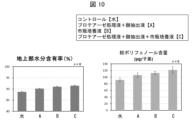
- FIG. 4 is a diagram showing the results of an experiment in which the effect of acid extracts on plant growth was investigated.
- FIG. 3 is a diagram showing the results of an experiment in which an acid extract, a protease-treated solution, or a bone solubilizing solution A was used to examine the effect of plant growth.
- FIG. 10 is a diagram showing the results of an experiment comparing the plant growth effects of bone lysate A and a commercially available culture medium.
- FIG. 10 is a diagram showing the results of an experiment comparing the plant growth effects of bone lysate A and a commercially available culture medium.
- FIG. 10 is a diagram showing the results of an experiment comparing changes in expression levels of stress tolerance-related genes with bone lysate A and commercially available liquid fertilizers.
- FIG. 10 is a diagram showing the results of an experiment comparing changes in expression levels of stress tolerance-related genes with bone lysate A and commercially available liquid fertilizers.
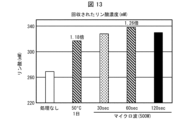
- FIG. 4 is a diagram showing the effect of pretreatment of bone tissue on the amount of phosphoric acid contained in the acid extract. It is a figure showing the result of having analyzed the protein component contained in the acid extract by electrophoresis.
- FIG. 4 is a diagram showing the results of preparing protease-treated solutions using various proteases.
- FIG. 4 is a diagram showing the results of electrophoresis analysis of protein components contained in a protease-treated solution.
- FIG. 10 is a diagram showing the results of preparing bone lysate A with solution exchange using various acids and proteases.
- FIG. 10 is a diagram showing analysis results of expression-variable genes in leaves of sprouts cultivated for 5 days with bone lysate B or a commercially available liquid fertilizer.
- FIG. 10 is a diagram showing analysis results of expression-variable genes in roots of sprouts cultivated for 5 days with a mixture of bone solubilizing solution B and a commercially available liquid fertilizer or only with a commercially available liquid fertilizer.
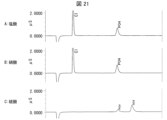
- FIG. 10 is a diagram showing analysis results of expression-variable genes in leaves of sprouts cultivated for 5 days with a mixture of bone solubilizing solution B and a commercially available liquid fertilizer or only with a commercially available liquid fertilizer. It is an elution curve showing the result of extracting phosphoric acid using commercially available bone meal as a raw material.
- a method for producing a fertilizer according to one aspect of the present invention includes one or more of the following steps 1 to 3. In one embodiment, the method for producing fertilizer further includes step 4 below. Hereinafter, the steps 2, 3, 4 and 1 will be described in detail in this order.
- Step 1 Process of treating bone tissue with a solution containing both an acid and a protease to produce a fertilizer from the obtained bone lysate A.
- Step 2 Acid treatment of bone tissue to obtain an acid extract.
- Step 3 Process of producing fertilizer from protease-treated solution obtained by treating acid-treated bone tissue with protease
- Step 4 Mixing acid extract solution and protease-treated solution to obtain Process of manufacturing fertilizer from bone lysate B
- Step 2 is a step of acid-treating the bone tissue and producing a fertilizer from the resulting acid extract.
- the inorganic components are separated mainly from the bone tissue and eluted into the acid extract.
- a fertilizer is produced from the acid extract obtained.
- the acid extract itself may be used as the fertilizer, or the bone solubilizing solution B mixed with the protease-treated solution may be used as the fertilizer.
- the bone tissue to be subjected to step 2 may be derived from any organism. Examples of organisms include mammals, birds, amphibians, and fish. In order to mass-produce fertilizer, it is preferable to obtain a large amount of bone tissue as a raw material of fertilizer, and for example, bone tissue of domestic animals (cattle, pig, sheep, chicken, etc.) is preferably used.
- the bone tissue may be pre-shredded and pulverized prior to the acid treatment. In this way, the bone tissue can be decomposed more efficiently, so the manufacturing time can be shortened.
- the acid used to treat the bone tissue in step 2 is not particularly limited.
- acids include hydrochloric acid, nitric acid, formic acid, sulfuric acid, trichloroacetic acid.
- An acidic demineralization solution such as Planck-Lucro solution may also be used.
- one or more selected from the group consisting of nitric acid, hydrochloric acid, formic acid and sulfuric acid are preferred.
- one or more selected from the group consisting of hydrochloric acid, sulfuric acid and nitric acid are preferable, and one or more selected from the group consisting of hydrochloric acid and nitric acid are more preferable.
- calcium recovery efficiency one or more selected from the group consisting of hydrochloric acid and formic acid is preferable.
- Two or more kinds of acids may be mixed in an appropriate ratio and used.
- the bone tissue may be acid-treated with a solution of acid diluted in a solvent.
- solvents include water, lower alcohols, glycerol, propane-1,2-diol, 1,3-propanediol. Two or more types of solutions may be mixed at an appropriate ratio and used.
- the acid concentration can be appropriately determined according to the volume of bone tissue to be acid-treated. If the volume of bone tissue is small, it can be treated with low concentrations of acid. When the volume of bone tissue is large, a higher concentration of acid is preferred. When acid treatment is performed with a low-concentration acid, it is preferable to treat pulverized bone tissue. However, even when the volume of the bone tissue is large, if the acid concentration is increased and the bone tissue is immersed for a long period of time, the inorganic components can be sufficiently extracted.
- the lower limit of the acid concentration in step 2 is 0.6 mol/L or more, 0.7 mol/L or more, 0.8 mol/L or more, or 0 .9 mol/L or more.
- the upper limit of the acid concentration in step 2 can be 2.0 mol/L or less, 1.5 mol/L or less, 1.0 mol/L or less, or 0.9 mol/L or less. If the concentration of the acid is within the above range, the inorganic components can be efficiently extracted, and since the acid concentration is not too high, the cost of neutralizing the acid extract can be reduced.
- Suitable acid concentrations for acid treatment of pulverized bone tissue are as follows.
- the lower limit of the nitric acid concentration is preferably 0.6 mol/L or more, more preferably 0.7 mol/L or more.
- the upper limit of the concentration of nitric acid is preferably 1.0 mol/L or less, more preferably 0.9 mol/L or less.
- the lower limit of the concentration of hydrochloric acid is preferably 0.8 mol/L or more, more preferably 0.9 mol/L or more.
- the upper limit of the concentration of hydrochloric acid is preferably 1.2 mol/L or less, more preferably 1.1 mol/L or less.
- the lower limit of the concentration of formic acid is preferably 0.8 mol/L or more, more preferably 0.9 mol/L or more.
- the upper limit of the concentration of formic acid is preferably 1.2 mol/L or less, more preferably 1.1 mol/L or less.
- the lower limit of the sulfuric acid concentration is preferably 0.8 mol/L or more, more preferably 0.9 mol/L or more.
- the upper limit of the sulfuric acid concentration is preferably 1.2 mol/L or less, more preferably 1.1 mol/L or less.
- the above concentration is an example of a suitable concentration when bone tissue is pulverized, and when bone tissue having a larger volume is used as a raw material, the acid concentration may be increased.
- the lower limit of the extraction time in step 2 is preferably 6 hours or longer, more preferably 8 hours or longer, and even more preferably 10 hours or longer.
- the upper limit of the extraction time in step 2 is preferably 48 hours or less, more preferably 24 hours or less, and even more preferably 14 hours or less. If the extraction time is within the above range, the inorganic components contained in the bone tissue can be sufficiently extracted.
- the acid treatment temperature in step 2 is preferably 5 to 60°C. If the acid treatment is carried out within the above temperature range, it is possible to reduce the occurrence of unpleasant odors associated with the acid treatment. As a result, the location requirements for fertilizer manufacturing plants become more lenient. Moreover, in order to adjust the temperature to 60° C. or less, no expensive special equipment is required, and the temperature can be kept constant by using a water bath or an incubator.
- a chelating agent capable of capturing calcium ions may be added in addition to the acid.
- the bone tissue may be treated with a chelating agent before and after the acid treatment (the solutions may or may not be exchanged between the acid treatment and the chelating agent treatment).
- chelating agents include ethylenediaminetetraacetic acid (EDTA, CAS Registry Number: 60-00-4), glycol etherdiaminetetraacetic acid (EGTA, CAS Registry Number: 67-42-5), ethylenediamine-N,N'- and disuccinic acid (EDDS, CAS registry number: 20846-91-7).
- the pH of the solution containing the chelating agent is preferably 6.0-8.0.
- the lower limit of the concentration of the chelating agent in step 2 is 0.1 mol/L or more, 0.2 mol/L or more, 0.3 mol/L or more, or It can be 0.4 mol/L or more.
- the upper limit of the concentration of the chelating agent in step 2 can be 0.9 mol/L or less, 0.8 mol/L or less, 0.7 mol/L or less, or 0.6 mol/L or less.
- step 2 at least part of calcium may be removed after the acid treatment.
- methods for removing calcium include neutralizing the acid extract (causing calcium phosphate precipitation), adding sulfuric acid or sulfate (causing calcium sulfate to precipitate), adding carbonic acid or carbonate (calcium carbonate Alternatively, calcium hydrogencarbonate is precipitated), and a method of adding a hydrogencarbonate (calcium carbonate or calcium hydrogencarbonate is precipitated).
- the concentration of phosphoric acid in the acid extract obtained in step 2 tends to increase when the pretreatment step described later is performed.
- the concentration of phosphoric acid contained in the acid extract can be, for example, 280 mM or higher, 300 mM or higher, or 320 mM or higher.
- Step 3 is a step of protease-treating the acid-treated bone tissue and producing a fertilizer from the resulting protease-treated solution.
- a fertilizer is produced from the resulting protease-treated solution.
- the protease-treated solution itself may be used as the fertilizer, or the bone solubilizing solution B mixed with the acid extract may be used as the fertilizer.
- protease used in step 3 is not particularly limited.
- proteases include serine proteases, cysteine proteases, aspartic proteases, glutamic proteases, metalloproteases.
- proteases include trypsin [EC 3.4.21.4], chymotrypsin [EC 3.4.21.1], [EC 3.4.21.2], pepsin [EC 3.4.23 .1], ecolysin [EC 3.4.23.19], papain [EC 3.4.22.2], ficin [EC 3.4.22.3], actinidyne [EC 3.4.22.14 ], bromelain [EC 3.4.22.32], cathepsin B [EC 3.4.22.1], cathepsin H [EC 3.4.22.16], cathepsin K [EC 3.4.22. 38], cathepsin L [EC 3.4.22.15], cathepsin S [EC 3.4.22.27], thermolysin [EC 3.4.24.27].
- a commercially available enzyme preparation may be used as the protease.
- examples of such formulations include Neurase F3G (from Rhizopus niveus), Orientase AY (from Aspergillus niger), Tetrase (from Aspergillus niger), Sumizyme AP (from Aspergillus niger), Denapsin 2P (from Aspergillus genus), Brewer's Clarex (derived from Aspergillus niger), Maxipro AFP (derived from Aspergillus niger), Protease S “Amano” G (derived from Bacillus stearothermophilus), Protease N “Amano” G (derived from Bacillus subtilis), Protease NL "Amano” (Bacillus subtilis) (derived from Aspergillus oryzae), Protease A "Amano” G (derived from Aspergillus oryzae), Umamizyme (derived from Aspergillus oryzae), Prot
- the protease used in step 3 is preferably a protease with an optimum pH of 1.5-8.0.
- proteases having an optimum pH of 1.5 to 8.0 include Protease S "Amano" G (optimum pH: 7.0 to 8.5), Protease N “Amano” G (optimum pH: 6.0 to 7.5), protease NL “Amano” (optimum pH: 6.5 to 7.5), protease A “Amano” G (optimum pH: 6.0 to 7.5), Umamizyme ( Optimum pH: 6.0-7.5), Protease M “Amano” G (optimum pH: 3.0-6.5), Protease P "Amano” 3G (optimum pH: 7.0-8.
- protease R "Amano" optimum pH: 6.0-8.0
- actinidyne optimum pH: 2.5-7.5
- papain optimum pH: 4.0-9.0
- pepsin optimum pH: 1.5-3.0
- Neurase F3G optimum pH: 3.0-5.0
- trypsin optimum pH: 7.0-9.0
- chymotrypsin optimum pH: 7.0 to 9.0
- the protease to be used is more preferably a protease having an optimum pH of 1.5-5.0.
- proteases having an optimum pH of 1.5-5.0 include Protease M "Amano" (optimum pH: 3.0-6.5), actinidin (optimum pH: 2.5-7.
- protease to be used is more preferably a protease having an optimum pH of 1.5 to 4.0.
- proteases with an optimum pH of 1.5-4.0 include actinidyne (pH optimum: 2.5-7.5), pepsin (pH optimum: 1.5-3.0), Lase F3G (optimal pH: 3.0-5.0).
- the concentration of protease in step 3 can be set as appropriate.
- the lower protease concentration limit can be 2 mg/L or higher or 10 mg/L or higher.
- the upper limit of protease concentration can be 100 mg/L or less or 50 mg/L or less.
- the temperature and pH in step 3 can be set as appropriate. Matching the optimum temperature and optimum pH of the protease to be used is preferable for improving the treatment efficiency.
- Examples of the temperature of the reaction system in step 3 include 20 to 60°C.
- the lower limit of the temperature of the reaction system in step 2 may be higher than 10°C, higher than 20°C, higher than 25°C, higher than 30°C, higher than 35°C, higher than 40°C, higher than 45°C, higher than 50°C, or higher than 55°C.
- the upper limit of the temperature of the reaction system in step 2 may be 60° C. or lower or 55° C. or lower.
- salt may be added to the reaction system.
- the substrate specificity of the protease may change depending on the salt concentration added to the reaction system. Therefore, by adding a salt to the reaction system, the components contained in the resulting protease-treated solution can be changed.
- Examples of salts added to the reaction system in step 3 include chloride salts.
- Examples of chloride salts include NaCl, KCl, LiCl, MgCl2 .
- the lower limit of the concentration of the salt added to the reaction system in step 3 is more than 0 mmol/L, 20 mmol/L or more, 100 mmol/L or more, 150 mmol/L or more, 200 mmol/L or more, 500 mmol/L or more, 1000 mmol/L or more, 1500 mmol/L. /L or more, 2000mmol/L or more.
- the upper limit of the concentration of the salt added to the reaction system in step 3 may be 4000 mmol/L or less or 2000 mmol/L or less.
- the size of the peptide fragment generated in step 3 is 10,000 Da or less, 8,000 Da or less, 6,000 Da or less, or 4,000 Da or less. It is highly probable that a peptide fragment that has been cleaved to such a size has lost its physiological activity. In addition, peptide fragments that have been cleaved to such a size are easily absorbed by plants as nutrients, and may function as active ingredients of fertilizers.
- the peptide fragment is derived from one or more selected from the group consisting of type I collagen, alpha-2-HS-glycoprotein, periostin, biglycan and SPARC.
- Step 4 is a step of mixing the acid extract solution obtained in step 2 and the protease-treated solution obtained in step 3, and producing a fertilizer from the bone solubilized solution B obtained. Fertilizer is produced from the obtained bone lysate B.
- the mixing ratio of the acid extract and the protease-treated solution is not particularly limited. In order to obtain a desired composition of the bone solubilized solution B, the mixing ratio can be appropriately selected.
- Step 1 is a step of treating bone tissue with a solution containing both an acid and a protease, and manufacturing a fertilizer from the obtained solubilized bone solution A.
- the acid treatment in step 2 and the protease treatment in step 3 proceed simultaneously.
- step 1 the order of contacting bone tissue with acid and protease is not particularly limited.
- order 1 Bone tissue is immersed in a solution containing acid, and after a predetermined time has passed, protease is added to the solution. Prior to adding the protease, the pH of the solution may be adjusted to the optimum pH for the protease.
- Order 2 Bone tissue is immersed in a solution containing protease, and after a predetermined time has passed, acid is added to the solution.
- Order 3 A solution containing both acid and protease is prepared, and bone tissue is immersed in the solution.
- the method for producing a fertilizer according to one embodiment of the present invention may further include steps that are commonly performed in the production of fertilizers. Examples of such steps include pretreatment steps, ingredient addition steps, drying steps, grinding steps, coated granulation steps, and packing steps.
- the pretreatment process is the process that precedes process 1 or process 2.
- the raw material bone tissue is pretreated.
- the amount of phosphoric acid extracted from the bone tissue can be increased (see Example 4).
- the pretreatment step includes heating bone tissue.
- the heating temperature at this time may be 30° C. or higher or 40° C. or higher; 100° C. or lower or 80° C. or lower.
- Bone tissue may be heated while immersed in acid.
- the pretreatment step heats the bone tissue under pressure.
- the pressure at this time can be 200 kPa or more or 1 MPa or more; 500 MPa or less or 800 MPa or less.
- the heating temperature at this time may be 10° C. or higher or 50° C. or higher; 120° C. or lower or 200° C. or lower.
- the bone tissue is irradiated with microwaves in the pretreatment step.
- microwaves Any combination of heating, heating under pressure and microwave irradiation may be applied.
- the microwave irradiation is more preferable as the pretreatment step because the effect can be obtained in a short period of time.
- the microwave irradiation time can be 5 seconds or more, 10 seconds or more, or 15 seconds or more; 10 minutes or less, 7 minutes or less, or 5 minutes or less.
- the fertilizer obtained by applying the pretreatment step contains denatured proteins (or fragments thereof).
- a denatured protein (or a fragment thereof) has lost the physiological activity of the native protein.
- the ingredient addition process is the process of adding additional fertilizer ingredients.
- fertilizer components added in the component addition process include potassium components (potassium oxide, potassium hydroxide, potassium chloride, potassium sulfate, etc.), nitrogen components (urea, ammonium nitrate, etc.), magnesium components (magnesium phosphate, magnesium chloride , magnesium sulfate, etc.), vitamins, manganese, boron, iron, copper, zinc, and molybdenum.
- the acid extract, protease-treated solution, bone solubilizing solution A or bone solubilizing solution B may be mixed with other fertilizers (inorganic fertilizers, organic fertilizers, etc.).
- the drying step is a step of removing excess water from the acid extract, protease-treated solution, bone solubilized solution A or bone solubilized solution B. Through the drying process, a solid or paste fertilizer is obtained. Solid fertilizers may be cut and pulverized into sizes and shapes that facilitate fertilization, if necessary.
- the coating granulation process is a process of coating and granulating solid fertilizer.
- fertilizer is coated with a silicic acid compound or the like, it is possible to adjust the effective timing of fertilizer, prevent immobilization of phosphorus and calcium, prevent fertilizer from running out, and prevent fertilizer from being damaged by impact.
- the packing process is the process of packing the acid extract, protease-treated liquid, bone solubilized solution A or bone solubilized solution B into a container so that it can be distributed or sold as fertilizer.
- the acid extract, the protease-treated solution, the bone solubilizing solution A or the bone solubilizing solution B, and instructions for using them as a fertilizer may be combined.
- the instructions may be printed on the container or may be provided separately from the packaged fertilizer as a physical or electronic document.
- the manual may describe the formulation of the fertilizer, the method of fertilization, the timing of fertilization, the target crops, and the like.
- FIG. 1 is an exemplary flow chart representing a manufacturing method including steps 2, 3 and/or 4.
- an acid extract is obtained through steps S1, S2, S3 and S4.
- a protease-treated solution is obtained through steps S1, S2 and S5.
- a bone lysate B is obtained by subjecting the acid extract and the protease-treated solution to step S6. All of the acid extract, protease-treated solution and bone solubilizing solution B can be used as components of fertilizers or mixed fertilizers. Since the acid extract contains phosphoric acid, which is an essential nutrient for plants, it can be used as a fertilizer by itself.
- step S1 bone tissue is pretreated.
- Step S1 is an optional step and may not be performed. By pretreating the bone tissue, the amount of phosphoric acid contained in the acid extract can be increased. This step is as described in section [1.5].
- step S2 the bone tissue is acid treated.
- the supernatant obtained through step S2 is the acid extract.
- Production of fertilizer from the acid extract results in step 2 above.
- the acid treatment of bone tissue is as described in section [1.1].
- step S3 sulfate, carbonate or hydrogen carbonate is added.
- Step S3 is an optional step and may not be performed.
- calcium ions contained in the acid extract are precipitated as calcium sulfate, calcium carbonate, or calcium hydrogen carbonate.
- sulfates include sodium sulfate, potassium sulfate, ammonium sulfate, magnesium sulfate.
- carbonates include potassium carbonate and ammonium carbonate.
- Examples of bicarbonates include potassium bicarbonate.
- the sulfate is one or more selected from the group consisting of potassium sulfate, ammonium sulfate and magnesium sulfate.
- the carbonate is potassium carbonate.
- the bicarbonate is potassium bicarbonate. The use of these sulfates, carbonates or bicarbonates results in potassium, magnesium and/or ammonium being included in the acid extract. These components are important nutrients for plants.
- step S4 the acid extract is neutralized with a base.
- Step S4 is an optional step and may not be performed.
- the liquidity of the acid extract is returned from acidity to near neutrality.
- usable bases include sodium hydroxide and potassium hydroxide. Of these, when potassium hydroxide is used, potassium ions are included in the acid extract. Since potassium ions are an important nutrient for plants, neutralization with potassium hydroxide is preferred.
- step S5 the acid-treated bone tissue is treated with protease.
- the treated liquid obtained through step S5 is the protease-treated liquid.
- the step 3 described above is performed.
- the protease-acid treatment of bone tissue is as described in Section [1.2].
- step S6 the acid extract and the protease-treated liquid are mixed.
- a solubilized bone solution B is thus obtained.
- the step 4 described above is carried out. Preparation of bone lysate B is as described in section [1.3].
- FIG. 2 is an exemplary flow chart representing a manufacturing method including step 1.
- a bone lysate A is obtained through steps S1, S7, S3 and S4.
- Bone lysate A can be used as a component of fertilizer or mixed fertilizer.
- step S7 the bone tissue is treated with both acid and protease. Thereby, a bone lysate A is obtained.
- the fertilizer is produced from the solubilized bone solution A, the step 1 described above is carried out.
- the preparation of bone lysate A is as described in section [1.4].
- a fertilizer according to one aspect of the present invention is a fertilizer obtained by a method for producing a fertilizer according to one aspect of the present invention. Therefore, the fertilizer according to one aspect of the present invention contains acid extract, protease-treated solution, bone solubilizing solution A or bone solubilizing solution B. Among these, the fertilizer containing the solubilized bone A or the solubilized bone B is preferable because it has a higher effect of promoting plant growth.
- the lower limit of the ratio of acid extract, protease-treated solution, bone solubilizing solution A or bone solubilizing solution B to the total weight of the fertilizer is 0.01 wt% or more, 0.05 wt% or more, 0.1 wt% 0.5% by weight or more, 1% by weight or more, 5% by weight or more, 10% by weight or more, 20% by weight or more, 30% by weight or more, 40% by weight or more, 50% by weight or more, 60% by weight or more, 70 It can be weight percent or higher, 80 weight percent or higher, or 90 weight percent or higher.
- the upper limit of the ratio of the acid extract, protease-treated solution, bone solubilizing solution A or bone solubilizing solution B to the total weight of the fertilizer is 100% by weight.
- the fertilizer consists solely of acid extract, protease treatment, bone lysate A, bone lysate B, or any mixture thereof.
- the composition of the fertilizer may be changed as necessary.
- some or all of phosphorus and calcium may be changed to calcium dihydrogen phosphate or calcium citrate.
- the timing of fertilization can be adjusted so that phosphorus and calcium are supplied in accordance with the growth stage of the plant body.
- Fertilizer can be either solid fertilizer or liquid fertilizer. Since the acid extract, the protease-treated solution, the bone solubilized solution A, or the bone solubilized solution B are obtained as liquids, they can be easily processed into liquid fertilizers. According to the method for producing a fertilizer according to one embodiment of the present invention, the components of bone tissue (for example, all components of bone tissue) can be solubilized, so a liquid fertilizer rich in components useful for plant growth can be obtained. expected to be In addition, while existing bone-derived solid fertilizers (bone meal) are slow-acting and often used for soil improvement over several years, liquid fertilizers are expected to be immediate-acting. Furthermore, while bone meal is not suitable for hydroponics, liquid fertilizers are suitable for hydroponics. In addition, liquid fertilizers have the advantage of being easily applied for foliar applications.
- the fertilizer may contain components other than the acid extract, the protease-treated solution, the bone solubilizing solution A, or the bone solubilizing solution B.
- ingredients include acid fertilizers, alkaline fertilizers, and other common fertilizers.
- acid fertilizers include ammonium sulfate, lime superphosphate, potassium sulfate, aluminum sulfate, peat moss, black earth, ash, and alum.
- alkaline fertilizers include grass and wood ash, lime nitrogen, chile saltpeter, fish compost, magnesia lime, organic lime, slaked lime, lime nitrogen, limestone, cement, sodium bicarbonate, shells, rice husks and charcoal.
- Other common fertilizers include straw, bark and molasses.
- Free amino acids ⁇ -aminobutyric acid, etc.
- plant growth hormones auxin, etc.
- trace elements magnesium, sulfur, iron, manganese, zinc, copper, boron, molybdenum, etc.
- a fertilizer according to an aspect of the present invention contains a decomposition product of bone tissue. Therefore, it often contains type I collagen, osteocalcin, alpha-2-HS-glycoprotein, periostin, biglycan, SPARC or its degradation peptides, which are the main organic components of bone tissue. These ingredients are less likely to be contained in fertilizers obtained by other manufacturing methods. Therefore, a fertilizer containing type I collagen, osteocalcin, alpha-2-HS-glycoprotein, biglycan, SPARC, degradation peptides thereof, or a combination thereof is produced by the production method according to one embodiment of the present invention. There is a high probability that it is a fertilizer that has been used.
- the fertilizer contains peptide fragments derived from one or more selected from the group consisting of type I collagen, alpha-2-HS-glycoprotein, periostin, biglycan and SPARC.
- a method for producing a fertilizer according to an embodiment of the present invention may include protease treatment of bone tissue (steps S5 and S7). The location of the peptide chain cleaved by the protease is determined uniquely to the protease. Therefore, treatment of a particular protein with a particular protease will uniquely define the peptide fragments produced by the treatment. Since each fragment has a different molecular weight, for example, by mass spectrometry, the protein before protease treatment can be identified from peptide fragments contained in fertilizer.
- the peptide fragments contained in the fertilizer are peptides derived from one or more selected from the group consisting of type I collagen, alpha-2-HS-glycoprotein, periostin, biglycan and SPARC. Whether or not it is a fragment can be determined.
- Table 1 shows examples of peptide fragments that can be detected by LC-MS/MS.
- This peptide fragment is the peptide fragment that can appear when manure is analyzed without trypsinization. Since it has not been trypsinized, the C-terminus of the peptide fragment is an amino acid that is not Lys or Arg.
- peptide fragments derived from one or more selected from the group consisting of type I collagen, alpha-2-HS-glycoprotein, periostin, biglycan, and SPARC do not have bioactivity.
- a method for producing a fertilizer according to an embodiment of the present invention includes a plurality of steps in which proteins can lose their physiological activity.
- One is a pretreatment step.
- the pretreatment step the bone tissue is heated, the bone tissue is heated under pressure, or the bone tissue is irradiated with microwaves, so that proteins are denatured and lose their physiological activity.
- the other is the protease treatment in steps 1 and 3. Proteins treated with proteases become fragments and lose their original physiological activity.
- the size of the peptide fragment derived from one or more selected from the group consisting of type I collagen, alpha-2-HS-glycoprotein, periostin, biglycan and SPARC is 10,000 Da or less. 000 Da or less, 6,000 Da or less, or 4,000 Da or less. It is highly probable that a peptide fragment that has been cleaved to such a size has lost its physiological activity. In addition, peptide fragments that have been cleaved to such a size are easily absorbed by plants as nutrients, and may function as active ingredients of fertilizers.
- physiological activities of type I collagen, alpha-2-HS-glycoprotein, periostin, biglycan and SPARC are as follows. The fact that fragments derived from them lack physiological activity means that they do not have the following activities.
- - Physiological activity of type I collagen It self-assembles to form fibrils under physiological conditions.
- - Biological activity of alpha-2-HS-glycoprotein binds calcium ions.
- periostin It functions as a cell adhesion molecule for osteoprogenitor cells.
- biglycan binds to type I collagen.
- SPARC Promotes type I collagen synthesis in cultured dermal fibroblasts.
- the fertilizer contains phosphoric acid.
- the concentration of phosphoric acid contained in the fertilizer tends to increase.
- the concentration of phosphate contained in the fertilizer can be, for example, 280 mM or higher, 300 mM or higher, or 320 mM or higher.
- the fertilizer contains both peptide fragments derived from one or more selected from the group consisting of type I collagen, alpha-2-HS-glycoprotein, periostin, biglycan and SPARC, and phosphate. contains.
- a method for producing phosphoric acid includes, for example, a calcium phosphate purification step and a calcium removal step.
- steps for producing calcium phosphate include the following procedures. 1. An alkaline solution is added to the acid extract obtained in step 2 to neutralize it. This gives a precipitate. 2. An acid solution (such as aqueous hydrochloric acid) is added to the precipitate to resolubilize the precipitate. 3. Repeat 1 and 2 to purify the calcium phosphate.
- calcium is removed by adding a chelating agent to the purified calcium phosphate solution.
- calcium may be precipitated as calcium sulfate or calcium carbonate by adding one or more selected from the group consisting of sulfates, carbonates and bicarbonates to a solution of purified calcium phosphate.
- sulfates, carbonates and bicarbonates include sodium sulfate, potassium sulfate, ammonium sulfate, magnesium sulfate, sodium carbonate, sodium bicarbonate, potassium carbonate, potassium bicarbonate, ammonium carbonate, or any multicomponent thereof. mixtures.
- the reagent to be added to the calcium phosphate solution may be added as powder or as a solution (aqueous solution, etc.). Since the above-described method can be applied to acidic solutions at room temperature, calcium can be easily removed.
- Bone tissue contains inorganic components such as calcium and organic components such as collagen in addition to phosphoric acid.
- phosphoric acid is dissolved in steps S11 and S12, and components other than phosphoric acid and calcium are removed in steps S13 and S14.
- Step S13 and step S14 may be repeated, and the number of repetitions can be set appropriately.
- step S15 sulfate, carbonate or bicarbonate is added to remove calcium. Calcium sulfate, calcium carbonate, or calcium hydrogen carbonate produced in step S15 may be used as agricultural fertilizers or industrial raw materials. Each step will be described in detail below.
- step S11 bone tissue is pretreated.
- Step S11 is an optional step and may not be performed. By pretreating the bone tissue, the amount of phosphoric acid contained in the acid extract can be increased. This step is the same step as step S1 described above, and the details are as described in section [1.5].
- step S12 the bone tissue is acid treated. This step yields an acid extract. This step is the same step as the above-described step S2, and the description in Section [1.1] is incorporated for the acid treatment conditions.
- step S13 the acid extract is neutralized with a base.
- phosphate ions contained in the acid extract are precipitated as calcium phosphate, and components derived from bone impurities are contained in the supernatant. Therefore, the phosphoric acid can be purified by collecting the precipitate.
- usable bases include sodium hydroxide and potassium hydroxide.
- step S14 an acid is added to the calcium phosphate precipitate.
- an acid is added to the calcium phosphate precipitate.
- examples of acids that can be used include hydrochloric acid, nitric acid and formic acid.
- Steps S13 and S14 may be performed repeatedly. By repeating these steps, the purity of phosphoric acid increases.
- the number of times steps S13 and S14 are repeated may be, for example, 2 or more, 3 or more, 4 or more, or 5 or more. From the viewpoint of economy, the number of times steps S13 and S14 are repeated may be, for example, 10 times or less.
- the washing treatment for washing away unnecessary components contained in the calcium phosphate precipitate with pure water may be performed as many times as necessary before proceeding to the step S15.
- step S15 sulfate, carbonate or bicarbonate is added to the calcium phosphate solution. This causes calcium ions in solution to precipitate as calcium sulfate, calcium carbonate or calcium hydrogen carbonate. Precipitated calcium sulfate, calcium carbonate or calcium hydrogen carbonate is removed by centrifugation or the like.
- sulfates include one or more selected from sodium sulfate, potassium sulfate, ammonium sulfate and magnesium sulfate.
- carbonates include one or more selected from sodium carbonate, potassium carbonate and ammonium carbonate.
- Examples of bicarbonates include one or more selected from sodium bicarbonate and potassium bicarbonate.
- sulfates, carbonates and hydrogen carbonates can be combined arbitrarily.
- Adding sulfate instead of sulfuric acid in step S15 has the following advantages. ⁇ Because no liquid is added, the increase in volume of the reaction system can be reduced. ⁇ Since the reaction system does not become strongly acidic, only a small amount of base is required for neutralization. ⁇ High safety. ⁇ High removal rate of calcium.
- the amount of sulfate, carbonate, or hydrogen carbonate to be added in step S15 can be appropriately set by those skilled in the art.
- the amount of sulfate, carbonate, or hydrogencarbonate added is, for example, the concentration of sulfate, carbonate, or hydrogencarbonate in the reaction system is 0.2M or more, 0.4M or more, 0.6M or more, or 0.8M or more. Alternatively, the amount may be 1.0M or more. A larger amount of sulfate, carbonate, or hydrogen carbonate added can reduce residual calcium.
- the upper limit of the amount of sulfate, carbonate, or hydrogencarbonate to be added may be, for example, an amount such that the concentration of sulfate in the reaction system is 3.0M or less, 2.0M or less, or 1.0M.
- step S15 a small amount of sulfate ions, carbonate ions, or bicarbonate ions remain in the supernatant due to the solubility product.
- the salt added in step S15 is preferably one or more selected from the group consisting of carbonates and hydrogencarbonates.
- the supernatant after removing calcium is purified.
- the supernatant may contain cations such as sodium ions and anions such as chloride ions that were contained in sulfate.
- High-purity phosphoric acid can be obtained by adsorbing these ions on, for example, an ion-exchange resin.
- carbonate ions or hydrogen carbonate ions are contained, the ions can be removed from the system by converting them to carbon dioxide by heating.
- Example 1 Production of fertilizer containing decomposition products of bone tissue
- Example 1-1 Preparation of acid extract with nitric acid and component analysis
- the bone tissue was acid-treated with nitric acid according to the following procedure to obtain an acid extract.
- Pork bones obtained from a slaughterhouse were finely pulverized with a mill (IKA TUBE MILL 100, IKA JAPAN Co., Ltd.).
- 40 mL of nitric acid aqueous solution was added to 3 g of wet weight of pork bone, and the mixture was immersed at 20°C.
- the concentration of the nitric acid aqueous solution was 0.3 mol/L, 0.5 mol/L, 0.75 mol/L or 1.0 mol/L.
- the immersion time was 12 hours, 24 hours or 48 hours. 3.
- the supernatant was collected and used as an acid extract.
- Example 1-2 Preparation of acid extract with hydrochloric acid and component analysis
- the bone tissue was acid-treated with hydrochloric acid according to the following procedure to obtain an acid extract.
- Pork bones obtained from a slaughterhouse were finely pulverized with a mill (IKA TUBE MILL 100, IKA JAPAN Co., Ltd.).
- 2. 35 mL of hydrochloric acid aqueous solution was added to a pig bone having a wet weight of 2 g, and the mixture was immersed at 20°C.
- the concentration of the hydrochloric acid aqueous solution was 0.3 mol/L, 0.5 mol/L or 1.0 mol/L.
- the immersion time was 6 hours, 12 hours or 24 hours. 3.
- the supernatant was collected and used as an acid extract.
- Example 1-3 Preparation of acid extract with formic acid and component analysis
- the bone tissue was acid-treated with formic acid according to the following procedure to obtain an acid extract.
- Pork bones obtained from a slaughterhouse were finely pulverized with a mill (IKA TUBE MILL 100, IKA JAPAN Co., Ltd.).
- 35 mL of formic acid aqueous solution was added to 2 g of wet weight of pork bone, and the mixture was immersed at 20°C.
- the concentration of the formic acid aqueous solution was 0.3 mol/L, 0.5 mol/L or 1.0 mol/L.
- the immersion time was 6 hours, 12 hours or 24 hours. 3.
- the supernatant was collected and used as an acid extract.
- Example 1-4 Preparation of acid extract with sulfuric acid and component analysis
- the bone tissue was acid-treated with sulfuric acid according to the following procedure to obtain an acid extract.
- Pork bones obtained from a slaughterhouse were finely pulverized with a mill (IKA TUBE MILL 100, IKA JAPAN Co., Ltd.).
- 35 mL of an aqueous sulfuric acid solution was added to 2 g of wet weight of pork bone, and the mixture was immersed at 20°C.
- the concentration of the sulfuric acid aqueous solution was 0.3 mol/L, 0.5 mol/L or 1.0 mol/L.
- the immersion time was 6 hours, 12 hours or 24 hours. 3.
- the supernatant was collected and used as an acid extract.
- Table 2 shows the results of analyzing the total phosphorus of the obtained acid extract.
- the component analysis was outsourced to Kurita Analysis Center Co., Ltd.
- Table 2 shows the measurement results of total phosphorus (mg) converted to 1 g of wet weight of bone.
- the analysis results were summarized for each acid for each concentration of nitric acid, hydrochloric acid, formic acid, or sulfuric acid and for each immersion time. It was shown that most of the phosphorus can be recovered in about 24 hours in any acid aqueous solution. Moreover, it was shown that phosphorus can be sufficiently recovered at an acid concentration of about 1 mol/L. Among the four acids examined, hydrochloric acid and sulfuric acid had the highest phosphorus recovery efficiencies. From Table 2, it was found that about 100 mg of phosphorus can be recovered from 1 g of bone tissue.
- Table 3 shows the results of analyzing the total calcium of the obtained acid extract.
- the component analysis was outsourced to Kurita Analysis Center Co., Ltd.
- Table 3 shows the measurement results of total calcium (mg) converted to 1 g of wet weight of bone.
- Concentrations of nitric acid, hydrochloric acid, formic acid and sulfuric acid and the analysis results for each acid were summarized for each immersion time. In the aqueous solutions of nitric acid, hydrochloric acid and formic acid, it was shown that most of the calcium could be recovered in about 24 hours. Also, in aqueous sulfuric acid, the liberated calcium forms insoluble calcium sulfate. Therefore, although the calcium concentration is low as an analysis result, calcium is actually eluted from the bone tissue.
- Example 1-5 Preparation of protease-treated solution
- the acid-treated bone tissue obtained in Example 1-2 was immersed in a treatment solution containing the following two kinds of proteases.
- the conditions for protease treatment were protease concentration: 2% (w/w), temperature: 50°C, pH: optimum pH.
- protease concentration 2% (w/w), temperature: 50°C, pH: optimum pH.
- Protease 1 Neurase F3G (Amano Enzyme Co., Ltd., protease derived from Rhizopus niveus filamentous fungus)
- Protease 2 pepsin (Sigma Aldrich, aspartic protease)
- A represents the results of protease 1 treatment
- B represents the results of protease 2 treatment.
- Treatment times were 3.5 hours, 19 hours or 24 hours.
- the results of visually confirming the transparency of the treatment liquid and the remaining bone tissue are as follows. ⁇ 3.5 hours later: Bone tissue was almost lost in all protease-treated systems. ⁇ 24 hours later: Bone tissue completely disappeared in all protease-treated systems, and the transparency of the protease-treated solution increased.
- a protease-treated solution can be obtained by treating acid-treated bone tissue with a commercially available protease.
- Example 1-6 Preparation of protease-treated solution and component analysis
- a protease-treated solution was obtained by the following procedure. 1. The bone tissue was immersed in a 1 mol/L nitric acid aqueous solution or hydrochloric acid aqueous solution for 48 hours for acid treatment. 2. The resulting treated liquid was separated into an acid extract and a residue of bone tissue, and the acid extract was transferred to another container. 3. A 0.1 mol/L citrate buffer (pH 3.5) was added to the bone tissue residue. The amount added was 10 mL per 1 g of initial bone weight. 4. Actinidyne (a cysteine protease from kiwifruit) was pretreated.
- the resulting protease-treated solution was passed through a 100 ⁇ m filter to obtain a filtrate from which fine insoluble matter was removed.
- the results of component analysis of this filtrate are shown in Table 4 (values converted per 1 g of wet weight of bone).
- the component analysis was outsourced to Kurita Analysis Center Co., Ltd.
- Bone lysate A was prepared in one step without solution exchange between acid treatment and protease treatment.
- the specific procedure is as follows. 1. The bone tissue was immersed in a 1 mol/L nitric acid aqueous solution, hydrochloric acid aqueous solution, formic acid aqueous solution or sulfuric acid aqueous solution for 48 hours for acid treatment. 2. A citrate buffer (pH 3.5) was added to the reaction system to a final concentration of 0.1 mol/L. 3. The optimum pH for the protease was adjusted with 5N NaOH and 5N HCl.
- actinidine was adjusted to pH 3.5, pepsin to pH 3.0, and neurolase F3G to pH 3.0. 4.
- Each protease was added to 1% (w/w).
- the reaction conditions for the protease were 50° C. for 4 days.
- Actinidyne (kiwifruit-derived cysteine protease) was pretreated at 25°C with a 20 mmol/L phosphate buffer (pH 6.5) containing 10 mmol/L dithiothreitol and 5 mmol/L ethylenediaminetetraacetic acid. Pretreatment for 90 minutes.
- the obtained bone lysate A was passed through a 100 ⁇ m filter to obtain a filtrate from which fine insoluble matters were removed.
- the results of measuring the calcium concentration of this filtrate are shown in Table 5 (values converted to 1 g of bone mass). Calcium was measured using a compact calcium ion meter LAQUAtwin-Ca-11 (Horiba Advanced Techno Co., Ltd.).
- Example 1-8 Extraction of phosphoric acid
- Crude phosphoric acid was obtained from bone tissue by the following procedure. 1. The bone tissue was immersed in a 1 mol/L nitric acid aqueous solution, hydrochloric acid aqueous solution, formic acid aqueous solution or sulfuric acid aqueous solution for 48 hours for acid treatment. 2. 0.15 volume of 5N NaOH was added to the reaction system, mixed well, and allowed to stand at room temperature for 1 hour. This gave a white solution. 3. The resulting solution was centrifuged at 10,000 g for 10 minutes at room temperature to remove the supernatant. The same amount of 1N HCl added in step 1 was added to the white precipitate and mixed well. This gave a clear solution. 4.
- Na 2 SO 4 , K 2 SO 4 , MgSO 4 , (NH 4 ) 2 SO 4 , Na 2 CO 3 or NaHCO 3 is added in an amount equal to the calcium concentration contained in the reaction system and mixed well, It was allowed to stand at room temperature for 1 hour. This gave a white solution. 5. The resulting solution was centrifuged at 10,000 g for 10 minutes at room temperature to capture the supernatant. The resulting clear solution contains phosphoric acid.
- Example 2 Growth evaluation and component analysis of plants cultivated with fertilizer containing bone tissue decomposition products]
- material and method 1. Radish (Raphanus sativus L) seeds (Takii Seed Co., Ltd.) were sown on wet paper towels. The seeds were allowed to germinate by standing in the dark at 22° C. for 2 days. 2. The resulting plant was transplanted to a hydroponic urethane cube (2 cm x 2 cm x 2 cm). 3. A urethane cube was immersed in acid extract, protease-treated solution or bone solubilizing solution A and allowed to grow for 5 days.
- the light conditions during this period were a photosynthetically effective photon flux density of about 150 ⁇ mol/m 2 ⁇ s, a light period of 16 hours, and a dark period of 8 hours.
- a fluorescent lamp for growing cultivated plants Biolux A, NEC Lighting Co., Ltd.
- Growth evaluation and component analysis of grown plants were performed. Specifically, it is as follows. ⁇ Aerial fresh weight: The plant body was cut at the boundary between the hypocotyl and the root, and the weight of the hypocotyl side was measured. Dry weight of above-ground part: The part of the plant body whose fresh weight was measured was dried in an oven at 80°C for 2 days. The weight was then measured.
- ⁇ Aerial moisture content Calculated based on the difference between the fresh weight of the aerial part and the dry weight of the aerial part. •
- Total polyphenol content 50 mg of cotyledons were crushed in a 90% methanol solution. Using the supernatant obtained by centrifugation, the total polyphenol content was measured by the Folin-Ciocalteu method.
- Plants given protease-treated solution 1 and protease-treated solution 2 showed accelerated growth compared to the control. Similarly, the growth of the plants to which the acid extract was given was promoted as compared with the control (this point is as shown in (1)). Furthermore, the plant body given the bone solubilized solution A, which is a mixture of the protease-treated solution and the acid extract solution, showed a much higher growth-promoting effect than the control. From these results, it can be seen that both the acid extract and the protease-treated solution have the effect of promoting plant growth. Furthermore, it was found that the plant growth promoting effect of the bone solubilized solution A is higher than the growth promoting effect of the acid extract solution or the protease-treated solution alone.
- the above-ground water content of the plant body increased by adding bone lysate A, and further increased by adding both bone lysate A and culture medium.
- the total polyphenol content per cotyledon was increased by feeding bone lysate A and further increased by feeding both bone lysate A and culture medium. This is considered to be due to the effect of increased cotyledon weight as a result of accelerated plant growth.
- Example 3 Plant body RNA expression analysis 1] [Extraction of total RNA from plants] 1. Radish (Raphanus sativus L) seeds (Takii Seed Co., Ltd.) were sown on wet paper towels. The seeds were allowed to germinate by standing at 22° C. in the dark at 100% humidity for 2 days. 2. The resulting plant body was transplanted to a urethane sponge. The urethane sponge is impregnated with either (1) water, (2) bone solubilizer A, (3) commercially available liquid fertilizer, or (4) a mixture of bone solubilizer A and commercially available liquid fertilizer. let me 3. Plants were grown at 22° C. for 1, 3 or 5 days.
- the light conditions during this period were as follows: amount of light: about 100 ⁇ mol/m 2 ⁇ s, light period: 16 hours, dark period: 8 hours.
- a fluorescent lamp for growing cultivated plants (Biolux A, NEC Lighting Co., Ltd.) was used as the light source. 4. About 0.1 g of leaf tissue and root tissue were collected from each grown plant. Immediately after collection, the tissue was placed in a mortar, liquid nitrogen was added, and the tissue was ground in a frozen state. 5.
- Total RNA was extracted from ground tissue using the RNeasy Plant Mini Kit (Qiagen). 6. The concentration of total RNA in the aqueous solution was measured using the Qubit RNA HS Assay Kit (Thermo Fisher Scientific) and a fluorometer (Qubit-4). In addition, the absorbance at 230 nm, 260 nm and 280 nm (A 230 , A 260 and A 280 ) was measured with a spectrophotometer to examine the purity of the extracted RNA.
- Table 6 shows the results. 13.2 to 88.2 ⁇ g of total RNA was extracted from about 0.1 g of plant leaves from the start of culture to 5 days. From about 0.1 g of plant roots, 8.4-43.8 ⁇ g of total RNA was extracted. A 260 /A 280 was about 2.0, confirming that there was no problem with the purity of RNA.
- RNA sequencing library and RNA sequence analysis by next-generation sequencer Preparation of a cDNA library from total RNA extracted from sprouts and analysis of gene expression using a next-generation sequencer were entrusted to Agenta Corporation. The analysis procedure is as follows. 1. The quality of extracted total RNA (degree of RNA degradation) was assessed by BioAnalyzer (Agilent Technologies). 2. PolyA-mRNA was enriched from the extracted total RNA using beads coupled with polyT oligo DNA. 3. A cDNA library was generated using reverse transcriptase. 4. The base sequence of cDNA was determined using a next-generation sequencer (DNBSEQ-G400, MGI tech).
- RNAseq analysis Based on this, the base sequences of expressed mRNAs were comprehensively determined (RNAseq analysis). Assembly of the sprout gene was performed by Stringtie software. At this time, reference was made to the entire sprout genome base sequence (http://radish.kazusa.or.jp) published in the database of the Kazusa DNA Research Institute.
- Target genes include glutathione S-transferase ⁇ 19 (GSTU19), catalase 2 (CAT2), auxin transporter-like protein 2-1 (LAX2-1), glutathione S-transferase 12 (GST12) and calmodulin 5 (CaM5). It was adopted. The specific procedure is as follows. 1. Leaves of plants grown by feeding with (1) water, (2) bone solubilizing solution A, (3) commercially available liquid fertilizer, or (4) mixture of bone solubilizing solution A and commercially available liquid fertilizer and roots, total RNA was extracted. 2.
- RT reaction A reverse transcriptase reaction (RT reaction) was performed using random primers. PrimeScript RT Master Mix (Takara Bio Inc.) was used as the reverse transcriptase. 3. Quantitative PCR was performed on the target gene. For quantitative PCR, a specific primer pair, TB Green Premix Ex Taq II (Takara Bio Inc.), with 2.0 ng of cDNA as template was used. Thermal Cycler Dice Real Time System TP850 (Takara Bio Inc.) was used as an instrument for quantitative PCR.
- each target gene was normalized to the expression level of the actin gene.
- the nucleotide sequences of the primer pairs used for amplification of the target gene and actin gene are shown in Table 7 (SEQ ID NOs: 1 to 12 from top to bottom).
- Example 4 Improvement of phosphoric acid extraction rate by pretreatment
- pretreatment of bone tissue increased the amount of phosphoric acid contained in the acid extract.
- an acid extract was prepared by the following procedure, and the amount of phosphoric acid contained was quantified. 1. Pork bones obtained from a slaughterhouse were finely pulverized with a mill (IKA TUBE MILL 100, IKA JAPAN Co., Ltd.). 2. 5 g of pulverized pork bone was subjected to one of the following pretreatments (1) to (5).
- microwave irradiation is a preferred embodiment because it can be completed in a short period of time, does not require heating, can be applied to large bone tissue, and can further improve the extraction rate of phosphoric acid.
- Example 5 Analysis of protein components contained in acid extract
- the protein components contained in the acid extract were analyzed by the following procedure. 1. Pork bones obtained from a slaughterhouse were finely pulverized with a mill (IKA TUBE MILL 100, IKA JAPAN Co., Ltd.). 2. 30 mL of hydrochloric acid (1 mol/L) was added to a wet weight of 2 g of pork bone, and the mixture was immersed in the mixture at 20° C. for 48 hours while shaking (100 rpm). In this way the bone tissue was decalcified. 4. The supernatant was collected and used as an acid extract. 5. The obtained acid extracts were respectively designated as (1) undiluted acid extract, (2) 1/2 diluted acid extract, and (3) 1/4 diluted acid extract. 6.
- Example 6 Preparation of protease-treated solution and protein component analysis
- Example 6-1 Preparation of protease-treated solution
- a protease-treated solution was obtained by the following procedure. 1. The bone tissue was immersed in a 1 mol/L hydrochloric acid aqueous solution for 48 hours for acid treatment. 2. The resulting treated liquid was separated into an acid extract and a residue of bone tissue, and the acid extract was transferred to another container. 3. A 0.1 mol/L citrate buffer (pH 3.5) was added to the bone tissue residue. The amount added was 10 mL per 1 g of initial bone weight. 4. The obtained bone tissue residue was immersed in a treatment liquid containing the following three kinds of proteases.
- protease treatment The conditions for protease treatment were protease concentration: 2% (w/w), temperature: 50°C, pH: optimum pH.
- protease concentration 2% (w/w), temperature: 50°C, pH: optimum pH.
- ⁇ Pro Leather FG-F from Amano Enzyme Co., Ltd., Bacillus sp.
- Protease P “Amano” 3G from Aspergillus melleus, Amano Enzyme Co., Ltd.
- Protease M “Amano” SD From Aspergillus oryzae, Amano Enzyme Co., Ltd.
- FIG. 15 shows the appearance of the treatment liquid.
- Examples 1-5 neutral F3G and pepsin
- 1-6 actinidyne
- FIG. 15 shows the appearance of the treatment liquid.
- the results of Examples 1-5 neutral F3G and pepsin
- 1-6 actinidyne
- the protease examined in this example also decomposed the bone decomposition residue, and a protease-treated solution was obtained. Precipitation is observed in the protease-treated solution obtained in this example, and this is considered to be a precipitate of calcium salt due to the near-neutrality of the solution.
- Example 6-2 described later, it can be said that the protein contained in the bone decomposition residue was sufficiently degraded by the protease treatment.
- Example 6-2 Analysis of protein components contained in protease-treated solution
- a protease-treated solution was prepared in the same manner as in Examples 1-5, 1-6 and 6-1 using the following proteases.
- ⁇ Pepsin Sigma Aldrich, aspartic protease
- ⁇ Peptidase R (Amano Enzyme Co., Ltd., derived from the genus Rhizopus)
- Protease P “Amano” 3G from Aspergillus melleus, Amano Enzyme Co., Ltd.)
- Pro Leather FG-F from Amano Enzyme Co., Ltd., Bacillus sp.
- ⁇ Neurase F3G derived from Rhizopus niveus, Amano Enzyme Co., Ltd.
- ⁇ Protease M “Amano” SD (from Aspergillus oryzae, Amano Enzyme Co., Ltd.)
- Actinidine from kiwifruit, cyste
- the resulting protease-treated solution was diluted 10-fold (lane A) or 5-fold (lane B) and electrophoresed using a 16% polyacrylamide gel.
- the migrated proteins were silver-stained.
- a solution containing only the enzyme (lane C) was also subjected to electrophoresis.
- Example 7 Recovery of phosphoric acid from bone tissue
- Phosphoric acid was recovered as a precipitate from the acid extract by the following procedure. The recovery of phosphoric acid was also calculated.
- Pork bones obtained from a slaughterhouse were finely pulverized with a mill (IKA TUBE MILL 100, IKA JAPAN Co., Ltd.).
- the crushed pork bone was immersed in a 1N nitric acid aqueous solution or a 1N hydrochloric acid aqueous solution for 48 hours. 3. The supernatant was collected to obtain an acid extract. 4.
- the content of phosphoric acid in the acid extract using nitric acid was 24.6 mg. This corresponds to 34.7% of the wet weight of pork bone (71 mg) used in step 2.
- Example 8 Purification of phosphoric acid by addition of sulfate
- Example 8-1 Examination of phosphate recovery rate in supernatant
- Calcium was removed as calcium sulfate precipitate from the redissolved solution of the phosphate precipitate obtained in Example 7 by the following procedure. 1.
- the acid used in step 2 of Example 7 was a 1N nitric acid aqueous solution or a 1N hydrochloric acid aqueous solution.
- the amount of 5N aqueous sodium hydroxide solution added in step 4 of Example 7 was 100 ⁇ L. 2.
- Sulfuric acid or sulphate sodium sulphate, potassium sulphate, ammonium sulphate or magnesium sulphate
- the amount of sulfuric acid or sulfate added was such that the final concentration was 0.4M, 0.6M, 0.8M or 1.0M.
- the calcium sulfate precipitate that formed was removed by centrifugation. 4.
- the weight of phosphate contained in the supernatant was measured.
- a Malachite Green Phosphate Assay Kit (BioAssay Systems) was used for the measurement.
- Phosphoric acid recovery was also based on the phosphoric acid content in the precipitate formed by adding an aqueous sodium hydroxide solution to the acid extract (precipitate obtained in step 5 of Example 7) before adding sulfuric acid or a sulfate salt. calculated the rate.
- Table 9 shows the results. It was found that if the concentration of sulfate is appropriately set, the same level of phosphoric acid recovery can be achieved with sulfate as with sulfuric acid. Also, at a low concentration of 0.4 M, the phosphoric acid concentration obtained by adding sulfate tended to be slightly higher than the phosphoric acid concentration obtained by adding sulfuric acid. Importantly, not only does the addition of sulfate allow for a smaller system volume than the addition of sulfuric acid, but the concentration of phosphoric acid obtained is as much as 1.5 times higher. In this respect, the method according to one embodiment of the invention is a useful method for purifying phosphoric acid. Furthermore, when the technique is put into practical use, it is preferable that the amount of sulfuric acid or sulfate added is small.
- sulfate rather than sulfuric acid for calcium precipitation has the following advantages.
- ⁇ Phosphate concentration is about 1.5 times higher.
- ⁇ Because no liquid is added the increase in volume of the reaction system can be reduced.
- ⁇ Since the reaction system does not become strongly acidic, only a small amount of base is required for neutralization. ⁇ High safety.
- Example 8-2 Examination of ability to remove calcium from supernatant
- the calcium content in the supernatant obtained in step 4 of Example 8-1 was measured.
- LAQUAtwin-Ca-11 was used for the measurement.
- the calcium residual rate was determined based on the calcium content in the precipitate formed by adding an aqueous sodium hydroxide solution to the acid extract (precipitate obtained in step 5 of Example 7) before adding sulfuric acid or sulfate. Calculated.
- Table 11 shows the calculated relative ratio (%) of calcium amount (mg)/phosphoric acid amount (mg) based on the results of Tables 9 and 10.
- Phosphate can also be recovered by adding sulfuric acid, but it was shown that the amount of residual calcium was greater than that of the experimental system with the addition of sulfate at any concentration.
- the amount of residual calcium was significantly lower than in the experimental system to which sulfuric acid was added, indicating that the recovery of phosphoric acid was relatively high.
- the residual amount of calcium can be reduced to 0.2% by weight without reducing the recovery of phosphoric acid. Therefore, it can be said that it is more preferable to use sulfate than sulfuric acid for purifying phosphoric acid extracted from bone tissue.
- Example 8-3 Examination of phosphate leakage rate to precipitate
- the phosphoric acid content in the calcium sulfate precipitate obtained in step 3 of Example 8-1 was measured by the following procedure. 1. The calcium sulfate precipitate was redissolved by adding EDTA (pH 7.4) and 5N sodium hydroxide. 2. The phosphoric acid content in the resulting solution was measured. A Malachite Green Phosphate Assay Kit (BioAssay Systems) was used for the measurement. Also, the phosphoric acid loss was determined based on the phosphoric acid content in the precipitate formed by adding aqueous sodium hydroxide solution to the acid extract (precipitate obtained in step 5 of Example 7) before adding sulfuric acid or sulfate. calculated the rate.
- Table 12 shows the results. As can be seen from the table, the phosphate content in the calcium sulphate precipitate could be reduced to the same extent as the sulfuric acid by adjusting the sulphate concentration accordingly. If the sulfate concentration was 0.4M, the leaked phosphoric acid could be sufficiently reduced.
- Example 8-4 Examination of total phosphoric acid recovery rate
- the total amount of the phosphate recovery rate in the supernatant examined in Example 8-1 and the phosphate leakage rate to the precipitate examined in Example 8-3 was examined.
- Phosphoric acid contained in the precipitate has the potential to be re-recovered by washing the precipitate.
- phosphoric acid contained in the precipitate can be recovered by washing the precipitate (calcium sulfate) with pure water. Therefore, the higher the total phosphoric acid content, the higher the potential amount of phosphoric acid that can be recovered.
- Example 9 Plant body RNA expression analysis 2
- Preparation of cDNA library and gene expression analysis by next-generation sequencer A procedure similar to that of Example 3 was followed.
- FIG. 18 shows the results of analysis of expression-variable genes in leaves of sprouts cultivated for 5 days with bone lysate B or a commercially available liquid fertilizer. There were 1,568 genes with more than two-fold increase in FPKM values. There were 1,654 genes whose FPKM values decreased by more than half. Therefore, the expression levels of a total of 3,222 genes varied. As a result of the GO enrichment analysis, 65 genes related to growth control, 44 genes related to photosynthesis, and 44 genes related to photosynthesis, and light harvesting in photosynthetic system I were found to be variable in expression levels. 26 genes were included.
- Fig. 19 shows the analysis results of expression variation genes in the roots of sprouts cultivated for 5 days with a mixture of bone lysate B and a commercially available liquid fertilizer or only with a commercially available liquid fertilizer.
- genes with varying expression levels included 17 genes related to nitrate assimilation, 16 genes related to root hair elongation, and 12 genes related to nitrate uptake. It was
- Fig. 20 shows the analysis results of expression variation genes in sprout leaves cultivated for 5 days with a mixed solution of bone lysate B and a commercially available liquid fertilizer or only with a commercially available liquid fertilizer.
- 32 genes related to response to abscisic acid (a plant hormone), 13 genes related to root hair elongation, and 13 genes related to the promotion of germination were found to be variable in expression levels. It contained 6 genes that
- Example 10 Examination of calcium ion removal efficiency by addition of sulfate
- Calcium ions were removed as a calcium carbonate precipitate by adding sulfate to the redissolved solution of the phosphate precipitate.
- Calcium removal efficiency was examined by measuring the calcium ion content in the supernatant after removing the precipitate.
- the specific procedure is as follows. 1. In the same manner as in Example 7, a redissolved solution of phosphoric acid precipitate was prepared. The acid used in step 2 of Example 7 was 1N aqueous hydrochloric acid. The amount of 5N aqueous sodium hydroxide solution added in step 4 of Example 7 was 100 ⁇ L. 2.
- Liquid sulfuric acid ( H2SO4 ) or solid sulfates ( Na2SO4 , K2SO4 , Mg2SO4 and ( NH4 ) 2SO4 ) were added .
- the amount of sulfuric acid or sulfate added was such that the final concentration was 0.4M.
- the calcium sulfate precipitate that formed was removed by centrifugation.
- the weight (mg) of calcium ions contained in the supernatant was measured. Calcium ions were measured under precision measurement conditions using a high performance ion chromatography IC-8100EX (Tosoh Corporation) connected to a TSKgel SuperIC-Cation HSII (4.6 mm ID ⁇ 10 cm).
- a mixture of 3.0 mmol/L methasulfonic acid and 2.7 mmol/L 18-crown-6 was used as the eluent.
- the measurement temperature was 40° C.
- the flow rate was 1.0 mL/min
- the injection volume was 30 ⁇ L.
- Calcium ion concentration was measured by measuring electric conductivity ( ⁇ S) and obtaining a regression equation from the area of the standard substance. From the calcium ion concentration, the calcium ion content per sample (30 ⁇ L) was determined.
- the calcium ions contained in the bone tissue contribute to a decrease in the recovery of phosphoric acid. This is because calcium ions combine with phosphate ions to form calcium phosphate precipitates in the neutral range. It has therefore been shown that calcium ions are preferably removed by precipitation and can be successfully removed by the addition of sulfate.
- Potassium ions, magnesium ions or ammonium ions contained in sulfates are components necessary for plant growth. Therefore, when potassium sulfate, magnesium sulfate or ammonium sulfate is used as a sulfate, the fertilizer can contain the components necessary for plant growth. Alternatively, even if the base added in step 4 of Example 7 is changed from sodium hydroxide to potassium hydroxide, the fertilizer can contain components necessary for plant growth. By adopting such a manufacturing method, a fertilizer with increased value can be manufactured.
- Example 11 Purification of phosphoric acid by addition of carbonate
- Calcium was removed as calcium carbonate precipitate from the redissolved phosphate precipitate obtained in Example 7 by the following procedure. 1.
- a redissolved solution of phosphoric acid precipitate was prepared.
- the acid used in step 1 of Example 7 was a 1N nitric acid aqueous solution or a 1N hydrochloric acid aqueous solution.
- the amount of 5N aqueous sodium hydroxide solution added in step 4 of Example 7 was 100 ⁇ L.
- Carbonate solid sodium bicarbonate or sodium carbonate
- the amount of sodium bicarbonate added was such that the final concentration was 0.4M.
- the amount of sodium carbonate added was such that the final concentration was 0.6M. 3.
- the calcium carbonate precipitate that formed was removed by centrifugation. 4.
- the concentration (ppm) of phosphate ions contained in the supernatant was measured. Phosphate ions were measured under precision measurement conditions using a high performance ion chromatography IC-8100EX (Tosoh Corporation) connected to a TSKgel SuperIC-Anion HS (4.6 mm ID ⁇ 10 cm). A mixture of 7.5 mmol/L sodium bicarbonate and 0.8 mmol/L sodium carbonate was used as the eluent. The measurement temperature was 40° C., the flow rate was 1.5 mL/min, and the injection volume was 30 ⁇ L.
- the phosphate ion concentration was measured by measuring the electric conductivity ( ⁇ S) and determining the regression equation from the area of the standard substance. From the phosphate ion concentration, the phosphate ion content per sample (30 ⁇ L) was determined.
- Example 12 Removal of cations contained in sulfate
- Example 12-1 Removal of sodium ions or potassium ions
- the cations (sodium ions or potassium ions) contained in the sulfate added to remove calcium ions were removed by the following procedure. Specifically, a strong cation exchange gel was used to adsorb sodium ions or potassium ions. 1. TSKgel SP-TOYOPEARL 650M gel (Tosoh Corporation) was decanted with pure water and packed in a microspin column (GE Healthcare). 2. An appropriate amount of the supernatant after addition of sulfate and removal of calcium sulfate was added to the upper layer of the gel. 3.
- the supernatant was passed through the gel by centrifugation in a tabletop centrifuge.
- the flow-through fraction that passed through the gel was collected. 3.
- the content (mg) of sodium ions or potassium ions contained in the flow-through fraction was measured.
- LAQUAtwin-Na-11 (Horiba Advanced Techno Co., Ltd.) was used to measure sodium ions.
- LAQUAtwin-K-11 was used to measure potassium ions.
- Example 12-2 Removal of magnesium ions or ammonium ions
- the cations (magnesium ions or ammonium ions) contained in the sulfate added to remove calcium ions were removed by the following procedure. Specifically, a strong cation exchange gel was used to adsorb magnesium ions or ammonium ions. 1. TSKgel SP-TOYOPEARL 650M gel (Tosoh Corporation) was decanted with pure water and packed in a microspin column (GE Healthcare). 2. An appropriate amount of the supernatant after addition of sulfate and removal of calcium sulfate was added to the upper layer of the gel. 3. The supernatant was passed through the gel by centrifugation in a tabletop centrifuge.
- the flow-through fraction that passed through the gel was collected. 3.
- the content ( ⁇ g) of magnesium ions, ammonium ions or calcium ions contained in the flow-through fraction was measured.
- the ion concentration was measured under precision measurement conditions using a high performance ion chromatography IC-8100EX (Tosoh Corporation) connected to a TSKgel SuperIC-Cation HSII (4.6 mm ID ⁇ 10 cm). A mixture of 3.0 mmol/L methasulfonic acid and 2.7 mmol/L 18-crown-6 was used as the eluent.
- the measurement temperature was 40° C.
- the flow rate was 1.0 mL/min
- the injection volume was 30 ⁇ L.
- Calcium ion concentration was measured by measuring electric conductivity ( ⁇ S) and obtaining a regression equation from the area of the standard substance. From the ion concentration, the ion content per sample (30 ⁇ L) was determined.
- Example 13 Purification of phosphoric acid from commercially available bone meal
- Phosphoric acid was recovered by solubilizing commercially available steamed bone meal (Omiya Green Service Co., Ltd.) according to the following procedure. 1. 10 mL of sulfuric acid (1N), hydrochloric acid (1N) or nitric acid (1N) was added to 1 g of steamed bone meal and shaken at 25° C. for 19 hours. 2. The resulting acid extract was separated into a supernatant and a precipitate using a centrifuge. 3. 0.1 mL of aqueous NaOH (5N) was added to 0.5 mL of supernatant and shaken for 1 hour. 4.
- the reaction solution was separated into supernatant and precipitate by centrifugation. 5. A suitable amount of hydrochloric acid (1N) was added to the precipitate to dissolve the precipitate. 6. Steps 3-5 were repeated multiple times. The precipitate was then dissolved in 0.5 mL of hydrochloric acid (0.4N). As a result, a precipitate solution enriched with phosphoric acid was obtained. 7. The anion content in the precipitate solution obtained was measured. The measurement was performed under precision measurement conditions using a high performance ion chromatography IC-8100EX (Tosoh Corporation) connected to a TSKgel SuperIC-Anion HS (4.6 mm ID ⁇ 10 cm).
- a mixture of 7.5 mmol/L sodium bicarbonate and 0.8 mmol/L sodium carbonate was used as the eluent.
- the measurement temperature was 40° C.
- the flow rate was 1.5 mL/min
- the injection volume was 30 ⁇ L.
- the anion concentration was measured by measuring the electric conductivity ( ⁇ S) and determining the regression equation from the area of the standard substance. Anion content per sample (30 ⁇ L) was determined from the anion concentration.
- the results of this example show that phosphoric acid can be extracted from commercially available bone powder (bone tissue heat-treated under pressure).
- the method for producing phosphoric acid according to one embodiment of the present invention is a sustainable technology with lower energy costs and less environmental destruction than the method of recovering phosphoric acid from phosphate rock or dried sewage sludge. It has been proven.
- Example 14 Production of protease-treated liquid from commercially available bone meal
- Commercially available steamed bone meal (Omiya Green Service Co., Ltd.) was solubilized by the following procedure to produce a protease-treated solution.
- 10 mL of sulfuric acid (1N), hydrochloric acid (1N) or nitric acid (1N) was added to 1 g of steamed bone meal and shaken at 25° C. for 24 hours.
- the resulting acid extract was separated into a supernatant (acid extract) and a precipitate (bone residue) using a centrifuge and recovered. 3.
- a protease-treated solution was prepared from the precipitate according to S5 of FIG. Neurase F3G (Amano Enzyme Co., Ltd.) or Papain W-40 (Amano Enzyme Co., Ltd.) was used as the protease, and the procedure was the same as in Example 1-5. Specifically, it was as follows.
- steamed bone meal is a mixture of pork and chicken bones heat-treated under high pressure.
- a protease-treated solution could be prepared by the method for producing a fertilizer according to one embodiment of the present invention.
- the protease-treated solution itself can be used as a fertilizer, or can be used as a raw material for the bone solubilizing solution B.
- Liquid fertilizer is expected to have a rapid plant growth effect that cannot be expected from solid bone meal. Liquid fertilizers can also be applied to hydroponics and foliar application.
- Example 15 Measurement of peptide concentration in acid extract made from commercially available bone meal
- An acid extract was prepared from commercially available steamed bone meal (Omiya Green Service Co., Ltd.) by the following procedure. The peptide concentration contained in the acid extract was measured. 1. 10 mL of sulfuric acid (1N), hydrochloric acid (1N) or nitric acid (1N) was added to 1 g of steamed bone meal and shaken at 25° C. for 24 hours. 2. The resulting acid extract was separated into a supernatant and a precipitate using a centrifuge. The supernatant was recovered as an acid extract. 3.
- a 0.4 mol/L potassium hydroxide aqueous solution was added to 0.5 mL of the supernatant to precipitate discrete calcium. 4.
- the peptide concentration in the supernatant obtained by removing the precipitate from the reaction solution obtained in step 3 was measured.
- a protein assay BCA kit (product number 297-73101, Fujifilm Wako) was used for the measurement. The measurement method followed the product manual. Absorbance was measured at 540 nm. The higher the absorbance, the higher the peptide concentration. 5.
- a precipitate was recovered from the reaction solution obtained in step 3. At this time, only the system treated with hydrochloric acid or nitric acid in step 1 was recovered. 6. The precipitate was completely dissolved with 1N hydrochloric acid.
- step 6 after the first and third iterations were completed, the peptide concentration was measured in the supernatant after the precipitate was removed from the reaction.
- a protein assay BCA kit (product number 297-73101, Fujifilm Wako) was used for the measurement. The measurement method followed the product manual. Absorbance was measured at 540 nm. The higher the absorbance, the higher the peptide concentration.
- Example 5 it was shown that the acid extract contained almost no protein components that were stained with the silver staining kit (see also Figure 14). For this reason, in Example 5, it was presumed that the peptide bonds of proteins were cleaved to form low-molecular-weight peptides and amino acids. This example supports this presumption.
- Peptides become impurities in the production of phosphate. It was found that most of the peptides as impurities could be removed by repeating the calcium phosphate dissolution-precipitation process (steps S13 and S14 in FIG. 3). As shown in Table 19, repeating the dissolution-precipitation process three times reduced the peptide concentration by 1/100. This result suggested that peptides could be successfully removed to increase phosphate concentration, especially from acid extracts treated with hydrochloric acid or nitric acid.
- the present invention can be used for growing plants.
Landscapes
- Chemical & Material Sciences (AREA)
- Organic Chemistry (AREA)
- Health & Medical Sciences (AREA)
- Life Sciences & Earth Sciences (AREA)
- Engineering & Computer Science (AREA)
- Inorganic Chemistry (AREA)
- Molecular Biology (AREA)
- Biochemistry (AREA)
- Bioinformatics & Cheminformatics (AREA)
- Zoology (AREA)
- Biotechnology (AREA)
- Genetics & Genomics (AREA)
- Microbiology (AREA)
- Wood Science & Technology (AREA)
- Environmental & Geological Engineering (AREA)
- Biomedical Technology (AREA)
- Medicinal Chemistry (AREA)
- General Engineering & Computer Science (AREA)
- General Health & Medical Sciences (AREA)
- Tropical Medicine & Parasitology (AREA)
- Chemical Kinetics & Catalysis (AREA)
- General Chemical & Material Sciences (AREA)
- Pest Control & Pesticides (AREA)
- Fertilizers (AREA)
Abstract
Description
下記工程1、工程2および工程3のうち1つ以上を含む、リン酸を含有する肥料の製造方法。
工程1:骨組織を酸およびプロテアーゼの両方を含む溶液で処理して、得られた骨可溶化液Aから肥料を製造する工程
工程2:骨組織を酸処理して、得られた酸抽出液から肥料を製造する工程
工程3:酸処理された骨組織をプロテアーゼ処理して、得られたプロテアーゼ処理液から肥料を製造する工程
<2>
上記工程2および上記工程3を含み、
さらに下記工程4を含む、<1>に記載の製造方法。
え 工程4:上記酸抽出液および上記プロテアーゼ処理液を混合して、得られた骨可溶化液Bから肥料を製造する工程
<3>
上記工程1または上記工程2を含み、硝酸、塩酸、蟻酸および硫酸からなる群より選択される1種類以上により骨組織を酸処理する、<1>または<2>に記載の製造方法。
<4>
上記工程1または上記工程3を含み、至適pHが1.5~8.0であるプロテアーゼにより骨組織をプロテアーゼ処理する、<1>~<3>のいずれかに記載の製造方法。
<5>
上記工程1または上記工程2を含み、5~60℃にて骨組織を酸処理する、<1>~<4>のいずれかに記載の製造方法。
<6>
上記工程1または上記工程2を含み、0.6~2.0mol/Lの酸により骨組織を酸処理する、<1>~<5>のいずれかに記載の製造方法。
<7>
上記工程1または上記工程2を含み、6~48時間骨組織を酸処理する、<1>~<6>のいずれかに記載の製造方法。
<8>
上記工程1または上記工程2に先立って、上記骨組織を前処理する工程をさらに含み、
上記前処理は、上記骨組織の加熱、上記骨組織の加圧下における加熱および上記骨組織へのマイクロ波の照射からなる群より選択される1つ以上である、<1>~<7>のいずれかに記載の製造方法。
<9>
上記前処理工程において、上記骨組織に含まれているタンパク質を変性させる、<1>~<8>のいずれかに記載の製造方法。
<10>
<1>~<9>のいずれかに記載の製造方法により得られる肥料。
<11>
液体肥料である、<10>に記載の肥料。
<12>
リン酸と、
I型コラーゲン、アルファ-2-HS-グリコプロテイン、ペリオスチン、バイグリカンおよびSPARCからなる群より選択される1つ以上に由来するペプチド断片と、
を含んでいる、肥料。
<13>
上記ペプチド断片は、当該断片が由来するタンパク質の活性を失っている、<12>に記載の肥料。
<14>
上記ペプチド断片の分子量は、1万Da以下である、<12>または<13>に記載の肥料。
<15>
上記肥料に含まれている上記リン酸の濃度は、280mM以上である、<12>~<14>のいずれかに記載の肥料。
本発明の一態様に係る肥料の製造方法は、下記工程1~3のうち1つ以上を含む。一実施形態において、肥料の製造方法は、下記工程4をさらに含む。以下、工程2、工程3、工程4、工程1の順に詳細に説明する。
工程2:骨組織を酸処理して、得られた酸抽出液から肥料を製造する工程
工程3:酸処理された骨組織をプロテアーゼ処理して、得られたプロテアーゼ処理液から肥料を製造する工程
工程4:酸抽出液およびプロテアーゼ処理液を混合して、得られた骨可溶化液Bから肥料を製造する工程
工程2は、骨組織を酸処理して、得られた酸抽出液から肥料を製造する工程である。工程2では、主として骨組織から無機成分が分離して、酸抽出液中に溶離する。得られた酸抽出液からは、肥料を製造する。酸抽出液そのものを肥料としてもよいし、プロテアーゼ処理液と混合した骨可溶化液Bを肥料としてもよい。
工程3は、酸処理された骨組織をプロテアーゼ処理して、得られたプロテアーゼ処理液から肥料を製造する工程である。得られたプロテアーゼ処理液からは、肥料を製造する。プロテアーゼ処理液そのものを肥料としてもよいし、酸抽出液と混合した骨可溶化液Bを肥料としてもよい。
工程4は、工程2で得られた酸抽出液と、工程3で得られたプロテアーゼ処理液とを混合して、得られた骨可溶化液Bから肥料を製造する工程である。得られた骨可溶化液Bからは、肥料を製造する。工程4において、酸抽出液およびプロテアーゼ処理液の混合比率は、特に限定されない。得られる骨可溶化液Bを所望の組成とするために、混合比を適宜選択できる。
工程1は、骨組織を酸およびプロテアーゼの両方を含む溶液で処理して、得られた骨可溶化液Aから肥料を製造する工程である。工程1では、工程2における酸処理と、工程3におけるプロテアーゼ処理が同時に進行することになる。工程1においては、酸処理およびプロテアーゼ処理に際して、溶液を交換する必要がない。
順序1:酸を含む溶液に骨組織を浸漬させ、所定時間が経過した後、当該溶液にプロテアーゼを添加する。プロテアーゼを添加する前に、溶液のpHをプロテアーゼの至適pHに調節してもよい。
順序2:プロテアーゼを含む溶液に骨組織を浸漬させ、所定時間が経過した後、当該溶液に酸を加える。
順序3:酸およびプロテアーゼの両方を含む溶液を調製し、当該溶液に骨組織を浸漬させる。
本発明の一実施形態に係る肥料の製造方法は、工程1~4に加えて、肥料の製造において通常実施されうる工程をさらに含んでもよい。そのような工程の例としては、前処理工程、成分添加工程、乾燥工程、粉砕工程、被覆造粒工程、梱包工程が挙げられる。
本発明の一実施形態に係る肥料の製造方法の一例を、例示的なフローチャートに従って説明する。
[2.1.製造方法により特定される肥料]
本発明の一態様に係る肥料は、本発明の一態様に係る肥料の製造方法によって得られる肥料である。したがって、本発明の一態様に係る肥料は、酸抽出液、プロテアーゼ処理液、骨可溶化液Aまたは骨可溶化液Bを含んでいる。この中でも、骨可溶化液Aまたは骨可溶化液Bを含んでいる肥料は、植物体の生長促進効果がより高いため好ましい。
本発明の一態様に係る肥料は、骨組織分解物を含んでいる。したがって、骨組織の主な有機成分であるI型コラーゲン、オステオカルシン、アルファ-2-HS-グリコプロテイン、ペリオスチン、バイグリカン、SPARCまたはその分解ペプチドを含んでいることが多い。これらの成分は、他の製造方法で得られる肥料には含まれにくい。そのため、I型コラーゲン、オステオカルシン、アルファ-2-HS-グリコプロテイン、バイグリカン、SPARC、これらの分解ペプチド、またはこれらの組合せが含まれている肥料は、本発明の一実施形態に係る製造方法で製造された肥料である蓋然性が高い。

・I型コラーゲンの生理活性:生理条件で自己会合して線維を形成する。
・アルファ-2-HS-グリコプロテインの生理活性:カルシウムイオンと結合する。
・ペリオスチンの生理活性:骨芽前駆細胞の細胞接着分子として機能する。
・バイグリカンの生理活性:I型コラーゲンと結合する。
・SPARCの生理活性:培養真皮線維芽細胞のI型コラーゲン合成を促進する。
本発明の他の態様は、骨組織を原料とするリン酸の製造方法に関する。リン酸の製造方法は、例えば、リン酸カルシウムの精製工程およびカルシウムの除去工程を含む。
1. 工程2で得られた酸抽出液に、アルカリ溶液を加えて中和する。これにより、沈澱物が得られる。
2. 沈澱物に酸溶液(塩酸水溶液など)を加えて、沈澱物を再び可溶化させる。
3. 1および2を繰返して、リン酸カルシウムを精製する。
骨組織からリン酸を製造する方法として、2種類の製造方法が考えられる。一つは、骨を焼却して骨灰にし、骨灰からリン酸を精製する製造方法である。骨灰からリン酸を精製する工程では、リン鉱石からリン酸を精製する従来法を採用する。しかし、この製造方法は、大量のエネルギーを消費し、CO2の産出量も多くなるので、SDGsの達成には不向きである。
・液体を加えないので、反応系の体積増加を低減できる。
・反応系が強酸性にならないので、中和のために必要な塩基の量が少量で済む。
・安全性が高い。
・カルシウムの除去率が高い。
[実施例1-1:硝酸による酸抽出液の作製および成分分析]
下記の手順により骨組織を硝酸で酸処理し、酸抽出液を得た。
1. 屠殺場から入手した豚骨を、ミル(IKA TUBE MILL 100、IKA JAPAN株式会社)で細粉砕した。
2. 湿重量3gの豚骨に、40mLの硝酸水溶液を加えて、20℃にて浸漬した。硝酸水溶液の濃度は、0.3mol/L、0.5mol/L、0.75mol/Lまたは1.0mol/Lとした。浸漬時間は、12時間、24時間または48時間とした。
3. 上清を回収し、酸抽出液とした。
下記の手順により骨組織を塩酸で酸処理し、酸抽出液を得た。
1. 屠殺場から入手した豚骨を、ミル(IKA TUBE MILL 100、IKA JAPAN株式会社)で細粉砕した。
2. 湿重量2gの豚骨に、35mLの塩酸水溶液を加えて、20℃にて浸漬した。塩酸水溶液の濃度は、0.3mol/L、0.5mol/Lまたは1.0mol/Lとした。浸漬時間は、6時間、12時間または24時間とした。
3. 上清を回収し、酸抽出液とした。
下記の手順により骨組織を蟻酸で酸処理し、酸抽出液を得た。
1. 屠殺場から入手した豚骨を、ミル(IKA TUBE MILL 100、IKA JAPAN株式会社)で細粉砕した。
2. 湿重量2gの豚骨に、35mLの蟻酸水溶液を加えて、20℃にて浸漬した。蟻酸水溶液の濃度は、0.3mol/L、0.5mol/Lまたは1.0mol/Lとした。浸漬時間は、6時間、12時間または24時間とした。
3. 上清を回収し、酸抽出液とした。
下記の手順により骨組織を硫酸で酸処理し、酸抽出液を得た。
1. 屠殺場から入手した豚骨を、ミル(IKA TUBE MILL 100、IKA JAPAN株式会社)で細粉砕した。
2. 湿重量2gの豚骨に、35mLの硫酸水溶液を加えて、20℃にて浸漬した。硫酸水溶液の濃度は、0.3mol/L、0.5mol/Lまたは1.0mol/Lとした。浸漬時間は、6時間、12時間または24時間とした。
3. 上清を回収し、酸抽出液とした。
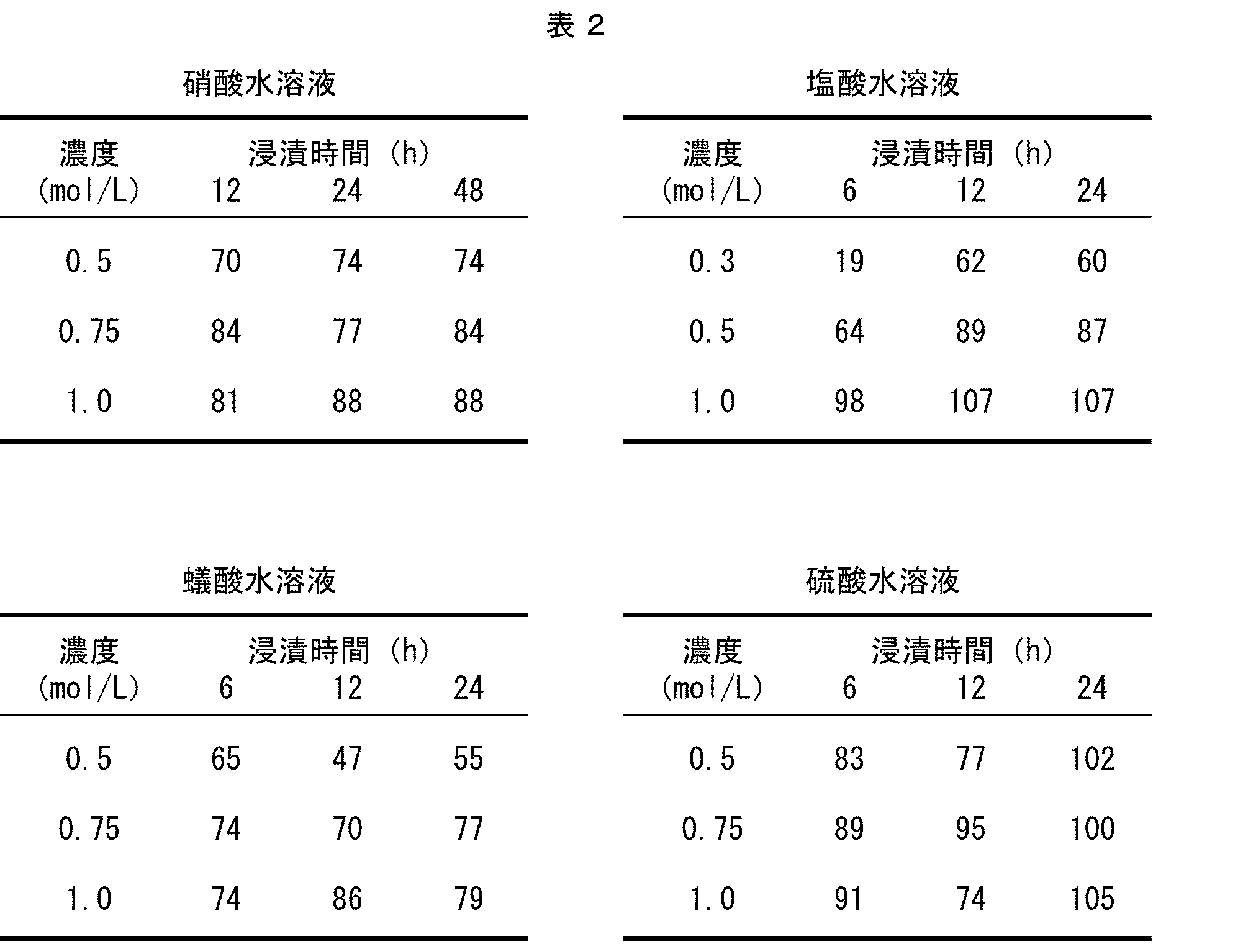
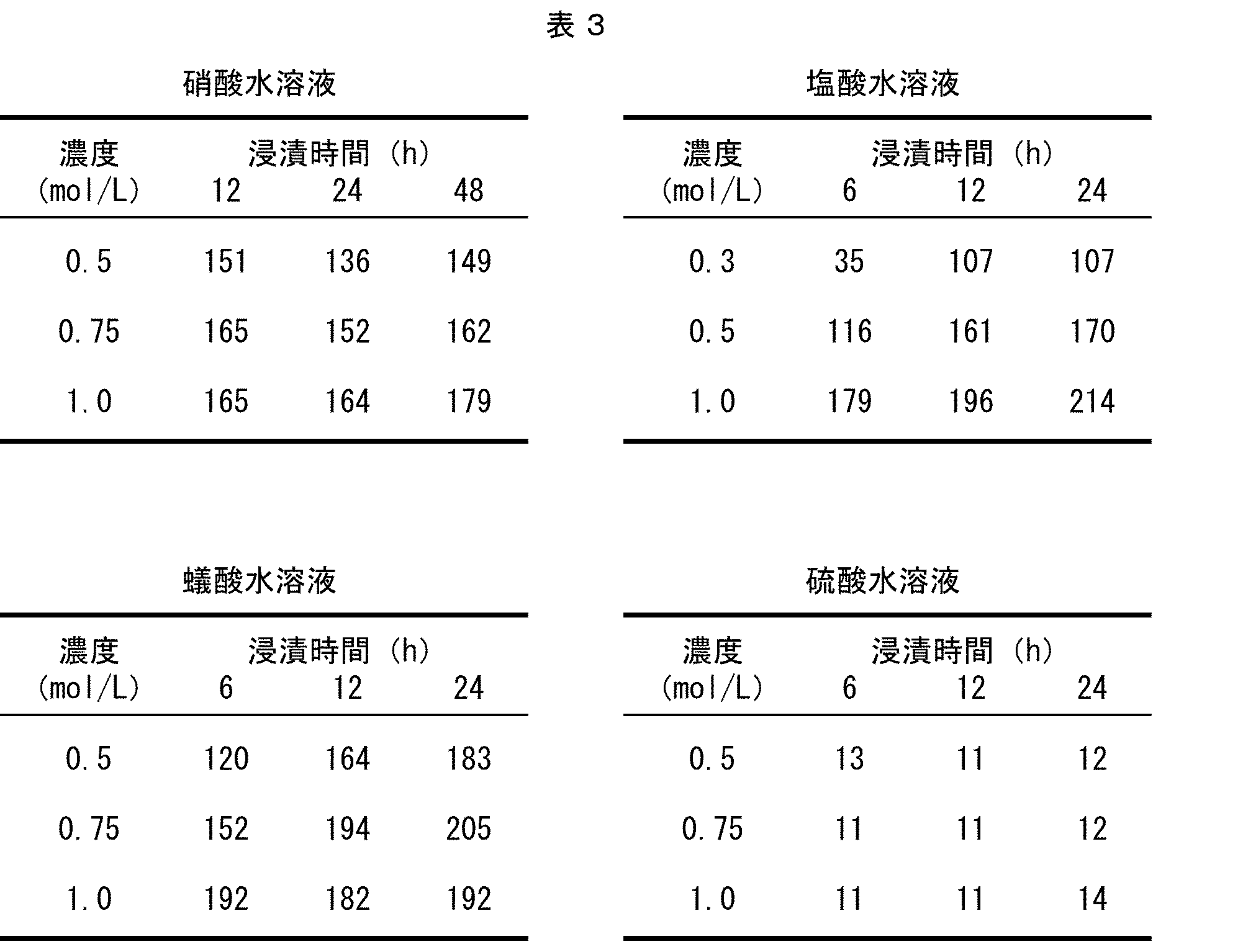
実施例1-2で得られた酸処理後の骨組織を、下記2種類のプロテアーゼを含んでいる処理液に浸漬した。プロテアーゼ処理の条件は、プロテアーゼ濃度:2%(w/w)、温度:50℃、pH:至適pHとした。
・プロテアーゼ1:ニューラーゼF3G(天野エンザイム株式会社、Rhizopus niveus糸状菌由来のプロテアーゼ)
・プロテアーゼ2:ペプシン(Sigma Aldrich、アスパラギン酸プロテアーゼ)
・3.5時間後:いずれのプロテアーゼで処理した系でも、骨組織がほとんど消失していた。
・24時間後:いずれのプロテアーゼで処理した系でも、骨組織が完全に消失し、プロテアーゼ処理液の透明度も上昇した。
下記の手順により、プロテアーゼ処理液を得た。
1. 骨組織を1mol/Lの硝酸水溶液または塩酸水溶液に48時間浸漬して、酸処理した。
2. 得られた処理液を、酸抽出液と骨組織の残渣に分別し、酸抽出液を別容器に移した。
3. 骨組織残渣に、0.1mol/Lのクエン酸緩衝液(pH3.5)を加えた。添加量は、最初の骨重量1g当たり10mLとした。
4. アクチニダイン(キウイフルーツ由来のシステインプロテアーゼ)を前処理した。具体的には、25℃で、10mmol/Lのジチオスレイトールおよび5mmol/Lのエチレンジアミン四酢酸を含む20mmol/Lリン酸緩衝液(pH6.5)に、90分間接触させた。
5. 3で得られた反応系に、活性化したアクチニダインを加えて、プロテアーゼ処理した。処理条件は、温度:20℃または50℃、pH:3.5(100mmol/Lリン酸緩衝液により調節)、時間:3日間とした。
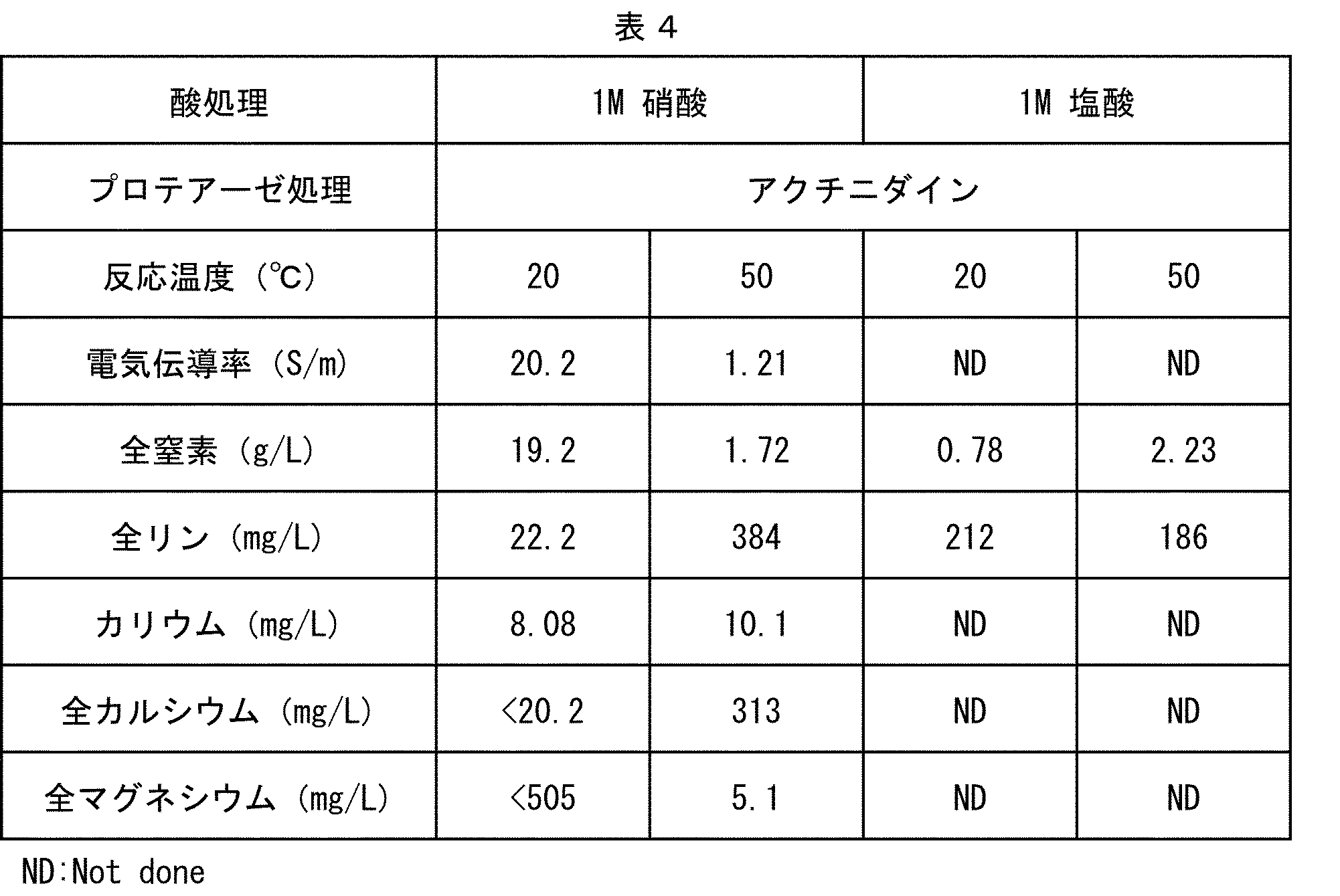
酸処理とプロテアーゼ処理との間に溶液交換を伴わずに、一段階で骨可溶化液Aを調製した。具体的な手順は下記の通りである。
1. 骨組織を1mol/Lの硝酸水溶液、塩酸水溶液、蟻酸水溶液または硫酸水溶液に48時間浸漬して、酸処理した。
2. 反応系に、最終濃度0.1mol/Lになるようにクエン酸緩衝液(pH3.5)を加えた。
3. 5NのNaOHおよび5NのHClにより、プロテアーゼの至適pHに調節した。具体的には、アクチニダインはpH3.5、ペプシンはpH3.0、ニューラーゼF3GはpH3.0に調節した。
4. 各プロテアーゼを、1%(w/w)となるように加えた。プロテアーゼの反応条件は、温度50℃で4日間とした。なお、アクチニダイン(キウイフルーツ由来のシステインプロテアーゼ)は、あらかじめ、10mmol/Lのジチオスレイトールおよび5mmol/Lのエチレンジアミン四酢酸を含む20mmol/Lリン酸緩衝液(pH6.5)で、25℃にて90分間前処理した。
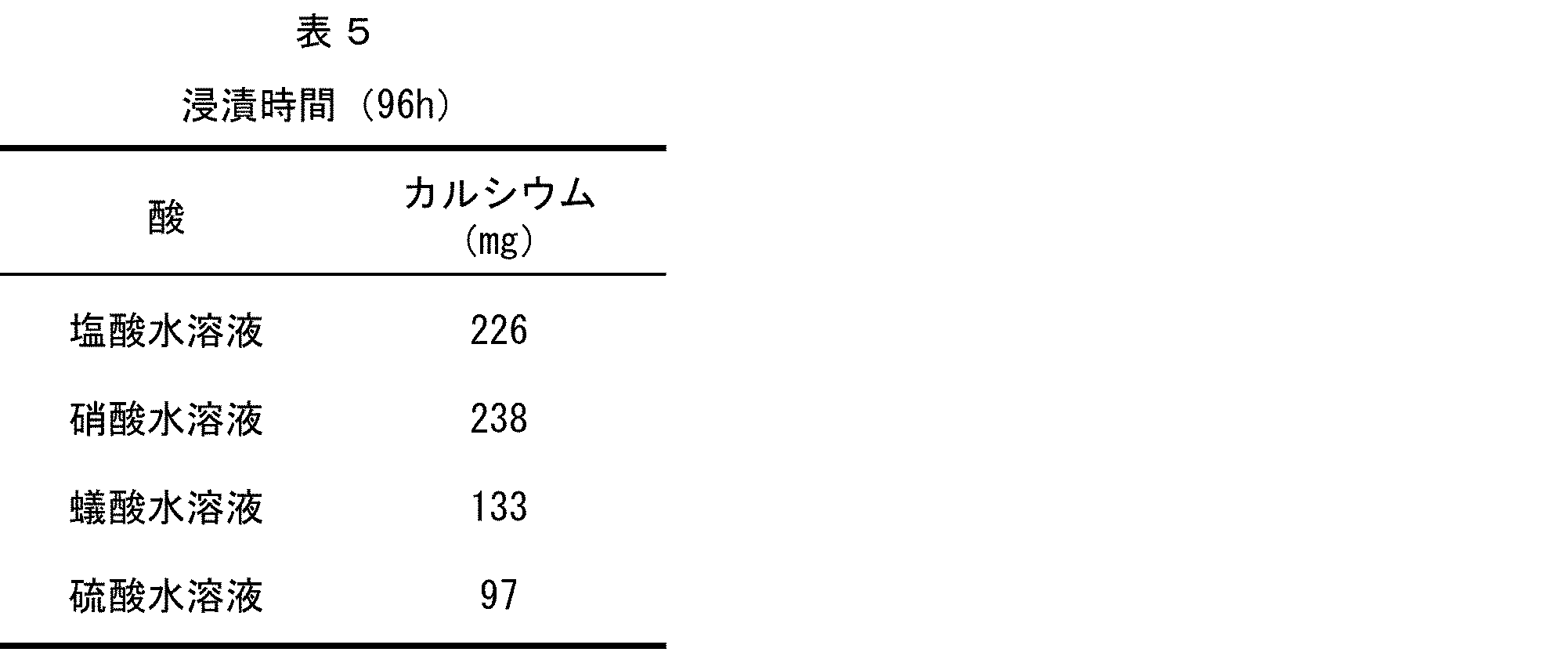
下記の手順により、骨組織から粗精製のリン酸を得た。
1. 骨組織を1mol/Lの硝酸水溶液、塩酸水溶液、蟻酸水溶液または硫酸水溶液に48時間浸漬して、酸処理した。
2. 反応系に5NのNaOHを0.15容量加えてよく混合し、室温で1時間静置した。これにより、白色の溶液を得た。
3. 得られた溶液を、10,000gで10分間、室温で遠心分離して上清を除去した。白色沈澱に1NのHClを工程1で加えた量と同じ量だけ加えて、よく混合した。これにより、透明な溶液を得た。
4. Na2SO4、K2SO4、MgSO4、(NH4)2SO4、Na2CO3またはNaHCO3を、反応系に含まれるカルシウム濃度と同じ量となるように加えてよく混合し、室温で1時間静置した。これにより、白色の溶液を得た。
5. 得られた溶液を、10,000gで10分間、室温で遠心分離して上清を拐取した。得られた透明な溶液に、リン酸が含まれる。
[材料および方法]
1. ダイコン(Raphanus sativus L)の種子(タキイ種苗株式会社)を、濡れた紙タオルに播種した。暗下、22℃にて2日間静置し、種子を発芽させた。
2. 得られた植物体を、水耕栽培用ウレタンキューブ(2cm×2cm×2cm)に移植した。
3. ウレタンキューブに酸抽出液、プロテアーゼ処理液または骨可溶化液Aを浸漬させ、5日間生長させた。この期間の光条件は、光合成有効光量子束密度:約150μmol/m2・s、明期:16時間、暗期:8時間とした。光源には、栽培植物育成用蛍光灯(ビオルックスA、NECライティング株式会社)を用いた。
4. 生長した植物体の生長評価および成分分析を行った。具体的には、下記の通りである。
・地上部新鮮重:植物体を胚軸と根の境界で切断し、胚軸側の重量を測定した。
・地上部乾物重:新鮮重を測定した植物体の部分を、80℃のオーブンで2日間乾燥させた。その後、重量を測定した。
・地上部水分含有率:地上部新鮮重と地上部乾物重の差に基づいて算出した
・葉面積:植物体の子葉をスキャナーで取り込み、ImageJを用いて葉面積を測定した。
・総ポリフェノール含量:50mgの子葉を、90%メタノール溶液中で破砕した。遠心分離して得られた上清を用いて、フォーリン・チオカルト法により総ポリフェノール含量を測定した。
(1)酸抽出液の濃度の生長に対する影響
500倍または2000倍に稀釈した酸抽出液を与えた条件で植物体を生長させた。結果を図7に示す。500倍に稀釈した酸抽出液で生長させた植物体は、コントロールの植物体と比較して、地上部新鮮重が増加した。この結果から、500倍程度に稀釈した酸抽出液には、植物体の生長促進効果があると分かった。以降の実験では、500倍に稀釈した酸抽出液およびプロテアーゼ処理液を使用した。
下記の6条件で植物体を生長させ、地上部新鮮重を比較した。
・水のみを与える(コントロール)
・加熱処理していないプロテーゼ処理液(プロテアーゼ処理液1)を与える
・50℃にて加熱処理したプロテアーゼ処理液(プロテアーゼ処理液2)を与える
・酸抽出液を与える
・プロテアーゼ処理液1および酸抽出液を混合した骨可溶化液Aを与える
・プロテアーゼ処理液2および酸抽出液を混合した骨可溶化液Aを与える
結果を図8に示す。プロテアーゼ処理液1およびプロテアーゼ処理液2を与えた植物体は、コントロールと比較して生長が促進された。同様に、酸抽出液を与えた植物体も、コントロールと比較して生長が促進された(この点は、(1)にて示した通りである)。さらに、プロテアーゼ処理液と酸抽出液とを混合した骨可溶化液Aを与えた植物体は、コントロールと比較した生長促進効果がより一層高かった。この結果から、酸抽出液およびプロテアーゼ処理液のいずれもが、植物体の生長促進効果を有していることが分かる。さらに、骨可溶化液Aによる植物体の生長促進効果は、酸抽出液またはプロテアーゼ処理液単独による生長促進効果よりも高いことが分かった。
骨可溶化液Aと市販の培養液との生長促進効果を比較した。市販の培養液としては、OATハウス(OATアグリオ株式会社)のA処方をさらに1/6倍に稀釈したものを使用した。この稀釈により、骨可溶化液Aと同じ硝酸イオン濃度(約600ppm)になるように調節した。
[植物体の全RNA抽出]
1. ダイコン(Raphanus sativus L)の種子(タキイ種苗株式会社)を、濡れた紙タオルに播種した。暗下、湿度100%、22℃にて2日間静置し、種子を発芽させた。
2. 得られた植物体を、ウレタンスポンジに移植した。ウレタンスポンジには、(1)水、(2)骨可溶化液A、(3)市販の液体肥料、または(4)骨可溶化液Aと市販の液体肥料との混合液のいずれかを含浸させた。
3. 植物体を22℃にて1日間、3日間または5日間生長させた。この期間の光条件は、光量:約100μmol/m2・s、明期:16時間、暗期:8時間とした。光源には、栽培植物育成用蛍光灯(ビオルックスA、NECライティング株式会社)を用いた。
4. 生長させた植物体から、葉および根の組織を約0.1gずつ採取した。採取後すぐに乳鉢に入れて液体窒素を加え、組織を凍結させた状態で磨砕した。
5. RNeasy Plant Mini Kit(Qiagen)を用いて、磨砕した組織から全RNAを抽出した。
6. Qubit RNA HS Assay Kit(Thermo Fisher Scientific)および蛍光光度計(Qubit-4)を用いて、水溶液中における全RNAの濃度を測定した。併せて、230nm、260nmおよび280nmにおける吸光度(A230、A260およびA280)を分光光度計によって測定し、抽出したRNAの純度を調べた。
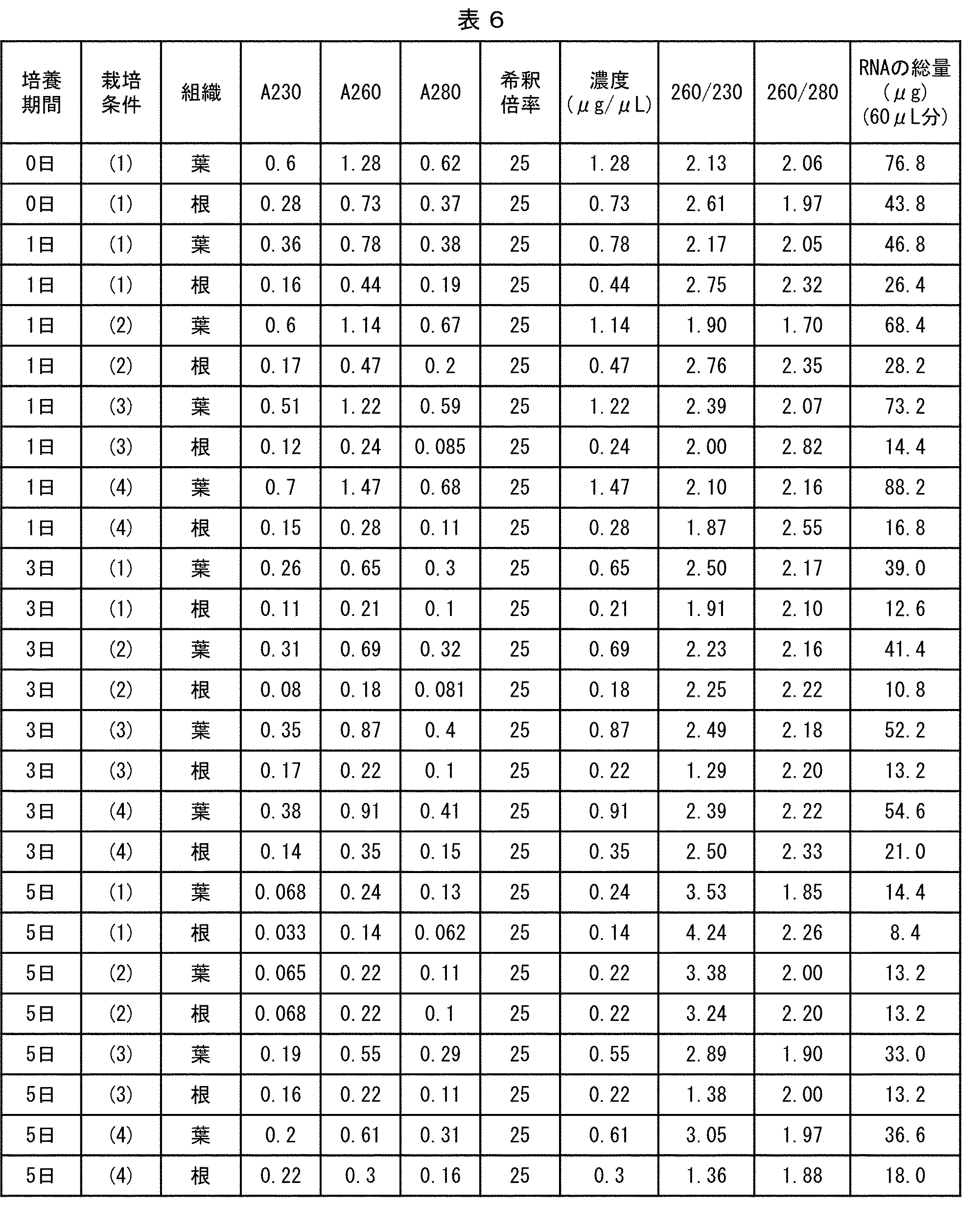
スプラウトより抽出した全RNAからのcDNAライブラリーの作製と、次世代シークエンサーによる遺伝子発現解析は、アゼンタ株式会社に委託して実施した。その解析の手順は以下の通りである。
1. 抽出した全RNAの品質(RNAの分解度)を、BioAnalyzer(Agilent Technologies)によって評価した。
2. 抽出した全RNAから、polyT オリゴDNAを結合したビーズを用いて、polyA-mRNAを濃縮した。
3. 逆転写酵素を用いてcDNAライブラリーを作製した。
4. 次世代シークエンサー(DNBSEQ-G400、MGI tech)を用いてcDNAの塩基配列を決定した。これにより、発現しているmRNAの塩基配列を網羅的に決定した(RNAseq解析)。スプラウト遺伝子のアッセンブリーはStringtieソフトウェアによって行った。このとき、公益財団法人かずさDNA研究所のデータベースで公開されているスプラウトの全ゲノム塩基配列(http://radish.kazusa.or.jp)を参照した。
1. 栽培条件の違いによって発現量が有意に変化した遺伝子を、それぞれの遺伝子のリード数を転写産物長で補正して得られるFPKM値(fragments per kilobase of exon per million reads mapped)に基づいて同定した。同定には、DESeq2ソフトウェアを用いた。
2. 発現量が有意に増加または減少している遺伝子(DEG)を、網羅的に決定した。解析結果は、ボルケーノプロットによって表示した。発現量の比較は、(1)水のみ、(2)骨可溶化液A、(3)市販の液体肥料、(4)骨可溶化液Aと市販の液体肥料との混合液の4群で実施した。(2)または(4)群において発現量が有意に増加または減少している遺伝子を同定した。
3. 同定された発現変動遺伝子について、GOseqソフトウェアを用いてGOエンリッチメント解析を行った。これにより、発現変動遺伝子の生物学的な機能を解析した。
ストレス耐性に関連が深い5種類の遺伝子を標的遺伝子とし、当該遺伝子の発現を、定量RT-PCRによって検討した。標的遺伝子としては、グルタチオンS-転移酵素τ19(GSTU19)、カタラーゼ2(CAT2)、オーキシン輸送体類似タンパク質2-1(LAX2-1)、グルタチオンS-転移酵素12(GST12)およびカルモジュリン5(CaM5)を採用した。具体的な手順は下記の通りである。
1. (1)水、(2)骨可溶化液A、(3)市販の液体肥料、または(4)骨可溶化液Aと市販の液体肥料との混合液を与えて生長させた植物体の葉および根から、全RNAを抽出した。
2. ランダムプライマーを用いて逆転写酵素反応(RT反応)を行った。逆転写酵素には、PrimeScript RT Master Mix(タカラバイオ株式会社)を用いた。
3. 標的遺伝子を定量PCRした。定量PCRには、2.0ngのcDNAをテンプレートとする特異的なプライマー対、TB Green Premix Ex Taq II(タカラバイオ株式会社)を用いた。定量PCRを実行する機器としては、Thermal Cycler Dice Real Time System TP850(タカラバイオ株式会社)を用いた。
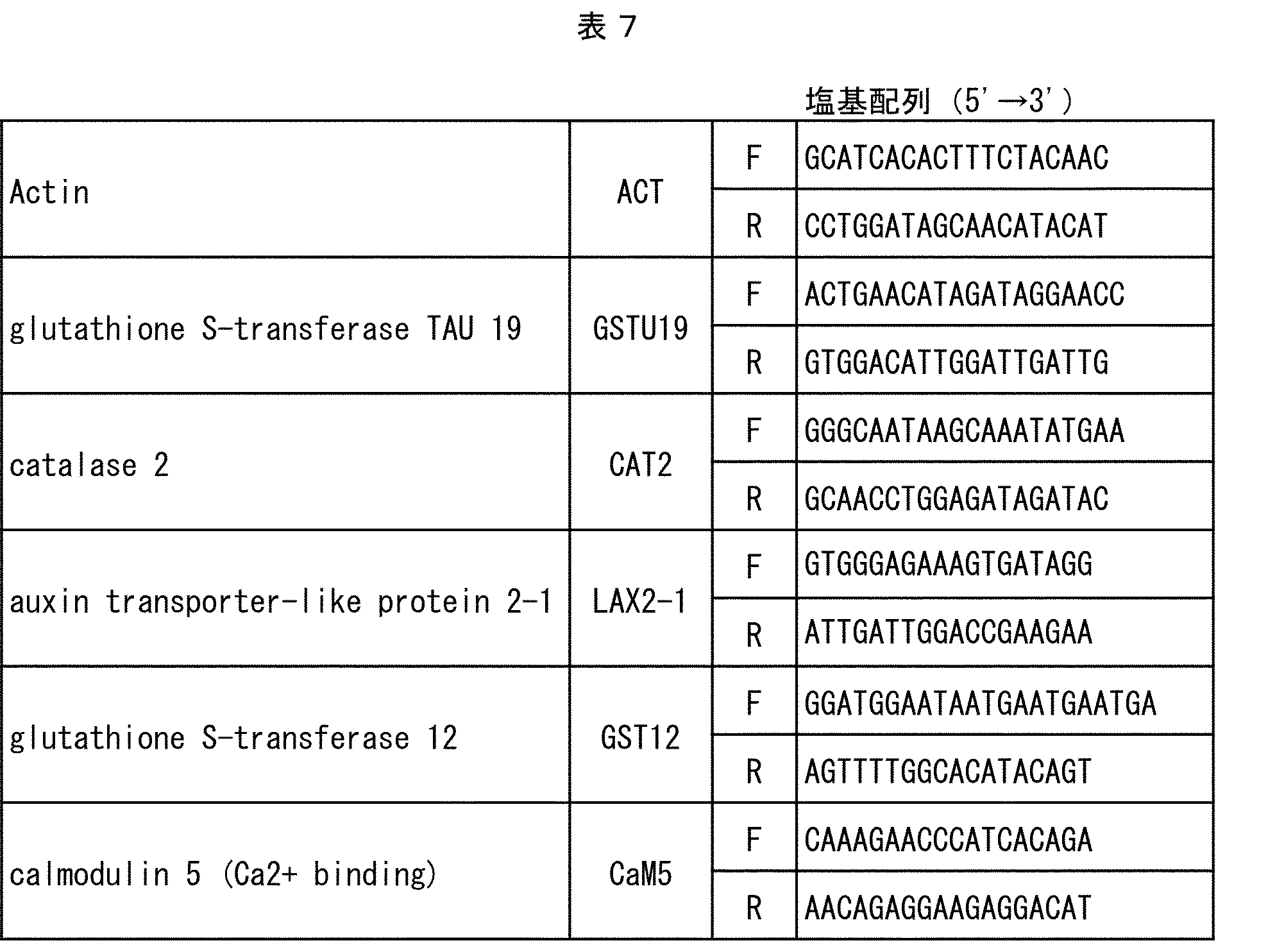
グルタチオンS-転移酵素τ19(GSTU-19)をコードする遺伝子の発現量は、ウレタンスポンジへの移植前には検出されなかった。同じく、移植後1日目の時点では、(1)水、(2)骨可溶化液Aおよび(3)市販の液体肥料を含む系で生長させた植物体の葉および根からも検出されなかった。しかし、移植後1日目の時点において、(4)骨可溶化液Aと市販の液体肥料との混合液を含む系で生長させた植物体の葉および根では、GSTU-19の発現量が顕著に上昇していた(図11)。同様に、移植後1日目の時点において、(4)骨可溶化液Aと市販の液体肥料との混合液を含む系で生長させた植物体の葉ではカタラーゼ2(CAT2)、オーキシン輸送体類似タンパク質2-1(LAX2-1)、グルタチオンS-転移酵素12(GST12)およびカルモジュリン5(CaM5)をコードする遺伝子の発現量が顕著に上昇していた(図12)。
骨組織を前処理することにより、酸抽出液に含まれるリン酸の量が増加することを確認した。具体的には、下記の手順により酸抽出液を調製し、含まれているリン酸の量を定量した。
1. 屠殺場から入手した豚骨を、ミル(IKA TUBE MILL 100、IKA JAPAN株式会社)で細粉砕した。
2. 5gの粉砕した豚骨に、下記(1)~(5)のいずれかの前処理を施した。
(1)処理なし
(2)30mLの硝酸(1mol/L)中で50℃にて1日浸漬
(3)500Wのマイクロ波を30間秒照射
(4)500Wのマイクロ波を60間秒照射
(5)500Wのマイクロ波を120間秒照射
3. (1)および(3)~(5)の豚骨に、30mLの硝酸(1mol/L)を加えた。30mLの硝酸に浸漬した(1)~(5)の豚骨を、20℃にて48時間、振盪(100rpm)しながら浸漬した。このようにして、骨組織を脱灰した。
4. 上清を回収し、酸抽出液とした。
5. リン酸濃度をMalachite Green Phosphate Assay Kit(BioAssay Systems)により測定した。測定方法は、製品付属マニュアルに従った。測定に際しては、上清を蒸留水で稀釈した。
結果を図13に示す。50℃で加熱して前処理した骨組織(2)からは、前処理をしなかった骨組織(1)よりも、1.18倍のリン酸が抽出された。また、マイクロ波照射で前処理した骨組織(3)~(5)からは、前処理をしなかった骨組織(1)よりも、最大で1.26倍のリン酸が抽出された。
下記の手順により、酸抽出液に含まれているタンパク質成分を分析した。
1. 屠殺場から入手した豚骨を、ミル(IKA TUBE MILL 100、IKA JAPAN株式会社)で細粉砕した。
2. 湿重量2gの豚骨に、30mLの塩酸(1mol/L)を加え、20℃にて48時間、振盪(100rpm)しながら浸漬した。このようにして、骨組織を脱灰した。
4. 上清を回収し、酸抽出液とした。
5. 得られた酸抽出液を、それぞれ(1)酸抽出液原液、(2)酸抽出液1/2稀釈液、(3)酸抽出液1/4稀釈液とした。
6. 1mol/LのNaOH溶液を適量加えて、pHを中性にした。
5. 等量のジチオトレイトールを還元剤として加えて、95℃にて10分間加熱した。
6. 5%ポリアクリルアミドゲル(高分子成分用)および12.5%ポリアクリルアミドゲル(低分子成分用)を使用して、常法により電気泳動させた。
結果を図14に示す。対照サンプルとして、骨に多量に含まれているタンパク質であるI型コラーゲンと、分子量マーカーとを同じゲルで電気泳動させた。同図から分かるように、酸抽出液からは、高感度な銀染色キットで染色される分子量1万Da以上のタンパク質が検出されなかった。つまり、酸抽出液には、タンパク質成分がほとんど含まれていないことが分かった。これは、強酸である塩酸で処理したため、タンパク質のペプチド結合が切断されて低分子ペプチドおよびアミノ酸になったからだと考えられる。
[実施例6-1:プロテアーゼ処理液の調製]
下記の手順により、プロテアーゼ処理液を得た。
1. 骨組織を1mol/Lの塩酸水溶液に48時間浸漬して、酸処理した。
2. 得られた処理液を、酸抽出液と骨組織の残渣に分別し、酸抽出液を別容器に移した。
3. 骨組織残渣に、0.1mol/Lのクエン酸緩衝液(pH3.5)を加えた。添加量は、最初の骨重量1g当たり10mLとした。
4. 得られた骨組織残渣を、下記3種類のプロテアーゼを含んでいる処理液に浸漬した。プロテアーゼ処理の条件は、プロテアーゼ濃度:2%(w/w)、温度:50℃、pH:至適pHとした。
・プロレザーFG-F(天野エンザイム株式会社、Bacillus sp.由来)
・プロテアーゼP「アマノ」3G(天野エンザイム株式会社、Aspergillus melleus由来)
・プロテアーゼM「アマノ」SD(天野エンザイム株式会社、Aspergillus oryzae由来)
処理液の外観を図15に示す。参考として、実施例1-5(ニューラーゼF3Gおよびペプシン)および実施例1-6(アクチニダイン)の結果も併せて示す。同図から分かるように、本実施例で検討したプロテアーゼでも骨分解残渣が分解され、プロテアーゼ処理液が得られることが分かった。なお、本実施例で得られたプロテアーゼ処理液には沈澱が見られるが、これは、液性が中性に近いために生じたカルシウム塩の沈澱と考えられる。後述する実施例6-2の結果も踏まえると、プロテアーゼ処理によって骨分解残渣に含まれていたタンパク質は充分に分解されていると言える。
実施例1-5、1-6および6-1と同様にして、下記のプロテアーゼを用いてプロテアーゼ処理液を調製した。
・ペプシン(Sigma Aldrich、アスパラギン酸プロテアーゼ)
・ペプチダーゼR(天野エンザイム株式会社、Rhizopus属由来)
・プロテアーゼP「アマノ」3G(天野エンザイム株式会社、Aspergillus melleus由来)
・プロレザーFG-F(天野エンザイム株式会社、Bacillus sp.由来)
・ニューラーゼF3G(天野エンザイム株式会社、Rhizopus niveus由来)
・プロテアーゼM「アマノ」SD(天野エンザイム株式会社、Aspergillus oryzae由来)
・アクチニダイン(キウイフルーツ由来、システインプロテアーゼ)
下記の手順により、酸抽出液から沈澱としてリン酸を回収した。また、リン酸の回収率も計算した。
1. 屠殺場から入手した豚骨を、ミル(IKA TUBE MILL 100、IKA JAPAN株式会社)で細粉砕した。
2. 粉砕した豚骨を、1Nの硝酸水溶液または1Nの塩酸水溶液に48時間浸漬した。
3. 上清を回収して、酸抽出液を得た。
4. 0.5mLの酸抽出液に、5Nの水酸化ナトリウム水溶液を、30μL、50μL、70μL、100μLまたは120μL加えて、室温にて1時間静置した。これにより、リン酸を沈澱させた。
5. 遠心分離により、反応液を上清と沈澱とに分けた。
6. 沈澱に1Nの塩酸水溶液を0.5mL加えて、リン酸を再溶解させた。
7. 工程5で得られた沈澱の最溶解液および工程4で得られた上清におけるリン酸含有量を測定した。測定には、Malachite Green Phosphate Assay Kit(BioAssay Systems)を用いた。また、工程3で得られた酸抽出液におけるリン酸含有量を基準として、リン酸回収率を計算した。

結果を表8に示す。硝酸を用いた酸抽出液においては、NaOH水溶液の添加量を100μL以上にすれば、70%以上のリン酸を沈澱として回収できた。一方、上清に含まれているリン酸は、NaOH水溶液の添加量を120μLとすると、10%程度にまで減少した。塩酸を用いた酸抽出液においては、NaOH水溶液の添加量を70μL以上にすれば、70%以上のリン酸を沈澱として回収できた。一方、上清に含まれているリン酸は、NaOH水溶液の添加量を100μLとすると、10%程度にまで減少した。このように、酸抽出液に適量のNaOH水溶液を添加することにより、沈澱としてリン酸を回収・粗精製できた。
[実施例8-1:上清におけるリン酸回収率の検討]
下記の手順により、実施例7で得られたリン酸沈澱の再溶解液から、カルシウムを硫酸カルシウム沈澱として除去した。
1. 実施例7と同様にして、リン酸沈澱の再溶解液を調製した。実施例7の工程2において使用する酸は、1Nの硝酸水溶液または1Nの塩酸水溶液とした。実施例7の工程4において添加する5Nの水酸化ナトリウム水溶液の量は、100μLとした。
2. 硫酸または硫酸塩(硫酸ナトリウム、硫酸カリウム、硫酸アンモニウムまたは硫酸マグネシウム)を加えた。硫酸または硫酸塩の添加量は、最終濃度が0.4M、0.6M、0.8Mまたは1.0Mとなる量とした。
3. 生成した硫酸カルシウム沈澱を、遠心分離により除去した。
4. 上清に含まれているリン酸の重量を測定した。測定には、Malachite Green Phosphate Assay Kit(BioAssay Systems)を用いた。また、硫酸または硫酸塩を加える前の、酸抽出液に水酸化ナトリウム水溶液を加えて生じた沈澱(実施例7の工程5で得られた沈澱)におけるリン酸含有量を基準として、リン酸回収率を計算した。
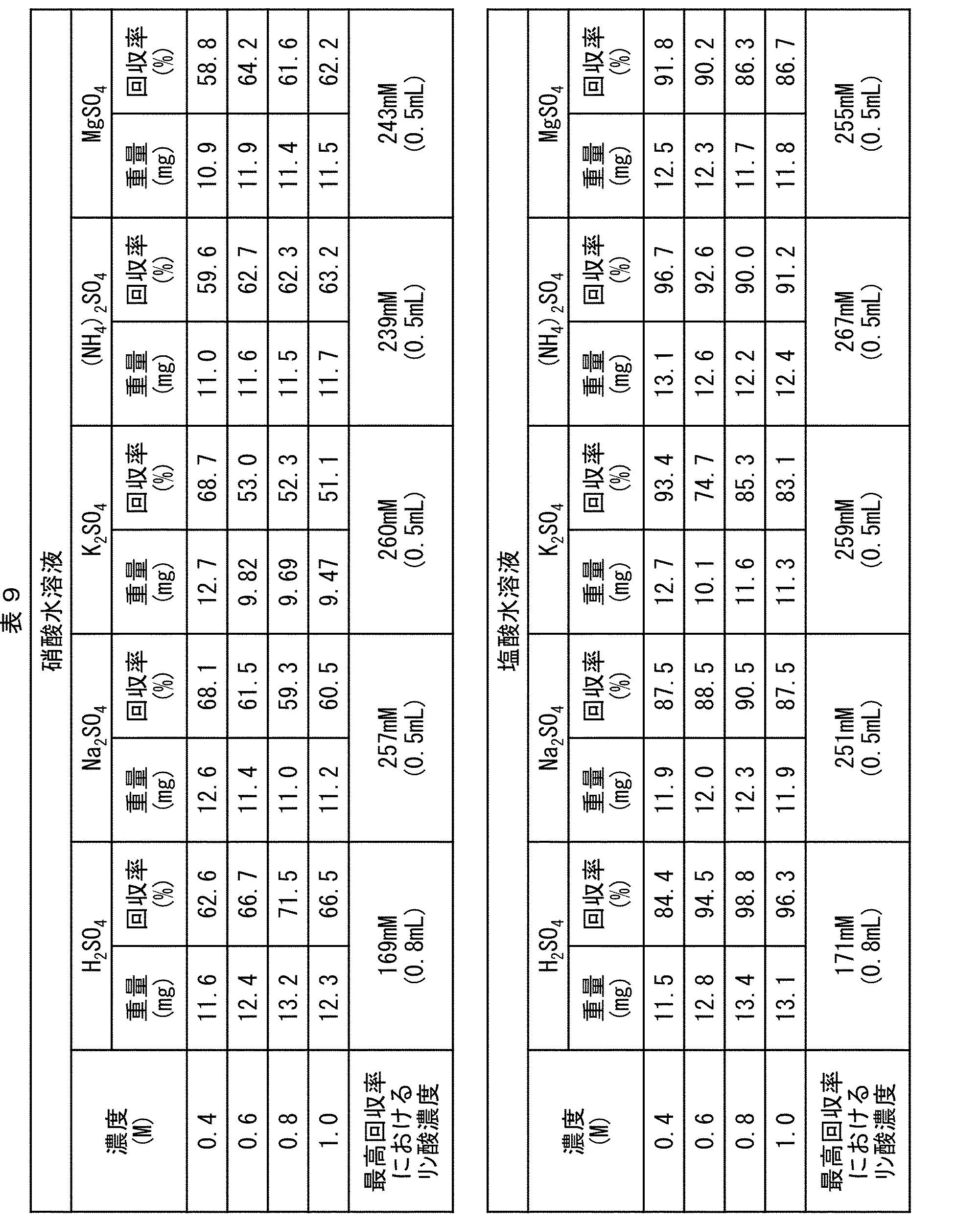
結果を表9に示す。硫酸塩の濃度を適切に設定すれば、硫酸と同程度のリン酸回収率を硫酸塩でも達成できることが分かった。また、0.4Mの低濃度においては、硫酸塩の添加により得られるリン酸濃度は、硫酸の添加により得られるリン酸濃度よりも若干高い傾向にあった。重要なことには、硫酸塩を添加は硫酸の添加よりも系の体積を少なくできるだけでなく、得られるリン酸の濃度も1.5倍程度高い。この点において、本発明の一実施形態に係る方法は、リン酸を精製する有用な方法である。さらに、技術を実用化する際には、硫酸または硫酸塩の添加量が少ない方が好ましいことからも、硫酸塩によるカルシウム除去効果の有効性が改めて証明された。
・リン酸濃度が1.5倍程度高い。
・液体を加えないので、反応系の体積増加を低減できる。
・反応系が強酸性にならないので、中和のために必要な塩基の量が少量で済む。
・安全性が高い。
実施例8-1の工程4で得られた上清における、カルシウム含有量を測定した。測定には、LAQUAtwin-Ca-11を用いた。また、硫酸または硫酸塩を加える前の、酸抽出液に水酸化ナトリウム水溶液を加えて生じた沈澱(実施例7の工程5で得られた沈澱)におけるカルシウム含有量を基準として、カルシウム残留率を計算した。

結果を表10に示す。同じ濃度で比較すると、一般に、硫酸よりも硫酸塩の方が、カルシウム残留率が低かった。例えば、塩酸での酸処理後に0.4M水酸化ナトリウムを加えた実験系において、溶液中のカルシウム量は、H2SO4では1,210μgであったのに対し、硫酸塩では155~270μgであった。つまり、この条件におけるカルシウム除去能は、硫酸塩の方が最大で7.8倍高かった。加えて、重要なことには、硫酸塩を添加した溶液と硫酸を添加した溶液とを比較すると、溶液の体積は前者が後者の約1/2でありながら、カルシウム濃度は前者が後者の約1/2まで減少していた。つまり、硫酸塩を添加することにより、リン酸を精製する上で不必要なカルシウムを効率よく除去できる。
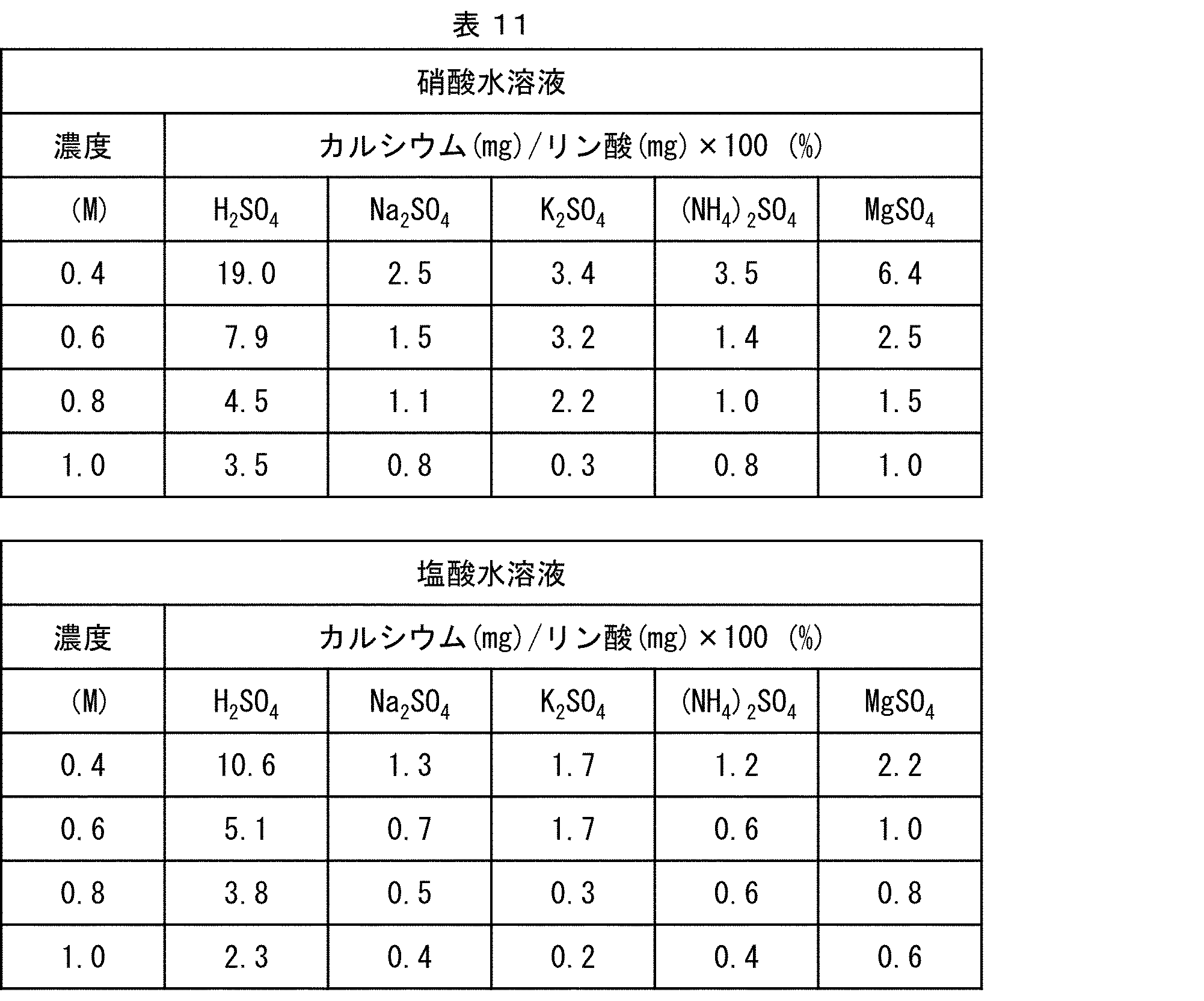
下記の手順により、実施例8-1の工程3で得られた硫酸カルシウム沈澱における、リン酸の含有量を測定した。
1. 硫酸カルシウム沈澱にEDTA(pH7.4)および5Nの水酸化ナトリウムを加えて、再溶解させた。
2. 得られた溶解液におけるリン酸含有量を測定した。測定には、Malachite Green Phosphate Assay Kit(BioAssay Systems)を用いた。また、硫酸または硫酸塩を加える前の、酸抽出液に水酸化ナトリウム水溶液を加えて生じた沈澱(実施例7の工程5で得られた沈澱)におけるリン酸含有量を基準として、リン酸脱漏率を計算した。

結果を表12に示す。表から分かるように、硫酸塩の濃度を適宜調節すれば、硫酸カルシウム沈澱におけるリン酸含有量を硫酸と同程度に低減できた。硫酸塩の濃度は、0.4Mあれば、脱漏するリン酸を充分に低減できた。
実施例8-1で検討した上清におけるリン酸回収率と、実施例8-3で検討した沈澱へのリン酸脱漏率の合計量を検討した。沈澱に含まれているリン酸は、沈澱の洗浄によって再回収できる見込みがある。例えば、沈澱(硫酸カルシウム)を純水により洗浄することで、沈澱に含まれていたリン酸を回収できる。そのため、合計リン酸含有量が多いほど、回収できるリン酸の潜在量も多くなる。
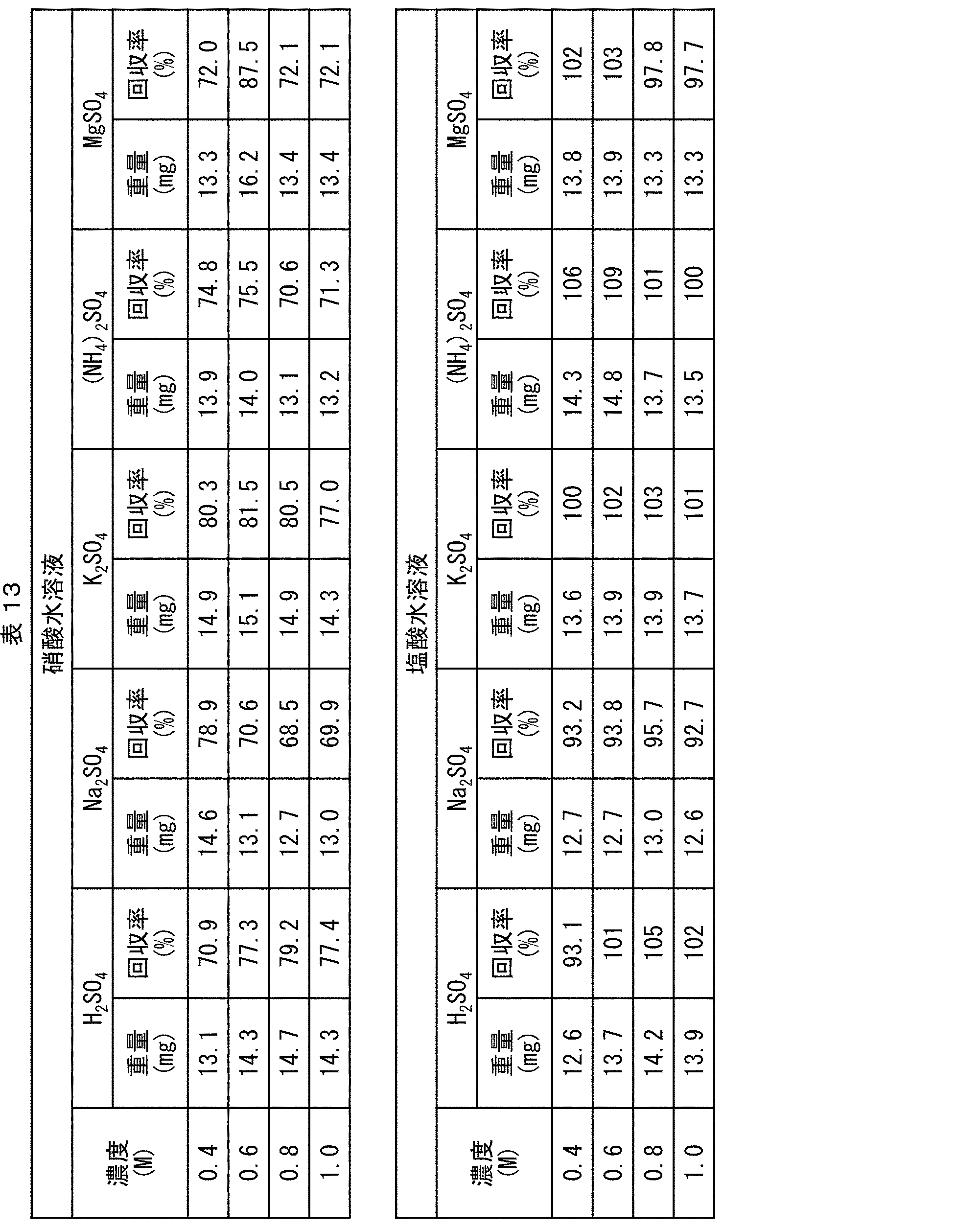
結果を表13に示す。濃度を適切に調節すれば、硫酸と同程度のリン酸回収率を硫酸塩でも達成できることが分かった。合計回収率は塩酸を用いた酸抽出液の方が高かったが、絶対的なリン酸含有量は塩酸を用いた酸抽出液と硝酸を用いた酸抽出液とで同程度であった。
[cDNAライブラリーの作製および次世代シークエンサーによる遺伝子発現解析]
実施例3と同様の手順により行った。
実施例3と同様の手順により行った。発現量の比較は、骨可溶化液Bvs.市販の液体肥料、および、骨可溶化液Bと市販の液体肥料との混合液vs.市販の液体肥料のみの2組で実施した。
図18は、骨可溶化液Bまたは市販の液体肥料を与えて5日間栽培したスプラウトの葉における、発現変動遺伝子の解析結果である。FPKM値が2倍以上に増加した遺伝子は、1,568個であった。FPKM値が2分の1以下に減少した遺伝子は、1,654個であった。したがって、合計3,222個の遺伝子の発現量が変動していた。GOエンリッチメント解析の結果、発現量が変動している遺伝子には、成長の制御に関連する遺伝子が65個、光合成に関連する遺伝子が44個、光合成の光化学系Iにおける光捕集に関係する遺伝子が26個含まれていた。
リン酸沈澱の再溶解液に硫酸塩を添加することにより、カルシウムイオンを炭酸カルシウム沈澱として除去した。沈澱除去後の上清におけるカルシウムイオン含有量を測定して、カルシウム除去効率を検討した。具体的な手順は次の通りである。
1. 実施例7と同様にして、リン酸沈澱の再溶解液を調製した。実施例7の工程2において使用する酸は、1Nの塩酸水溶液とした。実施例7の工程4において添加する5Nの水酸化ナトリウム水溶液の量は、100μLとした。
2. 液体の硫酸(H2SO4)または固体の硫酸塩(Na2SO4、K2SO4、Mg2SO4および(NH4)2SO4)を加えた。硫酸または硫酸塩の添加量は、最終濃度がそれぞれ0.4Mとなる量とした。
3. 生成した硫酸カルシウム沈澱を、遠心分離により除去した。
4. 上清に含まれているカルシウムイオンの重量(mg)を測定した。カルシウムイオンの測定は、TSKgel SuperIC-Cation HSII(4.6mm I.D.×10cm)を接続した高速イオンクロマトグラフィーIC-8100EX(東ソー株式会社)を用いて、精密測定条件で実施した。3.0mmol/Lのメタスルホン酸および2.7mmol/Lの18-クラウン-6の混合液を溶離液とした。測定温度は40℃、流速は1.0mL/分、注入量は30μLであった。電気電動度(μS)を測定し、標準物質の面積から回帰式を求めることにより、カルシウムイオン濃度を測定した。カルシウムイオン濃度から、1つのサンプル(30μL)あたりのカルシウムイオン含有量を求めた。
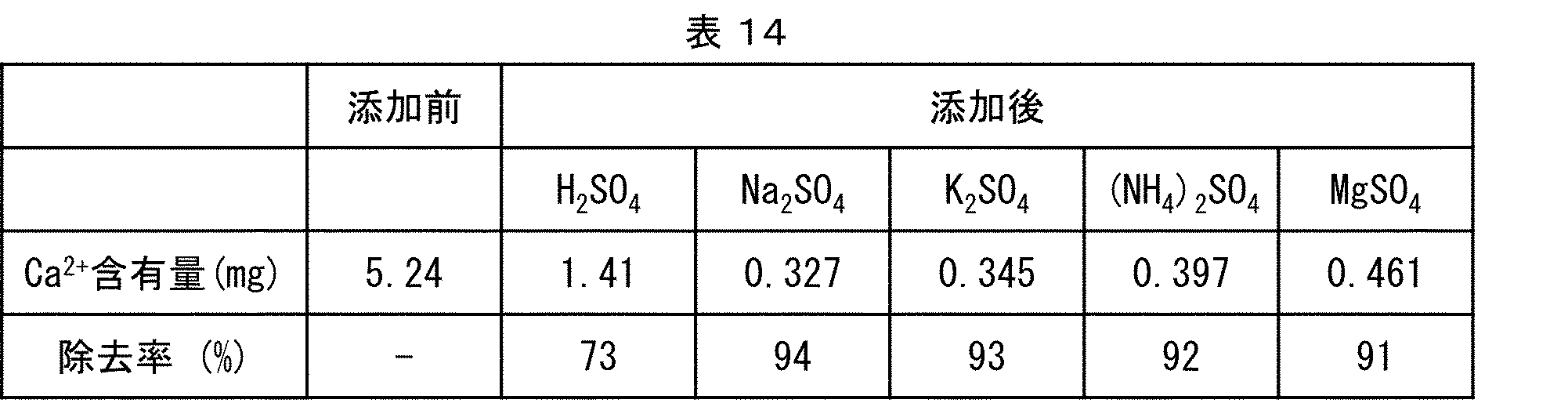
結果を表14に示す。液体の硫酸を添加した系は、系全体の容積が増加するだけでなく、カルシウムイオンの除去率も73%と一番低かった。固体の硫酸塩を加えた系では、系全体の容積の増加が少なく、カルシウムイオンの除去率も91~94%と高かった。また、強酸である硫酸を使用しないので、硫酸塩を加える方法は安全性も高い。さらに、硫酸塩の添加量を適宜増減させることで、所望する濃度のカルシウムを残存させることもできた。
下記の手順により、実施例7で得られたリン酸沈澱の再溶解液から、カルシウムを炭酸カルシウム沈澱として除去した。
1. 実施例7と同様にして、リン酸沈澱の再溶解液を調製した。実施例7の工程1において使用する酸は、1Nの硝酸水溶液または1Nの塩酸水溶液とした。実施例7の工程4において添加する5Nの水酸化ナトリウム水溶液の量は、100μLとした。
2. 炭酸塩(固体の炭酸水素ナトリウムまたは炭酸ナトリウム)を加えた。炭酸水素ナトリウムの添加量は、最終濃度が0.4Mとなる量とした。炭酸ナトリウムの添加量は、最終濃度が0.6Mとなる量とした。
3. 生成した炭酸カルシウム沈澱を、遠心分離により除去した。
4. 上清に含まれているリン酸イオンの濃度(ppm)を測定した。リン酸イオンの測定は、TSKgel SuperIC-Anion HS(4.6mm I.D.×10cm)を接続した高速イオンクロマトグラフィーIC-8100EX(東ソー株式会社)を用いて、精密測定条件で実施した。7.5mmol/Lの炭酸水素ナトリウムおよび0.8mmol/Lの炭酸ナトリウムの混合液を溶離液とした。測定温度は40℃、流速は1.5mL/分、注入量は30μLであった。電気電動度(μS)を測定し、標準物質の面積から回帰式を求めることにより、リン酸イオン濃度を測定した。リン酸イオン濃度から、1つのサンプル(30μL)あたりのリン酸イオン含有量を求めた。

結果を表15に示す。炭酸塩を添加することにより、カルシウムイオンは炭酸カルシウムとなって沈澱し、リン酸イオンは上清に残った。例えば、塩酸による酸抽出液に炭酸水素ナトリウムを加えた系では、9,000ppm以上のリン酸が上清に含まれていた。上清に残留している炭酸イオンは、加熱すると二酸化炭素に変換されるので、容易に除去できる。
[実施例12-1:ナトリウムイオンまたはカリウムイオンの除去]
下記の手順により、カルシウムイオン除去するために加えた硫酸塩に含まれていた陽イオン(ナトリウムイオンまたはカリウムイオン)を除去した。具体的には、強陽イオン交換ゲルを用いてナトリウムイオンまたはカリウムイオンを吸着させた。
1. TSKgel SP-TOYOPEARL 650Mゲル(東ソー株式会社)を純水でデカンテーションして、マイクロスピンカラム(GE Healthcare)に充填した。
2. 硫酸塩を添加して硫酸カルシウムを除去した後の上清を、ゲルの上層に適量加えた。
3. 卓上遠心機で遠心することにより、上清にゲルを通過させた。ゲルを通過した素通り画分を集めた。
3. 素通り画分に含まれるナトリウムイオンまたはカリウムイオンの含有量(mg)を測定した。ナトリウムイオンの測定には、LAQUAtwin-Na-11(株式会社堀場アドバンスドテクノ)を用いた。カリウムイオンの測定には、LAQUAtwin-K-11(株式会社堀場アドバンスドテクノ)を用いた。

結果を表16に示す。硫酸ナトリウムまたは硫酸カリウムの添加により硫酸カルシウムを沈澱させた後の上清には、ナトリウムイオンまたはカリウムイオンが含まれている。これらのイオンは、強陽イオン交換ゲルに通すことで除去できた。具体的に、ナトリウムイオンは83%が除去され、カリウムイオンは86%が除去された。強陽イオン交換ゲルへの流通を繰り返すことにより、さらに多くの陽イオンを除去できる。
下記の手順により、カルシウムイオン除去するために加えた硫酸塩に含まれていた陽イオン(マグネシウムイオンまたはアンモニウムイオン)を除去した。具体的には、強陽イオン交換ゲルを用いてマグネシウムイオンまたはアンモニウムイオンを吸着させた。
1. TSKgel SP-TOYOPEARL 650Mゲル(東ソー株式会社)を純水でデカンテーションして、マイクロスピンカラム(GE Healthcare)に充填した。
2. 硫酸塩を添加して硫酸カルシウムを除去した後の上清を、ゲルの上層に適量加えた。
3. 卓上遠心機で遠心することにより、上清にゲルを通過させた。ゲルを通過した素通り画分を集めた。
3. 素通り画分に含まれるマグネシウムイオン、アンモニウムイオンまたはカルシウムイオンの含有量(μg)を測定した。イオン濃度の測定は、TSKgel SuperIC-Cation HSII(4.6mm I.D.×10cm)を接続した高速イオンクロマトグラフィーIC-8100EX(東ソー株式会社)を用いて、精密測定条件で実施した。3.0mmol/Lのメタスルホン酸および2.7mmol/Lの18-クラウン-6の混合液を溶離液とした。測定温度は40℃、流速は1.0mL/分、注入量は30μLであった。電気電動度(μS)を測定し、標準物質の面積から回帰式を求めることにより、カルシウムイオン濃度を測定した。イオン濃度から、1つのサンプル(30μL)あたりのイオン含有量を求めた。

結果を表17に示す。マグネシウムイオン、アンモニウムイオンおよびカルシウムイオンも、強陽イオン交換ゲルと接触させることにより上清から除去できることが示された。強陽イオン交換ゲルへの流通を繰り返すことにより、カルシウムイオンも含め、さらに多くの陽イオンを除去できる。これにより、リン酸の純度を高められることが示唆された。
下記の手順により、市販の蒸製骨粉(株式会社大宮グリーンサービス)を可溶化して、リン酸を回収した。
1. 1gの蒸製骨粉に、10mLの硫酸(1N)、塩酸(1N)または硝酸(1N)を加えて、25℃にて19時間振盪した。
2. 得られた酸抽出液を、遠心機を用いて上清と沈澱とに分けた。
3. 0.5mLの上清に、0.1mLのNaOH水溶液(5N)を加えて、1時間振盪させた。
4. 遠心分離により、反応液を上清と沈澱とに分けた。
5. 適量の塩酸(1N)を沈澱に加えて沈澱を溶解させた。
6. 工程3~5を複数回繰り返した。その後、0.5mLの塩酸(0.4N)に沈澱を溶解させた。これにより、リン酸を濃縮した沈澱溶解液を得た。
7. 得られた沈澱溶解液におけるアニオン含有量を測定した。測定は、TSKgel SuperIC-Anion HS(4.6mm I.D.×10cm)を接続した高速イオンクロマトグラフィーIC-8100EX(東ソー株式会社)を用いて、精密測定条件で実施した。7.5mmol/Lの炭酸水素ナトリウムおよび0.8mmol/Lの炭酸ナトリウムの混合液を溶離液とした。測定温度は40℃、流速は1.5mL/分、注入量は30μLであった。電気電動度(μS)を測定し、標準物質の面積から回帰式を求めることにより、アニオンイオン濃度を測定した。アニオンイオン濃度から、1つのサンプル(30μL)あたりのアニオンイオン含有量を求めた。

結果を表18および図21に示す。市販の蒸製骨粉(高圧下で加熱処理した骨組織)を原料としても、本発明の一実施形態に係るリン酸の製造方法により、効率よく比較的安全にリン酸を回収できた。表18によると、硫酸による酸抽出液を用いるよりも、塩酸または硝酸による酸抽出液を用いる方が、リン酸の回収効率が高い。塩酸または硝酸を用いた系のリン酸回収効率は、硫酸を用いた系のリン酸回収効率の3.2~3.4倍に達した。
下記の手順により、市販の蒸製骨粉(株式会社大宮グリーンサービス)を可溶化して、プロテアーゼ処理液を製造した。
1. 1gの蒸製骨粉に、10mLの硫酸(1N)、塩酸(1N)または硝酸(1N)を加えて、25℃にて24時間振盪した。
2. 得られた酸抽出液を、遠心機を用いて上清(酸抽出液)と沈澱(骨残渣)とに分けて回収した。
3. 沈澱に、0.1mol/Lのクエン酸緩衝液(pH3)または0.1mol/Lのトリス塩酸緩衝液(pH8)を10mL加えた。
4. 図1のS5にしたがって、沈澱からプロテアーゼ処理液を調製した。プロテアーゼとしては、ニューラーゼF3G(天野エンザイム株式会社)またはパパインW-40(天野エンザイム株式会社)を用い、実施例1-5と同じ手順で処理した。具体的には、次の通りであった。
・ニューラーゼF3G系:プロテアーゼ濃度=最初の骨重量の1%(w/w)、緩衝液=クエン酸緩衝液(pH3)、温度=37℃、浸漬時間=3日間
・パパインW-40系:プロテアーゼ濃度=最初の骨重量の1%(w/w)、緩衝液=トリス塩酸緩衝液(pH8)、温度=37℃、浸漬時間=3日間
5. 反応液を遠心して、沈澱物と上清に分けた。
結果を図22、23に示す。市販の蒸製骨粉は、高圧下で加熱処理した豚骨と鶏骨との混合物である。この骨粉を原料としても、本発明の一実施形態に係る肥料の製造方法により、プロテアーゼ処理液が調製できた。プロテアーゼ処理液は、それ自体を肥料とすることもできるし、骨可溶化液Bの原料とすることもできる。液体肥料には、固形の骨粉では期待できない即効性の植物生長効果が期待される。また、液体肥料は、水耕栽培や葉面散布にも適用できる。
下記の手順により、市販の蒸製骨粉(株式会社大宮グリーンサービス)から酸抽出液を調製した。酸抽出液に含まれているペプチド濃度を測定した。
1. 1gの蒸製骨粉に、10mLの硫酸(1N)、塩酸(1N)または硝酸(1N)を加えて、25℃にて24時間振盪した。
2. 得られた酸抽出液を、遠心機を用いて上清と沈澱とに分けた。上清を酸抽出液として回収した。
3. 0.5mLの上清に、0.4mol/Lの水酸化カリウム水溶液を加えて、離散カルシウムを沈澱させた。
4. 工程3で得られた反応液から沈澱を除去した上清におけるペプチド濃度を測定した。測定には、プロテインアッセイBCAキット(品番297-73101、富士フィルム和光)を使用した。測定方法は、製品マニュアルに従った。540nmにおける吸光度を測定した。吸光度が高いほど、ペプチド濃度も高い。
5. 工程3で得られた反応液から沈澱を回収した。このとき回収したのは、工程1において、塩酸または硝酸で処理した系のみとした。
6. 沈澱を1Nの塩酸で完全に溶解させた。その後、0.4mol/Lの水酸化カリウムを再び加えて、リン酸カルシウムを沈澱させた。この溶解-沈澱のプロセスを3回繰り返した。
7. 工程6において、1回目および3回目の繰り返しが完了した後に、反応液から沈澱を除去した上清におけるペプチド濃度を測定した。測定には、プロテインアッセイBCAキット(品番297-73101、富士フィルム和光)を使用した。測定方法は、製品マニュアルに従った。540nmにおける吸光度を測定した。吸光度が高いほど、ペプチド濃度も高い。
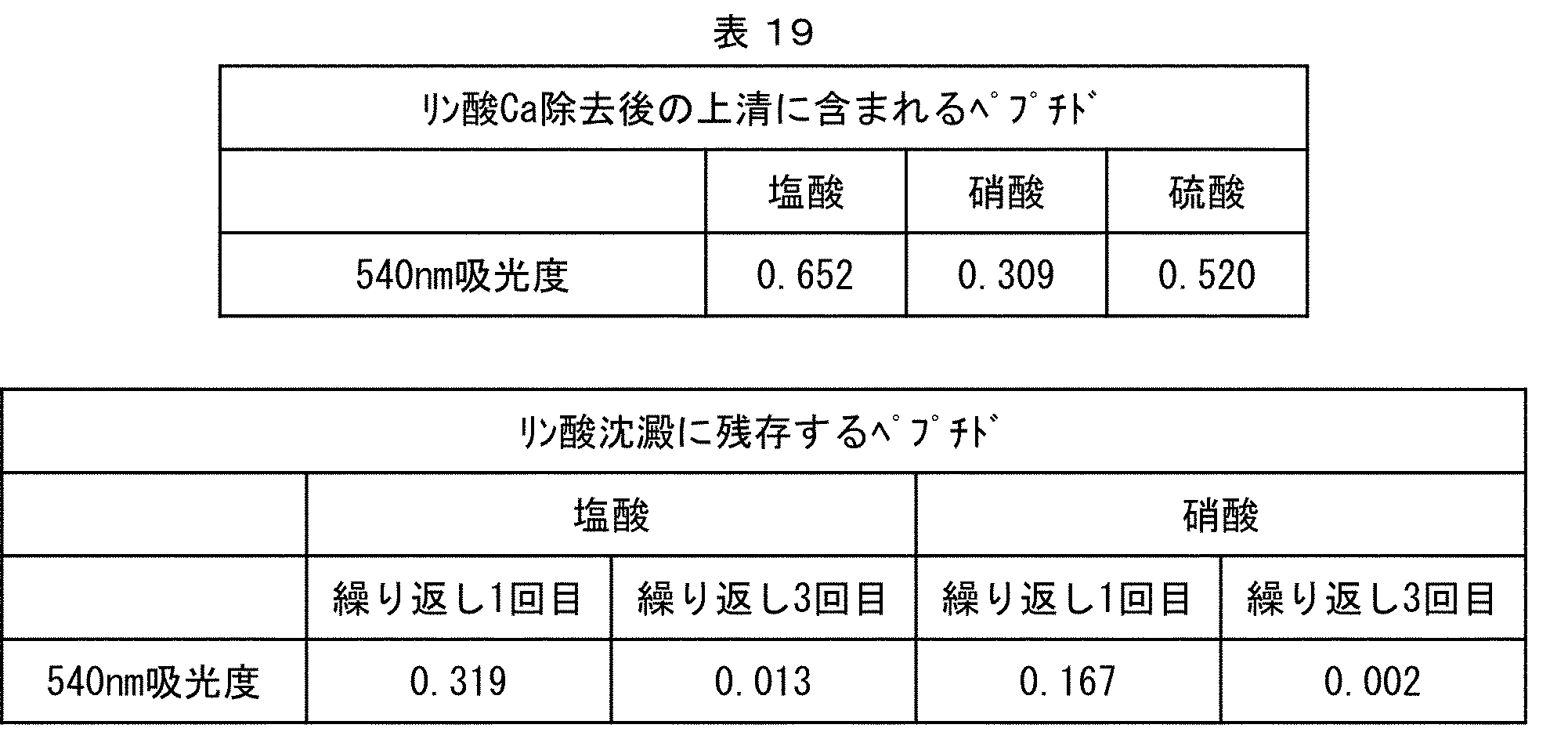
結果を表19に示す。市販の蒸製骨粉を原料として調製した酸抽出液には、ペプチドが検出された。ペプチド濃度は、塩酸で処理した酸抽出液、硫酸で処理した酸抽出液、硝酸で処理した酸抽出液の処理の順番に高かった。この結果から、特に塩酸で処理した酸抽出液には、多くのペプチドが含まれることが示された。ペプチドは、骨組織に含まれている有機成分である。それゆえ、酸抽出液には植物生長効果をもたらす成分が含まれていることが示唆された。
Claims (15)
- 下記工程1、工程2および工程3のうち1つ以上を含む、リン酸を含有する肥料の製造方法。
工程1:骨組織を酸およびプロテアーゼの両方を含む溶液で処理して、得られた骨可溶化液Aから肥料を製造する工程
工程2:骨組織を酸処理して、得られた酸抽出液から肥料を製造する工程
工程3:酸処理された骨組織をプロテアーゼ処理して、得られたプロテアーゼ処理液から肥料を製造する工程 - 上記工程2および上記工程3を含み、
さらに下記工程4を含む、請求項1に記載の製造方法。
工程4:上記酸抽出液および上記プロテアーゼ処理液を混合して、得られた骨可溶化液Bから肥料を製造する工程 - 上記工程1または上記工程2を含み、硝酸、塩酸、蟻酸および硫酸からなる群より選択される1種類以上により骨組織を酸処理する、請求項1に記載の製造方法。
- 上記工程1または上記工程3を含み、至適pHが1.5~8.0であるプロテアーゼにより骨組織をプロテアーゼ処理する、請求項1に記載の製造方法。
- 上記工程1または上記工程2を含み、5~60℃にて骨組織を酸処理する、請求項1に記載の製造方法。
- 上記工程1または上記工程2を含み、0.6~2.0mol/Lの酸により骨組織を酸処理する、請求項1に記載の製造方法。
- 上記工程1または上記工程2を含み、6~48時間骨組織を酸処理する、請求項1に記載の製造方法。
- 上記工程1または上記工程2に先立って、上記骨組織を前処理する工程をさらに含み、
上記前処理は、上記骨組織の加熱、上記骨組織の加圧下における加熱および上記骨組織へのマイクロ波の照射からなる群より選択される1つ以上である、請求項1に記載の製造方法。 - 上記前処理工程において、上記骨組織に含まれているタンパク質を変性させる、請求項8に記載の製造方法。
- 請求項1~9のいずれか1項に記載の製造方法により得られる肥料。
- 液体肥料である、請求項10に記載の肥料。
- リン酸と、
I型コラーゲン、アルファ-2-HS-グリコプロテイン、ペリオスチン、バイグリカンおよびSPARCからなる群より選択される1つ以上に由来するペプチド断片と、
を含んでいる、肥料。 - 上記ペプチド断片は、当該断片が由来するタンパク質の活性を失っている、請求項12に記載の肥料。
- 上記ペプチド断片の分子量は、1万Da以下である、請求項12に記載の肥料。
- 上記肥料に含まれている上記リン酸の濃度は、280mM以上である、請求項12に記載の肥料。
Priority Applications (4)
| Application Number | Priority Date | Filing Date | Title |
|---|---|---|---|
| CN202380024694.XA CN118871409A (zh) | 2022-03-01 | 2023-02-28 | 肥料及其制造方法 |
| EP23762135.4A EP4488248A4 (en) | 2022-03-01 | 2023-02-28 | FERTILIZER AND ITS MANUFACTURING PROCESS |
| JP2024504688A JPWO2023167166A1 (ja) | 2022-03-01 | 2023-02-28 | |
| US18/842,491 US20250162955A1 (en) | 2022-03-01 | 2023-02-28 | Fertilizer and manufacturing method thereof |
Applications Claiming Priority (2)
| Application Number | Priority Date | Filing Date | Title |
|---|---|---|---|
| JP2022031179 | 2022-03-01 | ||
| JP2022-031179 | 2022-03-01 |
Publications (1)
| Publication Number | Publication Date |
|---|---|
| WO2023167166A1 true WO2023167166A1 (ja) | 2023-09-07 |
Family
ID=87883750
Family Applications (2)
| Application Number | Title | Priority Date | Filing Date |
|---|---|---|---|
| PCT/JP2023/007246 Ceased WO2023167167A1 (ja) | 2022-03-01 | 2023-02-28 | リン酸の製造方法 |
| PCT/JP2023/007245 Ceased WO2023167166A1 (ja) | 2022-03-01 | 2023-02-28 | 肥料およびその製造方法 |
Family Applications Before (1)
| Application Number | Title | Priority Date | Filing Date |
|---|---|---|---|
| PCT/JP2023/007246 Ceased WO2023167167A1 (ja) | 2022-03-01 | 2023-02-28 | リン酸の製造方法 |
Country Status (6)
| Country | Link |
|---|---|
| US (2) | US20250162955A1 (ja) |
| EP (2) | EP4488225A4 (ja) |
| JP (2) | JPWO2023167167A1 (ja) |
| CN (2) | CN118922379A (ja) |
| AU (1) | AU2023226896A1 (ja) |
| WO (2) | WO2023167167A1 (ja) |
Citations (7)
| Publication number | Priority date | Publication date | Assignee | Title |
|---|---|---|---|---|
| JPH0891976A (ja) * | 1994-09-19 | 1996-04-09 | Hirotoshi Arafuka | 液状複合肥料とその製造方法 |
| JPH09192481A (ja) * | 1996-01-22 | 1997-07-29 | Toyo Denka Kogyo Kk | 重金属用吸着剤 |
| JP2000506367A (ja) * | 1996-01-05 | 2000-05-30 | オートイミューン インク | ▲ii▼型コラーゲンの調製法 |
| JP2001329000A (ja) * | 2000-05-18 | 2001-11-27 | Univ Nihon | コラーゲンの抽出方法 |
| JP2005247616A (ja) | 2004-03-03 | 2005-09-15 | Northern Advancement Center For Science &Technology | 骨粉肥料の製造方法およびこれにより製造される時差的溶解性を備えた骨粉肥料 |
| JP2013116825A (ja) * | 2010-03-19 | 2013-06-13 | Ajinomoto Co Inc | 骨からリン酸を製造する方法、並びに、骨から製造したリン酸を糖の発酵に利用する方法及び装置 |
| CN111170767A (zh) * | 2020-03-10 | 2020-05-19 | 滨州市京阳生物肥业有限公司 | 一种牛骨氨基酸有机肥的生产方法 |
Family Cites Families (12)
| Publication number | Priority date | Publication date | Assignee | Title |
|---|---|---|---|---|
| AT344746B (de) * | 1973-10-11 | 1978-08-10 | Veba Chemie Ag | Verfahren zur herstellung von phosphorsaeure mit hohen gehalten an duengemittel-naehrstoffen |
| JPH0848589A (ja) * | 1994-05-30 | 1996-02-20 | Frontier:Kk | 骨炭の処理方法およびその生成物 |
| CN1123260A (zh) * | 1994-11-21 | 1996-05-29 | 姚萍 | 骨粉液体复合肥的制法 |
| JP2951881B2 (ja) * | 1996-01-22 | 1999-09-20 | 東洋電化工業株式会社 | 排血液の処理方法 |
| JP5667374B2 (ja) | 2010-04-01 | 2015-02-12 | 株式会社神鋼環境ソリューション | 製鋼スラグからのリン酸回収方法 |
| EP2898087A2 (en) * | 2012-09-18 | 2015-07-29 | DSM IP Assets B.V. | Process for producing gelatin employing aspergillopepsin ii |
| KR101892939B1 (ko) * | 2017-06-01 | 2018-08-29 | 김봉기 | 축산 부산물을 산, 알칼리 및 단백 분해 효소 처리하여 제조된 아미노산 비료 조성물 |
| CN107236775A (zh) * | 2017-06-05 | 2017-10-10 | 深圳知本康业有限公司 | 一种鹿骨蛋白多肽及应用 |
| JP6393373B2 (ja) | 2017-06-14 | 2018-09-19 | 日立造船株式会社 | 廃棄物からのリン酸の回収方法 |
| FR3077285B1 (fr) * | 2018-02-01 | 2022-01-14 | Saria Ind | Procede de production d'hydroxyapatites tres pures a partir de dechets contenant des phosphates de calcium, en particulier des farines animales |
| CN112573961A (zh) * | 2020-12-26 | 2021-03-30 | 南宁东恒华道生物科技有限责任公司 | 一种城市生鲜垃圾复合酶解生产的液体微肽肥、生产工艺及其应用 |
| CN114085101A (zh) * | 2021-12-09 | 2022-02-25 | 山东省神农生态科技股份有限公司 | 鱼蛋白肥料生产方法及由此制成的鱼蛋白肥料 |
-
2023
- 2023-02-28 WO PCT/JP2023/007246 patent/WO2023167167A1/ja not_active Ceased
- 2023-02-28 CN CN202380024553.8A patent/CN118922379A/zh active Pending
- 2023-02-28 WO PCT/JP2023/007245 patent/WO2023167166A1/ja not_active Ceased
- 2023-02-28 US US18/842,491 patent/US20250162955A1/en active Pending
- 2023-02-28 AU AU2023226896A patent/AU2023226896A1/en active Pending
- 2023-02-28 US US18/842,505 patent/US20250162870A1/en active Pending
- 2023-02-28 CN CN202380024694.XA patent/CN118871409A/zh active Pending
- 2023-02-28 JP JP2024504689A patent/JPWO2023167167A1/ja active Pending
- 2023-02-28 EP EP23763424.1A patent/EP4488225A4/en active Pending
- 2023-02-28 EP EP23762135.4A patent/EP4488248A4/en active Pending
- 2023-02-28 JP JP2024504688A patent/JPWO2023167166A1/ja active Pending
Patent Citations (7)
| Publication number | Priority date | Publication date | Assignee | Title |
|---|---|---|---|---|
| JPH0891976A (ja) * | 1994-09-19 | 1996-04-09 | Hirotoshi Arafuka | 液状複合肥料とその製造方法 |
| JP2000506367A (ja) * | 1996-01-05 | 2000-05-30 | オートイミューン インク | ▲ii▼型コラーゲンの調製法 |
| JPH09192481A (ja) * | 1996-01-22 | 1997-07-29 | Toyo Denka Kogyo Kk | 重金属用吸着剤 |
| JP2001329000A (ja) * | 2000-05-18 | 2001-11-27 | Univ Nihon | コラーゲンの抽出方法 |
| JP2005247616A (ja) | 2004-03-03 | 2005-09-15 | Northern Advancement Center For Science &Technology | 骨粉肥料の製造方法およびこれにより製造される時差的溶解性を備えた骨粉肥料 |
| JP2013116825A (ja) * | 2010-03-19 | 2013-06-13 | Ajinomoto Co Inc | 骨からリン酸を製造する方法、並びに、骨から製造したリン酸を糖の発酵に利用する方法及び装置 |
| CN111170767A (zh) * | 2020-03-10 | 2020-05-19 | 滨州市京阳生物肥业有限公司 | 一种牛骨氨基酸有机肥的生产方法 |
Non-Patent Citations (2)
| Title |
|---|
| no. 20846-91-7 |
| See also references of EP4488248A4 |
Also Published As
| Publication number | Publication date |
|---|---|
| EP4488225A1 (en) | 2025-01-08 |
| US20250162955A1 (en) | 2025-05-22 |
| EP4488248A4 (en) | 2026-02-25 |
| EP4488225A4 (en) | 2026-02-18 |
| JPWO2023167166A1 (ja) | 2023-09-07 |
| AU2023226896A1 (en) | 2024-09-19 |
| US20250162870A1 (en) | 2025-05-22 |
| CN118871409A (zh) | 2024-10-29 |
| JPWO2023167167A1 (ja) | 2023-09-07 |
| EP4488248A1 (en) | 2025-01-08 |
| WO2023167167A1 (ja) | 2023-09-07 |
| CN118922379A (zh) | 2024-11-08 |
Similar Documents
| Publication | Publication Date | Title |
|---|---|---|
| Colla et al. | Protein hydrolysate-based biostimulants: Origin, biological activity and application methods | |
| Krein et al. | Recent trends and technologies for reduced environmental impacts of fertilizers: a review | |
| US20190077721A1 (en) | Method of manufacturing organic fertilizers by using organic raw material, antagonistic microorganism, fermentative microorganism, and synthetic microorganism, and organic fertilizers manufactured by said manufacturing method | |
| Singh et al. | Green manure: aspects and its role in sustainable agriculture | |
| Abd et al. | Evaluation of the Effect of Nano-Fertilization and Disper Osmotic in Treating the Salinity of Irrigation Water on the Chemical and Mineral Properties of Date Palm (Phoenix dactylifera L. | |
| WO2017196534A1 (en) | Fish by-product based organic fertilizer | |
| CN119350099A (zh) | 一种含海藻寡糖的新型肥料及其在酸化耕地中的应用 | |
| WO2023167166A1 (ja) | 肥料およびその製造方法 | |
| JP6348292B2 (ja) | 活性化フルボ酸の製造方法 | |
| JP2003012389A (ja) | ペプチド類及びアミノ酸を含有する液体肥料及びその製造方法 | |
| Bryndina et al. | Comparative evaluation of biostimulator efficiency on corn seeds germination: keratin protein and preparation Ribav Extra | |
| GR20150100377A (el) | Οργανικο λιπασμα-βιοενεργοποιητης φυτικης προελευσης και μεθοδος παραγωγης | |
| JP2006290716A (ja) | ゼラチン廃棄物由来の天然アミノ酸肥料の製造方法 | |
| Sh et al. | Maximizing the quality and productivity of two faba bean cultivars via foliar application of L-glutamic acid | |
| WO2013118131A1 (en) | A composition and a process for preparation of nano bio-nutrient processed organic spray | |
| US6709481B2 (en) | Method for the production of a unique soil adjuvant for horticultural and agronomic use | |
| ES2399559T3 (es) | Utilización de sustancias húmicas como activadores de agentes moleculares específicos de la absorción de hierro en plantas | |
| Płaza et al. | The influence of biological preparations Azofix and Maxprolin and nitrogen fertilisation on soil mineral nitrogen content in growing season and after spring wheat harvest | |
| EP3647431A1 (en) | Method for producing a yeast-based product with high nucleotide concentration | |
| Abd El-Rheem et al. | Response of lettuce plants to foliar application of amino acids under different rates of vermicompost | |
| Bona et al. | Multi-omics analyses of tomato rhizosphere and leaves treated with a biowaste-derived biostimulant extract | |
| ES2903008B2 (es) | Composicion fertilizante que comprende purin liquido y procedimiento de obtencion | |
| Garcha et al. | Harnessing Plant and Microbe for P-Use Efficiency | |
| Stefan et al. | Review of Soil Quality Improvement Using Biopolymers from Leather Waste. Polymers 2022, 14, 1928 | |
| Kurbanoglu et al. | Effect of ram horn hydrolyzate on the growth of bean (Phaseolus vulgaris cv. Aziziye-94) |
Legal Events
| Date | Code | Title | Description |
|---|---|---|---|
| 121 | Ep: the epo has been informed by wipo that ep was designated in this application |
Ref document number: 23762135 Country of ref document: EP Kind code of ref document: A1 |
|
| ENP | Entry into the national phase |
Ref document number: 2024504688 Country of ref document: JP Kind code of ref document: A |
|
| WWE | Wipo information: entry into national phase |
Ref document number: 18842491 Country of ref document: US |
|
| WWE | Wipo information: entry into national phase |
Ref document number: 202380024694.X Country of ref document: CN |
|
| REG | Reference to national code |
Ref country code: BR Ref legal event code: B01A Ref document number: 112024017772 Country of ref document: BR |
|
| WWE | Wipo information: entry into national phase |
Ref document number: 202447073927 Country of ref document: IN |
|
| WWE | Wipo information: entry into national phase |
Ref document number: 2023762135 Country of ref document: EP |
|
| NENP | Non-entry into the national phase |
Ref country code: DE |
|
| ENP | Entry into the national phase |
Ref document number: 2023762135 Country of ref document: EP Effective date: 20241001 |
|
| ENP | Entry into the national phase |
Ref document number: 112024017772 Country of ref document: BR Kind code of ref document: A2 Effective date: 20240829 |
|
| WWP | Wipo information: published in national office |
Ref document number: 18842491 Country of ref document: US |