WO2023190892A1 - Bis(alkynyloxysilyl)alcane, son procédé de production et composition de silicone durcissable - Google Patents
Bis(alkynyloxysilyl)alcane, son procédé de production et composition de silicone durcissable Download PDFInfo
- Publication number
- WO2023190892A1 WO2023190892A1 PCT/JP2023/013223 JP2023013223W WO2023190892A1 WO 2023190892 A1 WO2023190892 A1 WO 2023190892A1 JP 2023013223 W JP2023013223 W JP 2023013223W WO 2023190892 A1 WO2023190892 A1 WO 2023190892A1
- Authority
- WO
- WIPO (PCT)
- Prior art keywords
- formula
- bis
- alkane
- alkynyloxysilyl
- represented
- Prior art date
- Legal status (The legal status is an assumption and is not a legal conclusion. Google has not performed a legal analysis and makes no representation as to the accuracy of the status listed.)
- Ceased
Links
Images
Classifications
-
- C—CHEMISTRY; METALLURGY
- C07—ORGANIC CHEMISTRY
- C07F—ACYCLIC, CARBOCYCLIC OR HETEROCYCLIC COMPOUNDS CONTAINING ELEMENTS OTHER THAN CARBON, HYDROGEN, HALOGEN, OXYGEN, NITROGEN, SULFUR, SELENIUM OR TELLURIUM
- C07F7/00—Compounds containing elements of Groups 4 or 14 of the Periodic Table
- C07F7/02—Silicon compounds
- C07F7/08—Compounds having one or more C—Si linkages
- C07F7/18—Compounds having one or more C—Si linkages as well as one or more C—O—Si linkages
- C07F7/1804—Compounds having Si-O-C linkages
-
- C—CHEMISTRY; METALLURGY
- C07—ORGANIC CHEMISTRY
- C07F—ACYCLIC, CARBOCYCLIC OR HETEROCYCLIC COMPOUNDS CONTAINING ELEMENTS OTHER THAN CARBON, HYDROGEN, HALOGEN, OXYGEN, NITROGEN, SULFUR, SELENIUM OR TELLURIUM
- C07F7/00—Compounds containing elements of Groups 4 or 14 of the Periodic Table
- C07F7/02—Silicon compounds
- C07F7/08—Compounds having one or more C—Si linkages
- C07F7/18—Compounds having one or more C—Si linkages as well as one or more C—O—Si linkages
-
- C—CHEMISTRY; METALLURGY
- C07—ORGANIC CHEMISTRY
- C07F—ACYCLIC, CARBOCYCLIC OR HETEROCYCLIC COMPOUNDS CONTAINING ELEMENTS OTHER THAN CARBON, HYDROGEN, HALOGEN, OXYGEN, NITROGEN, SULFUR, SELENIUM OR TELLURIUM
- C07F7/00—Compounds containing elements of Groups 4 or 14 of the Periodic Table
- C07F7/02—Silicon compounds
- C07F7/08—Compounds having one or more C—Si linkages
- C07F7/18—Compounds having one or more C—Si linkages as well as one or more C—O—Si linkages
- C07F7/1804—Compounds having Si-O-C linkages
- C07F7/1872—Preparation; Treatments not provided for in C07F7/20
- C07F7/1876—Preparation; Treatments not provided for in C07F7/20 by reactions involving the formation of Si-C linkages
-
- C—CHEMISTRY; METALLURGY
- C07—ORGANIC CHEMISTRY
- C07F—ACYCLIC, CARBOCYCLIC OR HETEROCYCLIC COMPOUNDS CONTAINING ELEMENTS OTHER THAN CARBON, HYDROGEN, HALOGEN, OXYGEN, NITROGEN, SULFUR, SELENIUM OR TELLURIUM
- C07F7/00—Compounds containing elements of Groups 4 or 14 of the Periodic Table
- C07F7/02—Silicon compounds
- C07F7/08—Compounds having one or more C—Si linkages
- C07F7/18—Compounds having one or more C—Si linkages as well as one or more C—O—Si linkages
- C07F7/1804—Compounds having Si-O-C linkages
- C07F7/1872—Preparation; Treatments not provided for in C07F7/20
- C07F7/188—Preparation; Treatments not provided for in C07F7/20 by reactions involving the formation of Si-O linkages
-
- C—CHEMISTRY; METALLURGY
- C08—ORGANIC MACROMOLECULAR COMPOUNDS; THEIR PREPARATION OR CHEMICAL WORKING-UP; COMPOSITIONS BASED THEREON
- C08G—MACROMOLECULAR COMPOUNDS OBTAINED OTHERWISE THAN BY REACTIONS ONLY INVOLVING UNSATURATED CARBON-TO-CARBON BONDS
- C08G77/00—Macromolecular compounds obtained by reactions forming a linkage containing silicon with or without sulfur, nitrogen, oxygen or carbon in the main chain of the macromolecule
- C08G77/04—Polysiloxanes
- C08G77/06—Preparatory processes
-
- C—CHEMISTRY; METALLURGY
- C08—ORGANIC MACROMOLECULAR COMPOUNDS; THEIR PREPARATION OR CHEMICAL WORKING-UP; COMPOSITIONS BASED THEREON
- C08K—Use of inorganic or non-macromolecular organic substances as compounding ingredients
- C08K5/00—Use of organic ingredients
- C08K5/54—Silicon-containing compounds
- C08K5/541—Silicon-containing compounds containing oxygen
- C08K5/5415—Silicon-containing compounds containing oxygen containing at least one Si—O bond
- C08K5/5419—Silicon-containing compounds containing oxygen containing at least one Si—O bond containing at least one Si—C bond
-
- C—CHEMISTRY; METALLURGY
- C08—ORGANIC MACROMOLECULAR COMPOUNDS; THEIR PREPARATION OR CHEMICAL WORKING-UP; COMPOSITIONS BASED THEREON
- C08L—COMPOSITIONS OF MACROMOLECULAR COMPOUNDS
- C08L83/00—Compositions of macromolecular compounds obtained by reactions forming in the main chain of the macromolecule a linkage containing silicon with or without sulfur, nitrogen, oxygen or carbon only; Compositions of derivatives of such polymers
- C08L83/04—Polysiloxanes
-
- C—CHEMISTRY; METALLURGY
- C08—ORGANIC MACROMOLECULAR COMPOUNDS; THEIR PREPARATION OR CHEMICAL WORKING-UP; COMPOSITIONS BASED THEREON
- C08G—MACROMOLECULAR COMPOUNDS OBTAINED OTHERWISE THAN BY REACTIONS ONLY INVOLVING UNSATURATED CARBON-TO-CARBON BONDS
- C08G77/00—Macromolecular compounds obtained by reactions forming a linkage containing silicon with or without sulfur, nitrogen, oxygen or carbon in the main chain of the macromolecule
- C08G77/04—Polysiloxanes
- C08G77/12—Polysiloxanes containing silicon bound to hydrogen
-
- C—CHEMISTRY; METALLURGY
- C08—ORGANIC MACROMOLECULAR COMPOUNDS; THEIR PREPARATION OR CHEMICAL WORKING-UP; COMPOSITIONS BASED THEREON
- C08G—MACROMOLECULAR COMPOUNDS OBTAINED OTHERWISE THAN BY REACTIONS ONLY INVOLVING UNSATURATED CARBON-TO-CARBON BONDS
- C08G77/00—Macromolecular compounds obtained by reactions forming a linkage containing silicon with or without sulfur, nitrogen, oxygen or carbon in the main chain of the macromolecule
- C08G77/04—Polysiloxanes
- C08G77/20—Polysiloxanes containing silicon bound to unsaturated aliphatic groups
Definitions
- the present invention relates to a bis(alkynyloxysilyl)alkane, a method for producing the same, and a curable silicone composition containing the same.
- a curable silicone composition that is cured by a hydrosilylation reaction between a monovalent hydrocarbon group having an aliphatic unsaturated bond and a silicon-bonded hydrogen atom contains 2-methyl-3-butyne-2 to control its curability.
- -ol, 3,5-dimethyl-1-hexyn-3-ol, 1-ethynyl-cyclohexan-1-ol, and other acetylene alcohols are well known and are known to inhibit the hydrosilylation reaction during storage of the composition.
- Patent Documents 1 to 3 a silane compound obtained by silylating the acetylene alcohol may be blended. It is known that this occurs (Patent Documents 4 and 5).
- curable silicone compositions containing silane compounds obtained by silylating acetylene alcohol or organosiloxanes obtained by siloxylating acetylene alcohol have problems such as poor compatibility with the curable silicone composition and yellowing of the cured product. There is also a problem that uniform curing is not achieved depending on heating conditions, specifically, heating temperature, presence or absence of reduced pressure during heating, circulation of hot air, etc.
- Patent Document 6 discloses a bis(alkynyloxysilyl)alkane
- Patent Document 7 discloses a curable silicone composition containing the same.
- Patent Documents 6 and 7 do not further describe or suggest bis(alkynyloxysilyl)alkanes having a silicon atom-bonded alkoxy group or hydroxyl group (silanol group).
- Japanese Unexamined Patent Publication No. 59-133252 Japanese Unexamined Patent Publication No. 61-000261 Japanese Patent Application Laid-Open No. 64-011160 Japanese Patent Application Publication No. 52-093468 Japanese Patent Application Publication No. 64-051466 Japanese Patent Application Publication No. 04-036292 Japanese Patent Application Publication No. 04-161459
- the object of the present invention is to provide a novel compound having an alkynyloxysilyl group at both ends of an alkane, and further having a silicon atom-bonded alkoxy group or a hydroxyl group (silanol group), which is effective as a hydrosilylation reaction inhibitor,
- a bis(alkynyloxysilyl)alkane that has a high boiling point, a low vapor pressure at room temperature, and an excellent affinity for a curable silicone composition of the hydrosilylation reaction-curable type.
- Another object of the present invention is to provide a curable silicone composition that has uniform curability regardless of heating conditions.
- the bis(alkynyloxysilyl)alkane of the present invention has the general formula: (In the formula, R 1 is independently an alkynyl group having 5 to 12 carbon atoms, R 2 is independently an alkyl group having 1 to 3 carbon atoms or a hydrogen atom, and R 3 is independently an alkyl group having 1 to 3 carbon atoms. is an alkyl group, where a is independently 1, 2, or 3, b is independently 0, 1, or 2, and a+b is 2 or 3, provided that at least one b is 1 or 2, and n is 2 It is an integer between ⁇ 20.) It is expressed as
- R 1 is the formula: Alkynyl group represented by the formula: Alkynyl group represented by or formula: An alkynyl group represented by is preferable.
- the method for producing bis(alkynyloxysilyl)alkane of the present invention can be carried out using the general formula: (In the formula, R 3 is independently an alkyl group having 1 to 3 carbon atoms, X is independently a halogen atom, c is independently 2 or 3, and n is an integer of 2 to 20.)
- a bis(halosilyl)alkane represented by the formula: R1OH (In the formula, R 1 is an alkynyl group having 5 to 12 carbon atoms.) It is characterized by subjecting an alkynyl alcohol represented by the formula to a dehydrohalogenation condensation reaction, and then reacting the obtained partial condensation reaction product with water or an alkyl alcohol having 1 to 3 carbon atoms.
- the alkynyl alcohol has the formula: Alkynyl alcohol represented by the formula: Alkynyl alcohol represented by or formula: Preferably, it is an alkynyl alcohol represented by
- the dehydrohalogenation condensation reaction is preferably carried out in the presence of a hydrogen halide scavenger, and the hydrogen halide scavenger includes triethylamine, pyridine, picoline, or diazabicycloundecene. It is preferable that
- the bis(alkynyloxysilyl)alkane of the present invention is suitable as a hydrosilylation reaction inhibitor.
- the curable silicone composition of the present invention is characterized by containing the above bis(alkynyloxysilyl)alkane, specifically, (A) organopolysiloxane having at least two alkenyl groups in one molecule; (B) an organohydrogenpolysiloxane having at least two silicon-bonded hydrogen atoms in one molecule; A curable silicone composition comprising at least (C) the above bis(alkynyloxysilyl)alkane and (D) a catalyst for a hydrosilylation reaction.
- the bis(alkynyloxysilyl)alkane of the present invention is a novel compound that has an alkynyloxysilyl group at both ends of the alkane, and further has a silicon atom-bonded alkoxy group or a hydroxyl group (silanol group), and is a novel compound that can be used for hydrosilylation reactions. It is effective as an inhibitor, has a high boiling point, a low vapor pressure at room temperature, and has excellent affinity for hydrosilylation reaction-curable curable silicone compositions. Further, the curable silicone composition of the present invention is characterized in that it has uniform curability regardless of heating conditions.
- the bis(alkynyloxysilyl)alkane of the present invention has the general formula: It is expressed as
- R 1 is independently an alkynyl group having 5 to 12 carbon atoms, and a linear or Examples include a branched alkynyl group or an alkynyl group containing a cyclic structure represented by the formula: C m H 2m-5 (where m is the same as above), and preferably a branched alkynyl group. It is an alkynyl group or an alkynyl group containing a cyclic structure.
- R 1 has the formula: When it is a branched alkynyl group represented by the general formula: It is expressed as
- R 1 is of the formula: When it is a branched alkynyl group represented by the general formula: It is expressed as
- R 1 is of the formula: When it is a branched alkynyl group represented by the general formula: It is expressed as
- R 2 is independently an alkyl group having 1 to 3 carbon atoms or a hydrogen atom, and examples of the alkyl group for R 2 include a methyl group, an ethyl group, and a propyl group, preferably a methyl group. It is.
- R 3 is independently an alkyl group having 1 to 3 carbon atoms, and examples thereof include a methyl group, an ethyl group, and a propyl group, and a methyl group is preferable.
- a is independently 1, 2, or 3, which indicates the number of alkynyloxy groups bonded to the silicon atom at the end of the molecular chain.
- b is independently 0, 1, or 2, which indicates the number of alkoxy groups or hydroxyl groups (silanol groups) bonded to the silicon atom at the end of the molecular chain.
- a+b is 2 or 3, and at least one b is 1 or 2. This is because the bis(alkynyloxysilyl)alkane of the present invention has at least one or two silicon-bonded alkoxy groups or hydroxyl groups (silanol groups) at the end of the molecular chain, so it is used in the curable silicone composition.
- the bis(alkynyloxysilyl)alkane of the present invention has at least four alkynyloxy groups in one molecule, since it is suitable as a hydrosilylation reaction inhibitor in a curable silicone composition of the hydrosilylation reaction type. It is preferable.
- n in the above formula is an integer of 2 to 20, preferably an integer of 6 to 20, or an integer of 6 to 10. This is because when the value of n is equal to or higher than the lower limit of the above range, the transparency of the silicone composition is improved when it is blended into the silicone composition, whereas when the value of n is equal to or lower than the upper limit of the above range, the transparency of the silicone composition is improved. This is because even if a small amount is added to a curable silicone composition of the hydrosilylation reaction-curing type, the hydrosilylation reaction can be sufficiently suppressed.
- Examples of such bis(alkynyloxysilyl)alkanes of the present invention include compounds represented by the following formula.
- the manufacturing method of the present invention is based on the general formula: A bis(halosilyl)alkane represented by the formula: R1OH It is characterized by subjecting an alkynyl alcohol represented by the formula to a dehydrohalogenation condensation reaction, and then reacting the condensation reaction product with water or an alkyl alcohol having 1 to 3 carbon atoms.
- R 3 in the above formula is independently an alkyl group having 1 to 3 carbon atoms, such as a methyl group, an ethyl group, or a propyl group, and preferably a methyl group.
- X in the above formula is independently a halogen atom, such as a chlorine atom, a bromine atom, or an iodine atom, and preferably a chlorine atom.
- c in the above formula is independently 2 or 3, preferably 3.
- n in the above formula is an integer of 2 to 20, preferably an integer of 6 to 20, or an integer of 6 to 10. This is because when the value of n is equal to or higher than the lower limit of the above range, when the resulting bis(alkynyloxysilyl)alkane is blended into a silicone composition, its transparency improves; This is because if it is below the upper limit, the hydrosilylation reaction can be sufficiently suppressed even if the resulting bis(alkynyloxysilyl)alkane is blended in a small amount into a curable silicone composition of the hydrosilylation reaction-curable type.
- Such bis(halosilyl)alkanes have, for example, the general formula: HSiX c R 3 (3-c) (In the formula, R 3 is an alkyl group having 1 to 3 carbon atoms, X is a halogen atom, and c is 2 or 3.)
- Halosilane and general formula represented by: General formula: SiX c R 3 (3-c) (CH 2 ) n” -CH CH 2 (In the formula, R 3 is an alkyl group having 1 to 3 carbon atoms, X is a halogen atom, c is 2 or 3, and n'' is an integer from 0 to 18.)
- JP-A No. 2006-117532 corresponding to US Pat. No.
- R 1 is an alkynyl group having 5 to 12 carbon atoms, and is represented by the formula: C m H 2m-3 OH (wherein m is an integer of 5 to 12).
- Examples include linear or branched alkynyl alcohols, or alkynyl alcohols containing a cyclic structure represented by the formula: C m H 2m-5 OH (where m is the same as above), and preferably , a branched alkynyl alcohol, or an alkynyl alcohol containing a cyclic structure.
- the bis(alkynyloxysilyl)alkane of the present invention can be prepared by subjecting a bis(halosilyl)alkane and an alkynyl alcohol to a dehydrohalogenation condensation reaction.
- the amount of alkynyl alcohol to be added to bis(halosilyl)alkane is 1.0 to 5.0 mol, preferably 1.
- the amount is preferably 0 to 2.0 mol.
- This dehydrohalogenation condensation reaction is preferably carried out in the presence of a hydrogen halide scavenger, and the hydrogen halide scavenger is preferably triethylamine, pyridine, picoline, or diazabicycloundecene.
- the amount of the hydrogen halide scavenger added is 1.0 to 5.0 mol, preferably 1.0 to 2.5 mol, per 1 mol of the halogen atom bonded to the silicon atom in the bis(halosilyl)alkane.
- the amount is in moles.
- This dehydrohalogenation condensation reaction is preferably carried out by dropping the bis(halosilyl)alkane into a reaction vessel containing an alkynyl alcohol and a hydrogen halide promoter. Although this dehydrohalogenation reaction proceeds at room temperature, it is preferably carried out at the reflux temperature of the alkynyl alcohol for 3 hours or more.
- silicon remaining in the condensation reaction product is removed by reacting the partial condensation reaction product obtained by the above dehydrohalogenation condensation reaction with water or an alkyl alcohol having 1 to 3 carbon atoms.
- the bis(alkynyloxysilyl)alkane of the present invention can be prepared by replacing the atomically bonded halogen atom with a hydroxyl group (silanol group) or an alkoxy group.
- the alkyl alcohol include methanol, ethanol, and propanol, with methanol being preferred.
- the bis(alkynyloxysilyl)alkane obtained by the production method of the present invention has the general formula: Bis(alkynyloxysilyl)alkane (1) represented by and the general formula:
- the ratio of the bis(alkynyloxysilyl)alkane (1) in this mixture is not limited, but the analysis chart in gas chromatography ( In the area percentage method (hereinafter referred to as GC analysis chart), it is preferably 1% or more, 5% or more, 10% or more, or 20% or more.
- the curable silicone composition of the present invention is a hydrosilylation reaction-curable type, and the above-mentioned bis(alkynyloxysilyl) alkane It is characterized by containing an alkane, specifically, (A) organopolysiloxane having at least two alkenyl groups in one molecule; (B) an organohydrogenpolysiloxane having at least two silicon-bonded hydrogen atoms in one molecule; A curable silicone composition comprising at least (C) the above bis(alkynyloxysilyl)alkane and (D) a catalyst for a hydrosilylation reaction is mentioned.
- Component (A) is an organopolysiloxane having at least two alkenyl groups in one molecule.
- alkenyl group in component (A) include alkenyl groups having 2 to 12 carbon atoms such as vinyl, allyl, butenyl, pentenyl, hexenyl, heptenyl, and octenyl. group, allyl group, and hexenyl group.
- Groups bonded to silicon atoms other than alkenyl groups in component (A) include alkyl groups having 1 to 12 carbon atoms such as methyl group, ethyl group, propyl group, butyl group, pentyl group, hexyl group, heptyl group; Examples include aryl groups having 6 to 12 carbon atoms such as phenyl, tolyl and xylyl groups; aralkyl groups having 7 to 12 carbon atoms such as benzyl and phenethyl, preferably methyl.
- a small amount of a hydroxyl group or an alkoxy group having 1 to 3 carbon atoms such as a methoxy group or an ethoxy group may be bonded to the silicon atom within a range that does not impair the object of the present invention.
- Such component (A) includes dimethylpolysiloxane with dimethylvinylsiloxy groups blocked at both molecular chain ends, dimethylsiloxane/methylvinylsiloxane copolymer with trimethylsiloxy groups blocked at both molecular chain ends, and dimethylvinylsiloxane copolymer with dimethylvinylsiloxy groups blocked at both molecular chain ends.
- a copolymer consisting of siloxane units, and a siloxane unit represented by the formula: (CH 3 ) 3 SiO 1/2 and a siloxane unit represented by the formula: (CH 2 CH)(CH 3 ) 2 SiO 1/2
- a copolymer consisting of siloxane units represented by the formula: C 6 H 5 SiO 3/2 is exemplified.
- Component (B) is an organopolysiloxane having at least two silicon-bonded hydrogen atoms in one molecule, and is a crosslinking agent of the present composition.
- Groups bonded to silicon atoms other than hydrogen atoms in component (B) include alkyl groups having 1 to 12 carbon atoms such as methyl group, ethyl group, propyl group, butyl group, pentyl group, hexyl group, heptyl group; Examples include aryl groups having 6 to 12 carbon atoms such as phenyl, tolyl and xylyl groups; aralkyl groups having 7 to 12 carbon atoms such as benzyl and phenethyl groups, preferably methyl.
- a small amount of a hydroxyl group or an alkoxy group having 1 to 3 carbon atoms such as a methoxy group or an ethoxy group may be bonded to the silicon atom within a range that does not impair the object of the present invention.
- the molecular structure of the component (B) is not limited, and examples thereof include linear, partially branched linear, branched, cyclic, and resinous.
- Such component (B) includes dimethylpolysiloxane with dimethylhydrogen siloxy groups endblocked at both molecular chain ends, dimethylsiloxane/methylhydrogensiloxane copolymer endblocked with trimethylsiloxy groups at both molecular end ends, and dimethylhydrogen siloxy group endblocked at both molecular chain ends.
- siloxane/methylhydrogensiloxane copolymer simethylpolysiloxane blocked with dimethylhydrogensiloxy groups at both molecular chain ends, methylhydrogenpolysiloxane blocked with trimethylsiloxy groups at both molecular chain ends, cyclic methylhydrogenpolysiloxane, cyclic Methylhydrogensiloxane/dimethylsiloxane copolymer, a copolymer consisting of siloxane units represented by the formula: H(CH 3 ) 2 SiO 1/2 and siloxane units represented by the formula: SiO 4/2 , formula: A copolymer consisting of a siloxane unit represented by H(CH 3 ) 2 SiO 1/2 and a siloxane unit represented by the formula: CH 3 SiO 3/2 , with the formula: H(CH 3 ) 2 SiO 1/2 .
- a siloxane unit represented by the formula: (CH 3 ) 3 SiO 1 A copolymer consisting of a siloxane unit represented by /2 , a siloxane unit represented by the formula: H(CH 3 ) 2 SiO 1/2 , and a siloxane unit represented by the formula: C 6 H 5 SiO 3/2 is
- the content of component (B) is not particularly limited, but preferably the silicon-bonded hydrogen atoms in component (B) are equal to the total number of moles of alkenyl groups in component (A).
- the amount is within the range of 0.1 to 20 mol, 0.5 to 10 mol, 0.5 to 5 mol, or 0.7 to 3 mol. This is because if the content of component (B) is at least the lower limit of the above range, the composition will be sufficiently cured, whereas if it is below the upper limit of the above range, the resulting cured product will have poor heat resistance. This is because it is good.
- the bis(alkynyloxysilyl)alkane of component (C) is as described above.
- the content of component (C) is not particularly limited, but this component is in the range of 10 to 5,000 ppm by mass based on the total amount of components (A) to (D).
- the amount is in the range of 10 to 1,000 ppm, or the amount is in the range of 10 to 500 ppm. This is because when the content of component (C) is at least the lower limit of the above range, curing of the composition can be sufficiently suppressed, whereas when it is below the upper limit of the above range, it is advantageous. This is because the curability of the composition is not impaired.
- Component (D) is a hydrosilylation reaction catalyst for promoting the hydrosilylation reaction of the present composition.
- component (D) include platinum-based catalysts, palladium-based catalysts, and rhodium-based catalysts, with platinum-based catalysts being preferred.
- platinum-based catalyst examples include chloroplatinic acid, chloroplatinic acid hexahydrate, platinum dichloride, alcohol-modified chloroplatinic acid, olefin complexes of platinum, carbonyl complexes of platinum, alkenylsiloxane complexes of platinum, diketone complexes of platinum; (Methylcyclopentadienyl)trimethylplatinum(IV), bis(2,4-pentanedionato)platinum(II), bis(acetylacetonato)platinum(II) or other high-energy ray-activated catalysts or photoactivation
- a catalyst is an example.
- examples of the alkenylsiloxane include 1,3-divinyltetramethyldisiloxane, 1,1,3,3-tetravinyldimethyldisiloxane, and dimethylvinylsiloxy group-blocked methyl (3,3 ,3-trifluoropropyl)siloxane oligomer.
- the content of component (D) is the catalytic amount for promoting the hydrosilylation reaction of this composition, and specifically, the content of component (D) is the amount of catalyst for promoting the hydrosilylation reaction of this composition.
- the amount of catalytic metal in the range of 0.1 to 1,000 ppm, the amount of 0.1 to 500 ppm, the amount of 5 to 500 ppm, and the range of 0.1 to 300 ppm. or within the range of 5 to 300 ppm. This is because if the content of component (D) is at least the lower limit of the above range, curing of the composition will be accelerated, whereas if it is below the upper limit of the above range, the resulting cured product will This is because problems such as coloring are less likely to occur.
- component (A) and component (B) may include organopolysiloxane, inorganic filler, adhesion promoter, flame retardant, It may contain an organic solvent or the like.
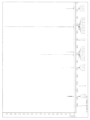
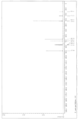
- Example 1 A 1000 mL four-necked flask equipped with a stirrer, reflux condenser, thermometer, and dropping funnel was purged with nitrogen, and 2-methyl-3-butyn-2-ol (148.91 g, 1.770 mol) and toluene ( 222g) and 4-methylpyridine (243.69g, 2.617mol) were added. Next, 1,2-bis(trichlorosilyl)ethane (73.68 g, 0.248 mol) was added dropwise from the dropping funnel over 30 minutes. The reaction was carried out at reflux temperature for 9 hours. Thereafter, methanol (7.921 g, 0.247 mol) was added from the dropping funnel, and the reaction was further carried out at reflux temperature.
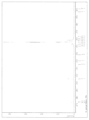
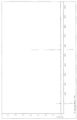
- Example 2 A 500 mL four-necked glass flask equipped with a stirrer, reflux condenser, thermometer, and dropping funnel was purged with nitrogen, and 2-methyl-3-butyn-2-ol (62.96 g, 0.749 mol) and toluene were added thereto. (100 g) and 4-methylpyridine (103.34 g, 1.110 mol) were added. Next, 1,6-bis(trichlorosilyl)hexane (37.58 g, 0.106 mol) was added dropwise from the dropping funnel over 30 minutes. Thereafter, the reaction was carried out at reflux temperature for 10 hours.
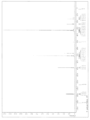
- Example 3 A 100 mL four-necked glass flask equipped with a stirrer, reflux condenser, thermometer, and dropping funnel was purged with nitrogen, and 2-methyl-3-butyn-2-ol (3.42 g, 0.041 mol) and toluene were added thereto. (20 g) and diazabicycloundecene (8.80 g, 0.058 mol) were added and mixed for 10 minutes. Next, 1,6-bis(trichlorosilyl)hexane (2.00 g, 0.0057 mol) was added dropwise from the dropping funnel over 30 minutes, and the mixture was reacted at reflux temperature for 3 hours.
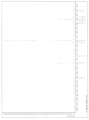
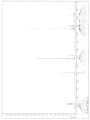
- Example 4 A 1000 mL four-necked glass flask equipped with a stirrer, reflux condenser, thermometer, and dropping funnel was purged with nitrogen, and 2-methyl-3-butyn-2-ol (118.00 g, 1.403 mol) and toluene were added thereto. (201 g) and 4-methylpyridine (196.68 g, 2.112 mol) were added and mixed for 10 minutes. Next, 1,10-bis(trichlorosilyl)decane (83.06 g, 0.203 mol) was added dropwise from the dropping funnel over 30 minutes. Thereafter, the reaction was carried out at reflux temperature for 14 hours.
- the bis(alkynyloxysilyl)alkane of the present invention can be used for existing hydrosilylation methods such as 1-ethynyl-cyclohexan-1-ol and tris[(1,1-dimethyl-2-propynyl)oxy]methylsilane. It was confirmed that the vapor pressure at room temperature was higher than that of the reaction inhibitor because the volatility in the hot air circulation oven was significantly lower.
- Organopolysiloxane represented by:
- Organopolysiloxane represented by: Average unit formula: [H(CH 3 ) 2 SiO 1/2 ] 0.67 (SiO 4/2 ) 0.33
- Organopolysiloxane represented by: Formula: H(CH 3 ) 2 SiO[(CH 3 ) 2 SiO] 37 [(CH 3 )HSiO] 37 Si(CH 3 ) 2 H
- Organopolysiloxane represented by: average unit formula: (C 6 H 5 SiO 3/2 ) 0.4 [H(CH 3 ) 2 SiO 1/2 ) 0.6
- Organopolysiloxane represented by:
- component (D) 1,3-divinyltetramethyldisiloxane solution of 1,3-divinyltetramethyldisiloxane complex of Pt (0 valence)
- component (d2) Bis(acetylacetonato)platinum(II)
- the curable silicone composition was vulcanized according to the method specified in JIS K 6300-2:2001 "Unvulcanized rubber - Physical properties - Part 2: How to determine vulcanization properties using a vibrating vulcanization tester".
- a testing machine (trade name: Premier MDR, manufactured by Alpha Technologies)
- the cured product was vulcanized at a predetermined temperature for 600 seconds to measure the curing characteristics.
- the measurements were carried out at 150°C for the examples listed in Table 2, and at 100°C for the compositions listed in Table 3. Further, regarding the compositions shown in Table 3, measurements were performed after irradiation with ultraviolet rays with a wavelength of 365 nm at an irradiation amount of 10 J/cm 2 .
- the obtained liquid composition was spread thinly on a PET film, dried for 1 hour in a hot air circulation oven set at 70°C, and then heated again at 150°C.
- the stability of the curing retarder was evaluated by measuring curing properties. In the measurement, approximately 5 g of a lump of the curable hot melt silicone composition was weighed, sandwiched between PET films having a thickness of 50 ⁇ m, and then placed on a lower die, and the measurement was started when the upper die was closed. The measurement was performed using an R-type die for rubber, with an amplitude angle of 0.53°, a vibration frequency of 100 times/min, and a maximum torque range of 230 kgf ⁇ cm.
- ⁇ Haze of cured product The curable silicone composition shown in Table 3 was irradiated with ultraviolet light having a wavelength of 365 nm at an irradiation dose of 4 J/cm 2 , and then cured at 100° C. for 1 hour to obtain a film with a thickness of 200 ⁇ m.
- the haze value of the obtained cured film was measured using a spectrophotometer CM-5 (manufactured by Konica Minolta).
- ⁇ Preparation of curable silicone composition (2)> Each component was weighed in the amounts listed in Table 3 and stirred using a three-one motor to obtain a uniform liquid curable silicone composition.
- the liquid composition immediately after preparation was coated on a film coated with a fluorosilicone release agent (FSC-6, manufactured by Nipper Co., Ltd.) to a thickness of 120 ⁇ m or 300 ⁇ m, and placed in a hot air circulation oven set at 70°C. By drying for 5 minutes to remove toluene, a curable silicone composition in the form of a film having a thickness of 100 ⁇ m or 200 ⁇ m was obtained.
- FSC-6 fluorosilicone release agent
- the release film (manufactured by Nipper Co., Ltd., FSC-6) was placed on top of the obtained film-like composition and laminated with a roller to form a release film - a film-like curable silicone composition - a release film.
- a three-layer laminate was created. Note that all of the film-like compositions listed in Table 3 could be reprocessed, including thickness adjustment, by heating to 100°C, so they maintained hot-melt properties.
- Table 3 shows the initial curing characteristics of each composition, the storage stability at 50°C, and the haze value of the cured product made of each composition.
- the bis(alkynyloxysilyl)alkane of the present invention is a novel compound having an alkynyloxysilyl group at both ends of the alkane, and further has a silicon atom-bonded alkoxy group or a hydroxyl group (silanol group), and has a high boiling point. Since it has a low vapor pressure at room temperature and has excellent affinity for curable silicone compositions, it is useful as a hydrosilylation reaction inhibitor for curable silicone compositions of the hydrosilylation reaction-curable type.
Landscapes
- Chemical & Material Sciences (AREA)
- Organic Chemistry (AREA)
- Chemical Kinetics & Catalysis (AREA)
- Health & Medical Sciences (AREA)
- Medicinal Chemistry (AREA)
- Polymers & Plastics (AREA)
Abstract
Priority Applications (5)
| Application Number | Priority Date | Filing Date | Title |
|---|---|---|---|
| US18/851,400 US20260042785A1 (en) | 2022-03-31 | 2023-03-30 | Bis(alkynyloxysilyl)alkane, method for producing same, and curable silicone composition |
| CN202380024330.1A CN118804918A (zh) | 2022-03-31 | 2023-03-30 | 双(炔氧基甲硅烷基)烷烃、其制造方法以及固化性有机硅组合物 |
| EP23780900.9A EP4501938A4 (fr) | 2022-03-31 | 2023-03-30 | Bis(alkynyloxysilyl)alcane, son procédé de production et composition de silicone durcissable |
| KR1020247035547A KR20240168393A (ko) | 2022-03-31 | 2023-03-30 | 비스(알키닐옥시실릴)알칸, 그의 제조방법 및 경화성 실리콘 조성물 |
| JP2024512811A JPWO2023190892A1 (fr) | 2022-03-31 | 2023-03-30 |
Applications Claiming Priority (2)
| Application Number | Priority Date | Filing Date | Title |
|---|---|---|---|
| JP2022-060383 | 2022-03-31 | ||
| JP2022060383 | 2022-03-31 |
Publications (1)
| Publication Number | Publication Date |
|---|---|
| WO2023190892A1 true WO2023190892A1 (fr) | 2023-10-05 |
Family
ID=88202838
Family Applications (1)
| Application Number | Title | Priority Date | Filing Date |
|---|---|---|---|
| PCT/JP2023/013223 Ceased WO2023190892A1 (fr) | 2022-03-31 | 2023-03-30 | Bis(alkynyloxysilyl)alcane, son procédé de production et composition de silicone durcissable |
Country Status (7)
| Country | Link |
|---|---|
| US (1) | US20260042785A1 (fr) |
| EP (1) | EP4501938A4 (fr) |
| JP (1) | JPWO2023190892A1 (fr) |
| KR (1) | KR20240168393A (fr) |
| CN (1) | CN118804918A (fr) |
| TW (1) | TW202340379A (fr) |
| WO (1) | WO2023190892A1 (fr) |
Citations (11)
| Publication number | Priority date | Publication date | Assignee | Title |
|---|---|---|---|---|
| JPS5293468A (en) | 1976-01-31 | 1977-08-05 | Shin Etsu Chem Co Ltd | Organopolysiloxane composition |
| JPS59133252A (ja) | 1983-01-19 | 1984-07-31 | Toray Silicone Co Ltd | オルガノポリシロキサン組成物 |
| JPS61261A (ja) | 1984-06-13 | 1986-01-06 | Shin Etsu Chem Co Ltd | 剥離紙用シリコ−ン組成物 |
| JPS6411160A (en) | 1987-07-03 | 1989-01-13 | Toshiba Silicone | Organopolysiloxane composition |
| JPS6451466A (en) | 1987-08-21 | 1989-02-27 | Shinetsu Chemical Co | Peelable silicone composition |
| JPH0436292A (ja) | 1990-06-01 | 1992-02-06 | Shin Etsu Chem Co Ltd | アルコキシシラン |
| JPH04161459A (ja) | 1990-10-26 | 1992-06-04 | Shin Etsu Chem Co Ltd | オルガノポリシロキサン組成物 |
| JPH10158586A (ja) * | 1996-11-27 | 1998-06-16 | Toray Dow Corning Silicone Co Ltd | 剥離性硬化皮膜形成性オルガノポリシロキサン組成物 |
| JP2005146288A (ja) * | 2004-12-17 | 2005-06-09 | Shin Etsu Chem Co Ltd | オルガノポリシロキサン組成物 |
| JP2006117532A (ja) | 2003-10-02 | 2006-05-11 | Dow Corning Toray Co Ltd | ハロシリル化鎖状炭化水素の製造方法およびヒドロシリル化反応方法 |
| JP2021042274A (ja) * | 2019-09-06 | 2021-03-18 | 信越化学工業株式会社 | 硬化性有機ケイ素樹脂組成物 |
-
2023
- 2023-03-14 TW TW112109288A patent/TW202340379A/zh unknown
- 2023-03-30 WO PCT/JP2023/013223 patent/WO2023190892A1/fr not_active Ceased
- 2023-03-30 JP JP2024512811A patent/JPWO2023190892A1/ja active Pending
- 2023-03-30 EP EP23780900.9A patent/EP4501938A4/fr active Pending
- 2023-03-30 KR KR1020247035547A patent/KR20240168393A/ko active Pending
- 2023-03-30 CN CN202380024330.1A patent/CN118804918A/zh active Pending
- 2023-03-30 US US18/851,400 patent/US20260042785A1/en active Pending
Patent Citations (12)
| Publication number | Priority date | Publication date | Assignee | Title |
|---|---|---|---|---|
| JPS5293468A (en) | 1976-01-31 | 1977-08-05 | Shin Etsu Chem Co Ltd | Organopolysiloxane composition |
| JPS59133252A (ja) | 1983-01-19 | 1984-07-31 | Toray Silicone Co Ltd | オルガノポリシロキサン組成物 |
| JPS61261A (ja) | 1984-06-13 | 1986-01-06 | Shin Etsu Chem Co Ltd | 剥離紙用シリコ−ン組成物 |
| JPS6411160A (en) | 1987-07-03 | 1989-01-13 | Toshiba Silicone | Organopolysiloxane composition |
| JPS6451466A (en) | 1987-08-21 | 1989-02-27 | Shinetsu Chemical Co | Peelable silicone composition |
| JPH0436292A (ja) | 1990-06-01 | 1992-02-06 | Shin Etsu Chem Co Ltd | アルコキシシラン |
| JPH04161459A (ja) | 1990-10-26 | 1992-06-04 | Shin Etsu Chem Co Ltd | オルガノポリシロキサン組成物 |
| JPH10158586A (ja) * | 1996-11-27 | 1998-06-16 | Toray Dow Corning Silicone Co Ltd | 剥離性硬化皮膜形成性オルガノポリシロキサン組成物 |
| JP2006117532A (ja) | 2003-10-02 | 2006-05-11 | Dow Corning Toray Co Ltd | ハロシリル化鎖状炭化水素の製造方法およびヒドロシリル化反応方法 |
| US7456307B2 (en) | 2003-10-02 | 2008-11-25 | Dow Corning Toray Company, Ltd. | Preparation of a halosilylated chain hydrocarbon |
| JP2005146288A (ja) * | 2004-12-17 | 2005-06-09 | Shin Etsu Chem Co Ltd | オルガノポリシロキサン組成物 |
| JP2021042274A (ja) * | 2019-09-06 | 2021-03-18 | 信越化学工業株式会社 | 硬化性有機ケイ素樹脂組成物 |
Non-Patent Citations (1)
| Title |
|---|
| See also references of EP4501938A4 |
Also Published As
| Publication number | Publication date |
|---|---|
| TW202340379A (zh) | 2023-10-16 |
| KR20240168393A (ko) | 2024-11-29 |
| EP4501938A1 (fr) | 2025-02-05 |
| JPWO2023190892A1 (fr) | 2023-10-05 |
| EP4501938A4 (fr) | 2026-04-08 |
| US20260042785A1 (en) | 2026-02-12 |
| CN118804918A (zh) | 2024-10-18 |
Similar Documents
| Publication | Publication Date | Title |
|---|---|---|
| US6184407B1 (en) | Carbosiloxane dendrimers | |
| CN113056502B (zh) | 多官能有机硅氧烷、包含多官能有机硅氧烷的组合物及其制备方法 | |
| TWI512013B (zh) | 有機矽化合物,其製造方法,及含該化合物之可固化聚矽氧組合物 | |
| JP2008111117A5 (fr) | ||
| JPH0737530B2 (ja) | アルケニルオキシ基を有するシロキサンコポリマー、その製法、これを含有する光架橋可能なオルガノポリシロキサンの組成物及び光架橋可能な被覆物の製法 | |
| WO2006090609A1 (fr) | Composition durcissable contenant du silicone et son produit durci | |
| JPH0632906A (ja) | エポキシシリコーンの合成法 | |
| JP2018505917A (ja) | 硫黄含有ポリオルガノシロキサン組成物及び関連する態様 | |
| JP2012140617A (ja) | 硬化性オルガノポリシロキサン組成物及びその製造方法 | |
| JP6187681B2 (ja) | 新規ビス(アルコキシシリル−ビニレン)基含有ケイ素化合物及びその製造方法 | |
| TW202024241A (zh) | 可雙重固化有機聚矽氧烷組成物 | |
| JPH10182826A (ja) | エポキシ基含有オルガノポリシロキサン及びその製造方法並びに紫外線硬化性組成物 | |
| JPH04178461A (ja) | 硬化性オルガノポリシロキサン組成物 | |
| EP3453735A1 (fr) | Agent conférant de l'adhérence et composition de résine durcissable | |
| CN109983051B (zh) | 含有环氧基的有机聚硅氧烷、紫外线固化型硅酮组合物及固化覆膜形成方法 | |
| EP4501938A1 (fr) | Bis(alkynyloxysilyl)alcane, son procédé de production et composition de silicone durcissable | |
| WO2013096549A1 (fr) | Catalyseurs de métaux précieux, photoactivés, dans des systèmes de silicone à durcissement par condensation | |
| JP5889399B2 (ja) | 改善されたバリア性を有するシリコーン樹脂 | |
| JP7126999B2 (ja) | アルキニル基含有環状オルガノポリシロキサン及びヒドロシリル化反応制御剤 | |
| WO2018088485A1 (fr) | Silicone co-modifiée | |
| WO2023190893A1 (fr) | Composition de silicone durcissable | |
| TW201434976A (zh) | 用於光學元件的固化型透明矽酮組成物 | |
| CN103173019B (zh) | 硬化性组成物及其制造方法、硬化物及光学半导体装置 | |
| JP5943104B2 (ja) | 硬化性組成物、硬化膜、ポリシロキサンおよび光半導体装置 | |
| JP5807427B2 (ja) | 硬化性組成物、硬化膜、ポリシロキサンおよび光半導体装置 |
Legal Events
| Date | Code | Title | Description |
|---|---|---|---|
| 121 | Ep: the epo has been informed by wipo that ep was designated in this application |
Ref document number: 23780900 Country of ref document: EP Kind code of ref document: A1 |
|
| ENP | Entry into the national phase |
Ref document number: 2024512811 Country of ref document: JP Kind code of ref document: A |
|
| WWE | Wipo information: entry into national phase |
Ref document number: 202380024330.1 Country of ref document: CN |
|
| ENP | Entry into the national phase |
Ref document number: 20247035547 Country of ref document: KR Kind code of ref document: A |
|
| WWE | Wipo information: entry into national phase |
Ref document number: 2023780900 Country of ref document: EP |
|
| ENP | Entry into the national phase |
Ref document number: 2023780900 Country of ref document: EP Effective date: 20241031 |
|
| NENP | Non-entry into the national phase |
Ref country code: DE |