WO2024252968A1 - ラミネートチューブ容器用積層体 - Google Patents
ラミネートチューブ容器用積層体 Download PDFInfo
- Publication number
- WO2024252968A1 WO2024252968A1 PCT/JP2024/019348 JP2024019348W WO2024252968A1 WO 2024252968 A1 WO2024252968 A1 WO 2024252968A1 JP 2024019348 W JP2024019348 W JP 2024019348W WO 2024252968 A1 WO2024252968 A1 WO 2024252968A1
- Authority
- WO
- WIPO (PCT)
- Prior art keywords
- layer
- laminate
- mass
- less
- tube container
- Prior art date
- Legal status (The legal status is an assumption and is not a legal conclusion. Google has not performed a legal analysis and makes no representation as to the accuracy of the status listed.)
- Ceased
Links
Images

Classifications
-
- B—PERFORMING OPERATIONS; TRANSPORTING
- B32—LAYERED PRODUCTS
- B32B—LAYERED PRODUCTS, i.e. PRODUCTS BUILT-UP OF STRATA OF FLAT OR NON-FLAT, e.g. CELLULAR OR HONEYCOMB, FORM
- B32B27/00—Layered products comprising a layer of synthetic resin
- B32B27/30—Layered products comprising a layer of synthetic resin comprising vinyl (co)polymers; comprising acrylic (co)polymers
-
- B—PERFORMING OPERATIONS; TRANSPORTING
- B32—LAYERED PRODUCTS
- B32B—LAYERED PRODUCTS, i.e. PRODUCTS BUILT-UP OF STRATA OF FLAT OR NON-FLAT, e.g. CELLULAR OR HONEYCOMB, FORM
- B32B27/00—Layered products comprising a layer of synthetic resin
- B32B27/32—Layered products comprising a layer of synthetic resin comprising polyolefins
-
- B—PERFORMING OPERATIONS; TRANSPORTING
- B65—CONVEYING; PACKING; STORING; HANDLING THIN OR FILAMENTARY MATERIAL
- B65D—CONTAINERS FOR STORAGE OR TRANSPORT OF ARTICLES OR MATERIALS, e.g. BAGS, BARRELS, BOTTLES, BOXES, CANS, CARTONS, CRATES, DRUMS, JARS, TANKS, HOPPERS, FORWARDING CONTAINERS; ACCESSORIES, CLOSURES, OR FITTINGS THEREFOR; PACKAGING ELEMENTS; PACKAGES
- B65D65/00—Wrappers or flexible covers; Packaging materials of special type or form
- B65D65/38—Packaging materials of special type or form
- B65D65/40—Applications of laminates for particular packaging purposes
Definitions
- the present invention relates to a laminate for laminated tube containers.
- laminated tube containers have been manufactured in various ways. For example, a laminated sheet is manufactured, and the outermost and innermost layers at both ends are heat-sealed to form a cylindrical body. Then, a head consisting of a mouth and a shoulder is formed at one opening of the cylindrical body, and a cap is screwed onto the mouth to manufacture a laminated tube container. The location where the outermost and innermost layers are heat-sealed is sometimes called the side seam.
- the laminated tube container manufactured in this way can be filled with semi-fluid contents such as toothpaste from the open end of the cylindrical body, and the open end is hermetically sealed to form a bottom seal, to form a tube-shaped packaged product.
- Patent Document 2 discloses a laminate for tubes that includes a laminated surface layer, an adhesive layer, a UV ink layer, and a base laminate.
- the surface layer includes polyolefin.
- the adhesive layer is formed of a two-component adhesive of a polyol having an ester portion and a polyisocyanate.
- the surface of the base laminate that comes into contact with the UV ink layer is formed of polyolefin.
- the UV ink layer is disposed in a location that corresponds to the seal portion on the surface of the base laminate.
- Patent Document 3 discloses a laminate for a laminate tube having a surface layer, a glittering print laminate, and a substrate in that order.
- the glittering print laminate has multiple glittering print layers laminated on top of each other.
- Each of the multiple glittering print layers contains an ultraviolet-curable resin and an inorganic glittering pigment.
- the ultraviolet-curable resin contains an aliphatic polyurethane acrylate and a photopolymerization initiator that has less than three benzene rings and does not have an amino group.
- the present invention provides a new laminate for laminated tube containers that reduces manufacturing costs and does not impair laminate strength even when a glossy printed layer is provided on the side seam.
- the laminate is composed of an outer sealant layer, an outer adhesive layer, one or more printed layers, a substrate layer, an inner adhesive layer, and an inner sealant layer in this order, a part of the outer sealant layer and a part of the inner sealant layer are overlapped and heat-sealed to form a side seam portion to form a cylindrical laminated tube container, the printed layer including a glittering printed layer that is present over substantially the entire side seam portion,
- the photoluminescent print layer is made of an ultraviolet-curable flexographic photoluminescent ink, and the ultraviolet-curable flexographic photoluminescent ink contains a photoluminescent pigment, a polyurethane acrylate, and a photopolymerization initiator, but does not contain a polyisocyanate; the photopolymerization initiator has less than three benzen
- Laminated body for laminated tube containers A laminate for a laminated tube container described in Mode 1, wherein the printed layer further has an undercoat printed layer in direct contact with the base layer, and a portion of the outer sealant layer and a portion of the inner sealant layer are overlapped and heat sealed to form a side seam portion, so that when the laminated tube container is made into a cylindrical laminated tube container, the undercoat printed layer is present over almost the entire side seam portion.
- the undercoat printing layer contains a polyisocyanate.
- ⁇ Embodiment 8> A laminate for laminated tube containers according to any one of embodiments 1 to 7, wherein the outer adhesive layer is a two-component curing dry lamination adhesive.
- ⁇ Aspect 9> A laminate for a laminate tube container according to any one of aspects 1 to 8, A part of the outer sealant layer and a part of the inner sealant layer are overlapped and heat-sealed to form a side seam portion, thereby forming the laminated tube container laminate into a cylindrical shape. Laminated tube container.
- the laminated tube container laminate 100 of the present invention has the following features:
- the laminate includes an outer sealant layer 110, an outer adhesive layer 120, one or more printed layers 130, a substrate layer 140, an inner adhesive layer 150, and an inner sealant layer 160, in this order.
- the glittering printing layer contains a glittering application material that is a relatively large, flat-shaped application material.
- a glittering application material that is a relatively large, flat-shaped application material.
- polyisocyanate in the glittering printing layer in order not to impair the laminate strength.
- polyisocyanate when polyisocyanate is contained in the ink that constitutes the glittering printing layer, its reactivity makes it difficult to store the glittering printing ink. Because the glittering application material is relatively expensive, the difficulty in storing the glittering printing ink is a major problem in terms of cost.
- a combination of polyurethane acrylate and a photopolymerization initiator can produce a glossy printed layer that does not contain polyisocyanate and does not impair laminate strength even when laminated over the entire substrate layer.
- the printing layer 130 may further include an undercoat printing layer 134 and another printing layer 136.
- a polyethylene resin is a resin that contains more than 50 mol%, 60 mol% or more, 70 mol% or more, or 80 mol% or more of repeating ethylene groups in the polymer main chain, and is selected from the group consisting of, for example, low density polyethylene (LDPE), linear low density polyethylene (LLDPE), medium density polyethylene (MDPE), high density polyethylene (HDPE), ethylene-acrylic acid copolymer (EAA), ethylene-methacrylic acid copolymer (EMAA), ethylene-ethyl acrylate copolymer (EEA), ethylene-methyl acrylate copolymer (EMA), and derivatives thereof, and mixtures thereof.
- LDPE low density polyethylene
- LLDPE linear low density polyethylene
- MDPE medium density polyethylene
- HDPE high density polyethylene
- EAA ethylene-acrylic acid copolymer
- EAA ethylene-methacrylic acid copolymer
- EAA ethylene-ethyl acrylate copolymer
- the outer adhesive layer is a layer that is between the outer sealant layer and the printed layer or layers, thereby adhering them to one another.
- a dry lamination adhesive for example, a dry lamination adhesive, a hot melt adhesive, a water-soluble adhesive, an emulsion adhesive, a non-solvent lamination adhesive, and a thermoplastic resin for extrusion lamination can be used.
- a dry lamination adhesive in particular a two-component curing dry lamination adhesive.
- the printing layer may be one or more printing layers, at least one of which is in direct contact with the printable layer of the base layer.
- these printed layers include a photoluminescent printed layer that is present over substantially the entire side seam portion.
- substantially the entire side seam portion means that it occupies 90% or more, 95% or more, 97% or more, 98% or more, or 99% or more of the area of the side seam portion.
- the printed layer may have a base printed layer that is present over substantially the entire side seam portion.
- the base printed layer is in direct contact with the printed layer.
- the photoluminescent print layer is a layer composed of an ultraviolet-curable flexographic photoluminescent ink.
- the ultraviolet-curable flexographic photoluminescent ink contains a photoluminescent pigment, a polyurethane acrylate, and a photopolymerization initiator, but does not contain a polyisocyanate.
- the photoluminescent printed layer is present over substantially the entire side seam portion.
- one or more of the layers may be present over substantially the entire side seam portion, and in particular, all of the photoluminescent printed layers may be present over substantially the entire side seam portion.
- the glossy printed layer may be present over substantially the entire substrate layer.
- the thickness of the photoluminescent printing layer is preferably 1 ⁇ m or more and 7 ⁇ m or less, for example, 1 ⁇ m or more, 2 ⁇ m or more, or 3 ⁇ m or more, and 7 ⁇ m or less, or 6 ⁇ m, from the viewpoint of providing photoluminescence.
- the thickness of the photoluminescent printed layers may be 10 ⁇ m or more and 40 ⁇ m or less. From the viewpoint of design, it is preferable that the thickness is 10 ⁇ m or more, 15 ⁇ m or more, 20 ⁇ m or more, or 25 ⁇ m or more, and from the viewpoint of suppressing yellowing, it is preferable that the thickness is 40 ⁇ m or less, 35 ⁇ m or less, or 30 ⁇ m or less.
- Photochromic printing layer photochromic pigment
- luster pigment for example, a scaly metallic pigment, a pearl pigment, etc. can be used.
- a flake-like metal pigment for example, aluminum powder, especially aluminum flakes, can be used.
- Pearl pigments can be synthetic mica, natural mica, or pigments made of synthetic mica, natural mica, glass, or alumina flakes coated with titanium oxide or silica.
- the content of the glittering pigment in the glittering print layer may be 1% by mass or more and 25% by mass or less, based on the mass of the glittering print layer. This content may be 1% by mass or more, 3% by mass or more, 5% by mass or more, 7% by mass or more, or 9% by mass or more, and may be 25% by mass or less, 22% by mass or less, 20% by mass or less, 17% by mass or less, 15% by mass or less, or 12% by mass or less.
- the content of pigments other than inorganic photoluminescent pigments is 3% by mass or less, 2% by mass or less, or 1% by mass or less, yellowing becomes more noticeable, making the configuration of the present invention more beneficial.
- This content may be 0% by mass or more and 3% by mass or less, for example, 0% by mass or more than 0% by mass.
- polyurethane acrylate for example, an aliphatic polyurethane acrylate and an aromatic polyurethane acrylate can be used, and among them, an aliphatic polyurethane acrylate is preferably used from the viewpoint of laminate strength.
- polyurethane acrylates commercially available products can be used.
- aromatic polyurethane acrylate refers to a polyurethane acrylate having a benzene ring
- aliphatic polyurethane acrylate refers to a polyurethane acrylate not having a benzene ring
- the photopolymerization initiator has less than three benzene rings, that is, two, one or zero benzene rings, and has no amino group.
- Such photopolymerization initiators include, for example, a mixture of oxyphenylacetic acid 2-[2-oxo-2-phenylacetoxyethoxy]ethyl ester and oxyphenylacetic acid 2-(2-hydroxyethoxy)ethyl ester, bis(2-phenyl-2-oxoacetic acid)oxybisethylene (Irgacure 754), 1-hydroxy-cyclohexyl-phenyl-ketone (Irgacure 184), 2-hydroxy-2-methyl-1-phenyl-propan-1-one (Darocure 1173), etc.
- the content of the photopolymerization initiator may be 2 parts by mass or more and 10 parts by mass or less, relative to 100 parts by mass of the aliphatic polyurethane acrylate. This content may be 2 parts by mass or more, 3 parts by mass or more, 4 parts by mass or more, or 5 parts by mass or more, relative to 100 parts by mass of the aliphatic polyurethane acrylate, and may be 10 parts by mass or less, 9 parts by mass or less, 8 parts by mass or less, 7 parts by mass or less, or 6 parts by mass or less.
- the underprinting layer is a layer of the printing layer that is in direct contact with the printed layer of the base material layer.
- the underprinting layer is present over almost the entire side seam portion.
- the undercoat printing layer may be present over substantially the entire substrate layer.
- the base printing layer preferably contains polyisocyanate from the viewpoint of obtaining laminate strength.
- the content of polyisocyanate may be 1% by mass or more and 25% by mass or less, based on the mass of the base printing layer. This content may be 1% by mass or more, 2% by mass or more, 3% by mass or more, or 4% by mass or more, and may be 25% by mass or less, 22% by mass or less, 20% by mass or less, 17% by mass or less, 15% by mass or less, 12% by mass or less, 10% by mass or less, 8% by mass or less, or 6% by mass or less.
- polyisocyanates examples include hexamethylene diisocyanate.
- the base printing layer prefferably be in direct contact with the glossy printing layer.
- a composition in which a polyisocyanate has been added to a commercially available ink can be used.
- the other printed layer may be an optional printed layer for the purpose of display, decoration, etc.
- the printed layer can be laminated by any printing means.
- the substrate layer is a non-permeable substrate on which the printing layer is laminated.
- the substrate layer may be a single layer, or may be a laminate in which multiple layers are laminated, and may include multiple layers of the same type.
- the substrate layer may have, for example, a printable layer, a barrier layer, and a reinforcing layer. These layers may be laminated by any lamination means, for example, via an adhesive layer.
- the adhesive layer may be any of the adhesive layers listed for the outer adhesive layer.
- a substrate having the following layer structure can be used: ⁇ LDPE (75 ⁇ m) / Milky LDPE (160 ⁇ m) / LDPE (50 ⁇ m) / PET (12 ⁇ m) / LLDPE (100 ⁇ m) ⁇ LLDPE (55 ⁇ m) / Transparent LDPE (80 ⁇ m) / EAA (20 ⁇ m) / AL (12 ⁇ m) / EMAA (25 ⁇ m) / PET (12 ⁇ m)
- the printable layer is not particularly limited as long as it is a layer that is impermeable to such an extent that the printing layer can be printed thereon, and may be, for example, a resin layer.
- thermoplastic resins such as polyolefin resins, vinyl polymers, polyesters, polyamides, etc. can be used alone or in combination of two or more layers as the printing layer.
- thermoplastic resins can be used in the form of a film or extruded resin.
- the film may be either a stretched film or a non-stretched film.
- polyethylene resin for example, a polyethylene resin or a polypropylene resin can be used.
- polyethylene resin please refer to the description of the outer sealant layer and the inner sealant layer.
- a polypropylene-based resin is a resin that contains more than 50 mol%, 60 mol% or more, 70 mol% or more, or 80 mol% or more of repeating propylene groups in the polymer main chain, and examples of such resins include polypropylene (PP) homopolymer, random polypropylene (random PP), block polypropylene (block PP), chlorinated polypropylene, acid-modified polypropylene, and derivatives thereof, as well as mixtures thereof.
- PP polypropylene
- random PP random polypropylene
- block PP block polypropylene
- chlorinated polypropylene acid-modified polypropylene, and derivatives thereof, as well as mixtures thereof.
- PVC polyvinyl chloride
- polyester examples include polyethylene terephthalate (PET) and polybutylene terephthalate.
- polyamides examples include nylons such as Nylon (registered trademark) 6 and Nylon MXD6.
- barrier layer for example, an inorganic material vapor deposition layer, a metal foil layer, an organic material coating layer, or the like can be used.
- inorganic deposition layers examples include silica deposition films, aluminum deposition films, alumina deposition films, and silica-alumina deposition films.
- the metal foil layer can be, for example, a single metal foil such as aluminum foil, copper foil, or titanium foil, or an alloy foil such as aluminum alloy foil or stainless steel foil.
- organic coating layer for example, a vinylidene chloride coating layer or a polyvinylidene fluoride coating layer can be used.
- the thickness of the barrier layer may be 100 nm or more and 5 ⁇ m or less. From the viewpoint of ensuring strength and barrier properties, the thickness is preferably 100 nm or more, 200 nm or more, 300 nm or more, 500 nm or more, 700 nm or more, or 1 ⁇ m or more, and from the viewpoint of improving handleability as a laminate for a tube, the thickness is preferably 5 ⁇ m or less, 4 ⁇ m or less, 3 ⁇ m or less, or 2 ⁇ m or less.
- the thickness of the barrier layer may be 3 ⁇ m or more and 100 ⁇ m or less. From the viewpoint of ensuring strength and barrier properties, the thickness is preferably 3 ⁇ m or more, 5 ⁇ m or more, 7 ⁇ m or more, 10 ⁇ m or more, or 15 ⁇ m or more, and from the viewpoint of improving handleability as a laminate for a tube, the thickness is preferably 100 ⁇ m or less, 80 ⁇ m or less, 60 ⁇ m or less, 55 ⁇ m or less, 50 ⁇ m or less, 45 ⁇ m or less, 40 ⁇ m or less, or 35 ⁇ m or less.
- the reinforcing layer may be a layer composed of a stretched film.
- the reinforcing layer may be a stretched film made of, for example, polyester resin, polyamide resin, polypropylene resin, etc.
- the stretched film constituting the reinforcing layer may be, for example, a stretched film obtained by flat method stretching, and may be a uniaxially stretched film or a biaxially stretched film.
- the biaxially stretched film may be a sequentially biaxially stretched film or a simultaneous biaxially stretched film, or may be a stretched film obtained by carrying out these stretching operations multiple times.
- the thickness of the reinforcing layer may be 5 ⁇ m or more and 50 ⁇ m or less. From the viewpoint of imparting practical time-dependent recovery to the laminated tube, it is preferable that the thickness is 5 ⁇ m or more, 7 ⁇ m or more, 10 ⁇ m or more, 12 ⁇ m or more, or 25 ⁇ m or more. On the other hand, it is preferable that the thickness of the reinforcing layer is 50 ⁇ m or less, 40 ⁇ m or less, 30 ⁇ m or less, 20 ⁇ m or less, 15 ⁇ m or less, or 12 ⁇ m or less, from the viewpoint of not impairing short-term shape retention and not excessively increasing the total thickness of the laminated tube roll.
- the inner adhesive layer is a layer that lies between the substrate layer and the sealant layer, thereby adhering them to one another.
- the inner adhesive layer may be any of the adhesive layers listed for the outer adhesive layer.
- the inner adhesive layer may be selected according to the material of the base layer, particularly the material of the layer of the base layer closest to the innermost sealant layer.
- a laminated tube container 200 of the present invention has the laminated tube container laminate 100.
- a part of the outer sealant layer 110 and a part of the inner sealant layer 160 are overlapped and heat sealed to form a side seam portion 210, thereby forming the laminated tube container laminate 100 into a cylindrical shape.
- the laminated tube container of the present invention may have a head portion having a shoulder portion and a cap portion, and a tail seal portion located on the opposite side to the head portion.
- Laminated tube containers can be filled with contents such as medicines, cosmetics, and food.
- contents include toothpaste, moisturizing cream, and sunscreen.
- the laminated tube container can be produced, for example, by a method including the following steps: A process of rolling the laminated tube laminate so that the base material, particularly the sealant layer of the base material, is on the inside, while overlapping and heat-sealing the ends of the laminate to form a side seam to obtain a body portion; and a process of joining a head portion having a shoulder portion and a cap portion to the periphery of the opening of the body portion to obtain a laminated tube container.
- Example 1 As the substrate layer, a laminate having the following layer structure was prepared: LLDPE (55 ⁇ m)/Transparent LDPE (80 ⁇ m)/EAA (20 ⁇ m)/AL/EMAA (25 ⁇ m)/PET (12 ⁇ m) In the above structure, the LLDPE (55 ⁇ m) corresponds to the printing layer.
- An LLDPE film (thickness 100 ⁇ m) was attached as an inner sealant layer to the PET side of the above laminate using a two-component curing dry lamination adhesive.
- the underprinting layer was made of UV-curable black flexographic ink with added hexamethylene diisocyanate.
- a lustrous printing layer (pearl printing layer) was laminated to a thickness of 5 ⁇ m in one pass over the entire surface of the base printing layer.
- the photoluminescent printing layer was made of a composition obtained by mixing 85 parts by mass of an aliphatic polyurethane acrylate resin (EBECRYL 270, Daicel Allnex), 10 parts by mass of a pearl pigment (Pyrisma, Merck), and 5 parts by mass of a photopolymerization initiator having less than three benzene rings and no amino groups (Irgacure 184, IGM Resins B.V.). The content of the photopolymerization initiator per 100 parts by mass of the aliphatic polyurethane acrylate was 6 parts by mass.
- the photoluminescent printing layer did not contain polyisocyanate.
- undercoat printing layer and the glittering printing layer were laminated by coating them by flexographic printing under the following conditions, and curing them by irradiating the coating with ultraviolet (UV) rays.
- the photoluminescent print layer and the LLDPE film as the outer sealant layer were bonded together via a two-component curing dry lamination adhesive as the outer adhesive layer to produce the laminated tube container laminate of the embodiment.
- Comparative Example 1 A laminate for laminated tube containers in Comparative Example 1 was obtained in the same manner as in Example 1, except that a composition in which 5 parts by mass of hexamethylene diisocyanate was added to 95 parts by mass of the composition in Example 1 was used as the glossy printing layer.
- Comparative Example 2 A laminate for laminate tube containers of Comparative Example 2 was obtained in the same manner as in Example 1, except that no glittering printed layer was laminated and no isocyanate was contained in the undercoat printed layer.
- Comparative Example 3 A laminate for a laminate tube container of Comparative Example 3 was produced in the same manner as in Example 1, except that no glittering printed layer was laminated.
- the laminate for laminated tube containers of the embodiment which includes a photoluminescent printed layer made of ink containing a specific combination of polyurethane acrylate and photopolymerization initiator, and which does not contain polyisocyanate, has good ink reusability and laminate strength.
Landscapes
- Engineering & Computer Science (AREA)
- Mechanical Engineering (AREA)
- Laminated Bodies (AREA)
- Wrappers (AREA)
Abstract
図1(a)に示すように、本発明のラミネートチューブ容器用積層体100では、 シーラント層110、160の一部を重ね合わせてヒートシールして、筒状のラミネートチューブ容器にしたときに、印刷層130が、サイドシーム部の略全体にわたって存在することとなる光輝性印刷層132を含み、 光輝性印刷層132が、光輝性顔料、ポリウレタンアクリレート及び光重合開始剤を含有しており、かつポリイソシアネートを含有しておらず、 外側シーラント層110及び内側シーラント層160が、ポリエチレン系樹脂で構成されており、 印刷層のうち、少なくとも1層が、基材層140の被印刷層に直接接触している。
Description
本発明は、ラミネートチューブ容器用積層体に関する。
従来から、ラミネートチューブ容器は種々の方法で製造されている。例えば、積層シートを製造し、その両端部の最外層と最内層とをヒートシールして筒状胴部を製造し、その後に、その筒状胴部の一方の開口部に口部、肩部等からなる頭部を形成し、その口部にキャップを螺合させることにより、ラミネートチューブ容器が製造される。上記の最外層と最内層とをヒートシールした箇所は、サイドシーム部と称されることがある。このように製造されたラミネートチューブ容器は、その筒状胴部の開放端から、例えば、練り歯磨きなどの半流動性の内容物を充填し、その開放端を密閉シールして底部シール部を形成して、チューブ状の包装製品とすることができる。
また、ラミネートチューブ容器の識別性又は外観を向上させるために、ラミネートチューブ容器の胴部に基材及び印刷層を組み込むことが知られている。
特許文献1では、積層フィルムの最内層がラミネートチューブ容器の胴部内周面層となるようにして筒状体に成形されるラミネートチューブ容器胴部形成用積層シートが開示されている。この積層フィルムは、最内層から順に、ヒートシール性フィルム(I)と、バリア性層と、乳白ポリエチレン系樹脂フィルムと、片面に有色印刷インキ層を形成した透明基材フィルムと、透明ヒートシール性フィルム(II)とが、接着層を介して積層されている。
印刷層を有するラミネートチューブ容器に関しては、サイドシーム部を含めて全面に印刷すること(「フルプリント印刷」とも呼ばれる)が提案されている。例えば、特許文献2では、積層されている表層、接着剤層、UVインキ層及び基材積層体を含むチューブ用積層体が開示されている。表層は、ポリオレフィンを含む。接着剤層は、エステル部分を有するポリオールとポリイソシアネートとの2液型接着剤で形成されている。基材積層体のUVインキ層と接する面は、ポリオレフィンで形成されている。UVインキ層は、基材積層体の表面のシール部に対応する箇所に配置されている。
また、高級感のあるプラスチック容器を提供するための印刷に関しては、パールインキ等により得られる光輝性印刷層を用いることが知られている。特許文献3では、表層、光輝性印刷積層体、及び基材をこの順で有する、ラミネートチューブ用積層体が開示されている。光輝性印刷積層体は、互いに積層されている複数の光輝性印刷層を有する。複数の光輝性印刷層は、それぞれ紫外線硬化性樹脂、及び無機光輝性顔料を含有している。紫外線硬化性樹脂は、脂肪族系ポリウレタンアクリレート、及びベンゼン環の数が3個未満であり、かつアミノ基を有さない光重合開始剤を含有している。
本発明では、製造コストを抑制しつつ、光輝性印刷層をサイドシーム部に設けた場合においても、ラミネート強度が損なわれない、新規なラミネートチューブ容器用積層体を提供する。
本発明者らは、鋭意検討したところ、以下の手段により上記課題を解決できることを見出して、本発明を完成させた。すなわち、本発明は、下記のとおりである:
〈態様1〉外側シーラント層、外側接着層、1又は複数の印刷層、基材層、内側接着層、及び内側シーラント層をこの順で有する積層体で構成されており、
前記外側シーラント層の一部と前記内側シーラント層の一部とが重ね合わせられてヒートシールされることにより、サイドシーム部を形成するようにして、筒状のラミネートチューブ容器にしたときに、前記印刷層が、前記サイドシーム部の略全体にわたって存在することとなる光輝性印刷層を含み、
前記光輝性印刷層が、紫外線硬化フレキソ光輝性インキで構成されており、かつ前記紫外線硬化フレキソ光輝性インキが、光輝性顔料、ポリウレタンアクリレート及び光重合開始剤を含有しており、かつポリイソシアネートを含有しておらず、
前記光重合開始剤が、ベンゼン環の数が3個未満であり、かつアミノ基を有さず、
前記外側シーラント層及び前記内側シーラント層が、ポリエチレン系樹脂で構成されており、
前記基材層が、被印刷層を有しており、前記印刷層のうち、少なくとも1層が、前記被印刷層に直接接触している、
ラミネートチューブ容器用積層体。
〈態様2〉前記印刷層が、前記基材層に直接接触している下地印刷層を更に有し、かつ前記外側シーラント層の一部と前記内側シーラント層の一部とが重ね合わせられてヒートシールされることにより、サイドシーム部を形成するようにして、筒状のラミネートチューブ容器にしたときに、前記下地印刷層が、サイドシーム部の略全体にわたって存在することとなる、態様1に記載のラミネートチューブ容器用積層体。
〈態様3〉前記下地印刷層が、ポリイソシアネートを含有している、態様2に記載のラミネートチューブ容器用積層体。
〈態様4〉前記光輝性印刷層が、前記下地印刷層に直接接触している、態様2又は3に記載のラミネートチューブ容器用積層体。
〈態様5〉前記光輝性顔料の含有率が、前記紫外線硬化フレキソ光輝性インキの質量に対して1質量%以上30質量%以下である、態様1~4のいずれか一項に記載のラミネートチューブ容器用積層体。
〈態様6〉前記光重合開始剤の含有率が、前記紫外線硬化フレキソ光輝性インキの質量に対して1質量%以上30質量%以下である、態様1~5のいずれか一項に記載のラミネートチューブ容器用積層体。
〈態様7〉前記被印刷層が、ポリエチレン系樹脂で構成されている、態様1~6のいずれか一項に記載のラミネートチューブ容器用積層体。
〈態様8〉前記外側接着層が、2液硬化型のドライラミネート接着剤である、態様1~7のいずれか一項に記載のラミネートチューブ容器用積層体。
〈態様9〉態様1~8のいずれか一項に記載のラミネートチューブ容器用積層体を有し、
前記外側シーラント層の一部と前記内側シーラント層の一部とが重ね合わせられてヒートシールされることにより、サイドシーム部を形成するようにして、前記ラミネートチューブ容器用積層体が筒状にされている、
ラミネートチューブ容器。
〈態様1〉外側シーラント層、外側接着層、1又は複数の印刷層、基材層、内側接着層、及び内側シーラント層をこの順で有する積層体で構成されており、
前記外側シーラント層の一部と前記内側シーラント層の一部とが重ね合わせられてヒートシールされることにより、サイドシーム部を形成するようにして、筒状のラミネートチューブ容器にしたときに、前記印刷層が、前記サイドシーム部の略全体にわたって存在することとなる光輝性印刷層を含み、
前記光輝性印刷層が、紫外線硬化フレキソ光輝性インキで構成されており、かつ前記紫外線硬化フレキソ光輝性インキが、光輝性顔料、ポリウレタンアクリレート及び光重合開始剤を含有しており、かつポリイソシアネートを含有しておらず、
前記光重合開始剤が、ベンゼン環の数が3個未満であり、かつアミノ基を有さず、
前記外側シーラント層及び前記内側シーラント層が、ポリエチレン系樹脂で構成されており、
前記基材層が、被印刷層を有しており、前記印刷層のうち、少なくとも1層が、前記被印刷層に直接接触している、
ラミネートチューブ容器用積層体。
〈態様2〉前記印刷層が、前記基材層に直接接触している下地印刷層を更に有し、かつ前記外側シーラント層の一部と前記内側シーラント層の一部とが重ね合わせられてヒートシールされることにより、サイドシーム部を形成するようにして、筒状のラミネートチューブ容器にしたときに、前記下地印刷層が、サイドシーム部の略全体にわたって存在することとなる、態様1に記載のラミネートチューブ容器用積層体。
〈態様3〉前記下地印刷層が、ポリイソシアネートを含有している、態様2に記載のラミネートチューブ容器用積層体。
〈態様4〉前記光輝性印刷層が、前記下地印刷層に直接接触している、態様2又は3に記載のラミネートチューブ容器用積層体。
〈態様5〉前記光輝性顔料の含有率が、前記紫外線硬化フレキソ光輝性インキの質量に対して1質量%以上30質量%以下である、態様1~4のいずれか一項に記載のラミネートチューブ容器用積層体。
〈態様6〉前記光重合開始剤の含有率が、前記紫外線硬化フレキソ光輝性インキの質量に対して1質量%以上30質量%以下である、態様1~5のいずれか一項に記載のラミネートチューブ容器用積層体。
〈態様7〉前記被印刷層が、ポリエチレン系樹脂で構成されている、態様1~6のいずれか一項に記載のラミネートチューブ容器用積層体。
〈態様8〉前記外側接着層が、2液硬化型のドライラミネート接着剤である、態様1~7のいずれか一項に記載のラミネートチューブ容器用積層体。
〈態様9〉態様1~8のいずれか一項に記載のラミネートチューブ容器用積層体を有し、
前記外側シーラント層の一部と前記内側シーラント層の一部とが重ね合わせられてヒートシールされることにより、サイドシーム部を形成するようにして、前記ラミネートチューブ容器用積層体が筒状にされている、
ラミネートチューブ容器。
本発明によれば、製造コストを抑制しつつ、光輝性印刷層をサイドシーム部に設けた場合においても、ラミネート強度が損なわれない、新規なラミネートチューブ容器用積層体を提供することができる。
《ラミネートチューブ容器用積層体》
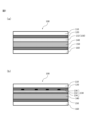
図1(a)に示すように、本発明のラミネートチューブ容器用積層体100は、
外側シーラント層110、外側接着層120、1又は複数の印刷層130、基材層140、内側接着層150、及び内側シーラント層160をこの順で有する積層体で構成されており、
前記外側シーラント層110の一部と前記内側シーラント層160の一部とが重ね合わせられてヒートシールされることにより、サイドシーム部を形成するようにして、筒状のラミネートチューブ容器にしたときに、前記印刷層130が、前記サイドシーム部の略全体にわたって存在することとなる光輝性印刷層132を含み、
前記光輝性印刷層132が、紫外線硬化フレキソ光輝性インキで構成されており、かつ前記紫外線硬化フレキソ光輝性インキが、光輝性顔料、ポリウレタンアクリレート及び光重合開始剤を含有しており、かつポリイソシアネートを含有しておらず、
前記光重合開始剤が、ベンゼン環の数が3個未満であり、かつアミノ基を有さず、
前記外側シーラント層110及び前記内側シーラント層160が、ポリエチレン系樹脂で構成されており、
前記基材層140が、被印刷層を有しており、前記印刷層のうち、少なくとも1層が、前記被印刷層に直接接触している。
図1(a)に示すように、本発明のラミネートチューブ容器用積層体100は、
外側シーラント層110、外側接着層120、1又は複数の印刷層130、基材層140、内側接着層150、及び内側シーラント層160をこの順で有する積層体で構成されており、
前記外側シーラント層110の一部と前記内側シーラント層160の一部とが重ね合わせられてヒートシールされることにより、サイドシーム部を形成するようにして、筒状のラミネートチューブ容器にしたときに、前記印刷層130が、前記サイドシーム部の略全体にわたって存在することとなる光輝性印刷層132を含み、
前記光輝性印刷層132が、紫外線硬化フレキソ光輝性インキで構成されており、かつ前記紫外線硬化フレキソ光輝性インキが、光輝性顔料、ポリウレタンアクリレート及び光重合開始剤を含有しており、かつポリイソシアネートを含有しておらず、
前記光重合開始剤が、ベンゼン環の数が3個未満であり、かつアミノ基を有さず、
前記外側シーラント層110及び前記内側シーラント層160が、ポリエチレン系樹脂で構成されており、
前記基材層140が、被印刷層を有しており、前記印刷層のうち、少なくとも1層が、前記被印刷層に直接接触している。
光輝性印刷層は、比較的大きく扁平な形状を有する願料である光輝性願料を含有する。このような光輝性印刷層を有する従来のラミネートチューブにおいて、光輝性印刷層をサイドシーム部に含有させるようにして積層させる場合、ラミネート強度を損なわないためには、ポリイソシアネートを光輝性印刷層に含有させる必要があると考えられていた。一方、光輝性印刷層を構成するインキにポリイソシアネートを含有させた場合、その反応性により、光輝性印刷インクの保存が困難となっていた。光輝性願料は比較的高価であるので、光輝性印刷インクの保存が困難なことはコストに関して大きな問題であった。
これに対し、本発明者らは、ポリウレタンアクリレート及び光重合開始剤の組合せによれば、ポリイソシアネートを含有させずに、基材層上の全体に積層させた場合においてもラミネート強度を損なうことがない光輝性印刷層が得られることを見出した。
図1(b)に示すように、印刷層130は、下地印刷層134、及び他の印刷層136を更に有していてよい。
以下では、本発明の各構成要素について説明する。
〈外側シーラント層及び内側シーラント層〉
外側シーラント層及び内側シーラント層は、ポリエチレン系樹脂で構成されている。
外側シーラント層及び内側シーラント層は、ポリエチレン系樹脂で構成されている。
ここで、本明細書において、ポリエチレン系樹脂は、ポリマーの主鎖にエチレン基の繰返し単位を、50mol%超、60mol%以上、70mol%以上、又は80mol%以上含む樹脂であり、例えば、低密度ポリエチレン(LDPE)、直鎖状低密度ポリエチレン(LLDPE)、中密度ポリエチレン(MDPE)、高密度ポリエチレン(HDPE)、エチレン-アクリル酸共重合体(EAA)、エチレン-メタクリル酸共重合体(EMAA)、エチレン-エチルアクリレート共重合体(EEA)、エチレン-メチルアクリレート共重合体(EMA)、及びこれらの誘導体、並びにこれらの混合物からなる群より選択される。
外側シーラント層及び内側シーラント層の厚さは、特に限定されず、例えば50μm以上200μm以下であってよい。この厚さは、50μm以上、60μm以上、70μm以上、80μm以上、85μm以上、90μm以上、又は95μm以上であってよく、また200μm以下、190μm以下、180μm以下、170μm以下、160μm以下、150μm以下、140μm以下、130μm以下、125μm以下、120μm以下、115μm以下、110μm以下、又は105μm以下であってよい。外側シーラント層及び内側シーラント層は、互いに同じであってもよく、又は異なっていてもよい。
〈外側接着層〉
外側接着層は、外側シーラント層と、1又は複数の印刷層との間に存在し、それによってこれらを互いに接着している層である。
外側接着層は、外側シーラント層と、1又は複数の印刷層との間に存在し、それによってこれらを互いに接着している層である。
接着層としては、例えばドライラミネート接着剤、ホットメルト接着剤、水溶性接着剤、エマルション接着剤、ノンソルベントラミネート接着剤、及び押出ラミネート用の熱可塑性樹脂等を用いることができる。中でも、ドライラミネート接着剤、特に2液硬化型ドライラミネート接着剤を用いることが好ましい。
〈印刷層〉
印刷層は、1又は複数の印刷層である。これらの印刷層のうち、少なくとも1層が、基材層の被印刷層に直接接触している。
印刷層は、1又は複数の印刷層である。これらの印刷層のうち、少なくとも1層が、基材層の被印刷層に直接接触している。
前記外側シーラント層の一部と前記内側シーラント層の一部とが重ね合わせられてヒートシールされることにより、サイドシーム部を形成するようにして、筒状のラミネートチューブ容器にしたときに、これらの印刷層は、サイドシーム部の略全体にわたって存在している光輝性印刷層を含む。
ここで、「サイドシーム部の略全体」とは、サイドシーム部の面積の90%以上、95%以上、97%以上、98%以上、又は99%以上を占めていることを意味している。
外側シーラント層の一部と内側シーラント層の一部とが重ね合わせられてヒートシールされることにより、サイドシーム部を形成するようにして、筒状のラミネートチューブ容器にしたときに、前記印刷層が、かつサイドシーム部の略全体にわたって存在することとなる下地印刷層を有していてよい。この場合、下地印刷層は、被印刷層に直接接触している。
(光輝性印刷層)
光輝性印刷層は、紫外線硬化フレキソ光輝性インキで構成されている層である。紫外線硬化フレキソ光輝性インキは、光輝性顔料、ポリウレタンアクリレート及び光重合開始剤を含有しており、かつポリイソシアネートを含有していない。
光輝性印刷層は、紫外線硬化フレキソ光輝性インキで構成されている層である。紫外線硬化フレキソ光輝性インキは、光輝性顔料、ポリウレタンアクリレート及び光重合開始剤を含有しており、かつポリイソシアネートを含有していない。
光輝性印刷層は、サイドシーム部の略全体にわたって存在している。光輝性印刷層が複数層存在している場合には、そのうちの1層又は複数層がサイドシーム部の略全体にわたって存在していてよく、特に全ての光輝性印刷層がサイドシーム部の略全体にわたって存在してよい。
光輝性印刷層は、基材層の略全体にわたって存在してよい。
光輝性印刷層が単層である場合には、光輝性印刷層の厚さは、1μm以上7μm以下、例えば1μm以上、2μm以上、又は3μm以上であり、かつ7μm以下、又は6μmであることが、光輝性をもたらす観点から好ましい。
光輝性印刷層が複数層存在している場合には、光輝性印刷層の厚さは、10μm以上40μm以下であってよい。この厚さは、10μm以上、15μm以上、20μm以上、又は25μm以上であることが、意匠性の観点から好ましく、また40μm以下、35μm以下、又は30μm以下であることが、黄変の抑制の観点から好ましい。
(光輝性印刷層:光輝性顔料)
光輝性顔料としては、例えば鱗片状金属顔料、パール顔料等を用いることができる。
光輝性顔料としては、例えば鱗片状金属顔料、パール顔料等を用いることができる。
鱗片状金属顔料としては、例えばアルミニウム粉末、特にアルミフレーク等を用いることができる。
パール顔料は、合成雲母、天然雲母、又は合成雲母、天然雲母、ガラス、アルミナフレークに酸化チタンやシリカを被覆した顔料であることができる。
光輝性印刷層における光輝性顔料の含有率は、光輝性印刷層の質量に対して、1質量%以上25質量%以下であってよい。この含有率は、1質量%以上、3質量%以上、5質量%以上、7質量%以上、又は9質量%以上であってよく、また25質量%以下、22質量%以下、20質量%以下、17質量%以下、15質量%以下、又は12質量%以下であってよい。
光輝性印刷層においては、無機光輝性顔料以外の顔料の含有率が、3質量%以下、2質量%以下、又は1質量%以下である場合には、黄変が目立ちやすくなることから、本発明の構成がより有益となる。この含有率は、0質量%以上3質量%以下であってよく、例えば0質量%又は0質量%超であってよい。
(光輝性印刷層:ポリウレタンアクリレート)
ポリウレタンアクリレートとしては、例えば脂肪族ポリウレタンアクリレート、及び芳香族ポリウレタンアクリレートを用いることができ、中でも脂肪族ポリウレタンアクリレートを用いることが、ラミネート強度の観点から好ましい。これらのポリウレタンアクリレートとしては、商業的に入手可能なものを用いることができる。
ポリウレタンアクリレートとしては、例えば脂肪族ポリウレタンアクリレート、及び芳香族ポリウレタンアクリレートを用いることができ、中でも脂肪族ポリウレタンアクリレートを用いることが、ラミネート強度の観点から好ましい。これらのポリウレタンアクリレートとしては、商業的に入手可能なものを用いることができる。
なお、本発明において、「芳香族系ポリウレタンアクリレート」とは、ベンゼン環を有するポリウレタンアクリレートを指し、また「脂肪族系ポリウレタンアクリレート」とは、ベンゼン環を有さないポリウレタンアクリレートを指す。
(光輝性印刷層:光重合開始剤)
光重合開始剤は、ベンゼン環の数が3個未満、すなわち2個、1個又は0個であり、かつアミノ基を有さない光重合開始剤である。
光重合開始剤は、ベンゼン環の数が3個未満、すなわち2個、1個又は0個であり、かつアミノ基を有さない光重合開始剤である。
このような光重合開始剤としては、例えばオキシフェニル酢酸2-[2-オキソ-2-フェニルアセトキシエトキシ]エチルエステル及びオキシフェニル酢酸2-(2-ヒドロキシエトキシ)エチルエステルの混合物、ビス(2-フェニル-2-オキソ酢酸)オキシビスエチレン(イルガキュア754)、1-ヒドロキシ-シクロヘキシル-フェニル-ケトン(イルガキュア184)、2-ヒドロキシ-2-メチル-1-フェニル-プロパン-1-オン(ダロキュア1173)等が挙げられる。
光重合開始剤の含有量は、脂肪族系ポリウレタンアクリレート100質量部に対して、2質量部以上10質量部以下であってよい。この含有量は、脂肪族系ポリウレタンアクリレート100質量部に対して、2質量部以上、3質量部以上、4質量部以上、又は5質量部以上であってよく、また10質量部以下、9質量部以下、8質量部以下、7質量部以下、又は6質量部以下であってよい。
(下地印刷層)
下地印刷層は、印刷層のうち、基材層の被印刷層に直接接触している層である。外側シーラント層の一部と内側シーラント層の一部とが重ね合わせられてヒートシールされることにより、サイドシーム部を形成するようにして、筒状のラミネートチューブ容器にしたときに、下地印刷層が、サイドシーム部の略全体にわたって存在することとなる。
下地印刷層は、印刷層のうち、基材層の被印刷層に直接接触している層である。外側シーラント層の一部と内側シーラント層の一部とが重ね合わせられてヒートシールされることにより、サイドシーム部を形成するようにして、筒状のラミネートチューブ容器にしたときに、下地印刷層が、サイドシーム部の略全体にわたって存在することとなる。
下地印刷層は、基材層の略全体にわたって存在していてよい。
下地印刷層は、ポリイソシアネートを含有していることが、ラミネート強度を得る観点から好ましい。この場合、ポリイソシアネートの含有率は、下地印刷層の質量に対して、1質量%以上25質量%以下であってよい。この含有率は、1質量%以上、2質量%以上、3質量%以上、又は4質量%以上であってよく、また25質量%以下、22質量%以下、20質量%以下、17質量%以下、15質量%以下、12質量%以下、10質量%以下、8質量%以下、又は6質量%以下であってよい。
ポリイソシアネートとしては、例えばヘキサメチレンジイソシアネート等を用いることができる。
下地印刷層は、光輝性印刷層と直接接触していることが、ラミネート強度を得る観点から好ましい。
下地印刷層としては、商業的に入手可能なインクに、ポリイソシアネートを添加した組成物を用いることができる。
(他の印刷層)
他の印刷層は、表示、装飾等を目的とする随意の印刷層であってよい。印刷層は、随意の印刷手段により積層させることができる。
他の印刷層は、表示、装飾等を目的とする随意の印刷層であってよい。印刷層は、随意の印刷手段により積層させることができる。
〈基材層〉
基材層は、印刷層がその表面に積層されている非浸透性の基材である。基材層は、単層であってもよく、又は複数の層が積層されている積層体であってもよく、複数の同じ種類の層を含んでいてもよい。
基材層は、印刷層がその表面に積層されている非浸透性の基材である。基材層は、単層であってもよく、又は複数の層が積層されている積層体であってもよく、複数の同じ種類の層を含んでいてもよい。
基材層は、例えば被印刷層、バリア層、及び補強層を有していてよい。これらの層は、随意の積層手段により積層されていてよく、例えば接着層を介して積層されていてもよい。この接着層としては、外側接着層に関して挙げた接着層を用いることができる。
かかる基材層としては、例えば以下の層構成を有する基材を用いることができる:
・LDPE(75μm)/乳白LDPE(160μm)/LDPE(50μm)/PET(12μm)/LLDPE(100μm)
・LLDPE(55μm)/透明LDPE(80μm)/EAA(20μm)/AL(12μm)/EMAA(25μm)/PET(12μm)
・LDPE(75μm)/乳白LDPE(160μm)/LDPE(50μm)/PET(12μm)/LLDPE(100μm)
・LLDPE(55μm)/透明LDPE(80μm)/EAA(20μm)/AL(12μm)/EMAA(25μm)/PET(12μm)
(被印刷層)
被印刷層は、印刷層を印刷できる程度の非浸透性を有する層であれば、特に限定されず、例えば樹脂層であってよい。
被印刷層は、印刷層を印刷できる程度の非浸透性を有する層であれば、特に限定されず、例えば樹脂層であってよい。
被印刷層としては、例えば、ポリオレフィン系樹脂、ビニル系ポリマー、ポリエステル、ポリアミド等の熱可塑性樹脂を単独で、又は2種類以上組み合わせて複層で使用することができる。かかる熱可塑性樹脂を、フィルム又は押出し樹脂の態様で用いることができる。また、フィルムは、延伸フィルムであっても、無延伸フィルムであってもよい。
ポリオレフィン系樹脂としては、例えばポリエチレン系樹脂、ポリプロピレン系樹脂を用いることができる。ポリエチレン系樹脂は、外側シーラント層及び内側シーラント層に関する記載を参照することができる。
本明細書において、ポリプロピレン系樹脂とは、ポリマーの主鎖にプロピレン基の繰返し単位を、50mol%超、60mol%以上、70mol%以上、又は80mol%以上含む樹脂であり、例えば、ポリプロピレン(PP)ホモポリマー、ランダムポリプロピレン(ランダムPP)、ブロックポリプロピレン(ブロックPP)、塩素化ポリプロピレン、酸変性ポリプロピレン、及びこれらの誘導体、並びにこれらの混合物が挙げられる。
ビニル系ポリマーとしては、例えばポリ塩化ビニル(PVC)等が挙げられる。
ポリエステルとしては、例えばポリエチレンテレフタレート(PET)、ポリブチレンテレフタレート等が挙げられる。
ポリアミドとしては、例えばナイロン(登録商標)6、ナイロンMXD6等のナイロン等が挙げられる。
(バリア層)
バリア層としては、例えば無機物蒸着層、金属箔層、有機物コート層等を用いることができる。
バリア層としては、例えば無機物蒸着層、金属箔層、有機物コート層等を用いることができる。
無機物蒸着層としては、例えばシリカ蒸着膜、アルミニウム蒸着膜、アルミナ蒸着膜、シリカ・アルミナ蒸着膜を用いることができる。
金属箔層としては、例えばアルミニウム箔、銅箔、チタン箔等の単体金属箔、アルミニウム合金箔、ステンレス箔等の合金箔を用いることができる。
有機物コート層としては、例えば塩化ビニリデンコート層、ポリフッ化ビニリデンコート層を用いることができる。
バリア層として無機物蒸着膜又は有機物コート層を用いる場合、バリア層の厚さは、100nm以上5μm以下であってよい。この厚さは、100nm以上、200nm以上、300nm以上、500nm以上、700nm以上、又は1μm以上であることが、強度及びバリア性を確保する観点から好ましく、また5μm以下、4μm以下、3μm以下、又は2μm以下であることが、チューブ用積層体としての取り扱い性を向上させる観点から好ましい。
バリア層として金属箔層を用いる場合、バリア層の厚さは、3μm以上100μm以下であってよい。この厚さは、3μm以上、5μm以上、7μm以上、10μm以上、又は15μm以上であることが、強度及びバリア性を確保する観点から好ましく、また100μm以下、80μm以下、60μm以下、55μm以下、50μm以下、45μm以下、40μm以下、又は35μm以下であることが、チューブ用積層体としての取り扱い性を向上させる観点から好ましい。
(補強層)
補強層は、延伸フィルムから構成されている層であってよい。
補強層は、延伸フィルムから構成されている層であってよい。
補強層は、例えばポリエステル系樹脂、ポリアミド系樹脂、ポリプロピレン系樹脂等で構成されている延伸フィルムであってよい。
補強層が延伸フィルムで構成されている場合、補強層を構成する延伸フィルムは、例えばフラット法延伸によって得られる延伸フィルムであってよく、1軸延伸フィルムであっても2軸延伸フィルムであってもよい。2軸延伸フィルムは、逐次2軸延伸フィルムであっても同時2軸延伸フィルムであってもよく、又はこれらの延伸操作を複数回行って得られる延伸フィルムであってもよい。
補強層の厚さは、5μm以上50μm以下であってよい。この厚さは、5μm以上、7μm以上、10μm以上、12μm以上、又は25μm以上であることが、ラミネートチューブに実用的な経時復元性を付与する観点から好ましい。一方で、補強層の厚みは、50μm以下、40μm以下、30μm以下、20μm以下、15μm以下、又は12μm以下であることが、短期形状保持性を損なわず、かつ、ラミネートチューブ原反の総厚みを過度に大きくしない観点から好ましい。
〈内側接着層〉
内側接着層は、基材層とシーラント層との間に存在し、それによってこれらを互いに接着している層である。
内側接着層は、基材層とシーラント層との間に存在し、それによってこれらを互いに接着している層である。
内側接着層としては、外側接着層に関して挙げた接着層を用いることができる。特に、内側接着層は、基材層の材質、特に基材層のうちの最も内側シーラント層側の層の材質に応じて選択されてよい。
《ラミネートチューブ容器》
図2に示すように、本発明のラミネートチューブ容器200は、上記のラミネートチューブ容器用積層体100を有する。外側シーラント層110の一部と、内側シーラント層160の一部とが重ね合わせられてヒートシールされることにより、サイドシーム部210を形成するようにして、ラミネートチューブ用積層体100が筒状にされている。
図2に示すように、本発明のラミネートチューブ容器200は、上記のラミネートチューブ容器用積層体100を有する。外側シーラント層110の一部と、内側シーラント層160の一部とが重ね合わせられてヒートシールされることにより、サイドシーム部210を形成するようにして、ラミネートチューブ用積層体100が筒状にされている。
また、図示していないが、本発明のラミネートチューブ容器は、肩部及びキャップ部を有する頭部、並びに頭部と反対側に存在している尾シール部を有していてよい。
ラミネートチューブ容器には、薬品、化粧品、食品などの内容物を充填することができる。内容物としては、例えば、練り歯磨き、保湿クリーム、日焼け止めなどが挙げられる。
ラミネートチューブ容器は、例えば以下の工程を含む方法により製造されることができる:
ラミネートチューブ用積層体を、基材、特に基材のシーラント層が内側となるように丸めながら、積層体の端部同士を重ね合せてヒートシールすることによりサイドシーム部を形成して、胴部を得る工程;及び
胴部の開口部の周縁に、肩部及びキャップ部を有する頭部を結合させて、ラミネートチューブ容器を得る工程。
ラミネートチューブ用積層体を、基材、特に基材のシーラント層が内側となるように丸めながら、積層体の端部同士を重ね合せてヒートシールすることによりサイドシーム部を形成して、胴部を得る工程;及び
胴部の開口部の周縁に、肩部及びキャップ部を有する頭部を結合させて、ラミネートチューブ容器を得る工程。
実施例及び比較例により本発明を具体的に説明するが、本発明は、これらに限定されるものではない。
《積層体の作製》
〈実施例〉
基材層として、以下の層構成を有する積層体を準備した:
LLDPE(55μm)/透明LDPE(80μm)/EAA(20μm)/AL/EMAA(25μm)/PET(12μm)
上記の構成において、LLDPE(55μm)が被印刷層に相当する。
〈実施例〉
基材層として、以下の層構成を有する積層体を準備した:
LLDPE(55μm)/透明LDPE(80μm)/EAA(20μm)/AL/EMAA(25μm)/PET(12μm)
上記の構成において、LLDPE(55μm)が被印刷層に相当する。
上記の積層体のPET側に、2液硬化型ドライラミネート接着剤により、内側シーラント層としてのLLDPEフィルム(厚さ100μm)を接着させた。
次いで、被印刷層の全面に、厚さ1μmの下地印刷層を積層させた。下地印刷層としては、ヘキサメチレンジイソシアネートを添加した紫外線硬化型フレキソ黒色インキを用いた。
次いで、下地印刷層上の全面に、光輝性印刷層(パール印刷層)を、1度刷りで5μm積層させた。印刷した。
光輝性印刷層としては、脂肪族系ポリウレタンアクリレート樹脂(EBECRYL270、ダイセル・オルネクス社)85質量部、パール顔料(Pyrisma、メルク社)10質量部、及びベンゼン環の数が3個未満であり、かつアミノ基を有さない光重合開始剤(イルガキュア184、IGM Resins B.V.社)5質量部を混合させた組成物を用いた。脂肪族系ポリウレタンアクリレート100質量部に対する光重合開始剤の含有量は、6質量部であった。また、光輝性印刷層は、ポリイソシアネートを含有していなかった。
下地印刷層及び光輝性印刷層の積層は、以下の条件でのフレキソ印刷により塗工し、塗工物に紫外線(UV)を照射して硬化させることにより行った。
印刷機:フレキシプルーフ
アニロックスロール:180線/inch
UV照射条件:160W
印刷機:フレキシプルーフ
アニロックスロール:180線/inch
UV照射条件:160W
光輝性印刷層と、外側シーラント層としてのLLDPEフィルムとを、外側接着層としての2液硬化型ドライラミネート接着剤を介して接着させて、実施例のラミネートチューブ容器用積層体を作製した。
〈比較例1〉
光輝性印刷層として、実施例1における組成物95質量部に対して、ヘキサメチレンジイソシアネート5質量部を添加した組成物を用いたことを除き、実施例1と同様にして、比較例1のラミネートチューブ容器用積層体を得た。
光輝性印刷層として、実施例1における組成物95質量部に対して、ヘキサメチレンジイソシアネート5質量部を添加した組成物を用いたことを除き、実施例1と同様にして、比較例1のラミネートチューブ容器用積層体を得た。
〈比較例2〉
光輝性印刷層を積層させず、かつ下地印刷層にイソシアネートを含有させなかったことを除き、実施例1と同様にして、比較例2のラミネートチューブ容器用積層体を得た。
光輝性印刷層を積層させず、かつ下地印刷層にイソシアネートを含有させなかったことを除き、実施例1と同様にして、比較例2のラミネートチューブ容器用積層体を得た。
〈比較例3〉
光輝性印刷層を積層させなかったことを除き、実施例1と同様にして、比較例3のラミネートチューブ容器用積層体を作製した。
光輝性印刷層を積層させなかったことを除き、実施例1と同様にして、比較例3のラミネートチューブ容器用積層体を作製した。
《評価》
〈インキの再利用性〉
実施例及び比較例のインキを用意し、常温で8時間放置し、目視により外観を確認した。評価基準は以下のとおりである。
A:気泡が発生せず、再利用可能なものであった。
B:気泡が発生し、再利用不可能なものであった。
〈インキの再利用性〉
実施例及び比較例のインキを用意し、常温で8時間放置し、目視により外観を確認した。評価基準は以下のとおりである。
A:気泡が発生せず、再利用可能なものであった。
B:気泡が発生し、再利用不可能なものであった。
〈ラミネート強度〉
インキの再利用性の評価が「A」であった実施例及び比較例2に関し、作製したラミネートチューブ容器用積層体を、15mm幅の短冊状に切り出し、外側シーラント層を剥離した試験片を準備した。この試験片を用い、JIS K 6854-3に準拠して、引張試験機によりラミネート強度を測定した。
インキの再利用性の評価が「A」であった実施例及び比較例2に関し、作製したラミネートチューブ容器用積層体を、15mm幅の短冊状に切り出し、外側シーラント層を剥離した試験片を準備した。この試験片を用い、JIS K 6854-3に準拠して、引張試験機によりラミネート強度を測定した。
実施例及び比較例の構成及び評価結果を表1に示す。
表1から、ポリウレタンアクリレート及び光重合開始剤の特定の組合せを含有しているインキで構成されている光輝性印刷層を含み、かつこのインキがポリイソシアネートを含有していない、実施例のラミネートチューブ容器用積層体は、インキの再利用性及びラミネート強度が良好であることが理解できよう。
これに対し、光輝性印刷層のインキがポリイソシアネートを含有している比較例1及び3のインキは、インキの再利用性が良好ではないことが理解できよう。
また、比較例2の結果から、ポリウレタンアクリレート及び光重合開始剤の特定の組合せを含有しているインキで構成されていないインキからポリイソシアネートを除いた場合には、十分なラミネート強度が得られないことが理解できよう。
100 ラミネートチューブ容器用積層体
110 外側シーラント層
120 外側接着層
130 印刷層
132 光輝性印刷層
134 下地印刷層
136 他の印刷層
140 基材層
150 内側接着層
160 内側シーラント層
200 ラミネートチューブ容器
210 サイドシーム部
110 外側シーラント層
120 外側接着層
130 印刷層
132 光輝性印刷層
134 下地印刷層
136 他の印刷層
140 基材層
150 内側接着層
160 内側シーラント層
200 ラミネートチューブ容器
210 サイドシーム部
Claims (9)
- 外側シーラント層、外側接着層、1又は複数の印刷層、基材層、内側接着層、及び内側シーラント層をこの順で有する積層体で構成されており、
前記外側シーラント層の一部と前記内側シーラント層の一部とが重ね合わせられてヒートシールされることにより、サイドシーム部を形成するようにして、筒状のラミネートチューブ容器にしたときに、前記印刷層が、前記サイドシーム部の略全体にわたって存在することとなる光輝性印刷層を含み、
前記光輝性印刷層が、紫外線硬化フレキソ光輝性インキで構成されており、かつ前記紫外線硬化フレキソ光輝性インキが、光輝性顔料、ポリウレタンアクリレート及び光重合開始剤を含有しており、かつポリイソシアネートを含有しておらず、
前記光重合開始剤が、ベンゼン環の数が3個未満であり、かつアミノ基を有さず、
前記外側シーラント層及び前記内側シーラント層が、ポリエチレン系樹脂で構成されており、
前記基材層が、被印刷層を有しており、前記印刷層のうち、少なくとも1層が、前記被印刷層に直接接触している、
ラミネートチューブ容器用積層体。 - 前記印刷層が、前記基材層に直接接触している下地印刷層を更に有し、かつ前記外側シーラント層の一部と前記内側シーラント層の一部とが重ね合わせられてヒートシールされることにより、サイドシーム部を形成するようにして、筒状のラミネートチューブ容器にしたときに、前記下地印刷層が、サイドシーム部の略全体にわたって存在することとなる、請求項1に記載のラミネートチューブ容器用積層体。
- 前記下地印刷層が、ポリイソシアネートを含有している、請求項2に記載のラミネートチューブ容器用積層体。
- 前記光輝性印刷層が、前記下地印刷層に直接接触している、請求項2又は3に記載のラミネートチューブ容器用積層体。
- 前記光輝性顔料の含有率が、前記紫外線硬化フレキソ光輝性インキの質量に対して1質量%以上30質量%以下である、請求項1又は2に記載のラミネートチューブ容器用積層体。
- 前記光重合開始剤の含有率が、前記紫外線硬化フレキソ光輝性インキの質量に対して1質量%以上30質量%以下である、請求項1又は2に記載のラミネートチューブ容器用積層体。
- 前記被印刷層が、ポリエチレン系樹脂で構成されている、請求項1又は2に記載のラミネートチューブ容器用積層体。
- 前記外側接着層が、2液硬化型のドライラミネート接着剤である、請求項1又は2に記載のラミネートチューブ容器用積層体。
- 請求項1又は2に記載のラミネートチューブ容器用積層体を有し、
前記外側シーラント層の一部と前記内側シーラント層の一部とが重ね合わせられてヒートシールされることにより、サイドシーム部を形成するようにして、前記ラミネートチューブ容器用積層体が筒状にされている、
ラミネートチューブ容器。
Applications Claiming Priority (2)
| Application Number | Priority Date | Filing Date | Title |
|---|---|---|---|
| JP2023-094919 | 2023-06-08 | ||
| JP2023094919A JP2024176410A (ja) | 2023-06-08 | 2023-06-08 | ラミネートチューブ容器用積層体 |
Publications (1)
| Publication Number | Publication Date |
|---|---|
| WO2024252968A1 true WO2024252968A1 (ja) | 2024-12-12 |
Family
ID=93795894
Family Applications (1)
| Application Number | Title | Priority Date | Filing Date |
|---|---|---|---|
| PCT/JP2024/019348 Ceased WO2024252968A1 (ja) | 2023-06-08 | 2024-05-27 | ラミネートチューブ容器用積層体 |
Country Status (2)
| Country | Link |
|---|---|
| JP (1) | JP2024176410A (ja) |
| WO (1) | WO2024252968A1 (ja) |
Citations (3)
| Publication number | Priority date | Publication date | Assignee | Title |
|---|---|---|---|---|
| JPS5078629A (ja) * | 1973-11-15 | 1975-06-26 | ||
| JP2021178446A (ja) * | 2020-05-12 | 2021-11-18 | 共同印刷株式会社 | ラミネートチューブ用積層体 |
| JP6993752B1 (ja) * | 2020-08-04 | 2022-01-14 | 紀和化学工業株式会社 | グラフィックシート、保護フィルム付きグラフィックシート、その製造方法及びその使用方法 |
-
2023
- 2023-06-08 JP JP2023094919A patent/JP2024176410A/ja active Pending
-
2024
- 2024-05-27 WO PCT/JP2024/019348 patent/WO2024252968A1/ja not_active Ceased
Patent Citations (3)
| Publication number | Priority date | Publication date | Assignee | Title |
|---|---|---|---|---|
| JPS5078629A (ja) * | 1973-11-15 | 1975-06-26 | ||
| JP2021178446A (ja) * | 2020-05-12 | 2021-11-18 | 共同印刷株式会社 | ラミネートチューブ用積層体 |
| JP6993752B1 (ja) * | 2020-08-04 | 2022-01-14 | 紀和化学工業株式会社 | グラフィックシート、保護フィルム付きグラフィックシート、その製造方法及びその使用方法 |
Also Published As
| Publication number | Publication date |
|---|---|
| JP2024176410A (ja) | 2024-12-19 |
Similar Documents
| Publication | Publication Date | Title |
|---|---|---|
| US10286628B2 (en) | Composite film having barrier properties for use as in-mold labels, article with in-mold labels, and methods of making same | |
| US9731480B2 (en) | Printed polyester film based laminate, method of making and application thereof | |
| JP6613879B2 (ja) | 反射性遮光性積層体 | |
| JP5733878B2 (ja) | ラミネートチューブ | |
| TW200523111A (en) | Tear resistant peelable seal for containers | |
| JP5453879B2 (ja) | 積層体およびそれを用いたチューブ容器 | |
| JP2013177153A (ja) | ラミネートチューブ容器 | |
| JP5774270B2 (ja) | 積層体およびそれを用いたチューブ容器 | |
| JP6159526B2 (ja) | チューブ容器 | |
| JP2019025722A (ja) | 積層体およびそれを備える包装袋 | |
| JP7482679B2 (ja) | ラミネートチューブ用積層体 | |
| WO2014207950A1 (ja) | 積層体及びこれを用いた包装材 | |
| JP5517446B2 (ja) | パウチの製造方法及びパウチ | |
| US9662822B2 (en) | Method for manufacturing a container body of a tube and container body manufactured by such a method | |
| JPH10245001A (ja) | ガラスにシールするためのフィルム構造物及び方法 | |
| CA2827949C (en) | Unidirectional oriented polyethylene-based heat shrinkable polymeric label | |
| WO2024252968A1 (ja) | ラミネートチューブ容器用積層体 | |
| JP2006082857A (ja) | 合成樹脂製容器 | |
| JP7482678B2 (ja) | ラミネートチューブ用積層体 | |
| JP5517447B2 (ja) | パウチの製造方法及びパウチ | |
| WO2014104239A1 (ja) | ラベル付きチューブ容器 | |
| JP5569659B1 (ja) | 積層体及びこれを用いた包装材 | |
| JP6715623B2 (ja) | 熱収縮性フィルム積層体 | |
| JP2025181267A (ja) | ラミネートチューブ容器用積層体 | |
| JPH10305511A (ja) | 遮光性積層材およびそれを使用した包装用容器 |
Legal Events
| Date | Code | Title | Description |
|---|---|---|---|
| 121 | Ep: the epo has been informed by wipo that ep was designated in this application |
Ref document number: 24819200 Country of ref document: EP Kind code of ref document: A1 |
|
| NENP | Non-entry into the national phase |
Ref country code: DE |