WO2025100511A1 - Peptide de fusion - Google Patents
Peptide de fusion Download PDFInfo
- Publication number
- WO2025100511A1 WO2025100511A1 PCT/JP2024/039735 JP2024039735W WO2025100511A1 WO 2025100511 A1 WO2025100511 A1 WO 2025100511A1 JP 2024039735 W JP2024039735 W JP 2024039735W WO 2025100511 A1 WO2025100511 A1 WO 2025100511A1
- Authority
- WO
- WIPO (PCT)
- Prior art keywords
- amino acid
- fusion peptide
- formula
- peptide
- adrenomedullin
- Prior art date
- Legal status (The legal status is an assumption and is not a legal conclusion. Google has not performed a legal analysis and makes no representation as to the accuracy of the status listed.)
- Pending
Links
Images

Classifications
-
- A—HUMAN NECESSITIES
- A61—MEDICAL OR VETERINARY SCIENCE; HYGIENE
- A61K—PREPARATIONS FOR MEDICAL, DENTAL OR TOILETRY PURPOSES
- A61K38/00—Medicinal preparations containing peptides
- A61K38/16—Peptides having more than 20 amino acids; Gastrins; Somatostatins; Melanotropins; Derivatives thereof
- A61K38/17—Peptides having more than 20 amino acids; Gastrins; Somatostatins; Melanotropins; Derivatives thereof from animals; from humans
- A61K38/22—Hormones
-
- A—HUMAN NECESSITIES
- A61—MEDICAL OR VETERINARY SCIENCE; HYGIENE
- A61K—PREPARATIONS FOR MEDICAL, DENTAL OR TOILETRY PURPOSES
- A61K47/00—Medicinal preparations characterised by the non-active ingredients used, e.g. carriers or inert additives; Targeting or modifying agents chemically bound to the active ingredient
- A61K47/02—Inorganic compounds
-
- A—HUMAN NECESSITIES
- A61—MEDICAL OR VETERINARY SCIENCE; HYGIENE
- A61K—PREPARATIONS FOR MEDICAL, DENTAL OR TOILETRY PURPOSES
- A61K47/00—Medicinal preparations characterised by the non-active ingredients used, e.g. carriers or inert additives; Targeting or modifying agents chemically bound to the active ingredient
- A61K47/06—Organic compounds, e.g. natural or synthetic hydrocarbons, polyolefins, mineral oil, petrolatum or ozokerite
- A61K47/08—Organic compounds, e.g. natural or synthetic hydrocarbons, polyolefins, mineral oil, petrolatum or ozokerite containing oxygen, e.g. ethers, acetals, ketones, quinones, aldehydes, peroxides
- A61K47/12—Carboxylic acids; Salts or anhydrides thereof
-
- A—HUMAN NECESSITIES
- A61—MEDICAL OR VETERINARY SCIENCE; HYGIENE
- A61K—PREPARATIONS FOR MEDICAL, DENTAL OR TOILETRY PURPOSES
- A61K47/00—Medicinal preparations characterised by the non-active ingredients used, e.g. carriers or inert additives; Targeting or modifying agents chemically bound to the active ingredient
- A61K47/50—Medicinal preparations characterised by the non-active ingredients used, e.g. carriers or inert additives; Targeting or modifying agents chemically bound to the active ingredient the non-active ingredient being chemically bound to the active ingredient, e.g. polymer-drug conjugates
- A61K47/51—Medicinal preparations characterised by the non-active ingredients used, e.g. carriers or inert additives; Targeting or modifying agents chemically bound to the active ingredient the non-active ingredient being chemically bound to the active ingredient, e.g. polymer-drug conjugates the non-active ingredient being a modifying agent
- A61K47/62—Medicinal preparations characterised by the non-active ingredients used, e.g. carriers or inert additives; Targeting or modifying agents chemically bound to the active ingredient the non-active ingredient being chemically bound to the active ingredient, e.g. polymer-drug conjugates the non-active ingredient being a modifying agent the modifying agent being a protein, peptide or polyamino acid
- A61K47/64—Drug-peptide, drug-protein or drug-polyamino acid conjugates, i.e. the modifying agent being a peptide, protein or polyamino acid which is covalently bonded or complexed to a therapeutically active agent
-
- A—HUMAN NECESSITIES
- A61—MEDICAL OR VETERINARY SCIENCE; HYGIENE
- A61K—PREPARATIONS FOR MEDICAL, DENTAL OR TOILETRY PURPOSES
- A61K9/00—Medicinal preparations characterised by special physical form
- A61K9/06—Ointments; Bases therefor; Other semi-solid forms, e.g. creams, sticks, gels
-
- A—HUMAN NECESSITIES
- A61—MEDICAL OR VETERINARY SCIENCE; HYGIENE
- A61L—METHODS OR APPARATUS FOR STERILISING MATERIALS OR OBJECTS IN GENERAL; DISINFECTION, STERILISATION OR DEODORISATION OF AIR; CHEMICAL ASPECTS OF BANDAGES, DRESSINGS, ABSORBENT PADS OR SURGICAL ARTICLES; MATERIALS FOR BANDAGES, DRESSINGS, ABSORBENT PADS OR SURGICAL ARTICLES
- A61L27/00—Materials for grafts or prostheses or for coating grafts or prostheses
- A61L27/50—Materials characterised by their function or physical properties, e.g. injectable or lubricating compositions, shape-memory materials, surface modified materials
- A61L27/52—Hydrogels or hydrocolloids
-
- A—HUMAN NECESSITIES
- A61—MEDICAL OR VETERINARY SCIENCE; HYGIENE
- A61L—METHODS OR APPARATUS FOR STERILISING MATERIALS OR OBJECTS IN GENERAL; DISINFECTION, STERILISATION OR DEODORISATION OF AIR; CHEMICAL ASPECTS OF BANDAGES, DRESSINGS, ABSORBENT PADS OR SURGICAL ARTICLES; MATERIALS FOR BANDAGES, DRESSINGS, ABSORBENT PADS OR SURGICAL ARTICLES
- A61L27/00—Materials for grafts or prostheses or for coating grafts or prostheses
- A61L27/50—Materials characterised by their function or physical properties, e.g. injectable or lubricating compositions, shape-memory materials, surface modified materials
- A61L27/54—Biologically active materials, e.g. therapeutic substances
-
- A—HUMAN NECESSITIES
- A61—MEDICAL OR VETERINARY SCIENCE; HYGIENE
- A61P—SPECIFIC THERAPEUTIC ACTIVITY OF CHEMICAL COMPOUNDS OR MEDICINAL PREPARATIONS
- A61P25/00—Drugs for disorders of the nervous system
-
- A—HUMAN NECESSITIES
- A61—MEDICAL OR VETERINARY SCIENCE; HYGIENE
- A61P—SPECIFIC THERAPEUTIC ACTIVITY OF CHEMICAL COMPOUNDS OR MEDICINAL PREPARATIONS
- A61P25/00—Drugs for disorders of the nervous system
- A61P25/28—Drugs for disorders of the nervous system for treating neurodegenerative disorders of the central nervous system, e.g. nootropic agents, cognition enhancers, drugs for treating Alzheimer's disease or other forms of dementia
-
- A—HUMAN NECESSITIES
- A61—MEDICAL OR VETERINARY SCIENCE; HYGIENE
- A61P—SPECIFIC THERAPEUTIC ACTIVITY OF CHEMICAL COMPOUNDS OR MEDICINAL PREPARATIONS
- A61P9/00—Drugs for disorders of the cardiovascular system
-
- A—HUMAN NECESSITIES
- A61—MEDICAL OR VETERINARY SCIENCE; HYGIENE
- A61P—SPECIFIC THERAPEUTIC ACTIVITY OF CHEMICAL COMPOUNDS OR MEDICINAL PREPARATIONS
- A61P9/00—Drugs for disorders of the cardiovascular system
- A61P9/10—Drugs for disorders of the cardiovascular system for treating ischaemic or atherosclerotic diseases, e.g. antianginal drugs, coronary vasodilators, drugs for myocardial infarction, retinopathy, cerebrovascula insufficiency, renal arteriosclerosis
-
- C—CHEMISTRY; METALLURGY
- C07—ORGANIC CHEMISTRY
- C07K—PEPTIDES
- C07K14/00—Peptides having more than 20 amino acids; Gastrins; Somatostatins; Melanotropins; Derivatives thereof
- C07K14/435—Peptides having more than 20 amino acids; Gastrins; Somatostatins; Melanotropins; Derivatives thereof from animals; from humans
-
- C—CHEMISTRY; METALLURGY
- C07—ORGANIC CHEMISTRY
- C07K—PEPTIDES
- C07K14/00—Peptides having more than 20 amino acids; Gastrins; Somatostatins; Melanotropins; Derivatives thereof
- C07K14/435—Peptides having more than 20 amino acids; Gastrins; Somatostatins; Melanotropins; Derivatives thereof from animals; from humans
- C07K14/46—Peptides having more than 20 amino acids; Gastrins; Somatostatins; Melanotropins; Derivatives thereof from animals; from humans from vertebrates
- C07K14/47—Peptides having more than 20 amino acids; Gastrins; Somatostatins; Melanotropins; Derivatives thereof from animals; from humans from vertebrates from mammals
-
- C—CHEMISTRY; METALLURGY
- C07—ORGANIC CHEMISTRY
- C07K—PEPTIDES
- C07K14/00—Peptides having more than 20 amino acids; Gastrins; Somatostatins; Melanotropins; Derivatives thereof
- C07K14/435—Peptides having more than 20 amino acids; Gastrins; Somatostatins; Melanotropins; Derivatives thereof from animals; from humans
- C07K14/575—Hormones
-
- C—CHEMISTRY; METALLURGY
- C07—ORGANIC CHEMISTRY
- C07K—PEPTIDES
- C07K19/00—Hybrid peptides, i.e. peptides covalently bound to nucleic acids, or non-covalently bound protein-protein complexes
-
- C—CHEMISTRY; METALLURGY
- C07—ORGANIC CHEMISTRY
- C07K—PEPTIDES
- C07K7/00—Peptides having 5 to 20 amino acids in a fully defined sequence; Derivatives thereof
- C07K7/04—Linear peptides containing only normal peptide links
- C07K7/06—Linear peptides containing only normal peptide links having 5 to 11 amino acids
-
- C—CHEMISTRY; METALLURGY
- C07—ORGANIC CHEMISTRY
- C07K—PEPTIDES
- C07K7/00—Peptides having 5 to 20 amino acids in a fully defined sequence; Derivatives thereof
- C07K7/04—Linear peptides containing only normal peptide links
- C07K7/08—Linear peptides containing only normal peptide links having 12 to 20 amino acids
-
- C—CHEMISTRY; METALLURGY
- C12—BIOCHEMISTRY; BEER; SPIRITS; WINE; VINEGAR; MICROBIOLOGY; ENZYMOLOGY; MUTATION OR GENETIC ENGINEERING
- C12N—MICROORGANISMS OR ENZYMES; COMPOSITIONS THEREOF; PROPAGATING, PRESERVING, OR MAINTAINING MICROORGANISMS; MUTATION OR GENETIC ENGINEERING; CULTURE MEDIA
- C12N15/00—Mutation or genetic engineering; DNA or RNA concerning genetic engineering, vectors, e.g. plasmids, or their isolation, preparation or purification; Use of hosts therefor
- C12N15/09—Recombinant DNA-technology
- C12N15/11—DNA or RNA fragments; Modified forms thereof; Non-coding nucleic acids having a biological activity
- C12N15/62—DNA sequences coding for fusion proteins
Definitions
- the present invention relates to a fusion peptide, a gelling composition, a sustained-release gel, a pharmaceutical composition, a method for producing a gel, a method for promoting angiogenesis, a method for inhibiting neurodegeneration, a method for treating nerve tissue damage and/or ischemia, and a method for treating cerebral infarction, etc.
- cerebral infarction blood vessels in the brain become blocked, and reduced blood flow causes dysfunction of brain nerve cells. Patients with cerebral infarction exhibit severe symptoms such as hemiplegia, sensory impairment, aphasia, and impaired consciousness.
- cerebral infarction affects approximately 200,000 people annually. Many patients who suffer from cerebral infarction have difficulty recovering their neurological functions, and approximately 25% of them are classified as requiring nursing care level 4 or 5. As a result, medical expenses currently amount to approximately 1 trillion yen per year, and there are concerns that medical expenses will increase further as the aging population continues to progress.
- Non-Patent Document 1 Cell transplantation therapy is a treatment method that restores brain and nerve function by transplanting cells such as nerve cells into the site of cerebral infarction. Research using animal models has shown that stem cell transplantation can improve brain function by replacing nerve cells, promoting angiogenesis, and providing neuroprotection.
- the object of the present invention is to provide a new method for treating cerebral infarction without relying on cell transplantation.
- Gelling agents such as collagen and amphipathic peptides consisting of alternating hydrophilic and hydrophobic amino acids are known to be able to solidify from a sol state in water or an aqueous solution under specific temperature and pressure conditions to become a gel, and are collectively known as self-assembling peptides. By fusing self-assembling peptides with proteins and other substances that have specific biological functions, they may be used as regenerative medical materials that combine biofunctional molecules.
- AM-JigSAP fusion peptide by linking jigsaw-shaped self-assembling peptide (JigSAP) with adrenomedullin (hereinafter also referred to as "AM").
- Adrenomedullin is a physiologically active peptide that was discovered to have a strong vasodilatory antihypertensive effect, and is known to have a variety of pharmacological effects, including cardiovascular protection, anti-inflammatory, angiogenic, and tissue repair promotion effects.
- Adrenomedullin has a relatively short amino acid sequence, and therefore the AM-JigSAP fusion peptide fused with JigSAP also has a short sequence. This allows for chemical synthesis, which has low production costs, rather than production in cells, which requires enormous production costs. Another advantage of adrenomedullin is that it is highly safe and has already been applied clinically.
- adrenomedullin is known to have low stability in the blood. Therefore, it is difficult to achieve effects such as angiogenesis, which require sustained effects over a long period of time, using adrenomedullin alone.
- the inventors complexed the above-mentioned fusion peptide with a gel composed of jigsaw self-assembling peptide (JigSAP) not complexed with adrenomedullin, and administered the complex to a mouse cerebral infarction model.
- JigSAP jigsaw self-assembling peptide
- a fusion peptide comprising adrenomedullin or an active fragment thereof linked to a self-assembling peptide.
- the adrenomedullin is (i) an amino acid sequence shown in any one of SEQ ID NOs: 36 to 41; (ii) an amino acid sequence in which 1 to 15 amino acid residues are deleted, substituted or added in the amino acid sequence shown in any one of SEQ ID NOs: 36 to 41; or (iii) an amino acid sequence having 90% or more identity with the amino acid sequence shown in any one of SEQ ID NOs: 36 to 41.
- the self-assembling peptide is (a) a compound of formula I: Xaa-Yaa-Zaa-Yaa-Xaa-Yaa-Zaa-Yaa-Xaa (Formula I) wherein Xaa is independently Ile or Met, Yaa is independently Asp, Glu, Lys, or Arg, and Zaa is independently Ala or Gly.
- a gelling composition comprising the fusion peptide according to any one of (1) to (4) as an active ingredient.
- a sustained release gel comprising the gelling composition according to (10).
- a pharmaceutical composition comprising the gelling composition according to (10).
- the pharmaceutical composition according to (16), wherein the nerve tissue damage is cerebral infarction, stroke, or traumatic brain injury.
- a method for producing a gel comprising the steps of: A method for producing a gel, comprising: a mixing step of mixing the gelling composition according to (10) with water or an aqueous solution; and a gelling step of gelling the mixture obtained after the mixing step by maintaining the mixture at a temperature equal to or lower than the gelling temperature.
- a method for producing a gel comprising: a mixing step of mixing the gelling composition according to (10) with water or an aqueous solution; and a gelling step of gelling the mixture obtained after the mixing step by maintaining the mixture at a temperature equal to or lower than the gelling temperature.
- one or more anions selected from the group consisting of bicarbonate ions, carbonate ions, citrate ions, tartrate ions, and sulfate ions are further mixed.
- the concentration of the fusion peptide in the gel is 0.4% by weight to 10% by weight.
- the method according to (18), wherein the gel is implantable and/or sustained release.
- the present invention provides a new method for treating cerebral infarction without relying on cell transplantation.
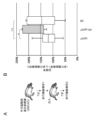
- FIG. 1 shows the structure and activity of the AM-JigSAP fusion peptide.
- FIG. 1A shows a schematic diagram of the structure of the AM-JigSAP fusion peptide.
- adrenomedullin AM
- FIG. 1B shows the results of measuring the activity of adrenomedullin (AM) not fused to JigSAP and the AM-JigSAP fusion peptide.
- Fig. 2 shows the method for analyzing gait function in a mouse cerebral infarction model.
- Fig. 2A shows a mouse with its hind legs slipping off the net.
- Fig. 2B shows normal gait.
- FIG. 3A shows the results of gait function analysis of a mouse cerebral infarction model.
- Fig. 3B shows the results of gait function analysis of a mouse cerebral infarction model administered with the AM-JigSAP/JigSAP composition or the JigSAP composition into the brain.
- Figures showing gene expression in mouse brains after administration of various compositions show the results of comparing gene expression in mouse brains administered with the VEGF-JigSAP/JigSAP composition with gene expression in mouse brains administered with PBS (VEGF-JigSAP vs PBS).
- Figure 4B shows the results of comparing gene expression in mouse brains administered with the AM-JigSAP/JigSAP composition with gene expression in mouse brains administered with the JigSAP composition (AM-JigSAP vs JigSAP).
- a first aspect of the present invention is a fusion peptide.
- the fusion peptide of this aspect is a peptide formed by linking adrenomedullin or an active fragment thereof to a self-assembling peptide.
- the fusion peptide of this aspect can provide angiogenesis-promoting function based on adrenomedullin in the fusion peptide.
- adrenomedullin is stabilized by being linked to the self-assembling peptide, and the angiogenesis-promoting function is maintained for a long period of time.
- self-assembly refers to the spontaneous assembly of small molecules in a dispersion medium through intermolecular interactions and the like to form a three-dimensional structure.
- Substances that gel by self-assembly are often referred to as “gelators” in this specification.
- the self-assembling peptides in this specification are a type of gelator.
- self-assembling peptide refers to a peptide that can solidify from a sol state dissolved in water or an aqueous solution to a gel state under specific temperature and pressure conditions.
- peptides include collagen (including glue, gelatin, and jelly), (RADA) 4 peptide (SEQ ID NO: 35), and JigSAP, which will be described in the Examples below.
- gel refers to a solid state in which colloidal particles self-organize in a dispersion medium, lose fluidity, and solidify.
- gel state refers to a state in which colloidal particles self-organize in a dispersion medium, lose fluidity, and solidify. This generally refers to a state in which a sol solidifies as a result of lowering the temperature.
- Gelation is a phase transition phenomenon from a sol state to a gel state.
- the term "sol” refers to colloidal particles dispersed in a dispersion medium, resulting in a liquid state with fluidity.
- a gel in which a colloid made of a gelling agent is fluidized in the dispersion medium by heating the gel is an example of this.
- the "sol state” refers to a liquid state in which colloidal particles are dispersed in a dispersion medium and have fluidity.
- this includes a state in which a gelling agent is dispersed in a dispersion medium such as water or an aqueous solution, or a state in which a gel is fluidized by heating.
- “Solation” is a phase transition phenomenon from a gel state to a sol state.
- gelation temperature refers to the temperature at which a gelling agent undergoes a phase transition from a sol state to a gel state.
- “Solation temperature” refers to the temperature at which a gelling agent undergoes a phase transition from a gel state to a sol state.
- peptide refers to an amino acid polymer having one or more peptide bonds.
- the term “peptide” is not limited by the number of amino acid residues it contains.
- “peptide” includes everything from oligopeptides, such as dipeptides and tripeptides, that contain a few amino acid residues, to polypeptides that contain many amino acid residues. Thus, it includes not only so-called proteins, but also fragmented peptides and peptides that are linked to other peptides by peptide bonds.
- fusion peptide refers to a self-assembling peptide to which a functional peptide such as adrenomedullin is linked.
- the link between the self-assembling peptide and the functional peptide may be a covalent bond or a supramolecular interaction.
- the covalent bond is not limited, and examples include a peptide bond and a disulfide bond.
- the functional peptide is linked to the N-terminus and/or C-terminus of the self-assembling peptide, and furthermore, the bond is preferably a covalent bond, and a preferred covalent bond is a peptide bond.
- the term "functional peptide” refers to a peptide that has a specific biological function in or outside of a living body, or inside or outside of a cell.
- the term “specific biological function” is not limited to any function that can have any effect on a biomolecule such as a protein or nucleic acid, a cell, a tissue, or an individual.
- the specific biological function may be natural or unnatural, and examples include a cell adhesion function, a signal transduction function, a binding function, a linking function, a labeling function, and a metabolic function.
- An example of a functional peptide is adrenomedullin.
- biocompatibility refers to the property of being capable of being introduced into a living organism. In particular, it refers to the property of a material having no toxicity or side effects to the living organism, or if it does have such effects, they are extremely minor, and/or the property of not being recognized as a foreign body in the living organism and not being eliminated.
- a peptide having biocompatibility refers, for example, to a peptide that is free of biological contamination and therefore has no or very little risk of causing allergies or unknown infectious diseases in the human body. Examples of biocompatible peptides include chemically synthesized peptides.
- the term "living body” refers to a cell (including cultured cells), tissue, organ, or individual.
- examples include, but are not limited to, cells, tissue, or organs derived from a human or non-human individual, or cells derived from a human or non-human individual, such as cells or tissues obtained by differentiation from ES cells or iPS cells.
- the cells are derived from a human, tissue or organ composed of cells derived from a human, or an individual human.
- physiological conditions refers to conditions such as temperature and pH that do not substantially impair the structure or activity of biomolecules, the structure or function of cells or tissues, or the activity or survival of an individual. More specifically, it refers to conditions that may exist in a living body or inside a cell.
- physiological conditions refer to conditions under which biomolecules such as proteins do not denature or are difficult to denature.
- physiological pH is not limited to any pH at which biomolecules such as proteins do not denature or are difficult to denature. For example, it is within the range of pH 4.0 to 10.0, pH 5.0 to 9.0, pH 6.0 to 8.0, or pH 6.5 to 7.5, such as pH 7.4.
- physiological temperature is not limited to any temperature at which biomolecules such as proteins do not denature or are difficult to denature.
- it is a temperature within the range of 0 to 65°C, 4 to 60°C, 20 to 50°C, or 30 to 40°C, such as 37°C.
- sustained release refers to the gradual release of a substance into space. In this specification, it particularly refers to the gradual dissipation of a substance contained in a gel from the gel. For example, it refers to dissipation at a slower rate than the rate at which the substance would dissipate if it were not encapsulated in the gel.
- the functional molecule is slowly released from a gel implanted in a living body, the functional molecule is present in the surrounding space (for example, the diseased site, damaged site, tissue, or organ in which the gel is embedded) for a long period of time, providing its function.
- long-term or “long-term” means a period longer than the period during which a substance continues to be released under normal conditions. Specifically, it means a period longer than the period during which a substance not encapsulated in a gel continues to be released under the same conditions.
- the specific period varies depending on the type of substance, but examples of such periods include 1 hour or more, 2 hours or more, 3 hours or more, 6 hours or more, half a day or more, 1 day or more, 2 days or more, 3 days or more, 1 week or more, 2 weeks or more, 1 month or more, 2 months or more, 3 months or more, 4 months or more, 6 months or more, or 1 year or more.
- amino acid includes both natural and unnatural amino acids.
- Unnatural amino acids are, for example, amino acids that have any chemically modified group or substituent.
- amino acids include any optical isomers, and may be either D- or L-isomers.
- hydrophobic amino acid refers to an amino acid that has hydrophobicity or has high hydrophobicity.
- examples include alanine (Ala/A), glycine (Gly/G), proline (Pro/P), valine (Val/V), leucine (Leu/L), isoleucine (Ile/I), methionine (Met/M), cysteine (Cys/C), phenylalanine (Phe/F), tyrosine (Tyr/Y), and tryptophan (Trp/W).
- cysteine has low hydrophobicity, and is therefore sometimes classified as a hydrophilic amino acid.
- hydrophilic amino acid refers to an amino acid that has hydrophilicity or has high hydrophilicity. Examples include aspartic acid (Asp/D), glutamic acid (Glu/E), lysine (Lys/K), histidine (His/H), and arginine (Arg/R).
- multiple refers to, for example, 2 to 20, 2 to 15, 2 to 10, 2 to 5, 2 to 3, or 2.
- severe refers to 1 to 15, 1 to 10, 1 to 5, 1 to 3, or 1 to 2.
- amino acid identity refers to the percentage (%) of the number of identical amino acid residues in the total number of amino acid residues when the amino acid sequences of the two peptides being compared are aligned by inserting appropriate gaps into one or both of them as necessary to maximize the number of identical amino acid residues. Alignment of two amino acid sequences to calculate amino acid identity can be performed using known programs such as Blast, FASTA, and ClustalW.
- amino acid substitution refers to substitution within a conservative amino acid group that has similar properties such as charge, side chain, polarity, and aromaticity among the 20 types of amino acids that make up natural proteins.
- substitutions within the uncharged polar amino acid group with low polarity side chains (Gly, Asn, Gln, Ser, Thr, Cys, Tyr), branched chain amino acids (Leu, Val, Ile), neutral amino acids (Gly, Ile, Val, Leu, Ala, Met, Pro), neutral amino acids with hydrophilic side chains (Asn, Gln, Thr, Ser, Tyr, Cys), acidic amino acids (Asp, Glu), basic amino acids (Arg, Lys, His), and aromatic amino acids (Phe, Tyr, Trp) are examples. Amino acid substitutions within these groups are preferred because they are known to be less likely to cause changes in the properties of peptides.
- the configuration of the fusion peptide of this embodiment will be specifically explained below.
- the fusion peptide of this embodiment is a peptide comprising adrenomedullin or an active fragment thereof linked to a self-assembling peptide.
- adrenomedullin (hereinafter also referred to as "AM”) is a physiologically active peptide that was discovered to have a strong vasodilatory antihypertensive effect.
- Adrenomedullin is known to have a variety of pharmacological effects, including cardiovascular protection, anti-inflammatory effects, angiogenesis, and tissue repair promotion.
- adrenomedullin examples include human-derived adrenomedullin (human AM) that contains or consists of the amino acid sequence shown in SEQ ID NO: 36. Further specific examples include porcine-derived adrenomedullin that consists of the amino acid sequence shown in SEQ ID NO: 37, dog-derived adrenomedullin that consists of the amino acid sequence shown in SEQ ID NO: 38, bovine-derived adrenomedullin that consists of the amino acid sequence shown in SEQ ID NO: 39, rat-derived adrenomedullin that consists of the amino acid sequence shown in SEQ ID NO: 40, and mouse-derived adrenomedullin that consists of the amino acid sequence shown in SEQ ID NO: 41.
- adrenomedullin includes adrenomedullin variants, adrenomedullin mutants, and adrenomedullin orthologues of other species that have activity functionally equivalent to that of the adrenomedullin shown in SEQ ID NOs: 36 to 41.
- amino acid sequences in which one or several amino acids are deleted, substituted, or added in the amino acid sequences shown in SEQ ID NOs: 36 to 41 or adrenomedullin variants, adrenomedullin mutants, or adrenomedullin orthologues that have 80% or more, 90% or more, 95% or more, 97% or more, 98% or more, or 99% or more amino acid identity to the amino acid sequences shown in SEQ ID NOs: 36 to 41.
- an "active fragment" of adrenomedullin refers to a fragment of any of the above adrenomedullins that has physiological activity such as angiogenic activity, for example, a fragment having 50% or more, 60% or more, 70% or more, 80% or more, or 90% or more of the activity of any of the above adrenomedullins, or an activity equivalent to or greater than that.
- the amino acid length of the peptide constituting the active fragment is not particularly limited, but may be, for example, a region of 20 or more, 30 or more, 40 or more, or 50 or more consecutive amino acids in any of the above adrenomedullins.
- cysteine residues corresponding to positions 16 and 21 of the amino acid sequence shown in SEQ ID NO: 36 in adrenomedullin form a disulfide bond, or the disulfide bond is substituted with a linking group such as an ethylene group.
- adrenomedullin or an active fragment thereof includes a glycine (Gly) residue added to its C-terminus.
- the self-assembling peptide contained in the fusion peptide of this embodiment is not limited to a particular type, so long as it is a peptide that can be solidified under specific temperature and pressure conditions from a sol state dissolved in water or an aqueous solution to a gel state.
- the self-assembling peptide contained in the fusion peptide of this embodiment is an amphipathic peptide in which hydrophilic and hydrophobic amino acid residues are alternately linked, such as a peptide that includes or consists of any of the following amino acid sequences (a) to (c): (a) a compound of formula I: Xaa-Yaa-Zaa-Yaa-Xaa-Yaa-Zaa-Yaa-Xaa (Formula I) wherein Xaa is independently Ile or Met, Yaa is independently Asp, Glu, Lys, or Arg, and Zaa is independently Ala or Gly.
- a self-assembling peptide consisting of the amino acid sequence shown in the above formula I can be gelled.
- Specific examples of the amino acid sequence shown in the above formula I include IRARMDADI (SEQ ID NO: 1), IRADMRADI (SEQ ID NO: 2), IRADMDARI (SEQ ID NO: 3), IDARMRADI (SEQ ID NO: 4), IDARMDARI (SEQ ID NO: 5), IDADMRARI (SEQ ID NO: 6), IRGDIRGDI (SEQ ID NO: 7), IRGDMRGDI (SEQ ID NO: 8), IRADIRADM (SEQ ID NO: 9), IDARMRADM (SEQ ID NO: 10), MDARIDARI (SEQ ID NO: 11), MDADMRARI (SEQ ID NO: 12), IRGDMRADI (SEQ ID NO: 13), IRADMRGDI (SEQ ID NO: 14), IRGDIRGDI (SEQ ID NO: 15), IRGDIRADI (SEQ ID NO: 16),
- Arg is linked to the N-terminus and/or C-terminus of a self-assembling peptide comprising the amino acid sequence shown in formula I above. In a further embodiment, Arg is linked to both of the two amino acids at the N-terminus and/or C-terminus of a self-assembling peptide comprising the amino acid sequence shown in formula I above.
- Examples of self-assembling peptides containing the amino acid sequence shown in formula I above in which the N-terminus and C-terminus are Arg include RIRARMDADIR (SEQ ID NO:18), RIRADMRADIR (SEQ ID NO:19), RIRADMDARIR (SEQ ID NO:20), RIDARMRADIR (SEQ ID NO:21), RIDARMDARIR (SEQ ID NO:22), RIDADMRARIR (SEQ ID NO:23), RIRGDIRGDIR (SEQ ID NO:24), RIRGDMRGDIR (SEQ ID NO:25), RIRADIRADMR (SEQ ID NO:26), RIDARMRADMR (SEQ ID NO:27), RMDARIDARIR (SEQ ID NO:28), RMDADMRARIR (SEQ ID NO:29), RIRGDMRADIR (SEQ ID NO:30), RIRADMRGDIR (SEQ ID NO:31), RIRGDIRGDIR (SEQ ID NO:32), RIRGDIRADIR (SEQ ID NO:
- a self-assembling peptide consisting of the amino acid sequence shown in formula V above, where p 4, is known as a RADA16 peptide, and is known to be capable of gelation.
- p in formula V above is an integer of 1 or more, and is, but is not limited to, for example, 2 or more, 3 or more, or 4 or more, and/or 8 or less, 7 or less, 6 or less, or 5 or less.
- the self-assembling peptide contained in the fusion peptide of this embodiment contains at least one amino acid sequence shown in any one of formulas I to V, or consists of one or more amino acid sequences shown in any one of formulas I to V.
- the self-assembling peptide contained in the fusion peptide of this embodiment may contain one or two amino acid sequences shown in any one of formulas I to V.
- the self-assembling peptide contained in the fusion peptide of this embodiment contains two amino acid sequences shown in any one of formulas I to V
- the two or more amino acid sequences shown in any one of formulas I to V may consist of the same amino acid sequence or may consist of different amino acid sequences.
- the self-assembling peptide contained in the fusion peptide of this embodiment may or may not contain additional amino acid residues on the N-terminal and/or C-terminal side of the amino acid sequence shown in any one of formulas I to V.
- Amino acids other than glycine that constitute the self-assembling peptide contained in the fusion peptide of this embodiment can be used regardless of their optical isomers. That is, either the D-form or the L-form may be used. For example, all amino acids other than glycine that constitute the self-assembling peptide may be D-form or L-form.
- the total length of the amino acid sequence constituting the self-assembling peptide contained in the fusion peptide of this embodiment is, but is not limited to, for example, 50 amino acids or less or 25 amino acids or less.
- Specific examples of amino acid lengths include 20 amino acids or less, 15 amino acids or less, or 10 amino acids or less, and/or 4 amino acids or more, 5 amino acids or more, 6 amino acids or more, 7 amino acids or more, or 8 amino acids or more, for example, 16 amino acids, 15 amino acids, 14 amino acids, 13 amino acids, 12 amino acids, 11 amino acids, 10 amino acids, or 9 amino acids.
- the fusion peptide of this aspect may include a peptide consisting of one amino acid residue or multiple amino acid residues at the N-terminus and/or C-terminus of the self-assembling peptide.
- the amino acid residues at the N-terminus and/or C-terminus of the self-assembling peptide may be hydrophilic amino acids.
- the link between adrenomedullin or an active fragment thereof and the self-assembling peptide is a covalent bond or a supramolecular interaction.
- the covalent bond is not limited to, and is, for example, a peptide bond or a disulfide bond.
- adrenomedullin or an active fragment thereof and the self-assembling peptide are linked via a linker.
- the specific structure of the linker is not limited, but for example, it is a peptide linker.
- the length of the peptide linker is not limited, but examples include a length of 1 to 50 amino acids, preferably 5 to 20 amino acids. Peptides containing many amino acids with relatively small side chains, such as serine and glycine, are often used.
- the amino group of the N-terminal amino acid residue of the fusion peptide of this embodiment and the carboxyl group of the C-terminal amino acid residue may have any modification group added thereto.
- an acetyl group may be added to the N-terminus of the fusion peptide of this embodiment.
- an NH2 amide may be added to the C-terminus of the modified peptide of this embodiment.
- the fusion peptide of this embodiment is linked to adrenomedullin or an active fragment thereof, as well as other functional peptides.
- the type of such functional peptide is not limited, and may be, for example, a peptide that supports the activity of adrenomedullin, VEGF that has an angiogenesis promoting effect similar to adrenomedullin, a peptide with a labeling function, or a peptide tag for purification.
- the peptide with a labeling function may be, for example, a fluorescent protein such as GFP, a luminescent protein such as luciferin or aequorin, or an enzyme such as horseradish peroxidase (HRP) or alkaline phosphatase (AP).
- the peptide tag is an artificially synthesized oligopeptide consisting of several to a dozen amino acids, and examples of such peptide tags include epitope tags such as FLAG tags, histidine tags, HA tags, and DAP tags, as well as His tags, GST tags, and Halo tags.
- the fusion peptide of this embodiment may be optionally linked to one or more chemical modification groups other than peptide bonds.
- the structure of the chemical modification group is not particularly limited, but it is a portion that imparts a desired function to the fusion peptide to which it is bound.
- the desired function include a labeling function, a linker function, a linking function, and a binding function.
- chemical modification groups that impart a labeling function include chromogenic groups and fluorescent groups (e.g., fluorescein, etc.).
- chemical modification groups that impart a linker function include any polymer (e.g., alkylene, etc.).
- Examples of chemical modification groups that impart a binding function include compounds such as biotin.
- Other examples of chemical modification groups that can be bound to the fusion peptide of this embodiment include lipids, sugars, aptamers, and receptor ligands.
- lipids examples include cholesterol, lipids such as fatty acids (e.g., vitamin E, vitamin A, vitamin D), fat-soluble vitamins such as vitamin K, intermediate metabolites such as acyl-CoA, glycolipids, glycerides, and derivatives thereof.
- fatty acids e.g., vitamin E, vitamin A, vitamin D
- fat-soluble vitamins such as vitamin K
- intermediate metabolites such as acyl-CoA
- glycolipids e.g., glycolipids, glycerides, and derivatives thereof.
- sugars include glucose and sucrose.
- the fusion peptide of this embodiment can provide angiogenesis-promoting function based on adrenomedullin in vivo. For example, by combining the fusion peptide of this embodiment with a self-assembling peptide not fused to adrenomedullin and administering it to a target site such as a cerebral infarction site, a gel containing the fusion peptide is formed, and the fusion peptide is gradually released from the gel. Based on this sustained release effect, angiogenesis can be promoted for a long period of time around the target site where the gel is implanted.
- the fusion peptide of this aspect provides a method for treating and/or preventing a disease, comprising administering any of the fusion peptides described above to a subject such as a human.
- the fusion peptide of this aspect also provides any of the fusion peptides described above for use in treating and/or preventing a disease in a subject such as a human.
- the present invention also provides any of the fusion peptides described above for use in the manufacture of a medicament for treating and/or preventing a disease.
- the second aspect of the present invention is a gelling composition.
- the gelling composition of this aspect contains the fusion peptide described in the first aspect as an essential active ingredient, and also contains a gelling agent, a gelling promoter, and/or a carrier.
- the gelling composition of this aspect can be gelled by maintaining it in water or an aqueous solution at a temperature below its gelling temperature.
- composition 2-2-1 Constituent components
- the gelling composition of the present invention is composed of an active ingredient and other components.
- the components other than the active ingredient are not particularly limited, but examples thereof include components that can promote the gelling of the gelling composition and carriers.
- Each of the constituent components will be specifically described below.
- the gelling composition of this embodiment contains the fusion peptide described in the first embodiment as an essential active ingredient.
- the amount (content) of the fusion peptide to be incorporated in the gelling composition is not particularly limited.
- the gelling composition of the present invention When the gelling composition of the present invention is administered to a living body, it may be appropriately determined according to the type and/or effective amount of the fusion peptide and gelling agent contained in the gelling composition, information on the subject, the dosage form of the gelling composition, and the type of carrier or additive described below.
- the concentration of the fusion peptide in the gelling composition is not limited, but may be, for example, 1/100,000 or more, 1/1000 or more, 1/10 or more, and/or 2 times or less, 1.5 times or less, 1 times or less, 0.8 times or less, 0.5 times or less, or 0.2 times or less of the concentration of the gelling agent (self-assembling peptide) described below.
- the specific concentration of the fusion peptide is not limited to the following, and may be, for example, 1 ⁇ 10 ⁇ 6 wt % or more, 1 ⁇ 10 ⁇ 5 wt % or more, 1 ⁇ 10 ⁇ 4 wt % or more, 1 ⁇ 10 ⁇ 3 wt % or more, or 1 ⁇ 10 ⁇ 2 wt % or more, and/or 10 wt % or less, 5 wt % or less, 2 wt % or less, 1 wt % or less, 0.5 wt % or less, 0.3 wt % or less, 0.2 wt % or less, 0.1 wt % or less, 0.05 wt % or less, or 0.02 wt % or less.
- the ratio of the concentration of the fusion peptide to the concentration of the gelling agent (self-assembling peptide) in the gelling composition can be appropriately adjusted depending on the treatment subject, the administration site, etc.
- the "effective amount” refers to an amount necessary for the fusion peptide to function as an active ingredient in the gelling composition and an amount that gives little or no harmful side effects to the living body to which it is applied. This effective amount may vary depending on various conditions such as information on the subject, the administration route, and the number of administrations.
- the term "subject” refers to a living body to which the gelling composition or pharmaceutical composition is applied.
- this includes humans, livestock (cattle, horses, sheep, goats, pigs, chickens, ostriches, etc.), racehorses, pets (dogs, cats, rabbits, etc.), and experimental animals (mice, rats, guinea pigs, monkeys, marmosets, etc.).
- livestock cattle, horses, sheep, goats, pigs, chickens, ostriches, etc.
- racehorses pets
- dogs dogs, cats, rabbits, etc.
- experimental animals mice, rats, guinea pigs, monkeys, marmosets, etc.
- subject information refers to various individual information of the living body to which the gelling composition is applied, and in the case of a subject, for example, includes the overall health condition, the progression and severity of a disease or injury if the subject is suffering from such an illness, age, weight, sex, diet, drug sensitivity, the presence or absence of concomitant drugs, and resistance to treatment.
- the gelling composition of this embodiment can also contain drugs and the like as other active ingredients.
- drug is a concept that includes low molecular weight compounds, peptides (including enzymes and antibodies), or nucleic acids (including RNAi molecules such as miRNA, siRNA, and shRNA, antisense nucleic acids, aptamers, etc.).
- Drugs include, but are not limited to, various types of drugs, such as therapeutic medicines intended to treat diseases and alleviate symptoms.
- the drug contained in the gelling composition of this embodiment may be not only one type, but two or more types.
- the gelling composition of the present embodiment contains a gelling agent as an optional component.
- the type of gelling agent contained in the gelling composition of this embodiment is not limited, but it is preferable that the gel formed by the gelling agent can contain the fusion peptide, which is an active ingredient, and can gradually release the fusion peptide.
- the gelling agent may be a self-assembling peptide, or may be something other than a self-assembling peptide.
- a specific example of a gelling agent is the self-assembling peptide described in the first embodiment that is not linked to adrenomedullin or an active fragment thereof.
- the amino acid sequence of the self-assembling peptide described in the first embodiment that is not linked to adrenomedullin or an active fragment thereof may be the same as or different from the amino acid sequence of the self-assembling peptide contained in the fusion peptide, which is an active ingredient, but it is preferable that they have the same amino acid sequence.
- the self-assembling peptide described in the first embodiment that is not linked to adrenomedullin or an active fragment thereof may be bound to a peptide such as the above-mentioned peptide having a labeling function or a peptide tag for purification.
- the amount (content) of the gelling agent to be incorporated in the gelling composition is not particularly limited. It may be appropriately determined taking into account the gelling conditions. In addition, when the gelling composition of the present invention is administered to a living body, it may be appropriately determined according to the type and/or effective amount of the gelling agent contained in the gelling composition, information on the subject, the dosage form of the gelling composition, and the type of carrier or additive described below.
- the concentration of the gelling agent (self-assembling peptide) in the gelling composition is not limited, but may be, for example, 1 ⁇ 10 ⁇ 4 wt% or more, 1 ⁇ 10 ⁇ 3 wt% or more, or 1 ⁇ 10 ⁇ 2 wt% or more, 0.1 wt% or more, 0.2 wt% or more, 0.3 wt% or more, or 0.4 wt% or more, and/or 10 wt% or less, 5 wt% or less, 2 wt% or less, 1 wt% or less, or 0.5 wt% or less, for example, 0.1 wt% or more and 2.0 wt% or less.
- the final effective amount of the gelling agent and the application amount calculated based on it will ultimately be decided by the judgment of a doctor, dentist, veterinarian, etc., depending on information about each individual subject, etc.
- the gelling composition of this embodiment may contain a component capable of promoting its gelling, if necessary.
- the gelling-promoting component is not limited to, but may be, for example, a component having the effect of reducing the solubility of a protein. In general, a component having the effect of reducing the solubility of a protein may promote the gelling of a peptide gelling agent.
- the components that have the effect of reducing protein solubility are not limited, and examples include cations and anions that have the effect of reducing protein solubility. Cations and anions that have this effect are well known to those skilled in the art as the Hofmeister series. Examples of anions include bicarbonate ions, carbonate ions, citrate ions, tartrate ions, and sulfate ions. Examples of cations include lithium ions, sodium ions, potassium ions, magnesium ions, and calcium ions.
- the concentrations of cations and anions that have the effect of reducing protein solubility are not particularly limited. For example, they may be 1 mM or more, 5 mM or more, 10 mM or more, 20 mM or more, 30 mM or more, or 40 mM or more.
- the total concentration of bicarbonate ions and carbonate ions may be 1 mM or more, 5 mM or more, 10 mM or more, 20 mM or more, 30 mM or more, or 40 mM or more, for example, 44 mM.
- the gelling composition of this embodiment may contain a pharma- ceutically acceptable carrier as necessary.
- pharmaceutically acceptable carrier refers to an additive that is commonly used in the field of formulation technology. Examples of such an additive include solvents, excipients, fillers, emulsifiers, flow additive regulators, lubricants, and human serum albumin.
- the solvent may be, for example, water or any other pharma- ceutically acceptable aqueous solution, or a pharma-ceutically acceptable organic solvent, but is preferably water or any other pharma-ceutically acceptable aqueous solution.
- aqueous solution include physiological saline, an isotonic solution containing glucose or other supplements, a phosphate buffer, a sodium acetate buffer, any medium used in cell culture or tissue culture, etc.
- the supplements include D-sorbitol, D-mannose, D-mannitol, sodium chloride, other low-concentration nonionic surfactants, polyoxyethylene sorbitan fatty acid esters, etc.
- the medium may be a commercially available medium, such as DMEM medium, Ham's F12 medium, DMEM/F12 medium, McCoy's 5A medium, Eagle's MEM medium, ⁇ MEM medium, MEM medium, RPMI1640 medium, Iscove's modified Dulbecco's medium, MCDB131 medium, William's medium E, IPL41 medium, Fischer's medium, etc.
- DMEM medium Ham's F12 medium, DMEM/F12 medium, McCoy's 5A medium, Eagle's MEM medium, ⁇ MEM medium, MEM medium, RPMI1640 medium, Iscove's modified Dulbecco's medium, MCDB131 medium, William's medium E, IPL41 medium, Fischer's medium, etc.
- Excipients include, for example, sugars such as monosaccharides, disaccharides, cyclodextrins and polysaccharides, metal salts, citric acid, tartaric acid, glycine, polyethylene glycol, Pluronic®, kaolin, silicic acid, or combinations thereof.
- fillers examples include petrolatum, the aforementioned sugars and/or calcium phosphate.
- emulsifiers examples include sorbitan fatty acid esters, glycerin fatty acid esters, sucrose fatty acid esters, and propylene glycol fatty acid esters.
- Examples of flow regulators and lubricants include silicates, talc, stearates, and polyethylene glycol.
- the composition may appropriately contain solubilizers, suspending agents, diluents, dispersing agents, surfactants, soothing agents, stabilizers, pH regulators, absorption promoters, bulking agents, moisturizing agents, humectants, adsorbents, flavoring agents, disintegration inhibitors, coating agents, colorants, preservatives, antiseptics, antioxidants, fragrances, flavorings, sweeteners, buffers, isotonicity agents, etc. that are commonly used in medicines.
- Such carriers are primarily used to facilitate the formation of dosage forms and maintain the dosage form and drug efficacy, as well as to make the active ingredient, the gelling agent, less susceptible to degradation by enzymes in the body, and may be used appropriately as needed.
- the pH of the gelling composition of the present embodiment is not limited.
- it may be a physiological pH, and may be within the range of pH 4.0 to 10.0, the range of pH 5.0 to 9.0, the range of pH 6.0 to 8.0, or the range of pH 6.5 to 7.5, for example, pH 7.4.
- the gelling composition of this embodiment can be gelled by being maintained in water or an aqueous solution at a temperature below its gelling temperature.
- the gelling temperature is essentially based on that of the self-assembling peptide or fusion peptide that constitutes the gelling agent, which is the active ingredient.
- the gelling composition of this embodiment can gel at a temperature within the range of 4 to 80°C, 10 to 70°C, 15 to 60°C, 20 to 50°C, or 30 to 40°C, for example 37°C, under conditions of 1 atmosphere.
- the gelling composition of this embodiment can be gelled under physiological conditions without substantially losing the activity of the adrenomedullin that constitutes the fusion peptide, or while retaining at least a portion of that activity. Therefore, after the gelling composition of this embodiment has gelled, the physiological activity of the adrenomedullin that constitutes the fusion peptide, such as the function of promoting angiogenesis, can be exerted.
- angiogenesis can be induced by transplanting the gelling composition into a living body by a surgical method or the like.
- the gelling composition of this embodiment After the gelling composition of this embodiment has been introduced into the subject and has sufficiently promoted angiogenesis and formed or regenerated tissues or organs at the administration site, the gelling composition can be removed from the transplant site, for example by incising the target site through a surgical procedure.
- the dosage form of the gelling composition of this embodiment is not particularly limited.
- it may be a liquid or solid agent that can be introduced into a target site.
- the shape is not important.
- solid dosage forms such as powders, powders, granules, and tablets, it may be in the shape of a transplant member.
- the application method of the gelling composition of this embodiment is not particularly limited, but is preferably parenteral administration, and more preferably local administration. Local administration includes, for example, intramuscular administration, subcutaneous administration, tissue administration, and organ administration.
- the gelling composition of this embodiment may be introduced to the target site in a gel state.
- the target site can be incised by surgical operation and transplanted in a gel state.
- the gel state is preferably achieved at a soft stage where gel formation has not yet been completed.
- the dosage may be an amount effective for the active ingredient to take effect. The effective amount is appropriately selected according to the subject information.
- the gelling composition of this embodiment can be removed from the administration site as necessary.
- the administration site can be incised by surgical operation and the composition can be surgically removed in a gel state.
- composition 3-1 Configuration
- the third aspect of the present invention is a pharmaceutical composition.
- the pharmaceutical composition of this aspect contains the gelling composition of the second aspect. Therefore, the configuration of the pharmaceutical composition of this aspect is similar to that of the second aspect, except for the following configuration.
- the pharmaceutical composition of this aspect can be used to promote angiogenesis and/or inhibit neurodegeneration.
- the pharmaceutical composition of this aspect is for transplantation.
- the pharmaceutical composition of the present invention can be transplanted, for example, by making an incision in the target site by surgical operation.
- Diseases targeted by the pharmaceutical composition of this embodiment include, but are not limited to, nerve tissue damage and/or ischemia.
- central nervous tissue damage includes brain damage and spinal cord damage.
- Brain damage includes, for example, traumatic brain injury and cerebrovascular disease. Cerebrovascular disease includes both cerebral infarction (ischemic cerebrovascular disease) and cerebral hemorrhage.
- Spinal cord damage includes, for example, cervical spinal cord injury, thoracic spinal cord injury, lumbar spinal cord injury, sacral spinal cord injury, etc.
- Peripheral nervous tissue damage includes damage to any peripheral nervous tissue. Examples include damage to motor nerves, sensory nerves, and autonomic nerves.
- ischemia refers to ischemia in any organ or tissue.
- examples include lower limb ischemia (e.g., arteriosclerosis obliterans and its severe form, severe lower limb ischemia), ischemic heart disease (e.g., myocardial infarction, etc.), and the above-mentioned cerebrovascular disorders.
- treatment includes, but is not limited to, curative treatment and preventive treatment. Prevention also includes prevention of onset, prevention of progression, and prevention of recurrence.
- cerebrovascular disorders can be detected by imaging tests such as CT scans and MRI scans, and the onset of such disorders can be prevented by the pharmaceutical composition of the present invention.
- cerebrovascular disorders such as cerebral infarction have a high recurrence rate, but the pharmaceutical composition of the present invention can also prevent such recurrence.
- the fourth aspect of the present invention is a gel preparation method. According to the gel preparation method of this aspect, it is possible to prepare a gel (e.g., a sustained-release gel) containing a fusion peptide containing adrenomedullin or an active fragment thereof that maintains at least a part of its activity.
- a gel e.g., a sustained-release gel
- a fusion peptide containing adrenomedullin or an active fragment thereof that maintains at least a part of its activity.
- the method for producing a gel of the present invention includes a mixing step and a gelling step as essential steps.
- the mixing step is a step of mixing the gelling composition according to the second embodiment with water or an aqueous solution.
- the water or aqueous solution may be, for example, a medium such as a cell culture medium.
- the medium may be appropriately selected from known media.
- any liquid medium for animal cell culture may be used as a basal medium, and other components (serum, serum replacement reagent, growth factor, etc.; N2 supplement, B27(R) supplement, insulin, bFGF, activin A, heparin, ROCK inhibitor, and/or GSK-3 inhibitor, etc.) may be appropriately added as necessary to prepare the medium.
- the medium examples include DMEM medium, Ham's F12 medium, DMEM/F12 medium, McCoy's 5A medium, Eagle's MEM medium, ⁇ MEM medium, MEM medium, RPMI1640 medium, Iscove's modified Dulbecco's medium, MCDB131 medium, William's medium E, IPL41 medium, Fischer's medium, etc.
- the mixing method in this step is not particularly limited, and the medium may be mixed sufficiently by stirring or the like.
- a component that can promote gelation in the gelation step described below may be further mixed.
- the gelation-promoting component is not limited to, but may be, for example, a component that has the effect of reducing the solubility of proteins.
- the anions that have this effect are as described above in the second embodiment.
- the concentration of the fusion peptide contained in the gelling composition subjected to this process is not limited, and may be, for example, 1/100,000 or more, 1/10,000 or more, 1/100 or more, 1/10 or more, and/or 2 times or less, 1.5 times or less, 1 times or less, 0.8 times or less, 0.5 times or less, or 0.2 times or less of the concentration of the gelling agent.
- concentrations of the fusion peptide are not limited to the following, but may be, for example, 1 ⁇ 10 -6 wt% or more, 1 ⁇ 10 -5 wt% or more, 1 ⁇ 10 -4 wt% or more, 1 ⁇ 10 -3 wt% or more, or 1 ⁇ 10 -2 wt% or more, and/or 10 wt% or less, 5 wt% or less, 2 wt% or less, 1 wt% or less, 0.5 wt% or less, 0.3 wt% or less, 0.2 wt% or less, 0.1 wt% or less, 0.05 wt% or less, or 0.02 wt% or less, for example, 0.4 wt% to 10 wt%.
- the ratio of the concentration of the fusion peptide to the concentration of the gelling agent (self-assembling peptide) in the gelling composition can be appropriately adjusted depending on the subject to be treated, the administration site, etc.
- the gelling step is a step in which the mixture obtained after the mixing step is gelled by maintaining the mixture at a temperature equal to or lower than the gelling temperature.
- the time for carrying out this step and the temperature used in this step vary depending on the type of fusion peptide and self-assembling peptide in the gelling composition mixed in the mixing step, so they may be appropriately determined according to the type.
- the gelling composition after the mixing step may be maintained at a temperature within the range of 4 to 80°C, 10 to 70°C, 15 to 60°C, 20 to 50°C, or 30 to 40°C, for example 37°C, for 1 minute or more, 10 minutes or more, or 1 hour or more.
- a temperature condition in which the activity of the adrenomedullin or active fragment constituting the fusion peptide is not lost or at least a part of its activity remains is preferable, and for example, a temperature condition within the range of 4 to 80°C, 10 to 70°C, 15 to 60°C, 20 to 50°C, or 30 to 40°C, for example 37°C, may be used. Gelation may be performed under 5% CO2 conditions under any of the above temperature conditions (for example, 37°C).
- the method for controlling the temperature used in this step is not particularly limited, and examples include a method of placing the adrenomedullin or active fragment in a thermostatic bath, etc.
- the pH conditions used for gelation in this process are not limited.
- the pH may be within the range of pH 4.0 to 10.0, pH 5.0 to 9.0, pH 6.0 to 8.0, or pH 6.5 to 7.5, e.g., pH 7.4.
- a gel for transplantation and/or sustained release can be produced. Furthermore, according to the gel production method of the present invention, gelation can be performed under physiological conditions that do not impair the activity of adrenomedullin or an active fragment thereof contained in the fusion peptide, and further, the fusion peptide containing adrenomedullin or an active fragment thereof can be sustained released from the gel.
- the gel produced by the gel production method of the present invention has a high uptake efficiency of the fusion peptide containing adrenomedullin or an active fragment thereof and has excellent sustained release properties.
- Example 1 Preparation of AM-JigSAP fusion peptide and activity measurement (the purpose)
- JigSAP jigsaw-shaped self-assembling peptide
- AM adrenomedullin
- AM-JigSAP fusion peptide ( Figure 1A; hereinafter, also referred to as "fusion peptide” or "AM-JigSAP") consisting of the amino acid sequence (SEQ ID NO: 42) in which adrenomedullin (AM) consisting of the amino acid sequence shown in SEQ ID NO: 36 is fused to the C-terminus of JigSAP consisting of the amino acid sequence (RIDARMRADIR) shown in SEQ ID NO: 21 was prepared by entrusting its production to the Peptide Institute, Inc.
- fusion peptide (SEQ ID NO: 42) in which adrenomedullin (AM) consisting of the amino acid sequence shown in SEQ ID NO: 36 is fused to the C-terminus of JigSAP consisting of the amino acid sequence (RIDARMRADIR) shown in SEQ ID NO: 21 was prepared by entrusting its production to the Peptide Institute, Inc.
- AM1 adrenomedullin receptor type 1
- non-fused AM adrenomedullin not fused to JigSAP (SEQ ID NO: 36; hereinafter, also referred to as "non-fused AM” or simply "AM”) was produced by Peptide Institute, Inc. in the same manner as in (1) above, and the cAMP production ability of the non-fused AM was measured.
- Example 2 Verification of the effectiveness of cerebral infarction treatment based on AM-JigSAP (the purpose)
- the AM-JigSAP fusion peptide will be administered into the brain of a mouse model of cerebral infarction to verify its therapeutic effect on gait disturbance.
- AM-JigSAP/JigSAP composition A composition containing the AM-JigSAP fusion peptide and JigSAP (hereinafter referred to as "AM-JigSAP/JigSAP composition") was prepared by adding 10 ⁇ L of an aqueous solution containing 6 ⁇ g/ ⁇ L of the AM-JigSAP fusion peptide prepared in Example 1 to 10 ⁇ L of the solution containing 1.0 wt % JigSAP prepared in (1) above.
- the AM-JigSAP/JigSAP composition contains the AM-JigSAP fusion peptide in a molar ratio of 1/2 to JigSAP.
- a composition was prepared by adding 10 ⁇ L of phosphate buffer to 10 ⁇ L of a solution containing 1.0 wt% JigSAP prepared in (1) above, but not containing the AM-JigSAP fusion peptide (hereafter referred to as the "JigSAP composition"), which served as a comparative control for the AM-JigSAP/JigSAP composition.
- the mouse cerebral infarction model used was the distal middle cerebral artery occlusion (dMCAO) model previously reported by the present inventors (Oshikawa, M. et al., Adv Healthc Mater. 2017;6(11):10.1002/adhm.201700183, PMID: 28488337).
- dMCAO distal middle cerebral artery occlusion
- infarcts are formed in brain regions where blood supply from the middle cerebral artery is cut off.
- a foot-fault test was performed as a pre-administration gait function analysis (first gait function analysis; Fig. 3A, "gait function analysis 1").
- the foot-fault test was performed according to the method described in a previous paper by the present inventors (Jinnou, H., et al., Cell Stem Cell., 2018, 22(1), 128-137.e9., PMID: 29276142). Specifically, mice trained to walk on a wire mesh for 10 minutes on the 6th day after the onset of cerebral infarction were subjected to a 10-minute walking test on the wire mesh, during which the mice's feet were videotaped from below.
- a glass needle (Drummond, Wiretrol II) filled with the AM-JigSAP/JigSAP composition or JigSAP composition prepared in (2) above was inserted into the 2 mm diameter hole made in the skull during the preparation of the dMCAO model, and the amount of glass needle inserted was adjusted using a micromanipulator (Narishige). 2 ⁇ L of the AM-JigSAP/JigSAP composition prepared in (2) above was administered in small amounts over a period of 5 minutes into the damaged area near the middle cerebral artery (Fig. 3A, "Injection").
- the gel was kept at around 0°C on ice before administration, at room temperature of 25°C in the needle just before administration, and at around 37°C, the mouse's internal temperature, during administration.
- the amount administered was 2 ⁇ L per mouse.
- Seven days after administration 14 days after the preparation of the cerebral infarction model, a second gait function analysis was performed (Fig. 3A, "Gait function analysis 2").
- the "recovery rate” was calculated as the percentage of steps in which the foot slipped out of the total number of steps in walking function analysis 1 compared to the percentage of steps in which the foot slipped out of the total number of steps in walking function analysis 2.
- Example 3 Analysis of gene expression changes based on AM-JigSAP (the purpose)
- AM-JigSAP fusion peptide The purpose
- VEGF-JigSAP fusion peptide the changes in gene expression in a mouse cerebral infarction model administered VEGF-JigSAP fusion peptide, in which vascular endothelial growth factor (VEGF) is fused to the C-terminus of JigSAP.
- VEGF vascular endothelial growth factor
- VEGF-JigSAP fusion polypeptide and VEGF-JigSAP/JigSAP composition
- a VEGF-JigSAP fusion peptide (SEQ ID NO: 43) consisting of an amino acid sequence in which mouse VEGF was fused to the N-terminus of JigSAP consisting of the amino acid sequence (RIDARMRADIR) shown in SEQ ID NO: 21 was prepared in the same manner as in (1) of Example 1.
- a composition containing the VEGF-JigSAP fusion peptide and JigSAP (hereinafter referred to as "VEGF-JigSAP/JigSAP composition”) was prepared in the same manner as in (2) of Example 2.
- the VEGF-JigSAP/JigSAP composition contains the VEGF-JigSAP fusion peptide in a molar ratio of 1/105 to JigSAP.
- FIG. 4 shows the results of comparing gene expression in the brains of mice administered with the VEGF-JigSAP/JigSAP composition with that in the brains of mice administered with PBS (FIG. 4A, "VEGF-JigSAP VS PBS") and the results of comparing gene expression in the brains of mice administered with the AM-JigSAP/JigSAP composition with that in the brains of mice administered with the JigSAP composition (FIG. 4B, "AM-JigSAP VS JigSAP").
- the group of genes whose expression increased in the brains of mice administered with the AM-JigSAP/JigSAP composition showed high similarity to the group of genes whose expression increased in the brains of mice administered with the VEGF-JigSAP/JigSAP composition. This result suggests that the AM-JigSAP/JigSAP composition achieves brain function recovery through a mechanism similar to the brain function recovery mechanism based on the administration of the VEGF-JigSAP/JigSAP composition.
Landscapes
- Health & Medical Sciences (AREA)
- Chemical & Material Sciences (AREA)
- Life Sciences & Earth Sciences (AREA)
- Medicinal Chemistry (AREA)
- General Health & Medical Sciences (AREA)
- Organic Chemistry (AREA)
- Engineering & Computer Science (AREA)
- Veterinary Medicine (AREA)
- Public Health (AREA)
- Animal Behavior & Ethology (AREA)
- Bioinformatics & Cheminformatics (AREA)
- Genetics & Genomics (AREA)
- Molecular Biology (AREA)
- Pharmacology & Pharmacy (AREA)
- Proteomics, Peptides & Aminoacids (AREA)
- Biochemistry (AREA)
- Biomedical Technology (AREA)
- Biophysics (AREA)
- Epidemiology (AREA)
- Zoology (AREA)
- Chemical Kinetics & Catalysis (AREA)
- General Chemical & Material Sciences (AREA)
- Gastroenterology & Hepatology (AREA)
- Nuclear Medicine, Radiotherapy & Molecular Imaging (AREA)
- Toxicology (AREA)
- Neurology (AREA)
- Neurosurgery (AREA)
- General Engineering & Computer Science (AREA)
- Dermatology (AREA)
- Endocrinology (AREA)
- Wood Science & Technology (AREA)
- Oral & Maxillofacial Surgery (AREA)
- Transplantation (AREA)
- Cardiology (AREA)
- Biotechnology (AREA)
- Heart & Thoracic Surgery (AREA)
- Hospice & Palliative Care (AREA)
- Vascular Medicine (AREA)
- Urology & Nephrology (AREA)
- Dispersion Chemistry (AREA)
Abstract
La présente invention aborde le problème de la fourniture d'un nouveau procédé pour le traitement de l'infarctus cérébral qui ne dépend pas de la transplantation cellulaire. L'invention concerne un peptide de fusion obtenu par liaison d'adrénomédulline ou d'un fragment actif de celle-ci avec un peptide d'auto-assemblage.
Applications Claiming Priority (2)
| Application Number | Priority Date | Filing Date | Title |
|---|---|---|---|
| JP2023-192464 | 2023-11-10 | ||
| JP2023192464 | 2023-11-10 |
Publications (1)
| Publication Number | Publication Date |
|---|---|
| WO2025100511A1 true WO2025100511A1 (fr) | 2025-05-15 |
Family
ID=95696007
Family Applications (1)
| Application Number | Title | Priority Date | Filing Date |
|---|---|---|---|
| PCT/JP2024/039735 Pending WO2025100511A1 (fr) | 2023-11-10 | 2024-11-08 | Peptide de fusion |
Country Status (1)
| Country | Link |
|---|---|
| WO (1) | WO2025100511A1 (fr) |
Citations (4)
| Publication number | Priority date | Publication date | Assignee | Title |
|---|---|---|---|---|
| JP2010502734A (ja) * | 2006-09-06 | 2010-01-28 | フェーズバイオ ファーマシューティカルズ,インコーポレイテッド | 融合ペプチド治療用組成物 |
| WO2022030580A1 (fr) * | 2020-08-06 | 2022-02-10 | 国立大学法人宮崎大学 | Nouveau dérivé d'adrénomédulline à action prolongée, son procédé de production, et son utilisation pharmaceutique |
| WO2022177018A1 (fr) * | 2021-02-22 | 2022-08-25 | 国立大学法人宮崎大学 | Procédé de production d'un dérivé d'adrénomédulline à action prolongée |
| JP2022537369A (ja) * | 2019-06-18 | 2022-08-25 | バイエル アクチェンゲゼルシャフト | 長期安定化のためのアドレノメデュリン-類似体およびその使用 |
-
2024
- 2024-11-08 WO PCT/JP2024/039735 patent/WO2025100511A1/fr active Pending
Patent Citations (4)
| Publication number | Priority date | Publication date | Assignee | Title |
|---|---|---|---|---|
| JP2010502734A (ja) * | 2006-09-06 | 2010-01-28 | フェーズバイオ ファーマシューティカルズ,インコーポレイテッド | 融合ペプチド治療用組成物 |
| JP2022537369A (ja) * | 2019-06-18 | 2022-08-25 | バイエル アクチェンゲゼルシャフト | 長期安定化のためのアドレノメデュリン-類似体およびその使用 |
| WO2022030580A1 (fr) * | 2020-08-06 | 2022-02-10 | 国立大学法人宮崎大学 | Nouveau dérivé d'adrénomédulline à action prolongée, son procédé de production, et son utilisation pharmaceutique |
| WO2022177018A1 (fr) * | 2021-02-22 | 2022-08-25 | 国立大学法人宮崎大学 | Procédé de production d'un dérivé d'adrénomédulline à action prolongée |
Non-Patent Citations (2)
| Title |
|---|
| HARA YOSHIKA, YAGUCHI ATSUYA, HIRAMATSU HIROTSUGU, MURAOKA TAKAHIRO: "ROS‐Triggered Gel‐Sol Transition and Kinetics‐Controlled Cargo Release by Methionine‐Containing Peptides", CHEMBIOCHEM, vol. 24, no. 9, 2 May 2023 (2023-05-02), Hoboken, USA, pages 1 - 7, XP093143603, ISSN: 1439-4227, DOI: 10.1002/cbic.202200798 * |
| YAGUCHI ATSUYA, OSHIKAWA MIO, WATANABE GO, HIRAMATSU HIROTSUGU, UCHIDA NORIYUKI, HARA CHIKAKO, KANEKO NAOKO, SAWAMOTO KAZUNOBU, MU: "Efficient protein incorporation and release by a jigsaw-shaped self-assembling peptide hydrogel for injured brain regeneration", NATURE COMMUNICATIONS, vol. 12, no. 1, 1 January 2021 (2021-01-01), UK, pages 1 - 12, XP093313736, ISSN: 2041-1723, DOI: 10.1038/s41467-021-26896-3 * |
Similar Documents
| Publication | Publication Date | Title |
|---|---|---|
| JP7829511B2 (ja) | Larファミリーホスファターゼの活性を阻害する組成物及び方法 | |
| JP7537678B2 (ja) | 自己組織化ペプチドを含む組成物 | |
| ES2346275T3 (es) | Direccionamiento de agentes farmaceuticos a tejidos lesionados. | |
| TWI480069B (zh) | 用以改善心肌梗塞之醫藥組成物 | |
| ES2375413T3 (es) | Fragmentos peptídicos para inducir la síntesis de proteínas de la matriz extracelular. | |
| JP5993827B2 (ja) | ミオスタチンアンタゴニスト | |
| JP5438968B2 (ja) | 両親媒性ポリマー−pdgf複合体 | |
| JP6877349B2 (ja) | 細胞の破壊又は除去を必要とする疾患を治療する方法 | |
| ES2981606T3 (es) | NPP1 soluble para su uso en un método para el tratamiento del pseudoxantoma elástico | |
| EA007203B1 (ru) | Пептиды, эффективные в лечении опухолей и других заболеваний, требующих удаления или разрушения клеток | |
| ES2295347T3 (es) | Uso de proteinas de la cadena neural para tratar tumores. | |
| JP6046493B2 (ja) | プロミニン−1の血管新生促進フラグメントおよびその使用 | |
| JP2014511862A (ja) | 持続性ペプチド類似体 | |
| JPH08503198A (ja) | Op−3誘導形態形成 | |
| US20160199450A1 (en) | Scaffolds containing cytokines for tissue engineering | |
| BRPI0708737A2 (pt) | mÉtodo de prevenÇço ou reduÇço do risco ou incidÊncia de cÂncer utilizando-se peptÍdeos baseados na proteÍna na cadeia neural | |
| ES2952519T3 (es) | Polipéptidos cíclicos, su procedimiento de obtención y su aplicación en terapéutica | |
| ES2602629T3 (es) | Compuestos y métodos para tratar trastornos de los huesos y controlar el peso | |
| BRPI0613127A2 (pt) | uso de um agente que possui atividade tgf-b3 | |
| CN114344481A (zh) | 一种多肽自组装纳米药物及其制备方法和应用 | |
| KR20160136342A (ko) | 모발 성장의 억제를 위한 오스테오폰틴 유도체를 포함하는 조성물 | |
| JP7805589B2 (ja) | 自己組織化ペプチド | |
| JP2006514822A (ja) | トロンビンペプチド誘導体 | |
| JP2019177224A (ja) | 骨移植片の骨形成潜在能の増強 | |
| WO2016068228A1 (fr) | Véhicule pour libération prolongée de médicament, et procédé pour libération prolongée de médicament |
Legal Events
| Date | Code | Title | Description |
|---|---|---|---|
| 121 | Ep: the epo has been informed by wipo that ep was designated in this application |
Ref document number: 24888802 Country of ref document: EP Kind code of ref document: A1 |