EP0000681B1 - Amino-2 (ou -4) alkylthio-5 pyrimidines, leurs procédés de préparation, leur application comme herbicides et compositions les contenant - Google Patents
Amino-2 (ou -4) alkylthio-5 pyrimidines, leurs procédés de préparation, leur application comme herbicides et compositions les contenant Download PDFInfo
- Publication number
- EP0000681B1 EP0000681B1 EP78400062A EP78400062A EP0000681B1 EP 0000681 B1 EP0000681 B1 EP 0000681B1 EP 78400062 A EP78400062 A EP 78400062A EP 78400062 A EP78400062 A EP 78400062A EP 0000681 B1 EP0000681 B1 EP 0000681B1
- Authority
- EP
- European Patent Office
- Prior art keywords
- pyrimidine
- chloro
- methylthio
- formula
- amino
- Prior art date
- Legal status (The legal status is an assumption and is not a legal conclusion. Google has not performed a legal analysis and makes no representation as to the accuracy of the status listed.)
- Expired
Links
- 239000000203 mixture Substances 0.000 title claims description 70
- 239000004009 herbicide Substances 0.000 title claims description 12
- 238000000034 method Methods 0.000 title claims description 12
- 238000002360 preparation method Methods 0.000 title claims description 11
- 150000003230 pyrimidines Chemical class 0.000 title description 8
- 150000001875 compounds Chemical class 0.000 claims description 51
- QGZKDVFQNNGYKY-UHFFFAOYSA-N Ammonia Chemical compound N QGZKDVFQNNGYKY-UHFFFAOYSA-N 0.000 claims description 31
- 229910021529 ammonia Inorganic materials 0.000 claims description 15
- 125000000217 alkyl group Chemical group 0.000 claims description 14
- 125000004432 carbon atom Chemical group C* 0.000 claims description 12
- 125000004435 hydrogen atom Chemical group [H]* 0.000 claims description 12
- 230000002363 herbicidal effect Effects 0.000 claims description 11
- 239000011149 active material Substances 0.000 claims description 8
- 229910052801 chlorine Inorganic materials 0.000 claims description 7
- QQRJUWIHLNBDQF-UHFFFAOYSA-N 6-chloro-5-methylsulfanylpyrimidine-2,4-diamine Chemical compound CSC1=C(N)N=C(N)N=C1Cl QQRJUWIHLNBDQF-UHFFFAOYSA-N 0.000 claims description 6
- 125000001309 chloro group Chemical group Cl* 0.000 claims description 6
- 150000003839 salts Chemical class 0.000 claims description 6
- 125000002924 primary amino group Chemical group [H]N([H])* 0.000 claims description 5
- -1 methylamino, ethylamino, isopropylamino, diethylamino Chemical group 0.000 claims description 4
- BSSHMLUEBVDUEA-UHFFFAOYSA-N 6-chloro-2-n,2-n-diethyl-5-methylsulfanylpyrimidine-2,4-diamine Chemical compound CCN(CC)C1=NC(N)=C(SC)C(Cl)=N1 BSSHMLUEBVDUEA-UHFFFAOYSA-N 0.000 claims description 3
- 229910052500 inorganic mineral Inorganic materials 0.000 claims description 3
- 239000011707 mineral Substances 0.000 claims description 3
- 150000007522 mineralic acids Chemical class 0.000 claims description 3
- 150000007524 organic acids Chemical class 0.000 claims description 3
- 235000005985 organic acids Nutrition 0.000 claims description 3
- 150000003512 tertiary amines Chemical class 0.000 claims description 2
- XZUBILGXURZFHG-UHFFFAOYSA-N n-[6-chloro-2-(diethylamino)-5-methylsulfanylpyrimidin-4-yl]acetamide Chemical compound CCN(CC)C1=NC(Cl)=C(SC)C(NC(C)=O)=N1 XZUBILGXURZFHG-UHFFFAOYSA-N 0.000 claims 2
- 125000003277 amino group Chemical group 0.000 claims 1
- 241000196324 Embryophyta Species 0.000 description 42
- CZPWVGJYEJSRLH-UHFFFAOYSA-N Pyrimidine Chemical compound C1=CN=CN=C1 CZPWVGJYEJSRLH-UHFFFAOYSA-N 0.000 description 40
- XLYOFNOQVPJJNP-UHFFFAOYSA-N water Substances O XLYOFNOQVPJJNP-UHFFFAOYSA-N 0.000 description 38
- OKKJLVBELUTLKV-UHFFFAOYSA-N Methanol Chemical compound OC OKKJLVBELUTLKV-UHFFFAOYSA-N 0.000 description 30
- 238000006243 chemical reaction Methods 0.000 description 25
- 239000000243 solution Substances 0.000 description 25
- 239000000047 product Substances 0.000 description 18
- 239000002244 precipitate Substances 0.000 description 16
- 238000001914 filtration Methods 0.000 description 12
- 238000002844 melting Methods 0.000 description 10
- 230000008018 melting Effects 0.000 description 10
- ZWEHNKRNPOVVGH-UHFFFAOYSA-N 2-Butanone Chemical compound CCC(C)=O ZWEHNKRNPOVVGH-UHFFFAOYSA-N 0.000 description 9
- WFDIJRYMOXRFFG-UHFFFAOYSA-N Acetic anhydride Chemical compound CC(=O)OC(C)=O WFDIJRYMOXRFFG-UHFFFAOYSA-N 0.000 description 9
- 241000209140 Triticum Species 0.000 description 9
- 235000021307 Triticum Nutrition 0.000 description 9
- 238000011282 treatment Methods 0.000 description 9
- LFQSCWFLJHTTHZ-UHFFFAOYSA-N Ethanol Chemical compound CCO LFQSCWFLJHTTHZ-UHFFFAOYSA-N 0.000 description 8
- QUSNBJAOOMFDIB-UHFFFAOYSA-N Ethylamine Chemical compound CCN QUSNBJAOOMFDIB-UHFFFAOYSA-N 0.000 description 8
- KFZMGEQAYNKOFK-UHFFFAOYSA-N Isopropanol Chemical compound CC(C)O KFZMGEQAYNKOFK-UHFFFAOYSA-N 0.000 description 8
- GKIRPKYJQBWNGO-OCEACIFDSA-N clomifene Chemical compound C1=CC(OCCN(CC)CC)=CC=C1C(\C=1C=CC=CC=1)=C(\Cl)C1=CC=CC=C1 GKIRPKYJQBWNGO-OCEACIFDSA-N 0.000 description 8
- 239000003960 organic solvent Substances 0.000 description 8
- VEXZGXHMUGYJMC-UHFFFAOYSA-N Hydrochloric acid Chemical compound Cl VEXZGXHMUGYJMC-UHFFFAOYSA-N 0.000 description 7
- VYPSYNLAJGMNEJ-UHFFFAOYSA-N Silicium dioxide Chemical compound O=[Si]=O VYPSYNLAJGMNEJ-UHFFFAOYSA-N 0.000 description 7
- HEMHJVSKTPXQMS-UHFFFAOYSA-M Sodium hydroxide Chemical compound [OH-].[Na+] HEMHJVSKTPXQMS-UHFFFAOYSA-M 0.000 description 7
- 239000000155 melt Substances 0.000 description 7
- HEDRZPFGACZZDS-UHFFFAOYSA-N Chloroform Chemical compound ClC(Cl)Cl HEDRZPFGACZZDS-UHFFFAOYSA-N 0.000 description 6
- YXFVVABEGXRONW-UHFFFAOYSA-N Toluene Chemical compound CC1=CC=CC=C1 YXFVVABEGXRONW-UHFFFAOYSA-N 0.000 description 6
- XSQUKJJJFZCRTK-UHFFFAOYSA-N Urea Chemical compound NC(N)=O XSQUKJJJFZCRTK-UHFFFAOYSA-N 0.000 description 6
- 239000004202 carbamide Substances 0.000 description 6
- 239000002904 solvent Substances 0.000 description 6
- QTBSBXVTEAMEQO-UHFFFAOYSA-N Acetic acid Chemical compound CC(O)=O QTBSBXVTEAMEQO-UHFFFAOYSA-N 0.000 description 5
- CSCPPACGZOOCGX-UHFFFAOYSA-N Acetone Chemical compound CC(C)=O CSCPPACGZOOCGX-UHFFFAOYSA-N 0.000 description 5
- 240000001592 Amaranthus caudatus Species 0.000 description 5
- 235000009328 Amaranthus caudatus Nutrition 0.000 description 5
- 229940095054 ammoniac Drugs 0.000 description 5
- 238000004458 analytical method Methods 0.000 description 5
- 239000003795 chemical substances by application Substances 0.000 description 5
- 238000001816 cooling Methods 0.000 description 5
- 238000009472 formulation Methods 0.000 description 5
- SYSQUGFVNFXIIT-UHFFFAOYSA-N n-[4-(1,3-benzoxazol-2-yl)phenyl]-4-nitrobenzenesulfonamide Chemical class C1=CC([N+](=O)[O-])=CC=C1S(=O)(=O)NC1=CC=C(C=2OC3=CC=CC=C3N=2)C=C1 SYSQUGFVNFXIIT-UHFFFAOYSA-N 0.000 description 5
- QBXCNNSODJPQAW-UHFFFAOYSA-N 4,6-dichloro-n-ethyl-5-methylsulfanylpyrimidin-2-amine Chemical compound CCNC1=NC(Cl)=C(SC)C(Cl)=N1 QBXCNNSODJPQAW-UHFFFAOYSA-N 0.000 description 4
- 0 CCC(CCCCC*C1CC1)C(C1)C=CCC1C1=*C1 Chemical compound CCC(CCCCC*C1CC1)C(C1)C=CCC1C1=*C1 0.000 description 4
- RTZKZFJDLAIYFH-UHFFFAOYSA-N Diethyl ether Chemical compound CCOCC RTZKZFJDLAIYFH-UHFFFAOYSA-N 0.000 description 4
- BAVYZALUXZFZLV-UHFFFAOYSA-N Methylamine Chemical compound NC BAVYZALUXZFZLV-UHFFFAOYSA-N 0.000 description 4
- 238000005481 NMR spectroscopy Methods 0.000 description 4
- 241000209149 Zea Species 0.000 description 4
- 230000010933 acylation Effects 0.000 description 4
- 238000005917 acylation reaction Methods 0.000 description 4
- 239000000654 additive Substances 0.000 description 4
- 239000000706 filtrate Substances 0.000 description 4
- 238000004817 gas chromatography Methods 0.000 description 4
- 238000004949 mass spectrometry Methods 0.000 description 4
- 239000002609 medium Substances 0.000 description 4
- 239000002689 soil Substances 0.000 description 4
- NUVUCPLQXPKFJS-UHFFFAOYSA-N 6-chloro-2-n-ethyl-5-methylsulfanylpyrimidine-2,4-diamine Chemical compound CCNC1=NC(N)=C(SC)C(Cl)=N1 NUVUCPLQXPKFJS-UHFFFAOYSA-N 0.000 description 3
- 244000075850 Avena orientalis Species 0.000 description 3
- 240000005979 Hordeum vulgare Species 0.000 description 3
- 235000007340 Hordeum vulgare Nutrition 0.000 description 3
- ZMXDDKWLCZADIW-UHFFFAOYSA-N N,N-Dimethylformamide Chemical compound CN(C)C=O ZMXDDKWLCZADIW-UHFFFAOYSA-N 0.000 description 3
- 241000209094 Oryza Species 0.000 description 3
- 241000245665 Taraxacum Species 0.000 description 3
- ZMANZCXQSJIPKH-UHFFFAOYSA-N Triethylamine Chemical compound CCN(CC)CC ZMANZCXQSJIPKH-UHFFFAOYSA-N 0.000 description 3
- 235000005824 Zea mays ssp. parviglumis Nutrition 0.000 description 3
- 235000002017 Zea mays subsp mays Nutrition 0.000 description 3
- 238000009833 condensation Methods 0.000 description 3
- 230000005494 condensation Effects 0.000 description 3
- 235000005822 corn Nutrition 0.000 description 3
- 125000000031 ethylamino group Chemical group [H]C([H])([H])C([H])([H])N([H])[*] 0.000 description 3
- 238000002329 infrared spectrum Methods 0.000 description 3
- VLKZOEOYAKHREP-UHFFFAOYSA-N n-Hexane Chemical compound CCCCCC VLKZOEOYAKHREP-UHFFFAOYSA-N 0.000 description 3
- 238000000655 nuclear magnetic resonance spectrum Methods 0.000 description 3
- 238000005507 spraying Methods 0.000 description 3
- 239000000725 suspension Substances 0.000 description 3
- 238000005406 washing Methods 0.000 description 3
- 239000005631 2,4-Dichlorophenoxyacetic acid Substances 0.000 description 2
- OWZPCEFYPSAJFR-UHFFFAOYSA-N 2-(butan-2-yl)-4,6-dinitrophenol Chemical compound CCC(C)C1=CC([N+]([O-])=O)=CC([N+]([O-])=O)=C1O OWZPCEFYPSAJFR-UHFFFAOYSA-N 0.000 description 2
- SRBYFAHJCYQXNV-UHFFFAOYSA-N 4,6-dichloro-n-methyl-5-methylsulfanylpyrimidin-2-amine Chemical compound CNC1=NC(Cl)=C(SC)C(Cl)=N1 SRBYFAHJCYQXNV-UHFFFAOYSA-N 0.000 description 2
- ZXVONLUNISGICL-UHFFFAOYSA-N 4,6-dinitro-o-cresol Chemical compound CC1=CC([N+]([O-])=O)=CC([N+]([O-])=O)=C1O ZXVONLUNISGICL-UHFFFAOYSA-N 0.000 description 2
- TZASLIRWZKXVEL-UHFFFAOYSA-N 6-chloro-4-n-ethyl-5-methylsulfanylpyrimidine-2,4-diamine Chemical class CCNC1=NC(N)=NC(Cl)=C1SC TZASLIRWZKXVEL-UHFFFAOYSA-N 0.000 description 2
- 235000007319 Avena orientalis Nutrition 0.000 description 2
- 244000056139 Brassica cretica Species 0.000 description 2
- 235000003351 Brassica cretica Nutrition 0.000 description 2
- 235000003343 Brassica rupestris Nutrition 0.000 description 2
- 241000220244 Capsella <angiosperm> Species 0.000 description 2
- OKTJSMMVPCPJKN-OUBTZVSYSA-N Carbon-13 Chemical compound [13C] OKTJSMMVPCPJKN-OUBTZVSYSA-N 0.000 description 2
- 235000001602 Digitaria X umfolozi Nutrition 0.000 description 2
- 240000003176 Digitaria ciliaris Species 0.000 description 2
- 235000017898 Digitaria ciliaris Nutrition 0.000 description 2
- 235000005476 Digitaria cruciata Nutrition 0.000 description 2
- 235000006830 Digitaria didactyla Nutrition 0.000 description 2
- 235000005804 Digitaria eriantha ssp. eriantha Nutrition 0.000 description 2
- 235000010823 Digitaria sanguinalis Nutrition 0.000 description 2
- 240000003173 Drymaria cordata Species 0.000 description 2
- 235000014716 Eleusine indica Nutrition 0.000 description 2
- 244000207543 Euphorbia heterophylla Species 0.000 description 2
- 235000010469 Glycine max Nutrition 0.000 description 2
- 244000068988 Glycine max Species 0.000 description 2
- 241000219146 Gossypium Species 0.000 description 2
- 235000007164 Oryza sativa Nutrition 0.000 description 2
- 229920002048 Pluronic® L 92 Polymers 0.000 description 2
- RVGRUAULSDPKGF-UHFFFAOYSA-N Poloxamer Chemical compound C1CO1.CC1CO1 RVGRUAULSDPKGF-UHFFFAOYSA-N 0.000 description 2
- JUJWROOIHBZHMG-UHFFFAOYSA-N Pyridine Chemical compound C1=CC=NC=C1 JUJWROOIHBZHMG-UHFFFAOYSA-N 0.000 description 2
- 235000008406 SarachaNachtschatten Nutrition 0.000 description 2
- 235000004790 Solanum aculeatissimum Nutrition 0.000 description 2
- 235000008424 Solanum demissum Nutrition 0.000 description 2
- 235000018253 Solanum ferox Nutrition 0.000 description 2
- 235000000208 Solanum incanum Nutrition 0.000 description 2
- 235000013131 Solanum macrocarpon Nutrition 0.000 description 2
- 235000009869 Solanum phureja Nutrition 0.000 description 2
- 240000002307 Solanum ptychanthum Species 0.000 description 2
- 235000000341 Solanum ptychanthum Nutrition 0.000 description 2
- 235000017622 Solanum xanthocarpum Nutrition 0.000 description 2
- 235000005187 Taraxacum officinale ssp. officinale Nutrition 0.000 description 2
- ISAKRJDGNUQOIC-UHFFFAOYSA-N Uracil Chemical compound O=C1C=CNC(=O)N1 ISAKRJDGNUQOIC-UHFFFAOYSA-N 0.000 description 2
- 235000005545 Veronica americana Nutrition 0.000 description 2
- 240000005592 Veronica officinalis Species 0.000 description 2
- 229960000583 acetic acid Drugs 0.000 description 2
- 239000002253 acid Substances 0.000 description 2
- 150000008065 acid anhydrides Chemical class 0.000 description 2
- 125000004442 acylamino group Chemical group 0.000 description 2
- 238000013019 agitation Methods 0.000 description 2
- XCSGPAVHZFQHGE-UHFFFAOYSA-N alachlor Chemical compound CCC1=CC=CC(CC)=C1N(COC)C(=O)CCl XCSGPAVHZFQHGE-UHFFFAOYSA-N 0.000 description 2
- 235000012735 amaranth Nutrition 0.000 description 2
- 239000004178 amaranth Substances 0.000 description 2
- 239000007864 aqueous solution Substances 0.000 description 2
- 239000007900 aqueous suspension Substances 0.000 description 2
- 230000015572 biosynthetic process Effects 0.000 description 2
- QKSKPIVNLNLAAV-UHFFFAOYSA-N bis(2-chloroethyl) sulfide Chemical compound ClCCSCCCl QKSKPIVNLNLAAV-UHFFFAOYSA-N 0.000 description 2
- JXCGFZXSOMJFOA-UHFFFAOYSA-N chlorotoluron Chemical compound CN(C)C(=O)NC1=CC=C(C)C(Cl)=C1 JXCGFZXSOMJFOA-UHFFFAOYSA-N 0.000 description 2
- 239000004927 clay Substances 0.000 description 2
- 238000006482 condensation reaction Methods 0.000 description 2
- MZZBPDKVEFVLFF-UHFFFAOYSA-N cyanazine Chemical compound CCNC1=NC(Cl)=NC(NC(C)(C)C#N)=N1 MZZBPDKVEFVLFF-UHFFFAOYSA-N 0.000 description 2
- 230000006378 damage Effects 0.000 description 2
- CCAFPWNGIUBUSD-UHFFFAOYSA-N diethyl sulfoxide Chemical compound CCS(=O)CC CCAFPWNGIUBUSD-UHFFFAOYSA-N 0.000 description 2
- XBDQKXXYIPTUBI-UHFFFAOYSA-N dimethylselenoniopropionate Natural products CCC(O)=O XBDQKXXYIPTUBI-UHFFFAOYSA-N 0.000 description 2
- 230000000694 effects Effects 0.000 description 2
- 229940093915 gynecological organic acid Drugs 0.000 description 2
- 238000010438 heat treatment Methods 0.000 description 2
- JJWLVOIRVHMVIS-UHFFFAOYSA-N isopropylamine Chemical compound CC(C)N JJWLVOIRVHMVIS-UHFFFAOYSA-N 0.000 description 2
- 235000010460 mustard Nutrition 0.000 description 2
- FDPIMTJIUBPUKL-UHFFFAOYSA-N pentan-3-one Chemical compound CCC(=O)CC FDPIMTJIUBPUKL-UHFFFAOYSA-N 0.000 description 2
- 125000001997 phenyl group Chemical group [H]C1=C([H])C([H])=C(*)C([H])=C1[H] 0.000 description 2
- XHXFXVLFKHQFAL-UHFFFAOYSA-N phosphoryl trichloride Chemical compound ClP(Cl)(Cl)=O XHXFXVLFKHQFAL-UHFFFAOYSA-N 0.000 description 2
- 238000004262 preparative liquid chromatography Methods 0.000 description 2
- MFOUDYKPLGXPGO-UHFFFAOYSA-N propachlor Chemical compound ClCC(=O)N(C(C)C)C1=CC=CC=C1 MFOUDYKPLGXPGO-UHFFFAOYSA-N 0.000 description 2
- 235000009566 rice Nutrition 0.000 description 2
- 239000000377 silicon dioxide Substances 0.000 description 2
- 238000009331 sowing Methods 0.000 description 2
- 238000001228 spectrum Methods 0.000 description 2
- 239000004094 surface-active agent Substances 0.000 description 2
- 238000003786 synthesis reaction Methods 0.000 description 2
- LOWMYOWHQMKBTM-UHFFFAOYSA-N 1-butylsulfinylbutane Chemical compound CCCCS(=O)CCCC LOWMYOWHQMKBTM-UHFFFAOYSA-N 0.000 description 1
- DDWBEROMBZXLNB-UHFFFAOYSA-N 2,4,6-trichloro-5-methylsulfanylpyrimidine Chemical compound CSC1=C(Cl)N=C(Cl)N=C1Cl DDWBEROMBZXLNB-UHFFFAOYSA-N 0.000 description 1
- HXKWSTRRCHTUEC-UHFFFAOYSA-N 2,4-Dichlorophenoxyaceticacid Chemical compound OC(=O)C(Cl)OC1=CC=C(Cl)C=C1 HXKWSTRRCHTUEC-UHFFFAOYSA-N 0.000 description 1
- PQLHCTKAQZYUMI-UHFFFAOYSA-N 2,4-dichloro-5-methylsulfanylpyrimidine Chemical compound CSC1=CN=C(Cl)N=C1Cl PQLHCTKAQZYUMI-UHFFFAOYSA-N 0.000 description 1
- ILSZRVMRWDVMKB-UHFFFAOYSA-N 2,6-dichloro-5-methylsulfanyl-n-propan-2-ylpyrimidin-4-amine Chemical compound CSC1=C(Cl)N=C(Cl)N=C1NC(C)C ILSZRVMRWDVMKB-UHFFFAOYSA-N 0.000 description 1
- DQGFHDMKKLPPCA-UHFFFAOYSA-N 2,6-dichloro-5-methylsulfanylpyrimidin-4-amine Chemical compound CSC1=C(N)N=C(Cl)N=C1Cl DQGFHDMKKLPPCA-UHFFFAOYSA-N 0.000 description 1
- NGNBDVOYPDDBFK-UHFFFAOYSA-N 2-[2,4-di(pentan-2-yl)phenoxy]acetyl chloride Chemical compound CCCC(C)C1=CC=C(OCC(Cl)=O)C(C(C)CCC)=C1 NGNBDVOYPDDBFK-UHFFFAOYSA-N 0.000 description 1
- GNBDOJANUUWRJD-UHFFFAOYSA-N 2-chloro-5-methylsulfanyl-4-n-propan-2-ylpyrimidine-4,6-diamine Chemical compound CSC1=C(N)N=C(Cl)N=C1NC(C)C GNBDOJANUUWRJD-UHFFFAOYSA-N 0.000 description 1
- GLRCVPBAAAKKHB-UHFFFAOYSA-N 2-chloro-5-methylsulfanylpyrimidine-4,6-diamine Chemical compound CSC1=C(N)N=C(Cl)N=C1N GLRCVPBAAAKKHB-UHFFFAOYSA-N 0.000 description 1
- 125000004189 3,4-dichlorophenyl group Chemical group [H]C1=C([H])C(Cl)=C(Cl)C([H])=C1* 0.000 description 1
- XMTQQYYKAHVGBJ-UHFFFAOYSA-N 3-(3,4-DICHLOROPHENYL)-1,1-DIMETHYLUREA Chemical compound CN(C)C(=O)NC1=CC=C(Cl)C(Cl)=C1 XMTQQYYKAHVGBJ-UHFFFAOYSA-N 0.000 description 1
- BZUQJUGXBYUFMU-UHFFFAOYSA-N 4,6-dichloro-5-methylsulfanyl-n-propan-2-ylpyrimidin-2-amine Chemical compound CSC1=C(Cl)N=C(NC(C)C)N=C1Cl BZUQJUGXBYUFMU-UHFFFAOYSA-N 0.000 description 1
- QYEHUJHOZPDALA-UHFFFAOYSA-N 4,6-dichloro-5-methylsulfanylpyrimidin-2-amine Chemical compound CSC1=C(Cl)N=C(N)N=C1Cl QYEHUJHOZPDALA-UHFFFAOYSA-N 0.000 description 1
- RHPUJHQBPORFGV-UHFFFAOYSA-N 4-chloro-2-methylphenol Chemical compound CC1=CC(Cl)=CC=C1O RHPUJHQBPORFGV-UHFFFAOYSA-N 0.000 description 1
- HXULXSSIDFEVHI-UHFFFAOYSA-N 4-chlorobut-2-ynyl carbamate Chemical compound NC(=O)OCC#CCCl HXULXSSIDFEVHI-UHFFFAOYSA-N 0.000 description 1
- RHASCRVHUHKFIQ-UHFFFAOYSA-N 5-butylsulfanyl-6-chloropyrimidine-2,4-diamine Chemical compound CCCCSC1=C(N)N=C(N)N=C1Cl RHASCRVHUHKFIQ-UHFFFAOYSA-N 0.000 description 1
- IBMKUYMVNFUNOW-UHFFFAOYSA-N 5-methylsulfanylpyrimidine Chemical compound CSC1=CN=CN=C1 IBMKUYMVNFUNOW-UHFFFAOYSA-N 0.000 description 1
- UKKVKXLZHGULLF-UHFFFAOYSA-N 6-chloro-2-n-methyl-5-methylsulfanylpyrimidine-2,4-diamine Chemical compound CNC1=NC(N)=C(SC)C(Cl)=N1 UKKVKXLZHGULLF-UHFFFAOYSA-N 0.000 description 1
- PBXVNFMEUPLLFH-UHFFFAOYSA-N 6-chloro-4-n-methyl-5-methylsulfanylpyrimidine-2,4-diamine Chemical compound CNC1=NC(N)=NC(Cl)=C1SC PBXVNFMEUPLLFH-UHFFFAOYSA-N 0.000 description 1
- OWYKEXUFSIAHCY-UHFFFAOYSA-N 6-chloro-5-ethylsulfanylpyrimidine-2,4-diamine Chemical compound CCSC1=C(N)N=C(N)N=C1Cl OWYKEXUFSIAHCY-UHFFFAOYSA-N 0.000 description 1
- OCACERDEHTWHGI-UHFFFAOYSA-N 6-chloro-5-methylsulfanyl-2-n-propan-2-ylpyrimidine-2,4-diamine Chemical compound CSC1=C(N)N=C(NC(C)C)N=C1Cl OCACERDEHTWHGI-UHFFFAOYSA-N 0.000 description 1
- SKWRMFIVLRFCCM-UHFFFAOYSA-N 6-chloro-5-methylsulfanyl-4-n-propan-2-ylpyrimidine-2,4-diamine Chemical class CSC1=C(Cl)N=C(N)N=C1NC(C)C SKWRMFIVLRFCCM-UHFFFAOYSA-N 0.000 description 1
- XKJMBINCVNINCA-UHFFFAOYSA-N Alfalone Chemical compound CON(C)C(=O)NC1=CC=C(Cl)C(Cl)=C1 XKJMBINCVNINCA-UHFFFAOYSA-N 0.000 description 1
- 241000219317 Amaranthaceae Species 0.000 description 1
- NLXLAEXVIDQMFP-UHFFFAOYSA-N Ammonium chloride Substances [NH4+].[Cl-] NLXLAEXVIDQMFP-UHFFFAOYSA-N 0.000 description 1
- VHUUQVKOLVNVRT-UHFFFAOYSA-N Ammonium hydroxide Chemical compound [NH4+].[OH-] VHUUQVKOLVNVRT-UHFFFAOYSA-N 0.000 description 1
- 241000219305 Atriplex Species 0.000 description 1
- 235000007320 Avena fatua Nutrition 0.000 description 1
- 235000007558 Avena sp Nutrition 0.000 description 1
- 235000016068 Berberis vulgaris Nutrition 0.000 description 1
- 241000335053 Beta vulgaris Species 0.000 description 1
- 101000742062 Bos taurus Protein phosphatase 1G Proteins 0.000 description 1
- 240000002791 Brassica napus Species 0.000 description 1
- 235000004977 Brassica sinapistrum Nutrition 0.000 description 1
- BMVXCPBXGZKUPN-UHFFFAOYSA-N CCCCCCN Chemical compound CCCCCCN BMVXCPBXGZKUPN-UHFFFAOYSA-N 0.000 description 1
- 241000217446 Calystegia sepium Species 0.000 description 1
- 244000067602 Chamaesyce hirta Species 0.000 description 1
- 239000005493 Chloridazon (aka pyrazone) Substances 0.000 description 1
- ZAMOUSCENKQFHK-UHFFFAOYSA-N Chlorine atom Chemical class [Cl] ZAMOUSCENKQFHK-UHFFFAOYSA-N 0.000 description 1
- 235000007516 Chrysanthemum Nutrition 0.000 description 1
- 244000189548 Chrysanthemum x morifolium Species 0.000 description 1
- 241000132536 Cirsium Species 0.000 description 1
- 229920000742 Cotton Polymers 0.000 description 1
- 241000219130 Cucurbita pepo subsp. pepo Species 0.000 description 1
- 235000003954 Cucurbita pepo var melopepo Nutrition 0.000 description 1
- 241000208296 Datura Species 0.000 description 1
- 239000005630 Diquat Substances 0.000 description 1
- 239000005510 Diuron Substances 0.000 description 1
- VGGSQFUCUMXWEO-UHFFFAOYSA-N Ethene Chemical compound C=C VGGSQFUCUMXWEO-UHFFFAOYSA-N 0.000 description 1
- IAYPIBMASNFSPL-UHFFFAOYSA-N Ethylene oxide Chemical compound C1CO1 IAYPIBMASNFSPL-UHFFFAOYSA-N 0.000 description 1
- 244000044980 Fumaria officinalis Species 0.000 description 1
- 235000006961 Fumaria officinalis Nutrition 0.000 description 1
- 240000005702 Galium aparine Species 0.000 description 1
- 235000014820 Galium aparine Nutrition 0.000 description 1
- 235000009438 Gossypium Nutrition 0.000 description 1
- 241000208818 Helianthus Species 0.000 description 1
- 235000003222 Helianthus annuus Nutrition 0.000 description 1
- 240000004153 Hibiscus sabdariffa Species 0.000 description 1
- 235000001018 Hibiscus sabdariffa Nutrition 0.000 description 1
- 238000004566 IR spectroscopy Methods 0.000 description 1
- 241000209510 Liliopsida Species 0.000 description 1
- 239000005573 Linuron Substances 0.000 description 1
- 241000209082 Lolium Species 0.000 description 1
- 235000007688 Lycopersicon esculentum Nutrition 0.000 description 1
- 239000005579 Metamitron Substances 0.000 description 1
- LKJPSUCKSLORMF-UHFFFAOYSA-N Monolinuron Chemical compound CON(C)C(=O)NC1=CC=C(Cl)C=C1 LKJPSUCKSLORMF-UHFFFAOYSA-N 0.000 description 1
- 235000003805 Musa ABB Group Nutrition 0.000 description 1
- 240000005561 Musa balbisiana Species 0.000 description 1
- WXZVAROIGSFCFJ-UHFFFAOYSA-N N,N-diethyl-2-(naphthalen-1-yloxy)propanamide Chemical compound C1=CC=C2C(OC(C)C(=O)N(CC)CC)=CC=CC2=C1 WXZVAROIGSFCFJ-UHFFFAOYSA-N 0.000 description 1
- JLTDJTHDQAWBAV-UHFFFAOYSA-N N,N-dimethylaniline Chemical compound CN(C)C1=CC=CC=C1 JLTDJTHDQAWBAV-UHFFFAOYSA-N 0.000 description 1
- 239000005585 Napropamide Substances 0.000 description 1
- CCGPUGMWYLICGL-UHFFFAOYSA-N Neburon Chemical compound CCCCN(C)C(=O)NC1=CC=C(Cl)C(Cl)=C1 CCGPUGMWYLICGL-UHFFFAOYSA-N 0.000 description 1
- 241000209117 Panicum Species 0.000 description 1
- 235000006443 Panicum miliaceum subsp. miliaceum Nutrition 0.000 description 1
- 235000009037 Panicum miliaceum subsp. ruderale Nutrition 0.000 description 1
- 240000001090 Papaver somniferum Species 0.000 description 1
- 235000008753 Papaver somniferum Nutrition 0.000 description 1
- 241001268782 Paspalum dilatatum Species 0.000 description 1
- 241000219833 Phaseolus Species 0.000 description 1
- 235000010627 Phaseolus vulgaris Nutrition 0.000 description 1
- 244000046052 Phaseolus vulgaris Species 0.000 description 1
- 239000005594 Phenmedipham Substances 0.000 description 1
- 231100000674 Phytotoxicity Toxicity 0.000 description 1
- 239000005595 Picloram Substances 0.000 description 1
- 235000010582 Pisum sativum Nutrition 0.000 description 1
- 240000004713 Pisum sativum Species 0.000 description 1
- 235000015266 Plantago major Nutrition 0.000 description 1
- 244000292697 Polygonum aviculare Species 0.000 description 1
- 235000006386 Polygonum aviculare Nutrition 0.000 description 1
- 229920001213 Polysorbate 20 Polymers 0.000 description 1
- RJKFOVLPORLFTN-LEKSSAKUSA-N Progesterone Chemical compound C1CC2=CC(=O)CC[C@]2(C)[C@@H]2[C@@H]1[C@@H]1CC[C@H](C(=O)C)[C@@]1(C)CC2 RJKFOVLPORLFTN-LEKSSAKUSA-N 0.000 description 1
- QQONPFPTGQHPMA-UHFFFAOYSA-N Propene Chemical compound CC=C QQONPFPTGQHPMA-UHFFFAOYSA-N 0.000 description 1
- GOOHAUXETOMSMM-UHFFFAOYSA-N Propylene oxide Chemical compound CC1CO1 GOOHAUXETOMSMM-UHFFFAOYSA-N 0.000 description 1
- 235000005291 Rumex acetosa Nutrition 0.000 description 1
- 235000005775 Setaria Nutrition 0.000 description 1
- 241000232088 Setaria <nematode> Species 0.000 description 1
- 241000220261 Sinapis Species 0.000 description 1
- 240000003768 Solanum lycopersicum Species 0.000 description 1
- 235000019892 Stellar Nutrition 0.000 description 1
- NBQCNZYJJMBDKY-UHFFFAOYSA-N Terbacil Chemical compound CC=1NC(=O)N(C(C)(C)C)C(=O)C=1Cl NBQCNZYJJMBDKY-UHFFFAOYSA-N 0.000 description 1
- 235000005373 Uvularia sessilifolia Nutrition 0.000 description 1
- 235000010749 Vicia faba Nutrition 0.000 description 1
- 240000006677 Vicia faba Species 0.000 description 1
- 235000002098 Vicia faba var. major Nutrition 0.000 description 1
- 239000004480 active ingredient Substances 0.000 description 1
- 239000002671 adjuvant Substances 0.000 description 1
- 150000001298 alcohols Chemical class 0.000 description 1
- 150000008044 alkali metal hydroxides Chemical class 0.000 description 1
- 125000004414 alkyl thio group Chemical group 0.000 description 1
- 150000001412 amines Chemical class 0.000 description 1
- 235000011114 ammonium hydroxide Nutrition 0.000 description 1
- 239000003963 antioxidant agent Substances 0.000 description 1
- 239000012736 aqueous medium Substances 0.000 description 1
- MXWJVTOOROXGIU-UHFFFAOYSA-N atrazine Chemical compound CCNC1=NC(Cl)=NC(NC(C)C)=N1 MXWJVTOOROXGIU-UHFFFAOYSA-N 0.000 description 1
- MCOQHIWZJUDQIC-UHFFFAOYSA-N barban Chemical compound ClCC#CCOC(=O)NC1=CC=CC(Cl)=C1 MCOQHIWZJUDQIC-UHFFFAOYSA-N 0.000 description 1
- HNYOPLTXPVRDBG-UHFFFAOYSA-N barbituric acid Chemical compound O=C1CC(=O)NC(=O)N1 HNYOPLTXPVRDBG-UHFFFAOYSA-N 0.000 description 1
- 238000009835 boiling Methods 0.000 description 1
- 229910052799 carbon Inorganic materials 0.000 description 1
- 150000001735 carboxylic acids Chemical class 0.000 description 1
- 230000015556 catabolic process Effects 0.000 description 1
- 235000013339 cereals Nutrition 0.000 description 1
- WYKYKTKDBLFHCY-UHFFFAOYSA-N chloridazon Chemical compound O=C1C(Cl)=C(N)C=NN1C1=CC=CC=C1 WYKYKTKDBLFHCY-UHFFFAOYSA-N 0.000 description 1
- 239000000460 chlorine Substances 0.000 description 1
- 150000001805 chlorine compounds Chemical class 0.000 description 1
- 230000000295 complement effect Effects 0.000 description 1
- 229920001577 copolymer Polymers 0.000 description 1
- 239000012043 crude product Substances 0.000 description 1
- 238000006731 degradation reaction Methods 0.000 description 1
- IWEDIXLBFLAXBO-UHFFFAOYSA-N dicamba Chemical compound COC1=C(Cl)C=CC(Cl)=C1C(O)=O IWEDIXLBFLAXBO-UHFFFAOYSA-N 0.000 description 1
- 239000003085 diluting agent Substances 0.000 description 1
- 238000010790 dilution Methods 0.000 description 1
- 239000012895 dilution Substances 0.000 description 1
- SYJFEGQWDCRVNX-UHFFFAOYSA-N diquat Chemical compound C1=CC=[N+]2CC[N+]3=CC=CC=C3C2=C1 SYJFEGQWDCRVNX-UHFFFAOYSA-N 0.000 description 1
- 238000004821 distillation Methods 0.000 description 1
- 238000001035 drying Methods 0.000 description 1
- 238000010828 elution Methods 0.000 description 1
- CCGKOQOJPYTBIH-UHFFFAOYSA-N ethenone Chemical compound C=C=O CCGKOQOJPYTBIH-UHFFFAOYSA-N 0.000 description 1
- 241001233957 eudicotyledons Species 0.000 description 1
- 238000001704 evaporation Methods 0.000 description 1
- 230000008020 evaporation Effects 0.000 description 1
- XXOYNJXVWVNOOJ-UHFFFAOYSA-N fenuron Chemical compound CN(C)C(=O)NC1=CC=CC=C1 XXOYNJXVWVNOOJ-UHFFFAOYSA-N 0.000 description 1
- 238000001640 fractional crystallisation Methods 0.000 description 1
- 230000004927 fusion Effects 0.000 description 1
- 239000012362 glacial acetic acid Substances 0.000 description 1
- 239000008187 granular material Substances 0.000 description 1
- 229930195733 hydrocarbon Natural products 0.000 description 1
- 150000002430 hydrocarbons Chemical class 0.000 description 1
- JEIPFZHSYJVQDO-UHFFFAOYSA-N iron(III) oxide Inorganic materials O=[Fe]O[Fe]=O JEIPFZHSYJVQDO-UHFFFAOYSA-N 0.000 description 1
- 238000003973 irrigation Methods 0.000 description 1
- 230000002262 irrigation Effects 0.000 description 1
- PUIYMUZLKQOUOZ-UHFFFAOYSA-N isoproturon Chemical compound CC(C)C1=CC=C(NC(=O)N(C)C)C=C1 PUIYMUZLKQOUOZ-UHFFFAOYSA-N 0.000 description 1
- 150000002576 ketones Chemical class 0.000 description 1
- 239000007788 liquid Substances 0.000 description 1
- VHCNQEUWZYOAEV-UHFFFAOYSA-N metamitron Chemical compound O=C1N(N)C(C)=NN=C1C1=CC=CC=C1 VHCNQEUWZYOAEV-UHFFFAOYSA-N 0.000 description 1
- 239000002480 mineral oil Substances 0.000 description 1
- BMLIZLVNXIYGCK-UHFFFAOYSA-N monuron Chemical compound CN(C)C(=O)NC1=CC=C(Cl)C=C1 BMLIZLVNXIYGCK-UHFFFAOYSA-N 0.000 description 1
- 239000002736 nonionic surfactant Substances 0.000 description 1
- FIKAKWIAUPDISJ-UHFFFAOYSA-L paraquat dichloride Chemical compound [Cl-].[Cl-].C1=C[N+](C)=CC=C1C1=CC=[N+](C)C=C1 FIKAKWIAUPDISJ-UHFFFAOYSA-L 0.000 description 1
- 239000002245 particle Substances 0.000 description 1
- 235000011837 pasties Nutrition 0.000 description 1
- 238000009304 pastoral farming Methods 0.000 description 1
- 230000002688 persistence Effects 0.000 description 1
- IDOWTHOLJBTAFI-UHFFFAOYSA-N phenmedipham Chemical compound COC(=O)NC1=CC=CC(OC(=O)NC=2C=C(C)C=CC=2)=C1 IDOWTHOLJBTAFI-UHFFFAOYSA-N 0.000 description 1
- NQQVFXUMIDALNH-UHFFFAOYSA-N picloram Chemical compound NC1=C(Cl)C(Cl)=NC(C(O)=O)=C1Cl NQQVFXUMIDALNH-UHFFFAOYSA-N 0.000 description 1
- 239000004033 plastic Substances 0.000 description 1
- 239000000256 polyoxyethylene sorbitan monolaurate Substances 0.000 description 1
- 235000010486 polyoxyethylene sorbitan monolaurate Nutrition 0.000 description 1
- 238000004382 potting Methods 0.000 description 1
- 239000000843 powder Substances 0.000 description 1
- BDERNNFJNOPAEC-UHFFFAOYSA-N propan-1-ol Chemical compound CCCO BDERNNFJNOPAEC-UHFFFAOYSA-N 0.000 description 1
- VXPLXMJHHKHSOA-UHFFFAOYSA-N propham Chemical compound CC(C)OC(=O)NC1=CC=CC=C1 VXPLXMJHHKHSOA-UHFFFAOYSA-N 0.000 description 1
- 235000019260 propionic acid Nutrition 0.000 description 1
- UMJSCPRVCHMLSP-UHFFFAOYSA-N pyridine Natural products COC1=CC=CN=C1 UMJSCPRVCHMLSP-UHFFFAOYSA-N 0.000 description 1
- 229940083082 pyrimidine derivative acting on arteriolar smooth muscle Drugs 0.000 description 1
- IUVKMZGDUIUOCP-BTNSXGMBSA-N quinbolone Chemical compound O([C@H]1CC[C@H]2[C@H]3[C@@H]([C@]4(C=CC(=O)C=C4CC3)C)CC[C@@]21C)C1=CCCC1 IUVKMZGDUIUOCP-BTNSXGMBSA-N 0.000 description 1
- 239000012429 reaction media Substances 0.000 description 1
- 239000011541 reaction mixture Substances 0.000 description 1
- 238000001953 recrystallisation Methods 0.000 description 1
- 238000010992 reflux Methods 0.000 description 1
- 239000004576 sand Substances 0.000 description 1
- 235000003513 sheep sorrel Nutrition 0.000 description 1
- 239000000741 silica gel Substances 0.000 description 1
- 229910002027 silica gel Inorganic materials 0.000 description 1
- ODCWYMIRDDJXKW-UHFFFAOYSA-N simazine Chemical compound CCNC1=NC(Cl)=NC(NCC)=N1 ODCWYMIRDDJXKW-UHFFFAOYSA-N 0.000 description 1
- 239000007787 solid Substances 0.000 description 1
- 239000003381 stabilizer Substances 0.000 description 1
- 239000007858 starting material Substances 0.000 description 1
- 238000003756 stirring Methods 0.000 description 1
- 125000001424 substituent group Chemical group 0.000 description 1
- 239000000454 talc Substances 0.000 description 1
- 229910052623 talc Inorganic materials 0.000 description 1
- IROINLKCQGIITA-UHFFFAOYSA-N terbutryn Chemical compound CCNC1=NC(NC(C)(C)C)=NC(SC)=N1 IROINLKCQGIITA-UHFFFAOYSA-N 0.000 description 1
- 238000004809 thin layer chromatography Methods 0.000 description 1
- 229940035893 uracil Drugs 0.000 description 1
Classifications
-
- C—CHEMISTRY; METALLURGY
- C07—ORGANIC CHEMISTRY
- C07D—HETEROCYCLIC COMPOUNDS
- C07D239/00—Heterocyclic compounds containing 1,3-diazine or hydrogenated 1,3-diazine rings
- C07D239/02—Heterocyclic compounds containing 1,3-diazine or hydrogenated 1,3-diazine rings not condensed with other rings
- C07D239/24—Heterocyclic compounds containing 1,3-diazine or hydrogenated 1,3-diazine rings not condensed with other rings having three or more double bonds between ring members or between ring members and non-ring members
- C07D239/28—Heterocyclic compounds containing 1,3-diazine or hydrogenated 1,3-diazine rings not condensed with other rings having three or more double bonds between ring members or between ring members and non-ring members with hetero atoms or with carbon atoms having three bonds to hetero atoms with at the most one bond to halogen, directly attached to ring carbon atoms
- C07D239/46—Two or more oxygen, sulphur or nitrogen atoms
- C07D239/47—One nitrogen atom and one oxygen or sulfur atom, e.g. cytosine
-
- A—HUMAN NECESSITIES
- A01—AGRICULTURE; FORESTRY; ANIMAL HUSBANDRY; HUNTING; TRAPPING; FISHING
- A01N—PRESERVATION OF BODIES OF HUMANS OR ANIMALS OR PLANTS OR PARTS THEREOF; BIOCIDES, e.g. AS DISINFECTANTS, AS PESTICIDES OR AS HERBICIDES; PEST REPELLANTS OR ATTRACTANTS; PLANT GROWTH REGULATORS
- A01N43/00—Biocides, pest repellants or attractants, or plant growth regulators containing heterocyclic compounds
- A01N43/48—Biocides, pest repellants or attractants, or plant growth regulators containing heterocyclic compounds having rings with two nitrogen atoms as the only ring hetero atoms
- A01N43/54—1,3-Diazines; Hydrogenated 1,3-diazines
-
- C—CHEMISTRY; METALLURGY
- C07—ORGANIC CHEMISTRY
- C07D—HETEROCYCLIC COMPOUNDS
- C07D239/00—Heterocyclic compounds containing 1,3-diazine or hydrogenated 1,3-diazine rings
- C07D239/02—Heterocyclic compounds containing 1,3-diazine or hydrogenated 1,3-diazine rings not condensed with other rings
- C07D239/24—Heterocyclic compounds containing 1,3-diazine or hydrogenated 1,3-diazine rings not condensed with other rings having three or more double bonds between ring members or between ring members and non-ring members
- C07D239/28—Heterocyclic compounds containing 1,3-diazine or hydrogenated 1,3-diazine rings not condensed with other rings having three or more double bonds between ring members or between ring members and non-ring members with hetero atoms or with carbon atoms having three bonds to hetero atoms with at the most one bond to halogen, directly attached to ring carbon atoms
- C07D239/32—One oxygen, sulfur or nitrogen atom
- C07D239/38—One sulfur atom
-
- C—CHEMISTRY; METALLURGY
- C07—ORGANIC CHEMISTRY
- C07D—HETEROCYCLIC COMPOUNDS
- C07D239/00—Heterocyclic compounds containing 1,3-diazine or hydrogenated 1,3-diazine rings
- C07D239/02—Heterocyclic compounds containing 1,3-diazine or hydrogenated 1,3-diazine rings not condensed with other rings
- C07D239/24—Heterocyclic compounds containing 1,3-diazine or hydrogenated 1,3-diazine rings not condensed with other rings having three or more double bonds between ring members or between ring members and non-ring members
- C07D239/28—Heterocyclic compounds containing 1,3-diazine or hydrogenated 1,3-diazine rings not condensed with other rings having three or more double bonds between ring members or between ring members and non-ring members with hetero atoms or with carbon atoms having three bonds to hetero atoms with at the most one bond to halogen, directly attached to ring carbon atoms
- C07D239/46—Two or more oxygen, sulphur or nitrogen atoms
- C07D239/48—Two nitrogen atoms
Definitions
- the present invention relates to novel 5-alkylthio-pyrimidines carrying an amino or acylamino group, their methods of preparation and their application as herbicides.
- Herbicide pyrimidine derivatives are already known (see for example French patents 2,031,422, 2,317,291, 2,119,234 and 2,137,933), but these derivatives never simultaneously carry an alkylthio group in position 5 and a group amino or acylamino.
- the new 5-alkylthio pyrimidines according to the invention can be represented by the general formula: in which R 1 is an alkyl group having 1 to 5 carbon atoms, X 1 is a chlorine atom, X 2 is a group wherein R 2 is a hydrogen atom or an alkyl group having 1 to 5 carbon atoms, R 3 is a hydrogen atom or an alkyl group having 1 to 5 carbon atoms and may be further, when R 2 is a hydrogen atom, a group in which R is a hydrogen atom or an alkyl group of 1 to 5 carbon atoms, X 3 is a group wherein R 4 is a hydrogen atom and R 5 is a hydrogen atom or a group R being as defined above.
- the compounds of formula (I) in which R 3 and R 5 are not may be prepared by condensation of a 2,4,6,6-alkylthio-pyrimidine trichloro of formula (II), in which X is a chlorine atom and R 1 is an alkyl group having 1 to 5 carbon atoms, with a compound of formula (III), in which R 2 and R 3 have the same meanings as in formula (I) except the meaning and condensation of the 4,6-dichloro-5-alkylthio pyrimidine of formula (IV) thus obtained with a compound of formula (V), in which R 4 and R 5 have the same meanings as in formula (l) except the meaning
- m and n are numbers greater than O and less than 1.
- the 2,4,4,6-trichloro-5-alkylthio pyrimidines of formula (II) are known products. They can be prepared for example by the process described in French patent 1,549,494 applied for on October 31, 1967.
- the condensation reactions (1), (2) and (2) bis can be carried out either in an aqueous medium, or in an organic solvent medium, or even in a mixed water + organic solvent medium.
- organic solvents which can be used, mention may in particular be made, without being limiting, of toluene, methanol, aliphatic ketones such as acetone, methyl ethyl ketone or diethyl ketone, dimethylformamide or an excess of compound (III), when the latter this is an amine.
- the condensation reactions (1), (2) and (2) bis are carried out in the presence of a basic agent capable of fixing the hydrochloric acid HX formed in the reaction.
- a basic agent capable of fixing the hydrochloric acid HX formed in the reaction there may be mentioned, for example, alkali metal hydroxides, ammonia, or an excess of the compounds of formula (III) or (V).
- Reactions (1), (2) and (2) bis are carried out at a temperature which depends in particular on the solvent used.
- reaction (1) is carried out between 0 and 150 ° C. It can therefore be carried out at a temperature lower than the ordinary temperature, for example between 0 and 10 ° C., or at a temperature higher than the ordinary temperature, for example between 100 and 150 ° C.
- Reactions (2) and (2) bis cannot be carried out at temperatures as low as those which can be used for reaction (1). They are generally carried out between 100 and 150 ° C.
- reactions (1), (2) and (2) bis are carried out at atmospheric pressure or under a pressure higher than atmospheric pressure.
- the 5-dichloroalkylthio pyrimidines (IV) and (IV) bis isomers obtained in reaction (1) can be separated, for example by fractional crystallization.
- the isomers thus separated then provide, by reactions (2) and (2) bis, the pure compound (I) and the mixture of the two compounds (I) bis and (I) ter, isomers of the compound (I).
- the mixture of compounds (IV) and (IV) bis obtained in reaction (1) can also be subjected to the second stage of the process [reaction with compound (V) J.
- a mixture of the three isomeric compounds (I), (I) bis and (I) ter is then obtained, a mixture which can be used as it is in applications herbicides.
- the isomeric compounds (I), (I) bis and (I) ter can also be separated by preparative liquid chromatography.
- the compounds of formula (I) in which X 3 is an NH 2 group and X 2 is a group in which R 2 and R 3 are identical alkyl groups R ′ can also be prepared by reaction of a 2,4,4,6-alkylthio-pyrimidine trichloro of formula (II) with a tertiary amine of formula (VIII) and condensation 4,6-dichloro-5-alkylthio-pyrimidine of formula (IX) thus obtained with ammonia, according to the following reaction scheme:
- Reaction (4) which has the originality of selectively providing the 4,6-dichloro-5-alkylthio-pyrimidine isomer, can be carried out in an organic solvent medium, at a temperature between 100 and 150 ° C.
- organic solvents which can be used mention may be made of the same solvents as for reactions (1), (2) and (2) bis.
- Reaction (5) is carried out under the same conditions as reaction (2).
- the compounds formed in reactions (1), (2), (2) bis, (3), (4) and (5) can be isolated from the reaction medium by hunting methods such as, for example, filtration, when the compounds precipitate, or the distillation under reduced pressure of the solvent followed by washing the residue with water, and purified by recrystallization from an appropriate solvent.
- the compounds of formula (I) in which at least one of the substituents R 3 and R s is a group can be prepared by acylation of the compounds of formula (I) in which R 3 and R 5 are not
- This acylation is carried out using the usual acylating agents such as acid chlorides, acid anhydrides, ketene or homologous compounds.
- the operation is carried out in an organic solvent medium, at a temperature between 20 and 120 ° C., preferably between 50 and 100 ° C.
- organic solvents which can be used mention may in particular be made of carboxylic acids, in the case where the acylation is carried out with an acid anhydride, and pyridine, in the case where the acylation is carried out with an acid chloride.
- the compounds of formula (I) can be transformed into their salts with mineral or organic acids by reaction with the corresponding acid in an appropriate solvent.
- the compounds of formula (I) and their salts with mineral or organic acids have the property of destroying a large number of undesirable plants belonging to the classes of monocotyledons or dicotyledons and this at very low doses of between 150 g / ha and 2500 g / ha. In particular they totally destroy the following plants: ryegrass, panic, crabgrass, foxtail, wild oats, bedstraw, amaranth, knotweed, capsella, speedwell, mustard, datura, chickweed, stellar, thistle, fumitory, chenopoda, sorrel, plantain , atriplex, dandelion, poppy, chrysanthemum, senearme, milkweed, spurge. In addition, at the doses at which they are active against undesirable plants, the compounds of formula (I) and their salts generally have no unfavorable action on winter and spring cereals such as wheat and barley, on rice and corn.
- the compounds of formula (I) and their salts are active with regard to adventitious plants as well in pre-emergence treatments as in post-emergence treatments. However, their activity is more marked in post-emergence treatments.
- the herbicidal compounds according to the invention can be incorporated, jointly with other herbicides or separately, in formulations which contain, in addition to the active material, the inert additives usually used in agriculture to facilitate conservation, aqueous suspension, adhesion to foliage and resistance to atmospheric agents and biological degradation (hence greater persistence of the action), such as solid diluents (talc, silica, kieselguhr, clay, etc.). ..) or liquids (mineral oils, water, organic solvents such as ketones, alcohols, hydrocarbons or their chlorine derivatives), adjuvants, surfactants, antioxidants and stabilizers.
- Such formulations can be in the form of wettable powders, solutions emulsifiable in water, suspensions, granules or any other form in use in the field of herbicides.
- the content of compounds of formula (I) or their salts (active material) can vary from 1% to 95% by weight.
- the content of compounds according to the invention can vary from 1% to 80% by weight, that in other herbicides from 80% to 1% by weight, the complement to 100% being constituted by inert additives.
- the synthesis is carried out in 2 steps.
- the synthesis is carried out in two stages.
- Chloro-6 diamino-2,4 butylthio-5 pyrimidine In a 500 ml autoclave, the mixture is heated to 100 ° C. for 2 hours, 120 g of methanol, 20 g of ammonia and 17 g of 2,4,4,6-trichloro-5-butylthio-pyrimidine. After cooling, the solution obtained is concentrated under reduced pressure. The residue obtained is washed with water and recrystallized from propanol. 7 g of a product are thus obtained, melting at 129 ° C. and consisting essentially of 6-chloro-2,4-diamino-5-butylthio-pyrimidine. This product is characterized by its I.R., R.M.N. and mass.
- the 2,4,4,6-butylthio-pyrimidine trichloro used as starting material is prepared according to the process described in Example 5 for the preparation of the 2,4,4,6-ethylthio-pyrimidine trichloro, initially replacing the diethylsulfoxide with dibutylsulfoxide.
- This compound is obtained according to the procedure of Example 1, replacing in the first step the ethylamine with methylamine. It melts at 205 ° C and is characterized by its I.R. and R.M.N.
- Example 11 10 g of the mixture obtained in Example 11 are dissolved in 85 ml of concentrated hydrochloric acid. 55 ml of water are gradually added to the solution obtained. The precipitate formed is filtered, washed with water and dried. 2.9 g of a product are thus obtained, which essentially consists of the A isomer.
- the precipitate a (weight 6 g) consists essentially of the compound dichloro-4,6 amino-2 methylthio-5-pyrimidine.
- the precipitate c (weight 17.2 g) consists of the compound 2,6-dichloro-4 amino-5-methylthio pyrimidine.
- the isomers A and B are separated by preparative liquid chromatography from the mixture obtained in the 3rd step of Example 13.
- the mixture is dissolved in chloroform supplemented with 2.5% ethanol and the solution is introduced at the head of a column 25 cm long and 22 mm inside diameter, filled with silica gel with a particle size of 5 y known under the trade name LICHROSORB Si 60 (product marketed by the company Merck). Eluted with chloroform added with 2.5% ethanol. The fractions collected at the bottom of the column using a fraction collector are evaporated. 2.1 g of chloro-6 diamino-2,4 methylthio-5 pyrimidine, whose melting point is 171 ° C., and 0.9 g of chloro-2 diamino-4,6 methylthio-5 pyrimidine are thus obtained, whose melting point is 270 ° C.
- the products according to the invention are formulated in the form of aqueous suspensions containing 5% of a surfactant called "TWEEN 20".
- the suspensions are applied by spraying either on 10-day-old plants, which makes it possible to study the post-emergence action of the products, or on seeds deposited on the soil surface, which makes it possible to study the action of pre-emergence. These seeds are covered with 2 cm of soil just after application.
- the plants and seeds are placed in 18 x 12 x 5 cm plastic containers filled with standard soil made up of 3 parts of sand, 1 part of potting soil and 1 part of clay. After treatment, the containers are placed on an automatic irrigation tablet in a greenhouse maintained at 22 ° C and at a humidity rate of 70%.
- the plants tested are TRITICUM SP wheat, PHASEOLUS SP beans, BETA SP beet, SINAPIS SP mustard, TARAXACUM SP dandelion and ZEA SP corn.
- table I The results are collated in table I.
- the herbicidal efficacy of the compounds according to the invention with respect to the plants tested is expressed by a figure which represents the percentage of destruction of the plants in the treated batches. This percentage is evaluated by taking as a reference the plants from untreated control lots. The number 0 therefore indicates that the condition of the plants is the same in the treated lots and in the control lots, the number 100 that the plants are completely destroyed in the treated lots, which corresponds to maximum efficiency.
- the plants tested are TRITICUM SP wheat, ORDEUM SP barley, AVENA SP oats, ORYZA SP rice, GOSSYPIUM SP cotton, SETARIA SP foxtail, PANICUM SP panic, PASPALUM SP crabgrass and soybeans .
- the compound according to the invention tested is that of Example 7.
- Table IV The results obtained are collated in Table IV.
- the meaning of the figures in Table IV is the same as that of the figures in Table I.
- the number 0 indicates that the condition of the plants is the same in lots treated in the control lots, the number 100 that the plants are completely destroyed in the lots processed.
- Example 7 The product of Example 7 is applied in the open field, by spraying, on cultivated plants (wheat, zucchini, barley, broad beans, soybeans, sunflowers, rapeseed, corn, oats, peas, tomatoes) and unwanted advantices plants (chenopod , amaranth, nightshade, nightshade, milkweed, bindweed, senezier, foxtail), either in pre-emergence of the plants immediately after sowing, or in post-emergence of the plants 15 days after sowing.
- the applied product doses are 2.5 or 5 kg / ha.
- results are noted 7, 14 and 100 days after the treatment (D + 7; 7 + 14; d + 100). These results are recorded in table V.
- the figures appearing in this table indicate, in the case of cultivated plants, the vegetative energy of the plants of the treated plots compared to that of the plants of the untreated control plots and, in the case of the plants weeds, the percentage of plants destroyed in the treated plots, this percentage being evaluated taking as reference the plants of untreated control plots.
- the note 100 therefore means that the vegetative energy of the plant is the same in the treated plots and in the control plots and the note O that the plant is entirely destroyed in the treated plots.
- the note O means that the state of the plant is the same in the treated plots and the control plots and the note 100 that the plant is entirely destroyed in the treated plots.
- Example 7 The product of Example 7 is applied by spraying on winter wheat cultures of the Lutin variety, at different stages of the culture (pre-emergence, 3 leaves, tillering, end of tillering).
- the applied product rates are 0.625 or 1.25 kg / ha.
Landscapes
- Chemical & Material Sciences (AREA)
- Organic Chemistry (AREA)
- Life Sciences & Earth Sciences (AREA)
- Dentistry (AREA)
- Wood Science & Technology (AREA)
- Plant Pathology (AREA)
- Health & Medical Sciences (AREA)
- Engineering & Computer Science (AREA)
- Agronomy & Crop Science (AREA)
- General Health & Medical Sciences (AREA)
- Pest Control & Pesticides (AREA)
- Zoology (AREA)
- Environmental Sciences (AREA)
- Agricultural Chemicals And Associated Chemicals (AREA)
- Plural Heterocyclic Compounds (AREA)
- Heterocyclic Carbon Compounds Containing A Hetero Ring Having Oxygen Or Sulfur (AREA)
- Nitrogen And Oxygen Or Sulfur-Condensed Heterocyclic Ring Systems (AREA)
- Nitrogen Condensed Heterocyclic Rings (AREA)
Description
- La présente invention a pour objet de nouvelles alkylthio-5 pyrimidines portant un groupe amino ou acylamino, leurs procédés de préparation et leur application en tant qu'herbicides.
- Il est déjà connu des dérivés de la pyrimidine herbicides (voir par exemple les brevets français 2 031 422, 2 317 291, 2 119 234 et 2 137 933), mais ces dérivés ne portent jamais simultanément un groupe alkylthio en position 5 et un groupe amino ou acylamino.
- Les nouvelles alkylthio-5 pyrimidines selon l'invention peuvent être représentées par la formule générale:


- Les composés de formule (I) dans lesquels R3 et R5 ne sont pas


- L'ensemble du processus réactionnel peut être schématisé comme suit:


- Dans les réactions ci-dessus, m et n sont des nombres supérieurs à O et inférieurs à 1.
- Les trichloro-2,4,6 alkylthio-5 pyrimidines de formule (II) sont des produits connus. Elles peuvent être préparées par exemple par le procédé de décrit dans le brevet français 1 549 494 demandé le 31 Octobre 1967.
- Les réactions de condensation (1 ), (2) et (2)bis peuvent être effectuées soit en milieu aqueux, soit en milieu solvant organique, soit encore dans un milieu mixte eau + solvant organique. Comme solvants organiques utilisables on peut citer en particulier, sans que cela soit limitatif, le toluène, le méthanol, des cétones aliphatiques comme l'acétone, la méthyléthylcétone ou la diéthylcétone, le diméthylformamide ou un excès du composé (III), lorsque celui-ci est une amine.
- Les réactions de condensation (1), (2) et (2)bis sont effectuées en présence d'un agent basique susceptible de fixer l'acide chlorhydrique HX formé dans la réaction. Comme agents basiques utilisables on peut citer, par exemple, les hydroxydes alcalins, l'ammoniaque, ou un excès des composés de formule (III) ou (V).
- Les réactions (1 ), (2) et (2)bis sont effectuées à une température qui est fonction en particulier du solvant utilisé. De manière générale la réaction (1) est effectuée entre 0 et 150°C. Elle peut donc être réalisée à une température inférieure à la température ordinaire, par exemple entre 0 et 10°C, ou à une température supérieure à la température ordinaire, par exemple entre 100 et 1 50°C. Les réactions (2) et (2) bis ne peuvent être réalisées à des températures aussi basses que celles utilisables pour la réaction (1). Elles sont effectuées en général entre 100 et 150°C. Selon la température et le solvant utilisés, les réactions (1), (2) et (2) bis sont effectuées à la pression atmosphérique ou sous une pression supérieure à la pression atmosphérique.
- Les dichloro alkylthio-5 pyrimidines isomères (IV) et (IV) bis obtenues dans la réaction (1) peuvent être séparées, par exemple par cristallisation fractionnée. Les isomères ainsi séparés fournissent ensuite, par les réactions (2) et (2) bis, le composé (I) pur et le mélange des deux composés (I) bis et (I) ter, isomères du composé (I).
- On peut également soumettre le mélange des composés (IV) et (IV) bis obtenu dans la réaction (1 ) à la deuxième étape du procédé [réaction avec le composé (V)J. On obtient alors un mélange des trois composés isomères (I), (I) bis et (I) ter, mélange qui peut être employé tel quel dans les applications herbicides. Les composés isomères (I), (I) bis et (I) ter peuvent aussi être séparés par chromatographie préparative en phase liquide.
- Dans le cas où les composés (III) et (V) sont identiques et sont donc tous les deux l'ammoniac, les isomères (I) et (I) bis sont identiques et l'ensemble du schéma réactionnel précédent conduit donc à deux isomères [isomères de formules (VI) et (VII) ci-dessous]. Dans ce même cas, et à condition d'opérer à température suffisamment élevée (100 à 150°C dans la pratique), on peut obtenir en une seule étape, à partir de la trichloro-2,4,6 alkylthio-5 pyrimidine de formule (II), un mélange des isomères (VI) et (VII), suivant la réaction:

- Les composés de formule (I) dans lesquels X3 est un groupe NH2 et X2 est un groupe


- La réaction (4), qui présente l'originalité de fournir sélectivement l'isomère dichloro-4,6 alkylthio-5 pyrimidine, peut être effectuée en milieu solvant organique, à une température comprise entre 100 et 150°C. Comme solvants organiques utilisables on peut citer les mêmes solvants que pour les réactions (1), (2) et (2) bis.
- La réaction (5) est réalisée dans les mêmes conditions que la réaction (2).
- Les composés formés dans les réactions (1), (2), (2) bis, (3), (4) et (5) peuvent être isolés du milieu réactionnel par des méthodes chassiques telles que, par exemple, la filtration, lorsque les composés précipitent, ou la distillation sous pression réduite du solvant suivie du lavage à l'eau du résidu, et purifiés par recristallisation dans un solvant approprié.
- Les composés de formule (I) dans lesquels l'un au moins des substituants R3 et Rs est un groupe


- Les composés de formule (I) peuvent être transformés en leurs sels avec les acides minéraux ou organiques par réaction avec l'acide correspondant au sein d'un solvant approprié.
- Les composés de formule (I) et leurs sels avec les acides minéraux ou organiques ont la propriété de détruire un grand nombre de plantes indésirables appartenant aux classes des monocotylédones ou des dicotylédones et ce à des doses très faibles comprises entre 150 g/ha et 2500 g/ha. En particulier ils détruisent totalement les plantes suivantes: ray grass, panic, digitaire, sétaire, vulpin, folle avoine, gaillet, amarante, renouée, capselle, véronique, moutarde, datura, mouron, stellaire, chardon, fumeterre, chenopode, oseille, plantain, atriplex, pissenlit, coquelicot, chrysanthème, seneçon, laiteron, euphorbe. En outre, aux doses auxquelles ils sont actifs vis-à-vis des plantes indésirables, les composés de formule (I) et leurs sels n'ont en général pas d'action défavorable sur des céréales d'hiver et de printemps telles que le blé et l'orge, sur le riz et le maïs.
- Les composés de formule (I) et leurs sels sont actifs vis-à-vis des plantes adventices aussi bien dans les traitements de pré-levée que dans les traitements de post-levée. Toutefois leur activité est plus marquée dan les traitements de post-levée.
- Pour leur mise en oeuvre les composés herbicides selon l'invention peuvent être incorporés,, conjointement avec d'autres herbicides ou séparément, dans des formulations qui contiennent, outre la matière active, les additifs inertes habituellement utilisés en agriculture pour faciliter la conservation, la mise en suspension aqueuse, l'adhérence sur le feuillage et la résistance aux agents atmosphériques et aux dégradations biologiques (d'où une persistance plus grande de l'action), tels que diluants solides (talc, silice, kieselguhr, argile, etc...) ou liquides (huiles minérales, eau, solvants organiques comme par exemple des cétones, des alcools, des hydrocarbures ou leurs dérivés chlorés), adjuvants, tensio-actifs, antioxydants et stabilisants. De telles formulations peuvent se présenter sous la forme de poudres mouillables, solutions émulsifiables dans l'eau, suspensions, granulés ou toute autre forme en usage dans le domaine des herbicides.
- Dans les formulations contenant seulement des composés herbicides selon l'invention et des additifs inertes, la teneur en composés de formule (I) ou leurs sels (matière active) peut varier de 1 % à 95% en poids. Dans les formulations contenant des composés herbicides selon l'invention, d'autres herbicides et des additifs inertes, la teneur en composés selon l'invention peut varier de 1% à 80% en poids, celle en herbicides autres de 80% à 1 % en poids, le complément à 100% étant constitué par les additifs inertes.
- Comme herbicides autres qui peuvent être associés dans les formulations aux composés selon l'invention on peut citer la (dichloro-3,4 phényl)-3 diméthyl-1,1 urée (diuron), la phényl-3 diméthyl-1,1 urée (fénuron), la (chloro-3 méthyl-4 phényl)-3 diméthyl-1,1 urée (chlortoluron), la (chloro-4 phényl)-3 diméthyl-1,1 urée (monuron), le monolinuron, la (dichloro-3,4 phényl)-3 méthoxy-1 méthyl-1 urée (linuron), l'isoproturon, le mithabenzthiazuron, la (dichloro-3,4 phényl)-3 n-butyl-1 méthyl-1 urée (néburon), la chloro-2 éthylamino-4 isopropylamino-6 triazine-1,3,5 (atrazine), la chloro-2 bis (éthylamino)-4,6 triazine-1,3,5 (simazine), l'amino-3 triazole-1,2,4, la terbutryne, la cyanazine, la diéthyl-2,6 N-chloroacétyl N-méthoxyméthyl aniline (alachlor), la N-chloroacétyl N-isopropyl aniline (propachlor), le napropamide, le diquat, le paraquat, l'acide dichloro-2,4 phénoxyacétique (2,4-D), l'acide (méthyl-2 chloro-4 phénoxy)-2 propionique (MCPP), l'acide méthoxy-2 dichloro-3,6 benzoïque (dicamba), l'acide amino-4 trichloro-3,5,6 picolinique (picloram), le dinitro-2,4 sec-butyl-6 phénol (dinoseb), le dinitro-4,6 ortho-crésol (DNOC), le N-(chloro-3 phényl) carbamate de chloro-4 butynyle-2 (barban), le propham, le terbacile, le bromo-5 sec-butyl-3 méthyl-6 uracile (bromacile), le pyrazone, le phenmedipham et le métamitron.
- Les exemples suivants illustrent l'invention sans la limiter.
- La préparation de ce composé est réalisée en 2 étapes.
- 1 ère étape:
- Dans un réacteur de 250 ml muni d'une agitation, on introduit 45,9 g de trichloro-2,4,6 méthylthio-5 pyrimidine, 150 g de méthyléthylcétone et 130 g d'eau. Dans ce mélange maintenu à 5°C, on ajoute en 30 minutes 9,44 g d'éthylamine en solution aqueuse à 32,5%. On maintient 1 h30 à 5°C. On ajoute ensuite 8,08 g de soude en solution aqueuse à 30%. On maintient le mélange 4 heures à 20°C et une nuit au réfrigérateur à environ 0°C. Il apparait un précipité qui est isolé par filtration, lavé avec 16 ml de méthyléthylcétone et recristallisé deux fois dans 180 ml d'éthanol. On obtient ainsi 10,5 g d'éthylamino-2 dichloro-4,6 méthyl-thio-5 pyrimidine, qui fond à 147°C et qui est identifiée par son spectre dans l'infra-rouge (IR) et son spectre de résonance magnétique nucléaire (R.M.N.)
- Le filtrat est évaporé. On obtient ainsi 36,5 g d'un mélange d'éthylamino-2 dichloro-4,6 méthylthio-5 pyrimidine et d'éthylamino-4 dichloro-2,6 méthylthio-5 pyrimidine, mélange qui fond à 76°C et qui est identifié par ses spectres IR et R.M.N.
- 2ème étape:
- Dans un autoclave de 500 ml, on introduit 7,5 g d'éthylamino-2 dichloro-4,6 méthylthio-5 pyrimidine obtenue comme indiqué ci-dessus, 110 ml de méthanol et 11 g d'ammoniac. Le mélange est chauffé à 110°C pendant 2 heures puis refroidi. On concentre sous pression réduite la solution obtenue et lave à l'eau le résidu. On obtient ainsi 8,2 g d'amino-4 chloro-6 éthylamino-2 méthylthio-5 pyrimidine, qui est identifiée par ses spectres I.R. et R.M.N. et qui fond à 124°C.
- Mélange des trois isomères amino-4 chloro-6 éthylamino-2 méthylthio-5 pyrimidine, amino-2 chloro-6 éthylamino-4 méthylthio-5 pyrimidine et chloro-2 amino-6 éthylamino-4 méthylthio-5 pyrimidine.
- Dans un autoclave de 500 ml, on introduit 2,5 g d'éthylamino-2 dichloro-4,6 méthylthio-5 pyrimidine, 9 g du mélange d'éthylamino-2 dichloro-4,6 méthylthio-5 pyrimidine et d'éthylamino-4 dichloro-2,6 méthylthio-5 pyrimidine obtenu à la première étape de l'exemple 1, 165 g de méthanol et 16 g d'ammoniac. Le mélange est chauffé 2 heures à 120°C puis refroidi. On concentre sous pression réduite la solution obtenue et lave à l'eau le résidu. On obtient ainsi 8,2 g d'un mélange fondant à 76°C. L'analyse de ce mélange par chromatographie en phase gazeuse et spectrométrie de masse montre qu'il contient 56,6 % d'amino-2 chloro-6 éthylamino-4 méthylthio-5 pyrimidine, 37,8% d'amino-4 éthylamino-2 chloro-6 méthylthio-5 pyrimidine et 5,6% d'amino-6 éthylamino-4 chloro-2 méthylthio-5 pyrimidine.
- Mélange des trois isomères amino-2 chloro-6 isopropylamino-4 méthylthio-5 pyrimidine, amino-4 chloro-6 isopropylamino-2 méthylthio-5 pyrimidine et amino-6 isopropylamino-4 chloro-2 méthylthio-5 pyrimidine.
- La synthèse est réalisée en 2 étapes.
- 1 ère étape:
- On opère comme dans la première étape de l'exemple 1 en remplaçant l'éthylamine par 11,8 g d'isopropylamine. Par évaporation sous pression réduite de la solution finale, lavage à l'eau du résidu et séchage sous pression réduite, on obtient 51,4 g d'une pâte constituée par un mélange de dichloro-4,6 isopropylamino-2 méthylthio-5 pyrimidine et de dichloro-2,6 isopropylamino-4 méthylthio-5 pyrimidine.
- 2ème étape:
- Dans un autoclave de 500 ml, on introduit 12,5 g du mélange obtenu a la première étape, 250 g de méthanol et 25 g d'ammoniac. Après 2 heurs de chauffage à 130°C, on concentre sous vide la solution obtenue et lave à l'eau le résidu. On obtient ainsi 12,1 g d'un produit pâteux qui, ainsi que le montrent la chromatographie en phase gazeuse et la spectrométrie de masse, est un mélange contenant 55,1% d'amino-2 chloro-6 isopropylamino-4 méthylthio-5 pyrimidine, 39,4% d'amino-4 chloro-6 isopropylamino-2 méthylthio-5 pyrimidine et 5,5% d'isopropylamino-4 amino-6 chloro-2 méthylthio-5 pyrimidine.
- Mélange des trois isomères amino-2 chloro-6 méthylamino-4 méthylthio-5 pyrimidine, amino-4 chloro-6 méthylamino-2 méthylthio-5 pyrimidine et amino-6 chloro-2 méthylamino-4 méthylthio-5 pyrimidine.
- La synthèse est réalisée en deux étapes.
- 1 ère étape:
- On opère comme dans la première étape de l'exemple 1 en remplaçant l'éthylamine par 6,2 g de méthylamine en solution à 30, 7% dans l'eau. Après réaction, on obtient par filtration 13 g d'un précipité constitué de dichloro-4,6 méthylamino-2 méthylthio-5 pyrimidine de point de fusion 142°C.
- Par concentration sous pression réduite du filtrat et lavage à l'eau du résidu, on obtient 33,4 g d'un produit fondant à 91 °C qui, ainsi que le montrent les spectres I.R. et R.M.N., est un mélange de dichloro-4,6 méthylamino-2 méthylthio-5 pyrimidine et de dichloro-2,6 méthylamino-4 méthylthio-5 pyrimidine.
- 2ème étape:
- Dans un autoclave de 500 ml, on introduit 8 g de dichloro-4,6 méthylamino-2 méthylthio-5 pyrimidine, 20,6 g du mélange des deux isomères obtenu à la 1 ère étape, 50 g d'ammoniac et 350 g de méthanol. Après deux heures de chauffage à 130°C, on concentre sous vide la solution obtenue et lave à l'eau le résidu. On obtient ainsi 20,6 g d'un mélange fondant à 118°C Comme le montrent la chromatographie en phase gazeuse et la spectrométrie de masse, ce mélange contient 50,3% d'amino-2 méthylamino-4 chloro-6 méthylthio-5 pyrimidine, 48,3% d'amino-4 méthylamino-2 chloro-6 méthylthio-5 pyrimidine et 1,4% d'amino-6 méthylamino-4 chloro-2 méthylthio-5 pyrimidine.
- Chloro-6 diamino-2,4 éthylthio-5 pyrimidine. On chauffe à 95°C pendant 5h30 un mélange de 24,6 g d'acide barbiturique, 20 g de diéthylsulfoxyde, 75 ml d'acide acétique glacial et 28 ml d'anhydride acétique. Après refroidissement, on ajoute à froid 175 ml d'eau. Le précipité obtenu est filtré, lavé à l'acétone et séché sous pression réduite. On obtient ainsi 21,7 g de diéthylsulfonium-5 barbiturylide.
- Aux 21, 7 g de diéthylsulfonium-5 barbiturylide on ajoute 84,4 g d'oxychlorure de phosphore, 5 ml de diméthylaniline et on chauffe le mélange obtenu à l'ébullition pendant 20 heures. Après refroidissement à 60°C, on coule le mélange réactionnel sur de la glace et on agite 1 heure. On fitre le précipité obtenu, on le sèche et on le recristallise dans l'hexane. On obtient ainsi 10 g de trichloro-2,4,6 éthylthio-5 pyrimidine de point de fusion 62-64°C.
- Dans un autoclave de 500 ml, on introduit 10 g de trichloro-2,4,6 éthylthio-5 pyrimidine, 17 g d'ammoniac et 100 g de méthanol. Après 2 heures de réaction à 100°C, on filtre le précipité obtenu, on le lave à l'eau et on le sèche sous pression réduite. On obtient ainsi 5,6 g d'un produit fondant à 182°C et consistant essentiellement en chloro-6 diamino-2,4 éthylthio-5 pyrimidine. Ce produit est caractérisé par ses spectres I.R., R.M.N. et de masse.
- Chloro-6 diamino-2,4 butylthio-5 pyrimidine. Dans un autoclave de 500 ml, on chauffe à 100°C,. pendant 2 heures, 120 g de méthanol, 20 g d'ammoniac et 17 g de trichloro-2,4,6 butylthio-5 pyrimidine. Après refroidissement, la solution obtenue est concentrée sous pression réduite. On lave à l'eau le résidu obtenu, et on le recristallise dans le propanol. On obtient ainsi 7 g d'un produit fondant à 129°C et consistant essentiellement en chloro-6 diamino-2,4 butylthio-5 pyrimidine. Ce produit est caractérisé par ses spectres I.R., R.M.N. et de masse.
- La trichloro-2,4,6 butylthio-5 pyrimidine utilisée comme produit de départ est préparée selon le procédé décrit à l'exemple 5 pour la préparation de la trichloro-2,4,6 éthylthio-5 pyrimidine, en remplaçant initialement le diéthylsulfoxyde par le dibutylsulfoxyde.
- Mélange de chloro-6 diamino-2,4 méthylthio-5 pyrimidine (isomère A) et chloro-2 diamino-4,6 méthylthio-5 pyrimidine (isomère B).
- Dans un autoclave de 5 litres, on introduit 2,5 litres de méthanol, 250 g d'ammoniac et 250 g de trichloro-2,4,6 méthylthio-5 pyrimidine. On chauffe à 100°C pendant 2 heures et concentre sous pression réduite la solution obtenue. On ajoute de l'éther au résidu obtenu. La partie insoluble dans l'éther est séparée, lavée à l'eau et séchée. On obtient ainsi 153,7 g d'un mélange des isomères A et B, dans lequel l'isomère A est prédominant. Ce mélange fond à 154°C et est caractérisé par ses spectres I.R. et R.M.N.
- Amino-4 chloro-6 diéthylamino-2 méthylthio-5 pyrimidine.
- Dans un ballon de 500 ml d'un réfrigérant, on chauffe à l'ébullition pendant 3 heures 100 g de toluène, 23 g de trichloro-2,4,6 méthylthio-5 pyrimidine et 10,1 g de triéthylamine. Par concentration sous pression réduite de la solution obtenue, on obtient un résidu qui est introduit dans un autoclave de 500 ml avec 350 ml de méthanol et 50 g d'ammoniac. La solution obtenue après 2 heures de réaction à 130°C est concentrée à nouveau sous pression réduite. On obtient un résidu qu'on lave à l'eau et que l'on recristallise dans un mélange eau-alcool. On obtient ainsi 17,5 g d'amino-4 chloro-6 diethylamino-2 méthylthio-5 pyrimidine de point de fusion 68°C, qui est caractérisée par ses spectres I.R. et R.M.N.
- Méthylamino-2 amino-4 chloro-6 méthylthio-5 pyrimidine.
- Ce composé est obtenu suivant le mode opératoire de l'exemple 1, en remplaçant dans la première étape l'éthylamine par la méthylamine. Il fond à 205°C et est caractérisé par ses spectres I.R. et R.M.N.
- Acétylamino-4 diéthylamino-2 chloro-6 méthylthio-5 pyrimidine.
- Dans un ballon de 500 ml muni d'un réfrigérant et d'une agitation, on place 250 ml d'acide acétique et 25 g d'amino-4 chloro-6 diéthylamino-2 méthylthio-5 pyrimidine préparée comme indiqué à l'exemple 8. On chauffe jusqu'à 50°C. Puis on introduit progressivement 50 ml d'anhydride acétique. Après quoi on chauffe 30 minutes à reflux. Puis on évapore sous vide et reprend le résidu à l'eau trois fois pour hydrolyser l'excès d'anhydride acétique.
- Le produit brut obtenu est ensuite recristallisé dans l'éthanol. On obtient ainsi un produit qui fond à 72-73°C, dont l'analyse par R.M.N. et I.R. confirme qu'il s'agit de l'acétylamino-4 chloro-6 diéthylamino-2 méthylthio-5 pyrimidine.
- Préparation d'un mélange de diamino-2,4 chloro-6 méthylthio-5 pyrimidine (isomère A) et de diamino-4,6 chloro-2 méthylthio-5 pyrimidine (isomère B).
- Dans un autoclave de 5 litres, on introduit 1300 g de trichloro-2,4,6 méthylthio-5 pyrimidine, 1700 ml d'isopropanol et 495 g d'ammoniac. On chauffe pendant 5 heures à 100°C. Après refroidissement à la température ambiante, on recueille par filtration le précipité formé, on le lave avec 700 ml d'isopropanol puis avec de l'eau, on le sèche. On obtient ainsi 1010 g d'un mélange de diamino-2,4 chloro-6 méthylthio-5 pyrimdine (isomère A) et de diamino-4,6 chloro-2 méthylthio-5 pyrimidine (isomère B), ce qui correspond à un rendement de 93,6% par rapport à la trichloro-2,4,6 méthylthio-5 pyrimidine de départ.
- Ce mélange fond à 160°C. Son analyse par chromatographie en couche mince sur silice (élution par un mélange chloroforme/méthanol 90/10), par chromatographie en phase gazeuse couplée avec la spectrométrie de masse, par spectrométrie dans l'infra-rouge et par résonance magnétique nucléaire du carbone 13 montre qu'il contient approximativement 89% d'isomère A et 11% d'isomère B.
- Préparation de la diamino-2,4 chloro-6 méthylthio-5 pyrimidine (isomère A).
- 10 g du mélange obtenu à l'exemple 11 sont dissous dans 85 ml d'acide chlorhydrique concentré. A la solution obtenue on ajoute progressivement 55 ml d'eau. Le précipité formé est filtré, lavé à l'eau et séché. On obtient ainsi 2,9 g d'un produit qui est constitué essentiellement par l'isomère A.
- Préparation d'un mélange diamino-2,4 chloro-6 méthylthio-5 pyrimidine (isomère A) + diamino-4,6 chloro-2 méthylthio-5 pyrimidine (isomère B) enrichi en isomère B.
- 1 ère étape:
- Dans 500 ml d'eau contenant 1,2 g de PLURONIC L 92 (agent tensio-actif non ionique constitué par un copolymère d'oxyde d'éthylène et d'oxyde de propylène) on disperse par agitation 46 g de trichloro-2,4,6 méthylthio-5 pyrimidine finement broyée. Puis on introduit en 10 minutes 170 g d'une solution aqueuse d'ammoniac à 20%, en maintenant la température à 5°C. On laisse ensuite une nuit à la température ambiante, puis on filtre le précipité formé et le lave à l'eau. On recueille ainsi 42 g d'un produit qui est un mélange des deux composés isomères dichloro-4,6 amino-2 méthylthio-5 pyrimidine et dichloro-2,6 amino-4 méthylthio-5 pyrimidine, ainsi que le montre en particulier l'analyse par résonance magnétique nucléaire du carbone 13.
- 2ème étape:
- 40 g du mélange obtenu dans la 1 ère étape sont dissous dans 700 ml d'acide chlorhydrique concentré. A la solution obtenue on ajoute 200 ml d'eau. Il se forme un précipité a que l'on sépare par filtration. On ajoute au filtrat 120 ml d'eau. If se forme un nouveau précipité b que l'on sépare par filtration. On ajoute enfin au filtrat 260 ml d'eau puis 200 ml d'une solution

- Le précipité a (poids 6 g) est constitué essentiellement du composé dichloro-4,6 amino-2 méthylthio-5-pyrimidine. Le précipité c (poids 17,2 g) est constitué du composé dichloro-2,6 amino-4 méthylthio-5 pyrimidine.
- 3ème étape:
- Dans un autoclave on introduit 16,5 g du précipité c obtenu à la 2ème étape, 150 ml d'isopropanol et 17 g d'ammoniac. On chauffe à 100°C pendant 3 heures et 15 minutes. Après refroidissement on filtre le précipité formé. On obtient ainsi 11,3 g d'un produit qui est un mélange des deux isomères A et B. La teneur en isomère B du mélange est de 20%.
- Préparation de la diamino-2,4 chloro-6 méthylthio-5 pyrimidine (isomère A) et de la diamino-4,6 chloro-2 méthylthio-5 pyrimidine (isomère B) pures.
- Les isomères A et B sont séparés par chromatographie liquide préparative à partir du mélange obtenu à la 3ème étape de l'exemple 13.
- Le mélange est mis en solution dans du chloroforme additionné de 2,5% d'éthanol et la solution est introduite en tête d'une colonne de longueur 25 cm et diamètre intérieur 22 mm, remplie d'un gel de silice de granulométrie 5 y connu sous la dénomination commerciale LICHROSORB Si 60 (produit commercialisé par la société Merck). On élue avec du chloroforme additioné de 2,5% d'éthanol. Les fractions recueillies en queue de colonne à l'aide d'un collecteur de fractions sont évaporées. On obtient ainsi 2,1 g de chloro-6 diamino-2,4 méthylthio-5 pyrimidine, dont le point de fusion est 171 °C, et 0,9 g de chloro-2 diamino-4,6 méthylthio-5 pyrimidine, dont le point de fusion est 270°C.
- Dans cet exemple, les produits selon l'invention sont formulés sous forme de suspensions aqueuses contenant 5% d'un tensio-actif dénommé "TWEEN 20".
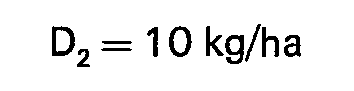
- Les quantités de suspensions appliquées équivalent à 1000 I/ha, et les dilutions réalisées sont calculées de façon à apporter les quantités de matière active suivantes:

- Les suspensions sont appliquées par pulvérisation soit sur plantes âgées de 10 jours, ce qui permet d'étudier l'action de post-levée des produits, soit sur semences déposées à la surface du sol, ce qui permet d'étudier l'action de pré-levée. Ces semences sont recouvertes de 2 cm de terre juste après l'application.
- Les plantes et graines sont disposées dans des conteneurs en plastique de 18 x 12 x 5 cm remplis d'une terre standard composée de 3 parties de sable, 1 partie de terreau et 1 partie d'argile. Après traitement, les conteneurs sont disposés sur une tablette à irrigation automatique dans une serre maintenue à 22°C et à taux d'hygrométrie de 70%.
- Les plantes soumises aux essais sont le blé TRITICUM SP, le haricot PHASEOLUS SP, la betterave BETA SP, la moutarde SINAPIS SP, le pissenlit TARAXACUM SP et le maïs ZEA SP.
- On relève les résultats 14 jours après le traitment pour le essais de post-levée et 21 jours après le traitement pour les essais de pré-levée.
- Les résultats sont rassemblés dans le tableau I. Dans ce tableau l'efficacité herbicide des composés selon l'invention vis-à-vis des plantes testées est exprimée par un chiffre qui représente le pourcentage de destruction des plantes dans les lots traités. Ce pourcentage est évalué en prenant comme référence les plantes de lots témoins non traités. Le chiffre 0 indique donc que l'état des plantes est le même dans les lots traités et dans les lots témoins, le chiffre 100 que les plantes sont entièrement détruites dans les lots traités, ce qui correspond à l'efficacité maximum.
- On conduit les essais comme à l'exemple 15. Seules changent les doses de matière active appliquées. Ces doses sont les suivantes:


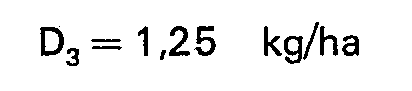


- Les résultats sont rassemblés dans les tableaux Il et III. Les chiffres figurant dans ces tableaux représentent les énergies végétatives des plantes des lots traités, exprimées en pourcentage de l'énergie végétative des plantes des témoins non traités. Le chiffre 100 indique donc que l'énergie végétative des plantes des lots traités est indentique à celle des plantes des témoins, le chiffre 0 que les plantes sont entièrement détruites dans les lots traités.
- Dans les tableaux Il et III figurent également les résultats relatifs à un herbicide de référence (chlortoluron).
- On conduit les essais comme à l'exemple 15, avec les doses suivantes de matière active:


- Les plantes soumises aux essais sont le blé TRITICUM SP, l'orge ORDEUM SP, l'avoine AVENA SP, le riz ORYZA SP, le coton GOSSYPIUM SP, le sétaire SETARIA SP, le panic PANICUM SP, la digitaire PASPALUM SP et le soja. Le composé selon l'invention testé est celui de l'exemple 7.
- Les résultats obtenus sont rassemblés dans le tableau IV. La signification des chiffres du tableau IV est la même que celle des chiffres du tableau I. Le chiffre 0 indique que l'état des plantes est le même dans lots traités dans les lots témoins, le chiffre 100 que les plantes sont entièrement détruites dans les lots traités.
- Le produit de l'exemple 7 est appliqué en plein champ, par pulvérisation, sur les plantes cultivées (blé, courgette, orge, fève, soja, tournesol, colza, maïs, avoine, pois, tomate) et les plantes advantices indésirables (chenopode, amarante, morelle, mercuriale, laiteron, liseron, seneçon, sétaire), soit en pré-levée des plantes immédiatement après les semis, soit en post-levée des plantes 15 jours après les semis. Les doses en produit appliquées sont 2,5 ou 5 kg/ha.
- Les résultats sont notés 7, 14 et 100 jours après le traitement (J + 7; 7 + 14; j + 100). Ces résultats sont consignés dans le tableau V. Les chiffres figurant dans ce tableau indiquent, dans le cas plantes cultivées, l'énergie végétative des plantes des parcelles traitées par rapport à celle des plantes des parcelles témoins non traitées et, dans le cas des plantes adventices, le pourcentage de destruction des plantes dans les parcelles traitées, ce pourcentage étant évalué en prenant comme référence les plantes de parcelles témoins non traitées.
- Pour une plante cultivée, la note 100 signifie donc que l'énergie végétative de la plante est la même dans les parcelles traitées et dans les parcelles témoins et la note O que plante est entièrement détruite dans les parcelles traitées.
- Pour une plante adventice, la note O signifie que l'état de la plante est le même dans les parcelles traitées et les parcelles témoins et la note 100 que la plante est entièrement détruite dans les parcelles traitées.
- Le produit de l'exemple 7 est appliqué parpulvérisation sur des cultures de blé d'automne de la variété Lutin, à différents stades de la culture (pré-levée, 3 feuilles, tallage, fin de tallage). Les doses en produit appliquées sont 0,625 ou 1,25 kg/ha.
- 20, 22, 35, 65 et 100 jours après le traitement suivant les cav (voir à ce sujet le tableau VI), on examine léffet du traitement d'une part sur la plante cultivée (blé), d'autre part sur les plantes adventices indésirables (véronique, paturin, vulpin, mouron, capselle).
- Dans aucun cas on n'a enregistré de phytotoxicité vis-à-vis du blé. Dans le tableau VI sont rassemblés les résultats relatifs au taux de destruction des plantes adventices. La note 0 correspond à une plante indemne, la note 100 à une plante entièrement détruite.


Claims (13)

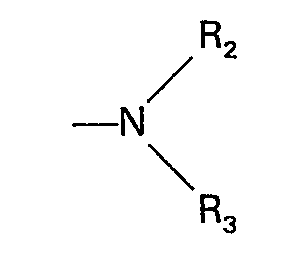


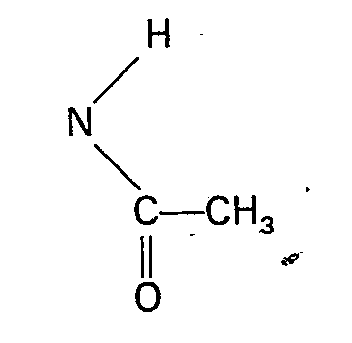


Applications Claiming Priority (4)
| Application Number | Priority Date | Filing Date | Title |
|---|---|---|---|
| FR7723222A FR2398737A1 (fr) | 1977-07-28 | 1977-07-28 | Amino-2 (ou -4) alkylthio-5 pyrimidines herbicides |
| FR7723222 | 1977-07-28 | ||
| FR7804207 | 1978-02-05 | ||
| FR7804207A FR2417507A2 (fr) | 1977-07-28 | 1978-02-15 | Diamino-2,4 (ou -4,6) methylthio-5 pyrimidines herbicides |
Publications (2)
| Publication Number | Publication Date |
|---|---|
| EP0000681A1 EP0000681A1 (fr) | 1979-02-07 |
| EP0000681B1 true EP0000681B1 (fr) | 1981-08-26 |
Family
ID=26220145
Family Applications (1)
| Application Number | Title | Priority Date | Filing Date |
|---|---|---|---|
| EP78400062A Expired EP0000681B1 (fr) | 1977-07-28 | 1978-07-21 | Amino-2 (ou -4) alkylthio-5 pyrimidines, leurs procédés de préparation, leur application comme herbicides et compositions les contenant |
Country Status (24)
| Country | Link |
|---|---|
| US (1) | US4528026A (fr) |
| EP (1) | EP0000681B1 (fr) |
| JP (1) | JPS5427586A (fr) |
| AT (2) | AT367044B (fr) |
| AU (1) | AU520722B2 (fr) |
| BR (1) | BR7804860A (fr) |
| CA (1) | CA1116599A (fr) |
| CS (1) | CS209533B2 (fr) |
| DD (2) | DD147042A5 (fr) |
| DE (1) | DE2860979D1 (fr) |
| DK (1) | DK300578A (fr) |
| ES (2) | ES472182A1 (fr) |
| FR (1) | FR2417507A2 (fr) |
| GR (1) | GR64849B (fr) |
| HU (1) | HU182516B (fr) |
| IE (1) | IE47879B1 (fr) |
| IL (1) | IL55114A (fr) |
| IN (1) | IN149476B (fr) |
| IT (1) | IT1160555B (fr) |
| NZ (1) | NZ187808A (fr) |
| PL (2) | PL111645B1 (fr) |
| PT (1) | PT68259A (fr) |
| RO (3) | RO79382A (fr) |
| YU (1) | YU40529B (fr) |
Families Citing this family (15)
| Publication number | Priority date | Publication date | Assignee | Title |
|---|---|---|---|---|
| JPS5427580A (en) * | 1977-08-02 | 1979-03-01 | Mitsui Toatsu Chem Inc | Selective herbicides |
| FR2446597A2 (fr) * | 1979-01-16 | 1980-08-14 | Ugine Kuhlmann | Compositions herbicides a base de diamino-2,4 chloro-6 methylthio-5 pyrimidine et de neburon |
| FR2449403A2 (fr) * | 1979-02-23 | 1980-09-19 | Ugine Kuhlmann | Procede de traitement herbicide du sorgho utilisant la diamino-2,4 chloro-6 methylthio-5 pyrimidine |
| FR2459234A1 (fr) * | 1979-06-20 | 1981-01-09 | Ugine Kuhlmann | Hydrazino (ou azido) alkylthio-5 pyrimidines, leurs procedes de preparation et leurs utilisations comme pesticides |
| US4560402A (en) * | 1979-08-15 | 1985-12-24 | Ciba Geigy Corporation | 2,4-Diamo-5-(alkylsulfinyl) or alkylsulphonyl)-6-halopyrimidines |
| FR2467201A1 (fr) * | 1979-10-09 | 1981-04-17 | Ugine Kuhlmann | Alkylsulfinyl-5 pyrimidines, leur procede de preparation et leurs utilisations comme herbicides |
| FR2474279A1 (fr) * | 1980-01-29 | 1981-07-31 | Ugine Kuhlmann | Compositions herbicides a base de diamino-2,4 chloro-6 methylthio pyrimidine et de diclofop methyl et procede de traitement des cultures a l'aide desdites compositions |
| FR2503162A1 (fr) * | 1981-04-07 | 1982-10-08 | Pharmindustrie | Nouveaux derives de piperazino-2 pyrimidine, procedes pour leur preparation et leur utilisation comme medicaments ou comme intermediaires pour la fabrication de medicaments |
| FR2509135A1 (fr) * | 1981-07-10 | 1983-01-14 | Ugine Kuhlmann | Compositions herbicides a base de derives d'amino-4 chloro-6 alkylthio-5 pyrimidine et de derives de la dinitro-2,6 aniline et procede de traitement des cultures a l'aide desdites compositions |
| EP0078623A1 (fr) * | 1981-10-29 | 1983-05-11 | Fbc Limited | Mélanges herbicides à base de bénazoline |
| FR2516748A1 (fr) * | 1981-11-24 | 1983-05-27 | Ugine Kuhlmann | Compositions herbicides a base de derives d'amino-4 chloro-6 alkylthio-5 pyrimidine et de pyridate, et procede de traitement des cultures a l'aide desdites compositions |
| US4507146A (en) * | 1982-12-28 | 1985-03-26 | Ciba-Geigy Corporation | 2,4-Diamino-6-halo-5-trifluoromethylpyrimidines having herbicidal activity |
| DE3305524A1 (de) * | 1983-02-18 | 1984-08-23 | Celamerck Gmbh & Co Kg, 6507 Ingelheim | Neue pyrimidinderivate |
| DE3417264A1 (de) * | 1984-05-10 | 1985-11-14 | Bayer Ag, 5090 Leverkusen | Neue 2,4-diamino-6-halogen-5-alkylthio-pyrimidine |
| DE3504895A1 (de) * | 1985-02-13 | 1986-08-14 | Basf Ag, 6700 Ludwigshafen | 4-aminopyrimidine und diese enthaltende fungizide |
Family Cites Families (14)
| Publication number | Priority date | Publication date | Assignee | Title |
|---|---|---|---|---|
| FR2257294B1 (fr) * | 1973-07-06 | 1977-07-01 | Ugine Kuhlmann | |
| US3892554A (en) * | 1969-02-14 | 1975-07-01 | Sandoz Ltd | 2-Amino-4-isopropylamino-6-chloro-pyrimidine in maize, wheat, potatoes, onions and leeks |
| FR2119234A5 (en) * | 1970-12-24 | 1972-08-04 | Ugine Kuhlmann | 5-alkylthio amino halopyrimidines - fungicides herbicides insecticides and bactericides |
| US3926997A (en) * | 1971-05-17 | 1975-12-16 | Ciba Geigy Corp | 2-Alkylthio-4,6-bis(substituted amino)-5-nitropyrimidines |
| FR2173746B1 (fr) * | 1972-03-01 | 1975-04-25 | Ugine Kuhlmann | |
| FR2244520B1 (fr) * | 1973-07-06 | 1977-02-04 | Ugine Kuhlmann | |
| US3906953A (en) * | 1974-05-23 | 1975-09-23 | American Optical Corp | Endoscopic surgical laser system |
| GB1523274A (en) * | 1974-08-05 | 1978-08-31 | Ici Ltd | Herbicidal compositions containing substituted pyrimidine |
| US4166852A (en) * | 1974-08-09 | 1979-09-04 | Produits Chimiques Ugine Kuhlmann | Piperazino-pyrimidines and their use as spasmolytic agents |
| FR2281117A2 (fr) * | 1974-08-09 | 1976-03-05 | Ugine Kuhlmann | Nouvelles piperazino-pyrimidines utilisables comme medicaments |
| FR2311776A1 (fr) * | 1975-05-23 | 1976-12-17 | Sogeras | Diamino-2,4 bromo-5 chloro-6 pyrimidines et procede pour leur preparation |
| CH617833A5 (fr) * | 1975-07-07 | 1980-06-30 | Ciba Geigy Ag | |
| JPS6053023B2 (ja) * | 1977-01-25 | 1985-11-22 | 三井東圧化学株式会社 | 選択性殺草剤 |
| JPS5427580A (en) * | 1977-08-02 | 1979-03-01 | Mitsui Toatsu Chem Inc | Selective herbicides |
-
1978
- 1978-02-15 FR FR7804207A patent/FR2417507A2/fr active Granted
- 1978-07-03 DK DK300578A patent/DK300578A/da not_active Application Discontinuation
- 1978-07-06 PT PT68259A patent/PT68259A/pt unknown
- 1978-07-07 NZ NZ187808A patent/NZ187808A/xx unknown
- 1978-07-10 IL IL55114A patent/IL55114A/xx unknown
- 1978-07-17 AT AT0516378A patent/AT367044B/de not_active IP Right Cessation
- 1978-07-21 DE DE7878400062T patent/DE2860979D1/de not_active Expired
- 1978-07-21 EP EP78400062A patent/EP0000681B1/fr not_active Expired
- 1978-07-25 CS CS784948A patent/CS209533B2/cs unknown
- 1978-07-25 RO RO78100776A patent/RO79382A/fr unknown
- 1978-07-25 RO RO7894775A patent/RO75259A/fr unknown
- 1978-07-25 RO RO78100777A patent/RO79383A/fr unknown
- 1978-07-26 YU YU1786/78A patent/YU40529B/xx unknown
- 1978-07-26 JP JP9140278A patent/JPS5427586A/ja active Pending
- 1978-07-26 PL PL1978208647A patent/PL111645B1/pl unknown
- 1978-07-26 PL PL1978215527A patent/PL114968B1/pl unknown
- 1978-07-26 GR GR56866A patent/GR64849B/el unknown
- 1978-07-27 BR BR7804860A patent/BR7804860A/pt unknown
- 1978-07-27 AU AU38393/78A patent/AU520722B2/en not_active Expired
- 1978-07-27 CA CA000308242A patent/CA1116599A/fr not_active Expired
- 1978-07-28 IT IT68803/78A patent/IT1160555B/it active
- 1978-07-28 IE IE1533/78A patent/IE47879B1/en unknown
- 1978-07-28 ES ES472182A patent/ES472182A1/es not_active Expired
- 1978-07-28 DD DD78216615A patent/DD147042A5/de unknown
- 1978-07-28 DD DD78207005A patent/DD140040A5/de unknown
- 1978-07-28 HU HU78KU535A patent/HU182516B/hu unknown
- 1978-08-28 IN IN632/DEL/78A patent/IN149476B/en unknown
-
1979
- 1979-04-17 ES ES479668A patent/ES479668A1/es not_active Expired
-
1980
- 1980-09-30 US US06/192,564 patent/US4528026A/en not_active Expired - Lifetime
-
1981
- 1981-02-02 AT AT0046181A patent/AT368137B/de not_active IP Right Cessation
Also Published As
Similar Documents
| Publication | Publication Date | Title |
|---|---|---|
| US4671818A (en) | Compositions containing heterocyclic compounds and their use as herbicides | |
| HU188525B (en) | Herbicidal preparations containing tetrahydrophthalimide derivatives and process for the production of the active substance | |
| CN1035325C (zh) | 嘧啶衍生物的制备方法 | |
| US4816064A (en) | Triazine derivatives, herbicidal composition containing them, and method of controlling growth of undesired vegetation by using same | |
| JPH07505125A (ja) | 新規の置換ピラゾリルピラゾール、その製法並びに中間体及び除草剤としてのその使用 | |
| BE1001812A4 (fr) | Derives du 1,5-diphenyl-1h-1,2,4-triazole-3-carboxamide et compositions herbicides qui les contiennent. | |
| EP0000681A1 (fr) | Amino-2 (ou -4) alkylthio-5 pyrimidines, leurs procédés de préparation, leur application comme herbicides et compositions les contenant | |
| JP2714479B2 (ja) | 2―(2’,3’,4’―三置換ベンゾイル)―1,3―シクロヘキサンジオン | |
| FR2494688A1 (fr) | Nouvelles 2-(1-(oxyamino)-alkylidene)-cyclohexane-1,3-diones substituees et compositions herbicides les contenant | |
| FR2518547A1 (fr) | Derives de l'acide propionique-2 phenoxy substitue et leur utilisation comme herbicides | |
| DE3788737T2 (de) | Indazol-Verbindungen, Verfahren zu deren Herstellung, deren Anwendung und Zwischenprodukte. | |
| US4459151A (en) | Herbicidally active fluorine-containing 4,6-diamino-s-triazines | |
| CH651024A5 (fr) | Derives du pyrazole, procede pour leur preparation et herbicides contenant ces derives. | |
| FR2519000A1 (fr) | ||
| EP0021939B1 (fr) | Hydrazino (ou azido) alkylthio-5 pyrimidines, leurs procédés de préparation et leurs utilisations comme herbicides et fongicides | |
| FR2462430A1 (fr) | Nouvelles 1,2,4-triazolidine-3,5-dithiones trisubstituees en positions 1, 2 et 4, composition les contenant et leur utilisation comme herbicides et comme substances de croissance des plantes | |
| US4846882A (en) | Herbicidal aryl tetrahydrophthalimides | |
| FR2587999A1 (fr) | Aryloxy-phenoxy-acyl-malonates, leur preparation et les compositions herbicides les contenant | |
| CH554886A (fr) | Procede de preparation de thiadiazoles. | |
| US4402732A (en) | Herbicidally active dihalogenated imidazolecarboxylic acid amides, compositions and use | |
| CH556862A (en) | 1-(1,3,4-Thiadiazol-2-yl)-urea derivs as herbicides - and fungicides, prepd. from 2-amino-1,3,4-thiadiazoles | |
| JPH06184154A (ja) | イミダゾリニル−ピロロ−ピリダジン類 | |
| FR2549831A1 (fr) | Nouveaux derives d'acides aryloxybenzoiques, et leur utilisation comme herbicides | |
| EP0013636B1 (fr) | Compositions herbicides à base de diamino-2,4 chloro-6 méthylthio-5 pyrimidine et de dérivés herbicides de l'urée et procédé de traitement des cultures à l'aide desdites compositions | |
| FR2467191A1 (fr) | Nouveaux 5-(2'-chloro-4'-trifluoromethylphenoxy)-2-nitrostyrenes, leur procede de production, composition herbicide les contenant et leur application a la destruction de vegetaux |
Legal Events
| Date | Code | Title | Description |
|---|---|---|---|
| PUAI | Public reference made under article 153(3) epc to a published international application that has entered the european phase |
Free format text: ORIGINAL CODE: 0009012 |
|
| AK | Designated contracting states |
Designated state(s): BE CH DE FR GB LU NL |
|
| 17P | Request for examination filed | ||
| DET | De: translation of patent claims | ||
| GRAA | (expected) grant |
Free format text: ORIGINAL CODE: 0009210 |
|
| AK | Designated contracting states |
Designated state(s): BE CH DE FR GB LU NL |
|
| REF | Corresponds to: |
Ref document number: 2860979 Country of ref document: DE Date of ref document: 19811119 |
|
| PG25 | Lapsed in a contracting state [announced via postgrant information from national office to epo] |
Ref country code: LU Free format text: LAPSE BECAUSE OF NON-PAYMENT OF DUE FEES Effective date: 19820731 |
|
| PGFP | Annual fee paid to national office [announced via postgrant information from national office to epo] |
Ref country code: LU Payment date: 19830622 Year of fee payment: 6 |
|
| PGFP | Annual fee paid to national office [announced via postgrant information from national office to epo] |
Ref country code: FR Payment date: 19840705 Year of fee payment: 7 |
|
| PGFP | Annual fee paid to national office [announced via postgrant information from national office to epo] |
Ref country code: DE Payment date: 19840823 Year of fee payment: 7 |
|
| PGFP | Annual fee paid to national office [announced via postgrant information from national office to epo] |
Ref country code: CH Payment date: 19840824 Year of fee payment: 7 |
|
| PGFP | Annual fee paid to national office [announced via postgrant information from national office to epo] |
Ref country code: BE Payment date: 19840930 Year of fee payment: 7 |
|
| PGFP | Annual fee paid to national office [announced via postgrant information from national office to epo] |
Ref country code: NL Payment date: 19850731 Year of fee payment: 8 |
|
| PG25 | Lapsed in a contracting state [announced via postgrant information from national office to epo] |
Ref country code: CH Effective date: 19860731 Ref country code: BE Effective date: 19860731 |
|
| BERE | Be: lapsed |
Owner name: PCUK PRODUITS CHIMIQUES UGINE KUHLMANN Effective date: 19860731 |
|
| PG25 | Lapsed in a contracting state [announced via postgrant information from national office to epo] |
Ref country code: NL Effective date: 19870201 |
|
| NLV4 | Nl: lapsed or anulled due to non-payment of the annual fee | ||
| PG25 | Lapsed in a contracting state [announced via postgrant information from national office to epo] |
Ref country code: FR Free format text: LAPSE BECAUSE OF NON-PAYMENT OF DUE FEES Effective date: 19870331 |
|
| REG | Reference to a national code |
Ref country code: CH Ref legal event code: PL |
|
| GBPC | Gb: european patent ceased through non-payment of renewal fee | ||
| REG | Reference to a national code |
Ref country code: FR Ref legal event code: ST |
|
| PG25 | Lapsed in a contracting state [announced via postgrant information from national office to epo] |
Ref country code: DE Effective date: 19870602 |
|
| PG25 | Lapsed in a contracting state [announced via postgrant information from national office to epo] |
Ref country code: GB Effective date: 19881117 |
|
| PLBE | No opposition filed within time limit |
Free format text: ORIGINAL CODE: 0009261 |
|
| STAA | Information on the status of an ep patent application or granted ep patent |
Free format text: STATUS: NO OPPOSITION FILED WITHIN TIME LIMIT |