EP0037687A2 - Für Plasminogen-Aktivator kodierende rekombinante Desoxyribonukleinsäure und Verfahren zur Herstellung von Plasminogen-Aktivator-Protein daraus - Google Patents
Für Plasminogen-Aktivator kodierende rekombinante Desoxyribonukleinsäure und Verfahren zur Herstellung von Plasminogen-Aktivator-Protein daraus Download PDFInfo
- Publication number
- EP0037687A2 EP0037687A2 EP81301323A EP81301323A EP0037687A2 EP 0037687 A2 EP0037687 A2 EP 0037687A2 EP 81301323 A EP81301323 A EP 81301323A EP 81301323 A EP81301323 A EP 81301323A EP 0037687 A2 EP0037687 A2 EP 0037687A2
- Authority
- EP
- European Patent Office
- Prior art keywords
- microorganism
- plasmid
- plasminogen activator
- activator protein
- coli
- Prior art date
- Legal status (The legal status is an assumption and is not a legal conclusion. Google has not performed a legal analysis and makes no representation as to the accuracy of the status listed.)
- Granted
Links
Images
Classifications
-
- C—CHEMISTRY; METALLURGY
- C12—BIOCHEMISTRY; BEER; SPIRITS; WINE; VINEGAR; MICROBIOLOGY; ENZYMOLOGY; MUTATION OR GENETIC ENGINEERING
- C12N—MICROORGANISMS OR ENZYMES; COMPOSITIONS THEREOF; PROPAGATING, PRESERVING, OR MAINTAINING MICROORGANISMS; MUTATION OR GENETIC ENGINEERING; CULTURE MEDIA
- C12N9/00—Enzymes; Proenzymes; Compositions thereof; Processes for preparing, activating, inhibiting, separating or purifying enzymes
- C12N9/14—Hydrolases (3)
- C12N9/48—Hydrolases (3) acting on peptide bonds (3.4)
- C12N9/50—Proteinases, e.g. Endopeptidases (3.4.21-3.4.25)
- C12N9/64—Proteinases, e.g. Endopeptidases (3.4.21-3.4.25) derived from animal tissue
- C12N9/6421—Proteinases, e.g. Endopeptidases (3.4.21-3.4.25) derived from animal tissue from mammals
- C12N9/6424—Serine endopeptidases (3.4.21)
- C12N9/6456—Plasminogen activators
- C12N9/6462—Plasminogen activators u-Plasminogen activator (3.4.21.73), i.e. urokinase
-
- A—HUMAN NECESSITIES
- A61—MEDICAL OR VETERINARY SCIENCE; HYGIENE
- A61P—SPECIFIC THERAPEUTIC ACTIVITY OF CHEMICAL COMPOUNDS OR MEDICINAL PREPARATIONS
- A61P7/00—Drugs for disorders of the blood or the extracellular fluid
- A61P7/02—Antithrombotic agents; Anticoagulants; Platelet aggregation inhibitors
-
- C—CHEMISTRY; METALLURGY
- C12—BIOCHEMISTRY; BEER; SPIRITS; WINE; VINEGAR; MICROBIOLOGY; ENZYMOLOGY; MUTATION OR GENETIC ENGINEERING
- C12Y—ENZYMES
- C12Y304/00—Hydrolases acting on peptide bonds, i.e. peptidases (3.4)
- C12Y304/21—Serine endopeptidases (3.4.21)
- C12Y304/21073—Serine endopeptidases (3.4.21) u-Plasminogen activator (3.4.21.73), i.e. urokinase
-
- Y—GENERAL TAGGING OF NEW TECHNOLOGICAL DEVELOPMENTS; GENERAL TAGGING OF CROSS-SECTIONAL TECHNOLOGIES SPANNING OVER SEVERAL SECTIONS OF THE IPC; TECHNICAL SUBJECTS COVERED BY FORMER USPC CROSS-REFERENCE ART COLLECTIONS [XRACs] AND DIGESTS
- Y10—TECHNICAL SUBJECTS COVERED BY FORMER USPC
- Y10S—TECHNICAL SUBJECTS COVERED BY FORMER USPC CROSS-REFERENCE ART COLLECTIONS [XRACs] AND DIGESTS
- Y10S530/00—Chemistry: natural resins or derivatives; peptides or proteins; lignins or reaction products thereof
- Y10S530/808—Materials and products related to genetic engineering or hybrid or fused cell technology, e.g. hybridoma, monoclonal products
Definitions
- This invention relates to recombinant deoxyribonucleic acid which codes for plasminogen activator and a method of making plasminogen activator ptotein therefrom.
- Acute thromboembolic events, venous and arterial thrombosis, pulmonary embolism, intracardiac thrombosis and systemic embolism are difficult to manage.
- Current medical therapy for the occlusion itself commonl involves anticoagulation.
- the current medical approach is designed to stop the underlying process and to rely on normal physiologic mechanisms for restoring blood flow and limiting the extent of vascular obstruction or destruction of tissue.
- Thrombolysis or thrombolytic therapy would be of considerable interest as a means for lysing the offending thromboembolism.
- medical practice would have the means to dissolve thromboemboli quickly and prevent their recurrence.
- Urokinase is a thrombolytic agent active through the conversion of plasminogen to plasmin.
- Plasminogen is the naturally occurring plasma precursor which, in the presence of an activator, is converted to plasmin, the proteolytic enzyme capable of hydrolyzing fibrin.
- Urokinase is a complex protein of unknown structure which is found in human urine in trace amounts. It is a potent blood clot lysing agent and when injected in amounts far greater than those which exist naturally in the blood will promote the dissolution of blood clots.
- the present invention provides a modified plasmid with inserted deoxyribonucleic acid (DNA) which codes for plasminogen activator related to human urokinase.
- the modified plasmid can be introduced into a bacterium or other microorganism which can then be cultured to produce urokinase-like material in the same manner as the manufacture of antibiotic compounds.
- the modified plasmid was obtained by direct manipulation of nucleotide sequences in the plasmid.
- the invention will be described with reference to the bacterium E. coli K -12 Strain X1776 as described in "Recombinant Molecules, Impact on Science and Society," Beers, R.F. and Bassett, E .
- the method for this genetic engineering comprises, briefly: 1) isolation of messenger ribonucleic acid (mRNA) from human embryonic kidney cells; 2) demonstration of the presence of urokinase mRNA in the isolated mRNA; 3) laboratory synthesis of complementary DNA-(cDNA) from mRNA suitable for recombinant DNA synthesis; 4) synthesis of recombinant DNA containing the DNA synthesized in 3) and a vector or plasmid DNA; 5) transformation of the bacterium with the recombinant DNA and detection and selection of.transformants for plasminogen activator production; and 6) isolation of plasminogen activators from the transformants and characterization of chemical and biological properties.
- mRNA messenger ribonucleic acid
- both of the interwound and complementary strands of the DNA molecule are made up of four deoxyribonucleotides: deoxyribo- adenosine-5'-phosphate (dAMP), thymidine-S I- phosphate (T M P), deoxy-riboguanosine-5'-phosphate (dG M P) and deoxy- ribocytidine-5'-phosphate (dCMP), which are linked through the phosphate groups.
- dAMP deoxyribo- adenosine-5'-phosphate
- T M P thymidine-S I- phosphate
- dG M P deoxy-riboguanosine-5'-phosphate
- dCMP deoxy- ribocytidine-5'-phosphate
- the genetic message of each strand is embodied in the particular sequence of deoxyribonucleotides.
- the sequence of nucleotides in a given DNA molecule determines the sequence of amino acids in a particular protein and the sequence of amino acids in turn specifically establish both the structure and function of the protein.
- the nucleotide sequence of DNA precisely specifies the protein building properties of the organism.
- the recombinant DNA procedure begins with cleavage of the strands of DNA by proteins known as restriction endonuclease enzymes which are isolated from bacteria.
- the enzymes break the chain of DNA at particular sequences. The break does not always occur at the same point on two strands so that separate strands may have complementary ends and hence under suitable conditions will bind together so that they can be coupled end to end. If the same restriction enzyme is used on the DNA from two different sources, both of which have the appropriate target sequence, then sequences with ends which will bind will result. Hence, two sequences from any source can be recombined into a single DNA molecule. Another way of obtaining DNA for insertion is to reverse transcribe messenger RNA into double stranded complementary DNA.
- the synthesized DNA then can be inserted into a plasmid as described, hereinafter.
- This method of obtaining DNA is preferred since genes of mammalian chromosomal DN A often contain sequences not coding for protein, thus interupting the colineality of genetic information transfer from DNA to protein.
- genes of mammalian chromosomal DN A often contain sequences not coding for protein, thus interupting the colineality of genetic information transfer from DNA to protein.
- bacterium such as Escherichia coli, in addition to its single ciruclar chromosome it may have one or more independently replicating smaller circles of DNA known as plasmids or extrachromosomal elements which are hereditary units physically separate from the chromosome of the cell.
- plasmids or vectors can be isolated from the bacteria, opened or cleaved by restriction enzymes, and used as one component of a recombinant.
- the circular form of the plasmid can be closed, and the plasmid returned to the cell. There it will resume replication, duplicating not only its own natural nucleo-. tide sequence but also the one which has been added. A strain of bacteria is, therefore, obtained which will maintain copies of the inserted nucleotide sequence as the bacterium propagates.
- Plasmids are believed to consist of double-stranded D NA molecules and to include at least one replication site.
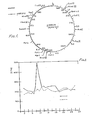
- FIGURE 1 of the drawings there is illustrated schematically the E. coli plasmid pBR322 into which has been inserted a DNA segment coding for plas- m inogen activator related to urokinase.
- the plasmid or vector pBR322 is described by Bolivar,-et al. (Gene, 2, page 95, 1977).
- the pBR322 plasmid is broken open by a restriction enzyme, at a position hereinafter described, as the Pst I site, and the DNA segment which codes for plasminogen activator is inserted therein.
- Binding occurs because a sequence on one strand lies immediately opposite a complementary sequence, complementarity depending on the chemical affinity between the nucleotides cytosine and guanine or adenine and thymine, respectively. The sum of these bonds repeated along the length of the strands holds the strands together'.
- An alternative way to connect two DNA fragments is by blunt end ligation using ligase.
- the numerical values referred to in Figure 1 represent the numbers of base pairs between the sites indicated and are approximate in nature. As an example, the number of inserted base pairs between the original Pst I sites of the pBR322 plasmid is approximately 4,200.
- the positions or sites along the diameter in Figure 1 represent-positions at which specific sequences of nucleotides occur and which can be cleaved by specific restriction endonuclease enzymes.
- the code in Figure 1 indicates the approximate position of each site and the particular restriction enzyme which will cut the D NA strand at that particular sequence of nucleotides.
- Figure 1 represents one embodiment of the invention and as exemplified is an E. coli plasmid with inserted DN A which codes for urokinase-like material.
- the recombinant DNA namely the restructured plasmid containing DN A which codes for urokinase-like material, is returned into a suitable host organism which as exemplified is E. coli K12 strain X1776. There it can resume replication duplicating not.only its own native sequence but also the sequence which has been inserted.
- suitable organisms can be selected from the genus Escherichia, Saccharomyces, Bacillus, Neurospora, or Streptomyces, among others.
- suitable species of microorganisms are Escherichia coli, Saccharomyces cerevisiae, Bacillus subtilis, and Neurospora crassa.
- the present invention in particular provides a bacterium from the genus, Escherichia, containing therein a stable plasmid which produces plasminogen activator protein related to urokinase in immunogenic and biological properties.
- Cultures of E. coli X1776 p ABB26 have been deposited with the ARS Culture Collection, U.S. Department of Agriculture, Peoria, Illinois which deposit has been accorded Accession No. B12122.
- HEK Human embryo kidney
- E199 Eagle's medium
- PBS phosphate buffered saline
- RNA was precipitated with ethanol and dissolved in 33 mM N-2-hdroxy- ethyl piperazine-N'-2-ethane sulfonic acid (HEPES) buffer, p H 7.0.
- HEPES N-2-hdroxy- ethyl piperazine-N'-2-ethane sulfonic acid
- Polyadenylic acid (Poly A) containing mRNA was isolated from the total RNA by affinity chromatography on polyuridylic acid (Poly U) Sephadex G-10 column as described by Deeley et al. (J. Biol. Chem. 252, 8310,-1977). The column material was synthesized according to the method of Coffin et al. (J. Mol. Biol. 86, 373, 1974).
- the RNA was passed twice in the column to yield total mRNA (1.1 mg from 39 mg total RNA).
- the urokinase mRNA was further enriched and isolated from the total mRNA by sucrose density gradient centrifugation.
- the total R N A was dissolved in TES-2 buffer (10 mM Tris-HCl, pH 7.4; 20 mM NaCl; 0.5 mM EDTA; 0.4 percent sodium dodecylsilfate (SDS) in a concentration of about 10 A 260 per ml.
- the RNA was heated at 65°C for 15 min., applied to a linear (10-30 percent) sucrose gradient and centrifuged in SW 27 rotor at 20° C for 12 hr.
- RNA greater than 28S was pooled and ethanol precipitated, washed with 33 mM NaCl in 70 percent ethanol and then with 95 percent ethanol. It was dried and dissolved in 33 mM HEPES buffer, pH 7.0. From 1 mg of RN A applied to the gradient, 73 ug of the RNA greater than 28S were obtained. The RNA was used to demonstrate the presence of urokinase mRNA in cell-free protein synthesis and for cDNA synthesis.
- the cell-free protein synthesizing system from rabbit reticulocytes was nuclease treated to deplete endogenous mRNA according to the method of Pelhem and Jackson (Eur. J. Biochem., 67, 247, 1976). Cell-free protein synthesis and immunoprecipitatiorf were carried out according to the method of Rhodes et al. (J. Biol. Chem., 248, 2031, 1973).
- Incubations were performed in a final volume of 45 ul containing 20 percent (vol/vol) reticulocyte lysate, 2 mM adenosine triphosphate (ATP), 0.2 mM guanidine triphosphate (GTP), 10 mM creatine phosphate, 2 ug creatine kinase, 3 mM dithiothreitol, 75 mM KCl,3 mM MgCl 2 , 30 mM HEPES, pH 7.6, 20 uM of amino acid mixtures without methionine, 5 uCi 35 S-methionine and 1 ug of purified messenger RNA. The mixtures were incubated at 25°C for 1 hr.
- ATP mM adenosine triphosphate
- GTP 0.2 mM guanidine triphosphate
- 10 mM creatine phosphate 2 ug creatine kinase
- 3 mM dithiothreitol 75
- Trichloroacetic acid insoluble counts for the total incorporation were obtained by pipetting 5 ul aliquots onto 3 MM filter paper discs, which were washed in 7.5 percent trichloracetic acid (TCA) containing 0.2 percent D ,L-methionine. The paper discs were then heated at 90°C for 15 min. in the same TCA-methionine solution and dried before counting in a scintillation counter.
- TCA trichloracetic acid
- the final precipitates were washed and resuspended in 10 M urea, 5 percent SDS and 5 percent mercaptoethanol and heated at 60°C for 30 min.. Aliquots were counted in a scintillation counter for 35 S incorporation. The content for the urokinase specific mRNA was expressed as the percentage of immunoprecipitable counts over the total.counts precipitated by.TCA. In this reaction condition, 1 x 10 5 cpm per ul of the reaction mixture could be TCA precipitated when 1 ug of purified-rabbit globin messenger RNA is used in the reaction mixture. Less than 1 percent of the radioactivity was immunoprecipitated by urokinase antibody in the rabbit globin mRNA control.
- Single stranded cDNA was synthesized by reverse transcription of mRNA according to the method of Friedman and Rosbash (Nucleic Acids Res., 4, 3455, 1977) with the following modifications.
- the reaction mixture (500 ul) for annealing oligo dT primer with mRNA contained 20 mM Tris-HCl, pH 8.5, 20 mM KC1, 4mM MgC1 2 , 20 ug of poly A containinq mRNA and 1.5 ug of dT 30 .
- the final reaction mixture (1 ml) for cDNA synthesis contained 50 mM Tris-HC1, pH 8.5, 50 mM KC1, 10 mM MgCl 2 , 10 mM dithiothreitol (DTT), 100 uq actinomycin D, 1 mM each of deoxyadenosine triphosphate (dATP), deoxyguanidine triphosphate (dGTP), thymidine triphosphate (TTP), 800 uM [a - 32p ] dCTP and 325 units of AMV reverse transcription. After 30 min. of incubation at 42°C, another 325 units of the enzyme were added. After 2 hr.
- the second strand of the cDNA was synthesized by using the large fragment of DNA polymerase I from E. coli similar to the reaction condition described by Jacobsen, et al., (Eur. J. Biochem., 45, 623, 1974).
- the reaction included 24 units of DNA polymerase I (the large fragment) 1.4 nmoles of cDNA, 0.1M HEPES, pH 7.0, 400 uM each of dATP, deoxycytosine triphosphate (dCTP), dGTP, and TTP, 10 mM MgCl 2 , 10 mM dithiothreitol and 70 mM KCl in a 200 ul reaction volume. Incubation was done at 15°C for 1.5 . hours. Then 20 ul of 0.5 M EDTA were added and DN A was purified by phenol extraction and ethanol precipitation.
- the double stranded cDNA mentioned above was then treated with S l nuclease (1250 units) for three hours at 15°C in the presence of 30 mM sodium acetate pH 4.6, 1 mM ZnS0 4 , 250 mM NaCl and 100 ug/ml of E. coli tRNA. About 58 percent (approximately 0.5 ug) of the DNA was recovered after the treatment. Then the DNA was centrifuged in a linear sucrose density gradient (15-30 percent in saline-tris-EDTA (STE) buffer, 10 mM NaCl, 10 mM Tris pH 8.0, 1 mM EDTA) in a swing bucket SW 40 rotor at 22°C for 16 hrs. at 40,000 rpm in a Beckman L5-75 ultracentrifuge. DNA greater than 2000 base pairs was pooled, ethanol precipitated and used to tail with poly C tracts for recombinant DNA synthesis.
- STE saline-
- the reaction mixture (300 ul) contained 100 mM potassium cacodylate pH 6.9, 30 mM Tris base, 1mM CoC1 2 , 200 uM DTT, 6 nmoles of duplex cDNA in total nucleotide residues, 100 uM ( ⁇ -32p]dCTP and 240 units of terminal transferase.
- the reaction was terminated after 20 minutes by addition of 30 ul of 0.5M EDTA and 300 ul of neutralized phenol.
- the linear plasmid DNA was obtained as follows: The reaction mixture (100 ul) contained 10 mM Tris-HCl, pH 7..8, 10 mM MgCl 2 , 10 mM D TT, 50 mM NaCl, 10 uq of pBR322 DNA and 5 units of Pst I. After 20 hrs. at 37°C, an aliquot (5 ul) of the reaction mixture was analyzed by agarose gel electrophoresis to check for completeness of digestion. The linear DNA was then phenol extracted and isolated by ethanol precipitation.
- the D N A was suspended in 100 ul of 10 mM Tris-HCl, pH 8.0, 0.5 mM EDTA and incubated in terminal transferase buffer as described above containing 100 uM [ 3 H] dTTP and 240 units of terminal transferase. At intervals of 0, 1, 2, 3, 4 and 5 min. at 42°C, aliquots (5ul) were monitored for acid insoluble radioactivity. The remaining solution after 5 min. of incubation was phenol extracted and ethanol precipitated. During this period a total of 130 pmoles of dGMP residues were incorporated. To the DNA sample containing 5.4 pmoles of 3'-OH ends, an average of 24 residues were added per strand of pBR322 DNA.
- the large double-stranded cDNA tailed with polyde- oxycitydilic acid (poly dC) (about 0.15 pmole) was annealed to an equivalent amount of the polydeoxyguanilydic acid (poly dG) tailed pBR322 DNA in 0.1 M NaCl in a 100 ul volume.
- the mixture was heated to 65°C for 3 min. and left at 42°C for 16 hours to anneal the DNA preparations.
- Cells were grown to 0.3 A 600 at 37°C in supplemented L broth (diaminopimelic acid 100 ug/ml, nalidixic acid 25 ug/ml and thymine 40 ug/ml) and were centrifuged at 1700 xg for 10 minutes at room temperature to collect the pellet.
- the cells were suspended in 10 mM NaCl (1/2 volume), centrifuged and suspended again in 1/2 volume Ca buffer (75 mM CaCl 2 , 140 mM NaCl, 10 mM Tris HC1, pH 7.0). After 30 minutes at room temperature, the cells were centrifuged and resuspended in 1/10 volume of Ca buffer and chilled to 0°C.
- Two volumes of cells were mixed with one volume of DNA, held at 0°C for 30 minutes, heated at 42°C for 1 minute and let rest at room temperature for 10 minutes, mixed with 10 volumes supplemented L-broth and incubated.at 37°C for 100 minutes.
- the cells were plated onto supplemented L-agar containing 12.5 ug tetracycline ' by pipetting portions of the culture into 2 ml soft L-agar (0.6 percent) and-overlaying onto plates. The plates were incubated two days at 37°C.
- the cell lysate was prepared according to Seeburg et al. (Nature, 276 795, 1978). Five hundred ml of E. coli transformants were grown overnight and the cells collected by centrifugation at 10,000 xg for 10 min. The cells were washed with 10 mM Tris (pH 8.0) and 1 mM E DTA and resuspended in 5.0 ml of the same buffer. After addition of 0.5 ml of lysozyme (5 mg/ml), the mixture was kept on ice for 30 minutes. MgC1 2 was added to a final concentration of 10 mM with 0.1 ml each of DNase (1 mg/ml), RN ase (5 mg/ml) and NP-40 (5%). Incubation proceeded for 1 hr. at 4°C and the mixture was cleared by centrifugation (10,000 xg, 20 min., 0°C). The supernatant was used for the screening of urokinase-like material.
- Plasminogen activator activity was measured using a sensitive 125 I fibrinolysis assay modified from Unkeless et al. (J. Exp. Med., 137, 85-111, 1973). Rigid microtiter plates were coated with 125 I fibrinogen (2 ug, 10 5 cpm per well) and the fibrinogen converted to fibrin clots using plasminogen-free thrombin (0.1 units/ well). Assays were conducted in a total volume of 70 ul containing 0.1 M Tris HCl, pH 8.1, 0.025 percent human serum albumin and 2.5 uq/ml plasmin-free plasminogen prepared by affinity chromatography on lysine Sepharose.
- the range of the assay was from 0.05 Ploug units/ml to 10 units/ml and could detect as little as 0.002 units. Since crude lysates of E. coli were inhibitory in this assay, transformant preparations were partially purified by ion exchange chromatography or affinity chromatography on benzamidine-Sepharose prior to assay (Table 1).
Landscapes
- Health & Medical Sciences (AREA)
- Chemical & Material Sciences (AREA)
- Organic Chemistry (AREA)
- Engineering & Computer Science (AREA)
- Life Sciences & Earth Sciences (AREA)
- Bioinformatics & Cheminformatics (AREA)
- Zoology (AREA)
- Wood Science & Technology (AREA)
- Genetics & Genomics (AREA)
- General Health & Medical Sciences (AREA)
- General Engineering & Computer Science (AREA)
- Biomedical Technology (AREA)
- Biochemistry (AREA)
- Medicinal Chemistry (AREA)
- Biotechnology (AREA)
- Molecular Biology (AREA)
- Microbiology (AREA)
- Nuclear Medicine, Radiotherapy & Molecular Imaging (AREA)
- Diabetes (AREA)
- Public Health (AREA)
- General Chemical & Material Sciences (AREA)
- Chemical Kinetics & Catalysis (AREA)
- Hematology (AREA)
- Animal Behavior & Ethology (AREA)
- Pharmacology & Pharmacy (AREA)
- Veterinary Medicine (AREA)
- Enzymes And Modification Thereof (AREA)
- Micro-Organisms Or Cultivation Processes Thereof (AREA)
- Medicines That Contain Protein Lipid Enzymes And Other Medicines (AREA)
- Peptides Or Proteins (AREA)
- Saccharide Compounds (AREA)
- Preparation Of Compounds By Using Micro-Organisms (AREA)
Applications Claiming Priority (2)
| Application Number | Priority Date | Filing Date | Title |
|---|---|---|---|
| US137032 | 1980-04-03 | ||
| US06/137,032 US4370417A (en) | 1980-04-03 | 1980-04-03 | Recombinant deoxyribonucleic acid which codes for plasminogen activator |
Publications (3)
| Publication Number | Publication Date |
|---|---|
| EP0037687A2 true EP0037687A2 (de) | 1981-10-14 |
| EP0037687A3 EP0037687A3 (en) | 1982-02-17 |
| EP0037687B1 EP0037687B1 (de) | 1991-10-16 |
Family
ID=22475512
Family Applications (1)
| Application Number | Title | Priority Date | Filing Date |
|---|---|---|---|
| EP81301323A Expired - Lifetime EP0037687B1 (de) | 1980-04-03 | 1981-03-27 | Für Plasminogen-Aktivator kodierende rekombinante Desoxyribonukleinsäure und Verfahren zur Herstellung von Plasminogen-Aktivator-Protein daraus |
Country Status (5)
| Country | Link |
|---|---|
| US (1) | US4370417A (de) |
| EP (1) | EP0037687B1 (de) |
| JP (5) | JPH0653070B2 (de) |
| DE (1) | DE3177260D1 (de) |
| ES (1) | ES8205263A1 (de) |
Cited By (17)
| Publication number | Priority date | Publication date | Assignee | Title |
|---|---|---|---|---|
| GB2116567A (en) * | 1982-03-08 | 1983-09-28 | Genentech Inc | Expression processing and secretion of heterologous protein by yeast |
| EP0093619A1 (de) * | 1982-05-05 | 1983-11-09 | Genentech, Inc. | Plasminogenaktivator für menschliches Gewebe, diesen Aktivator enthaltende pharmazeutische Zusammensetzungen, Verfahren zur Herstellung des Aktivators sowie DNA und transformierte Zellzwischenprodukte hierfür |
| WO1984001786A1 (en) * | 1982-10-28 | 1984-05-10 | Beecham Group Plc | Enzyme derivatives and their use in the treatment of thrombosis |
| EP0092182A3 (en) * | 1982-04-15 | 1984-07-18 | Genentech, Inc. | Preparation of functional human urokinase proteins |
| EP0117059A3 (en) * | 1983-01-19 | 1986-03-05 | Genentech, Inc. | Methods for producing human tpa and expression vectors therefor |
| EP0174835A1 (de) * | 1984-09-11 | 1986-03-19 | The Upjohn Company | Menschlicher Gewebeplasminogenaktivator und rekombinante DNA-Zusammensetzungen |
| EP0151337A3 (en) * | 1983-10-10 | 1986-10-08 | Phillips Petroleum Company | Streptokinase-coding recombinant vectors |
| EP0200451A1 (de) * | 1985-04-22 | 1986-11-05 | Genentech, Inc. | Proteaseresistente Urokinase-Zusammensetzung, deren Herstellung und Verwendung |
| EP0154272A3 (en) * | 1984-02-27 | 1988-01-20 | The Green Cross Corporation | Production of human urokinase |
| EP0288435A1 (de) * | 1987-04-15 | 1988-10-26 | Ciba-Geigy Ag | Verfahren zur Herstellung von Proteinen |
| US5010002A (en) * | 1983-01-19 | 1991-04-23 | Genentech, Inc. | Human t-PA production using vectors coding DHFR protein |
| US5011795A (en) * | 1983-01-19 | 1991-04-30 | Genentech, Inc. | Human tPA production using vectors coding for DHFR protein |
| US5185259A (en) * | 1982-05-05 | 1993-02-09 | Genentech, Inc. | Truncated human tissue plasminogen activator |
| DE3348289C2 (de) * | 1982-05-05 | 1994-05-05 | Genentech Inc | Verfahren zur Herstellung von Human-Gewebe-Plasminogen-Aktivator |
| US5496711A (en) * | 1981-01-16 | 1996-03-05 | Genome Therapeutics Corp. | Processes for producing pre-prorennin, prorennin and rennin |
| US5587159A (en) * | 1982-05-05 | 1996-12-24 | Genentech, Inc. | Human tissue plasminogen activator |
| US5763253A (en) * | 1982-05-05 | 1998-06-09 | Genentech, Inc. | Methods of preparing tissue plasiminogen activator derivative composition |
Families Citing this family (23)
| Publication number | Priority date | Publication date | Assignee | Title |
|---|---|---|---|---|
| US4370417A (en) * | 1980-04-03 | 1983-01-25 | Abbott Laboratories | Recombinant deoxyribonucleic acid which codes for plasminogen activator |
| NL8003402A (nl) * | 1980-06-11 | 1982-01-04 | Leuven Res & Dev Vzw | Nieuwe plasminogeen-activator en farmaceutisch preparaat met trombolytische werking. |
| JPS58148899A (ja) * | 1982-02-27 | 1983-09-05 | Green Cross Corp:The | ウロキナ−ゼ様蛋白質をコ−ドするmRNA及びその製造法 |
| US5112755A (en) * | 1982-04-15 | 1992-05-12 | Genentech, Inc. | Preparation of functional human urokinase proteins |
| US4766075A (en) * | 1982-07-14 | 1988-08-23 | Genentech, Inc. | Human tissue plasminogen activator |
| US4530904A (en) * | 1982-09-03 | 1985-07-23 | Eli Lilly And Company | Method for conferring bacteriophage resistance to bacteria |
| US4816567A (en) | 1983-04-08 | 1989-03-28 | Genentech, Inc. | Recombinant immunoglobin preparations |
| JPS60180591A (ja) * | 1984-02-27 | 1985-09-14 | Green Cross Corp:The | ヒトウロキナ−ゼのdνa配列,プラスミド,宿主 |
| US4753879A (en) * | 1984-08-27 | 1988-06-28 | Biogen N.V. | Modified tissue plasminogen activators |
| DK175327B1 (da) * | 1984-10-01 | 2004-08-23 | Integrated Genetics Inc | Replicerbar ekspressionsvektor og rekombinant DNA-molekyle, som indkoder aktiv human livmodervævsplasminogen-aktivator, pattedyrscelle transformeret med vektoren og fremgangsmåde til fremstilling af aktiv human vævsplasminogen-aktivator (TPA) |
| EP0210279B1 (de) * | 1985-01-25 | 1991-08-14 | Sagami Chemical Research Center | Stabilisierte menschliche prourokinase |
| EP0330700B1 (de) * | 1987-08-19 | 1993-12-22 | Sagami Chemical Research Center | Menschlicher Prourokinase ähnliches Polypeptid |
| US4920051A (en) * | 1988-02-03 | 1990-04-24 | Damon Biotech, Inc. | Recovery of urokinase compounds |
| IE901849A1 (en) * | 1989-07-19 | 1991-06-19 | Gruenenthal Gmbh | Plasmids, their preparation and their use in the manufacture¹of a plasminogen activator |
| US6605712B1 (en) * | 1990-12-20 | 2003-08-12 | Arch Development Corporation | Gene transcription and ionizing radiation: methods and compositions |
| US20030113271A1 (en) * | 1997-01-29 | 2003-06-19 | University Technology Corporation | Formulations for pulmonary delivery |
| US6794184B1 (en) | 1998-01-19 | 2004-09-21 | Ulrich Mohr | Culturing device and method for culturing cells or tissue components |
| US8034791B2 (en) | 2001-04-06 | 2011-10-11 | The University Of Chicago | Activation of Egr-1 promoter by DNA damaging chemotherapeutics |
| ATE541937T1 (de) * | 2001-04-06 | 2012-02-15 | Univ Chicago | Chemotherapeutische einleitung der egr-1-promoter-aktivität in gentherapie |
| US20040242523A1 (en) * | 2003-03-06 | 2004-12-02 | Ana-Farber Cancer Institue And The Univiersity Of Chicago | Chemo-inducible cancer gene therapy |
| AU2002364945A1 (en) * | 2001-10-25 | 2003-07-09 | Neurogenetics, Inc. | Genes and polymorphisms on chromosome 10 associated with alzheimer's disease and other neurodegenerative diseases |
| US20030170678A1 (en) * | 2001-10-25 | 2003-09-11 | Neurogenetics, Inc. | Genetic markers for Alzheimer's disease and methods using the same |
| US20030224380A1 (en) * | 2001-10-25 | 2003-12-04 | The General Hospital Corporation | Genes and polymorphisms on chromosome 10 associated with Alzheimer's disease and other neurodegenerative diseases |
Family Cites Families (25)
| Publication number | Priority date | Publication date | Assignee | Title |
|---|---|---|---|---|
| US3256158A (en) * | 1963-03-22 | 1966-06-14 | Abbott Lab | Purification of urokinase |
| US3355361A (en) * | 1964-10-15 | 1967-11-28 | Sterling Drug Inc | Recovery and purification of urokinase |
| US3755083A (en) * | 1971-08-30 | 1973-08-28 | Rand Labor Inc | Method for recovering urokinase from urine containing the same |
| JPS519782A (en) * | 1974-07-15 | 1976-01-26 | Eiken Chemical | Urokinaazeno seiseiho |
| JPS5122876A (en) * | 1974-08-21 | 1976-02-23 | Fujiwa Kako Kk | Hotai c1 esuteraazeno noshukuseiseiho |
| US4237224A (en) * | 1974-11-04 | 1980-12-02 | Board Of Trustees Of The Leland Stanford Jr. University | Process for producing biologically functional molecular chimeras |
| US3957582A (en) * | 1974-11-20 | 1976-05-18 | Abbott Laboratories | Purification of urokinase |
| US4190495A (en) * | 1976-09-27 | 1980-02-26 | Research Corporation | Modified microorganisms and method of preparing and using same |
| DE2720704C2 (de) * | 1977-05-07 | 1986-09-25 | Behringwerke Ag, 3550 Marburg | Neues Glycoprotein, Verfahren zu seiner Herstellung und seine Verwendung |
| NZ187300A (en) * | 1977-05-27 | 1982-08-17 | Univ California | Dna transfer vector and micro-organism modified to contain a nucleotide sequence equivalent to the gene of a higher organism |
| JPS5411219A (en) * | 1977-06-25 | 1979-01-27 | Green Cross Corp:The | Thrombolytic agent and its preparation |
| JPS5480406A (en) * | 1977-12-09 | 1979-06-27 | Tanabe Seiyaku Co Ltd | Preparation of urokinase for injection |
| JPS54107511A (en) * | 1978-02-10 | 1979-08-23 | Asahi Chem Ind Co Ltd | Preparation of bio-active substance |
| JPS6043116B2 (ja) * | 1978-02-21 | 1985-09-26 | 株式会社ミドリ十字 | ウロキナ−ゼ誘導体 |
| JPS5526878A (en) * | 1978-08-17 | 1980-02-26 | Kowa Co | Enzyme activating plasminogen and its preparation |
| JPS5537129A (en) * | 1978-09-06 | 1980-03-15 | Nippon Soda Co Ltd | Urokinase adsorbent, and preparation of high purity urokinase using the same |
| US4342832A (en) * | 1979-07-05 | 1982-08-03 | Genentech, Inc. | Method of constructing a replicable cloning vehicle having quasi-synthetic genes |
| US4370417A (en) * | 1980-04-03 | 1983-01-25 | Abbott Laboratories | Recombinant deoxyribonucleic acid which codes for plasminogen activator |
| JPS57101911A (en) * | 1980-12-18 | 1982-06-24 | Toshiba Corp | Feed water control device |
| JPS58129605A (ja) * | 1982-01-29 | 1983-08-02 | Toshiba Corp | 運転台数制御方法 |
| GR78180B (de) * | 1982-04-15 | 1984-09-26 | Genentech Inc | |
| JPS61181377A (ja) * | 1985-01-25 | 1986-08-14 | Sagami Chem Res Center | ヒトウロキナ−ゼ遺伝子 |
| JPS6287633A (ja) * | 1985-10-14 | 1987-04-22 | Kobe Steel Ltd | 建設機械のエンスト防止方法 |
| JP2724820B2 (ja) * | 1986-12-18 | 1998-03-09 | 株式会社小松製作所 | 可変容量型油圧ポンプの制御装置 |
| JPH01149054U (de) * | 1988-04-07 | 1989-10-16 |
-
1980
- 1980-04-03 US US06/137,032 patent/US4370417A/en not_active Expired - Lifetime
-
1981
- 1981-03-27 DE DE8181301323T patent/DE3177260D1/de not_active Expired - Lifetime
- 1981-03-27 EP EP81301323A patent/EP0037687B1/de not_active Expired - Lifetime
- 1981-04-02 ES ES501018A patent/ES8205263A1/es not_active Expired
- 1981-04-03 JP JP56049492A patent/JPH0653070B2/ja not_active Expired - Lifetime
-
1989
- 1989-05-29 JP JP1132952A patent/JPH0653072B2/ja not_active Expired - Lifetime
- 1989-05-29 JP JP1132953A patent/JPH0276823A/ja active Pending
-
1994
- 1994-02-17 JP JP6056526A patent/JP2873536B2/ja not_active Expired - Lifetime
- 1994-02-17 JP JP6056525A patent/JP2964439B2/ja not_active Expired - Lifetime
Cited By (30)
| Publication number | Priority date | Publication date | Assignee | Title |
|---|---|---|---|---|
| US5525484A (en) * | 1981-01-16 | 1996-06-11 | Genome Therapeutics Corp. | Recombinant DNA means and method for producing rennin, prorenin and pre-prorennin |
| US5496711A (en) * | 1981-01-16 | 1996-03-05 | Genome Therapeutics Corp. | Processes for producing pre-prorennin, prorennin and rennin |
| GB2116567A (en) * | 1982-03-08 | 1983-09-28 | Genentech Inc | Expression processing and secretion of heterologous protein by yeast |
| EP0620279A1 (de) * | 1982-04-15 | 1994-10-19 | Genentech, Inc. | Herstellung von funktionellen, menschlichen Urokinaseproteinen |
| EP0092182A3 (en) * | 1982-04-15 | 1984-07-18 | Genentech, Inc. | Preparation of functional human urokinase proteins |
| US6274335B1 (en) | 1982-05-05 | 2001-08-14 | Genentech, Inc. | Method of treatment using recombinant human tissue plasminogen activator |
| US5587159A (en) * | 1982-05-05 | 1996-12-24 | Genentech, Inc. | Human tissue plasminogen activator |
| US5728566A (en) * | 1982-05-05 | 1998-03-17 | Genentech, Inc. | Tissue plasminogen activator derivatives |
| EP0093619A1 (de) * | 1982-05-05 | 1983-11-09 | Genentech, Inc. | Plasminogenaktivator für menschliches Gewebe, diesen Aktivator enthaltende pharmazeutische Zusammensetzungen, Verfahren zur Herstellung des Aktivators sowie DNA und transformierte Zellzwischenprodukte hierfür |
| US5869314A (en) * | 1982-05-05 | 1999-02-09 | Genentech, Inc. | Tissue plasminogen activators and derivatives thereof as produced by recombinant means |
| US5702938A (en) * | 1982-05-05 | 1997-12-30 | Genetech, Inc. | Human tissue plasminogen activator |
| US5763253A (en) * | 1982-05-05 | 1998-06-09 | Genentech, Inc. | Methods of preparing tissue plasiminogen activator derivative composition |
| US6284247B1 (en) | 1982-05-05 | 2001-09-04 | Genentech, Inc. | Human tissue plasminogen activators |
| FR2526443A1 (fr) * | 1982-05-05 | 1983-11-10 | Genentech Inc | Activateur de plasminogene de tissu humain, son procede de production et composition pharmaceutique le contenant |
| US5753486A (en) * | 1982-05-05 | 1998-05-19 | Genentech, Inc. | Human tissue plasminogen activator |
| US5185259A (en) * | 1982-05-05 | 1993-02-09 | Genentech, Inc. | Truncated human tissue plasminogen activator |
| US5728565A (en) * | 1982-05-05 | 1998-03-17 | Genentech, Inc. | Methods of preparing tissue plasminogen activator derivatives |
| DE3348289C2 (de) * | 1982-05-05 | 1994-05-05 | Genentech Inc | Verfahren zur Herstellung von Human-Gewebe-Plasminogen-Aktivator |
| WO1984001786A1 (en) * | 1982-10-28 | 1984-05-10 | Beecham Group Plc | Enzyme derivatives and their use in the treatment of thrombosis |
| EP0117059A3 (en) * | 1983-01-19 | 1986-03-05 | Genentech, Inc. | Methods for producing human tpa and expression vectors therefor |
| US5011795A (en) * | 1983-01-19 | 1991-04-30 | Genentech, Inc. | Human tPA production using vectors coding for DHFR protein |
| US5010002A (en) * | 1983-01-19 | 1991-04-23 | Genentech, Inc. | Human t-PA production using vectors coding DHFR protein |
| AU572108B2 (en) * | 1983-01-19 | 1988-05-05 | Genentech Inc. | Human tpa production using vectors coding for dhfr protein |
| EP0151337A3 (en) * | 1983-10-10 | 1986-10-08 | Phillips Petroleum Company | Streptokinase-coding recombinant vectors |
| EP0154272A3 (en) * | 1984-02-27 | 1988-01-20 | The Green Cross Corporation | Production of human urokinase |
| EP0174835A1 (de) * | 1984-09-11 | 1986-03-19 | The Upjohn Company | Menschlicher Gewebeplasminogenaktivator und rekombinante DNA-Zusammensetzungen |
| US5219569A (en) * | 1985-04-22 | 1993-06-15 | Genentech, Inc. | Protease resistant urokinase |
| EP0200451A1 (de) * | 1985-04-22 | 1986-11-05 | Genentech, Inc. | Proteaseresistente Urokinase-Zusammensetzung, deren Herstellung und Verwendung |
| US5175105A (en) * | 1987-04-15 | 1992-12-29 | Ciba-Geigy Corporation | Process for the production of urokinase using saccharomyes cerevisiae |
| EP0288435A1 (de) * | 1987-04-15 | 1988-10-26 | Ciba-Geigy Ag | Verfahren zur Herstellung von Proteinen |
Also Published As
| Publication number | Publication date |
|---|---|
| JPH0276823A (ja) | 1990-03-16 |
| JPS56158799A (en) | 1981-12-07 |
| JPH0284186A (ja) | 1990-03-26 |
| JPH0653072B2 (ja) | 1994-07-20 |
| JPH07132085A (ja) | 1995-05-23 |
| JPH06315379A (ja) | 1994-11-15 |
| JPH0653070B2 (ja) | 1994-07-20 |
| US4370417A (en) | 1983-01-25 |
| EP0037687B1 (de) | 1991-10-16 |
| ES501018A0 (es) | 1982-06-01 |
| ES8205263A1 (es) | 1982-06-01 |
| EP0037687A3 (en) | 1982-02-17 |
| JP2964439B2 (ja) | 1999-10-18 |
| DE3177260D1 (de) | 1991-11-21 |
| JP2873536B2 (ja) | 1999-03-24 |
Similar Documents
| Publication | Publication Date | Title |
|---|---|---|
| US4370417A (en) | Recombinant deoxyribonucleic acid which codes for plasminogen activator | |
| He et al. | Rapid mutagenesis and purification of phage RNA polymerases | |
| Perret et al. | Relaxation of a transfer RNA specificity by removal of modified nucleotides | |
| Llosa et al. | Nicking activity of TrwC directed against the origin of transfer of the IncW plasmid R388 | |
| Guiney et al. | Relaxation complexes of poasmid DNA and protein. III. Association of protein with the 5'terminus of the broken DNA strand in the relaxed complex of plasmid ColE1. | |
| Wilson et al. | DNA binding sites of the LysR-type regulator GcvA in the gcv and gcvA control regions of Escherichia coli | |
| Stevens | Deoxyribonucleic acid dependent ribonucleic acid polymerases from two T4 phage-infected systems | |
| Novak et al. | HeLa DNA polymerase∝ activity in vitro: specific stimulation by a non-enzymic protein factor | |
| Harris et al. | Temperature-sensitive Escherichia coli mutant producing a temperature-sensitive sigma subunit of DNA-dependent RNA polymerase. | |
| EP0155189A2 (de) | Expression eines die Zellwand degradierenden Proteins und für ein solches Protein kodierende DNS enthaltende Wirtszellen | |
| EP0501949B1 (de) | Reinigung von q-beta-replicase | |
| US4558010A (en) | Recombinant deoxyribonucleic acid which codes for plasminogen activator and method of making plasminogen activator protein therefrom | |
| Goelz et al. | Adenylate kinase of Escherichia coli: evidence for a functional interaction in phospholipid synthesis | |
| Rao et al. | Cloning, over-expression and the catalytic properties of the EcoP15 modification methylase from Escherichia coli | |
| Yaniv et al. | Studies on valyl-tRNA synthetase and tRNAVal from Escherichia coli: III. Valyl-tRNA synthetases from thermosensitive mutants of Escherichia coli | |
| Ratzkin et al. | Expression in Escherichia coli of biologically active enzyme by a DNA sequence coding for the human plasminogen activator urokinase. | |
| GB2069504A (en) | Microbiologically Prepared Polypeptide Comprising the Amino Acid Sequence of Human Interferon, DNA and Plasmids which Code for this Sequence, Microorganisms which Contain this Genetic Information, and Processes for their Preparation | |
| Ganesan | Studies on in vitro replication of Bacillus subtilis DNA | |
| JPH06105685A (ja) | アースロバクター種より取得され得る新しいタイプii制限エンドヌクレアーゼ及び同物質の生産方法 | |
| JPH04252180A (ja) | グルコース−6−リン酸デヒドロゲナーゼ、dna、微生物、dnaの取得法、グルコース−6−リン酸デヒドロゲナーゼの取得法並びに試料溶液中のグルコース−6−リン酸含量を酵素測定する方法及び試薬 | |
| Ferrari et al. | Specific RNA-cleaving activities from HeLa cells. | |
| JPWO1997038113A1 (ja) | ヒト由来のヒアルロン酸合成酵素のポリペプチド及びそれをコードするdna | |
| Liao et al. | Identification and characterization of a stress‐responsive promoter in the macromolecular synthesis operon of Bacillus subtilis | |
| Fradkin et al. | Primer-dependent eukaryotic RNA polymerase capable of accurate transcription from the adenovirus major late promoter in a reconstituted system. | |
| KR0147778B1 (ko) | 제한효소 |
Legal Events
| Date | Code | Title | Description |
|---|---|---|---|
| PUAI | Public reference made under article 153(3) epc to a published international application that has entered the european phase |
Free format text: ORIGINAL CODE: 0009012 |
|
| AK | Designated contracting states |
Designated state(s): BE DE FR GB IT |
|
| PUAL | Search report despatched |
Free format text: ORIGINAL CODE: 0009013 |
|
| AK | Designated contracting states |
Designated state(s): BE DE FR GB IT |
|
| 17P | Request for examination filed |
Effective date: 19820514 |
|
| GRAA | (expected) grant |
Free format text: ORIGINAL CODE: 0009210 |
|
| AK | Designated contracting states |
Kind code of ref document: B1 Designated state(s): BE DE FR GB IT |
|
| REF | Corresponds to: |
Ref document number: 3177260 Country of ref document: DE Date of ref document: 19911121 |
|
| ET | Fr: translation filed | ||
| ITF | It: translation for a ep patent filed | ||
| PLBI | Opposition filed |
Free format text: ORIGINAL CODE: 0009260 |
|
| 26 | Opposition filed |
Opponent name: FARMITALIA CARLO ERBA S.R.L. Effective date: 19920716 |
|
| PGFP | Annual fee paid to national office [announced via postgrant information from national office to epo] |
Ref country code: BE Payment date: 19950410 Year of fee payment: 15 |
|
| PLBM | Termination of opposition procedure: date of legal effect published |
Free format text: ORIGINAL CODE: 0009276 |
|
| STAA | Information on the status of an ep patent application or granted ep patent |
Free format text: STATUS: OPPOSITION PROCEDURE CLOSED |
|
| 27C | Opposition proceedings terminated |
Effective date: 19940514 |
|
| PG25 | Lapsed in a contracting state [announced via postgrant information from national office to epo] |
Ref country code: BE Effective date: 19960331 |
|
| BERE | Be: lapsed |
Owner name: ABBOTT LABORATORIES Effective date: 19960331 |
|
| PGFP | Annual fee paid to national office [announced via postgrant information from national office to epo] |
Ref country code: DE Payment date: 19991229 Year of fee payment: 20 |
|
| PGFP | Annual fee paid to national office [announced via postgrant information from national office to epo] |
Ref country code: GB Payment date: 20000204 Year of fee payment: 20 |
|
| PGFP | Annual fee paid to national office [announced via postgrant information from national office to epo] |
Ref country code: FR Payment date: 20000303 Year of fee payment: 20 |
|
| PG25 | Lapsed in a contracting state [announced via postgrant information from national office to epo] |
Ref country code: GB Free format text: LAPSE BECAUSE OF EXPIRATION OF PROTECTION Effective date: 20010326 |
|
| REG | Reference to a national code |
Ref country code: GB Ref legal event code: PE20 Effective date: 20010326 |
|
| APAH | Appeal reference modified |
Free format text: ORIGINAL CODE: EPIDOSCREFNO |