EP0070632A2 - Recombinants de plasmide pourvus du code pour la préproinsuline et leur emploi dans la production d'insuline humaine - Google Patents
Recombinants de plasmide pourvus du code pour la préproinsuline et leur emploi dans la production d'insuline humaine Download PDFInfo
- Publication number
- EP0070632A2 EP0070632A2 EP82303340A EP82303340A EP0070632A2 EP 0070632 A2 EP0070632 A2 EP 0070632A2 EP 82303340 A EP82303340 A EP 82303340A EP 82303340 A EP82303340 A EP 82303340A EP 0070632 A2 EP0070632 A2 EP 0070632A2
- Authority
- EP
- European Patent Office
- Prior art keywords
- preproinsulin
- human
- proinsulin
- human proinsulin
- host organism
- Prior art date
- Legal status (The legal status is an assumption and is not a legal conclusion. Google has not performed a legal analysis and makes no representation as to the accuracy of the status listed.)
- Withdrawn
Links
Images


Classifications
-
- C—CHEMISTRY; METALLURGY
- C12—BIOCHEMISTRY; BEER; SPIRITS; WINE; VINEGAR; MICROBIOLOGY; ENZYMOLOGY; MUTATION OR GENETIC ENGINEERING
- C12N—MICROORGANISMS OR ENZYMES; COMPOSITIONS THEREOF; PROPAGATING, PRESERVING, OR MAINTAINING MICROORGANISMS; MUTATION OR GENETIC ENGINEERING; CULTURE MEDIA
- C12N15/00—Mutation or genetic engineering; DNA or RNA concerning genetic engineering, vectors, e.g. plasmids, or their isolation, preparation or purification; Use of hosts therefor
- C12N15/09—Recombinant DNA-technology
- C12N15/11—DNA or RNA fragments; Modified forms thereof; Non-coding nucleic acids having a biological activity
- C12N15/62—DNA sequences coding for fusion proteins
- C12N15/625—DNA sequences coding for fusion proteins containing a sequence coding for a signal sequence
-
- C—CHEMISTRY; METALLURGY
- C07—ORGANIC CHEMISTRY
- C07K—PEPTIDES
- C07K14/00—Peptides having more than 20 amino acids; Gastrins; Somatostatins; Melanotropins; Derivatives thereof
- C07K14/435—Peptides having more than 20 amino acids; Gastrins; Somatostatins; Melanotropins; Derivatives thereof from animals; from humans
- C07K14/575—Hormones
- C07K14/62—Insulins
-
- C—CHEMISTRY; METALLURGY
- C07—ORGANIC CHEMISTRY
- C07K—PEPTIDES
- C07K2319/00—Fusion polypeptide
- C07K2319/01—Fusion polypeptide containing a localisation/targetting motif
- C07K2319/02—Fusion polypeptide containing a localisation/targetting motif containing a signal sequence
-
- C—CHEMISTRY; METALLURGY
- C07—ORGANIC CHEMISTRY
- C07K—PEPTIDES
- C07K2319/00—Fusion polypeptide
- C07K2319/70—Fusion polypeptide containing domain for protein-protein interaction
- C07K2319/74—Fusion polypeptide containing domain for protein-protein interaction containing a fusion for binding to a cell surface receptor
- C07K2319/75—Fusion polypeptide containing domain for protein-protein interaction containing a fusion for binding to a cell surface receptor containing a fusion for activation of a cell surface receptor, e.g. thrombopoeitin, NPY and other peptide hormones
Definitions
- This invention relates to molecular biology and more particularly to the so-called art of recombinant DNA. Specifically the invention relates to recombinant plasmids for producing human insulin.
- the invention describes novel genetically engineered plasmids that carry a gene coding for human proinsulin.
- Representative plasmid, pJW2172 illustrates the invention and has been deposited with the American Type Culture Collection, Rockville, Maryland 20852; it has been awarded ATCC number 31891.
- insulin is a peptide hormone that emphasizely regulates a variety of vital metabolic events.
- insulin is synthesized as a single large precursor polypeptide, preproinsulin.
- a transport sequence and an internal peptide sequence are excised from preproinsulin during biosynthesis, yielding a biologically active molecule consisting of two peptide chains linked together by disulfide bonds. Excision of only the transport sequence yields a peptide molecule known as proinsulin.
- Proinsulins have now been isolated and characterized from a number of animals. See Steiner, D., "Peptide Hormone Precursors" in Peptide Hormones, Parsons, J.A.Editor, McMillan Press Limited, London (J.976) at pages 49-64.
- the beta-cells of the islets of Langerhans produce insulin in vivo.
- insulin is expressed as a fused polypeptide comprised of the proinsulin sequence plus a pre-sequence known as the transport or signal sequence.
- This transport sequence facilitates passage of the insulin molecule through the cellular membranes.
- the preproinsulin is synthesized on ribosomes that are associated with the rough endoplas- mic reticulum. See Permutt, M. and Kipnis, D.M., Proc. Nat.Acad.Sci., USA; 69:506-509 (1972).
- the newly translated peptide When it produced in vivo, the newly translated peptide is first transported intracellularly to the Golgi apparatus where it becomes incorporated within newly forming secretion granules. Exactly how the cell converts proinsulin to insulin is not known, but,conversion is believed to be initiated in either the Golgi apparatus or in the newly formed secretion granules.
- the secretion granules contain zinc and membrane bound proteases which are believed to participate in the conversion mechanism.
- the types of proteases can vary from species to species, perhaps to accommodate species specific amino acid substitutions in the insulin peptide. See Steiner,supra at 54.
- Goedell et al technique provides one method of producing human insulin
- a more natual approach involves the biosynthesis of proinsulin, k which is the immediate precursor of insulin.
- An advantage of producing insulin from proinsulin is the economy of fermenting and processing only one recombinant organism.
- the Goeddell et al technique requires the use of two recombinant organisms. Numerous researches have shown that proinsulin will oxidize - spontaneously to form the correct disulfide bonds and can be quantitatively converted to insulin by controlled digestion with trypsin and carboxypeptidase B. See Steiner, D. and Clark, J. Proc. Nat. Acad. Sci., USA 60:622-629 (1968); and Kemmler, W.
- the invention provides a cloning vector for producing human preproinsulin through expression of DNA by a transformed host organism comprising a plasmid capable of transforming a host organism and having a preproinsulin coding DNA sequence including a functional transport coding DNA presequence fused to a structural gene coding for human proininsulin, said preproinsulin coding DNA sequence being under the control of an operator, promoter and ribosome binding site sequence and being positioned in the vector in correct reading frame with respect to the initiation codon for the functional transport coding DNA presequence so that a preproinsulin product is expressed by a host organism transformed by said cloning vector.
- Novel Plasmid pJW2172 (ATCC 31891) and its progeny are included in the invention.
- the invention provides a host organism transformed by such a vector to express human proinsulin as a preproinsulin product that will be processed to human proinsulin by the host and then transported across the host's cell membrane.
- a process either (a) for preparing a cloning vector for producing human preproinsulin., or (b) for preparing an organism or culture capable of expressing a preproinsulin peptide product, or (c) for preparing preproinsulin or human proinsulin, or (d) for preparing human insulin; which process comprises: (a) providing a human preproinsulin cDNA sequence (including a functional transport presequence fused to a structural gene coding for human proinsulin) in a parent vector capable of becoming a functional part of a host organisms genetic material, said preproinsulin sequence being positioned to be under the control of an operator, promoter and ribosome binding site sequence and in correct reading frame with respect to the initiation codon for the functional transport presequence of said sequence; and, optionally, (b) transforming, with said cloning vector, the host organism and optionally cloning said organism to produce a transformant culture; and, optionally, (c) growing said transformed host organism or transform
- the invention involves construction of novel recombinant plasmids carrying the human proinsulin structural gene in expressible form.
- a functional transport presequence Immediately preceeding the eukaryotic proinsulin structural gene on the plasmid is a functional transport presequence.
- the presequence can be comprised entirely of a prokaryotic bacterial transport presequence, entirely of a eukaryotic transport presequence, or of any functional combination of the two presequence types.
- the eukaryotic proinsulin structual gene sequence is oriented in the plasmid so that it is in correct translational reading frame with respect to the initiation codon of the functional transport pre- sequence. Such an orientation allows a preproinsulin product to be synthesized by actively metabolizing transformed host organisms.
- the preproinsulin product is correctly processed to human proinsulin by the transformed host organisms, which then transport the human peptide across the cell membrane.
- the human proinsulin In a transformed E. coli host, the human proinsulin accumulates in the bacterial periplasmic space. Following recovery, in vitro methods can be used to convert the human proinsulin to human insulin. See Steiner and Clark, supra, and Kemmler et al, supra.
- the recombinant plasmids could be used to transform host organisms that are not capable of correctly processing preproinsulin to human proinsulin in vivo. In that case the preproinsulin peptide would be recovered by disrupting the transformed hosts' cell walls.
- the transport sequence portion of the preproinsulinpeptide could be'removed enzymatically. See generally, Zwizinski, C. and Wickner, W., J. Biol. Chem., 255:7973 7977 (1980). In vitro methods could then be used to convert human proinsulin to human insulin. See Steiner and Clark, supra and Kemmler et al, supra.
- Plasmid pJW2172 was constructed by modifying a parental plasmid, plasmid pHn677, which in turn was derived from the well- characterized plasmid pBR322 (ATCC 37017).
- Parental plasmid pHn677 which contains human preproinsulin cDNA cloned into the Pst I site of the ampicillinase gene of plasmid pBR322, was modified with a restriction endonuclease and a double stranded exonuclease. Large portions of the ampicillinase coding region were excised by these enzymes, resulting in the production of a variety of fused gene segments. Many of these generated proteins were detectable with insulin or C-peptide antisera. One such fused gene segment generating these detactable proteins is carried by plasmid pJW2172.
- Plasmid pJW2172 contains a perfect fused hybrid gene segment consisting of the aminoterminal coding half of the leader sequence of the prokaryotic ampicillinase (residues -23 to -12) fused to the eukaryotic human preproinsulin prepeptide beginning at residue -13. Expression of the fused segment results in the synthesis of a preproinsulin product, in vivo processing of the preproinsulin product and finally, and secretion of human proinsulin into the periplasmic space of E. coli host organisms transformed by plasmid pJW2172. Characterization of the recovered human proinsulin product shows that it contains the A and B chain regions of insulin as well as specific C-peptide immunodeterminants. Tryptic digestion can be used in vitro to convert proinsulin to insulin. See Steiner and Clark, supra, and Kemmler et al, supra.
- Parental plasmid, pHn677 was obtained originally by cDNA cloning of mRNA isolated from human insulinoma. The cDNA was inserted into the Pst site of pBR322 by means of dC-dG tailing. Plasmid pHn677 contains all of the proinsulin sequence plus the coding sequence for 16 amino acids of the presequence. Although the DNA sequence in the parental plasmid was in the right orientation with respect to the beta-lactamase promoter, it was in the wrong reading frame with respect to the initiation codon of the beta-lactamase gene. As a result there was no expression of the DNA sequence coding for the human proinsulin gene.
- Plasmid pHn677 was digested with restriction endonuclease Pvu I.
- the DNA was then treated with double stranded exonuclease Bal 31 to digest approximately 150 nucleotides from each end.
- This DNA was further treated with restriction endonuclease Hind III. After subjecting the resulting DNA to gel electrophoresis on agarose gels, the larger set of DNA fragments was isolated from the gels by electroelution.
- Hinc II digested plasmid pBR322 DNA was subjected to Bal 31 to digest approximately 180 nucleotides from each end of the linearized plasmid. This DNA was then further digested with Hind III and Bam Hl. Finally the fragment containing the beta-lactamase promoter region was isolated from an acrylamide gel. This fragment was ligated to the Pvu 1/Bal 31/Hind III treated large fragment. The ligation mixture was used to transform E. coli K12 strain CS412.
- Transformants were first screened.for tetracycline resistance. Some 350 clones exhibiting such resistance were further examined for insulin expression using the in situ radioimmunoassay procedure described by Broom, S. and Gilbert W., Proc. Nat. Acad. Sci., USA 75:2749 ' (1978). This procedure showed that 118 of the 350 clones might be expressing insulin. Therefore, these 118 clones were further assayed by means of a radioimmunoassay that utilized both the anti-insulin and the anti-C-peptide antibodies. The radioimmunoassays showed that at least 23 of these clones showed significant, i.e. greater than lu unit per-mil of insulin activity.
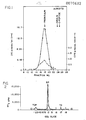
- plasmid pJW2172 From the total series of plasmids containing a variety of hybrid bacterial-eukaryotic transport sequences attached to the human proinsulin sequence, one plasmid, designated as plasmid pJW2172, was selected for further study. As described in Chan, S. et al Proc. Nat. Acad. Sci., USA 78:5401-5405 (1981), and illustrated here in FIGURE 1, gel filtration of a concentrated osmotic shockate from cultures of transformed bacteria containing plasmid pJW2172 gave rise to a single homogeneous peak of C-peptide and insulin immunoreactivity which coeluted at the position of the proinsulin standard.
- the ratio of C-peptide to insulin immunoreactivity of this component i.e. approximately 1:15, corresponded well to the known cross-reactivity of human proinsulin in the highly specific human C-peptide immunoassay described by Faber, O.K., et al, Diabetes 27:170-177 (1978).
- the proinsulin material generated by plasmid pJW2172 was characterized in the following matter.
- a sample of an osmotic shockate, from cultures of bacteria transformed by plasmid pJW2172, containing about 0.05 nM of the peptide was extracted with acid ethanol. The extract was then subjected to gel filtration on a column of Biogel P60 eluted with 2.5 M propionic acid. See generally, Steiner, D., et al, in Cell Biology: A Comprehensive Treatise 4:175-201 (1980).
- the second aliquot was used to determine whether cleavage of the presequence had occurred at the first residue of human proinsulin.
- the 0.5 pM aliquot of the immunoprecipitate was first reduced and carboxymethylated,, and then subjected to automated Edman degradation. See Chan et al, supra. The results are shown in FIGURE 3. They show that significant amounts of radioactively labeled tyrosine were found only at positions 16 and 26, as expected for human proinsulin. There was no indication of heterogeneity at the N-terminus. Further corroboration of this paint was obtained when the osmotic shockate from a culture grown in the presence of 35 S0 4 was similarly immunoprecipitated, gel filtered, reduced, carboxymethylated and then sequenced. These results are shown in FIGURE 4; they demonstrate the presence of the sulphur labeled B7 andBl9 S-carboxymethyl-cysteine residues in correct register.
- the plasmid pJW2172 proinsulin product was treated with trypsin and car- boxypepsidase B. This treatment converted the product to a component eluting at the position of insulin on gel filtration. There was no indication of the release of free A or B chain material.
- the invention involves construction of novel recombinant plasmids carrying the humai proinsulin structural gene in expressible form.
- a functional transport presequence Immediately preceeding the eukaryotic structural gene on each plasmid is a functional transport presequence.
- the presequence can be comprised entirely of a prokaryotic bacterial transport presequence, entirely of a eukaryotic transport presequence, or of any functional combination of the two.
- Representative plasmid pJW2172 carries the human proinsulin structural gene attached to a functional fused hybrid transport prese q uence.
- the hybrid transport presequence is comprised of roughly half of the prokaryotic bacterial presequence fused to roughly half of the eukaryotic human presequence.
- the bacterial presequence codes for the amino-terminal end of the hybrid transport peptide; the human presequence codes for the carboxy-terminal end.
- E. coli host bacteria transformed by palsmid pJW2172 express a preproinsulin peptide product that is correctly processed to human proinsulin by the bacteria. This human proinsulin is transported by the bacteria across the cell membrane to the periplasmic space, where it accumulates. Following its recovery, in vitro methods such as tryptic digestion can be used to convert the human proinsulin to human insulin.
Landscapes
- Health & Medical Sciences (AREA)
- Genetics & Genomics (AREA)
- Life Sciences & Earth Sciences (AREA)
- Chemical & Material Sciences (AREA)
- Engineering & Computer Science (AREA)
- Organic Chemistry (AREA)
- Zoology (AREA)
- Biomedical Technology (AREA)
- Molecular Biology (AREA)
- Biophysics (AREA)
- Biochemistry (AREA)
- Bioinformatics & Cheminformatics (AREA)
- General Health & Medical Sciences (AREA)
- Wood Science & Technology (AREA)
- General Engineering & Computer Science (AREA)
- Biotechnology (AREA)
- Physics & Mathematics (AREA)
- Microbiology (AREA)
- Plant Pathology (AREA)
- Diabetes (AREA)
- Endocrinology (AREA)
- Toxicology (AREA)
- Gastroenterology & Hepatology (AREA)
- Medicinal Chemistry (AREA)
- Proteomics, Peptides & Aminoacids (AREA)
- Peptides Or Proteins (AREA)
- Preparation Of Compounds By Using Micro-Organisms (AREA)
- Micro-Organisms Or Cultivation Processes Thereof (AREA)
- Medicines That Contain Protein Lipid Enzymes And Other Medicines (AREA)
Applications Claiming Priority (2)
| Application Number | Priority Date | Filing Date | Title |
|---|---|---|---|
| US27833181A | 1981-06-29 | 1981-06-29 | |
| US278331 | 1981-06-29 |
Publications (2)
| Publication Number | Publication Date |
|---|---|
| EP0070632A2 true EP0070632A2 (fr) | 1983-01-26 |
| EP0070632A3 EP0070632A3 (fr) | 1983-06-29 |
Family
ID=23064574
Family Applications (1)
| Application Number | Title | Priority Date | Filing Date |
|---|---|---|---|
| EP82303340A Withdrawn EP0070632A3 (fr) | 1981-06-29 | 1982-06-25 | Recombinants de plasmide pourvus du code pour la préproinsuline et leur emploi dans la production d'insuline humaine |
Country Status (12)
| Country | Link |
|---|---|
| US (1) | USH245H (fr) |
| EP (1) | EP0070632A3 (fr) |
| JP (1) | JPS58501227A (fr) |
| AU (1) | AU556980B2 (fr) |
| CA (1) | CA1201074A (fr) |
| DK (1) | DK84583A (fr) |
| ES (1) | ES513522A0 (fr) |
| IL (1) | IL66102A0 (fr) |
| NO (1) | NO830682L (fr) |
| PT (1) | PT75075B (fr) |
| WO (1) | WO1983000164A1 (fr) |
| ZA (1) | ZA824218B (fr) |
Cited By (3)
| Publication number | Priority date | Publication date | Assignee | Title |
|---|---|---|---|---|
| EP0090433A1 (fr) * | 1982-03-31 | 1983-10-05 | Genetics Institute, Inc. | Création des séquences d'ADN codant des précurseurs de proinsuline modifiée |
| US4916212A (en) * | 1984-05-30 | 1990-04-10 | Novo Industri A/S | DNA-sequence encoding biosynthetic insulin precursors and process for preparing the insulin precursors and human insulin |
| US5670371A (en) * | 1983-07-15 | 1997-09-23 | Bio-Technology General Corp. | Bacterial expression of superoxide dismutase |
Families Citing this family (8)
| Publication number | Priority date | Publication date | Assignee | Title |
|---|---|---|---|---|
| DE3245665A1 (de) * | 1982-05-04 | 1983-11-10 | Boehringer Mannheim Gmbh, 6800 Mannheim | Verfahren zur herstellung permanenter tierischer und humaner zellinien und deren verwendung |
| US4767709A (en) | 1984-06-28 | 1988-08-30 | The Johns Hopkins University | Growth-related hormones |
| PH25772A (en) * | 1985-08-30 | 1991-10-18 | Novo Industri As | Insulin analogues, process for their preparation |
| US5496924A (en) * | 1985-11-27 | 1996-03-05 | Hoechst Aktiengesellschaft | Fusion protein comprising an interleukin-2 fragment ballast portion |
| ES2171401T3 (es) * | 1986-05-20 | 2002-09-16 | Gen Hospital Corp | Metodos para estudios farmacocineticos de la expresion de insulina con un mamifero transgenico no-humano. |
| US6348327B1 (en) * | 1991-12-06 | 2002-02-19 | Genentech, Inc. | Non-endocrine animal host cells capable of expressing variant proinsulin and processing the same to form active, mature insulin and methods of culturing such cells |
| US6001604A (en) * | 1993-12-29 | 1999-12-14 | Bio-Technology General Corp. | Refolding of proinsulins without addition of reducing agents |
| US20180057920A1 (en) * | 2016-08-31 | 2018-03-01 | General Electric Company | Grain refinement in in706 using laves phase precipitation |
Family Cites Families (9)
| Publication number | Priority date | Publication date | Assignee | Title |
|---|---|---|---|---|
| JPS5210872B2 (fr) * | 1973-07-14 | 1977-03-26 | ||
| US4082613A (en) * | 1976-04-23 | 1978-04-04 | The Regents Of The University Of Minnesota | Process for the production of insulin by genetically transformed fungal cells |
| US4411994A (en) * | 1978-06-08 | 1983-10-25 | The President And Fellows Of Harvard College | Protein synthesis |
| IE48385B1 (en) * | 1978-08-11 | 1984-12-26 | Univ California | Synthesis of a eucaryotic protein by a microorganism |
| GR70279B (fr) * | 1979-09-12 | 1982-09-03 | Univ California | |
| DE3001928A1 (de) * | 1980-01-19 | 1981-08-06 | Hoechst Ag, 6000 Frankfurt | Genprodukt eines hoeheren organismus aus einem dieses gen enthaltenden mikroorganismus |
| EP0036258A3 (fr) | 1980-03-14 | 1982-02-10 | Cetus Corporation | Procédé pour la production d'aspartame |
| US4338397A (en) * | 1980-04-11 | 1982-07-06 | President And Fellows Of Harvard College | Mature protein synthesis |
| GR76959B (fr) * | 1981-01-02 | 1984-09-04 | Univ New York State Res Found |
-
1982
- 1982-06-15 ZA ZA824218A patent/ZA824218B/xx unknown
- 1982-06-18 PT PT75075A patent/PT75075B/pt unknown
- 1982-06-21 IL IL66102A patent/IL66102A0/xx unknown
- 1982-06-25 EP EP82303340A patent/EP0070632A3/fr not_active Withdrawn
- 1982-06-25 WO PCT/US1982/000858 patent/WO1983000164A1/fr not_active Ceased
- 1982-06-25 AU AU87623/82A patent/AU556980B2/en not_active Ceased
- 1982-06-25 JP JP57502369A patent/JPS58501227A/ja active Pending
- 1982-06-28 ES ES513522A patent/ES513522A0/es active Granted
- 1982-06-29 CA CA000406245A patent/CA1201074A/fr not_active Expired
-
1983
- 1983-02-24 DK DK84583A patent/DK84583A/da not_active Application Discontinuation
- 1983-02-28 NO NO830682A patent/NO830682L/no unknown
-
1984
- 1984-06-27 US US06/625,176 patent/USH245H/en not_active Abandoned
Cited By (3)
| Publication number | Priority date | Publication date | Assignee | Title |
|---|---|---|---|---|
| EP0090433A1 (fr) * | 1982-03-31 | 1983-10-05 | Genetics Institute, Inc. | Création des séquences d'ADN codant des précurseurs de proinsuline modifiée |
| US5670371A (en) * | 1983-07-15 | 1997-09-23 | Bio-Technology General Corp. | Bacterial expression of superoxide dismutase |
| US4916212A (en) * | 1984-05-30 | 1990-04-10 | Novo Industri A/S | DNA-sequence encoding biosynthetic insulin precursors and process for preparing the insulin precursors and human insulin |
Also Published As
| Publication number | Publication date |
|---|---|
| PT75075B (en) | 1983-12-28 |
| USH245H (en) | 1987-04-07 |
| ES8304430A1 (es) | 1983-03-01 |
| AU8762382A (en) | 1983-02-02 |
| AU556980B2 (en) | 1986-11-27 |
| ZA824218B (en) | 1983-04-27 |
| DK84583D0 (da) | 1983-02-24 |
| CA1201074A (fr) | 1986-02-25 |
| DK84583A (da) | 1983-02-24 |
| WO1983000164A1 (fr) | 1983-01-20 |
| JPS58501227A (ja) | 1983-07-28 |
| IL66102A0 (en) | 1982-09-30 |
| PT75075A (en) | 1982-07-01 |
| ES513522A0 (es) | 1983-03-01 |
| NO830682L (no) | 1983-02-28 |
| EP0070632A3 (fr) | 1983-06-29 |
Similar Documents
| Publication | Publication Date | Title |
|---|---|---|
| Hopp et al. | A short polypeptide marker sequence useful for recombinant protein identification and purification | |
| EP0047600B1 (fr) | Prohormone et hormone de croissance bovine | |
| US4604359A (en) | Microbial expression of a gene for human growth hormone | |
| EP0055945A2 (fr) | Proinsuline humaine, ses analogues, méthode de préparation par expression polypeptidique microbienne et sa conversion en insuline humaine | |
| EP0542863B1 (fr) | Expression de polypeptides recombines avec purification amelioree | |
| AU662508B2 (en) | Fusion polypeptides | |
| US4898830A (en) | Human growth hormone DNA | |
| CA2208095C (fr) | Production d'insuline humaine | |
| USH245H (en) | Plasmid for producing human insulin | |
| JPH08228790A (ja) | ヒト血清アルブミンの変異体をコードするdna | |
| US6001604A (en) | Refolding of proinsulins without addition of reducing agents | |
| JP2537029B2 (ja) | 成長ホルモン放出因子の製造方法 | |
| EP0159123A2 (fr) | Vecteurs d'expression pour des dérivés de l'hormone de croissance bovine | |
| Mayne et al. | Direct expression of human growth in Escherichia coli with the lipoprotein promoter | |
| WO1992011286A1 (fr) | Variantes d'hormone de parathyroide resistantes a l'oxydation | |
| US6692941B1 (en) | Bovine growth hormone | |
| EP0367163A2 (fr) | Procédé de préparation d'un précurseur d'insuline chez les streptomyces | |
| DE69930118T2 (de) | Verfahren zur herstellung von proteinen in transformierten hefezellen | |
| US7101981B1 (en) | Bovine growth hormone recombinantly produced in E. coli | |
| AT389891B (de) | Verfahren zur herstellung von menschlichem proinsulin |
Legal Events
| Date | Code | Title | Description |
|---|---|---|---|
| PUAI | Public reference made under article 153(3) epc to a published international application that has entered the european phase |
Free format text: ORIGINAL CODE: 0009012 |
|
| AK | Designated contracting states |
Designated state(s): AT BE CH DE FR GB IT LI LU NL SE |
|
| PUAL | Search report despatched |
Free format text: ORIGINAL CODE: 0009013 |
|
| AK | Designated contracting states |
Designated state(s): AT BE CH DE FR GB IT LI LU NL SE |
|
| 17P | Request for examination filed |
Effective date: 19830603 |
|
| RAP1 | Party data changed (applicant data changed or rights of an application transferred) |
Owner name: CETUS CORPORATION |
|
| STAA | Information on the status of an ep patent application or granted ep patent |
Free format text: STATUS: THE APPLICATION IS DEEMED TO BE WITHDRAWN |
|
| 18D | Application deemed to be withdrawn |
Effective date: 19870926 |
|
| RIN1 | Information on inventor provided before grant (corrected) |
Inventor name: BAHL, CHANDER PRAKASH |