EP0092224A2 - Procédé pour réaliser des analyses sérologiques selon le principe d'épreuve de fixation du complément et trousse utilisée pour un tel procédé - Google Patents
Procédé pour réaliser des analyses sérologiques selon le principe d'épreuve de fixation du complément et trousse utilisée pour un tel procédé Download PDFInfo
- Publication number
- EP0092224A2 EP0092224A2 EP83103754A EP83103754A EP0092224A2 EP 0092224 A2 EP0092224 A2 EP 0092224A2 EP 83103754 A EP83103754 A EP 83103754A EP 83103754 A EP83103754 A EP 83103754A EP 0092224 A2 EP0092224 A2 EP 0092224A2
- Authority
- EP
- European Patent Office
- Prior art keywords
- complement
- test
- antigen
- reaction
- sheep
- Prior art date
- Legal status (The legal status is an assumption and is not a legal conclusion. Google has not performed a legal analysis and makes no representation as to the accuracy of the status listed.)
- Granted
Links
Images


Classifications
-
- G—PHYSICS
- G01—MEASURING; TESTING
- G01N—INVESTIGATING OR ANALYSING MATERIALS BY DETERMINING THEIR CHEMICAL OR PHYSICAL PROPERTIES
- G01N33/00—Investigating or analysing materials by specific methods not covered by groups G01N1/00 - G01N31/00
- G01N33/48—Biological material, e.g. blood, urine; Haemocytometers
- G01N33/50—Chemical analysis of biological material, e.g. blood, urine; Testing involving biospecific ligand binding methods; Immunological testing
- G01N33/53—Immunoassay; Biospecific binding assay; Materials therefor
- G01N33/557—Immunoassay; Biospecific binding assay; Materials therefor using kinetic measurement, i.e. time rate of progress of an antigen-antibody interaction
-
- Y—GENERAL TAGGING OF NEW TECHNOLOGICAL DEVELOPMENTS; GENERAL TAGGING OF CROSS-SECTIONAL TECHNOLOGIES SPANNING OVER SEVERAL SECTIONS OF THE IPC; TECHNICAL SUBJECTS COVERED BY FORMER USPC CROSS-REFERENCE ART COLLECTIONS [XRACs] AND DIGESTS
- Y10—TECHNICAL SUBJECTS COVERED BY FORMER USPC
- Y10S—TECHNICAL SUBJECTS COVERED BY FORMER USPC CROSS-REFERENCE ART COLLECTIONS [XRACs] AND DIGESTS
- Y10S435/00—Chemistry: molecular biology and microbiology
- Y10S435/962—Prevention or removal of interfering materials or reactants or other treatment to enhance results, e.g. determining or preventing nonspecific binding
-
- Y—GENERAL TAGGING OF NEW TECHNOLOGICAL DEVELOPMENTS; GENERAL TAGGING OF CROSS-SECTIONAL TECHNOLOGIES SPANNING OVER SEVERAL SECTIONS OF THE IPC; TECHNICAL SUBJECTS COVERED BY FORMER USPC CROSS-REFERENCE ART COLLECTIONS [XRACs] AND DIGESTS
- Y10—TECHNICAL SUBJECTS COVERED BY FORMER USPC
- Y10S—TECHNICAL SUBJECTS COVERED BY FORMER USPC CROSS-REFERENCE ART COLLECTIONS [XRACs] AND DIGESTS
- Y10S435/00—Chemistry: molecular biology and microbiology
- Y10S435/966—Chemistry: molecular biology and microbiology involving an enzyme system with high turnover rate or complement magnified assay, e.g. multi-enzyme systems
-
- Y—GENERAL TAGGING OF NEW TECHNOLOGICAL DEVELOPMENTS; GENERAL TAGGING OF CROSS-SECTIONAL TECHNOLOGIES SPANNING OVER SEVERAL SECTIONS OF THE IPC; TECHNICAL SUBJECTS COVERED BY FORMER USPC CROSS-REFERENCE ART COLLECTIONS [XRACs] AND DIGESTS
- Y10—TECHNICAL SUBJECTS COVERED BY FORMER USPC
- Y10S—TECHNICAL SUBJECTS COVERED BY FORMER USPC CROSS-REFERENCE ART COLLECTIONS [XRACs] AND DIGESTS
- Y10S436/00—Chemistry: analytical and immunological testing
- Y10S436/821—Chemistry: analytical and immunological testing involving complement factors or complement systems
Definitions
- the invention relates to a process for carrying out serological investigations according to the principle of the Complement Fixation Test and ready for use test packages for use in this process.
- British Patent Specification No. 1487351 relates to the principle of a mono-test system.
- the classical Complement Fixation Test was discovered at the beginning of this century. Surprisingly in the intervening years the technique has not been greatly improved.
- the reaction consists of two parts: In the first part of the test an antibody (e.g. natural antibody in a patients serum) reacts with an antigen (e.g. with a virus antigen) in the presence of a fixed amount of complement. The immuncomplex which results from the reaction of the antibody with the antigen binds complement activity. In the second part of the test, the lysis or non lysis of antibody (Ambozep- tor) sensitised sheep-erythrocytes, made visible by the so called complement haemolytic reaction, is measured.
- an antibody e.g. natural antibody in a patients serum
- an antigen e.g. with a virus antigen
- the resulting immuncomplexes bind the complement activity and the sheep-erythrocytes remain unlysed due to the absence of complement activity. If the reaction is neagative the added complement activity remains, a complement mediated haemolysis of the sheep-erythrocytes occurs, and the turbidity of the reactant mix decreases. Quantification of the reaction could only, up to the present be achieved, by serial dilution, usually of the serum sample, whereby each dilution is checked for a positive or negative reaction.
- analytical test system includes the use of antigen or antibody as the analytic test medium.
- control test system includes the use of antigen or antibody as the analytic test medium.
- the invention is directed towards providing a process for carrying out serological investigations that will overcome these difficulties.
- a process for carrying out a serological investigation according to the principle of the Complement Fixation Test wherein a complement excess is used and the evaluation of the reaction is carried out by a kinetic method.
- a further object of this invention is that the amount of complement in the reagents and the control samples are balanced against one another.
- the invention also provides a ready to use test package for carrying out the serological investigation wherein to carry out the reaction reagents are used, that are stored in a stable form and whose activities are balanced against one another, whereby the reagents are manufactured in one package individually, par-. tially together, or preferably all together in one ampoule pair for the analytical system and for the control system.
- the invention provides a process for the optimized visual execution of the Complement Fixation Test, wherein reagents preserved in a solid form in such a manner that using suitable procedures it is achieved that, in the negative control or in the blank after completion of the main incubation, before initiation of the haemolysis reaction (indicator reaction), both in the analytical, system and also in the control system identical complement activities are present, and by evaluating the result of the reaction a delay in haemolysis is regarded as a positive reaction or the degree of delay in haemolysis can be used to quantify the reaction.
- the synchronization of actual complement activity in the analytical and the control system is achieved in that
- the invention further provides a process for quantifying the Complement Fixation Test wherein the reaction is carried out using reagents preserved in a solid form, in such a way, that after completion of the specific antibody/antigen reaction determined complement activity in the analytical and in the test system, an excess of complement exists, and the remaining complement activity of the various systems is backtitrated by suitable method, preferably the CH-50%-lysis-time- analysis with allowance for the latent phase of the complement haemolysis and the resulting lysis times, and the antigen or antibody concentration are transformed into their natural logarithmic values and plotted against one another giving preferably a linear standard curve.
- the invention provides a description of normal commercial anitgen/control antigen or antisera and blank sera intended for carrying out a serological investigation according to the principle of the Complement Fixation Test in such a way that by allowing for this additional description or details of the anti-complement activity of these reagents in a test the principle and the usability of this invention is possible without the user having to undertake further preadjust- ments.
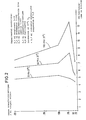
- the measurement range of the Complement Fixation Test can be considerably extended if the complete extent of the complement haemolysis of a reactant mixture over time is utilized.
- a prerequisite is that the qualitative- quantitative evaluation of the Complement Fixation Test is not only determined by the ratio of lysed to unlysed cells but also must be extended to the delay in complement haemolysis. The decision as to whether this delay of complement haemolysis is visually-qualitative or semi-quantitatively measured or is analysed photometrically, and the results of this analysis used to quantify the results is left to the user.
- the main characteristic of the method is the kinetic measurement in the presence of excess complement.
- the haemolysis reaction decrease in extinction, decrease in turbidity
- the main reaction bond reaction of the antigen with the antibody and binding of complement activity in the analytical sample as also in the control sample
- the ready to use reagents are manufactured in an ampoule pair, or in a ready to use package, even when these ready to use ampoule pairs or packages contain only the necessary individually packed reagents for e.g. only complement and antigen or complement and control antigen or comple - ment and an antibody against the substance to be tested e.g. complement and a blank serum (of the same species but not immunized individual or animal), and in the haemolysis reaction to the classical heamolytic system is used.
- complement and a blank serum of the same species but not immunized individual or animal
- the optimal temperature for the Complement Fixation Test is preferably an optical aid.
- This optical aid is a finely patterned transparent underlay which makes it possible to determine the delayed haemolysis the desynchronization of the reaction more exactly and with a higher resolution not just qualitatively but also semiquantitatively. In practice it has been found that delays of 20 to 40 seconds can reproducibly be determined. This delay in haemolysis corresponds to 10 to 15 nanogram complexed antigen pro ml reaction mixture and corresponds to an approximately 10-fold increase in the sensitivity-of the reaction compared to the classical Complement Fixation Test.
- the manufacturer of the ready to use reagents will preferably so adjust the reagents that a complete phaseshift of the haemolysis reaction corresponds to a 1:5 positive dilution of the classical Complement Fixation Test in order that comparisons of titer can more easily be made.
- the most suitable method of measurement is the so called 50% complement haemolysis measurement: the method of CH-50%- lysis-time-analysis.
- An alternative method is the measurement of the slope, extinction or turbidity decrease per unit time to obtain a haemolysis curve and on the basis of this to establish a quantification of the reaction.
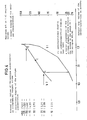
- the CH-50%-lysis-time-analysis method is in fact a method to measure the actual complement activity of a reaction mixture and on its own does not provide an excellent photometric quantification of the Complement Fixation Test. For this one needs a transformation of the measured lysis time, preferably in seconds, to their natural logarithmic values and the display of the concentration of the tested antigen or antibody amount, likewise in its natural logarithmic value. This procedure is called the double logarithmic method of evaluating the measurement results. This preferred procedure achieves considerable advantages.
- Figure 2 indicates such an antigen/antibody standard curve.
- This condition makes possible the photometric quantification or the semiquantitative visual quantification of the Complement Fixation Test in its kinetic evaluatable form (always working with excess complement) in a manner that with the assistance of the CH-50%-lysis-time-analysis in the individual tests, e.g. in the antigen substance standard curve test and in a sample test (determining antigen concentration of the sample), the actual complement activity shortly after completion of the antibody/antigen determined specific complement binding can be quantitatively determined and from the individual actual complement activity values a quantification can be carried out.
- the ratio of reagents is preferably so chosen that the equivalent point (the point of optimal antibody/antigen ratio for the complement binding) is in the range 15 - 20 minutes.
- reaction system is preferably presensitized with small amounts of antigen or antibody, so that the blank indicates and exceeds the point of the C+1 inactivation system.
- the method of limited immunocomplex-/substance technique By this method one achieves a linear standard curve for antigen/antibody, if one uses this method of evaluation: the natural logarithmic values of the CH-50%-lysis-time-analysis corresponding to the actual complement activity are plotted against the antigen/antibody concentration, whereby these are also displayed in their natural logarithmic values.
- Serum samples treated in such a way only show an inhibitory effect, which delays the haemolytic reaction, this being caused by an unspecific inhibition of the actual complement activity to a greater or lesser degree.
- a proband serum that contains circulating immunocomplexes due to illness will cause a complement binding which is due to the complement binding capacity fo the immunocomplex.
- This complement binding is, however, in the analytical (antigen) and in control (antigen) system in similar concentration. This causes a delay in the complement haemolysis because of the lower actual level of complement activity following the main binding but it does not cause a desynchronization of the haemolysis reaction which would be evaluated as positive.
- sheep-erythrocytes also an extract therefrom can be used. Extracts can be made by centrifuging lyzed erythrocytes in 3 molar potassiumchlorid solution. After 16 hours it is dialyzed against 0.9% sodiumchlorid solution. The residue is bound to carboxycellulose or sepharose which are inert against complement.
- proband serum which does not possess amboceptor-like activity. It is to be expected that in the classical complement fixation where the amboceptor-like activity of proband serum is not removed that this amobo- zeptor-like activity had a disturbing effect on the cause of the reaction, especially with the early dilutions where the proband serum content pro ml reagent is relatively high.
- a test system for measuring the unspecific total effect of proband sera on the actual complement activity of a reactant mixture consisting of amboceptor and complement in optimal concentration (Serobac-complement-deviation-test I) 1 ml of reagent mixture containing 50 microliter complement in phosphate buffered saline with calcium and magnesium (PBS phosphate buffered physiological salt solution with 10 mg% calcium and 5 mg% magnesium) and 0.2 microliter amboceptor 1:4000 (product of Behringwerke AG, D-3550 Marburg).
- PBS phosphate buffered physiological salt solution with 10 mg% calcium and 5 mg% magnesium 0.2 microliter amboceptor 1:4000 (product of Behringwerke AG, D-3550 Marburg).
- a test with 100 microliter buffer solution instead of proband serum served as control. After incubation at 37°C for 180 minutes corresponding to the main incubation of the Complement Fixation Test a CH-50%-lysis-time-analysis was carried out to determine the actual complement activity of the system. Sheep erythrocytes 100 microliter were added to give to initial extinction of 0.5. Serum samples were found to possess a higher complement activity despite removal of complement than the control system possesses.
- control system remains unsolved. This is to be expected as the system does not contain amboceptor. No sensitization of the sheep-erythrocytes can occur.
- proband sera show different amboceptor-like activities. So it is understandable that in the first series of studies the proband sera mimics a higher actual complement activity.
- Toxoplasmose-antigen Biomerieux is obtained from mouse ascites. For this reason there is no control antigen, just a control system. Instead of control antigen CFT-buffer is used.
- the other possibility of resynchronization of the actual complement activity in the system is the determination of a dilution factor.
- the control system is diluted with increasing amounts of CFT buffer before beginning the primary incubation. That is, the lyophilized reagents are diluted directly after reconstitution.
- To the control system (1 ml) is added 100/200/300/400/500/600 microliter CFT-buffer additionally mixed well and then the corresponding amount is removed.
- a percentual dilution of the system with the higher actual complement activity is obtained.
- the invention is not limited to the process or test package described above which may be varied in detail.
Landscapes
- Health & Medical Sciences (AREA)
- Immunology (AREA)
- Life Sciences & Earth Sciences (AREA)
- Engineering & Computer Science (AREA)
- Chemical & Material Sciences (AREA)
- Urology & Nephrology (AREA)
- Hematology (AREA)
- Biomedical Technology (AREA)
- Molecular Biology (AREA)
- Analytical Chemistry (AREA)
- General Health & Medical Sciences (AREA)
- Cell Biology (AREA)
- Chemical Kinetics & Catalysis (AREA)
- Food Science & Technology (AREA)
- Medicinal Chemistry (AREA)
- Physics & Mathematics (AREA)
- Biotechnology (AREA)
- Biochemistry (AREA)
- Microbiology (AREA)
- General Physics & Mathematics (AREA)
- Pathology (AREA)
- Measuring Or Testing Involving Enzymes Or Micro-Organisms (AREA)
- Investigating Or Analysing Biological Materials (AREA)
- Immobilizing And Processing Of Enzymes And Microorganisms (AREA)
- Agricultural Chemicals And Associated Chemicals (AREA)
- Medicinal Preparation (AREA)
- Peptides Or Proteins (AREA)
Priority Applications (1)
| Application Number | Priority Date | Filing Date | Title |
|---|---|---|---|
| AT83103754T ATE22731T1 (de) | 1982-04-21 | 1983-04-19 | Verfahren zur durchfuehrung serologischer untersuchungen entsprechend dem prinzip des komplement-fixationstests und testpackung zur verwendung in diesem verfahren. |
Applications Claiming Priority (2)
| Application Number | Priority Date | Filing Date | Title |
|---|---|---|---|
| IE820943A IE820943L (en) | 1982-04-21 | 1982-04-21 | Serological investigations by complement fixation test |
| IE94382 | 1982-04-21 |
Publications (3)
| Publication Number | Publication Date |
|---|---|
| EP0092224A2 true EP0092224A2 (fr) | 1983-10-26 |
| EP0092224A3 EP0092224A3 (en) | 1983-12-07 |
| EP0092224B1 EP0092224B1 (fr) | 1986-10-08 |
Family
ID=11020073
Family Applications (1)
| Application Number | Title | Priority Date | Filing Date |
|---|---|---|---|
| EP83103754A Expired EP0092224B1 (fr) | 1982-04-21 | 1983-04-19 | Procédé pour réaliser des analyses sérologiques selon le principe d'épreuve de fixation du complément et trousse utilisée pour un tel procédé |
Country Status (6)
| Country | Link |
|---|---|
| US (1) | US4619903A (fr) |
| EP (1) | EP0092224B1 (fr) |
| JP (1) | JPS58195155A (fr) |
| AT (1) | ATE22731T1 (fr) |
| DE (1) | DE3366741D1 (fr) |
| IE (1) | IE820943L (fr) |
Families Citing this family (3)
| Publication number | Priority date | Publication date | Assignee | Title |
|---|---|---|---|---|
| DE3381055D1 (de) * | 1982-08-11 | 1990-02-08 | Toshiba Kawasaki Kk | Reagenszusammensetzung fuer immuntest und dieselbe verwendender immuntest. |
| JPH04127634U (ja) * | 1991-05-15 | 1992-11-20 | テーダブリユ電気株式会社 | 可変コンデンサ |
| US20030206942A1 (en) * | 1998-09-25 | 2003-11-06 | Neema Kulkarni | Fast dissolving orally consumable films containing an antitussive and a mucosa coating agent |
Family Cites Families (6)
| Publication number | Priority date | Publication date | Assignee | Title |
|---|---|---|---|---|
| DE2333434C3 (de) * | 1973-06-30 | 1978-04-06 | Istvan D. Dr. 5024 Pulheim Bartos | Verfahren zur Durchführung serologischer Untersuchungen nach dem Prinzip der Komplementbindungsreaktion und gebrauchsfertige Schnelltestpackung hierfür |
| DE2349819A1 (de) * | 1973-10-04 | 1975-04-17 | Eppendorf Geraetebau Netheler | Verfahren zur enzymkinetischen konzentrationsbestimmung eines substrats |
| US4218535A (en) * | 1976-03-16 | 1980-08-19 | Beckman Instruments, Inc. | Determination of enzyme substrate concentration |
| IT1087285B (it) * | 1976-11-10 | 1985-06-04 | Hoffmann La Roche | Procedimento di determinazione immunologico |
| DE2840847A1 (de) * | 1978-09-20 | 1980-04-03 | Behringwerke Ag | Verfahren zum nachweis und zur bestimmung komplementbindender antikoerper |
| DE3005417A1 (de) * | 1980-02-14 | 1981-08-20 | Behringwerke Ag, 3550 Marburg | Verfahren zur bestimmung von immunkomplexen |
-
1982
- 1982-04-21 IE IE820943A patent/IE820943L/xx unknown
-
1983
- 1983-04-14 US US06/485,064 patent/US4619903A/en not_active Expired - Fee Related
- 1983-04-19 AT AT83103754T patent/ATE22731T1/de not_active IP Right Cessation
- 1983-04-19 DE DE8383103754T patent/DE3366741D1/de not_active Expired
- 1983-04-19 EP EP83103754A patent/EP0092224B1/fr not_active Expired
- 1983-04-21 JP JP58069301A patent/JPS58195155A/ja active Granted
Also Published As
| Publication number | Publication date |
|---|---|
| EP0092224B1 (fr) | 1986-10-08 |
| EP0092224A3 (en) | 1983-12-07 |
| US4619903A (en) | 1986-10-28 |
| ATE22731T1 (de) | 1986-10-15 |
| IE820943L (en) | 1983-10-21 |
| JPS58195155A (ja) | 1983-11-14 |
| JPH0526142B2 (fr) | 1993-04-15 |
| DE3366741D1 (en) | 1986-11-13 |
Similar Documents
| Publication | Publication Date | Title |
|---|---|---|
| Kang et al. | Comparison of ABO antibody titers on the basis of the antibody detection method used | |
| Liebhaber | Measurement of rubella antibody by hemagglutination inhibition: II. Characteristics of an improved HAI test employing a new method for the removal of non-immunoglobulin HA inhibitors from serum | |
| Rao et al. | An avidin-biotin microELISA for rapid measurement of total and allergen-specific human IgE | |
| Ruddy et al. | A stoichiometric assay for the fourth component of complement in whole human serum using EAC′ lagp and functionally pure human second component | |
| Levinsky et al. | A test for antigen--antibody complexes in human sera using IgM of rabbit antisera to human immunoglobulins | |
| Riches et al. | Overestimation of monoclonal immunoglobulin by immunochemical methods | |
| US5284777A (en) | Combined glycated hemoglobin and immunoturbidometric glycated albumin assay from whole blood lysate | |
| Jefferis et al. | Quantitation of human total IgG, kappa IgG and lambda IgG in serum using monoclonal antibodies | |
| EP0092224B1 (fr) | Procédé pour réaliser des analyses sérologiques selon le principe d'épreuve de fixation du complément et trousse utilisée pour un tel procédé | |
| Paxton et al. | Comparison of CD4 cell count by a simple enzyme-linked immunosorbent assay using the TRAx CD4 test kit and by flow cytometry and hematology | |
| JP3513075B2 (ja) | 免疫測定法及びそのための試薬 | |
| Slazyk et al. | Effect of lot-to-lot variability in filter paper on the quantification of thyroxin, thyrotropin, and phenylalanine in dried-blood specimens. | |
| Marrodan et al. | Evaluation of three methods to measure anti-Brucella IgM antibodies and interference of IgA in the interpretation of mercaptan-based tests | |
| Nordhagen et al. | Association between HL-A and red cell antigens | |
| Beck et al. | Nephelometry of human IgG subclass concentration in serum. | |
| Kαtnik et al. | Enzyme immunoassay to measure low levels of haptoglobin in biological fluids | |
| Shimizu et al. | A solid-phase radioimmunoassay for detection of human antibodies. I. Measurement of IgG antibody to bee venom antigens | |
| Butts et al. | Intra-individual variation in the concentrations of IgA, IgG, IgM, and complement component C3 in serum of a normal adult population. | |
| US4476230A (en) | Process for the kinetic determination of immunocomplexes | |
| JPS58211659A (ja) | 免疫比濁法による血清crpの簡易迅速定量法 | |
| Freedman et al. | Red blood cell‐bound C3d in normal subjects and in random hospital patients | |
| JP2618629B2 (ja) | 特異的な免疫学的定量方法 | |
| EP0043608A1 (fr) | Procédé hémolytique pour la détermination cinétique des anticorps antistreptolysine-O dans les échantillons de sang ou de sérum, utilisant la streptolysine-O oxydée | |
| De Messias et al. | Complement activation in Brazilian pemphigus foliaceus | |
| Heinrich et al. | Micro Complement Fixation with Platelets: A Methodological Analysis 1 |
Legal Events
| Date | Code | Title | Description |
|---|---|---|---|
| PUAI | Public reference made under article 153(3) epc to a published international application that has entered the european phase |
Free format text: ORIGINAL CODE: 0009012 |
|
| PUAL | Search report despatched |
Free format text: ORIGINAL CODE: 0009013 |
|
| AK | Designated contracting states |
Designated state(s): AT BE CH DE FR GB IT LI LU NL SE |
|
| AK | Designated contracting states |
Designated state(s): AT BE CH DE FR GB IT LI LU NL SE |
|
| 17P | Request for examination filed |
Effective date: 19840605 |
|
| GRAA | (expected) grant |
Free format text: ORIGINAL CODE: 0009210 |
|
| AK | Designated contracting states |
Kind code of ref document: B1 Designated state(s): AT BE CH DE FR GB IT LI LU NL SE |
|
| REF | Corresponds to: |
Ref document number: 22731 Country of ref document: AT Date of ref document: 19861015 Kind code of ref document: T |
|
| ITF | It: translation for a ep patent filed | ||
| REF | Corresponds to: |
Ref document number: 3366741 Country of ref document: DE Date of ref document: 19861113 |
|
| ET | Fr: translation filed | ||
| PLBE | No opposition filed within time limit |
Free format text: ORIGINAL CODE: 0009261 |
|
| STAA | Information on the status of an ep patent application or granted ep patent |
Free format text: STATUS: NO OPPOSITION FILED WITHIN TIME LIMIT |
|
| 26N | No opposition filed | ||
| ITTA | It: last paid annual fee | ||
| EPTA | Lu: last paid annual fee | ||
| EAL | Se: european patent in force in sweden |
Ref document number: 83103754.4 |
|
| PGFP | Annual fee paid to national office [announced via postgrant information from national office to epo] |
Ref country code: NL Payment date: 19950430 Year of fee payment: 13 |
|
| PGFP | Annual fee paid to national office [announced via postgrant information from national office to epo] |
Ref country code: LU Payment date: 19950501 Year of fee payment: 13 |
|
| PGFP | Annual fee paid to national office [announced via postgrant information from national office to epo] |
Ref country code: SE Payment date: 19950523 Year of fee payment: 13 |
|
| PGFP | Annual fee paid to national office [announced via postgrant information from national office to epo] |
Ref country code: BE Payment date: 19950609 Year of fee payment: 13 |
|
| PG25 | Lapsed in a contracting state [announced via postgrant information from national office to epo] |
Ref country code: LU Free format text: LAPSE BECAUSE OF NON-PAYMENT OF DUE FEES Effective date: 19960419 |
|
| PG25 | Lapsed in a contracting state [announced via postgrant information from national office to epo] |
Ref country code: SE Effective date: 19960420 |
|
| PG25 | Lapsed in a contracting state [announced via postgrant information from national office to epo] |
Ref country code: BE Effective date: 19960430 |
|
| PGFP | Annual fee paid to national office [announced via postgrant information from national office to epo] |
Ref country code: DE Payment date: 19960628 Year of fee payment: 14 |
|
| PGFP | Annual fee paid to national office [announced via postgrant information from national office to epo] |
Ref country code: GB Payment date: 19961017 Year of fee payment: 14 |
|
| PGFP | Annual fee paid to national office [announced via postgrant information from national office to epo] |
Ref country code: FR Payment date: 19961030 Year of fee payment: 14 Ref country code: CH Payment date: 19961030 Year of fee payment: 14 Ref country code: AT Payment date: 19961030 Year of fee payment: 14 |
|
| BERE | Be: lapsed |
Owner name: BARTOS PATENT DEVELOPMENT AND HOLDING CY LTD Effective date: 19960430 |
|
| PG25 | Lapsed in a contracting state [announced via postgrant information from national office to epo] |
Ref country code: NL Effective date: 19961101 |
|
| NLV4 | Nl: lapsed or anulled due to non-payment of the annual fee |
Effective date: 19961101 |
|
| EUG | Se: european patent has lapsed |
Ref document number: 83103754.4 |
|
| PG25 | Lapsed in a contracting state [announced via postgrant information from national office to epo] |
Ref country code: GB Effective date: 19970419 Ref country code: AT Effective date: 19970419 |
|
| PG25 | Lapsed in a contracting state [announced via postgrant information from national office to epo] |
Ref country code: LI Free format text: LAPSE BECAUSE OF NON-PAYMENT OF DUE FEES Effective date: 19970430 Ref country code: CH Free format text: LAPSE BECAUSE OF NON-PAYMENT OF DUE FEES Effective date: 19970430 |
|
| GBPC | Gb: european patent ceased through non-payment of renewal fee |
Effective date: 19970419 |
|
| REG | Reference to a national code |
Ref country code: CH Ref legal event code: PL |
|
| PG25 | Lapsed in a contracting state [announced via postgrant information from national office to epo] |
Ref country code: FR Free format text: LAPSE BECAUSE OF NON-PAYMENT OF DUE FEES Effective date: 19971231 |
|
| PG25 | Lapsed in a contracting state [announced via postgrant information from national office to epo] |
Ref country code: DE Free format text: LAPSE BECAUSE OF NON-PAYMENT OF DUE FEES Effective date: 19980101 |
|
| REG | Reference to a national code |
Ref country code: FR Ref legal event code: ST |