EP0104376A2 - Verfahren zur Herstellung von optisch aktiven Aminen und Enaminen - Google Patents
Verfahren zur Herstellung von optisch aktiven Aminen und Enaminen Download PDFInfo
- Publication number
- EP0104376A2 EP0104376A2 EP83107754A EP83107754A EP0104376A2 EP 0104376 A2 EP0104376 A2 EP 0104376A2 EP 83107754 A EP83107754 A EP 83107754A EP 83107754 A EP83107754 A EP 83107754A EP 0104376 A2 EP0104376 A2 EP 0104376A2
- Authority
- EP
- European Patent Office
- Prior art keywords
- methyl
- optically active
- general formula
- compound
- formula iii
- Prior art date
- Legal status (The legal status is an assumption and is not a legal conclusion. Google has not performed a legal analysis and makes no representation as to the accuracy of the status listed.)
- Granted
Links
Classifications
-
- C—CHEMISTRY; METALLURGY
- C07—ORGANIC CHEMISTRY
- C07D—HETEROCYCLIC COMPOUNDS
- C07D295/00—Heterocyclic compounds containing polymethylene-imine rings with at least five ring members, 3-azabicyclo [3.2.2] nonane, piperazine, morpholine or thiomorpholine rings, having only hydrogen atoms directly attached to the ring carbon atoms
- C07D295/04—Heterocyclic compounds containing polymethylene-imine rings with at least five ring members, 3-azabicyclo [3.2.2] nonane, piperazine, morpholine or thiomorpholine rings, having only hydrogen atoms directly attached to the ring carbon atoms with substituted hydrocarbon radicals attached to ring nitrogen atoms
- C07D295/08—Heterocyclic compounds containing polymethylene-imine rings with at least five ring members, 3-azabicyclo [3.2.2] nonane, piperazine, morpholine or thiomorpholine rings, having only hydrogen atoms directly attached to the ring carbon atoms with substituted hydrocarbon radicals attached to ring nitrogen atoms substituted by singly bound oxygen or sulfur atoms
- C07D295/084—Heterocyclic compounds containing polymethylene-imine rings with at least five ring members, 3-azabicyclo [3.2.2] nonane, piperazine, morpholine or thiomorpholine rings, having only hydrogen atoms directly attached to the ring carbon atoms with substituted hydrocarbon radicals attached to ring nitrogen atoms substituted by singly bound oxygen or sulfur atoms with the ring nitrogen atoms and the oxygen or sulfur atoms attached to the same carbon chain, which is not interrupted by carbocyclic rings
-
- C—CHEMISTRY; METALLURGY
- C07—ORGANIC CHEMISTRY
- C07C—ACYCLIC OR CARBOCYCLIC COMPOUNDS
- C07C17/00—Preparation of halogenated hydrocarbons
- C07C17/093—Preparation of halogenated hydrocarbons by replacement by halogens
-
- C—CHEMISTRY; METALLURGY
- C07—ORGANIC CHEMISTRY
- C07F—ACYCLIC, CARBOCYCLIC OR HETEROCYCLIC COMPOUNDS CONTAINING ELEMENTS OTHER THAN CARBON, HYDROGEN, HALOGEN, OXYGEN, NITROGEN, SULFUR, SELENIUM OR TELLURIUM
- C07F15/00—Compounds containing elements of Groups 8, 9, 10 or 18 of the Periodic Table
- C07F15/0006—Compounds containing elements of Groups 8, 9, 10 or 18 of the Periodic Table compounds of the platinum group
-
- C—CHEMISTRY; METALLURGY
- C07—ORGANIC CHEMISTRY
- C07F—ACYCLIC, CARBOCYCLIC OR HETEROCYCLIC COMPOUNDS CONTAINING ELEMENTS OTHER THAN CARBON, HYDROGEN, HALOGEN, OXYGEN, NITROGEN, SULFUR, SELENIUM OR TELLURIUM
- C07F15/00—Compounds containing elements of Groups 8, 9, 10 or 18 of the Periodic Table
- C07F15/0006—Compounds containing elements of Groups 8, 9, 10 or 18 of the Periodic Table compounds of the platinum group
- C07F15/006—Palladium compounds
- C07F15/0066—Palladium compounds without a metal-carbon linkage
-
- C—CHEMISTRY; METALLURGY
- C07—ORGANIC CHEMISTRY
- C07F—ACYCLIC, CARBOCYCLIC OR HETEROCYCLIC COMPOUNDS CONTAINING ELEMENTS OTHER THAN CARBON, HYDROGEN, HALOGEN, OXYGEN, NITROGEN, SULFUR, SELENIUM OR TELLURIUM
- C07F15/00—Compounds containing elements of Groups 8, 9, 10 or 18 of the Periodic Table
- C07F15/0006—Compounds containing elements of Groups 8, 9, 10 or 18 of the Periodic Table compounds of the platinum group
- C07F15/0073—Rhodium compounds
- C07F15/008—Rhodium compounds without a metal-carbon linkage
-
- C—CHEMISTRY; METALLURGY
- C07—ORGANIC CHEMISTRY
- C07F—ACYCLIC, CARBOCYCLIC OR HETEROCYCLIC COMPOUNDS CONTAINING ELEMENTS OTHER THAN CARBON, HYDROGEN, HALOGEN, OXYGEN, NITROGEN, SULFUR, SELENIUM OR TELLURIUM
- C07F9/00—Compounds containing elements of Groups 5 or 15 of the Periodic Table
- C07F9/02—Phosphorus compounds
- C07F9/28—Phosphorus compounds with one or more P—C bonds
- C07F9/50—Organo-phosphines
- C07F9/5027—Polyphosphines
Definitions
- the invention also relates to the new optically active enamines and imines of the above formula I, and to their use for the production of, for example, natural vitamin E, natural vitamin K 1 or also fragrances.
- the compounds of formula I can easily in a conventional manner to the optically active aldehydes of the general formula where R has the above meaning, are hydrolyzed.
- These aldehydes or. the acids or alcohols derived therefrom are known compounds or analogs or derivatives of known compounds which can be converted into natural vitamin E or natural vitamin K 1 in a known manner.
- Suitable protective groups for the hydroxymethyl groups in the context of the present invention are, in particular, the usual ether-forming groups, such as e.g. Benzyl, methyl, tert-butyl, allyl, methoxymethyl and the like, as well as silyl ether-forming groups such as e.g. Trimethylsilyl, tert-butyldimethylsilyl and the like.
- protected formyl means in particular acetalized formyl.
- Acetalized formyl groups are, for example, residues of the formula in which A is C1-C4-alkyl, or both substituents A together represent C 2 -C 4 alkylene.
- alkoxycarbonyl means in particular those groups in which the alkyl radical has 1-4 carbon atoms, such as methoxycarbonyl, ethoxycarbonyl and the like.
- lower alkyl means in particular straight-chain or branched alkyl groups having 1-4 carbon atoms such as methyl, ethyl, propyl, isopropyl, n-butyl, isobutyl and tert-butyl.
- cycloalkyl means in particular cyclopropyl, cyclopentyl, cyclohexyl and the like.
- substituents R 2 and R 3 together with the nitrogen atom represent a heterocyclic ring, this is preferably a pyrrolidine or piperidine ring.
- a ring may also contain a further oxygen atom or an optionally alkylated (C 1 -C 4 ) or benzylated nitrogen atom, for example the morpholine or piperazine ring.
- the phenyl and benzyl radicals mentioned can be both unsubstituted and also substituted in the ortho, meta or para position or else multiply.
- Lower alkyl or lower alkoxy groups preferably methyl or methoxy groups, or also di-lower alkylamino, preferably dimethylamino groups, and fluorine are suitable as substituents here.
- the terms "lower alkoxy”, “di-lower lkylamino A" and “lower alkoxycarbonyl” signify groups in which the alkyl group may have the above mentioned meaning.
- Preferred compounds of formula III are those in which R 4 is unsubstituted or methyl or fluorine, substituted phenyl, R and R 6 are the same and lower alkyl or together the group -CH 2 -0-CH 2 -, n is the number O or 1 and R is methyl, fluorine or di-lower alkylamino.
- rhodium iridium and cobalt, in particular rhodium, can be mentioned as preferred.
- catalyst complexes mentioned are new, but can be prepared in a simple and known manner. This is done, for example, by reacting a compound of the formula III or IV with a compound which can give off a Group VIII metal in a suitable inert solvent. This can be done, on the one hand, by contacting the phosphorus compounds of the formulas III and IV as such, in a solution of a compound of the formula II to be isomerized, with a compound which gives off a metal of group VIII; ie the catalyst complex can be formed in situ.
- the phosphorus compounds of the formulas III and IV first in an appropriate organic or aqueous solvent, with a a metal of - VIII-donating compound to the corresponding catalyst complex are converted group, and this then added to a solution of the isomerized compound of formula II will.
- the latter method is preferred.
- Compounds that can donate a Group VIII metal are known.
- Suitable compounds which give off rhodium are, for example, rhodium trichloride hydrate, rhodium tribromide hydrate, rhodium sulfate, or else organic rhodium complexes with ethylene, propylene and the like, and also with bis-olefins, for example 1,5-cyclooctadiene, 1,5-hexadiene , Bicyclo [2.2.1] hepta-2,5-diene or with other dienes which form complexes which are readily soluble with rhodium.
- Preferred rhodium-releasing compounds are, for example, di- ⁇ -chloro- bis ( ⁇ 4 -1,5-cyclooctadiene] dirhodium (I) or di-p-chloro- bis [ ⁇ 4 -norbornadiene] dirhodium (I).
- Examples of other suitable compounds which give off one of the other Group VIII metals are: iridium trichloride hydrate, di-p-chloro- bis [ ⁇ 4 -1,5-cyclooctadiene] diiridium (I); Cobalt dichloride, cobalt (II) acetate or naphthenate, cobalt (II) - or Cobalt (III) acetylacetonate and the like.
- Both the reaction of the phosphorus compounds of the formulas III and IV with a compound which gives off a metal from Group VIII, and also the isomerization mentioned can be carried out in suitable organic solvents which are inert under the reaction conditions.
- suitable organic solvents which are inert under the reaction conditions.
- lower alkanols such as e.g. Methanol or ethanol
- aromatic hydrocarbons such as benzene or toluene
- cyclic ethers such as tetrahydrofuran or dioxane
- esters such as e.g. Ethyl acetate or mixtures thereof and the like.
- the complex formation can be carried out in an aqueous medium or in dichloromethane.
- the ratio between metal of group VIII and the ligands of formulas III and IV is advantageously between about 0.05 and about 5 moles, preferably between about 0.5 and about 2 moles of metal per mole of ligand of formula III or IV.
- the amount of metal in the complexes with the ligands of the formulas III and IV, based on the compounds to be isomerized /, is advantageously between about 0.01 and about 2 mol%, preferably between about 0.05 and about 1 mol% and in particular between about 0 , 1 and about 0.5 mol%.
- the isomerization can expediently be carried out in an inert, organic solvent and at a temperature from about room temperature to about 130.degree.
- This reaction preferably takes place at elevated temperature, i.e. depending on the solvent used, either at the reflux temperature of the reaction mixture or in a closed vessel under pressure.
- the compounds of the general formula II to be isomerized are known compounds or derivatives or analogs of known compounds which can easily be prepared in a manner known per se. They can be present as (E / Z) mixtures, but preferably in the pure (E) or (Z) form.
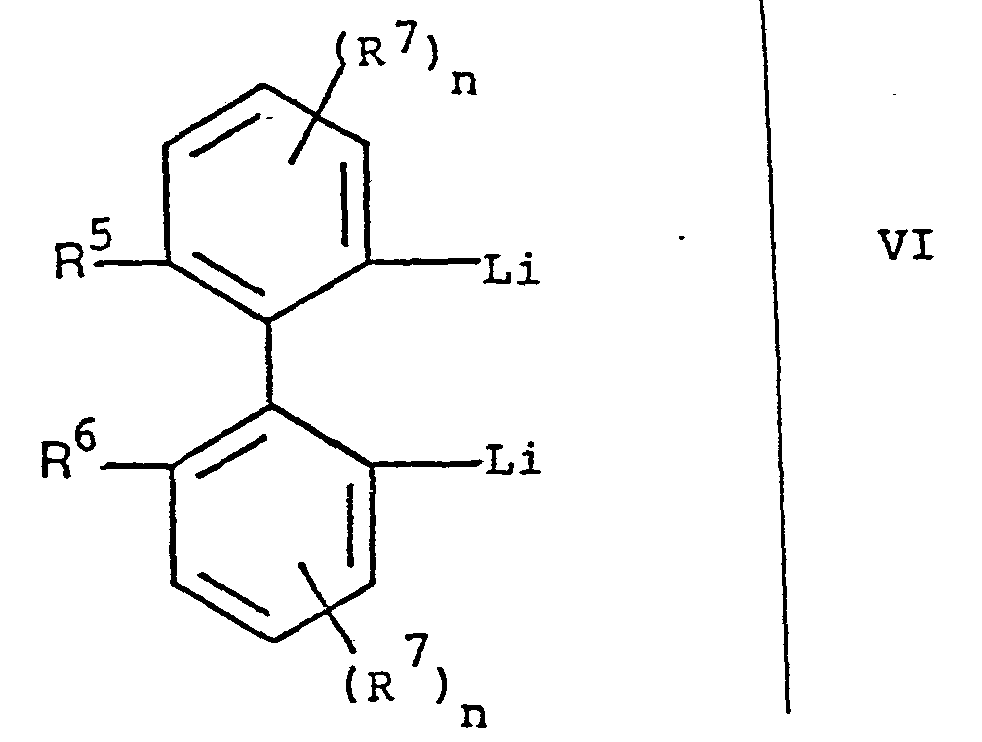
- optically active compounds of formula III are new compounds. They can be prepared, for example, by using a racemic compound of the general formula wherein R 5 , R 6 , R 7 and n have the above meaning, with a compound of the general formula wherein R 4 has the meaning given above and X represents a leaving group, is reacted and a racemic compound of the formula III obtained is separated into the optical antipodes.
- leaving group in this context means in particular groups such as e.g. Halogen, especially chlorine or bromine, and alkoxy groups such as methoxy, and the like.
- the reaction of a compound of formula VI with a compound of formula VII can be carried out in a manner known per se.
- the reaction is expediently carried out in an inert, aprotic organic solvent, such as, for example, an ether such as, for example, diethyl ether, tetrahydrofuran, dimethoxyethane and the like.
- aprotic organic solvent such as, for example, an ether such as, for example, diethyl ether, tetrahydrofuran, dimethoxyethane and the like.
- the reaction is also convenient at a temperature from about room temperature to about -120 ° C, preferably below about -60 ° C and in particular below about -90 ° C.
- the pressure here is not a critical variable and the reaction can easily take place at atmospheric pressure.
- a racemic compound of the formula III can be cleaved into the optical antipodes in a manner known per se. This is preferably done e.g. by complex formation with di- ⁇ -chloro-bis [R) -2- [1- (dimethylamino) ethyl] phenyl-C, N,] - dipalladium (II), separation of the two diastereomeric complexes by fractional crystallization and subsequent reductive Release of the corresponding antipodes.
- racemic compounds of the formula VI and the compounds of the formula VII are known compounds or analogs of known compounds which can easily be prepared in a manner known per se.
- distillate was taken up in 13.5 ml of tetrahydrofuran, mixed with 6.5 ml of 0.5 N HCl and 2 ml of acetic acid. The homogeneous mixture was stirred at 0 ° C. for 15 minutes. For working up, the whole was poured into water and extracted three times with ether. The combined organic extracts were washed twice with 1N HCl, then with dilute NaHCO 3 solution and saturated NaCl solution, dried over Na 2 SO 4 , filtered and evaporated.
- reaction solution was stirred for a further 20 minutes at about -100 ° C., during which it slowly became whitish. Then a solution of 880 mg (4 mmol) of chlorodiphenylphosphine in 5 ml of abs. Diethyl ether dropped in at about -90 ° to -100 ° C within 15 minutes.
- the reaction mixture was during Allow to warm to room temperature for 2 hours, with the precipitation of a white precipitate beginning at about -60 ° C., and stirring was continued for 1 hour at room temperature.
- the mixture was mixed with water and dichloromethane under argon, the organic phase was separated off, washed with water and dried by filtration over Na 2 SO 4 .
- a Pyrex bomb tube was filled with 506 mg (2.73 mmol) of methyl 4- (diethylamino) -2-methyl-2-butenate (83:17 (E / Z) mixture), 80 mg (0.0929 mmol) [ ⁇ 4 -1,5-cyclooctadiene] - [(R) - (6,6'-dimethyl-2,2'-biphenylylene) bis (diphenylphosphine)] rhodium (I) perchlorate and 8 ml of tetrahydrofuran , degassed, melted and heated to 80 ° C in the bomb tube furnace for 64 hours.
Landscapes
- Chemical & Material Sciences (AREA)
- Organic Chemistry (AREA)
- Health & Medical Sciences (AREA)
- Life Sciences & Earth Sciences (AREA)
- Biochemistry (AREA)
- General Health & Medical Sciences (AREA)
- Molecular Biology (AREA)
- Organic Low-Molecular-Weight Compounds And Preparation Thereof (AREA)
Abstract
Description
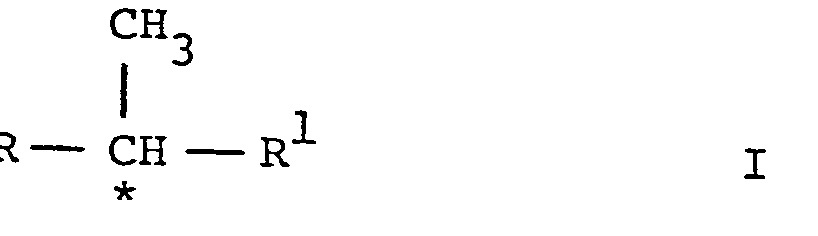
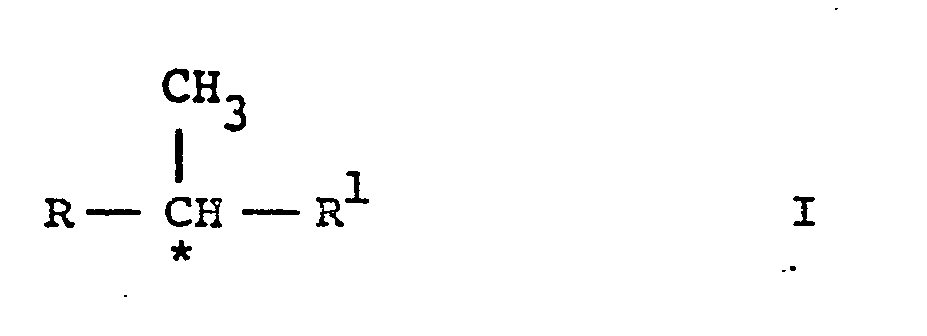
- Die vorliegende Erfindung betrifft ein neues Verfahren zur Herstellung von optisch aktiven, in Stellung 4 funktionalisierten Enaminen oder Iminen der allgemeinen Formel

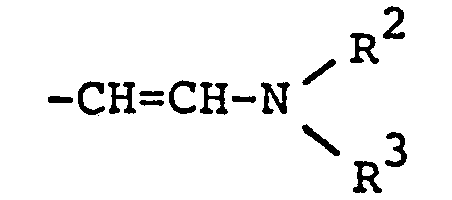
Hydroxymethyl, geschütztes Formyl oder Alkoxycarbonyl und R1 eine Gruppe der Formel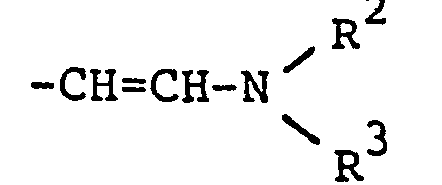
einen heterocyclischen Ring darstellen, welches dadurch gekennzeichnet ist, dass man ein Amin der allgemeinen Formel


oder einer optisch aktiven, in (R)- oder (S)-Form vorliegenden Verbindung der allgemeinen Formel
Di-niederes Alkylamino oder niederes Alkoxy substituiert sind, isomerisiert. - Die Erfindung betrifft ebenfalls.die neuen optisch aktiven Enamine und Imine der obigen Formel I, sowie deren Verwendung zur Herstellung von beispielsweise natürlichem Vitamin E, natürlichem Vitamin K1 oder auch von Riechstoffen.
- Die Verbindungen der Formel I können leicht in an sich bekannter Weise zu den optisch aktiven Aldehyden der allgemeinen Formel

- Aus der deutschen Offenlegungsschrift (DOS) No. 27 20 775 und aus der europäischen Patentpublikation No. 39 830 sind bereits Verfahren zur Herstellung von optisch aktiven Verbindungen der Formel V bzw. von Analogen hiervon bekannt. Gemäss obiger DOS werden diese Verbindungen zwar mit hoher optischer Reinheit, jedoch auf mikrobiologischem-Wege hergestellt, und gemäss dem Verfahren der erwähnten europäischen Patentpublikation werden diese Verbindungen nur mit einer optischen Reinheit von lediglich ca. 60% erhalten.
- Es bestand somit ein Bedürfnis nach einem chemischen, insbesondere einem katalytischen, Verfahren zur Herstellung der optisch aktiven Verbindungen der Formeln I bzw. V, gemäss welchem diese Verbindungen insbesondere mit einer hohen optischen Reinheit erhalten werden können. Dies ist nun mittels des erfindungsgemässen Verfahrens gelungen, da gemäss diesem Verfahren solche Verbindungen mit einer optischen Reinheit von bis zu 99% erhalten werden. Dieses neue Verfahren, sowie auch die neuen Verbindungen der Formel I stellen somit eine wertvolle Bereicherung des Standes der Technik dar.
- Als Schutzgruppen für die Hydroxymethylgruppenkommen im Rahmen der vorliegenden Erfindung insbesondere in Frage die üblichen, Aether-bildenden Gruppen wie z.B. Benzyl, Methyl, tert.-Butyl, Allyl, Methoxymethyl und dergleichen, sowie auch Silylätherbildende Gruppen, wie z.B. Trimethylsilyl, tert.Butyldimethylsilyl und dergleichen.
- Der Ausdruck "geschütztes Formyl" bedeutet insbesondere acetalisiertes Formyl. Acetalisierte Formylgruppen sind beispielsweise Reste der Formel

- Der Ausdruck "Alkoxycarbonyl" bedeutet insbesondere solche Gruppen, in denen der Alkylrest 1-4 Kohlenstoffatome aufweist, wie Methoxycarbonyl, Aethoxycarbonyl und dergleichen. Der Ausdruck "niederes Alkyl" bedeutet insbesondere geradkettige oder verzweigte Alkylgruppen mit 1-4 Kohlenstoffatomen wie Methyl, Aethyl, Propyl, Isopropyl, n-Butyl, Isobutyl und tert.-Butyl. Der Ausdruck "Cycloalkyl" bedeutet insbesondere Cyclopropyl, Cyclopentyl, Cyclohexyl und dergleichen. Falls die Substituenten R2 und R3 zusammen mit dem Stickstoffatom einen heterocyclischen Ring darstellen, ist dies vorzugsweise ein Pyrrolidin- oder Piperidinring. In einem derartigen Ring können jedoch auch noch ein weiteres Sauerstoffatom oder ein gegebenenfalls alkyliertes (C1-C4) oder benzyliertes Stickstoffatom enthalten sein, z.B. der Morpholin-oder Piperazinring.
- Die erwähnten Phenyl- und Benzylreste können, im Rahmen der vorliegenden Erfindung, sowohl unsubstituiert als auch in ortho-, meta- oder para-Stellung oder auch mehrfach substituiert sein. Als Substituenten kommen hier in Frage niedere Alkyl- oder niedere Alkoxygruppen, vorzugsweise Methyl- oder Methoxygruppen, oder auch Di-niederes Alkylamino, vorzugsweise Dimethylaminogruppen, sowie Fluor. Die Ausdrücke "niederes Alkoxy", "Di-niederes Alkylamino" und "niederes Alkoxycarbonyl" bedeuten Gruppen, in denen der Alkylrest die vorhergehend erwähnte Bedeutung haben kann.
- Bevorzugte Verbindungen der Formel III sind solche, worin R4 unsubstituiertes oder Methyl oder Fluor, substituiertes Phenyl, R und R6 gleich sind und niederes Alkyl oder zusammen die Gruppe -CH 2 -0-CH 2-, n die Zahl O oder 1 und R Methyl, Fluor oder Di-niederes Alkylamino bedeuten.
- Die Isomerisierung einer Verbindung der Formel II zu einer Verbindung der Formel I erfolgt erfindungsgemäss mit Hilfe eines Katalysator-Komplexes aus einem Metall der Gruppe VIII und einem Liganden der allgemeinen Formel III oder IV.
- Von den Metallen der Gruppe VIII können als bevorzugt genannt werden Rhodium, Iridium und Cobalt, insbesondere Rhodium.
- Die erwähnten Katalysator-Komplexe sind zum grössten Teil neu, können aber in einfacher und an sich bekannter Weise hergestellt werden. Dies erfolgt z.B. indem man eine Verbindung der Formel III oder IV mit einer Verbindung, welche ein Metall der Gruppe VIII abgeben kann, in einem geeigneten inerten Lösungsmittel umsetzt. Dies kann einerseits dadurch geschehen, dass man die Phosphorverbindungen der Formeln III und IV als solche, in einer Lösung einer zu isomerisierenden Verbindung der Formel II, mit einer ein Metall der Gruppe VIII abgebenden Verbindung in Kontakt bringt; d.h. der Katalysator-Komplex kann in situ gebildet werden. Andererseits können die Phosphorverbindungen der Formeln III und IV zunächst in einem geeigneten, organischen oder wässrigen Lösungsmittel mit einer ein Metall der-Gruppe VIII abgebenden Verbindung zu dem entsprechenden Katalysator-Komplex umgesetzt werden und dieser dann zu einer Lösung der zu isomerisierenden Verbindung der Formel II gegeben werden. Die letztere Methode ist bevorzugt. Verbindungen, welche ein Metall der Gruppe VIII abgeben können, sind bekannt. Als geeignete, z.B. Rhodium abgebende Verbindungen können beispielsweise genannt werden Rhodiumtrichlorid-Hydrat, Rhodiumtribromid-Hydrat, Rhodiumsulfat, oder auch organische Rhodiumkomplexe mit Aethylen, Propylen und dergleichen, sowie mit bis-Olefinen, z.B. 1,5-Cyclooctadien, 1,5-Hexadien, Bicyclo[2.2.1]hepta-2,5-dien oder mit weiteren Dienen, welche mit Rhodium leicht lösliche Komplexe bilden. Bevorzugte, Rhodium abgebende Verbindungen sind z.B. Di-µ-chloro- bis(η4-1,5-cyclooctadien]dirhodium(I) oder auch Di-p-chloro- bis[η4-norbornadien]dirhodium(I).
- Als weitere geeignete, eines der anderen Metalle der Gruppe VIII abgebende Verbindungen können beispielsweise noch genannt werden: Iridiumtrichlorid-Hydrat, Di-p-chloro- bis[η4-1,5-cyclooctadien]diiridium(I); Cobaltdichlorid, Cobalt(II)-acetat oder -naphthenät, Cobalt(II)- oder Cobalt(III)-acetylacetonat und dergleichen.
- Sowohl die Umsetzung der Phosphorverbindungen der Formeln III und IV mit einer ein Metall der Gruppe VIII abgebenden Verbindung,wie auch die erwähnte Isomerisierung können in geeigneten, unter den Reaktionsbedingungen inerten organischen Lösungsmitteln durchgeführt werden. Als solche können insbesondere genannt werden niedere Alkanole wie z.B. Methanol oder Aethanol, aromatische Kohlenwasserstoffe wie Benzol oder Toluol, cyclische Aether wie Tetrahydrofuran oder Dioxan, Ester wie z.B. Essigester oder auch Gemische hiervon und dergleichen. Weiterhin können die Komplexbildungen in wässrigem Medium oder auch in Dichlormethan durchgeführt werden.
- Das Verhältnis zwischen Metall der Gruppe VIII und den Liganden der FormelnIII und IV liegt zweckmässig zwischen etwa 0,05 und etwa 5 Mol, vorzugsweise zwischen etwa O,5 und etwa 2 Mol Metall pro Mol Ligand der Formel III oder IV.
- Die Menge an Metall in den Komplexen mit den Liganden der Formeln III und IVbezogen auf die zu isomerisierenden Verbindungen/liegt zweckmässig zwischen etwa 0,01 und etwa 2 Mol%, vorzugsweise zwischen etwa 0,05 und etwa 1 Mol% und insbesondere zwischen etwa 0,1 und etwa 0,5 Mol%.
- Die Isomerisierung kann zweckmässig in einem inerten, organischen Lösungsmittel und bei einer Temperatur von etwa Raumtemperatur bis etwa 130°C durchgeführt werden. Diese Reaktion erfolgt vorzugsweise bei erhöhter Temperatur, d.h. je nach verwendetem Lösungsmittel entweder bei Rückflusstemperatur des Reaktionsgemisches oder in einem geschlossenen Gefäss, unter Druck.
- Die zu isomerisierenden Verbindungen der allgemeinen Formel II sind bekannte Verbindungen oder Derivate oder Analoge bekannter Verbindungen, welche leicht in an sich bekannter Weise hergestellt werden können. Sie können als (E/Z)-Gemische vorliegen, vorzugsweise jedoch in der reinen (E)- oder (Z)-Form.
- Die optisch aktiven Verbindungen der Formel III sind neue Verbindungen. Sie Können z.B. dadurch hergestellt werden, dass man eine racemische Verbindung der allgemeinen Formel

- Der Ausdruck "austretende Gruppe" bedeutet in diesem Zusammenhang insbesondere Gruppen wie z.B. Halogen, insbesondere Chlor oder Brom, sowie Alkoxygruppen wie Methoxy, und dergleichen.
- Die Umsetzung einer Verbindung der Formel VI mit einer Verbindung der Formel VII kann in an sich bekannter Weise erfolgen. Die Umsetzung erfolgt zweckmässig in einem inerten, aprotischen organischen Lösungsmittel, wie z.B. einem Aether wie etwa Diäthyläther, Tetrahydrofuran, Dimethoxy- äthan und dergleichen. Die Reaktion erfolgt auch zweckmässig bei einer Temperatur von etwa Raumtemperatur bis etwa -120°C, vorzugsweise unterhalb etwa -60°C und insbesondere unterhalb etwa -90°C. Der Druck ist hierbei keine kritische Grösse und die Reaktion kann ohne weiteres bei Atmosphärendruck erfolgen.
- Die Spaltung einer racemischen Verbindung der Formel III in die optischen Antipoden kann in an sich bekannter Weise durchgeführt werden. Vorzugsweise erfolgt dies z.B. durch Komplexbildung mit Di-µ-chloro-bis[R)-2-[1-(dimethyl- amino)äthyl]phenyl-C,N,]-dipalladium(II), Trennung der beiden diastereomeren Komplexe durch fraktionierte Kristallisation und anschliessende reduktive Freisetzung der entsprechenden Antipoden.
- Die racemischen Verbindungen der Formel VI, sowie die Verbindungen der Formel VII sind bekannte Verbindungen oder Analoge bekannter Verbindungen, welche leicht in an sich bekannter Weise hergestellt werden können.
- A) In einem Pyrex-Bombenrohr von ca. 25 ml Inhalt wurden 2,3 g (10,8 mMol) (E)-N,N-Diäthyl-4-tert.-butoxy-3-methyl-2-butenylaminy 10 ml trockenes Tetrahydrofuran und 49 mg (0,059 mMol ≙ 0,55 Mol%) [η4-Bicyclo[2.2.1]hepta-2,5-dienl[(R)-(6,6'-Dimethyl-2,2'-biphenylylen)-bis(diphenylphosphin)1- rhodium(I)-tetrafluoroborat vorgelegt. Nach Entgasung der Mischung wurde das Rohr zugeschmolzen und während 24 Stunden in einem Bombenrohrofen bei 110°C erhitzt. Die dunkelbraune Reaktionsmischung wurde eingedampft und der braune, ölige Rückstand wurde im Kugelrohr bei ca. 150°C/15 Torr destilliert. Das erhaltene leicht gelbliche Destillat (1,80 g) enthielt gemäss Gaschromatographie 68% (lE,3R)-N,N-Diäthyl-4-tert.-butoxy-3-methyl-l-butenylamin.
- 1H-NMR (60 MHz, CDC13): 5,9 ppm (d, Jtrans = 14 Hz, H-C(1)); 4,05 ppm (dxd, Jtrans = 14 Hz, J (2,3) = 7 Hz, H-C(2)) .
- B) Das vorhergehend erhaltene Destillat wurde in 13,5 ml Tetrahydrofuran aufgenommen, mit 6,5 ml 0,5 N HCl und 2 ml Essigsäure versetzt. Die homogene Mischung wurde 15 Minuten bei 00C gerührt. Zur Aufarbeitung wurde das Ganze in Wasser gegossen und dreimal mit Aether extrahiert. Die vereinigten organischen Auszüge wurden zweimal mit 1 N HCl, dann mit verdünnter NaHCO3-Lösung und gesättigter NaCl-Lösung gewaschen, über Na2SO4 getrocknet, filtriert und eingedampft. Nach Kugelrohrdestillation des erhaltenen Oeles bei ca. 100°C/15 Torr erhielt man 1,03 g (R)-4-tert.-Butoxy-3-methyl-butanal als farbloses Oel mit einer gaschromatographischen Reinheit von 97%;

- In zum Vorhergehenden analoger Weise wurde bei Verwendung von [η4-Bicyclo[2.2.1]hepta-2,5-dien][(S)-(6,6-Dimethyl-2,2'-biphenylylen)-bis(diphenylphosphin)Jrhodium(I)-tetrafluoroborat als Katalysator das (lE,3S)-N,N-Diäthyl- 4-tert.-butoxy-3-methyl-l-butenylamin erhalten; GC-Reinheit 79%;

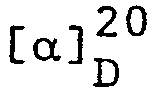
- Die enantiomere Reinheit (ee) wurde in Analogie zur Methode von D. Valentine, Jr. et al., in J. Org. Chem. 41, 62 (1976) durch Oxidation zur Säure, Amidbildung mit (R)-a-Methyl-4-nitrobenzylamin und Analyse der diastereomeren Amide mittels GC bzw. LC bestimmt. Dabei wurde ein SR/RR Diastereomerenverhältnis von 96,3:3,7 gefunden, woraus sich für die enantiomere Reinheit ein Wert von 92,6% ableitet.
- Das gemäss Beispiel 1 verwendete [η4-Bicyclo[2.2.1]hepta-2,5-dien][(R)-(6,6'-Dimethyl-2,2'-biphenylylen)-bis(diphenyl- phosphin)]rhodium(I)-tetrafluoroborat wurde wie folgt hergestellt
- A) In einem 100 ml Sulfierkolben, versehen mit Tropftrichter, Thermometer, Gummiseptum und Magnetrührer wurden unter Argonbegasung 680 mg (2 mMol) (RS)-2,2'-Dibrom-6,6'-dimethyl-biphenyl vorgelegt und 20 ml absoluter Diäthyläther mittels einer Spritze injiziert. Die entstandene Lösung wurde auf ca. -90° bis -100°C gekühlt und bei dieser Temperatur tropfenweise mit 5,6 ml einer ca. 1,4 M tert.-Butyllithiumlösung in Pentan (8 mMol) versetzt. Die Reaktionslösung wurde noch 20 Minuten bei ca. -100°C nachgerührt, wobei sie sich langsam weisslich trübte. Dann wurde eine Lösung von 880 mg (4 mMol) Chlordiphenylphosphin in 5 ml abs. Diäthyläther innerhalb 15 Minuten bei ca. -90° bis -100°C eingetropft. Die Reaktionsmischung wurde während 2 Stunden auf Raumtemperatur erwärmen gelassen, wobei bei ca. -60°C die Ausfällung eines weissen Niederschlages einsetzte, und noch 1 Stunde bei Raumtemperatur nachgerührt. Zur Aufarbeitung wurde das Gemisch unter Argon mit Wasser und Dichlormethan versetzt, die organische Phase abgetrennt, mit Wasser gewaschen und durch Filtration über Na2SO4 getrocknet. Der nach dem Eindampfen erhaltene kristalline Rückstand wurde aus Essigsäureäthylester umkristallisiert und man erhielt 620 mg (RS)-(6,6'-Dimcthyl-2,2'-biphenylylen)-bis-(diphenyl- phosphin) als weisse Kristalle mit einem Schmelzpunkt von 242-243°C. Aus der Mutterlauge wurden nach Kristallisation aus Aethanol/Toluol weitere 84 mg Produkt mit einem Schmelzpunkt von 240-242 C gewonnen; Gesamtausbeute 704 mg.
- B) Das vorhergehend verwendete (RS)-2,2'-Dibrom-6,6'-dimethyl-biphenyl wurde wie folgt hergestellt:
- Zu einer Lösung von 4,24 g (20 mMol) (RS)-6,6'-Dimethyl-2,2'-biphenyldiamin in 12 ml 48%iger wässriger Bromwasserstofflösung wurde bei -5° bis O°C eine Lösung von 2,77 g (40,1 mMol) Natriumnitrit in 5 ml Wasser innerhalb von . 2 Stunden zugetropft. Die eiskalte, dunkle Diazoniumsalzlösung wurde in einen Tropftrichter transferiert und innerhalb von 15 Minuten zu einer heissen (70-75°C) Lösung von 25 ml einer 2M Kupfer(I)bromid-Lösung in 48%iger wässriger Bromwasserstofflösung getropft. Die Diazoniumsalzlösung wurde dabei durch gelegentliches Zufügen von Eis bei 0°C gehalten. Nach beendigtem Zutropfen wurde noch 5 Minuten am Rückfluss gekocht. Die abgekühlte Reaktionslösung wurde dann dreimal mit je 100 ml Aether extrahiert. Die vereinigten organischen Extrakte wurden zweimal mit je 50 ml 2 N HCl, zweimal mit je 50 ml gesättigter NaHC03-Lösung und dreimal mit je 50 ml Wasser gewaschen und dann über Na2SO4 getrocknet. Das nach Filtration und Eindampfen erhaltene Produkt (6 g) bestand gemäss Gaschromatographie aus einem 8:23:59-Gemisch von 2-Brom-6,6'-dimethyl-biphenyl, 2-Brom-2'-hydroxy-6,6'-dimethyl-biphenyl und (RS)-2,2'-Dibrom-6,6'-dimethyl-biphenyl. Chromatographie an Kieselgel (Hexan/Aether 9:1) lieferte 3,5 g eines 12:87 Gemisches von 2-Brom-6,6'-dimethyl-biphenyl und (RS) -2,2'-Dibrccn-6,6'-dimethyl-biphenyl, aus welchem durch zweimaliges Umkristallisieren aus Pentan schliesslich 1,3 g reines (RS)-2,2'-Dibrom-6,6'-dimethyl-biphenyl erhalten wurden mit einem Schmelzpunkt von 111°-112°C.
- C) Eine Suspension von 2,49 g (4,52 mMol) (RS)-(6,6'-Dimethyl-2,2'-biphenylylen)-bis(diphenylphosphin) und 1,31 g (2,26 mMol) Di-µ-chloro-bis[(R)-2-(1-(dimthylamino)äthyl) phenyl-C,N]-dipalladium(II) in 100 ml Methanol wurde unter Argon bei Raumtemperatur gerührt, bis eine homogene Lösung entstanden war (ca. 4 Stunden). Dazu wurde eine Lösung von 0,95 g (9,04 mMol) Ammoniumtetrafluoroborat in 63 ml Wasser getropft, wobei nach Zugabe von ca. 20 ml die Ausfällung eines gelblichen Niederschlages einsetzte. Der entstandene Niederschlag wurde abfiltriert, mit Methanol/Wasser 1:1 gewaschen und bei 0,2 Torr über Phosphorpentoxid getrocknet, worauf 1,79 g gelbliche Kristalle erhalten wurden. Das Filtrat wurde mit 50 ml Wasser verdünnt und bis zur Koagulation der entstandenen Fällung gerührt (1 Stunde). Filtration und Trocknung lieferten weitere 1,84 g gelbliche Kristalle; Gesamtausbeute 3,63 g.
- Die vereinigten-Kristallfraktionen wurden in 150 ml Dichlormethan/Diäthyläther 1:2 gelöst. Durch langsames Zutropfen von 50 ml Hexan wurde ein Niederschlag erhalten, wobei nach Filtration 1,5 g gelbliche Kristalle erhalten wurden. Dieses Material wurde noch zweimal aus 10 ml Dichlormethan durch portionenweises Zugeben von viermal 10 ml Diäthyläther umkristallisiert. Auf diese Weise wurden 1,07 g [(R)-2-(1-(Dimethylamino)äthyl)phenyl-C,N][(R)-(6,6'-dimethyl-2,2'-biphenylylen)-bis(diphenylphosphin)]palladium(II) tetrafluoroborat mit einem Schmelzpunkt von 213-216°C erhalten;

- In eine Suspension von 42,6 mg (1,12 mMol) Lithiumaluminiumhydrid in 15 ml abs. Tetrahydrofuran wurden bei Raumtemperatur 1 g (1,12 mMol) des vorhergehend hergestellten Tetrafluoroborates in kleinen Portionen innerhalb von 20 Minuten eingetragen. Die entstehende schwarze Reaktionsmischung wurde 1 Stunde nachgerührt. Danach wurde die Reaktion durch Zugabe von einigen Tropfen gesättigter NaCl-Lösung abgebrochen, das Gemisch mit Aktivkohle versetzt und über ein Bett von Na2SO4 und Celite filtriert, und mit viermal 10 ml Tetrahydrofuran nachgewaschen. Der nach dem Eindampfen des Filtrates anfallende schwarz-braune Rückstand wurde in wenig Dichlormethan aufgenommen und über eine kurze Säule von Kieselgel mit Dichlormethan filtriert. Das gelbe Filtrat wurde eingedampft und der kristalline Rückstand wurde aus Aethanol/Toluol umkristallisiert. Man erhielt 121 mg (R)-(6,6'-Dimethyl-2,2'-biphenylylen)-bis(diphenyl- phosphin) als weisse Kristalle mit einem Schmelzpunkt von 210-212,5°C;

- D) In einem Schlenkrohr.wurden 275 mg (0,5 mMol) (.R)-(6,61- Dimethyl-2,2'-biphenylylen)-bis(diphenylphosphin) und 115 mg (0,25 mMol) Di-µ-chloro-bis[η4-bicyclo[2.2.1]hepta-2,5-dien]-dirhodium(I) unter Argon vorgelegt und mit 4 ml deoxygeniertem Methanol versetzt. Die Reaktionsmischung wurde gerührt, bis eine homogene rote Lösung entstanden war (1,5 Stunden). Dazu wurde nun innerhalb von 45 Minuten eine Lösung von 61 mg (0,55 mMol) Natriumtetrafluoroborat in 1,1 ml deoxygeniertem Wasser getropft, wobei ein oranger Niederschlag ausfiel. Nach einer zusätzlichen Rührdauer von 1 Stunde wurde unter Argon filtriert, der Filterrückstand zweimal mit je 0,5 ml Wasser gewaschen und am Hochvakuum getrocknet. Es wurden 360 mg [η4-Bicyclo[2.2.1]-hepta-2,5-dien][(R)-(6,6'-dimethyl-2,2'-biphenylylen)-bis(diphenylphosphin)]rhodium(I)-tetrafluoroborat erhalten als orange Mikrokristalle mit

- In analoger Weise wurde das [η4-BicycloC2.2.1]hepta-2,5-dien][(S)-(6,6'-dimethyl-2,2'-biphenylylen)-bis-(diphenylphosphin)]rhodium(I)-tetrafluoroborat hergestellt;

- Ein Pyrex-Bombenrohr wurde unter Stickstoff mit 1,24 g (5,0 mMol) (E)-N,N-Diäthyl-4-benzyloxy-3-methyl-2-butenyl- amin, 10 ml Tetrahydrofuran (dest. über Natrium/Benzophenon) und 49,8 mg (0,058 mMol) [η4-1,5-Cyclooctadien][(S)-(6,6'-dimethyl-2,2'-biphenylylen)-bis(diphenylphosphin)]rhodium-(I)-perchlorat beschickt. Nach Entgasung wurde das Rohr zugeschmolzen und in einem Bombenrohrofen während 58 Stunden auf 85°C erhitzt. Die dunkelbraune Reaktionsmischung wurde eingedampft und der Rückstand im Kugelrohr bei ca. 150°C/0,2 mmHg destilliert. Dabei wurden 1,05 g eines gelben oeles erhalten, das gemäss GC- und NMR-Analyse 73% (lE,3S)-N,N-Diäthyl-4-benzyloxy-3-methyl-l-butenylamin enthielt;
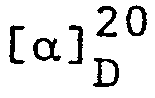
- Zur Hydrolyse des Enamins wurden 0,85 g des Destillates in 6 ml 50% Essigsäure aufgenommen, die Mischung 10 Minuten kräftig durchgerührt und dann mit 10 ml Hexan überschichtet und weitere 30 Minuten nachgerührt. Nach Trennung der Phasen wurde die wässrige Lösung noch zweimal mit Aether extrahiert. Die vereinigten organischen Phasen wurden gewaschen (0,2N HCl, ges. NaHCO3-Lösung, ges. NaCl-Lösung), getrocknet (Na2S04), filtriert und eingedampft, und der Rückstand wurde im Kugelrohr bei ca. 120°C/0,1 mmHg destilliert, wobei 0,43 g (54%) (S)-4-Benzyloxy-3-methylbutanal erhalten wurden; GC-Reinheit ≥ 98%;

- Die Bestimmung der enantiomeren Reinheit erfolgte wie in Beispiel 1 erwähnt in Analogie zur Methode von D. Valentine, Jr. und betrug 98,8% ee.
- Eine in zum vorhergehenden analoger Weise, jedoch bei 75°C durchgeführte Umsetzung von (E)-N,N-Diäthyl-4-benzyloxy-3-methyl-2-butenyl- amin mit [η4-1,5-Cyclooctadien][(R)-(6,6'-dimethyl-2,2'-biphenylylen)-bis(diphenylphosphin)Irhodium(I)-perchlorat lieferte (R)-4-Benzyloxy-3-methylbutanal mit einer enantiomeren Reinheit von 99,2% ee;

- In zu Beispiel 3 analoger Weise (Temperatur 75°C) wurden folgende Verbindungen hergestellt unter Verwendung von [η4-1,5-Cyclooctadien][(R)-(6,6'-dimethyl-2,2'-bi- phenylylen)-bis(diphenylphosphin)]rhodium(I)-perchlorat als Isomerisierungskatalysator:
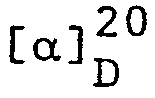
- Aus (E)-4-Benzyloxy-N,N-dibutyl-3-methyl-2-butenyl- amin, das
(lE,3R)-4-Benzyloxy-N,N-dibutyl-3-methyl-1-butenyl- amin: GC-Reinheit 83%;
- Aus 1-((E)-4-Benzyloxy-3-methyl-2-butenyl)-piperidin, das
1-((lE,3R)-4-Benzyloxy-3-methyl-1-butenyl)-piperidin: GC-Reinheit 61%;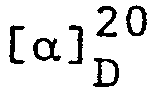

- Aus 4-((E)-4-Benzyloxy-3-methyl-2-butenyl)-morpholin, das
4-((1'E,3'R)-4-Benzyloxy-3-methyl-1-butenyl)-morpholin: GC-Reinheit 85%;

- In zu Beispiel 3 analoger Weise (Reaktionstemperatur 80°C) wurde aus (E)-N,N-Diäthyl-3-methyl-4-trimethylsiloxy-2-butenylamin, das (lE,3R)-N,N-Diäthyl-3-methyl-4-tri- methylsiloxy-1-butenylamin erhalten in Form eines Oeles.

- Zur Bestimmung der optischen Reinheit wurden 0,53 g dieses Oeles in S ml 0.5N HCl und 2 ml Essigsäure aufgenommen. Der Mischung wurden innerhalb von 1 Stunde unter gutem Rühren ca. 100 mg Natriumcyanoborhydrid in Portionen von ca. 20 mg zugefügt. Nach einer zusätzlichen Rührdauer von 2 Stunden wurde die Reaktionsmischung mit 4N Natronlauge alkalisch gestellt, mit K2CO3 gesättigt und dann während 18 Stunden kontinuierlich mit Aether extrahiert. Der Rück- stand aus dem Aetherextrakt wurde durch Chromatographie an SiO2 (Essigsäure-äthylester) gereinigt. Nach Destillation im Kugelrohr bei ca. 100°/0,02 mmHg wurden 148 mg (50,5%) (R)(+)-2-Methyl-1,4-butandiol als farbloses Oel erhalten;

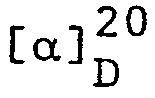
- Für den Antipoden (S)(-)-2-Methyl-1,4-butandiol wurde eine spezifische Drehung von

- In zum vorhergehenden analoger Weise wurde aus (E)-N,N-Diäthyl-4-(methoxymethoxy)-3-methyl-2-butenylamin das ((1E,3R)-N,N-Diäthyl-4-(methoxymethoxy)-3-methyl-1-butenyl- amin erhalten.

- In zu Beispiel 3 analoger Weise wurde aus (E)-4-Allyloxy-N,N-diäthyl-3-methyl-2-butenylamin, das (lE,3R)-N,N-Diäthyl-3-methyl-4-(1-propenyloxy)-1-butenylamin erhalten.

- Ein Pyrex-Bombenrohr wurde mit 2,02 g (10 mMol) (E)-N,N-Diäthyl-4,4-dimethoxy-3-methyl-2-butenylamin, LO ml Tetrahydrofuran und 83,2 mg (0,10 mMol) [η -Bicyclo-C2.2.1]hepta-2,5-dien]C(S)-(6,6'-dimethyl-2,2'-biphenyl- ylen)-bis(diphenylphosphin)]rhodium(I)-tetrafluoroborat beschickt. Nach Entgasung der Mischung wurde das Rohr zugeschmolzen und während 56 Stunden in einem Bombenrohrofen bei 90°C erhitzt. Die rotbraune Reaktionslösung wurde eingedampft und der Rückstand wurde im Kugelrohr bei ca. 70°/0,2 mmHg destilliert. Man erhielt (lE,3S)-N,N-Diäthyl-4,4-dimethoxy-3-methyl-l-butenylamin. GC-Reinheit 20 70%;


- Die enantiomere Reinheit dieses Aldehydes wurde mit Hilfe von NMR-Spektroskopie unter Verwendung des Verschiebungsreagens (Tris[3-(heptafluoropropylhydroxymethyliden)-d-camphorato]-europium(III)) zu ≥90% ee bei einer Nachweisgrenze von 5% abgeschätzt.
- Das als Ausgangsmaterial verwendete (E)-N,N-Diäthyl-4,4-dimethoxy-3-methyl-2-butenylamin wurde wie folgt hergestellt:
- Ein Gemisch von 56,4 g (0,30 Mol) 4-Acetoxy-2-methyl-2-butenal-dimethylacetal, 150 ml Diäthylamin, 675 mg (3 mMol) Palladium(II)-acetat und 3,9 g (15 mMol) Triphenylphosphin wurde unter Argon während 15 Stunden unter Rückfluss gekocht. Nach Einengen der Reaktionsmischung wurde der Rückstand in 170 ml Aether/Pentan 1:1 aufgeschlämmt, die Lösung mit etwas Aktivkohle behandelt, über Hyflo filtriert und eingeengt. Das zurückbleibende Oel wurde zunächst bei 40-55°/0,3 mmHg über eine 5 cm Vigreux-Kolonne destilliert, wobei 57,1 g N,N-Diäthyl-4,4-dimethoxy-3-methyl-2-butenylamin als 90:10 (E/Z)-Gemisch erhalten wurden. Dieses Gemisch wurde alsdann über eine 30 cm Füllkörper-Kolonne fraktioniert. Dabei wurden zuerst insgesamt 34,8 g (58%) Mischfraktionen ((E/Z) = 86:14) und dann 14,5 g (24%) reines (E)-N,N-Diäthyl-4,4-dimethoxy-3-methyl-2-butenylamin vom Sdp. 30-32°/0,06 mmHg gewonnen.
- Ein Pyrex-Bombenrohr wurde mit 506 mg (2,73 mMol) 4-(Diäthylamino)-2-methyl-2-butensäure-methylester (83:17 (E/Z)-Gemisch), 80 mg (0,0929 mMol) [η4-1,5-Cyclooctadien]-[(R)-(6,6'-dimethyl-2,2'-biphenylylen)-bis(diphenylphos- phin)]rhodium(I)-perchlorat und 8 ml Tetrahydrofuran beschickt, entgast, zugeschmolzen und im Bombenrohrofen während 64 Stunden auf 80°C erhitzt. Die braunschwarze Reaktionsmischung wurde eingedampft und der Rückstand im Kugelrohr bei ca. 150°/15 mmHg destilliert. Dabei wurden 313 mg eines farblosen Oeles erhalten, das gemäss GC- und NMR-Analyse 53% (2R,3E)-4-(Diäthylamino)-2-methyl-3-buten- säure-methylester sowie 32% 4-(Diäthylamino)-2-methyl- buttersäure-methylester enthielt;
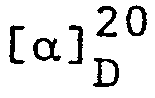
- Das als Ausgangsmaterial verwendete 4-(Diäthylamino)-2-methyl-2-butensäure-methylester wurde in zu Beispiel 7 analoger Weise hergestellt.
- Die gemäss den Beispielen 3-6 und 8 verwendeten Isomerisierungskomplexe wurden wie folgt hergestellt:
- In einem 50 ml Schlenkrohr wurden 604 mg (1,226mMol) Di-µ-chloro-bis[η4-1,5-cyclooctadien]dirhodium(I) unter Argon vorgelegt und in 20 ml absolutem Tetrahydrofuran aufgelöst. Dazu wurde unter Rühren eine Lösung von 552,5 mg (2,452 mMol) Silberperchlorat-monohydrat in 5 ml absolutem Tetrahydrofuran aus einer Injektionsspritze innerhalb von 10 Minuten getropft. Nach einer zusätzlichen Rührdausr von 1 Stunde wurde das gefällte Silberchlorid unter Argon abfiltriert. Das trübe Filtrat wurde stehen gelassen, bis sich das restliche, durch die Fritte gelaufene kolloidale Silberchlorid abgesetzt hatte. Dann wurde die überstehende Lösung mittels einer Injektionsspritze abdekantiert und in ein Schlenkrohr transferiert. Zu der klaren gelben Lösung wurde dann unter Rühren bei Raumtemperatur eine Lösung von 1,35 g (2,452 mMol) (R)-(6,6'-Dimethyl-2,2'-biphenylylen)-bis(diphenylphosphin) in 30 ml absolutem Tetrahydrofuran mittels einer motorgetriebenen Spritze innerhalb von 2 Stunden getropft, wobei ein oranger Niederschlag entstand. Die Reaktionsmischung wurde 1,5 Stunden nachgerührt, dann unter Argon filtriert, und der Filterrückstand wurde mit 2 ml Tetrahydrofuran gewaschen und am Hochvakuum kurz getrocknet. Auf diese Weise wurden 1,538 g [η4-1,5-Cyclooctadien][(R)-(6,6'-dimethyl-2,2'-biphenylylen)-bis(diphenylphosphin)Irhodium(I)-perchlorat als oranges Pulver erhalten. Bei Drehwertbestimmungen in CH2C12 wie auch in Acetonitril wurde Mutarotation beobachtet.
- In zum vorhergehenden analoger Weise wurden 1,101 g (2 mMol) (S)-(6,6'-Dimethyl-2,2'-biphenylylen)-bis(di- phenylphosphin) umgesetzt. Es wurden 1,50 g [η4-1,5-Cyclooctadien][(S)-(6,6'-dimethyl-2,2'-biphenylylen)-bis-(diphenylphosphin)]rhodium(i)-perchlorat als oranges Pulver erhalten. Bei der Drehwertbestimmung in CHCl3 wurde Mutarotation beobachtet.


- Das als Ausgangsmaterial verwendete (R)- bzw. (S)-(6,6'-Dimethyl-2,2'-biphenylylen)-bis(diphenylphosphin) wurde gemäss Beispiel 2 bzw. in Analogie zu Beispiel 2 hergestellt.
Claims (18)

Hydroxymethyl, geschütztes Formyl oder Alkoxycarbonyl und R eine Gruppe der Formel

einen heterocyclischen Ring darstellen, dadurch gekennzeichnet, dass man ein Amin der allgemeinen Formel

mit Hilfe eines Komplexes eines Metalles der Gruppe VIII und einer optisch aktiven, in (R)- oder (S)-Form vorliegenden Verbindung der allgemeinen Formel


oder einer optisch aktiven, in (R)- oder (S)-Form vorliegenden Verbindung der allgemeinen Formel

isomerisiert.

Hydroxymethyl, geschütztes Formyl oder Alkoxycarbonyl und R1 eine Gruppe der Formel
einen heterocyclischen Ring darstellen, dadurch gekennzeichnet, dass man ein Amin der allgemeinen Formel


oder einer optisch aktiven, in (R)- oder (S)-Form vorliegenden Verbindung der allgemeinen Formel

Lsomerisiert.
Priority Applications (1)
| Application Number | Priority Date | Filing Date | Title |
|---|---|---|---|
| AT83107754T ATE26971T1 (de) | 1982-08-27 | 1983-08-06 | Verfahren zur herstellung von optisch aktiven aminen und enaminen. |
Applications Claiming Priority (4)
| Application Number | Priority Date | Filing Date | Title |
|---|---|---|---|
| CH5110/82 | 1982-08-27 | ||
| CH511082 | 1982-08-27 | ||
| CH3642/83 | 1983-07-01 | ||
| CH364283 | 1983-07-01 |
Publications (3)
| Publication Number | Publication Date |
|---|---|
| EP0104376A2 true EP0104376A2 (de) | 1984-04-04 |
| EP0104376A3 EP0104376A3 (en) | 1984-05-30 |
| EP0104376B1 EP0104376B1 (de) | 1987-05-06 |
Family
ID=25693511
Family Applications (1)
| Application Number | Title | Priority Date | Filing Date |
|---|---|---|---|
| EP83107754A Expired EP0104376B1 (de) | 1982-08-27 | 1983-08-06 | Verfahren zur Herstellung von optisch aktiven Aminen und Enaminen |
Country Status (4)
| Country | Link |
|---|---|
| US (2) | US4578462A (de) |
| EP (1) | EP0104376B1 (de) |
| DE (1) | DE3371334D1 (de) |
| DK (1) | DK350283A (de) |
Cited By (5)
| Publication number | Priority date | Publication date | Assignee | Title |
|---|---|---|---|---|
| EP0271310A3 (en) * | 1986-12-09 | 1989-08-16 | Takasago International Corporation | Ruthenium-phosphine complexes |
| EP0271311A3 (en) * | 1986-12-09 | 1990-07-04 | Takasago International Corporation | Ruthenium-phosphine complexes |
| EP0269395A3 (en) * | 1986-11-27 | 1990-07-04 | Takasago International Corporation | Ruthenium-phosphine complex catalysts |
| EP0479541A1 (de) * | 1990-10-01 | 1992-04-08 | Takasago International Corporation | Optisch aktiver Iridiumphosphinkomplex und dessen Verwendung zur katalytischen Herstellung von optisch aktiven Alkoholen |
| US5210332A (en) * | 1990-10-01 | 1993-05-11 | Takasago International Corporation | Iridium-optically active phosphine complex and process for producing optically active alcohols using the same |
Families Citing this family (2)
| Publication number | Priority date | Publication date | Assignee | Title |
|---|---|---|---|---|
| AU2002216719A1 (en) * | 2000-11-17 | 2002-05-27 | The Penn State Research Foundation | Ortho substituted chiral phosphines and phosphinites and their use in asymmetriccatayltic reactions |
| CN103172503B (zh) * | 2011-12-26 | 2015-03-11 | 南京工业大学 | 番茄红素中间体3-甲基-4,4-二烷氧基-1-丁醛的制备方法 |
Family Cites Families (3)
| Publication number | Priority date | Publication date | Assignee | Title |
|---|---|---|---|---|
| US2541091A (en) * | 1945-12-08 | 1951-02-13 | Ortho Pharma Corp | Ethers of 1-halogen, 2-methyl, 4-hydroxybutene-2 |
| US4041058A (en) * | 1975-01-27 | 1977-08-09 | Hoffmann-La Roche Inc. | Synthesis of 2,6,10-trimethyl-undecan-1-ol |
| JPS584748A (ja) * | 1981-06-30 | 1983-01-11 | Takasago Corp | エナミンまたはイミンの製造方法 |
-
1983
- 1983-07-29 DK DK350283A patent/DK350283A/da not_active Application Discontinuation
- 1983-08-06 EP EP83107754A patent/EP0104376B1/de not_active Expired
- 1983-08-06 DE DE8383107754T patent/DE3371334D1/de not_active Expired
- 1983-08-22 US US06/525,529 patent/US4578462A/en not_active Expired - Fee Related
-
1988
- 1988-10-05 US US07/253,882 patent/US4902818A/en not_active Expired - Fee Related
Cited By (6)
| Publication number | Priority date | Publication date | Assignee | Title |
|---|---|---|---|---|
| EP0269395A3 (en) * | 1986-11-27 | 1990-07-04 | Takasago International Corporation | Ruthenium-phosphine complex catalysts |
| EP0271310A3 (en) * | 1986-12-09 | 1989-08-16 | Takasago International Corporation | Ruthenium-phosphine complexes |
| EP0271311A3 (en) * | 1986-12-09 | 1990-07-04 | Takasago International Corporation | Ruthenium-phosphine complexes |
| EP0479541A1 (de) * | 1990-10-01 | 1992-04-08 | Takasago International Corporation | Optisch aktiver Iridiumphosphinkomplex und dessen Verwendung zur katalytischen Herstellung von optisch aktiven Alkoholen |
| US5159093A (en) * | 1990-10-01 | 1992-10-27 | Takasago International Corporation | Iridium-optically active phosphine complex and process for producing optically active alcohols using the same |
| US5210332A (en) * | 1990-10-01 | 1993-05-11 | Takasago International Corporation | Iridium-optically active phosphine complex and process for producing optically active alcohols using the same |
Also Published As
| Publication number | Publication date |
|---|---|
| US4578462A (en) | 1986-03-25 |
| DK350283A (da) | 1984-02-28 |
| US4902818A (en) | 1990-02-20 |
| DK350283D0 (da) | 1983-07-29 |
| EP0104376B1 (de) | 1987-05-06 |
| DE3371334D1 (en) | 1987-06-11 |
| EP0104376A3 (en) | 1984-05-30 |
Similar Documents
| Publication | Publication Date | Title |
|---|---|---|
| EP0104375A1 (de) | Neue, phosphorhaltige Biphenylderivate und deren Verwendung für asymmetrische Hydrierungen und enantioselektive Wasserstoffverschiebungen | |
| EP0398132B1 (de) | Phosphorverbindungen | |
| EP0643065B1 (de) | Neue Bisphosphine für asymmetrische Hydrierkatalysatoren | |
| DE19713970B4 (de) | Epothilone-Synthesebausteine II - Prenylderivate | |
| DE69014724T2 (de) | Verbindung des 2,2-bis(Diphenylphosphino)-1,1-binaphtyl und katalytische Komplexe davon. | |
| EP0579797B1 (de) | Diphosphinliganden | |
| EP0138141B1 (de) | Verfahren zur selektiven Hydrierung von C-C-Doppelbindungen in Gegenwart von reduzierbaren, stickstoffhaltigen Gruppen | |
| EP0530336B1 (de) | Chirale phosphine | |
| DE69223240T2 (de) | Chirale dreizahnige bis-phospholan-liganden | |
| EP0104376B1 (de) | Verfahren zur Herstellung von optisch aktiven Aminen und Enaminen | |
| DE19523891C1 (de) | Chirale Mangan-triazanonankomplexe und Verfahren zu ihrer Herstellung | |
| EP0565975B1 (de) | Verfahren zur Herstellung von Isoprenderivaten | |
| DE3781749T3 (de) | Herstellungsverfahren von optisch aktiven Alkoholen. | |
| EP0251994A1 (de) | Optisch aktive Styrolderivate, Polymere daraus, Komplexe mit Iridium (I) und deren Verwendung | |
| DE69610131T2 (de) | Optisch aktive asymmetrische Diphosphine und Verfahren zur Herstellung optisch aktiver Substanzen in ihrer Anwesenheit | |
| EP0570764A2 (de) | Asymmetrische Hydrierung | |
| EP0492401B1 (de) | Asymmetrische Hydrierung | |
| EP1186609A2 (de) | Diphosphine | |
| DE4001019A1 (de) | Verfahren zur asymmetrischen hydrierung von (alpha)-ketocarbonylverbindungen zu optisch aktiven (alpha)-hydroxycarbonylverbindungen | |
| EP1692149B1 (de) | Verfahren zur herstellung von orthometallierten und orthosubstituierten aromatischen verbindungen | |
| EP0257411B1 (de) | Verfahren zur Herstellung von optisch aktiven Enaminen oder von den entsprechenden Aldehyden | |
| DE60020775T2 (de) | Stereospezifische Isomerierung von Allylaminen unter Verwendung von immobiliserten chiralen Phospho-Liganden | |
| EP1119574B1 (de) | Substituierte isophosphindoline und ihre verwendung | |
| EP1409493B1 (de) | Verfahren zur herstellung von nicht-chiralen und optisch aktiven hydroxygruppen enthaltenden organischen verbindungen | |
| DE3145455A1 (de) | In 1-stellung substituierte (3r,7r)-3,7,11-trimethyl-5-dodecene, deren verwendung als zwischenprodukt fuer die synthese der seitenkette von (r,r,r)-(alpha)-tocopherol sowie deren herstellung aus teilweise neuen ausgangsverbindungen |
Legal Events
| Date | Code | Title | Description |
|---|---|---|---|
| PUAI | Public reference made under article 153(3) epc to a published international application that has entered the european phase |
Free format text: ORIGINAL CODE: 0009012 |
|
| PUAL | Search report despatched |
Free format text: ORIGINAL CODE: 0009013 |
|
| 17P | Request for examination filed |
Effective date: 19830806 |
|
| AK | Designated contracting states |
Designated state(s): AT BE CH DE FR GB IT LI NL |
|
| AK | Designated contracting states |
Designated state(s): AT BE CH DE FR GB IT LI NL |
|
| GRAA | (expected) grant |
Free format text: ORIGINAL CODE: 0009210 |
|
| AK | Designated contracting states |
Kind code of ref document: B1 Designated state(s): AT BE CH DE FR GB IT LI NL |
|
| REF | Corresponds to: |
Ref document number: 26971 Country of ref document: AT Date of ref document: 19870515 Kind code of ref document: T |
|
| ITF | It: translation for a ep patent filed | ||
| REF | Corresponds to: |
Ref document number: 3371334 Country of ref document: DE Date of ref document: 19870611 |
|
| ET | Fr: translation filed | ||
| PLBE | No opposition filed within time limit |
Free format text: ORIGINAL CODE: 0009261 |
|
| STAA | Information on the status of an ep patent application or granted ep patent |
Free format text: STATUS: NO OPPOSITION FILED WITHIN TIME LIMIT |
|
| 26N | No opposition filed | ||
| ITPR | It: changes in ownership of a european patent |
Owner name: CESSIONE;F. HOFFMANN - LA ROCHE AG |
|
| NLS | Nl: assignments of ep-patents |
Owner name: F. HOFFMANN-LA ROCHE AG TE BAZEL, ZWITSERLAND. |
|
| REG | Reference to a national code |
Ref country code: FR Ref legal event code: TP |
|
| REG | Reference to a national code |
Ref country code: CH Ref legal event code: PUE Owner name: F. HOFFMANN-LA ROCHE AG |
|
| REG | Reference to a national code |
Ref country code: GB Ref legal event code: 732 |
|
| ITTA | It: last paid annual fee | ||
| PGFP | Annual fee paid to national office [announced via postgrant information from national office to epo] |
Ref country code: GB Payment date: 19920715 Year of fee payment: 10 |
|
| PGFP | Annual fee paid to national office [announced via postgrant information from national office to epo] |
Ref country code: BE Payment date: 19920731 Year of fee payment: 10 |
|
| PGFP | Annual fee paid to national office [announced via postgrant information from national office to epo] |
Ref country code: DE Payment date: 19920810 Year of fee payment: 10 |
|
| PGFP | Annual fee paid to national office [announced via postgrant information from national office to epo] |
Ref country code: FR Payment date: 19920813 Year of fee payment: 10 |
|
| PGFP | Annual fee paid to national office [announced via postgrant information from national office to epo] |
Ref country code: CH Payment date: 19920828 Year of fee payment: 10 |
|
| PGFP | Annual fee paid to national office [announced via postgrant information from national office to epo] |
Ref country code: NL Payment date: 19920831 Year of fee payment: 10 Ref country code: AT Payment date: 19920831 Year of fee payment: 10 |
|
| PG25 | Lapsed in a contracting state [announced via postgrant information from national office to epo] |
Ref country code: GB Effective date: 19930806 Ref country code: AT Effective date: 19930806 |
|
| PG25 | Lapsed in a contracting state [announced via postgrant information from national office to epo] |
Ref country code: LI Effective date: 19930831 Ref country code: CH Effective date: 19930831 Ref country code: BE Effective date: 19930831 |
|
| BERE | Be: lapsed |
Owner name: F. HOFFMANN-LA ROCHE A.G. Effective date: 19930831 |
|
| PG25 | Lapsed in a contracting state [announced via postgrant information from national office to epo] |
Ref country code: NL Effective date: 19940301 |
|
| GBPC | Gb: european patent ceased through non-payment of renewal fee |
Effective date: 19930806 |
|
| NLV4 | Nl: lapsed or anulled due to non-payment of the annual fee | ||
| PG25 | Lapsed in a contracting state [announced via postgrant information from national office to epo] |
Ref country code: FR Effective date: 19940429 |
|
| REG | Reference to a national code |
Ref country code: CH Ref legal event code: PL |
|
| PG25 | Lapsed in a contracting state [announced via postgrant information from national office to epo] |
Ref country code: DE Effective date: 19940503 |
|
| REG | Reference to a national code |
Ref country code: FR Ref legal event code: ST |