EP0108992A1 - Immuno-essai - Google Patents
Immuno-essai Download PDFInfo
- Publication number
- EP0108992A1 EP0108992A1 EP83110877A EP83110877A EP0108992A1 EP 0108992 A1 EP0108992 A1 EP 0108992A1 EP 83110877 A EP83110877 A EP 83110877A EP 83110877 A EP83110877 A EP 83110877A EP 0108992 A1 EP0108992 A1 EP 0108992A1
- Authority
- EP
- European Patent Office
- Prior art keywords
- microcapsules
- kinds
- antibody
- quantified
- antigens
- Prior art date
- Legal status (The legal status is an assumption and is not a legal conclusion. Google has not performed a legal analysis and makes no representation as to the accuracy of the status listed.)
- Granted
Links
Images
Classifications
-
- G—PHYSICS
- G01—MEASURING; TESTING
- G01N—INVESTIGATING OR ANALYSING MATERIALS BY DETERMINING THEIR CHEMICAL OR PHYSICAL PROPERTIES
- G01N33/00—Investigating or analysing materials by specific methods not covered by groups G01N1/00 - G01N31/00
- G01N33/48—Biological material, e.g. blood, urine; Haemocytometers
- G01N33/50—Chemical analysis of biological material, e.g. blood, urine; Testing involving biospecific ligand binding methods; Immunological testing
- G01N33/53—Immunoassay; Biospecific binding assay; Materials therefor
- G01N33/573—Immunoassay; Biospecific binding assay; Materials therefor for enzymes or isoenzymes
-
- G—PHYSICS
- G01—MEASURING; TESTING
- G01N—INVESTIGATING OR ANALYSING MATERIALS BY DETERMINING THEIR CHEMICAL OR PHYSICAL PROPERTIES
- G01N33/00—Investigating or analysing materials by specific methods not covered by groups G01N1/00 - G01N31/00
- G01N33/48—Biological material, e.g. blood, urine; Haemocytometers
- G01N33/50—Chemical analysis of biological material, e.g. blood, urine; Testing involving biospecific ligand binding methods; Immunological testing
- G01N33/53—Immunoassay; Biospecific binding assay; Materials therefor
-
- G—PHYSICS
- G01—MEASURING; TESTING
- G01N—INVESTIGATING OR ANALYSING MATERIALS BY DETERMINING THEIR CHEMICAL OR PHYSICAL PROPERTIES
- G01N33/00—Investigating or analysing materials by specific methods not covered by groups G01N1/00 - G01N31/00
- G01N33/48—Biological material, e.g. blood, urine; Haemocytometers
- G01N33/50—Chemical analysis of biological material, e.g. blood, urine; Testing involving biospecific ligand binding methods; Immunological testing
- G01N33/53—Immunoassay; Biospecific binding assay; Materials therefor
- G01N33/536—Immunoassay; Biospecific binding assay; Materials therefor with immune complex formed in liquid phase
-
- G—PHYSICS
- G01—MEASURING; TESTING
- G01N—INVESTIGATING OR ANALYSING MATERIALS BY DETERMINING THEIR CHEMICAL OR PHYSICAL PROPERTIES
- G01N33/00—Investigating or analysing materials by specific methods not covered by groups G01N1/00 - G01N31/00
- G01N33/48—Biological material, e.g. blood, urine; Haemocytometers
- G01N33/50—Chemical analysis of biological material, e.g. blood, urine; Testing involving biospecific ligand binding methods; Immunological testing
- G01N33/53—Immunoassay; Biospecific binding assay; Materials therefor
- G01N33/543—Immunoassay; Biospecific binding assay; Materials therefor with an insoluble carrier for immobilising immunochemicals
- G01N33/54313—Immunoassay; Biospecific binding assay; Materials therefor with an insoluble carrier for immobilising immunochemicals the carrier being characterised by its particulate form
- G01N33/5432—Liposomes or microcapsules
-
- G—PHYSICS
- G01—MEASURING; TESTING
- G01N—INVESTIGATING OR ANALYSING MATERIALS BY DETERMINING THEIR CHEMICAL OR PHYSICAL PROPERTIES
- G01N33/00—Investigating or analysing materials by specific methods not covered by groups G01N1/00 - G01N31/00
- G01N33/48—Biological material, e.g. blood, urine; Haemocytometers
- G01N33/50—Chemical analysis of biological material, e.g. blood, urine; Testing involving biospecific ligand binding methods; Immunological testing
- G01N33/53—Immunoassay; Biospecific binding assay; Materials therefor
- G01N33/543—Immunoassay; Biospecific binding assay; Materials therefor with an insoluble carrier for immobilising immunochemicals
- G01N33/554—Immunoassay; Biospecific binding assay; Materials therefor with an insoluble carrier for immobilising immunochemicals the carrier being a biological cell or cell fragment, e.g. bacteria, yeast cells
- G01N33/555—Red blood cell
-
- G—PHYSICS
- G01—MEASURING; TESTING
- G01N—INVESTIGATING OR ANALYSING MATERIALS BY DETERMINING THEIR CHEMICAL OR PHYSICAL PROPERTIES
- G01N33/00—Investigating or analysing materials by specific methods not covered by groups G01N1/00 - G01N31/00
- G01N33/48—Biological material, e.g. blood, urine; Haemocytometers
- G01N33/50—Chemical analysis of biological material, e.g. blood, urine; Testing involving biospecific ligand binding methods; Immunological testing
- G01N33/53—Immunoassay; Biospecific binding assay; Materials therefor
- G01N33/575—Immunoassay; Biospecific binding assay; Materials therefor for cancer
-
- G—PHYSICS
- G01—MEASURING; TESTING
- G01N—INVESTIGATING OR ANALYSING MATERIALS BY DETERMINING THEIR CHEMICAL OR PHYSICAL PROPERTIES
- G01N33/00—Investigating or analysing materials by specific methods not covered by groups G01N1/00 - G01N31/00
- G01N33/48—Biological material, e.g. blood, urine; Haemocytometers
- G01N33/50—Chemical analysis of biological material, e.g. blood, urine; Testing involving biospecific ligand binding methods; Immunological testing
- G01N33/58—Chemical analysis of biological material, e.g. blood, urine; Testing involving biospecific ligand binding methods; Immunological testing involving labelled substances
- G01N33/585—Chemical analysis of biological material, e.g. blood, urine; Testing involving biospecific ligand binding methods; Immunological testing involving labelled substances with a particulate label, e.g. coloured latex
- G01N33/586—Liposomes, microcapsules or cells
-
- Y—GENERAL TAGGING OF NEW TECHNOLOGICAL DEVELOPMENTS; GENERAL TAGGING OF CROSS-SECTIONAL TECHNOLOGIES SPANNING OVER SEVERAL SECTIONS OF THE IPC; TECHNICAL SUBJECTS COVERED BY FORMER USPC CROSS-REFERENCE ART COLLECTIONS [XRACs] AND DIGESTS
- Y10—TECHNICAL SUBJECTS COVERED BY FORMER USPC
- Y10S—TECHNICAL SUBJECTS COVERED BY FORMER USPC CROSS-REFERENCE ART COLLECTIONS [XRACs] AND DIGESTS
- Y10S435/00—Chemistry: molecular biology and microbiology
- Y10S435/973—Simultaneous determination of more than one analyte
-
- Y—GENERAL TAGGING OF NEW TECHNOLOGICAL DEVELOPMENTS; GENERAL TAGGING OF CROSS-SECTIONAL TECHNOLOGIES SPANNING OVER SEVERAL SECTIONS OF THE IPC; TECHNICAL SUBJECTS COVERED BY FORMER USPC CROSS-REFERENCE ART COLLECTIONS [XRACs] AND DIGESTS
- Y10—TECHNICAL SUBJECTS COVERED BY FORMER USPC
- Y10S—TECHNICAL SUBJECTS COVERED BY FORMER USPC CROSS-REFERENCE ART COLLECTIONS [XRACs] AND DIGESTS
- Y10S436/00—Chemistry: analytical and immunological testing
- Y10S436/819—Multifunctional antigen or antibody
-
- Y—GENERAL TAGGING OF NEW TECHNOLOGICAL DEVELOPMENTS; GENERAL TAGGING OF CROSS-SECTIONAL TECHNOLOGIES SPANNING OVER SEVERAL SECTIONS OF THE IPC; TECHNICAL SUBJECTS COVERED BY FORMER USPC CROSS-REFERENCE ART COLLECTIONS [XRACs] AND DIGESTS
- Y10—TECHNICAL SUBJECTS COVERED BY FORMER USPC
- Y10S—TECHNICAL SUBJECTS COVERED BY FORMER USPC CROSS-REFERENCE ART COLLECTIONS [XRACs] AND DIGESTS
- Y10S436/00—Chemistry: analytical and immunological testing
- Y10S436/829—Liposomes, e.g. encapsulation
Definitions
- the present invention relates to an immunoassay.
- Radioimmunoassay (RIA) for quantifying a specific antigen or antibody in a test sample is known as a conventional immunoassay.
- the RIA utilizes the antigen-antibody reaction of the antigen (or antibody) in the test sample collected from a patient with a corresponding antibody (or antigen) labeled with a radioisotope.
- An enzyme immunoassay for quantifying a specific antigen (or antibody) in a test sample is also well known.
- An antigen-antibody complex is produced by the antigen-antibody reaction between an antibody (or antigen) labeled with an enzyme and the corresponding antigen (or antibody) in the test sample collected from a patient.
- The.antigen-antibody complex is quantified using the enzyme reaction of the marker enzyme.
- each of the human immunoglobulins in blood namely, IgG, IgA and IgM
- IgG the human immunoglobulins in blood
- IgG the human immunoglobulins in blood
- IgA the human immunoglobulins in blood
- IgM the diagnosis of various cancers is made by quantifying various cancer markers in a test sample, such as a-fetoprotein, carcino embryonic antigen (CEA), C-reactive protein and ferrittin.
- CEA carcino embryonic antigen
- C-reactive protein C-reactive protein
- ferrittin the diagnosis of various cancers is made by quantifying various cancer markers in a test sample, such as a-fetoprotein, carcino embryonic antigen (CEA), C-reactive protein and ferrittin.
- isozymes such as amylase and creatine kinase are'seperately quantified recently.
- an object of the present invention to provide an immunoassay capable of simultaneously quantifying a plurality of kinds of antigens or antibodies contained in a test sample.
- a plurality of microcapsules having on their outer surfaces one kind of antibody (or antigen) specific to one kind of antigen (or antibody) of the different kinds of antigens (or antibodies) to be quantified are provided for each of the different kinds of antigens (or antibodies) to be quantified.
- a plurality of kinds of microcapsules are provided, each kind of microcapsule having one kind of antibody (or antigen) on its outer surface, and each kind of microcapsule comprising a plurality of microcapsules.
- Each microcapsule is formed of a membrane which can be lysed by complement activity, and each kind of microcapsule contains therein a quantifiable substance which is different from a quantifiable substance contained in a different kind of microcapsule. These substances do not interact with each other.
- a test sample which may contain a plurality of kinds of antigens (or antibodies) to be quantified is mixed with above-mentioned a plurality of kinds of microcapsules and complement.
- This mixture allows an antigen-antibody complex to be formed between the antigen (or antibody) in the test sample and the corresponding antibody (or antigen) bound on the outer surface of each microcapsule.
- Such an antigen-antibody complex causes activation of the complement so that the membranes of the microcapsules having such an antigen-antibody complex on their outer surfaces are lysed, whereby the respective quantifiable substances contained therein are released therefrom.
- the quantifiable substances released from the microcapsules are then quantified.
- the amount of each kind of antigen (or antibody) in the test sample is proportional to the amount of the corresponding antigen-antibody complex formed between the antigen (or antibody) and the corresponding antibody (or antigen).
- the microcapsules having the antigen-antibody complex - bound on their outer surfaces are lysed by the complement activity, releasing the quantifiable substances contained therein.
- the amount of each kind of antigen (or antibody) present in the test sample is in proportion to the amount of the corresponding quantifiable substance released from the corresponding microcapsules. Therefore, the amount of antigen (or antibody) present in the test sample can be determined by quantifying the amount of the substances released from the microcapsules.
- a plurality of kinds of microcapsules respectively corresponding to the plurality of kinds of antigens or antibodies to be quantified are mixed with a test sample, a plurality of kinds of quantifiable substances respectively corresponding to the different kinds of antigens (or antibodies) are released. Accordingly, the quantitative analysis of each kind of the plurality of kinds of quantifiable substances allows the amount of each of the plurality of kinds of antigens (or antibodies) in the test sample to be quantified.
- the quantitative analysis of the plurality of kinds of quantifiable substances may be carried out simultaneously by means of chromatographic techniques.
- the present invention thus provides simultaneous quantitative analysis of a plurality of kinds of antigens (or antibodies) contained in a test sample.
- the reagent to be used in the immunoassay according to the present invention comprises microcapsules formed of a membrane that can be lysed by complement activity.
- any microcapsule may be employed that can be lysed by the complement activity, that allows an antibody (or antigen) to be bound on the outer surface thereof, and allows a quantifiable substance to be encapsulated therein.
- a preferred example of such a microcapsule is a sheep red blood cell ghost.
- An artificial membrane such as liposome may also be employed.
- An antibody (or antigen) that specifically combines with one kind of antigen (or antibody) of a plurality of kinds of antigens (or antibodies) to be quantified is bound to the outer surface of each microcapsule.
- Such microcapsules are provided for each kind of antigens (or antibodies) to be quantified.
- human immunoglobulins i.e., IgG, IgA and IgM
- three different kinds of microcapsules are prepared which respectively have an anti-IgG antibody, an anti-IgA antibody and an anti-IgD antibody bound on to the outer surfaces.
- Each kind of the microcapsules contains different kind of quantifiable substance therein that causes no interaction with the any of other quantifiable substances.
- the substance may be selected from an amino acid, a sugar, a carboxylic acid, a peptide, a polysaccharide, an enzyme, a protein, and a nucleic acid.
- the substance should be selected from those which will not leak from the microcapsule.
- One of the water-soluble proteins, enzymes, polysaccharides, nucleic acids and other macromolecules each having a different molecular weight may preferably be contained in each kind of microcapsules.
- cytochrome c molecular weight: 12,400
- ovalbumin molecular weight: 45,000
- chymotrypsinogen molecular weight: 25,000
- bovine serum albumin molecular weight: 67,,500
- carboxymethyl cellulose molecular weight: 75,000
- a different kind of substance is encapsulated in each kind of microcapsule. That is to say, where a human immunoglobulin is to be quantified, for example, ovalbumin may be encapsulated in microcapsules having an anti-IgG antibody bound thereto, chymotrypsinogen in microcapsules having an anti-IgA antibody bound thereto, cytochrome c in microcapsules having an anti-IgM antibody bound thereto.
- the concentration of the quantifiable substances encapsulated in the microcapsules may be controlled, and conveniently selected according to the immunoassay involved. In order to improve the sensitivity of the quantitative analysis, higher concentrations are preferred. In general, the concentration is preferably 10 M or more. However, as immunoglobulins in blood, where it is expected that concentrations of the different immunoglobulins in the test sample will differ to a large extent, it is preferred that.the concentrations of the quantifiable substances in the microcapsules corresponding to each of the immunoglobulins be substantially proportional to the concentrations of the respective immunoglobulins in the test sample.
- the amount of each substance to be analyzed will be substantially the same, so that when these substances are simultaneously quantified by means pf chromatography or the like, the sensitivity of the analysis can be improved.
- the concentrations of chymotrypsinogen and cytochrome c are preferably from 2 to 10 times the concentration of ovalbumine.
- the concentrations of IgG, IgA and IgM in the blood are 10-17, 0.9-3.3 and 0.5-3.0 mg/mi, respectively, so that the amount of each substance to be analyzed becomes almost equal by varying the concentrations as set forth hereinabove.
- microcapsules having an antibody (or antigen) specific to one of the plurality of kinds of antigens (or antibodies) to be quantified bound to their outer surfaces and containing a quantifiable substance such as a protein therein may be prepared according to the following procedures.
- IgG is administered to an animal such as a rabbit, goat, mouse or rat through, for example, subcutaneous routes, whereby an anti-IgG antibody is produced in the animal's body.
- Blood is collected from the animal about one week after the administration, and a serum is obtained which is anti-serum containing.the anti-IgG antibody.
- the anti-serum may be further purified according to a conventional technique.
- red blood cells are obtained.
- the collected red blood cells are then suspended in an isotonic solution such as a buffer solution containing 0.15 M sodium chloride (pH 7).
- the anti-serum containing the anti-IgG antibody is then mixed with the suspension of sheep red blood cells in the presence of chromium chloride.
- a di-valent reagent such as glutaraldehyde or succinic anhydride or a peptide reagent such as Woodward's ' Reagent can also be used instead of chromium chloride to cause the antibody (or antigen) to be readily bound on the membrane surfaces.
- ovalbumin is added to an isotonic PBS solution to a concentration of about 200 pM.
- This solution and the red blood cell suspension are mixed and the mixture is then placed in a semipermeable membrane tube with one end closed. It is then subjected to dialysis against a hypotonic solution, whereby hemoglobin and mitochondria .
- in the red blood cells are transferred to the outside of the red blood cells through pores of the cell membranes which are formed due to the difference of osmosis, and ovalbumin is introduced into the red blood cells in their place.
- the cell membranes are reformed by a subsequent dialysis against an isotonic solution.
- a plurality of kinds of microcapsules mentioned above are mixed with a test sample that may contain a plurality of kinds of antigens (or antibodies) to be quantified, together with complement.
- antigen-antibody complexes are formed between each kind of antigen (or antibody) in the test sample and the antibody (or antigen) on the microcapsules specific thereto.
- Each such antigen-antibody complex activates the complement, which in turn lyses the microcapsules having the antigen-antibody complex on their surface.
- the quantifiable substances contained within the microcapsules are released therefrom.
- complement there may be used one contained in blood of an animal. For example, guinea pig serum may be used as it stands as a complement-containing solution.
- the plurality of kinds of quantifiable substances released are then quantitatively analyzed.
- the quantitative analysis may be appropriately carried out, depending on the kinds. of substances used, by means of chromatography such as gas chromatography or liquid chromatography, an electrochemical technique such as a procedure using an ion-selective electrode, an optical procedure such as spectroscopic analysis, or any other means.
- chromatography such as gas chromatography or liquid chromatography
- electrochemical technique such as a procedure using an ion-selective electrode
- an optical procedure such as spectroscopic analysis, or any other means.
- each of the substances may be individually quantified by a molecular sieve.
- a plurality of kinds of macromolecules can be simultaneously quantified in a short time by using a high performance liquid chromatography.
- the amount of an antigen (or antibody) present in a test sample is proportional to the amount of the antigen-antibody complex formed between the antigen (or antibody) and the corresponding antibody (or antigen).
- the microcapsules having antigen-antibody complexes on the outer surfaces are lysed by the complement activity and the quantifiable substances contained in the microcapsules are released. Therefore, if the amount of an antigen (or antibody) in a test sample is large, the number of corresponding -micromolecules to be lysed is correspondingly large. As a result, the amount of each kind of substance released from the microcapsules increases with the amount of the corresponding antigen (or antibody) in the test sample.
- the amount of the antigen (or antibody) present in the test sample is proportional to the amount of the quantifiable substance released from the microcapsules. Accordingly, the amount of each of the plurality of kinds of antigens or antibodies to be quantified may be determined by quantifying each of the plurality of kinds of substances released. The determination of an unknown amount of an antigen (or antibody) present in the test sample from the amount of a corresponding substance released from the microcapsules may be conducted on the basis of a calibration curve.
- the calibration curve may be prepared according to a well-known method.
- a known amount of a sample containing a known concentration of an antigen (or antibody is) mixed with a predetermined amount of microcapsules having the corresponding antibody (or antigen), and the amount of the quantifiable substance released from the microcapsules is determined.
- This procedure is repeated by varying the concentrations of the antigen (or antibody) in the test sample.
- the calibration curve may be formed by plotting the concentrations of the antigen (or antibody) present in the test sample along the axis of abscissa and the amounts of the substance released from the microcapsules along the axis of ordinate.
- An unknown concentration of the antigen (or antibody) in a test sample can then be determined from the calibration curve by plotting an amount of the substance released from microcapsules.
- a commercially available sheep red blood cell suspension was washed two times by a PBS (137 mM NaCl, 2.7 mM KCl, 8.1 mM Na 2 HP0 4 , 1.5 mM KH 2 P0 4 , 4 mM MgCl 2 , pH 7.2) through centrifugation (3,000 rpm, 10 min.) at room temperature, and the red blood cells were resuspended in the same PBS to attain a cell concentration of 20% (about 6 x 10 9 cells/ml).
- PBS 137 mM NaCl, 2.7 mM KCl, 8.1 mM Na 2 HP0 4 , 1.5 mM KH 2 P0 4 , 4 mM MgCl 2 , pH 7.2
- Ovalbumin (M.W. 45,000), Cytochrome c (M.W. 12,400) and Chymotrypsinogen (M.W. 25,000) which were to be used as markers were dissolved in the PBS separately to obtain three marker solutions having concentrations of 0.2 mM, 1 mM and 1 mM respectively.
- each red blood cell suspension was transferred to a centrifugation tube and was washed 5 times with a physiological saline through centrifugation to remove the excess marker.
- the precipitations of the red blood cells were separately resuspended'in the PBS to attain a cell concentration of 2%.
- the sheep red blood cells containing respective markers thus obtained were stored at 5°C until the time of use.
- each of the marker- containing red blood cell suspensions was taken out and the cells were destroyed to release the marker by freeze lysis using dry ice-acetone.
- Each marker released from the cells was quantified by a High Performance Liquid Chromatography (HPLC) hereinafter described.
- HPLC High Performance Liquid Chromatography
- the sheep red blood cells each containing ovalbumin, cytochrome c, or chymotrypsinogen as a marker prepared in Example 1 were collected by centrifugation (3,000 rpm, 10 min. at room temperature) and supernatant in the centrifugation tubes were removed.
- an antibody solution 100 ⁇ g/ml in saline
- chromium chloride solution 0.5 mM in saline
- anti-human IgG antibody solution was added to the packed microcapsules containing ovalbumin
- anti-human IgM antibody solution was added to the packed microcapsules containing cytochrome c
- anti-human IgA antibody solution was added to the packed microcapsules containing chymotrypsinogen. Every antibody was obtained from rabbits. After completion of the reaction, each mixture was centrifuged and the supernatant was removed. Each precipitation of microcapsules was further washed 5 times with a physiological saline. The antibody-coated microcapsules thus obtained were resuspended in a physiological saline at a concentration of 2%. These suspensions were stored at 5°C until the time of use.
- Equal volume of the three kinds of microcapsules obtained in Example 2 were mixed together.
- Human IgG, IgM and IgA were dissolved in a physiological saline at a concentration of 2,000 ng/ml, 500 ng/mi and 500 ng/mi respectively.
- a standard antigen solution containing three kinds of antigens was prepared. This standard antigen solution was serially diluted with a physiological saline to provide 10 serial dilutions of the standard antigen solution.
- One hundred microliters of the suspension of the mixed microcapsules was taken in a test tube, and 100 ⁇ l of the standard antigen solution and 2,000 ⁇ l of a gelatin-Veronal buffer (pH 7.4) were added thereto. With mild stirring, the mixture was allowed to react at 37°C. After 10 minutes, 1,000 ⁇ l of a 50 times diluted-guinea pig serum (complement) was added to the reaction mixture and the reaction mixture was allowed to further react for 30 minutes at 37°C. After'the completion of reaction, the reaction mixture was immediately centrifuged (3,000 rpm, 10 min. 0°C) and the supernatant was transferred to another test tube. Three hundred microliters of the supernatant was taken by a microsyringe and was applied to a HPLC. The same procedure was repeated for every 10 dilutions of the standard antigen solution.
- the HPLC was manufactured by Toyo Soda Co., Ltd. and sold under the trade name of HLC803.
- the column used was for gel filtration, which is sold under the trade name of G2000SW.
- a 0.06 M phosphate buffer containing 0.1 M KCi (pH 7.0) was used as a eluting solution.
- the pressure and the flow rate employed were 110 kg/cm 2 and 1.0 mi/min. respectively.
- the markers were quantified by measuring the absorbance at 280 nm.
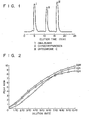
- Fig. 1 The typical elution pattern in this experiment is shown in Fig. 1. Such an elution pattern was obtained for every 10 serial dilutions of the standard antigen solution. By plotting the peak of these elution curves, calibration curves shown in Fig. 2 were obtained. It was confirmed in advance that the anti-IgG antibody, anti-IgM antibody and anti-IgA antibody used have substantially no cross reactivity against other antigens.
Landscapes
- Health & Medical Sciences (AREA)
- Life Sciences & Earth Sciences (AREA)
- Immunology (AREA)
- Engineering & Computer Science (AREA)
- Biomedical Technology (AREA)
- Hematology (AREA)
- Molecular Biology (AREA)
- Chemical & Material Sciences (AREA)
- Urology & Nephrology (AREA)
- Cell Biology (AREA)
- Microbiology (AREA)
- Biotechnology (AREA)
- Food Science & Technology (AREA)
- Medicinal Chemistry (AREA)
- Physics & Mathematics (AREA)
- Analytical Chemistry (AREA)
- Biochemistry (AREA)
- General Health & Medical Sciences (AREA)
- General Physics & Mathematics (AREA)
- Pathology (AREA)
- Mycology (AREA)
- Medicines Containing Antibodies Or Antigens For Use As Internal Diagnostic Agents (AREA)
- Investigating Or Analysing Biological Materials (AREA)
Applications Claiming Priority (2)
| Application Number | Priority Date | Filing Date | Title |
|---|---|---|---|
| JP195115/82 | 1982-11-05 | ||
| JP57195115A JPS5984162A (ja) | 1982-11-05 | 1982-11-05 | 免疫分析法 |
Publications (2)
| Publication Number | Publication Date |
|---|---|
| EP0108992A1 true EP0108992A1 (fr) | 1984-05-23 |
| EP0108992B1 EP0108992B1 (fr) | 1990-01-03 |
Family
ID=16335739
Family Applications (1)
| Application Number | Title | Priority Date | Filing Date |
|---|---|---|---|
| EP83110877A Expired - Lifetime EP0108992B1 (fr) | 1982-11-05 | 1983-10-31 | Immuno-essai |
Country Status (4)
| Country | Link |
|---|---|
| US (1) | US4623618A (fr) |
| EP (1) | EP0108992B1 (fr) |
| JP (1) | JPS5984162A (fr) |
| DE (1) | DE3381054D1 (fr) |
Cited By (2)
| Publication number | Priority date | Publication date | Assignee | Title |
|---|---|---|---|---|
| EP0160228A1 (fr) * | 1984-04-04 | 1985-11-06 | Cetus Corporation | Procédé pour la détection simultanée des antigènes multiples par l'essai immunologique dite méthode-sandwich |
| EP0577092A3 (en) * | 1992-07-02 | 1994-09-07 | Becton Dickinson Co | Immunoassays using microparticles containing different detectable substances |
Families Citing this family (12)
| Publication number | Priority date | Publication date | Assignee | Title |
|---|---|---|---|---|
| US4704355A (en) * | 1985-03-27 | 1987-11-03 | New Horizons Diagnostics Corporation | Assay utilizing ATP encapsulated within liposome particles |
| JPH076984B2 (ja) * | 1985-05-31 | 1995-01-30 | 株式会社日立製作所 | 複数項目分析方法 |
| JPS6227734U (fr) * | 1985-08-01 | 1987-02-19 | ||
| US5324829A (en) * | 1988-12-16 | 1994-06-28 | Ortho Diagnostic Systems, Inc. | High specific activity nucleic acid probes having target recognition and signal generating moieties |
| CA2009708A1 (fr) * | 1989-02-13 | 1990-08-13 | Jane D. Madonna | Sonde d'acide nucleique pour la detection des salmonella pathogene pour les humains |
| US5468622A (en) * | 1990-04-03 | 1995-11-21 | Immunomatrix, Inc. | Salt stabilization of antibody-enzyme conjugates heat-dried into paper |
| US5231004A (en) * | 1990-05-11 | 1993-07-27 | Eastman Kodak Company | Use of heme-containing proteins as stabilizers for enzyme-labeled immunoreactants |
| EP0557595B1 (fr) * | 1992-02-25 | 1997-07-23 | Levine, Robert Aaron | Essai pour composant objectif |
| US7074586B1 (en) * | 1999-06-17 | 2006-07-11 | Source Precision Medicine, Inc. | Quantitative assay for low abundance molecules |
| RU2203495C2 (ru) * | 2001-06-06 | 2003-04-27 | Государственный научно-исследовательский институт биологического приборостроения | Способ липосомального иммуноанализа для детектирования аналитов в образце |
| JP4331073B2 (ja) * | 2004-08-31 | 2009-09-16 | デンカ生研株式会社 | 抗原の測定方法及びそのための試薬 |
| US20110056144A1 (en) * | 2009-09-08 | 2011-03-10 | Hicks John E | Hidden drain system |
Citations (5)
| Publication number | Priority date | Publication date | Assignee | Title |
|---|---|---|---|---|
| US3850578A (en) * | 1973-03-12 | 1974-11-26 | H Mcconnell | Process for assaying for biologically active molecules |
| EP0014530A1 (fr) * | 1979-01-18 | 1980-08-20 | Unilever Plc | Procédé de détection et de détermination de composés protéiniques à activité de liaison spécifique et de matériaux ayant une affinité spécifique pour lesdits composés, composition d'essai et trousse de réactifs pour ce procédé |
| GB2051357A (en) * | 1979-06-14 | 1981-01-14 | Abbott Lab | Simultaneous Detection of Indicators of Hepatitis Virus Exposure |
| WO1981002344A1 (fr) * | 1980-02-04 | 1981-08-20 | Collaborative Res Inc | Produits et procedes d'analyse immunologique |
| US4338094A (en) * | 1979-10-25 | 1982-07-06 | Nasik Elahi | Macroencapsulated immunosorbent assay technique |
Family Cites Families (4)
| Publication number | Priority date | Publication date | Assignee | Title |
|---|---|---|---|---|
| US4235792A (en) * | 1977-04-14 | 1980-11-25 | The Governing Council Of The University Of Toronto | Immunological materials |
| US4292403A (en) * | 1978-08-24 | 1981-09-29 | Akzona Incorporated | Detection and/or determination of IgM, IgA, IgD and IgE immunoglobulins |
| JPS56132564A (en) * | 1980-02-04 | 1981-10-16 | Koraboreiteibu Research Inc | Product for and method of immunity analysis |
| JPS6058420B2 (ja) * | 1980-07-09 | 1985-12-19 | 富士写真フイルム株式会社 | 免疫反応用マイクロカプセル群及びそれを用いた判別方法 |
-
1982
- 1982-11-05 JP JP57195115A patent/JPS5984162A/ja active Pending
-
1983
- 1983-10-31 US US06/547,353 patent/US4623618A/en not_active Expired - Lifetime
- 1983-10-31 DE DE8383110877T patent/DE3381054D1/de not_active Expired - Lifetime
- 1983-10-31 EP EP83110877A patent/EP0108992B1/fr not_active Expired - Lifetime
Patent Citations (5)
| Publication number | Priority date | Publication date | Assignee | Title |
|---|---|---|---|---|
| US3850578A (en) * | 1973-03-12 | 1974-11-26 | H Mcconnell | Process for assaying for biologically active molecules |
| EP0014530A1 (fr) * | 1979-01-18 | 1980-08-20 | Unilever Plc | Procédé de détection et de détermination de composés protéiniques à activité de liaison spécifique et de matériaux ayant une affinité spécifique pour lesdits composés, composition d'essai et trousse de réactifs pour ce procédé |
| GB2051357A (en) * | 1979-06-14 | 1981-01-14 | Abbott Lab | Simultaneous Detection of Indicators of Hepatitis Virus Exposure |
| US4338094A (en) * | 1979-10-25 | 1982-07-06 | Nasik Elahi | Macroencapsulated immunosorbent assay technique |
| WO1981002344A1 (fr) * | 1980-02-04 | 1981-08-20 | Collaborative Res Inc | Produits et procedes d'analyse immunologique |
Cited By (2)
| Publication number | Priority date | Publication date | Assignee | Title |
|---|---|---|---|---|
| EP0160228A1 (fr) * | 1984-04-04 | 1985-11-06 | Cetus Corporation | Procédé pour la détection simultanée des antigènes multiples par l'essai immunologique dite méthode-sandwich |
| EP0577092A3 (en) * | 1992-07-02 | 1994-09-07 | Becton Dickinson Co | Immunoassays using microparticles containing different detectable substances |
Also Published As
| Publication number | Publication date |
|---|---|
| US4623618A (en) | 1986-11-18 |
| JPS5984162A (ja) | 1984-05-15 |
| DE3381054D1 (de) | 1990-02-08 |
| EP0108992B1 (fr) | 1990-01-03 |
Similar Documents
| Publication | Publication Date | Title |
|---|---|---|
| US4434236A (en) | Immunoassay wherein labeled antibody is displaced from immobilized analyte-analogue | |
| EP0553229B1 (fr) | Amelioration relative au dosage faisant appel a une liaison en phase solide | |
| US6737278B1 (en) | Ligand binding assay and kit with a separation zone for disturbing analytes | |
| US4353982A (en) | Immunochemical assay for creatine kinase-MB isoenzyme | |
| EP0124352B1 (fr) | Essai protégé de liaison | |
| US4623618A (en) | Simultaneous quantitative immunoassay for different antigens or antibodies | |
| EA017380B1 (ru) | Определение антигенов, расположенных на эритроцитах, и антиэритроцитарных антител | |
| JPS60501129A (ja) | 強化凝集分析法及びその試剤 | |
| EP0185722A1 (fr) | Anticorps polyclonaux, leur preparation et leur utilisation | |
| AU648625B2 (en) | Test method and reagent kit therefor | |
| US5210040A (en) | Process for coupling antibodies or antibody fragments to liposomes | |
| US4447528A (en) | Detecting intrinsic factor blocking site antibody | |
| KR100411406B1 (ko) | 검사용키트 | |
| US4971916A (en) | Liposome based homogeneous immunoassay for diagnostic tests | |
| Kakabakos et al. | Immobilization of immunoglobulins onto surface-treated and untreated polystyrene beads for radioimmunoassays | |
| US4195073A (en) | Radioimmunoassay of alpha 1 fetoprotein | |
| CA1309344C (fr) | Dosage immunologique homogene a base de liposome pour epreuves diagnostiques | |
| O’Sullivan | Enzyme immunoassay | |
| JPS61110059A (ja) | 免疫学的分析方法 | |
| JPH06505803A (ja) | マルチテスト免疫化学的試薬及びその使用方法 | |
| CN119224299B (zh) | 一种Aβ1-42、NfL、UCH-L1联合检测的免疫层析试剂盒 | |
| EP0092344A1 (fr) | Procédé d'essai | |
| AU2003200222B2 (en) | Ligand binding assay and kit with a separation zone for disturbing analytes | |
| JPS6353511B2 (fr) | ||
| WO1993019369A1 (fr) | Technique de prevention de fausses reactions positives dans les essais immunologiques |
Legal Events
| Date | Code | Title | Description |
|---|---|---|---|
| PUAI | Public reference made under article 153(3) epc to a published international application that has entered the european phase |
Free format text: ORIGINAL CODE: 0009012 |
|
| 17P | Request for examination filed |
Effective date: 19831125 |
|
| AK | Designated contracting states |
Designated state(s): DE FR GB NL |
|
| RAP1 | Party data changed (applicant data changed or rights of an application transferred) |
Owner name: KABUSHIKI KAISHA TOSHIBA |
|
| GRAA | (expected) grant |
Free format text: ORIGINAL CODE: 0009210 |
|
| AK | Designated contracting states |
Kind code of ref document: B1 Designated state(s): DE FR GB NL |
|
| REF | Corresponds to: |
Ref document number: 3381054 Country of ref document: DE Date of ref document: 19900208 |
|
| ET | Fr: translation filed | ||
| PLBE | No opposition filed within time limit |
Free format text: ORIGINAL CODE: 0009261 |
|
| STAA | Information on the status of an ep patent application or granted ep patent |
Free format text: STATUS: NO OPPOSITION FILED WITHIN TIME LIMIT |
|
| 26N | No opposition filed | ||
| PGFP | Annual fee paid to national office [announced via postgrant information from national office to epo] |
Ref country code: GB Payment date: 19931021 Year of fee payment: 11 |
|
| PGFP | Annual fee paid to national office [announced via postgrant information from national office to epo] |
Ref country code: NL Payment date: 19931031 Year of fee payment: 11 |
|
| PG25 | Lapsed in a contracting state [announced via postgrant information from national office to epo] |
Ref country code: GB Effective date: 19941031 |
|
| PG25 | Lapsed in a contracting state [announced via postgrant information from national office to epo] |
Ref country code: NL Effective date: 19950501 |
|
| NLV4 | Nl: lapsed or anulled due to non-payment of the annual fee | ||
| GBPC | Gb: european patent ceased through non-payment of renewal fee |
Effective date: 19941031 |
|
| PGFP | Annual fee paid to national office [announced via postgrant information from national office to epo] |
Ref country code: FR Payment date: 20001010 Year of fee payment: 18 |
|
| PGFP | Annual fee paid to national office [announced via postgrant information from national office to epo] |
Ref country code: DE Payment date: 20001023 Year of fee payment: 18 |
|
| PG25 | Lapsed in a contracting state [announced via postgrant information from national office to epo] |
Ref country code: FR Free format text: LAPSE BECAUSE OF NON-PAYMENT OF DUE FEES Effective date: 20020628 |
|
| PG25 | Lapsed in a contracting state [announced via postgrant information from national office to epo] |
Ref country code: DE Free format text: LAPSE BECAUSE OF NON-PAYMENT OF DUE FEES Effective date: 20020702 |
|
| REG | Reference to a national code |
Ref country code: FR Ref legal event code: ST |