EP0111090A1 - Indolderivate, Verfahren zu ihrer Herstellung und deren Verwendung zur Weiterverarbeitung - Google Patents
Indolderivate, Verfahren zu ihrer Herstellung und deren Verwendung zur Weiterverarbeitung Download PDFInfo
- Publication number
- EP0111090A1 EP0111090A1 EP83110071A EP83110071A EP0111090A1 EP 0111090 A1 EP0111090 A1 EP 0111090A1 EP 83110071 A EP83110071 A EP 83110071A EP 83110071 A EP83110071 A EP 83110071A EP 0111090 A1 EP0111090 A1 EP 0111090A1
- Authority
- EP
- European Patent Office
- Prior art keywords
- alkyl
- und
- oder
- general formula
- carbon atoms
- Prior art date
- Legal status (The legal status is an assumption and is not a legal conclusion. Google has not performed a legal analysis and makes no representation as to the accuracy of the status listed.)
- Granted
Links
- 150000002475 indoles Chemical class 0.000 title claims abstract description 25
- 229940054051 antipsychotic indole derivative Drugs 0.000 title claims abstract description 9
- 238000002360 preparation method Methods 0.000 title claims abstract description 9
- 238000000034 method Methods 0.000 title claims abstract description 8
- -1 Pyrrolidino- Chemical class 0.000 claims abstract description 20
- 125000000217 alkyl group Chemical group 0.000 claims abstract description 14
- AIFRHYZBTHREPW-UHFFFAOYSA-N β-carboline Chemical class N1=CC=C2C3=CC=CC=C3NC2=C1 AIFRHYZBTHREPW-UHFFFAOYSA-N 0.000 claims abstract description 13
- 125000004432 carbon atom Chemical group C* 0.000 claims abstract description 9
- 125000003118 aryl group Chemical group 0.000 claims abstract description 5
- 229910052739 hydrogen Inorganic materials 0.000 claims abstract description 5
- 239000001257 hydrogen Substances 0.000 claims abstract description 5
- 125000004183 alkoxy alkyl group Chemical group 0.000 claims abstract description 4
- 125000003545 alkoxy group Chemical group 0.000 claims abstract description 3
- 125000005843 halogen group Chemical group 0.000 claims abstract description 3
- 125000001997 phenyl group Chemical group [H]C1=C([H])C([H])=C(*)C([H])=C1[H] 0.000 claims abstract 3
- SIKJAQJRHWYJAI-UHFFFAOYSA-N Indole Chemical compound C1=CC=C2NC=CC2=C1 SIKJAQJRHWYJAI-UHFFFAOYSA-N 0.000 claims description 12
- QIVBCDIJIAJPQS-VIFPVBQESA-N L-tryptophane Chemical class C1=CC=C2C(C[C@H](N)C(O)=O)=CNC2=C1 QIVBCDIJIAJPQS-VIFPVBQESA-N 0.000 claims description 9
- 150000001875 compounds Chemical class 0.000 claims description 6
- PZOUSPYUWWUPPK-UHFFFAOYSA-N indole Natural products CC1=CC=CC2=C1C=CN2 PZOUSPYUWWUPPK-UHFFFAOYSA-N 0.000 claims description 6
- RKJUIXBNRJVNHR-UHFFFAOYSA-N indolenine Natural products C1=CC=C2CC=NC2=C1 RKJUIXBNRJVNHR-UHFFFAOYSA-N 0.000 claims description 6
- 239000002253 acid Substances 0.000 claims description 3
- 150000007513 acids Chemical class 0.000 claims description 3
- 125000004435 hydrogen atom Chemical group [H]* 0.000 claims description 3
- 150000003254 radicals Chemical class 0.000 claims description 3
- QWRHDUHKPPVKTN-UHFFFAOYSA-N CCC(=C(C(=O)O)N=CN(C)C)C1=CNC2=C1C=C(C=C2)OCC3=CC=CC=C3 Chemical compound CCC(=C(C(=O)O)N=CN(C)C)C1=CNC2=C1C=C(C=C2)OCC3=CC=CC=C3 QWRHDUHKPPVKTN-UHFFFAOYSA-N 0.000 claims description 2
- GHLFQYZBMNVDNJ-UHFFFAOYSA-N CCC(=C(C(=O)O)N=CN(C)C)C1=CNC2=CC=CC=C21 Chemical compound CCC(=C(C(=O)O)N=CN(C)C)C1=CNC2=CC=CC=C21 GHLFQYZBMNVDNJ-UHFFFAOYSA-N 0.000 claims description 2
- 229910052740 iodine Inorganic materials 0.000 claims description 2
- WGDRAVMHLDKGGA-UHFFFAOYSA-N prop-2-en-1-imine Chemical compound [CH2]C=C[NH] WGDRAVMHLDKGGA-UHFFFAOYSA-N 0.000 claims description 2
- OGBGILKGYLKJAP-UHFFFAOYSA-N N'-[1-diethoxyphosphoryl-2-(1H-indol-3-yl)ethenyl]-N,N-dimethylmethanimidamide Chemical compound C(C)OP(OCC)(=O)C(=CC1=CNC2=CC=CC=C12)N=CN(C)C OGBGILKGYLKJAP-UHFFFAOYSA-N 0.000 claims 1
- 125000004429 atom Chemical group 0.000 claims 1
- LNKYLWRMUXZMEO-UHFFFAOYSA-N ethyl 3-(4-cyano-1h-indol-3-yl)-2-(dimethylaminomethylideneamino)prop-2-enoate Chemical compound C1=CC(C#N)=C2C(C=C(C(=O)OCC)N=CN(C)C)=CNC2=C1 LNKYLWRMUXZMEO-UHFFFAOYSA-N 0.000 claims 1
- 125000000430 tryptophan group Chemical group [H]N([H])C(C(=O)O*)C([H])([H])C1=C([H])N([H])C2=C([H])C([H])=C([H])C([H])=C12 0.000 abstract description 2
- UFHFLCQGNIYNRP-UHFFFAOYSA-N Hydrogen Chemical compound [H][H] UFHFLCQGNIYNRP-UHFFFAOYSA-N 0.000 abstract 2
- 150000002431 hydrogen Chemical group 0.000 abstract 2
- YXFVVABEGXRONW-UHFFFAOYSA-N Toluene Chemical compound CC1=CC=CC=C1 YXFVVABEGXRONW-UHFFFAOYSA-N 0.000 description 15
- DTQVDTLACAAQTR-UHFFFAOYSA-N Trifluoroacetic acid Chemical compound OC(=O)C(F)(F)F DTQVDTLACAAQTR-UHFFFAOYSA-N 0.000 description 14
- YMWUJEATGCHHMB-UHFFFAOYSA-N Dichloromethane Chemical compound ClCCl YMWUJEATGCHHMB-UHFFFAOYSA-N 0.000 description 12
- XEKOWRVHYACXOJ-UHFFFAOYSA-N Ethyl acetate Chemical compound CCOC(C)=O XEKOWRVHYACXOJ-UHFFFAOYSA-N 0.000 description 12
- QTBSBXVTEAMEQO-UHFFFAOYSA-N Acetic acid Chemical compound CC(O)=O QTBSBXVTEAMEQO-UHFFFAOYSA-N 0.000 description 10
- QIVBCDIJIAJPQS-UHFFFAOYSA-N Tryptophan Natural products C1=CC=C2C(CC(N)C(O)=O)=CNC2=C1 QIVBCDIJIAJPQS-UHFFFAOYSA-N 0.000 description 10
- WEVYAHXRMPXWCK-UHFFFAOYSA-N Acetonitrile Chemical compound CC#N WEVYAHXRMPXWCK-UHFFFAOYSA-N 0.000 description 9
- 238000007363 ring formation reaction Methods 0.000 description 7
- 239000002904 solvent Substances 0.000 description 6
- LFQSCWFLJHTTHZ-UHFFFAOYSA-N Ethanol Chemical compound CCO LFQSCWFLJHTTHZ-UHFFFAOYSA-N 0.000 description 5
- 238000002844 melting Methods 0.000 description 5
- 230000008018 melting Effects 0.000 description 5
- 239000002243 precursor Substances 0.000 description 5
- NBIIXXVUZAFLBC-UHFFFAOYSA-N Phosphoric acid Chemical compound OP(O)(O)=O NBIIXXVUZAFLBC-UHFFFAOYSA-N 0.000 description 4
- SMWDFEZZVXVKRB-UHFFFAOYSA-N Quinoline Chemical compound N1=CC=CC2=CC=CC=C21 SMWDFEZZVXVKRB-UHFFFAOYSA-N 0.000 description 4
- VYPSYNLAJGMNEJ-UHFFFAOYSA-N Silicium dioxide Chemical compound O=[Si]=O VYPSYNLAJGMNEJ-UHFFFAOYSA-N 0.000 description 4
- WYURNTSHIVDZCO-UHFFFAOYSA-N Tetrahydrofuran Chemical compound C1CCOC1 WYURNTSHIVDZCO-UHFFFAOYSA-N 0.000 description 4
- 229960000583 acetic acid Drugs 0.000 description 4
- 239000003054 catalyst Substances 0.000 description 4
- XBDQKXXYIPTUBI-UHFFFAOYSA-N dimethylselenoniopropionate Natural products CCC(O)=O XBDQKXXYIPTUBI-UHFFFAOYSA-N 0.000 description 4
- BDAGIHXWWSANSR-UHFFFAOYSA-N methanoic acid Natural products OC=O BDAGIHXWWSANSR-UHFFFAOYSA-N 0.000 description 4
- 239000000203 mixture Substances 0.000 description 4
- XHXFXVLFKHQFAL-UHFFFAOYSA-N phosphoryl trichloride Chemical compound ClP(Cl)(Cl)=O XHXFXVLFKHQFAL-UHFFFAOYSA-N 0.000 description 4
- 239000000741 silica gel Substances 0.000 description 4
- 229910002027 silica gel Inorganic materials 0.000 description 4
- WSFSSNUMVMOOMR-UHFFFAOYSA-N Formaldehyde Chemical compound O=C WSFSSNUMVMOOMR-UHFFFAOYSA-N 0.000 description 3
- 238000005684 Liebig rearrangement reaction Methods 0.000 description 3
- 230000015572 biosynthetic process Effects 0.000 description 3
- 238000006243 chemical reaction Methods 0.000 description 3
- 238000001816 cooling Methods 0.000 description 3
- 239000000543 intermediate Substances 0.000 description 3
- 238000004519 manufacturing process Methods 0.000 description 3
- 239000000047 product Substances 0.000 description 3
- 125000001424 substituent group Chemical group 0.000 description 3
- RYHBNJHYFVUHQT-UHFFFAOYSA-N 1,4-Dioxane Chemical compound C1COCCO1 RYHBNJHYFVUHQT-UHFFFAOYSA-N 0.000 description 2
- CFTOTSJVQRFXOF-UHFFFAOYSA-N 2,3,4,9-tetrahydro-1H-pyrido[3,4-b]indole Chemical compound N1C2=CC=CC=C2C2=C1CNCC2 CFTOTSJVQRFXOF-UHFFFAOYSA-N 0.000 description 2
- NTYXKFHKVREUMR-UHFFFAOYSA-N 4,9-dihydro-3h-pyrido[3,4-b]indole Chemical compound N1C2=CC=CC=C2C2=C1C=NCC2 NTYXKFHKVREUMR-UHFFFAOYSA-N 0.000 description 2
- OSWFIVFLDKOXQC-UHFFFAOYSA-N 4-(3-methoxyphenyl)aniline Chemical compound COC1=CC=CC(C=2C=CC(N)=CC=2)=C1 OSWFIVFLDKOXQC-UHFFFAOYSA-N 0.000 description 2
- IJGRMHOSHXDMSA-UHFFFAOYSA-N Atomic nitrogen Chemical compound N#N IJGRMHOSHXDMSA-UHFFFAOYSA-N 0.000 description 2
- 238000006407 Bischler-Napieralski reaction Methods 0.000 description 2
- XTHFKEDIFFGKHM-UHFFFAOYSA-N Dimethoxyethane Chemical compound COCCOC XTHFKEDIFFGKHM-UHFFFAOYSA-N 0.000 description 2
- VEXZGXHMUGYJMC-UHFFFAOYSA-N Hydrochloric acid Chemical compound Cl VEXZGXHMUGYJMC-UHFFFAOYSA-N 0.000 description 2
- 238000006929 Pictet-Spengler synthesis reaction Methods 0.000 description 2
- QAOWNCQODCNURD-UHFFFAOYSA-N Sulfuric acid Chemical compound OS(O)(=O)=O QAOWNCQODCNURD-UHFFFAOYSA-N 0.000 description 2
- 235000011054 acetic acid Nutrition 0.000 description 2
- 229910000147 aluminium phosphate Inorganic materials 0.000 description 2
- 239000012876 carrier material Substances 0.000 description 2
- 230000003197 catalytic effect Effects 0.000 description 2
- 238000006555 catalytic reaction Methods 0.000 description 2
- USIUVYZYUHIAEV-UHFFFAOYSA-N diphenyl ether Chemical compound C=1C=CC=CC=1OC1=CC=CC=C1 USIUVYZYUHIAEV-UHFFFAOYSA-N 0.000 description 2
- 150000002148 esters Chemical class 0.000 description 2
- 235000019253 formic acid Nutrition 0.000 description 2
- 239000012362 glacial acetic acid Substances 0.000 description 2
- 229940093915 gynecological organic acid Drugs 0.000 description 2
- 150000007524 organic acids Chemical class 0.000 description 2
- 235000005985 organic acids Nutrition 0.000 description 2
- VLTRZXGMWDSKGL-UHFFFAOYSA-N perchloric acid Chemical compound OCl(=O)(=O)=O VLTRZXGMWDSKGL-UHFFFAOYSA-N 0.000 description 2
- 229920000137 polyphosphoric acid Polymers 0.000 description 2
- LPNYRYFBWFDTMA-UHFFFAOYSA-N potassium tert-butoxide Chemical compound [K+].CC(C)(C)[O-] LPNYRYFBWFDTMA-UHFFFAOYSA-N 0.000 description 2
- 235000019260 propionic acid Nutrition 0.000 description 2
- IUVKMZGDUIUOCP-BTNSXGMBSA-N quinbolone Chemical compound O([C@H]1CC[C@H]2[C@H]3[C@@H]([C@]4(C=CC(=O)C=C4CC3)C)CC[C@@]21C)C1=CCCC1 IUVKMZGDUIUOCP-BTNSXGMBSA-N 0.000 description 2
- 239000000126 substance Substances 0.000 description 2
- 238000003786 synthesis reaction Methods 0.000 description 2
- YLQBMQCUIZJEEH-UHFFFAOYSA-N tetrahydrofuran Natural products C=1C=COC=1 YLQBMQCUIZJEEH-UHFFFAOYSA-N 0.000 description 2
- 230000008646 thermal stress Effects 0.000 description 2
- BWKAYBPLDRWMCJ-UHFFFAOYSA-N 1,1-diethoxy-n,n-dimethylmethanamine Chemical compound CCOC(N(C)C)OCC BWKAYBPLDRWMCJ-UHFFFAOYSA-N 0.000 description 1
- FBZVZUSVGKOWHG-UHFFFAOYSA-N 1,1-dimethoxy-n,n-dimethylethanamine Chemical compound COC(C)(OC)N(C)C FBZVZUSVGKOWHG-UHFFFAOYSA-N 0.000 description 1
- CEUFGDDOMXCXFW-UHFFFAOYSA-N 1h-indole-4-carbonitrile Chemical compound N#CC1=CC=CC2=C1C=CN2 CEUFGDDOMXCXFW-UHFFFAOYSA-N 0.000 description 1
- LDXJRKWFNNFDSA-UHFFFAOYSA-N 2-(2,4,6,7-tetrahydrotriazolo[4,5-c]pyridin-5-yl)-1-[4-[2-[[3-(trifluoromethoxy)phenyl]methylamino]pyrimidin-5-yl]piperazin-1-yl]ethanone Chemical compound C1CN(CC2=NNN=C21)CC(=O)N3CCN(CC3)C4=CN=C(N=C4)NCC5=CC(=CC=C5)OC(F)(F)F LDXJRKWFNNFDSA-UHFFFAOYSA-N 0.000 description 1
- JCQLPDZCNSVBMS-UHFFFAOYSA-N 5-phenylmethoxy-1h-indole Chemical compound C=1C=C2NC=CC2=CC=1OCC1=CC=CC=C1 JCQLPDZCNSVBMS-UHFFFAOYSA-N 0.000 description 1
- ZCYVEMRRCGMTRW-UHFFFAOYSA-N 7553-56-2 Chemical compound [I] ZCYVEMRRCGMTRW-UHFFFAOYSA-N 0.000 description 1
- KOVRZNUMIKACTB-UHFFFAOYSA-N 9H-pyrido[3,4-b]indole-3-carboxylic acid ethyl ester Chemical compound N1C2=CC=CC=C2C2=C1C=NC(C(=O)OCC)=C2 KOVRZNUMIKACTB-UHFFFAOYSA-N 0.000 description 1
- WKBOTKDWSSQWDR-UHFFFAOYSA-N Bromine atom Chemical compound [Br] WKBOTKDWSSQWDR-UHFFFAOYSA-N 0.000 description 1
- 0 C**C(CC1=CNC/C=C/[C@@](C)(*)C=C[*@]1C)N Chemical compound C**C(CC1=CNC/C=C/[C@@](C)(*)C=C[*@]1C)N 0.000 description 1
- ZAMOUSCENKQFHK-UHFFFAOYSA-N Chlorine atom Chemical compound [Cl] ZAMOUSCENKQFHK-UHFFFAOYSA-N 0.000 description 1
- PXGOKWXKJXAPGV-UHFFFAOYSA-N Fluorine Chemical compound FF PXGOKWXKJXAPGV-UHFFFAOYSA-N 0.000 description 1
- DGAQECJNVWCQMB-PUAWFVPOSA-M Ilexoside XXIX Chemical compound C[C@@H]1CC[C@@]2(CC[C@@]3(C(=CC[C@H]4[C@]3(CC[C@@H]5[C@@]4(CC[C@@H](C5(C)C)OS(=O)(=O)[O-])C)C)[C@@H]2[C@]1(C)O)C)C(=O)O[C@H]6[C@@H]([C@H]([C@@H]([C@H](O6)CO)O)O)O.[Na+] DGAQECJNVWCQMB-PUAWFVPOSA-M 0.000 description 1
- 230000010933 acylation Effects 0.000 description 1
- 238000005917 acylation reaction Methods 0.000 description 1
- 239000000654 additive Substances 0.000 description 1
- 230000000996 additive effect Effects 0.000 description 1
- 125000004453 alkoxycarbonyl group Chemical group 0.000 description 1
- 125000000320 amidine group Chemical group 0.000 description 1
- 125000003277 amino group Chemical group 0.000 description 1
- 230000002082 anti-convulsion Effects 0.000 description 1
- 239000002249 anxiolytic agent Substances 0.000 description 1
- 230000000949 anxiolytic effect Effects 0.000 description 1
- 238000009876 asymmetric hydrogenation reaction Methods 0.000 description 1
- 238000005815 base catalysis Methods 0.000 description 1
- 238000009835 boiling Methods 0.000 description 1
- GDTBXPJZTBHREO-UHFFFAOYSA-N bromine Substances BrBr GDTBXPJZTBHREO-UHFFFAOYSA-N 0.000 description 1
- 229910052794 bromium Inorganic materials 0.000 description 1
- 210000003169 central nervous system Anatomy 0.000 description 1
- 239000007795 chemical reaction product Substances 0.000 description 1
- 239000000460 chlorine Substances 0.000 description 1
- 229910052801 chlorine Inorganic materials 0.000 description 1
- 125000004093 cyano group Chemical group *C#N 0.000 description 1
- 238000006114 decarboxylation reaction Methods 0.000 description 1
- 230000018044 dehydration Effects 0.000 description 1
- 238000006297 dehydration reaction Methods 0.000 description 1
- 238000006356 dehydrogenation reaction Methods 0.000 description 1
- 125000004663 dialkyl amino group Chemical group 0.000 description 1
- UIBCDEFKKLRXHR-UHFFFAOYSA-N diethoxyphosphorylmethanamine Chemical compound CCOP(=O)(CN)OCC UIBCDEFKKLRXHR-UHFFFAOYSA-N 0.000 description 1
- 125000004177 diethyl group Chemical group [H]C([H])([H])C([H])([H])* 0.000 description 1
- 239000003085 diluting agent Substances 0.000 description 1
- 229940079593 drug Drugs 0.000 description 1
- 239000003814 drug Substances 0.000 description 1
- 230000000694 effects Effects 0.000 description 1
- 230000032050 esterification Effects 0.000 description 1
- 238000005886 esterification reaction Methods 0.000 description 1
- TUZMWOIKOXIYHQ-RNADYPAZSA-N ethyl (Z)-2-(dimethylaminomethylideneamino)but-2-enoate Chemical compound CCOC(=O)C(=C\C)\N=CN(C)C TUZMWOIKOXIYHQ-RNADYPAZSA-N 0.000 description 1
- JXVAFPULGWAWJD-UHFFFAOYSA-N ethyl 2-(dimethylaminomethylideneamino)acetate Chemical compound CCOC(=O)CN=CN(C)C JXVAFPULGWAWJD-UHFFFAOYSA-N 0.000 description 1
- NTNZTEQNFHNYBC-UHFFFAOYSA-N ethyl 2-aminoacetate Chemical compound CCOC(=O)CN NTNZTEQNFHNYBC-UHFFFAOYSA-N 0.000 description 1
- RVKCXUGERFCGHY-UHFFFAOYSA-N ethyl 3-(dimethylamino)-2-(dimethylaminomethylideneamino)prop-2-enoate Chemical compound CCOC(=O)C(=CN(C)C)N=CN(C)C RVKCXUGERFCGHY-UHFFFAOYSA-N 0.000 description 1
- 229910052731 fluorine Inorganic materials 0.000 description 1
- 239000011737 fluorine Substances 0.000 description 1
- 238000004508 fractional distillation Methods 0.000 description 1
- 239000007789 gas Substances 0.000 description 1
- OCDGBSUVYYVKQZ-UHFFFAOYSA-N gramine Chemical compound C1=CC=C2C(CN(C)C)=CNC2=C1 OCDGBSUVYYVKQZ-UHFFFAOYSA-N 0.000 description 1
- 229910052736 halogen Inorganic materials 0.000 description 1
- 150000002367 halogens Chemical group 0.000 description 1
- 230000007062 hydrolysis Effects 0.000 description 1
- 238000006460 hydrolysis reaction Methods 0.000 description 1
- 239000005457 ice water Substances 0.000 description 1
- 230000001939 inductive effect Effects 0.000 description 1
- 239000012442 inert solvent Substances 0.000 description 1
- 239000003978 infusion fluid Substances 0.000 description 1
- 229910052500 inorganic mineral Inorganic materials 0.000 description 1
- 239000011630 iodine Substances 0.000 description 1
- 239000007788 liquid Substances 0.000 description 1
- 239000000463 material Substances 0.000 description 1
- 239000011707 mineral Substances 0.000 description 1
- 239000003158 myorelaxant agent Substances 0.000 description 1
- DSWNRHCOGVRDOE-UHFFFAOYSA-N n,n-dimethylmethanimidamide Chemical compound CN(C)C=N DSWNRHCOGVRDOE-UHFFFAOYSA-N 0.000 description 1
- 229910052757 nitrogen Inorganic materials 0.000 description 1
- 239000012074 organic phase Substances 0.000 description 1
- 239000003960 organic solvent Substances 0.000 description 1
- PNJWIWWMYCMZRO-UHFFFAOYSA-N pent‐4‐en‐2‐one Natural products CC(=O)CC=C PNJWIWWMYCMZRO-UHFFFAOYSA-N 0.000 description 1
- 125000006239 protecting group Chemical group 0.000 description 1
- 238000010992 reflux Methods 0.000 description 1
- 229910052703 rhodium Inorganic materials 0.000 description 1
- 239000010948 rhodium Substances 0.000 description 1
- MHOVAHRLVXNVSD-UHFFFAOYSA-N rhodium atom Chemical compound [Rh] MHOVAHRLVXNVSD-UHFFFAOYSA-N 0.000 description 1
- 150000003335 secondary amines Chemical class 0.000 description 1
- 230000001624 sedative effect Effects 0.000 description 1
- 238000007086 side reaction Methods 0.000 description 1
- 239000011734 sodium Substances 0.000 description 1
- 229910052708 sodium Inorganic materials 0.000 description 1
- 239000000243 solution Substances 0.000 description 1
- ZXLDQJLIBNPEFJ-UHFFFAOYSA-N tetrahydro-beta-carboline Natural products C1CNC(C)C2=C1C1=CC=C(OC)C=C1N2 ZXLDQJLIBNPEFJ-UHFFFAOYSA-N 0.000 description 1
Classifications
-
- C—CHEMISTRY; METALLURGY
- C07—ORGANIC CHEMISTRY
- C07D—HETEROCYCLIC COMPOUNDS
- C07D471/00—Heterocyclic compounds containing nitrogen atoms as the only ring hetero atoms in the condensed system, at least one ring being a six-membered ring with one nitrogen atom, not provided for by groups C07D451/00 - C07D463/00
- C07D471/02—Heterocyclic compounds containing nitrogen atoms as the only ring hetero atoms in the condensed system, at least one ring being a six-membered ring with one nitrogen atom, not provided for by groups C07D451/00 - C07D463/00 in which the condensed system contains two hetero rings
- C07D471/04—Ortho-condensed systems
-
- C—CHEMISTRY; METALLURGY
- C07—ORGANIC CHEMISTRY
- C07D—HETEROCYCLIC COMPOUNDS
- C07D209/00—Heterocyclic compounds containing five-membered rings, condensed with other rings, with one nitrogen atom as the only ring hetero atom
- C07D209/02—Heterocyclic compounds containing five-membered rings, condensed with other rings, with one nitrogen atom as the only ring hetero atom condensed with one carbocyclic ring
- C07D209/04—Indoles; Hydrogenated indoles
- C07D209/10—Indoles; Hydrogenated indoles with substituted hydrocarbon radicals attached to carbon atoms of the hetero ring
- C07D209/14—Radicals substituted by nitrogen atoms, not forming part of a nitro radical
- C07D209/16—Tryptamines
-
- C—CHEMISTRY; METALLURGY
- C07—ORGANIC CHEMISTRY
- C07D—HETEROCYCLIC COMPOUNDS
- C07D209/00—Heterocyclic compounds containing five-membered rings, condensed with other rings, with one nitrogen atom as the only ring hetero atom
- C07D209/02—Heterocyclic compounds containing five-membered rings, condensed with other rings, with one nitrogen atom as the only ring hetero atom condensed with one carbocyclic ring
- C07D209/04—Indoles; Hydrogenated indoles
- C07D209/10—Indoles; Hydrogenated indoles with substituted hydrocarbon radicals attached to carbon atoms of the hetero ring
- C07D209/18—Radicals substituted by carbon atoms having three bonds to hetero atoms with at the most one bond to halogen, e.g. ester or nitrile radicals
- C07D209/20—Radicals substituted by carbon atoms having three bonds to hetero atoms with at the most one bond to halogen, e.g. ester or nitrile radicals substituted additionally by nitrogen atoms, e.g. tryptophane
-
- C—CHEMISTRY; METALLURGY
- C07—ORGANIC CHEMISTRY
- C07F—ACYCLIC, CARBOCYCLIC OR HETEROCYCLIC COMPOUNDS CONTAINING ELEMENTS OTHER THAN CARBON, HYDROGEN, HALOGEN, OXYGEN, NITROGEN, SULFUR, SELENIUM OR TELLURIUM
- C07F9/00—Compounds containing elements of Groups 5 or 15 of the Periodic Table
- C07F9/02—Phosphorus compounds
- C07F9/547—Heterocyclic compounds, e.g. containing phosphorus as a ring hetero atom
- C07F9/553—Heterocyclic compounds, e.g. containing phosphorus as a ring hetero atom having one nitrogen atom as the only ring hetero atom
- C07F9/572—Five-membered rings
- C07F9/5728—Five-membered rings condensed with carbocyclic rings or carbocyclic ring systems
Definitions
- the invention relates to new indole derivatives, processes for their preparation and their use for further processing according to the claims.
- Indole derivatives of the general formula I according to claim 1 are valuable intermediates for the preparation of ⁇ -carboline derivatives of the general formula IV and tryptophan derivatives of the general formula V according to claim 6.
- Carboline derivatives especially substituted ß-carboline derivatives, have recently found great interest in drug research because they exert a wealth of therapeutically useful effects via the central nervous system. For example, they develop anticonvulsive, anxiolytic, muscle relaxant and sedative effects.
- Substituted tryptophans are, for example, compounds with a sleep-inducing effect. Tryptophan is widely used, for example as an additive to infusion solutions, feed, etc.
- the substituent R in the formulas I, II, IV and V can be in positions 4, 5, 6 or 7 of the aromatic ring are located, wherein the ring with the substituent R may be mono- or disubstituted.
- R can be hydrogen, halogen or any organic radical.
- Halogen atoms are fluorine, chlorine, bromine and iodine.
- Possible organic radicals are preferably: alkyl, alkoxyalkyl and alkoxy groups with 1 to 4 carbon atoms, methylenedioxy, benzyloxy, cyano, alkoxycarbonyl and dialkylamino groups each with 1 to 4 carbon atoms in the alkyl part.
- racemic tryptophan (4) is formed and after esterification tryptophan ester (5), from which, after acylation of the amino group and cyclization under the conditions of the Bischler-Napieralski reaction, a 3,4-dihydro-ß-carboline (6a) and after Pictet-Spengler a tetrahydro-ß-carboline (6b) is formed, which are converted into the carbolines (7) by dehydration.
- the cyclizations according to Bischler-Napieralski and Pictet-Spengler in particular, can only be carried out in low yield despite numerous process improvements, with sensitive, partially hydrogenated intermediates being produced which can give rise to various side reactions.
- the dehydrogenation reactions on the di- and tetrahydrocarbolines are often carried out in low yield.
- the new indole derivatives of the general formula I are suitable precursors for a cyclization to the desired ⁇ -carbolines of the general formula IV, where is split off.
- the cyclization takes place in good yield both under thermal stress and when heated under catalytic conditions.
- the indole derivative of the general formula I is heated to 150-250 ° C., preferably 180-220 ° C.
- a high-boiling solvent such as quinoline or diphenyl ether.
- Carboline formation is also observed when the indole derivative is supported on a carrier material, such as silica gel, using an easily evaporable solvent, for example dichloromethane, and the substance-laden carrier material is heated to about 180-210 ° C, which can expediently also be done under rollers in a Kugelrohr oven .
- a carrier material such as silica gel
- dichloromethane an easily evaporable solvent
- the substance-laden carrier material is heated to about 180-210 ° C, which can expediently also be done under rollers in a Kugelrohr oven .
- the catalyzed reaction to give ß-carboline is to be understood primarily as proton-catalyzed reactions.
- the reactions are carried out in such a way that the indole derivative is heated, for example, in organic acids, for example formic acid, acetic acid, propionic acid or trifluoroacetic acid, or in an inorganic medium, for example phosphoric acid, polyphosphoric acid or phosphorus oxychloride, etc.
- Inert organic solvents such as toluene, ethyl acetate, dioxane, dimethoxyethane, acetonitrile and others can also be used. can be used as a diluent.
- indole derivatives of the general formula I according to the invention are prepared in one step by reacting indoles of the general formula II with an aza-butadiene of the general formula III in the presence of acids according to claim 5.
- liquid organic acids such as, for example, formic acid, acetic acid, propionic acid, trifluoroacetic acid and others, alone or as a mixture with other inert substances
- Solvents such as dichloromethane, tetrahydrofuran, dioxane, dimethoxyethane, ethyl acetate, acetonitrile, but also catalytic amounts of mineral acids such as sulfuric acid, hydrochloric acid, perchloric acid etc. in inert solvents (as above) can be used.
- suitable catalysts and solvents are phosphoric acid, polyphosphoric acid or phosphorus oxychloride.
- the optimal reaction temperature is somewhat different, but in general this is between 0 and 100 ° C., in trifluoroacetic acid, for example between 0 and 50 ° C. preferably at room temperature.
- the choice of conditions also depends on the substituents still present in the indole used. Donor-substituted indoles generally react faster and therefore under milder conditions than acceptor-substituted indoles.
- 320 mg of azadiene 1 are mixed with 2.5 ml of trifluoroacetic acid and stirred for 10 minutes at room temperature. Then 140 mg of 4-cyano-indole are added and the solution is heated to 80 ° C. under nitrogen for 1 hour. After working up, 140 mg (45%) of product with a melting point of 159 ° C. (ethanol) are obtained.
Landscapes
- Chemical & Material Sciences (AREA)
- Organic Chemistry (AREA)
- Molecular Biology (AREA)
- Life Sciences & Earth Sciences (AREA)
- Biochemistry (AREA)
- General Health & Medical Sciences (AREA)
- Health & Medical Sciences (AREA)
- Indole Compounds (AREA)
- Nitrogen Condensed Heterocyclic Rings (AREA)
- Nitrogen And Oxygen Or Sulfur-Condensed Heterocyclic Ring Systems (AREA)
- Organic Low-Molecular-Weight Compounds And Preparation Thereof (AREA)
- Electric Clocks (AREA)
- Heterocyclic Carbon Compounds Containing A Hetero Ring Having Oxygen Or Sulfur (AREA)
- Pharmaceuticals Containing Other Organic And Inorganic Compounds (AREA)
- Hydrogenated Pyridines (AREA)
Abstract

- R Wasserstoff, ein oder zwei Halogenatome oder ein oder zwei beliebige organische Reste in 4-, 5-, 6- oder 7-Stellung,
- R' und R4 gleich oder verschieden sind und Wasserstoff, Alkyl mit 1 bis 3 Kohlenstoffatomen oder Alkoxyalkyl mit jeweils 1 bis 3 Kohlenstoffatomen im Alkoxy- und Alkylteil,
- R3 Phenyl, -COOAlkyl, -PO3(Alkyl)2, -SO2Aryl, -SO2Alkyl,
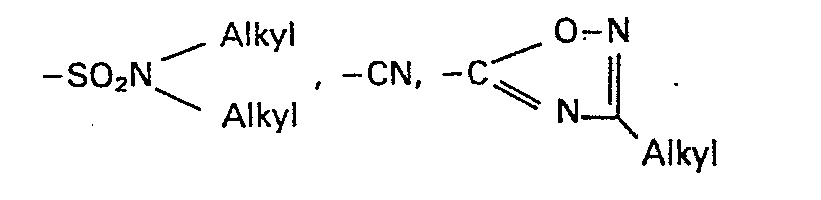

- A und B jeweils für sich Alkyl mit 1 bis 3 Kohlenstoffatomen oder gemeinsam unter Einschluß von N eine Pyrrolidino-, Piperidino-, Morpholino- oder Piperazinogruppe bedeuten,
- Verfahren zu ihrer Herstellung und ihre Weiterverarbeitung zu Tryptophanen und β-Carbolinen.
Description
- Die Erfindung betrifft neue Indolderivate, Verfahren zu ihrer Herstellung und deren Verwendung zur Weiterverarbeitung gemäß der Patentansprüche.
- Indolderivate der allgemeinen Formel I gemäß Anspruch 1 sind wertvolle Zwischenprodukte zur Herstellung von β-Carbolinderivaten der allgemeinen Formel IV und von Tryptophanderivaten der allgemeinen Formel V gemäß Anspruch 6.
- Carbolinderivate, insbesondere substituierte ß-Carbolinderivate, haben in letzter Zeit hohes Interesse in der Arzneimittelforschung gefunden, da sie eine Fülle von therapeutisch nutzbaren Wirkungen über das Zentralnervensystem ausüben. Sie entfalten beispielsweise anticonvulsive, anxiolytische und muskelrelaxierende sowie sedierende Effekte.
- Die Bedeutung, die dieser Stoffklasse beigemessen wird, spiegelt sich in der großen Zahl der Patentanmeldungen wieder, von denen beispielsweise genannt seien: DE-OS 30 15 816, DE-OS 30 23 567, DE-OS 30 48 318 und US-PS 3 202 667.
- Substituierte Tryptophane sind zum Beispiel Verbindungen mit schlafanstoßender Wirkung. Tryptophan findet breite Verwendung , zum Beispiel als Zusatz zu Infusionslösungen, zu Futtermitteln usw.
- Der Substituent R in den Formeln I, II, IV und V kann sich in den Stellungen 4, 5, 6 oder 7 des aromatischen Ringes befinden, wobei der Ring mit dem Substituenten R mono- oder disubstituiert sein kann. R kann Wasserstoff, Halogen oder einen beliebigen organischen Rest bedeuten.
- Als Halogenatome kommen Fluor, Chlor, Brom und Jod in Frage. Als organische Reste kommen vorzugsweise in Frage: Alkyl-, Alkoxyalkyl- und Alkoxygruppen mit 1 bis 4 Kohlenstoffatomen, Methylendioxy-, Benzyloxy-, Cyano-, Alkoxycarbonyl- und Dialkylaminogruppen mit jeweils 1 bis 4 Kohlenstoffatomen im Alkylteil.
- Die in der Literatur beschriebenen Verfahren zur Herstellung von ß-Carbolinen und Tryptophanderivaten haben den Nachteil, daß sie über mehrere Stufen verlaufen und in den Ausbeuten nicht immer befriedigend sind (R.A. Abramovitch and J.D. Spenser, Advances in Heterocycl. Chemistry, Vol. 3, p. 79).
- Eine typische Carbolin- und Tryptophansynthese sei anhand des folgenden Formelschemas erläutert:

- Nach Abspaltung aller Schutzgruppen und Decarboxylierung entsteht racemisches Tryptophan (4) und nach Veresterung Tryptophanester (5), aus dem nach Acylierung der Aminogruppe und Cyclisierung unter den Bedingungen der Bischler-Napieralski-Reaktion ein 3.4-Dihydro-ß-carbolin (6a) und nach Pictet-Spengler ein Tetrahydro- ß-carbolin (6b) entsteht, die durch Dehydrierung in die Carboline (7) überführt werden.
- Abgesehen von der Vielzahl der Synthesestufen mit den zwangsläufigen Zeit- und Ausbeuteverlusten sind besonders die Cyclisierungen nach Bischler-Napieralski sowie Pictet-Spengler trotz zahlreicher Verfahrensverbesserungen nur in geringer Ausbeute durchführbar, wobei empfindliche, teilhydrierte Zwischenprodukte entstehen, die Anlaß zu verschiedenen Nebenreaktinnen geben können. Auch die Dehydrierungsreaktionen an den Di- und Tetrahydrocarbolineh laufen oft in geringer Ausbeute ab.
- Aus diesem Grunde wäre es als ein verfahrenstechnisch besonders wichtiger Fortschritt anzusehen, wenn es gelänge, an ungesättigten Indolvorstufen, wie sie zum Beispiel Dehydrotryptophanderivate darstellen, eine Ringschlußreaktion durchzuführen, wobei eine einfache Herstellungsmethode für die benötigten Dehydrotryptophanderivate eine Voraussetzung wäre.
- Ein weiterer wichtiger verfahrenstechnischer Fortschritt wäre dann gegeben, wenn es gelänge, diese Ringschlußreaktion an einem Dehydrotryptophanderivat in der Weise durchzuführen, daß anstelle eines 1.2-Dihydrocarbolinderivats das aromatische Carbolinsystem entsteht.
- Es ist die Aufgabe der Erfindung, ungesättigte Carbolinvorstufen zu entwickeln, die eine glatte Ringschlußreaktion zu den aromatischen Carbolinen gestatten.
- Es wurde nun gefunden, daß die neuen Indolderivate der allgemeinen Formel I einerseits als Dehydrotryptophan Derivate wichtige Zwischenprodukte zur Herstellung von Tryptophan und Tryptophan analogen Verbindungen (R4 = H, R3 = COOAlkyD sind, da sie durch katalytische Hydrierung, gewünschtenfalls auch durch asymmetrische Hydrierung an literaturbekannten chiralen RhodiumKatalysatoren, in die optisch aktiven Tryptophan-Vorstufen überführt werden können, die nach Hydrolyse von Ester- und Amidingruppierung Tryptophan bzw. seine Analoga ergeben.
- Es wurde ferner gefunden, daß die neuen Indolderivate der allgemeinen Formel I andererseits geeignete Vorstufen für eine Cyclisierung zu den gewünschten ß-Carbolinen der allgemeinen Formel IV darstellen, wobei

- Unter der katalysierten Reaktion zum ß-Carbolin sollen in erster Linie protonenkatalysierte Umsetzungen verstanden werden. Die Umsetzungen werden so ausgeführt, daß das Indolderivat zum Beispiel in organischen Säuren, wie zum Beispiel Ameisensäure, Essigsäure, Propionsäure oder Trifluoressigsäure, oder im anorganischen Milieu, wie zum Beispiel Phosphorsäure, Polyphosphorsäure oder Phosphoroxychlorid usw., erhitzt wird. Es können auch inerte organische Lösungsmittel, wie zum Beispiel Toluol, Ethylacetat, Dioxan, Dimethoxyethan, Acetonitril u.a. als Verdünnungsmittel verwendet werden.
- Die Herstellung der erfindungsgemäßen Indolderivate der allgemeinen Formel I erfolgt in einem Schritt durch Umsetzung von Indolen der allgemeinen Formel II mit einem Aza-butadien der allgemeinen Formel III in Gegenwart von Säuren nach Anspruch 5.
- Als Lösungsmittel und gleichzeitig Katalysatoren eignen sich besonders flüssige organische Säuren, wie z.B. Ameisensäure, Essigsäure, Propionsäure, Trifluoressigsäure u.a. allein oder im Gemisch mit anderen inerten Lösungsmitteln, wie z.B. Dichlormethan, Tetrahydrofuran, Dioxan, Dimethoxyethan, Essigsäureethylester, Acetonitril, aber auch katalytische Mengen von Mineralsäuren wie Schwefelsäure, Salzsäure, Perchlorsäure etc. in inerten Lösungsmitteln (wie oben) sind verwendbar. Ebenfalls geeignete Katalysatoren und Lösungsmittel stellen Phosphorsäure, Polyphosphorsäure oder Phosphoroxychlorid dar. Je nach gewählten Katalysatoren bzw. Lösungsmitteln liegt die optimale Reaktionstemperatur etwas unterschiedlich, im allgemeinen jedoch liegt diese zwischen 0 und 100 °C, in Trifluoressigsäure, z.B. zwischen 0 und 50 °C, vorzugsweise bei Raumtemperatur. Die Wahl der Bedingungen richtet sich aber auch nach den im eingesetzten Indol noch vorhandenen Substituenten. Donator-substituierte Indole reagieren im allgemeinen schneller und daher unter milderen Bedingungen als Akzeptor-substituierte Indole.
- Die Herstellung der Azabutadiene der allgemeinen Formel III soll anhand der folgenden Beispiele erläutert werden:
-
- a) gemäß W. Kantlehner et al., Liebigs Ann.Chem. 1980, 344.
- b) 3,1 g frisch destillierter Glycin-ethylester wird mit 17,7 g Dimethylformamiddiethylacetal und 0,3 g Kalium-tert.butylat versetzt und zunächst bei 80 °C (Badtemperatur), dann allmählich auf 160 °C (Badtemperatur) erhitzt, wobei der entstehende Alkohol und andere leichtflüchtige Bestandteile abdestillieren. Nach 5 Stunden wird der Rückstand im Hochvakuum fraktioniert destilliert, dann noch einmal am Kugelrohr destilliert. Ausbeute: 3,6 g (54 %); Kp. 150-160 °C (bei 0,05 Torr.), gaschromatographische Reinheit 97 %;

- Eine Mischung von 4,7g N (Dimethylaminomethylen)-glycin-ethylester (W. Kantlehner et al., Liebigs Ann.Chem. 1980, 344), 8 g Dimethylacetamiddimethylacetal und 0,4 g Kalium-tert.butylat werden analog lb) 8 Stunden erhitzt unter Abdestillieren des entstehenden Alkohols und anschließend fraktioniert destilliert.
- Eine Mischung von 3,7 g Aminomethanphosphonsäurediethylester und 15 g des Aminalesters tert. Butoxy-N.N.N'.N'-tetramethylmethandiamin werden 6 Stunden auf ca. 160 °C erhitzt. Nach fraktionierter Destillation des Rückstandes im Kugelrohr bei 160 - 165 C und 0,03 mm erhält man 4,2 g (69 %) der Titelverbindung.
- nach W.Kantlehner et al., Liebigs Ann.Chem. 1980, 344.
- Die folgenden Beispiele sollen das erfindungsgemäße Verfahren näher erläutern.
- a) 2,3 g Indol und 6,4 g Azadien 1 werden unter Eiskühlung mit 40 ml Trifluoressigsäure gelöst und 48 Stunden bei Raumtemperatur gerührt. Anschließend wird auf Eiswasser gegossen, mit Natrium- hydrogencarbonatlösung neutralisiert und mit Ethylacetat extrahiert.
- Nach Einengen der organischen Phase wird der Rückstand über eine Kieselgelsäule mit Ethylacetat chromatographiert und schließlich aus Toluol umkristallisiert. Man erhält 2 g (35 %) Produkt vom Schmelzpunkt 138 °C.
- b) 1,3 g Azadienl in 10 ml Dichlormethan gelöst, werden unter Eiskühlung mit 4,5 ml Trifluoressigsäure versetzt. Nach Zugabe von 0,47 g Indol wird 2 Stunden bei 0 °C, dann 72 Stunden bei Raumtemperatur gerührt. Nach Aufarbeitung wie oben werden 650 mg (57 %) Produkt vom Schmelzpunkt 137 °C (Toluol) erhalten.
- 2,2 g 5-Benzyloxyindol und 3,6 g Azadien 1 werden in 17 ml Eisessig 24 Stunden auf 50 °C erwärmt. Nach Aufarbeitung erhält man 2,5 g (65 %) Produkt vom Schmelzpunkt l40 °C (Toluol).
- 320 mg Azadien 1 werden mit 2,5 ml Trifluoressigsäure versetzt und 10 Minuten bei Raumtemperatur gerührt. Dann werden 140 mg 4-Cyano-indol zugefügt und die Lösung 1 Stunde unter Stickstoff auf 80 °C erhitzt. Nach Aufarbeitung erhält man 140 mg (45 %) Produkt vom Schmelzpunkt 159 °C (Ethanol).
- Herstellung erfolgt analog Beispiel lb aus Indol und Azadien 3.
- Die Verwendung von Verbindungen der allgemeinen Formel I zur Herstellung von β-Carbolinen der allgemeinen Formel IV soll anhand der folgenden Arbeitsvorschriften erläutert werden:
-
- a) 285 mg Indolderivat gemäß Beispiel 1 werden in einer Kugelrohrapparatur unter Anlegen eines Vakuums von ca. 100 Torr 1 Stunde auf 200-210 °C erhitzt. Nach Erkalten wird das Reaktionsprodukt in Toluol % Tetrahydrofuran gelöst und über Kieselgel filtriert, schließlich aus Acetonitril umkristallisiert. Man erhält 120 mg (50 %) vom Schmelzpunkt 233-235 °C.
- b) Der obengenannte ß-Carbolinester wird ebenfalls erhalten, wenn das Indolderivat (Beispiel 1), in Chinolin gelöst, 6 Stunden auf 200 °C erhitzt wird.
- c) Der obengenannte β-Carbolinester wird ebenfalls erhalten, wenn das Indolderivat (Beispiel 1), in wenig Dichlormethan gelöst, auf Kieselgel aufgezogen und dieses Material im Kugelrohr 1 Stunde auf 200 °C erhitzt wird.
- d) Der obengenannte ß-Carbolinester wird ebenfalls erhalten, wenn das Indolderivat (Beispiel 1) in Trifluoressigsäure auf ca. 80 °C erhitzt wird.
- e) Der obengenannte β-Carbolinester wird ebenfalls erhalten, wenn das Indolderivat (Beispiel 1) in Eisessig unter Rückfluß erhitzt wird.
Claims (7)


Priority Applications (1)
| Application Number | Priority Date | Filing Date | Title |
|---|---|---|---|
| AT83110071T ATE25971T1 (de) | 1982-10-29 | 1983-10-08 | Indolderivate, verfahren zu ihrer herstellung und deren verwendung zur weiterverarbeitung. |
Applications Claiming Priority (2)
| Application Number | Priority Date | Filing Date | Title |
|---|---|---|---|
| DE3240513 | 1982-10-29 | ||
| DE19823240513 DE3240513A1 (de) | 1982-10-29 | 1982-10-29 | Indolderivate, verfahren zu ihrer herstellung und deren verwendung zur weiterverarbeitung |
Publications (2)
| Publication Number | Publication Date |
|---|---|
| EP0111090A1 true EP0111090A1 (de) | 1984-06-20 |
| EP0111090B1 EP0111090B1 (de) | 1987-03-18 |
Family
ID=6177152
Family Applications (1)
| Application Number | Title | Priority Date | Filing Date |
|---|---|---|---|
| EP83110071A Expired EP0111090B1 (de) | 1982-10-29 | 1983-10-08 | Indolderivate, Verfahren zu ihrer Herstellung und deren Verwendung zur Weiterverarbeitung |
Country Status (13)
| Country | Link |
|---|---|
| US (1) | US4705857A (de) |
| EP (1) | EP0111090B1 (de) |
| JP (1) | JPS5995266A (de) |
| AT (1) | ATE25971T1 (de) |
| AU (1) | AU572101B2 (de) |
| DE (2) | DE3240513A1 (de) |
| DK (1) | DK163301C (de) |
| ES (1) | ES8405392A1 (de) |
| FI (1) | FI833917A7 (de) |
| HU (1) | HU192193B (de) |
| IE (1) | IE56156B1 (de) |
| NO (1) | NO833944L (de) |
| ZA (1) | ZA838074B (de) |
Cited By (1)
| Publication number | Priority date | Publication date | Assignee | Title |
|---|---|---|---|---|
| EP0161574A3 (en) * | 1984-05-15 | 1987-03-25 | Schering Aktiengesellschaft Berlin Und Bergkamen | New b-carboline-3-oxadiazolyl derivatives, method of preparing the same and their use |
Families Citing this family (9)
| Publication number | Priority date | Publication date | Assignee | Title |
|---|---|---|---|---|
| DK149270C (da) * | 1983-05-27 | 1986-08-25 | Schering Ag | Analogifremgangsmaade til fremstilling af beta-carbolin-3-carboxylsyrederivater |
| DE3322894A1 (de) * | 1983-06-23 | 1985-01-03 | Schering AG, 1000 Berlin und 4709 Bergkamen | Neue (beta)-carboline, verfahren zu ihrer herstellung und ihre verwendung als arzneimittel (h) |
| DE3335323A1 (de) * | 1983-09-27 | 1985-04-04 | Schering AG, 1000 Berlin und 4709 Bergkamen | Substituierte ss-carboline, verfahren zu ihrer herstellung und ihre verwendung als arzneimittel |
| DE3535928A1 (de) * | 1985-10-04 | 1987-04-09 | Schering Ag | Tetrahydro-(beta)-carboline, verfahren zu ihrer herstellung und ihre verwendung als arzneimittel |
| DE3535927A1 (de) * | 1985-10-04 | 1987-04-09 | Schering Ag | 3-vinyl- und 3-ethinyl-ss-carbolinderivate, ihre herstellung und ihre verwendung als arzneimittel |
| AU619203B2 (en) * | 1987-08-28 | 1992-01-23 | Schering Aktiengesellschaft | Isoxazole-beta-carboline derivatives |
| US5583290A (en) * | 1994-12-20 | 1996-12-10 | Analog Devices, Inc. | Micromechanical apparatus with limited actuation bandwidth |
| CN111206262B (zh) * | 2020-02-25 | 2021-12-07 | 新疆大学 | 一种n-膦氧基取代的咔唑及吲哚衍生物的合成方法 |
| CN116751150B (zh) * | 2023-06-09 | 2025-11-11 | 福建医科大学 | 一种2位吲哚基取代吲哚-3-酮类化合物的合成方法 |
Citations (1)
| Publication number | Priority date | Publication date | Assignee | Title |
|---|---|---|---|---|
| EP0030254A1 (de) * | 1979-08-29 | 1981-06-17 | Schering Aktiengesellschaft | Beta-Carbolin-3-carbonsäure-Derivate, sie enthaltende pharmazeutische Zusammensetzungen und ihre therapeutische Verwendung |
-
1982
- 1982-10-29 DE DE19823240513 patent/DE3240513A1/de not_active Withdrawn
-
1983
- 1983-10-08 AT AT83110071T patent/ATE25971T1/de not_active IP Right Cessation
- 1983-10-08 DE DE8383110071T patent/DE3370324D1/de not_active Expired
- 1983-10-08 EP EP83110071A patent/EP0111090B1/de not_active Expired
- 1983-10-13 ES ES526447A patent/ES8405392A1/es not_active Expired
- 1983-10-26 FI FI833917A patent/FI833917A7/fi not_active Application Discontinuation
- 1983-10-27 AU AU20631/83A patent/AU572101B2/en not_active Ceased
- 1983-10-28 ZA ZA838074A patent/ZA838074B/xx unknown
- 1983-10-28 NO NO833944A patent/NO833944L/no unknown
- 1983-10-28 HU HU833708A patent/HU192193B/hu not_active IP Right Cessation
- 1983-10-28 IE IE2532/83A patent/IE56156B1/en not_active IP Right Cessation
- 1983-10-28 US US06/547,555 patent/US4705857A/en not_active Expired - Fee Related
- 1983-10-28 DK DK495583A patent/DK163301C/da not_active IP Right Cessation
- 1983-10-28 JP JP58201151A patent/JPS5995266A/ja active Granted
Patent Citations (1)
| Publication number | Priority date | Publication date | Assignee | Title |
|---|---|---|---|---|
| EP0030254A1 (de) * | 1979-08-29 | 1981-06-17 | Schering Aktiengesellschaft | Beta-Carbolin-3-carbonsäure-Derivate, sie enthaltende pharmazeutische Zusammensetzungen und ihre therapeutische Verwendung |
Cited By (1)
| Publication number | Priority date | Publication date | Assignee | Title |
|---|---|---|---|---|
| EP0161574A3 (en) * | 1984-05-15 | 1987-03-25 | Schering Aktiengesellschaft Berlin Und Bergkamen | New b-carboline-3-oxadiazolyl derivatives, method of preparing the same and their use |
Also Published As
| Publication number | Publication date |
|---|---|
| DK163301C (da) | 1992-07-06 |
| DK495583D0 (da) | 1983-10-28 |
| NO833944L (no) | 1984-04-30 |
| JPH0414105B2 (de) | 1992-03-11 |
| HU192193B (en) | 1987-05-28 |
| DK163301B (da) | 1992-02-17 |
| AU2063183A (en) | 1984-05-03 |
| ZA838074B (en) | 1984-06-27 |
| DE3370324D1 (en) | 1987-04-23 |
| FI833917A7 (fi) | 1984-04-30 |
| IE56156B1 (en) | 1991-05-08 |
| US4705857A (en) | 1987-11-10 |
| AU572101B2 (en) | 1988-05-05 |
| ES526447A0 (es) | 1984-06-16 |
| IE832532L (en) | 1984-04-29 |
| ATE25971T1 (de) | 1987-04-15 |
| EP0111090B1 (de) | 1987-03-18 |
| DK495583A (da) | 1984-04-30 |
| DE3240513A1 (de) | 1984-05-03 |
| ES8405392A1 (es) | 1984-06-16 |
| FI833917A0 (fi) | 1983-10-26 |
| JPS5995266A (ja) | 1984-06-01 |
Similar Documents
| Publication | Publication Date | Title |
|---|---|---|
| DE69213720T2 (de) | VERFAHREN ZUR HERSTELLUNG VON IMIDAZO (4,5-c) CHINOLIN-4-AMINEN | |
| DE3240511A1 (de) | Verfahren zur herstellung von ss-carbolinderivaten | |
| CH623571A5 (de) | ||
| EP0111090B1 (de) | Indolderivate, Verfahren zu ihrer Herstellung und deren Verwendung zur Weiterverarbeitung | |
| CH643545A5 (de) | Verfahren zur herstellung chiral substituierter 2-imidazolin-5-one und deren verwendung. | |
| US5468859A (en) | Process for asymmetric total synthesis of camptothecin analogues | |
| CH632511A5 (de) | Verfahren zur herstellung von diazepinderivaten. | |
| EP0151539A2 (de) | Benzobicyclische Lactamsäuren, ihre Derivate, ein Zwischenprodukt bei ihre Herstellung und Verfahren zu ihrer Herstellung | |
| EP0252005B1 (de) | Hydrierte 1-Benzooxacycloalkyl-pyridincarbonsäureverbindungen | |
| EP0150474B1 (de) | Verfahren zur Herstellung von 5,6-Dihydro-pyrrolo[2,1-a]isochinolinen | |
| FR2632639A1 (fr) | Derives d'amino-4 carboxy-3 naphtyridines, leur preparation et compositions pharmaceutiques qui les contiennent | |
| EP0380712B1 (de) | Verfahren zur Herstellung von 2,6-Dichlordiphenylaminessigsäurederivaten | |
| DE3433953A1 (de) | Neue, eine imidazol-gruppe enthaltende 3,4-dihydro-2(1h)-pyridone und2(1h)-pyridone, verfahren zu ihrer herstellung und diese enthaltende arzneimittel | |
| EP0266308B1 (de) | Indolo-pyrazino-benzodiazepin-Derivate | |
| EP0253171A1 (de) | Pyrido [1,8] naphthyridinone, Verfahren zu ihrer Herstellung und ihre Verwendung sowie diese Verbindungen enthaltende Zubereitungen | |
| EP0570764A2 (de) | Asymmetrische Hydrierung | |
| DE69630184T2 (de) | Verfahren zur Herstellung von 1-substituierten Pyrrol-3-carbonsäure-Derivaten | |
| EP0656358A1 (de) | Verfahren zur Herstellung von Imidazopyridinderivaten | |
| DE1695941A1 (de) | Verfahren zur Herstellung von 5-gliedrigen N-Heterocyclen,die im Ring ungesaettigt sind | |
| CH626074A5 (de) | ||
| EP0213080B1 (de) | Hydropyridin-Derivate | |
| EP0322361A2 (de) | Weitere hydrierte 1-Benzooxacycloalkylpyridincarbonsäureverbindungen | |
| AT390791B (de) | Verfahren zur herstellung neuer kondensierter as-triazinium-derivate sowie von deren isomeren | |
| DE3504679A1 (de) | Amide der 2-imidazolyloxyalkansaeuren, verfahren zu ihrer herstellung und diese enthaltende pharmazeutische praeparate | |
| CH641800A5 (de) | Pyrido-pyrimidine, verfahren zu ihrer herstellung und die diese verbindungen enthaltenden arzneimittel. |
Legal Events
| Date | Code | Title | Description |
|---|---|---|---|
| PUAI | Public reference made under article 153(3) epc to a published international application that has entered the european phase |
Free format text: ORIGINAL CODE: 0009012 |
|
| 17P | Request for examination filed |
Effective date: 19831008 |
|
| AK | Designated contracting states |
Designated state(s): AT BE CH DE FR GB IT LI LU NL SE |
|
| 17Q | First examination report despatched |
Effective date: 19860121 |
|
| ITF | It: translation for a ep patent filed | ||
| GRAA | (expected) grant |
Free format text: ORIGINAL CODE: 0009210 |
|
| AK | Designated contracting states |
Kind code of ref document: B1 Designated state(s): AT BE CH DE FR GB IT LI LU NL SE |
|
| REF | Corresponds to: |
Ref document number: 25971 Country of ref document: AT Date of ref document: 19870415 Kind code of ref document: T |
|
| REF | Corresponds to: |
Ref document number: 3370324 Country of ref document: DE Date of ref document: 19870423 |
|
| ET | Fr: translation filed | ||
| PLBE | No opposition filed within time limit |
Free format text: ORIGINAL CODE: 0009261 |
|
| STAA | Information on the status of an ep patent application or granted ep patent |
Free format text: STATUS: NO OPPOSITION FILED WITHIN TIME LIMIT |
|
| 26N | No opposition filed | ||
| PGFP | Annual fee paid to national office [announced via postgrant information from national office to epo] |
Ref country code: FR Payment date: 19910911 Year of fee payment: 9 |
|
| PGFP | Annual fee paid to national office [announced via postgrant information from national office to epo] |
Ref country code: AT Payment date: 19910912 Year of fee payment: 9 |
|
| PGFP | Annual fee paid to national office [announced via postgrant information from national office to epo] |
Ref country code: GB Payment date: 19910913 Year of fee payment: 9 |
|
| PGFP | Annual fee paid to national office [announced via postgrant information from national office to epo] |
Ref country code: DE Payment date: 19910916 Year of fee payment: 9 |
|
| PGFP | Annual fee paid to national office [announced via postgrant information from national office to epo] |
Ref country code: SE Payment date: 19910917 Year of fee payment: 9 Ref country code: CH Payment date: 19910917 Year of fee payment: 9 |
|
| PGFP | Annual fee paid to national office [announced via postgrant information from national office to epo] |
Ref country code: BE Payment date: 19910923 Year of fee payment: 9 |
|
| PGFP | Annual fee paid to national office [announced via postgrant information from national office to epo] |
Ref country code: LU Payment date: 19910927 Year of fee payment: 9 |
|
| ITTA | It: last paid annual fee | ||
| PGFP | Annual fee paid to national office [announced via postgrant information from national office to epo] |
Ref country code: NL Payment date: 19911031 Year of fee payment: 9 |
|
| EPTA | Lu: last paid annual fee | ||
| PG25 | Lapsed in a contracting state [announced via postgrant information from national office to epo] |
Ref country code: DE Effective date: 19920327 |
|
| PG25 | Lapsed in a contracting state [announced via postgrant information from national office to epo] |
Ref country code: LU Free format text: LAPSE BECAUSE OF NON-PAYMENT OF DUE FEES Effective date: 19921008 Ref country code: GB Effective date: 19921008 Ref country code: AT Effective date: 19921008 |
|
| PG25 | Lapsed in a contracting state [announced via postgrant information from national office to epo] |
Ref country code: SE Effective date: 19921009 |
|
| PG25 | Lapsed in a contracting state [announced via postgrant information from national office to epo] |
Ref country code: LI Effective date: 19921031 Ref country code: CH Effective date: 19921031 Ref country code: BE Effective date: 19921031 |
|
| BERE | Be: lapsed |
Owner name: SCHERING A.G. BERLIN UND BERGKAMEN Effective date: 19921031 |
|
| PG25 | Lapsed in a contracting state [announced via postgrant information from national office to epo] |
Ref country code: NL Effective date: 19930501 |
|
| GBPC | Gb: european patent ceased through non-payment of renewal fee |
Effective date: 19921008 |
|
| NLV4 | Nl: lapsed or anulled due to non-payment of the annual fee | ||
| PG25 | Lapsed in a contracting state [announced via postgrant information from national office to epo] |
Ref country code: FR Effective date: 19930630 |
|
| REG | Reference to a national code |
Ref country code: CH Ref legal event code: PL |
|
| REG | Reference to a national code |
Ref country code: FR Ref legal event code: ST |
|
| EUG | Se: european patent has lapsed |
Ref document number: 83110071.4 Effective date: 19930510 |