EP0126012A1 - Compositions pharmaceutiques à base de disulfures symétriques - Google Patents
Compositions pharmaceutiques à base de disulfures symétriques Download PDFInfo
- Publication number
- EP0126012A1 EP0126012A1 EP84401006A EP84401006A EP0126012A1 EP 0126012 A1 EP0126012 A1 EP 0126012A1 EP 84401006 A EP84401006 A EP 84401006A EP 84401006 A EP84401006 A EP 84401006A EP 0126012 A1 EP0126012 A1 EP 0126012A1
- Authority
- EP
- European Patent Office
- Prior art keywords
- group
- methyl
- imidazol
- yle
- tablets
- Prior art date
- Legal status (The legal status is an assumption and is not a legal conclusion. Google has not performed a legal analysis and makes no representation as to the accuracy of the status listed.)
- Granted
Links
- 239000008194 pharmaceutical composition Substances 0.000 title abstract description 5
- 150000002019 disulfides Chemical class 0.000 title description 5
- 210000003743 erythrocyte Anatomy 0.000 claims abstract description 12
- IJGRMHOSHXDMSA-UHFFFAOYSA-N Atomic nitrogen Chemical compound N#N IJGRMHOSHXDMSA-UHFFFAOYSA-N 0.000 claims abstract description 10
- -1 4,5-dihydro-1H-imidazol-2-yl Chemical group 0.000 claims abstract description 9
- 230000005764 inhibitory process Effects 0.000 claims abstract description 9
- 229910052757 nitrogen Inorganic materials 0.000 claims abstract description 7
- 239000001257 hydrogen Substances 0.000 claims abstract description 6
- 229910052739 hydrogen Inorganic materials 0.000 claims abstract description 6
- 244000045947 parasite Species 0.000 claims abstract description 6
- 208000007056 sickle cell anemia Diseases 0.000 claims abstract description 6
- 230000006378 damage Effects 0.000 claims abstract description 5
- 201000004792 malaria Diseases 0.000 claims abstract description 5
- 230000036244 malformation Effects 0.000 claims abstract description 5
- 238000012239 gene modification Methods 0.000 claims abstract description 4
- 230000005017 genetic modification Effects 0.000 claims abstract description 4
- 235000013617 genetically modified food Nutrition 0.000 claims abstract description 4
- 150000003839 salts Chemical class 0.000 claims abstract description 4
- BWGNESOTFCXPMA-UHFFFAOYSA-N Dihydrogen disulfide Chemical compound SS BWGNESOTFCXPMA-UHFFFAOYSA-N 0.000 claims abstract description 3
- 125000001495 ethyl group Chemical group [H]C([H])([H])C([H])([H])* 0.000 claims abstract description 3
- 125000002496 methyl group Chemical group [H]C([H])([H])* 0.000 claims abstract description 3
- 125000000246 pyrimidin-2-yl group Chemical group [H]C1=NC(*)=NC([H])=C1[H] 0.000 claims abstract 2
- 239000000203 mixture Substances 0.000 claims description 39
- 108010054147 Hemoglobins Proteins 0.000 claims description 5
- 102000001554 Hemoglobins Human genes 0.000 claims description 5
- UFHFLCQGNIYNRP-UHFFFAOYSA-N Hydrogen Chemical compound [H][H] UFHFLCQGNIYNRP-UHFFFAOYSA-N 0.000 claims description 2
- 125000004432 carbon atom Chemical group C* 0.000 claims description 2
- 150000002431 hydrogen Chemical class 0.000 claims description 2
- 125000004433 nitrogen atom Chemical group N* 0.000 claims description 2
- 125000004430 oxygen atom Chemical group O* 0.000 claims description 2
- SMWDFEZZVXVKRB-UHFFFAOYSA-N Quinoline Chemical compound N1=CC=CC2=CC=CC=C21 SMWDFEZZVXVKRB-UHFFFAOYSA-N 0.000 claims 2
- 239000004480 active ingredient Substances 0.000 abstract description 7
- QVGXLLKOCUKJST-UHFFFAOYSA-N atomic oxygen Chemical compound [O] QVGXLLKOCUKJST-UHFFFAOYSA-N 0.000 abstract description 3
- 229910052760 oxygen Inorganic materials 0.000 abstract description 3
- 239000001301 oxygen Substances 0.000 abstract description 3
- 125000004429 atom Chemical group 0.000 abstract 3
- 125000004435 hydrogen atom Chemical group [H]* 0.000 abstract 2
- 125000001305 1,2,4-triazol-3-yl group Chemical group [H]N1N=C([*])N=C1[H] 0.000 abstract 1
- OKTJSMMVPCPJKN-UHFFFAOYSA-N Carbon Chemical group [C] OKTJSMMVPCPJKN-UHFFFAOYSA-N 0.000 abstract 1
- 229910052799 carbon Inorganic materials 0.000 abstract 1
- 125000000437 thiazol-2-yl group Chemical group [H]C1=C([H])N=C(*)S1 0.000 abstract 1
- 239000008187 granular material Substances 0.000 description 16
- 238000002360 preparation method Methods 0.000 description 11
- 239000007788 liquid Substances 0.000 description 10
- 239000000843 powder Substances 0.000 description 10
- 150000001875 compounds Chemical class 0.000 description 9
- 239000006188 syrup Substances 0.000 description 8
- 235000020357 syrup Nutrition 0.000 description 8
- XLYOFNOQVPJJNP-UHFFFAOYSA-N water Substances O XLYOFNOQVPJJNP-UHFFFAOYSA-N 0.000 description 7
- CSCPPACGZOOCGX-UHFFFAOYSA-N Acetone Chemical compound CC(C)=O CSCPPACGZOOCGX-UHFFFAOYSA-N 0.000 description 6
- WSFSSNUMVMOOMR-UHFFFAOYSA-N Formaldehyde Chemical compound O=C WSFSSNUMVMOOMR-UHFFFAOYSA-N 0.000 description 6
- 210000004027 cell Anatomy 0.000 description 6
- 239000011248 coating agent Substances 0.000 description 5
- 238000000576 coating method Methods 0.000 description 5
- 239000003085 diluting agent Substances 0.000 description 5
- 239000000314 lubricant Substances 0.000 description 5
- 239000000829 suppository Substances 0.000 description 5
- WKBOTKDWSSQWDR-UHFFFAOYSA-N Bromine atom Chemical compound [Br] WKBOTKDWSSQWDR-UHFFFAOYSA-N 0.000 description 4
- CZMRCDWAGMRECN-UGDNZRGBSA-N Sucrose Chemical compound O[C@H]1[C@H](O)[C@@H](CO)O[C@@]1(CO)O[C@@H]1[C@H](O)[C@@H](O)[C@H](O)[C@@H](CO)O1 CZMRCDWAGMRECN-UGDNZRGBSA-N 0.000 description 4
- 229930006000 Sucrose Natural products 0.000 description 4
- GDTBXPJZTBHREO-UHFFFAOYSA-N bromine Substances BrBr GDTBXPJZTBHREO-UHFFFAOYSA-N 0.000 description 4
- 229910052794 bromium Inorganic materials 0.000 description 4
- 239000005720 sucrose Substances 0.000 description 4
- YMWUJEATGCHHMB-UHFFFAOYSA-N Dichloromethane Chemical compound ClCCl YMWUJEATGCHHMB-UHFFFAOYSA-N 0.000 description 3
- DNIAPMSPPWPWGF-UHFFFAOYSA-N Propylene glycol Chemical compound CC(O)CO DNIAPMSPPWPWGF-UHFFFAOYSA-N 0.000 description 3
- 229920002472 Starch Polymers 0.000 description 3
- 239000011230 binding agent Substances 0.000 description 3
- 238000007906 compression Methods 0.000 description 3
- 230000006835 compression Effects 0.000 description 3
- 239000004615 ingredient Substances 0.000 description 3
- 230000002401 inhibitory effect Effects 0.000 description 3
- 238000000034 method Methods 0.000 description 3
- 230000003647 oxidation Effects 0.000 description 3
- 238000007254 oxidation reaction Methods 0.000 description 3
- 235000019698 starch Nutrition 0.000 description 3
- 239000008107 starch Substances 0.000 description 3
- 239000000454 talc Substances 0.000 description 3
- 229910052623 talc Inorganic materials 0.000 description 3
- 235000012222 talc Nutrition 0.000 description 3
- UIOKLEZTPFZUMQ-UHFFFAOYSA-N 2-(1h-imidazol-2-yldisulfanyl)-1h-imidazole Chemical compound N=1C=CNC=1SSC1=NC=CN1 UIOKLEZTPFZUMQ-UHFFFAOYSA-N 0.000 description 2
- LFQSCWFLJHTTHZ-UHFFFAOYSA-N Ethanol Chemical compound CCO LFQSCWFLJHTTHZ-UHFFFAOYSA-N 0.000 description 2
- LYCAIKOWRPUZTN-UHFFFAOYSA-N Ethylene glycol Chemical compound OCCO LYCAIKOWRPUZTN-UHFFFAOYSA-N 0.000 description 2
- 108010010803 Gelatin Proteins 0.000 description 2
- KFZMGEQAYNKOFK-UHFFFAOYSA-N Isopropanol Chemical compound CC(C)O KFZMGEQAYNKOFK-UHFFFAOYSA-N 0.000 description 2
- 240000007472 Leucaena leucocephala Species 0.000 description 2
- 235000010643 Leucaena leucocephala Nutrition 0.000 description 2
- 229920000715 Mucilage Polymers 0.000 description 2
- FXHOOIRPVKKKFG-UHFFFAOYSA-N N,N-Dimethylacetamide Chemical compound CN(C)C(C)=O FXHOOIRPVKKKFG-UHFFFAOYSA-N 0.000 description 2
- 108010016797 Sickle Hemoglobin Proteins 0.000 description 2
- VYPSYNLAJGMNEJ-UHFFFAOYSA-N Silicium dioxide Chemical compound O=[Si]=O VYPSYNLAJGMNEJ-UHFFFAOYSA-N 0.000 description 2
- UIIMBOGNXHQVGW-UHFFFAOYSA-M Sodium bicarbonate Chemical compound [Na+].OC([O-])=O UIIMBOGNXHQVGW-UHFFFAOYSA-M 0.000 description 2
- FAPWRFPIFSIZLT-UHFFFAOYSA-M Sodium chloride Chemical compound [Na+].[Cl-] FAPWRFPIFSIZLT-UHFFFAOYSA-M 0.000 description 2
- GWEVSGVZZGPLCZ-UHFFFAOYSA-N Titan oxide Chemical compound O=[Ti]=O GWEVSGVZZGPLCZ-UHFFFAOYSA-N 0.000 description 2
- 239000000853 adhesive Substances 0.000 description 2
- 150000001413 amino acids Chemical class 0.000 description 2
- 239000002775 capsule Substances 0.000 description 2
- 239000006285 cell suspension Substances 0.000 description 2
- OOTFVKOQINZBBF-UHFFFAOYSA-N cystamine Chemical compound CCSSCCN OOTFVKOQINZBBF-UHFFFAOYSA-N 0.000 description 2
- 229940099500 cystamine Drugs 0.000 description 2
- 230000000694 effects Effects 0.000 description 2
- 238000001704 evaporation Methods 0.000 description 2
- 230000008020 evaporation Effects 0.000 description 2
- 238000011049 filling Methods 0.000 description 2
- 235000003599 food sweetener Nutrition 0.000 description 2
- 239000007789 gas Substances 0.000 description 2
- 229920000159 gelatin Polymers 0.000 description 2
- 239000008273 gelatin Substances 0.000 description 2
- 235000019322 gelatine Nutrition 0.000 description 2
- 235000011852 gelatine desserts Nutrition 0.000 description 2
- 239000008240 homogeneous mixture Substances 0.000 description 2
- 238000011534 incubation Methods 0.000 description 2
- 238000001802 infusion Methods 0.000 description 2
- 238000007918 intramuscular administration Methods 0.000 description 2
- 238000001990 intravenous administration Methods 0.000 description 2
- HQKMJHAJHXVSDF-UHFFFAOYSA-L magnesium stearate Chemical compound [Mg+2].CCCCCCCCCCCCCCCCCC([O-])=O.CCCCCCCCCCCCCCCCCC([O-])=O HQKMJHAJHXVSDF-UHFFFAOYSA-L 0.000 description 2
- 229920000609 methyl cellulose Polymers 0.000 description 2
- 239000001923 methylcellulose Substances 0.000 description 2
- LXCFILQKKLGQFO-UHFFFAOYSA-N methylparaben Chemical compound COC(=O)C1=CC=C(O)C=C1 LXCFILQKKLGQFO-UHFFFAOYSA-N 0.000 description 2
- 238000002156 mixing Methods 0.000 description 2
- 238000006116 polymerization reaction Methods 0.000 description 2
- QELSKZZBTMNZEB-UHFFFAOYSA-N propylparaben Chemical compound CCCOC(=O)C1=CC=C(O)C=C1 QELSKZZBTMNZEB-UHFFFAOYSA-N 0.000 description 2
- 230000002829 reductive effect Effects 0.000 description 2
- 239000011734 sodium Substances 0.000 description 2
- 238000003756 stirring Methods 0.000 description 2
- 238000007920 subcutaneous administration Methods 0.000 description 2
- 235000000346 sugar Nutrition 0.000 description 2
- 239000000725 suspension Substances 0.000 description 2
- 239000003765 sweetening agent Substances 0.000 description 2
- 150000003573 thiols Chemical class 0.000 description 2
- 238000009423 ventilation Methods 0.000 description 2
- 238000005406 washing Methods 0.000 description 2
- 238000005303 weighing Methods 0.000 description 2
- OXFSTTJBVAAALW-UHFFFAOYSA-N 1,3-dihydroimidazole-2-thione Chemical compound SC1=NC=CN1 OXFSTTJBVAAALW-UHFFFAOYSA-N 0.000 description 1
- XBPPLECAZBTMMK-UHFFFAOYSA-N 2-chloro-n,n-dimethylacetamide Chemical compound CN(C)C(=O)CCl XBPPLECAZBTMMK-UHFFFAOYSA-N 0.000 description 1
- 239000005995 Aluminium silicate Substances 0.000 description 1
- 241000416162 Astragalus gummifer Species 0.000 description 1
- VEXZGXHMUGYJMC-UHFFFAOYSA-M Chloride anion Chemical compound [Cl-] VEXZGXHMUGYJMC-UHFFFAOYSA-M 0.000 description 1
- WQZGKKKJIJFFOK-GASJEMHNSA-N Glucose Natural products OC[C@H]1OC(O)[C@H](O)[C@@H](O)[C@@H]1O WQZGKKKJIJFFOK-GASJEMHNSA-N 0.000 description 1
- 208000026350 Inborn Genetic disease Diseases 0.000 description 1
- 241001465754 Metazoa Species 0.000 description 1
- CERQOIWHTDAKMF-UHFFFAOYSA-M Methacrylate Chemical compound CC(=C)C([O-])=O CERQOIWHTDAKMF-UHFFFAOYSA-M 0.000 description 1
- 229910019142 PO4 Inorganic materials 0.000 description 1
- 241000224016 Plasmodium Species 0.000 description 1
- 229920001800 Shellac Polymers 0.000 description 1
- NINIDFKCEFEMDL-UHFFFAOYSA-N Sulfur Chemical compound [S] NINIDFKCEFEMDL-UHFFFAOYSA-N 0.000 description 1
- 229920001615 Tragacanth Polymers 0.000 description 1
- 230000005856 abnormality Effects 0.000 description 1
- 239000013543 active substance Substances 0.000 description 1
- 239000000654 additive Substances 0.000 description 1
- 235000012211 aluminium silicate Nutrition 0.000 description 1
- 230000002421 anti-septic effect Effects 0.000 description 1
- 229940064004 antiseptic throat preparations Drugs 0.000 description 1
- 239000007900 aqueous suspension Substances 0.000 description 1
- WQZGKKKJIJFFOK-VFUOTHLCSA-N beta-D-glucose Chemical compound OC[C@H]1O[C@@H](O)[C@H](O)[C@@H](O)[C@@H]1O WQZGKKKJIJFFOK-VFUOTHLCSA-N 0.000 description 1
- 230000037396 body weight Effects 0.000 description 1
- 239000000872 buffer Substances 0.000 description 1
- 125000000484 butyl group Chemical group [H]C([*])([H])C([H])([H])C([H])([H])C([H])([H])[H] 0.000 description 1
- CJZGTCYPCWQAJB-UHFFFAOYSA-L calcium stearate Chemical compound [Ca+2].CCCCCCCCCCCCCCCCCC([O-])=O.CCCCCCCCCCCCCCCCCC([O-])=O CJZGTCYPCWQAJB-UHFFFAOYSA-L 0.000 description 1
- 239000008116 calcium stearate Substances 0.000 description 1
- 235000013539 calcium stearate Nutrition 0.000 description 1
- 150000001720 carbohydrates Chemical class 0.000 description 1
- 235000014633 carbohydrates Nutrition 0.000 description 1
- 239000004203 carnauba wax Substances 0.000 description 1
- 235000013869 carnauba wax Nutrition 0.000 description 1
- 239000000969 carrier Substances 0.000 description 1
- 238000006243 chemical reaction Methods 0.000 description 1
- 229940110456 cocoa butter Drugs 0.000 description 1
- 235000019868 cocoa butter Nutrition 0.000 description 1
- 239000000470 constituent Substances 0.000 description 1
- 239000012059 conventional drug carrier Substances 0.000 description 1
- 239000013078 crystal Substances 0.000 description 1
- 230000003111 delayed effect Effects 0.000 description 1
- 238000006392 deoxygenation reaction Methods 0.000 description 1
- 238000011161 development Methods 0.000 description 1
- 230000018109 developmental process Effects 0.000 description 1
- 201000010099 disease Diseases 0.000 description 1
- 208000037265 diseases, disorders, signs and symptoms Diseases 0.000 description 1
- 239000002270 dispersing agent Substances 0.000 description 1
- 239000002552 dosage form Substances 0.000 description 1
- 239000003814 drug Substances 0.000 description 1
- 239000003937 drug carrier Substances 0.000 description 1
- 238000001914 filtration Methods 0.000 description 1
- 239000000796 flavoring agent Substances 0.000 description 1
- 239000012530 fluid Substances 0.000 description 1
- 235000013355 food flavoring agent Nutrition 0.000 description 1
- 239000012634 fragment Substances 0.000 description 1
- 208000016361 genetic disease Diseases 0.000 description 1
- 239000008103 glucose Substances 0.000 description 1
- 238000005469 granulation Methods 0.000 description 1
- 230000003179 granulation Effects 0.000 description 1
- 238000000227 grinding Methods 0.000 description 1
- 238000005534 hematocrit Methods 0.000 description 1
- WGCNASOHLSPBMP-UHFFFAOYSA-N hydroxyacetaldehyde Natural products OCC=O WGCNASOHLSPBMP-UHFFFAOYSA-N 0.000 description 1
- 238000000338 in vitro Methods 0.000 description 1
- 238000001727 in vivo Methods 0.000 description 1
- PNDPGZBMCMUPRI-UHFFFAOYSA-N iodine Chemical compound II PNDPGZBMCMUPRI-UHFFFAOYSA-N 0.000 description 1
- NLYAJNPCOHFWQQ-UHFFFAOYSA-N kaolin Chemical compound O.O.O=[Al]O[Si](=O)O[Si](=O)O[Al]=O NLYAJNPCOHFWQQ-UHFFFAOYSA-N 0.000 description 1
- 230000000670 limiting effect Effects 0.000 description 1
- 235000019359 magnesium stearate Nutrition 0.000 description 1
- 239000000463 material Substances 0.000 description 1
- 239000004292 methyl p-hydroxybenzoate Substances 0.000 description 1
- 235000010270 methyl p-hydroxybenzoate Nutrition 0.000 description 1
- 229960002216 methylparaben Drugs 0.000 description 1
- 239000003094 microcapsule Substances 0.000 description 1
- 239000002480 mineral oil Substances 0.000 description 1
- 235000010446 mineral oil Nutrition 0.000 description 1
- QIQXTHQIDYTFRH-UHFFFAOYSA-N octadecanoic acid Chemical class CCCCCCCCCCCCCCCCCC(O)=O QIQXTHQIDYTFRH-UHFFFAOYSA-N 0.000 description 1
- 239000003921 oil Substances 0.000 description 1
- NBIIXXVUZAFLBC-UHFFFAOYSA-K phosphate Chemical compound [O-]P([O-])([O-])=O NBIIXXVUZAFLBC-UHFFFAOYSA-K 0.000 description 1
- 239000010452 phosphate Substances 0.000 description 1
- 229920001223 polyethylene glycol Polymers 0.000 description 1
- 229940093430 polyethylene glycol 1500 Drugs 0.000 description 1
- 230000002035 prolonged effect Effects 0.000 description 1
- 239000004405 propyl p-hydroxybenzoate Substances 0.000 description 1
- 235000010232 propyl p-hydroxybenzoate Nutrition 0.000 description 1
- 229960003415 propylparaben Drugs 0.000 description 1
- 239000011253 protective coating Substances 0.000 description 1
- 108090000623 proteins and genes Proteins 0.000 description 1
- 230000001105 regulatory effect Effects 0.000 description 1
- 230000001445 schizonticidal effect Effects 0.000 description 1
- 238000007789 sealing Methods 0.000 description 1
- 239000004208 shellac Substances 0.000 description 1
- 235000013874 shellac Nutrition 0.000 description 1
- ZLGIYFNHBLSMPS-ATJNOEHPSA-N shellac Chemical compound OCCCCCC(O)C(O)CCCCCCCC(O)=O.C1C23[C@H](C(O)=O)CCC2[C@](C)(CO)[C@@H]1C(C(O)=O)=C[C@@H]3O ZLGIYFNHBLSMPS-ATJNOEHPSA-N 0.000 description 1
- 229940113147 shellac Drugs 0.000 description 1
- 239000000377 silicon dioxide Substances 0.000 description 1
- 229910052708 sodium Inorganic materials 0.000 description 1
- 235000017557 sodium bicarbonate Nutrition 0.000 description 1
- 229910000030 sodium bicarbonate Inorganic materials 0.000 description 1
- 239000011780 sodium chloride Substances 0.000 description 1
- 229910052979 sodium sulfide Inorganic materials 0.000 description 1
- GRVFOGOEDUUMBP-UHFFFAOYSA-N sodium sulfide (anhydrous) Chemical compound [Na+].[Na+].[S-2] GRVFOGOEDUUMBP-UHFFFAOYSA-N 0.000 description 1
- 239000002904 solvent Substances 0.000 description 1
- 239000012258 stirred mixture Substances 0.000 description 1
- 229910052717 sulfur Inorganic materials 0.000 description 1
- 239000011593 sulfur Substances 0.000 description 1
- 239000000375 suspending agent Substances 0.000 description 1
- 238000001308 synthesis method Methods 0.000 description 1
- 239000003826 tablet Substances 0.000 description 1
- 229940124597 therapeutic agent Drugs 0.000 description 1
- 239000004408 titanium dioxide Substances 0.000 description 1
- 238000009736 wetting Methods 0.000 description 1
- 239000000080 wetting agent Substances 0.000 description 1
Classifications
-
- A—HUMAN NECESSITIES
- A61—MEDICAL OR VETERINARY SCIENCE; HYGIENE
- A61K—PREPARATIONS FOR MEDICAL, DENTAL OR TOILETRY PURPOSES
- A61K31/00—Medicinal preparations containing organic active ingredients
- A61K31/275—Nitriles; Isonitriles
-
- A—HUMAN NECESSITIES
- A61—MEDICAL OR VETERINARY SCIENCE; HYGIENE
- A61K—PREPARATIONS FOR MEDICAL, DENTAL OR TOILETRY PURPOSES
- A61K31/00—Medicinal preparations containing organic active ingredients
- A61K31/13—Amines
- A61K31/155—Amidines (), e.g. guanidine (H2N—C(=NH)—NH2), isourea (N=C(OH)—NH2), isothiourea (—N=C(SH)—NH2)
-
- A—HUMAN NECESSITIES
- A61—MEDICAL OR VETERINARY SCIENCE; HYGIENE
- A61K—PREPARATIONS FOR MEDICAL, DENTAL OR TOILETRY PURPOSES
- A61K31/00—Medicinal preparations containing organic active ingredients
- A61K31/16—Amides, e.g. hydroxamic acids
-
- Y—GENERAL TAGGING OF NEW TECHNOLOGICAL DEVELOPMENTS; GENERAL TAGGING OF CROSS-SECTIONAL TECHNOLOGIES SPANNING OVER SEVERAL SECTIONS OF THE IPC; TECHNICAL SUBJECTS COVERED BY FORMER USPC CROSS-REFERENCE ART COLLECTIONS [XRACs] AND DIGESTS
- Y02—TECHNOLOGIES OR APPLICATIONS FOR MITIGATION OR ADAPTATION AGAINST CLIMATE CHANGE
- Y02A—TECHNOLOGIES FOR ADAPTATION TO CLIMATE CHANGE
- Y02A50/00—TECHNOLOGIES FOR ADAPTATION TO CLIMATE CHANGE in human health protection, e.g. against extreme weather
- Y02A50/30—Against vector-borne diseases, e.g. mosquito-borne, fly-borne, tick-borne or waterborne diseases whose impact is exacerbated by climate change
Definitions
- the present invention relates to pharmaceutical compositions for the inhibition of the malformation or destruction of erythrocytes due to a genetic modification of hemoglobin or parasites and therefore useful in the treatment of sickle cell anemia and malaria.
- Sickle cell disease is known to be a genetic disorder that causes an abnormality in the structure of hemoglobin, the amino acid Glu-6 in the beta chain being replaced by the amino acid Val to give hemoglobin S, which polymerizes .
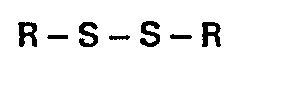
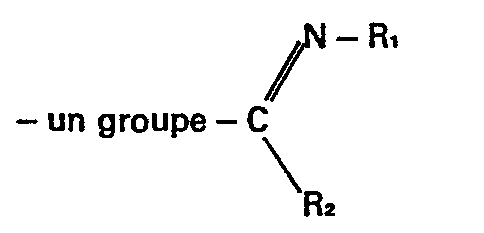
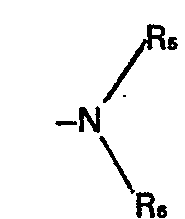
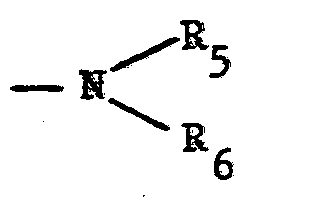
- R represents: in which R 1 represents hydrogen and R 2 represents an NH 2 group or alternatively R 1 and R 2 taken with the nitrogen and carbon atoms to which they are attached form a radical 1H-imidazol- 2 -yle, 1- methyl-1H-imidazol-2-yl, 4,5-dihydro-1H-imidazol-2-yl, 4 $ 5-dihydre-1-methyl-1H-imidazol-2-yl, thiazol-2-yle, 4,5-dihydro-thiazol-2-yle, 1H-1,2,4-triazol-3-yle, 1 -methyl-1H-1,2,4-triazol-3-yl, pyrimidio-2-yl or quiaolein-2-yl; in which R 3 represents an oxygen atom or an NH group and R 4 represents a group where R 5 and R 6 independently represent hydrogen, methyl or ethyl or alternatively R 3 and R
- the term "inhibition of malformation or destruction of erythrocytes”, as used herein, defines an inhibition which can either be direct on hemoglobin or indirect by inhibiting the growth of parasites in the Red blood cell.
- the inhibition of the sickling of human erythrocytes was evaluated according to the method consisting in washing and incubating, in a saline buffer (pH 7.40 - 0.15 M), the red cells of the sickle cell for one hour at 37 ° C. a water bath with circular stirring in the presence of the above product at different concentrations, In this operation the product / bemoglobin molar ratio is tested initially in the range from 0.5 to 20. Depending on the results obtained, this ratio is changed. At the end of the incubation, the excess product is removed by washing. The cell suspension adjusted to a 5% hematocrit is transferred to an Erlenmeyer flask and incubated at 37 ° C. under a stream of a humidified mixture of nitrogen and oxygen. The oxygen concentration is regulated by a gas mixture pump. The effluent gas is transferred to another tube containing formaldehyde. At the end of the incubation, the cell suspension is transferred to formaldehyde by simply inverting the flask.
- the proportion of deformed cells and those with sickle cell characteristics is evaluated using a microscope having an interference optic of NOMARSKY.
- the sickling inhibition was calculated according to the following formula:
- Table I shows the percentage inhibition of erythrocyte sickling for certain compounds included in formula I above in comparison with cystamine.
- the present invention relates to pharmaceutical compositions for the inhibition of the malformation or destruction of erythrocytes due to a genetic modification of hemoglobin or to parasites containing, as active ingredient, a disulfide of formula I above or a possible pharmaceutically acceptable salt of said disulfore.
- the active ingredients of formula I above can be administered in unit administration form, as a mixture with conventional pharmaceutical carriers, animals and humans for the treatment of sickle cell anemia, malaria or babeiosis.
- suitable unit forms of administration are the oral forms, such as tablets, capsules, powders, granules and oral solutions or suspensions and the forms of sublingual and oral administration, as well as forms of subcutaneous, intramuscular or intravenous administration, possibly by infusion, and forms of rectal administration.
- the dose of active principle can vary between 0.1 and 100 mg per kg of body weight per day.
- Each unit dose can contain from 10 to 1000 mg of active ingredient in combination with a pharmaceutical carrier. This unit dose can be administered 1 to 4 times a day, possibly by infusion, for the treatment for example of sickle-cell anemia, malaria and babébiose.
- the powders are simply prepared for oral administration by grinding the active compound to a suitable fineness and mixing with a similarly ground diluent.
- the diluent can be an edible carbohydrate material, such as starch. It is advantageous that a sweetening agent or a sugar as well as a flavoring oil are present.
- the granules intended for the reconstitution of an oral liquid preparation are prepared using water-soluble diluents, the active compound and a diluent are wetted soluble in water, such as sucrose, glucose, etc., with a binder, such as acacia mucilage, a gelatin solution, a methylcellulose solution and passed through a sieve by forcing to form granules which are dried. It is advantageous to introduce into the composition a suspending agent such as gum tragacanth.
- a suspending agent such as gum tragacanth.
- the capsules are made by preparing a powder mixture as described above and by putting it in shaped gelatin sheaths.
- a lubricant such as talc, magnesium stearate and calcium stearate to the powder mixture before the filling operation.
- the tablets are made by preparing a powder mixture, by granulating or cutting, adding a lubricant and compressing to form tablets.
- the powder mixture is prepared by mixing the desired compound, suitably ground, with a diluent or a base, such as starch, sucrose, kaolin, bicalcium phosphate, etc.
- the powder mixture can be granulated by wetting with the binder such as a syrup, a starch paste or an acacia mucilage and by forcing through a sieve.
- the pulverulent mixture can be cut up, that is to say, pass it through the tablet machine and break the resulting tablets imperfectly formed into fragments (sections).
- the sections can be lubricated to prevent them from sticking to the tablets by forming cubes, adding a stearate salt, talc or mineral oil. The lubricant mixture is then compressed to form tablets.
- the tablets can advantageously be provided with a protective coating consisting of a shellac sealing coating, a coating of sugar and methylcellulose, and a coating coated with carnauba wax, or else they can be treated with another so that they have a prolonged or delayed activity and that they continuously release a predetermined amount of active ingredient.
- a protective coating consisting of a shellac sealing coating, a coating of sugar and methylcellulose, and a coating coated with carnauba wax, or else they can be treated with another so that they have a prolonged or delayed activity and that they continuously release a predetermined amount of active ingredient.
- Fluids for oral administration are prepared in unit dosage forms, such as syrups where each One teaspoon of composition contains a predetermined amount of the active compound to be administered.
- a preparation in the form of a syrup or elixir may contain the active ingredient together with a sweetener, Methylparaben and Propylparaben as antiseptics, as well as a flavoring agent and an appropriate color.
- suppositories are used which are prepared with binders that melt at rectal temperature, for example cocoa butter or polyethylene glycols.
- aqueous suspensions, isotonic saline solutions or sterile and injectable solutions which contain pharaaeologically compatible dispersing and / or wetting agents, for example propylene glycol or botylene glycol.
- the active principle can also be formulated in the form of microcapsules, optionally with one or more carriers or additives.
- mercaptoimidazole 1 g is placed in a mixture of dichloromethane (10 ml) and 5% sodium bicarbonate (20 ml). The flask is immersed in a water bath and a bromine solution (0.26 ml) is added very slowly to the well-stirred mixture. During the addition the yellow color of the bromine disappears. The solution is left stirring for another hour after all the bromine has been added. The solution is filtered and an insoluble product is recovered. 230 mg of 2,2'-dithiodiimidazole are thus obtained.
- the disulfides (I) where R represents can be obtained from the corresponding halogenated derivatives by the action of sodium sulfide and simultaneous oxidation.
- a mixture of 0.24 mol of Na 2 S. 9H 2 O, 0.24 mol of sulfur and 200 ml of water is heated at 50 ° C. for 2 hours.
- 0.48 mol of N, N-dimethyl-chloroacetamide is added at room temperature. The temperature rises to 40 ° C and the mixture becomes pale yellow. It is heated for 2 hours at 60 ° C. to complete the reaction, then the solution is filtered, the water is evaporated under reduced pressure, the viscous liquid thus obtained is taken up in acetone and the chloride is first removed - sodium by filtration and then acetone by evaporation under reduced pressure. Pure dithiodi (N, N-dimethyl) -acetamide is thus obtained in the form of a very viscous liquid.
- dithiodiacetonitrile is also obtained, also in the form of a viscous liquid and dithiodiacetamide in the form of very fine white crystals recrystallized from ethanol; M 164 ° C.
- the calculated amounts of the components are mixed for 30 minutes, then granulated to dryness and passed through the mixture through a 1.6 mm mesh screen. It is then compressed using a punch in the shape of a small stick. This gives tablets each weighing 760 mg and each containing 500 mg of active ingredient.
- Tablets are prepared according to Example 1.
- the tablets thus obtained are coated with a suspension of dibutyl pbtalate, polymethyl butyl and dimethylasinsethyl methacrylate, polyethylene glycol 1500, precipitated silica, titanium dioxide and talc in a 1: 1 acetone: isopropanol mixture having a dry residue concentration of approximately 10%.
- Coated tablets are thus obtained each weighing 780 mg and each containing 500 mg of active principle.
- the volume of granule thus obtained is brought to 100 ml with water for syrups.
- a unit dose of 5 ml of extemporaneous syrup thus obtained contains 180 mg of active principle.
- the calculated quantities of all the components except the sucrose are sprayed, then the powder thus obtained is mixed with the sucrose until a homogeneous granule is obtained.
- a granule intended for the reconstitution of an oral liquid preparation having the following composition is prepared according to example 4:
- a unit dose of 5 ml of the extemporaneous syrup thus obtained contains 350 mg of active principle.
- Example 4 a granule is prepared intended for the reconstitution of an oral liquid preparation having the following composition:
- a granule intended for the reconstitution of an oral liquid preparation having the following composition is prepared according to example 4:
- a granule intended for the reconstitution of an oral liquid preparation having the following composition is prepared according to example 4:
- a unit dose of 5 ml of the extecporane syrup thus obtained contains 400 mg of active principle.
- a granule intended for the reconstitution of an oral liquid preparation having the following composition is prepared according to example 4:
- a unit dose of 5 ml of the extemporaneous syrup thus obtained contains 400 mg of active principle.
- the powders are passed through a 0.3 mm sieve, then the ingredients are mixed until a homogeneous mixture is obtained which is compressed and granulated.
- the granules thus obtained are used to form tablets by compression. Weight of one tablet: 600 mg.
- the powders are passed through a 0.3 mm sieve, then the ingredients are mixed until a homogeneous mixture is obtained which is compressed and granulated.
- the granules thus obtained are used to form tablets by compression. Weight of one tablet: 600 mg.
- tablets are prepared having the following composition:
- Tablets having the following composition are prepared: by operating as described in Example 10. The tablets thus obtained are covered with a coating having the following composition: dissolved in a solvent which is eliminated by evaporation in an oven with forced ventilation. Weight of one tablet: 400 mg
- the finely sprayed active substance is suspended in the mass for suppositories at 37 ° C. and the mixture is poured into molds which have been slightly cooled beforehand.
- Weight of one suppository 1,750 mg.
- suppositories are prepared having the following composition:
Landscapes
- Health & Medical Sciences (AREA)
- Chemical & Material Sciences (AREA)
- Medicinal Chemistry (AREA)
- Pharmacology & Pharmacy (AREA)
- Epidemiology (AREA)
- Life Sciences & Earth Sciences (AREA)
- Animal Behavior & Ethology (AREA)
- General Health & Medical Sciences (AREA)
- Public Health (AREA)
- Veterinary Medicine (AREA)
- Pharmaceuticals Containing Other Organic And Inorganic Compounds (AREA)
Abstract

Description
- La présente invention a pour objet des compositions pharmaceutiques pour l'inhibition de la malformation ou de la destruction des érythrocytes due à une modification génétique de l'hémoglobine ou à des parasites et donc utiles dans le traitement de la drépanocytose et du paludisme.
- Il est connu que la drépanocytose est une maladie génétique qui comporte une anomalie de la structure de l'hémoglobine, dont l'acide aminé Glu-6 de la chaîne bêta est remplacé par l'acide aminé Val pour donner l'hémoglobine S qui polymérise.
- Ladite polymérisation, lors de la désoxygénation du globule rouge, entraine la falciformation de ce dernier qui devient rigide, circule mal et se bloque dans les petits vaisseaux. Les individus porteurs de'deux gènes drépanocytaires sont ainsi sous la menace permanente d'une complication fatale.
- Certains disulfures ont été décrits dans la littérature comme inhibant la falciformation ; notamment, la cystamine a été indiquée comme particulièrement active ("Developments of Therapeutic Agents for Sikle Cell Disease", Inserm Sumposium, 1979, North Holland : Amsterdam, Editeurs J. Rosa, Y. Beuzard, J. Hercules ; p. 139-153).
- Il a été maintenant trouvé que les disulfures de formule I:


ainsi que leurs sels éventuels, sont très actifs dans l'inhibition de la polymérisation de l'hémoglobine S et de la falciformation des globules rouges. - Il a été également trouvé que les disulfures symétriques de formule I ci-dessus sont actifs sur les parasites affectant les érythrocytes, tels que les Plasmodia et les Babesiae. Plus particulièrement, ils montrent une activité schizonticide in vitro sur "Plasmodiom falciparum" et in vivo sur "Plasmodium bergbei".
- Par conséquent, l'expression "inhibition de la malformation ou de la destruction des érythrocytes", telle qu'utilisée ici, définit une inhibition qui peut être soit directe sur l'hémoglobine soit indirecte par l'inhibition de la croissance des parasites dans le globule rouge.
- L'inhibition de la falciformation des érythrocytes humains a été évaluée selon la méthode consistant à laver et incuber, dans un tampon salin (pH 7,40 - 0,15 M), les globules rouges des drépamoeytaires pendant une heure à 37°C dans un bain- marie sous agitation circulaire en présence du produit ci-dessus à différentes concentrations, Dans cette opération le rapport molaire produit/bémoglobine est testé initialement dans l'intervalle allant de 0,5 à 20. En fonction des résultats obtenus, ce rapport est modifié. A la fin de l'incubation, l'excès de produit est enlevé par lavage. La suspension cellulaire ajustée à un hématocrite de 5 % est transférée dans un Erlenmeyer et incubée à 37°C sous un courant d'un mélange humidifié d'azote et d'oxygène. La concentration d'oxygène est réglée par une pompe à mélange gazeux. Le gaz effluent est transféré dans un autre tube contenant du formaldéhyde. A la fin de l'incubation, la suspension cellulaire est transférée dans le formaldéhyde par simple retournement de la fiole.
- La proportion des cellules déformées et de celles ayant les caractéristiques de drépanocytes (présentant deux prolongements filiformes) est évaluée à l'aide d'un microscope ayant une optique interférentielle de NOMARSKY. L'inhibition de la falciformation a été calculée selon la formule suivante :
-

- Le tableau I montre le pourcentage d'inhibition de la falciformation des érythrocytes pour certains composés inclus dans la formule I ci-dessus en comparaison avec la cystamine.

- De ce tableau, il ressort que les composés qui sont inclus dans la formule I ci-dessus inhibent la falciformation des érythrocytes des drépanocytaires et sont beaucoup plus actifs que le composé de référence.
- Ainsi, la présente invention se réfère à des compositions pharmaceutiques pour l'inhibition de la malformation ou de la destruction des érythrocytes due à une modification génétique de l'hémoglobine ou à des parasites renfermant, en tant qu'ingrédient actif, un disulfure de formule I ci-dessus ou un sel éventuel pharmaceutiquement acceptable dudit disulfore.
- Dans les compositions pharmaceutiques de la présente invention, pour l'administration orale, sublinguale, sous-cutanée, intramusculaire, intraveineuse, transdermique ou rectale, les ingrédients actifs de formule I ci-dessus peuvent être administrés sous forme unitaire d'administration, en mélange avec des supports pharmaceutiques classiques, aux animaux et aux êtres humains pour le traitement de la drépanocytose, du paludisme ou de la babébiose. Parmi les formes unitaires d'administration appropriées, il y a les formes par voie orale, telles que les comprimés, les gélules, les poudres les granules et les solutions ou suspensions orales et les formes d'administration sublinguale et buccale, de même que les formes d'administration sous-cutanée, intramusculaire ou intraveineuse, éventuellement par perfusion, et les formes d'administration rectale.
- Afin d'obtenir l'effet désiré, la dose de principe actif peut varier entre 0,1 et 100 mg par kg de poids du corps et par jour.
- Chaque dose unitaire peut contenir de 10 à 1 000 mg d'ingrédient actif en combinaison avec un support pharmaceutique. Cette dose unitaire peut être administrée 1 à 4 fois par jour, éventuellement par perfusion, pour le traitement par exemple de la drépanacytose, du paludisme et de la babébiose.
- On prépare simplement les poudres pour l'adminis- tratioc orale en broyant le composé actif à une finesse convenable et en mélangeant avec un diluant broyé similairement. Le diluant peut être un matériau de glucide comestible, tel que l'amidon. Il est avantageux qu'un agent édulcorant ou un sucre ainsi qu'une huile aromatisante soient présents.
- On prépare les granules destinés à la reconstitutiond'une préparation liquide orale en utilisant des diluants solubles dans l'eau, on mouille le composé actif et un diluant soluble dans l'eau, tel que le saccharose, le glucose, etc., avec un liant, tel que le mucilage d'acacia, une solution de gélatine, une solution de méthylcellulose et on fait passer sur un tamis en forçant pour former des granulés que l'on fait sécher. Il est avantageux d'introduire dans la composition un agent de mise en suspension comme la gomme adragante.
- On fait les gélules en préparant un mélange pulvérulent comme il est décrit ci-dessus et en le mettant dans des gaines de gélatine mises en forme. Comme adjuvant à l'opération de remplissage il est avantageux d'ajouter un lubrifiant tel que le talc, le stéarate de magnésium et le stéarate de calcium au mélange pulvérulent avant l'opération de remplissage.
- On fait les comprimés en préparant un mélange pulvérulent,, en granulant ou en tronçonnant, en ajoutant un lubrifiant et en comprimant pour former des comprimés. On prépare le mélange pulvérulent en mélangeant le composé désiré, convenablement broyé, avec un diluant ou une base, tel que l'amidon, le saccharose, le kaolin, le phosphate bicalcique, etc. On peut granuler le mélange pulvérulent en mouillant avec le liant tel qu'un sirop, une pâte d'amidon ou un mucilage d'acacia et en forçant à travers un tamis. Comme méthode autre que la granulation on peut tronçonner le mélange pulvérulent, c'est-à-dire, le faire passer à travers la machine à comprimés et casser les comprimés résultants imparfaitement formés en fragments (tronçons).
- On peut lubrifier les tronçons pour les empêcher de coller aux comprimés en formant des cubes, en ajoutant un sel stéarate, du talc ou une huile minérale. On comprime ensuite le mélange lubrifiant pour constituer des comprimés.
- Les comprimés peuvent être avantageusement munis d'un revêtement protecteur constitué d'un enduit de scellement de gomme-laque, un revêtement de sucre et de méthylcellulose, et un enduit vernis de cire de carnauba, ou encore on peut les traiter d'une autre manière de telle sorte qu'ils aient une activité prolongée ou retardée et qu'ils libèrent continuellement une quantité prédéterminée de principe actif.
- On prépare les fluides pour administration orale sous des formes posologiques unitaires,taMés que sirops où chaque cnillère à café de composition contient une quantité prédéter- minée du composé actif à administrer.
- Une préparation sous forme de sirop ou d'élixir peut contenir l'ingrédient actif conjointement avec un édulcorant, du Méthylparaben et du Propylparaben comme antiseptiques, ainsi qu'un agent donnant du gout et un colorant approprié.
- Pour une application rectale, on recourt à des suppositoires qui sont préparée avec des liants fondant à la température rectale, par exemple du beurre de cacao ou des polyéthylèneglycols.
- Pour une application parentérale, on utilise des suspensions aqueuses, des solutions salines isotoniques ou des solutions stériles et injectables qui contiennent des agents de dispersion et/ou mouullants pharaaeologiquement compatibles, par exemple le propylèneglycol Du le botylèneglycol.
- Le principe actif peut être formulé également sous forme de microcapsules, éventuellement avec un ou plusieurs supports ou additifs.
- Les composés de formule I ci-dessus sont connus en littérature ou ils peuvent être aisément préparés par oxydation des thiols correspondants selon des méthodes de synthèse bien connues (Houben-Weil, Methoden der Organischen Chemie, Vol. IX, p. 19, 4e Ed., G. Thieme-Verlag, Stuttgart).
- Las exemples suivants illustrent l'invention sans toutefois la limiter.
- Le composé (I) où R représente

- Les antres disnifures (I) où R a la signification mentionnée ci-dessus sont aisément préparés par oxydation des thiols cerrespondants par l'iode, par le brome ou à l'air.
- A titre d'exemple, on indiquera ci-après la préparation du 2,2'-dithio-diimidazole,
- Dans un ballon muni d'un réfrigérant, on place du mercaptoimidazole 1 g, dans un mélange de dichlorométhane (10 ml) et de bicarbonate de sodium à 5 % (20 ml). Le ballon est immergé dans un bain d'eau et une solution de brome (0,26 ml) est ajoutée très lentement au mélange bien agité. Au cours de l'addition la coloration jaune du brome disparaît. La solution est laissée encore une heure sous agitation après que tout le brome a été ajouté. La solution est filtrée et un produit insoluble est récupéré. On obtient ainsi 230 mg de 2,2'-dithiodiimidazole.
- Rendement : 23,2 % ; F : 158°C.
- Les disulfures (I) où R représente

- A titre d'exemple, on décrit la préparation du dithiodi(N,N-diméthyl)acétamide.
- On chauffe à 50°C pendant 2 heures un mélange de 0,24 mol de Na2S.9H2O, 0,24 mol de soufre et 200 ml d'eau. Au mélange orange ainsi obtenu, on ajoute, à la température ambiante 0,48 mol de N,N-diméthyl-chloroacétamide. La température monte jusqu'à 40°C et le mélange devient jaune pâle. On chauffe 2 heures à 60°C pour achever la réaction, puis on filtre la solution, on évapore l'eau sous pression réduite, on reprend le liquide visqueux ainsi obtenu par de l'acétone et l'on élimine d'abord le chlorure- de sodium par filtration et ensuite l'acétone par évaporation sous pression réduite. On obtient ainsi le dithiodi(N,N-diméthyl)-acétamide pur, sous forme d'un liquide très visqueux.
- De la même manière on obtient le dithiodiacétonitrile, également sous forme de liquide visqueux et le dithiodiacétamide sous forme de cristaux blancs très fins recristallisés de l'éthanol ; F 164°C.
- Comprimés ayant la composition suivante :

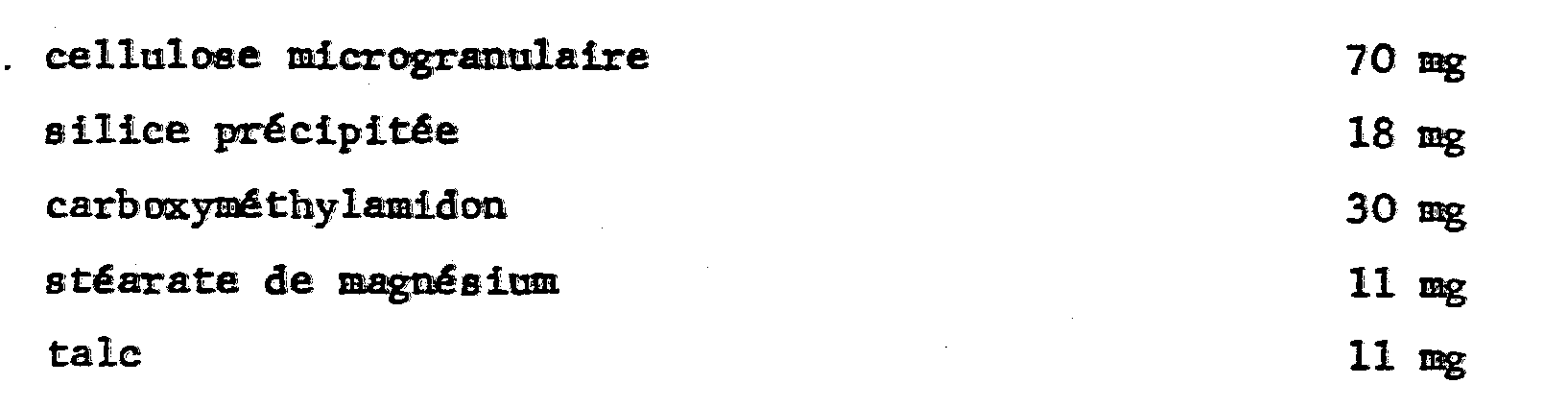
- On mélange les quantités calculées des composants pendant 30 minutes,, puis on granule à sec et on fait passer le mélange à travers un tamis à mailles de 1,6 mm. On comprime ensuite en utilisant un poinçon ayant la forme d'un petit bâton. On obtient ainsi des comprimés pesant chacun 760 mg et renfermant chacun 500 mg de principe actif.
- On prépare des comprimés selon l'exemple 1. Les comprimés ainsi obtenus sont enrobés à l'aide d'une suspension de pbtalate de dibutyle, de polyméthacrylate de butyle et diméthyl- asinséthyle, de polyéthylèneglycol 1500, de silice précipitée, de bioxyde de titanium et de talc dans un mélange acétone : iso- propanol 1:1 ayant une concentration en résidu sec de 10 % environ. On obtient ainsi des comprimés enrobés pesant chacun 780 mg et renfermant chacun 500 mg de principe actif.
- Comprimés ayant la composition suivante :

- On opére comme dans l'exemple 1 à partir des constituants mentionnés ci-dessus.
- 0n prépare un granulé destiné à la reconstitution d'une préparatioe liquide prale ayant la composition suivante :


- Le volume de granulé ainsi obtenu est porté à 100 ml avec de l'eau pour sirops, Une dose unitaire de 5 ml de sirop extemporané ainsi obtenu contient 180 mg de principe actif.
- Pour préparer 'le granulé, on pulvérise les quantités calculées de tous les composants, sauf le saccharose, puis on mélange la poudre ainsi obtenue avec le saccharose jusqu'à obtenir un granulé homogène.
- On prépare selon l'exemple 4 un granulé destiné à la reconstitution d'une préparation liquide orale ayant la composition suivante :

- Une dose unitaire de 5 ml du sirop extemporané ainsi obtenu contient 350 mg de principe actif.
- Selon l'exemple 4, on prépare un granulé destiné à la reconstitution d'une préparation liquide orale ayant la composition suivante :


- On prépare selon l'exemple 4 un granulé destiné à la reconstitution d'une préparation liquide orale ayant la composition suivante :

- On prépare selon l'exemle 4 un granulé destiné à la reconstitution d'une préparation liquide orale ayant la composition suivante :

- Une dose unitaire de 5 ml du sirop extecporané ainsi obtenu contient 400 mg de principe actif.
- On prépare selon l'exemple 4 un granulé destiné à la reconstitution d'une préparation liquide orale ayant la composition suivante :


- Une dose unitaire de 5 ml du sirop extemporané ainsi obtenu contient 400 mg de principe actif.
- On prépare des comprimés ayant la composition suivante :

- On fait passer les poudres à travers un tamis de 0,3 mm, puis on mélange les ingrédients jusqu'à ce qu'on obtienne un mélange homogène qui est comprimé et granulé. Les granules ainsi obtenus sont utilisés pour former des comprimés par compression. Poids d'un comprimé : 600 mg.
- Selon l'exemple 10, on prépare des comprimés ayant la composition suivante :

- On fait passer les poudres à travers un tamis de 0,3 mm, puis on mélange les ingrédients jusqu'à ce qu'on obtienne un mélange homogène qui est comprimé et granulé. Les granules ainsi obtenus sont utilisés pour former des comprimés par compression. Poids d'un comprimé : 600 mg.
- Comprimés ayant la composition suivante :


- On mélange intimement dans une mélangeuse-pétrisseuse tous les ingrédients, sauf le lubrifiant, pendant 15 minutes, puis on pétrit par addition graduelle d'eau. On fait passer la masse à travers un tamis de 1,25 mm. On sèche le granulé dans une étuve à ventilation forcée jusqu' à ce qu'on obtienne une humidité résiduelle relativement réduite (environ 2 %). On uniformise le granulé, on ajoute le lubrifiant et on forme des comprimés par compression. Poids d'un comprimé : 300 mg.
- De la même façon on prépare des comprimés contenant 250 mg de principe actif.
- Selon l'exemple 12, on prépare des comrimés ayant la composition suivante :

- On prépare des comprimés ayant la composition suivante :
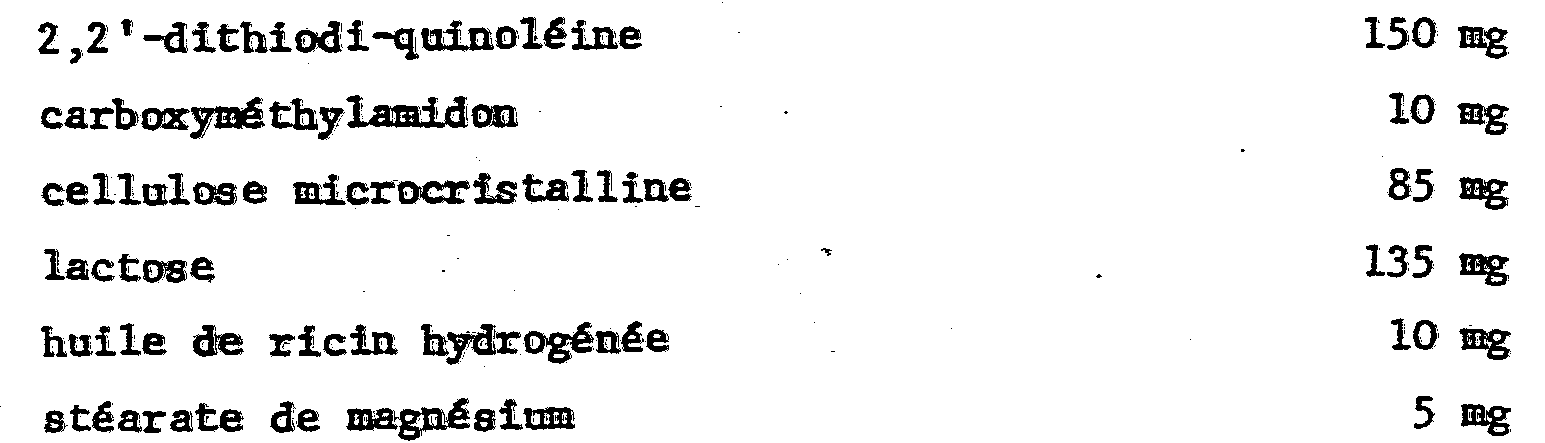


- Comme dans l'exemple 14, on prépare des comprimés ayant la composition suivante :

- On recouvre les comprimés ainsi obtenus par un revêtement ayant la composition suivante :

- Suppositoires ayant la composition suivante
-

- On met en suspension la substance active finement pulvérisée dans la masse pour suppositoires à 37°C et on verse le mélange dans des moules légèrement refroidis au préalable.
- Poids d'un suppositoire : 1 750 mg.
- En opérant comme dans l'exemple 16, on prépare des suppositoires ayant la composition suivante :

Claims (3)


Applications Claiming Priority (4)
| Application Number | Priority Date | Filing Date | Title |
|---|---|---|---|
| FR8308153 | 1983-05-17 | ||
| FR8308153A FR2546063B1 (fr) | 1983-05-17 | 1983-05-17 | Compositions pharmaceutiques a base de disulfures |
| FR8308154A FR2546062B1 (fr) | 1983-05-17 | 1983-05-17 | Compositions pharmaceutiques a base de disulfolanes symetriques |
| FR8308154 | 1983-05-17 |
Publications (2)
| Publication Number | Publication Date |
|---|---|
| EP0126012A1 true EP0126012A1 (fr) | 1984-11-21 |
| EP0126012B1 EP0126012B1 (fr) | 1988-01-13 |
Family
ID=26223441
Family Applications (1)
| Application Number | Title | Priority Date | Filing Date |
|---|---|---|---|
| EP84401006A Expired EP0126012B1 (fr) | 1983-05-17 | 1984-05-17 | Compositions pharmaceutiques à base de disulfures symétriques |
Country Status (2)
| Country | Link |
|---|---|
| EP (1) | EP0126012B1 (fr) |
| DE (1) | DE3468622D1 (fr) |
Cited By (2)
| Publication number | Priority date | Publication date | Assignee | Title |
|---|---|---|---|---|
| WO1994022456A1 (fr) * | 1993-04-07 | 1994-10-13 | Alfred Schmidt | Utilisation de dioxyde de silicium colloidal en therapie de l'anemie a hematies falciformes, du paludisme et de leucopenies a induction exogene |
| US20160331782A1 (en) * | 2014-01-13 | 2016-11-17 | The General Hospital Corporation | Heteroaryl disulfide compounds as allosteric effectors for increasing the oxygen-binding affinity of hemoglobin |
Citations (5)
| Publication number | Priority date | Publication date | Assignee | Title |
|---|---|---|---|---|
| FR1006624A (fr) * | 1947-02-24 | 1952-04-25 | Applic Therapeutiques Soc Gen | Nouveau composé chimique et son procédé de préparation |
| DE960279C (de) * | 1954-09-29 | 1957-03-21 | Asta Werke Ag Chem Fab | Verfahren zur Herstellung von Bis-[imidazyl-(2)]-disulfid und dessen Abkoemmlingen |
| GB831075A (en) * | 1955-06-17 | 1960-03-23 | Ciba Ltd | Improvements in pest-combating preparations |
| EP0006227A1 (fr) * | 1978-06-16 | 1980-01-09 | Kyowa Hakko Kogyo Co., Ltd | Préparations pharmaceutiques à activité anti-thrombique contenant des dérivés de 2,2'-dithiobis-benzamides, et dérivés de 2,2'-dithiobis-benzamides |
| EP0010361A1 (fr) * | 1978-09-22 | 1980-04-30 | Smithkline Beckman Corporation | Bis-imidazoles, leur préparation et compositions pharmaceutiques les contenant |
-
1984
- 1984-05-17 DE DE8484401006T patent/DE3468622D1/de not_active Expired
- 1984-05-17 EP EP84401006A patent/EP0126012B1/fr not_active Expired
Patent Citations (5)
| Publication number | Priority date | Publication date | Assignee | Title |
|---|---|---|---|---|
| FR1006624A (fr) * | 1947-02-24 | 1952-04-25 | Applic Therapeutiques Soc Gen | Nouveau composé chimique et son procédé de préparation |
| DE960279C (de) * | 1954-09-29 | 1957-03-21 | Asta Werke Ag Chem Fab | Verfahren zur Herstellung von Bis-[imidazyl-(2)]-disulfid und dessen Abkoemmlingen |
| GB831075A (en) * | 1955-06-17 | 1960-03-23 | Ciba Ltd | Improvements in pest-combating preparations |
| EP0006227A1 (fr) * | 1978-06-16 | 1980-01-09 | Kyowa Hakko Kogyo Co., Ltd | Préparations pharmaceutiques à activité anti-thrombique contenant des dérivés de 2,2'-dithiobis-benzamides, et dérivés de 2,2'-dithiobis-benzamides |
| EP0010361A1 (fr) * | 1978-09-22 | 1980-04-30 | Smithkline Beckman Corporation | Bis-imidazoles, leur préparation et compositions pharmaceutiques les contenant |
Cited By (4)
| Publication number | Priority date | Publication date | Assignee | Title |
|---|---|---|---|---|
| WO1994022456A1 (fr) * | 1993-04-07 | 1994-10-13 | Alfred Schmidt | Utilisation de dioxyde de silicium colloidal en therapie de l'anemie a hematies falciformes, du paludisme et de leucopenies a induction exogene |
| US5753632A (en) * | 1993-04-07 | 1998-05-19 | Schmidt; Alfred | Use of colloidal silica for the treatment of sickle-cell anaemia, malaria and exogenously induced leucopenias |
| US20160331782A1 (en) * | 2014-01-13 | 2016-11-17 | The General Hospital Corporation | Heteroaryl disulfide compounds as allosteric effectors for increasing the oxygen-binding affinity of hemoglobin |
| US10758569B2 (en) * | 2014-01-13 | 2020-09-01 | The General Hospital Corporation | Heteroaryl disulfide compounds as allosteric effectors for increasing the oxygen-binding affinity of hemoglobin |
Also Published As
| Publication number | Publication date |
|---|---|
| DE3468622D1 (en) | 1988-02-18 |
| EP0126012B1 (fr) | 1988-01-13 |
Similar Documents
| Publication | Publication Date | Title |
|---|---|---|
| EP0078785B1 (fr) | Sels d'acide valproîque, leur préparation et leur utilisation | |
| CA1197247A (fr) | Procede pour la preparation de nouveaux derives d'imidazotetrazinones et les derives ainsi obtenus | |
| CH631455A5 (fr) | Nouveaux isomeres dextrogyres de spiro-hydantoines asymetriques et compositions pharmaceutiques les contenant. | |
| CH643546A5 (fr) | Procede pour la preparation de derives d'hydantoine. | |
| FR2491467A1 (fr) | Nouveaux n-alkyl inferieur)-3-phenoxy-1-azetidinecarboxamides possedant notamment une activite sur le systeme nerveux central, et leur procede de preparation | |
| JP3457687B2 (ja) | 白内障治療用薬剤 | |
| EP0109866B1 (fr) | Nouveaux dérivés de la sulfonylurée, leurs procédés de préparation et les compositions pharmaceutiques les renfermant | |
| EP0182768A1 (fr) | Compositions pharmaceutiques ou vétérinaires contenant des dérivés thiosulfonates | |
| EP0151072A2 (fr) | Dérivés de l'acide méthylènediphosphonique, procédé d'obtention et compositions pharmaceutiques antirhumatismales les contenant | |
| BE1001621A3 (fr) | Nouveaux derives de l'acide furannuronique, leur preparation et leur utilisation comme medicaments. | |
| EP0126012B1 (fr) | Compositions pharmaceutiques à base de disulfures symétriques | |
| EP0126013B1 (fr) | Dithiodiacétamides cycliques, procédé pour leur préparation et compositions pharmaceutiques en contenant | |
| EP0099799B1 (fr) | Nouveaux sels d'amino- (et imino-) acides alpha, omega-sulfoniques N-substitués, vecteurs cationiques de haute pénétration cellulaire, procédé d'obtention | |
| CA2074365A1 (fr) | Derives de l'uree, leur preparation et les medicaments les contenant | |
| LU85716A1 (fr) | Procede de preparation d'un nouveau compose complexe d'hemine ayant des applications medicales | |
| EP0291269A2 (fr) | Dérivés anti-tumeur de sulfonylurée | |
| EP2486019A1 (fr) | Procede de synthese de la 2-thiohistidine et analogues | |
| FR2546062A1 (fr) | Compositions pharmaceutiques a base de disulfolanes symetriques | |
| CH368151A (fr) | Procédé de fabrication d'agents antidiabétiques | |
| FR2546063A1 (fr) | Compositions pharmaceutiques a base de disulfures | |
| FR2501206A1 (fr) | Alkyl-phenylsulfonylguanidines substituees contenant un heterocycle, leur preparation et leurs utilisations therapeutiques | |
| BE1000783A3 (fr) | Derives du 1,3-dioxolanne et du 1,3-dioxanne et leur utilisation comme medicaments. | |
| CH675725A5 (fr) | ||
| EP0946503B1 (fr) | Derives du nitromethylthiobenzene comme inhibiteurs de l'aldose reductase | |
| KR19990087582A (ko) | 2-티옥소테트라하이드로피리미딘-4-온 유도체 |
Legal Events
| Date | Code | Title | Description |
|---|---|---|---|
| PUAI | Public reference made under article 153(3) epc to a published international application that has entered the european phase |
Free format text: ORIGINAL CODE: 0009012 |
|
| AK | Designated contracting states |
Designated state(s): BE CH DE FR GB IT LI LU NL SE |
|
| 17P | Request for examination filed |
Effective date: 19850419 |
|
| 17Q | First examination report despatched |
Effective date: 19860527 |
|
| GRAA | (expected) grant |
Free format text: ORIGINAL CODE: 0009210 |
|
| AK | Designated contracting states |
Kind code of ref document: B1 Designated state(s): BE CH DE FR GB IT LI LU NL SE |
|
| PG25 | Lapsed in a contracting state [announced via postgrant information from national office to epo] |
Ref country code: NL Effective date: 19880113 Ref country code: IT Free format text: LAPSE BECAUSE OF FAILURE TO SUBMIT A TRANSLATION OF THE DESCRIPTION OR TO PAY THE FEE WITHIN THE PRESCRIBED TIME-LIMIT;WARNING: LAPSES OF ITALIAN PATENTS WITH EFFECTIVE DATE BEFORE 2007 MAY HAVE OCCURRED AT ANY TIME BEFORE 2007. THE CORRECT EFFECTIVE DATE MAY BE DIFFERENT FROM THE ONE RECORDED. Effective date: 19880113 |
|
| PG25 | Lapsed in a contracting state [announced via postgrant information from national office to epo] |
Ref country code: SE Effective date: 19880131 |
|
| REF | Corresponds to: |
Ref document number: 3468622 Country of ref document: DE Date of ref document: 19880218 |
|
| PG25 | Lapsed in a contracting state [announced via postgrant information from national office to epo] |
Ref country code: LU Free format text: LAPSE BECAUSE OF NON-PAYMENT OF DUE FEES Effective date: 19880531 Ref country code: LI Effective date: 19880531 Ref country code: CH Effective date: 19880531 |
|
| NLV1 | Nl: lapsed or annulled due to failure to fulfill the requirements of art. 29p and 29m of the patents act | ||
| GBV | Gb: ep patent (uk) treated as always having been void in accordance with gb section 77(7)/1977 [no translation filed] | ||
| PLBE | No opposition filed within time limit |
Free format text: ORIGINAL CODE: 0009261 |
|
| STAA | Information on the status of an ep patent application or granted ep patent |
Free format text: STATUS: NO OPPOSITION FILED WITHIN TIME LIMIT |
|
| PG25 | Lapsed in a contracting state [announced via postgrant information from national office to epo] |
Ref country code: GB Free format text: LAPSE BECAUSE OF NON-PAYMENT OF DUE FEES Effective date: 19881122 |
|
| BERE | Be: lapsed |
Owner name: INSTITUT NATIONAL DE LA SANTE ET DE LA RECHERCHE M Effective date: 19880531 Owner name: S.A. SANOFI Effective date: 19880531 |
|
| 26N | No opposition filed | ||
| PG25 | Lapsed in a contracting state [announced via postgrant information from national office to epo] |
Ref country code: FR Free format text: LAPSE BECAUSE OF NON-PAYMENT OF DUE FEES Effective date: 19890131 |
|
| REG | Reference to a national code |
Ref country code: CH Ref legal event code: PL |
|
| PG25 | Lapsed in a contracting state [announced via postgrant information from national office to epo] |
Ref country code: DE Effective date: 19890201 |
|
| REG | Reference to a national code |
Ref country code: FR Ref legal event code: ST |
|
| PG25 | Lapsed in a contracting state [announced via postgrant information from national office to epo] |
Ref country code: BE Effective date: 19890531 |