EP0139996B1 - Anisotrope Verbindungen und Flüssigkristallmischungen - Google Patents
Anisotrope Verbindungen und Flüssigkristallmischungen Download PDFInfo
- Publication number
- EP0139996B1 EP0139996B1 EP84110152A EP84110152A EP0139996B1 EP 0139996 B1 EP0139996 B1 EP 0139996B1 EP 84110152 A EP84110152 A EP 84110152A EP 84110152 A EP84110152 A EP 84110152A EP 0139996 B1 EP0139996 B1 EP 0139996B1
- Authority
- EP
- European Patent Office
- Prior art keywords
- formula
- trans
- compound according
- cyano
- radical
- Prior art date
- Legal status (The legal status is an assumption and is not a legal conclusion. Google has not performed a legal analysis and makes no representation as to the accuracy of the status listed.)
- Expired
Links
- 150000001875 compounds Chemical class 0.000 title claims description 56
- 239000000203 mixture Substances 0.000 title claims description 21
- 239000004973 liquid crystal related substance Substances 0.000 title claims description 11
- 125000000217 alkyl group Chemical group 0.000 claims description 27
- 125000004093 cyano group Chemical group *C#N 0.000 claims description 24
- 125000001424 substituent group Chemical group 0.000 claims description 20
- 229910052736 halogen Chemical group 0.000 claims description 14
- 150000002367 halogens Chemical group 0.000 claims description 14
- 125000004432 carbon atom Chemical group C* 0.000 claims description 13
- ZAMOUSCENKQFHK-UHFFFAOYSA-N Chlorine atom Chemical compound [Cl] ZAMOUSCENKQFHK-UHFFFAOYSA-N 0.000 claims description 8
- 125000003178 carboxy group Chemical group [H]OC(*)=O 0.000 claims description 8
- 229910052731 fluorine Inorganic materials 0.000 claims description 8
- 239000000460 chlorine Substances 0.000 claims description 7
- 229910052801 chlorine Inorganic materials 0.000 claims description 6
- 125000003545 alkoxy group Chemical group 0.000 claims description 4
- 229910052760 oxygen Inorganic materials 0.000 claims description 3
- 239000001301 oxygen Substances 0.000 claims description 3
- 125000004430 oxygen atom Chemical group O* 0.000 claims description 3
- MYMOFIZGZYHOMD-UHFFFAOYSA-N Dioxygen Chemical compound O=O MYMOFIZGZYHOMD-UHFFFAOYSA-N 0.000 claims description 2
- 125000004453 alkoxycarbonyl group Chemical group 0.000 claims description 2
- 125000003282 alkyl amino group Chemical group 0.000 claims description 2
- 125000005196 alkyl carbonyloxy group Chemical group 0.000 claims description 2
- 125000001153 fluoro group Chemical group F* 0.000 claims description 2
- 125000001841 imino group Chemical group [H]N=* 0.000 claims description 2
- 229910052757 nitrogen Inorganic materials 0.000 claims description 2
- 125000004433 nitrogen atom Chemical group N* 0.000 claims description 2
- 125000000547 substituted alkyl group Chemical group 0.000 claims description 2
- 125000004429 atom Chemical group 0.000 claims 3
- 125000004400 (C1-C12) alkyl group Chemical group 0.000 claims 1
- OKTJSMMVPCPJKN-UHFFFAOYSA-N Carbon Chemical group [C] OKTJSMMVPCPJKN-UHFFFAOYSA-N 0.000 claims 1
- CPPKAGUPTKIMNP-UHFFFAOYSA-N cyanogen fluoride Chemical compound FC#N CPPKAGUPTKIMNP-UHFFFAOYSA-N 0.000 claims 1
- 125000004435 hydrogen atom Chemical group [H]* 0.000 claims 1
- -1 cyclic radicals Chemical class 0.000 description 20
- 150000003254 radicals Chemical class 0.000 description 18
- 230000010287 polarization Effects 0.000 description 17
- YCKRFDGAMUMZLT-UHFFFAOYSA-N Fluorine atom Chemical compound [F] YCKRFDGAMUMZLT-UHFFFAOYSA-N 0.000 description 10
- 239000012634 fragment Substances 0.000 description 10
- YXFVVABEGXRONW-UHFFFAOYSA-N Toluene Chemical compound CC1=CC=CC=C1 YXFVVABEGXRONW-UHFFFAOYSA-N 0.000 description 9
- RTZKZFJDLAIYFH-UHFFFAOYSA-N Diethyl ether Chemical compound CCOCC RTZKZFJDLAIYFH-UHFFFAOYSA-N 0.000 description 8
- JUJWROOIHBZHMG-UHFFFAOYSA-N Pyridine Chemical compound C1=CC=NC=C1 JUJWROOIHBZHMG-UHFFFAOYSA-N 0.000 description 8
- FYSNRJHAOHDILO-UHFFFAOYSA-N thionyl chloride Chemical compound ClS(Cl)=O FYSNRJHAOHDILO-UHFFFAOYSA-N 0.000 description 8
- 238000000034 method Methods 0.000 description 7
- 238000002360 preparation method Methods 0.000 description 7
- 239000000047 product Substances 0.000 description 7
- 125000001731 2-cyanoethyl group Chemical group [H]C([H])(*)C([H])([H])C#N 0.000 description 6
- YMWUJEATGCHHMB-UHFFFAOYSA-N Dichloromethane Chemical compound ClCCl YMWUJEATGCHHMB-UHFFFAOYSA-N 0.000 description 6
- 125000003118 aryl group Chemical group 0.000 description 6
- 239000011737 fluorine Substances 0.000 description 6
- 125000005843 halogen group Chemical group 0.000 description 6
- VLKZOEOYAKHREP-UHFFFAOYSA-N n-Hexane Chemical compound CCCCCC VLKZOEOYAKHREP-UHFFFAOYSA-N 0.000 description 6
- 238000006243 chemical reaction Methods 0.000 description 5
- 230000008018 melting Effects 0.000 description 5
- 238000002844 melting Methods 0.000 description 5
- 239000011541 reaction mixture Substances 0.000 description 5
- LFQSCWFLJHTTHZ-UHFFFAOYSA-N Ethanol Chemical compound CCO LFQSCWFLJHTTHZ-UHFFFAOYSA-N 0.000 description 4
- 230000031709 bromination Effects 0.000 description 4
- 238000005893 bromination reaction Methods 0.000 description 4
- 230000000694 effects Effects 0.000 description 4
- UMJSCPRVCHMLSP-UHFFFAOYSA-N pyridine Natural products COC1=CC=CN=C1 UMJSCPRVCHMLSP-UHFFFAOYSA-N 0.000 description 4
- 239000000725 suspension Substances 0.000 description 4
- NGNBDVOYPDDBFK-UHFFFAOYSA-N 2-[2,4-di(pentan-2-yl)phenoxy]acetyl chloride Chemical compound CCCC(C)C1=CC=C(OCC(Cl)=O)C(C(C)CCC)=C1 NGNBDVOYPDDBFK-UHFFFAOYSA-N 0.000 description 3
- QTBSBXVTEAMEQO-UHFFFAOYSA-N Acetic acid Chemical compound CC(O)=O QTBSBXVTEAMEQO-UHFFFAOYSA-N 0.000 description 3
- WKBOTKDWSSQWDR-UHFFFAOYSA-N Bromine atom Chemical compound [Br] WKBOTKDWSSQWDR-UHFFFAOYSA-N 0.000 description 3
- IAZDPXIOMUYVGZ-UHFFFAOYSA-N Dimethylsulphoxide Chemical compound CS(C)=O IAZDPXIOMUYVGZ-UHFFFAOYSA-N 0.000 description 3
- VEXZGXHMUGYJMC-UHFFFAOYSA-N Hydrochloric acid Chemical compound Cl VEXZGXHMUGYJMC-UHFFFAOYSA-N 0.000 description 3
- UFHFLCQGNIYNRP-UHFFFAOYSA-N Hydrogen Chemical compound [H][H] UFHFLCQGNIYNRP-UHFFFAOYSA-N 0.000 description 3
- OKKJLVBELUTLKV-UHFFFAOYSA-N Methanol Chemical compound OC OKKJLVBELUTLKV-UHFFFAOYSA-N 0.000 description 3
- HEMHJVSKTPXQMS-UHFFFAOYSA-M Sodium hydroxide Chemical compound [OH-].[Na+] HEMHJVSKTPXQMS-UHFFFAOYSA-M 0.000 description 3
- 230000015572 biosynthetic process Effects 0.000 description 3
- GDTBXPJZTBHREO-UHFFFAOYSA-N bromine Substances BrBr GDTBXPJZTBHREO-UHFFFAOYSA-N 0.000 description 3
- 229910052794 bromium Inorganic materials 0.000 description 3
- 150000001735 carboxylic acids Chemical class 0.000 description 3
- 229910052740 iodine Inorganic materials 0.000 description 3
- 125000001997 phenyl group Chemical group [H]C1=C([H])C([H])=C(*)C([H])=C1[H] 0.000 description 3
- 238000006467 substitution reaction Methods 0.000 description 3
- LUCHFKBTWHPREI-UHFFFAOYSA-N 1-(4-propylcyclohexyl)-4-[4-(4-propylcyclohexyl)phenyl]benzene Chemical group C1CC(CCC)CCC1C1=CC=C(C=2C=CC(=CC=2)C2CCC(CCC)CC2)C=C1 LUCHFKBTWHPREI-UHFFFAOYSA-N 0.000 description 2
- AEEUYSFCGITNNH-UHFFFAOYSA-N 2-(4-heptoxyphenyl)-5-hexylpyrimidine Chemical compound C1=CC(OCCCCCCC)=CC=C1C1=NC=C(CCCCCC)C=N1 AEEUYSFCGITNNH-UHFFFAOYSA-N 0.000 description 2
- IFXLWKJINPVGJO-UHFFFAOYSA-N 2-(4-nonoxyphenyl)-5-pentylpyrimidine Chemical compound C1=CC(OCCCCCCCCC)=CC=C1C1=NC=C(CCCCC)C=N1 IFXLWKJINPVGJO-UHFFFAOYSA-N 0.000 description 2
- RMAFJFORFGJHLD-UHFFFAOYSA-N 2-(4-octoxyphenyl)-5-pentylpyrimidine Chemical compound C1=CC(OCCCCCCCC)=CC=C1C1=NC=C(CCCCC)C=N1 RMAFJFORFGJHLD-UHFFFAOYSA-N 0.000 description 2
- 125000001340 2-chloroethyl group Chemical group [H]C([H])(Cl)C([H])([H])* 0.000 description 2
- ORGVOJXLKODCPF-UHFFFAOYSA-N 4-[4-(1-fluoropentyl)phenyl]benzonitrile Chemical group C1=CC(C(F)CCCC)=CC=C1C1=CC=C(C#N)C=C1 ORGVOJXLKODCPF-UHFFFAOYSA-N 0.000 description 2
- QVRNTCYLJRLWDY-UHFFFAOYSA-N 4-[4-(2-fluorobutyl)phenyl]benzonitrile Chemical group C1=CC(CC(F)CC)=CC=C1C1=CC=C(C#N)C=C1 QVRNTCYLJRLWDY-UHFFFAOYSA-N 0.000 description 2
- SCIDWVMKZPPKBY-UHFFFAOYSA-N 4-[4-(2-fluoropentyl)phenyl]benzonitrile Chemical group C1=CC(CC(F)CCC)=CC=C1C1=CC=C(C#N)C=C1 SCIDWVMKZPPKBY-UHFFFAOYSA-N 0.000 description 2
- UTMSDFUIEIPNML-UHFFFAOYSA-N 4-[4-(3-fluoropentyl)phenyl]benzonitrile Chemical group C1=CC(CCC(F)CC)=CC=C1C1=CC=C(C#N)C=C1 UTMSDFUIEIPNML-UHFFFAOYSA-N 0.000 description 2
- MGVHIGWQAXWJRL-UHFFFAOYSA-N 4-[4-[4-(1-fluoropentyl)phenyl]phenyl]benzonitrile Chemical group C1=CC(C(F)CCCC)=CC=C1C1=CC=C(C=2C=CC(=CC=2)C#N)C=C1 MGVHIGWQAXWJRL-UHFFFAOYSA-N 0.000 description 2
- PITIZIXIXALLMR-UHFFFAOYSA-N 4-[6-[4-(3-fluoropentyl)phenyl]pyridazin-3-yl]benzonitrile Chemical compound C1=CC(CCC(F)CC)=CC=C1C1=CC=C(C=2C=CC(=CC=2)C#N)N=N1 PITIZIXIXALLMR-UHFFFAOYSA-N 0.000 description 2
- WKHRWWOOFQQILG-UHFFFAOYSA-N 5-hexyl-2-(4-nonoxyphenyl)pyrimidine Chemical compound C1=CC(OCCCCCCCCC)=CC=C1C1=NC=C(CCCCCC)C=N1 WKHRWWOOFQQILG-UHFFFAOYSA-N 0.000 description 2
- ZCYVEMRRCGMTRW-UHFFFAOYSA-N 7553-56-2 Chemical compound [I] ZCYVEMRRCGMTRW-UHFFFAOYSA-N 0.000 description 2
- PJBOOKMLDPERRS-PCYFZWJMSA-N C1C[C@@H](CCCCC)CC[C@@H]1C1=CC=C(C=2C=CC(=CC=2)[C@@H]2CC[C@@H](CCC)CC2)C=C1 Chemical group C1C[C@@H](CCCCC)CC[C@@H]1C1=CC=C(C=2C=CC(=CC=2)[C@@H]2CC[C@@H](CCC)CC2)C=C1 PJBOOKMLDPERRS-PCYFZWJMSA-N 0.000 description 2
- OTMSDBZUPAUEDD-UHFFFAOYSA-N Ethane Chemical compound CC OTMSDBZUPAUEDD-UHFFFAOYSA-N 0.000 description 2
- VYPSYNLAJGMNEJ-UHFFFAOYSA-N Silicium dioxide Chemical compound O=[Si]=O VYPSYNLAJGMNEJ-UHFFFAOYSA-N 0.000 description 2
- RDOXTESZEPMUJZ-UHFFFAOYSA-N anisole Chemical compound COC1=CC=CC=C1 RDOXTESZEPMUJZ-UHFFFAOYSA-N 0.000 description 2
- WPYMKLBDIGXBTP-UHFFFAOYSA-N benzoic acid Chemical compound OC(=O)C1=CC=CC=C1 WPYMKLBDIGXBTP-UHFFFAOYSA-N 0.000 description 2
- 230000021523 carboxylation Effects 0.000 description 2
- 238000006473 carboxylation reaction Methods 0.000 description 2
- 229940125773 compound 10 Drugs 0.000 description 2
- 238000005388 cross polarization Methods 0.000 description 2
- 239000012043 crude product Substances 0.000 description 2
- 239000000975 dye Substances 0.000 description 2
- 230000032050 esterification Effects 0.000 description 2
- 238000005886 esterification reaction Methods 0.000 description 2
- 238000006266 etherification reaction Methods 0.000 description 2
- 238000007429 general method Methods 0.000 description 2
- 239000001257 hydrogen Substances 0.000 description 2
- 229910052739 hydrogen Inorganic materials 0.000 description 2
- 239000011630 iodine Substances 0.000 description 2
- ZLVXBBHTMQJRSX-VMGNSXQWSA-N jdtic Chemical compound C1([C@]2(C)CCN(C[C@@H]2C)C[C@H](C(C)C)NC(=O)[C@@H]2NCC3=CC(O)=CC=C3C2)=CC=CC(O)=C1 ZLVXBBHTMQJRSX-VMGNSXQWSA-N 0.000 description 2
- 125000002560 nitrile group Chemical group 0.000 description 2
- 239000000741 silica gel Substances 0.000 description 2
- 229910002027 silica gel Inorganic materials 0.000 description 2
- 239000000126 substance Substances 0.000 description 2
- 238000003786 synthesis reaction Methods 0.000 description 2
- RIOQSEWOXXDEQQ-UHFFFAOYSA-N triphenylphosphine Chemical compound C1=CC=CC=C1P(C=1C=CC=CC=1)C1=CC=CC=C1 RIOQSEWOXXDEQQ-UHFFFAOYSA-N 0.000 description 2
- DYLIWHYUXAJDOJ-OWOJBTEDSA-N (e)-4-(6-aminopurin-9-yl)but-2-en-1-ol Chemical compound NC1=NC=NC2=C1N=CN2C\C=C\CO DYLIWHYUXAJDOJ-OWOJBTEDSA-N 0.000 description 1
- XJKSTNDFUHDPQJ-UHFFFAOYSA-N 1,4-diphenylbenzene Chemical group C1=CC=CC=C1C1=CC=C(C=2C=CC=CC=2)C=C1 XJKSTNDFUHDPQJ-UHFFFAOYSA-N 0.000 description 1
- LBDWIFOIHJVJBH-UHFFFAOYSA-N 1-butoxy-4-methoxybenzene Chemical compound CCCCOC1=CC=C(OC)C=C1 LBDWIFOIHJVJBH-UHFFFAOYSA-N 0.000 description 1
- HNEGJTWNOOWEMH-UHFFFAOYSA-N 1-fluoropropane Chemical group [CH2]CCF HNEGJTWNOOWEMH-UHFFFAOYSA-N 0.000 description 1
- 125000005999 2-bromoethyl group Chemical group 0.000 description 1
- 125000004493 2-methylbut-1-yl group Chemical group CC(C*)CC 0.000 description 1
- 125000005916 2-methylpentyl group Chemical group 0.000 description 1
- OPOPAUPAAFLZPO-UHFFFAOYSA-N 3-(1-cyclohexylcyclohexyl)propanenitrile Chemical group C1CCCCC1C1(CCC#N)CCCCC1 OPOPAUPAAFLZPO-UHFFFAOYSA-N 0.000 description 1
- 125000005917 3-methylpentyl group Chemical group 0.000 description 1
- ZCZHIMLDHBRGMF-UHFFFAOYSA-N 4-(5-butyl-1,3-dioxan-2-yl)benzonitrile Chemical compound O1CC(CCCC)COC1C1=CC=C(C#N)C=C1 ZCZHIMLDHBRGMF-UHFFFAOYSA-N 0.000 description 1
- SSXIKUCDZOQOKB-UHFFFAOYSA-N 4-(5-pentyl-1,3-dioxan-2-yl)benzonitrile Chemical compound O1CC(CCCCC)COC1C1=CC=C(C#N)C=C1 SSXIKUCDZOQOKB-UHFFFAOYSA-N 0.000 description 1
- GQPFCPRCGONDNN-UHFFFAOYSA-N 4-(5-propyl-1,3-dioxan-2-yl)benzonitrile Chemical compound O1CC(CCC)COC1C1=CC=C(C#N)C=C1 GQPFCPRCGONDNN-UHFFFAOYSA-N 0.000 description 1
- PPWKQEDYUMJFNK-UHFFFAOYSA-N 4-pentylcyclohexane-1-carbonyl chloride Chemical compound CCCCCC1CCC(C(Cl)=O)CC1 PPWKQEDYUMJFNK-UHFFFAOYSA-N 0.000 description 1
- QCNUKEGGHOLBES-UHFFFAOYSA-N 4-propylcyclohexane-1-carboxylic acid Chemical compound CCCC1CCC(C(O)=O)CC1 QCNUKEGGHOLBES-UHFFFAOYSA-N 0.000 description 1
- CPELXLSAUQHCOX-UHFFFAOYSA-M Bromide Chemical compound [Br-] CPELXLSAUQHCOX-UHFFFAOYSA-M 0.000 description 1
- WLJUQHJNPIQOMP-UHFFFAOYSA-N C(#N)BrCl Chemical compound C(#N)BrCl WLJUQHJNPIQOMP-UHFFFAOYSA-N 0.000 description 1
- MQFYZCSZUUPVCE-SAABIXHNSA-N C(CCCC)[C@@H]1CC[C@H](CC1)C1=CC=C(C=C1)CC#N Chemical compound C(CCCC)[C@@H]1CC[C@H](CC1)C1=CC=C(C=C1)CC#N MQFYZCSZUUPVCE-SAABIXHNSA-N 0.000 description 1
- 238000005727 Friedel-Crafts reaction Methods 0.000 description 1
- 101000939500 Homo sapiens UBX domain-containing protein 11 Proteins 0.000 description 1
- CPELXLSAUQHCOX-UHFFFAOYSA-N Hydrogen bromide Chemical compound Br CPELXLSAUQHCOX-UHFFFAOYSA-N 0.000 description 1
- FYYHWMGAXLPEAU-UHFFFAOYSA-N Magnesium Chemical compound [Mg] FYYHWMGAXLPEAU-UHFFFAOYSA-N 0.000 description 1
- 102100029645 UBX domain-containing protein 11 Human genes 0.000 description 1
- 125000002777 acetyl group Chemical group [H]C([H])([H])C(*)=O 0.000 description 1
- 239000000654 additive Substances 0.000 description 1
- 125000001931 aliphatic group Chemical group 0.000 description 1
- XAGFODPZIPBFFR-UHFFFAOYSA-N aluminium Chemical compound [Al] XAGFODPZIPBFFR-UHFFFAOYSA-N 0.000 description 1
- 229910052782 aluminium Inorganic materials 0.000 description 1
- 150000001408 amides Chemical class 0.000 description 1
- 125000000484 butyl group Chemical group [H]C([*])([H])C([H])([H])C([H])([H])C([H])([H])[H] 0.000 description 1
- 229910052799 carbon Inorganic materials 0.000 description 1
- 239000003054 catalyst Substances 0.000 description 1
- 239000007795 chemical reaction product Substances 0.000 description 1
- 230000003098 cholesteric effect Effects 0.000 description 1
- 238000004587 chromatography analysis Methods 0.000 description 1
- 238000009833 condensation Methods 0.000 description 1
- 230000005494 condensation Effects 0.000 description 1
- DOBRDRYODQBAMW-UHFFFAOYSA-N copper(i) cyanide Chemical compound [Cu+].N#[C-] DOBRDRYODQBAMW-UHFFFAOYSA-N 0.000 description 1
- QPJDMGCKMHUXFD-UHFFFAOYSA-N cyanogen chloride Chemical compound ClC#N QPJDMGCKMHUXFD-UHFFFAOYSA-N 0.000 description 1
- 125000004122 cyclic group Chemical group 0.000 description 1
- 125000000113 cyclohexyl group Chemical group [H]C1([H])C([H])([H])C([H])([H])C([H])(*)C([H])([H])C1([H])[H] 0.000 description 1
- 125000002704 decyl group Chemical group [H]C([H])([H])C([H])([H])C([H])([H])C([H])([H])C([H])([H])C([H])([H])C([H])([H])C([H])([H])C([H])([H])C([H])([H])* 0.000 description 1
- 238000010586 diagram Methods 0.000 description 1
- 125000003438 dodecyl group Chemical group [H]C([H])([H])C([H])([H])C([H])([H])C([H])([H])C([H])([H])C([H])([H])C([H])([H])C([H])([H])C([H])([H])C([H])([H])C([H])([H])C([H])([H])* 0.000 description 1
- 239000003480 eluent Substances 0.000 description 1
- 125000001495 ethyl group Chemical group [H]C([H])([H])C([H])([H])* 0.000 description 1
- 238000001704 evaporation Methods 0.000 description 1
- 230000008020 evaporation Effects 0.000 description 1
- 239000007789 gas Substances 0.000 description 1
- 230000026030 halogenation Effects 0.000 description 1
- 238000005658 halogenation reaction Methods 0.000 description 1
- 125000003187 heptyl group Chemical group [H]C([*])([H])C([H])([H])C([H])([H])C([H])([H])C([H])([H])C([H])([H])C([H])([H])[H] 0.000 description 1
- 125000004051 hexyl group Chemical group [H]C([H])([H])C([H])([H])C([H])([H])C([H])([H])C([H])([H])C([H])([H])* 0.000 description 1
- 230000007062 hydrolysis Effects 0.000 description 1
- 238000006460 hydrolysis reaction Methods 0.000 description 1
- 238000011835 investigation Methods 0.000 description 1
- PNDPGZBMCMUPRI-UHFFFAOYSA-N iodine Chemical compound II PNDPGZBMCMUPRI-UHFFFAOYSA-N 0.000 description 1
- 239000007788 liquid Substances 0.000 description 1
- 239000012280 lithium aluminium hydride Substances 0.000 description 1
- 239000011777 magnesium Substances 0.000 description 1
- 229910052749 magnesium Inorganic materials 0.000 description 1
- 125000000956 methoxy group Chemical group [H]C([H])([H])O* 0.000 description 1
- UZKWTJUDCOPSNM-UHFFFAOYSA-N methoxybenzene Substances CCCCOC=C UZKWTJUDCOPSNM-UHFFFAOYSA-N 0.000 description 1
- 125000002496 methyl group Chemical group [H]C([H])([H])* 0.000 description 1
- 150000002825 nitriles Chemical class 0.000 description 1
- 125000001400 nonyl group Chemical group [H]C([*])([H])C([H])([H])C([H])([H])C([H])([H])C([H])([H])C([H])([H])C([H])([H])C([H])([H])C([H])([H])[H] 0.000 description 1
- 125000002347 octyl group Chemical group [H]C([*])([H])C([H])([H])C([H])([H])C([H])([H])C([H])([H])C([H])([H])C([H])([H])C([H])([H])[H] 0.000 description 1
- 230000003287 optical effect Effects 0.000 description 1
- 229930184652 p-Terphenyl Natural products 0.000 description 1
- 125000001147 pentyl group Chemical group C(CCCC)* 0.000 description 1
- FCJSHPDYVMKCHI-UHFFFAOYSA-N phenyl benzoate Chemical compound C=1C=CC=CC=1C(=O)OC1=CC=CC=C1 FCJSHPDYVMKCHI-UHFFFAOYSA-N 0.000 description 1
- 125000004351 phenylcyclohexyl group Chemical group C1(=CC=CC=C1)C1(CCCCC1)* 0.000 description 1
- 239000002243 precursor Substances 0.000 description 1
- 125000001436 propyl group Chemical group [H]C([*])([H])C([H])([H])C([H])([H])[H] 0.000 description 1
- 238000000746 purification Methods 0.000 description 1
- 125000004942 pyridazin-6-yl group Chemical group N1=NC=CC=C1* 0.000 description 1
- 238000011084 recovery Methods 0.000 description 1
- 238000010992 reflux Methods 0.000 description 1
- 125000002914 sec-butyl group Chemical group [H]C([H])([H])C([H])([H])C([H])(*)C([H])([H])[H] 0.000 description 1
- 125000003548 sec-pentyl group Chemical group [H]C([H])([H])C([H])([H])C([H])([H])C([H])(*)C([H])([H])[H] 0.000 description 1
- 238000000926 separation method Methods 0.000 description 1
- 239000007787 solid Substances 0.000 description 1
- 239000002904 solvent Substances 0.000 description 1
- 239000007858 starting material Substances 0.000 description 1
- 238000005944 trans-halogenation reaction Methods 0.000 description 1
- 230000007704 transition Effects 0.000 description 1
- FIQMHBFVRAXMOP-UHFFFAOYSA-N triphenylphosphane oxide Chemical compound C=1C=CC=CC=1P(C=1C=CC=CC=1)(=O)C1=CC=CC=C1 FIQMHBFVRAXMOP-UHFFFAOYSA-N 0.000 description 1
- 125000002948 undecyl group Chemical group [H]C([*])([H])C([H])([H])C([H])([H])C([H])([H])C([H])([H])C([H])([H])C([H])([H])C([H])([H])C([H])([H])C([H])([H])C([H])([H])[H] 0.000 description 1
- XLYOFNOQVPJJNP-UHFFFAOYSA-N water Substances O XLYOFNOQVPJJNP-UHFFFAOYSA-N 0.000 description 1
Classifications
-
- C—CHEMISTRY; METALLURGY
- C07—ORGANIC CHEMISTRY
- C07C—ACYCLIC OR CARBOCYCLIC COMPOUNDS
- C07C255/00—Carboxylic acid nitriles
-
- C—CHEMISTRY; METALLURGY
- C07—ORGANIC CHEMISTRY
- C07C—ACYCLIC OR CARBOCYCLIC COMPOUNDS
- C07C22/00—Cyclic compounds containing halogen atoms bound to an acyclic carbon atom
-
- C—CHEMISTRY; METALLURGY
- C07—ORGANIC CHEMISTRY
- C07C—ACYCLIC OR CARBOCYCLIC COMPOUNDS
- C07C22/00—Cyclic compounds containing halogen atoms bound to an acyclic carbon atom
- C07C22/02—Cyclic compounds containing halogen atoms bound to an acyclic carbon atom having unsaturation in the rings
- C07C22/04—Cyclic compounds containing halogen atoms bound to an acyclic carbon atom having unsaturation in the rings containing six-membered aromatic rings
-
- C—CHEMISTRY; METALLURGY
- C07—ORGANIC CHEMISTRY
- C07C—ACYCLIC OR CARBOCYCLIC COMPOUNDS
- C07C43/00—Ethers; Compounds having groups, groups or groups
- C07C43/02—Ethers
- C07C43/18—Ethers having an ether-oxygen atom bound to a carbon atom of a ring other than a six-membered aromatic ring
- C07C43/192—Ethers having an ether-oxygen atom bound to a carbon atom of a ring other than a six-membered aromatic ring containing halogen
-
- C—CHEMISTRY; METALLURGY
- C07—ORGANIC CHEMISTRY
- C07C—ACYCLIC OR CARBOCYCLIC COMPOUNDS
- C07C43/00—Ethers; Compounds having groups, groups or groups
- C07C43/02—Ethers
- C07C43/20—Ethers having an ether-oxygen atom bound to a carbon atom of a six-membered aromatic ring
- C07C43/225—Ethers having an ether-oxygen atom bound to a carbon atom of a six-membered aromatic ring containing halogen
-
- C—CHEMISTRY; METALLURGY
- C07—ORGANIC CHEMISTRY
- C07D—HETEROCYCLIC COMPOUNDS
- C07D237/00—Heterocyclic compounds containing 1,2-diazine or hydrogenated 1,2-diazine rings
- C07D237/02—Heterocyclic compounds containing 1,2-diazine or hydrogenated 1,2-diazine rings not condensed with other rings
- C07D237/06—Heterocyclic compounds containing 1,2-diazine or hydrogenated 1,2-diazine rings not condensed with other rings having three double bonds between ring members or between ring members and non-ring members
- C07D237/08—Heterocyclic compounds containing 1,2-diazine or hydrogenated 1,2-diazine rings not condensed with other rings having three double bonds between ring members or between ring members and non-ring members with only hydrogen atoms, hydrocarbon or substituted hydrocarbon radicals, directly attached to ring carbon atoms
-
- C—CHEMISTRY; METALLURGY
- C07—ORGANIC CHEMISTRY
- C07D—HETEROCYCLIC COMPOUNDS
- C07D237/00—Heterocyclic compounds containing 1,2-diazine or hydrogenated 1,2-diazine rings
- C07D237/02—Heterocyclic compounds containing 1,2-diazine or hydrogenated 1,2-diazine rings not condensed with other rings
- C07D237/06—Heterocyclic compounds containing 1,2-diazine or hydrogenated 1,2-diazine rings not condensed with other rings having three double bonds between ring members or between ring members and non-ring members
- C07D237/10—Heterocyclic compounds containing 1,2-diazine or hydrogenated 1,2-diazine rings not condensed with other rings having three double bonds between ring members or between ring members and non-ring members with hetero atoms or with carbon atoms having three bonds to hetero atoms with at the most one bond to halogen, e.g. ester or nitrile radicals, directly attached to ring carbon atoms
- C07D237/14—Oxygen atoms
-
- C—CHEMISTRY; METALLURGY
- C09—DYES; PAINTS; POLISHES; NATURAL RESINS; ADHESIVES; COMPOSITIONS NOT OTHERWISE PROVIDED FOR; APPLICATIONS OF MATERIALS NOT OTHERWISE PROVIDED FOR
- C09K—MATERIALS FOR MISCELLANEOUS APPLICATIONS, NOT PROVIDED FOR ELSEWHERE
- C09K19/00—Liquid crystal materials
- C09K19/04—Liquid crystal materials characterised by the chemical structure of the liquid crystal components, e.g. by a specific unit
- C09K19/06—Non-steroidal liquid crystal compounds
- C09K19/08—Non-steroidal liquid crystal compounds containing at least two non-condensed rings
- C09K19/30—Non-steroidal liquid crystal compounds containing at least two non-condensed rings containing saturated or unsaturated non-aromatic rings, e.g. cyclohexane rings
- C09K19/3001—Cyclohexane rings
-
- C—CHEMISTRY; METALLURGY
- C09—DYES; PAINTS; POLISHES; NATURAL RESINS; ADHESIVES; COMPOSITIONS NOT OTHERWISE PROVIDED FOR; APPLICATIONS OF MATERIALS NOT OTHERWISE PROVIDED FOR
- C09K—MATERIALS FOR MISCELLANEOUS APPLICATIONS, NOT PROVIDED FOR ELSEWHERE
- C09K19/00—Liquid crystal materials
- C09K19/04—Liquid crystal materials characterised by the chemical structure of the liquid crystal components, e.g. by a specific unit
- C09K19/06—Non-steroidal liquid crystal compounds
- C09K19/32—Non-steroidal liquid crystal compounds containing condensed ring systems, i.e. fused, bridged or spiro ring systems
- C09K19/321—Compounds containing a bicyclo [2,2,2] octane ring
-
- C—CHEMISTRY; METALLURGY
- C09—DYES; PAINTS; POLISHES; NATURAL RESINS; ADHESIVES; COMPOSITIONS NOT OTHERWISE PROVIDED FOR; APPLICATIONS OF MATERIALS NOT OTHERWISE PROVIDED FOR
- C09K—MATERIALS FOR MISCELLANEOUS APPLICATIONS, NOT PROVIDED FOR ELSEWHERE
- C09K19/00—Liquid crystal materials
- C09K19/04—Liquid crystal materials characterised by the chemical structure of the liquid crystal components, e.g. by a specific unit
- C09K19/06—Non-steroidal liquid crystal compounds
- C09K19/34—Non-steroidal liquid crystal compounds containing at least one heterocyclic ring
- C09K19/3441—Non-steroidal liquid crystal compounds containing at least one heterocyclic ring having nitrogen as hetero atom
- C09K19/345—Non-steroidal liquid crystal compounds containing at least one heterocyclic ring having nitrogen as hetero atom the heterocyclic ring being a six-membered aromatic ring containing two nitrogen atoms
- C09K19/3455—Pyridazine
-
- C—CHEMISTRY; METALLURGY
- C09—DYES; PAINTS; POLISHES; NATURAL RESINS; ADHESIVES; COMPOSITIONS NOT OTHERWISE PROVIDED FOR; APPLICATIONS OF MATERIALS NOT OTHERWISE PROVIDED FOR
- C09K—MATERIALS FOR MISCELLANEOUS APPLICATIONS, NOT PROVIDED FOR ELSEWHERE
- C09K19/00—Liquid crystal materials
- C09K19/04—Liquid crystal materials characterised by the chemical structure of the liquid crystal components, e.g. by a specific unit
- C09K19/06—Non-steroidal liquid crystal compounds
- C09K19/34—Non-steroidal liquid crystal compounds containing at least one heterocyclic ring
- C09K19/3441—Non-steroidal liquid crystal compounds containing at least one heterocyclic ring having nitrogen as hetero atom
- C09K19/345—Non-steroidal liquid crystal compounds containing at least one heterocyclic ring having nitrogen as hetero atom the heterocyclic ring being a six-membered aromatic ring containing two nitrogen atoms
- C09K19/3458—Uncondensed pyrimidines
Definitions
- the invention relates to new anisotropic compounds for use in liquid crystal mixtures (LC mixtures) for electro-optical displays.
- the invention also relates to LC mixtures which contain the new anisotropic compounds.
- anisotropic compounds are required, the molecules of which carry certain substituents for polarization in the direction of the longitudinal axis of the molecule and / or transversely thereto, which bring about this polarization.
- longitudinal polarization - the polarization in the direction of the longitudinal axis of the molecule - hereinafter referred to as longitudinal polarization - and accordingly the contribution to e - by a strongly polarizing terminal group, such as the cyano group, at one end of the molecule (as R 'or R ”) and an alkyl or alkoxy group at the other end of the molecule (R "or R ').
- a strongly polarizing terminal group such as the cyano group
- transverse polarization The polarization transverse to the longitudinal axis of the molecule - hereinafter referred to as transverse polarization for short - is generally carried out by polarizing substituents in the lateral position, and so far practically always by ring substituents, such as cyano or halogen atoms, mostly fluorine or chlorine, on the aromatic cyclic radicals, mostly benzene rings scheme II in which X 'is the polarizing group, n denotes 1 or 2 and the arrows approximately correspond to the longitudinal axis of the molecule.
- ring substituents such as cyano or halogen atoms, mostly fluorine or chlorine
- the conformational energy of the groups forming the anisotropic molecule, in particular the polarizing substituents, or the difference in the free conformational energy - ⁇ G ° x of the groups or substituents is significant for their effect on the lowering of the clear point and that this effect should be able to be influenced advantageously by a suitable choice of the substituents for longitudinal and / or transverse polarization.
- the object of the invention is to provide new anisotropic compounds for LC mixtures for the operation of electro-optical displays, which allow the mentioned problems of longitudinal polarization and / or transverse polarization to be solved.
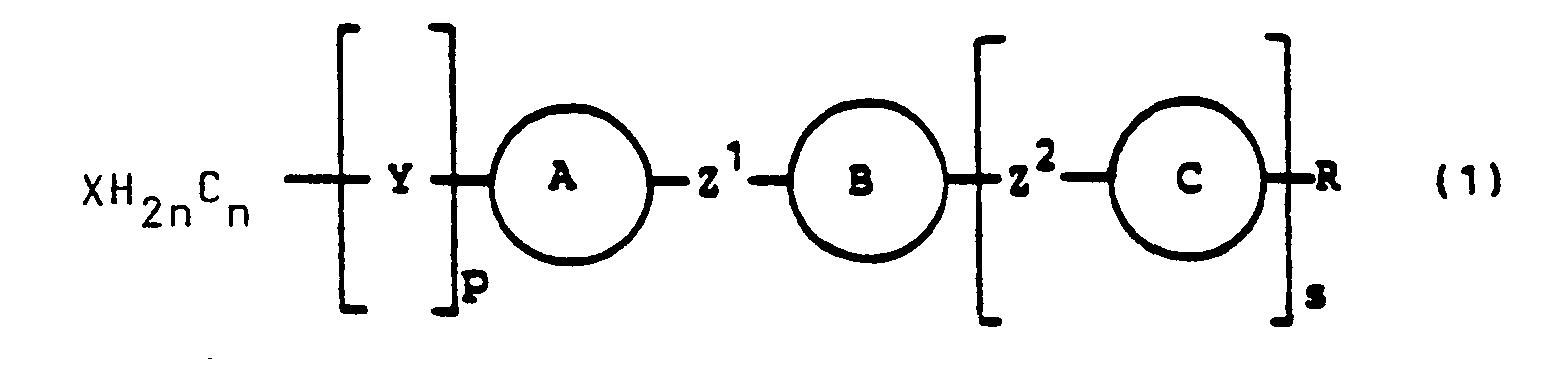
- the invention relates to new anisotropic compounds of the formula (1) which is defined as follows:
- the rings A, B and C are the same or different and selected from cycloaliphatic radicals of the formulas (1a) and (1b) ie the trans-1,4-cyclohexyl or 1,4-bicyclo (2,2,2) octyl radicals, and aromatic radicals of the formulas (1c), (1d), (te) ie the 1,4-phenyl, 3,6-pyridazinyl or 2,5-pyrimidine residues.
- the radical X, ie the strongly polarizing group present in the molecule is the cyano group or a halogen atom, fluorine and chlorine being preferred as halogen atoms over bromine and iodine being the least preferred.
- Y is an optional structural component (ie p is 0 or 1) which contains the oxygen atom (-O-), the carboxyl group (-C (O) -O- or -O (O) C-) or the imino group (-N ( H) -) means. If A represents an aliphatic ring of the formulas (1a) or (1b), p is preferably 0.
- the bridges Z 1 and Z 2 can be the same or different and covalent bonds or groups of the formulas -COO-, -CH 2 0- or mean, where X 1 is hydrogen or has the meaning given for X and the groups can also be in the reverse order -OOC-, -OCH 2 - and -CH 2 C (X 1 ) (H) -, unless otherwise the requirements mentioned below excluded.
- X 1 has the meaning given for X, ie cyano or halogen (F and CI are preferred as halogen)
- the corresponding bridge member contributes to the cross-polarization of the molecule of the formula (1).
- X 1 can only mean X if the wing group R or R 1 is also halogen or cyano.
- the index n means a number from 1 to 12.
- the ring C is an optional component of compounds of the invention, i. H. Like p, s is 0 or 1.
- alkyl parts of the groups mentioned are methyl, ethyl, propyl, butyl, pentyl, hexyl, heptyl, octyl, nonyl, decyl, undecyl and dodecyl groups, including the isomeric or chiral isomeric alkyls such as 1-methylpropyl, 1-methylbutyl, 2-methylbutyl, 1-methylpentyl, 2-methylpentyl, 3-methylpentyl, 1- or 2- or 3- or 4-methylhexyl, 1- or 2- or 3- or 4- or 5-methylheptyl and the further alkyl-alkyl groups with asymmetrical carbon atoms formed according to this principle.
- R can carry one or more substituents, namely halogen atoms or cyano groups, but at most one such substituent is attached to one carbon atom of the alkyl part.
- R can furthermore be a radical of the formula (1f) mean in which the ring D has the meaning given for the rings A, B and C, Z 3 has the meaning given for Z 1 and Z 2 and R 1 has the meaning given for R with the exception of the rest of the formula (1f).
- the stipulations (a), (b) and (c) are due to the fact that compounds of the formula (1) without these stipulations have clearing points which are too low or too low or do not have the required stability.
- the requirements (d) and (e) serve to delimit.
- the molecule of the new compounds (1) according to the invention contains a combination of longitudinally polarizing X and transverse polarizing X, e.g. B. a terminal X at the end of a wing group or directly on an aromatic ring together with at least one lateral X as part of a wing group.
- the knowledge on which the invention is based offers a large number of new, strongly longitudinally polarized anisotropic compounds in which the longitudinally polarizing cyano or halogen atom is terminal on an alkyl part of a wing group which is attached to a cycloaliphatic radical; this makes longitudinally polarized connections with high clearing points available.
- This longitudinal polarization by cyano or halogen in the wing group of a cycloaliphatic radical can optionally be combined with cross-polarizing cyano or halogen in a wing group and / or a bridge member.
- the compound (1) according to the invention is to have a pronounced positive DKA, it will usually carry a wing group which contains or consists of a terminal X - preferably cyano. It must be taken into account here, as also in the subsequent ones, that a non-terminal X in the wing groups can also contribute to longitudinal polarization.
- connection (1) has the smallest possible value of in the case of a more or less pronounced positive DKA, she wears a wing group that contains or consists of a terminal X, preferably cyano, combined with at least one non-terminal X in a wing group and / or a bridge X.
- a 1 , B 1 , C 1 each represents the cyloaliphatic radicals (1a), (1b) and A 2 , B 2 , C 2 each the aromatic radicals (1c), ( 1d), (1e) and R 4 are C 1-12 alkyl, C 1-12 alkoxy, XC 1-7 alkyl, cyano, F or CI and R 5 are C 1-12 alkyl, C 1-12 Represents alkoxy, C 1-12 alkoxycarbonyl or C 1-12 alkylcarbonyloxy; the characters A, B, C, Z 1 , Z 2 and R 1 have the meaning given above.
- R 4 and R 5 are C 1-12 alkyl.
- XC 1-7 alkyl means an X-substituted n-alkyl group with 1-7 C atoms. The substitution is preferably terminal in the w position.
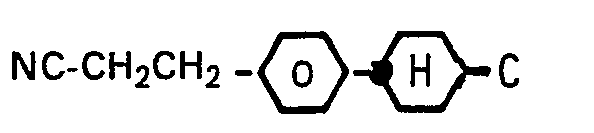
- XC 1-7 alkyl is particularly preferably NC-CH 2 CH 2 -.
- liquid crystal mixtures which contain at least one compound of the formula (1), for. B. in proportions of 1-30 mol%, the mixture also having several different compounds of formula (1), for. B. in a, proportion of up to a total of 90 mol%.
- the LC mixtures according to the invention can contain known anisotropic compounds and the additives corresponding to the intended use, such as dyes, in particular pleochroic dyes, optically active or cholesteric components and the like.
- the new compounds of formula (1) can be obtained by various methods known per se;
- a first general method is based, for example, on modifying a pre-compound corresponding to the molecule (1) without an X residue or without X alkyl by introducing X or X alkyl, e.g. B. by halogenation, such as bromination, optionally transhalogenation and optionally nitrilization or by Friedel-Crafts reaction and reduction in a conventional manner.
- a second general method is based on e.g. B. that the molecule (1) is formed by combining appropriate molecular fragments, e.g. B. by condensation, esterification or etherification on a bridge member.
- a general example of the first method is shown in the following diagram; by repeating the steps: bromination / carboxylation / reduction / bromination, the chain length of the X-bearing wing group can be increased further, the rest X being in each case terminal; the formation of an, alkyl wing group with non-terminal X, e.g. B. Cyano is illustrated in Scheme Va, in each of which a "compound (1)", i.e. H. a compound of formula (1), or a corresponding "pre-compound" can be assumed.
- the reduction of the carboxyl compounds can e.g. B. with lithium aluminum hydride; the bromination is usually carried out appropriately with elemental bromine in the presence of triphenylphosphine, the nitrilization z. B. with copper (I) cyanide or KCN; the Grignard method or, under certain circumstances, nitrile group hydrolysis is suitable for carboxylation.
- the compound (1) to be prepared consists of two fragments, e.g. B. fragment a and fragment b , consisting of a bridge member Z, z. B. a carboxyl or methoxy group are connected.
- the reaction is e.g. B. an esterification, etherification or the like and the fragment can carry part (Z a , Z b ) of the bridge to be formed; L 1 and L 2 are corresponding leaving groups.
- Suitable compounds for the synthesis according to Scheme VI are either known or can be obtained in a manner known per se.
- the acid chloride obtained in this way was then obtainable as a solution of 4-trans-cyanoethyl-cyclohexanol (melting point 52 ° C., 25 mM) as follows: 2- (4-hydroxyphenyl) propionamide is catalytically hydrogenated in 95% acetic acid (Nishimura catalyst The 1: 1 cis-trans mixture obtained is brought into equilibrium with aluminum propylate, the trans alcohol obtained is acetylated, converted into the nitrile using SOCI 2 and the acetyl group is subsequently hydrolyzed with NaOH) in 100 ml pyridine. After the reaction was completed, the mixture was poured into excess dilute hydrochloric acid and extracted with methylene chloride. The product obtained from the extract by evaporation was recrystallized.
- the target compound of this example obtained in this way is monotropically liquid-crystalline, melting point 73.0 ° C., clearing point 14.6 ° C.
Landscapes
- Chemical & Material Sciences (AREA)
- Organic Chemistry (AREA)
- Crystallography & Structural Chemistry (AREA)
- Engineering & Computer Science (AREA)
- Materials Engineering (AREA)
- Organic Low-Molecular-Weight Compounds And Preparation Thereof (AREA)
- Liquid Crystal Substances (AREA)
Description
- Die Erfindung betrifft neue anisotrope Verbindungen zur Verwendung in Flüssigkristallmischungen (FK-Mischungen) für elektrooptische Anzeigen. Die Erfindung betrifft auch FK-Mischungen, welche die neuen anisotropen Verbindungen enthalten.
- Für den Betrieb von elektrooptischen Anzeigen der verschiedenen Typen werden bekanntlich anisotrope Verbindungen benötigt, deren Moleküle zur Polarisierung in Richtung der Moleküllängsachse oder/und quer dazu bestimmte Substituenten tragen, welche diese Polarisierung bewirken. Der dadurch bewirkte Polarisierungseffekt äussert sich in der positiven oder negativen Anisotropie der Dielektrizitätskonstanten (DKA oder Δε), die parallel (e-) und senkrecht (eL) zur Molekülachse gemessen werden, wobei Δε = εn-ε1.
- Praktisch alle bekannten anisotropen Verbindungen fur Flussigkristallmischungen enthalten zwei bis vier cyclische Reste, die durch Brückenglieder (Kovalenzbindungen oder bestimmte zweiwertige Gruppen) miteinander verknüpft sind und meist auch sogenannte Flügelgruppen nach dem allgemeinen Schema

- Im typischen Fall wird die Polarisierung in Richtung der Moleküllängsachse - im folgenden kurz Längspolarisierung genannt - und dementsprechend der Beitrag zu e- durch eine stark polarisierende endständige Gruppe, wie die Cyanogruppe, am einen Molekülende (als R' oder R") und eine Alkyl- oder Alkoxygruppe am anderen Molekülende (R" oder R') bewirkt.
- Die Polarisierung quer zur Moleküllängsachse - im folgenden kurz Querpolarisierung genannt - erfolgt allgemein durch polarisierende Substituenten in lateraler Position, und zwar bisher praktisch immer durch ringständige Substituenten, wie Cyano oder Halogenatome, meist Fluor oder Chlor, an den aromatischen cyclischen Resten, meist Benzolringen, nach dem Schema II

- Aus dem Schema II ergibt sich ohne weiteres, dass diese übliche Art der Querpolarisation mit dem Ziel der Erhöhung von eL, z. B. für anisotrope Substanzen mit insgesamt negativer DKA oder für anisotrope Substanzen mit positiver DKA und gleichzeitig möglichst kleinen Werten des Verhältnisses

- Die Wünschbarkeit von anisotropen Verbindungen mit positiver DKA und möglichst geringen Werten von

- Aber auch bei Längspolarisation ohne Querpolarisation des Moleküls ergeben sich Probleme dann, wenn ein stark polarisierender Substituent an einem cycloaliphatischen Rest hangen muss. Bekanntlich bietet der Ersatz der aromatischen Ringe durch cycloaliphatische Reste verschiedene Vorteile, wie niedrigere Viskosität und verminderte optische Anisotropie; es zeigt sich aber, dass ringstandige Substituenten, wie Cyanogruppen, an cycloaliphatischen Resten zu einer Erniedrigung des Klarpunktes führen oder sogar ein Verschwinden der Mesophase bewirken können, insbesondere wenn am cycloaliphatischen Rest gleichzeitig 0 oder N direkt gebunden ist. So zeigen z. B. Cyclohexylderivate mit endstandiger Nitrilgruppe gemäss Formel III


- In den zur vorliegenden Erfindung führenden Untersuchungen wurde gefunden, dass die Konformationsenergie der das anisotrope Molekül bildenden Gruppierungen, insbesondere der polarisierenden Substituenten, bzw. die Differenz der freien Konformationsenergie -ΔG°x der Gruppierungen bzw. Substituenten für deren Wirkung auf die Klarpunktserniedrigungen bedeutsam ist und dass sich dieser Effekt durch geeignete Wahl der Substituenten für Längs- oder/und Querpolarisierung vorteilhaft beeinflussen lassen sollte.
- Aufgabe der Erfindung ist es, neue anisotrope Verbindungen für FK-Mischungen zum Betrieb von elektrooptischen Anzeigen anzugeben, welche die erwahnten probleme der Längspolarisierung oder/und der Querpolarisierung zu lösen gestatten.
- Es wurde gefunden, dass diese Aufgabe durch Einführung eines stark polarisierenden Substituenten gewählt aus Cyano und Halogen, wie Fluor oder Chlor in den Alkylteil einer Flügelgruppe bestimmter anisotroper Moleküle gelöst werden kann.
- Anisotrope Verbindungen vom Phenylbenzoat-Typ mit einer Flügelgruppe der Formel -(CH2)m-CN (m = 0 bis 4) sind zwar bereits in der Patentschrift CH-A5-619 485 beschrieben, die durch die Konformationsenergie der das anisotrope Molekül bildenden Gruppierungen bedingten Vorteile der erfindungsgemäßen Verbindungen ist jedoch in diesen Verbindungen, die ausschließlich aromatische Ringe enthalten, praktisch bedeutungslos. Aus GB-21 11 993-A sind ferner anisotrope Acetonitrile mit einer Flügelgruppe der Formel -CH2CN bekannt, deren Mesobereiche im Vergleich zu den erfindungsgemäßen Eigenschaften (vgl. Tabelle I) drastisch eingeengt sind. Ein Vergleich von Verbindung 10 aus Tabelle II mit der strukturell ähnlichsten Verbindung aus GB-21 11 993-A, d. h. mit 4-(trans-4-Pentylcyclohexyl)-phenyl-acetonitril (Beispiel 31) zeigt, daß Verbindung 10 einen um ca. 47° C höheren Klärpunkt aufweist.
- Gegenstand der Erfindung sind neue anisotrope Verbindungen der Formel (1)


- Y ist eine fakultative Strukturkomponente (d. h. p ist 0 oder 1), die das Sauerstoffatom (-O-), die Carboxylgruppe (-C(O)-O- oder -O(O)C-) oder die Iminogruppe (-N(H)-) bedeutet. Wenn A einen aliphatischen Ring der Formeln (1a) oder (1b) bedeutet, ist p vorzugsweise 0.
- Die Brücken Z1 und Z2 können gleich oder verschieden sein und Kovalenzbindungen oder Gruppen der Formeln -COO-, -CH20- oder
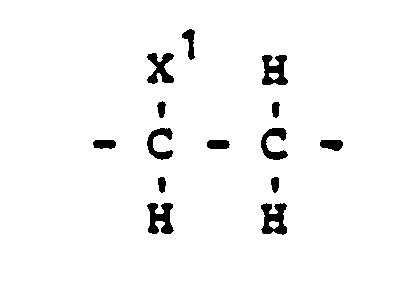
- Wenn Xl die für X angegebene Bedeutung hat, d. h. Cyano oder Halogen (F und CI als Halogen bevorzugt) ist, trägt das entsprechende Brückenglied sur Querpolarisierung des Moleküls der Formel (1) bei. X1 kann aber nur dann X bedeuten, wenn auch die Flügelgruppe R bzw. R1 gleich Halogen oder Cyano ist.
- Der Index n bedeutet eine Zahl von 1 bis 12.
- Der Ring C ist eine fakultative Komponente erfindungsgemässer Verbindungen, d. h. s ist ebenso wie p 0 oder 1.
- R kann die für X1 angegebene Bedeutung haben, wenn der benachbarte Ring C (wenn s = 1) bzw. B (wenn s = 0) ein aromatischer Rest der Formeln (1c), (1d) oder (1e) ist; alternativ ist R eine Alkyl- (H2m+1Cm-), Alkoxy-(H2m+1Cm-O-), Alkoxycarbonyl- (H2m+1Cm-OC(O)-), Alkylcarbonyloxy-(H2m+1Cm-C(O)-O-) oder Alkylaminogruppe (H2m+1C-N(H)-), deren Alkylteil 1 bis 12 C-Atome (m = 1-12) in gerader oder verzweigter und gegebenenfalls chiraler Kette enthält. Beispiele für die Alkylteile der genannten Gruppen sind Methyl-, Ethyl-, Propyl-, Butyl-, Pentyl-, Hexyl-, Heptyl-, Octyl-, Nonyl-, Decyl-, Undecyl- und Dodecylgruppen, einschliesslich der isomeren bzw. chiralisomeren Alkyle, wie 1-Methylpropyl-, 1-Methylbutyl-, 2-Methylbutyl-, 1-Methylpentyl-, 2-Methylpentyl, 3-Methylpentyl-, 1- oder 2- oder 3- oder 4-Methylhexyl, 1- oder 2- oder 3- oder 4- oder 5-Methylheptyl sowie die nach diesem Prinzip gebildeten weiteren Alkyl-Alkylgruppen mit asymmetrischen C-Atom.
- Die Alkylteile von R können einen oder mehrere Substituenten, und zwar Halogenatome oder Cyanogruppen tragen, wobei aber an jeweils einem C-Atom des Alkylteils höchstens jeweils ein derartiger Substituent hängt. Weiterhin kann R einen Rest der Formel (1f)

- Die Formel (1) unterliegt erfindungsgemäss folgenden beschränkenden Massgaben (a), (b), (c), (d), und (e):
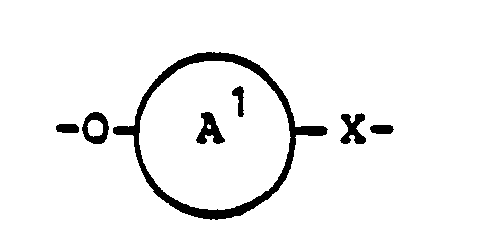
- (a) an keinen der im Molekül der Formel (1) vorhandenen cycloaliphatischen Reste der Formeln (1a) oder (1b) ist gleichseitig direkt ein Sauerstoffatom einerseits und direkt ein Sauerstoff- oder Stickstoffatom oder ein Rest Cyano oder Halogen andererseits gebunden; das Molekül darf mit anderen Worten keine Ringe der Formeln

- b) an keinen der im Molekül der Formel (1) vorhandenen aromatischen Reste der Formeln (1c), (1d) oder (1e) sind Gruppen der Formeln -CH20- oder -C(X)(H)- direkt mit den C-Atomen dieser Gruppen gebunden ausser wenn X das Fluoratom ist; das Molekül darf mit anderen Worten keine Ringe der Formeln

- (c) der Rest XH2nCn- eine Gruppe der Formel NC-CH2CH2-bedeutet, falls die Substitution durch X endständig ist,
- (d) das Molekül die Formel

- (e) XI nur dann X sein kann, wenn R bzw. Rl gleich Halagen oder Cyano ist.
- Die Massgaben (a), (b) und (c) sind dadurch bedingt, dass Verbindungen der Formel (1) ohne diese Massgaben keine oder zu tiefe Klärpunkte besitzen bzw. nicht die erforderliche Stabilität haben. Die Massgaben (d) und (e) dienen der Abgrenzung.
- Neu und überraschend ist die der Erfindung zugrundliegende Erkenntnis, dass die Einführung von polarisierenden Substituenten in flügelständige Alkylgruppen eine Vielzahl von neuen anisotropen Verbindungen mit niedirgen Werten %j bietet, und zwar unabhängig davon, ob die Ringe des Moleküls nur cyclophatische Reste oder nur aromatische Reste sind, oder ob cycloaliphatische Reste kombiniert mit aromatischen Resten vorliegen. In diesem Fall enthält das Molekül der neuen erfindungsgemässen Verbindungen (1) eine Kombination von längspolarisierendem X und querpolarisierendem X, z. B. ein endständiges X am Ende einer Flügelgruppe oder direkt an einem aromatischen Ring zusammen mit mindestens einem lateralen X als Teil einer Flügelgruppe.
- Ferner bietet die der Erfindung zugrundeliegende Erkenntnis eine Vielzahl von neuen, stark längspolarisierten anisotropen Verbindungen, bei welchen das längspolarisierende Cyano oder Halogenatom endständig an einem Alkylteil einer Flügelgruppe ist, die an einem cycloaliphatischen Rest hängt; dadurch sind längspolarisierte Verbindungen mit hohen Klärpunkten erhältlich.
- Diese Längspolarisierung durch Cyano oder Halogen in der Flügelgruppe eines cycloaliphatischen Restes kann gegebenenfalls mit querpolarisierendem Cyano oder Halogen in einer Flügelgruppe oder/und einem Brückenglied kombiniert sein.
- Wenn die erfindungsgemässe Verbindung (1) eine ausgeprägt positive DKA aufweisen soll, wird sie meist eine Flügelgruppe tragen, die ein endständiges X - vorzugsweise Cyano - enthält oder daraus besteht. Hierbei ist, wie auch in den nachberücksichtigen, dass auch ein nicht-endständiges X in den Flügelgruppen einen Beitrag zur Längspolarisierung liefern kann.
- Wenn die Verbindung (1) einen möglichst kleinen Wert von

- Verbindungen (1) mit negativer DKA werden erhalten, wenn die Summe der lateralen Polarisierungsbeiträge von X in den Flügeln oder/und Brücken die Summe der längspolarisierenden Beiträge übersteigt bzw. wenn die längspolarisierenden Gruppen fehlen.
- Bevorzugte Gruppen erfindungsgemässer Verbindungen der Formel (1) sind in den Ansprüchen 2-13 definiert und haben insbesondere folgende Merkmale, einzeln oder in Kombination:
- - Das Molekül enthält zwei oder höchstens drei cyclische Reste und insgesamt 1 bis höchstens 4 Cyano- oder Halogenreste;
- - der Ring A ist vorzugsweise ein cycloaliphatischer Rest, insbesondere ein solcher der Formel (1a);
- - der Ring A trägt vorzugsweise eine XC1-7-Alkylgruppe, insbesondere Cyano-C1-7-Alkylgruppe;
- - wenn X Halogen ist, wird Fluor und Chlor bevorzugt;
- - wenn R bzw. R1 einen substituierten Alkylteil enthält, trägt dieser vorzugsweise einen oder zwei Substituenten, wobei als Halogenatome Fluor und Chlor bevorzugt sind;
- - das Molekül der Formel (1) enthält vorzugsweise insgesamt höchstens eine Carboxylgruppe -COO- oder -OOC-;
- - das Molekül der Formel (1) enthält vorzugsweise höchstens einen aromatischen Ring der Formeln (1c), (1d), (1e);
- - das Molekül der Formel (1) enthält mindestens ein Brückenglied Z in Form der Kovalenzhindung;
- - das Molekül der Formel (1) enhält zwei oder drei cycloaliphatische Reste der Formeln (1a), (1 b);
- - wenn R bzw. R1 einen Alkylteil besitzt, enthält dieser vorzugsweise 3 bis 9 C-Atome;
- - wenn R bzw. R1 Wasserstoff oder X bedeutet, ist der benachbarte Ring ein aromatischer Rest der Formeln (1c), (1 d) oder (1 e);
- - der Rest X in der linken Flügelgruppe und der gegebenenfalls vorhandene Substituent des Alkylteils von R bzw. R1 hängt vorzugsweise an einem C-Atom der Alkylkette, welches vom zugehörigen Ring durch höchstens 2 C-Atome entfernt ist.
- Die folgenden Formeln erläutern die Struktur spezieller Gruppen von erfindungsgemässen Verbindungen, wobei A1, B1, C1 jewells die cyloaliphatischen Reste (1a), (1b) und A2, B2, C2 jeweils die aromatischen Reste (1c), (1d), (1e) sind und R4 C1-12-Alkyl, C1-12-Alkoxy, XC1-7-Alkyl, Cyano, F oder CI und R5 C1-12-Alkyl, C1-12-Alkoxy, C1-12-Alkoxycarbonyl oder C1-12-Alkylcarbonyloxy bedeutet; die Zeichen A, B, C, Zl, Z2 sowie R1 haben die oben angegebene Bedeutung. Vorzugsweise sind R4 und R5 C1-12-Alkyl.


- XC1-7-Alkyl bedeutet eine durch X substituierte n-Alkylgruppe mit 1-7 C-Atomen. Die substitution ist vorzugsweise endständig in w-Postition. XC1-7-Alkyl ist insbesondere bevorzugt NC-CH2CH2-.
- Erfindungsgemäss sind ferner Flüssigkristallmischungen, die mindestens eine verbindung der Formel (1) enthalten, z. B. in Anteilen von 1-30 Mol%, wobei die Mischung auch mehrere verschiedene verbindungen der Formel (1), z. B. in eine, Anteil von bis insgesamt 90 Mol%, enthalten kann. Als weitere Komponenten können die erfindungsgemässen FK-Mischungen bekannte anisotrope verbindungen sowie die dem Verwendungszweck entsprechenden Zusätze, wie Farbstoffe, insbesondere pleochroitische Farbstoffe, optisch aktive bzw. cholesterische Komponenten und dergleichen enthalten.
- Die neuen verbindungen der Formel (1) sind nach verschiedenen an sich bevannten Methoden erhältlich; eine erste allgemeine Methode beruht beispielsweise darauf, dass man eine dem Molekül (1) entsprechende Vorverbindung ohne X-Rest bzw. ohne X-Alkyl durch Einführung von X bzw, X-Alkyl modifiziert, z. B. durch Halogenieren, wie Bromieren, gegebenenfalls Transhalogenieren und gegebenenfalls Nitrilieren oder durch Friedel-Crafts-Reaktion und Reduktion in an sich bekannter Weise.
- Eine zweite allgemeine Methode beruht z. B. darauf, dass man das Molekül (1) durch Vereinigen von entsprechenden Molekülfragmenten bildet, z. B. durch Kondensation, Veresterung oder Verätherung an einem Brückenglied.
- Entsprechende Vorverbindungen bzw. Molekülfragmente sind entweder als solche bekannt oder können analog wie die bekannten Verbindungen erhalten werden.
- Ein allgemeines Beispiel für die erste Methode ist im folgenden Schema verläutert; durch Wiederholungen der Schritte: Bromierung/Carboxylierung/Reduktion/Bromierung kann die Kettenlänge der X-tragenden Flügelgruppe weiter vergrössert werden, wobei der Rest X jeweils endständig ist; die Bildung eine, Alkylflügelgruppe mit nicht-endständigem X, z. B. Cyano, ist in Schema Va erläutert, in welchem jeweils von einer "Verbindung (1)", d. h. einer Verbindung der Formel (1), bzw. einer entsprechenden "Vorverbindung" ausgegangen werden kann.
- Das Schema Vb erläutert ein spezielles Beispiel zur Herstellung von geeigneten "Vorverbindungen-COOH", d. h. von entsprechenden Carbonsäuren für die Synthese gemäss Schema V oder zur Herstellung von Verbindungen der Formel (1) mit ringständigem terminalem Cyano durch Umwandlung der Carboxylgruppe nach bekannten Methoden, z. B. direkt oder über das entsprechende Amid. Dabei bedeutet "X-Alkyl" in Schema Vb eine Gruppe der Formel XH2n' Cn,- in der n' jeweils um Eins kleiner ist als das in Formel (1) gewünschte n.


- )1 Siehe J.A.C.S. 67 (1945) 1045
- )2 gegebenenfalls nachfolgende Trennung und Gewinnung des trans-Isomeren
- Die Reduktion der Carboxylverbindungen kann z. B. mit Lithiumaluminiumhydrid erfolgen; die Bromierung erfolgt meist zweckmässig mit elementarem Brom in Gegenwart von Triphenylphosphin, die Nitrilierung z. B. mit Kupfer(I)-cyanid oder KCN; zur Carboxylierung ist die Grignard-Methode oder unter Umständen die Nitrilgruppenhydrolyse geeignet.
- Allgemeine Beispiele für bekannte oder in bekannter weise erhältliche Carboxyl-Vorverbindungen sind die folgenden, wobei R1, B, C, Z und Z die oben angegebene Bedeutung haben:


- Ein allgemeines Beispiel für die zweite Methode zur Herstellung erfindungsgemässer Verbindungen (1) ist im folgenden Schema VI erläutert, in welchem die herzustellende Verbindung (1) aus zwei Fragmenten, z. B. Fragmenta und Fragmentb, besteht, die durch ein Brückenglied Z, z. B. eine Carboxyloder Methoxygruppe miteinander verbunden sind. Je nach Art der Brückengruppe ist die Reaktion z. B. eine Veresterung, Verätherung oder dergleichen und das Fragment kann einen Teil (Za, Zb) der zu bildenden Brücke tragen; Ll und L2 sind entsprechende Abgangsgruppen.
- Auch für die Synthese nach Schema VI sind geeignete verbindungen entweder bekannt oder in an sich bekannter Weise erhältlich.
- Zur weiteren Erläuterung der Erfindung dienen die folgenden Beispiele:
- 4-trans-Propyl-cyclohexan-1-carbonsäure (25 mM) wurde mit Thionylchlorid (40 ml) 30 min auf Rückflusstemperatur erwärmt. Das entstandene Säurechlorid wurde vom überschüssigen Thionylchlorid befreit. Das so gewonnene Säurechlorid wurde nun zu einer Lösung von 4-trans-Cyanoethyl-cyclohexanol (Schmelzpunkt 52°C, 25 mM, folgendermaßen erhältlich: 2-(4-Hydroxyphenyl)-propionamid wird in 95 %iger Essigsäure katalytisch hydriert (Nishimura-Katalysator). Das erhaltene 1:1 cis-trans-Gemisch wird mit Aluminiumopropylat ins Gleichgewicht gebracht. Der erhaltene trans-Alkohol wird acetyliert, mit SOCI2 in das Nitril übergeführt und nachfolgend mit NaOH die Acetylgruppe hydrolysiert) in 100 ml Pyridin zugetropft. Nach Beendigung der Reaktion wurde das Gemisch in überschüssige verdünnte Salzsäure gegossen und mit Methylenchlorid extrahiert. Das aus dem Extrakt durch Eindampfen erhaltene Produkt wurde umkristallisiert. Die so erhaltene Zielverbindung dieses Beispiels ist monotrop flüssigkristallin, Schmelzpunkt 73,0° C, Klärpunkt 14,6° C.
- 4-trans-Pentyl-cyclohexan-1-carbonsäure (36,5 mM) wurde mit Thionylchlorid (50 ml) 1 Std. unter Rückfluss gekocht. Das überschüssige Thionylchlorid wurde destilliert. Das entstandene Säurechlorid wurde zu einer Lösung von 36,5 mM 4-trans-Cyanoethyl-cyclohexanol in 100 ml Pyridin zugetropft. Die Reaktionsmischung wurde bis zur Beendigung der Reaktion gerührt und dann auf verdünnte Salzsäure gegossen. Das Produkt wurde mit Methylenchlorid extrahiert. Zur Reinigung wurde das Produkt umkristallisiert. Es zeigt eine monotrope flüssigkristalline Phase, Schmelzpunkt 61,5° C, Klärpunkt 39,3° C.
- Nach dem im Reaktionsschema V bzw. Va angegebenen Verfahren wurden aus den entsprechenden Carbonsäuren der Formel (30)


- Die Ergebnisse sind in der folgenden Tabelle I zusammengestellt

-
- Schritt 1: Eine Lösung von 4'-Propyl-trans,trans-bicyclo-hexan-4-carbonsäure (0,1 M) [R. Eidenschink, D, Erdmann, J. Krause und L. Pohl, Angew. Chem. Int. Ed. 17, 133 (1978)] in trockenem THF wurde zu einer Suspension von LiAIH4 (10 g) in 100 ml trockenem THF bei 0°C getropft. Das Reaktionsgemisch wurde eine Stunde unter Rückfluß gekocht, in kalte verdünnte Salzsäure gegossen und das Produkt mit Ether extrahiert.
- Schritt 2: Brom (0,12 M) wurde zu einer Suspension von P(Ph)3 (0,12 M) in trockene, CH3CN bei 0°C getropft. Zu dieser Suspension wurde eine Lösung des oben hergestellten Alkohols in trockenem CH3CN getropft und die Mischung 15 min bei dieser Temperatur gerührt, Dann wurde das Lösungsmittel abdestilliert und der Rückstand 30 min auf 130°C erhitzt. Nach üblicher Aufarbeitung des Reaktionsgemisches wurde das Rohprodukt mit CH2CI2 extrahiert und die Lösung wurde zu Hexan gegeben, um das Triphenylphosphinoxid auszufällen. Das Produkt wurde durch Chromatographie (Kieselgel/Toluol) gereinigt.
- Schritt 3: Eine Lösung des oben hergestellten Bromides in trockenem Ether wurde zu einer Suspension von Magnesium (4g) in trockenem Ether getropft und bei Raumtemperatur 1 Stunde gerührt. Anschließend wurde trockenes C02-Gas 30 min durch das Reaktionsgemisch geleitet, wonach es wie üblich aufgearbeitet wurde. Das Rohprodukt wurde aus Toluol oder Hexan umkristallisiert. Die Schritte 1 und 2 wurden dann wiederholt mit diesem Produkt als Ausgangsmaterial.
- Schritt 4: Ein Gemisch des so erhaltenen 4-trans-Bromethyl-4'-trans-propylbicyclohexan mit festem KCN wurde 2 Stunden in DMSO auf 100°C erhitzt und anschließend in Wasser gegossen. Das Reaktionsprodukt wurde mit Ether extrahiert und über eine kurze Kieselgelsäule mit Toluol als Laufmittel filtriert. Es wurde aus EtOH umkristallisiert, Schmelzpunkt 13°C, Klärpunkt 99° C.
- Nach dem Verfahren gemäss Reaktionsschema V bzw. Va wurden aus den entsprechenden Carbonsäuren der Formel (80)



- Eine Lösung von trans-4-Pentylcyclohexancarbonsäurechlorid (0,1 M) in Pyridin wurde zu einer Lösung von 4- trans-Cyanoethyl-cyclohexanol (0,1 M) in Pyridin bei 0 - 5°C getropft und die Mischung bei dieser Temperatur 2 Stunden gerührt. Das Reaktionsgemisch wurde dann wie üblich aufgearbeitet und das Produkt zweimal aus Methanol umkristallisiert, Schmelzpunkt 75°, Klärpunkt 51°.
- Weitere Beispiele von Verbindungen der Formel (1) sind die folgenden;
- 4-(2-Fluorobutyl)-4'-cyano-biphenyl
- 4-(1-Fluoropentyl)-4'-cyano-biphenyl
- 4-(2-Fluoropentyl)-4'-cyano-biphenyl
- 4-(3-Fluoropentyl)-4'-cyano-biphenyl
- 4-(2-Chloroethyl)-4"-(2-flouropropyl)-p-terphenyl
- 4-(1-Fluoropentyl)-4"-cyano-p-terphenyl
- 4-(2-Fluoropropyl-4."-cyano-p-terphenyl
- 1-(4-trans-(1-Fluoropentyl)-cyclohexyl)-4-cyano-benzol
- 1-(4-trans-(2-Cyanoethyl)-cyclohexyl)-4-butoxy-benzol
- 1-(4-trans-(2-Fluoropentyl)-cyclohexyl)-4-cyano-benzol
- 1-(4-trans-(3-Fluoropentyl)-cyclohexyl)-4-cyano-benzol
- 1-(4-trans-(2-Cyanoethyl)-cyclohexyl)-2-(4-cyanophenyl)-ethan
- 3-(4-(3-Fluoropentyl)-phenyl)-6-(4-cyanophenyl)-pyridazin
- 3-(4-trans-(2-Cyanoethyl)-cyclohexyl)-6-(4-pentylphenyl)-pyridazin
- 3-(4-trans-(2-Cyanoethyl)-cyclohexyl)-6-butoxy-pyridazin
- 1-(4-trans-(2-Cyanoethyl)-cyclohexyl)-2-(4-(5-(2-chloroethyl)-2-pyrimidin)-phenyl)-ethan
- 1-(4-trans-(2-Cyanoethyl)-cyclohexyl)-2-(4-(5-(3-fluoropropyl)-2-pyrimidin)-phenyl)-ethan
- 4-trans-(2-Bromoethyl)-4'-trans-propyl-bicyclohexan
- 4-trans-(2-Cyanoethyl)-4'-trans-propyl-bicyclohexan
- 4-trans-(2-Cyanoethyl)-4'-trans-pentyl-bicyclohexan
- 4-trans-(2-Cyanoethyl)-4"-trans-(4-pentyl-1-bicyclo-(2,2,2)-octyl)-bicyclohexan
- 4-trans-(2-Cyanoethyl)-cyclohexyl-4-cyano-benzoat
- 4-trans-(2-Cyanoethyl)-cyclohexyl-4-pentyl-benzoat
- 1-(4-trans-(2-Cyanoethyl)-cyclohexyl)-methoxy-4-butoxy-benzol
- 4-trans-(2-Cyanoethyl)-cyclohexyl-4-trans-(4-butoxyphenyl)-cyclohexan-1-carboxylat
- 4-trans-(2-Cyanoethyl)-cyclohexyl-4-(4-trans-(2-cyanoethyl)-cyclohexyl)-benzoat
- 4-trans-(2-Cyanoethyl)-cyclohexyl-4-(4-trans-pentyl-cyclohexyl)-benzoat
- 1-(4-trans-(2-Cyanoethyl)-cyclohexyl-4-(4-trans-(3-fluoropropyl)-cyclohexyl)-methoxy-benzol
- 4-trans-(Fluoromethyl)-cyclohexyl-4'-(2-cyanoethyl)-bicyclohexan-4-carboxylat
- 4-trans-(2-Cyanoethyl)-cyclohexyl-4'-(3-fluoropropyl)-bicyclohexan-4-carboxylat
- 1-(4'-(2-Cyanoethyl)-bicyclohex-4-yl)-methoxy-4-trans-(2-cyanoethyl)-cyclohexan
- 4-trans-(2-Cyanoethyl)-cyclohexyl-4-(2-cyanoethyl)-bicyclo-(2,2,2)-octan-1-carboxylat
- 1-(4-(2-Cyanoethyl)-1-bicyclo-(2,2,2)-octyl)-methoxy-4-trans-(2-cyanoethyl)-cyclohexan
- Es folgen Beispiele für erfindungsgemäße Flüssigkristallgemische;
- Man stellt ein Flüssigkristallgemisch her bestehend aus
- 9 % 2-p-Cyanphenyl-5-propyl-1,3-dioxan
- 12 % 2-p-Cyanphenyl-5-butyl-1,3-dioxan
- 9 % 2-p-Cyanphenyl-5-pentyl-1,3-dioxan
- 6 % 2-p-Octoxyphenyl-5-pentyl-pyrimidin
- 5 % 2-p-Nonoxyphenyl-5-pentyl-pyrimidin
- 5 % 2-p-Heptoxyphenyl-5-hexyl-pyrimidin
- 4 % 2-p-Nonoxyphenyl-5-hexyl-pyrimidin
- 6 % 4,4'-Bis-(trans-4-propylcyclohexyl)-biphenyl
- 9 % 4-(trans-4-pentylcyclohexyl)-4'-(trans-4-propylcyclohexyl)-biphenyl
- 17 % r-1-Cyan-1-pentyl-cis-4-(trans-4-propylcyclohexyl)-cyclohexan
und - 18 % 4-trans-Cyanoethyl-4'-trans-propyl-bicyclohexan.
- Man stellt ein Flüssigkristallgemisch her bestehend aus
- 27 % trans,trans-4-Pentylcyclohexylcyclohexan-4'-carbonitril
- 17 % trans,trans-4-Propylcyclohexylcyclohexan-4'-carbonitril
- 30 % 4-trans-Cyanoethyl-4'-trans-pentyl-bicyclohexan
- 16 % trans-4-Propylcyclohexancarbonsäure-(p-ethoxyphenyl-ester) und
- 10 % trans,trans-4-Pentyl-4'-butyryloxybicyclohexan.
Claims (16)


oder Halogen und Y Sauerstoff, Carboxyl oder Imino ist, Z1 und Z2 gleich oder verschieden sind und Kovalenzbindungen oder Gruppen der Formeln -COO-, -CH20- oder

n eine Zahl von 1 bis 12,
und p sowie s jeweils gleich oder verschieden sind und 0 oder 1 bedeuten und R die für X1 angegebene Bedeutung hat oder eine Alkyl-, Alkoxy-, Alkoxycarbonyl-, Alkylcarbonyloxy- oder Alkylaminogruppe, deren Alkylteil jeweils 1 bis 12 C-Atome in gerader oder verzweigter und gegebenenfalls cchiraler Kohlenstoffkette enthält, welche Kette gegebenenfalls einen oder mehrere Substituenten gewählt aus Halogen und Cyano trägt, wobei an jeweils einem Atom der Kette höchstene einer der genannten Substituenten hängt, oder einen Rest der Formel (1f)



Applications Claiming Priority (2)
| Application Number | Priority Date | Filing Date | Title |
|---|---|---|---|
| DE3332692 | 1983-09-10 | ||
| DE19833332692 DE3332692A1 (de) | 1983-09-10 | 1983-09-10 | Anisotrope verbindungen und fluessigkristallmischungen |
Publications (2)
| Publication Number | Publication Date |
|---|---|
| EP0139996A1 EP0139996A1 (de) | 1985-05-08 |
| EP0139996B1 true EP0139996B1 (de) | 1987-11-04 |
Family
ID=6208730
Family Applications (1)
| Application Number | Title | Priority Date | Filing Date |
|---|---|---|---|
| EP84110152A Expired EP0139996B1 (de) | 1983-09-10 | 1984-08-25 | Anisotrope Verbindungen und Flüssigkristallmischungen |
Country Status (6)
| Country | Link |
|---|---|
| US (2) | US4723005A (de) |
| EP (1) | EP0139996B1 (de) |
| JP (1) | JP2714938B2 (de) |
| DE (2) | DE3332692A1 (de) |
| HK (1) | HK82088A (de) |
| SG (1) | SG28588G (de) |
Families Citing this family (33)
| Publication number | Priority date | Publication date | Assignee | Title |
|---|---|---|---|---|
| US5252252A (en) * | 1983-09-10 | 1993-10-12 | Merck Patent Gesellschaft Mit Beschraenkter Haftung | Anisotropic compounds and liquid crystal mixtures |
| JPS61129169A (ja) * | 1984-11-27 | 1986-06-17 | Teikoku Chem Ind Corp Ltd | 液晶化合物 |
| DE3506446A1 (de) * | 1985-02-23 | 1986-08-28 | Merck Patent Gmbh, 6100 Darmstadt | Pyrimidinderivate |
| DE3510432A1 (de) * | 1985-03-22 | 1986-09-25 | Merck Patent Gmbh, 6100 Darmstadt | Cyclohexanderivate |
| DE3515373A1 (de) * | 1985-04-27 | 1986-11-06 | Merck Patent Gmbh, 6100 Darmstadt | Stickstoffhaltige heterocyclen |
| DE3515374C2 (de) * | 1985-04-27 | 1998-02-26 | Hoechst Ag | Chirale getilte smektische flüssigkristalline Phasen und deren Verwendung in elektrooptischen Anzeigeelementen |
| DE3518734A1 (de) * | 1985-05-24 | 1986-11-27 | Merck Patent Gmbh, 6100 Darmstadt | Smektische fluessigkristalline phasen |
| DE3533333A1 (de) * | 1985-09-18 | 1987-03-26 | Merck Patent Gmbh | Smektische fluessigkristalline phasen |
| DE3650014D1 (de) * | 1985-09-18 | 1994-09-08 | Merck Patent Gmbh | Smektische flüssigkristalline phasen. |
| US4798680A (en) * | 1985-10-18 | 1989-01-17 | Canon Kabushiki Kaisha | Optically active compound, process for producing same and liquid crystal composition containing same |
| US5384071A (en) * | 1986-06-23 | 1995-01-24 | Secretary Of State For Defence In Her Britannic Majesty's Government Of The U.K. Of Gt. Britian And Northern Ireland | Chiral liquid crystal compounds |
| US5254747A (en) * | 1986-06-30 | 1993-10-19 | Minnesota Mining And Manufacturing Company | Fluorine-containing chiral smectic liquid crystals |
| US4886619A (en) * | 1986-06-30 | 1989-12-12 | Minnesota Mining And Manufacturing Company | Fluorine-containing chiral smectic liquid crystals |
| JPH072720B2 (ja) * | 1986-09-11 | 1995-01-18 | チッソ株式会社 | シクロヘキシルフエニルピリダジン類 |
| JPH0696559B2 (ja) * | 1986-09-16 | 1994-11-30 | チッソ株式会社 | 3,6−ジフエニルピリダジン類 |
| US5328639A (en) * | 1986-11-10 | 1994-07-12 | Canon Kabushiki Kaisha | Fluoroalkane derivative, its composition and liquid crystal device using the same |
| US4804759A (en) * | 1987-05-27 | 1989-02-14 | Adeka Argus Chemical Co., Ltd. | Pyrimidine compound |
| JP2566807B2 (ja) * | 1987-11-11 | 1996-12-25 | キヤノン株式会社 | 光学活性物質、その製造方法およびそれを含む液晶組成物 |
| JP2610467B2 (ja) * | 1987-11-12 | 1997-05-14 | キヤノン株式会社 | 液晶性化合物、それを含有する液晶組成物およびそれを使用した液晶素子 |
| CA1336441C (en) * | 1987-12-28 | 1995-07-25 | Manabu Uchida | Liquid crystal composition |
| US5244597A (en) * | 1988-05-26 | 1993-09-14 | Hoffmann-La Roche Inc. | Liquid crystalline mixtures having a chiral tilted smectic phase |
| US4844836A (en) * | 1988-11-23 | 1989-07-04 | Adeka Argus Chemical Co., Ltd. | Optically active cyanobiphenyl compound |
| KR100215370B1 (ko) * | 1989-01-27 | 1999-08-16 | 플레믹 크리스티안 | 비페닐릴에탄 및 액정상 |
| JP2646262B2 (ja) * | 1989-04-13 | 1997-08-27 | チッソ株式会社 | ジフルオロアルキルシクロヘキシルベンゾニトリル誘導体 |
| US5315024A (en) * | 1989-07-28 | 1994-05-24 | Dainippon Ink And Chemicals, Inc. | Cyano-substituted compound containing ether bond |
| DE4002374C2 (de) * | 1990-01-27 | 1999-04-15 | Merck Patent Gmbh | Partiell fluorierte Verbindungen und deren Verwendung als Komponente flüssig kristalliner Medien |
| GB9002830D0 (en) | 1990-02-08 | 1990-04-04 | Secr Defence | L.c.cyanoalkenes & alkenes |
| GB9325438D0 (en) | 1993-12-13 | 1994-02-16 | Secr Defence | Ferroelectric liquid crystal devices |
| US5702637A (en) * | 1995-04-19 | 1997-12-30 | Minnesota Mining And Manufacturing Company | Liquid crystal compounds having a chiral fluorinated terminal portion |
| US5658491A (en) * | 1995-10-12 | 1997-08-19 | Minnesota Mining And Manufacturing Company | Process for controlling cone tilt angle in mixtures of smectic liquid crystal compounds |
| US5855812A (en) * | 1997-04-11 | 1999-01-05 | Minnesota Mining And Manufacturing Company | Compounds and process for controlling cone tilt angle in mixtures of smectic liquid crystal compounds |
| US6309561B1 (en) | 1997-12-24 | 2001-10-30 | 3M Innovative Properties Company | Liquid crystal compounds having a chiral fluorinated terminal portion |
| US7666330B2 (en) * | 2005-04-20 | 2010-02-23 | Lg Chem, Ltd. | Additive for non-aqueous electrolyte and secondary battery using the same |
Citations (4)
| Publication number | Priority date | Publication date | Assignee | Title |
|---|---|---|---|---|
| EP0014885A1 (de) * | 1979-02-05 | 1980-09-03 | F. HOFFMANN-LA ROCHE & CO. Aktiengesellschaft | Cyclohexylpyrimidine, deren Herstellung und Verwendung, sowie flüssigkristalline Gemische und elektro-optische Vorrichtungen, die solche Verbindungen enthalten, und deren Herstellung |
| DE3228350A1 (de) * | 1981-07-31 | 1983-02-17 | F. Hoffmann-La Roche & Co AG, 4002 Basel | Pyridazine |
| GB2111993A (en) * | 1981-12-24 | 1983-07-13 | Merck Patent Gmbh | Liquid crystal acetonitriles |
| EP0134570A2 (de) * | 1983-09-10 | 1985-03-20 | MERCK PATENT GmbH | Anisotrope Verbindungen und Flüssigkristallmischungen |
Family Cites Families (50)
| Publication number | Priority date | Publication date | Assignee | Title |
|---|---|---|---|---|
| NL12289C (de) * | 1914-11-30 | 1924-06-16 | ||
| CH501575A (de) * | 1967-10-06 | 1971-01-15 | Ciba Geigy Ag | Verfahren zur Herstellung einer neuen Aryloxyalkansäure und ihrer Salze |
| CH499526A (de) * | 1968-06-06 | 1970-11-30 | Ciba Geigy Ag | Verfahren zur Herstellung von neuen Tetrazolderivaten |
| JPS5043076A (de) * | 1973-08-20 | 1975-04-18 | ||
| US3983049A (en) * | 1974-05-02 | 1976-09-28 | General Electric Company | Liquid crystal compositions with positive dielectric anisotropy |
| AT336589B (de) * | 1974-05-20 | 1977-05-10 | Thomae Gmbh Dr K | Verfahren zur herstellung von neuen biphenylderivaten |
| DD115828A1 (de) * | 1974-10-30 | 1975-10-12 | ||
| FR2377441A1 (fr) * | 1977-01-14 | 1978-08-11 | Thomson Csf | Nouvelle famille de cristaux liquides de proprietes ameliorees, et dispositifs utilisant de tels cristaux liquides |
| DD138473A3 (de) * | 1977-02-11 | 1979-11-07 | Deutscher Hans Joachim | Kristallin-fluessige substanzen |
| US4293434A (en) * | 1978-08-08 | 1981-10-06 | VEB Werk fur Fernsehelektronik Berlin im VEB Kombinat Mikroelektronik | Liquid crystal compounds |
| DE2937911A1 (de) * | 1978-09-19 | 1980-03-27 | Daikin Ind Ltd | Fluor enthaltende phenylbenzoatverbindungen, verfahren zu ihrer herstellung und ihre verwendung |
| DE2944905A1 (de) * | 1978-12-13 | 1980-10-23 | Werk Fernsehelektronik Veb | Kristallin-fluessige substituierte 1,3-dioxane und diese enthaltende gemische |
| DE2927277A1 (de) * | 1979-07-06 | 1981-01-08 | Merck Patent Gmbh | Cyclohexylbiphenyle, verfahren zu ihrer herstellung, diese enthaltende dielektrika und elektrooptisches anzeigeelement |
| DE3063497D1 (en) * | 1979-08-20 | 1983-07-07 | Werk Fernsehelektronik Veb | Nematic crystalline-liquid 5-alkyl-2-(4-acyloxyphenyl)-pyrimidines for opto-electronic arrangements and process for their preparation |
| DD144409A1 (de) * | 1979-08-20 | 1980-10-15 | Horst Zaschke | Verfahren zur herstellung von 5-alkyl-2-eckige klammer auf4-acyloxy-phenyl eckige klammer zu-pyrimidinen |
| US4344856A (en) * | 1979-12-12 | 1982-08-17 | VEB Werk fur Fernsehelektronik Berlin im VEB Kombinat Mikroelektronik | Crystalline-liquid substituted 1,3-dioxanes and mixtures containing them |
| DE3001661A1 (de) * | 1979-12-17 | 1981-06-25 | BBC AG Brown, Boveri & Cie., Baden, Aargau | Anisotrope cyclohexylaether |
| US4363767A (en) * | 1980-01-11 | 1982-12-14 | VEB Werk fur Fernsehelektronik Berlin im VEB Kombinat Mikroelektronik | Esters of 4-[2,2-dicyano-ethenyl]-phenols |
| US4293404A (en) * | 1980-07-21 | 1981-10-06 | Mobil Oil Corporation | Dehydroxylation and/or demercaptolation of heavy petroleum oils |
| US4370486A (en) * | 1980-09-02 | 1983-01-25 | Bayer Aktiengesellschaft | Biphenyl compounds, a process for their preparation and their use as intermediate products for optical brighteners, dyestuffs, plastics and medicaments |
| JPS5750933A (en) * | 1980-09-11 | 1982-03-25 | Chisso Corp | 4-(trans-4'-alkylcyclohexyl)benzyl 4"-fluorophenyl ether |
| JPS5754137A (en) * | 1980-09-19 | 1982-03-31 | Chisso Corp | 4-trans(trans-4'-alkylcyclohexyl)cyclohexylmethyl4- fluorophenyl ether |
| JPS5759851A (en) * | 1980-09-30 | 1982-04-10 | Chisso Corp | 4-trans-(trans-4'-alkylcyclohexyl)cylohexylmethyl 4-cyanophenyl ether |
| DE3040632A1 (de) * | 1980-10-29 | 1982-05-27 | Merck Patent Gmbh, 6100 Darmstadt | Cyclohexylphenylderivate, diese enthaltende dielektrika und elektrooptisches anzeigeelement |
| DD155063B5 (de) * | 1980-12-11 | 1997-02-20 | Chisso Corp | Verfahren zur Herstellung von trans-3-(4-Alkyl-cyclohexyl)-propansaeuren und ihren Estern |
| JPS5799542A (en) * | 1980-12-15 | 1982-06-21 | Chisso Corp | 4-(trans-4'-alkylcyclohexyl)benzyl alkyl ether |
| CH645664A5 (de) * | 1980-12-16 | 1984-10-15 | Merck Patent Gmbh | Fluessigkristallmischung. |
| JPS57108056A (en) * | 1980-12-25 | 1982-07-05 | Chisso Corp | 4'-(alkyloxymethyl)-4-cyanobiphenyl |
| EP0058981B1 (de) * | 1981-02-25 | 1986-01-22 | Hitachi, Ltd. | Farblose Flüssigkristallinverbindungen |
| US4583826A (en) * | 1981-10-14 | 1986-04-22 | Hoffmann-La Roche Inc. | Phenylethanes |
| DE3362830D1 (en) * | 1982-02-04 | 1986-05-15 | Merck Patent Gmbh | Anisotropic compounds and liquid crystal compositions |
| CH655502B (de) * | 1982-02-17 | 1986-04-30 | ||
| US4613209A (en) * | 1982-03-23 | 1986-09-23 | At&T Bell Laboratories | Smectic liquid crystals |
| JPS596273A (ja) * | 1982-07-02 | 1984-01-13 | Hitachi Ltd | 液晶表示素子 |
| JPS5911387A (ja) * | 1982-07-09 | 1984-01-20 | Hitachi Ltd | 液晶表示素子 |
| EP0107759B1 (de) * | 1982-08-26 | 1992-12-16 | MERCK PATENT GmbH | Cyclohexanderivate und ihre Verwendung als Komponenten Flüssigkristalliner-Dielektrika |
| US4550981A (en) * | 1982-09-30 | 1985-11-05 | Hoffmann-La Roche Inc. | Liquid crystalline esters and mixtures |
| DE3377219D1 (en) * | 1982-11-26 | 1988-08-04 | Hitachi Ltd | Smectic liquid crystal compounds and liquid crystal compositions |
| DE3373193D1 (en) * | 1983-01-06 | 1987-10-01 | Chisso Corp | Liquid crystalline compounds and mixtures thereof |
| JPS59139353A (ja) * | 1983-01-28 | 1984-08-10 | Chisso Corp | 大きい正の誘電異方性値を持つ液晶物質 |
| US4565425A (en) * | 1983-03-16 | 1986-01-21 | Hoffmann-La Roche Inc. | Liquid crystals |
| DE3317597A1 (de) * | 1983-05-14 | 1984-11-15 | Merck Patent Gmbh, 6100 Darmstadt | Bicyclohexylethane |
| JPH0670020B2 (ja) * | 1984-04-03 | 1994-09-07 | チッソ株式会社 | 置換ピリダジン類 |
| JPS60218358A (ja) * | 1984-04-13 | 1985-11-01 | Ajinomoto Co Inc | 液晶 |
| WO1986000087A1 (fr) * | 1984-06-07 | 1986-01-03 | Seiko Instruments & Electronics Ltd. | Compose de cristaux liquides |
| JPH0662476B2 (ja) * | 1984-09-04 | 1994-08-17 | チッソ株式会社 | メチレンオキシ基を有する液晶性化合物及びその組成物 |
| DE3577843D1 (de) * | 1984-09-10 | 1990-06-28 | Ajinomoto Kk | Biphenyldiesterverbindungen und fluessigkristallkompositionen die diese enthalten. |
| DE3683062D1 (de) * | 1985-02-08 | 1992-02-06 | Ajinomoto Kk | Auf polyphenyl basierende esterverbindungen und sie enthaltende fluessigkristalline zusammensetzungen. |
| DE3689329T2 (de) * | 1985-12-04 | 1994-07-07 | Ajinomoto Kk | Verbindungen auf der Basis der Phenylpyrimidine und sie enthaltende flüssigkristalline Zusammensetzungen. |
| US4695650A (en) * | 1986-09-24 | 1987-09-22 | University Of Colorado Foundation | Liquid crystal compounds and compositions containing same |
-
1983
- 1983-09-10 DE DE19833332692 patent/DE3332692A1/de active Granted
-
1984
- 1984-08-25 DE DE8484110152T patent/DE3467162D1/de not_active Expired
- 1984-08-25 EP EP84110152A patent/EP0139996B1/de not_active Expired
- 1984-09-10 JP JP59188254A patent/JP2714938B2/ja not_active Expired - Lifetime
- 1984-09-10 US US06/648,431 patent/US4723005A/en not_active Expired - Lifetime
-
1988
- 1988-04-26 SG SG285/88A patent/SG28588G/en unknown
- 1988-10-06 HK HK820/88A patent/HK82088A/xx not_active IP Right Cessation
-
1989
- 1989-04-06 US US07/333,769 patent/US5120467A/en not_active Expired - Fee Related
Patent Citations (4)
| Publication number | Priority date | Publication date | Assignee | Title |
|---|---|---|---|---|
| EP0014885A1 (de) * | 1979-02-05 | 1980-09-03 | F. HOFFMANN-LA ROCHE & CO. Aktiengesellschaft | Cyclohexylpyrimidine, deren Herstellung und Verwendung, sowie flüssigkristalline Gemische und elektro-optische Vorrichtungen, die solche Verbindungen enthalten, und deren Herstellung |
| DE3228350A1 (de) * | 1981-07-31 | 1983-02-17 | F. Hoffmann-La Roche & Co AG, 4002 Basel | Pyridazine |
| GB2111993A (en) * | 1981-12-24 | 1983-07-13 | Merck Patent Gmbh | Liquid crystal acetonitriles |
| EP0134570A2 (de) * | 1983-09-10 | 1985-03-20 | MERCK PATENT GmbH | Anisotrope Verbindungen und Flüssigkristallmischungen |
Also Published As
| Publication number | Publication date |
|---|---|
| DE3332692C2 (de) | 1991-01-24 |
| JPS6084232A (ja) | 1985-05-13 |
| HK82088A (en) | 1988-10-14 |
| DE3467162D1 (en) | 1987-12-10 |
| US5120467A (en) | 1992-06-09 |
| US4723005A (en) | 1988-02-02 |
| EP0139996A1 (de) | 1985-05-08 |
| DE3332692A1 (de) | 1985-03-28 |
| SG28588G (en) | 1988-09-30 |
| JP2714938B2 (ja) | 1998-02-16 |
Similar Documents
| Publication | Publication Date | Title |
|---|---|---|
| EP0139996A1 (de) | Anisotrope Verbindungen und Flüssigkristallmischungen | |
| EP0103681B1 (de) | Tetra- und pentacyclische Monoester | |
| DE2701591B2 (de) | Hexahydroterphenylderivate und deren Verwendung in fliissigkristallinen Dielektrika | |
| EP0134570B1 (de) | Anisotrope Verbindungen und Flüssigkristallmischungen | |
| EP0133489A2 (de) | Nematische Verbindungen | |
| EP0149208A2 (de) | Ethanderivate | |
| DE4027315A1 (de) | Halogenierte benzolderivate und fluessigkristallines medium | |
| DE3333677A1 (de) | Fluessigkristall-phase | |
| DD155002A5 (de) | Fluessigkristallines dielektrikum | |
| DD202302A5 (de) | Fluorhaltige 4,4'-bis-(cyclohexyl)-biphenylderivate enthaltende dielektrika | |
| WO1995030723A1 (de) | Supertwist-flüssigkristallanzeige | |
| EP0438575B1 (de) | Benzolderivate und flüssigkristallines medium | |
| DE4107120A1 (de) | 4,4'disubstituierte 2',3-difluorphenyle und fluessigkristallines medium | |
| EP0418362B1 (de) | Trifluormethylcyclohexan-derivate | |
| WO1994018285A1 (de) | Indan-derivate | |
| WO1991016291A1 (de) | Phenylcyclohexane und flüssigkristallines medium | |
| EP0155317B1 (de) | Flüssigkristallmischungen und neue anisotrope verbindungen für diese | |
| DE3226051A1 (de) | Nitrile | |
| DE3410734A1 (de) | Nematische verbindungen | |
| WO1991017135A1 (de) | Phenylcyclohexane und flüssigkristallines medium | |
| DE3711306A1 (de) | Tolanderivate und verwendung von carbonitrilen in fluessigkristallinen phasen fuer anzeigeelemente basierend auf dem ecb-effekt | |
| DE4111765A1 (de) | Penta- oder tetrafluorbenzolderivate und fluessigkristallines medium | |
| DE3831336A1 (de) | Tolane | |
| DE3348386C2 (en) | Anisotropic cpds. for liq. crystal mixts. | |
| DE4116158A1 (de) | Fluorphenylnaphthaline |
Legal Events
| Date | Code | Title | Description |
|---|---|---|---|
| PUAI | Public reference made under article 153(3) epc to a published international application that has entered the european phase |
Free format text: ORIGINAL CODE: 0009012 |
|
| AK | Designated contracting states |
Designated state(s): CH DE FR GB LI |
|
| 17P | Request for examination filed |
Effective date: 19850910 |
|
| 17Q | First examination report despatched |
Effective date: 19860204 |
|
| R17C | First examination report despatched (corrected) |
Effective date: 19860813 |
|
| GRAA | (expected) grant |
Free format text: ORIGINAL CODE: 0009210 |
|
| AK | Designated contracting states |
Kind code of ref document: B1 Designated state(s): CH DE FR GB LI |
|
| REF | Corresponds to: |
Ref document number: 3467162 Country of ref document: DE Date of ref document: 19871210 |
|
| ET | Fr: translation filed | ||
| GBT | Gb: translation of ep patent filed (gb section 77(6)(a)/1977) | ||
| PLBE | No opposition filed within time limit |
Free format text: ORIGINAL CODE: 0009261 |
|
| STAA | Information on the status of an ep patent application or granted ep patent |
Free format text: STATUS: NO OPPOSITION FILED WITHIN TIME LIMIT |
|
| 26N | No opposition filed | ||
| PGFP | Annual fee paid to national office [announced via postgrant information from national office to epo] |
Ref country code: FR Payment date: 19950809 Year of fee payment: 12 |
|
| PGFP | Annual fee paid to national office [announced via postgrant information from national office to epo] |
Ref country code: CH Payment date: 19950828 Year of fee payment: 12 |
|
| PGFP | Annual fee paid to national office [announced via postgrant information from national office to epo] |
Ref country code: DE Payment date: 19960830 Year of fee payment: 13 |
|
| PG25 | Lapsed in a contracting state [announced via postgrant information from national office to epo] |
Ref country code: LI Effective date: 19960831 Ref country code: CH Effective date: 19960831 |
|
| REG | Reference to a national code |
Ref country code: CH Ref legal event code: PL |
|
| PG25 | Lapsed in a contracting state [announced via postgrant information from national office to epo] |
Ref country code: FR Effective date: 19970430 |
|
| REG | Reference to a national code |
Ref country code: FR Ref legal event code: ST |
|
| PG25 | Lapsed in a contracting state [announced via postgrant information from national office to epo] |
Ref country code: DE Free format text: LAPSE BECAUSE OF NON-PAYMENT OF DUE FEES Effective date: 19980501 |
|
| PGFP | Annual fee paid to national office [announced via postgrant information from national office to epo] |
Ref country code: GB Payment date: 19990825 Year of fee payment: 16 |
|
| PG25 | Lapsed in a contracting state [announced via postgrant information from national office to epo] |
Ref country code: GB Free format text: LAPSE BECAUSE OF NON-PAYMENT OF DUE FEES Effective date: 20000825 |
|
| GBPC | Gb: european patent ceased through non-payment of renewal fee |
Effective date: 20000825 |