EP0143123B1 - Produits industriels nouveaux utilisés notamment comme intermédiaires dans la préparation de nouveaux dérivés du 4-hydroxy 3-quinoléine carboxamide substitués en 2 et la préparation desdits intermédiaires - Google Patents
Produits industriels nouveaux utilisés notamment comme intermédiaires dans la préparation de nouveaux dérivés du 4-hydroxy 3-quinoléine carboxamide substitués en 2 et la préparation desdits intermédiaires Download PDFInfo
- Publication number
- EP0143123B1 EP0143123B1 EP83201252A EP83201252A EP0143123B1 EP 0143123 B1 EP0143123 B1 EP 0143123B1 EP 83201252 A EP83201252 A EP 83201252A EP 83201252 A EP83201252 A EP 83201252A EP 0143123 B1 EP0143123 B1 EP 0143123B1
- Authority
- EP
- European Patent Office
- Prior art keywords
- radical
- formula
- carbon atoms
- hydrogen atom
- alkyl
- Prior art date
- Legal status (The legal status is an assumption and is not a legal conclusion. Google has not performed a legal analysis and makes no representation as to the accuracy of the status listed.)
- Expired - Lifetime
Links
- 238000002360 preparation method Methods 0.000 title claims abstract description 6
- 239000000543 intermediate Substances 0.000 title abstract description 4
- XNMYNYSCEJBRPZ-UHFFFAOYSA-N 2-[(3-butyl-1-isoquinolinyl)oxy]-N,N-dimethylethanamine Chemical compound C1=CC=C2C(OCCN(C)C)=NC(CCCC)=CC2=C1 XNMYNYSCEJBRPZ-UHFFFAOYSA-N 0.000 title 1
- 229940053202 antiepileptics carboxamide derivative Drugs 0.000 title 1
- 229960005038 quinisocaine Drugs 0.000 title 1
- 150000001875 compounds Chemical class 0.000 claims abstract description 36
- 125000004432 carbon atom Chemical group C* 0.000 claims abstract description 35
- 125000004435 hydrogen atom Chemical class [H]* 0.000 claims abstract description 29
- 239000002253 acid Substances 0.000 claims abstract description 7
- 229910052736 halogen Inorganic materials 0.000 claims abstract description 7
- 150000002367 halogens Chemical class 0.000 claims abstract description 7
- 125000001997 phenyl group Chemical group [H]C1=C([H])C([H])=C(*)C([H])=C1[H] 0.000 claims abstract description 6
- 229910052731 fluorine Inorganic materials 0.000 claims abstract description 5
- 229910052757 nitrogen Inorganic materials 0.000 claims abstract description 5
- 125000004433 nitrogen atom Chemical group N* 0.000 claims abstract description 4
- -1 alkyl radical Chemical class 0.000 claims description 52
- 150000003254 radicals Chemical class 0.000 claims description 21
- 125000005843 halogen group Chemical group 0.000 claims description 20
- WZKSXHQDXQKIQJ-UHFFFAOYSA-N F[C](F)F Chemical compound F[C](F)F WZKSXHQDXQKIQJ-UHFFFAOYSA-N 0.000 claims description 9
- 229910052801 chlorine Inorganic materials 0.000 claims description 8
- 238000000034 method Methods 0.000 claims description 7
- WKBOTKDWSSQWDR-UHFFFAOYSA-N Bromine atom Chemical group [Br] WKBOTKDWSSQWDR-UHFFFAOYSA-N 0.000 claims description 6
- XLYOFNOQVPJJNP-UHFFFAOYSA-N water Chemical compound O XLYOFNOQVPJJNP-UHFFFAOYSA-N 0.000 claims description 6
- 125000001309 chloro group Chemical group Cl* 0.000 claims description 5
- BLNWTAHYTCHDJH-UHFFFAOYSA-O hydroxy(oxo)azanium Chemical compound O[NH+]=O BLNWTAHYTCHDJH-UHFFFAOYSA-O 0.000 claims description 5
- 125000002883 imidazolyl group Chemical group 0.000 claims description 5
- 125000002971 oxazolyl group Chemical group 0.000 claims description 5
- 125000000335 thiazolyl group Chemical group 0.000 claims description 5
- 125000000842 isoxazolyl group Chemical group 0.000 claims description 4
- 125000004076 pyridyl group Chemical group 0.000 claims description 4
- 125000000714 pyrimidinyl group Chemical group 0.000 claims description 4
- 125000003831 tetrazolyl group Chemical group 0.000 claims description 4
- CIUQDSCDWFSTQR-UHFFFAOYSA-N [C]1=CC=CC=C1 Chemical compound [C]1=CC=CC=C1 CIUQDSCDWFSTQR-UHFFFAOYSA-N 0.000 claims description 3
- 150000008064 anhydrides Chemical class 0.000 claims description 3
- 125000001164 benzothiazolyl group Chemical group S1C(=NC2=C1C=CC=C2)* 0.000 claims description 3
- 125000001153 fluoro group Chemical group F* 0.000 claims description 3
- 125000001544 thienyl group Chemical group 0.000 claims description 3
- 125000003282 alkyl amino group Chemical group 0.000 claims description 2
- 238000006243 chemical reaction Methods 0.000 claims description 2
- 150000004820 halides Chemical class 0.000 claims description 2
- AFRJJFRNGGLMDW-UHFFFAOYSA-N lithium amide Chemical compound [Li+].[NH2-] AFRJJFRNGGLMDW-UHFFFAOYSA-N 0.000 claims description 2
- 125000002924 primary amino group Chemical group [H]N([H])* 0.000 claims description 2
- 229920006395 saturated elastomer Polymers 0.000 claims description 2
- 150000002900 organolithium compounds Chemical class 0.000 claims 1
- 239000011737 fluorine Substances 0.000 abstract description 3
- PXGOKWXKJXAPGV-UHFFFAOYSA-N Fluorine Chemical compound FF PXGOKWXKJXAPGV-UHFFFAOYSA-N 0.000 abstract description 2
- 125000000217 alkyl group Chemical group 0.000 abstract 6
- 229910052739 hydrogen Inorganic materials 0.000 abstract 6
- 239000001257 hydrogen Substances 0.000 abstract 6
- 125000003545 alkoxy group Chemical group 0.000 abstract 2
- 231100000252 nontoxic Toxicity 0.000 abstract 2
- 230000003000 nontoxic effect Effects 0.000 abstract 2
- 150000003839 salts Chemical class 0.000 abstract 2
- 125000002252 acyl group Chemical group 0.000 abstract 1
- 230000000202 analgesic effect Effects 0.000 abstract 1
- 230000003110 anti-inflammatory effect Effects 0.000 abstract 1
- 150000001732 carboxylic acid derivatives Chemical class 0.000 abstract 1
- 210000005095 gastrointestinal system Anatomy 0.000 abstract 1
- 125000005842 heteroatom Chemical group 0.000 abstract 1
- 125000000876 trifluoromethoxy group Chemical group FC(F)(F)O* 0.000 abstract 1
- 239000000047 product Substances 0.000 description 25
- YMWUJEATGCHHMB-UHFFFAOYSA-N Dichloromethane Chemical compound ClCCl YMWUJEATGCHHMB-UHFFFAOYSA-N 0.000 description 9
- OKKJLVBELUTLKV-UHFFFAOYSA-N Methanol Chemical compound OC OKKJLVBELUTLKV-UHFFFAOYSA-N 0.000 description 6
- MZRVEZGGRBJDDB-UHFFFAOYSA-N N-Butyllithium Chemical compound [Li]CCCC MZRVEZGGRBJDDB-UHFFFAOYSA-N 0.000 description 6
- 125000004429 atom Chemical group 0.000 description 6
- UNLVJVQEDSDPIN-UHFFFAOYSA-N 2-amino-3-(trifluoromethyl)benzoic acid Chemical compound NC1=C(C(O)=O)C=CC=C1C(F)(F)F UNLVJVQEDSDPIN-UHFFFAOYSA-N 0.000 description 5
- WXPLRSVMGRAIGW-UHFFFAOYSA-N n-(1,3-thiazol-2-yl)acetamide Chemical compound CC(=O)NC1=NC=CS1 WXPLRSVMGRAIGW-UHFFFAOYSA-N 0.000 description 5
- WYURNTSHIVDZCO-UHFFFAOYSA-N Tetrahydrofuran Chemical compound C1CCOC1 WYURNTSHIVDZCO-UHFFFAOYSA-N 0.000 description 4
- 230000008018 melting Effects 0.000 description 4
- 238000002844 melting Methods 0.000 description 4
- 238000003756 stirring Methods 0.000 description 4
- IJGRMHOSHXDMSA-UHFFFAOYSA-N Atomic nitrogen Chemical compound N#N IJGRMHOSHXDMSA-UHFFFAOYSA-N 0.000 description 3
- 0 CC1S2C(CN*C(*)*)=C(*(*)*)C=CC*12* Chemical compound CC1S2C(CN*C(*)*)=C(*(*)*)C=CC*12* 0.000 description 3
- BVKZGUZCCUSVTD-UHFFFAOYSA-L Carbonate Chemical compound [O-]C([O-])=O BVKZGUZCCUSVTD-UHFFFAOYSA-L 0.000 description 3
- KZBUYRJDOAKODT-UHFFFAOYSA-N Chlorine Chemical compound ClCl KZBUYRJDOAKODT-UHFFFAOYSA-N 0.000 description 3
- XEKOWRVHYACXOJ-UHFFFAOYSA-N Ethyl acetate Chemical compound CCOC(C)=O XEKOWRVHYACXOJ-UHFFFAOYSA-N 0.000 description 3
- WHXSMMKQMYFTQS-UHFFFAOYSA-N Lithium Chemical compound [Li] WHXSMMKQMYFTQS-UHFFFAOYSA-N 0.000 description 3
- NQRYJNQNLNOLGT-UHFFFAOYSA-N Piperidine Chemical compound C1CCNCC1 NQRYJNQNLNOLGT-UHFFFAOYSA-N 0.000 description 3
- ZMANZCXQSJIPKH-UHFFFAOYSA-N Triethylamine Chemical compound CCN(CC)CC ZMANZCXQSJIPKH-UHFFFAOYSA-N 0.000 description 3
- 239000000460 chlorine Substances 0.000 description 3
- QUPDWYMUPZLYJZ-UHFFFAOYSA-N ethyl Chemical compound C[CH2] QUPDWYMUPZLYJZ-UHFFFAOYSA-N 0.000 description 3
- 229910052744 lithium Inorganic materials 0.000 description 3
- 125000002496 methyl group Chemical group [H]C([H])([H])* 0.000 description 3
- VLKZOEOYAKHREP-UHFFFAOYSA-N n-Hexane Chemical compound CCCCCC VLKZOEOYAKHREP-UHFFFAOYSA-N 0.000 description 3
- NUKYPUAOHBNCPY-UHFFFAOYSA-N 4-aminopyridine Chemical compound NC1=CC=NC=C1 NUKYPUAOHBNCPY-UHFFFAOYSA-N 0.000 description 2
- DLFVBJFMPXGRIB-UHFFFAOYSA-N Acetamide Chemical compound CC(N)=O DLFVBJFMPXGRIB-UHFFFAOYSA-N 0.000 description 2
- RTZKZFJDLAIYFH-UHFFFAOYSA-N Diethyl ether Chemical compound CCOCC RTZKZFJDLAIYFH-UHFFFAOYSA-N 0.000 description 2
- DGAQECJNVWCQMB-PUAWFVPOSA-M Ilexoside XXIX Chemical compound C[C@@H]1CC[C@@]2(CC[C@@]3(C(=CC[C@H]4[C@]3(CC[C@@H]5[C@@]4(CC[C@@H](C5(C)C)OS(=O)(=O)[O-])C)C)[C@@H]2[C@]1(C)O)C)C(=O)O[C@H]6[C@@H]([C@H]([C@@H]([C@H](O6)CO)O)O)O.[Na+] DGAQECJNVWCQMB-PUAWFVPOSA-M 0.000 description 2
- ZLMJMSJWJFRBEC-UHFFFAOYSA-N Potassium Chemical compound [K] ZLMJMSJWJFRBEC-UHFFFAOYSA-N 0.000 description 2
- 150000001412 amines Chemical class 0.000 description 2
- 239000003795 chemical substances by application Substances 0.000 description 2
- 229960004979 fampridine Drugs 0.000 description 2
- HQKMJHAJHXVSDF-UHFFFAOYSA-L magnesium stearate Chemical compound [Mg+2].CCCCCCCCCCCCCCCCCC([O-])=O.CCCCCCCCCCCCCCCCCC([O-])=O HQKMJHAJHXVSDF-UHFFFAOYSA-L 0.000 description 2
- TVMXDCGIABBOFY-UHFFFAOYSA-N octane Chemical compound CCCCCCCC TVMXDCGIABBOFY-UHFFFAOYSA-N 0.000 description 2
- 239000011591 potassium Substances 0.000 description 2
- 229910052700 potassium Inorganic materials 0.000 description 2
- 239000011734 sodium Substances 0.000 description 2
- 229910052708 sodium Inorganic materials 0.000 description 2
- CDBYLPFSWZWCQE-UHFFFAOYSA-L sodium carbonate Substances [Na+].[Na+].[O-]C([O-])=O CDBYLPFSWZWCQE-UHFFFAOYSA-L 0.000 description 2
- 125000001424 substituent group Chemical group 0.000 description 2
- YLQBMQCUIZJEEH-UHFFFAOYSA-N tetrahydrofuran Natural products C=1C=COC=1 YLQBMQCUIZJEEH-UHFFFAOYSA-N 0.000 description 2
- VOLGAXAGEUPBDM-UHFFFAOYSA-N $l^{1}-oxidanylethane Chemical compound CC[O] VOLGAXAGEUPBDM-UHFFFAOYSA-N 0.000 description 1
- JAVBBFXUGDCHLZ-UHFFFAOYSA-N 1-$l^{1}-oxidanylpropane Chemical compound CCC[O] JAVBBFXUGDCHLZ-UHFFFAOYSA-N 0.000 description 1
- 125000001478 1-chloroethyl group Chemical group [H]C([H])([H])C([H])(Cl)* 0.000 description 1
- ZINXTFNMFQXKIW-UHFFFAOYSA-N 2-(difluoromethyl)-8-(trifluoromethyl)-3,1-benzoxazin-4-one Chemical compound C1=CC=C2C(=O)OC(C(F)F)=NC2=C1C(F)(F)F ZINXTFNMFQXKIW-UHFFFAOYSA-N 0.000 description 1
- KTOQRRDVVIDEAA-UHFFFAOYSA-N 2-methylpropane Chemical compound [CH2]C(C)C KTOQRRDVVIDEAA-UHFFFAOYSA-N 0.000 description 1
- HCFKSOKVOFMSEP-UHFFFAOYSA-N 3,3-dichloropropanoyl chloride Chemical compound ClC(Cl)CC(Cl)=O HCFKSOKVOFMSEP-UHFFFAOYSA-N 0.000 description 1
- CVAWACBLSANHSQ-UHFFFAOYSA-N 4-oxo-1h-quinoline-3-carboxamide Chemical group C1=CC=CC2=C(O)C(C(=O)N)=CN=C21 CVAWACBLSANHSQ-UHFFFAOYSA-N 0.000 description 1
- VGCXGMAHQTYDJK-UHFFFAOYSA-N Chloroacetyl chloride Chemical compound ClCC(Cl)=O VGCXGMAHQTYDJK-UHFFFAOYSA-N 0.000 description 1
- YCKRFDGAMUMZLT-UHFFFAOYSA-N Fluorine atom Chemical compound [F] YCKRFDGAMUMZLT-UHFFFAOYSA-N 0.000 description 1
- GUBGYTABKSRVRQ-QKKXKWKRSA-N Lactose Natural products OC[C@H]1O[C@@H](O[C@H]2[C@H](O)[C@@H](O)C(O)O[C@@H]2CO)[C@H](O)[C@@H](O)[C@H]1O GUBGYTABKSRVRQ-QKKXKWKRSA-N 0.000 description 1
- KEAYESYHFKHZAL-UHFFFAOYSA-N Sodium Chemical compound [Na] KEAYESYHFKHZAL-UHFFFAOYSA-N 0.000 description 1
- 229920002472 Starch Polymers 0.000 description 1
- BYLMYFXAIMTZIC-UHFFFAOYSA-N [3-(trifluoromethyl)benzoyl] 3-(trifluoromethyl)benzoate Chemical compound FC(F)(F)C1=CC=CC(C(=O)OC(=O)C=2C=C(C=CC=2)C(F)(F)F)=C1 BYLMYFXAIMTZIC-UHFFFAOYSA-N 0.000 description 1
- 239000003513 alkali Substances 0.000 description 1
- 150000001408 amides Chemical class 0.000 description 1
- 239000008346 aqueous phase Substances 0.000 description 1
- 239000012043 crude product Substances 0.000 description 1
- FBCCMZVIWNDFMO-UHFFFAOYSA-N dichloroacetyl chloride Chemical compound ClC(Cl)C(Cl)=O FBCCMZVIWNDFMO-UHFFFAOYSA-N 0.000 description 1
- PBWZKZYHONABLN-UHFFFAOYSA-N difluoroacetic acid Chemical compound OC(=O)C(F)F PBWZKZYHONABLN-UHFFFAOYSA-N 0.000 description 1
- 125000005056 dihydrothiazolyl group Chemical group S1C(NC=C1)* 0.000 description 1
- 125000001495 ethyl group Chemical group [H]C([H])([H])C([H])([H])* 0.000 description 1
- 238000005243 fluidization Methods 0.000 description 1
- PCHJSUWPFVWCPO-UHFFFAOYSA-N gold Chemical compound [Au] PCHJSUWPFVWCPO-UHFFFAOYSA-N 0.000 description 1
- 239000010931 gold Substances 0.000 description 1
- 229910052737 gold Inorganic materials 0.000 description 1
- 238000010438 heat treatment Methods 0.000 description 1
- 150000004678 hydrides Chemical class 0.000 description 1
- 239000005457 ice water Substances 0.000 description 1
- 239000002198 insoluble material Substances 0.000 description 1
- 125000001449 isopropyl group Chemical group [H]C([H])([H])C([H])(*)C([H])([H])[H] 0.000 description 1
- 239000008101 lactose Substances 0.000 description 1
- 235000019359 magnesium stearate Nutrition 0.000 description 1
- 238000004519 manufacturing process Methods 0.000 description 1
- WCYWZMWISLQXQU-UHFFFAOYSA-N methyl Chemical compound [CH3] WCYWZMWISLQXQU-UHFFFAOYSA-N 0.000 description 1
- GRVDJDISBSALJP-UHFFFAOYSA-N methyloxidanyl Chemical compound [O]C GRVDJDISBSALJP-UHFFFAOYSA-N 0.000 description 1
- 239000000203 mixture Substances 0.000 description 1
- VMWJCFLUSKZZDX-UHFFFAOYSA-N n,n-dimethylmethanamine Chemical compound [CH2]N(C)C VMWJCFLUSKZZDX-UHFFFAOYSA-N 0.000 description 1
- CJTSRAQIXMYSMT-UHFFFAOYSA-N n-(1,3-oxazol-2-yl)acetamide Chemical compound CC(=O)NC1=NC=CO1 CJTSRAQIXMYSMT-UHFFFAOYSA-N 0.000 description 1
- 125000004108 n-butyl group Chemical group [H]C([H])([H])C([H])([H])C([H])([H])C([H])([H])* 0.000 description 1
- 125000000740 n-pentyl group Chemical group [H]C([H])([H])C([H])([H])C([H])([H])C([H])([H])C([H])([H])* 0.000 description 1
- 125000004123 n-propyl group Chemical group [H]C([H])([H])C([H])([H])C([H])([H])* 0.000 description 1
- KPADFPAILITQBG-UHFFFAOYSA-N non-4-ene Chemical compound CCCCC=CCCC KPADFPAILITQBG-UHFFFAOYSA-N 0.000 description 1
- 239000008194 pharmaceutical composition Substances 0.000 description 1
- 239000000546 pharmaceutical excipient Substances 0.000 description 1
- 239000002244 precipitate Substances 0.000 description 1
- XLDMCGXKHRHYHD-UHFFFAOYSA-N propanamide;trifluoromethylbenzene Chemical compound CCC(N)=O.FC(F)(F)C1=CC=CC=C1 XLDMCGXKHRHYHD-UHFFFAOYSA-N 0.000 description 1
- 239000012429 reaction media Substances 0.000 description 1
- 238000007363 ring formation reaction Methods 0.000 description 1
- 229910000029 sodium carbonate Inorganic materials 0.000 description 1
- 239000012312 sodium hydride Substances 0.000 description 1
- 229910000104 sodium hydride Inorganic materials 0.000 description 1
- 238000007711 solidification Methods 0.000 description 1
- 230000008023 solidification Effects 0.000 description 1
- 239000008107 starch Substances 0.000 description 1
- 235000019698 starch Nutrition 0.000 description 1
- 239000007858 starting material Substances 0.000 description 1
- 239000000454 talc Substances 0.000 description 1
- 229910052623 talc Inorganic materials 0.000 description 1
- 235000012222 talc Nutrition 0.000 description 1
- NGCRXXLKJAAUQQ-UHFFFAOYSA-N undec-5-ene Chemical compound CCCCCC=CCCCC NGCRXXLKJAAUQQ-UHFFFAOYSA-N 0.000 description 1
Classifications
-
- C—CHEMISTRY; METALLURGY
- C07—ORGANIC CHEMISTRY
- C07D—HETEROCYCLIC COMPOUNDS
- C07D265/00—Heterocyclic compounds containing six-membered rings having one nitrogen atom and one oxygen atom as the only ring hetero atoms
- C07D265/04—1,3-Oxazines; Hydrogenated 1,3-oxazines
- C07D265/12—1,3-Oxazines; Hydrogenated 1,3-oxazines condensed with carbocyclic rings or ring systems
- C07D265/14—1,3-Oxazines; Hydrogenated 1,3-oxazines condensed with carbocyclic rings or ring systems condensed with one six-membered ring
- C07D265/20—1,3-Oxazines; Hydrogenated 1,3-oxazines condensed with carbocyclic rings or ring systems condensed with one six-membered ring with hetero atoms directly attached in position 4
- C07D265/22—Oxygen atoms
-
- A—HUMAN NECESSITIES
- A61—MEDICAL OR VETERINARY SCIENCE; HYGIENE
- A61P—SPECIFIC THERAPEUTIC ACTIVITY OF CHEMICAL COMPOUNDS OR MEDICINAL PREPARATIONS
- A61P25/00—Drugs for disorders of the nervous system
- A61P25/04—Centrally acting analgesics, e.g. opioids
-
- A—HUMAN NECESSITIES
- A61—MEDICAL OR VETERINARY SCIENCE; HYGIENE
- A61P—SPECIFIC THERAPEUTIC ACTIVITY OF CHEMICAL COMPOUNDS OR MEDICINAL PREPARATIONS
- A61P29/00—Non-central analgesic, antipyretic or antiinflammatory agents, e.g. antirheumatic agents; Non-steroidal antiinflammatory drugs [NSAID]
-
- C—CHEMISTRY; METALLURGY
- C07—ORGANIC CHEMISTRY
- C07D—HETEROCYCLIC COMPOUNDS
- C07D215/00—Heterocyclic compounds containing quinoline or hydrogenated quinoline ring systems
- C07D215/02—Heterocyclic compounds containing quinoline or hydrogenated quinoline ring systems having no bond between the ring nitrogen atom and a non-ring member or having only hydrogen atoms or carbon atoms directly attached to the ring nitrogen atom
- C07D215/16—Heterocyclic compounds containing quinoline or hydrogenated quinoline ring systems having no bond between the ring nitrogen atom and a non-ring member or having only hydrogen atoms or carbon atoms directly attached to the ring nitrogen atom with hetero atoms or with carbon atoms having three bonds to hetero atoms with at the most one bond to halogen, e.g. ester or nitrile radicals, directly attached to ring carbon atoms
- C07D215/48—Carbon atoms having three bonds to hetero atoms with at the most one bond to halogen
- C07D215/54—Carbon atoms having three bonds to hetero atoms with at the most one bond to halogen attached in position 3
- C07D215/56—Carbon atoms having three bonds to hetero atoms with at the most one bond to halogen attached in position 3 with oxygen atoms in position 4
-
- C—CHEMISTRY; METALLURGY
- C07—ORGANIC CHEMISTRY
- C07D—HETEROCYCLIC COMPOUNDS
- C07D233/00—Heterocyclic compounds containing 1,3-diazole or hydrogenated 1,3-diazole rings, not condensed with other rings
- C07D233/54—Heterocyclic compounds containing 1,3-diazole or hydrogenated 1,3-diazole rings, not condensed with other rings having two double bonds between ring members or between ring members and non-ring members
- C07D233/66—Heterocyclic compounds containing 1,3-diazole or hydrogenated 1,3-diazole rings, not condensed with other rings having two double bonds between ring members or between ring members and non-ring members with hetero atoms or with carbon atoms having three bonds to hetero atoms with at the most one bond to halogen, e.g. ester or nitrile radicals, directly attached to ring carbon atoms
- C07D233/88—Nitrogen atoms, e.g. allantoin
-
- C—CHEMISTRY; METALLURGY
- C07—ORGANIC CHEMISTRY
- C07D—HETEROCYCLIC COMPOUNDS
- C07D263/00—Heterocyclic compounds containing 1,3-oxazole or hydrogenated 1,3-oxazole rings
- C07D263/02—Heterocyclic compounds containing 1,3-oxazole or hydrogenated 1,3-oxazole rings not condensed with other rings
- C07D263/30—Heterocyclic compounds containing 1,3-oxazole or hydrogenated 1,3-oxazole rings not condensed with other rings having two or three double bonds between ring members or between ring members and non-ring members
- C07D263/34—Heterocyclic compounds containing 1,3-oxazole or hydrogenated 1,3-oxazole rings not condensed with other rings having two or three double bonds between ring members or between ring members and non-ring members with hetero atoms or with carbon atoms having three bonds to hetero atoms with at the most one bond to halogen, e.g. ester or nitrile radicals, directly attached to ring carbon atoms
- C07D263/48—Nitrogen atoms not forming part of a nitro radical
-
- C—CHEMISTRY; METALLURGY
- C07—ORGANIC CHEMISTRY
- C07D—HETEROCYCLIC COMPOUNDS
- C07D277/00—Heterocyclic compounds containing 1,3-thiazole or hydrogenated 1,3-thiazole rings
- C07D277/02—Heterocyclic compounds containing 1,3-thiazole or hydrogenated 1,3-thiazole rings not condensed with other rings
- C07D277/20—Heterocyclic compounds containing 1,3-thiazole or hydrogenated 1,3-thiazole rings not condensed with other rings having two or three double bonds between ring members or between ring members and non-ring members
- C07D277/32—Heterocyclic compounds containing 1,3-thiazole or hydrogenated 1,3-thiazole rings not condensed with other rings having two or three double bonds between ring members or between ring members and non-ring members with hetero atoms or with carbon atoms having three bonds to hetero atoms with at the most one bond to halogen, e.g. ester or nitrile radicals, directly attached to ring carbon atoms
- C07D277/38—Nitrogen atoms
- C07D277/44—Acylated amino or imino radicals
- C07D277/46—Acylated amino or imino radicals by carboxylic acids, or sulfur or nitrogen analogues thereof
Definitions
- the present invention is a divisional application of the European application published under the number 0040573.
- the present invention relates to new products used in particular as intermediates in the preparation of derivatives of 4 hydroxy 3 quinoline carboxamide substituted in 2 and their preparation process. These products correspond to the products (VIII) and (X) of the European application published under the number 0040573 which are the products making it possible to prepare the therapeutically active products of formula (I), described in said European application.
- R ′ represents an alkyl radical, it is preferably a methyl or ethyl radical.
- X represents a halogen atom, it is preferably a chlorine atom.
- X represents an alkyl radical, it is preferably a methyl, ethyl, n-propyl, n-butyl, n-pentyl, isopropyl or isobutyl radical.
- X represents an alkoxy radical, it is preferably a methoxy, ethoxy or n-propoxy radical.
- R ′ 2 represents a ring, it is preferably a thiazolyl, phenyl, pyridinyl, thienyl, benzothiazolyl, oxazolyl or imidazolyl ring.
- R ′ 2 represents a substituted ring
- the substituent or substituents are preferably chosen from the group consisting of the chlorine atom, the methyl radical, the ethyl radical, the dimethylamino-methyl radical, the phenyl radical, the methoxy radical, the ethoxy radical, the hydroxy radical, the trifluoromethyl radical and the nitro radical.
- R 3 represents an alkyl radical, it is preferably a methyl or ethyl radical.
- R 3 represents a halogen atom, it is preferably a fluorine, chlorine or bromine atom.
- R 4 preferably represents a fluorine, chlorine or bromine atom.
- R s preferably represents a chlorine or bromine atom.
- R 1 represents a hydrogen atom or an alkyl radical containing from 1 to 4 carbon atoms
- R 2 represents a radical chosen from thiazolyl, 4,5-dihydrothiazolyl, pyridinyl radicals, oxazolyl, isoxazolyl, imidazolyl, pyrimidyl or tetrazolyl, optionally substituted by an alkyl radical containing 1 to 4 carbon atoms, and phenyl, optionally substituted by at least one radical chosen from the group formed by hydroxy radicals, alkyl radicals containing 1 to 4 carbon atoms, the alkoxy radicals containing from 1 to 4 carbon atoms, the trifluoromethyl radical, the nitro radical and the halogen atoms and R 3 , R 4 and R 5 are defined as above.
- a more particular subject of the invention is the compounds of formula (A) or (B), as defined above for which R 3 represents a hydrogen atom, an alkyl radical or the same halogen atom as R 5 , R 4 represents a hydrogen atom or the same halogen atom as R S.
- the subject of the invention is in particular the compounds of formula (A) or (B), as defined above for which X represents a trifluoromethyl radical and the compounds of formula (B) as defined above for which R 1 represents a hydrogen atom.
- the subject of the invention is in particular the compounds of formula (A) and (B) for which R 3 and R 4 , which are identical or different, represent a chlorine atom, and more particularly among these, the compounds for which the radical represents the radical -CHCI 2 .
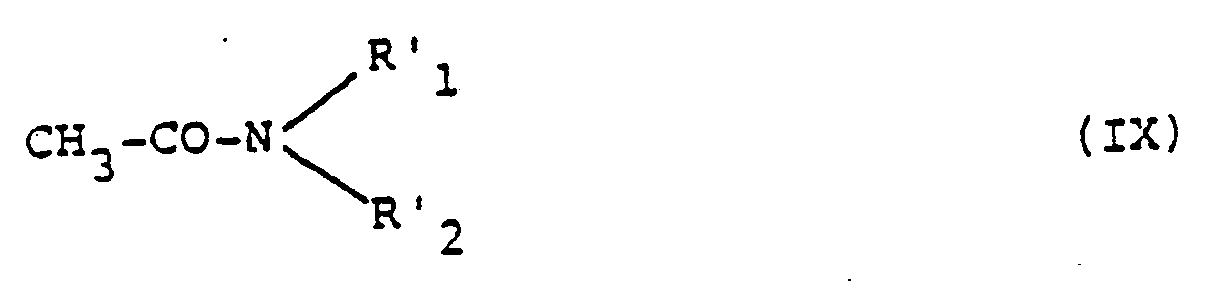
- the subject of the invention is a process for preparing the compounds of formulas (A) and (B '), as defined above, characterized in that a compound of formula (VI) is subjected: in which X retains its previous meaning, to the action of an acid of formula (VII): in which R 3 , R 4 , R 5 retaining their previous meanings or of a functional derivative of the acid of formula (VII), to obtain a compound of formula (A): in which X retains its previous meaning, which is subjected to the action of a compound of formula (IX): in which R ' 1 and R' 2 retain their previous meanings, to obtain the compound of formula (B '): in which R 1 ', R' 2 , R 3 , R 4 and R s retain their previous meanings.
- the compounds of formula (VI) used as starting materials for the process of the invention are generally known products, which can be prepared according to the processes indicated in French patent application No. 2,340,735 or in the patent French No. 2 157 874.
- 15.2 g of the desired crude product are thus obtained.
- 100 cc of methylene chloride are added thereto, triturated, wrung out the insoluble material, paste in 30 cc of methylene chloride, wrung out, washed with 10 cc of methylene chloride. 7.47 g of the desired product are obtained, melting at 223 ° C.
- Tablets corresponding to the following formula were prepared: (Details of excipient: lactose, talc, starch, magnesium stearate).
Landscapes
- Chemical & Material Sciences (AREA)
- Organic Chemistry (AREA)
- Health & Medical Sciences (AREA)
- Life Sciences & Earth Sciences (AREA)
- General Health & Medical Sciences (AREA)
- Veterinary Medicine (AREA)
- Public Health (AREA)
- Animal Behavior & Ethology (AREA)
- Chemical Kinetics & Catalysis (AREA)
- General Chemical & Material Sciences (AREA)
- Medicinal Chemistry (AREA)
- Nuclear Medicine, Radiotherapy & Molecular Imaging (AREA)
- Pain & Pain Management (AREA)
- Pharmacology & Pharmacy (AREA)
- Engineering & Computer Science (AREA)
- Bioinformatics & Cheminformatics (AREA)
- Biomedical Technology (AREA)
- Neurosurgery (AREA)
- Neurology (AREA)
- Rheumatology (AREA)
- Pharmaceuticals Containing Other Organic And Inorganic Compounds (AREA)
- Plural Heterocyclic Compounds (AREA)
- Organic Low-Molecular-Weight Compounds And Preparation Thereof (AREA)
- Quinoline Compounds (AREA)
- Heterocyclic Carbon Compounds Containing A Hetero Ring Having Nitrogen And Oxygen As The Only Ring Hetero Atoms (AREA)
- Thiazole And Isothizaole Compounds (AREA)
- Measuring Or Testing Involving Enzymes Or Micro-Organisms (AREA)
- Control Of Steam Boilers And Waste-Gas Boilers (AREA)
- Measurement Of Radiation (AREA)
Description
- La présente invention est une demande divisionnaire de la demande européenne publiée sous le numéro 0040573.
- La présente invention concerne de nouveaux produits utilisés notamment comme intermédiaires dans la préparation de dérivés de la 4 hydroxy 3 quinoléine carboxamide substitués en 2 et leur procédé de préparation. Ces produits correspondent aux produits (VIII) et (X) de la demande européenne publiée sous le numéro 0040573 qui sont les produits permettant de préparer les produits de formule (I) thérapeutiquement actifs, décrits dans ladite demande européenne.
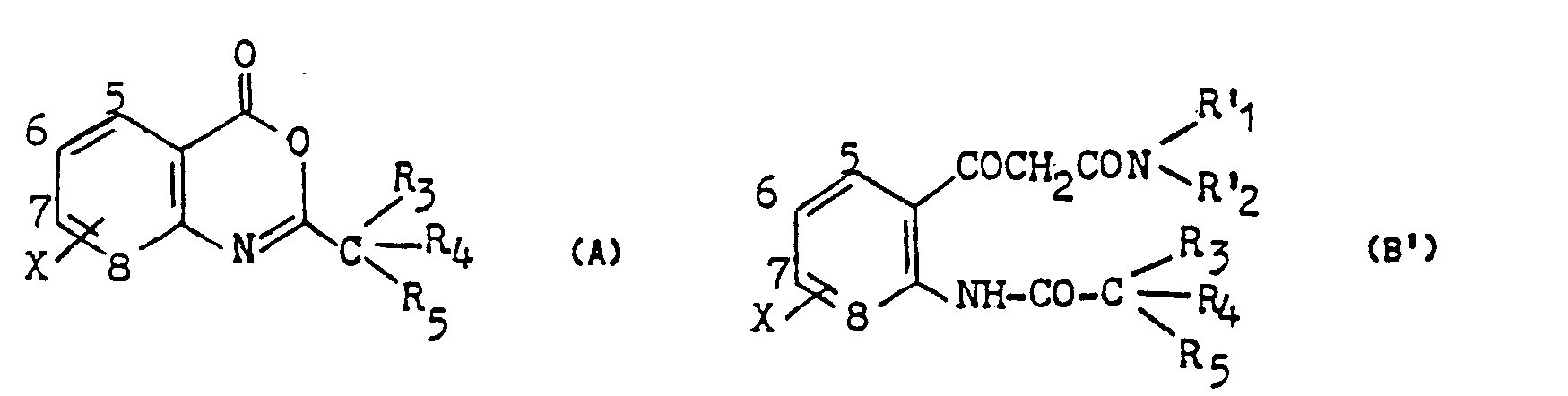
- L'invention a pour objet les composés de formule (A) et de formule (B')

- a) R3, R4 et Rs ne représentent pas en même temps chacun un atome de fluor.
- b) L'un ou les deux de R3 et R4 ne représentent pas un atome d'halogène quand X représente un atome d'hydrogène, un atome d'halogène, un radical alcoyle renfermant de 1 à 5 atomes de carbone ou un radical alcoxy renfermant de 1 à 4 atomes de carbone.
- c) X, R3 et R4 ne représentent pas en même temps un atome d'hydrogène quand Rs représente un atome de brome et les composés de formule (B'), dans laquelle R', représente un atome d'hydrogène ou un radical alcoyle renfermant de 1 à 4 atomes de carbone, R'2 représente un atome d'hydrogène ou un radical choisi parmi les radicaux thiazolyle 4-5 dihydrothiazolyle, pyridinyle, thiényle, benzothiazolyle, oxazolyle, isoxazolyle, imidazolyle, pyrimidyle ou tétrazolyle et phényle, éventuellement substitué par un ou plusieurs radicaux choisis dans le groupe constitué par a) les halogènes, b) les radicaux alcoyles renfermant de 1 à 4 atomes de carbone, non substitués ou substitués par un radical amino, alcoylamino ou dialcoylamino dont les radicaux alcoyles renferment de 1 à 3 atomes de carbone, c) le radical phényle, d) les radicaux alcoxy renfermant de 1 à 4 atomes de carbone, e) le radical hydroxy, f) le radical trifluorométhyle et g) le radical nitro, ou R', et R'2 forment ensemble l'un quelconque des cycles saturés ou insaturés mentionnés ci-dessus pour R'2, ledit cycle étant alors relié à l'atome d'azote par une double liaison.
- Lorsque R', représente un radical alcoyle, il s'agit de préférence du radical méthyle ou éthyle.
- Lorsque X représente un atome d'halogène, il s'agit de préférence d'un atome de chlore.
- Lorsque X représente un radical alcoyle, il s'agit de préférence du radical méthyle, éthyle, n-propyle, n-butyle, n-pentyle, isopropyle ou isobutyle.
- Lorsque X représente un radical alcoxy, il s'agit de préférence du radical méthoxy, éthoxy ou n-propoxy.
- Lorsque R'2 représente un cycle, il s'agit de préférence d'un cycle thiazolyle, phényle, pyridinyle, thiényle, benzothiazolyle, oxazolyle ou imidazolyle.
- Lorsque R'2 représente un cycle substitué, le ou les substituants sont de préférence choisis dans le groupe constitué par l'atome de chlore, le radical méthyle, le radical éthyle, le radical diméthylamino- méthyle, le radical phényle, le radical méthoxy, le radical éthoxy, le radical hydroxy, le radical trifluorométhyle et le radical nitro.
- Lorsque R3 représente un radical alcoyle, il s'agit de préférence du radical méthyle ou éthyle.
- Lorsque R3 représente un atome d'halogène, il s'agit de préférence d'un atome de fluor, de chlore ou de brome.
- R4 représente de préférence un atome de fluor, de chlore ou de brome.
- Rs représente de préférence un atome de chlore ou de brome.
- L'invention a notamment pour objet les composés tels que définis ci-dessus, répondant à la formule (B):

- L'invention a plus particulièrement pour objet les composés de formule (A) ou (B), tels que définis ci-dessus pour lesquels R3 représente un atome d'hydrogène, un radical alcoyle ou le même atome d'halogène que R5, R4 représente un atome d'hydrogène ou le même atome d'halogène que RS.
- L'invention a notamment pour objet les composés de formule (A) ou (B), tels que définis ci-dessus pour lesquels X représente un radical trifluorométhyle et les composés de formule (B) tels que définis ci-dessus pour lesquels R1 représente un atome d'hydrogène.
- L'invention a notamment pour objet les composés de formule (A) et (B) pour lesquels R3 et R4, identiques ou différents, représentent un atome de chlore, et plus particulièrement parmi ceux-ci, les composés pour lesquels le radical
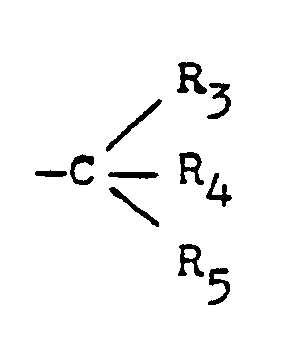
- Parmi les composés de l'invention, ou peut citer tout particulièrement les composés de formule (B) tels que définis ci-dessus pour lesquels R2 représente le radical thiazolyle.
- L'invention a pour objet un procédé de préparation des composés de formules (A) et (B'), telles que définies ci-dessus caractérisé en ce que l'on soumet un composé de formule (VI):


- Dans un mode de réalisation préférée du procédé de l'invention:
- - le dérivé fonctionnel de l'acide de formule (VII) est un halogénure ou un anhydride;
- - la réaction entre le composé de formule (A) et le composé de formule (B') a lieu en présence d'un organolithien ou d'un amidure de lithium, par exemple en présence de butyllithium ou de diisoproyl- amidure de lithium;
- - la cyclisation du composé de formule (B') est effectuée en présence d'un agent alcalin, tel qu'un hydrure ou un carbonate alcalin, ou une amine, par exemple en présence d'hydrure de sodium, de carbonate de sodium ou de potassium, de pipéridine, de 4-aminopyridine, de triéthylamine, de 1,5-diazabicyclo /4,30/ non-5-ène, de 1,4-diazabicyclo /2,2,2/ octane ou de 1,5-diazabicyclo /5,4,0/ undéc-5-ène.
- Les composés de formule (VI) utilisés comme produits de départ du procédé de l'invention sont des produits connus d'une façon générale, qui peuvent être préparés selon les procédés indiqués dans la demande de brevet français no 2 340 735 ou dans le brevet français no 2 157 874.
- Les exemples suivants illustrent l'invention sans toutefois la limiter.
- On chauffe progressivement sous agitation 17,44 g d'acide 2-amino 3-(trifluorométhyl) benzoïque préparé selon le procédé indiqué dans J. Med. Chem. 16 (2) 101, 6 (1973) et 34,63 g de chlorure de dichloro- acétyle. Aux alentours de 50°C, on observe une prise en masse, ainsi qu'un dégagement rapide et régulier d'HCI qui se poursuit pendant 1 heure. On observe alors vers 100°C une fluidification du milieu réactionnel, une intensification du dégagement d'HCI et une élévation de la température jusqu'à 127°C. On poursuit le chauffage jusqu'à cessation du dégagement d'HCI et l'on obtient une solution brune. On refroidit dans un bain d'eau glacée tout en agitant. On essore le précipité formé, empâte dans l'éther, puis dans le méthanol. On lave au méthanol. On obtient 23,82 g du produit recherché fondant à 179°C.
- On ajoute entre -3° et -1°C sous agitation et sous azote, 87,7 cm3 d'une solution de n-butyllithium dans l'hexane titrant 1,1 moles par litre, dans une solution renfermant 8,65 g de N-(2-thiazolyl) acétamide et 304 cm3 de tetrahydrofurane. On maintient encore 20 minutes sous agitation entre -3 et -1°C. On refroidit à -75°C, et l'on ajoute à cette température sous bonne agitation entre -73 et -75°C, 9,073 g de 2-dichlorométhyl 8-trifluorométhyl 4H-3,1-benzoxazin-4-one en solution dans 95,5 cc de tétrahydrofurane. On agite -75°C pendant 2 heures 30 la solution brune obtenue. On verse sur un mélange d'eau, de glace et d'HCI. Or décante et essore l'insoluble. On obtient 935 mg du produit recherché. F = 223°C. On extrait les phases aqueuses à l'acétate d'éthyle. On lave à l'eau, sèche et évapore à sec. On obtient ainsi 15,2 g du produit brut recherché. On y ajoute 100 cc de chlorure de méthylène, triture, essore l'insoluble, empâte dans 30 cc de chlorure de méthylène, essore, lave avec 10 cc de chlorure de méthylène. On obtient 7,47 g du produit recherché fondant à 223°C.
- En opérant comme au Stade A de l'exemple 12, à partir d'acide 2-amino 3-trifluorométhyl benzoïque et de chlorure de chloracétyle, on a obtenu le produit recherché fondant à 76 = 78°C.
- En opérant comme au Stade B de l'exemple 12, à partir du produit préparé au stade A du présent exemple et de N-(2-thiazolyl) acétamide, on obtient le produit recherché fondant à 192 = 194°C.
- En opérant comme au stade A de l'exemple 12, à partir du chlorure de 1-chloropropionyle et de l'acide 2-amino 3-trifluorométhyl benzoïque, on a obtenu le produit recherché. F = 112°C.
- En opérant comme au stade B de l'exemple 12, à partir du produit obtenu au stade A ci-dessus et de N-(2-thiazolyl) acétamide, on a obtenu le produit recherché. F = 215°C.
- En opérant comme au stade A de l'exemple 12, à partir d'acide 2-amino 3-trifluorométhyl benzoïque et de chlorure de dichloropropionyle, on a obtenu le produit recherché. F = 120°C.
- En opérant comme au stade B de l'exemple 12, à partir du produit obtenu au stade A ci-dessus et de N-(2-thiazolyl) acétamide, on a obtenu le produit recherché. F = 136-138°C.
- On opère comme au stade A de l'exemple 12, à partir d'acide 2-amino 3-trifluorométhyl benzoïque et d'anhydride de l'acide difluoroacétique et obtient le produit attendu. F = 82°C.
- On opère comme au stade B de l'exemple 12, à partir du produit obtenu au stade A ci-dessus et de N-(2-thiazolyl) acétamide, et obtient le produit attendu. F = 206°C.
- En opérant comme au stade B de l'exemple 12, à partir du produit préparé au stade A de l'exemple 12, et du N-(2-oxazolyl) acétamide, on obtient le produit recherché.
- En opérant comme au stade B de l'exemple 12, à partir du produit préparé au stade A de l'exemple 12 et du N-1-méthyl 2-imidazolyl) acétamide, on obtient le produit recherché.
- On a préparé des comprimés répondant à la formule suivante:

Claims (10)



Priority Applications (1)
| Application Number | Priority Date | Filing Date | Title |
|---|---|---|---|
| AT83201252T ATE54913T1 (de) | 1980-05-19 | 1981-05-19 | Industrielle verbindungen anwendbar als zwischenprodukte in der herstellung von in stellung 2 substituierten 4-hydroxy 3quinolincarboxamid-derivaten und die herstellung von diesen zwischenprodukten. |
Applications Claiming Priority (2)
| Application Number | Priority Date | Filing Date | Title |
|---|---|---|---|
| FR8011100A FR2482596A1 (fr) | 1980-05-19 | 1980-05-19 | Nouveaux derives de l'acide 4-hydroxy 3-quinoleine carboxylique substitues en 2, leur procede de preparation et leur application comme medicament |
| FR8011100 | 1980-05-19 |
Related Parent Applications (1)
| Application Number | Title | Priority Date | Filing Date |
|---|---|---|---|
| EP81400783.7 Division | 1981-05-19 |
Publications (3)
| Publication Number | Publication Date |
|---|---|
| EP0143123A2 EP0143123A2 (fr) | 1985-06-05 |
| EP0143123A3 EP0143123A3 (en) | 1986-09-03 |
| EP0143123B1 true EP0143123B1 (fr) | 1990-07-25 |
Family
ID=9242091
Family Applications (2)
| Application Number | Title | Priority Date | Filing Date |
|---|---|---|---|
| EP81400783A Expired EP0040573B1 (fr) | 1980-05-19 | 1981-05-19 | Dérivés de l'acide 4-hydroxy 3-quinoléine carboxylique substitués en 2, leur préparation, leur application comme médicament, les compositions les renfermant et les intermédiaires nouveaux obtenus |
| EP83201252A Expired - Lifetime EP0143123B1 (fr) | 1980-05-19 | 1981-05-19 | Produits industriels nouveaux utilisés notamment comme intermédiaires dans la préparation de nouveaux dérivés du 4-hydroxy 3-quinoléine carboxamide substitués en 2 et la préparation desdits intermédiaires |
Family Applications Before (1)
| Application Number | Title | Priority Date | Filing Date |
|---|---|---|---|
| EP81400783A Expired EP0040573B1 (fr) | 1980-05-19 | 1981-05-19 | Dérivés de l'acide 4-hydroxy 3-quinoléine carboxylique substitués en 2, leur préparation, leur application comme médicament, les compositions les renfermant et les intermédiaires nouveaux obtenus |
Country Status (17)
| Country | Link |
|---|---|
| US (2) | US4397856A (fr) |
| EP (2) | EP0040573B1 (fr) |
| JP (1) | JPS5731665A (fr) |
| AT (2) | ATE8783T1 (fr) |
| AU (1) | AU543580B2 (fr) |
| CA (1) | CA1184558A (fr) |
| DE (2) | DE3177205D1 (fr) |
| DK (1) | DK152212C (fr) |
| ES (1) | ES8203889A1 (fr) |
| FI (1) | FI77030C (fr) |
| FR (1) | FR2482596A1 (fr) |
| HU (1) | HU184853B (fr) |
| IE (1) | IE56506B1 (fr) |
| OA (1) | OA06814A (fr) |
| PH (2) | PH17403A (fr) |
| PT (1) | PT73050B (fr) |
| ZA (1) | ZA813293B (fr) |
Families Citing this family (16)
| Publication number | Priority date | Publication date | Assignee | Title |
|---|---|---|---|---|
| IE52670B1 (en) * | 1981-03-03 | 1988-01-20 | Leo Ab | Heterocyclic carboxamides,compositions containing such compounds,and processes for their preparation |
| HU190796B (en) * | 1981-06-12 | 1986-11-28 | Roussel Uclaf,Fr | Process for producing n-dihydrothiazolyl-3-quinoline-carboxamide derivatives |
| FR2530633A1 (fr) * | 1982-06-03 | 1984-01-27 | Roussel Uclaf | Nouveaux derives de l'acide 4-hydroxy 3-quinoleine carboxylique substitues en 2, leur preparation, leur application comme medicament, et les compositions les renfermant |
| FR2532314B1 (fr) * | 1982-08-25 | 1985-07-19 | Roussel Uclaf | Nouveau procede de preparation de derives de l'acide 3-quinoleine carboxylique, nouveaux derives halogenes de l'acide 3-quinoleine carboxylique, leur application comme medicaments, les compositions pharmaceutiques les renfermant et les intermediaires nouveaux obtenus |
| FR2553769B1 (fr) * | 1983-10-20 | 1986-03-14 | Roussel Uclaf | Nouveau procede de preparation de derives de l'acide 4-hydroxy 3-quinoleine carboxylique substitues en 2 |
| US4731480A (en) * | 1985-07-29 | 1988-03-15 | Ortho Pharmaceutical Corporation | Process for preparing 2-acyl-3,4-dialkoxyanilines |
| US4844732A (en) * | 1985-10-24 | 1989-07-04 | Daicel Chemical Industries Ltd. | Pyridine-3-carboxamide derivatives |
| IE68593B1 (en) * | 1989-12-06 | 1996-06-26 | Sanofi Sa | Heterocyclic substituted acylaminothiazoles their preparation and pharmaceutical compositions containing them |
| DE4410539A1 (de) * | 1994-03-26 | 1995-09-28 | Sandoz Ag | Verwendung von 4 H-3,1-Benzoxazin-4-on-Verbindungen zur Verbesserung der Lichtechtheit von Textilmaterialien |
| EP1042295B1 (fr) * | 1997-12-22 | 2005-09-07 | Pharmacia & Upjohn Company LLC | 4-hydroxyquinoline-3-carboxamides et hydrazides utilises comme agents antiviraux |
| EP1820504A1 (fr) * | 2004-11-15 | 2007-08-22 | Taisho Pharmaceutical Co., Ltd | Composé imine |
| KR20130100300A (ko) | 2010-08-27 | 2013-09-10 | 그뤼넨탈 게엠베하 | Kcnq2/3 조절제로서의 치환된 2-옥시-퀴놀린-3-카복스아미드 |
| MX2013000748A (es) | 2010-08-27 | 2013-03-05 | Gruenenthal Gmbh | 2-amino-quinolina-3-carboxamidas sustituidas como moduladores de kcnq2/3. |
| PL2609086T3 (pl) | 2010-08-27 | 2015-07-31 | Gruenenthal Gmbh | Podstawione 2-okso- i 2-tiookso-dihydrochinolino-3-karboksyamidy jako modulatory KCNQ2/3 |
| CA2804824A1 (fr) | 2010-08-27 | 2012-03-01 | Gruenenthal Gmbh | Quinoline-3-carboxamides substitues en tant que modulateurs de kcnq2/3 |
| BR112013005056A2 (pt) | 2010-09-01 | 2016-05-31 | Gruenenthal Gmbh | 1-oxo-di-hidroisoquinolina-3-carboxamidas substituídas como moduladores kcnq2/3 |
Family Cites Families (11)
| Publication number | Priority date | Publication date | Assignee | Title |
|---|---|---|---|---|
| GB874980A (en) * | 1958-12-17 | 1961-08-16 | Imp Cmemical Ind Ltd | Quinoline derivatives |
| US3357977A (en) * | 1964-01-06 | 1967-12-12 | Minnesota Mining & Mfg | Novel anthranyl intermediates |
| HU173974B (hu) * | 1971-08-30 | 1979-10-28 | Chinoin Gyogyszer Es Vegyeszet | Sposob poluchenija proizvodnykh 3,1-benzoksazin-4-ona |
| GB1410178A (en) | 1972-03-13 | 1975-10-15 | Pfizer | Substituted quinazolinones as herbicides |
| CA1034124A (fr) * | 1973-05-11 | 1978-07-04 | Ciba-Geigy Ag | Procede de fabrication de nouvelles quinoleines |
| FR2281761A1 (fr) * | 1974-08-13 | 1976-03-12 | Roussel Uclaf | Nouveaux derives de l'acide 3-quinoleine carboxylique, leur procede de preparation et leur application comme medicament |
| US3989698A (en) * | 1975-02-20 | 1976-11-02 | The Sherwin-Williams Company | Process for preparing benzoxazines |
| FR2340735A1 (fr) * | 1976-02-11 | 1977-09-09 | Roussel Uclaf | Nouveaux derives de l'acide 3-quinoleine carboxylique, leur procede de preparation et leur application comme medicament |
| FR2377400A2 (fr) * | 1977-01-18 | 1978-08-11 | Roussel Uclaf | Nouveaux derives de l'acide 3-quinoleine carboxylique, leur procede de preparation et leur application comme medicament |
| FR2443467A1 (fr) * | 1978-12-08 | 1980-07-04 | Roussel Uclaf | Nouveaux derives de l'acide 3-quinoleine carboxylique, leur procede de preparation et leur application comme medicament |
| US4229831A (en) * | 1978-12-22 | 1980-10-21 | Burroughs Corporation | Drift compensated fiber optic-receiver |
-
1980
- 1980-05-19 FR FR8011100A patent/FR2482596A1/fr active Granted
-
1981
- 1981-05-12 US US06/262,952 patent/US4397856A/en not_active Expired - Lifetime
- 1981-05-13 PH PH25627A patent/PH17403A/en unknown
- 1981-05-15 CA CA000377751A patent/CA1184558A/fr not_active Expired
- 1981-05-18 AU AU70689/81A patent/AU543580B2/en not_active Ceased
- 1981-05-18 PT PT73050A patent/PT73050B/fr not_active IP Right Cessation
- 1981-05-18 IE IE1112/81A patent/IE56506B1/en not_active IP Right Cessation
- 1981-05-18 ZA ZA00813293A patent/ZA813293B/xx unknown
- 1981-05-18 HU HU811403A patent/HU184853B/hu not_active IP Right Cessation
- 1981-05-18 ES ES502264A patent/ES8203889A1/es not_active Expired
- 1981-05-18 DK DK217281A patent/DK152212C/da not_active IP Right Cessation
- 1981-05-18 FI FI811529A patent/FI77030C/fi not_active IP Right Cessation
- 1981-05-19 DE DE8383201252T patent/DE3177205D1/de not_active Expired - Fee Related
- 1981-05-19 DE DE8181400783T patent/DE3165209D1/de not_active Expired
- 1981-05-19 EP EP81400783A patent/EP0040573B1/fr not_active Expired
- 1981-05-19 AT AT81400783T patent/ATE8783T1/de not_active IP Right Cessation
- 1981-05-19 JP JP7434181A patent/JPS5731665A/ja active Granted
- 1981-05-19 EP EP83201252A patent/EP0143123B1/fr not_active Expired - Lifetime
- 1981-05-19 OA OA57407A patent/OA06814A/fr unknown
- 1981-05-19 AT AT83201252T patent/ATE54913T1/de not_active IP Right Cessation
-
1983
- 1983-05-17 US US06/495,475 patent/US4518775A/en not_active Expired - Lifetime
- 1983-09-02 PH PH29488A patent/PH21164A/en unknown
Also Published As
| Publication number | Publication date |
|---|---|
| ZA813293B (en) | 1982-05-26 |
| JPS6340430B2 (fr) | 1988-08-11 |
| PT73050B (fr) | 1983-02-08 |
| IE56506B1 (en) | 1991-08-28 |
| OA06814A (fr) | 1982-12-31 |
| ATE8783T1 (de) | 1984-08-15 |
| AU543580B2 (en) | 1985-04-26 |
| CA1184558A (fr) | 1985-03-26 |
| DE3165209D1 (en) | 1984-09-06 |
| JPS5731665A (en) | 1982-02-20 |
| FI77030C (fi) | 1989-01-10 |
| EP0040573A2 (fr) | 1981-11-25 |
| DK152212B (da) | 1988-02-08 |
| ES502264A0 (es) | 1982-04-01 |
| AU7068981A (en) | 1981-11-26 |
| EP0143123A2 (fr) | 1985-06-05 |
| FR2482596B1 (fr) | 1983-04-29 |
| PT73050A (fr) | 1981-06-01 |
| US4397856A (en) | 1983-08-09 |
| FI77030B (fi) | 1988-09-30 |
| DK152212C (da) | 1988-08-08 |
| PH17403A (en) | 1984-08-08 |
| FI811529L (fi) | 1981-11-20 |
| IE811112L (en) | 1981-11-19 |
| US4518775A (en) | 1985-05-21 |
| ATE54913T1 (de) | 1990-08-15 |
| EP0143123A3 (en) | 1986-09-03 |
| EP0040573A3 (en) | 1982-01-13 |
| PH21164A (en) | 1987-08-05 |
| DE3177205D1 (de) | 1990-08-30 |
| ES8203889A1 (es) | 1982-04-01 |
| EP0040573B1 (fr) | 1984-08-01 |
| HU184853B (en) | 1984-10-29 |
| DK217281A (da) | 1981-11-20 |
| FR2482596A1 (fr) | 1981-11-20 |
Similar Documents
| Publication | Publication Date | Title |
|---|---|---|
| CH620437A5 (fr) | ||
| CA1137985A (fr) | Procede de preparation de nouveaux derives de l'acide 3-quinoleine carboxylique, leur procede de preparation, leur application a titre de medicaments et les compositions pharmaceutiques les renfermant | |
| CA2069261A1 (fr) | Derives de la pyrimidine, leur procede de preparation, les nouveaux intermediaires obtenus, leur application a titre de medicaments et les compositions pharmaceutiques les renfermant | |
| MC1358A1 (fr) | Dispositif generateur de vapeur pour fond de sondage | |
| EP0040573B1 (fr) | Dérivés de l'acide 4-hydroxy 3-quinoléine carboxylique substitués en 2, leur préparation, leur application comme médicament, les compositions les renfermant et les intermédiaires nouveaux obtenus | |
| CA1212380A (fr) | Procede de preparation de nouveaux derives de thieno (2,3-b) pyrrole | |
| EP0611766A1 (fr) | Dérivés de 2-amido-thiazoles polysubstitués, procédé de préparation, composition pharmaceutique et utilisation de ces dérivés pour la préparation d'un médicament | |
| CA1097647A (fr) | Procede de preparation de nouvelles imidazoquinoleines et de leurs sels | |
| FR2532939A1 (fr) | Nouveaux derives de l'acide 4-hydroxy 3-quinoleine carboxylique substitues en 2, leur preparation, leur application comme medicament, les compositions les renfermant et les nouveaux intermediaires obtenus | |
| CA1204116A (fr) | Procede de preparation de nouveaux derives de l'acide 4-hydroxy 3-quinoleine carboxylique substitues en 2 | |
| EP0169755B1 (fr) | Nouveaux dérivés de l'acide 4-hydroxy 3-quinoléine carboxylique subsititués en 2 par une fonction aminée, leur préparation, leur application comme médicaments, les compositions les renfermant et les intermédiaires nouveaux obtenus | |
| EP0573318A1 (fr) | Nouveaux dérivés de phényle carboxamide isoxazoles et leurs sels, leur procédé de préparation et les nouveaux intermédiaires de ce procédé, leur application comme médicaments et les compositions pharmaceutiques les renfermant | |
| CH630382A5 (fr) | Pyrroloquinoxalines et leurs sels. | |
| CH675245A5 (fr) | ||
| EP0214004B1 (fr) | Dérivés de l'acide 4-OH quinoléine carboxylique substitué en 2 par un groupement dihydroxylé éventuellement éthérifié ou estérifié, procédé et inter-médiaires de préparation, leur application comme médicaments et les compositions les renfermant | |
| MC1356A1 (fr) | Derives de quinazoline | |
| EP0632017B1 (fr) | Nouveaux N-phényl 2-cyano 3-hydroxy propénamides, leurs formes tautomères et leurs sels, leur procédé de préparation, l'application à titre de médicaments de ces nouveaux produits et les compositions les renfermant | |
| BE779775A (fr) | Derives de l'uree, procede pour les preparer et leurs applications | |
| CH624118A5 (en) | Processes for the preparation of new imidazobenzoxazines | |
| FR2636327A1 (fr) | Derives de quinoleine, leurs procedes de preparation et les medicaments les contenant | |
| MC1135A1 (fr) | Derives de thiazine | |
| EP0141713B1 (fr) | Procédé de préparation des 3-quinoléine carboxamide 2- substitués | |
| CA2022460A1 (fr) | Derives benzothiaziniques, leur preparation et leurs applications comme medicaments ou comme intermediaires de synthese de medicaments | |
| EP0538100A1 (fr) | Nouveaux dérivés de l'acide fluoro quinoléine carboxylique-3 et leur préparation | |
| BE858864A (fr) | Nouveaux esters d'acides phenyl- et pyridine-3-carboxylique et procede permettant leur preparation |
Legal Events
| Date | Code | Title | Description |
|---|---|---|---|
| PUAI | Public reference made under article 153(3) epc to a published international application that has entered the european phase |
Free format text: ORIGINAL CODE: 0009012 |
|
| AC | Divisional application: reference to earlier application |
Ref document number: 40573 Country of ref document: EP |
|
| AK | Designated contracting states |
Designated state(s): AT BE CH DE FR GB IT LI LU NL SE |
|
| RTI1 | Title (correction) | ||
| PUAL | Search report despatched |
Free format text: ORIGINAL CODE: 0009013 |
|
| AK | Designated contracting states |
Kind code of ref document: A3 Designated state(s): AT BE CH DE FR GB IT LI LU NL SE |
|
| 17P | Request for examination filed |
Effective date: 19870205 |
|
| 17Q | First examination report despatched |
Effective date: 19890228 |
|
| GRAA | (expected) grant |
Free format text: ORIGINAL CODE: 0009210 |
|
| AC | Divisional application: reference to earlier application |
Ref document number: 40573 Country of ref document: EP |
|
| AK | Designated contracting states |
Kind code of ref document: B1 Designated state(s): AT BE CH DE FR GB IT LI LU NL SE |
|
| REF | Corresponds to: |
Ref document number: 54913 Country of ref document: AT Date of ref document: 19900815 Kind code of ref document: T |
|
| ITF | It: translation for a ep patent filed | ||
| REF | Corresponds to: |
Ref document number: 3177205 Country of ref document: DE Date of ref document: 19900830 |
|
| GBT | Gb: translation of ep patent filed (gb section 77(6)(a)/1977) | ||
| PLBE | No opposition filed within time limit |
Free format text: ORIGINAL CODE: 0009261 |
|
| STAA | Information on the status of an ep patent application or granted ep patent |
Free format text: STATUS: NO OPPOSITION FILED WITHIN TIME LIMIT |
|
| 26N | No opposition filed | ||
| ITTA | It: last paid annual fee | ||
| EPTA | Lu: last paid annual fee | ||
| EAL | Se: european patent in force in sweden |
Ref document number: 83201252.0 |
|
| REG | Reference to a national code |
Ref country code: FR Ref legal event code: CD Ref country code: FR Ref legal event code: CA |
|
| REG | Reference to a national code |
Ref country code: FR Ref legal event code: TP |
|
| PGFP | Annual fee paid to national office [announced via postgrant information from national office to epo] |
Ref country code: SE Payment date: 19980427 Year of fee payment: 18 |
|
| PGFP | Annual fee paid to national office [announced via postgrant information from national office to epo] |
Ref country code: LU Payment date: 19980429 Year of fee payment: 18 |
|
| PGFP | Annual fee paid to national office [announced via postgrant information from national office to epo] |
Ref country code: FR Payment date: 19980506 Year of fee payment: 18 |
|
| PGFP | Annual fee paid to national office [announced via postgrant information from national office to epo] |
Ref country code: CH Payment date: 19980511 Year of fee payment: 18 |
|
| PGFP | Annual fee paid to national office [announced via postgrant information from national office to epo] |
Ref country code: GB Payment date: 19980513 Year of fee payment: 18 |
|
| PGFP | Annual fee paid to national office [announced via postgrant information from national office to epo] |
Ref country code: BE Payment date: 19980518 Year of fee payment: 18 |
|
| PGFP | Annual fee paid to national office [announced via postgrant information from national office to epo] |
Ref country code: AT Payment date: 19980529 Year of fee payment: 18 |
|
| PGFP | Annual fee paid to national office [announced via postgrant information from national office to epo] |
Ref country code: NL Payment date: 19980531 Year of fee payment: 18 |
|
| PGFP | Annual fee paid to national office [announced via postgrant information from national office to epo] |
Ref country code: DE Payment date: 19980706 Year of fee payment: 18 |
|
| PG25 | Lapsed in a contracting state [announced via postgrant information from national office to epo] |
Ref country code: LU Free format text: LAPSE BECAUSE OF NON-PAYMENT OF DUE FEES Effective date: 19990519 Ref country code: GB Free format text: LAPSE BECAUSE OF NON-PAYMENT OF DUE FEES Effective date: 19990519 Ref country code: AT Free format text: LAPSE BECAUSE OF NON-PAYMENT OF DUE FEES Effective date: 19990519 |
|
| PG25 | Lapsed in a contracting state [announced via postgrant information from national office to epo] |
Ref country code: SE Free format text: LAPSE BECAUSE OF NON-PAYMENT OF DUE FEES Effective date: 19990520 |
|
| PG25 | Lapsed in a contracting state [announced via postgrant information from national office to epo] |
Ref country code: LI Free format text: LAPSE BECAUSE OF NON-PAYMENT OF DUE FEES Effective date: 19990531 Ref country code: CH Free format text: LAPSE BECAUSE OF NON-PAYMENT OF DUE FEES Effective date: 19990531 Ref country code: BE Free format text: LAPSE BECAUSE OF NON-PAYMENT OF DUE FEES Effective date: 19990531 |
|
| BERE | Be: lapsed |
Owner name: ROUSSEL UCLAF Effective date: 19990531 |
|
| PG25 | Lapsed in a contracting state [announced via postgrant information from national office to epo] |
Ref country code: NL Free format text: LAPSE BECAUSE OF NON-PAYMENT OF DUE FEES Effective date: 19991201 |
|
| REG | Reference to a national code |
Ref country code: CH Ref legal event code: PL |
|
| GBPC | Gb: european patent ceased through non-payment of renewal fee |
Effective date: 19990519 |
|
| EUG | Se: european patent has lapsed |
Ref document number: 83201252.0 |
|
| PG25 | Lapsed in a contracting state [announced via postgrant information from national office to epo] |
Ref country code: FR Free format text: LAPSE BECAUSE OF NON-PAYMENT OF DUE FEES Effective date: 20000131 |
|
| NLV4 | Nl: lapsed or anulled due to non-payment of the annual fee |
Effective date: 19991201 |
|
| PG25 | Lapsed in a contracting state [announced via postgrant information from national office to epo] |
Ref country code: DE Free format text: LAPSE BECAUSE OF NON-PAYMENT OF DUE FEES Effective date: 20000301 |
|
| REG | Reference to a national code |
Ref country code: FR Ref legal event code: ST |