EP0152180A2 - Alliages polymères à base d'alcool polyvinylique - Google Patents
Alliages polymères à base d'alcool polyvinylique Download PDFInfo
- Publication number
- EP0152180A2 EP0152180A2 EP85300285A EP85300285A EP0152180A2 EP 0152180 A2 EP0152180 A2 EP 0152180A2 EP 85300285 A EP85300285 A EP 85300285A EP 85300285 A EP85300285 A EP 85300285A EP 0152180 A2 EP0152180 A2 EP 0152180A2
- Authority
- EP
- European Patent Office
- Prior art keywords
- polymer
- alloy according
- polyvinyl alcohol
- ethylene
- polymer alloy
- Prior art date
- Legal status (The legal status is an assumption and is not a legal conclusion. Google has not performed a legal analysis and makes no representation as to the accuracy of the status listed.)
- Granted
Links
- 229920002451 polyvinyl alcohol Polymers 0.000 title claims abstract description 97
- 239000000956 alloy Substances 0.000 title claims abstract description 63
- 229910045601 alloy Inorganic materials 0.000 title claims abstract description 62
- 239000004372 Polyvinyl alcohol Substances 0.000 title claims description 77
- 229920000642 polymer Polymers 0.000 claims abstract description 39
- 229920001577 copolymer Polymers 0.000 claims abstract description 26
- 229920000098 polyolefin Polymers 0.000 claims abstract description 23
- 238000002156 mixing Methods 0.000 claims abstract description 21
- 125000000524 functional group Chemical group 0.000 claims abstract description 19
- 239000000203 mixture Substances 0.000 claims abstract description 19
- 229920005989 resin Polymers 0.000 claims abstract description 16
- 239000011347 resin Substances 0.000 claims abstract description 16
- 125000002887 hydroxy group Chemical group [H]O* 0.000 claims abstract description 11
- 150000001336 alkenes Chemical class 0.000 claims abstract description 8
- 230000007062 hydrolysis Effects 0.000 claims abstract description 7
- 238000006460 hydrolysis reaction Methods 0.000 claims abstract description 7
- JRZJOMJEPLMPRA-UHFFFAOYSA-N olefin Natural products CCCCCCCC=C JRZJOMJEPLMPRA-UHFFFAOYSA-N 0.000 claims abstract description 6
- 229920001002 functional polymer Polymers 0.000 claims description 22
- 229920001903 high density polyethylene Polymers 0.000 claims description 13
- 239000004700 high-density polyethylene Substances 0.000 claims description 13
- -1 polyethylene Polymers 0.000 claims description 13
- 230000004888 barrier function Effects 0.000 claims description 12
- 229920001519 homopolymer Polymers 0.000 claims description 11
- FPYJFEHAWHCUMM-UHFFFAOYSA-N maleic anhydride Chemical compound O=C1OC(=O)C=C1 FPYJFEHAWHCUMM-UHFFFAOYSA-N 0.000 claims description 11
- 238000001125 extrusion Methods 0.000 claims description 10
- 229920000092 linear low density polyethylene Polymers 0.000 claims description 10
- 239000004707 linear low-density polyethylene Substances 0.000 claims description 10
- 239000004743 Polypropylene Substances 0.000 claims description 7
- 229920001155 polypropylene Polymers 0.000 claims description 7
- 150000002148 esters Chemical class 0.000 claims description 6
- 239000005038 ethylene vinyl acetate Substances 0.000 claims description 6
- 229920001200 poly(ethylene-vinyl acetate) Polymers 0.000 claims description 6
- 150000003839 salts Chemical class 0.000 claims description 6
- 239000004698 Polyethylene Substances 0.000 claims description 5
- 239000002253 acid Substances 0.000 claims description 5
- 238000006243 chemical reaction Methods 0.000 claims description 5
- 229910052751 metal Inorganic materials 0.000 claims description 5
- 239000002184 metal Substances 0.000 claims description 5
- VZCYOOQTPOCHFL-UHFFFAOYSA-N trans-butenedioic acid Natural products OC(=O)C=CC(O)=O VZCYOOQTPOCHFL-UHFFFAOYSA-N 0.000 claims description 5
- 238000000576 coating method Methods 0.000 claims description 4
- KNDQHSIWLOJIGP-UHFFFAOYSA-N 826-62-0 Chemical compound C1C2C3C(=O)OC(=O)C3C1C=C2 KNDQHSIWLOJIGP-UHFFFAOYSA-N 0.000 claims description 3
- 150000001244 carboxylic acid anhydrides Chemical group 0.000 claims description 3
- 239000011248 coating agent Substances 0.000 claims description 3
- 229920006242 ethylene acrylic acid copolymer Polymers 0.000 claims description 3
- 238000006116 polymerization reaction Methods 0.000 claims description 3
- AYKYXWQEBUNJCN-UHFFFAOYSA-N 3-methylfuran-2,5-dione Chemical compound CC1=CC(=O)OC1=O AYKYXWQEBUNJCN-UHFFFAOYSA-N 0.000 claims description 2
- OFNISBHGPNMTMS-UHFFFAOYSA-N 3-methylideneoxolane-2,5-dione Chemical compound C=C1CC(=O)OC1=O OFNISBHGPNMTMS-UHFFFAOYSA-N 0.000 claims description 2
- 229920002126 Acrylic acid copolymer Polymers 0.000 claims description 2
- OFOBLEOULBTSOW-UHFFFAOYSA-N Propanedioic acid Natural products OC(=O)CC(O)=O OFOBLEOULBTSOW-UHFFFAOYSA-N 0.000 claims description 2
- 238000000071 blow moulding Methods 0.000 claims description 2
- 238000000748 compression moulding Methods 0.000 claims description 2
- 238000007765 extrusion coating Methods 0.000 claims description 2
- 238000001746 injection moulding Methods 0.000 claims description 2
- VZCYOOQTPOCHFL-UPHRSURJSA-N maleic acid Chemical compound OC(=O)\C=C/C(O)=O VZCYOOQTPOCHFL-UPHRSURJSA-N 0.000 claims description 2
- 239000011976 maleic acid Substances 0.000 claims description 2
- 229920003145 methacrylic acid copolymer Polymers 0.000 claims description 2
- 229920000573 polyethylene Polymers 0.000 claims description 2
- 238000001175 rotational moulding Methods 0.000 claims description 2
- 125000002843 carboxylic acid group Chemical group 0.000 claims 3
- JAHNSTQSQJOJLO-UHFFFAOYSA-N 2-(3-fluorophenyl)-1h-imidazole Chemical compound FC1=CC=CC(C=2NC=CN=2)=C1 JAHNSTQSQJOJLO-UHFFFAOYSA-N 0.000 claims 1
- NIDNOXCRFUCAKQ-UHFFFAOYSA-N bicyclo[2.2.1]hept-5-ene-2,3-dicarboxylic acid Chemical compound C1C2C=CC1C(C(=O)O)C2C(O)=O NIDNOXCRFUCAKQ-UHFFFAOYSA-N 0.000 claims 1
- HNEGQIOMVPPMNR-IHWYPQMZSA-N citraconic acid Chemical compound OC(=O)C(/C)=C\C(O)=O HNEGQIOMVPPMNR-IHWYPQMZSA-N 0.000 claims 1
- 229940018557 citraconic acid Drugs 0.000 claims 1
- 229940117841 methacrylic acid copolymer Drugs 0.000 claims 1
- LVHBHZANLOWSRM-UHFFFAOYSA-N methylenebutanedioic acid Natural products OC(=O)CC(=C)C(O)=O LVHBHZANLOWSRM-UHFFFAOYSA-N 0.000 claims 1
- 235000019422 polyvinyl alcohol Nutrition 0.000 description 77
- 229920000578 graft copolymer Polymers 0.000 description 22
- 239000007795 chemical reaction product Substances 0.000 description 14
- 150000008064 anhydrides Chemical class 0.000 description 11
- 238000005033 Fourier transform infrared spectroscopy Methods 0.000 description 10
- 239000007789 gas Substances 0.000 description 9
- 238000000926 separation method Methods 0.000 description 9
- VGGSQFUCUMXWEO-UHFFFAOYSA-N Ethene Chemical group C=C VGGSQFUCUMXWEO-UHFFFAOYSA-N 0.000 description 8
- 239000005977 Ethylene Substances 0.000 description 8
- QVGXLLKOCUKJST-UHFFFAOYSA-N atomic oxygen Chemical compound [O] QVGXLLKOCUKJST-UHFFFAOYSA-N 0.000 description 8
- HQQADJVZYDDRJT-UHFFFAOYSA-N ethene;prop-1-ene Chemical group C=C.CC=C HQQADJVZYDDRJT-UHFFFAOYSA-N 0.000 description 8
- 239000000463 material Substances 0.000 description 8
- 239000001301 oxygen Substances 0.000 description 8
- 229910052760 oxygen Inorganic materials 0.000 description 8
- 230000035699 permeability Effects 0.000 description 7
- 150000001732 carboxylic acid derivatives Chemical class 0.000 description 5
- 238000000354 decomposition reaction Methods 0.000 description 5
- 229920006226 ethylene-acrylic acid Polymers 0.000 description 5
- 238000002844 melting Methods 0.000 description 5
- 230000008018 melting Effects 0.000 description 5
- XLYOFNOQVPJJNP-UHFFFAOYSA-N water Substances O XLYOFNOQVPJJNP-UHFFFAOYSA-N 0.000 description 5
- PZWQOGNTADJZGH-SNAWJCMRSA-N (2e)-2-methylpenta-2,4-dienoic acid Chemical compound OC(=O)C(/C)=C/C=C PZWQOGNTADJZGH-SNAWJCMRSA-N 0.000 description 4
- 239000007864 aqueous solution Substances 0.000 description 4
- 229920000554 ionomer Polymers 0.000 description 4
- 229920001684 low density polyethylene Polymers 0.000 description 4
- 239000004702 low-density polyethylene Substances 0.000 description 4
- 239000000155 melt Substances 0.000 description 4
- 238000000034 method Methods 0.000 description 4
- QTBSBXVTEAMEQO-UHFFFAOYSA-M Acetate Chemical compound CC([O-])=O QTBSBXVTEAMEQO-UHFFFAOYSA-M 0.000 description 3
- 229920000181 Ethylene propylene rubber Polymers 0.000 description 3
- 229920000219 Ethylene vinyl alcohol Polymers 0.000 description 3
- 238000001157 Fourier transform infrared spectrum Methods 0.000 description 3
- XTXRWKRVRITETP-UHFFFAOYSA-N Vinyl acetate Chemical compound CC(=O)OC=C XTXRWKRVRITETP-UHFFFAOYSA-N 0.000 description 3
- 229920001038 ethylene copolymer Polymers 0.000 description 3
- 239000004715 ethylene vinyl alcohol Substances 0.000 description 3
- 150000002430 hydrocarbons Chemical group 0.000 description 3
- 238000005259 measurement Methods 0.000 description 3
- 239000005020 polyethylene terephthalate Substances 0.000 description 3
- 229920000139 polyethylene terephthalate Polymers 0.000 description 3
- 239000000047 product Substances 0.000 description 3
- VXNZUUAINFGPBY-UHFFFAOYSA-N 1-Butene Chemical compound CCC=C VXNZUUAINFGPBY-UHFFFAOYSA-N 0.000 description 2
- 229920002799 BoPET Polymers 0.000 description 2
- VZCYOOQTPOCHFL-OWOJBTEDSA-N Fumaric acid Chemical compound OC(=O)\C=C\C(O)=O VZCYOOQTPOCHFL-OWOJBTEDSA-N 0.000 description 2
- 239000005041 Mylar™ Substances 0.000 description 2
- 229920002292 Nylon 6 Polymers 0.000 description 2
- BGYHLZZASRKEJE-UHFFFAOYSA-N [3-[3-(3,5-ditert-butyl-4-hydroxyphenyl)propanoyloxy]-2,2-bis[3-(3,5-ditert-butyl-4-hydroxyphenyl)propanoyloxymethyl]propyl] 3-(3,5-ditert-butyl-4-hydroxyphenyl)propanoate Chemical compound CC(C)(C)C1=C(O)C(C(C)(C)C)=CC(CCC(=O)OCC(COC(=O)CCC=2C=C(C(O)=C(C=2)C(C)(C)C)C(C)(C)C)(COC(=O)CCC=2C=C(C(O)=C(C=2)C(C)(C)C)C(C)(C)C)COC(=O)CCC=2C=C(C(O)=C(C=2)C(C)(C)C)C(C)(C)C)=C1 BGYHLZZASRKEJE-UHFFFAOYSA-N 0.000 description 2
- CJZGTCYPCWQAJB-UHFFFAOYSA-L calcium stearate Chemical compound [Ca+2].CCCCCCCCCCCCCCCCCC([O-])=O.CCCCCCCCCCCCCCCCCC([O-])=O CJZGTCYPCWQAJB-UHFFFAOYSA-L 0.000 description 2
- 235000013539 calcium stearate Nutrition 0.000 description 2
- 239000008116 calcium stearate Substances 0.000 description 2
- 150000001735 carboxylic acids Chemical class 0.000 description 2
- 150000001875 compounds Chemical class 0.000 description 2
- 239000000470 constituent Substances 0.000 description 2
- 238000004132 cross linking Methods 0.000 description 2
- 229920001971 elastomer Polymers 0.000 description 2
- 239000000806 elastomer Substances 0.000 description 2
- RZXDTJIXPSCHCI-UHFFFAOYSA-N hexa-1,5-diene-2,5-diol Chemical compound OC(=C)CCC(O)=C RZXDTJIXPSCHCI-UHFFFAOYSA-N 0.000 description 2
- 238000011065 in-situ storage Methods 0.000 description 2
- 238000004519 manufacturing process Methods 0.000 description 2
- 238000010128 melt processing Methods 0.000 description 2
- CSJDCSCTVDEHRN-UHFFFAOYSA-N methane;molecular oxygen Chemical compound C.O=O CSJDCSCTVDEHRN-UHFFFAOYSA-N 0.000 description 2
- 239000000178 monomer Substances 0.000 description 2
- 239000006069 physical mixture Substances 0.000 description 2
- 230000003595 spectral effect Effects 0.000 description 2
- 238000001228 spectrum Methods 0.000 description 2
- LIKMAJRDDDTEIG-UHFFFAOYSA-N 1-hexene Chemical compound CCCCC=C LIKMAJRDDDTEIG-UHFFFAOYSA-N 0.000 description 1
- SMZOUWXMTYCWNB-UHFFFAOYSA-N 2-(2-methoxy-5-methylphenyl)ethanamine Chemical compound COC1=CC=C(C)C=C1CCN SMZOUWXMTYCWNB-UHFFFAOYSA-N 0.000 description 1
- NIXOWILDQLNWCW-UHFFFAOYSA-N 2-Propenoic acid Natural products OC(=O)C=C NIXOWILDQLNWCW-UHFFFAOYSA-N 0.000 description 1
- KUDUQBURMYMBIJ-UHFFFAOYSA-N 2-prop-2-enoyloxyethyl prop-2-enoate Chemical class C=CC(=O)OCCOC(=O)C=C KUDUQBURMYMBIJ-UHFFFAOYSA-N 0.000 description 1
- NGFBEQCLQRWZGA-UHFFFAOYSA-N C.C=CC(C(=O)O)C1=CC(=C(C(=C1)C(C)(C)C)O)C(C)(C)C.C=CC(C(=O)O)C1=CC(=C(C(=C1)C(C)(C)C)O)C(C)(C)C.C=CC(C(=O)O)C1=CC(=C(C(=C1)C(C)(C)C)O)C(C)(C)C.C=CC(C(=O)O)C1=CC(=C(C(=C1)C(C)(C)C)O)C(C)(C)C Chemical compound C.C=CC(C(=O)O)C1=CC(=C(C(=C1)C(C)(C)C)O)C(C)(C)C.C=CC(C(=O)O)C1=CC(=C(C(=C1)C(C)(C)C)O)C(C)(C)C.C=CC(C(=O)O)C1=CC(=C(C(=C1)C(C)(C)C)O)C(C)(C)C.C=CC(C(=O)O)C1=CC(=C(C(=C1)C(C)(C)C)O)C(C)(C)C NGFBEQCLQRWZGA-UHFFFAOYSA-N 0.000 description 1
- 239000004215 Carbon black (E152) Substances 0.000 description 1
- CERQOIWHTDAKMF-UHFFFAOYSA-N Methacrylic acid Chemical compound CC(=C)C(O)=O CERQOIWHTDAKMF-UHFFFAOYSA-N 0.000 description 1
- 229920003171 Poly (ethylene oxide) Polymers 0.000 description 1
- 208000021017 Weight Gain Diseases 0.000 description 1
- HCHKCACWOHOZIP-UHFFFAOYSA-N Zinc Chemical compound [Zn] HCHKCACWOHOZIP-UHFFFAOYSA-N 0.000 description 1
- 238000010521 absorption reaction Methods 0.000 description 1
- 150000007513 acids Chemical class 0.000 description 1
- 238000004458 analytical method Methods 0.000 description 1
- 238000013459 approach Methods 0.000 description 1
- 230000005540 biological transmission Effects 0.000 description 1
- DQXBYHZEEUGOBF-UHFFFAOYSA-N but-3-enoic acid;ethene Chemical compound C=C.OC(=O)CC=C DQXBYHZEEUGOBF-UHFFFAOYSA-N 0.000 description 1
- 239000006227 byproduct Substances 0.000 description 1
- 125000002915 carbonyl group Chemical group [*:2]C([*:1])=O 0.000 description 1
- 230000000052 comparative effect Effects 0.000 description 1
- 238000007334 copolymerization reaction Methods 0.000 description 1
- 230000003247 decreasing effect Effects 0.000 description 1
- 150000001991 dicarboxylic acids Chemical class 0.000 description 1
- 230000008034 disappearance Effects 0.000 description 1
- 238000009826 distribution Methods 0.000 description 1
- 230000008030 elimination Effects 0.000 description 1
- 238000003379 elimination reaction Methods 0.000 description 1
- 230000001747 exhibiting effect Effects 0.000 description 1
- 239000001530 fumaric acid Substances 0.000 description 1
- 229930195733 hydrocarbon Natural products 0.000 description 1
- 238000010348 incorporation Methods 0.000 description 1
- 239000004615 ingredient Substances 0.000 description 1
- FSQQTNAZHBEJLS-UPHRSURJSA-N maleamic acid Chemical class NC(=O)\C=C/C(O)=O FSQQTNAZHBEJLS-UPHRSURJSA-N 0.000 description 1
- 229920001179 medium density polyethylene Polymers 0.000 description 1
- 239000004701 medium-density polyethylene Substances 0.000 description 1
- 229920005623 miscible polymer blend Polymers 0.000 description 1
- 229920005638 polyethylene monopolymer Polymers 0.000 description 1
- 229920005606 polypropylene copolymer Polymers 0.000 description 1
- 229920005629 polypropylene homopolymer Polymers 0.000 description 1
- 239000011118 polyvinyl acetate Substances 0.000 description 1
- 229920002689 polyvinyl acetate Polymers 0.000 description 1
- QQONPFPTGQHPMA-UHFFFAOYSA-N propylene Natural products CC=C QQONPFPTGQHPMA-UHFFFAOYSA-N 0.000 description 1
- 229920001384 propylene homopolymer Polymers 0.000 description 1
- 229920005604 random copolymer Polymers 0.000 description 1
- 239000000376 reactant Substances 0.000 description 1
- 230000035945 sensitivity Effects 0.000 description 1
- 238000010183 spectrum analysis Methods 0.000 description 1
- 239000000126 substance Substances 0.000 description 1
- 150000005846 sugar alcohols Polymers 0.000 description 1
- 229920001169 thermoplastic Polymers 0.000 description 1
- 239000004416 thermosoftening plastic Substances 0.000 description 1
- 229920001567 vinyl ester resin Polymers 0.000 description 1
- 229920002554 vinyl polymer Polymers 0.000 description 1
- 230000004584 weight gain Effects 0.000 description 1
- 235000019786 weight gain Nutrition 0.000 description 1
- 229910052725 zinc Inorganic materials 0.000 description 1
- 239000011701 zinc Substances 0.000 description 1
Images


Classifications
-
- C—CHEMISTRY; METALLURGY
- C08—ORGANIC MACROMOLECULAR COMPOUNDS; THEIR PREPARATION OR CHEMICAL WORKING-UP; COMPOSITIONS BASED THEREON
- C08L—COMPOSITIONS OF MACROMOLECULAR COMPOUNDS
- C08L29/00—Compositions of homopolymers or copolymers of compounds having one or more unsaturated aliphatic radicals, each having only one carbon-to-carbon double bond, and at least one being terminated by an alcohol, ether, aldehydo, ketonic, acetal or ketal radical; Compositions of hydrolysed polymers of esters of unsaturated alcohols with saturated carboxylic acids; Compositions of derivatives of such polymers
- C08L29/02—Homopolymers or copolymers of unsaturated alcohols
- C08L29/04—Polyvinyl alcohol; Partially hydrolysed homopolymers or copolymers of esters of unsaturated alcohols with saturated carboxylic acids
-
- C—CHEMISTRY; METALLURGY
- C08—ORGANIC MACROMOLECULAR COMPOUNDS; THEIR PREPARATION OR CHEMICAL WORKING-UP; COMPOSITIONS BASED THEREON
- C08G—MACROMOLECULAR COMPOUNDS OBTAINED OTHERWISE THAN BY REACTIONS ONLY INVOLVING UNSATURATED CARBON-TO-CARBON BONDS
- C08G81/00—Macromolecular compounds obtained by interreacting polymers in the absence of monomers, e.g. block polymers
- C08G81/02—Macromolecular compounds obtained by interreacting polymers in the absence of monomers, e.g. block polymers at least one of the polymers being obtained by reactions involving only carbon-to-carbon unsaturated bonds
-
- C—CHEMISTRY; METALLURGY
- C08—ORGANIC MACROMOLECULAR COMPOUNDS; THEIR PREPARATION OR CHEMICAL WORKING-UP; COMPOSITIONS BASED THEREON
- C08G—MACROMOLECULAR COMPOUNDS OBTAINED OTHERWISE THAN BY REACTIONS ONLY INVOLVING UNSATURATED CARBON-TO-CARBON BONDS
- C08G81/00—Macromolecular compounds obtained by interreacting polymers in the absence of monomers, e.g. block polymers
- C08G81/02—Macromolecular compounds obtained by interreacting polymers in the absence of monomers, e.g. block polymers at least one of the polymers being obtained by reactions involving only carbon-to-carbon unsaturated bonds
- C08G81/021—Block or graft polymers containing only sequences of polymers of C08C or C08F
-
- C—CHEMISTRY; METALLURGY
- C08—ORGANIC MACROMOLECULAR COMPOUNDS; THEIR PREPARATION OR CHEMICAL WORKING-UP; COMPOSITIONS BASED THEREON
- C08L—COMPOSITIONS OF MACROMOLECULAR COMPOUNDS
- C08L51/00—Compositions of graft polymers in which the grafted component is obtained by reactions only involving carbon-to-carbon unsaturated bonds; Compositions of derivatives of such polymers
- C08L51/06—Compositions of graft polymers in which the grafted component is obtained by reactions only involving carbon-to-carbon unsaturated bonds; Compositions of derivatives of such polymers grafted on to homopolymers or copolymers of aliphatic hydrocarbons containing only one carbon-to-carbon double bond
-
- C—CHEMISTRY; METALLURGY
- C08—ORGANIC MACROMOLECULAR COMPOUNDS; THEIR PREPARATION OR CHEMICAL WORKING-UP; COMPOSITIONS BASED THEREON
- C08L—COMPOSITIONS OF MACROMOLECULAR COMPOUNDS
- C08L23/00—Compositions of homopolymers or copolymers of unsaturated aliphatic hydrocarbons having only one carbon-to-carbon double bond; Compositions of derivatives of such polymers
- C08L23/02—Compositions of homopolymers or copolymers of unsaturated aliphatic hydrocarbons having only one carbon-to-carbon double bond; Compositions of derivatives of such polymers not modified by chemical after-treatment
- C08L23/04—Homopolymers or copolymers of ethene
- C08L23/08—Copolymers of ethene
Definitions
- This invention is concerned with polyvinyl alcohol alloys which have a desirable combination of physical characteristics.
- Polyvinyl alcohol has the lowest gas permeability of any polymer yet synthesized and has been widely used as a gas barrier material, especially as an oxygen barrier material.
- Commercial polyvinyl alcohols have several failings, however. Due at least in part to their high polarity, their melting points are close to their decomposition points and they are thus not melt extrudable.
- Most films are cast from water or use large percentages of a polyhydric alcohol or polyethylene oxide (with or without added water) to plasticize the melt so that extrusion can be effected.
- Prior PVA polymers absorb relatively large quantities of moisture. The presence of moisture in turn raises the oxygen permeability of the polymers drastically.
- EVOH ethylene-vinyl alcohol copolymers
- hydrocarbon units especially ethylene units
- ethylene units ethylene-vinyl alcohol copolymers
- EVOH copolymers have been used very successfully in a number of commercial applications, but are quite expensive.
- close control of composition and elimination of homopolymer by-products are required in the production of EVOH copolymers.
- a broad distribution of ethylene results in poor water vapor transmission rate properties.
- the presence of homopolymer leads to a tendency to develop gel specks and/or burn spots during the extrusion process.
- a polymer alloy which is prepared by reacting a polyvinyl alcohol polymer having a degree of hydrolysis of less than 98 mole percent with less than the stoichiometric amount of a functional olefin polymer containing functional groups which are reactive with the hydroxyl groups of the polyvinyl alcohol polymer whereby there is obtained a mixture of grafted and ungrafted polyvinyl alcohol polymers, the grafted polyvinyl alcohol polymer having less than all the available hydroxyl groups reacted with said functional groups.
- the mixture of grafted and ungrafted PVA is produced by reacting a quantity of ungrafted PVA with an olefin polymer having functional groups which are reactive with the hydroxyl groups of PVA.
- the backbone of the functional polymer is an olefin homopolymer or copolymer, and the monomer containing functional groups may form part of the backbone or be present as side chains.
- the amount of the functional polymer is selected such that substantially less than all the available hydroxyl groups on any given PVA chain are reacted, and such that a substantial proportion of the available PVA chains remain ungrafted.
- the mixture will be rendered unprocessable due to an extreme rise in viscosity and a decrease in melt index (MI) resulting from crosslinking and gelling of the PVA.
- MI melt index
- Polyvinyl alcohol polymers suitable for use in this invention are polyvinyl alcohol homopolymers or copolymers having a degree of hydrolysis of less than 98 mole percent.
- the use of PVA polymers having a degree of hydrolysis greater than 98 mole percent results in products having melting points sufficiently close to their decomposition points that melt processing is unfeasible.
- the PVA should be from 70 to 90 mole percent hydrolyzed and have a degree of polymerization (DP) of from 300 to 900.
- DP degree of polymerization
- Other PVA polymers are also suitable.
- Suitable functional polymers include any polyolefin which incorporates functional groups reactive with the hydroxyl groups of the PVA. Suitable functional groups include carboxylic acids, carboxylic acid anhydrides, metal salts of a carboxylic acid, derivatives of carboxylic acids, or mixtures of two or more such groups. Suitable polymers include graft copolymers based on an olefin homopolymer or copolymer backbone. Particular polyolefins suitable for use as graft copolymer backbones in this invention include polyethylene, ethylene copolymers, polypropylene, and propylene copolymers.
- copolymers useful as graft copolymer backbones include olefin-ester copolymers, such as ethylene-vinyl acetate, other ethylene-vinyl esters, ethylene-acrylate esters and ethylene- methacrylate ester copolymers.
- suitable function polymers include polyethylene and polypropylene homopolymers or copolymers grafted with maleic anhydride, ethylene-acrylic acid or ethylene-methacrylic acid random copolymers or ethylene-acrylic acid or ethylene-methacrylic acid ionomers, and ethylene-propylene rubbers grafted with fumaric acid.
- Any unsaturated carboxylic acid or carboxylic acid anhydride can be used to form polyolefin graft copolymers suitable for use in this invention.
- Compounds of this kind include for example, maleic anhydride, x -methyl bicyclo(2.2.1)-hept-5-ene-2,3-dicarboxylic anhydride (XMNA), bicyclo-(2.2.1)hept-5-ene-2,3-dicar- b oxylic anhydride, citraconic anhydride, itaconic anhydride, and 1,4-butenedioic acid monoalkyl esters.
- Dicarboxylic acids, monoester acid derivatives, or m aleamic acids which can form these anhydrides or anhydride derivatives can also be used.
- the carboxylic acid, anhydride, metal salt or other carboxylic acid derivative need not be grafted onto the polyolefin backbone of the functional polymer, but may be incorporated into the chain by copolymerization.
- copolymers suitable for use as acid functional polymers are ethylene-acrylic acid, ethylene-methacrylic acid, ethylene-alkyl acrylate-acrylic acid copolymers or ethylene-alkyl methacrylate-methacrylic acid copolymers and their partially neutralized salts (known as ionomers).
- copolymers are ethylene-vinyl acetate-maleic anhydride, ethylene-methylacrylate-maleic anhydride, ethylene-methylmethacrylate- maleic anhydride, ethylene-maleic anhydride, ethylene- monoester or maleic acid, ethylene-vinyl acetate-1,-4-butenedioic acid and its monoester, ethylene-alkyl acrylate-1,4-butenedioic acid and its monoester copolymers, and many other olefin combinations containing acid functionality such as the partially neutralized metal salt derivatives of these copolymers and maleamic acid derivatives.
- the blending resin is an olefin homopolymer or copolymer which is compatible with the mixture of grafted and ungrafted PVA.
- Suitable blending resin polymers include, but are not limited to, high-, low-and medium density polyethylene, propylene homopolymers and copolymers of propylene and ethylene, including block and random ethylene-propylene copolymers and ethylene-propylene elastomers, and copolymers of ethylene with olefins such as hexene-1, octene-1 and butene-1, including those copolymers known as linear low density polyethylene, for example.
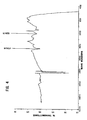
- FTIR Fourier Transform Infrared
- a reaction product i.e. a graft copolymer between the PVA and the functional polymer
- the functional level of the functional polymer is defined by the amount of carboxylic acid, anhydride, metal salt or derivative contained therein. If the functional level is too low, the reaction product will not give a useful alloy when blended with the polyolefin polymer. On the other hand, if the functional group level is too high, the viscosity of the blended product becomes so high as to hinder its practical processability. We do not wish to be held to this theory, but one possible reason for decreased flow characteristics could be chain extension and/or cross linking of the PVA by reaction with the functional polymer.
- the PVA-functional polymer reaction product acts as a compatibilizer to allow optional incorporation of a polyolefin blending resin into the reaction product to form other useful alloys.
- the presence of unreacted polyolefin blending resin as part of a physical mixture with the PVA alloy allows one to select the proportion of added blending resin and thus balance moisture resistance and gas barrier properties as desired. Without the polyolefin-grafted PVA, the addition of a polyolefin to a melt blend would result in macrophase separation, as demonstrated in the Examples below.
- microphases may exist without observable macrophase separation.
- the alloys may exhibit the appearance and behavior of single phase, homogeneous polymer blends.
- the proportion of grafted PVA to ungrafted PVA, and the proportion of polyolefin blending resin to the mixture of grafted and ungrafted PVA, can be readily empirically determined by one skilled in the art.
- the proportion of functional polymer in the alloy is selected to provide both a desired level of moisture resistance and desired gas barrier properties.
- the proportion of functional polymer should be sufficient to separate the melting and decomposition points of the alloy so as to allow melt processing, yet insufficient to result in gelling.
- the alloy should comprise at least 70 wt.% PVA, in order to obtain a processable alloy and desired gas barrier properties.
- the compatible blending resin preferably constitutes from 1 to 15 wt.% of the alloy.
- the upper limit of the blending resin proportion is dictated by (1) desired gas barrier characteristics and water resistance properties and (2) the amount of functional polymer in the PVA mixture. This can be readily empirically determined and the use of too high a proportion of blending resin results in observable macrophase separation, as shown in the Examples below.
- Moisture pickup measurements show that the functional polymer hydrocarbon chains reduce the moisture pickup of the alloys (see Table II below). Since oxygen permeability is affected by the amount of moisture absorbed, these alloys will have reduced oxygen permeability under high moisture conditions. Oxygen permeability measurements on dry PVA alloys show that they have excellent barrier properties against oxygen. The alloys have impermeability at least 100 times better than Mylar resins (oriented polyethylene terephthalate), and nylon 6, which have heretofore been used in some barrier structures.
- Gas barrier films, sheets, tubings, coatings, bottles, profiles, etc. can be formed from these alloys by blown and cast extrusion, extrusion coating, coextrusion, coextrusion coating, injection molding, blow molding, rotomolding, compression molding, profile, pipe and tubing extrusion or a combination of these processes.
- These articles can be fabricated into pouches, bottles, pipe, tubing and other fabricated articles.
- Other shapes, articles and methods of fabrication for thermoplastics, blends and alloys for which the polymer alloys of the invention are suitable will be apparent to those skilled in the art.
- Example 1 70-95 wt.% of the PVA and correspondingly 30-5 wt.% of the polyolefin graft copolymer used in Example 1, 5000 ppm of Irganox 1010 (tetrakis [methylene(3,5-di- tert-butyl-4-hydroxyphenyl propionate)] methane from Ciba-Geigy) and 500 ppm of calcium stearate were reacted in an intensive mixer,. using a steam heated rotor, for a period of 4-5 minutes. The material was reacted at 430-450°F (221-232°C).
- Irganox 1010 tetrakis [methylene(3,5-di- tert-butyl-4-hydroxyphenyl propionate)] methane from Ciba-Geigy
- 500 ppm of calcium stearate were reacted in an intensive mixer,. using a steam heated rotor, for a period
- reaction products obtained were extruded into films of various thicknesses by use of a single screw extruder with a temperature profile of:
- Reaction products from 80 wt.% PVA and 20 wt.% of a polyolefin graft copolymer were extruded into 3 mil film. These along with those made from 100% PVA "A” and "B", respectively, were dried in a vacuum oven to constant weight. They were then placed in desiccators in which the atmosphere was controlled at 50% and 79.5% relative humidity, respectively. The films were weighed after remaining in these atmospheres for eight days. The percent weight gains are shown in Table II, below.
- PVA/functional polymer reaction products were also made using the PVA polymers listed below.
- anhydride-containing functional polymers which were studied include:
- melt flow rate MFR
- a reaction of the polyolefin graft copolymer described in Example 1 with modified PVA, as described in Table IV, below, is performed at 425°F (218°C) for 5 min. in an electrically heated scroll mixer (e.g. a Brabender mixer).
- the melt flow rates (MFR) are taken at 230°C using a 2160 g weight as described in ASTM 1238 (Condition L).
- reaction products were prepared using 20 wt.% of the polyolefin graft copolymer used in Example 1 combined with various amounts of the LLDPE described in Example 7, and PVA "A" as described in Example 4. The results are shown in Table VI, below. No macrophase separation occurs. This demonstrates the utility of the reaction product (the PVA alloy formed in situ) for compatibilization of PVA with LLDPE.
- the alloys obtained can be extruded into clear films.
- the reaction products so obtained are well dispersed without macrophase separation.
- Example 3 90 wt.% of PVA "A" described in Example 3 is blended with 10 wt.% of a high density polyethylene copolymer (HDPE) with a density of 0.949 g/cc and a high load melt index of 20 under the same conditions as described in Example 8. At least 7.5% of the material can be distinguished as a separate macrophase.
- HDPE high density polyethylene copolymer
- An alloy was prepared in situ by using 80 wt.% of PVA "A", 10% of an ethylene-hexene-1 copolymer with a density of 0.949 g/cc and a high load melt index (HLMI) of 20 g/10 min, and 10 wt.% of the polyolefin graft copolymer described in Example 1 under the conditions described in Example 7.
- PVA "A” 10% of an ethylene-hexene-1 copolymer with a density of 0.949 g/cc and a high load melt index (HLMI) of 20 g/10 min
- HLMI high load melt index
- Example 12 The HDPE in Example 12 is replaced by low density polyethylene homopolymer (LDPE) with a density of 0.191 g/cc and an MI of 2.5. At least 4 wt.% of the material is observed as a separate macrophase.
- LDPE low density polyethylene homopolymer
- An alloy was prepared in the same manner as described in Example 13 except that a branched low density polyethylene with an MI of 2.5 g/10 min and a density of 0.919 g/cc was substituted for an ethylene copolymer.
- An alloy was prepared from 80 wt.% PVA (87 mole % hydrolyzed with a 4% aqueous solution viscosity at 20°C of 5 cps) and 20 wt.% of an ethylene-acrylic acid co- polymer (EAA-6.5 wt.% acrylic acid) by mixing in a Brabender mixer at 425°F (218°C) for 5 min.
- PVA 87 mole % hydrolyzed with a 4% aqueous solution viscosity at 20°C of 5 cps
- EAA-6.5 wt.% acrylic acid ethylene-acrylic acid co- polymer
- An alloy was prepared from 85 wt.% of the PVA described in Example 16, 10 wt.% of the EAA described in Example 16, and 5 wt.% of the LLDPE described in Example 7 by mixing in a Brabender mixer at 425°F (218°C) for 15
- An alloy was prepared by mixing in a Brabender mixer at 425°F for 10 minutes 90 wt.% of the PVA described in Example 16 and 10 wt.% of a zinc ionomer of ethylene-methacrylic acid in which 10.1 wt.% methacrylic acid is 70% neutralized.
- An alloy was prepared by mixing in a Brabender mixer at 425°F for 15 minutes 80 wt.% of the PVA described in Example 16 and 20 wt.% of the ionomer described in Example 18.
- An alloy was prepared by mixing in a Brabender mixer at 425 °F (218°C) for 5 mins. 80 wt.% of the PVA described in Example 16 and 20 wt.% of a polypropylene grafted with 0.23 weight % of maleic anhydride.
- Example 20 An alloy was prepared similarly to the procedure of Example 20 by using 80 wt.% of the PVA described in Example 16, 10 wt.% of the grafted polypropylene of Example 20 and 10 wt.% of either a block polypropylene (PP) polymer containing 5% ethylene or 10 wt.% of a random PP polymer containing 1.8% ethylene.
- PP block polypropylene
- Varying percentages of PVA, as designated in Table VIII, below, and an ethylene-propylene (EP) elastomer containing 65 wt.% ethylene with a density of 0.86 g/cc were blended in an electrically heated scroll mixer at 425°F (218°C) for 5 min. at 120 rpm. Two macrophases were observed which were different in color and behavior. The smaller portion is indicated as separation percent in Table VIII. These data show that EP cannot be completely dispersed in PVA.
- Example 25 In the same manner as described in Example 25, 70 wt.% of PVA "B", 10 wt.% of the EP graft copolymer of Example 24, and 10 wt.% of an LLDPE with a density of 0.918 and an MI of 2 yields an alloy.
Landscapes
- Chemical & Material Sciences (AREA)
- Health & Medical Sciences (AREA)
- Chemical Kinetics & Catalysis (AREA)
- Medicinal Chemistry (AREA)
- Polymers & Plastics (AREA)
- Organic Chemistry (AREA)
- Compositions Of Macromolecular Compounds (AREA)
- Laminated Bodies (AREA)
Applications Claiming Priority (2)
| Application Number | Priority Date | Filing Date | Title |
|---|---|---|---|
| US06/578,111 US4575532A (en) | 1984-02-08 | 1984-02-08 | Polyvinyl alcohol alloys and method of making the same |
| US578111 | 1984-02-08 |
Publications (4)
| Publication Number | Publication Date |
|---|---|
| EP0152180A2 true EP0152180A2 (fr) | 1985-08-21 |
| EP0152180A3 EP0152180A3 (en) | 1985-09-18 |
| EP0152180B1 EP0152180B1 (fr) | 1988-03-30 |
| EP0152180B2 EP0152180B2 (fr) | 1992-06-24 |
Family
ID=24311493
Family Applications (1)
| Application Number | Title | Priority Date | Filing Date |
|---|---|---|---|
| EP85300285A Expired EP0152180B2 (fr) | 1984-02-08 | 1985-01-16 | Alliages polymères à base d'alcool polyvinylique |
Country Status (5)
| Country | Link |
|---|---|
| US (1) | US4575532A (fr) |
| EP (1) | EP0152180B2 (fr) |
| JP (1) | JPS60188448A (fr) |
| CA (1) | CA1261501A (fr) |
| DE (1) | DE3562014D1 (fr) |
Cited By (21)
| Publication number | Priority date | Publication date | Assignee | Title |
|---|---|---|---|---|
| EP0177762A3 (en) * | 1984-09-06 | 1988-03-30 | Kuraray Co., Ltd. | A resinous composition, molded articles and containers made thereof and its use |
| EP0187040A3 (fr) * | 1983-02-17 | 1989-05-10 | Neste Oy | Polyoléfine modifiée, son procédé de fabrication et son application |
| WO1990012062A1 (fr) * | 1989-04-13 | 1990-10-18 | Neste Oy | Materiau etanche aux gaz |
| WO1990012063A1 (fr) * | 1989-04-13 | 1990-10-18 | Neste Oy | Materiau etanche aux gaz |
| WO1990012061A1 (fr) * | 1989-04-13 | 1990-10-18 | Neste Oy | Materiau etanche aux gaz |
| US5089535A (en) * | 1990-10-22 | 1992-02-18 | Sealed Air Corporation | Thermoplastic compositions for water soluble foams |
| BE1004474A3 (fr) * | 1990-06-22 | 1992-12-01 | Solvay | Compositions de resines impermeables renforcees au choc a base de copolymeres hydrolyses d'acetate de vinyle et d'ethylene, complexes multicouches coextrudes a l'intervention de ces compositions et utilisation de tels complexes multicouches pour la confection de reservoirs a carburants. |
| EP0518517A1 (fr) * | 1991-05-31 | 1992-12-16 | Morton International, Inc. | Mélanges de polymères immiscibles ayant des nouvelles morphologies de phase |
| EP0526230A1 (fr) * | 1991-08-01 | 1993-02-03 | Yukong Limited | Mélange à base de polyoléfines contenant un composé réactif à bas poids moleculaire et procédé pour le faire |
| EP0546570A1 (fr) * | 1991-12-12 | 1993-06-16 | Kuraray Co., Ltd. | Copolymère d'alcool vinylique renfermant des groupes amino terminaux |
| EP0567327A3 (fr) * | 1992-04-23 | 1994-02-23 | Rohm & Haas | |
| EP0584590A1 (fr) * | 1992-08-03 | 1994-03-02 | Air Products And Chemicals, Inc. | Greffage réactif par extrusion en fusion de mélanges thermoplastiques d'alcool de polyvinyle et de polyoléfine |
| EP0608808A1 (fr) * | 1993-01-27 | 1994-08-03 | Kureha Kagaku Kogyo Kabushiki Kaisha | Film de barrière aux gaz et sa production |
| EP0592240A3 (fr) * | 1992-10-08 | 1994-10-26 | Sumitomo Chemical Co | Procédé pour compatibiliser des résines et composition contenant ces résines compatibilisées. |
| EP0616010A3 (fr) * | 1993-03-15 | 1995-02-22 | Kuraray Co | Composition à base de résine. |
| WO1995012631A1 (fr) * | 1993-11-01 | 1995-05-11 | E.I. Du Pont De Nemours And Company | Pastilles a plusieurs constituants comprenant une resine barriere et un agent de compatibilite, utilisees pour fabriquer des articles en feuilles |
| EP0665264A1 (fr) * | 1994-01-26 | 1995-08-02 | Kureha Kagaku Kogyo Kabushiki Kaisha | Matériau multicouche barrière au gaz et procédé de sa production |
| US5616649A (en) * | 1993-10-07 | 1997-04-01 | Sumitomo Chemical Company, Limited | Method for compatibilizing resins with each other and resin composition comprising resins compatibilized with each other, obtained by said method |
| EP1295898A1 (fr) * | 2001-09-25 | 2003-03-26 | Basell Polyolefine GmbH | Procédé de préparation d'additifs pour polymères et compositions polyoléfiniques ayant une meilleure adhérence à la peinture |
| US6544661B1 (en) | 1998-04-20 | 2003-04-08 | Dong Kweon Lee | Compositions of polyolefin and polyvinyl alcohol, and films, sheets and articles processed therefrom and multilayer products using the same |
| EP1752493A4 (fr) * | 2004-04-26 | 2007-10-03 | Kuraray Co | Composition d'elastomere thermoplastique |
Families Citing this family (25)
| Publication number | Priority date | Publication date | Assignee | Title |
|---|---|---|---|---|
| JPS60240747A (ja) * | 1984-05-15 | 1985-11-29 | Showa Denko Kk | 架橋性組成物及びエステル架橋型重合体 |
| US4911691A (en) * | 1984-09-21 | 1990-03-27 | Menlo Care, Inc. | Assembly for adminstering IV solution |
| US4883699A (en) * | 1984-09-21 | 1989-11-28 | Menlo Care, Inc. | Polymeric article having high tensile energy to break when hydrated |
| US4714482A (en) * | 1985-07-11 | 1987-12-22 | Uop Inc. | Thin film polymer blend membranes |
| US4810755A (en) * | 1986-02-25 | 1989-03-07 | Kuraray Co., Ltd. | Adhesive resin composition, laminated material using it and resin composition containing it |
| US4801630A (en) * | 1986-03-03 | 1989-01-31 | Exxon Chemical Patents Inc. | Composition for preparing cement--adhesive reinforcing fibers |
| ATA255988A (de) * | 1988-10-14 | 1993-05-15 | Chemie Linz Gmbh | Absorbierendes polymerisat |
| US5061751A (en) * | 1989-06-02 | 1991-10-29 | Exxon Chemical Patents Inc. | Vinylpyrrolidone grafted polyolefins in polymer blends and composites |
| CA2045493A1 (fr) * | 1989-11-20 | 1991-05-21 | Kazuyuki Watanabe | Composition de resine et materiau lamine multicouche obtenus a l'aide d'un copolymere a base d'alcool polyvinylique |
| TW221977B (fr) * | 1990-11-30 | 1994-04-01 | Kureha Chemical Ind Co Ltd | |
| US5677360A (en) * | 1991-02-13 | 1997-10-14 | Mitsubishi Rayon Co., Ltd. | Hydrophilic polymer alloy, fiber and porous membrane comprising this polymer alloy, and methods for preparing them |
| IT1247941B (it) * | 1991-05-17 | 1995-01-05 | Enichem Sintesi | Processo per l'ottenimento di forme granulari di additivi per polimeri organici |
| US5389724A (en) * | 1992-04-23 | 1995-02-14 | Rohm And Haas Company | Polymer blends |
| US5378758A (en) * | 1992-04-23 | 1995-01-03 | Rohm And Haas Company | Hot melt adhesives |
| US6004024A (en) | 1997-11-14 | 1999-12-21 | Calgon Corporation | Emulsion feed assembly |
| US5939158A (en) * | 1998-03-24 | 1999-08-17 | E.I. Du Pont De Nemours And Company | Laminar articles of polyolefin and nylon/polyvinyl alcohol blend and methods related thereto |
| US6395817B2 (en) | 2000-03-15 | 2002-05-28 | Air Products Polymers, L.P. | Poly(vinyl alcohol)-g-polyethylene graft emulsion copolymers |
| EP1599517A2 (fr) * | 2003-03-04 | 2005-11-30 | Basell Poliolefine Italia S.r.l. | Alcool polyvinylique a greffage de polyolefine et son procede de production |
| EP1651437A2 (fr) * | 2003-08-05 | 2006-05-03 | Arkema | Structure multicouche comprenant une couche d'evoh modifie choc |
| WO2013130704A1 (fr) | 2012-02-29 | 2013-09-06 | E. I. Du Pont De Nemours And Company | Mélanges ionomère-poly(alcool vinylique) et revêtements |
| US20130225021A1 (en) | 2012-02-29 | 2013-08-29 | E.I. Du Pont De Nemours And Company | Highly viscous ionomer-poly(vinylalcohol) coatings |
| US9085123B2 (en) | 2012-02-29 | 2015-07-21 | E I Du Pont De Nemours And Company | Ionomer-poly(vinylalcohol) coatings |
| JP2018506444A (ja) * | 2014-12-01 | 2018-03-08 | ダウ グローバル テクノロジーズ エルエルシー | 表面改質剤としてのポリオレフィンポリオール類 |
| EP3873735A1 (fr) | 2018-11-02 | 2021-09-08 | Buckman Laboratories International, Inc. | Synthèse de polymère avec résistance à l'état humide temporaire pouvant être reconverti en pâte pour application de papier absorbant |
| CN113462132A (zh) * | 2021-07-06 | 2021-10-01 | 合肥圆融新材料有限公司 | 一种可生物降解复合材料及其制备方法和可生物降解透气膜 |
Family Cites Families (20)
| Publication number | Priority date | Publication date | Assignee | Title |
|---|---|---|---|---|
| US3674896A (en) * | 1966-07-28 | 1972-07-04 | Union Carbide Corp | Bonding with ammonium polymer salts |
| US3645939A (en) * | 1968-02-01 | 1972-02-29 | Us Plywood Champ Papers Inc | Compatibilization of hydroxyl containing materials and thermoplastic polymers |
| US3642726A (en) * | 1969-08-11 | 1972-02-15 | Gulf Research Development Co | Thermoplastic crosslinked polyester material and method of molding |
| US3732337A (en) * | 1969-08-11 | 1973-05-08 | Gulf Research Development Co | Thermoplastic crosslinked polyester material and method of molding |
| US3780085A (en) * | 1970-04-15 | 1973-12-18 | Exxon Research Engineering Co | Malononitrile oxime derivatives |
| US3975463A (en) * | 1971-06-18 | 1976-08-17 | Toyo Seikan Kaisha Limited | Molded structures containing crystalling polyolefin saponified ethylene vinyl acetate copolymer and carbonyl containing copolymers |
| US3847728A (en) * | 1972-05-31 | 1974-11-12 | Toyo Seikan Kaisha Ltd | Resinous compositions having improved gas permeation resistance and molded structures thereof |
| US3931449A (en) * | 1972-08-17 | 1976-01-06 | Toyo Seikan Kaisha Limited | Resinous laminates having improved gas permeation and resistance to delamination |
| DE2342044C3 (de) * | 1972-08-20 | 1987-05-07 | Toyo Seikan Kaisha, Ltd., Tokio/Tokyo | Schichtstruktur |
| JPS5913538B2 (ja) * | 1975-11-18 | 1984-03-30 | ニホンセキユカガク カブシキガイシヤ | ネツカソセイジユシソセイブツ |
| JPS5941867B2 (ja) * | 1976-02-26 | 1984-10-11 | 日本石油化学株式会社 | 樹脂多層構造物 |
| JPS5914066B2 (ja) * | 1976-03-05 | 1984-04-03 | 日本石油化学株式会社 | 熱可塑性樹脂の包装用圧延フイルムもしくはシ−トの製造法 |
| NL7908799A (nl) * | 1978-12-22 | 1980-06-24 | Tno | Werkwijze voor de bereiding van een polymeermengsel, gevormde produkten, verkregen daaruit en polymeer- legering. |
| JPS55127450A (en) * | 1979-03-27 | 1980-10-02 | Mitsubishi Petrochem Co Ltd | Olefin polymer composition |
| JPS5831106B2 (ja) * | 1979-04-24 | 1983-07-04 | 出光興産株式会社 | 熱可塑性樹脂組成物 |
| JPS5820976B2 (ja) * | 1979-12-17 | 1983-04-26 | 日本合成化学工業株式会社 | 溶融混練樹脂組成物 |
| US4293473A (en) * | 1980-07-25 | 1981-10-06 | E. I. Du Pont De Nemours And Company | Polyvinyl alcohol - crystalline solvent system based compositions modified with ethylene polymer |
| US4382128A (en) * | 1980-07-28 | 1983-05-03 | Standard Oil Company | Polyolefin grafted with polycarboxylic acid, ester or anhydride and modified with polyhydroxy compound |
| FR2522670B1 (fr) * | 1982-03-03 | 1986-02-28 | Ato Chimie | Objets conformes en polymeres olefiniques reticules et leur procede d'obtention |
| JPS6086153A (ja) * | 1983-10-19 | 1985-05-15 | Showa Denko Kk | 耐衝撃性ポリプロピレン組成物 |
-
1984
- 1984-02-08 US US06/578,111 patent/US4575532A/en not_active Expired - Fee Related
- 1984-12-04 CA CA000469333A patent/CA1261501A/fr not_active Expired
-
1985
- 1985-01-16 EP EP85300285A patent/EP0152180B2/fr not_active Expired
- 1985-01-16 DE DE8585300285T patent/DE3562014D1/de not_active Expired
- 1985-02-05 JP JP60019382A patent/JPS60188448A/ja active Pending
Cited By (34)
| Publication number | Priority date | Publication date | Assignee | Title |
|---|---|---|---|---|
| EP0187040A3 (fr) * | 1983-02-17 | 1989-05-10 | Neste Oy | Polyoléfine modifiée, son procédé de fabrication et son application |
| EP0177762A3 (en) * | 1984-09-06 | 1988-03-30 | Kuraray Co., Ltd. | A resinous composition, molded articles and containers made thereof and its use |
| AU627870B2 (en) * | 1989-04-13 | 1992-09-03 | Neste Oy | Gas-sealed material |
| WO1990012063A1 (fr) * | 1989-04-13 | 1990-10-18 | Neste Oy | Materiau etanche aux gaz |
| WO1990012061A1 (fr) * | 1989-04-13 | 1990-10-18 | Neste Oy | Materiau etanche aux gaz |
| WO1990012062A1 (fr) * | 1989-04-13 | 1990-10-18 | Neste Oy | Materiau etanche aux gaz |
| BE1004474A3 (fr) * | 1990-06-22 | 1992-12-01 | Solvay | Compositions de resines impermeables renforcees au choc a base de copolymeres hydrolyses d'acetate de vinyle et d'ethylene, complexes multicouches coextrudes a l'intervention de ces compositions et utilisation de tels complexes multicouches pour la confection de reservoirs a carburants. |
| US5089535A (en) * | 1990-10-22 | 1992-02-18 | Sealed Air Corporation | Thermoplastic compositions for water soluble foams |
| EP0518517A1 (fr) * | 1991-05-31 | 1992-12-16 | Morton International, Inc. | Mélanges de polymères immiscibles ayant des nouvelles morphologies de phase |
| US5356990A (en) * | 1991-05-31 | 1994-10-18 | Morton International, Inc. | Blends of immiscible polymers having novel phase morphologies |
| EP0526230A1 (fr) * | 1991-08-01 | 1993-02-03 | Yukong Limited | Mélange à base de polyoléfines contenant un composé réactif à bas poids moleculaire et procédé pour le faire |
| US5349023A (en) * | 1991-12-12 | 1994-09-20 | Kuraray Co., Ltd. | Vinyl alcohol copolymer having terminal amino group |
| EP0546570A1 (fr) * | 1991-12-12 | 1993-06-16 | Kuraray Co., Ltd. | Copolymère d'alcool vinylique renfermant des groupes amino terminaux |
| US5567768A (en) * | 1992-04-23 | 1996-10-22 | Rohm And Haas Company | Poly(vinyl alcohol) blends |
| KR100275079B1 (ko) * | 1992-04-23 | 2000-12-15 | 마크 에스. 아들러 | 용융-공정처리 가능한 중합체 혼합물 |
| US5652305A (en) * | 1992-04-23 | 1997-07-29 | Rohm And Haas Company | Polymer blends |
| EP0567327A3 (fr) * | 1992-04-23 | 1994-02-23 | Rohm & Haas | |
| EP0584590A1 (fr) * | 1992-08-03 | 1994-03-02 | Air Products And Chemicals, Inc. | Greffage réactif par extrusion en fusion de mélanges thermoplastiques d'alcool de polyvinyle et de polyoléfine |
| US5498664A (en) * | 1992-10-08 | 1996-03-12 | Sumitomo Chemical Company, Limited | Method for compatibilizing resins with each other and resin composition comprising resins compatibilized with each other, obtained by said method |
| EP0592240A3 (fr) * | 1992-10-08 | 1994-10-26 | Sumitomo Chemical Co | Procédé pour compatibiliser des résines et composition contenant ces résines compatibilisées. |
| EP0608808A1 (fr) * | 1993-01-27 | 1994-08-03 | Kureha Kagaku Kogyo Kabushiki Kaisha | Film de barrière aux gaz et sa production |
| US5552479A (en) * | 1993-01-27 | 1996-09-03 | Kureha Kagaku Kogyo K. K. | Gas barrier film and production process thereof |
| US5741870A (en) * | 1993-03-15 | 1998-04-21 | Kuraray Co., Ltd. | Resin composition |
| EP0616010A3 (fr) * | 1993-03-15 | 1995-02-22 | Kuraray Co | Composition à base de résine. |
| US5466748A (en) * | 1993-03-15 | 1995-11-14 | Kuraray Co., Ltd. | Resin composition |
| US5571871A (en) * | 1993-03-15 | 1996-11-05 | Kuraray Co., Ltd. | Resin composition |
| US5616649A (en) * | 1993-10-07 | 1997-04-01 | Sumitomo Chemical Company, Limited | Method for compatibilizing resins with each other and resin composition comprising resins compatibilized with each other, obtained by said method |
| WO1995012631A1 (fr) * | 1993-11-01 | 1995-05-11 | E.I. Du Pont De Nemours And Company | Pastilles a plusieurs constituants comprenant une resine barriere et un agent de compatibilite, utilisees pour fabriquer des articles en feuilles |
| EP0665264A1 (fr) * | 1994-01-26 | 1995-08-02 | Kureha Kagaku Kogyo Kabushiki Kaisha | Matériau multicouche barrière au gaz et procédé de sa production |
| US5560988A (en) * | 1994-01-26 | 1996-10-01 | Kureha Kagaku Kogyo K.K. | Gas barrier laminate and production process thereof |
| US6544661B1 (en) | 1998-04-20 | 2003-04-08 | Dong Kweon Lee | Compositions of polyolefin and polyvinyl alcohol, and films, sheets and articles processed therefrom and multilayer products using the same |
| EP1295898A1 (fr) * | 2001-09-25 | 2003-03-26 | Basell Polyolefine GmbH | Procédé de préparation d'additifs pour polymères et compositions polyoléfiniques ayant une meilleure adhérence à la peinture |
| WO2003029308A1 (fr) * | 2001-09-25 | 2003-04-10 | Basell Polyolefine Gmbh | Procede de preparation d'additifs polymeres et de compositions polyolefiniques assurant une meilleure adherence de la peinture |
| EP1752493A4 (fr) * | 2004-04-26 | 2007-10-03 | Kuraray Co | Composition d'elastomere thermoplastique |
Also Published As
| Publication number | Publication date |
|---|---|
| CA1261501A (fr) | 1989-09-26 |
| EP0152180B1 (fr) | 1988-03-30 |
| DE3562014D1 (en) | 1988-05-05 |
| JPS60188448A (ja) | 1985-09-25 |
| EP0152180A3 (en) | 1985-09-18 |
| EP0152180B2 (fr) | 1992-06-24 |
| US4575532A (en) | 1986-03-11 |
Similar Documents
| Publication | Publication Date | Title |
|---|---|---|
| EP0152180B1 (fr) | Alliages polymères à base d'alcool polyvinylique | |
| US4600746A (en) | Polyvinyl alcohol alloys and method of making the same | |
| KR100330606B1 (ko) | 그라프트-개질된실질적인선형에틸렌중합체와다른열가소성중합체의블렌드 | |
| EP0058980B1 (fr) | Masse de moulage à base de mélanges de copolymère acide/polyoléfine linéaire/fibres de renforcement | |
| CA1329436C (fr) | Composition de resine thermoplastique | |
| EP0095253B1 (fr) | Mélange à base de polyéthylène et pellicule | |
| CA2101371A1 (fr) | Greffe de melanges d'alcools et de polyolefines thermoplastiques par reaction des constituants fondus avant extrusion | |
| CA1299314C (fr) | Composes servant a la production de films et films resistant a la bueeainsi obtenus | |
| US5643997A (en) | Polyethylenic resin composition | |
| KR0143995B1 (ko) | 기체 차단성을 갖는 에틸렌-비닐 알코올 공중합체 기제의 조성물 | |
| JP2679147B2 (ja) | 樹脂組成物 | |
| US4774290A (en) | Ethylene copolymers reacted with metal oxides | |
| US4666988A (en) | Ethylene copolymers reacted with metal oxides | |
| US3770852A (en) | Polyolefin resin blends | |
| US4757112A (en) | Single step bulk process for high impact polyamide masterbatches, products thereof and blends with polyamides | |
| EP0782590B1 (fr) | Composition de polyolefines thermoplastiques souples ne renfermant pas d'halogenes | |
| EP0669374B1 (fr) | Utilisation de mélanges à partir de polycétone /HDPE | |
| US5525672A (en) | Adhesive blends of modified anhydride-grafted polyolefins | |
| EP0495996A1 (fr) | Composition a base de resine polyethylene | |
| US5959055A (en) | Ethylene/polyalkyleneglycol (ether) (meth)acrylic ester copolymer and nonporous breathable film obtained therefrom | |
| US4847164A (en) | Ethylene copolymers reacted with metal oxides | |
| EP0578291A2 (fr) | Compatibilisation in-situ de mélanges de PPE et copolymères de polyéthylène | |
| JPH06248127A (ja) | ポリエチレン樹脂組成物 | |
| US6156401A (en) | Oxygen barrier resin composition and product containing the same | |
| JP2617780B2 (ja) | 樹脂組成物 |
Legal Events
| Date | Code | Title | Description |
|---|---|---|---|
| PUAI | Public reference made under article 153(3) epc to a published international application that has entered the european phase |
Free format text: ORIGINAL CODE: 0009012 |
|
| PUAL | Search report despatched |
Free format text: ORIGINAL CODE: 0009013 |
|
| AK | Designated contracting states |
Designated state(s): BE DE FR GB NL |
|
| AK | Designated contracting states |
Designated state(s): BE DE FR GB NL |
|
| 17P | Request for examination filed |
Effective date: 19851025 |
|
| 17Q | First examination report despatched |
Effective date: 19860829 |
|
| RAP1 | Party data changed (applicant data changed or rights of an application transferred) |
Owner name: NATIONAL DISTILLERS AND CHEMICAL CORPORATION |
|
| GRAA | (expected) grant |
Free format text: ORIGINAL CODE: 0009210 |
|
| AK | Designated contracting states |
Kind code of ref document: B1 Designated state(s): BE DE FR GB NL |
|
| REF | Corresponds to: |
Ref document number: 3562014 Country of ref document: DE Date of ref document: 19880505 |
|
| RAP2 | Party data changed (patent owner data changed or rights of a patent transferred) |
Owner name: QUANTUM CHEMICAL CORPORATION |
|
| ET | Fr: translation filed | ||
| NLT2 | Nl: modifications (of names), taken from the european patent patent bulletin |
Owner name: QUANTUM CHEMICAL CORPORATION TE NEW YORK, NEW YORK |
|
| REG | Reference to a national code |
Ref country code: FR Ref legal event code: CD |
|
| PLBI | Opposition filed |
Free format text: ORIGINAL CODE: 0009260 |
|
| NLT1 | Nl: modifications of names registered in virtue of documents presented to the patent office pursuant to art. 16 a, paragraph 1 |
Owner name: QUANTUM CHEMICAL CORPORATION TE NEW YORK, NEW YORK |
|
| BECN | Be: change of holder's name |
Effective date: 19880608 |
|
| 26 | Opposition filed |
Opponent name: NESTE OY Effective date: 19881115 |
|
| NLR1 | Nl: opposition has been filed with the epo |
Opponent name: NESTE OY |
|
| PUAH | Patent maintained in amended form |
Free format text: ORIGINAL CODE: 0009272 |
|
| STAA | Information on the status of an ep patent application or granted ep patent |
Free format text: STATUS: PATENT MAINTAINED AS AMENDED |
|
| 27A | Patent maintained in amended form |
Effective date: 19920624 |
|
| AK | Designated contracting states |
Kind code of ref document: B2 Designated state(s): BE DE FR GB NL |
|
| NLR2 | Nl: decision of opposition | ||
| ET3 | Fr: translation filed ** decision concerning opposition | ||
| NLR3 | Nl: receipt of modified translations in the netherlands language after an opposition procedure | ||
| PGFP | Annual fee paid to national office [announced via postgrant information from national office to epo] |
Ref country code: FR Payment date: 19941214 Year of fee payment: 11 |
|
| PGFP | Annual fee paid to national office [announced via postgrant information from national office to epo] |
Ref country code: BE Payment date: 19941222 Year of fee payment: 11 |
|
| PGFP | Annual fee paid to national office [announced via postgrant information from national office to epo] |
Ref country code: DE Payment date: 19941227 Year of fee payment: 11 |
|
| PGFP | Annual fee paid to national office [announced via postgrant information from national office to epo] |
Ref country code: GB Payment date: 19941228 Year of fee payment: 11 |
|
| PGFP | Annual fee paid to national office [announced via postgrant information from national office to epo] |
Ref country code: NL Payment date: 19950131 Year of fee payment: 11 |
|
| PG25 | Lapsed in a contracting state [announced via postgrant information from national office to epo] |
Ref country code: GB Effective date: 19960116 |
|
| PG25 | Lapsed in a contracting state [announced via postgrant information from national office to epo] |
Ref country code: BE Effective date: 19960131 |
|
| BERE | Be: lapsed |
Owner name: QUANTUM CHEMICAL CORP. Effective date: 19960131 |
|
| PG25 | Lapsed in a contracting state [announced via postgrant information from national office to epo] |
Ref country code: NL Effective date: 19960801 |
|
| GBPC | Gb: european patent ceased through non-payment of renewal fee |
Effective date: 19960116 |
|
| PG25 | Lapsed in a contracting state [announced via postgrant information from national office to epo] |
Ref country code: FR Effective date: 19960930 |
|
| NLV4 | Nl: lapsed or anulled due to non-payment of the annual fee |
Effective date: 19960801 |
|
| PG25 | Lapsed in a contracting state [announced via postgrant information from national office to epo] |
Ref country code: DE Effective date: 19961001 |
|
| REG | Reference to a national code |
Ref country code: FR Ref legal event code: ST |