EP0165288B1 - Dispositif pour analyses chimiques et son utilisation - Google Patents
Dispositif pour analyses chimiques et son utilisation Download PDFInfo
- Publication number
- EP0165288B1 EP0165288B1 EP85900233A EP85900233A EP0165288B1 EP 0165288 B1 EP0165288 B1 EP 0165288B1 EP 85900233 A EP85900233 A EP 85900233A EP 85900233 A EP85900233 A EP 85900233A EP 0165288 B1 EP0165288 B1 EP 0165288B1
- Authority
- EP
- European Patent Office
- Prior art keywords
- segment
- reagent
- site
- sample
- segments
- Prior art date
- Legal status (The legal status is an assumption and is not a legal conclusion. Google has not performed a legal analysis and makes no representation as to the accuracy of the status listed.)
- Expired - Lifetime
Links
Images




Classifications
-
- B—PERFORMING OPERATIONS; TRANSPORTING
- B01—PHYSICAL OR CHEMICAL PROCESSES OR APPARATUS IN GENERAL
- B01L—CHEMICAL OR PHYSICAL LABORATORY APPARATUS FOR GENERAL USE
- B01L3/00—Containers or dishes for laboratory use, e.g. laboratory glassware; Droppers
- B01L3/50—Containers for the purpose of retaining a material to be analysed, e.g. test tubes
- B01L3/505—Flexible containers without fluid transport within
- B01L3/5055—Hinged, e.g. opposable surfaces
-
- G—PHYSICS
- G01—MEASURING; TESTING
- G01N—INVESTIGATING OR ANALYSING MATERIALS BY DETERMINING THEIR CHEMICAL OR PHYSICAL PROPERTIES
- G01N33/00—Investigating or analysing materials by specific methods not covered by groups G01N1/00 - G01N31/00
- G01N33/48—Biological material, e.g. blood, urine; Haemocytometers
- G01N33/50—Chemical analysis of biological material, e.g. blood, urine; Testing involving biospecific ligand binding methods; Immunological testing
- G01N33/52—Use of compounds or compositions for colorimetric, spectrophotometric or fluorometric investigation, e.g. use of reagent paper and including single- and multilayer analytical elements
- G01N33/528—Atypical element structures, e.g. gloves, rods, tampons, toilet paper
-
- Y—GENERAL TAGGING OF NEW TECHNOLOGICAL DEVELOPMENTS; GENERAL TAGGING OF CROSS-SECTIONAL TECHNOLOGIES SPANNING OVER SEVERAL SECTIONS OF THE IPC; TECHNICAL SUBJECTS COVERED BY FORMER USPC CROSS-REFERENCE ART COLLECTIONS [XRACs] AND DIGESTS
- Y10—TECHNICAL SUBJECTS COVERED BY FORMER USPC
- Y10S—TECHNICAL SUBJECTS COVERED BY FORMER USPC CROSS-REFERENCE ART COLLECTIONS [XRACs] AND DIGESTS
- Y10S435/00—Chemistry: molecular biology and microbiology
- Y10S435/805—Test papers
-
- Y—GENERAL TAGGING OF NEW TECHNOLOGICAL DEVELOPMENTS; GENERAL TAGGING OF CROSS-SECTIONAL TECHNOLOGIES SPANNING OVER SEVERAL SECTIONS OF THE IPC; TECHNICAL SUBJECTS COVERED BY FORMER USPC CROSS-REFERENCE ART COLLECTIONS [XRACs] AND DIGESTS
- Y10—TECHNICAL SUBJECTS COVERED BY FORMER USPC
- Y10S—TECHNICAL SUBJECTS COVERED BY FORMER USPC CROSS-REFERENCE ART COLLECTIONS [XRACs] AND DIGESTS
- Y10S435/00—Chemistry: molecular biology and microbiology
- Y10S435/975—Kit
Definitions
- the present invention relates to the field of chemical analyses and more specifically to a device for performing such as well as to a use of said device.
- Analyses to which the present invention is applicable are such, wherein the sample to be tested is contacted with reagent(s) reacting with the sample to form a detectable substance, which in turn is detected for a qualitative or a quantitative determination thereof.
- the invention is especially interesting within the field of medicine, e.g. immuno-chemical analyses, but is not limited thereto as the basic idea of the invention is applicable to a variety of analyses of the kind referred to above.
- immuno-chemical analyses such as enzyme immuno assay (EIA) or fluorescence immuno assay (FIA)
- EIA enzyme immuno assay
- FIA fluorescence immuno assay
- free labelled antibody or antigen must in most cases be separated from the labelled antigen-antibody complex. This is commonly accomplished by means of a solid phase that can be present e.g. in the form of a particle or a surface, either the free labelled component or the complex being retained by the solid phase on the basis of molecular size, adsorption or different types of chemical (including immuno-chemical) bonding.
- Typical for such analyses today is that they require several liquid processing steps for carrying out the reaction sequence. For that reason most immuno-chemical analyses are, with the technique used today, limited to laboratories having trained personnel.
- the device according to the invention it has been shown to be possible to considerably facilitate and simplify the processing and operational steps of analyses of the above-mentioned type so that they can be performed also by non-trained personnel, e.g. doctors and nurses in offices and hospitals.
- the device is even simple enough to be handled in many cases by the patient himself.
- an important factor in the last-mentioned connection is that due to its very simple construction the device can also be made very inexpensively, which means that it might achieve a wide spread commercial use, at least for some qualitative and semi-quantitative tests where certain states of illness can be confirmed by the patient himself before there is a need for any consultation with a doctor.
- a more complex diagnostic test device including foldable segments is also disclosed in US-A-3936357.
- the device according to the invention differs essentially from the above-mentioned devices through the fact that it is not based upon any diffusion principle. Instead the analysis is performed step by step as in the laboratory.
- the novelty of the concept is that liquid samples and reagents need not be transferred between test tubes or test cups by repeated pipetting operations. Instead samples, reagents and even a washing function are contained on surfaces of the device. Transfer of samples or reagents between the surfaces is accomplished by a simple folding action. This offers considerable advantages over multilayer diffusion elements of the type that are disclosed in e.g. US-A-4,066,403 and EP51,183.
- the device according to the invention can be utilized for the analysis of most substances without a need for any major modifications of its basic structure or design.
- immuno-chemical analyses there are substances of extremely varying size, from drugs having a molecular weight of not more than 500 to whole cells and bacteria which are a thousand million times larger.
- diffusion devices therefore have an additional drawback in that it is necessary to adjust the types of layers for each kind of analyte.
- the method of manufacture and the storage properties of the device according to the invention are based on established technology while these factors have proven to be difficult to master in practice for immuno-chemical diffusion devices of the multilayer type.
- the device according to the invention can briefly be described as a complete test kit for performing an analysis of the above-mentioned type wherein all chemically active parts which are necessary for carrying out the analysis are built into the device, i.e. there is no need to perform any stage of the analysis outside the device per se.
- These chemically active parts are arranged or mounted in such a way that they are contacted with the sample and each other by a simple folding system.
- said folding system can be made completely self-instructing i.e. instructions for performing the analysis may be included within the folding system and it is also possible to include a number of numbered or color-coded tabs as part of the folding system, which tabs give stepwise directions for the operational sequence.
- the device also includes as an integral part a result display which for instance in the form of a color or fluorescence gives a positive, negative or optionally quantitative response.
- a result display which for instance in the form of a color or fluorescence gives a positive, negative or optionally quantitative response.
- the device according to the invention is characterized in that it comprises a continuous sheet having two or more segments, the first of which contains a site where the contact between sample and reagent can take place, and a second one contains a site where the presence of a desired detectable substance can be shown, the segments being foldable in such a way that they can overlap each other as desired in order to accomplish the required reactions.
- the site on the first segment preferably contains the designated reagent initially, i.e. said reagent is present or included in the device so that it need not be prepared before the analysis in question can be started. This is applicable also to the detecting reagent on the second segment, i.e. also this reagent can, if required, be present in the device from the beginning.
- Characteristic of the invention is also that the device also includes at least one arrangement for the separation of excess reagent, i.e. reagent that has not reacted during the contact between e.g. sample and reagent(s), said arrangement being placed so as to be able to exercise its function before the presence of detectable substance is shown.
- excess reagent i.e. reagent that has not reacted during the contact between e.g. sample and reagent(s
- the basic idea of the present invention is a number of segments with incorporated reagents which segments are connected to each other into one continuous structure and in such a way that they can be folded so that desired reagents come into contact with each other.
- the simplest and accordingly the most inexpensive construction would be one where said sheet is represented by one single piece, e.g. in the form of a paper sheet or plastics sheet with folding lines, along which the given segments can be folded on top of each other
- the term "continuous sheet" is intended to mean any construction where the different segments are connected to each other.
- the invention can of course also be applied by manufacturing separate segments, which segments are then linked to each other by means of a linking mechanism of the hinge type or similar.
- Such more sophisticated devices should be applicable primarily to devices which are intended to be used several times, e.g. by using such sites containing chemical reagents which are easily exchangeable, but in many cases the device is intended for disposal after use and in these cases a simple foldable material should be preferable for economical reasons.
- analyses of the type referred to include a step where one or more components or reactants are to be separated from the other components or reactants before detection can or should be started. For instance this is applicable to the separation of a liquid from a solid phase (solid phase reagent or a solid phase formed by the reaction).
- the device according to the invention has turned out to be especially interesting, since also this separation operation is built in the very compact and easy to operate device.
- the only reagent or accessory which may possibly need to be added externally is a washing liquid which it may be preferable to handle separately for practical purposes, especially since this washing liquid is often chemically stable and in many cases even consists of ordinary water. Nor does the utilization of a washing liquid require any exactness contrary to what is generally the case with reagents.
- the separation arrangement can for instance be a third segment provided with a separation element or medium, which segment is arranged or mounted to be folded in between the above-mentioned first and second segments respectively to accomplish the desired separation.
- a separation arrangement it should be noted that, as is the case also for the other reagents used, it is chosen completely in conformity with prior art. In many cases it should be possible simply to utilize a filter paper to obtain the desired function, which of course also keeps the price down.
- the arrangement for separation of the reagent is one or more separation or absorption media arranged adjacent to the site on the first segment.
- said arrangement is included in the segment on which the contact between sample and reagent takes place.
- the fact that said media are arranged adjacent to said site on the first segment in principle means that they should be able to be activated merely by application of liquid, i.e. generally washing liquid in an amount exceeding the volume that is used for the application of the sample. In other words liquid will automatically be sucked up by the absorbing medium.
- This can be accomplished by arranging an absorbing material in at least one well or container in the first segment, which well or container has an opening allowing an inflow of liquid from the site on the first segment.
- the analysis comprises of reactions in several steps before the detection can be performed.
- the device according to the invention is useful also in such cases, viz. by simply including therein further segments which contain the desired reagent(s) and which are mounted to be folded in in any suitable sequence to accomplish a reaction with the sample or with a reaction product formed in any preceding step.
- Another embodiment of the device according to the invention is a device which contains an extra segment merely intended for the application of the test sample or for a dilution thereof before it is folded by means of said extra segment into contact with a reagent on another segment.
- Still another embodiment of the device according to the invention is a device wherein the detecting reagent is a color-forming reagent and wherein one of the segments contains one or more windows with reference color or colors. With which the color formed can be directly compared for an evaluation of the analysis.
- the device has previously been provided with one or more colors which give a direct qualitative or quantitative measure of the substance to be detected and with which the color formed at the analysis can be compared.
- said window(s) is (are) of course arranged on the same segment where the color formed at the analysis develops so that those colors or shades to be compared are immediately adjacent each other.
- Last-mentioned embodiment directly enables a visual reading and even if such a visual reading can be made with great accuracy it can some times be desirable to detect the color optically.
- the device according to the invention can of course also be constructed for this purpose so as to be able to be directly inserted into or on an instrument for an optical reading of the color developed.
- other detecting reagents than those which develop colors may be utilized and in such cases prior art is followed. Thus it should not be necessary to go into greater detail here. However, as examples thereof fluorescence and luminescence may be mentioned.
- the device can be desirable to stop the detecting reaction used in the analysis, e.g. after a certain predetermined time, in order to make an exact comparison between the formed color and reference colors, and in such a case it is possible to provide the device with an extra segment fitted with a site that contains an inhibitor for the utilized detecting reaction. This segment is then arranged so as to be able to be folded into contact with the segment on which the detecting reaction takes place, to inhibit or stop the detecting reaction.
- a preferred device in such a case is characterized in that the site on the first segment comprises of a container wherein the sample is intended to be applied to react with a solid phase reagent present in the container or alternatively to react to the formation of a solid phase, that the site on the second segment contains detecting reagent for the desired substance of the fluid phase, and that a third segment containing a separation arrangement that enables a passage of the fluid phase but not of the solid phase, is placed to be folded in between the container on the first segment and the detection site on the second segment.
- the site on the first segment comprises of a container wherein the sample is intended to be applied to react with a solid phase reagent present in the container or alternatively to react to the formation of a solid phase
- the site on the second segment contains detecting reagent for the desired substance of the fluid phase
- a third segment containing a separation arrangement that enables a passage of the fluid phase but not of the solid phase
- the opening of the container is preferably covered by some type of protecting layer, e.g. a foil, which keeps the reagent in place prior to the application of the sample.
- some type of protecting layer e.g. a foil
- Another interesting application of the device according to the invention is its use in an enzyme immuno assay based on antigen-antibody reactions and wherein the device is characterized by a first segment having a site made of a transparent plastic for the application of the sample and preferably also a second site for a control sample, the plastic being prepared with reagent in the form of antibody or antigen fixed thereto.
- a fixation of antigens or antibodies to plastic surfaces is well known and described in literature, see e.g. Immunoenzymatic Techniques (edited by S. Avrameas, P. Druet, R. Massayeff and G. Feldman) Elsevier Science Publishers, Amsterdam/New York/Oxford, 1983.
- the device is further characterized by a second segment having a site with detecting reagent in the form of a chromogenic enzyme substrate, a third segment provided with a site with an absorbent pad with soluble, optionally lyophilized enzyme-labelled antibody or antigen, said third segment being arranged to be folded to overlap the first segment before the second segment is folded to overlap said first segment.
- the device contains a separation arrangement in the form of absorbing material placed in at least one well on the first segment in such a way that when washing liquid is applied onto the transparent plastic of the first segment to wash away unreacted reagent before the second segment is folded to overlap the first one, said washing solution is automatically absorbed by said absorbing material.
- numeral functions can be built into the device according to the invention.
- it can also be provided with one or more further segments, which are of another kind than the previously described, chemically active parts.
- further segments which are of another kind than the previously described, chemically active parts.
- Examples of such interesting devices according to the invention is a device characterized in that it includes one or more further segments with instructions relating to the operational handling of the device and/or patient data or similar, which segments are also foldable in such a way that the segments can overlap each other in the desired sequence, or a device characterized by segments providing a closing mechanism that can be folded to seal the package.
- another interesting device can be characterized by numbered or color-coded tabs which step by step give directions as to the order of opening the segments.
- the device can also be designed so as to be characterized by certain segment(s) that may be torn off so that they can be removed from the device after having been utilized. For instance it may be suitable to retain only that or those segment(s) on which the result of the analysis is read and on which optionally also data concerning e.g. patient identification, type of test, time or serial number are present or have been noted.
- the device according to the invention is preferably designed in such a way that the segments can be folded to essentially overlap each other. That is, all segments are from the beginning, i.e. with the device ready for use, folded so as to be on top of each other in any suitable order in one single pile. In this way the final package has a very compact shape, i.e. the shape of a match box with a foldable cover.
- the invention relates to use of the device described above for chemical analyses in general and especially within the fields of medicine and agriculture.
- a preferable use in this connection is in immuno-chemical analyses, e.g. for enzyme immuno assay, fluorescence immuno assay and luminescence immuno assay, and analyses wherein hybridization reactions between nucleic acids are used.
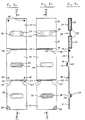
- the device shown in Fig. 1 comprises a continuous sheet having six segments 6-11, of which segments 6-9 show chemically active sites, while segments 10 and 11 represent logistic auxiliary segments for the chemical operation. Furthermore, some of the segments are provided with tabs numbered 1-5 intended to show the sequence for the opening of the device. Finally, the Figure shows a smaller foldable segment 12 intended for sealing the device.
- the segment 6 comprises a reaction container 13 containing a solid phase reagent 14 and covered by a foil 15.
- the segment 7 is provided with an area 16 that is a filter paper, while the segment 8 contains a chemically active surface 17 in the form of an enzyme substrate and a protecting, transparent plastic foil 18.
- the segment 9 in turn has a chemically active surface 19 in the form of an enzyme inhibitor.
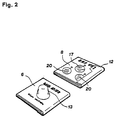
- Fig. 2 shows the device in a folded state and seen from below and above, respectively, the reference numerals being the same as in Fig. 1. However, Fig. 2 also shows two color reagent windows 20 with which the color of surface 17 formed at the analysis can be compared.
- the color reaction is dependent on the amount of enzyme which has not been taken up by the solid phase 14 in the reaction container 13.
- the reaction system of the reaction container 13 has such a composition that the amount of enzyme taken up by the solid phase 14 is directly dependent on the presence of antigen or antibody, respectively, in the sample.
- the sample is filtered through the filter paper 16 which prevents the solid phase 14 of reaching the enzyme substrate surface 17.
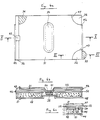
- Figs. 5 and 6 shows three segments 30-32 which all take active part in the analytical process. Furthermore, segments 31 and 32 are provided with color coded tabs 33 and 34 to show the sequence of opening the device.
- the segment 30 contains a transparent plastic surface 35 to which an antibody (or antigen) is chemically or physically fixed. On the plastic surface 35 there is a spot 36 marked for a sample and a spot 37 marked for a control or standard. Around the plastic surface 35 there is a built-in separation arrangement in the form of absorbent media 48 in wells on the bottom plate 51.
- the segment 51 contains a well 50, on the opposite convex side 38 of which there is attached an absorbent pad 39 which contains a chromogenic enzyme substrate.
- an absorbent pad 41 which contains an enzyme-labelled antibody (or antigen).
- pads 39 and 41 they are arranged so as to each overlap the plastic surface 35 by a suitable folding of the segment 31 or 32, respectively.
- the pad which is not in operation rests in. the concave recess (49 or 50, respectively) that has been formed on the opposite side of the other pad.
- the folding of the segments is facilitated by folding lines 42.
- the segment 31 is folded against the bottom side of segment 32, it being locked by a snapping lock 43.
- the segment 32 is in turn folded against segment 30, it being locked by those two locking pins 44 which are reversibly locked in wells 45 of segment 30.
- the indentation 46 of segment 32 enables the grasping of tab 34 when segment 31 is opened, while the indentation 47 also enables a folding of segment 31 against the top side of segment 32 with a retained possibility of folding and locking segment 32 against segment 30 with the locking pins 44.
- the color reaction is directly dependent on the amount of enzyme that is present on the surface 35 after the washing step XXIII. This amount is in turn directly dependent on the presence of the tested substance in the sample which is able to bind enzyme-labelled antibody (or antigen) and is at the same time bound to antibody (antigen) fixed on the surface 35.
- the segments 30-32 were manufactured from polyvinyl chloride (PVC).
- the transparent plastic surface 35 consisted of a rectangular slide made of immunograde polystyrene (Nunc A/S, Roskilde, Denmark), with marked circular spots 36 and 38 on the surface. Antibody was fixed to these spots as will be described for each type of application.
- the absorbing material 38 of the separation arrangement was manufactured from cellulose spong (Wettex @ , Celloplast AB, Norrköping, Sweden).
- Whatman O 3MM filter paper Whatman Ltd., Maidstone, Kent, U.K. was used. These filter paper pads were impregnated with reagents as will be described for each type of application.
- the device was fitted with an extra segment, the sole purpose of which was to provide a cover for surface 35, to prevent evaporation of the sample.
- hCG Human chorionic gonadotropin
- Antibody was fixed to the plastic slide 35 by applying 75 pl of monoclonal anti-alpha subunit of hCG antibody (clone 5503, Oy Medix Ab, Kauniainen, Finland) in a concentration of 10 ⁇ g/ml diluent, to each of spots 36 and 37.
- the diluent (abbreviated PBS) was 0.05 mol/I sodium phosphate, 0.15 mol/I NaCI, pH 7.2.
- the slides were incubated in a humidity chamber for 18 h at 4°C. They were then rinsed with approx. 10 ml washing solution (abbreviated PBS-Tween), consisting of 0.05% Tween@ - 20 (Merck, Hohenbrunn, Germany) in PBS.
- PBS-BSA a solution
- bovine serum albumin Sigma Chemical Co., St. Louis, Missouri, U.S.A.
- the absorbent pad 41 was impregnated with a solution of peroxidase conjugated monoclonal anti-beta subunit of hCG antibody (Sensi-Chrome TM Conjugate Reagent, Hoffman-La Roche Inc., Nutley, New Jersey, U.S.A.), undiluted.
- the absorbent pad 39 was impregnated with a chromogenic substrate solution of 0.42 mmol/I 3,3',5,5'-tetramethylbenzidine, (Miles Laboratories, Inc., Elkhart, Indiana, U.S.A.), 1.4 mmol/I urea peroxide in 0.1 mol/I sodium acetate/citric acid buffer, pH 6.0, prepared as described by E.S. Bos et al. (1981), J. Immunoassay 2, 187.
- the assay was performed essentially as illustrated in Fig. 7 with sequences XX-XXVI. However, the following details of samples, volumes, times and other conditions may be added.
- Lyphochek @ I and II human control urines (Bio-Rad Laboratories, Inc., Anaheim, California, U.S.A.) with stated hCG concentrations of 3,900 and 550 international units per liter, respectively, were used. These samples were further diluted with a known negative urine sample 1:2, 1:4, 1:8 and 1:16. The known negative urine sample was used as a blank.
- the device was opened and 1 drop of approx. 50 pl of each sample was applied to spot 36 and the same volume of blank to spot 37.
- the device was then closed by folding segment 32 upon segment 30 to transfer the conjugated antibody in absorbent pad 41 onto the plastic surface 35.
- the device was left closed and incubated for 15 min. at room temperature.
- the device was then reopened to expose surface 35, which was washed with approx. 1 ml PBS-Tween. Segment 31 was then folded onto segment 30 to transfer the chromogenic substrate in absorbent pad 39 onto plastic surface 35. The device was again left closed and incubated for 5 min. at room temperature. The color reaction was then immediately read on the back of the device through the transparent plastic at spots 36 and 37. A faint blue color was designated "+”, a distinct blue color "++” and a strong blue color "+++”. The assay results were compared to a commercially available pregnancy test, Sensi-ChromeTM (Hoffman-La Roche Inc., Nutley, New Jersey, U.S.A.), run simultaneously in test tubes.
- Sensi-ChromeTM Hoffman-La Roche Inc., Nutley, New Jersey, U.S.A.
- Human thyroglobulin is a relatively large protein with a molecular weight of approx. 660,000.
- the assay is useful in the monitoring of thyroid cancer.
- Antibody was fixed to the plastic slide 35 by applying 75 ⁇ l of monoclonal anti-human thyroglobulin antibody (clone TF-33, Novo Industri A/S, Bagsvaerd, Denmark) in a concentration of 10 pg/ml diluent, to each of spots 36 and 37.
- the diluent (abbreviated PBS) was 0.05 mol/I sodium phosphate, 0.15 mol/I NaCI, pH 7.2.
- the slides were incubated in a humidity chamber for 18 h at 4°C. They were then rinsed with approx.
- the absorbent pad 41 was impregnated with a solution of peroxidase conjugated rabbit anti-human thyroglobulin (Dakopatts A/S, Glostrup, Denmark), diluted 1:500 in PBS-BSA.
- the absorbent pad 39 was impregnated with a chromogenic substrate solution of 0.05% w/v ortho-phenylene diamine (Sigma Chemical Co., St. Louis, Missouri, U.S.A.), 0.01% v/v H 2 0 2 in 0.06 mol/I sodium phosphate, 0.03 mol/I sodium citrate, pH 5.0.
- the assay was performed essentially as illustrated in Fig. 7 with sequences XX-XXVI. However, the following details of samples, volumes, times and other conditions may be added.
- the device was opened and 25 ⁇ l of each sample was applied to spot 36 and the same volume of blank to spot 37.
- the extra lid provided to prevent evaporation was closed and the device was incubated for 30 min at room temperature. Then surface 35 was washed with approx. 1 ml PBS-Tween.
- the device was closed by folding segment 32 upon segment 30 to transfer the conjugated antibody in absorbent pad 41 onto the plastic surface 35.
- the device was left closed and incubated for 30 min at room temperature.
- the device was then reopened to expose surface 35, which was washed with approx. 1 ml PBS-Tween. Segment 31 was then folded onto segment 30 to transfer the chromogenic substrate in absorbent pad 39 onto plastic surface 35. The device was again left closed and incubated for 10 min at room temperature. The color reaction was then immediately read on the back of the device through the transparent plastic at spots 36 and 37. A faint yellow color was designated "+”, a distinct yellow color "++” and a strong yellow color "+++”.
- the device according to the invention was capable of providing semiquantitative analytical information at very low concentrations of the analyte.
- the assay of feline leukemia virus is important in veterinary practice to diagnose leukemia in cats.
- Antibody was fixed to the plastic slide 35 by applying 50 pl of monoclonal anti-feline leukemia virus antibody (clone 1, Cambridge BioScience Corporation, Hopkinton, Massachusetts, (U.S.A.) in a concentration of 10 pg/ml diluent, to each of spots 36 and 37.
- the diluent (abbreviated PBS) was 0.05 mol/I sodium phosphate, 0.15 mol/I NaCl, pH 7.2.
- the slides were incubated in a humidity chamber for 3 h at 37°C. They were then rinsed with approx. 10 ml washing solution (abbreviated PBS-Tween), consisting of 0.05% Tween@ - 20 (Sigma Chemical Co., St.
- PBS-BSA a solution
- bovine serum albumin Sigma Chemical Co., St. Louis, Missouri, U.S.A.
- the absorbent pad 41 was impregnated with a solution of peroxidase conjugated monoclonal anti-feline leukemia virus antibody (clone 2, Cambridge BioScience Corporation, Hopkinton, Massachusetts, U.S.A.), diluted 1:5.
- the absorbent pad 39 was impregnated with a chromogenic substrate solution of 0.1% w/v 2,2' - azino - di - 3 - ethylbenzthiazoline sulfonate (Boehringer Mannheim GmbH, Mannheim, Germany), 0.15% H 2 0 2 in 0.05 mmol/I sodium phosphate buffer, pH 6.0.
- the assay was performed essentially as illustrated in Fig. 7 with sequences XX-XXVI. However, the following details of samples, volumes, times and other conditions may be added.
- the device was opened and 1 drop of approx. 50 ⁇ l of each sample was applied to spot 36 and the same volume of blank to spot 37.
- the device was then closed by folding segment 32 upon segment 30 to transfer the conjugated antibody in absorbent pad 41 onto the plastic surface 35.
- the device was left closed and incubated for 15 min at room temperature.
- the device was then reopened to expose surface 35, which was washed with approx. 5 ml PBS-Tween. Segment 31 was then folded onto segment 30 to transfer the chromogenic substrate in absorbent pad 39 onto plastic surface 35. The device was again left closed and incubated for 2 min. at room temperature. The color reaction was then immediately read on the back of the device through the transparent plastic at spots 36 and 37. A faint green color was designated "+”, a distinct green color "++” and a strong green color "+++”. The assay results were compared to a commercially available test for feline leukemia virus (Pitman-Moore, Inc., Philadelphia, Pennsylvania, U.S.A.) run simultaneously in microtitration cups.
Landscapes
- Health & Medical Sciences (AREA)
- Chemical & Material Sciences (AREA)
- Hematology (AREA)
- Life Sciences & Earth Sciences (AREA)
- Immunology (AREA)
- Engineering & Computer Science (AREA)
- Analytical Chemistry (AREA)
- General Health & Medical Sciences (AREA)
- Urology & Nephrology (AREA)
- Molecular Biology (AREA)
- Biomedical Technology (AREA)
- Cell Biology (AREA)
- Physics & Mathematics (AREA)
- Microbiology (AREA)
- Chemical Kinetics & Catalysis (AREA)
- Clinical Laboratory Science (AREA)
- Food Science & Technology (AREA)
- Medicinal Chemistry (AREA)
- Biotechnology (AREA)
- Biochemistry (AREA)
- General Physics & Mathematics (AREA)
- Pathology (AREA)
- Investigating Or Analysing Biological Materials (AREA)
- Food-Manufacturing Devices (AREA)
- Respiratory Apparatuses And Protective Means (AREA)
- Undergarments, Swaddling Clothes, Handkerchiefs Or Underwear Materials (AREA)
- Measuring Or Testing Involving Enzymes Or Micro-Organisms (AREA)
Abstract
Claims (14)
Priority Applications (1)
| Application Number | Priority Date | Filing Date | Title |
|---|---|---|---|
| AT85900233T ATE51082T1 (de) | 1983-12-02 | 1984-11-30 | Vorrichtung fuer chemische analyse und deren verwendung. |
Applications Claiming Priority (4)
| Application Number | Priority Date | Filing Date | Title |
|---|---|---|---|
| SE8306666 | 1983-12-02 | ||
| SE8306666A SE454811B (sv) | 1983-12-02 | 1983-12-02 | Anordning for kemiska analyser innefattande ett sammanhengande ark av flera vikbara segment samt anvendning av anordningen for kemiska analyser |
| SE8403883 | 1984-07-27 | ||
| SE8403883A SE8403883L (sv) | 1983-12-02 | 1984-07-27 | Anordning for kemiska analyser samt anvendning derav |
Publications (2)
| Publication Number | Publication Date |
|---|---|
| EP0165288A1 EP0165288A1 (fr) | 1985-12-27 |
| EP0165288B1 true EP0165288B1 (fr) | 1990-03-14 |
Family
ID=26658582
Family Applications (1)
| Application Number | Title | Priority Date | Filing Date |
|---|---|---|---|
| EP85900233A Expired - Lifetime EP0165288B1 (fr) | 1983-12-02 | 1984-11-30 | Dispositif pour analyses chimiques et son utilisation |
Country Status (9)
| Country | Link |
|---|---|
| US (1) | US4717656A (fr) |
| EP (1) | EP0165288B1 (fr) |
| AU (1) | AU579123B2 (fr) |
| CA (1) | CA1237074A (fr) |
| DE (1) | DE3481645D1 (fr) |
| FI (1) | FI78361C (fr) |
| IT (1) | IT1196349B (fr) |
| NO (1) | NO853050L (fr) |
| WO (1) | WO1985002466A1 (fr) |
Families Citing this family (56)
| Publication number | Priority date | Publication date | Assignee | Title |
|---|---|---|---|---|
| US4826759A (en) * | 1984-10-04 | 1989-05-02 | Bio-Metric Systems, Inc. | Field assay for ligands |
| JPS61247965A (ja) * | 1985-04-25 | 1986-11-05 | Susumu Kogyo Kk | 酵素免疫測定法 |
| JPH076984B2 (ja) * | 1985-05-31 | 1995-01-30 | 株式会社日立製作所 | 複数項目分析方法 |
| TW203120B (fr) * | 1985-10-04 | 1993-04-01 | Abbott Lab | |
| US5501949A (en) | 1985-12-10 | 1996-03-26 | Murex Diagnostics Corporation | Particle bound binding component immunoassay |
| DE3630999A1 (de) * | 1986-09-12 | 1988-03-17 | Boehringer Mannheim Gmbh | Mehrschichtiger testtraeger |
| US4918025A (en) * | 1987-03-03 | 1990-04-17 | Pb Diagnostic Systems, Inc. | Self contained immunoassay element |
| US4849340A (en) * | 1987-04-03 | 1989-07-18 | Cardiovascular Diagnostics, Inc. | Reaction system element and method for performing prothrombin time assay |
| US5256372A (en) * | 1987-11-06 | 1993-10-26 | Idexx Corporation | Dipstick test device including a removable filter assembly |
| CA1339723C (fr) * | 1988-01-19 | 1998-03-17 | Philip Mcmahon | Immunoesssai a point d'essai multiples |
| US4963325A (en) * | 1988-05-06 | 1990-10-16 | Hygeia Sciences, Inc. | Swab expressor immunoassay device |
| US5100621A (en) * | 1988-09-20 | 1992-03-31 | Hygeia Sciences, Inc. | Test kit for diagnostic procedures |
| JPH04502961A (ja) * | 1988-11-14 | 1992-05-28 | アイデックス・ラボラトリーズ・インコーポレーテッド | 二重吸収被分析物検出 |
| US5106758A (en) * | 1988-12-12 | 1992-04-21 | Technicon Instruments Corporation | Analytical test device and the use thereof |
| EP0416588B1 (fr) * | 1989-09-08 | 1996-01-31 | Terumo Kabushiki Kaisha | Instrument de test |
| US5008077A (en) * | 1989-12-26 | 1991-04-16 | Miles Inc. | Easy handling reagent strip |
| US6352863B1 (en) * | 1990-01-19 | 2002-03-05 | La Mina, Inc. | Assay device |
| WO1992008977A1 (fr) * | 1990-11-14 | 1992-05-29 | Southern Research Institute | Systeme et kit de diagnostic rapide |
| US5468648A (en) * | 1991-05-29 | 1995-11-21 | Smithkline Diagnostics, Inc. | Interrupted-flow assay device |
| US5869345A (en) * | 1991-05-29 | 1999-02-09 | Smithkline Diagnostics, Inc. | Opposable-element assay device employing conductive barrier |
| US6168956B1 (en) * | 1991-05-29 | 2001-01-02 | Beckman Coulter, Inc. | Multiple component chromatographic assay device |
| US5998220A (en) | 1991-05-29 | 1999-12-07 | Beckman Coulter, Inc. | Opposable-element assay devices, kits, and methods employing them |
| US5607863A (en) * | 1991-05-29 | 1997-03-04 | Smithkline Diagnostics, Inc. | Barrier-controlled assay device |
| US5877028A (en) | 1991-05-29 | 1999-03-02 | Smithkline Diagnostics, Inc. | Immunochromatographic assay device |
| US5726010A (en) * | 1991-07-31 | 1998-03-10 | Idexx Laboratories, Inc. | Reversible flow chromatographic binding assay |
| US6007999A (en) * | 1991-07-31 | 1999-12-28 | Idexx Laboratories, Inc. | Reversible flow chromatographic binding assay |
| JP3506703B2 (ja) * | 1992-07-31 | 2004-03-15 | サーモ バイオスター インコーポレイテッド | 光干渉による分析対象の検出装置およびその方法 |
| CA2171968A1 (fr) * | 1993-09-17 | 1995-03-23 | Raouf A. Guirguis | Dispositif pour epreuve |
| US5747351A (en) * | 1995-06-07 | 1998-05-05 | Smithkline Diagnostics, Inc. | Immunochemical-based test device with lift and twist specimen full tab |
| ES2107388B1 (es) * | 1995-11-07 | 1998-07-01 | Univ Granada | Desarrollo de un kit rapido para el diagnostico de la trichinellosis. |
| ES2119674B1 (es) * | 1996-02-01 | 1999-05-16 | Univ Granada | Desarrollo de un kit rapido para el diagnostico de la hidatidosis. |
| US5900379A (en) * | 1996-04-11 | 1999-05-04 | Mizuho Usa, Inc. | Analytical device |
| US5879951A (en) * | 1997-01-29 | 1999-03-09 | Smithkline Diagnostics, Inc. | Opposable-element assay device employing unidirectional flow |
| US5939252A (en) * | 1997-05-09 | 1999-08-17 | Lennon; Donald J. | Detachable-element assay device |
| WO1999045396A1 (fr) * | 1998-03-04 | 1999-09-10 | Universal Healthwatch, Inc. | Dispositifs de detection par chimiluminescence |
| TW356712U (en) * | 1998-03-04 | 1999-04-21 | Yung-Shiang Liou | Testing apparatus of immune |
| US6511814B1 (en) * | 1999-03-26 | 2003-01-28 | Idexx Laboratories, Inc. | Method and device for detecting analytes in fluids |
| US6551842B1 (en) | 1999-03-26 | 2003-04-22 | Idexx Laboratories, Inc. | Method and device for detecting analytes in fluids |
| NO994873D0 (no) * | 1999-10-06 | 1999-10-06 | Sinvent As | Metode for syntese og analyse av kombinatoriske kjemibiblioteker |
| DE10002819B4 (de) * | 2000-01-24 | 2004-07-08 | Sension, Biologische Detektions- Und Schnelltestsysteme Gmbh | Nachweissystem zur Prüfung der Originalität eines Objekts und Testvorrichtung zur Durchführung der Prüfung |
| GB0105362D0 (en) * | 2001-03-05 | 2001-04-18 | Univ Sunderland | Assay |
| US7587793B2 (en) * | 2001-12-14 | 2009-09-15 | Bode Technology Group, Inc. | Evidence collection holder and storage method |
| CA2608774C (fr) * | 2005-01-25 | 2010-07-20 | The Bode Technology Group, Inc | Support de collecte de preuves pour traitement automatise d'echantillons |
| US7288413B2 (en) * | 2005-08-12 | 2007-10-30 | Beckman Coulter, Inc. | Combined chemical and immunochemical fecal occult blood test |
| US8652421B2 (en) * | 2005-11-03 | 2014-02-18 | Emd Millipore Corporation | Immunoassay product and process |
| US8557600B2 (en) * | 2005-11-03 | 2013-10-15 | Emd Millipore Corporation | Immunoassay product and process |
| US11906512B2 (en) | 2006-03-31 | 2024-02-20 | Zeus Diagnostics, LLC | Integrated device for analyte testing, confirmation, and donor identity verification |
| US8940527B2 (en) * | 2006-03-31 | 2015-01-27 | Lamina Equities Corp. | Integrated device for analyte testing, confirmation, and donor identity verification |
| US7741103B2 (en) * | 2006-03-31 | 2010-06-22 | Guirguis Raouf A | Integrated screening and confirmation device |
| US7879623B2 (en) * | 2006-03-31 | 2011-02-01 | Guirguis Raouf A | Integrated device for analyte, testing, confirmation, and donor identity verification |
| SG193581A1 (en) | 2011-05-11 | 2013-10-30 | Emd Millipore Corp | Immunoassay product and process |
| GB2558612B (en) * | 2017-01-10 | 2022-08-31 | Nammonic Holding Ltd | Biological sample collection and/or storage device |
| US10564155B2 (en) | 2017-01-27 | 2020-02-18 | Raouf A Guirguis | Dual swab fluid sample collection for split sample testing and fingerprint identification device |
| TWI650557B (zh) * | 2018-04-27 | 2019-02-11 | 國立臺灣大學 | 紙製直流式檢測平台及其使用方法 |
| EP4257981A1 (fr) * | 2022-04-07 | 2023-10-11 | CSEM Centre Suisse d'Electronique et de Microtechnique SA - Recherche et Développement | Dispositif de détection à sensibilité de détection améliorée pour détecter la présence d'une entité chimique, biologique ou biochimique prédéfinie dans un échantillon de fluide |
| CN116358968B (zh) * | 2023-06-01 | 2023-08-18 | 山东中医药大学第二附属医院(山东省中西医结合医院) | 一种医学检验匀浆装置 |
Citations (1)
| Publication number | Priority date | Publication date | Assignee | Title |
|---|---|---|---|---|
| EP0064392A1 (fr) * | 1981-05-01 | 1982-11-10 | Smithkline Instruments Incorporated | Plaquette d'examen d'échantillon et méthode pour la détection de sang occulte |
Family Cites Families (12)
| Publication number | Priority date | Publication date | Assignee | Title |
|---|---|---|---|---|
| US3194963A (en) * | 1961-07-17 | 1965-07-13 | Sundstrand Corp | Light intensity measuring device and method using 2-(2', 4'-dinitrobenzyl)-pyridine |
| US3689224A (en) * | 1966-04-13 | 1972-09-05 | Westinghouse Electric Corp | Chemical contaminant detection sampler |
| US3511608A (en) * | 1967-12-14 | 1970-05-12 | Harold P Anderson | Multiple layer paper test strip |
| US3644177A (en) * | 1969-11-12 | 1972-02-22 | Yissum Res Dev Co | Monitoring penicillin in biological substances |
| US3992158A (en) * | 1973-08-16 | 1976-11-16 | Eastman Kodak Company | Integral analytical element |
| US3936357A (en) * | 1974-08-16 | 1976-02-03 | Polaroid Corporation | Method and device for determining the concentration of a substance in a fluid |
| CA1054034A (fr) * | 1975-06-20 | 1979-05-08 | Barbara J. Bruschi | Element multicouches pour l'analyse |
| US4055394A (en) * | 1976-10-18 | 1977-10-25 | Akzona Incorporated | Diagnostic test card |
| US4108729A (en) * | 1977-05-16 | 1978-08-22 | U.S. Packaging Corp. | Paper booklet for presumptive diagnosis of Neisseria Gonorrhoeae in the male |
| JPS5767860A (en) * | 1980-10-15 | 1982-04-24 | Fuji Photo Film Co Ltd | Material for multilayer analysis |
| SE437207B (sv) * | 1983-12-13 | 1985-02-11 | Rolf Dahlberg | Monsterkort med berande stomme i form av vermeavledande metallplatta |
| US4645743A (en) * | 1986-03-11 | 1987-02-24 | Smithkline Diagnostics, Inc. | Method and device for collecting and testing for fecal occult blood |
-
1984
- 1984-11-30 CA CA000469009A patent/CA1237074A/fr not_active Expired
- 1984-11-30 AU AU36800/84A patent/AU579123B2/en not_active Ceased
- 1984-11-30 US US06/740,065 patent/US4717656A/en not_active Expired - Fee Related
- 1984-11-30 WO PCT/SE1984/000409 patent/WO1985002466A1/fr not_active Ceased
- 1984-11-30 DE DE8585900233T patent/DE3481645D1/de not_active Expired - Fee Related
- 1984-11-30 EP EP85900233A patent/EP0165288B1/fr not_active Expired - Lifetime
- 1984-11-30 IT IT23831/84A patent/IT1196349B/it active
-
1985
- 1985-08-01 FI FI852981A patent/FI78361C/fi not_active IP Right Cessation
- 1985-08-01 NO NO853050A patent/NO853050L/no unknown
Patent Citations (1)
| Publication number | Priority date | Publication date | Assignee | Title |
|---|---|---|---|---|
| EP0064392A1 (fr) * | 1981-05-01 | 1982-11-10 | Smithkline Instruments Incorporated | Plaquette d'examen d'échantillon et méthode pour la détection de sang occulte |
Also Published As
| Publication number | Publication date |
|---|---|
| FI852981A0 (fi) | 1985-08-01 |
| NO853050L (no) | 1985-08-01 |
| FI78361B (fi) | 1989-03-31 |
| IT1196349B (it) | 1988-11-16 |
| DE3481645D1 (de) | 1990-04-19 |
| EP0165288A1 (fr) | 1985-12-27 |
| IT8423831A0 (it) | 1984-11-30 |
| WO1985002466A1 (fr) | 1985-06-06 |
| AU3680084A (en) | 1985-06-13 |
| CA1237074A (fr) | 1988-05-24 |
| FI852981L (fi) | 1985-08-01 |
| AU579123B2 (en) | 1988-11-17 |
| US4717656A (en) | 1988-01-05 |
| FI78361C (fi) | 1989-07-10 |
Similar Documents
| Publication | Publication Date | Title |
|---|---|---|
| US4717656A (en) | Device for chemical analyses and use thereof | |
| EP0920621B1 (fr) | Dispositif de test ou d'analyse chromatographique | |
| US6271046B1 (en) | Apparatus and method for analyte detection | |
| US5939252A (en) | Detachable-element assay device | |
| AU770231B2 (en) | Analytical test device and method of use | |
| US7704729B2 (en) | Apparatus and method for analyte detection | |
| AU758927B2 (en) | Device for carrying out lateral-flow assays involving more than one analyte | |
| US7344893B2 (en) | Immuno-gold lateral flow assay | |
| US7347972B1 (en) | Multiple analyte assay device | |
| WO1994002850A1 (fr) | Dispositifs transparents pour analyses, et procedes associes | |
| US8202487B2 (en) | Multiple analyte assay devices | |
| EP0283613A2 (fr) | Eléments d'analyse secs aptes à un système de détection exigeant de l'oxygène | |
| US5057275A (en) | Analytic reader device | |
| US8623291B2 (en) | Multiple analyte assay device | |
| JPS61500565A (ja) | 化学分析装置とその使用 | |
| AU714956B2 (en) | Chromatographic assay or test device | |
| MXPA00003333A (es) | Aparato y metodo para deteccion de analitos | |
| MXPA99000280A (en) | Test device or cromatograf test | |
| AU2003262462A1 (en) | Multiple analyte assay device | |
| HK1112643A (en) | Membrane array and analytical device |
Legal Events
| Date | Code | Title | Description |
|---|---|---|---|
| PUAI | Public reference made under article 153(3) epc to a published international application that has entered the european phase |
Free format text: ORIGINAL CODE: 0009012 |
|
| 17P | Request for examination filed |
Effective date: 19850725 |
|
| AK | Designated contracting states |
Designated state(s): AT BE CH DE FR GB LI NL SE |
|
| 17Q | First examination report despatched |
Effective date: 19880425 |
|
| GRAA | (expected) grant |
Free format text: ORIGINAL CODE: 0009210 |
|
| AK | Designated contracting states |
Kind code of ref document: B1 Designated state(s): AT BE CH DE FR GB LI NL SE |
|
| PG25 | Lapsed in a contracting state [announced via postgrant information from national office to epo] |
Ref country code: SE Effective date: 19900314 Ref country code: NL Effective date: 19900314 Ref country code: LI Effective date: 19900314 Ref country code: FR Effective date: 19900314 Ref country code: CH Effective date: 19900314 Ref country code: BE Effective date: 19900314 Ref country code: AT Effective date: 19900314 |
|
| REF | Corresponds to: |
Ref document number: 51082 Country of ref document: AT Date of ref document: 19900315 Kind code of ref document: T |
|
| REF | Corresponds to: |
Ref document number: 3481645 Country of ref document: DE Date of ref document: 19900419 |
|
| REG | Reference to a national code |
Ref country code: CH Ref legal event code: PL |
|
| EN | Fr: translation not filed | ||
| NLV1 | Nl: lapsed or annulled due to failure to fulfill the requirements of art. 29p and 29m of the patents act | ||
| PGFP | Annual fee paid to national office [announced via postgrant information from national office to epo] |
Ref country code: DE Payment date: 19901128 Year of fee payment: 7 |
|
| PG25 | Lapsed in a contracting state [announced via postgrant information from national office to epo] |
Ref country code: GB Effective date: 19901130 |
|
| PLBE | No opposition filed within time limit |
Free format text: ORIGINAL CODE: 0009261 |
|
| STAA | Information on the status of an ep patent application or granted ep patent |
Free format text: STATUS: NO OPPOSITION FILED WITHIN TIME LIMIT |
|
| 26N | No opposition filed | ||
| GBPC | Gb: european patent ceased through non-payment of renewal fee | ||
| PG25 | Lapsed in a contracting state [announced via postgrant information from national office to epo] |
Ref country code: DE Effective date: 19920801 |