EP0173949A2 - Verfahren zur einstufigen Herstellung von Glycosylfluoriden - Google Patents
Verfahren zur einstufigen Herstellung von Glycosylfluoriden Download PDFInfo
- Publication number
- EP0173949A2 EP0173949A2 EP85110754A EP85110754A EP0173949A2 EP 0173949 A2 EP0173949 A2 EP 0173949A2 EP 85110754 A EP85110754 A EP 85110754A EP 85110754 A EP85110754 A EP 85110754A EP 0173949 A2 EP0173949 A2 EP 0173949A2
- Authority
- EP
- European Patent Office
- Prior art keywords
- evaporation
- hydrogen fluoride
- fluoride
- glycosyl
- temperature
- Prior art date
- Legal status (The legal status is an assumption and is not a legal conclusion. Google has not performed a legal analysis and makes no representation as to the accuracy of the status listed.)
- Granted
Links
- -1 glycosyl fluorides Chemical class 0.000 title claims abstract description 37
- 238000000034 method Methods 0.000 title claims abstract description 30
- 238000002360 preparation method Methods 0.000 title abstract description 3
- KRHYYFGTRYWZRS-UHFFFAOYSA-N Fluorane Chemical compound F KRHYYFGTRYWZRS-UHFFFAOYSA-N 0.000 claims abstract description 55
- 238000001704 evaporation Methods 0.000 claims abstract description 55
- 229910000040 hydrogen fluoride Inorganic materials 0.000 claims abstract description 54
- 230000008020 evaporation Effects 0.000 claims abstract description 51
- 150000001720 carbohydrates Chemical class 0.000 claims abstract description 18
- 239000007788 liquid Substances 0.000 claims abstract description 8
- 238000006243 chemical reaction Methods 0.000 claims description 10
- 229920001282 polysaccharide Polymers 0.000 claims description 7
- 238000004821 distillation Methods 0.000 claims description 6
- 150000004676 glycans Chemical class 0.000 claims description 6
- 239000000463 material Substances 0.000 claims description 6
- 239000005017 polysaccharide Substances 0.000 claims description 6
- 238000004519 manufacturing process Methods 0.000 claims description 5
- 238000000889 atomisation Methods 0.000 claims description 3
- 238000007664 blowing Methods 0.000 claims description 3
- 239000007795 chemical reaction product Substances 0.000 claims description 3
- 239000011541 reaction mixture Substances 0.000 claims description 3
- 239000011552 falling film Substances 0.000 claims description 2
- 239000011261 inert gas Substances 0.000 claims description 2
- 238000002955 isolation Methods 0.000 claims description 2
- 238000001694 spray drying Methods 0.000 claims description 2
- 239000010409 thin film Substances 0.000 claims description 2
- 238000000926 separation method Methods 0.000 claims 1
- IJGRMHOSHXDMSA-UHFFFAOYSA-N Atomic nitrogen Chemical compound N#N IJGRMHOSHXDMSA-UHFFFAOYSA-N 0.000 description 10
- VTYYLEPIZMXCLO-UHFFFAOYSA-L Calcium carbonate Chemical compound [Ca+2].[O-]C([O-])=O VTYYLEPIZMXCLO-UHFFFAOYSA-L 0.000 description 10
- RTZKZFJDLAIYFH-UHFFFAOYSA-N Diethyl ether Chemical compound CCOCC RTZKZFJDLAIYFH-UHFFFAOYSA-N 0.000 description 9
- CURLTUGMZLYLDI-UHFFFAOYSA-N Carbon dioxide Chemical compound O=C=O CURLTUGMZLYLDI-UHFFFAOYSA-N 0.000 description 7
- 238000001816 cooling Methods 0.000 description 7
- 150000002772 monosaccharides Chemical class 0.000 description 7
- 239000000047 product Substances 0.000 description 7
- ATMYEINZLWEOQU-GASJEMHNSA-N (3r,4s,5s,6r)-2-fluoro-6-(hydroxymethyl)oxane-3,4,5-triol Chemical compound OC[C@H]1OC(F)[C@H](O)[C@@H](O)[C@@H]1O ATMYEINZLWEOQU-GASJEMHNSA-N 0.000 description 6
- WQZGKKKJIJFFOK-GASJEMHNSA-N Glucose Natural products OC[C@H]1OC(O)[C@H](O)[C@@H](O)[C@@H]1O WQZGKKKJIJFFOK-GASJEMHNSA-N 0.000 description 6
- 150000002482 oligosaccharides Chemical class 0.000 description 6
- 229910000019 calcium carbonate Inorganic materials 0.000 description 5
- 239000001913 cellulose Substances 0.000 description 5
- 229920002678 cellulose Polymers 0.000 description 5
- 239000008103 glucose Substances 0.000 description 5
- 229910052757 nitrogen Inorganic materials 0.000 description 5
- 239000007858 starting material Substances 0.000 description 5
- 238000003756 stirring Methods 0.000 description 5
- PXHVJJICTQNCMI-UHFFFAOYSA-N Nickel Chemical compound [Ni] PXHVJJICTQNCMI-UHFFFAOYSA-N 0.000 description 4
- 239000004698 Polyethylene Substances 0.000 description 4
- 235000014633 carbohydrates Nutrition 0.000 description 4
- 230000001419 dependent effect Effects 0.000 description 4
- 229920001542 oligosaccharide Polymers 0.000 description 4
- 229920000573 polyethylene Polymers 0.000 description 4
- XEKOWRVHYACXOJ-UHFFFAOYSA-N Ethyl acetate Chemical compound CCOC(C)=O XEKOWRVHYACXOJ-UHFFFAOYSA-N 0.000 description 3
- OKKJLVBELUTLKV-UHFFFAOYSA-N Methanol Chemical compound OC OKKJLVBELUTLKV-UHFFFAOYSA-N 0.000 description 3
- 229920002472 Starch Polymers 0.000 description 3
- 235000011089 carbon dioxide Nutrition 0.000 description 3
- 238000000921 elemental analysis Methods 0.000 description 3
- 238000001914 filtration Methods 0.000 description 3
- 125000002887 hydroxy group Chemical group [H]O* 0.000 description 3
- 238000006386 neutralization reaction Methods 0.000 description 3
- 239000008107 starch Substances 0.000 description 3
- 235000019698 starch Nutrition 0.000 description 3
- 235000000346 sugar Nutrition 0.000 description 3
- XLYOFNOQVPJJNP-UHFFFAOYSA-N water Substances O XLYOFNOQVPJJNP-UHFFFAOYSA-N 0.000 description 3
- WQZGKKKJIJFFOK-SVZMEOIVSA-N (+)-Galactose Chemical compound OC[C@H]1OC(O)[C@H](O)[C@@H](O)[C@H]1O WQZGKKKJIJFFOK-SVZMEOIVSA-N 0.000 description 2
- ATMYEINZLWEOQU-DVKNGEFBSA-N (2r,3r,4s,5s,6r)-2-fluoro-6-(hydroxymethyl)oxane-3,4,5-triol Chemical compound OC[C@H]1O[C@H](F)[C@H](O)[C@@H](O)[C@@H]1O ATMYEINZLWEOQU-DVKNGEFBSA-N 0.000 description 2
- SHZGCJCMOBCMKK-UHFFFAOYSA-N D-mannomethylose Natural products CC1OC(O)C(O)C(O)C1O SHZGCJCMOBCMKK-UHFFFAOYSA-N 0.000 description 2
- WQZGKKKJIJFFOK-QTVWNMPRSA-N D-mannopyranose Chemical compound OC[C@H]1OC(O)[C@@H](O)[C@@H](O)[C@@H]1O WQZGKKKJIJFFOK-QTVWNMPRSA-N 0.000 description 2
- SRBFZHDQGSBBOR-IOVATXLUSA-N D-xylopyranose Chemical compound O[C@@H]1COC(O)[C@H](O)[C@H]1O SRBFZHDQGSBBOR-IOVATXLUSA-N 0.000 description 2
- KFZMGEQAYNKOFK-UHFFFAOYSA-N Isopropanol Chemical compound CC(C)O KFZMGEQAYNKOFK-UHFFFAOYSA-N 0.000 description 2
- 229910000831 Steel Inorganic materials 0.000 description 2
- PYMYPHUHKUWMLA-UHFFFAOYSA-N arabinose Natural products OCC(O)C(O)C(O)C=O PYMYPHUHKUWMLA-UHFFFAOYSA-N 0.000 description 2
- SRBFZHDQGSBBOR-UHFFFAOYSA-N beta-D-Pyranose-Lyxose Natural products OC1COC(O)C(O)C1O SRBFZHDQGSBBOR-UHFFFAOYSA-N 0.000 description 2
- WQZGKKKJIJFFOK-VFUOTHLCSA-N beta-D-glucose Chemical compound OC[C@H]1O[C@@H](O)[C@H](O)[C@@H](O)[C@@H]1O WQZGKKKJIJFFOK-VFUOTHLCSA-N 0.000 description 2
- 229910002092 carbon dioxide Inorganic materials 0.000 description 2
- 239000001569 carbon dioxide Substances 0.000 description 2
- 239000000706 filtrate Substances 0.000 description 2
- 238000004108 freeze drying Methods 0.000 description 2
- 229930182830 galactose Natural products 0.000 description 2
- 239000007789 gas Substances 0.000 description 2
- 230000008018 melting Effects 0.000 description 2
- 238000002844 melting Methods 0.000 description 2
- 229910052759 nickel Inorganic materials 0.000 description 2
- BASFCYQUMIYNBI-UHFFFAOYSA-N platinum Chemical compound [Pt] BASFCYQUMIYNBI-UHFFFAOYSA-N 0.000 description 2
- 229920001343 polytetrafluoroethylene Polymers 0.000 description 2
- 239000004810 polytetrafluoroethylene Substances 0.000 description 2
- 125000006239 protecting group Chemical group 0.000 description 2
- 239000002002 slurry Substances 0.000 description 2
- 239000007787 solid Substances 0.000 description 2
- 239000010959 steel Substances 0.000 description 2
- 239000006188 syrup Substances 0.000 description 2
- 235000020357 syrup Nutrition 0.000 description 2
- 238000009834 vaporization Methods 0.000 description 2
- 230000008016 vaporization Effects 0.000 description 2
- ATMYEINZLWEOQU-PQMKYFCFSA-N (2r,3s,4s,5s,6r)-2-fluoro-6-(hydroxymethyl)oxane-3,4,5-triol Chemical compound OC[C@H]1O[C@H](F)[C@@H](O)[C@@H](O)[C@@H]1O ATMYEINZLWEOQU-PQMKYFCFSA-N 0.000 description 1
- BQCIDUSAKPWEOX-UHFFFAOYSA-N 1,1-Difluoroethene Chemical compound FC(F)=C BQCIDUSAKPWEOX-UHFFFAOYSA-N 0.000 description 1
- OWEGMIWEEQEYGQ-UHFFFAOYSA-N 100676-05-9 Natural products OC1C(O)C(O)C(CO)OC1OCC1C(O)C(O)C(O)C(OC2C(OC(O)C(O)C2O)CO)O1 OWEGMIWEEQEYGQ-UHFFFAOYSA-N 0.000 description 1
- 238000001644 13C nuclear magnetic resonance spectroscopy Methods 0.000 description 1
- 238000004293 19F NMR spectroscopy Methods 0.000 description 1
- 238000005160 1H NMR spectroscopy Methods 0.000 description 1
- GUBGYTABKSRVRQ-XLOQQCSPSA-N Alpha-Lactose Chemical compound O[C@@H]1[C@@H](O)[C@@H](O)[C@@H](CO)O[C@H]1O[C@@H]1[C@@H](CO)O[C@H](O)[C@H](O)[C@H]1O GUBGYTABKSRVRQ-XLOQQCSPSA-N 0.000 description 1
- 229920000945 Amylopectin Polymers 0.000 description 1
- 229920000856 Amylose Polymers 0.000 description 1
- 229920002299 Cellodextrin Polymers 0.000 description 1
- GUBGYTABKSRVRQ-CUHNMECISA-N D-Cellobiose Chemical compound O[C@@H]1[C@@H](O)[C@H](O)[C@@H](CO)O[C@H]1O[C@@H]1[C@@H](CO)OC(O)[C@H](O)[C@H]1O GUBGYTABKSRVRQ-CUHNMECISA-N 0.000 description 1
- YTBSYETUWUMLBZ-UHFFFAOYSA-N D-Erythrose Natural products OCC(O)C(O)C=O YTBSYETUWUMLBZ-UHFFFAOYSA-N 0.000 description 1
- WQZGKKKJIJFFOK-IVMDWMLBSA-N D-allopyranose Chemical compound OC[C@H]1OC(O)[C@H](O)[C@H](O)[C@@H]1O WQZGKKKJIJFFOK-IVMDWMLBSA-N 0.000 description 1
- YTBSYETUWUMLBZ-IUYQGCFVSA-N D-erythrose Chemical compound OC[C@@H](O)[C@@H](O)C=O YTBSYETUWUMLBZ-IUYQGCFVSA-N 0.000 description 1
- HMFHBZSHGGEWLO-SOOFDHNKSA-N D-ribofuranose Chemical compound OC[C@H]1OC(O)[C@H](O)[C@@H]1O HMFHBZSHGGEWLO-SOOFDHNKSA-N 0.000 description 1
- 206010056474 Erythrosis Diseases 0.000 description 1
- 229920002449 FKM Polymers 0.000 description 1
- KRHYYFGTRYWZRS-UHFFFAOYSA-M Fluoride anion Chemical compound [F-] KRHYYFGTRYWZRS-UHFFFAOYSA-M 0.000 description 1
- 229930091371 Fructose Natural products 0.000 description 1
- 239000005715 Fructose Substances 0.000 description 1
- RFSUNEUAIZKAJO-ARQDHWQXSA-N Fructose Chemical compound OC[C@H]1O[C@](O)(CO)[C@@H](O)[C@@H]1O RFSUNEUAIZKAJO-ARQDHWQXSA-N 0.000 description 1
- PNNNRSAQSRJVSB-SLPGGIOYSA-N Fucose Natural products C[C@H](O)[C@@H](O)[C@H](O)[C@H](O)C=O PNNNRSAQSRJVSB-SLPGGIOYSA-N 0.000 description 1
- UFHFLCQGNIYNRP-UHFFFAOYSA-N Hydrogen Chemical compound [H][H] UFHFLCQGNIYNRP-UHFFFAOYSA-N 0.000 description 1
- AYRXSINWFIIFAE-SCLMCMATSA-N Isomaltose Natural products OC[C@H]1O[C@H](OC[C@@H](O)[C@@H](O)[C@H](O)[C@@H](O)C=O)[C@@H](O)[C@@H](O)[C@@H]1O AYRXSINWFIIFAE-SCLMCMATSA-N 0.000 description 1
- LKDRXBCSQODPBY-AMVSKUEXSA-N L-(-)-Sorbose Chemical compound OCC1(O)OC[C@H](O)[C@@H](O)[C@@H]1O LKDRXBCSQODPBY-AMVSKUEXSA-N 0.000 description 1
- SHZGCJCMOBCMKK-DHVFOXMCSA-N L-fucopyranose Chemical compound C[C@@H]1OC(O)[C@@H](O)[C@H](O)[C@@H]1O SHZGCJCMOBCMKK-DHVFOXMCSA-N 0.000 description 1
- SHZGCJCMOBCMKK-JFNONXLTSA-N L-rhamnopyranose Chemical compound C[C@@H]1OC(O)[C@H](O)[C@H](O)[C@H]1O SHZGCJCMOBCMKK-JFNONXLTSA-N 0.000 description 1
- PNNNRSAQSRJVSB-UHFFFAOYSA-N L-rhamnose Natural products CC(O)C(O)C(O)C(O)C=O PNNNRSAQSRJVSB-UHFFFAOYSA-N 0.000 description 1
- GUBGYTABKSRVRQ-QKKXKWKRSA-N Lactose Natural products OC[C@H]1O[C@@H](O[C@H]2[C@H](O)[C@@H](O)C(O)O[C@@H]2CO)[C@H](O)[C@@H](O)[C@H]1O GUBGYTABKSRVRQ-QKKXKWKRSA-N 0.000 description 1
- 238000005684 Liebig rearrangement reaction Methods 0.000 description 1
- GUBGYTABKSRVRQ-PICCSMPSSA-N Maltose Natural products O[C@@H]1[C@@H](O)[C@H](O)[C@@H](CO)O[C@@H]1O[C@@H]1[C@@H](CO)OC(O)[C@H](O)[C@H]1O GUBGYTABKSRVRQ-PICCSMPSSA-N 0.000 description 1
- 239000004743 Polypropylene Substances 0.000 description 1
- MUPFEKGTMRGPLJ-RMMQSMQOSA-N Raffinose Natural products O(C[C@H]1[C@@H](O)[C@H](O)[C@@H](O)[C@@H](O[C@@]2(CO)[C@H](O)[C@@H](O)[C@@H](CO)O2)O1)[C@@H]1[C@H](O)[C@@H](O)[C@@H](O)[C@@H](CO)O1 MUPFEKGTMRGPLJ-RMMQSMQOSA-N 0.000 description 1
- PYMYPHUHKUWMLA-LMVFSUKVSA-N Ribose Natural products OC[C@@H](O)[C@@H](O)[C@@H](O)C=O PYMYPHUHKUWMLA-LMVFSUKVSA-N 0.000 description 1
- VYPSYNLAJGMNEJ-UHFFFAOYSA-N Silicium dioxide Chemical compound O=[Si]=O VYPSYNLAJGMNEJ-UHFFFAOYSA-N 0.000 description 1
- BQCADISMDOOEFD-UHFFFAOYSA-N Silver Chemical compound [Ag] BQCADISMDOOEFD-UHFFFAOYSA-N 0.000 description 1
- CZMRCDWAGMRECN-UGDNZRGBSA-N Sucrose Chemical compound O[C@H]1[C@H](O)[C@@H](CO)O[C@@]1(CO)O[C@@H]1[C@H](O)[C@@H](O)[C@H](O)[C@@H](CO)O1 CZMRCDWAGMRECN-UGDNZRGBSA-N 0.000 description 1
- 229930006000 Sucrose Natural products 0.000 description 1
- MUPFEKGTMRGPLJ-UHFFFAOYSA-N UNPD196149 Natural products OC1C(O)C(CO)OC1(CO)OC1C(O)C(O)C(O)C(COC2C(C(O)C(O)C(CO)O2)O)O1 MUPFEKGTMRGPLJ-UHFFFAOYSA-N 0.000 description 1
- 238000006640 acetylation reaction Methods 0.000 description 1
- 239000003570 air Substances 0.000 description 1
- 150000001330 aldotetroses Chemical class 0.000 description 1
- HMFHBZSHGGEWLO-UHFFFAOYSA-N alpha-D-Furanose-Ribose Natural products OCC1OC(O)C(O)C1O HMFHBZSHGGEWLO-UHFFFAOYSA-N 0.000 description 1
- WQZGKKKJIJFFOK-PHYPRBDBSA-N alpha-D-galactose Chemical compound OC[C@H]1O[C@H](O)[C@H](O)[C@@H](O)[C@H]1O WQZGKKKJIJFFOK-PHYPRBDBSA-N 0.000 description 1
- OJYGBLRPYBAHRT-UHFFFAOYSA-N alphachloralose Chemical compound O1C(C(Cl)(Cl)Cl)OC2C(O)C(C(O)CO)OC21 OJYGBLRPYBAHRT-UHFFFAOYSA-N 0.000 description 1
- 238000004458 analytical method Methods 0.000 description 1
- 150000008064 anhydrides Chemical class 0.000 description 1
- PYMYPHUHKUWMLA-WDCZJNDASA-N arabinose Chemical compound OC[C@@H](O)[C@@H](O)[C@H](O)C=O PYMYPHUHKUWMLA-WDCZJNDASA-N 0.000 description 1
- GUBGYTABKSRVRQ-QUYVBRFLSA-N beta-maltose Chemical compound OC[C@H]1O[C@H](O[C@H]2[C@H](O)[C@@H](O)[C@H](O)O[C@@H]2CO)[C@H](O)[C@@H](O)[C@@H]1O GUBGYTABKSRVRQ-QUYVBRFLSA-N 0.000 description 1
- 230000015572 biosynthetic process Effects 0.000 description 1
- 238000009835 boiling Methods 0.000 description 1
- AXCZMVOFGPJBDE-UHFFFAOYSA-L calcium dihydroxide Chemical compound [OH-].[OH-].[Ca+2] AXCZMVOFGPJBDE-UHFFFAOYSA-L 0.000 description 1
- 229910052799 carbon Inorganic materials 0.000 description 1
- FYGDTMLNYKFZSV-ZWSAEMDYSA-N cellotriose Chemical compound O[C@@H]1[C@@H](O)[C@H](O)[C@@H](CO)O[C@H]1O[C@@H]1[C@@H](CO)O[C@@H](O[C@@H]2[C@H](OC(O)[C@H](O)[C@H]2O)CO)[C@H](O)[C@H]1O FYGDTMLNYKFZSV-ZWSAEMDYSA-N 0.000 description 1
- VNNRSPGTAMTISX-UHFFFAOYSA-N chromium nickel Chemical compound [Cr].[Ni] VNNRSPGTAMTISX-UHFFFAOYSA-N 0.000 description 1
- 238000009833 condensation Methods 0.000 description 1
- 230000005494 condensation Effects 0.000 description 1
- 238000007796 conventional method Methods 0.000 description 1
- 229920001577 copolymer Polymers 0.000 description 1
- 230000006196 deacetylation Effects 0.000 description 1
- 238000003381 deacetylation reaction Methods 0.000 description 1
- 238000005796 dehydrofluorination reaction Methods 0.000 description 1
- 150000002016 disaccharides Chemical class 0.000 description 1
- 230000000694 effects Effects 0.000 description 1
- 239000003480 eluent Substances 0.000 description 1
- 238000004880 explosion Methods 0.000 description 1
- 239000010408 film Substances 0.000 description 1
- 238000003682 fluorination reaction Methods 0.000 description 1
- 150000002222 fluorine compounds Chemical class 0.000 description 1
- 229930182470 glycoside Natural products 0.000 description 1
- 150000002338 glycosides Chemical class 0.000 description 1
- PCHJSUWPFVWCPO-UHFFFAOYSA-N gold Chemical compound [Au] PCHJSUWPFVWCPO-UHFFFAOYSA-N 0.000 description 1
- 229910052737 gold Inorganic materials 0.000 description 1
- 239000010931 gold Substances 0.000 description 1
- 229910052736 halogen Inorganic materials 0.000 description 1
- 238000010438 heat treatment Methods 0.000 description 1
- HCDGVLDPFQMKDK-UHFFFAOYSA-N hexafluoropropylene Chemical compound FC(F)=C(F)C(F)(F)F HCDGVLDPFQMKDK-UHFFFAOYSA-N 0.000 description 1
- 239000012535 impurity Substances 0.000 description 1
- DLRVVLDZNNYCBX-RTPHMHGBSA-N isomaltose Chemical compound O[C@@H]1[C@@H](O)[C@H](O)[C@@H](CO)O[C@@H]1OC[C@@H]1[C@@H](O)[C@H](O)[C@@H](O)C(O)O1 DLRVVLDZNNYCBX-RTPHMHGBSA-N 0.000 description 1
- 150000002586 ketotetroses Chemical class 0.000 description 1
- 239000008101 lactose Substances 0.000 description 1
- 239000007769 metal material Substances 0.000 description 1
- 239000000203 mixture Substances 0.000 description 1
- 230000007935 neutral effect Effects 0.000 description 1
- 229910052756 noble gas Inorganic materials 0.000 description 1
- 150000002835 noble gases Chemical class 0.000 description 1
- 238000000655 nuclear magnetic resonance spectrum Methods 0.000 description 1
- 238000005580 one pot reaction Methods 0.000 description 1
- 229910052697 platinum Inorganic materials 0.000 description 1
- 229920000642 polymer Polymers 0.000 description 1
- 229920001155 polypropylene Polymers 0.000 description 1
- 238000001556 precipitation Methods 0.000 description 1
- 230000001681 protective effect Effects 0.000 description 1
- MUPFEKGTMRGPLJ-ZQSKZDJDSA-N raffinose Chemical compound O[C@H]1[C@H](O)[C@@H](CO)O[C@@]1(CO)O[C@@H]1[C@H](O)[C@@H](O)[C@H](O)[C@@H](CO[C@@H]2[C@@H]([C@@H](O)[C@@H](O)[C@@H](CO)O2)O)O1 MUPFEKGTMRGPLJ-ZQSKZDJDSA-N 0.000 description 1
- 230000009257 reactivity Effects 0.000 description 1
- 238000010992 reflux Methods 0.000 description 1
- 230000001105 regulatory effect Effects 0.000 description 1
- 229920006395 saturated elastomer Polymers 0.000 description 1
- 229910052709 silver Inorganic materials 0.000 description 1
- 239000004332 silver Substances 0.000 description 1
- 238000007614 solvation Methods 0.000 description 1
- 239000005720 sucrose Substances 0.000 description 1
- 238000003786 synthesis reaction Methods 0.000 description 1
- 238000004809 thin layer chromatography Methods 0.000 description 1
- 238000005809 transesterification reaction Methods 0.000 description 1
Images
Classifications
-
- C—CHEMISTRY; METALLURGY
- C07—ORGANIC CHEMISTRY
- C07H—SUGARS; DERIVATIVES THEREOF; NUCLEOSIDES; NUCLEOTIDES; NUCLEIC ACIDS
- C07H13/00—Compounds containing saccharide radicals esterified by carbonic acid or derivatives thereof, or by organic acids, e.g. phosphonic acids
- C07H13/02—Compounds containing saccharide radicals esterified by carbonic acid or derivatives thereof, or by organic acids, e.g. phosphonic acids by carboxylic acids
- C07H13/04—Compounds containing saccharide radicals esterified by carbonic acid or derivatives thereof, or by organic acids, e.g. phosphonic acids by carboxylic acids having the esterifying carboxyl radicals attached to acyclic carbon atoms
-
- C—CHEMISTRY; METALLURGY
- C07—ORGANIC CHEMISTRY
- C07H—SUGARS; DERIVATIVES THEREOF; NUCLEOSIDES; NUCLEOTIDES; NUCLEIC ACIDS
- C07H5/00—Compounds containing saccharide radicals in which the hetero bonds to oxygen have been replaced by the same number of hetero bonds to halogen, nitrogen, sulfur, selenium, or tellurium
- C07H5/02—Compounds containing saccharide radicals in which the hetero bonds to oxygen have been replaced by the same number of hetero bonds to halogen, nitrogen, sulfur, selenium, or tellurium to halogen
Definitions
- the fluorine compounds occupy a special position due to their relative stability and special reactivity. This applies in particular to glycoside syntheses that are carried out with glycosyl halides.
- Glycosyl fluorides are the only 1-halogeno sugars that are stable without protecting the other hydroxyl groups, although the stability of the anomeric forms can differ. For example, a-Glucosyl fluoride more stable than the ß-form.
- the present invention now relates to a method for the one-step production of 1-fluorosugars (glycosyl fluorides) from a carbohydrate.
- glycosyl fluorides e.g. of a-glucosyl fluoride
- the relative stability of the glycosyl fluorides suggests the thought of this product in one step directly from the monosaccharide, e.g. the glucose, and hydrogen fluoride.
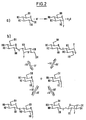
- monosaccharides but also oligosaccharides and polysaccharides, such as starch or cellulose, easily react with hydrogen fluoride to form glycosyl fluorides (see Defaye, Gadelle and Pedersen, Carbohydrate Research 110 (1982), pp. 217-227 , with further references, see formula scheme in Figure 2a).
- glucosyl fluoride formed is in a concentration-dependent equilibrium with reversion products, i.e. Products of the reaction of the glucosyl fluoride with any hydroxyl group of a neighboring molecule according to the formula scheme in Figure 2b.
- the resulting fluorinated disaccharides can also condense in equilibrium with other mono-, oligo- or polymeric saccharide molecules in the reaction mixture.
- the equilibrium is shifted towards the oligosaccharides (reversion products) when the hydrogen fluoride is evaporated.
- glucosyl fluoride has also been isolated from dilute solution in hydrogen fluoride by precipitation with diethyl ether (Defaye, Gadelle, Pedersen, loc. Cit.). This me However, for safety reasons, t h ode is not suitable for larger quantities (fire and explosion hazard in connection with diethyl ether); In addition, since fluoride and diethyl ether are difficult to separate, they have to be lost, which makes this method very costly and only useful for scientific purposes.
- the task was therefore to develop a process which allows the hydrogen fluoride to be recovered, does not require a precipitant and nevertheless proceeds without reversion of the primary glycosyl fluoride.
- the present invention thus relates to a process for the one-stage preparation of glycosyl fluorides by dissolving saccharides, ie mono-, oligo- or polysaccharides, in liquid hydrogen fluoride and evaporating the hydrogen fluoride, which is characterized in that the glycosyl fluoride formed is isolated in such a way that that in evaporation at a relatively high temperature at the start of evaporation causes a high evaporation rate or that when working at a low evaporation rate at the start of evaporation, a sufficiently low temperature is set.
- the invention is also a process for separating the excess hydrogen fluoride from the reaction mixture of saccharides and liquid hydrogen fluoride with isolation of the glycosyl fluoride, which is characterized in that the excess hydrogen fluoride is evaporated in such a way that at a relative high temperature at the start of evaporation causes a high evaporation rate or that when working at a low evaporation rate at the start of evaporation a sufficiently low temperature is set.
- the glycosyl fluoride is naturally obtained in the stereomeric form, which is more thermodynamically stable, usually in the a-form.
- the entire liquid range of the solution of the starting material in hydrogen fluoride between -80 ° C. and the boiling point of the hydrogen fluoride at atmospheric pressure, at normal pressure + 20 ° C. comes into consideration.
- a preferred range is between -50 ° C and 0 ° C, in particular between -40 ° C and -20 ° C, higher temperatures being permitted up to the upper limits of the specified ranges at higher evaporation rates and expedient at lower evaporation rates lower temperatures are observed, ie that you then set them near the lower limits of the specified ranges.
- relatively high temperature at the start of evaporation means temperatures in the range from -20 to +20, preferably understood from -20 to 0 ° C and the term "low temperature at the start of evaporation” means those in the range from -80 to -30, preferably from -50 to -30 ° C. Since the aim of the invention is to avoid reversion of the glycosyl fluoride, it is of course also preferred to take such measures in the range from -50 to 0 ° C. or in the narrower preferred range between -40 and -20 ° C. counteract the reversion, ie to achieve the highest possible evaporation rate.
- a low temperature at the start of evaporation can e.g. by distillation under reduced pressure, or by evaporation of the hydrogen fluoride by blowing in inert gas (e.g. air, nitrogen, carbon dioxide or noble gases) without or preferably with external cooling.
- inert gas e.g. air, nitrogen, carbon dioxide or noble gases
- an internal cooling of the solution can be brought about that external cooling is unnecessary.
- the high evaporation rate necessary in the latter case in particular can e.g. by using conventional methods such as mechanical atomization or spray drying, thin film or falling film evaporation.
- the evaporation residue is expediently neutralized immediately, preferably continuously, or frozen before further processing, e.g. using solid carbon dioxide.
- Hydrogen fluoride and saccharides are inherently miscible in any ratio.
- the ratio of the hydrogen fluoride to the saccharide can be, for example, at least 4 times. In general, however, it is at least 7 times and in particular at least 9 times.
- the ratio can be very large, for example 100 times, but this is naturally not practical for reasons of technical handling, so that the excess of hydrogen fluoride is generally limited in a technically sensible manner, for example to a maximum of 20 or 30 fold.
- the starting materials for the production of glycosyl fluorides according to the invention are the monomeric aldo- and ketotetroses, -pentoses, -hexoses, -heptoses, -octoses and -nonoses, but also glycosidically linked oligo- and polysaccharides, the glycosidic bonds of which can be cleaved by means of hydrogen fluoride .
- Examples of the monosaccharides which can be used in this sense are: glucose, galactose, mannose, allose, fructose, sorbose, fucose, rhamnose, xylose, ribose, arabinose and erythrose.
- glycosidically linked oligosaccharides and polysaccharides are: maltose, isomaltose, cellobiose, lactose, sucrose, raffinose, cellodextrin, amylose, amylopectin and cellulose, it being understood that only a uniformly structured starting material can be used to produce a uniformly composed glycosyl fluoride.
- Suitable materials for the reaction vessel or the evaporation apparatus are all materials which are resistant to hydrogen fluoride under the reaction conditions, such as polyethylene, polypropylene, copolymers of hexafluoropropene and vinylidene fluoride, for example (R) Viton, polytetrafluoroethylene, polytrifluorochlorethylene, chromium-nickel steel, pure nickel, pure nickel, Silver, gold, platinum. Unalloyed steel can also be used as the metallic material for low-stress equipment parts.
- the selected starting material is dissolved in hydrogen fluoride in a conventional manner with stirring;
- the hydrogen fluoride is advantageously introduced and the solid saccharide dosed.
- the heat of reaction and solvation released can be removed, for example, by external cooling or reflux cooling or used as heat of vaporization.
- the hydrogen fluoride evaporated in the process according to the invention can, as a rule, be reused immediately after the condensation in a suitable cooler.
- the yield of hydrogen fluoride recovered is, depending on the evaporation method used, up to well over 90% of the use.
- Example 2 In an apparatus and according to the method according to Example 1 , 1 g of D-galactose was reacted with 10 g of hydrogen fluoride, the mixture was left to stand for one hour at -30 to -40 ° C. and the hydrogen fluoride was then expelled in 15 minutes by blowing in nitrogen.
- the processing provided aD-galactosyl fluoride (approx. 1 g), which was identified by elemental analysis, thin-layer chromatogram and 19 F b and 13 C nuclear magnetic resonance spectra (see JEC Barnett et al., Biochem J. 105 (1967), p . 669). Melting point: 130 ° (dec.).
- Example 3 In the same way as described in Example 3, 1 g of D-mannose was reacted with 10 g of hydrogen fluoride. Approx. 1 g of ⁇ -D-mannosyl fluoride was isolated and identified by comparison with authentic material (cf. Barnett et al., Loc. Cit. In Example 3).
- the syrupy one-residue residue ran continuously from the cooled bottom of the chamber into a template cooled with dry ice.
- the evaporation time was 15 minutes.
- the evaporation residue still contained 10 g of hydrogen fluoride and was worked up as described in Example 1.
- the yield of a-glucosyl fluoride was 4.6 g.
Landscapes
- Chemical & Material Sciences (AREA)
- Organic Chemistry (AREA)
- Health & Medical Sciences (AREA)
- Life Sciences & Earth Sciences (AREA)
- Engineering & Computer Science (AREA)
- Biochemistry (AREA)
- Biotechnology (AREA)
- General Health & Medical Sciences (AREA)
- Genetics & Genomics (AREA)
- Molecular Biology (AREA)
- Saccharide Compounds (AREA)
- Polysaccharides And Polysaccharide Derivatives (AREA)
Abstract
Description
- Unter den 1-Halogenozuckern (Glycosylhalogeniden) nehmen die Fluorverbindungen auf Grund ihrer relativen Stabilität und besonderen Reaktivität eine Sonderstellung ein. Dies gilt insbesondere für Glycosid-Synthesen, die mit Glycosylhalogeniden durchgeführt werden. Glycosylfluoride sind die einzigen 1-Halogenozucker, die ohne Schutz der übrigen Hydroxygruppen beständig sind, wobei sich allerdings die anomeren Formen in ihrer Stabilität unterscheiden können. So ist z.B. a-Glucosylfluorid stabiler als die ß-Form.
- Obwohl, wie erwähnt, die Glycosylfluoride ohne Schutzgruppen beständig sind, ist ihre Herstellungsmethode gemäß der Literatur relativ umständlich und verläuft, vom reinen Kohlenhydrat (Monosaccharid) ausgehend, in drei Stufen. Die vorliegende Erfindung betrifft nun eine Methode zur einstufigen Herstellung von 1-Fluorozuckern (Glycosylfluoriden) aus einem Kohlenhydrat.
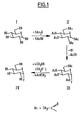
- Der Stand der Technik soll am Beispiel der Herstellung von α-Glucosylfluorid dargestellt werden. Hier bedient man sich immer noch der Methode von B. Helferich et al. (Liebigs Annalen der Chemie 447 (1926), S. 27 ff), derzufolge Glucose (I) in Stufe 1 in ihr Pentaacetat (II) übergeführt werden muß. Erst dieses kann in Stufe 2 mittels flüssigem Fluorwasserstoff zu Tetraacetyl-a-glucosylfluorid (III) umgesetzt werden, das schließlich in Stufe 3 im Sinne einer Umesterung mit Methanol in 30 Gegenwart von Methylat in das schutzgruppen-freie o-Glucosylfluorid (IV) umgewandelt werden muß (s. Formelschema in Figur 1).
- Als zusätzlicher Nachteil fällt ins Gewicht, daß der bei der Fluorierung (Stufe 2) verwendete Fluorwasserstoff verloren geht, hierbei auch teilweise eine Deacetylierung eintreten kann, die gegebenenfalls durch Nachacetylieren behoben werden muß, und daß mit der Abspaltung der Schutzgruppen durch Methylat auch eine Dehydrofluorierung unter Bildung eines Zuckeranhydrids eintreten kann, was die Reinheit des Endproduktes beeinträchtigt und für nachfolgende Reaktionen ungünstig sein kann.
- Die relative Stabilität der Glycosylfluoride, z.B. des a-Glucosylfluorids, legt den Gedanken nahe, dieses Produkt in einer Stufe direkt aus dem Monosaccharid, z.B. der Glucose, und Fluorwasserstoff herzustellen. In der Tat ist bekannt, daß Monosaccharide, aber auch Oligo- und Polysaccharide, wie Stärke oder Cellulose, leicht mit Fluorwasserstoff unter Bildung von Glycosylfluoriden reagieren (vgl. Defaye, Gadelle und Pedersen, Carbohydrate Research 110 (1982), S. 217-227, mit weiteren Literaturangaben, siehe Formelschema in Figur 2a). Wie dieser Literaturstelle weiter zu entnehmen ist, steht gebildetes Glucosylfluorid jedoch in einem konzentrationsabhängigen Gleichgewicht mit Reversionsprodukten, d.h. Produkten der Reaktion des Glucosylfluorids mit einer beliebigen Hydroxygruppe eines Nachbarmoleküls gemäß dem Formelschema in Figur 2b. Die dabei entstehenden fluorierten Disaccharide können ebenso im Gleichgewicht mit weiteren mono-, oligo-oder polymeren Saccharidmolekülen im Reaktionsgemisch kondensieren. Wie dieser Literaturstelle auch zu entnehmen ist, wird das Gleichgewicht beim Abdampfen des Fluorwasserstoffs in Richtung auf die Oligosaccharide (Reversionsprodukte) verschoben.
- Um die unerwünschte, konzentrationsabhängige Verschiebung der Gleichgewichte in Richtung der Reversionsprodukte zu vermeiden, hat man auch schon Glucosylfluorid aus verdünnter Lösung in Fluorwasserstoff durch Ausfällen mit Diäthyläther isoliert (Defaye, Gadelle, Pedersen, loc. cit.). Diese Methode eignet sich jedoch aus Sicherheitsgründen nicht für größere Mengen (Brand- und Explosionsgefahr im Zusammenhang mit Diäthyläther); außerdem müssen Fluorwasserstoff und Diäthyläther, da sie nur schwer voneinander getrennt werden können, verloren gegeben werden, was diese Methode sehr kostspielig und nur für wissenschaftliche Zwecke brauchbar macht. Eine weitere bekannte, aber für große Mengen ähnlich unpraktikable Methode ist das unmittelbare Neutralisieren der Lösung von Glucosylfluorid mit Calciumcarbonat (D.T.A. Lamport et al., Biotechnology and Bioengineering, Vol. XXIV, Seiten 903-918 (1982)). Dieses Verfahren liefert außerdem nur Ausbeuten von höchstens etwa 20 %.
- Es bestand daher die Aufgabe, ein Verfahren zu entwickeln, das eine Wiedergewinnung des Fluorwasserstoffs erlaubt, kein Fällungsmittel benötigt und dennoch ohne Reversion des primär entstandenen Glycosylfluorids abläuft.
- Es wurde nun überraschend gefunden, daß die Geschwindigkeit der Einstellung des erwähnten konzentrationsabhängigen Reversionsgleichgewichtes sehr stark temperaturabhängig ist, so daß man eine Reversion in einfacher Weise dadurch verneiden kann, daß man bein Aufarbeiten einer Lösung eines Glycosylfluorids in Fluorwasserstoff eine geeignet niedrige VerdaMpfungsteMperatur und/oder eine geeignet hohe Verdampfungsgeschwindigkeit auswählt.
- Gegenstand der vorliegenden Erfindung ist somit ein Verfahren zur einstufigen Herstellung von Glycosylfluoriden durch Auflösen von Sacchariden, d.h. Mono-, Oligo- oder Polysacchariden, in flüssigem Fluorwasserstoff und Verdampfen des Fluorwasserstoffs, das dadurch gekennzeichnet ist, daß man das gebildete Glycosylfluorid in der Weise isoliert, daß bei der Verdampfung bei einer relativ hohen Temperatur bei Beginn der Verdampfung eine hohe Verdampfungsgeschwindigkeit bewirkt bzw. daß beim Arbeiten bei einer niedrigen Verdampfungsgeschwindigkeit bei Beginn der Verdampfung eine ausreichend niedrige Temperatur eingestellt wird.
- Mit anderen Worten handelt es sich bei der Erfindung auch um ein Verfahren zur Abtrennung des überschüssigen Fluorwasserstoffs aus dem Reaktionsgemisch von Sacchariden und flüssigem Fluorwasserstoff unter Isolierung der Glycosylfluoride, das dadurch gekennzeichnet ist, daß der überschüssige Fluorwasserstoff in der Weise verdampft wird, daß bei einer relativ hohen Temperatur bei Beginn der Verdampfung eine hohe Verdampfungsgeschwindigkeit bewirkt bzw, daß beim Arbeiten bei einer niedrigen Verdampfungsgeschwindigkeit bei Beginn der Verdampfung eine ausreichend niedrige Temperatur eingestellt wird.
- Bei dem erfindungsgemäßen Verfahren wird das Glycosylfluorid naturgemäß in der stereomeren Form erhalten, die thermodynamisch stabiler ist, gewöhnlich in der a-Form.
- Für die Temperatur bei Beginn der Verdampfung kommt der gesamte flüssige Bereich der Lösung des Ausgangsstoffes in Fluorwasserstoff zwischen -80°C und der Siedetemperatur des Fluorwasserstoffs bei Atmosphärendruck, bei Normaldruck +20°C, in Betracht. Ein bevorzugter Bereich ist jedoch der zwischen -50°C und 0°C, insbesondere der zwischen -40°C und -20°C, wobei bei höheren Verdampfungsgeschwindigkeiten höhere Temperaturen bis zu den oberen Grenzen der angegebenen Bereiche zulässig sind und bei kleineren Verdampfungsgeschwindigkeiten zweckmäßig niedrigere Temperaturen eingehalten werden, d.h. daß man diese dann in der Nähe der unteren Grenzen der angegebenen Bereiche einstellt.
- Unter dem Begriff "relativ hohe Temperatur bei Beginn der Verdampfung" werden Temperaturen im Bereich von -20 bis +20, vorzugsweise von -20 bis 0°C verstanden und unter dem Begriff "niedrige Temperatur bei Beginn der Verdampfung" solche im Bereich von -80 bis -30, vorzugsweise von -50 bis -30°C. Da es Ziel der Erfindung ist, die Reversion des Glycosylfluorids zu vermeiden, ist es natürlich auch im Bereich von -50 bis 0°C bzw. in dem engeren bevorzugten Bereich zwischen -40 und -20°C bevorzugt, solche Maßnahmen zu ergreifen, die der Reversion entgegenwirken, d.h. eine möglichst hohe Verdampfungsgeschwindigkeit zu bewirken.
- Eine niedrige Temperatur bei Beginn der Verdampfung kann z.B. durch eine Destillation unter vermindertem Druck, oder durch eine Verdampfung des Fluorwasserstoffs durch Einblasen von Inertgas (z.B. Luft, Stickstoff, Kohlendioxid oder Edelgase) ohne oder vorzugsweise mit Außenkühlung eingestellt werden. Jedoch kann man auch durch Erzeugen einer so hohen Verdampfungsgeschwindigkeit und damit eines hohen Verbrauchs an Verdampfungswärme pro Zeiteinheit eine so starke innere Kühlung der Lösung bewirken, daß eine Außenkühlung unnötig ist.
- Die insbesondere im letzteren Fall nötige hohe Verdampfungsgeschwindigkeit kann z.B. durch die Anwendung üblicher Verfahren, wie der mechanischen Zerstäubung oder Sprühtrocknung, Dünnschicht- oder Fallfilmverdampfung erzeugt werden. Der Eindampfrückstand wird in diesen Fällen zweckmäßig sofort, vorzugsweise kontinuierlich, neutralisiert oder aber vor weiterer Verarbeitung tiefgekühlt, z.B. mittels festem Kohlendioxid.
- Fluorwasserstoff und Saccharide sind an sich in jedem Verhältnis mischbar. In den Lösungen, die der erfindungsgemäßen Behandlung unterworfen werden, kann das Verhältnis des Fluorwasserstoffs zum Saccharid z.B. mindestens das 4-fache betragen. Im allgemeinen beträgt es aber mindestens das 7-fache und insbesondere mindestens das 9-fache. Theoretisch kann das Verhältnis sehr groß sein, z.B. das 100-fache betragen, jedoch ist dieses aus Gründen der technischen Handhabung naturgemäß nicht praktisch, so daß man im allgemeinen den Überschuß an Fluorwasserstoff in technisch sinnvoller Weise beschränkt, z.B. auf höchstens das 20- oder 30-fache.
- Als Ausgangsstoffe für die erfindungsgemäße Herstellung von Glycosylfluoriden können die monomeren Aldo- und Ketotetrosen, -pentosen, -hexosen, -heptosen, -octosen und -nonosen, aber auch glycosidisch verknüpfte Oligo- und Polysaccharide, deren glycosidische Bindungen mittels Fluorwasserstoff spaltbar sind, verwendet werden. Als Beispiele für die in diesem Sinn einsetzbaren Monosaccharide werden angeführt: Glucose, Galactose, Mannose, Allose, Fructose, Sorbose, Fucose, Rhamnose, Xylose, Ribose, Arabinose und Erythrose. Als Beispiele für glycosidisch verknüpfte Oligo-und Polysaccharide werden angeführt: Maltose, Isomaltose, Cellobiose, Lactose, Saccharose, Raffinose, Cellodextrin, Amylose, Amylopectin und Cellulose, wobei selbstverständlich zur Herstellung eines einheitlich zusammengesetzten Glycosylfluorids nur ein einheitlich aufgebauter Ausgangsstoff dienen kann.
- Als Werkstoffe für das Reaktionsgefäß bzw. die Verdampfungsapparatur kommen alle Materialien infrage, die unter den Reaktionsbedingungen gegenüber Fluorwasserstoff beständig sind, wie Polyäthylen, Polypropylen, Copolymere aus Hexafluorpropen und Vinylidenfluorid, z.B. (R)Viton, Polytetrafluoräthylen, Polytrifluorchloräthylen, Chromnickelstahl, Reinnickel, Monelmetall, Silber, Gold, Platin. Für Apparateteile minderer Beanspruchung kann als metallischer Werkstoff auch unlegierter Stahl eingesetzt werden.
- Der gewählte Ausgangsstoff wird in üblicher Weise unter Rühren in Fluorwasserstoff gelöst; hierbei wird zweckmäßig der Fluorwasserstoff vorgelegt und das feste Saccharid eindosiert. Die dabei freiwerdende Reaktions- und Solvatationswärme kann z.B. durch Außenkühlung oder Rückflußkühlung abgeführt oder als Verdampfungswärme verbraucht werden.
- Nach erfolgter Auflösung des als Ausgangsstoff eingesetzten Saccharids ist es zweckmäßig, die Reaktion noch einige Zeit, z.B. etwa 15 bis 200 Minuten, bevorzugt 30 bis 100 Minuten, gegebenenfalls unter Rühren, zweckmäßig in TeMperaturbereich von 0 bis 20°C zu vervollständigen. Anschließend wird die klare Reaktionslösung erfindungsgemäß dem Abdampfprozeß unterworfen.
- Der beim erfindungsgemäßen Verfahren abgedampfte Fluorwasserstoff kann, nach der Kondensation in einem geeigneten Kühler, in der Regel unmittelbar wiederverwendet werden. Die Ausbeute an zurückgewonnenem Fluorwasserstoff liegt, je nach verwendeter Eindampfmethode, bis zu weit über 90 % des Einsatzes.
- Der gegebenenfalls gekühlte Eindampfrückstand, der das rohe Glycosylfluorid, Restmengen an Fluorwasserstoff sowie gegebenenfalls Reaktionswasser enthält, kann wiederum in üblicher Weise, z.B. mittels Calciumcarbonat in wäßriger Aufschlämmung (vgl. D.T.A. Lamport et al., loc. cit.), neutralisiert werden. Die Isolierung des 1-Fluorzuckers aus dem neutralen, wäßrigen Filtrat kann z.B. durch Eindampfen erfolgen. Bevorzugt werden jedoch schonende Methoden, wie die Gefriertrocknung. Die Ausbeuten sind, da Verluste nur im Zusammenhang mit einem einzigen Filtrationsvorgang auftreten können, stets sehr hoch, in der Regel nahezu quantitativ. Das so erhaltene Produkt ist meist filr die weitere Verwendung ausreichend rein. Da die Glycosylfluoride sich in ihrer Stabilität etwas unterscheiden, tritt zuweilen das entsprechende fluorfreie Monosaccharid, z.B. die Galactose, in geringen Mengen, z.B. bis zu 5 %, als Verunreinigung auf. Zur Identifikation und Reinheitskontrolle eignet sich neben der Elementaranalyse vor allem das Dünnschichtchromatogramn. Das erfindungsgemäße Verfahren hat gegenüber dem Stand der Technik folgende beiden großen Vorteile:
- a) Es handelt sich um eine einstufige Reaktion, ausgehend von einem an den Hydroxylgruppen ungeschützten Kohlenhydrat, welches nicht nur ein Monosaccharid, sondern auch ein preiswertes polymeres Saccharid, nämlich ein Oligo-oder Polysaccharid, wie Stärke oder Cellulose, sein kann; dabei werden die polymeren Sacharide zu monomeren bzw. oligomeren Produkten abgebaut.
- b) Fast der ganze, relativ kostspielige Fluorwasserstoff kann zurückgewonnen und wiederverwendet werden.
- Beide Vorteile bewirken, daß Glycosylfluoride auf die erfindungsgemäße Weise schneller, einfacher und billiger hergestellt werden können als bisher.
- Die folgenden Beispiele sollen das Verfahren weiter erläutern.
- In einen halbtransparenten, verschließbaren Gefäß aus Polyäthylen mit Magnetrühreinrichtung und Thermometer wurden 50 g Fluorwasserstoff vorgelegt und mittels eines Trockeneisbades auf -50°C abgekühlt; anschließend wurde das Kühlbad entfernt. Unter Überlagerung mit trockenem Stickstoff wurden darauf 5 g Glucose unter Rühren rasch so eingetragen, daß die Endtemperatur etwa +5°C erreichte. Die so erhaltene, klare, nur schwach gefärbte Reaktionslösung wurde unter gelegentlichem Rühren 1 Stunde bei Raumtemperatur verschlossen stehen gelassen und anschließend auf -30°C abgekühlt. Mittels eines Gaseinleitungsrohres aus Polyäthylen wurde nun ein Strom trockenen Stickstoffs mit einer Geschwindigkeit von ca. 100 Liter je Stunde in die Lösung geleitet und währenddessen die Temperatur des äußeren Klihlbades so einreguliert, daß eine Innentemperatur von etwa -30°C erhalten blieb. Der Gasstrom wurde in einen mit Trockeneis beschickten Kühler geleitet, in welchem der Fluorwasserstoff kondensierte und in einer gekühlten Vorlage gesammelt werden konnte. Nach 1,5 Stunden wurde der nunmehr zähe Sirup unter pH-Kontrolle mit einer wäßrigen Aufschlämmung von fein gepulvertem Calciumcarbonat vermengt. Das Reaktionsprodukt wurde schließlich mit wenigen Tropfen einer gesättigten wäßrigen Calciumhydroxidlösung bis zum bleibenden pH 7,5 versetzt und die Flüssigkeit abgesaugt. Das klare Filtrat wurde gefriergetrocknet und lieferte 4,6 g rohes Glucosylfluorid.
- Analyse: Der Schmelzbereich betrug 115-118°C (Zers.) in guter Übereinstimmung mit der Literatur; eine Depression trat beim Mischen mit authentischem Material nicht ein.
- Dünnschichtchromatographie auf Kieselgel G, Laufmittel Äthylacetat/Isopropanol/Wasser (23:65:12): kein Unterschied in Vergleich mit authentischem Material.
- Die 1H-, 19F- und 13C-Kernresonanzspektroskopie beweist das Vorliegen des a-Anomeren.
- In einem Destillierkolben aus Polytetrafluoräthylen wurde eine analog Beispiel 1 hergestellte Lösung von 10 g Glucose in 100 g Fluorwasserstoff bei einer Innentemperatur von -30°C unter vermindertem Druck destilliert. Der Druck wurde zwischen 100 und 130 mbar so einreguliert, da3 eine stetige Destillation erfolgte. Nach 2,5 Stunden betrug der Rest-HF-Gehalt im Destillationssumpf nur noch 5 g. Die Destillation wurde abgebrochen und der Rückstand wie nach Beispiel 1 aufgearbeitet. Es wurden 9,5 g Glucosylfluorid erhalten.
- In einer Apparatur und nach dem Verfahren gemäß Beispiel 1 wurde 1 g D-Galactose mit 10 g Fluorwasserstoff umgesetzt, das Gemisch eine Stunde bei -30 bis -40°C stehen gelassen und der Fluorwasserstoff danach durch Einblasen von Stickstoff in 15 Minuten verjagt. Die Aufarbeitung lieferte a-D-Galactosylfluorid (ca. 1 g), das durch Elementaranalyse, Dünnschichtchromatogramm und 19F bzw. 13C-Kernresonanz- spektren identifiziert wurde (vgl. J.E.C. Barnett et al., Biochem J. 105 (1967), S. 669). Schmelzpunkt: 130° (Zers.).
- Ebenso, wie in Beispiel 3 beschrieben, wurde 1 g D-Mannose mit 10 g Fluorwasserstoff umgesetzt. Es wurde ca. 1 g α-D-Mannosylfluorid Isoliert und durch Vergleich mit authentischem Material (vgl. Barnett et al., loc. cit. in Beispiel 3) identifiziert.
- In einer Apparatur und nach dem Verfahren gemäß Beispiel 1 wurden 5 g Stärke mit 50 g Fluorwasserstoff umgesetzt. Das Abblasen des Fluorwasserstoffs erfolgt nach einer einstündigen Verweilzeit bei -30 bis -35°C innerhalb einer Stunde. Danach betrug der Rest-Fluorwasserstoffgehalt im AbdampfRückstand noch 5 g. Die Neutralisation mit Calciumcarbonat, wie beschrieben, und Filtration unter Verwendung von Cellulosepulver als Filterhilfsmittel führte zu gefriergetrocknetem a-Glucosylfluorid. - Ausbeute 4,2 g.
- In einer Apparatur und nach dem Verfahren gemäß Beispiel 1 wurden 5 g Cellulose mit 50 g Fluorwassrstoff umgesetzt. Das Abblasen des Fluorwasserstoffs erfolgte bei -30°C innerhalb von 1,5 Stunden. Danach betrug der Rest-HF-Gehalt im Abdampfrückstand noch 5 g. Die Neutralisation mit Calciumcarbonat, wie beschrieben, Filtration und Gefriertrocknung ergab a-Glucosylfluorid in einer Ausbeute von 4,5 g.
- In einer Apparatur und nach dem Verfahren gemäß Beispiel 1 wurden 5 g D-Glucose mit 50 g Fluorwasserstoff umgesetzt. Nach Ablauf der Nachrührzeit wurde die klare Lösung in einen Tropftrichter aus Polytrifluorchloräthylen übergeführt und von dort in eine zylindrische Kammer aus halbtransparentem Polyäthylen eingetropft, in welcher ein rasch rotierender Blattrührer für eine feine Zerstäubung der Lösung sorgte. Der entweichende Fluorwasserstoff wurde mittels eines aufwärts gerichteten Stickstoff-Stromes (300 1/Stunde) aus der Kammer geführt und in einem Kühler kondensiert. An der Wand der Kammer sorgte eine schwache Außenheizung durch Warmwasser von 40°C für eine rasche Verdampfung des Fluorwasserstoffs aus dem ablaufenden Sirup-Film. Der sirupöse Eindanpfrückstand lief aus dem gekühlten Boden der Kammer kontinuierlich in eine mit Trockeneis gekühlte Vorlage. Die Dauer der Verdampfung betrug 15 Minuten. Der Eindampfrückstand enthielt noch 10 g Fluorwasserstoff und wurde, wie in Beispiel 1 beschrieben, aufgearbeitet. Die Ausbeute an a-Glucosylfluorid betrug 4,6 g.
Claims (10)
Priority Applications (1)
| Application Number | Priority Date | Filing Date | Title |
|---|---|---|---|
| AT85110754T ATE47862T1 (de) | 1984-09-05 | 1985-08-27 | Verfahren zur einstufigen herstellung von glycosylfluoriden. |
Applications Claiming Priority (2)
| Application Number | Priority Date | Filing Date | Title |
|---|---|---|---|
| DE19843432565 DE3432565A1 (de) | 1984-09-05 | 1984-09-05 | Verfahren zur herstellung von glycosylfluoriden |
| DE3432565 | 1984-09-05 |
Publications (3)
| Publication Number | Publication Date |
|---|---|
| EP0173949A2 true EP0173949A2 (de) | 1986-03-12 |
| EP0173949A3 EP0173949A3 (en) | 1987-10-07 |
| EP0173949B1 EP0173949B1 (de) | 1989-11-08 |
Family
ID=6244653
Family Applications (1)
| Application Number | Title | Priority Date | Filing Date |
|---|---|---|---|
| EP85110754A Expired EP0173949B1 (de) | 1984-09-05 | 1985-08-27 | Verfahren zur einstufigen Herstellung von Glycosylfluoriden |
Country Status (8)
| Country | Link |
|---|---|
| US (1) | US4847372A (de) |
| EP (1) | EP0173949B1 (de) |
| JP (1) | JPH0633305B2 (de) |
| AT (1) | ATE47862T1 (de) |
| AU (1) | AU4707285A (de) |
| CA (1) | CA1271745A (de) |
| DE (2) | DE3432565A1 (de) |
| DK (1) | DK166826B1 (de) |
Families Citing this family (5)
| Publication number | Priority date | Publication date | Assignee | Title |
|---|---|---|---|---|
| JPS6475498A (en) * | 1987-09-14 | 1989-03-22 | Japan Steel Works Ltd | Method and apparatus for synthesizing fluorodeoxyglucose |
| JPH0236286A (ja) * | 1988-07-27 | 1990-02-06 | Shin Etsu Chem Co Ltd | 粘着性構造体 |
| NL9201711A (nl) * | 1992-10-02 | 1994-05-02 | Avebe Coop Verkoop Prod | Werkwijze voor de bereiding van ketenverlengd zetmeel. |
| WO1997032590A1 (en) * | 1996-03-04 | 1997-09-12 | Sloan-Kettering Institute For Cancer Research | Compositions and method for evaluating tissue for the presence of cancer cells |
| JP2012017306A (ja) * | 2010-07-09 | 2012-01-26 | Central Glass Co Ltd | 2,3,4,6−テトラ−o−アシル−d−マンノピラノシルフルオリド高純度品の工業的製造方法 |
Family Cites Families (2)
| Publication number | Priority date | Publication date | Assignee | Title |
|---|---|---|---|---|
| US4233277A (en) * | 1975-02-03 | 1980-11-11 | Ppg Industries, Inc. | Preparing refractory metal boride powder |
| GB2104063B (en) * | 1981-08-21 | 1985-11-06 | Tate And Lyle Plc | 4-halo-substituted sucrose derivatives |
-
1984
- 1984-09-05 DE DE19843432565 patent/DE3432565A1/de not_active Withdrawn
-
1985
- 1985-08-27 DE DE8585110754T patent/DE3574144D1/de not_active Expired
- 1985-08-27 EP EP85110754A patent/EP0173949B1/de not_active Expired
- 1985-08-27 AT AT85110754T patent/ATE47862T1/de not_active IP Right Cessation
- 1985-09-04 AU AU47072/85A patent/AU4707285A/en not_active Abandoned
- 1985-09-04 JP JP60194018A patent/JPH0633305B2/ja not_active Expired - Lifetime
- 1985-09-04 CA CA000489968A patent/CA1271745A/en not_active Expired - Fee Related
- 1985-09-04 DK DK403385A patent/DK166826B1/da not_active IP Right Cessation
-
1987
- 1987-04-28 US US07/045,752 patent/US4847372A/en not_active Expired - Fee Related
Non-Patent Citations (3)
| Title |
|---|
| CARBOHYDRATE RESEARCH, Band 110, 1982, Seiten 217-227, Elsevier Scientific Publishing Company, Amsterdam, NL; J. DEFAYE et al.: "The behavior of cellulose, amylose, and beta-D-xylan towards anhydrous hydrogen fluoride" * |
| CHEMICAL ABSTRACTS, Band 101, Nr. 19, 5. November 1984, Seite 734, Zusammenfassung Nr. 171601e, Columbus, Ohio, US; T. GOTO et al.: "Effect of glycosyl halides on glucose isomerase. I. Synthesis of glycosyl fluorides and their effects on the activity of glucose isomerase", & SHOKUHIN SOGO KENKYUSHO DENKYU HOKOKU 1983, (41), 50-3 * |
| CHEMICAL ABSTRACTS, Band 102, Nr. 2, 14. Januar 1985, Seite 97, Zusammenfassung Nr. 8411e, Columbus, Ohio, US; J. DEFAYE et al.: "Hydrogen fluoride saccharification of cellulose and lignocellulose materials", & J. APPL. POLYM. SCI.: APPL. POLYM. SYMP. 1983, 37(PROC. CELLUL. CONF., 9th, 1982, Part 2), 653-70 * |
Also Published As
| Publication number | Publication date |
|---|---|
| JPH0633305B2 (ja) | 1994-05-02 |
| JPS6168496A (ja) | 1986-04-08 |
| DK166826B1 (da) | 1993-07-19 |
| US4847372A (en) | 1989-07-11 |
| DE3432565A1 (de) | 1986-03-13 |
| DE3574144D1 (en) | 1989-12-14 |
| EP0173949A3 (en) | 1987-10-07 |
| CA1271745A (en) | 1990-07-17 |
| ATE47862T1 (de) | 1989-11-15 |
| EP0173949B1 (de) | 1989-11-08 |
| AU4707285A (en) | 1986-03-27 |
| DK403385D0 (da) | 1985-09-04 |
| DK403385A (da) | 1986-03-06 |
Similar Documents
| Publication | Publication Date | Title |
|---|---|---|
| EP0306650B1 (de) | Verfahren zur Herstellung von Alkyloligoglycosiden | |
| DE69302977T2 (de) | Verfahren zur Anomizierung von Nukleosiden | |
| DE69905176T2 (de) | Verfahren zur herstellung von clarithromycinkristallen der form ii | |
| DE2700917A1 (de) | Chlorderivate der sucrose und verfahren zu ihrer herstellung | |
| EP0017778A1 (de) | Verfahren zur Herstellung eines wasserfreien, rieselfähigen, kristallinen, Fruktose enthaltenden Materials | |
| DE69018403T2 (de) | Verfahren zur Raffinierung von Seife enthaltenden rohen Produkten aus einem Polyol-Fettsäure-Veresterungsgemisch. | |
| DE69325102T2 (de) | Kontinuierliche bleichung von alkylpolyglykosiden | |
| DE1813571B2 (de) | Verfahren zur Herstellung eines Plasmastreckmittels | |
| EP0493495B1 (de) | Verfahren zum destillativen abtrennen von alkoholen | |
| EP0173949B1 (de) | Verfahren zur einstufigen Herstellung von Glycosylfluoriden | |
| EP0166362A2 (de) | Verfahren zur Herstellung von wasserlöslichen Polysacchariden, die so erhältlichen Saccharide und ihre Verwendung | |
| US4927920A (en) | Sugar ester synthesis | |
| CH678057A5 (de) | Verfahren zur herstellung von natrium- oder kalium-l-ascorbat. | |
| DE69902624T2 (de) | Ein kristall von diuridine tetraphosphat oder ein solches salz und verfahren zu seiner herstellung, verfahren und herstellung der vorgenannten zusammensetzung | |
| EP0268974B1 (de) | Verfahren zur Herstellung von Gemischen aus mono- und oligomeren Kohlenhydratestern, die so erhältlichen Kohlenhydratestergemische und ihre Verwendung | |
| DE3750986T2 (de) | Glykosidherstellung. | |
| DE69223888T2 (de) | Kristalline Lactulose und Verfahren zu deren Herstellung | |
| EP1183264B1 (de) | Ein verbessertes verfahren zur herstellung von alkylpolyglycosiden | |
| DE60109212T2 (de) | Herstellung von warfarin-natrium aus warfarin-säure | |
| DE3782561T2 (de) | Verfahren zur herstellung von fruktofuranose-dianhydriden und ihre verwendung als nahrungszusatzmittel. | |
| EP0327920A2 (de) | Verfahren zur Herstellung von 1,6-beta-D-Anhydroglucopyranose (Lävoglucosan) in hoher Reinheit | |
| DE1543203A1 (de) | Neue Furanoside und Verfahren zu ihrer Herstellung | |
| DE69407083T2 (de) | Verfahren zur Herstellung von kristallisierten Lactulose aus handelsüblichem Sirup | |
| DE1300670B (de) | Verfahren zur Herstellung von wasserloeslicher und wasserunloeslicher Hydroxyalkylamylose | |
| EP0537187B1 (de) | Verfahren zur herstellung acylierter glycosylfluoride |
Legal Events
| Date | Code | Title | Description |
|---|---|---|---|
| PUAI | Public reference made under article 153(3) epc to a published international application that has entered the european phase |
Free format text: ORIGINAL CODE: 0009012 |
|
| AK | Designated contracting states |
Kind code of ref document: A2 Designated state(s): AT BE CH DE FR GB IT LI NL SE |
|
| PUAL | Search report despatched |
Free format text: ORIGINAL CODE: 0009013 |
|
| AK | Designated contracting states |
Kind code of ref document: A3 Designated state(s): AT BE CH DE FR GB IT LI NL SE |
|
| 17P | Request for examination filed |
Effective date: 19871202 |
|
| 17Q | First examination report despatched |
Effective date: 19880811 |
|
| GRAA | (expected) grant |
Free format text: ORIGINAL CODE: 0009210 |
|
| AK | Designated contracting states |
Kind code of ref document: B1 Designated state(s): AT BE CH DE FR GB IT LI NL SE |
|
| REF | Corresponds to: |
Ref document number: 47862 Country of ref document: AT Date of ref document: 19891115 Kind code of ref document: T |
|
| ITF | It: translation for a ep patent filed | ||
| REF | Corresponds to: |
Ref document number: 3574144 Country of ref document: DE Date of ref document: 19891214 |
|
| ET | Fr: translation filed | ||
| GBT | Gb: translation of ep patent filed (gb section 77(6)(a)/1977) | ||
| PG25 | Lapsed in a contracting state [announced via postgrant information from national office to epo] |
Ref country code: AT Effective date: 19900827 |
|
| PLBE | No opposition filed within time limit |
Free format text: ORIGINAL CODE: 0009261 |
|
| STAA | Information on the status of an ep patent application or granted ep patent |
Free format text: STATUS: NO OPPOSITION FILED WITHIN TIME LIMIT |
|
| PG25 | Lapsed in a contracting state [announced via postgrant information from national office to epo] |
Ref country code: BE Effective date: 19900831 |
|
| 26N | No opposition filed | ||
| BERE | Be: lapsed |
Owner name: HOECHST A.G. Effective date: 19900831 |
|
| PGFP | Annual fee paid to national office [announced via postgrant information from national office to epo] |
Ref country code: FR Payment date: 19940718 Year of fee payment: 10 |
|
| PGFP | Annual fee paid to national office [announced via postgrant information from national office to epo] |
Ref country code: CH Payment date: 19940720 Year of fee payment: 10 |
|
| PGFP | Annual fee paid to national office [announced via postgrant information from national office to epo] |
Ref country code: GB Payment date: 19940721 Year of fee payment: 10 |
|
| PGFP | Annual fee paid to national office [announced via postgrant information from national office to epo] |
Ref country code: SE Payment date: 19940831 Year of fee payment: 10 Ref country code: NL Payment date: 19940831 Year of fee payment: 10 |
|
| PGFP | Annual fee paid to national office [announced via postgrant information from national office to epo] |
Ref country code: DE Payment date: 19941014 Year of fee payment: 10 |
|
| EAL | Se: european patent in force in sweden |
Ref document number: 85110754.0 |
|
| PG25 | Lapsed in a contracting state [announced via postgrant information from national office to epo] |
Ref country code: GB Effective date: 19950827 |
|
| PG25 | Lapsed in a contracting state [announced via postgrant information from national office to epo] |
Ref country code: SE Effective date: 19950828 |
|
| PG25 | Lapsed in a contracting state [announced via postgrant information from national office to epo] |
Ref country code: LI Effective date: 19950831 Ref country code: CH Effective date: 19950831 |
|
| PG25 | Lapsed in a contracting state [announced via postgrant information from national office to epo] |
Ref country code: NL Effective date: 19960301 |
|
| REG | Reference to a national code |
Ref country code: CH Ref legal event code: PL |
|
| GBPC | Gb: european patent ceased through non-payment of renewal fee |
Effective date: 19950827 |
|
| PG25 | Lapsed in a contracting state [announced via postgrant information from national office to epo] |
Ref country code: FR Effective date: 19960430 |
|
| NLV4 | Nl: lapsed or anulled due to non-payment of the annual fee |
Effective date: 19960301 |
|
| PG25 | Lapsed in a contracting state [announced via postgrant information from national office to epo] |
Ref country code: DE Effective date: 19960501 |
|
| EUG | Se: european patent has lapsed |
Ref document number: 85110754.0 |
|
| REG | Reference to a national code |
Ref country code: FR Ref legal event code: ST |