EP0179444B1 - Use of a micellular particle composition encapsulating a chemotherapeutic agent for intravenous targeting to tumors - Google Patents
Use of a micellular particle composition encapsulating a chemotherapeutic agent for intravenous targeting to tumors Download PDFInfo
- Publication number
- EP0179444B1 EP0179444B1 EP85113386A EP85113386A EP0179444B1 EP 0179444 B1 EP0179444 B1 EP 0179444B1 EP 85113386 A EP85113386 A EP 85113386A EP 85113386 A EP85113386 A EP 85113386A EP 0179444 B1 EP0179444 B1 EP 0179444B1
- Authority
- EP
- European Patent Office
- Prior art keywords
- vesicles
- particles
- phospholipid
- tumor
- micellular
- Prior art date
- Legal status (The legal status is an assumption and is not a legal conclusion. Google has not performed a legal analysis and makes no representation as to the accuracy of the status listed.)
- Expired - Lifetime
Links
Images





Classifications
-
- A—HUMAN NECESSITIES
- A61—MEDICAL OR VETERINARY SCIENCE; HYGIENE
- A61K—PREPARATIONS FOR MEDICAL, DENTAL OR TOILETRY PURPOSES
- A61K51/00—Preparations containing radioactive substances for use in therapy or testing in vivo
-
- A—HUMAN NECESSITIES
- A61—MEDICAL OR VETERINARY SCIENCE; HYGIENE
- A61K—PREPARATIONS FOR MEDICAL, DENTAL OR TOILETRY PURPOSES
- A61K51/00—Preparations containing radioactive substances for use in therapy or testing in vivo
- A61K51/12—Preparations containing radioactive substances for use in therapy or testing in vivo characterised by a special physical form, e.g. emulsion, microcapsules, liposomes, characterized by a special physical form, e.g. emulsions, dispersions, microcapsules
- A61K51/1217—Dispersions, suspensions, colloids, emulsions, e.g. perfluorinated emulsion, sols
- A61K51/1234—Liposomes
-
- A—HUMAN NECESSITIES
- A61—MEDICAL OR VETERINARY SCIENCE; HYGIENE
- A61K—PREPARATIONS FOR MEDICAL, DENTAL OR TOILETRY PURPOSES
- A61K9/00—Medicinal preparations characterised by special physical form
- A61K9/10—Dispersions; Emulsions
- A61K9/127—Synthetic bilayered vehicles, e.g. liposomes or liposomes with cholesterol as the only non-phosphatidyl surfactant
- A61K9/1271—Non-conventional liposomes, e.g. PEGylated liposomes or liposomes coated or grafted with polymers
-
- A—HUMAN NECESSITIES
- A61—MEDICAL OR VETERINARY SCIENCE; HYGIENE
- A61K—PREPARATIONS FOR MEDICAL, DENTAL OR TOILETRY PURPOSES
- A61K2121/00—Preparations for use in therapy
-
- A—HUMAN NECESSITIES
- A61—MEDICAL OR VETERINARY SCIENCE; HYGIENE
- A61K—PREPARATIONS FOR MEDICAL, DENTAL OR TOILETRY PURPOSES
- A61K2123/00—Preparations for testing in vivo
Definitions
- This invention relates to the use of a micellular particle composition encapsulating a chemotherapeutic agent for targeting to tumors. More particularly, the invention relates to the use of neutral or charged phospholipid micellular particle compositions containing a chemotherapeutic agent for treating tumors in a body.
- abnormalities such as tumors in a patient's body can be diagnosed and treated
- the location of malignant tumor cells has to be identified so that a chemotherapeutic agent can be directed to such cells to eliminate the tumor.
- chemotherapeutic drug in the body orally, subcutaneously or intravenously can result in harm to the normal cells in the body which take up the drug and a worsening in the patient's condition, without achieving the desired reduction in tumor cell activity.
- this toxicity to normal cells in the patient's body has been a major disadvantage in the treatment of tumors with chemotherapeutic agents.
- the lack of efficacy of such chemotherapy is also attributable to the failure of the freely circulating drug to localize within tumor cells before it is excreted or taken up by other cells in the body.
- chemotherapeutic agents Prior attempts to improve treatment of tumors by chemotherapeutic agents have included encapsulation of such agents within biodegradable phospholipid micellular particles in the form of vesicles or liposomes. Encapsulation is thought to reduce the potential toxicity from the circulating drugs. researchers have also sought to utilize such encapsulation to selectively target tumors within a body for delivery of chemotherapeutics. However, until the present invention efforts to reliably place imaging agents or drug-encapsulating particles within tumor cells have not been demonstrated.
- Such variations include defects in the vascular endothelium from poor cell differentiation, and breaks in vascular walls as a result of invading tumor cells.
- tumor-modified capillaries include vessels with interrupted endothelial lining and vessels with fenestrated endothelium. (H.I. Peterson, supra ).
- EP-28 917 describes vesicles accumulating within the lymphatic system or the lung, spleen or liver. This document does not deal with the targeting of tumor sites for a successfull treatment of the tumor.
- the object of the invention is to enhance extravasation of encapsulated therapeutic agents to tumor cells within the body to deliver said chemotherapeutic agents to the cells of such tumors.
- a micellular particle composition said particles having a chemotherapeutic agent encapsulated therein and comprising a chemically pure (>98% pure)phospholipid and zero to fifty percent cholesterol by weight of phospholipid, said particles having a size less than 200 nm, for the preparation of an intravenously administrable pharmaceutical composition useful for the delivery of said particle composition and chemotherapeutic agent into tumor cells.
- the micellular particle compositions to be used according to the invention comprise biodegradable micellular particles in the form of unilamellar phospholipid vesicles. Pure (more than approximately 98% pure) neutral phospholipid molecules containing hydrocarbon chains having at least 18 carbon atoms, such as distearoylphosphatidylcholine (DSPC), are incorporated into the vesicles.
- DSPC distearoylphosphatidylcholine
- the chemotherapeutic agent may be associated with the phospholipid molecules or internal contents of the particles to treat the tumors.
- a particularly useful chemotherapeutic agent is methotrexate.
- the phospholipid vesicles as described herein When the phospholipid vesicles as described herein are introduced into the bloodstream of a patient, they move intact to locate in specific locations in the patient's body, such as locations where cancerous growth appears. This cancerous growth at specific locations can then be treated.
- a first group of phospholipid vesicles having positively charged molecules extending externally from the particles may be introduced into the patient's bloodstream to block uptake by phagocytic cells such as those in the liver, spleen and other tissues in the patient's body comprising the reticuloendothelial system.
- the extended, positively charged molecules bound to such phospholipid vesicles may be lipid soluble molecules containing a protruding amino group, for example, aminosaccharide derivatives of cholesterol, such as 6-aminomannose derivative of cholesterol.
- a second group of small (less than 200nm)phospholipid vesicles may be introduced into the patient's bloodstream to place intact this second group of vesicles in the specific locations such as tumors in the patient's body.
- Such phospholipid vesicles preferably are neutral, and may include cholesterol.
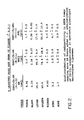
- Figure 1 is a table illustrating the targeting of phospholipid vesicles to tumors in a body.
- Figure 2 is a table illustrating the targeting of reticuloendothelial cells in the liver and spleen by phospholipid vesicles which may be used as a blocking agent.
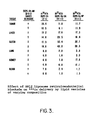
- Figure 3 is a table illustrating the targeting of phospholipid vesicles to tumors in the body after the blocking of the reticuloendothelial cells in the liver and spleen.
- Figure 4 is a chart illustrating the time course of clearance of radiolabeled phospholipid vesicles in the blood and accumulation in the tumor.
- Figure 5 is a graph indicating the percentage of intact labelled phospholipid vesicles remaining in blood and tumor as determined by gamma ray perturbed angular correlation (PAC) spectroscopy.
- PAC gamma ray perturbed angular correlation
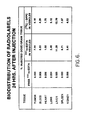
- Figure 6 is a table illustrating the blood distribution of neutral labeled vesicles incorporating Indium-111 chelated to ehtylene-diamine tetracetic acid (EDTA) or C-14 Dipalmitoyl phosphatidylcholine as compared to the In-111-EDTA in various tissues.
- EDTA ehtylene-diamine tetracetic acid
- C-14 Dipalmitoyl phosphatidylcholine as compared to the In-111-EDTA in various tissues.
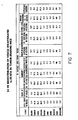
- Figure 7 is a table illustrating the blood distribution of labeled phospholipid vesicles in tissues of mice bearing 10 different tumors.
- Figure 8 is a series of autoradiographs depicting tumor cells containing labeled vesicles.
- Figure 9 is a table illustrating the enhanced delivery of a chemotherapeutic agent to a tumor in the body by the use of phospholipid vesicles.
- Figure 10 is a table showing enhanced delivery of a vesicle encapsulated chemotherapeutic to tumor.
- microcellular particles and “micelles” refer to water-soluble-particles which result from spontaneous aggregations of amphiphilic molecules.
- Amphiphilic molecules contain hydrophobic and hydrophilic portions.
- preferred amphiphiles are biological lipids.
- Such micelles can be in the form of small spheres, ellipsoids or long cylinders, and can also consist of bilayers with two parallel layers of amphiphilic molecules.
- Such bilayered micelles usually take the shape of unilamellar spherical vesicles with an internal aqueous compartment, and are also known as "liposomes.”
- these vesicles are, by now, well known in the art. Typically, they are prepared from phospholipids, for example, distearoylphosphatidylcholine by sonication, and may include other materials such as neutral lipids, for example, cholesterol, and also surface modifiers such as positively or negatively charged compounds, saccharides, antibodies and other functional ligands which have groups that can anchor the molecule in the bilayer of the vesicle.
- surface modifiers such as positively or negatively charged compounds, saccharides, antibodies and other functional ligands which have groups that can anchor the molecule in the bilayer of the vesicle.
- phase transition points are a function of hydrocarbon chain length,(C. Tanford, The Hydrophobic Effect , 2nd. Ed. (1980)).
- Certain phospholipid molecules exhibit phase transitions at relatively high temperatures (greater than 37° C), and we have found that use of these phospholipids in the compositions described herein provide vesicles with improved stability in vivo .
- the stability of the phospholipid micellular particles may be further enhanced by incorporating cholesterol.
- a stable vesicle may be obtained by incorporating 0-50% cholesterol by weight of phospholipid into the vesicles.
- Small unilamellar vesicles (SUV) with the ionophore A23187 were prepared from distearoylphosphatidylcholine (DSPC), cholesterol (Ch), dicetyl phosphate (DP), stearylamine (SA) and the 6-aminomannose (AM), and 6-aminomannitol (AML) derivatives of cholesterol, according to previous methods.
- DSPC distearoylphosphatidylcholine
- DP dicetyl phosphate
- SA stearylamine
- AM 6-aminomannose
- AML 6-aminomannitol
- N2 nitrogen
- Each tube was filled with 0.6 ml phosphate 10 mM phosphate buffered 0.9 saline, pH 7.4 (PBS), containing 1mM nitrilotriacetic acid (NTA) and sonicated under N2, for 5 to 15 minutes with an MSE brand probe sonicator equipped with a titanium microtip. Sonication yielded the small, unilamellar vesicles or vesicles used throughout these experiments.
- Vesicles were annealed at 60° C for 10 minutes and centrifuged at 300 x g. Vesicles were separated from unencapsulated NTA with a 30 x 1.5 cm Sephadex G-50 column. Vesicle size was determined by electron microscopy of preparations. negatively stained with uranyl acetate. All vesicle types were shown by electron microscopy to have a mean diameter less than 0.1 ⁇ m ( 100 nm). For example, DSPC:Ch vesicles had a mean diameter of approximately 52.8nm. However, vesicles as large as approximately 200nm are believed to be satisfactory in obtaining the desired results of this invention.
- the vesicles obtained as described above are chemically pure.
- chemically pure is meant that the materials which constitute phospholipid vesicles are more than 98% pure.
- the phospholipid chemical added is distearoyl phosphatidylcholine, this material is used at more than 98% purity.
- other components such as cholesterol, which compose the vesicle.
- the phospholipid vesicles obtained as described above are stable when injected into experimental animals.
- the saccharide portions of aminomannose and aminomannitol derivatives of cholesterol extend externally from the phospholipid vesicles.
- an amine moiety is provided that extends approximately 0.5-2.5nm preferably about 1nm, beyond the surface of the micelles.
- the appropriate molecular design comprises a hydrophobic portion which serves to anchor the molecule within the vesicular bilayer, and a linking portion which is at least mildly hydrophilic which spans the requisite distance between the hydrophobic region and the amino functional group.
- the hydrophilicity is apparently required to prevent the link from internalizing within the bilayer also and thus serves to "extend" the amine from the surface.
- An example of a suitable extended amine within the context of this invention is a 6-aminomannose cholesterol derivative such as, for example, 6-(5-cholesten-3- ⁇ -yloxy) hexyl-6-amino-6-deoxyl-thio-D-mannopyranoside.
- the cholesterol portion provides the hydrophobic moiety, while the aminomannose is relatively hydrophilic.
- other amino sugars attached to other cholesterol derivatives for example, are equally suitable as alternative embodiments of the hydrophilic and hydrophobic portions.
- Polyamines and polyamino acids which can be bound covalently or associated by other means to the vesicle or other micelle surface may also be used. These materials and cholesterol tend to impart stability to the phospholipid vesicles. Cholesterol may also be included in the range of approximately 0% to 50% of cholesterol by weight of total phospholipid, the remainder constituting the phospholipids.
- the chemically pure vesicle compositions discussed above are quite stable to leakage in vitro and in vivo .
- Phospholipid mixtures such as egg lecithin form more fluid membranes than pure phospholipids; as a result, vesicles from natural lecithin mixtures are less stable and are more likely to leak their contents than pure phospholipids.
- In-111 Loading of In-111 into preformed vesicles was facilitated by the presence of the ionophore A23187 in the lipid bilayer.
- In-111 was loaded into vesicles at 60°-80°C as described by Mauk and Gamble, Anal. Bioc. , 94, 302-307 (1979). Incubations were terminated by the addition of 0.1 ml of 10mM EDTA in phosphate buffered 0.9% sodium chloride, pH 7.4 (PBS), and unencapsulated In-111 was separated from the loaded vesicles by chromatography on Sephadex G-50. Up to 90% of the added In-111 could be incorporated into preformed vesicles by this technique, and specific activities of up to 300 microcuries ( ⁇ Ci)/mg lipid have been obtained.
- PBS phosphate buffered 0.9% sodium chloride
- mice Male BALB/c mice weighing 20-25 g were injected subcutaneously on the right hind leg with 5 x 10⁵ EMT6 cells in 0.1 ml sterile phosphate buffered saline. Tumors were allowed to grow for 10-20 days prior to using these animals for imaging studies. At this stage, tumors weighed between 0.2 and 0.4 g. Up to 0.5 ml of PBS containing 1-2 mg vesicles loaded with up to 30 ⁇ Ci In-111 were injected into the tail vein of each animal. Control animals were injected with In-111-NTA which had not been encapsulated in vesicles.
- each animal was anesthetized with 40 mg/kg sodium pentobarbital and positioned on a platform 12 cm from the gamma scintillation camera equipment with a 6 mm pinhold.
- Whole-body dorsal images were acquired on x-ray film and corresponding digitized data were stored on magnetic discs for computer analysis.
- EMT6 tumor fragments (25-50 mg) were implanted subcutaneously in female BALB/C mice 5 to 12 days prior to the experiment. EMT6 tumor bearing mice were then given intravenous injections of 225-350 ⁇ Ci of [H-3]-labeled vesicles, or normal saline as a background control. Fifteen hours later, the animals were sacrificed. Tumor, heart, skeletal muscle, liver, spleen and skin samples were removed, immediately immersed in the solution of 2% glutaraldehyde-2% paraformaldehyde, and sectioned into 1-2 mm pieces. The samples were further fixed in 1% osmium tetroxide, and then dehydrated and embedded in EPON® for thin sectioning.
- Thin (1.5 ⁇ m) tissue sections were placed on microscope slides and coated with Ilford L4 photographic emulsion. Emulsions were exposed for 14-21 days and then developed. Tissues were lightly counterstained with 1% toluidine blue, and photomicrographs were taken.
- neutral DSPC:Ch phospholipid vesicles deliver In-111 to EMT6 murine tumors in sufficient quantity to allow definitive localization of tumors by gamma camera imaging.
- mice were injected with either a saline solution (minus, "-", blockade) or with 8 mg AM/2 vesicles one hour prior to injecting In-111 labeled vesicles of the compositions described in Figure 3. Tissue biodistribution was determined at twenty-four (24) hours as described above.
- the saline solution provided a control and did not block the reticuloendothelial cells in the liver and spleen in the manner discussed above.
- the AM/2 vesicles provided a positive charge and were effective in blocking the reticuloendothelial cells in the liver and spleen. Since the reticuloendothelial cells in the liver and spleen were at least partially blocked with the AM/2 vesicles, any subsequent injection of phospholipid vesicles into the blood stream of the body had an increased opportunity for uptake by the tumor.
- Figure 1 indicates the amount of In-111 targeted to the different parts of the body when phospholipid vesicles containing In-111 are introduced into the blood stream without any previous blockade of the reticuloendothelial cells in the liver and spleen.
- Figure 3 indicates the amount of In-111 targeted to the different parts of the body when phospholipid vesicles containing In-111 are introduced into the blood stream after a previous blockade of the reticuloendothelial cells in the liver and spleen.
- the amount of the In-111 targeted to the tumor was significantly increased in most instances using the blockade.
- the amount of the In-111 received at the liver and spleen using the blockade was significantly reduced from the amount of the In-111 received at the liver and spleen in Figure 1.
- the second group of phospholipid vesicles to the be targeted to the tumor were introduced into the blood stream approximately one hour after the introduction of the initial group of phospholipid vesicles into the blood stream to block the reticuloendothelial cells in the liver and spleen. It will be appreciated that other time periods than one hour may also be used. For example, the time period may be considerably shorter than one hour. Since the phospholipid vesicles blocking the liver and spleen are effective for an extended period, the introduction of the phospholipid vesicles to target the tumor may be considered as concurrent with the introduction of the phospholipid vesicles to block the liver and spleen.
- Figure 4 indicates tumor and blood radioactivity levels at various time points after injection of neutral vesicle (DSPC:Ch, 2:1 mole ratio)-encapsulated In-111 NTA.
- Tumor-associated radioactivity is maximal 24 hours after injection.
- Ninety percent of the radioactivity was cleared from the blood in 24 hours. This data suggests that Indium-associated vesicles circulate intact in the blood and are selectively accumulated in the tumor over time.
- PAC Gamma ray perturbed angular correlation
- EDTA is a strong chelator as compared to NTA, and will not release Indium-111 to be bound by proteins. Furthermore, unbound Indium-111 EDTA is rapidly cleared from the blood and excreted via the kidneys. Thus, radioactivity remaining in the animal 24 hours after injection must come from or still be within intact vesicles and not from a protein bound intermediate.
- Liver sections also showed high autoradiographic exposure as would be expected from the overall uptake of label.
- the uniform density of silver grains over the entire section of liver confirm that small vesicles are reaching hepatocytes, as has been reported by others. (Roerdink, et al., Bioc. et Biophys. Acta , 770, p. 195-202 (1984)).
- Spleen sections also showed much exposure as expected, but no distinct cell type could be identified as being responsible for the high spleenic labeling. Other tissues that were examined did not produce significant autoradiographic exposure.
- Control tissue sections showed uniformly low photographic exposure, thus assuring that the experimental exposures obtained were not artifactual.
- the phospholipid vesicles as constructed herein may be used to provide an enhanced delivery of drugs such as the chemotherapeutic agent methotrexate (MTX) to tumors in the body.
- drugs such as the chemotherapeutic agent methotrexate (MTX)
- MTX methotrexate
- [H-3]methotrexate [H-3] (MTX) free and vesicle encapsulated was injected directly into tumor-bearing mice, The amount of the [H-3] MTX in tumors was measured by scintillation counting after four hours.
- Phospholipid vesicles containing DSPC:Ch:SA in the ratio of 4:1:1 were labeled with [C-14] cholesterol oleate and [H-3] MTX was entrapped in the phospholipid vesicles.
- the amount of the phospholipid vesicles targeted to the tumors is almost three times greater than the amount of the free MTX directed to the tumor.
- the MTX uptake by tumor was further enhanced using neutral vesicles of the preferred composition (DSPC:Ch in the mole ratio of 2:1).
- Figure 10 The ratios of [H-3] MTX uptake, free vs. unencapsulated, were 4.2 and 11.2 fold at three hours and sixteen hours respectively.
- vesicle technology which are utilized in the present invention which may explain why better tumor imaging and delivery of intact vesicles into tumor cells are achieved.
- One such improvement is the use of small, chemically pure phospholipid containing hydrocarbon chains of at least 18 carbon atoms provides vesicles that are stable in vivo and are thus capable of delivering the desired imaging agent or chemotherapeutic agent to a tumor.
Landscapes
- Health & Medical Sciences (AREA)
- Chemical & Material Sciences (AREA)
- General Health & Medical Sciences (AREA)
- Veterinary Medicine (AREA)
- Pharmacology & Pharmacy (AREA)
- Epidemiology (AREA)
- Life Sciences & Earth Sciences (AREA)
- Animal Behavior & Ethology (AREA)
- Medicinal Chemistry (AREA)
- Public Health (AREA)
- Physics & Mathematics (AREA)
- Dispersion Chemistry (AREA)
- Optics & Photonics (AREA)
- Medicines Containing Antibodies Or Antigens For Use As Internal Diagnostic Agents (AREA)
- Medicinal Preparation (AREA)
- Medicines That Contain Protein Lipid Enzymes And Other Medicines (AREA)
- Medicines Containing Material From Animals Or Micro-Organisms (AREA)
- Pharmaceuticals Containing Other Organic And Inorganic Compounds (AREA)
- Acyclic And Carbocyclic Compounds In Medicinal Compositions (AREA)
Priority Applications (1)
| Application Number | Priority Date | Filing Date | Title |
|---|---|---|---|
| AT85113386T ATE64298T1 (de) | 1984-10-22 | 1985-10-22 | Verwendung eines mittels mit chemotherapeutische substanz einkapselnden mizellteilchen fuer intravenoeses tumortargeting. |
Applications Claiming Priority (4)
| Application Number | Priority Date | Filing Date | Title |
|---|---|---|---|
| US06/663,550 US5441745A (en) | 1982-03-30 | 1984-10-22 | Method of delivering micellular particles encapsulating chemotherapeutic agents to tumors in a body |
| US06/663,503 US5435989A (en) | 1982-03-30 | 1984-10-22 | Method of targeting a specific location in a body |
| US663503 | 1984-10-22 | ||
| US663550 | 1996-06-13 |
Publications (3)
| Publication Number | Publication Date |
|---|---|
| EP0179444A2 EP0179444A2 (en) | 1986-04-30 |
| EP0179444A3 EP0179444A3 (en) | 1987-08-12 |
| EP0179444B1 true EP0179444B1 (en) | 1991-06-12 |
Family
ID=27098764
Family Applications (1)
| Application Number | Title | Priority Date | Filing Date |
|---|---|---|---|
| EP85113386A Expired - Lifetime EP0179444B1 (en) | 1984-10-22 | 1985-10-22 | Use of a micellular particle composition encapsulating a chemotherapeutic agent for intravenous targeting to tumors |
Country Status (11)
| Country | Link |
|---|---|
| EP (1) | EP0179444B1 (da) |
| JP (1) | JPH0747533B2 (da) |
| KR (1) | KR900004802B1 (da) |
| AT (1) | ATE64298T1 (da) |
| CA (1) | CA1298548C (da) |
| DE (2) | DE19675031I2 (da) |
| DK (2) | DK482685D0 (da) |
| HK (1) | HK119993A (da) |
| IE (1) | IE58659B1 (da) |
| LU (1) | LU88811I2 (da) |
| NL (1) | NL960020I1 (da) |
Families Citing this family (10)
| Publication number | Priority date | Publication date | Assignee | Title |
|---|---|---|---|---|
| US5043107A (en) * | 1986-08-21 | 1991-08-27 | Vestar Research, Inc. | Preparation small unilamellar vesicles including polyene antifungal antibiotics |
| IE60901B1 (en) * | 1986-08-21 | 1994-08-24 | Vestar Inc | Improved treatment of systemic fungal infections with phospholipid particles encapsulating polyene antifungal antibiotics |
| IL88076A (en) * | 1987-10-28 | 1993-01-14 | Nippon Shinyaku Co Ltd | Fat emulsions as drug carriers |
| AU598958B2 (en) * | 1987-11-12 | 1990-07-05 | Vestar, Inc. | Improved amphotericin b liposome preparation |
| US5648532A (en) * | 1993-06-03 | 1997-07-15 | The Regents Of The University Of California | Compositions for boron neutron capture therapy and methods thereof |
| DE19606326A1 (de) * | 1995-02-09 | 1996-08-22 | Schering Ag | Kontrastmittelhaltige Liposomenformulierung sowie deren Verwendung für die In-vivo-Diagnostik, insbesondere für die Darstellung des Intravasalraumes |
| NO312708B1 (no) * | 2000-02-21 | 2002-06-24 | Anticancer Therapeutic Inv Sa | Radioaktive liposomer til terapi |
| WO2005048987A1 (en) * | 2003-11-21 | 2005-06-02 | Fuji Photo Film Co., Ltd. | Contrast medium comprising liposomes containing hydrophobic chelate compound |
| EP1745788A1 (de) * | 2005-07-22 | 2007-01-24 | KTB Tumorforschungsgesellschaft mbH | Acylglycerophospholipide zur Behandlung von Krebs und Tumorkachexie |
| EP2668961A4 (en) | 2010-11-19 | 2016-07-06 | Univ Sapporo Medical | PHARMACEUTICAL COMBINATION PREPARATION |
Family Cites Families (3)
| Publication number | Priority date | Publication date | Assignee | Title |
|---|---|---|---|---|
| US4310505A (en) * | 1979-11-08 | 1982-01-12 | California Institute Of Technology | Lipid vesicles bearing carbohydrate surfaces as lymphatic directed vehicles for therapeutic and diagnostic substances |
| JPS59122423A (ja) * | 1982-12-28 | 1984-07-14 | Green Cross Corp:The | 制癌剤含有脂肪乳剤 |
| JPS59163315A (ja) * | 1983-03-09 | 1984-09-14 | Mitsui Pharmaceut Inc | カルモフ−ル含有リポソ−ム |
-
1985
- 1985-10-21 IE IE260285A patent/IE58659B1/en not_active IP Right Cessation
- 1985-10-21 DK DK482685A patent/DK482685D0/da not_active Application Discontinuation
- 1985-10-21 CA CA000493488A patent/CA1298548C/en not_active Expired - Lifetime
- 1985-10-22 LU LU88811C patent/LU88811I2/fr unknown
- 1985-10-22 EP EP85113386A patent/EP0179444B1/en not_active Expired - Lifetime
- 1985-10-22 JP JP60236230A patent/JPH0747533B2/ja not_active Expired - Lifetime
- 1985-10-22 AT AT85113386T patent/ATE64298T1/de active
- 1985-10-22 DE DE19675031C patent/DE19675031I2/de active Active
- 1985-10-22 DE DE8585113386T patent/DE3583204D1/de not_active Expired - Lifetime
- 1985-10-22 KR KR1019850007773A patent/KR900004802B1/ko not_active Expired
- 1985-10-22 DK DK484585A patent/DK167556B1/da active Protection Beyond IP Right Term
-
1993
- 1993-11-04 HK HK1199/93A patent/HK119993A/en not_active IP Right Cessation
-
1996
- 1996-08-09 NL NL960020C patent/NL960020I1/nl unknown
Also Published As
| Publication number | Publication date |
|---|---|
| DE3583204D1 (de) | 1991-07-18 |
| CA1298548C (en) | 1992-04-07 |
| NL960020I1 (nl) | 1996-11-01 |
| EP0179444A3 (en) | 1987-08-12 |
| DK482685D0 (da) | 1985-10-21 |
| EP0179444A2 (en) | 1986-04-30 |
| IE58659B1 (en) | 1993-11-03 |
| KR900004802B1 (ko) | 1990-07-06 |
| DK484585D0 (da) | 1985-10-22 |
| ATE64298T1 (de) | 1991-06-15 |
| HK119993A (en) | 1993-11-12 |
| DK167556B1 (da) | 1993-11-22 |
| JPH0747533B2 (ja) | 1995-05-24 |
| IE852602L (en) | 1986-04-22 |
| DE19675031I2 (de) | 2008-04-10 |
| JPS61158932A (ja) | 1986-07-18 |
| LU88811I2 (fr) | 1996-11-05 |
| DK484585A (da) | 1986-04-23 |
| KR860003514A (ko) | 1986-05-26 |
Similar Documents
| Publication | Publication Date | Title |
|---|---|---|
| US5441745A (en) | Method of delivering micellular particles encapsulating chemotherapeutic agents to tumors in a body | |
| US5019369A (en) | Method of targeting tumors in humans | |
| Forssen et al. | Improved therapeutic benefits of doxorubicin by entrapment in anionic liposomes | |
| JP2667051B2 (ja) | 充実性腫瘍治療法及び組成物 | |
| Phillips | Delivery of gamma-imaging agents by liposomes | |
| JP4555569B2 (ja) | 増強された血中安定性を有する脂質キャリア組成物 | |
| Boerman et al. | Radiolabeled liposomes for scintigraphic imaging | |
| US5435989A (en) | Method of targeting a specific location in a body | |
| JP2003515550A (ja) | 放射線感受性リポソーム | |
| US20090081121A1 (en) | Liposome compositions useful for tumor imaging and treatment | |
| JP2001525356A (ja) | 2工程標的設定を用いた薬物送達システム | |
| EP0179444B1 (en) | Use of a micellular particle composition encapsulating a chemotherapeutic agent for intravenous targeting to tumors | |
| Ogihara-Umeda et al. | Optimal radiolabeled liposomes for tumor imaging | |
| Torchilin | Surface-modified liposomes in gamma-and MR-imaging | |
| US20030113369A1 (en) | Liposomes with enhanced circulation time and method of treatment | |
| Medina et al. | Pharmacokinetics and biodistribution of [111In]-avidin and [99mTc]-biotin-liposomes injected in the pleural space for the targeting of mediastinal nodes | |
| Ogihara-Umeda et al. | Rapid tumor imaging by active background reduction using biotin-bearing liposomes and avidin | |
| CN108926719B (zh) | 用c(RGD-ACP-K)修饰的长循环脂质体 | |
| Belhaj-Tayeb et al. | In vitro and in vivo study of 99mTc-MIBI encapsulated in PEG-liposomes: a promising radiotracer for tumour imaging | |
| EP0182131B1 (en) | The use of micellular particle for making compositions for targeting tumors in humans | |
| US20010051183A1 (en) | Liposomes with enhanced circulation time and method of treatment | |
| Patel et al. | Biodistribution of phospholipid vesicles in mice bearing Lewis lung carcinoma and granuloma | |
| Campbell et al. | Redistribution and altered excretion of digoxin in rats receiving digoxin antibodies incorporated in liposomes | |
| AU615184B2 (en) | Method of targeting tumors in humans | |
| US20040166060A1 (en) | Liposomal encapsulation of alpha particle emittors and uses thereof |
Legal Events
| Date | Code | Title | Description |
|---|---|---|---|
| PUAI | Public reference made under article 153(3) epc to a published international application that has entered the european phase |
Free format text: ORIGINAL CODE: 0009012 |
|
| AK | Designated contracting states |
Kind code of ref document: A2 Designated state(s): AT BE CH DE FR GB IT LI LU NL SE |
|
| 17P | Request for examination filed |
Effective date: 19870227 |
|
| PUAL | Search report despatched |
Free format text: ORIGINAL CODE: 0009013 |
|
| AK | Designated contracting states |
Kind code of ref document: A3 Designated state(s): AT BE CH DE FR GB IT LI LU NL SE |
|
| RAP1 | Party data changed (applicant data changed or rights of an application transferred) |
Owner name: VESTAR, INC. Owner name: CITY OF HOPE NATIONAL MEDICAL CENTER |
|
| 17Q | First examination report despatched |
Effective date: 19890802 |
|
| RAP3 | Party data changed (applicant data changed or rights of an application transferred) |
Owner name: VESTAR, INC. Owner name: CITY OF HOPE NATIONAL MEDICAL CENTER |
|
| RAP1 | Party data changed (applicant data changed or rights of an application transferred) |
Owner name: VESTAR, INC. Owner name: CITY OF HOPE NATIONAL MEDICAL CENTER |
|
| ITF | It: translation for a ep patent filed | ||
| GRAA | (expected) grant |
Free format text: ORIGINAL CODE: 0009210 |
|
| RAP1 | Party data changed (applicant data changed or rights of an application transferred) |
Owner name: VESTAR, INC. |
|
| AK | Designated contracting states |
Kind code of ref document: B1 Designated state(s): AT BE CH DE FR GB IT LI LU NL SE |
|
| REF | Corresponds to: |
Ref document number: 64298 Country of ref document: AT Date of ref document: 19910615 Kind code of ref document: T |
|
| ET | Fr: translation filed | ||
| REF | Corresponds to: |
Ref document number: 3583204 Country of ref document: DE Date of ref document: 19910718 |
|
| REG | Reference to a national code |
Ref country code: AT Ref legal event code: UEP Ref document number: 64298 Country of ref document: AT Kind code of ref document: T |
|
| PLBE | No opposition filed within time limit |
Free format text: ORIGINAL CODE: 0009261 |
|
| STAA | Information on the status of an ep patent application or granted ep patent |
Free format text: STATUS: NO OPPOSITION FILED WITHIN TIME LIMIT |
|
| 26N | No opposition filed | ||
| EPTA | Lu: last paid annual fee | ||
| EAL | Se: european patent in force in sweden |
Ref document number: 85113386.8 |
|
| REG | Reference to a national code |
Ref country code: GB Ref legal event code: 732E |
|
| REG | Reference to a national code |
Ref country code: CH Ref legal event code: PUE Owner name: VESTAR, INC. TRANSFER- NEXSTAR PHARMACEUTICALS, IN Ref country code: CH Ref legal event code: NV Representative=s name: KELLER & PARTNER PATENTANWAELTE AG |
|
| NLS | Nl: assignments of ep-patents |
Owner name: NEXSTAR PHARMACEUTICALS, INC. |
|
| REG | Reference to a national code |
Ref country code: FR Ref legal event code: TP |
|
| REG | Reference to a national code |
Ref country code: NL Ref legal event code: AC1 Free format text: NLAC1 960020, 960809 |
|
| REG | Reference to a national code |
Ref country code: LU Ref legal event code: CCP Free format text: LUCCP 88811, EXPIRES:20101022 |
|
| REG | Reference to a national code |
Ref country code: AT Ref legal event code: EEIH Ref document number: 64298 Country of ref document: AT Kind code of ref document: T |
|
| REG | Reference to a national code |
Ref country code: FR Ref legal event code: CP Free format text: PRODUCT NAME: DAUNORUBICINE HYDROCHLORIDE; NAT. REGISTRATION NO/DATE: NL 20161 19960820; FIRST REGISTRATION: SE - 12172 19950524 Spc suppl protection certif: 97C0005 Filing date: 19970213 |
|
| CCPV | Be: grant of a complementary protection certificate |
Free format text: 096C0041, EXPIRES:20100524 Free format text: 096C0041, EXPIRES: 20100524 |
|
| REG | Reference to a national code |
Ref country code: FR Ref legal event code: CR Free format text: FRCR 97C0005, 970213 |
|
| REG | Reference to a national code |
Ref country code: FR Ref legal event code: CP |
|
| REG | Reference to a national code |
Ref country code: NL Ref legal event code: BC1 Free format text: NLBC1 960020 |
|
| REG | Reference to a national code |
Ref country code: CH Ref legal event code: SPCG Free format text: OICM-NO 53375/961220, 970310, EXPIRES: 20101021 |
|
| REG | Reference to a national code |
Ref country code: FR Ref legal event code: CY Free format text: FRCY 97C0005, 19970213, EXPIRES: 20100524 |
|
| REG | Reference to a national code |
Ref country code: FR Ref legal event code: CP |
|
| REG | Reference to a national code |
Ref country code: AT Ref legal event code: ESZA Free format text: PRODUCT NAME: LIPOSOMALES DAUNORUBICIN, GEGEBENENFALLS IN FORM EINES S?UREADDITIONSSALZES Spc suppl protection certif: SZ 25/1996 Filing date: 19960926 |
|
| REG | Reference to a national code |
Ref country code: GB Ref legal event code: IF02 |
|
| REG | Reference to a national code |
Ref country code: GB Ref legal event code: CTFG Spc suppl protection certif: SPC/GB96/010 Filing date: 20021028 Expiry date: 20100523 |
|
| REG | Reference to a national code |
Ref country code: AT Ref legal event code: ESZZ Spc suppl protection certif: SZ 25/1996 Filing date: 19960926 |
|
| PGFP | Annual fee paid to national office [announced via postgrant information from national office to epo] |
Ref country code: NL Payment date: 20040929 Year of fee payment: 20 |
|
| PGFP | Annual fee paid to national office [announced via postgrant information from national office to epo] |
Ref country code: AT Payment date: 20041004 Year of fee payment: 20 |
|
| PGFP | Annual fee paid to national office [announced via postgrant information from national office to epo] |
Ref country code: GB Payment date: 20041013 Year of fee payment: 20 |
|
| PGFP | Annual fee paid to national office [announced via postgrant information from national office to epo] |
Ref country code: FR Payment date: 20041020 Year of fee payment: 20 |
|
| PGFP | Annual fee paid to national office [announced via postgrant information from national office to epo] |
Ref country code: SE Payment date: 20041021 Year of fee payment: 20 |
|
| PGFP | Annual fee paid to national office [announced via postgrant information from national office to epo] |
Ref country code: LU Payment date: 20041027 Year of fee payment: 20 |
|
| PGFP | Annual fee paid to national office [announced via postgrant information from national office to epo] |
Ref country code: CH Payment date: 20041029 Year of fee payment: 20 |
|
| PGFP | Annual fee paid to national office [announced via postgrant information from national office to epo] |
Ref country code: BE Payment date: 20041125 Year of fee payment: 20 |
|
| PGFP | Annual fee paid to national office [announced via postgrant information from national office to epo] |
Ref country code: DE Payment date: 20041130 Year of fee payment: 20 |
|
| PG25 | Lapsed in a contracting state [announced via postgrant information from national office to epo] |
Ref country code: GB Free format text: LAPSE BECAUSE OF EXPIRATION OF PROTECTION Effective date: 20051021 |
|
| PG25 | Lapsed in a contracting state [announced via postgrant information from national office to epo] |
Ref country code: NL Free format text: LAPSE BECAUSE OF EXPIRATION OF PROTECTION Effective date: 20051022 |
|
| BE20 | Be: patent expired |
Owner name: *NEXSTAR PHARMACEUTICALS INC. Effective date: 20051022 |
|
| REG | Reference to a national code |
Ref country code: CH Ref legal event code: PL |
|
| REG | Reference to a national code |
Ref country code: GB Ref legal event code: PE20 Ref country code: GB Ref legal event code: CTFE Free format text: SPC/GB96/010: 20051022, EXPIRES: 20100523 Spc suppl protection certif: SPC/GB96/010 Filing date: 20051022 Expiry date: 20100523 |
|
| EUG | Se: european patent has lapsed | ||
| NLV7 | Nl: ceased due to reaching the maximum lifetime of a patent |
Effective date: 20051022 |
|
| REG | Reference to a national code |
Ref country code: AT Ref legal event code: EELA Ref document number: 64298 Country of ref document: AT Kind code of ref document: T |
|
| BE20 | Be: patent expired |
Owner name: *NEXSTAR PHARMACEUTICALS INC. Effective date: 20051022 |
|
| REG | Reference to a national code |
Ref country code: CH Ref legal event code: SPCL Spc suppl protection certif: C00179444/01 |
|
| REG | Reference to a national code |
Ref country code: BE Ref legal event code: CCRE Free format text: PRODUCT NAME: DAUNORUBICINE HC1; NAT. REGISTRATION NO/DATE: 262 IS 12 F 12 19960515; FIRST REGISTRATION: SE 12172 19950524 Spc suppl protection certif: 96C0041 Filing date: 19961105 Expiry date: 20051022 Extension date: 20100524 Effective date: 20100524 |