EP0185319B1 - Fluorcumarine als Antilymphoedema-Mittel - Google Patents
Fluorcumarine als Antilymphoedema-Mittel Download PDFInfo
- Publication number
- EP0185319B1 EP0185319B1 EP85115883A EP85115883A EP0185319B1 EP 0185319 B1 EP0185319 B1 EP 0185319B1 EP 85115883 A EP85115883 A EP 85115883A EP 85115883 A EP85115883 A EP 85115883A EP 0185319 B1 EP0185319 B1 EP 0185319B1
- Authority
- EP
- European Patent Office
- Prior art keywords
- fluoro
- benzopyran
- compound
- formula
- hydrogen
- Prior art date
- Legal status (The legal status is an assumption and is not a legal conclusion. Google has not performed a legal analysis and makes no representation as to the accuracy of the status listed.)
- Expired
Links
- 0 Bc(cc1*)cc(C(*)=C2*)c1OC2=O Chemical compound Bc(cc1*)cc(C(*)=C2*)c1OC2=O 0.000 description 3
Classifications
-
- C—CHEMISTRY; METALLURGY
- C07—ORGANIC CHEMISTRY
- C07D—HETEROCYCLIC COMPOUNDS
- C07D311/00—Heterocyclic compounds containing six-membered rings having one oxygen atom as the only hetero atom, condensed with other rings
- C07D311/02—Heterocyclic compounds containing six-membered rings having one oxygen atom as the only hetero atom, condensed with other rings ortho- or peri-condensed with carbocyclic rings or ring systems
- C07D311/04—Benzo[b]pyrans, not hydrogenated in the carbocyclic ring
- C07D311/06—Benzo[b]pyrans, not hydrogenated in the carbocyclic ring with oxygen or sulfur atoms directly attached in position 2
- C07D311/20—Benzo[b]pyrans, not hydrogenated in the carbocyclic ring with oxygen or sulfur atoms directly attached in position 2 hydrogenated in the hetero ring
-
- A—HUMAN NECESSITIES
- A61—MEDICAL OR VETERINARY SCIENCE; HYGIENE
- A61P—SPECIFIC THERAPEUTIC ACTIVITY OF CHEMICAL COMPOUNDS OR MEDICINAL PREPARATIONS
- A61P29/00—Non-central analgesic, antipyretic or antiinflammatory agents, e.g. antirheumatic agents; Non-steroidal antiinflammatory drugs [NSAID]
-
- A—HUMAN NECESSITIES
- A61—MEDICAL OR VETERINARY SCIENCE; HYGIENE
- A61P—SPECIFIC THERAPEUTIC ACTIVITY OF CHEMICAL COMPOUNDS OR MEDICINAL PREPARATIONS
- A61P3/00—Drugs for disorders of the metabolism
-
- C—CHEMISTRY; METALLURGY
- C07—ORGANIC CHEMISTRY
- C07D—HETEROCYCLIC COMPOUNDS
- C07D311/00—Heterocyclic compounds containing six-membered rings having one oxygen atom as the only hetero atom, condensed with other rings
- C07D311/02—Heterocyclic compounds containing six-membered rings having one oxygen atom as the only hetero atom, condensed with other rings ortho- or peri-condensed with carbocyclic rings or ring systems
- C07D311/04—Benzo[b]pyrans, not hydrogenated in the carbocyclic ring
- C07D311/06—Benzo[b]pyrans, not hydrogenated in the carbocyclic ring with oxygen or sulfur atoms directly attached in position 2
- C07D311/08—Benzo[b]pyrans, not hydrogenated in the carbocyclic ring with oxygen or sulfur atoms directly attached in position 2 not hydrogenated in the hetero ring
- C07D311/14—Benzo[b]pyrans, not hydrogenated in the carbocyclic ring with oxygen or sulfur atoms directly attached in position 2 not hydrogenated in the hetero ring substituted in position 6 and unsubstituted in position 7
-
- C—CHEMISTRY; METALLURGY
- C07—ORGANIC CHEMISTRY
- C07D—HETEROCYCLIC COMPOUNDS
- C07D311/00—Heterocyclic compounds containing six-membered rings having one oxygen atom as the only hetero atom, condensed with other rings
- C07D311/02—Heterocyclic compounds containing six-membered rings having one oxygen atom as the only hetero atom, condensed with other rings ortho- or peri-condensed with carbocyclic rings or ring systems
- C07D311/04—Benzo[b]pyrans, not hydrogenated in the carbocyclic ring
- C07D311/06—Benzo[b]pyrans, not hydrogenated in the carbocyclic ring with oxygen or sulfur atoms directly attached in position 2
- C07D311/08—Benzo[b]pyrans, not hydrogenated in the carbocyclic ring with oxygen or sulfur atoms directly attached in position 2 not hydrogenated in the hetero ring
- C07D311/16—Benzo[b]pyrans, not hydrogenated in the carbocyclic ring with oxygen or sulfur atoms directly attached in position 2 not hydrogenated in the hetero ring substituted in position 7
-
- C—CHEMISTRY; METALLURGY
- C07—ORGANIC CHEMISTRY
- C07D—HETEROCYCLIC COMPOUNDS
- C07D311/00—Heterocyclic compounds containing six-membered rings having one oxygen atom as the only hetero atom, condensed with other rings
- C07D311/02—Heterocyclic compounds containing six-membered rings having one oxygen atom as the only hetero atom, condensed with other rings ortho- or peri-condensed with carbocyclic rings or ring systems
- C07D311/04—Benzo[b]pyrans, not hydrogenated in the carbocyclic ring
- C07D311/06—Benzo[b]pyrans, not hydrogenated in the carbocyclic ring with oxygen or sulfur atoms directly attached in position 2
- C07D311/08—Benzo[b]pyrans, not hydrogenated in the carbocyclic ring with oxygen or sulfur atoms directly attached in position 2 not hydrogenated in the hetero ring
- C07D311/18—Benzo[b]pyrans, not hydrogenated in the carbocyclic ring with oxygen or sulfur atoms directly attached in position 2 not hydrogenated in the hetero ring substituted otherwise than in position 3 or 7
Definitions
- the present invention is relative to fluoroaoumarins and to their use as antilymphoedema and antiinflammatory agents in man and in animals. It is known that coumarin, 2H-1-benzopyran-2-one, is being investigated extensively in animals (N. B. Piller, J.Lymph. 1, 39 (1977), ibidem 2, 30 (1976) for its observed effects in reduction of swelling associated with high protein edemas.
- coumarin Since coumarin is extensively metabolized in man upon first pass through the liver, it should be true that some metabolites, and particularly 7-hydroxy coumarin, also known as umbelliferone, may actually be the active metabolite. That is to say that umbelliferone, one of the main metabolites, may be the pharmacologically active agent (I. H. Hardt and W. A. Ritschel, loc. cit.).
- hydroxylation of the coumarin ring is the most important metabolic event in al the animal species. From the qualitative point of view, in vivo and in some animal tissue in vitro, hydroxylation may occur at any position of the coumarin ring but it is more likely in position 3, 7 and 8; hydroxylation in position 4 and 6 is vary rare.
- the metabolic sites of hydroxylation seem to be related to the distribution of the net electron charges in the various atoms of the coumarin molecule.
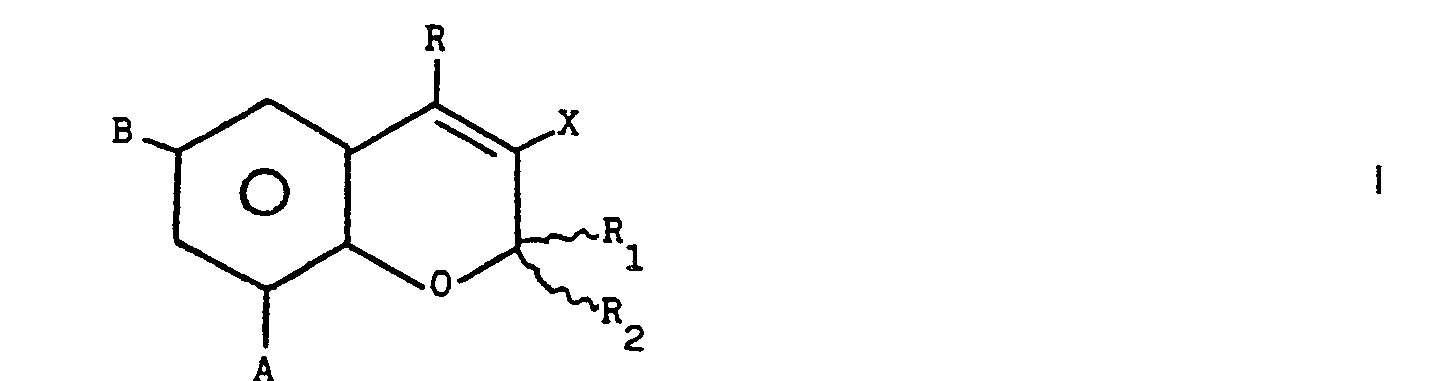
- the present invention is related to coumarins containing fluoro atoms in the phenyl ring, to a method for their preparation and to pharmaceutical compositions containing fluoro coumarins, devoid of mutagenic properties, useful in the treatment of inflammatory diseases, in particular for treatment of lymphoedematous diseases.
- the compounds of the invention are coumarins of the general formula: wherein:
- 6-fluoro-coumarin, 7-fluoro-coumarin and 8-fluoro-coumarin are chemically known compounds;
- A. G. Ghattas (Egypt. J. of Chem., 20, (5) 453 (1977)) described the synthesis of 6-fluoro and 8-fluoro coumarins starting from the corresponding 6- and 8-amino coumarins by thermal decomposition of the corresponding dry diazonium fluoborate salt.
- 6- and 8-fluoro coumarins were reported also that the interest in 6- and 8-fluoro coumarins was due to the growing and promising importance of the fluorinated heterocyclic compounds in industry and in view of their chemotherapeutic value.
- 6-fluoro coumarin when catalytically hydrogenated, gave 3,4-dihydro-6-fluoro coumarin, which, on hydrolysis with aqueous potassium hydroxide, gave ⁇ -(2-hydroxy-5-fluorophenyl)-propionic acid, (fluoro- melilotic acie).
- This last product could be of biological value due to the reported activity of 3-fluoro-4-hydroxyphenylacetic acid "Capacin" "as having therapeutic effect in mild hyperthyrodism".
- Particularly preferred compounds of the invention are fluoro coumarins where a fluorine atom present in the benzenoid ring is in para and/or in ortho position as regards to the oxygen ring directly linked to the phenyl ring. Also disubstituted fluoro compounds are preferred compounds when the two fluorine atoms are situated in o- and p-positions with comparison to oxygen phenolic atom.
- compositions particularly useful for the treatment of oedematous and inflammatory states, containing, as the active ingredient, a compound of the group consisting of the compounds of formula I, as above defined and of the 6-fluoro and 8-fluoro- coumarin.
- the compounds of the invention are prepared by a process comprising the reaction, in presence of strong acids such as sulphuric and methane sulphonic acid, of a fluorophenol of the general formula II: wherein A and B are as above mentioned with a compound of the general formula III: wherein
- Compound la may be then halogenated with chlorine, bromine or iodine to give a compound of formula IV: (wherein A, B, R are as above defined and X is chlorine, bromine or iodine) which is in turn dehydrohalogenated to give compounds of formula Ib wherein A, B, R, X are as above defined.
- the compounds of formula IV can be reduced to the lactols of formula V: wherein A, B, R, X Ri are as above defined, which can be reacted with an alcohol of formula R 3 0H to give the corresponding acetal ethers, and then dehydrohalogenated to give the acetal ethers of compounds Ic.
- the reaction of the phenol of formula II with a compound of formula III is carried out in the presence of a strong acid such as sulphuric acid and methane sulphonic acid.
- a strong acid such as sulphuric acid and methane sulphonic acid.
- the preferred acid is concentrated sulphuric acid.
- the mixture can be heated at a temperature from 40° to 130°C for a period ranging from ten minutes to 3 hours.
- a compound of formula III is added to a preheated mixture of a compound of formula II in sulphuric acid in small portions and the reaction time is half an hour.
- the preferred temperature is 95-100° inner temperature, but prolonged times are not critical for yields.
- the compounds of general formula IV are obtained starting from the compounds of formula la by treatment with an excess of the halogen in an inert solvent such as methylene chloride, trichloromethane, 1,2-dichloroethane, carbon tetrachloride and mixture of them.
- the reaction temperature is comprised between room temperature and the boiling temperature of the solvent. Lightening with sun and artificial light favours the shortening of the reaction time which can be variable from ten minutes to ten hours.
- the organic base preferably used is an amine as triethylamine, pyridine, collidine, dimethylaniline and dialkylaniline, diazobicycloundecene, diazobicyclononene. Every amine can be useful and the amine preferably selected is a low cost amine.
- the solvents can be ethers, esters such as ethylether, dioxane, dimethoxyethane, tetrahydrofuran, ethyl acetate; methylene chloride, 1,2-dichloroethane; alcohols such as ethanol, 2-propanol, 1-propanol and ketones such as acetone, methl ethylketone.
- An inorganic base such as potassium, sodium or ammonium acetate, may also be used, optionally in heterogeneous phase in the above solvents.
- concomitant halogenation occurs at the benzylic positions of the compounds of formula la, where R is an alkyl group.
- R is an alkyl group.
- an optional removal of the benzylic halogen atom is selectively obtained, after the dehydrohalogenation process, by treatment with equimolar amounts of zinc borohydride at room temperature in an inert solvent such as ethyl ether, dimethoxyethane and their mixtures.
- the selective reduction of the lactone group of the compounds of formula Ib can be made by treatment with diisobutyl aluminium hydride.
- Other reagents can also be profitably used such as sodium diethylhydro aluminate and sodium bis (2-methoxyethoxy)-aluminium hydride.
- the reaction occurs without affecting the conjugated double bond when carried out at a temperature below -40°C using stoichiometric amount of the above mentioned reagents also if a molar excess is comparible with the reaction.
- lactols of formula lc, where R is hydrogen, and particularly in the cases where X is hydrogen, are obtained, at the end of the reduction reaction, by cautious addition of water to destroy the excess of reduction reagent and to decompose the aluminate intermediates.
- direct addition of alcohols unexpectedly yields acetalic ethers.
- the same acetalic ethers can be optionally prepared starting from the lactols of formula lc, by reaction with the alcohols of formula R 3 0H in the presence of a Lewis' catalyst such as, for ex., boron trifluoride-p-toluensulphonic acid.
- the protection of the double bond during the reduction of the lactone group of the compounds of formula Ib to give the compounds of formula Ic can be optionally obtained submitting the intermediate dihalo compounds of formula V to the reductive process.
- compounds of formula V are obtained, which are optionally dehydrohalogenated to give the compounds of formula lc, where X is halogen or, alternatively, the compounds of formula V can be optionally reacted with an iodide such as Nal, KI, to give the compounds of formula lc, where X is hydrogen.
- the preferred solvent for the dehalogenation reaction is acetone.
- Other solvents can be used such as dimethylformamide, dimethylacetamide, formamide and their mixtures.
- All the lactols of formula lc can be optionally converted into the lactones of formula Ib by treatment with Mn0 2 in a halogenated solvent such as CHCI 3 , CH 2 CI 2 , C 2 H 4 CI 2 and/ or by oxidation, using Moffatt's conditions.
- a halogenated solvent such as CHCI 3 , CH 2 CI 2 , C 2 H 4 CI 2 and/ or by oxidation, using Moffatt's conditions.
- C 14 -labelled 6-fluoro coumarin was administered by oral route to rabbits and faeces and urines were collected during a period of 24 hours.
- the excreta were treated by ⁇ -glucoronidase and aryl sulfatase and extracted by methylene chloride in a little acid medium.
- the recovered (80%) radioactive material was analyzed by TLC and HPLC and it was found to be unchanged 6-fluoro-coumarin.
- labelled 6-fluoro coumarin having a 1 Ci/mole specific radioactivity was used.
- 6-fluoro coumarin at the dosage level above the 6.25 mg/kg shows increasing degree of proteolysis, significantly greater than the control.
- the threefold increase in proteolysis favourably compares with a 2.2 fold increase produced by similar doses of coumarin.
- 6-fluoro coumarin and the compounds of the invention are also effective in the management of the acute inflammation.
- 6-fluoro coumarin and related compounds as 3-bromo-6-fluoro, 4-methyl-6-fluoro-2H-1-benzopyran-2-ones, 6-fluoro-2-isopropoxy-2H-1-benzopyrane, 6-fluoro-2 ⁇ -methoxy-2H-1-benzopyrane, 6-fluoro-3-bromo-2 ⁇ -methoxy-2H-1-benzopyrane and 6-fluoro-2 ⁇ -hydroxy-2H-1-benzopyrane reduce carrageenan induced edema of the rats hind paw at all the times (1; 3; 4 and 5h) after application of the irritative stimulus.
- the compounds appear to be at least 1.5-2.5 times more active than coumarin.
- the compounds of the invention are able to induce re-absorption of the total citrated blood when blood is infected in the right ear of New Zealand rabbits. 12 hours after blood inoculation into ear, the animal were randomized and treated with scalar doses of the investigated compounds administered for 4 days by oral route. The blood-dot areas are evaluated and compared with the areas of the control animals treated with placebo only. In table 5 are reported some experimental results.
- the compound of the invention does not induce any kind of modifications on coagulation factors. It is known the report by Schofield (Can. Vet. Rec. 3, 74 (1922) in which some anticoagulant activities for coumarin and its derivatives, particularly dicoumarol, are described. A lot of experimental work further confirm this anticoagulant effect (see for ex., G. Feuer et al., Progr. In Med. Chem. 10, 85-153 (1974).
- 6-fluoro coumarin and the compounds of the invention administered by oral route for 2 consecutive days, in comparison with equimolar doses of coumarin and dicoumarol, are not able to modify DPTT, Hepato quick and clotting time.
- coumarin moderately influences Hepato quick (in decreasing way) whereas dicoumarol, as expected, presents a very strong effect on DPTT and Hepato quick. Therefore, for these reasons, the compounds of the invention are useful in treatment and prevention of inflammatory diseases and particularly in treatment and prevention of edematous status and specially in edemas rich in proteins of high molecular weight, for ex.:
- the compound of the invention 6-fluoro coumarin, was administered in capsules dosed at 50 mg of the active ingredient.
- the preferred protocol is one capsule pro die for 4 days; the dosage is then increased to 2 capsules pro die for 5 days, if the compound of the invention is well tolerated.
- a further increase to 3 and 4 capsules pro die is also foreseen and then, this regimen is continued for eight days at least, up to thirty days of overall treatment with the compound, if clinical and biological adverse advices are not revealed.
- the diagnostic parameters investigated are: general and gastric clinical tolerability; number of red blood cell, leukocites, neutrophiles and platelets; haemoglobin concentration, y-glutamyl transpeptidase; serum creatmine and volume of edema.
- the compounds according to the invention which are useful in human and veterinary therapy can be administered by oral, intramuscular, subcutaneous, topical (e.g. buccal such as sublingual and cutaneous), trans-epidermal, rectal routes in doses ranging from 0.1 to 75 mg/kg/day, depending on age, weight and condition of the patient.
- compositions may be given orally in tablets, capsules, drops or syrups, rectally in suppositories, parenterally in solutions or suspensions given subcutaneously or intramuscularly. Local applications by ointment, cream and pressure bandages are also preferred administration routes.
- Pharmaceutical comventionally used common carriers and/or diluents include water, gelatin, lactose, dextrose, sucrose, mannitol, sorbitol, cellulose, talc, stearic acid, calcium and magnesium stearate, glycols, starch, arabic, tragacanth gum, gum alginic acid, alginates, lecithin, polysorbates, vegetable oils.
- a formulation comprising, as the active ingredient, at least one compound of the formula I, together with at least one pharmaceutical carrier or excipient.
- the carrier must be "acceptable” i.e. must be compatible with the other ingredients of the formulation and not deleterious to the recipient thereof.
- the carrier may be a solid or a liquid and it is preferably formulated with a compound of formula I as an unit-dose formulation; for ex. a tablet, which may contain from 0.5% to 95% by weight of the active ingredient.
- Formulations suitable for oral administration may be presented as discrete units such as capsules, cachets, lozenges or tablets each containing a predetermined amount of the active compound; as powders or granules; as solutions or suspensions in aqueous or non-aqueous liquids; as oil-in-water emulsions; or as water-in-oil liquid emulsions.
- Such formulations may be prepared by any of the methods of pharmacy but all methods include the step of bringing into association the active ingredient with the carrier which comprises one or more appropriate ingredients.
- the formulation may be prepared by uniformly and intimately admixing the active ingredient with liquids or finely divided solid carriers or both, and then, if necessary, shaping the product into the desired presentation. For ex.
- a tablet may be prepared by compression or moulding a powder or granules of the active ingredient, optionally with one or more accessory ingredients.
- Compressed tablets may be prepared by compressing, in a suitable machine, the active ingredient in a free-flowing form such as a powder or granules optionally mixed with a binder, lubricant, inert diluent, surface active or dispersing agent(s).
- Moulded tablets may be made by moulding in a suitable machine the powdered active ingredient moistened with an inert liquid diluent.
- Formulations suitable for buccal (e.g. sub-lingual) administration include lozenges comprising the active ingredient compound in a flavoured bases, e.g. sucrose and acacia or tragacanth; and pastilles comprising the active ingredient in an inert base such as gelatin and glycerin; or sucrose and acacia.
- Formulations suitable for rectal administration are preferably presented as unit-dose suppositories. These may be prepared by admixture or the active ingredient with one or more conventional solid carriers, forming the suppository base for ex. cocoa butter, and shaping of the resulting mixture.
- Formulations suitable for cutaneous use are preferably presented as lotions, gels and ointments.
- the lotions may be prepared by admixture of a compound of formula I in a hydroalcoholic medium.
- the gels may be prepared with water or anhydrous in conventional way by mixing a compound of formula I with carboxypolymethylene and/or carboxymethylcellulose.
- Anhydrous gels are prepared using glycerin, polyethylene glycols, carboxypolymethylene and their mixture.
- a penetration enhancer such as dimethylsulphoxide can be also added.
- Emulsions are made in conventional way using water and fatty excipients such as lanolin, paraffin oil and wax in presence of surfactants and emulsifying agents such as polysorbate.
- DIBAH diisobutylaluminium hydride
- a solution of p-fluoro-phenol (200 g) in sulfuric acid (260 ml) is heated at 100°C and malic acid (300 g) is added in 4 portions, every 8 minutes. The heating is continued for additional 10 minutes and the reaction mixture is poured in a stirred mixture of ice (1.5 kg), water (800 ml), 28% aqueous ammonia (640 ml) and ethyl acetate (1.5 I).
- the aqueous layer, weakly acid (pH 2.5-3) is separated and extracted with ethyl acetate (2 x 50 ml).
- a stirred mixture of p-fluoro-phenol (200 g), sulphuric acid (260 ml) and malic acid (300 g) is heated at 110°C and maintained at this temperature for 2 hours.
- the mixture is poured in stirred water and ice (3 I).
- the aqueous phase is decanted and the preciptate is dissolved in ethylacetate.
- the organic phase is washed until neutral, dried on Na 2 SO 4 and evaporated to dryness.
- the liquor waters are diluted with pyridine (25 ml) and stirred at room temperature for 4 hours.
- the separated compound is 6-fluoro-2H-1-benzopyran-2-isopropoxy.
- the same compound is obtained starting from 6-fluoro-2H-1-benzopyran-2-ol (0.65 g) and isopropanol (5 ml) in the presence of 0.03 g of p-toluensulfonic acid. After 3 hours at room temperature, pyridine (0.1 ml) is added and the mixture is evaporated to dryness. The residue is partitioned with every ether and 5% aqueous NaHC0 3 , the organic phase is washed with water to neutral. After drying on Na 2 SO 4 and evaporation of the solvent, 0.25 g of crystalline compound is isolated.
- a mixture of 6-fluoro-2H-1-benzopyran-2 ⁇ -ol (0.5 g) and diethylamino ethanol (1.5 ml) and catalytic amount of p-toluensulfonic acid are maintained at room temperature for 3 days. After evaporation in high vacuum of the excess reagent, the dark residue is filtered through a short column on Si0 2 eluting with ethylether-pyridine 100:0.5. The eluate is evaporated to dryness to afford 6-fluoro--2H-1-benzopyran-2 ⁇ -diethylaminoethoxy.
Landscapes
- Chemical & Material Sciences (AREA)
- Organic Chemistry (AREA)
- Health & Medical Sciences (AREA)
- Pharmacology & Pharmacy (AREA)
- Animal Behavior & Ethology (AREA)
- Veterinary Medicine (AREA)
- Public Health (AREA)
- Chemical Kinetics & Catalysis (AREA)
- General Chemical & Material Sciences (AREA)
- Medicinal Chemistry (AREA)
- Nuclear Medicine, Radiotherapy & Molecular Imaging (AREA)
- General Health & Medical Sciences (AREA)
- Life Sciences & Earth Sciences (AREA)
- Engineering & Computer Science (AREA)
- Hematology (AREA)
- Bioinformatics & Cheminformatics (AREA)
- Diabetes (AREA)
- Obesity (AREA)
- Pain & Pain Management (AREA)
- Rheumatology (AREA)
- Pharmaceuticals Containing Other Organic And Inorganic Compounds (AREA)
- Heterocyclic Carbon Compounds Containing A Hetero Ring Having Oxygen Or Sulfur (AREA)
- Plural Heterocyclic Compounds (AREA)
- Pyrane Compounds (AREA)
Claims (16)

einer der Reste R1 und R2 Wasserstoff und der andere Hydroxy oder eine C1-7-verzweigte oder unverzweigte Alkoxygruppe, die unsubstituiert ist oder die durch eine C1-2-Dialkylaminogruppe substituiert ist, oder Ri und R2 zusammen mit dem Kohlenstoffatom, an welches sie gebunden sind, die Gruppe >C=O, mit dem Proviso, dass, wenn R=X=H,


einer der Reste R1 und R2 Wasserstoff und der andere Hydroxy oder C1-7-verzweigtes oder unverzweigtes Alkoxy, unsubstituiert oder substituiert durch C1-7-Dialkylamino, oder R1 und R2 zusammen mit dem Kohlenstoffatom, an welches sie gebunden sind, die Gruppe >C=O.


Priority Applications (1)
| Application Number | Priority Date | Filing Date | Title |
|---|---|---|---|
| AT85115883T ATE46155T1 (de) | 1984-12-21 | 1985-12-12 | Fluorcumarine als antilymphoedema-mittel. |
Applications Claiming Priority (2)
| Application Number | Priority Date | Filing Date | Title |
|---|---|---|---|
| GB8432464 | 1984-12-21 | ||
| GB08432464A GB2168696B (en) | 1984-12-21 | 1984-12-21 | Fluoro coumarins as antilymphoedema agents |
Publications (3)
| Publication Number | Publication Date |
|---|---|
| EP0185319A2 EP0185319A2 (de) | 1986-06-25 |
| EP0185319A3 EP0185319A3 (en) | 1987-04-29 |
| EP0185319B1 true EP0185319B1 (de) | 1989-09-06 |
Family
ID=10571633
Family Applications (1)
| Application Number | Title | Priority Date | Filing Date |
|---|---|---|---|
| EP85115883A Expired EP0185319B1 (de) | 1984-12-21 | 1985-12-12 | Fluorcumarine als Antilymphoedema-Mittel |
Country Status (7)
| Country | Link |
|---|---|
| US (1) | US4749798A (de) |
| EP (1) | EP0185319B1 (de) |
| JP (1) | JPS61180781A (de) |
| AT (1) | ATE46155T1 (de) |
| AU (1) | AU599893B2 (de) |
| DE (1) | DE3572812D1 (de) |
| GB (1) | GB2168696B (de) |
Cited By (1)
| Publication number | Priority date | Publication date | Assignee | Title |
|---|---|---|---|---|
| US5830912A (en) * | 1996-11-15 | 1998-11-03 | Molecular Probes, Inc. | Derivatives of 6,8-difluoro-7-hydroxycoumarin |
Families Citing this family (10)
| Publication number | Priority date | Publication date | Assignee | Title |
|---|---|---|---|---|
| US5278186A (en) * | 1990-02-10 | 1994-01-11 | Takeda Chemical Industries, Ltd. | Chromene derivatives, their production and use |
| DE4111861A1 (de) * | 1991-04-11 | 1992-10-15 | Schwabe Willmar Gmbh & Co | Benzopyranone, verfahren zu ihrer herstellung und verwendung |
| US6124477A (en) * | 1996-06-27 | 2000-09-26 | Bioavailability Systems, Llc | Anti-first-pass effect compounds |
| CA2284525A1 (en) * | 1997-04-16 | 1998-10-22 | The University Of New Mexico | Inhibitors of cholesterol esterase |
| US6248776B1 (en) | 1997-08-26 | 2001-06-19 | Bioavailability Systems, L.L.C. | Anti-first-pass effect compounds |
| ES2199457T3 (es) * | 1997-08-26 | 2004-02-16 | Bioavailability Systems, L.L.C. | Compuestos que inhiben el efecto del primer paso. |
| ES2249391T3 (es) * | 2001-12-04 | 2006-04-01 | MAC PHARMA S.A.S. DI PAOLA MICHIELETTO & C. | Uso de cumarina o su derivado hidroxilado para el tratamniento del edema vascular y/o linfatico medio o grave. |
| US20070298132A1 (en) * | 2002-05-03 | 2007-12-27 | Pharmchem Inc. | Berberine as a selective lung cancer agent |
| CA2595472A1 (en) | 2005-01-21 | 2006-07-27 | Janssen Pharmaceutica N.V. | Novel coumarin derivatives as ion channel openers |
| JP5404652B2 (ja) | 2008-02-22 | 2014-02-05 | アクテリオン ファーマシューティカルズ リミテッド | オキサゾリジノン誘導体 |
Family Cites Families (3)
| Publication number | Priority date | Publication date | Assignee | Title |
|---|---|---|---|---|
| GB1110848A (en) * | 1965-06-18 | 1968-04-24 | Stauffer Chemical Co | Control of growth of fungi and bacteria |
| BE788200A (fr) * | 1971-09-03 | 1973-02-28 | Lonza Ag | Procede de fabrication de 4-halogenomethylcoumarines et nouveaux composes ainsi obtenus |
| US4701456A (en) * | 1984-09-19 | 1987-10-20 | Warner-Lambert Company | Aminoalkoxybenzopyranones as antipsychotic and anxiolytic agents |
-
1984
- 1984-12-21 GB GB08432464A patent/GB2168696B/en not_active Expired
-
1985
- 1985-12-12 EP EP85115883A patent/EP0185319B1/de not_active Expired
- 1985-12-12 AT AT85115883T patent/ATE46155T1/de not_active IP Right Cessation
- 1985-12-12 DE DE8585115883T patent/DE3572812D1/de not_active Expired
- 1985-12-13 US US06/808,555 patent/US4749798A/en not_active Expired - Fee Related
- 1985-12-20 AU AU51549/85A patent/AU599893B2/en not_active Ceased
- 1985-12-20 JP JP60285856A patent/JPS61180781A/ja active Pending
Non-Patent Citations (3)
| Title |
|---|
| Collect Czech, Comm. 29, 1035 * |
| Drug of the Future 7, (9), 663 (1982 * |
| J.Mol.Struct. 54, 283, (1979) * |
Cited By (1)
| Publication number | Priority date | Publication date | Assignee | Title |
|---|---|---|---|---|
| US5830912A (en) * | 1996-11-15 | 1998-11-03 | Molecular Probes, Inc. | Derivatives of 6,8-difluoro-7-hydroxycoumarin |
Also Published As
| Publication number | Publication date |
|---|---|
| JPS61180781A (ja) | 1986-08-13 |
| ATE46155T1 (de) | 1989-09-15 |
| GB2168696A (en) | 1986-06-25 |
| GB8432464D0 (en) | 1985-02-06 |
| EP0185319A3 (en) | 1987-04-29 |
| EP0185319A2 (de) | 1986-06-25 |
| AU599893B2 (en) | 1990-08-02 |
| AU5154985A (en) | 1986-06-26 |
| DE3572812D1 (en) | 1989-10-12 |
| GB2168696B (en) | 1989-01-11 |
| US4749798A (en) | 1988-06-07 |
Similar Documents
| Publication | Publication Date | Title |
|---|---|---|
| EP0129906B1 (de) | Phenoxyalkoxy-3,4-dihydro-2H-1-benzopyranderivate | |
| US4749798A (en) | Fluoro coumarins as antilymphoedema agents | |
| US4510139A (en) | Substituted aminobenzamides and their use as agents which inhibit lipoxygenase activity | |
| Paris et al. | Glycerides as prodrugs. 3. Synthesis and antiinflammatory activity of [1-(p-chlorobenzoyl)-5-methoxy-2-methylindole-3-acetyl] glycerides (indomethacin glycerides) | |
| DE69425210T2 (de) | Cumarin derivate und deren anwendung | |
| IE851260L (en) | Bis-(4-aminophenyl) sulfone derivatives. | |
| US4111962A (en) | Certain substituted 2-phenylnaphtho[1,2-b]furane and -[2,1-b]furane | |
| US3652665A (en) | Halo-phenoxy salicylic acids | |
| FI73961C (fi) | Foerfarande foer framstaellning av terapeutiska, enzymfunktionsreglerande nya -etylbenshydrolderivat. | |
| GB2027693A (en) | (aryloxycarboxylic acid) compounds their preparation and their preparation and their use in therapy bis-(aryloxycarboxylic acid) compounds | |
| US4282360A (en) | 7-Methylthio or methylsulfinyl-5-oxo-5H-thiazolo[2,3-b]quinazoline-2-carboxylic acid | |
| EP0103246A1 (de) | 5-Substituierte 2,3-Dihydrobenzofuran-2-Carbonsäure und ihre Derivate | |
| GB1561731A (en) | Process for the preparation of benzopyrane derivatives | |
| US4389416A (en) | Diphenyl ether, diphenyl thioether and diphenyl methane phenol mannich bases | |
| US4496568A (en) | Antiinflammatory thieno [2,3-c]pyridine derivatives | |
| CA1040643A (en) | Phosphine or phosphite gold complexes of thiobenzoic acid and substituted thiophenols | |
| US4456612A (en) | Benzisoxazole carboxylic acids | |
| JPS6322541A (ja) | 炎症性気管支肺疾患を治療するサルサレ−トとグアヤコ−ルのエステル類 | |
| Allen et al. | 8-Carboxy-6-sulfamyldibenz [b, f][1, 4] oxazepines and-thiazepines as potential high-ceiling diuretics | |
| EP0035903B1 (de) | Dibenzocycloheptenylidene und ihre Verwendung in pharmazeutischen Zusammensetzungen | |
| WO2018189683A1 (en) | Benzofuran derivatives for use as ampk activators | |
| JPH0710863B2 (ja) | エーテル化若しくはエステル化しうるジヒドロキシ基により位置2で置換された4―ohキノリンカルボン酸の新規の誘導体、その製造方法、及び医薬としてのその使用 | |
| US4778925A (en) | New benzoic acid derivatives, as well as processes for their production and their use as pharmaceuticals | |
| EP0166135B1 (de) | Ester der (+)-6-Methoxy-alpha-methyl-2-naphthalenessigsäure mit mucosekretolytischer, entzündungshemmender, schmerzstillender, Fieber erniedrigender Wirkung, dessen Herstellungsverfahren und dessen pharmazeutische Zusammensetzungen | |
| JPS58188876A (ja) | 抗炎症剤及び抗喘息剤 |
Legal Events
| Date | Code | Title | Description |
|---|---|---|---|
| PUAI | Public reference made under article 153(3) epc to a published international application that has entered the european phase |
Free format text: ORIGINAL CODE: 0009012 |
|
| AK | Designated contracting states |
Kind code of ref document: A2 Designated state(s): AT BE CH DE FR IT LI LU NL SE |
|
| PUAL | Search report despatched |
Free format text: ORIGINAL CODE: 0009013 |
|
| AK | Designated contracting states |
Kind code of ref document: A3 Designated state(s): AT BE CH DE FR IT LI LU NL SE |
|
| 17P | Request for examination filed |
Effective date: 19871008 |
|
| 17Q | First examination report despatched |
Effective date: 19880513 |
|
| GRAA | (expected) grant |
Free format text: ORIGINAL CODE: 0009210 |
|
| AK | Designated contracting states |
Kind code of ref document: B1 Designated state(s): AT BE CH DE FR IT LI LU NL SE |
|
| PG25 | Lapsed in a contracting state [announced via postgrant information from national office to epo] |
Ref country code: SE Effective date: 19890906 Ref country code: NL Effective date: 19890906 Ref country code: BE Effective date: 19890906 Ref country code: AT Effective date: 19890906 |
|
| REF | Corresponds to: |
Ref document number: 46155 Country of ref document: AT Date of ref document: 19890915 Kind code of ref document: T |
|
| REF | Corresponds to: |
Ref document number: 3572812 Country of ref document: DE Date of ref document: 19891012 |
|
| ET | Fr: translation filed | ||
| ITF | It: translation for a ep patent filed | ||
| PGFP | Annual fee paid to national office [announced via postgrant information from national office to epo] |
Ref country code: FR Payment date: 19891229 Year of fee payment: 5 Ref country code: CH Payment date: 19891229 Year of fee payment: 5 |
|
| PG25 | Lapsed in a contracting state [announced via postgrant information from national office to epo] |
Ref country code: LU Free format text: LAPSE BECAUSE OF NON-PAYMENT OF DUE FEES Effective date: 19891231 |
|
| PGFP | Annual fee paid to national office [announced via postgrant information from national office to epo] |
Ref country code: DE Payment date: 19900110 Year of fee payment: 5 |
|
| NLV1 | Nl: lapsed or annulled due to failure to fulfill the requirements of art. 29p and 29m of the patents act | ||
| RAP2 | Party data changed (patent owner data changed or rights of a patent transferred) |
Owner name: BOEHRINGER MANNHEIM ITALIA S.P.A. |
|
| PLBE | No opposition filed within time limit |
Free format text: ORIGINAL CODE: 0009261 |
|
| STAA | Information on the status of an ep patent application or granted ep patent |
Free format text: STATUS: NO OPPOSITION FILED WITHIN TIME LIMIT |
|
| 26N | No opposition filed | ||
| REG | Reference to a national code |
Ref country code: CH Ref legal event code: PFA Free format text: BOEHRINGER MANNHEIM ITALIA S.P.A. |
|
| PG25 | Lapsed in a contracting state [announced via postgrant information from national office to epo] |
Ref country code: LI Effective date: 19901231 Ref country code: CH Effective date: 19901231 |
|
| PG25 | Lapsed in a contracting state [announced via postgrant information from national office to epo] |
Ref country code: FR Effective date: 19910830 |
|
| REG | Reference to a national code |
Ref country code: CH Ref legal event code: PL |
|
| PG25 | Lapsed in a contracting state [announced via postgrant information from national office to epo] |
Ref country code: DE Effective date: 19910903 |
|
| REG | Reference to a national code |
Ref country code: FR Ref legal event code: ST |