EP0189057A2 - 5-Aryl-dihydropyridine, Verfahren zu ihrer Herstellung sowie ihre Verwendung in Arzneimitteln - Google Patents
5-Aryl-dihydropyridine, Verfahren zu ihrer Herstellung sowie ihre Verwendung in Arzneimitteln Download PDFInfo
- Publication number
- EP0189057A2 EP0189057A2 EP86100203A EP86100203A EP0189057A2 EP 0189057 A2 EP0189057 A2 EP 0189057A2 EP 86100203 A EP86100203 A EP 86100203A EP 86100203 A EP86100203 A EP 86100203A EP 0189057 A2 EP0189057 A2 EP 0189057A2
- Authority
- EP
- European Patent Office
- Prior art keywords
- nitro
- optionally substituted
- alkyl
- stands
- alkoxycarbonyl
- Prior art date
- Legal status (The legal status is an assumption and is not a legal conclusion. Google has not performed a legal analysis and makes no representation as to the accuracy of the status listed.)
- Granted
Links
Classifications
-
- C—CHEMISTRY; METALLURGY
- C07—ORGANIC CHEMISTRY
- C07D—HETEROCYCLIC COMPOUNDS
- C07D409/00—Heterocyclic compounds containing two or more hetero rings, at least one ring having sulfur atoms as the only ring hetero atoms
- C07D409/02—Heterocyclic compounds containing two or more hetero rings, at least one ring having sulfur atoms as the only ring hetero atoms containing two hetero rings
- C07D409/04—Heterocyclic compounds containing two or more hetero rings, at least one ring having sulfur atoms as the only ring hetero atoms containing two hetero rings directly linked by a ring-member-to-ring-member bond
-
- A—HUMAN NECESSITIES
- A61—MEDICAL OR VETERINARY SCIENCE; HYGIENE
- A61P—SPECIFIC THERAPEUTIC ACTIVITY OF CHEMICAL COMPOUNDS OR MEDICINAL PREPARATIONS
- A61P3/00—Drugs for disorders of the metabolism
-
- A—HUMAN NECESSITIES
- A61—MEDICAL OR VETERINARY SCIENCE; HYGIENE
- A61P—SPECIFIC THERAPEUTIC ACTIVITY OF CHEMICAL COMPOUNDS OR MEDICINAL PREPARATIONS
- A61P3/00—Drugs for disorders of the metabolism
- A61P3/08—Drugs for disorders of the metabolism for glucose homeostasis
-
- A—HUMAN NECESSITIES
- A61—MEDICAL OR VETERINARY SCIENCE; HYGIENE
- A61P—SPECIFIC THERAPEUTIC ACTIVITY OF CHEMICAL COMPOUNDS OR MEDICINAL PREPARATIONS
- A61P43/00—Drugs for specific purposes, not provided for in groups A61P1/00-A61P41/00
-
- A—HUMAN NECESSITIES
- A61—MEDICAL OR VETERINARY SCIENCE; HYGIENE
- A61P—SPECIFIC THERAPEUTIC ACTIVITY OF CHEMICAL COMPOUNDS OR MEDICINAL PREPARATIONS
- A61P9/00—Drugs for disorders of the cardiovascular system
- A61P9/04—Inotropic agents, i.e. stimulants of cardiac contraction; Drugs for heart failure
-
- A—HUMAN NECESSITIES
- A61—MEDICAL OR VETERINARY SCIENCE; HYGIENE
- A61P—SPECIFIC THERAPEUTIC ACTIVITY OF CHEMICAL COMPOUNDS OR MEDICINAL PREPARATIONS
- A61P9/00—Drugs for disorders of the cardiovascular system
- A61P9/06—Antiarrhythmics
-
- A—HUMAN NECESSITIES
- A61—MEDICAL OR VETERINARY SCIENCE; HYGIENE
- A61P—SPECIFIC THERAPEUTIC ACTIVITY OF CHEMICAL COMPOUNDS OR MEDICINAL PREPARATIONS
- A61P9/00—Drugs for disorders of the cardiovascular system
- A61P9/08—Vasodilators for multiple indications
-
- A—HUMAN NECESSITIES
- A61—MEDICAL OR VETERINARY SCIENCE; HYGIENE
- A61P—SPECIFIC THERAPEUTIC ACTIVITY OF CHEMICAL COMPOUNDS OR MEDICINAL PREPARATIONS
- A61P9/00—Drugs for disorders of the cardiovascular system
- A61P9/10—Drugs for disorders of the cardiovascular system for treating ischaemic or atherosclerotic diseases, e.g. antianginal drugs, coronary vasodilators, drugs for myocardial infarction, retinopathy, cerebrovascula insufficiency, renal arteriosclerosis
-
- A—HUMAN NECESSITIES
- A61—MEDICAL OR VETERINARY SCIENCE; HYGIENE
- A61P—SPECIFIC THERAPEUTIC ACTIVITY OF CHEMICAL COMPOUNDS OR MEDICINAL PREPARATIONS
- A61P9/00—Drugs for disorders of the cardiovascular system
- A61P9/12—Antihypertensives
-
- C—CHEMISTRY; METALLURGY
- C07—ORGANIC CHEMISTRY
- C07D—HETEROCYCLIC COMPOUNDS
- C07D211/00—Heterocyclic compounds containing hydrogenated pyridine rings, not condensed with other rings
- C07D211/04—Heterocyclic compounds containing hydrogenated pyridine rings, not condensed with other rings with only hydrogen or carbon atoms directly attached to the ring nitrogen atom
- C07D211/80—Heterocyclic compounds containing hydrogenated pyridine rings, not condensed with other rings with only hydrogen or carbon atoms directly attached to the ring nitrogen atom having two double bonds between ring members or between ring members and non-ring members
- C07D211/84—Heterocyclic compounds containing hydrogenated pyridine rings, not condensed with other rings with only hydrogen or carbon atoms directly attached to the ring nitrogen atom having two double bonds between ring members or between ring members and non-ring members with hetero atoms or with carbon atoms having three bonds to hetero atoms, with at the most one bond to halogen directly attached to ring carbon atoms
-
- C—CHEMISTRY; METALLURGY
- C07—ORGANIC CHEMISTRY
- C07D—HETEROCYCLIC COMPOUNDS
- C07D211/00—Heterocyclic compounds containing hydrogenated pyridine rings, not condensed with other rings
- C07D211/04—Heterocyclic compounds containing hydrogenated pyridine rings, not condensed with other rings with only hydrogen or carbon atoms directly attached to the ring nitrogen atom
- C07D211/80—Heterocyclic compounds containing hydrogenated pyridine rings, not condensed with other rings with only hydrogen or carbon atoms directly attached to the ring nitrogen atom having two double bonds between ring members or between ring members and non-ring members
- C07D211/84—Heterocyclic compounds containing hydrogenated pyridine rings, not condensed with other rings with only hydrogen or carbon atoms directly attached to the ring nitrogen atom having two double bonds between ring members or between ring members and non-ring members with hetero atoms or with carbon atoms having three bonds to hetero atoms, with at the most one bond to halogen directly attached to ring carbon atoms
- C07D211/90—Carbon atoms having three bonds to hetero atoms with at the most one bond to halogen
Definitions
- the present invention relates to 5-aryl-1,4-dihydropyridines, processes for their preparation and their use in medicaments, in particular in medicaments which influence the circulation.
- Physiologically acceptable salts can be salts of the compounds according to the invention with inorganic and organic acids or bases.
- examples include: salts with acids such as hydrohalic acids, sulfuric acid, phosphoric acid, acetic acid, maleic acid, citric acid, fumaric acid, tartaric acid, lactic acid, benzoic acid and salts with bases such as ammonia, alkali and alkaline earth metal hydroxides or organic amines.
- the compounds according to the invention are new and have valuable pharmacological properties. They influence the contractility of the heart and can therefore be used to fight cardiovascular diseases.
- the new 5-aryl-1,4-dihydropyridines thus enrich the pharmaceutical industry.
- the reactions can be represented using the following formula:
- the compounds according to the invention can exist in stereoisomeric forms which either behave like images and mirror images (enantiomers) or do not behave like images and mirror images (diastereomers).
- Both the antipodes and the racemic forms as well as the diastereomer mixtures are the subject of the present invention.
- the racemic forms can be separated into the stereoisomerically uniform constituents in a known manner (cf., for example, EL Eliel, Stereochemistry of Carbon Compounds, Mc Graw Hill, 1962).
- aldehydes (II) used are known or can be prepared by methods known from the literature (cf. TD Harris and GP Roth, J. org. Chem. H 2004, 146 (1979); German Offenlegungsschrift 2 401 665; Mijano et al., Chem Abstr. 59 (1963), 13,929c; E. Adler and H.-D. Becker, Acta Chem. Scand. 15, 849 (1961); EP Papadopoulos, HA Jarrar and C. Issidorides, J. Org. Chem 31, 615 (1966)).
- keto compounds of the formula (III) are known or can be prepared by known methods (cf. N. Levy and CW Scaife, J. Chem. Soc. (London) (1946) 1103; CD Hurd and ME Nilson, J Org. Chem. 20, 927 (1955); D. Borrmann, "Reaction of Diketene with Alcohols, Phenols and Mercaptans", in Houben-Weyl, Methods of Organic Chemistry,
- keto compounds of the formula IV are known or can be prepared by known methods (cf. HG Walker, CR Hauser, J.Am. Chem. Soc. 68, 1368, (1946); GG Smith, J.Am. Chem. Soc. 75, 1134 ff. (1953)).
- the enamines of formula V are known or can be prepared by known methods (see H. Ahlbrecht G. Rauchschwalbe, Tetrahedron Letters 51, 4897-4900 (1971)).
- the enamines of formula VI are known or can be prepared by known methods (cf. SA Glickmann, AC Cope, J.Am.Chem. Soc. 67, 1017 (1945); H. Böhme, K.-H. Weisel, Arch Pharm. 310, 30 (1977)).
- the ylidene compounds of the formula VII are known or can be prepared by known methods (cf. Organic Reactions XV, 204 ff. (1967)).
- the ylidene compounds of the formula VIII are known or can be prepared by known methods (cf. JF Codington, E. Mosettig, J. Org. Chem. 17, 1023 (1952); W. Dilthey, B. Stallmann, Che. Ber. 62 , 1603 (1929)).
- Suitable ammonium salts can be salts of ammonia with inorganic or organic acids. Examples include: halides, sulfates, hydrogen sulfates, hydrogen phosphates, acetates, carbonates and hydrogen carbonates.
- water or all inert organic solvents are suitable as diluents.
- these preferably include alcohols such as ethanol, methanol, isopropanol, ethers such as dioxane, diethyl ester, tetrahydrofuran, glycol monomethyl ester, glycol dimethyl ester, or glacial acetic acid, dimethylformamide, dimethyl sulfoxide, acetonitrile, pyridine and hexamethylphosphoric acid triamide. It is preferred to work with glacial acetic acid.
- reaction temperatures can be varied within a wide range. In general, between 0 and 200 ° C, in particular between 10 and 150 ° C, but preferably at the boiling point of the solvent.
- the reaction can be carried out at normal pressure, but also at elevated pressure. Generally one works under normal pressure.
- the ratio of the reactants to one another is arbitrary, but in general equimolar amounts are used. However, it has proven to be useful Proven to use the keto compound of the general formula III and ammonia component in process E and the enamines of general formula VI in process G in up to a 10-fold molar excess.
- the compounds according to the invention show an unforeseeable, valuable spectrum of pharmacological activity. They affect the contraction power of the heart and the tone of the smooth muscles. They also have an inhibitory effect on lipoxygenase. They can therefore be used in medicines for the treatment of cardiovascular diseases, e.g. in the treatment of hypertension, coronary artery disease, heart failure, hypotension. In addition, they can be used to treat cardiac arrhythmias, to lower blood sugar, to reduce swelling of the mucous membranes and to influence the salt and fluid balance.
- the cardiac and vascular effects were found on isolated perfused hearts of the guinea pig.
- the hearts of 250 to 350 g albino guinea pigs are used for this.
- the animals are killed with one blow to the head, the thorax is opened, a metal cannula is inserted into the free aorta and the left atrium is opened.
- the heart is separated from the chest with the lungs and connected to the perfusion apparatus via the aortic cannula while the perfusion is ongoing.
- the lungs are separated at the roots of the lungs.
- Krebs-Henseleit solution (118.5 mmol / 1 NaCl, 4.75 mmol / 1 KC1, 1.19 mmol / 1 KH 2 PO 4 , 119 mmol / 1 MgSO 4 , 25 mmol / 1 NaHC0 3 , 0.013 mmol / 1 NaEDTA), the CaC1 2 of which is varied as required, but is usually 1.2 mmol / 1. 10 mmol / 1 glucose are added as the energy-supplying substrate.
- the solution is filtered particle-free before perfusion.
- the solution is gassed with carbogen (95% 0 2 , 5% CO 2 ) to maintain the pH of 7.4.
- the hearts are perfused with constant flow (10 ml / min) at 32 ° C using a roller squeeze pump.
- a liquid-filled latex balloon which is connected to a pressure sensor via a liquid column, is inserted through the left atrium into the left ventricle and the isovolumetric contractions are recorded on a high-speed recorder (Opie, L., J. Physiol. 180 (1965) 529-541).
- the perfusion pressure is registered by means of a pressure sensor which is connected to the perfusion system in front of the heart. Under these conditions, a decrease in perfusion pressure indicates coronary dilation, an increase in left ventricular pressure amplitude an increase in cardiac contractility.
- the compounds according to the invention are infused in suitable dilutions into the perfusion system shortly before the isolated heart.
- the new active compounds can be converted in a known manner into the customary formulations, such as tablets, capsules, dragees, pills, granules, aerosols, syrups, emulsions, suspensions and solutions, using inert, non-toxic, pharmaceutically suitable excipients or solvents.
- the therapeutically active compound should in each case be present in a concentration of about 0.5 to 90% by weight of the total mixture, i.e. in amounts sufficient to achieve the dosage range indicated.
- the formulations are prepared, for example, by stretching the active ingredients with solvents and / or carriers, optionally using emulsifiers and / or dispersants, e.g. if water is used as the diluent, organic solvents can optionally be used as auxiliary solvents.
- auxiliary substances are: water, non-toxic organic solvents, such as paraffins (for example petroleum fractions), vegetable oils (for example peanut / sesame oil), alcohols (for example ethyl alcohol, glycerol), glycols (for example propylene glycol, polyethylene) glycol), solid carriers such as ground natural minerals (eg. kaolins, clays, talc, chalk), ground synthetic minerals (for example highly disperse silica, silicates), sugars (for example sucrose, lactose and glucose), emulsifiers (for example polyoxyethylene fatty acid -Ester), polyoxyethylene fatty alcohol ether (e.g.
- paraffins for example petroleum fractions
- vegetable oils for example peanut / sesame oil
- alcohols for example ethyl alcohol, glycerol
- glycols for example propylene glycol, polyethylene glycol
- solid carriers such as ground natural minerals (eg. kaolins, clays, talc, chalk), ground synthetic minerals
- lignin e.g. lignin, sulfite liquor, methyl cellulose, starch and polyvinyl pyrrolidone
- lubricants e.g. magnesium stearate, talc, stearic acid and sodium sulfate.
- tablets can of course also contain additives, such as sodium citrate, calcium carbonate and dicalcium phosphate, together with various additives, such as starch, preferably potato starch, gelatin and the like, in addition to the carrier substances mentioned.
- Lubricants such as magnesium stearate, sodium lauryl sulfate and talc can also be used for tableting.
- the active ingredients can be mixed with various flavor enhancers or colorants in addition to the abovementioned auxiliaries.
- solutions of the active ingredients can be used using suitable liquid carrier materials.
- the dosage is for oral administration about 0.01 to 20 mg / kg, preferably 0.1 to 10 mg / kg, body weight.
- the evaporation residue obtained is purified on a column of 150 ml volume, stationary phase silica gel and mobile phase toluene / ethyl acetate 10: 1.
- the clean fractions are combined, concentrated and crystallized with ether. 0.2 g of yellow crystals of melting point 189 ° C. are obtained.
- R f value 0.66 eluent toluene / ethyl acetate in a volume ratio of 1: 1.
Landscapes
- Chemical & Material Sciences (AREA)
- Health & Medical Sciences (AREA)
- Organic Chemistry (AREA)
- Engineering & Computer Science (AREA)
- Bioinformatics & Cheminformatics (AREA)
- Animal Behavior & Ethology (AREA)
- Veterinary Medicine (AREA)
- Chemical Kinetics & Catalysis (AREA)
- General Chemical & Material Sciences (AREA)
- Medicinal Chemistry (AREA)
- Nuclear Medicine, Radiotherapy & Molecular Imaging (AREA)
- Pharmacology & Pharmacy (AREA)
- Life Sciences & Earth Sciences (AREA)
- General Health & Medical Sciences (AREA)
- Public Health (AREA)
- Cardiology (AREA)
- Heart & Thoracic Surgery (AREA)
- Diabetes (AREA)
- Hematology (AREA)
- Obesity (AREA)
- Hospice & Palliative Care (AREA)
- Emergency Medicine (AREA)
- Endocrinology (AREA)
- Urology & Nephrology (AREA)
- Vascular Medicine (AREA)
- Hydrogenated Pyridines (AREA)
- Pharmaceuticals Containing Other Organic And Inorganic Compounds (AREA)
- Plural Heterocyclic Compounds (AREA)
- Saccharide Compounds (AREA)
- Pyridine Compounds (AREA)
Abstract

Description
- Die vorliegende Erfindung betrifft 5-Aryl-1,4-dihydro- pyridine, Verfahren zu ihrer Herstellung sowie ihre Verwendung in Arzneimitteln, insbesondere in kreislaufbeeinflussenden Arzneimitteln.
- Es ist bereits bekannt, daß bestimmte 1,4-Dihydropyridine interessante pharmakologische Eigenschaften aufweisen (F. Bossert, W. Vater "Die Naturwissenschaften" 58, 578 (1971)). In der Regel stellen die bekannten wirksamen Verbindungen 1,4-Dihydro-pyridin-3,5-dicar- bonsäureester dar.
- Die Erfindung betrifft nun 5-Aryl-1,4-dihydropyridine der allgemeinen Formel I

- R - für Cycloalkyl (3-7 C-Atome),
- - für Heteroaryl oder
- - für Aryl (6, 10 C-Atome) steht, das gegebenenfalls substituiert ist durch ein oder mehrere gleiche oder verschiedene Substituenten wie Halogen, Nitro, Hydroxy, Amino, Carboxy, Alkoxycarbonyl (bis 6 C-Atome), Cyano, Acyl, Acyloxy, Acylthio (alle bis 10 C-Atome), durch gegebenenfalls durch ein oder mehrere Halogene substituiertes Alkyl, Alkyloxy, Alkylthio oder Alkylsulfonyl (jeweils bis 8 C-Atome), durch gegebenenfalls durch Alkyl, Alkoxy (jeweils bis 4 C-Atome), Halogen oder Nitro substituiertes Aryl (6, 10 C-Atome) oder gegebenenfalls durch die Gruppe
- - Z - CH2 - R4
- wobei
- Z - für Sauerstoff oder Schwefel steht und
- R 4 - für Cycloalkyl (3-7 C-Atome),
- - für Heteroaryl oder
- - für Aryl (6, 10 C-Atome) steht, das gegebenenfalls substituiert ist durch Halogen, Cyano, Nitro, Hydroxy, Carboxy, Alkoxycarbonyl (bis 6 C-Atome) oder durch gegebenenfalls durch ein oder mehrere Halogene substituiertes Alkyl oder Alkoxy (jeweils bis 8 C-Atome),
- R 1, R 2 - gleich oder verschieden sind und - für geradkettiges oder verzweigtes Alkyl ( bis 6 C-Atome) steht, das gegebenenfalls substituiert ist durch Aryl (6, 10 C-Atome), Carboxy, Alkoxycarbonyl (bis 6 C-Atome) oder durch Hydroxy,
- R 3 - für Nitro, Cyan oder - für die Gruppe -C - A - R steht, O wobei
- A - für Sauerstoff, Schwefel oder - N - R6 steht,
- R 6 - für Wasserstoff, Phenyl oder Alkyl (bis 4 C- . Atome) steht, und wobei
- R5 - für Wasserstoff,
- - für Cycloalkyl (3-7 C-Atome) steht, oder
- - für einen geradkettigen oder verzweigten, gesättigten oder ungesättigten, gegebenenfalls durch ein oder mehrere Carbonylgruppen und/ oder Schwefel- und/oder Sauerstoffatome in der Kette unterbrochenen Kohlenwasserstoffrest (bis 12 C-Atome) steht, der gegebenenfalls substituiert ist durch Halogen, Nitro, Cyano, Hydroxy, Mercapto, Carboxy, Alkoxycarbonyl (bis 4 C-Atome), Aryl (6, 10 C-Atome), Acyloxy, Acylthio (alle bis 6 C-Atome) Heteroaryl oder durch eine Aminogruppe, wobei die Aminogruppe einen oder zwei gleiche oder verschiedene Substituenten aus der Gruppe Phenyl, Alkyl (bis 3 C-Atome) oder Aralkyl (7-10 C-Atome) trägt,
- X, Y - gleich oder verschieden sind und
- - für Wasserstoff,
- - Alkyl, Alkoxy oder Alkoxycarbonyl (jeweils bis 6 C-Atome)
- - für Halogen, Hydroxy, Nitro, Carboxy, Cyano oder
- - für Trifluormethyl, Trifluormethoxy steht,
- sowie deren physiologisch unbedenklichen Salze. Bevorzugt sind die Verbindungen der allgemeinen Formel I in welcher
- R - für Cycloalkyl (4-7 C-Atome)
- - für Thienyl, Pyridyl, Furyl, Benzoxadiazolyl oder
- - für Phenyl steht, das gegebenenfalls substituiert ist durch bis zu drei gleiche oder verschiedene Substituenten wie Fluor, Chlor, Brom, Nitro, Hydroxy, Carboxy, Cyano, Alkoxycarbonyl (bis 4 C-Atome), Acetyl, Acetyloxy, Benzoyl, Benzoyloxy, gegebenenfalls durch ein oder mehrere Fluoratome substituiertes Alkyl, Alkoxy, Alkylthio oder Alkylsulfonyl (jeweils bis 6 C-Atome), durch gegebenenfalls durch Methyl, Ethyl, Methoxy, Fluor, Chlor oder Nitro substituiertes Phenyl oder gegebenenfalls durch die Gruppe
- - Z - CH2 - R4. wobei
- Z - für Sauerstoff oder Schwefel steht, und
- R 4 - für Cycloalkyl (4-7 C-Atome), - für Thienyl, Furyl oder Pyridyl steht oder - für Phenyl steht, das gegebenenfalls substituiert ist durch Fluor, Chlor, Brom, Cyano, Nitro, Hydroxy, Carboxy, Alkoxycarbonyl (bis 4 C-Atome) oder durch gegebenenfalls durch ein oder mehrere Fluoratome substituiertes Alkyl oder Alkoxy (bis 6 C-Atome),
- R 1, R 2 - gleich oder verschieden sind und - für geradkettiges oder verzweigtes Alkyl (bis 5 C-Atome) steht, das gegebenenfalls substituiert ist durch Phenyl, Carboxy, Hydroxy oder Alkoxycarbonyl (bis 4 C-Atome),
- R 3 - für Nitro, Cyan oder - für die Gruppe - C - A - R5 steht, wobei
- A - für Sauerstoff steht und wobei
- R 5 - für Wasserstoff, - für Cycloalkyl (4-7 C-Atome) oder - für einen geradkettigen oder verzweigten, gesättigten oder ungesättigten, gegebenenfalls durch ein bis drei Sauerstoff- und/oder Schwefelatome in der Kette unterbrochenen Kohlenwasserstoffrest (bis 10 C-Atome) steht, der gegebenenfalls substituiert ist durch ein oder mehrere Fluor, Chlor, Brom, Nitro, Cyano, Hydroxy, Carboxy, Alkoxycarbonyl (bis 2 C-Atome), Phenyl, Benzylmethylamino, Pyridyl, Furyl oder Thienyl,
- X, Y - gleich oder verschieden sind und für
- - Wasserstoff,
- - für Alkyl, Alkoxy oder Alkoxycarbonyl (jeweils bis 4 C-Atome),
- - für Fluor, Chlor, Brom, Hydroxy, Nitro, Carboxy, Cyano, oder
- - für Trifluormethyl, Trifluormethoxy steht,
- sowie deren physiologisch unbedenklichen Salze.
- Besonders bevorzugt sind Verbindungen der allgemeinen Formel I in welcher
- R - für Cyclopentyl oder Cyclohexyl, - für Thienyl, Furyl oder Pyridyl oder - Phenyl steht, das gegebenenfalls substituiert ist durch ein bis zwei gleiche oder verschiedene Substituenten wie Fluor, Chlor, Nitro, Carboxy, Alkoxycarbonyl (bis 2 C-Atome), Cyan, Phenyl, gegebenenfalls durch ein oder mehrere Fluoratome substituiertes Alkyl, Alkyloxy, Alkylthio oder Alkylsulfonyl (jeweils bis 4 C-Atome), oder gegebenenfalls durch die Gruppe - Z - CH2 - R4, wobei
- Z - für Sauerstoff oder Schwefel steht und
- R4 - für Cyclopentyl oder Cyclohexyl, - für Thienyl, Furyl oder Pyridyl oder - für Phenyl steht, das gegebenenfalls substituiert ist durch Fluor, Chlor, Cyano, Nitro, Hydroxy, Carboxy, Alkoxycarbonyl (bis 2 C-Atome) oder durch gegebenenfalls durch ein oder mehrere Fluoratome substituiertes Alkyl oder Alkyloxy (jeweils bis 4 C-Atome),
- R1, R 2 - gleich oder verschieden sind und - für geradkettiges oder verzweigtes Alkyl (bis 4 C-Atome) steht, das gegebenenfalls substituiert ist durch Phenyl, Carboxy oder Alkoxycarbonyl (bis 3 C-Atome),
- R 3 - für Nitro oder - für die Gruppe - C - A - R steht, 0 wobei
- A - für Sauerstoff steht,
- R 5 - für Cyclopentyl, Cyclohexyl oder - für einen geradkettigen oder verzweigten, gesättigten oder ungesättigten, gegebenenfalls durch ein bis zwei Sauerstoff und/oder Schwefelatome in der Kette unterbrochenen Kohlenwasserstoffrest (bis 8 C-Atome) steht, der gegebenenfalls substituiert ist durch ein oder mehrere Fluor, Chlor, Nitro, Cyano, Hydroxy oder Pyridyl,
- X, Y - gleich oder verschieden sind und - für Wasserstoff - für Fluor, Chlor, Hydroxy, Nitro, Cyano, - für Trifluormethyl, Trifluormethoxy oder - für Alkyl, Alkoxy, Alkoxycarbonyl (jeweils bis 2 C-Atome) steht,
- sowie deren physiologisch unbedenklichen Salze.
- Physiologisch unbedenkliche Salze können Salze der erfindungsgemäßen Verbindungen mit anorganischen und organischen Säuren oder Basen sein. Als Beispiele seien genannt: Salze mit Säuren wie Halogenwasserstoffsäuren, Schwefelsäure, Phosphorsäure, Essigsäure, Maleinsäure, Zitronensäure, Fumarsäure, Weinsäure, Milchsäure,Benzoesäure sowie Salze mit Basen wie Ammoniak, Alkali- und Erdalkalihydroxiden oder organischen Aminen.
- Die erfindungsgemäßen Verbindungen sind neu und besitzen wertvolle pharmakologische Eigenschaften. Sie beeinflussen die Kontraktionskraft des Herzens und können deshalb zur Bekämpfung von cardiovaskulären Erkrankungen verwendet werden. Die neuen 5-Aryl-1,4-dihydropyridine stellen somit eine Bereicherung der Pharmazie dar.
- Die erfindungsgemäßen Stoffe der allgemeinen Formel I, in welcher
- R 1- R 6, A, X, Y und Z die oben angegebene Bedeutung haben erhält man, wenn man
- (A) Aldehyde der allgemeinen Formel II


- (B) Aldehyde der allgemeinen Formel II mit Ketoverbindungen der allgemeinen Formel III und - gegebenenfalls in situ - hergestellten Enaminen der allgemeinen Formel V,

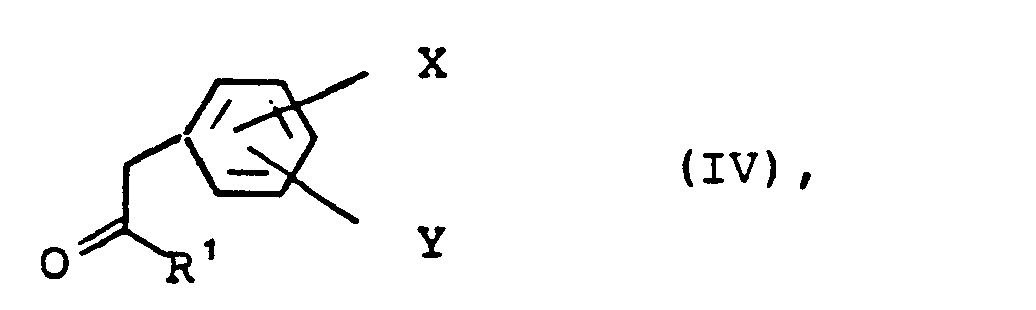
- (C) Aldehyde der allgemeinen Formel II mit Ketoverbindungen der allgemeinen Formel IV und Enaminen der allgemeinen Formel VI

- (D) Ylidenverbindungen der allgemeinen Formel VII

- (E) Ketoverbindungen der allgemeinen Formel III mit Ylidenverbindungen der allgemeinen Formel VIII

- (F) Ylidenverbindungen der allgemeinen Formel VII mit Enaminen der allgemeinen Formel V, gegebenenfalls in Anwesenheit von Wasser oder inerten organischen Lösungsmitteln umsetzt, oder wenn man
- (G) Enamine der allgemeinen Formel VI mit Ylidenverbindungen der allgemeinen Formel VIII, gegebenenfalls in Anwesenheit von Wasser oder inerten organischen Lösungsmitteln umsetzt.
- Je nach Art der verwendeten Ausgangsstoffe kann man die Reaktionen durch folgendes Formelschema darstellen:
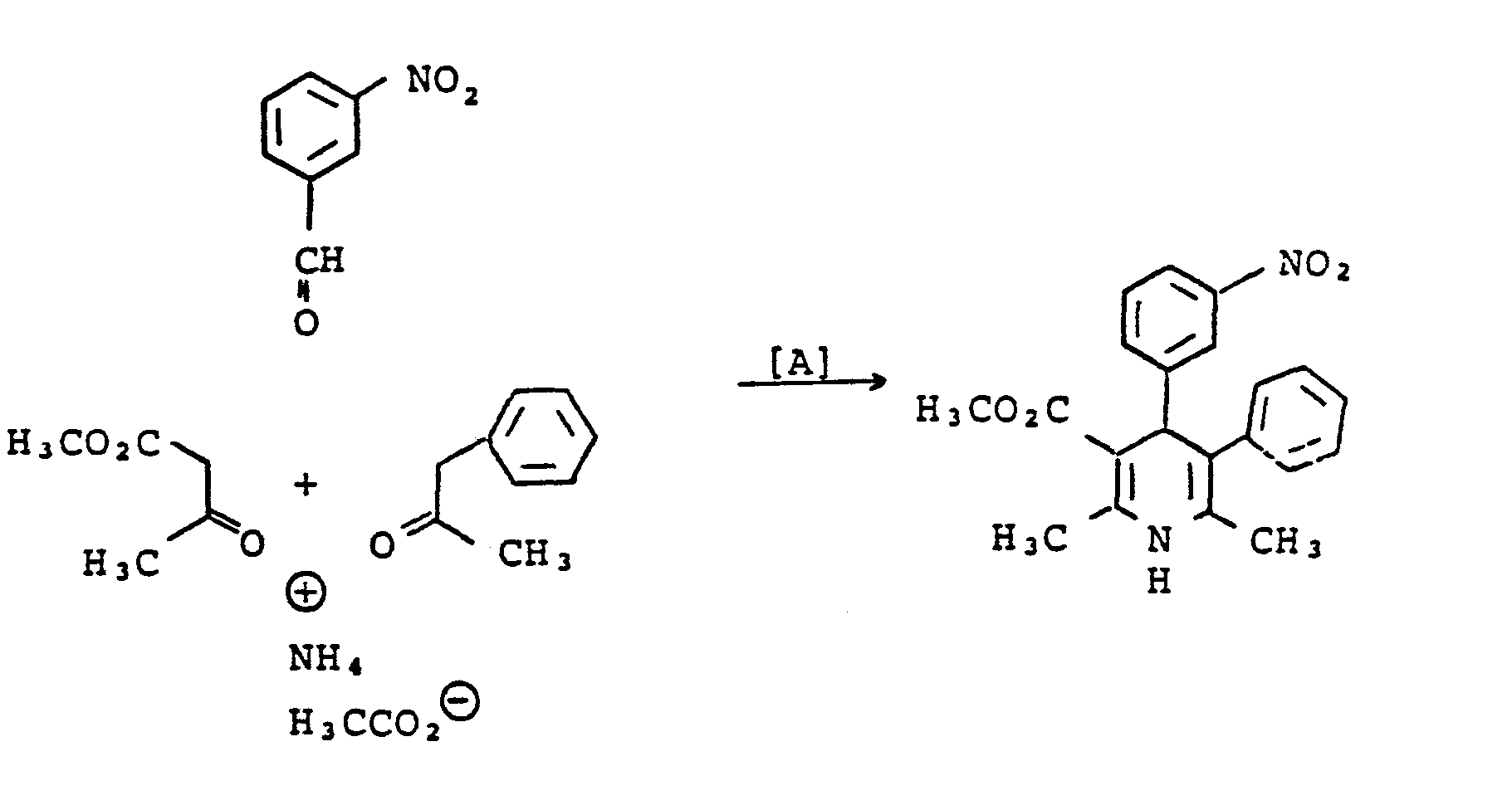

- Die verwendeten Aldehyde (II) sind bekannt oder können nach literaturbekannten Methoden dargestellt werden (vgl. T.D. Harris und G.P. Roth, J. org. Chem. H 2004, 146 (1979); Deutsche Offenlegungsschrift 2 401 665; Mijano et al., Chem. Abstr. 59 (1963), 13 929 c; E. Adler und H.-D. Becker, Acta Chem. Scand. 15, 849 (1961); E.P. Papadopoulos, H.A. Jarrar und C. Issidorides, J. Org. Chem. 31, 615 (1966)).
- Die Ketoverbindungen der Formel (III) sind zum Teil bekannt oder können nach bekannten Methoden hergestellt werden (vgl. N. Levy u. C.W. Scaife, J.Chem. Soc. (London) (1946) 1103; C.D. Hurd and M.E. Nilson, J. Org. Chem. 20, 927 (1955); D. Borrmann, "Umsetzung von Diketen mit Alkoholen, Phenolen und Mercaptanen", in Houben-Weyl, Methoden der organischen Chemie,
- Vol VII/4, 230 ff (1968); Y. Oikawa, K. Sugano und O. Yonemitsu, J. Org. Chem. 43, 2087 (1978)).
- Die Ketoverbindungen der Formel IV sind bekannt oder können nach bekannten Methoden hergestellt werden (vgl. H.G. Walker, C.R. Hauser, J.Am. Chem. Soc. 68, 1368, (1946); G.G. Smith, J.Am. Chem. Soc. 75, 1134 ff. (1953)).
- Die Enamine der Formel V sind bekannt oder können nach bekannten Methoden hergestellt werden (vgl. H. Ahlbrecht G. Rauchschwalbe, Tetrahedron Letters 51, 4897-4900 (1971)).
- Die Enamine der Formel VI sind bekannt oder können nach bekannten Methoden hergestellt werden (vgl. S.A. Glickmann, A.C. Cope, J.Am. Chem. Soc. 67, 1017 (1945); H. Böhme, K.-H. Weisel, Arch. Pharm. 310, 30 (1977)).
- Die Ylidenverbindungen der Formel VII sind bekannt oder können nach bekannten Methoden hergestellt werden (vgl. Organic Reactions XV, 204 ff. (1967)).
- Die Ylidenverbindungen der Formel VIII sind bekannt oder lassen sich nach bekannten Methoden herstellen (vgl. J.F. Codington, E. Mosettig, J. Org. Chem. 17, 1023 (1952); W. Dilthey, B. Stallmann, Che. Ber. 62, 1603 (1929)).
- Geeignete Ammoniumsalze können Salze von Ammoniak mit anorganischen oder organischen Säuren sein. Es seien beispielhaft aufgeführt: Halogenide, Sulfate, Hydrogensulfate, Hydrogenphosphate, Acetate, Carbonate und Hydrogencarbonate.
- Für alle Verfahrensvarianten A bis G kommen als Verdünnungsmittel Wasser oder alle inerten organischen Lösungsmittel infrage. Hierzu gehören vorzugsweise Alkohole wie Ethanol, Methanol, Isopropanol, Ether wie Dioxan, Diethylester, Tetrahydrofuran, Glykolmonomethylester, Glykoldimethylester, oder Eisessig, Dimethylformamid, Dimethylsulfoxid, Acetonitril, Pyridin und Hexamethylphosphorsäuretriamid. Bevorzugt wird unter Zusatz von Eisessig gearbeitet.
- Die Reaktionstemperaturen können in einem größeren Bereich variiert werden. Im allgemeinen arbeitet man zwischen 0 und 200°C, insbesondere zwischen 10 und 150°C, vorzugsweise jedoch bei der Siedetemperatur des jeweiligen Lösungsmittels.
- Die Umsetzung kann bei Normaldruck, aber auch bei erhöhtem Druck durchgeführt werden. Im allgemeinen arbeitet man unter Normaldruck.
- Die vorstehenden Herstellungsverfahren sind lediglich zur Verdeutlichung angegeben, und die Herstellung der Verbindungen der Formel (I) ist nicht auf diese Verfahren beschränkt, sondern jede Modifikation dieser Verfahren ist in gleicher Weise für die Herstellung der erfindungsgemäßen Verbindungen anwendbar.
- Das Mengenverhältnis der Reaktanden zueinander ist beliebig, im allgemeinen werden jedoch äquimolare Mengen eingesetzt. Es hat sich jedoch als zweckmäßig erwiesen, in Verfahren E die Ketoverbindung der allgemeinen Formel III und Ammoniak-Komponente sowie in Verfahren G die Enamine der allgemeinen Formel VI im bis zu 10fachen molaren Überschuß einzusetzen.
- Die erfindungsgemäßen Verbindungen zeigen ein nicht vorhersehbares, wertvolles pharmakologisches Wirkspektrum. Sie beeinflussen die Kontraktionskraft des Herzens und den Tonus der glatten Muskulatur. Außerdem wirken sie hemmend auf die Lipoxygenase. Sie können deshalb in Arzneimitteln zur Behandlung kardiovaskulärer Erkrankungen Verwendung finden, so z.B. bei der Behandlung von Hypertonie, koronarer Herzkrankheit, Herzinsuffizienz, Hypotonie. Darüberhinaus können sie zur Behandlung von Herzrhythmusstörungen, zur Senkung des Blutzuckers, zur Abschwellung von Schleimhäuten und zur Beeinflussung des Salz- und Flüssigkeitshaushaltes eingesetzt werden.
- Die Herz- und Gefäßwirkungen wurden an isoliert perfundierten Herzen des Meerschweinchens gefunden.
- Dazu werden die Herzen von 250 bis 350 g schweren Albino Meerschweinchen verwendet. Die Tiere werden mit einem Schlag auf den Kopf getötet, der Thorax geöffnet, in die freipräparierte Aorta eine Metallkanüle eingebunden und der linke Vorhof eröffnet.
- Das Herz wird mit den Lungen aus dem Thorax herausgetrennt und über die Aortenkanüle an die Perfusionsapparatur bei laufender Perfusion angeschlossen.
- Die Lungen werden an den Lungenwurzeln abgetrennt. Als Perfusionsmedium dient Krebs-Henseleit-Lösung (118,5 mmol/1 NaCl, 4,75 mmol/1 KC1, 1,19 mmol/1 KH2PO4, 119 mmol/1 MgSO4, 25 mmol/1 NaHC03, 0,013 mmol/1 NaEDTA), deren CaC12 je nach Bedarf variiert wird, in der Regel jedoch 1,2 mmol/1 beträgt. Als energielieferndes Substrat werden 10 mmol/1 Glucose zugesetzt. Vor der Perfusion wird die Lösung partikelfrei filtriert. Die Lösung wird mit Carbogen (95 % 02, 5 % C02) zur Aufrechterhaltung des pH-Wertes von 7,4 begast. Die Herzen werden mit konstantem Fluß (10 ml/min) bei 32°C mittels einer Rollenquetschpumpe perfundiert.
- Zur Messung der Herzfunktion wird ein flüssigkeitsgefüllter Latexballon, der über eine Flüssigkeitssäule mit einem Druckaufnehmer verbunden ist, durch den linken Vorhof in den linken Ventrikel eingeführt und die isovolumetrischen Kontraktionen auf einem Schnellschreiber registriert (Opie, L., J. Physiol. 180 (1965) 529-541). Der Perfusionsdruck wird mittels eines Druckaufnehmers, der vor dem Herzen mit dem Perfusionssystem in Verbindung steht, registriert. Unter diesen Bedingungen zeigt eine Senkung des Perfusionsdruckes eine Koronardilation, eine Steigerung der linksventrikulären Druckamplitude einen Anstieg der Herzkontraktilität an. Die erfindungsgemäßen Verbindungen werden in geeigneten Verdünnungen in das Perfusionssystem kurz vor dem isolierten Herzen infundiert.

- Die neuen Wirkstoffe können in bekannter Weise in die üblichen Formulierungen übergeführt werden, wie Tabletten, Kapseln, Dragees, Pillen, Granulate, Aerosole, Sirupe, Emulsionen, Suspensionen und Lösungen, unter Verwendung inerter, nicht toxischer, pharmazeutisch geeigneter Trägerstoffe oder Lösungsmittel. Hierbei soll die therapeutisch wirksame Verbindung jeweils in einer Konzentration von etwa 0,5 bis 90 Gew.-% der Gesamtmischung vorhanden sein, d.h. in Mengen, die ausreichend sind, um den angegebenen Dosierungsspielraum zu erreichen.
- Die Formulierungen werden beispielsweise hergestellt durch Verstrecken der Wirkstoffe mit Lösungsmitteln und/oder Trägerstoffen, gegebenenfalls unter Verwendung von Emulgiermitteln und/oder Dispergiermitteln, wobei z.B. im Fall der Benutzung von Wasser als Verdünnungsmittel gegebenenfalls organische Lösungsmittel als Hilfslösungsmittel verwendet werden können.
- Als Hilfsstoffe seien beispielsweise aufgeführt: Wasser, nicht-toxische organische Lösungsmittel, wie Paraffine (z.B. Erdölfraktionen), pflanzliche öle (z.B. Erdnuß/Sesamöl), Alkohole (z.B. Ethylalkohol, Glycerin), Glykole (z.B. Propylenglykol, Polyethylenglykol), feste Trägerstoffe, wie z.B. natürliche Gesteinsmehle (z.B..Kaoline, Tonerden, Talkum, Kreide), synthetische Gesteinsmehle (z.B. hochdisperse Kieselsäure, Silikate), Zucker (z.B. Rohr-, Milch- und Traubenzucker), Emulgiermittel (z.B. Polyoxyethylen-Fettsäure-Ester), Polyoxyethylen-Fettalkohol-Ether (z.B. Lignin, Sulfitablaugen, Methylcellulose, Stärke und Polyvinylpyrrolidon) und Gleitmittel (z.B. Magnesiumstearat, Talkum, Stearinsäure und Natriumsulfat).
- Die Applikation erfolgt in üblicher Weise, vorzugsweise oral oder parenteral, insbesondere perlingual oder intravenös. Im Falle der oralen Anwendung können Tabletten selbstverständlich außer den genannten Trägerstoffen auch Zusätze, wie Natriumcitrat, Calciumcarbonat und Dicalciumphosphat zusammen mit verschiedenen Zuschlagstoffen, wie Stärke, vorzugsweise Kartoffelstärke, Gelatine und dergleichen enthalten. Weiterhin können Gleitmittel, wie Magnesiumstearat, Natriumlaurylsulfat und Talkum zum Tablettieren mitverwendet werden. Im Falle wäßriger Suspension und/oder Elixieren, die für orale Anwendung gedacht sind, können die Wirkstoffe außer den obengenannten Hilfsstoffen mit verschiedenen Geschmackaufbesserern oder Farbstoffen versetzt werden.
- Für den Fall der parenteralen Anwendung können Lösungen der Wirkstoffe unter Verwendung geeigneter flüssiger Trägermaterialien eingesetzt werden.
- Im allgemeinen hat es sich als vorteilhaft erwiesen, bei intravenöser Applikation Mengen von etwa 0,001 bis 1 mg/kg, vorzugsweise etwa 0,01 bis 0,5 mg/kg, Körpergewicht zur Erzielung wirksamer Ergebnisse zu verabreichen, und bei oraler Applikation beträgt die Dosierung etwa 0,01 bis 20 mg/kg, vorzugsweise 0,1 bis 10 mg/kg, Körpergewicht.
- Trotzdem kann es gegebenenfalls erforderlich sein, von den genannten Mengen abzuweichen; und zwar in Abhängigkeit vom Körpergewicht des Versuchstieres bzw. der Art der Applikation, aber auch aufgrund der Tierart und deren individuellem Verhalten gegenüber dem Medikament bzw. deren Art von dessen Formulierung und dem Zeitpunkt bzw. Intervall, zu welchem die Verabreichung erfolgt. So kann es in einigen Fällen ausreichend sein, mit weniger als der vorgenannten Mindestmenge auszukommen, während in anderen Fällen die genannte obere Grenze überschritten werdenmuß. Im Falle der Applikation größerer Mengen kann es empfehlenwert sein, diese in mehrere Einzelgaben über den Tag zu verteilen. Für die Applikation in der Humanmedizin ist der gleiche Dosierungspielraum vorgesehen. Sinngemäß gelten hierbei auch die obigen Ausführungen.
- 4-(2-Benzylcxyphenyl)-1,4-dihydro-2,6-dimethyl-3-nitro-5-phenylpyridin

- 4-(3-Chlorphenyl)-1,4-dihydro-2,6-dimethyl-5-phenyl- pyridin-3-carbonsäuremethylester

- 4-(3-Chlorphenyl)-1,4-dihydro-2,6-dimethyl-3-nitro-5-phenyl-pyridin

- Reinigung über Kieselgelsäule mit Toluol/Essigester 10:1. Die sauberen Fraktionen werden gesammelt, eingeengt, mit Ether verrührt, abgesaugt und mit Ether gewaschen. Man erhält 5,2 g orangefarbener Kristalle vom Schmelzpunkt 157-60°C.
- 4-(2-Chlorphenyl)-1,4-dihydro-2,6-dimethyl-3-nitro-5-phenyl-pyridin

- Die folgenden Stoffe werden analog den vorstehenden, in den Beispielen 1 bis 4 aufgezeigten, Verfahren erhalten:
- 4-(2-Benzyloxyphenyl)-5-(4-cyanophenyl)-1,4-dihydro-2,6-dimethyl-3-nitro-pyridin
- Schmelzpunkt: 126°C.
- 4-(3-Chlorphenyl)-1,4-dihydro-5-(4-methoxyphenyl)-2,6-dimethyl-pyridin-5-carbonsäuremethylester
- Schmelzpunkt: 171°C.
- 6-Benzyl-4-(2-benzyloxyphenyl)-1,4-dihydro-2-methyl-3-nitro-5-phenyl-pyridin
- Schmelzpunkt: 173°C.
- 1,4-Dihydro-2,6-dimethyl-3-nitro-4,5-diphenyl-pyridin
- Schmelzpunkt: 187°C.
- 6-Benzyl-4-(2-chlorphenyl)-1,4-dihydro-2-methyl-3-nitro-5-phenyl-pyridin
- Schmelzpunkt: 177°C.
- 1,4-Dihydro-2,6-dimethyl-3-nitro-4-(2-nitrophenyl)-5-phenyl-pyridin
- Schmelzpunkt: 166-170°C.
- 6-Benzyl-1,4-dihydro-2-methyl-3-nitro-4,5-diphenyl- pyridin
- Schmelzpunkt: 218°C.
- 4-(2-Chlorphenyl)-1,4-dihydro-2,6-dimethyl-5-phenyl- pyridin-3-carbonsäuremethylester
- Schmelzpunkt: 130°C.
- 4-(2-Chlorphenyl)-1,4-dihydro-2,6-dimethyl-5-phenyl- pyridin-3-carbonsäuremethylester
- Schmelzpunkt: 108°C
- 4-(2-Fluorphenyl)-1,4-dihydro-2,6-dimethyl-5-phenyl-3-nitro-pyridin
- Schmelzpunkt: 206°C.
- 4-(2-Chlorphenyl)-1,4-dihydro-2-methoxy-carbonylmethyl-6-methyl-5-phenyl-pyridin-3-carbonsäuremethylester
- Schmelzpunkt: 163°C.
- 6-Benzyl-1,4-dihydro-2-methyl-4,5-diphenyl-pyridin-3-carbonsäuremethylester
- Schmelzpunkt: 184°C.
- 4-(2-Chlorphenyl)-6-ethyl-1,4-dihydro-2-methyl-3-nitro-5-phenyl-pyridin
- Schmelzpunkt: 195°C.
- 1,4-Dihydro-2,6-dimethyl-3-nitro-5-phenyl-4-(2-trifluormethylphenyl)-pyridin
- Schmelzpunkt: 206°C.
- 1,4-Dihydro-2,6-dimethyl-3-nitro-4-(3-nitrophenyl)-5-phenyl-pyridin
- Schmelzpunkt: 157°C.
- 1,4-Dihydro-2,6-dimethyl-4-(3-nitrophenyl)-5-phenyl-3-carbonsäuremethylester
- Schmelzpunkt: 152°C.
- 1,4-Dihydro-2,6-dimethyl-4-(2-nitrophenyl)-5-phenyl- pyridin-3-carbonsäuremethylester
- Schmelzpunkt: 180°C.
- 4-(3-Chlorphenyl)-2-ethoxycarbonylmethyl-1,4-dihydro-6-methyl-5-phenyl-pyridin-3-carbonsäureethylester
- Schmelzpunkt: 129 - 132°C.
- 1,4-Dihydro-2,6-dimethyl-3-nitro-5-phenyl-4-(3-tri- fluoro-phenyl)-pyridin
- Schmelzpunkt: 162°C
- 1,4-Dihydro-2,6-dimethyl-3-nitro-5-phenyl-4-(4-trifluor-methylmercapto-phenyl)-pyridin
- Schmelzpunkt: 162°C
- 4-Cyclohexyl-1,4-dihydro-2,6-dimethyl-3-nitro-5-phenyl- pyridin
- Schmelzpunkt: 195 - 97°C.
- 4,5-Bis-(4-chlorphenyl)-1,4-dihydro-2,6-dimethyl-3-nitro- pyridin
- Schmelzpunkt: 115-116°C.
- 1,4-Dihydro-2,6-dimethyl-3-ni.tro-5-phenyl-4-thienyl- pyridin
- Schmelzpunkt: 157 - 58°C.
- 1,4-Dihydro-4-(4-methoxyphenyl)-2,6-dimethyl-5-nitro-3-phenyl-pyridin
- Schmelzpunkt: 181°C.
- 1,4-Dihydro-2,6-dimethyl-5-phenyl-4-(2-trifluormethylphenyl)-pyridin-3-carbonsäuremethylester Rf 0,51 DC Alurolle Merck, Fließmittel Toluol/Essigester im Volumenverhältnis 4:1.
- Schmelzpunkt: 143 °C
- 4-(4-Hydroxy-3-methoxyphenyl)-1,4-dihydro-2,6-dimethyl-5-phenyl-3-nitro-pyridin
- Rf-Wert: 0,1
- Schmelzpunkt: 227°C.
- 4-(4-Hydroxyphenyl)-1,4-dihydro-2,6-dimethyl-3-nitro-5-phenyl-pyridin
- Rf-Wert: 0,095
- Schmelzpunkt: 240°C.
- 1,4-Dihydro-4-(4-hydroxyphenyl)-2,6-dimethyl-5-phenyl- pyridin-3-carbonsäuremethylester
- Rf-Wert: 0,66 Fließmittel Toluol/Essigester im Volumenverhältnis 1:1.
- 1,4-Dihydro-2,6-dimethyl-4-(2-fluorphenyl)-5-(4-methoxyphenyl)-3-nitro-pyridin.
- Schmelzpunkt: ab 297 °C
- 4-(2-Chlorphenyl)-5-(4-cyanophenyl)-1,4-dihydro-2,6-dimethyl-3-nitro-pyridin.
- Schmelzpunkt: 213 °C
Claims (8)


Priority Applications (1)
| Application Number | Priority Date | Filing Date | Title |
|---|---|---|---|
| AT86100203T ATE50447T1 (de) | 1985-01-22 | 1986-01-09 | 5-aryl-dihydropyridine, verfahren zu ihrer herstellung sowie ihre verwendung in arzneimitteln. |
Applications Claiming Priority (2)
| Application Number | Priority Date | Filing Date | Title |
|---|---|---|---|
| DE19853501855 DE3501855A1 (de) | 1985-01-22 | 1985-01-22 | 5-aryl-dihydropyridine, verfahren zu ihrer herstellung sowie ihre verwendung in arzneimitteln |
| DE3501855 | 1985-01-22 |
Publications (3)
| Publication Number | Publication Date |
|---|---|
| EP0189057A2 true EP0189057A2 (de) | 1986-07-30 |
| EP0189057A3 EP0189057A3 (en) | 1986-10-08 |
| EP0189057B1 EP0189057B1 (de) | 1990-02-21 |
Family
ID=6260346
Family Applications (1)
| Application Number | Title | Priority Date | Filing Date |
|---|---|---|---|
| EP86100203A Expired - Lifetime EP0189057B1 (de) | 1985-01-22 | 1986-01-09 | 5-Aryl-dihydropyridine, Verfahren zu ihrer Herstellung sowie ihre Verwendung in Arzneimitteln |
Country Status (13)
| Country | Link |
|---|---|
| US (1) | US4791122A (de) |
| EP (1) | EP0189057B1 (de) |
| JP (1) | JPH0678309B2 (de) |
| AT (1) | ATE50447T1 (de) |
| AU (1) | AU577436B2 (de) |
| CA (1) | CA1296731C (de) |
| DE (2) | DE3501855A1 (de) |
| DK (1) | DK30086A (de) |
| ES (5) | ES8705861A1 (de) |
| GR (1) | GR860143B (de) |
| NO (1) | NO860046L (de) |
| PT (1) | PT81878B (de) |
| ZA (1) | ZA86435B (de) |
Families Citing this family (3)
| Publication number | Priority date | Publication date | Assignee | Title |
|---|---|---|---|---|
| GR1002248B (en) * | 1988-03-08 | 1996-04-23 | Egyt Gyogyszervegyeszeti Gyar | 1,4-dihydropyridine derivatives preparation method |
| JPH032161A (ja) * | 1989-05-31 | 1991-01-08 | Fujirebio Inc | 1,4―ジヒドロピリジン誘導体 |
| US5276150A (en) * | 1989-05-31 | 1994-01-04 | Fujirebio Inc. | 1,4-dihydropyridine derivatives |
Family Cites Families (3)
| Publication number | Priority date | Publication date | Assignee | Title |
|---|---|---|---|---|
| DE2741260A1 (de) * | 1977-09-14 | 1979-03-22 | Bayer Ag | Neue 1,4-dihydropyridazine, verfahren zu ihrer herstellung sowie ihre verwendung als arzneimittel |
| DE2752820A1 (de) * | 1977-11-26 | 1979-05-31 | Bayer Ag | Neue nitrosubstituierte 1,4-dihydropyridine, verfahren zu ihrer herstellung sowie ihre verwendung als arzneimittel |
| NZ201395A (en) * | 1981-07-30 | 1987-02-20 | Bayer Ag | Pharmaceutical compositions containing 1,4-dihydropyridines and certain of these dihydropyridines |
-
1985
- 1985-01-22 DE DE19853501855 patent/DE3501855A1/de not_active Withdrawn
-
1986
- 1986-01-08 US US06/816,916 patent/US4791122A/en not_active Expired - Fee Related
- 1986-01-08 NO NO860046A patent/NO860046L/no unknown
- 1986-01-09 DE DE8686100203T patent/DE3669072D1/de not_active Expired - Lifetime
- 1986-01-09 AT AT86100203T patent/ATE50447T1/de not_active IP Right Cessation
- 1986-01-09 EP EP86100203A patent/EP0189057B1/de not_active Expired - Lifetime
- 1986-01-13 AU AU52238/86A patent/AU577436B2/en not_active Ceased
- 1986-01-20 CA CA000499875A patent/CA1296731C/en not_active Expired - Lifetime
- 1986-01-20 PT PT81878A patent/PT81878B/pt not_active IP Right Cessation
- 1986-01-20 GR GR860143A patent/GR860143B/el unknown
- 1986-01-21 DK DK30086A patent/DK30086A/da not_active Application Discontinuation
- 1986-01-21 ES ES551082A patent/ES8705861A1/es not_active Expired
- 1986-01-21 ZA ZA86435A patent/ZA86435B/xx unknown
- 1986-01-21 JP JP61009064A patent/JPH0678309B2/ja not_active Expired - Lifetime
-
1987
- 1987-02-16 ES ES557407A patent/ES8801793A1/es not_active Expired
- 1987-02-16 ES ES557406A patent/ES8801792A1/es not_active Expired
- 1987-02-16 ES ES557409A patent/ES8801795A1/es not_active Expired
- 1987-02-16 ES ES557408A patent/ES8801794A1/es not_active Expired
Also Published As
| Publication number | Publication date |
|---|---|
| EP0189057A3 (en) | 1986-10-08 |
| JPS61167657A (ja) | 1986-07-29 |
| DK30086A (da) | 1986-07-23 |
| ATE50447T1 (de) | 1990-03-15 |
| AU5223886A (en) | 1986-07-31 |
| ES8801793A1 (es) | 1988-02-16 |
| EP0189057B1 (de) | 1990-02-21 |
| ES8801795A1 (es) | 1988-02-16 |
| DE3501855A1 (de) | 1986-07-24 |
| NO860046L (no) | 1986-07-23 |
| ES8801792A1 (es) | 1988-02-16 |
| ES557406A0 (es) | 1988-02-16 |
| DE3669072D1 (de) | 1990-03-29 |
| ES551082A0 (es) | 1987-05-16 |
| PT81878B (pt) | 1988-05-27 |
| DK30086D0 (da) | 1986-01-21 |
| AU577436B2 (en) | 1988-09-22 |
| ES557409A0 (es) | 1988-02-16 |
| JPH0678309B2 (ja) | 1994-10-05 |
| ES8705861A1 (es) | 1987-05-16 |
| CA1296731C (en) | 1992-03-03 |
| US4791122A (en) | 1988-12-13 |
| GR860143B (en) | 1986-05-16 |
| ES557408A0 (es) | 1988-02-16 |
| ZA86435B (en) | 1986-09-24 |
| ES557407A0 (es) | 1988-02-16 |
| PT81878A (en) | 1986-02-01 |
| ES8801794A1 (es) | 1988-02-16 |
Similar Documents
| Publication | Publication Date | Title |
|---|---|---|
| EP0088274B1 (de) | Neue 1,4-Dihydropyridine, Verfahren zu ihrer Herstellung und ihrer Verwendung in Arzneimitteln | |
| EP0002208B1 (de) | Nitrosubstituierte 1,4-Dihydropyridine, diese enthaltende Arzneimittel sowie deren Herstellung | |
| DD154014A5 (de) | Verfahren zur herstellung von optisch aktiven-1,4-dihydropyridinen | |
| EP0185964B1 (de) | Dihydropyridin-carbonsäureamide, Verfahren zu ihrer Herstellung und ihre Verwendung in Arzneimitteln | |
| EP0009206B1 (de) | Fluorhaltige 1,4-Dihydropyridine, diese enthaltende Arzneimittel sowie Verfahren zu ihrer Herstellung | |
| EP0209701B1 (de) | Neue 1,4-Dihydropyridine, Verfahren zur Herstellung und ihre Verwendung in Arzneimitteln | |
| EP0052300A1 (de) | C-3 verknüpfte 1,4-Dihydropyridine, ihre Verwendung in Arzneimitteln und Verfahren zu ihrer Herstellung | |
| EP0039863B1 (de) | 1,4-Dihydropyridine mit unterschiedlichen Substituenten in 2- und 6-Position, Verfahren zu ihrer Herstellung und ihre Verwendung in Arzneimitteln | |
| EP0179386B1 (de) | 1,4-Dihydropyridin-hydroxyamine, Verfahren zu ihrer Herstellung sowie ihre Verwendung in Arzneimitteln | |
| DE4313693A1 (de) | 2-Amino-4-chinolin-dihydropyridine, Verfahren zu ihrer Herstellung und ihre Verwendung | |
| EP0127826A2 (de) | 1,4-Dihydropyridine, Verfahren zu ihrer Herstellung sowie ihre Verwendung in Arzneimitteln | |
| DE4313690A1 (de) | Kondensierte Chinolyl-dihydropyridine, Verfahren zu ihrer Herstellung und ihre Verwendung in Arzneimitteln | |
| EP0627427A1 (de) | 3-Chinolyl substituierte Dihydropyridine, Verfahren zu ihrer Herstellung und ihre Verwendung in Arzneimitteln | |
| EP0234196A1 (de) | Substituierte 1,4-Dihydropyridin-3-carbonsäurepiperazide, Verfahren zu ihrer Herstellung und ihre Verwendung in Arzneimitteln | |
| EP0315018A2 (de) | Fluormethoxyphenyl-dihydropyridine, Verfahren zur Herstellung und ihre Verwendung in Arzneimitteln | |
| EP0157324A2 (de) | Tetrahydrothienopyridine, Verfahren zu ihrer Herstellung sowie ihre Verwendung als Arzneimittel | |
| EP0218068A1 (de) | Dihydropyridin-2-hydroxyamine, Verfahren zur Herstellung und ihre Verwendung in Arzneimitteln | |
| EP0189057B1 (de) | 5-Aryl-dihydropyridine, Verfahren zu ihrer Herstellung sowie ihre Verwendung in Arzneimitteln | |
| EP0158956B1 (de) | 4-(Nitrophenyl)-tetrahydropyridine, Verfahren zu ihrer Herstellung und ihre Verwendung als Arzneimittel | |
| EP0214437B1 (de) | Verfahren zur Herstellung von 1,4-Dihydropyridinderivaten über neue Zwischenprodukte | |
| EP0362632A2 (de) | Basische 4-Aryl-DHP-amide, Verfahren zu ihrer Herstellung und ihre Verwendung in Arzneimitteln | |
| EP0229381B1 (de) | Methioninsubstituierte 1,4-Dihydropyridine, Verfahren zur Herstellung und ihre Verwendung | |
| DE4313691A1 (de) | 2,6-Disubstituierte 4-Chinolyl-dihydropyridine | |
| EP0202527B1 (de) | Pyrimidinyl-dihydropyridine, Verfahren zur Herstellung und ihre Verwendung in Arzneimitteln | |
| EP0315019A2 (de) | Neue Fluormethoxyphenyl-dihydropyridine, Verfahren zur Herstellung und ihre Verwendung in Arzneimitteln |
Legal Events
| Date | Code | Title | Description |
|---|---|---|---|
| PUAI | Public reference made under article 153(3) epc to a published international application that has entered the european phase |
Free format text: ORIGINAL CODE: 0009012 |
|
| 17P | Request for examination filed |
Effective date: 19860109 |
|
| AK | Designated contracting states |
Kind code of ref document: A2 Designated state(s): AT BE CH DE FR GB IT LI NL SE |
|
| PUAL | Search report despatched |
Free format text: ORIGINAL CODE: 0009013 |
|
| AK | Designated contracting states |
Kind code of ref document: A3 Designated state(s): AT BE CH DE FR GB IT LI NL SE |
|
| 17Q | First examination report despatched |
Effective date: 19880728 |
|
| GRAA | (expected) grant |
Free format text: ORIGINAL CODE: 0009210 |
|
| AK | Designated contracting states |
Kind code of ref document: B1 Designated state(s): AT BE CH DE FR GB IT LI NL SE |
|
| REF | Corresponds to: |
Ref document number: 50447 Country of ref document: AT Date of ref document: 19900315 Kind code of ref document: T |
|
| ITF | It: translation for a ep patent filed | ||
| ET | Fr: translation filed | ||
| REF | Corresponds to: |
Ref document number: 3669072 Country of ref document: DE Date of ref document: 19900329 |
|
| GBT | Gb: translation of ep patent filed (gb section 77(6)(a)/1977) | ||
| PLBE | No opposition filed within time limit |
Free format text: ORIGINAL CODE: 0009261 |
|
| STAA | Information on the status of an ep patent application or granted ep patent |
Free format text: STATUS: NO OPPOSITION FILED WITHIN TIME LIMIT |
|
| ITTA | It: last paid annual fee | ||
| 26N | No opposition filed | ||
| PGFP | Annual fee paid to national office [announced via postgrant information from national office to epo] |
Ref country code: AT Payment date: 19911223 Year of fee payment: 7 |
|
| PGFP | Annual fee paid to national office [announced via postgrant information from national office to epo] |
Ref country code: BE Payment date: 19920129 Year of fee payment: 7 |
|
| PGFP | Annual fee paid to national office [announced via postgrant information from national office to epo] |
Ref country code: NL Payment date: 19920131 Year of fee payment: 7 |
|
| PG25 | Lapsed in a contracting state [announced via postgrant information from national office to epo] |
Ref country code: AT Effective date: 19930109 |
|
| PG25 | Lapsed in a contracting state [announced via postgrant information from national office to epo] |
Ref country code: BE Effective date: 19930131 |
|
| BERE | Be: lapsed |
Owner name: BAYER A.G. Effective date: 19930131 |
|
| PG25 | Lapsed in a contracting state [announced via postgrant information from national office to epo] |
Ref country code: NL Effective date: 19930801 |
|
| NLV4 | Nl: lapsed or anulled due to non-payment of the annual fee | ||
| EAL | Se: european patent in force in sweden |
Ref document number: 86100203.8 |
|
| PGFP | Annual fee paid to national office [announced via postgrant information from national office to epo] |
Ref country code: DE Payment date: 19971212 Year of fee payment: 13 |
|
| PGFP | Annual fee paid to national office [announced via postgrant information from national office to epo] |
Ref country code: SE Payment date: 19971219 Year of fee payment: 13 |
|
| PGFP | Annual fee paid to national office [announced via postgrant information from national office to epo] |
Ref country code: FR Payment date: 19971224 Year of fee payment: 13 |
|
| PGFP | Annual fee paid to national office [announced via postgrant information from national office to epo] |
Ref country code: GB Payment date: 19971231 Year of fee payment: 13 |
|
| PGFP | Annual fee paid to national office [announced via postgrant information from national office to epo] |
Ref country code: CH Payment date: 19980129 Year of fee payment: 13 |
|
| PG25 | Lapsed in a contracting state [announced via postgrant information from national office to epo] |
Ref country code: GB Free format text: LAPSE BECAUSE OF NON-PAYMENT OF DUE FEES Effective date: 19990109 |
|
| PG25 | Lapsed in a contracting state [announced via postgrant information from national office to epo] |
Ref country code: SE Free format text: LAPSE BECAUSE OF NON-PAYMENT OF DUE FEES Effective date: 19990110 |
|
| PG25 | Lapsed in a contracting state [announced via postgrant information from national office to epo] |
Ref country code: LI Free format text: LAPSE BECAUSE OF NON-PAYMENT OF DUE FEES Effective date: 19990131 Ref country code: CH Free format text: LAPSE BECAUSE OF NON-PAYMENT OF DUE FEES Effective date: 19990131 |
|
| GBPC | Gb: european patent ceased through non-payment of renewal fee |
Effective date: 19990109 |
|
| REG | Reference to a national code |
Ref country code: CH Ref legal event code: PL |
|
| PG25 | Lapsed in a contracting state [announced via postgrant information from national office to epo] |
Ref country code: FR Free format text: LAPSE BECAUSE OF NON-PAYMENT OF DUE FEES Effective date: 19990930 |
|
| PG25 | Lapsed in a contracting state [announced via postgrant information from national office to epo] |
Ref country code: DE Free format text: LAPSE BECAUSE OF NON-PAYMENT OF DUE FEES Effective date: 19991103 |
|
| REG | Reference to a national code |
Ref country code: FR Ref legal event code: ST |
|
| PG25 | Lapsed in a contracting state [announced via postgrant information from national office to epo] |
Ref country code: IT Free format text: LAPSE BECAUSE OF NON-PAYMENT OF DUE FEES;WARNING: LAPSES OF ITALIAN PATENTS WITH EFFECTIVE DATE BEFORE 2007 MAY HAVE OCCURRED AT ANY TIME BEFORE 2007. THE CORRECT EFFECTIVE DATE MAY BE DIFFERENT FROM THE ONE RECORDED. Effective date: 20050109 |