EP0194809A1 - Vecteur de transformation d'ARN - Google Patents
Vecteur de transformation d'ARN Download PDFInfo
- Publication number
- EP0194809A1 EP0194809A1 EP86301586A EP86301586A EP0194809A1 EP 0194809 A1 EP0194809 A1 EP 0194809A1 EP 86301586 A EP86301586 A EP 86301586A EP 86301586 A EP86301586 A EP 86301586A EP 0194809 A1 EP0194809 A1 EP 0194809A1
- Authority
- EP
- European Patent Office
- Prior art keywords
- rna
- virus
- segment
- derived
- exogenous
- Prior art date
- Legal status (The legal status is an assumption and is not a legal conclusion. Google has not performed a legal analysis and makes no representation as to the accuracy of the status listed.)
- Granted
Links
Images




Classifications
-
- C—CHEMISTRY; METALLURGY
- C12—BIOCHEMISTRY; BEER; SPIRITS; WINE; VINEGAR; MICROBIOLOGY; ENZYMOLOGY; MUTATION OR GENETIC ENGINEERING
- C12N—MICROORGANISMS OR ENZYMES; COMPOSITIONS THEREOF; PROPAGATING, PRESERVING, OR MAINTAINING MICROORGANISMS; MUTATION OR GENETIC ENGINEERING; CULTURE MEDIA
- C12N15/00—Mutation or genetic engineering; DNA or RNA concerning genetic engineering, vectors, e.g. plasmids, or their isolation, preparation or purification; Use of hosts therefor
- C12N15/09—Recombinant DNA-technology
- C12N15/63—Introduction of foreign genetic material using vectors; Vectors; Use of hosts therefor; Regulation of expression
- C12N15/79—Vectors or expression systems specially adapted for eukaryotic hosts
- C12N15/82—Vectors or expression systems specially adapted for eukaryotic hosts for plant cells, e.g. plant artificial chromosomes (PACs)
- C12N15/8201—Methods for introducing genetic material into plant cells, e.g. DNA, RNA, stable or transient incorporation, tissue culture methods adapted for transformation
- C12N15/8202—Methods for introducing genetic material into plant cells, e.g. DNA, RNA, stable or transient incorporation, tissue culture methods adapted for transformation by biological means, e.g. cell mediated or natural vector
- C12N15/8203—Virus mediated transformation
-
- C—CHEMISTRY; METALLURGY
- C12—BIOCHEMISTRY; BEER; SPIRITS; WINE; VINEGAR; MICROBIOLOGY; ENZYMOLOGY; MUTATION OR GENETIC ENGINEERING
- C12N—MICROORGANISMS OR ENZYMES; COMPOSITIONS THEREOF; PROPAGATING, PRESERVING, OR MAINTAINING MICROORGANISMS; MUTATION OR GENETIC ENGINEERING; CULTURE MEDIA
- C12N15/00—Mutation or genetic engineering; DNA or RNA concerning genetic engineering, vectors, e.g. plasmids, or their isolation, preparation or purification; Use of hosts therefor
- C12N15/09—Recombinant DNA-technology
- C12N15/63—Introduction of foreign genetic material using vectors; Vectors; Use of hosts therefor; Regulation of expression
- C12N15/79—Vectors or expression systems specially adapted for eukaryotic hosts
- C12N15/85—Vectors or expression systems specially adapted for eukaryotic hosts for animal cells
-
- C—CHEMISTRY; METALLURGY
- C12—BIOCHEMISTRY; BEER; SPIRITS; WINE; VINEGAR; MICROBIOLOGY; ENZYMOLOGY; MUTATION OR GENETIC ENGINEERING
- C12N—MICROORGANISMS OR ENZYMES; COMPOSITIONS THEREOF; PROPAGATING, PRESERVING, OR MAINTAINING MICROORGANISMS; MUTATION OR GENETIC ENGINEERING; CULTURE MEDIA
- C12N2820/00—Vectors comprising a special origin of replication system
-
- C—CHEMISTRY; METALLURGY
- C12—BIOCHEMISTRY; BEER; SPIRITS; WINE; VINEGAR; MICROBIOLOGY; ENZYMOLOGY; MUTATION OR GENETIC ENGINEERING
- C12N—MICROORGANISMS OR ENZYMES; COMPOSITIONS THEREOF; PROPAGATING, PRESERVING, OR MAINTAINING MICROORGANISMS; MUTATION OR GENETIC ENGINEERING; CULTURE MEDIA
- C12N2820/00—Vectors comprising a special origin of replication system
- C12N2820/60—Vectors comprising a special origin of replication system from viruses
Definitions
- This invention relates to the field of plant viruses, more particularly to (+) strand RNA viruses of plants,animals and bacteria, and to modifications, made according to the teachings herein, which permit insertion of an exogenous RNA segment into the viral genome.
- the inserted segment can then be introduced into a host cell in order to modify the cell, either genotypically or phenotypically.
- the invention is exemplified by modifications of an RNA plant virus, brome mosaic virus (BMV), which is infective for monocots.
- BMV brome mosaic virus
- RNA viruses whose genome is composed of a single RNA strand capable of replication in the cytoplasm of a host by direct RNA replication are widespread, many varieties of which are known and which infect animals, plants and bacteria. Such viruses are sometimes termed "(+) strand RNA viruses" since the infective RNA strand, that normally found encapsidated in the virus particle, is a messenger-sense strand, capable of being directly translated, and also capable of being replicated under the proper conditions by a direct process of RNA replication. Viruses belonging to this group include, but are not limited to, the picornaviruses, the RNA bacteriophages, the comoviruses, and various single component and multicomponent RNA viruses of plants.
- viruses would include polio virus, Sindbis virus, Qi3 bacteriophage, tobacco mosaic virus, barley stripe mosaic virus, cow pea mosaic virus, cucumber mosaic virus, alfalfa mosaic virus and brome mosaic virus.
- the entire virus genome is contained within a single RNA molecule, while in other cases, most notably the multicomponent RNA plant viruses, the total genome of the virus consists of two or more distinct RNA segments, each separately encapsidated.
- RNA of a (+) strand RNA virus modifications to the genomic RNA of a (+) strand RNA virus are disclosed.
- the modified RNA is used to transfer a desired RNA segment into a targeted host cell and to replicate that segment and express its function within the host cell.
- a virus known to be representative of the common replication functions of (+) strand RNA viruses was chosen to exemplify the present invention herein.
- Brome mosaic virus is one member of a class of plant viruses characterized by a multipartite RNA genome.
- the genetic material of the virus is RNA, and the total genetic information required for replication and productive infection is divided into more than one discrete RNA molecule.
- the class, termed multipartite RNA viruses herein includes, besides BMV, such viruses as alfalfa mosaic virus (AMV), barley stripe mosaic virus, cowpea mosaic virus, cucumber mosaic virus, and many others.
- Virus particles are generally composed of RNA encapsidated by a protein coat.
- the separate RNA molecules which comprise the total genome of a given multipartite virus are encapsidated in separate virus particles, each of which has the same protein composition.
- Infection of a host plant cell occurs when a virus particle containing each of the RNA components of the viral genome has infected the cell, for example by exposing a plant to a virus preparation containing a mixture of all necessary viral components. Infection may also be achieved by exposing a plant cell or protoplast to a mixture of the RNA components.
- a subclass of the multipartite RNA viruses (termed subclass I herein) requires coat protein in addition to viral RNA for replication and productive infection.
- AMV is an example of a subclass I multipartite virus.
- Another subclass does not require coat protein, the component RNAs being both necessary and sufficient for replication and productive infection.
- BMV belongs to subclass II.
- the BMV genome is divided among three messenger-sense RNAs of 3.2, 2.8 and 2.1 kilobases (Ahlquist, P. et al. (1981) J. Mol. Biol. 153,23; Ahlquist, P., et al. (1984) J. Mol. Biol. 172,369).
- the term "messenger-sense” denotes that the viral RNAs can be directly translated to yield viral proteins, without the need for an intervening transcription step.
- DNA from each of the three BMV cDNA-containing plasmids can be cleaved at a unique EcoRI site.
- the linear DNA thus produced can be transcribed in vitro in a reaction catalyzed by RNA polymerase.
- a modified ⁇ P R promoter in the transcription vector, pPMl allows RNA synthesis to initiate exactly at the 5' terminus of each BMV sequence, and transcription continues to the end of the DNA template, adding 6-7 nonviral nucleotides at the 3' ends of the transcripts.
- pPMl A modified ⁇ P R promoter in the transcription vector, pPMl, allows RNA synthesis to initiate exactly at the 5' terminus of each BMV sequence, and transcription continues to the end of the DNA template, adding 6-7 nonviral nucleotides at the 3' ends of the transcripts.
- m 7 GpppG as described by Contreras, R., et al. (1982) Nucleic Acids Res.
- RNA transcripts are produced with the same capped 5' ends as authentic BMV RNAs. These RNAs are active messengers in in vitro translation systems and direct production of proteins with the same electrophoretic mobilities as those translated from authentic BMV RNAs.
- RNA virus is used herein to mean (+) strand replicating RNA viruses.
- the invention is based on the discovery that an RNA of the genome of an RNA virus can be modified to include an exogenous RNA segment and that the modified RNA can be introduced into a host cell, replicated therein and can express the exogenous RNA segment.
- the recipient cell is thereby phenotypically transformed and may contribute to a genotypically transformed organism, as well.
- Phenotypically transformed cells can be modified in vivo, in lanta, in tissue culture, in cell culture or in the form of protoplasts.
- the exemplified embodiment of the invention is useful for producing phenotypically transformed plants under field conditions or greenhouse growth.
- Traits desirable for introduction in this manner include, but are not limited to, pest resistance, pathogen resistance, herbicide tolerance or resistance, modified growth habit and modified metabolic characteristics, such as the production of commercially useful peptides or pharmaceuticals in plants.
- the modifications can be applied at any time during the growth cycle, depending on the need for the trait. For example, resistance to a pest could be conferred only if the crop were at risk for that pest, and at the time when the crop was most likely to be affected by the pest.
- Other traits can be used to enhance secondary properties, for example to increase the protein content of post-harvest forage. Any plant variety susceptible to infection by a multipartite RNA virus can be phenotypically transformed.
- RNA virus phenotypically or genotypically modified by means of a modified RNA derived from an RNA virus
- Other uses for transformed animal cells, bacterial cells and the like can be readily envisioned.
- bacterial cells susceptible to Qa phage can be grown in culture to desired cell density, infected with a modified Qg phage carrying a desired gene and thereby caused to express large quantities of a desired protein within a short time period.
- the steps of a process for phenotypically transforming a cell or organism are: forming a full-length cDNA transcript of the virus RNA, or of each RNA component if the RNA virus is multipartite; cloning each cDNA in a transcription vector; modifying the cDNA of at least one of the RNA components by inserting a non-viral DNA segment in a region able to tolerate such insertion without disrupting RNA replication thereof; transcribing the modified cDNA, or, in the case of a multipartite virus, transcribing each cDNA corresponding to an RNA component of the multipartite virus; substituting the modified cDNA for its unmodified counterpart in the transcription reaction; infecting virus-susceptible protoplasts, cells, tissues or whole organisms with transcribed RNA, or a mixture of RNAs, either in solution or encapsidated, of each viral component including the modified RNA comprising messenger-sense RNA containing an exogenous RNA
- Protoplasts, cells and tissues of plants can be propagated vegetatively, regenerated to yield whole plants by means of any technique suitable to the particular plant variety infected, and transplanted to the field. Whole plants can be infected in situ. Infected plants and plant cells can produce many copies per cell of the modified viral RNA containing the exogenous RNA segment. If desired and if suitably inserted, by means of principles and processes known in the art, the exogenous RNA segment can be caused to carry out a function within the cell.
- Such a function could be a coding function, translated within the cell to yield a desired peptide or protein, or it could be a regulatory function, increasing, decreasing, turning on or off the expression of certain genes within the cell.
- Any function which a segment of RNA is capable of providing can, in principle, be expressed within the cell. The exogenous RNA segment thus expressed confers a new phenotypic trait to the transformed organism, plant, cells, protoplasts or tissues.
- the invention is exemplified herein by the modification of BMV RNA to contain a structural gene encoding chloramphenicol acetyl transferase (CAT) and the phenotypic modification of barley protoplasts therewith, yielding protoplasts synthesizing CAT.
- CAT chloramphenicol acetyl transferase
- the data presented herein are believed to represent the first instance of phenotypic modification of a cell by means of a modified RNA of an RNA virus.
- RNA segment can be modified as needed, depending upon specific aspects of the virus selected as the transforming agent and of the RNA segment to be inserted.
- the inserted gene is in the form of messenger-sense RNA to be directly translated by the transformed cell, the gene must be free of intervening, non- translated sequences, such as introns.
- the inserted gene need not be a naturally occurring gene, but may be modified, a composite of more than one coding segment, or it may encode more than one protein.
- the RNA may also be modified by combining insertions and deletions in order to control the total length or other properties of the modified RNA molecule.
- RNA3 of BMV can be deleted without significantly effecting its replication in cells containing normal RNA1 and RNA2.
- the inserted non-viral gene may be either prokaryotic or eukaryotic in origin as long as it is in a form which can be directly translated by the translation machinery of the recipient cell. Eukaryotic genes containing introns within the coding sequence must therefore be inserted in the form of a cDNA copy of the eukaryotic messenger RNA encoding the gene.
- the inserted gene may contain its own translation start signals, for example, a ribosomal binding site and start (AUG) codon, or it may be inserted in a manner which takes advantage of one or more of these components preexisting in the viral RNA to be modified.
- AUG ribosomal binding site and start
- Certain structural constraints must be observed to preserve correct translation of the inserted sequence, according to principles well understood in the art. For example, if it is intended that the exogenous coding segment is to be combined with an endogenous coding segment, the coding sequence to be inserted must be inserted in reading frame phase therewith and in the same translational direction.
- non-viral is used herein in a special sense to include any RNA segment which is not normally contained within the virus whose modification is exploited for effecting gene transfer and is therefore used synonymously with “exogenous”. Therefore, a gene derived from a different virus species than that modified is included within the meaning of the terms “non-viral” and “exogenous” for the purposes of describing the invention.
- a non-viral gene as the term is used herein could include a gene derived from a bacterial virus, an animal virus, or a plant virus of a type distinguishable from the virus modified to effect transformation.
- a non-viral gene may be a structural gene derived from any prokaryotic or eukaryotic organism.
- RNA segments or genes which fail to confer a readily observalbe phenotypic trait on recipient cells or plants is irrelevant to the invention and in any case will be readily recognizable by those of ordinary skill in the art without undue experimentation.
- An exogenous RNA segment may be inserted at any convenient insertion site in any of the cDNA sequences corresponding to a viral RNA, or component RNA of a multipartite RNA virus, provided the insertion does not disrupt a sequence essential for replication of the RNA within the host cell.
- an exogenous RNA segment may be inserted within or substituted for the region which normally codes for coat protein.
- regions which contribute to undesirable host cell responses may be deleted or inactivated, provided such changes do not adversely effect the ability of the RNA to be replicated in the host cell.
- RNA replication For many single component and multipartite RNA viruses, a reduction in the rate of normal RNA replication is tolerable and will in some instances be preferred, since the amount of RNA produced in a normal infection is more than enough to saturate the ribosomes of the transformed cell.
- RNA can be introduced into cells, whole plants, plant tissues or protoplasts.
- Host cells can be infected by the RNA alone, or encapsidated in a virus particle, except that the modified viral RNA containing a non-viral RNA segment is substituted for its counterpart in a normal infection. Any other suitable means for introducing RNA into target cells such as microinjection may be used. In some cases it may be preferable to include all of the normal components in addition to the modified component. More than one component may be modified in the mixture of transforming components. It will be understood that the amounts of each infecting component must be sufficient to insure that an adequate number of cells receive at least one of each component in the mixture.
- Plant cells which are infected in culture will normally remain transformed as the cells grow and divide since the RNA components are able to replicate and thus become distributed to daughter cells upon cell division. Plants regenerated from phenotypically modified cells, tissues or protoplasts remain phenotypically modified. Similarly, plants transformed as seedlings remain transformed during growth. Timing of application of the transforming components will be governed by the result which is intended and by variations in susceptibility to the transforming components during various stages of plant growth.
- RNA viruses are seed transmitted from one generation to the next. This property can be exploited to effect genotypic transformation of a plant. That is to say, the modified RNA remains transmissible from one generation to the next, most likely by replication in the cytoplasm, and thereby becomes transmissible from one generation to the next, just as seed-borne virus infections are transmitted from one generation to the next.
- modified BMV RNA3 containing a gene coding for chloramphenicol acetyl transferase (CAT) in the phenotypic transformation of barley protoplasts.
- CAT chloramphenicol acetyl transferase
- any modification to a viral RNA which includes the insertion of a nonviral ribonucleotide sequence, whether or not combined with a deletion of viral RNA will be designated by a prime symbol following the number designating the RNA.
- modified RNA3 is termed RNA3', or more generally, RNAn is designated RNAn'.
- a phrase such as "BcII/SmaI fragment” indicates that the restriction fragment was generated by the action of two different enzymes, here Bell and Smal, the two ends resulting from the action of different enzymes.
- the ends will have the characteristics of being either sticky (i.e., having a single strand of protrusion capable of base-pairing with a canplementary single-stranded oligonucleotide) or blunt (i.e., having no single-stranded protrusion) and that the specificity of a sticky end will be determined by the sequence of nucleotides comprising the single-stranded protrusion which in turn is determined by the specificity of the enzyme which produces it.
- All plasmids are designated by a sequence of letters and numbers prefaced by a lower case "p", for example, pPMl.
- Clones of complete BMV cDNA inserted in pPMI are named by the format pBxPMy, where x equals 1, 2 or 3 designating the BMY component cloned (i.e., from RNA1, 2 or 3) and y is an arbitrary isolate number.
- the set of three plasmids, pB1PM18, pB2PM25 and pB3PM1 contains complete cDNA copies of BMV RNAs 1, 2 and 3, respectively, and represent, as a set, the complete BMV genome.
- Example 1 Infectivity of transcribed BMV-cDNA
- Transcription reactions contained 25mM Tris-HC1, pH 8.0/5 mM MgCl 2/ 150 mM NaCl/l mM dithiothreitol/200 pM each rATP, rCTP, and rUTP/25 ⁇ M rGTP/500 ⁇ M m 7 GpppG (P-L Biochemicals)/plasmid DNA (0.1 ⁇ g/ ⁇ l) Escherichia coli RNA polymerase (0.05 units/ ⁇ l) (Promega Biotec, Madison, WI). Reactions were incubated 30 minutes at 37°C, by which time the rGTP was nearly exhausted. Additional rGTP was added to 25uM and incubation continued a further 30 minutes.
- RNA-1 or RNA-2 For uncapped transcripts, m 7 GpppG was deleted, rGTP was increased to 200pM, the concentrations of DNA and polymerase were doubled, and incubation was carried out for 1 hour. Reactions were stopped by addition of EDTA to 10mM and either diluted directly in inoculation buffer or phenol- extracted before nucleic acid recovery by ethanol precipitation.
- plasmids representing all three BMV components were pooled and cleaved at unique EcoRI sites 3 base pairs past the 3' terminus of each BMV sequence before transcription.
- Fig. 1 shows a map of EcoRI-cleaved pB3Ml. The maps for pPMl containing cDNA of RNA1 or RNA2 are the same, except that the region labeled "BMV-cDNA" is cDNA of RNA-1 or RNA-2.
- BMV Isolation Fourteen days after inoculation, virus was isolated from barley plants as described by Shih, et al. (1972) J. Mol. Biol. 64,353, with the substitution of chloroform for carbon tetrachloride and a second polyethylene glycol precipitation for differential centrifugation. Viral RNA was isolated by phenol extraction and ethanol precipitation.
- plasmids pB1PM18, pB2PM25, and pB3PMl.
- the selected clones contain cDNA copies of BMV RNAs 1, 2, and 3, respectively, and represent, as a set, the complete BMV genome.
- the natural isolate of BMV propagated in our laboratory is referred to by its usual designation of Russian strain.
- Mixtures of the EcoRI-cut Ml plasmids and their capped transcription products were inoculated onto barley plants in parallel with untranscribed DNA from the same plasmids. As judged by the production of normal viral symptoms, the transcribed plasmid mixture was infectious, while the untranscribed plasmid mixture was not (Table 1).
- Infectivity required transcription of clones representing all three BMV genetic components. Moreover, infectivity was sensitive to Hinfl before or to RNase A after transcription, but it was not significantly affected by RNase A before or Hinfl after transcription. HinfI cleaves at 8 sites within pPM1 and at 15, 10, and 12 sites within BMV 1, 2, and 3 cDNAs, respectively. These results confirm that the observed infectivity arises from the in vitro transcripts rather than directly from their DNA templates.
- Virus isolated from plants infected with cDNA transcripts is serologically identical to Russian strain BMV in double-diffusion tests with anti-BMY antisera. Phenol extraction of BMV isolated from transcript-infected plants releases four RNAs that comigrate with Russian strain virion RNAs, hybridize to BMV-specific DNA probes, and are highly infectious in subsequent inoculations. Therefore, multipartite RNA plant virus infection can be derived solely from appropriately cloned viral cDNA by means of a simple transcription step.
- Example 2 Construction and replication of a specific deletion in the BMV coat gene
- Plasmid pB3PM1 DNA (Ahlquist, P. and Janda, M. (1984)) was cleaved with SalI and XbaI and treated with the Klenow fragment of DNA polymerase I to generate blunt ends (Maniatis et al. (1982) Molecular Cloning: A Laboratory Manual. Cold Spring Harbor). The approximately 5.2 kb fragment was isolated from a low melting point (LMP) agarose gel (Sanger et al. (1980) J. Mol. Biol. 143,161), recircularized by treatment with T4 DNA ligase, and transformed into competent E. coli JM101.
- LMP low melting point
- RF DNA from selected ampicillin resistant transformants was digested simultaneously with SalI and EcoRI to confirm regeneration of the SalI site and deletion of the desired fragment.
- EcoRI-digested pB3DCP10 was transcribed under capping conditions (Ahlquist and Janda, 1984) along with EcoRI-digested pB1PM18 and pB2PM25 (Ahlquist and Janda, 1984), and the transcripts were separated from the plasmid DNA templates by LiCl precipitation (Baltimore (1966) J. Mol. Biol. 18, 421). Barley protoplasts were prepared as described by Loesch-Fries and Hall (1980) J. Gen. Virol. 47, 323, and inoculated as described by Samac et al. (1983) Virology 131, 455, with the transcripts and incubated in the presence of [ 3 H]uridine.
- RNA4 is a subgenomic fragment of RNA3 produced during infection. This example demonstrates that a substantial portion of RNA3 encoding coat protein can be deleted, without preventing replication of viral RNAs.
- a PstI site i.e., a nucleotide sequence including a sequence recognized and cleaved by PstI endonuclease, was inserted immediately adjacent to the BMV cDNA in pB3PM2 to provide an alternate cleavage site.
- the steps in the construction can be followed by referring to Fig. 2.
- DNA sequences shown in Fig. 2 are plus (+) strands only, defined as equivalent (not complementary) to the RNA sequence of BMV-RNA.
- Insertion of this PstI site was generally similar to the previously described insertion of a Smal site adjacent to the lambda P R promoter (Ahlquist and Janda, 1984).
- First the 0.9 kb SalI-EcoRI fragment of pB3PM1 (Fig. 1) was isolated from a low-melting point agarose gel and subcloned into SalI EcoRI cleaved M13mp9. Colorless recombinant plaques were selected on X-gal/IPTG plates and the insertion of BMV sequences verified by dideoxynucleo- tide sequencing (Biggen et al. (1983) Proc. Nat. Acad. Sci. USA 80, 3963).
- a 21 nucleotide mismatch primer (Fig. 2) was chemically synthesized and purified and used to prime synthesis of 32 P-labeled DNA from M13/B3ES1 ssDNA. After synthesis, the DNA was cleaved with AvaI at a site in the M13 vector distal to the primer and the major I abelled DNA fragment, containing the mismatch primer at its 5' end and BMV3 sequences interior, was purified on an alkaline agarose low melting point gel (Maniatis et al., 1982).
- a second strand of DNA was primed with a lac reverse primer (Ahlquist and Janda, 1984), the ds synthetic DNA cleaved with Xbal and the approximately 0.36 kb dsDNA fragment, containing the mismatch primer linked to 3' BMV RNA3 sequences, isolated from a low melting point agarose gel. This fragment was then subcloned into XbaI-Smal cut M13mpl9. Colorless recombinant plaques were selected on X-gal/IPTG plates and the correct linkage of the PstI site to BMV cDNA confirmed by dideoxy sequencing.
- RNA transcribed from PstI-cleaved pB3nPl will be identical to that of BMV RNA3 except that the 3'-terminal A will be omitted.
- Example 4 Insertion of a bacterial chloramphenicol resistance gene in a BMV RNA3 derivative and expression of a functional protein in barley cells
- Plasmid pB3nPl (Example 3) was cleaved with Sail and XbaI to delete most of the coat protein gene except for seven nucleotides at the beginning of the coat protein coding sequence including the AUG start codon, treated with the Klenow fragment of DNA polymerase I to produce blunt ends and the resulting larger DNA fragment isolated from a low melting point agarose gel.
- Plasmid pBR325 (Bolivar, 1978) was digested with TaqI, treated with Klenow polymerase and the 780 bp fragment containing the chloramphenicol acyl transferase (CAT) gene was isolated.
- CAT chloramphenicol acyl transferase
- the 780 bp fragment isolated in this manner contained the entire CAT gene together with a short segment of pBR325 flanking the 5' end of the CAT gene coding sequence.
- the larger pB3 ⁇ PI fragment and a three-fold molar excess of the CAT fragment were ligated with T4 DNA ligase and transformed into E. coli JM101 cells. Plasmid DNA from selected ampicillin-resistant transformants was screened by double digestion with EcoRI and PstI and gel electrophoresis to confirm insertion of the CAT gene and to determine its orientation with respect to BMV3 cDNA sequences.
- pB3CA42 containing the CAT gene coding sequences in the same orientation as the BMV3 coding sequences was selected for further work along with a plasmid, pB3CA52, with the CAT gene in the reverse orientation. Insertion of the CAT gene in the positive orientation, as in pB3CA42, results in in-frame linkage of the CAT coding sequences with the initiation codon of the BMV coat gene (Fig. 3). Translation from the coat AUG would result in production of a fusion protein bearing 12 additional amino acids before the start of the native CAT gene product.
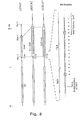
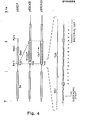
- Fig. 4 shows the same CAT fragment in the region of the junction point between BMV-derived and bacterial-derived sequences, for pB3CA21.
- SalI/XbaI deleted pB3 without an insertion was constructed, designated pB3DCP, as shown in Fig. 5.
- the sequence in the region of the subgenomic transcription start site and religation site is also shown in Fig. 5.
- the CAT coding sequence was deleted from plasmid pB3CA42 (Fig. 3) by cleaving with Sall, filling out the recessed 3' ends with Klenow DNA polymerase and deoxynucleotides, and religa- ting the resultant blunt ends.
- PstI-cut pB3CA42 DNA and EcoRI-cut p81PMI8 and pB2PM25 DNAs were transcribed, LiCI-precipitated and used to inoculate protoplasts (Example 1). After 22 hours incubation protoplasts were lysed by freezing and thawing and were found to contain CAT activity as assayed by standard methods (Herrera-Estrella et al. (1983) Nature 303, 209; Shaw, (1975) Methods Enzymol. 53, 737). Cell lysates were incubated with [ 14 C] chloramphenicol and, following the published procedure, silica gel thin layer plates separating reactants and products were autoradiographed. The results are shown in Fig. 6.
- Lanes marked Cm were loaded with [ 14 C] chloramphenicol only.
- CAT activity in other reactions is indicated by the appearance of acetylated chloramphenicol forms marked lA-Cm (1-acetate) and 3A-Cm (3-acetate) in addition to the native form marked Cm.
- the lanes marked CAT-mi and CAT show the products produced by authentic bacterial CAT in the presence of extracts from mock-inoculated protoplasts or buffer only.
- Panel A shows the products produced by extracts obtained from protoplasts inoculated with transcripts from pB1PM18 and pB2PM25, together with pB3CA21 (lane designated CA 21), p83CA31 (lane designa- t ed CA 31), pB3CA42 (lane designated CA 42), pB3CA52 (lane designated CA 52), pB3CA61 (lane designated CA 61) or pB3PMl (lane designated 3-1).
- panel B the products obtained from extracts of protoplasts inoculated with various combinations of pBIPM18 (designated 1), pB2PM25 (designated 2), pB3PMl (designated 3), and pB3CA42 (designated 3°) are shown.
- Plasmid pB3PM1 DNA was cleaved with CIaI, treated with T4 DNA polymerase to produce blunt ends, and ligated to phosphorylated 12 bp synthetic BamHI linkers (Maniatis et al., 1982). After phenol/chloroform extraction and ethanol precipitation, the DNA was cleaved with 40 units BamHI per ⁇ g linker for 16 hours at 37°C.
- the DNA was treated with 50 units BamHI/ u g linker and 2 units PstI/ug plasmid for 16 hours at 37°C. Products were run on a low melting point agarose gel and the high MW fraction containing the approximately 4.2 kb ClaI/PstI fragment of pB3PM1 and its Bal 31-deleted, linker-ligated products was eluted and mixed with a molar excess of the approximately 1.5 kb PstI-BamHI fragment of pB3C49. After ligation, DNA was transformed into competent E. coli JM101 cells.
- RF DNA was prepared from randomly-selected ampicillin-resistant transformants and was screened by double digestion with BamHI and EcoRI followed by agarose gel electrophoresis. Plasmids with deletions extending a variety of distances from the initial ClaI site, within the 3a gene (Fig. 1), of pB3PMl toward the EcoRI site were selected using this data. Selected plasmids were cleaved with EcoRI and transcribed (Example 1) and the transcripts used to infect barley protopl asts in the presence of transcripts from EcoRI-cut plasmids pB1PM18 and
- Substantial deletions within the 3a gene and the coat protein gene can therefore be made, at least several hundred bases from either the Clal site of the SacI site, without preventing replication of the deleted RNA. Such deletions provide room for large insertions while still staying within the size constraints for packaging replicated RNA3' into virus particles.
- the remaining portion of RNA, derived from RNA3, contains a cis-acting replication element of BMV RNA.
- the 3A gene and coat gene were not required for RNA replication or for expression of the inserted CAT gene under the conditions of infection used in the example, either or both of these genes could, under other conditions, provide important secondary functions, for example, by promoting systemic infection during transfer of whole plants.
- the length of the modified RNA exceeds the packaging constraints of the icosahedral BMV capsid, it may be possible to provide for expression of the coat protein of a rod-shaped virus for encapsi- dating the modified RNA.
- RNA component of a multipartite RNA virus without preventing replication of viral RNA under appropriate conditions of infection.
- Genetic material inserted within a region of an RNA virus that is nonessential for RNA replication is translatable.
- substantial portions of RNA3 can be deleted without loss of the ability to replicate. Therefore any gene inserted within a nonessential region of an RNA component of an RNA multipartite virus can be translated in the transformed cell, provided the gene has appropriate ribosome binding and translation initiation signals at its 5' end. These signals can be provided by the virus or by the insert and the means for making translatable constructions is within the scope of capability of those ordinarily skilled in the art.
- RNA virus any component of any RNA virus is a candidate for modifications of the type illustrated.
- an exogenous RNA segment could be inserted at any site of BMV RNA 1 or 2 which does not result in loss of ability to replicate.
- the RNA components of other RNA viruses can be similarly manipulated, provided the insertions and/or deletions employed do not prevent replication of viral RNA.
- the two operating principles which permit the modification of a viral RNA component to make it a vector for carrying translatable genetic material into a host cell are: (1) cloning a cDNA of the RNA component into a transcription vector capable of transcribing replicatable RNA from viral cDNA, and (2) the identification of a region in one of the viral components that is nonessential for replication, into which a structural gene can be inserted.
- the modified RNA will therefore contain, at a minimum, a cis-acting replication element derived from an RNA virus and an inserted exogenous RNA segment.
Landscapes
- Health & Medical Sciences (AREA)
- Life Sciences & Earth Sciences (AREA)
- Genetics & Genomics (AREA)
- Engineering & Computer Science (AREA)
- Biomedical Technology (AREA)
- Biotechnology (AREA)
- Organic Chemistry (AREA)
- Wood Science & Technology (AREA)
- General Engineering & Computer Science (AREA)
- Chemical & Material Sciences (AREA)
- Bioinformatics & Cheminformatics (AREA)
- Zoology (AREA)
- Molecular Biology (AREA)
- Biophysics (AREA)
- Microbiology (AREA)
- Plant Pathology (AREA)
- Biochemistry (AREA)
- General Health & Medical Sciences (AREA)
- Physics & Mathematics (AREA)
- Cell Biology (AREA)
- Virology (AREA)
- Micro-Organisms Or Cultivation Processes Thereof (AREA)
- Breeding Of Plants And Reproduction By Means Of Culturing (AREA)
- Preparation Of Compounds By Using Micro-Organisms (AREA)
- Medicines That Contain Protein Lipid Enzymes And Other Medicines (AREA)
- Pharmaceuticals Containing Other Organic And Inorganic Compounds (AREA)
- Peptides Or Proteins (AREA)
Priority Applications (1)
| Application Number | Priority Date | Filing Date | Title |
|---|---|---|---|
| AT86301586T ATE61632T1 (de) | 1985-03-07 | 1986-03-06 | Rna-transformationsvektor. |
Applications Claiming Priority (2)
| Application Number | Priority Date | Filing Date | Title |
|---|---|---|---|
| US70918185A | 1985-03-07 | 1985-03-07 | |
| US709181 | 1985-03-07 |
Publications (2)
| Publication Number | Publication Date |
|---|---|
| EP0194809A1 true EP0194809A1 (fr) | 1986-09-17 |
| EP0194809B1 EP0194809B1 (fr) | 1991-03-13 |
Family
ID=24848802
Family Applications (1)
| Application Number | Title | Priority Date | Filing Date |
|---|---|---|---|
| EP86301586A Expired - Lifetime EP0194809B1 (fr) | 1985-03-07 | 1986-03-06 | Vecteur de transformation d'ARN |
Country Status (7)
| Country | Link |
|---|---|
| US (2) | US5500360A (fr) |
| EP (1) | EP0194809B1 (fr) |
| JP (1) | JPH0773498B2 (fr) |
| AT (1) | ATE61632T1 (fr) |
| AU (1) | AU594665B2 (fr) |
| CA (1) | CA1288073C (fr) |
| DE (1) | DE3678016D1 (fr) |
Cited By (103)
| Publication number | Priority date | Publication date | Assignee | Title |
|---|---|---|---|---|
| EP0623683A1 (fr) | 1987-06-19 | 1994-11-09 | Siska Diagnostics,Inc. | Systèmes d'amplification/détection d'acides nucléiques à base de transcription |
| EP0240332B1 (fr) * | 1986-04-02 | 1995-07-12 | Pioneer Hi-Bred International, Inc. | Plantes résistantes aux virus comportant l'ARN anti-sens |
| EP0778352A1 (fr) | 1988-12-16 | 1997-06-11 | Siska Diagnostics, Inc. | Essai par réplication auto-entretenue de séquences |
| WO1999061597A3 (fr) * | 1998-05-22 | 2000-03-30 | Wisconsin Alumni Res Found | Methodes et materiels ameliores de transformation |
| EP1013771A1 (fr) * | 1988-02-26 | 2000-06-28 | Biosource Technologies, Inc. | Transformation chromosomique non-nucléaire |
| US6110466A (en) * | 1991-04-19 | 2000-08-29 | Axis Genetics Plc | Modified plant viruses as vectors |
| US6635805B1 (en) | 1997-02-14 | 2003-10-21 | Plant Bioscience Limited | Methods and DNA constructs for gene silencing in transgenic plants |
| US6660500B2 (en) | 1988-02-26 | 2003-12-09 | Large Scale Biology Corporation | Production of peptides in plants as viral coat protein fusions |
| US6852846B2 (en) | 1992-12-30 | 2005-02-08 | Large Scale Biology Corporation | Viral amplification of recombinant messenger RNA in transgenic plants |
| US7033835B1 (en) | 1988-02-26 | 2006-04-25 | Large Scale Biology Corporation | Production of peptides in plants as viral coat protein fusions |
| US7148400B1 (en) | 1999-04-20 | 2006-12-12 | Bayer Bioscience N.V. | Methods and means for delivering inhibitory RNA to plants and applications thereof |
| WO2007020638A2 (fr) | 2005-08-15 | 2007-02-22 | Evogene Ltd. | Procedes visant a augmenter la tolerance au stress abiotique et/ou la biomasse des plantes et plantes ainsi obtenues |
| US7192740B2 (en) | 1988-02-26 | 2007-03-20 | Large Scale Biology Corporation | Recombinant viral nucleic acids |
| EP1780264A2 (fr) | 2001-12-17 | 2007-05-02 | The University Of Leeds | Nematicides d'ADN |
| WO2008010228A2 (fr) | 2006-07-20 | 2008-01-24 | Yeda Research And Development Co. Ltd. | Organismes photosynthétiques, compositions et procédés de génération desdits organismes |
| US7385106B2 (en) | 2000-01-24 | 2008-06-10 | Ramot At Tel Aviv University Ltd. | Plants tolerant of environmental stress conditions, methods of generating same and novel polynucleotide sequence utilized thereby |
| WO2008122980A2 (fr) | 2007-04-09 | 2008-10-16 | Evogene Ltd. | Polynucléotides, polypeptides et procédés permettant d'augmenter la teneur en huile, la vitesse de croissance et la biomasse de plantes |
| WO2009083958A2 (fr) | 2007-12-27 | 2009-07-09 | Evogene Ltd. | Peptides isolés, polynucléotides utiles pour modifier l'efficacité d'utilisation de l'eau, l'efficacité d'utilisation d'engrais, la tolérance aux stress biotiques/abiotiques, le rendement et la biomasse dans des plantes |
| WO2010049897A2 (fr) | 2008-10-30 | 2010-05-06 | Evogene Ltd. | Polynucléotides et polypeptides isolés et procédés pour les utiliser pour augmenter le rendement, la biomasse, la vitesse de croissance, la vigueur, la teneur en huile, la tolérance au stress abiotique de plantes et l'efficacité d'utilisation de l'azote |
| WO2010076756A2 (fr) | 2008-12-29 | 2010-07-08 | Evogene Ltd. | Polynucleotides, polypeptides codes par ceux-ci, et leurs procedes d'utilisation pour augmenter la tolerance au stress abiotique, la biomasse et/ou le rendement dans les plantes les exprimant |
| WO2010100595A2 (fr) | 2009-03-02 | 2010-09-10 | Evogene Ltd. | Polynucléotides et polypeptides isolés, et procédés d'utilisation de ceux-ci pour augmenter un rendement végétal et/ou des caractéristiques agricoles |
| WO2010146359A1 (fr) | 2009-06-15 | 2010-12-23 | Plant Bioscience Limited | Production de capsides virales |
| EP2302060A1 (fr) | 2002-03-16 | 2011-03-30 | The University of York | Enzymes |
| WO2011048600A1 (fr) | 2009-10-21 | 2011-04-28 | Danziger Innovations Ltd. | Génération de variations génotypiques dans des génomes de plantes par infection d'un gamète |
| EP2316950A1 (fr) | 2000-03-27 | 2011-05-04 | Technion Research and Development Foundation, Ltd. | Complexes majeurs d'histocompatibilite monocatenaires de classe 1, constructions les codant et leurs methodes de production |
| WO2011067745A2 (fr) | 2009-12-06 | 2011-06-09 | Rosetta Green Ltd. | Compositions et procédés d'amélioration de résistance de plantes au stress abiotique |
| WO2011080674A2 (fr) | 2009-12-28 | 2011-07-07 | Evogene Ltd. | Polynucléotides isolés et polypeptides et procédés pour les utiliser afin d'augmenter le rendement des cultures, la biomasse, la vitesse de croissance, la vigueur, la teneur en huile, la tolérance au stress abiotique des plantes et l'efficacité d'utilisation de l'azote |
| EP2343373A1 (fr) | 2004-06-14 | 2011-07-13 | Evogene Ltd. | Polynucléotides et polypeptides impliqués dans le développement de la fibre végétale et procédés permettant des les utiliser |
| EP2365087A2 (fr) | 2003-05-22 | 2011-09-14 | Evogene Ltd. | Procédés d'augmentation de la tolérance du stress abiotique des plantes et plantes ainsi produites |
| EP2383345A1 (fr) | 2006-12-20 | 2011-11-02 | Evogene Ltd. | Polynucléotides et polypeptides impliqués dans le développement de fibres végétales et procédés d'utilisation |
| WO2011135527A2 (fr) | 2010-04-28 | 2011-11-03 | Evogene Ltd. | Polynucléotides et polypeptides isolés et procédés d'utilisation de ceux-ci pour l'augmentation du rendement végétal et/ou des caractéristiques agricoles |
| WO2011158242A2 (fr) | 2010-06-16 | 2011-12-22 | Futuragene Israel Ltd. | Plantes résistantes aux organismes nuisibles |
| WO2011161431A2 (fr) | 2010-06-22 | 2011-12-29 | Glaxosmithkline Australia Pty Limited | Acides nucléiques et polypeptides de méthyltransférase |
| WO2012007945A2 (fr) | 2010-07-12 | 2012-01-19 | The State Of Israel, Ministry Of Agriculture & Rural Development, Agricultural Research Organization, (A.R.O.), Volcani Center | Polynucléotides isolés et procédés et plantes les utilisant pour la régulation de l'acidité des plantes |
| WO2012007919A2 (fr) | 2010-07-15 | 2012-01-19 | Technion Research & Development Foundation Ltd. | Construction d'acide nucléique destinée à accroître la tolérance au stress abiotique dans des végétaux |
| WO2012010872A2 (fr) | 2010-07-22 | 2012-01-26 | Glaxosmithkline Australia Pty Limited | Cytochrome p450 végétal |
| WO2012032520A1 (fr) | 2010-09-07 | 2012-03-15 | Yissum Research Development Company Of The Hebrew University Of Jerusalem Ltd. | Translecture d'acétylcholinestérase (ache-r) pour le traitement ou la prévention de la maladie de parkinson |
| EP2441840A1 (fr) | 2005-07-18 | 2012-04-18 | Protalix Ltd. | Administration mucosale ou enterale de macromolecules biologiquement actives |
| WO2012059922A2 (fr) | 2010-11-03 | 2012-05-10 | Yissum Research Development Company Of The Hebrew University Of Jerusalem Ltd. | Plantes transgéniques à rendements de saccharification améliorés, et procédé pour les générer |
| WO2012098537A1 (fr) | 2011-01-20 | 2012-07-26 | Protalix Ltd. | Construction d'acide nucléique pour l'expression d'une alpha-galactosidase chez des plantes et des cellules végétales |
| WO2012117406A2 (fr) | 2011-03-02 | 2012-09-07 | Futuragene Israel Ltd. | Plantes transgéniques résistantes aux bactéries |
| WO2012156976A1 (fr) | 2011-05-16 | 2012-11-22 | Yissum Research Development Company Of The Hebrew University Of Jerusalem Ltd. | Procédés de préparation d'artémisinine dans des plantes non-hôtes et vecteurs destinés à une utilisation dans celles-ci |
| EP2599790A1 (fr) | 2007-11-26 | 2013-06-05 | Yissum Research Development Company of The Hebrew University of Jerusalem | Compositions comprenant des polypeptides fibreux et des polysachharides |
| WO2013088438A1 (fr) | 2011-12-11 | 2013-06-20 | The State Of Israel, Ministry Of Agriculture & Rural Development, Agricultural Research Organization, (A.R.O.), Volcani Center | Procédés de modulation de conductance stomatique et constructions d'expression de plante pour exécuter ces procédés |
| WO2013114371A1 (fr) | 2012-02-01 | 2013-08-08 | Protalix Ltd. | Formulation en poudre sèche de dnase i |
| WO2013121405A1 (fr) | 2012-02-19 | 2013-08-22 | Protalix Ltd. | Formes galéniques unitaires administrées par voie orale et utilisations de celles-ci pour le traitement de la maladie de gaucher |
| WO2013136057A2 (fr) | 2012-03-13 | 2013-09-19 | Glaxosmithkline Australia Pty Limited | Molécule d'acide nucléique |
| WO2013190322A1 (fr) | 2012-06-22 | 2013-12-27 | The University Of Exeter | Régulation de la dormance des graines |
| WO2014033723A1 (fr) | 2012-09-03 | 2014-03-06 | A.B. Seeds Ltd. | Procédé d'amélioration de la tolérance au stress abiotique des plantes et plantes ainsi produites |
| EP2716654A1 (fr) | 2005-10-24 | 2014-04-09 | Evogene Ltd. | Polypeptides isolés, polynucléotides codant pour ces derniers, plantes transgéniques exprimant ces derniers et méthodes utilisant ces derniers |
| WO2014136117A1 (fr) | 2013-03-06 | 2014-09-12 | Protalix Ltd. | Utilisation de cellules végétales exprimant un inhibiteur du polypeptide tnf alpha en thérapie |
| WO2014136113A1 (fr) | 2013-03-06 | 2014-09-12 | Protalix Ltd. | Polypeptides chimériques, polynucléotides codant pour ceux-ci, cellules exprimant ceux-ci et leurs procédés de production |
| EP2816117A2 (fr) | 2004-09-29 | 2014-12-24 | Collplant Ltd. | Collagène recombinant produit dans une plante |
| WO2015118547A1 (fr) | 2014-02-10 | 2015-08-13 | Protalix Ltd. | Méthode de maintien de la stabilité d'une maladie chez un sujet atteint de la maladie de gaucher |
| EP2910638A2 (fr) | 2007-07-24 | 2015-08-26 | Evogene Ltd. | Polynucléotides, polypeptides codés correspondants et procédés d'utilisation associés permettant d'améliorer la tolérance au stress abiotique et/ou la biomasse et/ou le rendement dans des plantes les exprimant |
| EP2936976A1 (fr) | 2008-04-21 | 2015-10-28 | Danziger Innovations Ltd. | Vecteurs d'expression de virus de plante et leur utilisation pour générer des variations génotypiques dans des génomes de plantes |
| WO2016038617A1 (fr) | 2014-09-11 | 2016-03-17 | The State Of Israel, Ministry Of Agriculture & Rural Development, Agricultural Research Organization (Aro) (Volcani Center) | Procédés de production de mogrosides et compositions les comprenant et leurs utilisations |
| EP3020410A1 (fr) | 2008-04-18 | 2016-05-18 | Collplant Ltd. | Procédés de génération et d'utilisation de procollagène |
| WO2016079739A2 (fr) | 2014-11-20 | 2016-05-26 | Yissum Research Development Company Of The Hebrew University Of Jerusalem Ltd. | Compositions et procédés de production de polypeptides présentant un schéma de glycosylation modifié dans des cellules végétales |
| WO2016084084A1 (fr) | 2014-11-27 | 2016-06-02 | Danziger Innovations Ltd. | Construction d'acide nucléique pour l'édition de génome |
| EP3072972A2 (fr) | 2008-08-18 | 2016-09-28 | Evogene Ltd. | Polypeptides et polynucléotides isolés utiles pour augmenter l'efficacité de l'utilisation de l'azote, la tolérance au stress abiotique, le rendement et la biomasse de plantes |
| US9657295B2 (en) | 2010-10-01 | 2017-05-23 | Modernatx, Inc. | Modified nucleosides, nucleotides, and nucleic acids, and uses thereof |
| WO2017125931A1 (fr) | 2016-01-21 | 2017-07-27 | The State Of Israel, Ministry Of Agriculture & Rural Development, Agricultural Research Organization (Aro) (Volcani Center) | Plantes parthénocarpiques et procédés de production de celles-ci |
| EP3238534A2 (fr) | 2009-06-10 | 2017-11-01 | Evogene Ltd. | Polynucléotides et polypeptides isolés et leurs procédés d'utilisation pour augmenter l'efficacité d'utilisation, le rendement, la vitesse de croissance, la vigueur, la biomasse, la teneur en huile et/ou la tolérance au stress abiotique de l'azote |
| US9814760B2 (en) | 2012-04-02 | 2017-11-14 | Modernatx, Inc. | Modified polynucleotides for the production of biologics and proteins associated with human disease |
| US9828416B2 (en) | 2012-04-02 | 2017-11-28 | Modernatx, Inc. | Modified polynucleotides for the production of secreted proteins |
| US9827332B2 (en) | 2012-04-02 | 2017-11-28 | Modernatx, Inc. | Modified polynucleotides for the production of proteins |
| US9937233B2 (en) | 2010-08-06 | 2018-04-10 | Modernatx, Inc. | Engineered nucleic acids and methods of use thereof |
| US9950068B2 (en) | 2011-03-31 | 2018-04-24 | Modernatx, Inc. | Delivery and formulation of engineered nucleic acids |
| US10022425B2 (en) | 2011-09-12 | 2018-07-17 | Modernatx, Inc. | Engineered nucleic acids and methods of use thereof |
| WO2018220579A1 (fr) | 2017-05-31 | 2018-12-06 | Tropic Biosciences UK Limited | Compositions et procédés permettant d'augmenter l'extractibilité de solides en provenance de grains de café |
| WO2018220582A1 (fr) | 2017-05-31 | 2018-12-06 | Tropic Biosciences UK Limited | Méthodes de sélection de cellules comprenant des événements d'édition de génome |
| WO2018220581A1 (fr) | 2017-05-31 | 2018-12-06 | Tropic Biosciences UK Limited | Compositions et procédés pour l'augmentation de la durée de conservation de la banane |
| WO2018224861A1 (fr) | 2017-06-07 | 2018-12-13 | International Rice Research Institute | Augmentation de la production de semences hybrides par un taux de croisement plus élevé chez des plantes graminacées stériles cytoplasmiques et matériaux et procédés associés |
| WO2019106639A1 (fr) | 2017-12-03 | 2019-06-06 | Seedx Technologies Inc. | Systèmes et procédés de tri de graines |
| WO2019106641A2 (fr) | 2017-12-03 | 2019-06-06 | Seedx Technologies Inc. | Systèmes et procédés de tri de graines |
| WO2019106638A1 (fr) | 2017-12-03 | 2019-06-06 | Seedx Technologies Inc. | Systèmes et procédés de tri de graines |
| WO2019122259A1 (fr) | 2017-12-21 | 2019-06-27 | Plant Bioscience Limited | Ingénierie métabolique |
| WO2019145693A1 (fr) | 2018-01-23 | 2019-08-01 | The University Of York | Agent inhibiteur |
| US10428106B2 (en) | 2015-10-16 | 2019-10-01 | Modernatx, Inc. | Phosphate replacement mRNA cap analogs |
| WO2019211854A1 (fr) | 2018-05-03 | 2019-11-07 | Collplant Holdings Ltd. | Charges dermiques et applications de celles-ci |
| WO2019211750A1 (fr) | 2018-05-01 | 2019-11-07 | Tropic Biosciences UK Limited | Compositions et procédés de réduction de la teneur en caféine dans les grains de café |
| WO2019224321A1 (fr) | 2018-05-25 | 2019-11-28 | Plant Bioscience Limited | Glycosylation de triterpène |
| WO2019234754A1 (fr) | 2018-06-07 | 2019-12-12 | The State Of Israel, Ministry Of Agriculture & Rural Development, Agricultural Research Organization (Aro) (Volcani Center) | Constructions d'acide nucléique et procédés d'utilisation de celles-ci |
| WO2019234750A1 (fr) | 2018-06-07 | 2019-12-12 | The State Of Israel, Ministry Of Agriculture & Rural Development, Agricultural Research Organization (Aro) (Volcani Center) | Procédés de régénération et de transformation de cannabis |
| WO2020008412A1 (fr) | 2018-07-04 | 2020-01-09 | Ukko Inc. | Procédés de ré-épitopage de protéines de blé et leur utilisation pour le traitement de maladie cœliaque |
| WO2020183414A2 (fr) | 2019-03-14 | 2020-09-17 | Tropic Biosciences UK Limited | Modification de la spécificité de molécules d'arn non codantes pour le silençage de l'expression génique dans des cellules eucaryotes |
| WO2020183419A1 (fr) | 2019-03-14 | 2020-09-17 | Tropic Biosciences UK Limited | Introduction d'une activité de silençage sur des molécules d'arn dysfonctionnelles et modification de leur spécificité vis-à-vis d'un gène d'intérêt |
| WO2020183416A1 (fr) | 2019-03-14 | 2020-09-17 | Tropic Biosciences UK Limited | Production d'arndb dans des cellules végétales pour la protection antiparasitaire via le silencage génique |
| WO2020249698A1 (fr) | 2019-06-12 | 2020-12-17 | Plant Bioscience Limited | Gènes et polypeptides biosynthétiques |
| WO2020260475A1 (fr) | 2019-06-25 | 2020-12-30 | Plant Bioscience Limited | Enzymes transférases |
| WO2021001784A1 (fr) | 2019-07-04 | 2021-01-07 | Ukko Inc. | Alpha gliadine sans épitope et son utilisation pour la gestion de la maladie coeliaque et de la sensibilité au gluten |
| WO2021019536A1 (fr) | 2019-07-30 | 2021-02-04 | The State Of Israel, Ministry Of Agriculture & Rural Development, Agricultural Research Organization (Aro) (Volcani Center) | Méthodes de régulation de la synthèse de cannabinoïdes chez la plante ou dans des cellules et plantes et cellules ainsi produites |
| WO2021100034A1 (fr) | 2019-11-19 | 2021-05-27 | Protalix Ltd. | Élimination de constructions à partir de cellules transformées |
| WO2021202513A1 (fr) | 2020-03-31 | 2021-10-07 | Elo Life Systems | Modulation des gènes de la voie endogène des mogrosides chez la pastèque et d'autres cucurbitacées |
| WO2022038536A1 (fr) | 2020-08-18 | 2022-02-24 | International Rice Research Institute | Procédés d'augmentation des taux de croisement de gramineae |
| WO2022074646A1 (fr) | 2020-10-05 | 2022-04-14 | Protalix Ltd. | Cellules végétales inactivées de type dicer |
| WO2022087527A1 (fr) | 2020-10-23 | 2022-04-28 | Elo Life Systems, Inc. | Procédés de production de vanilliers à arôme et production agronomique améliorées |
| WO2022115498A1 (fr) | 2020-11-26 | 2022-06-02 | Ukko Inc. | Sous-unité de gluténine modifiée à poids moléculaire élevé et ses utilisations |
| WO2022226316A1 (fr) | 2021-04-22 | 2022-10-27 | Precision Biosciences, Inc. | Compositions et procédés pour générer des plantes mâles stériles |
| WO2022243286A1 (fr) | 2021-05-18 | 2022-11-24 | The University Of York | Procédé de production de protéines glycosylées dans une cellule |
| EP4170029A2 (fr) | 2017-09-19 | 2023-04-26 | Tropic Biosciences UK Limited | Modification de la spécificité de molécules d'arn non codantes végétales pour le silençage de l'expression génique |
| WO2024003012A1 (fr) | 2022-06-29 | 2024-01-04 | Plant Bioscience Limited | Enzymes biosynthétiques de saponarioside |
Families Citing this family (101)
| Publication number | Priority date | Publication date | Assignee | Title |
|---|---|---|---|---|
| CA1288073C (fr) * | 1985-03-07 | 1991-08-27 | Paul G. Ahlquist | Vecteur de transformation de l'arn |
| EP0215907B1 (fr) * | 1985-03-21 | 2001-05-23 | Johnston, Stephen, Ph.D. | Resistance derivee d'un parasite |
| US5580716A (en) * | 1985-03-21 | 1996-12-03 | Stephen A. Johnston | Parasite-derived resistance |
| GB8608850D0 (en) * | 1986-04-11 | 1986-05-14 | Diatech Ltd | Packaging system |
| GB8613481D0 (en) * | 1986-06-04 | 1986-07-09 | Diatech Ltd | Translation of mrna |
| US5612193A (en) * | 1986-06-04 | 1997-03-18 | Diatech Ltd. | Translation of mRNA |
| ATE108828T1 (de) * | 1987-02-09 | 1994-08-15 | Lubrizol Genetics Inc | Hybrides rns-virus. |
| ES2165345T3 (es) * | 1987-07-10 | 2002-03-16 | Syngenta Participations Ag | Resistencia virica inducible en plantas. |
| US6284492B1 (en) | 1988-02-26 | 2001-09-04 | Large Scale Biology Corporation | Recombinant animal viral nucleic acids |
| US5977438A (en) * | 1988-02-26 | 1999-11-02 | Biosource Technologies, Inc. | Production of peptides in plants as viral coat protein fusions |
| US20030150019A1 (en) * | 1988-02-26 | 2003-08-07 | Large Scale Biology Corporation | Monopartite RNA virus transformation vectors |
| US5316931A (en) * | 1988-02-26 | 1994-05-31 | Biosource Genetics Corp. | Plant viral vectors having heterologous subgenomic promoters for systemic expression of foreign genes |
| CA1339841C (fr) * | 1988-07-15 | 1998-04-28 | Robert L. Erwing | Synthese d'enzyme stereoscopique par la transformation non-chromosomiqued'un hote |
| WO1990012107A1 (fr) * | 1989-03-31 | 1990-10-18 | The Salk Institute Biotechnology/Industrial Associates, Inc. | Systeme d'expression par recombinaison base sur le virus de la mosaique du tabac satellitaire |
| WO1990013654A1 (fr) * | 1989-05-05 | 1990-11-15 | Biosource Genetics Corporation | Sterilite male chez les plantes |
| US6770283B1 (en) | 1990-12-13 | 2004-08-03 | Bioption Ab | DNA expression systems based on alphaviruses |
| SE9003978D0 (sv) | 1990-12-13 | 1990-12-13 | Henrik Garoff | Dna expressionssystem baserade paa ett virus replikon |
| US5491076A (en) * | 1993-11-01 | 1996-02-13 | The Texas A&M University System | Expression of foreign genes using a replicating polyprotein producing virus vector |
| US5677124A (en) * | 1996-07-03 | 1997-10-14 | Ambion, Inc. | Ribonuclease resistant viral RNA standards |
| US5939262A (en) * | 1996-07-03 | 1999-08-17 | Ambion, Inc. | Ribonuclease resistant RNA preparation and utilization |
| US5869287A (en) * | 1996-07-12 | 1999-02-09 | Wisconsin Alumni Research Foundation | Method of producing particles containing nucleic acid sequences in yeast |
| US6258308B1 (en) | 1996-07-31 | 2001-07-10 | Exxon Chemical Patents Inc. | Process for adjusting WVTR and other properties of a polyolefin film |
| US6042832A (en) | 1996-08-28 | 2000-03-28 | Thomas Jefferson University | Polypeptides fused with alfalfa mosaic virus or ilarvirus capsid proteins |
| GB9720148D0 (en) | 1997-09-22 | 1997-11-26 | Innes John Centre Innov Ltd | Gene silencing materials and methods |
| US6300133B1 (en) | 1998-01-16 | 2001-10-09 | Large Scale Biology Corporation | RNA transformation vectors derived from an uncapped single-component RNA virus |
| US6468745B1 (en) | 1998-01-16 | 2002-10-22 | Large Scale Biology Corporation | Method for expressing a library of nucleic acid sequence variants and selecting desired traits |
| US20030166169A1 (en) * | 1998-01-16 | 2003-09-04 | Padgett Hal S. | Method for constructing viral nucleic acids in a cell-free manner |
| US6426185B1 (en) | 1998-01-16 | 2002-07-30 | Large Scale Biology Corporation | Method of compiling a functional gene profile in a plant by transfecting a nucleic acid sequence of a donor plant into a different host plant in an anti-sense orientation |
| US6300134B1 (en) | 1998-01-16 | 2001-10-09 | Large Scale Biology Corporation | RNA transformation vectors derived from a single-component RNA virus and contain an intervening sequence between the cap and the 5′ end |
| US6303848B1 (en) | 1998-01-16 | 2001-10-16 | Large Scale Biology Corporation | Method for conferring herbicide, pest, or disease resistance in plant hosts |
| US20030027173A1 (en) * | 1998-01-16 | 2003-02-06 | Della-Cioppa Guy | Method of determining the function of nucleotide sequences and the proteins they encode by transfecting the same into a host |
| US20030077619A1 (en) * | 1998-01-16 | 2003-04-24 | Kumagai Monto H. | Method of isolating human cDNAs by transfecting a nucleic acid sequence of a non-plant donor into a host plant in an anti-sense orientation |
| US20030097683A1 (en) * | 1998-01-16 | 2003-05-22 | Large Scale Biology Corporation | Single-component RNA vectors derived from a virus and containing an intervening sequence between the cap and the 5' end and able to replicate in a host plant cell within a host plant |
| US6759243B2 (en) | 1998-01-20 | 2004-07-06 | Board Of Trustees Of The University Of Illinois | High affinity TCR proteins and methods |
| US6037456A (en) | 1998-03-10 | 2000-03-14 | Biosource Technologies, Inc. | Process for isolating and purifying viruses, soluble proteins and peptides from plant sources |
| US20030074677A1 (en) | 1998-05-22 | 2003-04-17 | Lada Rasochova | Improved materials and methods for transformation |
| WO2000009725A2 (fr) * | 1998-08-11 | 2000-02-24 | Biosource Technologies, Inc. | Procede d'extraction de proteines du fluide interstitiel de tissus vegetaux |
| US6953510B1 (en) | 1998-10-16 | 2005-10-11 | Tredegar Film Products Corporation | Method of making microporous breathable film |
| DE69911446T2 (de) | 1998-10-16 | 2004-07-01 | Exxonmobil Chemical Patents Inc., Baytown | Verfahren zur herstellung von mikroporösen, atmungsfähigen polyethylenfolien |
| CA2372306A1 (fr) * | 1999-03-09 | 2000-09-14 | Large Scale Biology Corp. | Systeme de vecteurs arn a composants multiples pour l'expression de sequences etrangeres |
| US20020061309A1 (en) * | 2000-03-08 | 2002-05-23 | Garger Stephen J. | Production of peptides in plants as N-terminal viral coat protein fusions |
| US6878861B2 (en) * | 2000-07-21 | 2005-04-12 | Washington State University Research Foundation | Acyl coenzyme A thioesterases |
| US7060442B2 (en) * | 2000-10-30 | 2006-06-13 | Regents Of The University Of Michigan | Modulators on Nod2 signaling |
| US6800748B2 (en) | 2001-01-25 | 2004-10-05 | Large Scale Biology Corporation | Cytoplasmic inhibition of gene expression and expression of a foreign protein in a monocot plant by a plant viral vector |
| EP1458876A2 (fr) * | 2001-12-18 | 2004-09-22 | Bayer BioScience N.V. | Methodes ameliorees et dispositif d'administration d'arn inhibiteur a des vegetaux et applications associees |
| MXPA04009778A (es) * | 2002-04-08 | 2004-12-13 | Pionner Hi Bred International | Exsercion de fibra sedosa mejorada bajo estres. |
| US6776751B2 (en) * | 2002-04-22 | 2004-08-17 | Kendor Laboratory Products, Lp | Rotor cover attachment apparatus |
| AU2003247582A1 (en) * | 2002-06-20 | 2004-01-06 | Board Of Trustees Operating Michigan State University | Plastid division and related genes and proteins, and methods of use |
| US20040110184A1 (en) | 2002-06-28 | 2004-06-10 | Dow Agrosciences Llc | Pesticidally active proteins and polynucleotides obtainable from Paenibacillus species |
| US6863731B2 (en) * | 2002-10-18 | 2005-03-08 | Controls Corporation Of America | System for deposition of inert barrier coating to increase corrosion resistance |
| WO2004044161A2 (fr) * | 2002-11-06 | 2004-05-27 | Fraunhofer Usa | Expression de sequences etrangeres dans des vegetaux utilisant un systeme de transactivation |
| US7692063B2 (en) * | 2002-11-12 | 2010-04-06 | Ibio, Inc. | Production of foreign nucleic acids and polypeptides in sprout systems |
| US7683238B2 (en) * | 2002-11-12 | 2010-03-23 | iBio, Inc. and Fraunhofer USA, Inc. | Production of pharmaceutically active proteins in sprouted seedlings |
| EP1594956A4 (fr) * | 2003-02-03 | 2007-08-01 | Fraunhofer Usa Inc | Systeme d'expression de genes dans des plantes |
| US7655833B2 (en) * | 2003-05-29 | 2010-02-02 | Brookhaven Science Associates, Llc | ADS genes for reducing saturated fatty acid levels in seed oils |
| US20050039228A1 (en) * | 2003-06-19 | 2005-02-17 | The Samuel Roberts Noble Foundation | Methods and compositions for analysis of plant gene function |
| AU2005216133A1 (en) * | 2004-02-20 | 2005-09-09 | Fraunhofer Usa, Inc. | Systems and methods for clonal expression in plants |
| PT2308977E (pt) | 2004-04-30 | 2013-05-13 | Dow Agrosciences Llc | Novo gene de resistência a herbicida |
| US20060288449A1 (en) * | 2004-10-12 | 2006-12-21 | Garger Stephen J | Process for purifying target compounds from plant sources using ceramic filtration |
| CN100362104C (zh) * | 2004-12-21 | 2008-01-16 | 华中农业大学 | 利用水稻转录因子基因OsNACx提高植物抗旱耐盐能力 |
| WO2006125065A2 (fr) * | 2005-05-18 | 2006-11-23 | The Board Of Trustees Operating Michigan State University | Resistance aux pucerons du soya dans le materiel genetique du soya au debut de la maturation |
| EP1909829A4 (fr) * | 2005-07-19 | 2009-11-11 | Dow Global Technologies Inc | Vaccins recombinants contre la grippe |
| WO2007117264A2 (fr) * | 2005-08-03 | 2007-10-18 | Fraunhofer Usa, Inc. | Compositions et procedes de production d'immunoglobulines |
| CN101553111B (zh) | 2005-10-28 | 2013-06-26 | 美国陶氏益农公司 | 新除草剂抗性基因 |
| WO2008048344A2 (fr) * | 2006-02-13 | 2008-04-24 | Fraunhofer Usa, Inc. | Antigènes de bacillus anthracis, compositions pour vaccins et procédés connexes |
| JP2009526780A (ja) * | 2006-02-13 | 2009-07-23 | フラウンホーファー ユーエスエー, インコーポレイテッド | Hpv抗原、ワクチン組成物、および関連する方法 |
| US7993655B2 (en) | 2006-04-21 | 2011-08-09 | Dow Agrosciences Llc | Vaccine for avian influenza and methods of use |
| US7977535B2 (en) | 2006-07-12 | 2011-07-12 | Board Of Trustees Of Michigan State University | DNA encoding ring zinc-finger protein and the use of the DNA in vectors and bacteria and in plants |
| US20090061492A1 (en) * | 2006-11-15 | 2009-03-05 | The Board Of Trustees For Michigan State University System | Method for producing biodiesel |
| EP2102349B1 (fr) | 2006-12-07 | 2017-09-13 | Kansas State University Research Foundation | Sorgho résistant à un herbicide d'acétolactate synthase |
| ES2443118T3 (es) | 2007-01-12 | 2014-02-17 | Kansas State University Research Foundation | Sorgo resistente a herbicidas inhibidores de acetil-CoA-carboxilasa |
| WO2008109686A2 (fr) * | 2007-03-05 | 2008-09-12 | Neurok Pharma Llc | Particules recombinantes de type du virus de l'hépatite c non infectieuses et leurs applications pharmaceutiques |
| WO2009014782A2 (fr) * | 2007-04-27 | 2009-01-29 | Dow Global Technologies Inc. | Production améliorée et assemblage in vivo de particules icosaédriques solubles recombinées analogues à un virus |
| EP2178558B1 (fr) | 2007-07-11 | 2014-04-30 | iBio, Inc. | Antigènes yersinia pestis, compositions de vaccins, et méthodes associées |
| CA2704108A1 (fr) * | 2007-10-31 | 2009-05-07 | Bayer Bioscience N.V. | Procede de production de plantes modifiees a schema de n-glycosylation modifie |
| US9133475B2 (en) | 2008-11-26 | 2015-09-15 | Board Of Trustees Of Michigan State University | Aphid resistant soybean plants |
| US8362318B2 (en) * | 2008-12-18 | 2013-01-29 | Board Of Trustees Of Michigan State University | Enzyme directed oil biosynthesis in microalgae |
| US8373025B2 (en) | 2009-02-09 | 2013-02-12 | Chromatin Germplasm, Llc | Herbicide resistant sorghum |
| MX2012000271A (es) * | 2009-06-30 | 2012-09-07 | Yissum Res Dev Co | Introduccion de dna en celulas de planta. |
| US9328335B2 (en) | 2009-12-30 | 2016-05-03 | Board Of Trustees Of Michigan State University | Method to produce acetyldiacylglycerols (ac-TAGs) by expression of an acetyltransferase gene isolated from Euonymus alatus (burning bush) |
| WO2013005211A2 (fr) | 2011-07-05 | 2013-01-10 | Yissum Research Development Company Of The Hebrew University Of Jerusalem Ltd. | Matériels végétaux de complexation du bore et leurs utilisations, en référence croisée à des applications connexes |
| RU2648950C2 (ru) | 2011-10-03 | 2018-04-02 | Модерна Терапьютикс, Инк. | Модифицированные нуклеозиды, нуклеотиды и нуклеиновые кислоты и их применение |
| CN104114572A (zh) | 2011-12-16 | 2014-10-22 | 现代治疗公司 | 经修饰的核苷、核苷酸和核酸组合物 |
| US9572897B2 (en) | 2012-04-02 | 2017-02-21 | Modernatx, Inc. | Modified polynucleotides for the production of cytoplasmic and cytoskeletal proteins |
| KR102534897B1 (ko) | 2012-05-23 | 2023-05-30 | 생-고뱅 세라믹스 앤드 플라스틱스, 인코포레이티드 | 형상화 연마입자들 및 이의 형성방법 |
| US20140075593A1 (en) | 2012-09-07 | 2014-03-13 | Dow Agrosciences Llc | Fluorescence activated cell sorting (facs) enrichment to generate plants |
| WO2014081507A1 (fr) | 2012-11-26 | 2014-05-30 | Moderna Therapeutics, Inc. | Arn modifié à son extrémité terminale |
| CA2836403A1 (fr) | 2013-01-04 | 2014-07-04 | Board Of Trustees Of Michigan State University | Nouvelles sources de resistance au puceron dans les plantes de soja |
| US8980864B2 (en) | 2013-03-15 | 2015-03-17 | Moderna Therapeutics, Inc. | Compositions and methods of altering cholesterol levels |
| US10023626B2 (en) | 2013-09-30 | 2018-07-17 | Modernatx, Inc. | Polynucleotides encoding immune modulating polypeptides |
| JP2016538829A (ja) | 2013-10-03 | 2016-12-15 | モデルナ セラピューティクス インコーポレイテッドModerna Therapeutics,Inc. | 低密度リポタンパク質受容体をコードするポリヌクレオチド |
| US10392629B2 (en) | 2014-01-17 | 2019-08-27 | Board Of Trustees Of Michigan State University | Increased caloric and nutritional content of plant biomass |
| BR112017015988B1 (pt) | 2015-01-27 | 2024-02-27 | Institute Of Genetics And Developmental Biology, Chinese Academy Of Sciences | Métodos para a modificação sítio dirigida para um fragmento alvo de um gene alvo em uma planta inteira e para a obtenção de uma planta mutante livre de transgene |
| AR103926A1 (es) | 2015-03-16 | 2017-06-14 | Inst Genetics & Dev Biolog Cas | Método para realizar modificaciones sitio dirigidas en el genoma de una planta usando materiales no heredables |
| EP3095870A1 (fr) * | 2015-05-19 | 2016-11-23 | Kws Saat Se | Procédés pour la transformation in planta de plantes et procédés de fabrication basés sur ceux-ci et produits pouvant être obtenus à partir de ceux-ci |
| EA201890492A1 (ru) | 2015-08-14 | 2018-08-31 | Инститьют Оф Дженетикс Энд Девелопментал Байолоджи, Чайниз Акэдеми Оф Сайенсиз | Способ получения риса, устойчивого к глифосату, путем сайт-направленной замены нуклеотида |
| US11866754B2 (en) | 2015-10-16 | 2024-01-09 | Modernatx, Inc. | Trinucleotide mRNA cap analogs |
| NZ754713A (en) | 2016-12-21 | 2025-11-28 | Teneobio Inc | Anti-bcma heavy chain-only antibodies |
| IL271194B2 (en) | 2017-06-20 | 2024-10-01 | Teneobio Inc | Anti-bcma heavy chain-only antibodies |
| US11427642B2 (en) | 2017-06-20 | 2022-08-30 | Teneoone, Inc. | Anti-BCMA heavy chain-only antibodies |
| KR20240110818A (ko) | 2021-11-01 | 2024-07-16 | 플래그쉽 파이어니어링 이노베이션스 Vii, 엘엘씨 | 유기체를 변형하기 위한 폴리뉴클레오티드 |
Citations (1)
| Publication number | Priority date | Publication date | Assignee | Title |
|---|---|---|---|---|
| EP0067553A2 (fr) * | 1981-05-27 | 1982-12-22 | National Research Council Of Canada | Vecteur à base d'ARN de virus de plante ou une partie de celui-ci, procédé pour sa production, et une méthode de production d'un produit dérivé de gène, à l'aide de celui-ci |
Family Cites Families (1)
| Publication number | Priority date | Publication date | Assignee | Title |
|---|---|---|---|---|
| CA1288073C (fr) * | 1985-03-07 | 1991-08-27 | Paul G. Ahlquist | Vecteur de transformation de l'arn |
-
1986
- 1986-03-05 CA CA000503337A patent/CA1288073C/fr not_active Expired - Lifetime
- 1986-03-06 EP EP86301586A patent/EP0194809B1/fr not_active Expired - Lifetime
- 1986-03-06 AT AT86301586T patent/ATE61632T1/de not_active IP Right Cessation
- 1986-03-06 AU AU54378/86A patent/AU594665B2/en not_active Ceased
- 1986-03-06 DE DE8686301586T patent/DE3678016D1/de not_active Expired - Fee Related
- 1986-03-07 JP JP61051287A patent/JPH0773498B2/ja not_active Expired - Fee Related
-
1994
- 1994-03-14 US US08/212,330 patent/US5500360A/en not_active Expired - Lifetime
-
1995
- 1995-06-05 US US08/462,714 patent/US5846795A/en not_active Expired - Lifetime
Patent Citations (1)
| Publication number | Priority date | Publication date | Assignee | Title |
|---|---|---|---|---|
| EP0067553A2 (fr) * | 1981-05-27 | 1982-12-22 | National Research Council Of Canada | Vecteur à base d'ARN de virus de plante ou une partie de celui-ci, procédé pour sa production, et une méthode de production d'un produit dérivé de gène, à l'aide de celui-ci |
Non-Patent Citations (3)
| Title |
|---|
| JOURNAL OF MOLECULAR BIOLOGY, vol. 172, no. 4, February 5, 1984 (London) P. AHLQUIST et al. "Nucleotide Sequence of the Brome Mosaic Virus Genome and its Implications for Viral Replication" pages 369-383 * |
| JOURNAL OF VIROLOGY, vol. 53, no. 2, February 1985 (Washington DC) P. AHLQUIST et al. "Sindbis Virus Proteins nsP1 and nsP2 Contain Homology to Nonstructural Protiens from Several RNA Plant Viruses" pages 536-542 * |
| PROCEEDINGS OF THE NATIONAL ACADEMY OF SCIENCES OF THE UNITED STATES OF AMERICA, vol. 81, no. 14, July 1984 (Baltimore, USA) J. HASELOFF et al. "Striking similarities in amino acid sequence among nonstructural proteins encoded by RNA viruses that have dissimilar genomic organization" pages 4358-4362 * |
Cited By (125)
| Publication number | Priority date | Publication date | Assignee | Title |
|---|---|---|---|---|
| EP0240332B1 (fr) * | 1986-04-02 | 1995-07-12 | Pioneer Hi-Bred International, Inc. | Plantes résistantes aux virus comportant l'ARN anti-sens |
| EP0623683A1 (fr) | 1987-06-19 | 1994-11-09 | Siska Diagnostics,Inc. | Systèmes d'amplification/détection d'acides nucléiques à base de transcription |
| US6660500B2 (en) | 1988-02-26 | 2003-12-09 | Large Scale Biology Corporation | Production of peptides in plants as viral coat protein fusions |
| EP1013771A1 (fr) * | 1988-02-26 | 2000-06-28 | Biosource Technologies, Inc. | Transformation chromosomique non-nucléaire |
| US7192740B2 (en) | 1988-02-26 | 2007-03-20 | Large Scale Biology Corporation | Recombinant viral nucleic acids |
| US7033835B1 (en) | 1988-02-26 | 2006-04-25 | Large Scale Biology Corporation | Production of peptides in plants as viral coat protein fusions |
| EP0778352A1 (fr) | 1988-12-16 | 1997-06-11 | Siska Diagnostics, Inc. | Essai par réplication auto-entretenue de séquences |
| US7208655B1 (en) | 1991-04-19 | 2007-04-24 | The Dow Chemical Company | Modified plant viruses as vectors |
| US6884623B1 (en) | 1991-04-19 | 2005-04-26 | The Dow Chemical Company | Modified plant viruses as vectors of heterologous peptides |
| US6110466A (en) * | 1991-04-19 | 2000-08-29 | Axis Genetics Plc | Modified plant viruses as vectors |
| US6852846B2 (en) | 1992-12-30 | 2005-02-08 | Large Scale Biology Corporation | Viral amplification of recombinant messenger RNA in transgenic plants |
| US6635805B1 (en) | 1997-02-14 | 2003-10-21 | Plant Bioscience Limited | Methods and DNA constructs for gene silencing in transgenic plants |
| WO1999061597A3 (fr) * | 1998-05-22 | 2000-03-30 | Wisconsin Alumni Res Found | Methodes et materiels ameliores de transformation |
| US7148400B1 (en) | 1999-04-20 | 2006-12-12 | Bayer Bioscience N.V. | Methods and means for delivering inhibitory RNA to plants and applications thereof |
| US7385106B2 (en) | 2000-01-24 | 2008-06-10 | Ramot At Tel Aviv University Ltd. | Plants tolerant of environmental stress conditions, methods of generating same and novel polynucleotide sequence utilized thereby |
| EP2316950A1 (fr) | 2000-03-27 | 2011-05-04 | Technion Research and Development Foundation, Ltd. | Complexes majeurs d'histocompatibilite monocatenaires de classe 1, constructions les codant et leurs methodes de production |
| EP1780264A2 (fr) | 2001-12-17 | 2007-05-02 | The University Of Leeds | Nematicides d'ADN |
| EP2302060A1 (fr) | 2002-03-16 | 2011-03-30 | The University of York | Enzymes |
| EP2365087A2 (fr) | 2003-05-22 | 2011-09-14 | Evogene Ltd. | Procédés d'augmentation de la tolérance du stress abiotique des plantes et plantes ainsi produites |
| EP2343373A1 (fr) | 2004-06-14 | 2011-07-13 | Evogene Ltd. | Polynucléotides et polypeptides impliqués dans le développement de la fibre végétale et procédés permettant des les utiliser |
| EP3088528A1 (fr) | 2004-09-29 | 2016-11-02 | Collplant Ltd. | Plantes produisant du collagene et procedes de generation et d'utilisation de celles-ci |
| EP2816117A2 (fr) | 2004-09-29 | 2014-12-24 | Collplant Ltd. | Collagène recombinant produit dans une plante |
| EP2484768A2 (fr) | 2005-07-18 | 2012-08-08 | Protalix Ltd. | Administration mucosale ou enterale de macromolecules biologiquement actives |
| EP2441840A1 (fr) | 2005-07-18 | 2012-04-18 | Protalix Ltd. | Administration mucosale ou enterale de macromolecules biologiquement actives |
| WO2007020638A2 (fr) | 2005-08-15 | 2007-02-22 | Evogene Ltd. | Procedes visant a augmenter la tolerance au stress abiotique et/ou la biomasse des plantes et plantes ainsi obtenues |
| EP2716654A1 (fr) | 2005-10-24 | 2014-04-09 | Evogene Ltd. | Polypeptides isolés, polynucléotides codant pour ces derniers, plantes transgéniques exprimant ces derniers et méthodes utilisant ces derniers |
| WO2008010228A2 (fr) | 2006-07-20 | 2008-01-24 | Yeda Research And Development Co. Ltd. | Organismes photosynthétiques, compositions et procédés de génération desdits organismes |
| EP2383345A1 (fr) | 2006-12-20 | 2011-11-02 | Evogene Ltd. | Polynucléotides et polypeptides impliqués dans le développement de fibres végétales et procédés d'utilisation |
| WO2008122980A2 (fr) | 2007-04-09 | 2008-10-16 | Evogene Ltd. | Polynucléotides, polypeptides et procédés permettant d'augmenter la teneur en huile, la vitesse de croissance et la biomasse de plantes |
| EP2910638A2 (fr) | 2007-07-24 | 2015-08-26 | Evogene Ltd. | Polynucléotides, polypeptides codés correspondants et procédés d'utilisation associés permettant d'améliorer la tolérance au stress abiotique et/ou la biomasse et/ou le rendement dans des plantes les exprimant |
| EP2599790A1 (fr) | 2007-11-26 | 2013-06-05 | Yissum Research Development Company of The Hebrew University of Jerusalem | Compositions comprenant des polypeptides fibreux et des polysachharides |
| WO2009083958A2 (fr) | 2007-12-27 | 2009-07-09 | Evogene Ltd. | Peptides isolés, polynucléotides utiles pour modifier l'efficacité d'utilisation de l'eau, l'efficacité d'utilisation d'engrais, la tolérance aux stress biotiques/abiotiques, le rendement et la biomasse dans des plantes |
| EP3020410A1 (fr) | 2008-04-18 | 2016-05-18 | Collplant Ltd. | Procédés de génération et d'utilisation de procollagène |
| EP2936976A1 (fr) | 2008-04-21 | 2015-10-28 | Danziger Innovations Ltd. | Vecteurs d'expression de virus de plante et leur utilisation pour générer des variations génotypiques dans des génomes de plantes |
| EP3072972A2 (fr) | 2008-08-18 | 2016-09-28 | Evogene Ltd. | Polypeptides et polynucléotides isolés utiles pour augmenter l'efficacité de l'utilisation de l'azote, la tolérance au stress abiotique, le rendement et la biomasse de plantes |
| EP3616504A2 (fr) | 2008-08-18 | 2020-03-04 | Evogene Ltd. | Polypeptides et polynucléotides isolés utiles pour augmenter l'efficacité de l'utilisation de l'azote, la tolérance au stress abiotique, le rendement et la biomasse de plantes |
| WO2010049897A2 (fr) | 2008-10-30 | 2010-05-06 | Evogene Ltd. | Polynucléotides et polypeptides isolés et procédés pour les utiliser pour augmenter le rendement, la biomasse, la vitesse de croissance, la vigueur, la teneur en huile, la tolérance au stress abiotique de plantes et l'efficacité d'utilisation de l'azote |
| WO2010076756A2 (fr) | 2008-12-29 | 2010-07-08 | Evogene Ltd. | Polynucleotides, polypeptides codes par ceux-ci, et leurs procedes d'utilisation pour augmenter la tolerance au stress abiotique, la biomasse et/ou le rendement dans les plantes les exprimant |
| EP3000889A2 (fr) | 2009-03-02 | 2016-03-30 | Evogene Ltd. | Polynucléotides et polypeptides isolés, et procédés d'utilisation de ceux-ci pour augmenter un rendement végétal et/ou des caractéristiques agricoles |
| WO2010100595A2 (fr) | 2009-03-02 | 2010-09-10 | Evogene Ltd. | Polynucléotides et polypeptides isolés, et procédés d'utilisation de ceux-ci pour augmenter un rendement végétal et/ou des caractéristiques agricoles |
| EP3626051A2 (fr) | 2009-06-10 | 2020-03-25 | Evogene Ltd. | Polynucléotides et polypeptides isolés et leurs procédés d'utilisation pour augmenter l'efficacité d'utilisation, le rendement, la vitesse de croissance, la vigueur, la biomasse, la teneur en huile et/ou la tolérance au stress abiotique de l'azote |
| EP3238534A2 (fr) | 2009-06-10 | 2017-11-01 | Evogene Ltd. | Polynucléotides et polypeptides isolés et leurs procédés d'utilisation pour augmenter l'efficacité d'utilisation, le rendement, la vitesse de croissance, la vigueur, la biomasse, la teneur en huile et/ou la tolérance au stress abiotique de l'azote |
| WO2010146359A1 (fr) | 2009-06-15 | 2010-12-23 | Plant Bioscience Limited | Production de capsides virales |
| WO2011048600A1 (fr) | 2009-10-21 | 2011-04-28 | Danziger Innovations Ltd. | Génération de variations génotypiques dans des génomes de plantes par infection d'un gamète |
| WO2011067745A2 (fr) | 2009-12-06 | 2011-06-09 | Rosetta Green Ltd. | Compositions et procédés d'amélioration de résistance de plantes au stress abiotique |
| WO2011080674A2 (fr) | 2009-12-28 | 2011-07-07 | Evogene Ltd. | Polynucléotides isolés et polypeptides et procédés pour les utiliser afin d'augmenter le rendement des cultures, la biomasse, la vitesse de croissance, la vigueur, la teneur en huile, la tolérance au stress abiotique des plantes et l'efficacité d'utilisation de l'azote |
| EP3056569A2 (fr) | 2009-12-28 | 2016-08-17 | Evogene Ltd. | Polynucléotides et polypeptides isolés et procédés d'utilisation de ceux-ci pour augmenter le rendement, la biomasse, la vitesse de croissance, la vigueur, la teneur en huile, la tolérance au stress abiotique et l'efficacité d'utilisation de l'azote de plantes |
| WO2011135527A2 (fr) | 2010-04-28 | 2011-11-03 | Evogene Ltd. | Polynucléotides et polypeptides isolés et procédés d'utilisation de ceux-ci pour l'augmentation du rendement végétal et/ou des caractéristiques agricoles |
| WO2011158242A2 (fr) | 2010-06-16 | 2011-12-22 | Futuragene Israel Ltd. | Plantes résistantes aux organismes nuisibles |
| WO2011161431A2 (fr) | 2010-06-22 | 2011-12-29 | Glaxosmithkline Australia Pty Limited | Acides nucléiques et polypeptides de méthyltransférase |
| WO2012007945A2 (fr) | 2010-07-12 | 2012-01-19 | The State Of Israel, Ministry Of Agriculture & Rural Development, Agricultural Research Organization, (A.R.O.), Volcani Center | Polynucléotides isolés et procédés et plantes les utilisant pour la régulation de l'acidité des plantes |
| WO2012007919A2 (fr) | 2010-07-15 | 2012-01-19 | Technion Research & Development Foundation Ltd. | Construction d'acide nucléique destinée à accroître la tolérance au stress abiotique dans des végétaux |
| EP3992203A1 (fr) | 2010-07-22 | 2022-05-04 | Sun Pharmaceutical Industries (Australia) Pty Limited | Cytochrome p450 végétal |
| WO2012010872A2 (fr) | 2010-07-22 | 2012-01-26 | Glaxosmithkline Australia Pty Limited | Cytochrome p450 végétal |
| US9937233B2 (en) | 2010-08-06 | 2018-04-10 | Modernatx, Inc. | Engineered nucleic acids and methods of use thereof |
| WO2012032520A1 (fr) | 2010-09-07 | 2012-03-15 | Yissum Research Development Company Of The Hebrew University Of Jerusalem Ltd. | Translecture d'acétylcholinestérase (ache-r) pour le traitement ou la prévention de la maladie de parkinson |
| US9657295B2 (en) | 2010-10-01 | 2017-05-23 | Modernatx, Inc. | Modified nucleosides, nucleotides, and nucleic acids, and uses thereof |
| US10064959B2 (en) | 2010-10-01 | 2018-09-04 | Modernatx, Inc. | Modified nucleosides, nucleotides, and nucleic acids, and uses thereof |
| WO2012059922A2 (fr) | 2010-11-03 | 2012-05-10 | Yissum Research Development Company Of The Hebrew University Of Jerusalem Ltd. | Plantes transgéniques à rendements de saccharification améliorés, et procédé pour les générer |
| WO2012098537A1 (fr) | 2011-01-20 | 2012-07-26 | Protalix Ltd. | Construction d'acide nucléique pour l'expression d'une alpha-galactosidase chez des plantes et des cellules végétales |
| WO2012117406A2 (fr) | 2011-03-02 | 2012-09-07 | Futuragene Israel Ltd. | Plantes transgéniques résistantes aux bactéries |
| US9950068B2 (en) | 2011-03-31 | 2018-04-24 | Modernatx, Inc. | Delivery and formulation of engineered nucleic acids |
| WO2012156976A1 (fr) | 2011-05-16 | 2012-11-22 | Yissum Research Development Company Of The Hebrew University Of Jerusalem Ltd. | Procédés de préparation d'artémisinine dans des plantes non-hôtes et vecteurs destinés à une utilisation dans celles-ci |
| US10022425B2 (en) | 2011-09-12 | 2018-07-17 | Modernatx, Inc. | Engineered nucleic acids and methods of use thereof |
| US10751386B2 (en) | 2011-09-12 | 2020-08-25 | Modernatx, Inc. | Engineered nucleic acids and methods of use thereof |
| WO2013088438A1 (fr) | 2011-12-11 | 2013-06-20 | The State Of Israel, Ministry Of Agriculture & Rural Development, Agricultural Research Organization, (A.R.O.), Volcani Center | Procédés de modulation de conductance stomatique et constructions d'expression de plante pour exécuter ces procédés |
| WO2013114371A1 (fr) | 2012-02-01 | 2013-08-08 | Protalix Ltd. | Formulation en poudre sèche de dnase i |
| US9603906B2 (en) | 2012-02-01 | 2017-03-28 | Protalix Ltd. | Inhalable liquid formulations of DNase I |
| US9603907B2 (en) | 2012-02-01 | 2017-03-28 | Protalix Ltd. | Dry powder formulations of dNase I |
| WO2013114374A1 (fr) | 2012-02-01 | 2013-08-08 | Protalix Ltd. | Polypeptides d'adnase i, polynucléotides codant ces derniers, procédés de production d'adnase i et utilisations de celle-ci en thérapie |
| WO2013121405A1 (fr) | 2012-02-19 | 2013-08-22 | Protalix Ltd. | Formes galéniques unitaires administrées par voie orale et utilisations de celles-ci pour le traitement de la maladie de gaucher |
| EP4123028A2 (fr) | 2012-03-13 | 2023-01-25 | Sun Pharmaceutical Industries (Australia) Pty Limited | Molécule d'acide nucléique |
| WO2013136057A2 (fr) | 2012-03-13 | 2013-09-19 | Glaxosmithkline Australia Pty Limited | Molécule d'acide nucléique |
| US9814760B2 (en) | 2012-04-02 | 2017-11-14 | Modernatx, Inc. | Modified polynucleotides for the production of biologics and proteins associated with human disease |
| US10501512B2 (en) | 2012-04-02 | 2019-12-10 | Modernatx, Inc. | Modified polynucleotides |
| US9828416B2 (en) | 2012-04-02 | 2017-11-28 | Modernatx, Inc. | Modified polynucleotides for the production of secreted proteins |
| US9827332B2 (en) | 2012-04-02 | 2017-11-28 | Modernatx, Inc. | Modified polynucleotides for the production of proteins |
| US9878056B2 (en) | 2012-04-02 | 2018-01-30 | Modernatx, Inc. | Modified polynucleotides for the production of cosmetic proteins and peptides |
| WO2013190322A1 (fr) | 2012-06-22 | 2013-12-27 | The University Of Exeter | Régulation de la dormance des graines |
| WO2014033723A1 (fr) | 2012-09-03 | 2014-03-06 | A.B. Seeds Ltd. | Procédé d'amélioration de la tolérance au stress abiotique des plantes et plantes ainsi produites |
| WO2014136113A1 (fr) | 2013-03-06 | 2014-09-12 | Protalix Ltd. | Polypeptides chimériques, polynucléotides codant pour ceux-ci, cellules exprimant ceux-ci et leurs procédés de production |
| WO2014136114A1 (fr) | 2013-03-06 | 2014-09-12 | Protalix Ltd. | Polypeptides inhibiteurs de tnf alpha, polynucléotides codant pour ceux-ci, cellules exprimant ceux-ci et leurs procédés de production |
| WO2014136117A1 (fr) | 2013-03-06 | 2014-09-12 | Protalix Ltd. | Utilisation de cellules végétales exprimant un inhibiteur du polypeptide tnf alpha en thérapie |
| WO2015118547A1 (fr) | 2014-02-10 | 2015-08-13 | Protalix Ltd. | Méthode de maintien de la stabilité d'une maladie chez un sujet atteint de la maladie de gaucher |
| WO2016038617A1 (fr) | 2014-09-11 | 2016-03-17 | The State Of Israel, Ministry Of Agriculture & Rural Development, Agricultural Research Organization (Aro) (Volcani Center) | Procédés de production de mogrosides et compositions les comprenant et leurs utilisations |
| WO2016079739A2 (fr) | 2014-11-20 | 2016-05-26 | Yissum Research Development Company Of The Hebrew University Of Jerusalem Ltd. | Compositions et procédés de production de polypeptides présentant un schéma de glycosylation modifié dans des cellules végétales |
| WO2016084084A1 (fr) | 2014-11-27 | 2016-06-02 | Danziger Innovations Ltd. | Construction d'acide nucléique pour l'édition de génome |
| US10428106B2 (en) | 2015-10-16 | 2019-10-01 | Modernatx, Inc. | Phosphate replacement mRNA cap analogs |
| WO2017125931A1 (fr) | 2016-01-21 | 2017-07-27 | The State Of Israel, Ministry Of Agriculture & Rural Development, Agricultural Research Organization (Aro) (Volcani Center) | Plantes parthénocarpiques et procédés de production de celles-ci |
| EP4461813A2 (fr) | 2017-05-31 | 2024-11-13 | Tropic Biosciences UK Limited | Compositions et procédés pour augmenter la durée de conservation de banane |
| WO2018220581A1 (fr) | 2017-05-31 | 2018-12-06 | Tropic Biosciences UK Limited | Compositions et procédés pour l'augmentation de la durée de conservation de la banane |
| WO2018220582A1 (fr) | 2017-05-31 | 2018-12-06 | Tropic Biosciences UK Limited | Méthodes de sélection de cellules comprenant des événements d'édition de génome |
| WO2018220579A1 (fr) | 2017-05-31 | 2018-12-06 | Tropic Biosciences UK Limited | Compositions et procédés permettant d'augmenter l'extractibilité de solides en provenance de grains de café |
| WO2018224861A1 (fr) | 2017-06-07 | 2018-12-13 | International Rice Research Institute | Augmentation de la production de semences hybrides par un taux de croisement plus élevé chez des plantes graminacées stériles cytoplasmiques et matériaux et procédés associés |
| EP4170029A2 (fr) | 2017-09-19 | 2023-04-26 | Tropic Biosciences UK Limited | Modification de la spécificité de molécules d'arn non codantes végétales pour le silençage de l'expression génique |
| WO2019106638A1 (fr) | 2017-12-03 | 2019-06-06 | Seedx Technologies Inc. | Systèmes et procédés de tri de graines |
| WO2019106641A2 (fr) | 2017-12-03 | 2019-06-06 | Seedx Technologies Inc. | Systèmes et procédés de tri de graines |
| WO2019106639A1 (fr) | 2017-12-03 | 2019-06-06 | Seedx Technologies Inc. | Systèmes et procédés de tri de graines |
| WO2019122259A1 (fr) | 2017-12-21 | 2019-06-27 | Plant Bioscience Limited | Ingénierie métabolique |
| WO2019145693A1 (fr) | 2018-01-23 | 2019-08-01 | The University Of York | Agent inhibiteur |
| WO2019211750A1 (fr) | 2018-05-01 | 2019-11-07 | Tropic Biosciences UK Limited | Compositions et procédés de réduction de la teneur en caféine dans les grains de café |
| US12186449B2 (en) | 2018-05-03 | 2025-01-07 | Collplant Ltd. | Dermal fillers and applications thereof |
| US11801329B2 (en) | 2018-05-03 | 2023-10-31 | Collplant Ltd. | Dermal fillers and applications thereof |
| EP4446363A2 (fr) | 2018-05-03 | 2024-10-16 | CollPlant Ltd. | Charges dermiques et leurs applications |
| WO2019211854A1 (fr) | 2018-05-03 | 2019-11-07 | Collplant Holdings Ltd. | Charges dermiques et applications de celles-ci |
| WO2019224321A1 (fr) | 2018-05-25 | 2019-11-28 | Plant Bioscience Limited | Glycosylation de triterpène |
| WO2019234754A1 (fr) | 2018-06-07 | 2019-12-12 | The State Of Israel, Ministry Of Agriculture & Rural Development, Agricultural Research Organization (Aro) (Volcani Center) | Constructions d'acide nucléique et procédés d'utilisation de celles-ci |
| WO2019234750A1 (fr) | 2018-06-07 | 2019-12-12 | The State Of Israel, Ministry Of Agriculture & Rural Development, Agricultural Research Organization (Aro) (Volcani Center) | Procédés de régénération et de transformation de cannabis |
| WO2020008412A1 (fr) | 2018-07-04 | 2020-01-09 | Ukko Inc. | Procédés de ré-épitopage de protéines de blé et leur utilisation pour le traitement de maladie cœliaque |
| WO2020183416A1 (fr) | 2019-03-14 | 2020-09-17 | Tropic Biosciences UK Limited | Production d'arndb dans des cellules végétales pour la protection antiparasitaire via le silencage génique |
| WO2020183419A1 (fr) | 2019-03-14 | 2020-09-17 | Tropic Biosciences UK Limited | Introduction d'une activité de silençage sur des molécules d'arn dysfonctionnelles et modification de leur spécificité vis-à-vis d'un gène d'intérêt |
| WO2020183414A2 (fr) | 2019-03-14 | 2020-09-17 | Tropic Biosciences UK Limited | Modification de la spécificité de molécules d'arn non codantes pour le silençage de l'expression génique dans des cellules eucaryotes |
| WO2020249698A1 (fr) | 2019-06-12 | 2020-12-17 | Plant Bioscience Limited | Gènes et polypeptides biosynthétiques |
| WO2020260475A1 (fr) | 2019-06-25 | 2020-12-30 | Plant Bioscience Limited | Enzymes transférases |
| WO2021001784A1 (fr) | 2019-07-04 | 2021-01-07 | Ukko Inc. | Alpha gliadine sans épitope et son utilisation pour la gestion de la maladie coeliaque et de la sensibilité au gluten |
| WO2021019536A1 (fr) | 2019-07-30 | 2021-02-04 | The State Of Israel, Ministry Of Agriculture & Rural Development, Agricultural Research Organization (Aro) (Volcani Center) | Méthodes de régulation de la synthèse de cannabinoïdes chez la plante ou dans des cellules et plantes et cellules ainsi produites |
| WO2021100034A1 (fr) | 2019-11-19 | 2021-05-27 | Protalix Ltd. | Élimination de constructions à partir de cellules transformées |
| WO2021202513A1 (fr) | 2020-03-31 | 2021-10-07 | Elo Life Systems | Modulation des gènes de la voie endogène des mogrosides chez la pastèque et d'autres cucurbitacées |
| WO2022038536A1 (fr) | 2020-08-18 | 2022-02-24 | International Rice Research Institute | Procédés d'augmentation des taux de croisement de gramineae |
| WO2022074646A1 (fr) | 2020-10-05 | 2022-04-14 | Protalix Ltd. | Cellules végétales inactivées de type dicer |
| WO2022087527A1 (fr) | 2020-10-23 | 2022-04-28 | Elo Life Systems, Inc. | Procédés de production de vanilliers à arôme et production agronomique améliorées |
| WO2022115498A1 (fr) | 2020-11-26 | 2022-06-02 | Ukko Inc. | Sous-unité de gluténine modifiée à poids moléculaire élevé et ses utilisations |
| WO2022226316A1 (fr) | 2021-04-22 | 2022-10-27 | Precision Biosciences, Inc. | Compositions et procédés pour générer des plantes mâles stériles |
| WO2022243286A1 (fr) | 2021-05-18 | 2022-11-24 | The University Of York | Procédé de production de protéines glycosylées dans une cellule |
| WO2024003012A1 (fr) | 2022-06-29 | 2024-01-04 | Plant Bioscience Limited | Enzymes biosynthétiques de saponarioside |
Also Published As
| Publication number | Publication date |
|---|---|
| AU5437886A (en) | 1986-09-11 |
| JPS6229984A (ja) | 1987-02-07 |
| AU594665B2 (en) | 1990-03-15 |
| US5846795A (en) | 1998-12-08 |
| EP0194809B1 (fr) | 1991-03-13 |
| JPH0773498B2 (ja) | 1995-08-09 |
| ATE61632T1 (de) | 1991-03-15 |
| CA1288073C (fr) | 1991-08-27 |
| US5500360A (en) | 1996-03-19 |
| DE3678016D1 (de) | 1991-04-18 |
Similar Documents
| Publication | Publication Date | Title |
|---|---|---|
| US5846795A (en) | RNA transformation vector | |
| US5173410A (en) | Transfer vector | |
| US5162601A (en) | Plant potyvirus expression vector with a gene for protease | |
| CA2026703C (fr) | Manipulations genetiques avec de l'adn recombinant comprenant des sequences de virus a arn | |
| French et al. | Intercistronic as well as terminal sequences are required for efficient amplification of brome mosaic virus RNA3 | |
| Izeta et al. | Replication and packaging of transmissible gastroenteritis coronavirus-derived synthetic minigenomes | |
| US4885248A (en) | Transfer vector | |
| Arnold et al. | A family of high-copy-number plasmid vectors with single end-label sites for rapid nucleotide sequencing | |
| Takamatsu et al. | Mutational analysis of the pseudoknot region in the 3'noncoding region of tobacco mosaic virus RNA | |
| Chang et al. | The UCUAAAC promoter motif is not required for high-frequency leader recombination in bovine coronavirus defective interfering RNA | |
| WO1990012107A1 (fr) | Systeme d'expression par recombinaison base sur le virus de la mosaique du tabac satellitaire | |
| JPH01500961A (ja) | mRNAの翻訳 | |
| Kim et al. | Mutations that alter a conserved element upstream of the potato virus X triple block and coat protein genes affect subgenomic RNA accumulation | |
| Ishikawa et al. | Biological activities of hybrid RNAs generated by 3'-end exchanges between tobacco mosaic and brome mosaic viruses | |
| Van der Kuyl et al. | cis-acting elements involved in replication of alfalfa mosaic virus RNAs in vitro | |
| Ahlquist et al. | Molecular studies of brome mosaic virus using infectious transcripts from cloned cDNA | |
| Garcia et al. | Transformation of cowpea Vigna unguiculata with a full-length DNA copy of cowpea mosaic virus M-RNA | |
| Weber et al. | A cDNA clone of tomato mosaic virus is infectious in plants | |
| US5633449A (en) | Induction of resistance to viral diseases in plants | |
| Shi et al. | Two novel subgenomic RNAs derived from RNA 3 of tomato aspermy cucumovirus. | |
| WO1985004898A1 (fr) | Procede ameliore de clonage d'arn a double brin et son utilisation pour la production de clones de genes viraux | |
| Lehto et al. | Changing the start codon context of the 30K gene of tobacco mosaic virus from “weak” to “strong” does not increase expression | |
| US5849891A (en) | Satellite RNA from bamboo mosaic virus as a vector for foreign gene expression in plants | |
| US6093554A (en) | Genetics manipulations with recombinant DNA virus comprising sequences derived from RNA virus | |
| US20020164803A1 (en) | RNA transformation vectors derived from an uncapped single-component RNA virus |
Legal Events
| Date | Code | Title | Description |
|---|---|---|---|
| PUAI | Public reference made under article 153(3) epc to a published international application that has entered the european phase |
Free format text: ORIGINAL CODE: 0009012 |
|
| AK | Designated contracting states |
Kind code of ref document: A1 Designated state(s): AT BE CH DE FR GB IT LI LU NL SE |
|
| 17P | Request for examination filed |
Effective date: 19870220 |
|
| 17Q | First examination report despatched |
Effective date: 19881208 |
|
| GRAA | (expected) grant |
Free format text: ORIGINAL CODE: 0009210 |
|
| AK | Designated contracting states |
Kind code of ref document: B1 Designated state(s): AT BE CH DE FR GB IT LI LU NL SE |
|
| REF | Corresponds to: |
Ref document number: 61632 Country of ref document: AT Date of ref document: 19910315 Kind code of ref document: T |
|
| REF | Corresponds to: |
Ref document number: 3678016 Country of ref document: DE Date of ref document: 19910418 |
|
| ET | Fr: translation filed | ||
| ITF | It: translation for a ep patent filed | ||
| PLBE | No opposition filed within time limit |
Free format text: ORIGINAL CODE: 0009261 |
|
| STAA | Information on the status of an ep patent application or granted ep patent |
Free format text: STATUS: NO OPPOSITION FILED WITHIN TIME LIMIT |
|
| 26N | No opposition filed | ||
| PGFP | Annual fee paid to national office [announced via postgrant information from national office to epo] |
Ref country code: SE Payment date: 19930215 Year of fee payment: 8 |
|
| PGFP | Annual fee paid to national office [announced via postgrant information from national office to epo] |
Ref country code: AT Payment date: 19930216 Year of fee payment: 8 |
|
| PGFP | Annual fee paid to national office [announced via postgrant information from national office to epo] |
Ref country code: LU Payment date: 19930504 Year of fee payment: 8 |
|
| EPTA | Lu: last paid annual fee | ||
| PG25 | Lapsed in a contracting state [announced via postgrant information from national office to epo] |
Ref country code: LU Free format text: LAPSE BECAUSE OF NON-PAYMENT OF DUE FEES Effective date: 19940306 Ref country code: AT Effective date: 19940306 |
|
| PG25 | Lapsed in a contracting state [announced via postgrant information from national office to epo] |
Ref country code: SE Free format text: LAPSE BECAUSE OF NON-PAYMENT OF DUE FEES Effective date: 19940307 |
|
| EUG | Se: european patent has lapsed |
Ref document number: 86301586.3 Effective date: 19941010 |
|
| REG | Reference to a national code |
Ref country code: GB Ref legal event code: IF02 |
|
| PGFP | Annual fee paid to national office [announced via postgrant information from national office to epo] |
Ref country code: GB Payment date: 20030305 Year of fee payment: 18 |
|
| PGFP | Annual fee paid to national office [announced via postgrant information from national office to epo] |
Ref country code: FR Payment date: 20030310 Year of fee payment: 18 |
|
| PGFP | Annual fee paid to national office [announced via postgrant information from national office to epo] |
Ref country code: DE Payment date: 20030313 Year of fee payment: 18 |
|
| PGFP | Annual fee paid to national office [announced via postgrant information from national office to epo] |
Ref country code: CH Payment date: 20030314 Year of fee payment: 18 |
|
| PGFP | Annual fee paid to national office [announced via postgrant information from national office to epo] |
Ref country code: NL Payment date: 20030327 Year of fee payment: 18 |
|
| PGFP | Annual fee paid to national office [announced via postgrant information from national office to epo] |
Ref country code: BE Payment date: 20030522 Year of fee payment: 18 |
|
| PG25 | Lapsed in a contracting state [announced via postgrant information from national office to epo] |
Ref country code: GB Free format text: LAPSE BECAUSE OF NON-PAYMENT OF DUE FEES Effective date: 20040306 |
|
| PG25 | Lapsed in a contracting state [announced via postgrant information from national office to epo] |
Ref country code: LI Free format text: LAPSE BECAUSE OF NON-PAYMENT OF DUE FEES Effective date: 20040331 Ref country code: CH Free format text: LAPSE BECAUSE OF NON-PAYMENT OF DUE FEES Effective date: 20040331 Ref country code: BE Free format text: LAPSE BECAUSE OF NON-PAYMENT OF DUE FEES Effective date: 20040331 |
|
| BERE | Be: lapsed |
Owner name: *LUBRIZOL GENETICS INC. Effective date: 20040331 |
|
| PG25 | Lapsed in a contracting state [announced via postgrant information from national office to epo] |
Ref country code: NL Free format text: LAPSE BECAUSE OF NON-PAYMENT OF DUE FEES Effective date: 20041001 Ref country code: DE Free format text: LAPSE BECAUSE OF NON-PAYMENT OF DUE FEES Effective date: 20041001 |
|
| GBPC | Gb: european patent ceased through non-payment of renewal fee | ||
| REG | Reference to a national code |
Ref country code: CH Ref legal event code: PL |
|
| PG25 | Lapsed in a contracting state [announced via postgrant information from national office to epo] |
Ref country code: FR Free format text: LAPSE BECAUSE OF NON-PAYMENT OF DUE FEES Effective date: 20041130 |
|
| NLV4 | Nl: lapsed or anulled due to non-payment of the annual fee |
Effective date: 20041001 |
|
| REG | Reference to a national code |
Ref country code: FR Ref legal event code: ST |
|
| PG25 | Lapsed in a contracting state [announced via postgrant information from national office to epo] |
Ref country code: IT Free format text: LAPSE BECAUSE OF NON-PAYMENT OF DUE FEES;WARNING: LAPSES OF ITALIAN PATENTS WITH EFFECTIVE DATE BEFORE 2007 MAY HAVE OCCURRED AT ANY TIME BEFORE 2007. THE CORRECT EFFECTIVE DATE MAY BE DIFFERENT FROM THE ONE RECORDED. Effective date: 20050306 |