EP0195277A1 - Verfahren und Mittel zur Phosphorylierung - Google Patents
Verfahren und Mittel zur Phosphorylierung Download PDFInfo
- Publication number
- EP0195277A1 EP0195277A1 EP86102311A EP86102311A EP0195277A1 EP 0195277 A1 EP0195277 A1 EP 0195277A1 EP 86102311 A EP86102311 A EP 86102311A EP 86102311 A EP86102311 A EP 86102311A EP 0195277 A1 EP0195277 A1 EP 0195277A1
- Authority
- EP
- European Patent Office
- Prior art keywords
- formula
- phenyl
- group
- compounds
- methyl
- Prior art date
- Legal status (The legal status is an assumption and is not a legal conclusion. Google has not performed a legal analysis and makes no representation as to the accuracy of the status listed.)
- Granted
Links
- 238000006366 phosphorylation reaction Methods 0.000 title claims abstract description 25
- 230000026731 phosphorylation Effects 0.000 title claims abstract description 24
- 238000000034 method Methods 0.000 title claims description 18
- 150000001875 compounds Chemical class 0.000 claims abstract description 49
- 239000003153 chemical reaction reagent Substances 0.000 claims abstract description 17
- 125000004435 hydrogen atom Chemical group [H]* 0.000 claims abstract description 8
- -1 cyano, phenyl Chemical group 0.000 claims description 55
- 125000000217 alkyl group Chemical group 0.000 claims description 27
- 125000002496 methyl group Chemical group [H]C([H])([H])* 0.000 claims description 23
- 125000001997 phenyl group Chemical group [H]C1=C([H])C([H])=C(*)C([H])=C1[H] 0.000 claims description 21
- 125000001424 substituent group Chemical group 0.000 claims description 16
- 125000004432 carbon atom Chemical group C* 0.000 claims description 15
- 239000000460 chlorine Substances 0.000 claims description 11
- 229910052801 chlorine Inorganic materials 0.000 claims description 11
- ZAMOUSCENKQFHK-UHFFFAOYSA-N Chlorine atom Chemical compound [Cl] ZAMOUSCENKQFHK-UHFFFAOYSA-N 0.000 claims description 10
- 229910052757 nitrogen Inorganic materials 0.000 claims description 10
- 125000001797 benzyl group Chemical group [H]C1=C([H])C([H])=C(C([H])=C1[H])C([H])([H])* 0.000 claims description 8
- 125000004093 cyano group Chemical group *C#N 0.000 claims description 8
- 229930195733 hydrocarbon Natural products 0.000 claims description 8
- 239000004215 Carbon black (E152) Substances 0.000 claims description 7
- NINIDFKCEFEMDL-UHFFFAOYSA-N Sulfur Chemical compound [S] NINIDFKCEFEMDL-UHFFFAOYSA-N 0.000 claims description 7
- 229910052799 carbon Inorganic materials 0.000 claims description 7
- 239000001257 hydrogen Substances 0.000 claims description 7
- 229910052739 hydrogen Inorganic materials 0.000 claims description 7
- 125000000449 nitro group Chemical group [O-][N+](*)=O 0.000 claims description 7
- 229910052760 oxygen Inorganic materials 0.000 claims description 7
- 239000001301 oxygen Substances 0.000 claims description 7
- PXGOKWXKJXAPGV-UHFFFAOYSA-N Fluorine Chemical compound FF PXGOKWXKJXAPGV-UHFFFAOYSA-N 0.000 claims description 6
- UFHFLCQGNIYNRP-UHFFFAOYSA-N Hydrogen Chemical compound [H][H] UFHFLCQGNIYNRP-UHFFFAOYSA-N 0.000 claims description 6
- 229910052731 fluorine Inorganic materials 0.000 claims description 6
- 239000011737 fluorine Substances 0.000 claims description 6
- 238000002360 preparation method Methods 0.000 claims description 6
- QVGXLLKOCUKJST-UHFFFAOYSA-N atomic oxygen Chemical compound [O] QVGXLLKOCUKJST-UHFFFAOYSA-N 0.000 claims description 5
- 229910052717 sulfur Inorganic materials 0.000 claims description 5
- 239000011593 sulfur Substances 0.000 claims description 5
- 125000000753 cycloalkyl group Chemical group 0.000 claims description 4
- 125000000113 cyclohexyl group Chemical group [H]C1([H])C([H])([H])C([H])([H])C([H])(*)C([H])([H])C1([H])[H] 0.000 claims description 4
- 125000004433 nitrogen atom Chemical group N* 0.000 claims description 4
- 125000005936 piperidyl group Chemical group 0.000 claims description 4
- 229920006395 saturated elastomer Polymers 0.000 claims description 4
- WKBOTKDWSSQWDR-UHFFFAOYSA-N Bromine atom Chemical compound [Br] WKBOTKDWSSQWDR-UHFFFAOYSA-N 0.000 claims description 3
- GDTBXPJZTBHREO-UHFFFAOYSA-N bromine Substances BrBr GDTBXPJZTBHREO-UHFFFAOYSA-N 0.000 claims description 3
- 229910052794 bromium Inorganic materials 0.000 claims description 3
- 150000001768 cations Chemical class 0.000 claims description 3
- 125000001309 chloro group Chemical group Cl* 0.000 claims description 3
- 125000005842 heteroatom Chemical group 0.000 claims description 3
- 125000000623 heterocyclic group Chemical group 0.000 claims description 3
- 150000002496 iodine Chemical class 0.000 claims description 3
- LMBFAGIMSUYTBN-MPZNNTNKSA-N teixobactin Chemical compound C([C@H](C(=O)N[C@@H]([C@@H](C)CC)C(=O)N[C@@H](CO)C(=O)N[C@H](CCC(N)=O)C(=O)N[C@H]([C@@H](C)CC)C(=O)N[C@@H]([C@@H](C)CC)C(=O)N[C@@H](CO)C(=O)N[C@H]1C(N[C@@H](C)C(=O)N[C@@H](C[C@@H]2NC(=N)NC2)C(=O)N[C@H](C(=O)O[C@H]1C)[C@@H](C)CC)=O)NC)C1=CC=CC=C1 LMBFAGIMSUYTBN-MPZNNTNKSA-N 0.000 claims description 2
- HVZWVEKIQMJYIK-UHFFFAOYSA-N nitryl chloride Chemical group [O-][N+](Cl)=O HVZWVEKIQMJYIK-UHFFFAOYSA-N 0.000 claims 3
- 125000003866 trichloromethyl group Chemical group ClC(Cl)(Cl)* 0.000 claims 3
- 229910019142 PO4 Inorganic materials 0.000 abstract description 11
- 239000010452 phosphate Substances 0.000 abstract description 9
- 238000003379 elimination reaction Methods 0.000 abstract description 5
- 239000000126 substance Substances 0.000 abstract description 5
- 230000008030 elimination Effects 0.000 abstract description 4
- 238000003776 cleavage reaction Methods 0.000 abstract description 3
- 230000007017 scission Effects 0.000 abstract description 3
- JRPHGDYSKGJTKZ-UHFFFAOYSA-N selenophosphoric acid Chemical class OP(O)([SeH])=O JRPHGDYSKGJTKZ-UHFFFAOYSA-N 0.000 abstract description 3
- NBIIXXVUZAFLBC-UHFFFAOYSA-K phosphate Chemical compound [O-]P([O-])([O-])=O NBIIXXVUZAFLBC-UHFFFAOYSA-K 0.000 abstract description 2
- RYYWUUFWQRZTIU-UHFFFAOYSA-K thiophosphate Chemical compound [O-]P([O-])([O-])=S RYYWUUFWQRZTIU-UHFFFAOYSA-K 0.000 abstract 1
- WEVYAHXRMPXWCK-UHFFFAOYSA-N Acetonitrile Chemical compound CC#N WEVYAHXRMPXWCK-UHFFFAOYSA-N 0.000 description 22
- WYURNTSHIVDZCO-UHFFFAOYSA-N Tetrahydrofuran Chemical compound C1CCOC1 WYURNTSHIVDZCO-UHFFFAOYSA-N 0.000 description 20
- OKKJLVBELUTLKV-UHFFFAOYSA-N Methanol Chemical compound OC OKKJLVBELUTLKV-UHFFFAOYSA-N 0.000 description 18
- 238000006243 chemical reaction Methods 0.000 description 17
- RTZKZFJDLAIYFH-UHFFFAOYSA-N Diethyl ether Chemical compound CCOCC RTZKZFJDLAIYFH-UHFFFAOYSA-N 0.000 description 16
- 239000002585 base Substances 0.000 description 16
- QGZKDVFQNNGYKY-UHFFFAOYSA-N Ammonia Chemical compound N QGZKDVFQNNGYKY-UHFFFAOYSA-N 0.000 description 14
- UAOMVDZJSHZZME-UHFFFAOYSA-N diisopropylamine Chemical compound CC(C)NC(C)C UAOMVDZJSHZZME-UHFFFAOYSA-N 0.000 description 14
- ZMANZCXQSJIPKH-UHFFFAOYSA-N Triethylamine Chemical compound CCN(CC)CC ZMANZCXQSJIPKH-UHFFFAOYSA-N 0.000 description 12
- FAIAAWCVCHQXDN-UHFFFAOYSA-N phosphorus trichloride Chemical compound ClP(Cl)Cl FAIAAWCVCHQXDN-UHFFFAOYSA-N 0.000 description 12
- 238000005481 NMR spectroscopy Methods 0.000 description 10
- 108091034117 Oligonucleotide Proteins 0.000 description 10
- 150000003254 radicals Chemical class 0.000 description 10
- YLQBMQCUIZJEEH-UHFFFAOYSA-N tetrahydrofuran Natural products C=1C=COC=1 YLQBMQCUIZJEEH-UHFFFAOYSA-N 0.000 description 10
- IKMXRUOZUUKSON-UHFFFAOYSA-N 2-(4-nitrophenyl)ethanol Chemical compound OCCC1=CC=C([N+]([O-])=O)C=C1 IKMXRUOZUUKSON-UHFFFAOYSA-N 0.000 description 9
- YMWUJEATGCHHMB-UHFFFAOYSA-N Dichloromethane Chemical compound ClCCl YMWUJEATGCHHMB-UHFFFAOYSA-N 0.000 description 9
- XEKOWRVHYACXOJ-UHFFFAOYSA-N Ethyl acetate Chemical compound CCOC(C)=O XEKOWRVHYACXOJ-UHFFFAOYSA-N 0.000 description 9
- XLYOFNOQVPJJNP-UHFFFAOYSA-N water Substances O XLYOFNOQVPJJNP-UHFFFAOYSA-N 0.000 description 8
- 229910021529 ammonia Inorganic materials 0.000 description 7
- 235000021317 phosphate Nutrition 0.000 description 7
- 238000003756 stirring Methods 0.000 description 7
- 238000005160 1H NMR spectroscopy Methods 0.000 description 6
- OISVCGZHLKNMSJ-UHFFFAOYSA-N 2,6-dimethylpyridine Chemical compound CC1=CC=CC(C)=N1 OISVCGZHLKNMSJ-UHFFFAOYSA-N 0.000 description 6
- JGFZNNIVVJXRND-UHFFFAOYSA-N N,N-Diisopropylethylamine (DIPEA) Chemical compound CCN(C(C)C)C(C)C JGFZNNIVVJXRND-UHFFFAOYSA-N 0.000 description 6
- OFBQJSOFQDEBGM-UHFFFAOYSA-N Pentane Chemical compound CCCCC OFBQJSOFQDEBGM-UHFFFAOYSA-N 0.000 description 6
- NBIIXXVUZAFLBC-UHFFFAOYSA-N Phosphoric acid Chemical compound OP(O)(O)=O NBIIXXVUZAFLBC-UHFFFAOYSA-N 0.000 description 6
- 239000000203 mixture Substances 0.000 description 6
- 239000002773 nucleotide Substances 0.000 description 6
- 125000003729 nucleotide group Chemical group 0.000 description 6
- 125000000636 p-nitrophenyl group Chemical group [H]C1=C([H])C(=C([H])C([H])=C1*)[N+]([O-])=O 0.000 description 6
- 125000002467 phosphate group Chemical group [H]OP(=O)(O[H])O[*] 0.000 description 6
- NYHBQMYGNKIUIF-UUOKFMHZSA-N Guanosine Chemical compound C1=NC=2C(=O)NC(N)=NC=2N1[C@@H]1O[C@H](CO)[C@@H](O)[C@H]1O NYHBQMYGNKIUIF-UUOKFMHZSA-N 0.000 description 5
- 239000002777 nucleoside Substances 0.000 description 5
- 125000006239 protecting group Chemical group 0.000 description 5
- 238000003786 synthesis reaction Methods 0.000 description 5
- 0 *C(C=C1)=CCC1[N+]([O-])=O Chemical compound *C(C=C1)=CCC1[N+]([O-])=O 0.000 description 4
- FVKFHMNJTHKMRX-UHFFFAOYSA-N 3,4,6,7,8,9-hexahydro-2H-pyrimido[1,2-a]pyrimidine Chemical compound C1CCN2CCCNC2=N1 FVKFHMNJTHKMRX-UHFFFAOYSA-N 0.000 description 4
- 238000004679 31P NMR spectroscopy Methods 0.000 description 4
- WFDIJRYMOXRFFG-UHFFFAOYSA-N Acetic anhydride Chemical compound CC(=O)OC(C)=O WFDIJRYMOXRFFG-UHFFFAOYSA-N 0.000 description 4
- VYPSYNLAJGMNEJ-UHFFFAOYSA-N Silicium dioxide Chemical compound O=[Si]=O VYPSYNLAJGMNEJ-UHFFFAOYSA-N 0.000 description 4
- 229910000147 aluminium phosphate Inorganic materials 0.000 description 4
- 230000015572 biosynthetic process Effects 0.000 description 4
- 229940043279 diisopropylamine Drugs 0.000 description 4
- 125000004494 ethyl ester group Chemical group 0.000 description 4
- 125000001495 ethyl group Chemical group [H]C([H])([H])C([H])([H])* 0.000 description 4
- 125000002887 hydroxy group Chemical group [H]O* 0.000 description 4
- LYGJENNIWJXYER-UHFFFAOYSA-N nitromethane Chemical compound C[N+]([O-])=O LYGJENNIWJXYER-UHFFFAOYSA-N 0.000 description 4
- 125000002924 primary amino group Chemical group [H]N([H])* 0.000 description 4
- 239000000741 silica gel Substances 0.000 description 4
- 229910002027 silica gel Inorganic materials 0.000 description 4
- QTBSBXVTEAMEQO-UHFFFAOYSA-N Acetic acid Chemical compound CC(O)=O QTBSBXVTEAMEQO-UHFFFAOYSA-N 0.000 description 3
- LFQSCWFLJHTTHZ-UHFFFAOYSA-N Ethanol Chemical compound CCO LFQSCWFLJHTTHZ-UHFFFAOYSA-N 0.000 description 3
- BUGBHKTXTAQXES-UHFFFAOYSA-N Selenium Chemical group [Se] BUGBHKTXTAQXES-UHFFFAOYSA-N 0.000 description 3
- YXFVVABEGXRONW-UHFFFAOYSA-N Toluene Chemical compound CC1=CC=CC=C1 YXFVVABEGXRONW-UHFFFAOYSA-N 0.000 description 3
- 239000002253 acid Substances 0.000 description 3
- PBGGNZZGJIKBMJ-UHFFFAOYSA-N di(propan-2-yl)azanide Chemical compound CC(C)[N-]C(C)C PBGGNZZGJIKBMJ-UHFFFAOYSA-N 0.000 description 3
- 238000004128 high performance liquid chromatography Methods 0.000 description 3
- PNDPGZBMCMUPRI-UHFFFAOYSA-N iodine Chemical compound II PNDPGZBMCMUPRI-UHFFFAOYSA-N 0.000 description 3
- 229910052740 iodine Inorganic materials 0.000 description 3
- 150000003833 nucleoside derivatives Chemical class 0.000 description 3
- 238000007254 oxidation reaction Methods 0.000 description 3
- 239000003208 petroleum Substances 0.000 description 3
- 239000012071 phase Substances 0.000 description 3
- OJMIONKXNSYLSR-UHFFFAOYSA-N phosphorous acid Chemical compound OP(O)O OJMIONKXNSYLSR-UHFFFAOYSA-N 0.000 description 3
- 239000011541 reaction mixture Substances 0.000 description 3
- 230000009257 reactivity Effects 0.000 description 3
- 229910052711 selenium Chemical group 0.000 description 3
- 239000011669 selenium Chemical group 0.000 description 3
- 239000007787 solid Substances 0.000 description 3
- 239000007858 starting material Substances 0.000 description 3
- 150000003536 tetrazoles Chemical class 0.000 description 3
- RMVRSNDYEFQCLF-UHFFFAOYSA-N thiophenol Chemical compound SC1=CC=CC=C1 RMVRSNDYEFQCLF-UHFFFAOYSA-N 0.000 description 3
- KYVBNYUBXIEUFW-UHFFFAOYSA-N 1,1,3,3-tetramethylguanidine Chemical compound CN(C)C(=N)N(C)C KYVBNYUBXIEUFW-UHFFFAOYSA-N 0.000 description 2
- WSLDOOZREJYCGB-UHFFFAOYSA-N 1,2-Dichloroethane Chemical compound ClCCCl WSLDOOZREJYCGB-UHFFFAOYSA-N 0.000 description 2
- SGUVLZREKBPKCE-UHFFFAOYSA-N 1,5-diazabicyclo[4.3.0]-non-5-ene Chemical compound C1CCN=C2CCCN21 SGUVLZREKBPKCE-UHFFFAOYSA-N 0.000 description 2
- IJGRMHOSHXDMSA-UHFFFAOYSA-N Atomic nitrogen Chemical compound N#N IJGRMHOSHXDMSA-UHFFFAOYSA-N 0.000 description 2
- FRIJIFYVVZHWPP-UHFFFAOYSA-N CC(C)NC(C)C.COP(O)OCCC#N Chemical compound CC(C)NC(C)C.COP(O)OCCC#N FRIJIFYVVZHWPP-UHFFFAOYSA-N 0.000 description 2
- HEDRZPFGACZZDS-UHFFFAOYSA-N Chloroform Chemical compound ClC(Cl)Cl HEDRZPFGACZZDS-UHFFFAOYSA-N 0.000 description 2
- MIKUYHXYGGJMLM-GIMIYPNGSA-N Crotonoside Natural products C1=NC2=C(N)NC(=O)N=C2N1[C@H]1O[C@@H](CO)[C@H](O)[C@@H]1O MIKUYHXYGGJMLM-GIMIYPNGSA-N 0.000 description 2
- NYHBQMYGNKIUIF-UHFFFAOYSA-N D-guanosine Natural products C1=2NC(N)=NC(=O)C=2N=CN1C1OC(CO)C(O)C1O NYHBQMYGNKIUIF-UHFFFAOYSA-N 0.000 description 2
- QOSSAOTZNIDXMA-UHFFFAOYSA-N Dicylcohexylcarbodiimide Chemical compound C1CCCCC1N=C=NC1CCCCC1 QOSSAOTZNIDXMA-UHFFFAOYSA-N 0.000 description 2
- MYMOFIZGZYHOMD-UHFFFAOYSA-N Dioxygen Chemical compound O=O MYMOFIZGZYHOMD-UHFFFAOYSA-N 0.000 description 2
- GQPLMRYTRLFLPF-UHFFFAOYSA-N Nitrous Oxide Chemical compound [O-][N+]#N GQPLMRYTRLFLPF-UHFFFAOYSA-N 0.000 description 2
- OAICVXFJPJFONN-UHFFFAOYSA-N Phosphorus Chemical compound [P] OAICVXFJPJFONN-UHFFFAOYSA-N 0.000 description 2
- ZLMJMSJWJFRBEC-UHFFFAOYSA-N Potassium Chemical compound [K] ZLMJMSJWJFRBEC-UHFFFAOYSA-N 0.000 description 2
- JUJWROOIHBZHMG-UHFFFAOYSA-N Pyridine Chemical compound C1=CC=NC=C1 JUJWROOIHBZHMG-UHFFFAOYSA-N 0.000 description 2
- WQDUMFSSJAZKTM-UHFFFAOYSA-N Sodium methoxide Chemical compound [Na+].[O-]C WQDUMFSSJAZKTM-UHFFFAOYSA-N 0.000 description 2
- IQFYYKKMVGJFEH-XLPZGREQSA-N Thymidine Chemical compound O=C1NC(=O)C(C)=CN1[C@@H]1O[C@H](CO)[C@@H](O)C1 IQFYYKKMVGJFEH-XLPZGREQSA-N 0.000 description 2
- XSQUKJJJFZCRTK-UHFFFAOYSA-N Urea Chemical compound NC(N)=O XSQUKJJJFZCRTK-UHFFFAOYSA-N 0.000 description 2
- JLCPHMBAVCMARE-UHFFFAOYSA-N [3-[[3-[[3-[[3-[[3-[[3-[[3-[[3-[[3-[[3-[[3-[[5-(2-amino-6-oxo-1H-purin-9-yl)-3-[[3-[[3-[[3-[[3-[[3-[[5-(2-amino-6-oxo-1H-purin-9-yl)-3-[[5-(2-amino-6-oxo-1H-purin-9-yl)-3-hydroxyoxolan-2-yl]methoxy-hydroxyphosphoryl]oxyoxolan-2-yl]methoxy-hydroxyphosphoryl]oxy-5-(5-methyl-2,4-dioxopyrimidin-1-yl)oxolan-2-yl]methoxy-hydroxyphosphoryl]oxy-5-(6-aminopurin-9-yl)oxolan-2-yl]methoxy-hydroxyphosphoryl]oxy-5-(6-aminopurin-9-yl)oxolan-2-yl]methoxy-hydroxyphosphoryl]oxy-5-(6-aminopurin-9-yl)oxolan-2-yl]methoxy-hydroxyphosphoryl]oxy-5-(6-aminopurin-9-yl)oxolan-2-yl]methoxy-hydroxyphosphoryl]oxyoxolan-2-yl]methoxy-hydroxyphosphoryl]oxy-5-(5-methyl-2,4-dioxopyrimidin-1-yl)oxolan-2-yl]methoxy-hydroxyphosphoryl]oxy-5-(4-amino-2-oxopyrimidin-1-yl)oxolan-2-yl]methoxy-hydroxyphosphoryl]oxy-5-(5-methyl-2,4-dioxopyrimidin-1-yl)oxolan-2-yl]methoxy-hydroxyphosphoryl]oxy-5-(5-methyl-2,4-dioxopyrimidin-1-yl)oxolan-2-yl]methoxy-hydroxyphosphoryl]oxy-5-(6-aminopurin-9-yl)oxolan-2-yl]methoxy-hydroxyphosphoryl]oxy-5-(6-aminopurin-9-yl)oxolan-2-yl]methoxy-hydroxyphosphoryl]oxy-5-(4-amino-2-oxopyrimidin-1-yl)oxolan-2-yl]methoxy-hydroxyphosphoryl]oxy-5-(4-amino-2-oxopyrimidin-1-yl)oxolan-2-yl]methoxy-hydroxyphosphoryl]oxy-5-(4-amino-2-oxopyrimidin-1-yl)oxolan-2-yl]methoxy-hydroxyphosphoryl]oxy-5-(6-aminopurin-9-yl)oxolan-2-yl]methoxy-hydroxyphosphoryl]oxy-5-(4-amino-2-oxopyrimidin-1-yl)oxolan-2-yl]methyl [5-(6-aminopurin-9-yl)-2-(hydroxymethyl)oxolan-3-yl] hydrogen phosphate Polymers Cc1cn(C2CC(OP(O)(=O)OCC3OC(CC3OP(O)(=O)OCC3OC(CC3O)n3cnc4c3nc(N)[nH]c4=O)n3cnc4c3nc(N)[nH]c4=O)C(COP(O)(=O)OC3CC(OC3COP(O)(=O)OC3CC(OC3COP(O)(=O)OC3CC(OC3COP(O)(=O)OC3CC(OC3COP(O)(=O)OC3CC(OC3COP(O)(=O)OC3CC(OC3COP(O)(=O)OC3CC(OC3COP(O)(=O)OC3CC(OC3COP(O)(=O)OC3CC(OC3COP(O)(=O)OC3CC(OC3COP(O)(=O)OC3CC(OC3COP(O)(=O)OC3CC(OC3COP(O)(=O)OC3CC(OC3COP(O)(=O)OC3CC(OC3COP(O)(=O)OC3CC(OC3COP(O)(=O)OC3CC(OC3COP(O)(=O)OC3CC(OC3CO)n3cnc4c(N)ncnc34)n3ccc(N)nc3=O)n3cnc4c(N)ncnc34)n3ccc(N)nc3=O)n3ccc(N)nc3=O)n3ccc(N)nc3=O)n3cnc4c(N)ncnc34)n3cnc4c(N)ncnc34)n3cc(C)c(=O)[nH]c3=O)n3cc(C)c(=O)[nH]c3=O)n3ccc(N)nc3=O)n3cc(C)c(=O)[nH]c3=O)n3cnc4c3nc(N)[nH]c4=O)n3cnc4c(N)ncnc34)n3cnc4c(N)ncnc34)n3cnc4c(N)ncnc34)n3cnc4c(N)ncnc34)O2)c(=O)[nH]c1=O JLCPHMBAVCMARE-UHFFFAOYSA-N 0.000 description 2
- 125000001931 aliphatic group Chemical group 0.000 description 2
- 238000004587 chromatography analysis Methods 0.000 description 2
- OPTASPLRGRRNAP-UHFFFAOYSA-N cytosine Chemical compound NC=1C=CNC(=O)N=1 OPTASPLRGRRNAP-UHFFFAOYSA-N 0.000 description 2
- HPYNZHMRTTWQTB-UHFFFAOYSA-N dimethylpyridine Natural products CC1=CC=CN=C1C HPYNZHMRTTWQTB-UHFFFAOYSA-N 0.000 description 2
- 239000003480 eluent Substances 0.000 description 2
- 150000002148 esters Chemical class 0.000 description 2
- 239000012065 filter cake Substances 0.000 description 2
- 239000000706 filtrate Substances 0.000 description 2
- UYTPUPDQBNUYGX-UHFFFAOYSA-N guanine Chemical compound O=C1NC(N)=NC2=C1N=CN2 UYTPUPDQBNUYGX-UHFFFAOYSA-N 0.000 description 2
- 229940029575 guanosine Drugs 0.000 description 2
- 150000002440 hydroxy compounds Chemical class 0.000 description 2
- JJWLVOIRVHMVIS-UHFFFAOYSA-N isopropylamine Chemical compound CC(C)N JJWLVOIRVHMVIS-UHFFFAOYSA-N 0.000 description 2
- 239000000463 material Substances 0.000 description 2
- PSHKMPUSSFXUIA-UHFFFAOYSA-N n,n-dimethylpyridin-2-amine Chemical compound CN(C)C1=CC=CC=N1 PSHKMPUSSFXUIA-UHFFFAOYSA-N 0.000 description 2
- VLKZOEOYAKHREP-UHFFFAOYSA-N n-Hexane Chemical compound CCCCCC VLKZOEOYAKHREP-UHFFFAOYSA-N 0.000 description 2
- 125000006501 nitrophenyl group Chemical group 0.000 description 2
- 230000003647 oxidation Effects 0.000 description 2
- 239000008363 phosphate buffer Substances 0.000 description 2
- 150000003013 phosphoric acid derivatives Chemical class 0.000 description 2
- 229910052698 phosphorus Inorganic materials 0.000 description 2
- 239000011574 phosphorus Substances 0.000 description 2
- 239000002798 polar solvent Substances 0.000 description 2
- 108091033319 polynucleotide Proteins 0.000 description 2
- 239000002157 polynucleotide Substances 0.000 description 2
- 102000040430 polynucleotide Human genes 0.000 description 2
- 229910052700 potassium Inorganic materials 0.000 description 2
- 239000011591 potassium Substances 0.000 description 2
- 239000000047 product Substances 0.000 description 2
- 150000003335 secondary amines Chemical class 0.000 description 2
- 239000002904 solvent Substances 0.000 description 2
- 235000000346 sugar Nutrition 0.000 description 2
- ISIJQEHRDSCQIU-UHFFFAOYSA-N tert-butyl 2,7-diazaspiro[4.5]decane-7-carboxylate Chemical compound C1N(C(=O)OC(C)(C)C)CCCC11CNCC1 ISIJQEHRDSCQIU-UHFFFAOYSA-N 0.000 description 2
- 150000007970 thio esters Chemical class 0.000 description 2
- RWQNBRDOKXIBIV-UHFFFAOYSA-N thymine Chemical compound CC1=CNC(=O)NC1=O RWQNBRDOKXIBIV-UHFFFAOYSA-N 0.000 description 2
- WYTZZXDRDKSJID-UHFFFAOYSA-N (3-aminopropyl)triethoxysilane Chemical compound CCO[Si](OCC)(OCC)CCCN WYTZZXDRDKSJID-UHFFFAOYSA-N 0.000 description 1
- CPEONABTMRSIKA-UHFFFAOYSA-N 1,4$l^{2}-oxazinane Chemical compound C1COCC[N]1 CPEONABTMRSIKA-UHFFFAOYSA-N 0.000 description 1
- JCTAVWAUACBZKP-UHFFFAOYSA-N 1-[2-[chloro-[2-(4-nitrophenyl)ethoxy]phosphoryl]oxyethyl]-4-nitrobenzene Chemical compound C1=CC([N+](=O)[O-])=CC=C1CCOP(Cl)(=O)OCCC1=CC=C([N+]([O-])=O)C=C1 JCTAVWAUACBZKP-UHFFFAOYSA-N 0.000 description 1
- BWZVCCNYKMEVEX-UHFFFAOYSA-N 2,4,6-Trimethylpyridine Chemical compound CC1=CC(C)=NC(C)=C1 BWZVCCNYKMEVEX-UHFFFAOYSA-N 0.000 description 1
- LXUNZSDDXMPKLP-UHFFFAOYSA-N 2-Methylbenzenethiol Chemical compound CC1=CC=CC=C1S LXUNZSDDXMPKLP-UHFFFAOYSA-N 0.000 description 1
- 125000004182 2-chlorophenyl group Chemical group [H]C1=C([H])C(Cl)=C(*)C([H])=C1[H] 0.000 description 1
- 229940082584 3-(triethoxysilyl)propylamine Drugs 0.000 description 1
- WSGYTJNNHPZFKR-UHFFFAOYSA-N 3-hydroxypropanenitrile Chemical compound OCCC#N WSGYTJNNHPZFKR-UHFFFAOYSA-N 0.000 description 1
- WLHCBQAPPJAULW-UHFFFAOYSA-N 4-methylbenzenethiol Chemical compound CC1=CC=C(S)C=C1 WLHCBQAPPJAULW-UHFFFAOYSA-N 0.000 description 1
- BTJIUGUIPKRLHP-UHFFFAOYSA-N 4-nitrophenol Chemical compound OC1=CC=C([N+]([O-])=O)C=C1 BTJIUGUIPKRLHP-UHFFFAOYSA-N 0.000 description 1
- ZCYVEMRRCGMTRW-UHFFFAOYSA-N 7553-56-2 Chemical compound [I] ZCYVEMRRCGMTRW-UHFFFAOYSA-N 0.000 description 1
- ZKHQWZAMYRWXGA-KQYNXXCUSA-J ATP(4-) Chemical compound C1=NC=2C(N)=NC=NC=2N1[C@@H]1O[C@H](COP([O-])(=O)OP([O-])(=O)OP([O-])([O-])=O)[C@@H](O)[C@H]1O ZKHQWZAMYRWXGA-KQYNXXCUSA-J 0.000 description 1
- 229930024421 Adenine Natural products 0.000 description 1
- GFFGJBXGBJISGV-UHFFFAOYSA-N Adenine Chemical compound NC1=NC=NC2=C1N=CN2 GFFGJBXGBJISGV-UHFFFAOYSA-N 0.000 description 1
- ZKHQWZAMYRWXGA-UHFFFAOYSA-N Adenosine triphosphate Natural products C1=NC=2C(N)=NC=NC=2N1C1OC(COP(O)(=O)OP(O)(=O)OP(O)(O)=O)C(O)C1O ZKHQWZAMYRWXGA-UHFFFAOYSA-N 0.000 description 1
- DWRXFEITVBNRMK-UHFFFAOYSA-N Beta-D-1-Arabinofuranosylthymine Natural products O=C1NC(=O)C(C)=CN1C1C(O)C(O)C(CO)O1 DWRXFEITVBNRMK-UHFFFAOYSA-N 0.000 description 1
- BMTAFVWTTFSTOG-UHFFFAOYSA-N Butylate Chemical group CCSC(=O)N(CC(C)C)CC(C)C BMTAFVWTTFSTOG-UHFFFAOYSA-N 0.000 description 1
- FGUUSXIOTUKUDN-IBGZPJMESA-N C1(=CC=CC=C1)N1C2=C(NC([C@H](C1)NC=1OC(=NN=1)C1=CC=CC=C1)=O)C=CC=C2 Chemical compound C1(=CC=CC=C1)N1C2=C(NC([C@H](C1)NC=1OC(=NN=1)C1=CC=CC=C1)=O)C=CC=C2 FGUUSXIOTUKUDN-IBGZPJMESA-N 0.000 description 1
- XTRZDMIOCGBCPX-UHFFFAOYSA-N CC(C)N(C(C)C)P(C)(O)O.Cl Chemical compound CC(C)N(C(C)C)P(C)(O)O.Cl XTRZDMIOCGBCPX-UHFFFAOYSA-N 0.000 description 1
- LRWDVWIBGAVWHM-UHFFFAOYSA-N CC(C)NC(C)(C)CCC#N.COP(O)(O)=O Chemical compound CC(C)NC(C)(C)CCC#N.COP(O)(O)=O LRWDVWIBGAVWHM-UHFFFAOYSA-N 0.000 description 1
- KSRVSIQQMIJZQW-UHFFFAOYSA-N CC(C)NC(C)C.COP(O)(O)=O.Cl Chemical compound CC(C)NC(C)C.COP(O)(O)=O.Cl KSRVSIQQMIJZQW-UHFFFAOYSA-N 0.000 description 1
- GFMYEVPBEJFZHH-UHFFFAOYSA-N CP(O)(O)O Chemical compound CP(O)(O)O GFMYEVPBEJFZHH-UHFFFAOYSA-N 0.000 description 1
- 101100116570 Caenorhabditis elegans cup-2 gene Proteins 0.000 description 1
- VEXZGXHMUGYJMC-UHFFFAOYSA-M Chloride anion Chemical compound [Cl-] VEXZGXHMUGYJMC-UHFFFAOYSA-M 0.000 description 1
- 102100033195 DNA ligase 4 Human genes 0.000 description 1
- RWSOTUBLDIXVET-UHFFFAOYSA-N Dihydrogen sulfide Chemical class S RWSOTUBLDIXVET-UHFFFAOYSA-N 0.000 description 1
- 101100116572 Drosophila melanogaster Der-1 gene Proteins 0.000 description 1
- 101000927810 Homo sapiens DNA ligase 4 Proteins 0.000 description 1
- VEXZGXHMUGYJMC-UHFFFAOYSA-N Hydrochloric acid Chemical compound Cl VEXZGXHMUGYJMC-UHFFFAOYSA-N 0.000 description 1
- DGAQECJNVWCQMB-PUAWFVPOSA-M Ilexoside XXIX Chemical compound C[C@@H]1CC[C@@]2(CC[C@@]3(C(=CC[C@H]4[C@]3(CC[C@@H]5[C@@]4(CC[C@@H](C5(C)C)OS(=O)(=O)[O-])C)C)[C@@H]2[C@]1(C)O)C)C(=O)O[C@H]6[C@@H]([C@H]([C@@H]([C@H](O6)CO)O)O)O.[Na+] DGAQECJNVWCQMB-PUAWFVPOSA-M 0.000 description 1
- CWRVKFFCRWGWCS-UHFFFAOYSA-N Pentrazole Chemical compound C1CCCCC2=NN=NN21 CWRVKFFCRWGWCS-UHFFFAOYSA-N 0.000 description 1
- 108091000080 Phosphotransferase Proteins 0.000 description 1
- 108010021757 Polynucleotide 5'-Hydroxyl-Kinase Proteins 0.000 description 1
- 102000008422 Polynucleotide 5'-hydroxyl-kinase Human genes 0.000 description 1
- 108091081062 Repeated sequence (DNA) Proteins 0.000 description 1
- 108091028664 Ribonucleotide Proteins 0.000 description 1
- PMZURENOXWZQFD-UHFFFAOYSA-L Sodium Sulfate Chemical compound [Na+].[Na+].[O-]S([O-])(=O)=O PMZURENOXWZQFD-UHFFFAOYSA-L 0.000 description 1
- LINDOXZENKYESA-UHFFFAOYSA-N TMG Natural products CNC(N)=NC LINDOXZENKYESA-UHFFFAOYSA-N 0.000 description 1
- RYYWUUFWQRZTIU-UHFFFAOYSA-N Thiophosphoric acid Chemical compound OP(O)(S)=O RYYWUUFWQRZTIU-UHFFFAOYSA-N 0.000 description 1
- HCHKCACWOHOZIP-UHFFFAOYSA-N Zinc Chemical compound [Zn] HCHKCACWOHOZIP-UHFFFAOYSA-N 0.000 description 1
- 238000010521 absorption reaction Methods 0.000 description 1
- 230000010933 acylation Effects 0.000 description 1
- 238000005917 acylation reaction Methods 0.000 description 1
- 229960000643 adenine Drugs 0.000 description 1
- 230000001476 alcoholic effect Effects 0.000 description 1
- 150000001298 alcohols Chemical class 0.000 description 1
- 239000003513 alkali Substances 0.000 description 1
- 229910052783 alkali metal Inorganic materials 0.000 description 1
- 150000001340 alkali metals Chemical class 0.000 description 1
- 125000002947 alkylene group Chemical group 0.000 description 1
- 150000001408 amides Chemical class 0.000 description 1
- 125000003277 amino group Chemical group 0.000 description 1
- MDFFNEOEWAXZRQ-UHFFFAOYSA-N aminyl Chemical compound [NH2] MDFFNEOEWAXZRQ-UHFFFAOYSA-N 0.000 description 1
- HOPRXXXSABQWAV-UHFFFAOYSA-N anhydrous collidine Natural products CC1=CC=NC(C)=C1C HOPRXXXSABQWAV-UHFFFAOYSA-N 0.000 description 1
- 150000004982 aromatic amines Chemical class 0.000 description 1
- 125000003236 benzoyl group Chemical group [H]C1=C([H])C([H])=C(C([H])=C1[H])C(*)=O 0.000 description 1
- IQFYYKKMVGJFEH-UHFFFAOYSA-N beta-L-thymidine Natural products O=C1NC(=O)C(C)=CN1C1OC(CO)C(O)C1 IQFYYKKMVGJFEH-UHFFFAOYSA-N 0.000 description 1
- 238000009835 boiling Methods 0.000 description 1
- CODNYICXDISAEA-UHFFFAOYSA-N bromine monochloride Chemical compound BrCl CODNYICXDISAEA-UHFFFAOYSA-N 0.000 description 1
- 239000004202 carbamide Substances 0.000 description 1
- 125000003178 carboxy group Chemical group [H]OC(*)=O 0.000 description 1
- 239000007795 chemical reaction product Substances 0.000 description 1
- 239000003795 chemical substances by application Substances 0.000 description 1
- UTBIMNXEDGNJFE-UHFFFAOYSA-N collidine Natural products CC1=CC=C(C)C(C)=N1 UTBIMNXEDGNJFE-UHFFFAOYSA-N 0.000 description 1
- 238000004440 column chromatography Methods 0.000 description 1
- 238000010276 construction Methods 0.000 description 1
- 239000005289 controlled pore glass Substances 0.000 description 1
- 229940104302 cytosine Drugs 0.000 description 1
- 230000003247 decreasing effect Effects 0.000 description 1
- 238000010511 deprotection reaction Methods 0.000 description 1
- 238000006642 detritylation reaction Methods 0.000 description 1
- 238000001035 drying Methods 0.000 description 1
- 238000001914 filtration Methods 0.000 description 1
- OMRRUNXAWXNVFW-UHFFFAOYSA-N fluoridochlorine Chemical compound ClF OMRRUNXAWXNVFW-UHFFFAOYSA-N 0.000 description 1
- 239000000499 gel Substances 0.000 description 1
- 238000001502 gel electrophoresis Methods 0.000 description 1
- 150000002430 hydrocarbons Chemical class 0.000 description 1
- AFQIYTIJXGTIEY-UHFFFAOYSA-N hydrogen carbonate;triethylazanium Chemical compound OC(O)=O.CCN(CC)CC AFQIYTIJXGTIEY-UHFFFAOYSA-N 0.000 description 1
- 230000007062 hydrolysis Effects 0.000 description 1
- 238000006460 hydrolysis reaction Methods 0.000 description 1
- 230000001771 impaired effect Effects 0.000 description 1
- 230000000415 inactivating effect Effects 0.000 description 1
- 239000011261 inert gas Substances 0.000 description 1
- 239000011630 iodine Substances 0.000 description 1
- 125000001449 isopropyl group Chemical group [H]C([H])([H])C([H])(*)C([H])([H])[H] 0.000 description 1
- 125000005647 linker group Chemical group 0.000 description 1
- 150000002634 lipophilic molecules Chemical class 0.000 description 1
- 229910052751 metal Inorganic materials 0.000 description 1
- 239000002184 metal Substances 0.000 description 1
- 150000002739 metals Chemical class 0.000 description 1
- 125000000956 methoxy group Chemical group [H]C([H])([H])O* 0.000 description 1
- WCYWZMWISLQXQU-UHFFFAOYSA-N methyl Chemical compound [CH3] WCYWZMWISLQXQU-UHFFFAOYSA-N 0.000 description 1
- CQSQICAWKWNGMP-UHFFFAOYSA-N methyl dihydrogen phosphite N-propan-2-ylpropan-2-amine hydrochloride Chemical compound Cl.COP(O)O.CC(C)NC(C)C CQSQICAWKWNGMP-UHFFFAOYSA-N 0.000 description 1
- 239000005445 natural material Substances 0.000 description 1
- 229930014626 natural product Natural products 0.000 description 1
- 150000002825 nitriles Chemical class 0.000 description 1
- 239000001272 nitrous oxide Substances 0.000 description 1
- 108020004707 nucleic acids Proteins 0.000 description 1
- 102000039446 nucleic acids Human genes 0.000 description 1
- 150000007523 nucleic acids Chemical class 0.000 description 1
- 230000000269 nucleophilic effect Effects 0.000 description 1
- 125000003835 nucleoside group Chemical group 0.000 description 1
- 239000007800 oxidant agent Substances 0.000 description 1
- 150000002978 peroxides Chemical class 0.000 description 1
- ISWSIDIOOBJBQZ-UHFFFAOYSA-N phenol group Chemical group C1(=CC=CC=C1)O ISWSIDIOOBJBQZ-UHFFFAOYSA-N 0.000 description 1
- 150000002989 phenols Chemical class 0.000 description 1
- 150000003904 phospholipids Chemical class 0.000 description 1
- 150000003014 phosphoric acid esters Chemical class 0.000 description 1
- 102000020233 phosphotransferase Human genes 0.000 description 1
- 229920002401 polyacrylamide Polymers 0.000 description 1
- 239000000843 powder Substances 0.000 description 1
- 125000006308 propyl amino group Chemical group 0.000 description 1
- UMJSCPRVCHMLSP-UHFFFAOYSA-N pyridine Natural products COC1=CC=CN=C1 UMJSCPRVCHMLSP-UHFFFAOYSA-N 0.000 description 1
- 108091008146 restriction endonucleases Proteins 0.000 description 1
- 239000002342 ribonucleoside Substances 0.000 description 1
- 239000002336 ribonucleotide Substances 0.000 description 1
- 125000002652 ribonucleotide group Chemical group 0.000 description 1
- 230000035945 sensitivity Effects 0.000 description 1
- 238000000926 separation method Methods 0.000 description 1
- 229910052708 sodium Inorganic materials 0.000 description 1
- 239000011734 sodium Substances 0.000 description 1
- QDRKDTQENPPHOJ-UHFFFAOYSA-N sodium ethoxide Chemical compound [Na+].CC[O-] QDRKDTQENPPHOJ-UHFFFAOYSA-N 0.000 description 1
- 229910052938 sodium sulfate Inorganic materials 0.000 description 1
- 235000011152 sodium sulphate Nutrition 0.000 description 1
- 238000010532 solid phase synthesis reaction Methods 0.000 description 1
- 150000003431 steroids Chemical class 0.000 description 1
- 150000008163 sugars Chemical class 0.000 description 1
- 125000000446 sulfanediyl group Chemical group *S* 0.000 description 1
- GFYHSKONPJXCDE-UHFFFAOYSA-N sym-collidine Natural products CC1=CN=C(C)C(C)=C1 GFYHSKONPJXCDE-UHFFFAOYSA-N 0.000 description 1
- 125000001302 tertiary amino group Chemical group 0.000 description 1
- CIHOLLKRGTVIJN-UHFFFAOYSA-N tert‐butyl hydroperoxide Chemical compound CC(C)(C)OO CIHOLLKRGTVIJN-UHFFFAOYSA-N 0.000 description 1
- 229940104230 thymidine Drugs 0.000 description 1
- 229940113082 thymine Drugs 0.000 description 1
- YNJBWRMUSHSURL-UHFFFAOYSA-N trichloroacetic acid Chemical compound OC(=O)C(Cl)(Cl)Cl YNJBWRMUSHSURL-UHFFFAOYSA-N 0.000 description 1
- 150000005691 triesters Chemical class 0.000 description 1
- 239000001226 triphosphate Substances 0.000 description 1
- 235000011178 triphosphate Nutrition 0.000 description 1
- 238000005292 vacuum distillation Methods 0.000 description 1
- 239000011701 zinc Substances 0.000 description 1
- 229910052725 zinc Inorganic materials 0.000 description 1
Classifications
-
- C—CHEMISTRY; METALLURGY
- C07—ORGANIC CHEMISTRY
- C07F—ACYCLIC, CARBOCYCLIC OR HETEROCYCLIC COMPOUNDS CONTAINING ELEMENTS OTHER THAN CARBON, HYDROGEN, HALOGEN, OXYGEN, NITROGEN, SULFUR, SELENIUM OR TELLURIUM
- C07F9/00—Compounds containing elements of Groups 5 or 15 of the Periodic Table
- C07F9/02—Phosphorus compounds
- C07F9/06—Phosphorus compounds without P—C bonds
- C07F9/22—Amides of acids of phosphorus
- C07F9/24—Esteramides
-
- C—CHEMISTRY; METALLURGY
- C07—ORGANIC CHEMISTRY
- C07H—SUGARS; DERIVATIVES THEREOF; NUCLEOSIDES; NUCLEOTIDES; NUCLEIC ACIDS
- C07H21/00—Compounds containing two or more mononucleotide units having separate phosphate or polyphosphate groups linked by saccharide radicals of nucleoside groups, e.g. nucleic acids
-
- C—CHEMISTRY; METALLURGY
- C07—ORGANIC CHEMISTRY
- C07F—ACYCLIC, CARBOCYCLIC OR HETEROCYCLIC COMPOUNDS CONTAINING ELEMENTS OTHER THAN CARBON, HYDROGEN, HALOGEN, OXYGEN, NITROGEN, SULFUR, SELENIUM OR TELLURIUM
- C07F9/00—Compounds containing elements of Groups 5 or 15 of the Periodic Table
- C07F9/02—Phosphorus compounds
- C07F9/06—Phosphorus compounds without P—C bonds
- C07F9/08—Esters of oxyacids of phosphorus
- C07F9/141—Esters of phosphorous acids
- C07F9/146—Esters of phosphorous acids containing P-halide groups
-
- C—CHEMISTRY; METALLURGY
- C07—ORGANIC CHEMISTRY
- C07F—ACYCLIC, CARBOCYCLIC OR HETEROCYCLIC COMPOUNDS CONTAINING ELEMENTS OTHER THAN CARBON, HYDROGEN, HALOGEN, OXYGEN, NITROGEN, SULFUR, SELENIUM OR TELLURIUM
- C07F9/00—Compounds containing elements of Groups 5 or 15 of the Periodic Table
- C07F9/02—Phosphorus compounds
- C07F9/06—Phosphorus compounds without P—C bonds
- C07F9/22—Amides of acids of phosphorus
- C07F9/24—Esteramides
- C07F9/2404—Esteramides the ester moiety containing a substituent or a structure which is considered as characteristic
- C07F9/2408—Esteramides the ester moiety containing a substituent or a structure which is considered as characteristic of hydroxyalkyl compounds
-
- C—CHEMISTRY; METALLURGY
- C07—ORGANIC CHEMISTRY
- C07F—ACYCLIC, CARBOCYCLIC OR HETEROCYCLIC COMPOUNDS CONTAINING ELEMENTS OTHER THAN CARBON, HYDROGEN, HALOGEN, OXYGEN, NITROGEN, SULFUR, SELENIUM OR TELLURIUM
- C07F9/00—Compounds containing elements of Groups 5 or 15 of the Periodic Table
- C07F9/02—Phosphorus compounds
- C07F9/06—Phosphorus compounds without P—C bonds
- C07F9/22—Amides of acids of phosphorus
- C07F9/24—Esteramides
- C07F9/2404—Esteramides the ester moiety containing a substituent or a structure which is considered as characteristic
- C07F9/2429—Esteramides the ester moiety containing a substituent or a structure which is considered as characteristic of arylalkanols
-
- C—CHEMISTRY; METALLURGY
- C07—ORGANIC CHEMISTRY
- C07F—ACYCLIC, CARBOCYCLIC OR HETEROCYCLIC COMPOUNDS CONTAINING ELEMENTS OTHER THAN CARBON, HYDROGEN, HALOGEN, OXYGEN, NITROGEN, SULFUR, SELENIUM OR TELLURIUM
- C07F9/00—Compounds containing elements of Groups 5 or 15 of the Periodic Table
- C07F9/02—Phosphorus compounds
- C07F9/06—Phosphorus compounds without P—C bonds
- C07F9/22—Amides of acids of phosphorus
- C07F9/26—Amides of acids of phosphorus containing P-halide groups
Definitions
- the invention relates to a process for the preparation of esters, thioesters and amides of phosphoric acid, thiophosphoric acid and selenophosphoric acid by reacting acylatable hydroxy, mercapto and amino compounds with phosphoric acid diester dialkylamides, oxidation of the resulting phosphoric acid ester, thioester or diester amide to give the corresponding compound with pentavalent phosphorus and cleavage of the two alcoholic or phenolic groups originating from the phosphorylation reagent with bases.
- the compounds of the formula V are then further converted to oligonucleotides and the p-nitrophenylethyl groups with 1,5-diazabicyclo [5,4,0] undecene-5 (DBU) are finally cleaved from them.
- DBU 1,5-diazabicyclo [5,4,0] undecene-5
- the reaction of the phosphorylation reagent of the general formula III with a hydroxy compound is carried out either in solution with an equimolar amount or a slight excess of, for example, up to 50, preferably up to 25, mol% of phosphorylation reagent in the presence of a weak acid such as tetrazole or an amine hydrochloride or in the form of a solid phase synthesis with a large excess of phosphorylation reagent in the presence of a weak acid. If, for example, the hydroxy component is bound to a carrier, the phosphorylation reagent will be used in a 10 to 20-fold molar excess.
- the solvent When working in solution, the solvent must of course be inert to the phosphorylation reagent and the component to be acylated.
- the reaction takes place at temperatures from -80 to + 80 ° C, preferably -20 to +50 * C, in particular 0 to 25 . C.
- the phosphorylation product of the formula IV has a more or less pronounced lipophilic character, in particular when R is a lipophilically substituted phenyl.
- lipophilic compounds can be easily separated from the non-phosphorylated starting materials, for example by chromatography such as high pressure liquid chromatography on "reversed phase" material, for example the commercially available silica gel with octadecylsilyl groups.
- R 1 and R 2 The choice of the substituents R 1 and R 2 depends, of course, on the chemical nature of the radical R, that is to say on the compound into which the phosphate group is to be introduced.
- R The definition of R as a group which contains no further phosphorylatable BZ groups should be understood to mean that the phosphorylation reagent of the formula III acylates relatively unspecifically and thus, in the case of targeted phosphorylation, in all other phosphorylable ZH functions which may be present, the hydrogen atoms by corresponding Protection groups are replaced.
- “Phosphorylierable” is to be understood here as meaning those ZH functions which are capable of reacting under the acylation conditions - ZH functions impaired in their reactivity by steric hindrance or inactivating groups should therefore be excluded.
- residues R 1 and R 2 are released with the aid of a base in most cases to release the phosphate group, the nature of the residues R 1 and R 2 and the base used depends on the sensitivity of the residue R. With appropriate stability of R can thus be split off with aqueous alkali lyes, which also makes the choice of R 1 and R 2 relatively uncritical.
- sensitive groups on the radical R one will work in a manner known per se under correspondingly gentle conditions, for example as in the non-aqueous system and using a suitable base, for example the DBU known from the literature discussed above.
- the radicals R 1 and R2 are cleaved by methods known per se:
- a methyl radical can be cleaved from a phosphate trieste using thiophenol or thiocresol in the presence of a base such as triethylamine.
- This reaction is advantageously carried out at temperatures from -100 to + 100 ° C, preferably at -60 to + 60 ° C, in particular at -20 to + 30 ° C.
- the groups which can be removed in a B-elimination reaction for example compounds which contain group IIIb, are removed with metals such as zinc or by means of potential-controlled electroreduction.
- This reaction is advantageously carried out at temperatures from -50 to + 80 ° C, preferably at -20 to + 50 ° C, in particular at 0 to 30 .
- Electronegatively substituted ethyl groups can be removed with non-nucleophilic bases, which can also be bound to polymeric supports.
- This reaction is expediently carried out at temperatures of -60 to + 100 * C, preferably at -20 to + 50 ° C, especially 0 to 30 ° C.
- R 1 and optionally also R 2 are ⁇ -cyanoethyl can be cleaved with ammonia and are therefore preferably used where other protective groups are cleaved with the aid of ammonia.
- a great advantage of the process according to the invention is that sensitive compounds can be phosphorylated.
- the process according to the invention allows a variety of configurations, so that the individual reaction steps can be coordinated with further reactions on the residue R. This aspect applies not only to the elimination of the radicals R and R 2 , but also to the oxidation reaction and - if desired - to the introduction of more than one phosphate group.
- Another significant advantage of the invention is that not only the phosphate group itself, but also the thio and selenophosphate group can be introduced. In this way, chemical analogs of natural products can easily be obtained, for example, using the methods of Himmelsbach et al. are not accessible.
- nitrous oxide or iodine but in particular peroxides, especially anhydrous t-butyl hydroperoxide, can be used as the oxidizing agent.
- the reaction is preferably carried out in a moderately polar solvent, for example in nitriles such as acetonitrile or halogenated, in particular chlorinated, lower hydrocarbons such as chloroform.
- This reaction is advantageously carried out at temperatures from -100 to + 100 ° C, preferably at -50 to + 60 ° C, in particular at -20 to + 30 ° C.
- the compounds of the general formula V in which X is sulfur or selenium are prepared by direct reaction of the compounds of the general formula IV with elemental sulfur or selenium. Stirring in a polar solvent such as tetrahydrofuran with the stoichiometric amount of sulfur or selenium leads in good yields to the corresponding thio- or selenophosphates of the general formula V.
- This reaction is advantageously carried out at temperatures from -100 to + 100 ° C., preferably at -50 up to + 60 ° C, especially at -20 to + 30 ° C.
- the representation of nucleotides with terminal unprotected phosphate function is not possible with the currently used phosphate protective group combination using the phosphite method or only with an enormous additional effort.
- the protective group combination of o-chlorophenyl-ß-cyanoethyl phosphate which is frequently used in the synthesis of triester, also does not provide terminal phosphates, since the hydrolysis of the o-chlorophenyl group while maintaining the ß-cyanoethyl group is not possible.
- the phosphorylation of the terminal 5'-hydroxy group was therefore carried out with the aid of a nucleoside triphosphate, usually adenosine triphosphate, and a kinase such as (T4) polynucleotide kinase. This process is quite complex.
- the phosphorylation of the 5'-hydroxy group can now take place chemically, and not only on the isolated oligonucleotide, but even on the compound still bound to the carrier.
- the process according to the invention runs under conditions which are so gentle that the nucleoside, nucleotide, oligonucleotide or polynucleotide is not damaged.
- the invention also allows the introduction of phosphorus - phat phenomenon elsewhere in nucleosides or monomeric, oligomeric or polymeric nucleotides, for example by phosphorylation of the 3'-hydroxy group or groups or ribonucleosides or ribonucleotides an introduction to the 2'-position.
- methyl phosphorous dichloride 127 g (0.96 mol) of methyl phosphorous dichloride are introduced in a mixture of 250 ml of absolute ether and 250 ml of absolute pentane, and a solution of 270 ml (1.92 mol) is added dropwise at -15 ° C. with vigorous stirring and nitrogen protection.
- the reaction mixture is allowed to warm to room temperature with stirring and is stirred for a further 2 hours. Then it is cooled again to -15 ° C. and the hydrochloride is separated from the reaction solution by filtration under inert gas.
- the filter cake is washed with 750 ml of a cold mixture of equal volumes of absolute ether and absolute pentane.
- the filtrates are combined and the solvents are removed in a water jet vacuum.
- nucleoside at the 3'-end in the present case thus guanosine, is covalently bound to "controlled pore glass” (CPG, Pierce) via the 3'-hydroxy function.
- CPG controlled pore glass
- the silica gel is first reacted with 3- (triethoxysilyl) propylamine with the elimination of ethanol, an Si-O-SBi bond being formed.
- the guancsin is reacted as N - isobutyryl-3'-0-suecinoyl-5'-dimethoxytritylether in the presence of paranitrophenol and N, N'-dicyclohexylcarbodiimide with the modified carrier, the free carboxy group of the succinoyl group acylating the amino radical of the propylamine group.
- the base component is used as 5'-O-dimethoxytrityl nucleoside-3'-phosphorous acid monomethyl ester dialkylamide or chloride, with the adenine as N 6 benzoyl compound, the cytosine as N 4 benzoyl -Compound, the guanine as N-isobutyryl compound and the thymine containing no amino group are present without a protective group.
- Phosphite here means the deoxyribose-3'-monophosphoric acid monomethyl ester, the third valence being saturated by chlorine or a tertiary amino group, for example a morpholino radical.
- the yields of the individual synthesis steps can each be determined spectrophotometrically after the detritylation reaction (b) by measuring the absorption of the dimethoxytrityl cation at a wavelength of 496 nm.
- step f) is omitted and thirdly the time in step i) is extended to 5 minutes.
- the methylphosphate protective groups of the oligomer are cleaved off using p-thiocresol and triethylamine.
- the oligonucleotide is then separated from the solid support by treatment with ammonia for 3 hours. A 2-3 day treatment of the oligomers with concentrated ammonia removes the amino protective groups of the bases quantitatively.
- the resulting 5'-phosphate oligonucleotide can be polymerized with the aid of polynucleotide ligase to double-stranded repetitive DNA, which can then be cut again with the restriction enzyme Hae III (recognition: GG CC).
Landscapes
- Chemical & Material Sciences (AREA)
- Organic Chemistry (AREA)
- Health & Medical Sciences (AREA)
- Life Sciences & Earth Sciences (AREA)
- Biochemistry (AREA)
- Molecular Biology (AREA)
- General Health & Medical Sciences (AREA)
- Biotechnology (AREA)
- Engineering & Computer Science (AREA)
- Genetics & Genomics (AREA)
- Steroid Compounds (AREA)
- Heterocyclic Carbon Compounds Containing A Hetero Ring Having Nitrogen And Oxygen As The Only Ring Hetero Atoms (AREA)
- Saccharide Compounds (AREA)
- Luminescent Compositions (AREA)
- Organic Low-Molecular-Weight Compounds And Preparation Thereof (AREA)
- Nitrogen And Oxygen Or Sulfur-Condensed Heterocyclic Ring Systems (AREA)
- Pharmaceuticals Containing Other Organic And Inorganic Compounds (AREA)
Abstract

Description
- Die Erfindung betrifft ein Verfahren zur Herstellung von Estern, Thioestern und Amiden der Phosphorsäure, Thiophosphorsäure und Selenophosphorsäure durch Umsetzung acylierbarer Hydroxy-, Mercapto- und Aminoverbindungen mit Phosphorigsäurediester-dialkylamiden, Oxidation des entstehenden Phosphorigsäuretriesters, -thioesters oder -diesteramids zur entsprechenden Verbindung mit fünfwertigem Phosphor und Abspaltung der beiden aus dem Phosphorylierungsreagenz stammenden alkoholischen bzw. phenolischen Gruppen mit Basen.
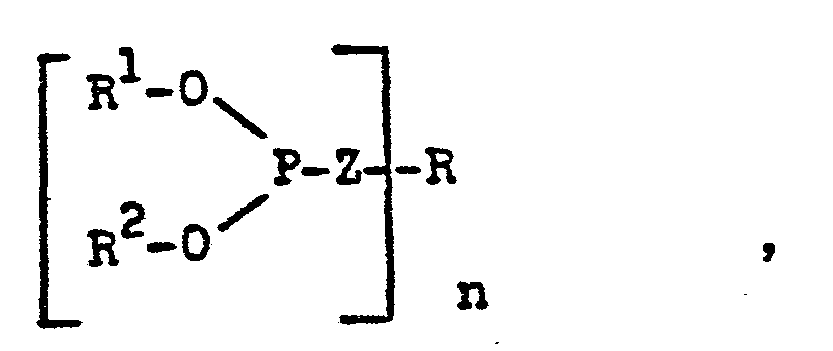
- Die Erfindung betrifft insbesondere ein Verfahren zur Herstellung von Verbindungen der Formel I


- R ist ein organischer Rest, der keine weiteren phosphorylierbaren Wasserstoffatome trägt,
- Z steht für Sauerstoff, Schwefel oder -NH-,
- Kat steht für ein Äquivalent eines Kations,
- R 1 steht für eine Gruppe der Formel IIIa oder IIIb

- R 5, R 6 und R 7, die gleich oder verschieden sein können, stehen für Wasserstoff oder Methyl,
- R8 steht für eine Gruppe der Formel IIIc, IIId, IIIe, Cyan oder Ar,

- R 10 bedeutet niederes Alkyl oder Ar,
- G, das gleich oder verschieden sein kann, steht für C oder N, wobei jedoch mindestens ein G für N steht,
- Ar steht für Phenyl, das durch 1 bis 5 gleiche oder verschiedene Substituenten der Reihe Chlor, Fluor, Nitro und Cyan oder zusätzlich zu den elektronenabziehenden Substituenten durch einen oder zwei lipohile Reste substituiert sein kann,
- n steht für 1 oder eine Zahl größer 1,
- y steht für 0, 1 oder 2,
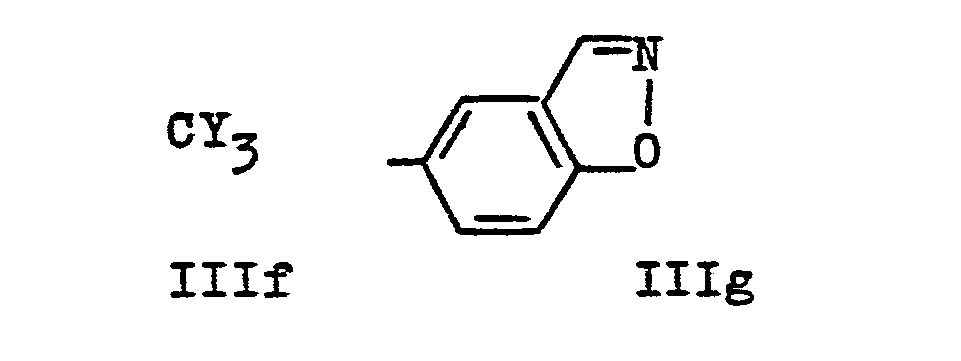
- R9 steht für eine Gruppe der Formel IIIf oder IIIg,
-

- Y steht für gleiche oder verschiedene Substituenten der Reihe Chlor, Brom oder Jod,
- R2 kann eine Bedeutung von R haben und dann gleich oder verschieden sein, oder niederes Alkyl, eine Gruppe der Formel IIIh
- R5 und R8 können zusammen für eine Gruppe der Formel IIIi

- R kann auch für Methyl stehen, wenn R2 ebenfalls Methyl ist.
- Die Natur der Gruppen R3 und R4 ist unkritisch, sofern der Rest -NR3R4 bei der Umsetzung mit der Verbindung der Formel II abgespalten wird.
- R3 und R4, die gleich oder verschieden sein können, stehen für Alkyl mit 1 bis 8 Kohlenstoffatomen, Cycloalkyl mit 5 bis 12, vorzugsweise bis 8 Kohlenstoffatomen, Benzyl oder Phenyl oder zusammen mit dem Stickstoffatom, an das sie gebunden sind, für einen gesättigten oder ungesättigten heterocyclischen Ring, der gegebenenfalls weitere Heteroatome und Substituenten enthalten kann.
- Bevorzugte Bedeutungen der vorstehend genannten Variablen sind:
- R 5, R6 und R7 bedeuten Wasserstoff,
- R bedeutet Cyan, Phenyl oder nitriertes Phenyl, insbesondere Mononitrophenyl wie p-Nitrophenyl oder Dinitrophenyl wie 2,5-Dinitrophenyl, chloriertes Phenyl, insbesondere Mono-, Di- oder Trichlorphenyl oder 2-Chlor-4-nitrophenyl sowie Nitrophenyl, das durch einen oder zwei Kohlenwasserstoffreste, insbesondere Alkanreste, mit 6 bis 24, vor allem 12 bis 18, Kohlenstoffatomen substituiert ist.
- R steht bevorzugt für eine Gruppe der Formel IIIf, wobei Y bevorzugt für Chlor steht.
- ist niederes Alkyl, insbesondere Methyl, oder es hat die Bedeutung von R und ist dann vorteilhaft identisch mit R .
- R3 und R4 stehen für Alkyl mit 1 bis 6 Kohlenstoffatomen, insbesondere für niederes Alkyl, Cyclohexyl, Benzyl oder Phenyl und zusammen mit dem Stickstoffatom für Pyrrolidyl, Piperidyl, Morpholyl, Triazolo, Benzotriazolo oder Tetrazolo, wobei die aromatischen Reste durch Chlor, Fluor, Nitro oder Cyan substituiert sein können.
- Der Ausdruck "nieder" steht für Reste mit bis zu 4 Kohlenstoffatomen.
- X und Z stehen bevorzugt für Sauerstoff.
- n steht für 1 bis 6, vor allem 1 oder 2, insbesondere 1.
- Die Verbindungen der Formel III, in denen R1 von Methyl verschieden ist, sind neu, ebenso die Verbindungen der Formel IV. Diese neuen Verbindungen sind ebenfalls Gegenstand der Erfindung.
- Aus F. Himmelsbach et al., Tetrahedron Leiters 23 (1982) 4793 - 4796 sind Verbindungen der Formel V bekannt, in de- nen R 1 und R2 für 2-(4-Nitrophenyl)-ethyl, X und Z für Sauerstoff und R für einen Thymidylrest steht. Diese Verbindungen werden durch Umsetzung von Thymidin mit Bis-(p-nitrophenylethyl)-phosphoromonochloridat erhalten, wobei im wesentlichen die 5'-ständige Hydroxygruppe acyliert wird. Dieses Phosphorylierungsreagenz ist ziemlich labil und konnte weder unter Hochvakuum destilliert noch in fester Form hergestellt werden. Wenn man vom Phosphortrichlorid ausgeht, so erfordert die Herstellung von Verbindungen der Formel V auf dem bekannten Wege fünf Reaktionsstufen, während diese Verbindungen auf dem erfindungsgemäßen Wege in vier Schritten herstellbar sind.
- Nach der genannten Literaturstelle werden die Verbindungen der Formel V dann weiter zu Oligonucleotiden umgesetzt und aus diesen schließlich die p-Nitrophenylethylgruppen mit 1,5-Diazabicyclo[5,4,0]undecen-5 (DBU) abgespalten.
- Die Verbindungen der Formel III sind nach an sich bekannten Methoden aus Phosphortrichlorid durch Umsetzung mit den Hydroxyverbindungen R1-OH und R2-OH und dem sekundären Amin H-NR3 R 4 zugänglich. Anstelle des freien sekundären Amins kann auch eine entsprechende Silylverbindung eingesetzt werden. Die Reihenfolge des Austausches der Chloratome im Phosphortrichlorid richtet sich nach der Reaktivität der Hydroxy- bzw. Aminoverbindungen. So kann man beispielsweise die Verbindung der Formel VI

- a) Man setzt zunächst Phosphortrichlorid mit Methanol in Gegenwart einer Base um, setzt das Reaktionsprodukt mit Diisopropylamin und anschließend mit dem 2-(p-Nitrophenyl)-ethanol in Gegenwart einer Base um,
- b) man setzt das Phosphortrichlorid zunächst mit dem 2-(p-Nitrophenyl)-ethanol, dann mit dem Isopropylamin und schließlich mit Methanol um oder
- c) man läßt das Phosphortrichlorid zuerst mit dem Diisopropylamin reagieren und setzt dann mit dem 2-(p-Nitrophenyl)-ethanol und hierauf mit Methanol um.
- Die Umsetzung des Phosphorylierungsreagenzes der allgemeinen Formel III mit einer Hydroxyverbindung erfolgt entweder in Lösung mit einer äquimolaren Menge bzw. einem geringen Überschuß von beispielsweise bis zu 50, vorzugsweise bis zu 25, Mol-% an Phosphorylierungsreagenz in Gegenwart einer schwachen Säure wie Tetrazol oder einem Aminhydrochlorid oder in Form einer Festphasen-Synthese mit einem großen Überschuß an Phosphorylierungsreagenz in Gegenwart einer schwachen Säure. Wenn beispielsweise die Hydroxykomponente trägergebunden ist, wird man das Phosphorylierungsreagenz in einem 10- bis 20-fachen molaren Überschuß einsetzen. Wenn man in Lösung arbeitet, muß das lösemittel selbstverständlich gegenüber dem Phosphorylierungsreagenz und der zu acylierenden Komponente inert sein. Die Umsetzung erfolgt bei Temperaturen von -80 bis +80°C, vorzugsweise -20 bis +50*C, insbesondere 0 bis 25.C.
- Das Phosphorylierungsprodukt der Formel IV hat je nach Wahl der Reste R und R2 einen mehr oder weniger ausgeprägten lipophilen Charakter, insbesondere dann, wenn R ein lipophil substituiertes Phenyl darstellt. Diese lipophilen Verbindungen lassen sich einfach von den nicht phosphorylierten Ausgangsmaterialien abtrennen, beispielsweise durch Chromatographie wie Hochdruck-Flüssigkeitschromatographie auf "reversed phase"-Material, beispielsweise das handelsübliche Silicagel mit Octadecylsilylgruppen.
- Die Wahl der Substituenten R1 und R2 richtet sich selbstverständlich nach der chemischen Natur des Restes R, also nach derjenigen Verbindung, in die die Phosphatgruppe eingeführt werden soll. Unter der Definition von R als einer Gruppe, die keine weiteren phosphorylierbaren B-Z-Gruppen enthält, soll verstanden werden, daß das Phosphorylierungsreagenz der Formel III relativ unspezifisch acyliert und somit bei einer gezielten Phosphorylierung in allen weiteren gegebenenfallls vorhandenen phosphorylierbaren Z-H-Funktionen die Wasserstoffatome durch entsprechende Schutzgruppen ersetzt sind. Unter "phosphorylierbar" sollen hier solche Z-H-Funktionen verstanden werden, die unter den Acylierungsbedingungen zu einer Umsetzung befähigt sind - durch sterische Hinderung oder inaktivierende Gruppen in ihrem Reaktionsvermögen beeinträchtigte Z-H-Funktionen sollen also ausgeschlossen sein.
- Da die Reste R1 und R2 zur Freisetzung der Phosphatgruppe in den meisten Fällen mit Hilfe einer Base abgespalten werden, richtet sich die Natur der Reste R1 und R2 und der eingesetzten Base nach der Empfindlichkeit des Restes R. Bei entsprechender Stabilität von R kann also die Abspaltung mit wäßrigen Alkalilaugen erfolgen, womit auch die Wahl von R1 und R2 relativ unkritisch ist. Bei empfindlichen Gruppen am Rest R wird man in an sich bekannter Weise unter entsprechend schonenden Bedingungen arbeiten, beispielsweise im nicht-wäßrigen System und unter Verwendung einer geeigneten Base, beispielsweise dem aus der vorstehend diskutierten Literaturstelle bekannten DBU.
- Die Abspaltung der Reste R1 und R2 erfolgt nach an sich bekannten Methoden: Die Abspaltung eines Methylrestes aus einem Phosphattriestei kann mit Thiophenol oder Thiokresol in Gegenwart einer Base wie Triethylamin erfolgen. Diese Reaktion erfolgt zweckmäßig bei Temperaturen von -100 bis +100°C, vorzugsweise bei -60 bis +60°C, insbesondere bei -20 bis +30°C. Die in einer B-Eliminierungsreaktion entfernbaren Gruppen, also beispielsweise Verbindungen, in denen die Gruppe IIIb enthalten ist, entfernt man mit Metallen wie Zink oder durch potentialgesteuerte Elektroreduktion. Diese Reaktion erfolgt zweckmäßig bei Temperaturen von -50 bis +80°C, vorzugsweise bei -20 bis +50°C, insbesondere bei 0 bis 30.C. Elektronegativ substituierte Ethylgruppen lassen sich mit nicht-nucleophilen Basen entfernen, die auch an polymere Träger gebunden sein können. Diese Reaktion erfolgt zweckmäßig bei Temperaturen von -60 bis +100*C, vorzugsweise bei -20 bis +50°C, insbesondere 0 bis 30°C.
- Bei der Abspaltung von elektronegativ substituierten Ethylgruppen aus Verbindungen der Formel V werden vorteilhaft die folgenden Basen eingesetzt, die nach abnehmender Reaktivität aufgeführt sind:
- a) cyclische Phosphorsäuretriamid-imide der Formel VII

- b) 1,5,7-Triazabicyclo[4,4,0]dec-5-en (TBD) sowie 7-Methyl-1,5,7-triazabicyclo[4,4,OJdec-5-en,
- c) 1,5-Diazabicyclo[4,3,0]non-5-en (DBN), DBU sowie niedere Alkalimetallalkoholate, insbesondere Natrium-und Kaliumalkanolate wie Natriummethylat, Natriumethylat oder Kaliumtertiärbutylat und
- d) 1,1,3,3-Tetramethyl-guanidin.
- Verbindungen, in denen R 1 und gegebenenfalls auch R2 ß-Cyanethyl sind, lassen sich mit Ammoniak spalten und werden deshalb bevorzugt dort eingesetzt, wo andere Schutzgruppen mit Hilfe von Ammoniak abgespalten werden.
- Ein großer Vorteil des erfindungsgemäßen Verfahrens liegt darin, daß empfindliche Verbindungen phosphoryliert werden können. Wie vorstehend bei der Abspaltung der Reste R und R2 mit Basen gezeigt wurde, erlaubt das erfindungsgemäße Verfahren eine Vielfalt von Ausgestaltungen, so daß die einzelnen Reaktionsschritte mit weiteren Reaktionen am Rest R koordiniert werden können. Dieser Gesichtspunkt gilt nicht nur für die Abspaltung der Reste R und R2, sondern genauso für die Oxidationsreaktion und - wenn gewünscht - für das Einführen von mehr als einer Phosphatgruppe.
- Ein weiterer erheblicher Vorteil der Erfindung ist darin zu sehen, daß nicht nur die Phosphatgruppe selbst, sondern auch die Thio- und Seleno-Phosphatgruppe eingeführt werden kann. Man kommt auf diesem Wege einfach zu chemischen Analogen von Naturstoffen, die beispielsweise nach den Verfahren von Himmelsbach et al. nicht zugänglich sind.
- Die Oxidation der Verbindungen der allgemeinen Formel IV zu den Phosphaten der allgemeinen Formel V (X= 0) erfolgt in der für analoge Verbindungen bekannten Weise. Als Oxidationsmittel können beispielsweise Distickstofftetroxid oder Jod, insbesondere aber Peroxide, vor allem wasserfreies t-Butylhydroperoxid, eingesetzt werden. Die Reaktion wird bevorzugt in einem mäßig polaren Lösemittel durchgeführt, beispielsweise in Nitrilen wie Acetonitril oder halogenierten, insbesondere chlorierten niederen Kohlenwasserstoffen wie Chloroform. Diese Reaktion erfolgt zweckmäßig bei Temperaturen von -100 bis +100°C, vorzugsweise bei -50 bis +60°C, insbesondere bei -20 bis +30°C.
- Die Herstellung der Verbindungen der allgemeinen Formel V, in der X Schwefel oder Selen bedeutet, erfolgt durch direkte Umsetzung der Verbindungen der allgemeinen Formel IV mit elementarem Schwefel oder Selen. Rühren in einem polaren Lösemittel wie Tetrahydrofuran mit der stöchiometrischen Menge an Schwefel oder Selen führt in guten Ausbeuten zu den entsprechenden Thio- oder Selenophosphaten der allgemeinen Formel V. Diese Reaktion erfolgt zweckmäßig bei Temperaturen von -100 bis +100°C, vorzugsweise bei -50 bis +60°C, insbesondere bei -20 bis +30°C.
- Es wurde bereits betont, daß es die Erfindung erlaubt, auf die chemische Natur des Restes R in erheblichem Ausmaß Rücksicht zu nehmen und daß dieser Rest auch empfindliche Gruppen oder Molekülteile tragen kann. Als Ausgangsmaterialien der Formel II kommen somit aliphatische wie aromatische Hydroxy-, Mercapto- und Aminoverbindungen in Betracht, also Alkohole, Phenole, Mercaptane, Thiophenole und aliphatische und aromatische Amine. Besonders vorteilhaft können Naturstoffe oder Naturstoff-analoge Verbindungen phosphoryliert werden, beispielsweise Steroidderivate, Phospholipide und vor allem Zucker und Zuckerderivate wie Nuclecside, Nucleotide, Oligonucleotide oder Polynucleotide.
- Die Darstellung von Nucleotiden mit endständiger ungeschützter Phosphatfunktion ist mit Hilfe der derzeit verwendeten Phosphatschutzgruppen-Kombination nach dem Phosphit-Verfahren nicht oder nur mit einem enormen zusätzlichen Aufwand möglich. Auch die bei der Triester-Synthese häufig verwendete Schutzgruppenkombination des o-Chlorphenyl-ß-cyanoethyl-phosphats liefert keine endständigen Phosphate, da die Hydrolyse der o-Chlorphenyl-Gruppe unter Erhaltung der ß-Cyanoethyl-Gruppe nicht möglich ist.
- Nach den bisher bekannten Methoden wurde deshalb die Phosphorylierung der endständigen 5'-Hydroxygruppe mit Hilfe eines Nucleosidtriphosphats, üblicherweise Adenosintriphosphat, und einer Kinase wie (T4)-Polynucleotidkinase vorgenommen. Dieses Verfahren ist recht aufwendig.
- Erfindungsgemäß kann nun die Phosphorylierung der 5'- Hydroxygruppe auf chemischem Weg erfolgen, und zwar nicht nur am isolierten Oligonucleotid, sondern sogar schon an der noch trägergebundenden Verbindung. Das erfindungsgemäße Verfahren läuft unter so schonenden Bedingungen, daß das Nucleosid,Nucleotid, Ollgo- oder Polynucleotid nicht geschädigt wird.
- Die Erfindung erlaubt aber auch die Einführung von Phos-- phatgruppen an anderer Stelle in Nucleoside oder monomere, oligomere oder polymere Nucleotide, beispielsweise durch Phosphorylierung der 3'-Hydroxygruppe oder -gruppen oder bei Ribonucleosiden oder Ribonucleotiden eine Einführung in die 2'-Position.
- Die Erfindung wird in den folgenden Beispielen auf dem bekanntermaßen schwierigen Gebiet der Nucleotide näher erläutert. Hierin ist jedoch keinesfalls eine Beschränkung zu sehen, da die Phosphorylierung von Nucleotiden ganz allgemein repräsentativ für die Einführung von Phosphatgruppen ist.
- Man legt 127 g (0,96 mol) Phosphorigsäuremethylester-dichlorid in einer Mischung aus 250 ml absolutem Ether und 250 ml absolutem Pentan vor und tropft unter starkem Rühren und Stickstoffschutz bei -15°C eine Lösung von 270 ml (1,92 mol) Diisopropylamin in 100 ml absolutem Ether und 100 ml absolutem Pentan im Lauf von 2 Stunden zu. Man läßt das Reaktionsgemisch unter Rühren sich auf Raumtemperatur erwärmen und rührt noch 2 Stunden weiter. Dann kühlt man wieder auf -15°C ab und trennt das Hydrochlorid durch Filtration unter Inertgas von der Reaktionslösung ab. Der Filterkuchen wird mit 750 ml eines kalten Gemischs aus gleichen Volumina aus absolutem Ether und absolutem Pentan nachgewaschen. Die Filtrate werden vereinigt und die Lösemittel im Wasserstrahlvakuum abgezogen. Der Rückstand wird zweimal einer Hochvakuumdestillation über eine 80 cm Vigreux-Kolonne unterworfen. Man erhält 80 g einer Hauptfraktion (Siedepunkt 38 bis 41°C bei 0,1 mbar), die gemäß 31P-NMR zu 99 % einheitlich ist (6= 185 ppm).
- Phosphorigsäure-methylester-[(p-nitrophenyl)-ethylester]-diisopropylamid (Formel VI) 5,01 g (30 mmol) scharf getrocknetes 2-(p-Nitrophenyl)-ethanol werden in 60 ml frisch destilliertem Methylenchlorid gelöst und mit 24 ml Diisopropyl-ethyl-amin versetzt. Man kühlt auf etwa 0°C und tropft im Lauf von 5 Minuten unter Rühren 6 ml (33 mmol) Phosphorigsäuremethylester-diisopropylamid-chlorid zu und rührt noch 10 Minuten bei dieser Temperatur weiter. Dann verdünnt man das Reaktionsgemisch mit 750 ml Essigester, der zuvor mit 450 ml Phosphatpuffer vom pH 7 gewaschen wurde. Die Essigesterphase wird dreimal mit 450 ml Phosphatpuffer (pH 7) ausgeschüttelt, über Natriumsulfat getrocknet und eingeengt. Das anfallende Öl wird im Hochvakuum bei 30°C getrocknet. Man erhält 9 g Ö1, das nach 31P-NMR 86 %ig ist. Durch Chromatographie über eine kurze Kieselgelsäule, die mit Essigester/Methylenchlorid/Triethylamin im Volumenverhältnis 5 : 4 : 1 äquilibriert wurde, kann das Produkt mit dem genannten Eluentensystem weiter angereichert werden (31 P-NMR: 95 %ig). Man erhält ein Öl, das im Kühlschrank (-20°C) erstarrt.
- 31P-NMR: δ= 149 ppm
- 1H-NMR: P-0-CH2-CH2- δ= 3,75 ppm, m [2]
- P-0-CH2-CH2- δ= 2,98 ppm, t [2]
- P-OCH δ= 3,35 ppm, d [3]
- m= Multiplett [Intensität]
- s= Singulett
- d= Dublett
- t= Triplett
-

- 31P-NMR: δ= 150 ppm
- 1H-NMR: P-OCH2CH2-CN δ= 3,75 ppm, m [2]
- P-OCH2CH2-CN δ= 2,60 ppm, t [2]
- P-OCH3 δ=3,35 ppm, d [3]
- 5 g (30 mmol) 2-(p-Nitrophenyl)-ethanol werden in 100 ml absolutem Ether gelöst und im Lauf von 40 Minuten bei -20 bis -30°C unter Rühren trcpfenweise mit 25,5 ml (150 mmol) frisch destilliertem phosphortrichlorid umgesetzte Man zieht bei 0°C den Ether im Wasserstrahlvakuum und anschließend das überschüssige Phosphortrichlorid im Hochvakuum ab und trocknet das zurückbleibende Öl im Hochvakuum.
- 31P-NMR: δ= 179,8 ppm 93 % des Gesamt-P.
- 87 ml (1 mol) Phosphortrichlorid werden in 800 ml Petrolether gelöst, die Lösung auf 5°C gekühlt und dann eine Lösung von 283 ml (2 mol) Diisopropylamin in 660 ml Petrolether im Lauf einer Stunde bei 5°C zugetropft. Man rührt eine Stunde bei dieser Temperatur nach, filtriert das abgeschiedene Aminhydrochlorid ab, zieht den Petrolether unter Wasserstrahlvakuum ab und destilliert den Rückstand im Vakuum (0,2 mbar). Man erhält als Hauptfraktion bei 38 bis 41°C 98 g eines Öls, das beim Stehen im Kühlschrank (-20°C) kristallisiert und zu 99 % rein ist (31 P-NMR, ö= 170 ppm).
-

- 31P-NMR: 6= 147,5 ppm
- 1H-NMR: P-OCH2CH2- δ= 3,85 ppm, m [4]
- P-OCH2CH2- δ= 2,98 ppm, t [4]
- P-N-CH δ= 3,5 ppm, m [2]
- P-N-CH(CH3)2 δ= 1,13 ppm, d [12]
- Chemische Synthese eines einzelsträngigen Oligonucleotids mit einem 5'-Phoaphat-Rest: NcoI-Linker 5' pCCATGG 3'
- Nach der Methode von M. J. Gait et al.; Nucleic Acids Res. 8 (1980); 1081 - 1096, wird das am 3'-Ende stehende Nucleosid, im vorliegenden Falle also Guanosin, an "controlled pore glass" (CPG, Firma Pierce) über die 3'-Hydroxyfunktion kovalent gebunden.
- Hierzu wird zunächst das Kieselgel unter Abspaltung von Ethanol mit 3-(Triethoxysilyl)-propylamin umgesetzt, wobei eine Si-O-SBi-Bindung entsteht. Das Guancsin wird als N - Isobutyryl-3'-0-suecinoyl-5'-dimethoxytritylether in Gegenwart von Paranitrophenol und N,N'-Dicyclohexylcarbodiimid mit dem modifizierten Träger umgesetzt, wobei die freie Carboxygruppe der Succinoylgruppe den Aminorest der Propylamingruppe acyliert.
- In den folgenden Syntheseschritten wird die Basenkomponente als 5'-O-Dimethoxytrityl-nucleosid-3'-phosphorigsäure-mono- methylester-dialkylamid oder -chlorid eingesetzt, wobei das Adenin als N6-Benzoyl-Verbindung, das Cytosin als N4-Benzoyl-Verbindung, das Guanin als N -Isobutyryl-Verbindung und das keine Aminogruppe enthaltende Thymin ohne Schutzgruppe vorliegen.
- Reaktionszyklus für den Aufbau der Oligonucleotidkette:
- 25 mg des polymeren Trägers, der 1 µmol Guanosin gebunden enthält, werden nacheinander mit folgenden Agentien behandelt:
- a) Nitromethan
- b) 3 % Trichloressigsäure in 1,2-Dichlorethan
- c) Nitromethan
- d) Acetonitril
- e) 10 bis 20 µmol des entsprechenden Nucleosidphosphits und 100 µmol Tetrazol in 0,2 ml wasserfreiem Acetonitril (5 min)
- f) 20 % Acetanhydrid in Tetrahydrofuran mit 40 % Lutidin und 10 % Dimethylaminopyridin (2 min)
- g) Acetonitril
- h) Tetrahydrofuran mit 20 % Wasser und 40 % Lutidin
- i) 3 % Jod in Collidin/Wasser/Tetrahydrofuran im Volumenverhältnis 5 : 4 : 1 (0,5 min)
- j) Acetonitril
- Unter "Phosphit" wird hierbei der Desoxyribose-3'-monophos- phorigsäure-monomethylester verstanden, wobei die dritte Valenz durch Chlor oder eine tertiäre Aminogruppe, beispielsweise einen Morpholinorest, abgesättigt ist. Die Ausbeuten der einzelnen Syntheseschritte können jeweils nach der Detritylierungsreaktion (b) spektrophotometrisch durch Messung der Absorption des Dimethoxytritylkations bei einer Wellenlänge von 496 nm bestimmt werden.
- Der Reaktionszyklus für die chemische Phosphorylierung der 5'-Hydroxyfunktion erfolgt im Prinzip wie in den vorherigen Beispielen, jedoch mit dem Unterschied, daß einerseits bei e) 20 umol des entsprechenden Phosphorylierungsreagenzes (z.B. die Verbindung VI) und 100 gmol Tetrazol in 0,2 ml wasserfreiem Tetrahydrofuran/Acetonitril (Mischung aus gleichen Volumina) 10 bis 20 Minuten zur Reaktion gebracht werden, andererseits der Schritt f) wegfällt und drittens die Zeit im Schritt i) auf 5 Minuten verlängert wird.
- Nach abgeschlossener Synthese des Oligonucleotids werden die Methylphosphatschutzgruppen des Oligomers mit Hilfe von p-Thiokresol und Triethylamin abgespalten. Anschliessend wird durch 3-stündige Behandlung mit Ammoniak das Oligonucleotid vom festen Träger abgetrennt. Eine 2- bis 3-tägige Behandlung der Oligomeren mit konzentriertem Ammoniak spaltet die Aminoschutzgruppen der Basen quantitativ ab.
- a) Im Falle des Phosphorylierungsreagenzes Phosphorigsäure-methylester-[2-(p-nitrophenyl)-ethylester]-diisopropylamid (VI) erhält man nach dieser Schutzgruppenabspaltung ein Oligonucleotid mit einem 2-(p-Nitrophenyl)-ethylphosphat- rest an der 5'-Hydroxygruppe. Dieser Phosphatester kann durch HPLC auf "reversed phase"-Material gereinigt werden, was zu einer besonders guten Abtrennung von der Hydroxykomponente führt. Zur Abspaltung der p-Nitrophenylethyl-Gruppe behandelt man den Ester mit 0,9 M TBD in Pyridin/Wasser im Volumenverhältnis 9 : 1 8 Stunden bei Raumtemperatur. Danach ist laut HPLC bzw. Gelelektrophorese auf einem 20 %igen Polyacrylamidgel mit 7 M Harnstoff kein Ausgangsmaterial mehr vorhanden. Das Reaktionsgemisch wird mit 1 ml 2 M Essigsäure versetzt und eingeengt. Den Rückstand entsalzt man über eine Säule mit R SEPHADEX G 50 mit 0,02 M Triethylammoniumbicarbonat (pH 7) als Eluent.
- Das resultierende 5'-Phosphat-Oligonucleotid kann mit Hilfe von Polynucleotid-Ligase zu doppelsträngiger repetitiver DNA polymerisiert werden, die sich dann mit dem Restriktionsenzym Hae III (Erkennung: GG CC) wieder schneiden läßt.
- b) Im Falle des Phosphorylierungsreagenzes Phosphorigsäure- metyhlester-2-cyanoethylester-diisopropylamid (VIII) und des Phosphorigsäure-bis-(2-cyanoethylester)-diisopropylamid (X)

- c) Im Falle des Reagenzes Phosphorigsäure-bis-[2-(p-nitrophenyl)-ethylester]-diisopropylamid (IX) erhält man nach der Thiophenolat- und Ammoniakbehandlung auch den Phosphat-2-(p-nitrophenyl)-ethylester, der wiederum in das 5'-Phosphat schutzgruppenfrei mit einer geeigneten Base wie DBU oder TBD gespalten werden kann.

Claims (11)






Priority Applications (1)
| Application Number | Priority Date | Filing Date | Title |
|---|---|---|---|
| AT86102311T ATE44151T1 (de) | 1985-03-06 | 1986-02-22 | Verfahren und mittel zur phosphorylierung. |
Applications Claiming Priority (2)
| Application Number | Priority Date | Filing Date | Title |
|---|---|---|---|
| DE19853507881 DE3507881A1 (de) | 1985-03-06 | 1985-03-06 | Verfahren und mittel zur phosphorylierung |
| DE3507881 | 1985-03-06 |
Publications (2)
| Publication Number | Publication Date |
|---|---|
| EP0195277A1 true EP0195277A1 (de) | 1986-09-24 |
| EP0195277B1 EP0195277B1 (de) | 1989-06-21 |
Family
ID=6264335
Family Applications (1)
| Application Number | Title | Priority Date | Filing Date |
|---|---|---|---|
| EP86102311A Expired EP0195277B1 (de) | 1985-03-06 | 1986-02-22 | Verfahren und Mittel zur Phosphorylierung |
Country Status (17)
| Country | Link |
|---|---|
| US (1) | US5039796A (de) |
| EP (1) | EP0195277B1 (de) |
| JP (2) | JPH0643433B2 (de) |
| KR (1) | KR940005338B1 (de) |
| AT (1) | ATE44151T1 (de) |
| AU (1) | AU596091B2 (de) |
| CA (1) | CA1340950C (de) |
| DE (2) | DE3507881A1 (de) |
| DK (1) | DK174772B1 (de) |
| ES (1) | ES8801293A1 (de) |
| FI (1) | FI81806C (de) |
| GR (1) | GR860600B (de) |
| HU (1) | HU202247B (de) |
| IE (1) | IE58874B1 (de) |
| IL (1) | IL78033A (de) |
| PT (1) | PT82139B (de) |
| ZA (1) | ZA861629B (de) |
Cited By (4)
| Publication number | Priority date | Publication date | Assignee | Title |
|---|---|---|---|---|
| WO1990000622A1 (en) * | 1988-07-08 | 1990-01-25 | Wallac Oy | Oligonucleotide hybridization probes and means for the synthesis of the most preferred probes |
| EP0266168A3 (de) * | 1986-10-31 | 1990-10-03 | Amoco Corporation | Zusammensetzungen und Verfahren zur Herstellung von Oligonukleotiden, deren 5' Ende phosphoryliert ist |
| EP0592534A4 (en) * | 1991-06-07 | 1994-07-06 | Abbott Lab | Silyl phosphorylating reagents and methods of using them |
| WO2004076692A1 (en) * | 2003-02-26 | 2004-09-10 | Solexa Limited | Dna sequence analysis |
Families Citing this family (15)
| Publication number | Priority date | Publication date | Assignee | Title |
|---|---|---|---|---|
| US5332845A (en) * | 1985-03-28 | 1994-07-26 | Chiron Corporation | Phosphorylating reagents |
| US6031091A (en) * | 1987-09-21 | 2000-02-29 | Gen-Probe Incorporated | Non-nucleotide linking reagents for nucleotide probes |
| US5585481A (en) * | 1987-09-21 | 1996-12-17 | Gen-Probe Incorporated | Linking reagents for nucleotide probes |
| US6214987B1 (en) | 1994-09-02 | 2001-04-10 | Andrew C. Hiatt | Compositions for enzyme catalyzed template-independent formation of phosphodiester bonds using protected nucleotides |
| US5872244A (en) * | 1994-09-02 | 1999-02-16 | Andrew C. Hiatt | 3' protected nucleotides for enzyme catalyzed template-independent creation of phosphodiester bonds |
| US6232465B1 (en) | 1994-09-02 | 2001-05-15 | Andrew C. Hiatt | Compositions for enzyme catalyzed template-independent creation of phosphodiester bonds using protected nucleotides |
| US5990300A (en) * | 1994-09-02 | 1999-11-23 | Andrew C. Hiatt | Enzyme catalyzed template-independent creation of phosphodiester bonds using protected nucleotides |
| US5808045A (en) * | 1994-09-02 | 1998-09-15 | Andrew C. Hiatt | Compositions for enzyme catalyzed template-independent creation of phosphodiester bonds using protected nucleotides |
| US5763594A (en) * | 1994-09-02 | 1998-06-09 | Andrew C. Hiatt | 3' protected nucleotides for enzyme catalyzed template-independent creation of phosphodiester bonds |
| US6184347B1 (en) | 1998-11-19 | 2001-02-06 | Agilent Technologies Inc. | Minimization of blooming in high-density arrays by using reactive wash reagents |
| CA2370478A1 (en) | 1999-03-24 | 2000-09-28 | Serge L. Beaucage | N-acylphosphoramidites and their use in oligonucleotide synthesis |
| WO2003048179A2 (en) * | 2001-12-03 | 2003-06-12 | The Government Of The United States Of America, Represented By The Secretary Of The Department Of Health And Human Services | Thermolabile hydroxyl protecting groups and methods of use |
| WO2006065751A2 (en) | 2004-12-13 | 2006-06-22 | Government Of The United States Of America, Represented By The Secretary, Department Of Health And Human Services | Cpg oligonucleotide prodrugs, compositions thereof and associated therapeutic methods |
| DE102009012640A1 (de) | 2009-03-09 | 2010-09-30 | Freie Universität Berlin | Mit einer Phosphoamidatgruppe modifizierte Verbindung und deren Verwendung |
| JP6624055B2 (ja) * | 2014-07-09 | 2019-12-25 | 日本電気株式会社 | 非水電解液及びリチウムイオン二次電池 |
Citations (3)
| Publication number | Priority date | Publication date | Assignee | Title |
|---|---|---|---|---|
| DE1252648B (de) * | 1962-01-29 | 1967-10-26 | Hooker Chemical Corporation, Niagara Falls NY (V St A) | Verfahren zur Herstellung von Tnmethyl phosphit |
| EP0131993A2 (de) | 1983-07-01 | 1985-01-23 | Stichting Katholieke Universiteit | Phosphorylierungsmittel, Verfahren zu seiner Herstellung, Verfahren zur Phosphorylierung einer organischen Hydroxyl- oder Amin-Verbindung |
| EP0133993A2 (de) | 1983-08-19 | 1985-03-13 | General Electric Company | Modifizierte Polyesterzusammensetzung |
Family Cites Families (4)
| Publication number | Priority date | Publication date | Assignee | Title |
|---|---|---|---|---|
| DE1075584B (de) * | 1960-02-18 | Hooker Chemical Corporation, Niagara Falls, N. Y. (V. St. A.) | Verfahren zur Herstellung von tertiären aliphatischen Estern der phosphorigen Säure | |
| US4321365A (en) * | 1977-10-19 | 1982-03-23 | Research Corporation | Oligonucleotides useful as adaptors in DNA cloning, adapted DNA molecules, and methods of preparing adaptors and adapted molecules |
| US4415732A (en) * | 1981-03-27 | 1983-11-15 | University Patents, Inc. | Phosphoramidite compounds and processes |
| DE3678988D1 (de) * | 1985-03-28 | 1991-06-06 | Chiron Corp | Reinigung von synthetischen oligomeren. |
-
1985
- 1985-03-06 DE DE19853507881 patent/DE3507881A1/de not_active Withdrawn
-
1986
- 1986-02-22 DE DE8686102311T patent/DE3664047D1/de not_active Expired
- 1986-02-22 AT AT86102311T patent/ATE44151T1/de not_active IP Right Cessation
- 1986-02-22 EP EP86102311A patent/EP0195277B1/de not_active Expired
- 1986-03-04 GR GR860600A patent/GR860600B/el unknown
- 1986-03-04 ES ES552614A patent/ES8801293A1/es not_active Expired
- 1986-03-04 FI FI860905A patent/FI81806C/fi not_active IP Right Cessation
- 1986-03-04 IL IL78033A patent/IL78033A/xx unknown
- 1986-03-04 HU HU86889A patent/HU202247B/hu unknown
- 1986-03-05 AU AU54311/86A patent/AU596091B2/en not_active Expired
- 1986-03-05 ZA ZA861629A patent/ZA861629B/xx unknown
- 1986-03-05 DK DK198601009A patent/DK174772B1/da not_active IP Right Cessation
- 1986-03-05 PT PT82139A patent/PT82139B/pt unknown
- 1986-03-05 KR KR860001541A patent/KR940005338B1/ko not_active Expired - Lifetime
- 1986-03-05 CA CA000503382A patent/CA1340950C/en not_active Expired - Fee Related
- 1986-03-05 JP JP61046486A patent/JPH0643433B2/ja not_active Expired - Lifetime
- 1986-03-05 IE IE57986A patent/IE58874B1/en not_active IP Right Cessation
-
1989
- 1989-08-21 US US07/396,803 patent/US5039796A/en not_active Expired - Lifetime
-
1993
- 1993-09-29 JP JP5242250A patent/JP2549495B2/ja not_active Expired - Lifetime
Patent Citations (3)
| Publication number | Priority date | Publication date | Assignee | Title |
|---|---|---|---|---|
| DE1252648B (de) * | 1962-01-29 | 1967-10-26 | Hooker Chemical Corporation, Niagara Falls NY (V St A) | Verfahren zur Herstellung von Tnmethyl phosphit |
| EP0131993A2 (de) | 1983-07-01 | 1985-01-23 | Stichting Katholieke Universiteit | Phosphorylierungsmittel, Verfahren zu seiner Herstellung, Verfahren zur Phosphorylierung einer organischen Hydroxyl- oder Amin-Verbindung |
| EP0133993A2 (de) | 1983-08-19 | 1985-03-13 | General Electric Company | Modifizierte Polyesterzusammensetzung |
Non-Patent Citations (8)
| Title |
|---|
| CHEMICAL ABSTRACTS, Band 101, Nr. 25, 17. Dezember 1984, Seite 809, Zusammenfassungsnr. 230935s, Columbus, Ohio, US; N.D. SINHA et al.: "Polymer support oligonucleotide synthesis XVIII: use of Beta-cyanoethyl-N,N-dialkylamino-/N-morpholino phosphoramidite of deoxynucleosides for the synthesis of DNA fragments simplifying deprotection and isolation of the final product", & NUCLEIC ACIDS RES. 984, 12(11), 4539-4557 * |
| CHEMICAL ABSTRACTS, Band 78, Nr. 9, 5. März, 1973, Seite 464, Zusammenfassungsnr. 57700t, Columbus, Ohio, US; E.E. NIFANT'EV et al.: "Acid amides of phosphorus acid as phosphorylating reagents", & ZH. OBSHCH. KHIM. 1972, 42(9), 1936-1939 * |
| CHEMICAL ABSTRACTS, Band 79, Nr. 9, 3. September 1973, Seite 385, Zusammenfassungsnr. 53549y, Columbus, Ohio, US; & PL - A - 66432 (MALINOWSKI et al.) 15.12.1972 in Verbindung mit CHEMICAL ABSTRACTS FORMELREGISTER, Band 79, Seite 245F, Spalte 3, Zeile 27 * |
| CHEMICAL ABSTRACTS, Band 87, Nr. 23, 5. Dezember 1977, Seite 559, Zusammenfassungsnr. 183904m, Columbus, Ohio, US; J.G. LAMMERS et al.: "Synthesis of phospholipids via phospho triester intermediates", & RECL. TRAV. CHIM. PAYS-BAS 1977, 96(7-8), 216-218 * |
| CHEMICAL ABSTRACTS, Band 95, Nr. 19, 9. November 1981, Seite 693, Zusammenfassungsnr. 168692n, Columbus, Ohio, US; E. NIFANT'EV et al.: "Synthesis of phosphatidylionols", & BIOORG.KHIM. 1981, 7(7), 1100-1106 * |
| CHEMICAL ABSTRACTS, Band 97, Nr. 21, 22. November 1982, Seite 840, Zusammenfassungsnr. 182538q, Columbus, Ohio, US; D.A. PREDVODITELEV et al.: "Acyl migration during phosphorylation of glycerides by phosphorus (III) acid amides" & ZH. ORG. KHIM. 1982, 18(6), 1326-1327 * |
| F. HIMMELSBACH ET AL., TETRAHEDRON LETTERS, vol. 23, 1982, pages 4793 - 4796 |
| TETRAHEDRON LETTERS, Band 23, Nr. 46, 1982, Seiten 4793-4796, GB; F. HIMMELSBACH et al.: "BIS-(p-Nitrophenylethyl) phosphoromonchloridate, a new versatile phosphorylating agent" * |
Cited By (6)
| Publication number | Priority date | Publication date | Assignee | Title |
|---|---|---|---|---|
| EP0266168A3 (de) * | 1986-10-31 | 1990-10-03 | Amoco Corporation | Zusammensetzungen und Verfahren zur Herstellung von Oligonukleotiden, deren 5' Ende phosphoryliert ist |
| WO1990000622A1 (en) * | 1988-07-08 | 1990-01-25 | Wallac Oy | Oligonucleotide hybridization probes and means for the synthesis of the most preferred probes |
| EP0592534A4 (en) * | 1991-06-07 | 1994-07-06 | Abbott Lab | Silyl phosphorylating reagents and methods of using them |
| US5380835A (en) * | 1991-06-07 | 1995-01-10 | Abbott Laboratories | Silyl phosphorylating reagents and methods of using them |
| WO2004076692A1 (en) * | 2003-02-26 | 2004-09-10 | Solexa Limited | Dna sequence analysis |
| US7351532B2 (en) | 2003-02-26 | 2008-04-01 | Solexa Limited | DNA sequence analysis |
Also Published As
| Publication number | Publication date |
|---|---|
| FI81806B (fi) | 1990-08-31 |
| JP2549495B2 (ja) | 1996-10-30 |
| CA1340950C (en) | 2000-04-11 |
| ZA861629B (en) | 1986-10-29 |
| PT82139B (pt) | 1988-07-29 |
| FI81806C (fi) | 1990-12-10 |
| KR940005338B1 (en) | 1993-06-17 |
| DE3507881A1 (de) | 1986-09-11 |
| HU202247B (en) | 1991-02-28 |
| IE58874B1 (en) | 1993-12-01 |
| ES552614A0 (es) | 1987-12-16 |
| DK174772B1 (da) | 2003-10-27 |
| JPH0643433B2 (ja) | 1994-06-08 |
| KR860007273A (ko) | 1986-10-10 |
| IE860579L (en) | 1986-09-06 |
| JPH06228172A (ja) | 1994-08-16 |
| AU5431186A (en) | 1986-10-16 |
| JPS61207397A (ja) | 1986-09-13 |
| DE3664047D1 (en) | 1989-07-27 |
| AU596091B2 (en) | 1990-04-26 |
| US5039796A (en) | 1991-08-13 |
| EP0195277B1 (de) | 1989-06-21 |
| GR860600B (en) | 1986-07-07 |
| DK100986D0 (da) | 1986-03-05 |
| HUT40675A (en) | 1987-01-28 |
| IL78033A (en) | 1990-12-23 |
| PT82139A (de) | 1986-04-01 |
| ES8801293A1 (es) | 1987-12-16 |
| ATE44151T1 (de) | 1989-07-15 |
| DK100986A (da) | 1986-09-07 |
| FI860905L (fi) | 1986-09-07 |
| IL78033A0 (en) | 1986-07-31 |
| FI860905A0 (fi) | 1986-03-04 |
Similar Documents
| Publication | Publication Date | Title |
|---|---|---|
| EP0195277B1 (de) | Verfahren und Mittel zur Phosphorylierung | |
| DE69227793T2 (de) | Verfahren und Verbindungen für die Festphase-Synthese von Oligonukleotiden und Analogen | |
| DE69129269T2 (de) | Verfahren zur herstellung von oligonukleotid-analogen die schwefel enthalten | |
| DE69030745T2 (de) | Verfahren und Reagens zur Sulfurierung von Organophosphiten | |
| JP2552048B2 (ja) | ヌクレオチド鎖合成用試薬 | |
| US5367066A (en) | Oligonucleotides with selectably cleavable and/or abasic sites | |
| EP0354246B1 (de) | 3'-Azido-2',3'-dideoxynucleosid-5'-phosphonate | |
| JPH02169598A (ja) | 新規なハイドロゲンホスホノジチオエート組成物 | |
| US5071974A (en) | Compositions and methods for the synthesis of oligonucleotides having 5'-phosphorylated termini | |
| DE60103145T2 (de) | Verfahren zur herstellung von phoshphorothioate triestere | |
| DE3855693T2 (de) | Geschützte Biotinderivate | |
| DE3637243A1 (de) | Neue phosphorsulfidderivate von deoxynucleosiden oder deoxynucleotiden und deren verwendung | |
| EP0136543B1 (de) | Verfahren zur Herstellung von Nukleosidalkyl-, -aralkyl- und -arylphosphoniten und -phosphonaten | |
| AU2001235766A1 (en) | Process for the preparation of phosphorothioate triesters | |
| US4503233A (en) | Phosphorylating agent and process for the phosphorylation of organic hydroxyl compounds | |
| DE4129318A1 (de) | Neuartige antisense-oligonukletide mit durchgaengiger phosphoramidat-internukleotidbindung | |
| EP0475443B1 (de) | Verfahren zur chemischen Synthese von Oligonukleotiden | |
| DE4023212C2 (de) | ||
| JPH0613545B2 (ja) | ヌクレオシドホスホロチオイットおよびその合成法 | |
| EP1370567A2 (de) | Verfahren zur herstellung von pentopyranosyl-nucleosiden | |
| DE3208565A1 (de) | Verfahren zur abspaltung von tritylschutzgruppen | |
| DD288604A5 (de) | Verfahren zur herstellung neuer fluorophorderivate | |
| DD299727A7 (de) | Alkyl- und alkenylphospho-l-serine, verfahren zu ihrer herstellung und verwendung |
Legal Events
| Date | Code | Title | Description |
|---|---|---|---|
| PUAI | Public reference made under article 153(3) epc to a published international application that has entered the european phase |
Free format text: ORIGINAL CODE: 0009012 |
|
| AK | Designated contracting states |
Kind code of ref document: A1 Designated state(s): AT BE CH DE FR GB IT LI LU NL SE |
|
| 17P | Request for examination filed |
Effective date: 19861020 |
|
| 17Q | First examination report despatched |
Effective date: 19880225 |
|
| GRAA | (expected) grant |
Free format text: ORIGINAL CODE: 0009210 |
|
| AK | Designated contracting states |
Kind code of ref document: B1 Designated state(s): AT BE CH DE FR GB IT LI LU NL SE |
|
| REF | Corresponds to: |
Ref document number: 44151 Country of ref document: AT Date of ref document: 19890715 Kind code of ref document: T |
|
| ITF | It: translation for a ep patent filed | ||
| REF | Corresponds to: |
Ref document number: 3664047 Country of ref document: DE Date of ref document: 19890727 |
|
| ET | Fr: translation filed | ||
| GBT | Gb: translation of ep patent filed (gb section 77(6)(a)/1977) | ||
| PLBE | No opposition filed within time limit |
Free format text: ORIGINAL CODE: 0009261 |
|
| STAA | Information on the status of an ep patent application or granted ep patent |
Free format text: STATUS: NO OPPOSITION FILED WITHIN TIME LIMIT |
|
| 26N | No opposition filed | ||
| ITTA | It: last paid annual fee | ||
| EPTA | Lu: last paid annual fee | ||
| EAL | Se: european patent in force in sweden |
Ref document number: 86102311.7 |
|
| REG | Reference to a national code |
Ref country code: GB Ref legal event code: IF02 |
|
| PGFP | Annual fee paid to national office [announced via postgrant information from national office to epo] |
Ref country code: NL Payment date: 20041215 Year of fee payment: 20 |
|
| PGFP | Annual fee paid to national office [announced via postgrant information from national office to epo] |
Ref country code: CH Payment date: 20041216 Year of fee payment: 20 |
|
| PGFP | Annual fee paid to national office [announced via postgrant information from national office to epo] |
Ref country code: AT Payment date: 20041217 Year of fee payment: 20 |
|
| PGFP | Annual fee paid to national office [announced via postgrant information from national office to epo] |
Ref country code: SE Payment date: 20041220 Year of fee payment: 20 Ref country code: GB Payment date: 20041220 Year of fee payment: 20 Ref country code: FR Payment date: 20041220 Year of fee payment: 20 |
|
| PGFP | Annual fee paid to national office [announced via postgrant information from national office to epo] |
Ref country code: LU Payment date: 20050121 Year of fee payment: 20 |
|
| PGFP | Annual fee paid to national office [announced via postgrant information from national office to epo] |
Ref country code: BE Payment date: 20050127 Year of fee payment: 20 |
|
| PG25 | Lapsed in a contracting state [announced via postgrant information from national office to epo] |
Ref country code: IT Free format text: LAPSE BECAUSE OF NON-PAYMENT OF DUE FEES;WARNING: LAPSES OF ITALIAN PATENTS WITH EFFECTIVE DATE BEFORE 2007 MAY HAVE OCCURRED AT ANY TIME BEFORE 2007. THE CORRECT EFFECTIVE DATE MAY BE DIFFERENT FROM THE ONE RECORDED. Effective date: 20050222 |
|
| PGFP | Annual fee paid to national office [announced via postgrant information from national office to epo] |
Ref country code: DE Payment date: 20050228 Year of fee payment: 20 |
|
| REG | Reference to a national code |
Ref country code: GB Ref legal event code: PE20 |
|
| PG25 | Lapsed in a contracting state [announced via postgrant information from national office to epo] |
Ref country code: GB Free format text: LAPSE BECAUSE OF EXPIRATION OF PROTECTION Effective date: 20060221 |
|
| PG25 | Lapsed in a contracting state [announced via postgrant information from national office to epo] |
Ref country code: NL Free format text: LAPSE BECAUSE OF EXPIRATION OF PROTECTION Effective date: 20060222 |
|
| REG | Reference to a national code |
Ref country code: CH Ref legal event code: PL |
|
| EUG | Se: european patent has lapsed | ||
| NLV7 | Nl: ceased due to reaching the maximum lifetime of a patent |
Effective date: 20060222 |
|
| BE20 | Be: patent expired |
Owner name: *HOECHST A.G. Effective date: 20060222 |