EP0213279A2 - Procédé pour la détermination quantitative de 1,5-anhydroglucitol - Google Patents
Procédé pour la détermination quantitative de 1,5-anhydroglucitol Download PDFInfo
- Publication number
- EP0213279A2 EP0213279A2 EP86107090A EP86107090A EP0213279A2 EP 0213279 A2 EP0213279 A2 EP 0213279A2 EP 86107090 A EP86107090 A EP 86107090A EP 86107090 A EP86107090 A EP 86107090A EP 0213279 A2 EP0213279 A2 EP 0213279A2
- Authority
- EP
- European Patent Office
- Prior art keywords
- electron acceptor
- enzyme
- formula
- genus
- anhydroglucitol
- Prior art date
- Legal status (The legal status is an assumption and is not a legal conclusion. Google has not performed a legal analysis and makes no representation as to the accuracy of the status listed.)
- Granted
Links
- 0 CC(C)(C(C(C)(CC(C)(*)C(C(*)(*)C1**1)O)N)=C)N Chemical compound CC(C)(C(C(C)(CC(C)(*)C(C(*)(*)C1**1)O)N)=C)N 0.000 description 2
Images


Classifications
-
- C—CHEMISTRY; METALLURGY
- C12—BIOCHEMISTRY; BEER; SPIRITS; WINE; VINEGAR; MICROBIOLOGY; ENZYMOLOGY; MUTATION OR GENETIC ENGINEERING
- C12N—MICROORGANISMS OR ENZYMES; COMPOSITIONS THEREOF; PROPAGATING, PRESERVING, OR MAINTAINING MICROORGANISMS; MUTATION OR GENETIC ENGINEERING; CULTURE MEDIA
- C12N9/00—Enzymes; Proenzymes; Compositions thereof; Processes for preparing, activating, inhibiting, separating or purifying enzymes
- C12N9/0004—Oxidoreductases (1.)
- C12N9/0006—Oxidoreductases (1.) acting on CH-OH groups as donors (1.1)
-
- C—CHEMISTRY; METALLURGY
- C12—BIOCHEMISTRY; BEER; SPIRITS; WINE; VINEGAR; MICROBIOLOGY; ENZYMOLOGY; MUTATION OR GENETIC ENGINEERING
- C12Q—MEASURING OR TESTING PROCESSES INVOLVING ENZYMES, NUCLEIC ACIDS OR MICROORGANISMS; COMPOSITIONS OR TEST PAPERS THEREFOR; PROCESSES OF PREPARING SUCH COMPOSITIONS; CONDITION-RESPONSIVE CONTROL IN MICROBIOLOGICAL OR ENZYMOLOGICAL PROCESSES
- C12Q1/00—Measuring or testing processes involving enzymes, nucleic acids or microorganisms; Compositions therefor; Processes of preparing such compositions
- C12Q1/26—Measuring or testing processes involving enzymes, nucleic acids or microorganisms; Compositions therefor; Processes of preparing such compositions involving oxidoreductase
-
- Y—GENERAL TAGGING OF NEW TECHNOLOGICAL DEVELOPMENTS; GENERAL TAGGING OF CROSS-SECTIONAL TECHNOLOGIES SPANNING OVER SEVERAL SECTIONS OF THE IPC; TECHNICAL SUBJECTS COVERED BY FORMER USPC CROSS-REFERENCE ART COLLECTIONS [XRACs] AND DIGESTS
- Y10—TECHNICAL SUBJECTS COVERED BY FORMER USPC
- Y10S—TECHNICAL SUBJECTS COVERED BY FORMER USPC CROSS-REFERENCE ART COLLECTIONS [XRACs] AND DIGESTS
- Y10S435/00—Chemistry: molecular biology and microbiology
- Y10S435/81—Packaged device or kit
-
- Y—GENERAL TAGGING OF NEW TECHNOLOGICAL DEVELOPMENTS; GENERAL TAGGING OF CROSS-SECTIONAL TECHNOLOGIES SPANNING OVER SEVERAL SECTIONS OF THE IPC; TECHNICAL SUBJECTS COVERED BY FORMER USPC CROSS-REFERENCE ART COLLECTIONS [XRACs] AND DIGESTS
- Y10—TECHNICAL SUBJECTS COVERED BY FORMER USPC
- Y10S—TECHNICAL SUBJECTS COVERED BY FORMER USPC CROSS-REFERENCE ART COLLECTIONS [XRACs] AND DIGESTS
- Y10S435/00—Chemistry: molecular biology and microbiology
- Y10S435/817—Enzyme or microbe electrode
Definitions
- the present invention relates to a method of quantitative assay for 1,5-anhydroglucitol (hereafter referred to as "1,5-AG”) which is expected as a marker for diagnosis of diabetes.
- 1,5-AG is a compound which is present in the cerebrospinal fluid and plasma of human and it is reported that its quantity is reduced in plasma with certain diseases, particularly with diabetes. It has not been known the presence of an enzyme that oxidizes this 1,5-AG.
- the assay for 1,5-AG has been hitherto performed mainly based on gas chromatography (J. Biochem., 90, 157-162 (1981)).
- the present invention is based on novel findings that 1,5-AG is oxidized in the presence of an electron acceptor to produce a compound represented by formula (1) below: and this compound is easily hydrated in water to produce a compound represented by formula (2) below:
- the present invention relates to a method of quantitative assay for 1,5-anhydroglucitol which comprises oxidizing 1,5-anhydroglucitol in an aqueous solution of a specimen in the presence of an electron acceptor to produce a compound represented by formula (1) above or a hydrate thereof represented by formula (2) above and quantitatively determining 1,5-anhydroglucitol from a comsumption amount of said electron acceptor in said aqueous solution of a specimen, from a production amount of the reduction product of said electron acceptor produced or from an amount of an oxidized product of 1,5-AG represented formula (1), or formula (2).
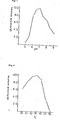
- Figure 1 is a curve showing the optimum pH of an enzyme used in the present invention
- Figure 2 is a curve showing the optimum temperature of the enzyme
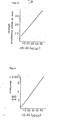
- Figure 3 shows a calibration curve in the oxygen electrode method
- Figure 4 shows a calibration curve in the ferricyanide method
- Figure 5 shows a calibration curve in the dichlorophenol-indophenol method
- Figure 6 shows a calibration curve in the H 2 0 2 colorimetry
- Figure 7 shows a calibration curve in the H 2 0 2 fluorometry
- Figure 8 shows a calibration curve in the H 2 0 2 electrode method.
- aqueous solution of specimen used in the present invention there is no particular limitation to the aqueous solution of specimen used in the present invention as far as it is intended to measure the concentration of 1,5-AG.
- examples include cerebrospinal fluid, plasma, serum and urea or, a solution obtained by treating these specimens so as to readily measure the concentration of 1,5-AG.
- Any electron acceptor is usable without any particular limitation as long as it participates in the oxidation of 1,5-AG.
- the electron acceptor include oxygen, phenazine methosulfate, dichlorophenol-indophenol; ferricyanide compounds such as potassium ferricyanide, sodium ferricyanide, cytochrome C, etc.; coenzymes such as NAD + , NADP + , FAD FMN, etc.
- the amount of the electron acceptor to be used is, for example, at least 1 ⁇ M per l in the aqueous solution of specimen, preferably approximately 3 ⁇ M to 500 mM.
- Examples of the reduction products of the electron acceptor include hydrogen peroxide, the reduction product of dichlorophenol-indophenol, ferrocyanide compounds, reduction type cytochrome C, NADH, NADPH, reduction type FMN, etc.
- enzyme In oxidizing 1,5-AG to the compound represented by formula (1), enzyme is generally utilized, This enzyme is an enzyme capable of oxidizing 1,5-AG to the compound represented by formula (1) (hereafter referred to as "1,5-AG oxidase".
- the enzyme having such an ability has been found by the present inventors for the first time and is obtained by microorganisms producing the same. Examples of such microorganisms include Pseudomonas s p.
- NK-85001 (FERM BP-1037 deposited in the Fermentation Research Institute), Pycnoporus coccineus IFO 4923 and IFO 6490, Coriolus consors IFO 9078, Coriolus versicolor (IFO 4937), Daedaleopsis styracina (IFO 4910), Gloeophyllum sepiarium (Z-41, NRRL 12506), Pleurotus ostraetus (Z-64, NRRL 12507), etc.
- the microorganism belonging to the genus Pseudomonas is a novel strain isolated from the soil collected by the present inventors in Saitama Prefecture, Omiya-shi, Yoshino-cho, in 1983, June. Bacteriological properties of this strain are as follows.
- Morphology (cultured in bouillon-agar medium at 27°C for 16 hours)
- this strain was akin to Pseudomonas stutzeri belonging to the genus Pseudomonas at page 220.
- the strain possesses properties that it does not hydrolyze starch and does not produce any acid from maltose and is thus different from Pseudomonas stutzeri in these points. From the foregoing reasons, the strain is given Pseudomonas sp. NK-85001.
- media for culturing the above-described strain there may be used media containing 1,5-AG, inorganic nitrogen sources and inorganic salts.
- organic nutrient sources can be supplemented.
- the inorganic nitrogen sources there can be used ammonium sulfate, ammonium chloride, etc. and, salts of sodium, potassium, magnesium, calcium, iron, zinc, etc. can be used as the inorganic salts.
- the organic nutrient sources there can be used peptone, Casamino acid, meat extract, corn steep liquor, yeast extract, etc.
- culture be- performed under aerobic conditions by, such as shaking , aerial agitation, etc.
- Incubation is performed at pH of 6 to 8 and temperatures of 25 to 35°C.
- the 1,5-AG enzyme derived from the genus Pseudomonas which can be used in the present invention is isolated by the following method. Namely, the enzyme is present in a membrane fraction of cells so that the cells are isolated from the culture and destroyed in an appropriate buffer solution and, the membrane fraction is colleced from its treated solution.
- the membrane fraction can be obtained in a state of a suspension in which the membrane fraction is separated from the cell wall components, nucleic acids, intracellular soluble proteins, etc. by utilizing a plurality of centrifugal forces.
- the 1,5-AG oxidase extract is extracted with membrane fraction-solubilizing agents such as Triton X-100 (polyoxyethylene octyl phenyl ether), cholic acid, deoxycholic acid, etc. to obtain the 1,5-AG oxidase extract.
- membrane fraction-solubilizing agents such as Triton X-100 (polyoxyethylene octyl phenyl ether), cholic acid, deoxycholic acid, etc.
- the 1,5-AG oxidase can be isolated utilizing methods generally used for purification of enzyme such as polyethylene glycol fractionation, ammonium sulfate fractionation, etc.
- 1,5-AG oxidase derived from the genus Pycnoporus and the genus Coriolus which may be used in the present invention can be isolated by the following method.
- this enzyme is present in the cytoplasm fraction in cells so that the cells are separated from the culture and destroyed in an appropriate buffer solution and, the cytoplasm fraction is obtained from its treated solution.
- the cytoplasm fraction can be separated as precipitates from the membrane fraction, cell wall components, etc. by centrufugation of a solution obtained after destruction of the cells.
- the supernatant is fractionated in a conventional manner generally used for purification of enzyme, such as polyethylene glycol fractionation, ammonium sulfate fractionation, etc. to isolate the 1,5-AG oxidase.
- enzyme such as polyethylene glycol fractionation, ammonium sulfate fractionation, etc.
- the enzyme can be purified, if necessary, by column chromatography such as gel filtration and ion exchange chromatography, etc. conventionally used.
- the 1,5-AG oxidase can be obtained from the microorganisms belonging to the genus Daedaleopsis and the genus Pleurotus in a similar manner.
- the isolated 1,5-AG oxidase but also the cell-treated products such as the 1,5-AG oxidase extract, the suspension of membrane fraction, etc. can also be utilized. Further, they can be utilized in the form of carriers such as resin, membrane, etc. having immobilized the same thereon.
- the membrane fraction is removed by ultracehtrifuga- tion from the reaction solution after the reaction is completed. The supernatant is freeze dried to give white powders. The white powders are dissolved in a small quantity of ethanol and insoluble matters are removed. A 2,4-dinitrophenylhydrazine-saturated ethanol solution and a trace amount of concentrated hydrochloric acid are added to the filtrate. After heating in hot water, the mixture is then cooled and water is added thereto until it gets turbid. The mixture is then allowed to stand to give brown precipitates. The prcipitates are taken by filtration, recrystallized from ethanol-water and, if necessary, purified by silica gel chromatography to give yellow brown needles.
- IR spectrum of specimen is measured using the tablet method with KBr.
- the spectrum is measured in a DMSO-d 6 solvent.
- the chemical shift is determined as a comparative value using 0 ppm as internal standard tetramethylsilan; under the experimental condition, signal of the DMSO-d 6 solvent appears at 40.40 ppm. In conformity with the data in the mass spectrum, 12 carbons were observed.
- the compound of formula (3) described above was also obtained by treating 1,5-AG using the enzyme obtained from microorganisms belonging to the genus Pycnoporus, the genus Coriolus, the genus Daedaleopsis, the genus Pleourotus and the genus Gloeophyllum in a manner similar to the membrane fraction suspension of the microorganisms belonging to the genus Pseudomonas described above.
- the compound of formula (1) was chemically synthesized. It has been found that the compound of formula (1) readily hydrates in the presence of water to form the compound of formula (2). This hydrate was reacted in a manner similar to the case where 2,4-dinitrophenyhydrazine was reacted with the treated prodcut of 1,5-AG with the membrane fraction suspension of the microorganisms belonging to the genus Pseudomonas described above, whereby quite the same compound of formula (3) described above was obtained. From this, it is assumed that the product of the 1,5-AG oxidase or the compound of formula (1) would have been present in the form of the hydrate showed by formula (2).
- reaction in the present invention would follow the reaction equation (a) described above.
- the compounds of formulaa (1) and (2) are novel compounds. Further the reaction in which 1,5-AG is dehydrogenated to produce the compound of formula (1) is also a novel reaction.
- the method of measurement of 1,5-AG of the present invention is based on the above reaction. Utilizing the reaction progress or reaction products, various measurements can be made and their contents are described below.
- a sealed type reactor In a sealed type reactor are charged 1 ml of 0.05M tris-hydrochloride buffer (pH 7.0), 20 ⁇ l of 30 mM phenazine- methosulfate and 0.3 ml of solution or suspension containing 1,5-AG oxidase. Oxygen electrodes are inserted in the reaction mixture. While stirring the content of the reactor at 34°C, 50 ⁇ l of a 1,5-AG solution is added thereto to initiate the reaction. The amount of oxygen consumed is measured with an oxygen monitor with the passage of time. Using 1,5-AG solutions having known concentrations, a calibration curve is prepared and the concentration of 1,5-AG is calculated from the amount of oxygen consumed.
- dichlorophenol-indophenol there can be used dichlorophenol-indophenol, etc., in addition to ferricyanides such as potassium ferricyanide, sodium ferricyanide, ammonium ferricyanide, etc.
- a reactor In a reactor are charged 0.3 ml of sodium phosphate buffer (1/15 M, pH 5.6), 0.5 ml of a hydrogen peroxide detecting- solution containing substrate for horse raddish peroxidase (e.g., 4 mM of 2,2'-azino-di-[3-ethylbenzo- thiazoline sulfonate (6)] (ABTS)) and 12 u/ml of horse raddish peroxidase, 0.1 ml of 1,5-AG oxidase and 0.1 ml of a specimen solution containing 1,5-AG. After reacting at 37°C for 30 minutes, the reaction is stopped under ice cooling and the absorbance is measured at 405 nm. Using 1,5-AG solutions having known concentrations, a calibration curve is prepared and the concentration of 1,5-AG is calculated from the absorbance of the specimen.
- a hydrogen peroxide detecting- solution containing substrate for horse raddish peroxidase e.g
- substrates for horse raddish peroxidase there can be utilized, in addition to ABTS, color-forming substrates such as 5-aminosalicylic acid, 4-aminoantipyrine and phenol, o-toluidine, etc., and fluorescent substrates such as p-hydroxyacetic acid, p-hydroxypropionic acid, etc.
- H 2 0 2 produced in the oxidation reaction of 1,5-AG
- a method for directly measuring H 2 0 2 using H 2 0 2 electrodes a method for directly measuring H 2 0 2 using H 2 0 2 electrodes, a method utilizing chemical luminescence generated by oxidation of lucigenine, aryl oxalates, etc. with H 2 02 may also be utilized in addition to the above method.
- the membrane fraction suspension derived from bacteria of the genus Pseudomonas is added to a 1,5-AG solution followed by reacting at 30°C for 16 hours. After completion of the reaction, the membrane fraction is removed by ultracentrifugation and the supernatant is feeze dried to give white powders.
- the powders are treated with a labeling agent for the carbonyl group or a protecting agent for the hydroxy group to effect the assay.
- the freeze dried powders are dissolved in a small quantity of ethanol and insoluble matters are removed; a saturated ethanol solution of 2,4-dinitrophenylhydrazine and a trace amount of concentrated hydrochloric acid are added to the filtrate followed by reacting in hot water with heating.
- HPLC liquid chromatography
- the product of formula (1) can be detected.
- TMS trimethylsilylchloride
- the freeze dried powders are dissolved in a small quantity of pyridine and TMS is then added to the solution. By stirring the mixture at room temperature, a compound wherein all hydroxy groups of the product of formula (2) are protected is obtained.
- TMS trimethylsilylchloride
- the reagent for analysis of the present invention is a reagent comprising at least the enzyme of the present invention.
- the enzyme may be a soluble enzyme of a solution, freeze dried, powdery or granular type.
- the enzyme may be immobilized enzyme immobilized onto carriers of a membrane, gel, particulate, microcapsular, tubular or container type, in various manners.
- the reagent may be supplemented with buffers such as liquid or powdery phosphate buffer, tris-hydrochloride buffer, acetate buffer, citrate buffer, veronal buffer, etc.; salts (sodium chloride, etc.), sugars that do not react with the enzyme of the present invention (sucrose, etc.); polyvalent alcohols (glycerol, propylene glycol, sorbitol, etc.); coenzymes (FAD, etc.): and other appropriate stabilizers, surfactants, etc.
- buffers such as liquid or powdery phosphate buffer, tris-hydrochloride buffer, acetate buffer, citrate buffer, veronal buffer, etc.; salts (sodium chloride, etc.), sugars that do not react with the enzyme of the present invention (sucrose, etc.); polyvalent alcohols (glycerol, propylene glycol, sorbitol, etc.); coenzymes (FAD, etc.): and other appropriate stabilizers, surfactants,
- the reagent for analysis described above is used so as to obtain a necessary enzyme activity depending upon the aforesaid various methods for detection. Further, an amount of the reagent appropriate for each of the detection methods may be previously sealed in a container such as a reagent bottle, ampoule, etc.
- the kit for analysis is composed of the aforesaid reagent for analysis comprising the enzyme of the present invention and reagents for detection which are reagents for detecting the reaction caused by the enzyme of the present invention.
- the reagent for detection refers to an electron acceptor. per se that participates in the oxidation of 1,5-AG accompanied by color formation or to reagents that is necessary for detection of one of the 1,5-AG oxidation reaction products as an index of the 1,5-AG oxidation.
- examples of the reagents for detection include combination of peroxidase or a peroxidase-like substance and its color forming substrate or color forming substrate and a coupler, combination of peroxidase or a 'peroxidase-like active substance and its fluorescent substrate, combination of peroxidase or a peroxidase-like active substance and a luminescence forming reagent, etc.
- Specific examples of these reagents are clear from the description entitled "Method for detecting H2 0 2 " described above.
- the oxidation products of 1,5-AG, as the index, reagents necessary for detection are combined with the reagent for analysis comprising the enzyme of the present invention and the combination can be constructed as the kit for analysis.
- the reagent for analysis comprising the enzyme of the present invention and the aforesaid reagents for detection may all be mixed together to form a single reagent; alternatively, in case that muturally interfering components are present, each component may be separated so as to form an appropriate combination. Further these components may be prepared in the form of a solution or powders. Furthermore, they may be incorporated into an appropriate support such as a film to prepare into a test paper sheet or an analysis film.
- the kit for analysis of the present invention may further contain, in addition to the combinations described above, pretreatment reagents for selectively removing contaminants, standard reagents containing a definite amount of 1,5-AG, etc.
- kits for analysis of the present invention include a kit for detecting 1,5-AG by spectroscopic detection of the reduction product of a ferricyanide as an electron acceptor and a kit for analysis of 1,5-AG by spectroscopic detection of hydrogen peroxide.
- the enzyme is used more than 0.2 units/test and ferricyanide is used more than 5-fold moles, preferably more than 10-fold moles of 1,5-AG and usually 10 -5 mol/test of potassium ferricyanide is used.
- the enzyme is used more than 0.2. units/test, peroxidase is used 1-10 unit/test and substrate for color formation is used more than 5-fold moles, preferably more than 10- fold moles of hydrogen peroxide produced in the oxidation of 1,5-AG and usually 5x10 -7 to 5x10 6 mols/test of ABTS is used as a substrate for color formation.
- the reaction was performed in the ferricyanide method described above using the 1,5-AG oxidase extract obtained in Reference Example 1 later described except that the substrate was replaced by sugar and sugar alcohol.
- the 1,5-AG oxidase produced by the microorganism belonging to the genus Pseudomonas shows high specificity to 1,5-AG as shown in Table 1.
- the extract was added to phosphate buffer (pH 6 to 7) and tris-hydrochloride buffer (pH 7.2 to 9) having different pH values. After storing at 4°C for 1 day, the conversion activity was examined; it was stable in the pH range of 6.5 to 8.
- the extract (protein concentration: 5 mg/ml) obtained in Reference Example 1 later described was used.
- reaction solution was added to a reactor of an oxygen densitometer (Oxygraph manufactured by Guilsol Co. in America) and kept at 34°C while agitating.
- the extract (protein content, 5 mg/ml) obtained in Reference Example 1 later described was used.
- a reaction solution having the following composition was reacted at 34°C for 10 minutes in a test tube.
- the extract (protein content, 5 mg/ml) obtained in Reference Example 1 later described was used.
- a reaction solution having the following composition was charged in a cell of a spectrophotometer and kept at 34°C.
- the 1,5-AG solution kept at 34°C was charnged in the cell and the absorbance at 600 nm was recorded while stirring with the passage of time.
- the enzyme (enzyme activity, 3.2 u/ml) obtained in Reference Example 6 later described was used.
- a reaction solution having the following composition was reacted at 37°C for 2 hours in a test tube.
- the enzyme (enzyme activity, 1.5 u/ml) obtained in Reference Example 6 later described was used.
- a reaction solution having the following composition was reacted at 37°C for 2 hours in a test tube.
- a pump injector and H 2 0 2 electrodes (Ishikawa Seisakusho, Ltd., BH type) were connected at the up stream to the down stream, respectively.
- the H 2 0 2 electrodes were set with a hydrogen peroxide meter (Ishikawa Seisakusho, Ltd., Model AI-10006) and a recorder.
- the 1,5-AG immobilized column and the H 2 0 2 electrodes were dipped in a water bath with thermostatt kept at 37°C. Through the pump phosphate buffer (1/15 M, pH 5.6) was flown at a rate of 1 ml/min to stabilize.
- 1,5-AG can be quantitatively determined in an extremely manner in accordance with the present invention.
- the 1,5-AG content was measured by 3 methods described below. As shown below, it was possible * to measure 1,5-AG by the respective methods.
- NK-85001 [Ferm BP-1037 deposited in the Fermentation Research Institute] was inoculated in the medium followed by culturing at 30°C for 16 hours on a rotary shaking culture machine (220 rpm). The cells were separated from the culture solution by centrifugation and washed with tris-hydrochloride buffer (0.05 M, pH 7) to give a cell suspension of a 1/10 volume based on the amount of the starting solution. The cell suspension was cooled and destroyed with a French press to give the cell-destroyed suspension. The suspension was centrifuged for 10 minutes (10,000 x g). After the precipitated cell walls were removed, centrifugation was continued for further 1 hour (100,000 x g) to give the precipitates.
- tris-hydrochloride buffer 0.05 M, pH 7
- Triton X-100 was added to the suspension in a concentration of 1% (w/v). After agitating at 4°C for 1 hour, the insoluble matters were removed by centrifugation (100,000 x g) to give the 1,5-AG oxidase extract.
- the cell suspension was cooled and destroyed with a French press to give the cell-destroyed liquid.
- the liquid was centrifuged (10,000 x g) for 10 minutes under cooling. After the precipitated cell walls were removed, centrifugation was continued for further 1 hour (100,000 x g) to remove membrane fraction and obtain the cytoplasm supernatant. Under cooling, ammonium sulfate powders were added to the supernatant and the mixture was agitated to dissolve.
- the precipitated protein in this case was separated by centrifugation (10,000 x g, 10 minutes) and the activity of 1,5-AG oxidase was measured with each ammonium sulfate fraction by the method for detecting H 2 0 2 described in the specification (wherein a 1,5-AG solution having a 1% concentration was used) and it was noted that the activity was present mainly in the 40-60% ammonium sulfate-saturated fraction.
- one unit of enzyme is defined to be an amount that oxidizes 1,5-AG to produce 1 umole/min of H 2 O 2
- the. specific activity of the ammonium sulfate fraction is 4.0. Enzyme of 11 units are obtained per 1 g of the wet cells.
- the strain was changed to Pycnoporus coccineus IFO 6490 in Reference Example 3 and cultured in medium having the same composition as in Reference Example 3 for 4 days.
- the same procedure for purification as in Reference Example 3 was performed to give 1,5-AG oxidase having a specific activity of 3.6..
- the strain was changed to coriolus consors IFO 9078 in Reference Example 3 and cultured in medium having the same composition as in Reference Example 3 for 10 days.
- the same procedure for purification as in Reference Example 3 was performed to give 1,5-AG oxidase extract having a specific activity of 2.8.
- porous glass CPG-10 (200/400 mesh, mean pore size of 500 A, manufactured by Electronucleonic Co., Ltd.) was subjected to a coupling treated using 0.5 g of ⁇ -aminopropyltriethoxysilane followed by carboxylation with 0.5 g of succinic anhydride.
- the dried porous glass was treated with an excess of thionyl chloride in chloroform to convert the carboxyl groups into the acid chloride.
- To 1 g of the thus obtained acid chloridated porous glass was added 2.5 ml of the 1,5-AG oxidase solution prepared in Reference Example 6 described above.
- the obtained 1,5-AG oxidase-immobilized porous glass was filled up in a column (1 ml of a syringe) having an inner diameter of 2.3 mm and a length of 70 mm.
- a column (1 ml of a syringe) having an inner diameter of 2.3 mm and a length of 70 mm.
- phosphate buffer (1/15 M, pH 5.6) containing 1 M table salt was passed to remove the enzyme not bound covalently. Further the column was washed by passing phosphate buffer (1/15 M, pH 5.6) therethrough to give the 1,5-AG oxidase-immobilized column.
Landscapes
- Chemical & Material Sciences (AREA)
- Life Sciences & Earth Sciences (AREA)
- Organic Chemistry (AREA)
- Health & Medical Sciences (AREA)
- Zoology (AREA)
- Engineering & Computer Science (AREA)
- Wood Science & Technology (AREA)
- Genetics & Genomics (AREA)
- Bioinformatics & Cheminformatics (AREA)
- Microbiology (AREA)
- General Engineering & Computer Science (AREA)
- Molecular Biology (AREA)
- General Health & Medical Sciences (AREA)
- Biotechnology (AREA)
- Proteomics, Peptides & Aminoacids (AREA)
- Biochemistry (AREA)
- Biophysics (AREA)
- Physics & Mathematics (AREA)
- Immunology (AREA)
- Analytical Chemistry (AREA)
- Medicinal Chemistry (AREA)
- Biomedical Technology (AREA)
- Measuring Or Testing Involving Enzymes Or Micro-Organisms (AREA)
Applications Claiming Priority (4)
| Application Number | Priority Date | Filing Date | Title |
|---|---|---|---|
| JP113100/85 | 1985-05-28 | ||
| JP11310085 | 1985-05-28 | ||
| JP41404/86 | 1986-02-28 | ||
| JP61041404A JPS6279780A (ja) | 1985-05-28 | 1986-02-28 | 1,5―アンヒドログルシトールの定量法 |
Publications (3)
| Publication Number | Publication Date |
|---|---|
| EP0213279A2 true EP0213279A2 (fr) | 1987-03-11 |
| EP0213279A3 EP0213279A3 (en) | 1987-04-01 |
| EP0213279B1 EP0213279B1 (fr) | 1991-10-23 |
Family
ID=26381011
Family Applications (1)
| Application Number | Title | Priority Date | Filing Date |
|---|---|---|---|
| EP86107090A Expired EP0213279B1 (fr) | 1985-05-28 | 1986-05-24 | Procédé pour la détermination quantitative de 1,5-anhydroglucitol |
Country Status (5)
| Country | Link |
|---|---|
| US (1) | US4810640A (fr) |
| EP (1) | EP0213279B1 (fr) |
| AU (1) | AU590883B2 (fr) |
| CA (1) | CA1286211C (fr) |
| DE (1) | DE3682149D1 (fr) |
Cited By (6)
| Publication number | Priority date | Publication date | Assignee | Title |
|---|---|---|---|---|
| EP0392404A3 (fr) * | 1989-04-10 | 1992-07-08 | Nippon Kayaku Kabushiki Kaisha | Procédé pour déceler des alcohols de sucres, colonne et équipement pour cela |
| EP0608795A1 (fr) * | 1993-01-27 | 1994-08-03 | Kyowa Medex Co. Ltd. | Procédé pour la détermination enzymatique d'un substrate aprés l'enlèvement enzymatique de la galactose |
| US5468380A (en) * | 1989-04-26 | 1995-11-21 | Nippon Kayaku Kabushiki Kaisha | Method for quantitatively measuring sugar-alcohol, column and kit therefor |
| EP0846773A1 (fr) * | 1996-12-04 | 1998-06-10 | Daiichi Pure Chemicals Co., Ltd. | Procédé pour la détermination quantitative de 1,5-anhydroglucitol et réactif pour essai quantitatif |
| WO2013016379A1 (fr) * | 2011-07-27 | 2013-01-31 | Agamatrix, Inc. | Réactifs pour bandelettes réactives électrochimique |
| EP2305803A4 (fr) * | 2008-06-19 | 2013-06-19 | Nippon Kayaku Kk | 1,5-anhydroglucitol déshydrogénase thermostable et procédé de mesure du 1,5-anhydroglucitol à l'aide de celle-ci |
Families Citing this family (14)
| Publication number | Priority date | Publication date | Assignee | Title |
|---|---|---|---|---|
| DE3784610T2 (de) * | 1986-09-22 | 1993-09-23 | Nippon Kayaku Kk | Verfahren zur bestimmung von 1,5-anhydroglucitol und ausruestung dafuer. |
| FI903958A0 (fi) * | 1988-02-12 | 1990-08-10 | Gds Technology Inc | Enzymatisk bestaemning av teofyllin. |
| DE4242794A1 (en) | 1991-12-18 | 1993-06-24 | Nitto Boseki Co Ltd | Quantitative automated determn. of 1,5-anhydro:glucitol - using pyranose oxidase from Basidiomycetes fungi no.52 |
| JPH07102154B2 (ja) * | 1992-03-02 | 1995-11-08 | 日東紡績株式会社 | 1,5−アンヒドログルシトールの定量法 |
| DE4321807C2 (de) * | 1992-06-30 | 1996-08-14 | Nitto Boseki Co Ltd | Verfahren zur quantitativen Bestimmung von 1,5-Anhydroglucitol und Testpack |
| ES2141352T3 (es) * | 1994-09-23 | 2000-03-16 | Cultor Corp | Productos alimenticios con agente hinchante bajo en calorias. |
| WO1997031103A1 (fr) * | 1996-02-20 | 1997-08-28 | Kyowa Hakko Kogyo Co., Ltd. | Methode de determination du 1,5-anhydroglucitol |
| JP3297630B2 (ja) * | 1997-07-28 | 2002-07-02 | 松下電器産業株式会社 | バイオセンサ |
| US8753832B2 (en) * | 2005-06-13 | 2014-06-17 | Nippon Kayaku Kabushiki Kaisha | Method of assaying 1,5 anhydroglucitol by using whole blood and measurement kit |
| EP2369346B1 (fr) * | 2006-03-24 | 2014-08-27 | Metanomics GmbH | Procédé pour diagnostiquer un diabète de type II |
| AU2007261942A1 (en) * | 2006-06-22 | 2007-12-27 | Ikeda Food Research Co., Ltd. | Method for determination of 1,5-anhydroglucitol, and reagent composition for determination of 1,5-anhydroglucitol |
| ATE550642T1 (de) * | 2006-12-14 | 2012-04-15 | Nippon Kayaku Kk | Verfahren zur messung von 1,5-anhydroglucitol in vollblut |
| EP2319937B1 (fr) * | 2008-07-23 | 2016-01-27 | Nippon Kayaku Kabushiki Kaisha | Méthode de mesure des composants sanguins utilisant du sang total hémolysé, et kit associé |
| CN114965327A (zh) * | 2020-11-30 | 2022-08-30 | 广东轻工职业技术学院 | 一种葡萄糖的快速检测方法、试剂盒及其应用 |
Family Cites Families (2)
| Publication number | Priority date | Publication date | Assignee | Title |
|---|---|---|---|---|
| GB1516338A (en) * | 1975-10-25 | 1978-07-05 | Owens Illinois Inc | Glucose analysis |
| DE2907628C2 (de) * | 1979-02-27 | 1981-02-05 | C.A. Greiner Und Soehne Gmbh & Co Kg, 7440 Nuertingen | Proberöhrchen für die Untersuchung von Proben im klinischen Bereich, insbesondere von Urinproben |
-
1986
- 1986-05-23 AU AU57875/86A patent/AU590883B2/en not_active Ceased
- 1986-05-24 DE DE8686107090T patent/DE3682149D1/de not_active Expired - Lifetime
- 1986-05-24 EP EP86107090A patent/EP0213279B1/fr not_active Expired
- 1986-05-27 US US06/867,088 patent/US4810640A/en not_active Expired - Lifetime
- 1986-05-27 CA CA000510048A patent/CA1286211C/fr not_active Expired - Lifetime
Cited By (10)
| Publication number | Priority date | Publication date | Assignee | Title |
|---|---|---|---|---|
| EP0392404A3 (fr) * | 1989-04-10 | 1992-07-08 | Nippon Kayaku Kabushiki Kaisha | Procédé pour déceler des alcohols de sucres, colonne et équipement pour cela |
| US5468380A (en) * | 1989-04-26 | 1995-11-21 | Nippon Kayaku Kabushiki Kaisha | Method for quantitatively measuring sugar-alcohol, column and kit therefor |
| EP0608795A1 (fr) * | 1993-01-27 | 1994-08-03 | Kyowa Medex Co. Ltd. | Procédé pour la détermination enzymatique d'un substrate aprés l'enlèvement enzymatique de la galactose |
| EP0846773A1 (fr) * | 1996-12-04 | 1998-06-10 | Daiichi Pure Chemicals Co., Ltd. | Procédé pour la détermination quantitative de 1,5-anhydroglucitol et réactif pour essai quantitatif |
| US5871949A (en) * | 1996-12-04 | 1999-02-16 | Daiichi Pure Chemicals Co., Ltd. | Method of quantitative assay for 1,5-anhydroglucitol and reagent for quantitative assay |
| EP2305803A4 (fr) * | 2008-06-19 | 2013-06-19 | Nippon Kayaku Kk | 1,5-anhydroglucitol déshydrogénase thermostable et procédé de mesure du 1,5-anhydroglucitol à l'aide de celle-ci |
| WO2013016379A1 (fr) * | 2011-07-27 | 2013-01-31 | Agamatrix, Inc. | Réactifs pour bandelettes réactives électrochimique |
| AU2012286927B2 (en) * | 2011-07-27 | 2015-09-24 | Agamatrix, Inc. | Reagents for electrochemical test strips |
| US10760111B2 (en) | 2011-07-27 | 2020-09-01 | Agamatrix, Inc. | Reagents for electrochemical test strips |
| US11905547B2 (en) | 2011-07-27 | 2024-02-20 | Agamatrix, Inc. | Reagents for electrochemical test strips |
Also Published As
| Publication number | Publication date |
|---|---|
| CA1286211C (fr) | 1991-07-16 |
| DE3682149D1 (de) | 1991-11-28 |
| AU590883B2 (en) | 1989-11-23 |
| EP0213279B1 (fr) | 1991-10-23 |
| AU5787586A (en) | 1986-12-04 |
| EP0213279A3 (en) | 1987-04-01 |
| US4810640A (en) | 1989-03-07 |
Similar Documents
| Publication | Publication Date | Title |
|---|---|---|
| EP0213279B1 (fr) | Procédé pour la détermination quantitative de 1,5-anhydroglucitol | |
| Eirich et al. | Distribution of coenzyme F420 and properties of its hydrolytic fragments | |
| JPH031949B2 (fr) | ||
| US4266023A (en) | Glycerol oxidase and process for the production thereof and method for the quantitative determination of glycerol by glycerol oxidase | |
| EP0204283A2 (fr) | Uricase et méthode pour sa préparation | |
| JPH0533997B2 (fr) | ||
| KR870000509B1 (ko) | L-글루탐산 산화효소(h₂o₂생성), 그 제법 및 분석방법 | |
| US4301244A (en) | Quantitative analysis of free fatty acid and reagent composition therefor | |
| JPS6279780A (ja) | 1,5―アンヒドログルシトールの定量法 | |
| EP0016845B1 (fr) | Methode et test pour la determination d'un substrat de xanthine-oxidase au moyen d'une nouvelle xanthine-oxidase et procede pour sa preparation | |
| JPS61268178A (ja) | フルクトシルアミノ酸オキシダーゼ | |
| US4255519A (en) | Glycerol oxidase and process for the production thereof | |
| US4645739A (en) | Process and reagent for the determination of N-carbamoylsarcosine with the use of a new enzyme | |
| EP0029765B1 (fr) | Créatinine iminohydrolase, libre d'activité d'uréase, procédés de préparation et utilisation, et compositions d'essai et éléments analytiques la contenant | |
| JP2520073B2 (ja) | 1,5−アンヒドログルシト―ル誘導体 | |
| US5279945A (en) | Method for the enzymatic determination of aspartame | |
| KR890002412B1 (ko) | L-글루타민산 옥시다아제의 제조법 | |
| EP0101653B1 (fr) | Déhydrogénase de leucine et un procédé de production | |
| JPH0272873A (ja) | ヌクレオシドオキシダーゼ及びこれを利用した分析法 | |
| JP3490184B2 (ja) | 新規N−アルキルグリシンオキシダーゼ、その製造方法、この酵素を用いたNε−カルボキシメチルリジンの定量用試薬及びその定量方法 | |
| JP3778603B2 (ja) | ソルビトールオキシダーゼ、その製造法およびその用途 | |
| EP0479612A1 (fr) | Appareil pour la mésure de l'acide sulfureux libre et total et procédé de la mésure | |
| JPS6342519B2 (fr) | ||
| JPH0616703B2 (ja) | 耐熱性ペルオキシダ−ゼ、その製法および該酵素を用いる分析試薬 | |
| JPS63148998A (ja) | N−アセチルノイラミン酸の定量方法及びその定量用キツト |
Legal Events
| Date | Code | Title | Description |
|---|---|---|---|
| PUAI | Public reference made under article 153(3) epc to a published international application that has entered the european phase |
Free format text: ORIGINAL CODE: 0009012 |
|
| PUAL | Search report despatched |
Free format text: ORIGINAL CODE: 0009013 |
|
| AK | Designated contracting states |
Kind code of ref document: A2 Designated state(s): DE FR GB IT SE |
|
| AK | Designated contracting states |
Kind code of ref document: A3 Designated state(s): DE FR GB IT SE |
|
| 17P | Request for examination filed |
Effective date: 19870923 |
|
| 17Q | First examination report despatched |
Effective date: 19900510 |
|
| GRAA | (expected) grant |
Free format text: ORIGINAL CODE: 0009210 |
|
| AK | Designated contracting states |
Kind code of ref document: B1 Designated state(s): DE FR GB IT SE |
|
| REF | Corresponds to: |
Ref document number: 3682149 Country of ref document: DE Date of ref document: 19911128 |
|
| ET | Fr: translation filed | ||
| ITF | It: translation for a ep patent filed | ||
| PLBE | No opposition filed within time limit |
Free format text: ORIGINAL CODE: 0009261 |
|
| STAA | Information on the status of an ep patent application or granted ep patent |
Free format text: STATUS: NO OPPOSITION FILED WITHIN TIME LIMIT |
|
| 26N | No opposition filed | ||
| EAL | Se: european patent in force in sweden |
Ref document number: 86107090.2 |
|
| REG | Reference to a national code |
Ref country code: GB Ref legal event code: IF02 |
|
| PGFP | Annual fee paid to national office [announced via postgrant information from national office to epo] |
Ref country code: GB Payment date: 20040422 Year of fee payment: 19 |
|
| PGFP | Annual fee paid to national office [announced via postgrant information from national office to epo] |
Ref country code: FR Payment date: 20040519 Year of fee payment: 19 |
|
| PGFP | Annual fee paid to national office [announced via postgrant information from national office to epo] |
Ref country code: SE Payment date: 20040521 Year of fee payment: 19 |
|
| PGFP | Annual fee paid to national office [announced via postgrant information from national office to epo] |
Ref country code: DE Payment date: 20040722 Year of fee payment: 19 |
|
| PG25 | Lapsed in a contracting state [announced via postgrant information from national office to epo] |
Ref country code: IT Free format text: LAPSE BECAUSE OF NON-PAYMENT OF DUE FEES;WARNING: LAPSES OF ITALIAN PATENTS WITH EFFECTIVE DATE BEFORE 2007 MAY HAVE OCCURRED AT ANY TIME BEFORE 2007. THE CORRECT EFFECTIVE DATE MAY BE DIFFERENT FROM THE ONE RECORDED. Effective date: 20050524 Ref country code: GB Free format text: LAPSE BECAUSE OF NON-PAYMENT OF DUE FEES Effective date: 20050524 |
|
| PG25 | Lapsed in a contracting state [announced via postgrant information from national office to epo] |
Ref country code: SE Free format text: LAPSE BECAUSE OF NON-PAYMENT OF DUE FEES Effective date: 20050525 |
|
| PG25 | Lapsed in a contracting state [announced via postgrant information from national office to epo] |
Ref country code: DE Free format text: LAPSE BECAUSE OF NON-PAYMENT OF DUE FEES Effective date: 20051201 |
|
| EUG | Se: european patent has lapsed | ||
| GBPC | Gb: european patent ceased through non-payment of renewal fee |
Effective date: 20050524 |
|
| PG25 | Lapsed in a contracting state [announced via postgrant information from national office to epo] |
Ref country code: FR Free format text: LAPSE BECAUSE OF NON-PAYMENT OF DUE FEES Effective date: 20060131 |
|
| REG | Reference to a national code |
Ref country code: FR Ref legal event code: ST Effective date: 20060131 |