EP0214853B1 - Viskoelastische Kollagenlösung für augenheilkundige Verwendung und Verfahren zur Herstellung - Google Patents
Viskoelastische Kollagenlösung für augenheilkundige Verwendung und Verfahren zur Herstellung Download PDFInfo
- Publication number
- EP0214853B1 EP0214853B1 EP86306880A EP86306880A EP0214853B1 EP 0214853 B1 EP0214853 B1 EP 0214853B1 EP 86306880 A EP86306880 A EP 86306880A EP 86306880 A EP86306880 A EP 86306880A EP 0214853 B1 EP0214853 B1 EP 0214853B1
- Authority
- EP
- European Patent Office
- Prior art keywords
- collagen
- percent
- carbon atoms
- group
- solution
- Prior art date
- Legal status (The legal status is an assumption and is not a legal conclusion. Google has not performed a legal analysis and makes no representation as to the accuracy of the status listed.)
- Expired - Lifetime
Links
- 102000008186 Collagen Human genes 0.000 title claims description 342
- 108010035532 Collagen Proteins 0.000 title claims description 342
- 229920001436 collagen Polymers 0.000 title claims description 342
- 238000000034 method Methods 0.000 title claims description 59
- 239000000243 solution Substances 0.000 claims description 212
- 238000005859 coupling reaction Methods 0.000 claims description 51
- 239000007822 coupling agent Substances 0.000 claims description 50
- 239000003795 chemical substances by application Substances 0.000 claims description 49
- 125000004432 carbon atom Chemical group C* 0.000 claims description 41
- 230000008878 coupling Effects 0.000 claims description 41
- 238000010168 coupling process Methods 0.000 claims description 39
- 150000001875 compounds Chemical class 0.000 claims description 28
- 238000001356 surgical procedure Methods 0.000 claims description 27
- 210000001519 tissue Anatomy 0.000 claims description 24
- 125000003118 aryl group Chemical group 0.000 claims description 22
- 229910052760 oxygen Inorganic materials 0.000 claims description 22
- 229910052717 sulfur Inorganic materials 0.000 claims description 22
- 125000004429 atom Chemical group 0.000 claims description 21
- 229910052757 nitrogen Chemical group 0.000 claims description 20
- -1 alkane sulfonamide Chemical class 0.000 claims description 19
- KDXKERNSBIXSRK-UHFFFAOYSA-N Lysine Natural products NCCCCC(N)C(O)=O KDXKERNSBIXSRK-UHFFFAOYSA-N 0.000 claims description 18
- 239000004472 Lysine Substances 0.000 claims description 18
- 125000003277 amino group Chemical group 0.000 claims description 18
- 125000001072 heteroaryl group Chemical group 0.000 claims description 18
- 239000011541 reaction mixture Substances 0.000 claims description 17
- 150000002148 esters Chemical class 0.000 claims description 15
- IJGRMHOSHXDMSA-UHFFFAOYSA-N Atomic nitrogen Chemical group N#N IJGRMHOSHXDMSA-UHFFFAOYSA-N 0.000 claims description 14
- 229910052799 carbon Inorganic materials 0.000 claims description 13
- 125000000623 heterocyclic group Chemical group 0.000 claims description 13
- 229920006395 saturated elastomer Polymers 0.000 claims description 12
- 150000008064 anhydrides Chemical class 0.000 claims description 11
- 229910052739 hydrogen Inorganic materials 0.000 claims description 11
- 239000001257 hydrogen Substances 0.000 claims description 11
- 239000002253 acid Substances 0.000 claims description 10
- 125000001931 aliphatic group Chemical group 0.000 claims description 10
- 125000000217 alkyl group Chemical group 0.000 claims description 10
- LXEJRKJRKIFVNY-UHFFFAOYSA-N terephthaloyl chloride Chemical group ClC(=O)C1=CC=C(C(Cl)=O)C=C1 LXEJRKJRKIFVNY-UHFFFAOYSA-N 0.000 claims description 10
- 125000002915 carbonyl group Chemical group [*:2]C([*:1])=O 0.000 claims description 9
- 125000000472 sulfonyl group Chemical group *S(*)(=O)=O 0.000 claims description 9
- 150000003461 sulfonyl halides Chemical class 0.000 claims description 9
- UFHFLCQGNIYNRP-UHFFFAOYSA-N Hydrogen Chemical compound [H][H] UFHFLCQGNIYNRP-UHFFFAOYSA-N 0.000 claims description 8
- 125000003178 carboxy group Chemical group [H]OC(*)=O 0.000 claims description 8
- 238000006011 modification reaction Methods 0.000 claims description 8
- 239000008154 viscoelastic solution Substances 0.000 claims description 8
- 125000002723 alicyclic group Chemical group 0.000 claims description 7
- 125000002947 alkylene group Chemical group 0.000 claims description 7
- 210000001742 aqueous humor Anatomy 0.000 claims description 7
- 125000005392 carboxamide group Chemical group NC(=O)* 0.000 claims description 7
- 230000035876 healing Effects 0.000 claims description 7
- 125000005842 heteroatom Chemical group 0.000 claims description 7
- 229940124530 sulfonamide Drugs 0.000 claims description 7
- NINIDFKCEFEMDL-UHFFFAOYSA-N Sulfur Chemical group [S] NINIDFKCEFEMDL-UHFFFAOYSA-N 0.000 claims description 6
- 125000003545 alkoxy group Chemical group 0.000 claims description 6
- QVGXLLKOCUKJST-UHFFFAOYSA-N atomic oxygen Chemical group [O] QVGXLLKOCUKJST-UHFFFAOYSA-N 0.000 claims description 6
- 150000004820 halides Chemical class 0.000 claims description 6
- 239000000203 mixture Substances 0.000 claims description 6
- 239000001301 oxygen Substances 0.000 claims description 6
- 125000006413 ring segment Chemical group 0.000 claims description 6
- 239000011593 sulfur Chemical group 0.000 claims description 6
- 210000002435 tendon Anatomy 0.000 claims description 6
- SUSSWTNBQQOZNN-UHFFFAOYSA-N 4-chlorosulfonylbenzenesulfonyl fluoride Chemical compound FS(=O)(=O)C1=CC=C(S(Cl)(=O)=O)C=C1 SUSSWTNBQQOZNN-UHFFFAOYSA-N 0.000 claims description 5
- 241001465754 Metazoa Species 0.000 claims description 5
- 239000007864 aqueous solution Substances 0.000 claims description 5
- 125000000732 arylene group Chemical group 0.000 claims description 5
- 238000011161 development Methods 0.000 claims description 5
- ANSXAPJVJOKRDJ-UHFFFAOYSA-N furo[3,4-f][2]benzofuran-1,3,5,7-tetrone Chemical compound C1=C2C(=O)OC(=O)C2=CC2=C1C(=O)OC2=O ANSXAPJVJOKRDJ-UHFFFAOYSA-N 0.000 claims description 5
- 229910052736 halogen Inorganic materials 0.000 claims description 5
- 150000002367 halogens Chemical class 0.000 claims description 5
- 238000004519 manufacturing process Methods 0.000 claims description 5
- 239000007853 buffer solution Substances 0.000 claims description 4
- 125000001997 phenyl group Chemical group [H]C1=C([H])C([H])=C(*)C([H])=C1[H] 0.000 claims description 4
- 230000009772 tissue formation Effects 0.000 claims description 4
- 125000002252 acyl group Chemical group 0.000 claims description 3
- 229910002091 carbon monoxide Inorganic materials 0.000 claims description 3
- 125000006297 carbonyl amino group Chemical group [H]N([*:2])C([*:1])=O 0.000 claims description 3
- 125000004435 hydrogen atom Chemical group [H]* 0.000 claims description 3
- 231100000241 scar Toxicity 0.000 claims description 3
- 210000004872 soft tissue Anatomy 0.000 claims description 3
- 208000032544 Cicatrix Diseases 0.000 claims description 2
- 150000001732 carboxylic acid derivatives Chemical class 0.000 claims description 2
- 125000005702 oxyalkylene group Chemical group 0.000 claims description 2
- 125000000843 phenylene group Chemical group C1(=C(C=CC=C1)*)* 0.000 claims description 2
- 230000037387 scars Effects 0.000 claims description 2
- 238000000926 separation method Methods 0.000 claims description 2
- 125000000542 sulfonic acid group Chemical group 0.000 claims description 2
- 230000003190 augmentative effect Effects 0.000 claims 1
- 230000023597 hemostasis Effects 0.000 claims 1
- 230000001050 lubricating effect Effects 0.000 claims 1
- 210000004127 vitreous body Anatomy 0.000 claims 1
- HEMHJVSKTPXQMS-UHFFFAOYSA-M Sodium hydroxide Chemical compound [OH-].[Na+] HEMHJVSKTPXQMS-UHFFFAOYSA-M 0.000 description 99
- FAPWRFPIFSIZLT-UHFFFAOYSA-M Sodium chloride Chemical compound [Na+].[Cl-] FAPWRFPIFSIZLT-UHFFFAOYSA-M 0.000 description 48
- 210000002159 anterior chamber Anatomy 0.000 description 41
- 238000007792 addition Methods 0.000 description 33
- 229910019142 PO4 Inorganic materials 0.000 description 32
- NBIIXXVUZAFLBC-UHFFFAOYSA-K phosphate Chemical compound [O-]P([O-])([O-])=O NBIIXXVUZAFLBC-UHFFFAOYSA-K 0.000 description 32
- 239000010452 phosphate Substances 0.000 description 32
- CSCPPACGZOOCGX-UHFFFAOYSA-N Acetone Chemical compound CC(C)=O CSCPPACGZOOCGX-UHFFFAOYSA-N 0.000 description 27
- 239000000047 product Substances 0.000 description 26
- 239000007943 implant Substances 0.000 description 25
- QTBSBXVTEAMEQO-UHFFFAOYSA-N Acetic acid Chemical compound CC(O)=O QTBSBXVTEAMEQO-UHFFFAOYSA-N 0.000 description 24
- 239000000463 material Substances 0.000 description 24
- 239000011780 sodium chloride Substances 0.000 description 23
- 239000002904 solvent Substances 0.000 description 22
- 210000001508 eye Anatomy 0.000 description 20
- 238000006243 chemical reaction Methods 0.000 description 19
- 239000000155 melt Substances 0.000 description 18
- UXVMQQNJUSDDNG-UHFFFAOYSA-L Calcium chloride Chemical compound [Cl-].[Cl-].[Ca+2] UXVMQQNJUSDDNG-UHFFFAOYSA-L 0.000 description 17
- 239000001110 calcium chloride Substances 0.000 description 17
- 235000011148 calcium chloride Nutrition 0.000 description 17
- 229910001628 calcium chloride Inorganic materials 0.000 description 17
- BNIILDVGGAEEIG-UHFFFAOYSA-L disodium hydrogen phosphate Chemical compound [Na+].[Na+].OP([O-])([O-])=O BNIILDVGGAEEIG-UHFFFAOYSA-L 0.000 description 17
- 229910000397 disodium phosphate Inorganic materials 0.000 description 17
- 235000019800 disodium phosphate Nutrition 0.000 description 17
- 230000000694 effects Effects 0.000 description 17
- 238000011156 evaluation Methods 0.000 description 17
- 235000019799 monosodium phosphate Nutrition 0.000 description 17
- AJPJDKMHJJGVTQ-UHFFFAOYSA-M sodium dihydrogen phosphate Chemical compound [Na+].OP(O)([O-])=O AJPJDKMHJJGVTQ-UHFFFAOYSA-M 0.000 description 17
- 229910000162 sodium phosphate Inorganic materials 0.000 description 17
- 238000005147 X-ray Weissenberg Methods 0.000 description 16
- 230000003247 decreasing effect Effects 0.000 description 16
- 238000011587 new zealand white rabbit Methods 0.000 description 16
- 239000002244 precipitate Substances 0.000 description 16
- 239000008366 buffered solution Substances 0.000 description 15
- ZMXDDKWLCZADIW-UHFFFAOYSA-N N,N-Dimethylformamide Chemical compound CN(C)C=O ZMXDDKWLCZADIW-UHFFFAOYSA-N 0.000 description 13
- 238000000113 differential scanning calorimetry Methods 0.000 description 13
- 230000009974 thixotropic effect Effects 0.000 description 13
- VEXZGXHMUGYJMC-UHFFFAOYSA-N Hydrochloric acid Chemical compound Cl VEXZGXHMUGYJMC-UHFFFAOYSA-N 0.000 description 12
- 239000000872 buffer Substances 0.000 description 12
- 239000000512 collagen gel Substances 0.000 description 12
- 238000002513 implantation Methods 0.000 description 12
- XLYOFNOQVPJJNP-UHFFFAOYSA-N water Substances O XLYOFNOQVPJJNP-UHFFFAOYSA-N 0.000 description 12
- 230000001747 exhibiting effect Effects 0.000 description 11
- 238000010008 shearing Methods 0.000 description 11
- 150000001412 amines Chemical class 0.000 description 10
- 238000000605 extraction Methods 0.000 description 10
- VANNPISTIUFMLH-UHFFFAOYSA-N glutaric anhydride Chemical compound O=C1CCCC(=O)O1 VANNPISTIUFMLH-UHFFFAOYSA-N 0.000 description 10
- VEXZGXHMUGYJMC-UHFFFAOYSA-M Chloride anion Chemical compound [Cl-] VEXZGXHMUGYJMC-UHFFFAOYSA-M 0.000 description 9
- 102000057297 Pepsin A Human genes 0.000 description 9
- 108090000284 Pepsin A Proteins 0.000 description 9
- 238000000399 optical microscopy Methods 0.000 description 9
- 229940111202 pepsin Drugs 0.000 description 9
- 238000011179 visual inspection Methods 0.000 description 9
- 102000012422 Collagen Type I Human genes 0.000 description 8
- 108010022452 Collagen Type I Proteins 0.000 description 8
- 230000015572 biosynthetic process Effects 0.000 description 8
- 238000003756 stirring Methods 0.000 description 8
- 208000002177 Cataract Diseases 0.000 description 7
- SECXISVLQFMRJM-UHFFFAOYSA-N N-Methylpyrrolidone Chemical compound CN1CCCC1=O SECXISVLQFMRJM-UHFFFAOYSA-N 0.000 description 7
- 210000004027 cell Anatomy 0.000 description 7
- 210000000871 endothelium corneal Anatomy 0.000 description 7
- 208000014674 injury Diseases 0.000 description 7
- 238000003780 insertion Methods 0.000 description 7
- 230000037431 insertion Effects 0.000 description 7
- 239000007788 liquid Substances 0.000 description 7
- 239000012528 membrane Substances 0.000 description 7
- 239000003607 modifier Substances 0.000 description 7
- SRPWOOOHEPICQU-UHFFFAOYSA-N trimellitic anhydride Chemical compound OC(=O)C1=CC=C2C(=O)OC(=O)C2=C1 SRPWOOOHEPICQU-UHFFFAOYSA-N 0.000 description 7
- XTHFKEDIFFGKHM-UHFFFAOYSA-N Dimethoxyethane Chemical compound COCCOC XTHFKEDIFFGKHM-UHFFFAOYSA-N 0.000 description 6
- 238000005119 centrifugation Methods 0.000 description 6
- 210000004087 cornea Anatomy 0.000 description 6
- 230000035557 fibrillogenesis Effects 0.000 description 6
- 230000007062 hydrolysis Effects 0.000 description 6
- 238000006460 hydrolysis reaction Methods 0.000 description 6
- 230000002829 reductive effect Effects 0.000 description 6
- FALRKNHUBBKYCC-UHFFFAOYSA-N 2-(chloromethyl)pyridine-3-carbonitrile Chemical compound ClCC1=NC=CC=C1C#N FALRKNHUBBKYCC-UHFFFAOYSA-N 0.000 description 5
- GTDPSWPPOUPBNX-UHFFFAOYSA-N ac1mqpva Chemical compound CC12C(=O)OC(=O)C1(C)C1(C)C2(C)C(=O)OC1=O GTDPSWPPOUPBNX-UHFFFAOYSA-N 0.000 description 5
- 230000007423 decrease Effects 0.000 description 5
- 239000012530 fluid Substances 0.000 description 5
- 238000012986 modification Methods 0.000 description 5
- 230000004048 modification Effects 0.000 description 5
- 210000001525 retina Anatomy 0.000 description 5
- 150000003839 salts Chemical class 0.000 description 5
- 239000007787 solid Substances 0.000 description 5
- 229940014800 succinic anhydride Drugs 0.000 description 5
- 238000012360 testing method Methods 0.000 description 5
- JDTUPLBMGDDPJS-UHFFFAOYSA-N 2-methoxy-2-phenylethanol Chemical compound COC(CO)C1=CC=CC=C1 JDTUPLBMGDDPJS-UHFFFAOYSA-N 0.000 description 4
- RTZKZFJDLAIYFH-UHFFFAOYSA-N Diethyl ether Chemical compound CCOCC RTZKZFJDLAIYFH-UHFFFAOYSA-N 0.000 description 4
- 206010036346 Posterior capsule opacification Diseases 0.000 description 4
- 208000027418 Wounds and injury Diseases 0.000 description 4
- 230000002378 acidificating effect Effects 0.000 description 4
- 230000006378 damage Effects 0.000 description 4
- 230000001419 dependent effect Effects 0.000 description 4
- 238000001125 extrusion Methods 0.000 description 4
- 238000001914 filtration Methods 0.000 description 4
- 239000000499 gel Substances 0.000 description 4
- 238000002347 injection Methods 0.000 description 4
- 239000007924 injection Substances 0.000 description 4
- 238000001556 precipitation Methods 0.000 description 4
- 238000011084 recovery Methods 0.000 description 4
- 230000008733 trauma Effects 0.000 description 4
- 239000003190 viscoelastic substance Substances 0.000 description 4
- GUXHBMASAHGULD-SEYHBJAFSA-N (4s,4as,5as,6s,12ar)-7-chloro-4-(dimethylamino)-1,6,10,11,12a-pentahydroxy-3,12-dioxo-4a,5,5a,6-tetrahydro-4h-tetracene-2-carboxamide Chemical compound C1([C@H]2O)=C(Cl)C=CC(O)=C1C(O)=C1[C@@H]2C[C@H]2[C@H](N(C)C)C(=O)C(C(N)=O)=C(O)[C@@]2(O)C1=O GUXHBMASAHGULD-SEYHBJAFSA-N 0.000 description 3
- SQDAZGGFXASXDW-UHFFFAOYSA-N 5-bromo-2-(trifluoromethoxy)pyridine Chemical compound FC(F)(F)OC1=CC=C(Br)C=N1 SQDAZGGFXASXDW-UHFFFAOYSA-N 0.000 description 3
- XHJUIMRAGMHTFG-UHFFFAOYSA-N 5-chlorosulfonyl-2-methoxybenzoyl chloride Chemical compound COC1=CC=C(S(Cl)(=O)=O)C=C1C(Cl)=O XHJUIMRAGMHTFG-UHFFFAOYSA-N 0.000 description 3
- WEVYAHXRMPXWCK-UHFFFAOYSA-N Acetonitrile Chemical compound CC#N WEVYAHXRMPXWCK-UHFFFAOYSA-N 0.000 description 3
- UHOVQNZJYSORNB-UHFFFAOYSA-N Benzene Chemical compound C1=CC=CC=C1 UHOVQNZJYSORNB-UHFFFAOYSA-N 0.000 description 3
- 241000283690 Bos taurus Species 0.000 description 3
- 229920001287 Chondroitin sulfate Polymers 0.000 description 3
- XEKOWRVHYACXOJ-UHFFFAOYSA-N Ethyl acetate Chemical group CCOC(C)=O XEKOWRVHYACXOJ-UHFFFAOYSA-N 0.000 description 3
- LYCAIKOWRPUZTN-UHFFFAOYSA-N Ethylene glycol Chemical compound OCCO LYCAIKOWRPUZTN-UHFFFAOYSA-N 0.000 description 3
- 208000032843 Hemorrhage Diseases 0.000 description 3
- 241001111421 Pannus Species 0.000 description 3
- 206010038848 Retinal detachment Diseases 0.000 description 3
- 230000001413 cellular effect Effects 0.000 description 3
- 229940059329 chondroitin sulfate Drugs 0.000 description 3
- 210000002808 connective tissue Anatomy 0.000 description 3
- 230000001276 controlling effect Effects 0.000 description 3
- 230000018109 developmental process Effects 0.000 description 3
- MTHSVFCYNBDYFN-UHFFFAOYSA-N diethylene glycol Chemical compound OCCOCCO MTHSVFCYNBDYFN-UHFFFAOYSA-N 0.000 description 3
- 229940079593 drug Drugs 0.000 description 3
- 239000003814 drug Substances 0.000 description 3
- 230000004410 intraocular pressure Effects 0.000 description 3
- 210000000554 iris Anatomy 0.000 description 3
- 210000005036 nerve Anatomy 0.000 description 3
- 238000000746 purification Methods 0.000 description 3
- 230000005855 radiation Effects 0.000 description 3
- 230000009257 reactivity Effects 0.000 description 3
- 230000004264 retinal detachment Effects 0.000 description 3
- 230000002269 spontaneous effect Effects 0.000 description 3
- 239000008223 sterile water Substances 0.000 description 3
- YBBRCQOCSYXUOC-UHFFFAOYSA-N sulfuryl dichloride Chemical class ClS(Cl)(=O)=O YBBRCQOCSYXUOC-UHFFFAOYSA-N 0.000 description 3
- 230000001225 therapeutic effect Effects 0.000 description 3
- NCYNKWQXFADUOZ-UHFFFAOYSA-N 1,1-dioxo-2,1$l^{6}-benzoxathiol-3-one Chemical compound C1=CC=C2C(=O)OS(=O)(=O)C2=C1 NCYNKWQXFADUOZ-UHFFFAOYSA-N 0.000 description 2
- PIYNUZCGMLCXKJ-UHFFFAOYSA-N 1,4-dioxane-2,6-dione Chemical compound O=C1COCC(=O)O1 PIYNUZCGMLCXKJ-UHFFFAOYSA-N 0.000 description 2
- RAZLJUXJEOEYAM-UHFFFAOYSA-N 2-[bis[2-(2,6-dioxomorpholin-4-yl)ethyl]azaniumyl]acetate Chemical compound C1C(=O)OC(=O)CN1CCN(CC(=O)O)CCN1CC(=O)OC(=O)C1 RAZLJUXJEOEYAM-UHFFFAOYSA-N 0.000 description 2
- VQVIHDPBMFABCQ-UHFFFAOYSA-N 5-(1,3-dioxo-2-benzofuran-5-carbonyl)-2-benzofuran-1,3-dione Chemical compound C1=C2C(=O)OC(=O)C2=CC(C(C=2C=C3C(=O)OC(=O)C3=CC=2)=O)=C1 VQVIHDPBMFABCQ-UHFFFAOYSA-N 0.000 description 2
- 241000272517 Anseriformes Species 0.000 description 2
- 241000282693 Cercopithecidae Species 0.000 description 2
- 206010051625 Conjunctival hyperaemia Diseases 0.000 description 2
- 206010010726 Conjunctival oedema Diseases 0.000 description 2
- 206010010741 Conjunctivitis Diseases 0.000 description 2
- 102000004190 Enzymes Human genes 0.000 description 2
- 108090000790 Enzymes Proteins 0.000 description 2
- VZCYOOQTPOCHFL-OWOJBTEDSA-N Fumaric acid Chemical compound OC(=O)\C=C\C(O)=O VZCYOOQTPOCHFL-OWOJBTEDSA-N 0.000 description 2
- SXRSQZLOMIGNAQ-UHFFFAOYSA-N Glutaraldehyde Chemical compound O=CCCCC=O SXRSQZLOMIGNAQ-UHFFFAOYSA-N 0.000 description 2
- 206010061218 Inflammation Diseases 0.000 description 2
- TWRXJAOTZQYOKJ-UHFFFAOYSA-L Magnesium chloride Chemical compound [Mg+2].[Cl-].[Cl-] TWRXJAOTZQYOKJ-UHFFFAOYSA-L 0.000 description 2
- GQPLMRYTRLFLPF-UHFFFAOYSA-N Nitrous Oxide Chemical compound [O-][N+]#N GQPLMRYTRLFLPF-UHFFFAOYSA-N 0.000 description 2
- 206010067482 No adverse event Diseases 0.000 description 2
- 206010030113 Oedema Diseases 0.000 description 2
- 239000004743 Polypropylene Substances 0.000 description 2
- VMHLLURERBWHNL-UHFFFAOYSA-M Sodium acetate Chemical compound [Na+].CC([O-])=O VMHLLURERBWHNL-UHFFFAOYSA-M 0.000 description 2
- 229920002385 Sodium hyaluronate Polymers 0.000 description 2
- KKEYFWRCBNTPAC-UHFFFAOYSA-N Terephthalic acid Chemical compound OC(=O)C1=CC=C(C(O)=O)C=C1 KKEYFWRCBNTPAC-UHFFFAOYSA-N 0.000 description 2
- 206010052428 Wound Diseases 0.000 description 2
- 238000013019 agitation Methods 0.000 description 2
- 150000001413 amino acids Chemical class 0.000 description 2
- BKDVBBSUAGJUBA-UHFFFAOYSA-N bicyclo[2.2.2]oct-7-ene-2,3,5,6-tetracarboxylic acid Chemical compound C1=CC2C(C(O)=O)C(C(=O)O)C1C(C(O)=O)C2C(O)=O BKDVBBSUAGJUBA-UHFFFAOYSA-N 0.000 description 2
- DVECBJCOGJRVPX-UHFFFAOYSA-N butyryl chloride Chemical compound CCCC(Cl)=O DVECBJCOGJRVPX-UHFFFAOYSA-N 0.000 description 2
- 239000002775 capsule Substances 0.000 description 2
- 210000000845 cartilage Anatomy 0.000 description 2
- 238000004113 cell culture Methods 0.000 description 2
- 239000003153 chemical reaction reagent Substances 0.000 description 2
- 150000001805 chlorine compounds Chemical class 0.000 description 2
- 229940096422 collagen type i Drugs 0.000 description 2
- 238000004132 cross linking Methods 0.000 description 2
- STZIXLPVKZUAMV-UHFFFAOYSA-N cyclopentane-1,1,2,2-tetracarboxylic acid Chemical compound OC(=O)C1(C(O)=O)CCCC1(C(O)=O)C(O)=O STZIXLPVKZUAMV-UHFFFAOYSA-N 0.000 description 2
- WMPOZLHMGVKUEJ-UHFFFAOYSA-N decanedioyl dichloride Chemical compound ClC(=O)CCCCCCCCC(Cl)=O WMPOZLHMGVKUEJ-UHFFFAOYSA-N 0.000 description 2
- 238000010790 dilution Methods 0.000 description 2
- 239000012895 dilution Substances 0.000 description 2
- 238000012377 drug delivery Methods 0.000 description 2
- 210000002889 endothelial cell Anatomy 0.000 description 2
- 229940088598 enzyme Drugs 0.000 description 2
- 230000002209 hydrophobic effect Effects 0.000 description 2
- 230000004054 inflammatory process Effects 0.000 description 2
- 230000009545 invasion Effects 0.000 description 2
- 201000004614 iritis Diseases 0.000 description 2
- 239000000314 lubricant Substances 0.000 description 2
- 238000005259 measurement Methods 0.000 description 2
- 230000000399 orthopedic effect Effects 0.000 description 2
- YVOFTMXWTWHRBH-UHFFFAOYSA-N pentanedioyl dichloride Chemical compound ClC(=O)CCCC(Cl)=O YVOFTMXWTWHRBH-UHFFFAOYSA-N 0.000 description 2
- 229920003229 poly(methyl methacrylate) Polymers 0.000 description 2
- 239000004926 polymethyl methacrylate Substances 0.000 description 2
- 229920001155 polypropylene Polymers 0.000 description 2
- 230000002980 postoperative effect Effects 0.000 description 2
- 239000000376 reactant Substances 0.000 description 2
- 229940010747 sodium hyaluronate Drugs 0.000 description 2
- YWIVKILSMZOHHF-QJZPQSOGSA-N sodium;(2s,3s,4s,5r,6r)-6-[(2s,3r,4r,5s,6r)-3-acetamido-2-[(2s,3s,4r,5r,6r)-6-[(2r,3r,4r,5s,6r)-3-acetamido-2,5-dihydroxy-6-(hydroxymethyl)oxan-4-yl]oxy-2-carboxy-4,5-dihydroxyoxan-3-yl]oxy-5-hydroxy-6-(hydroxymethyl)oxan-4-yl]oxy-3,4,5-trihydroxyoxane-2- Chemical compound [Na+].CC(=O)N[C@H]1[C@H](O)O[C@H](CO)[C@@H](O)[C@@H]1O[C@H]1[C@H](O)[C@@H](O)[C@H](O[C@H]2[C@@H]([C@@H](O[C@H]3[C@@H]([C@@H](O)[C@H](O)[C@H](O3)C(O)=O)O)[C@H](O)[C@@H](CO)O2)NC(C)=O)[C@@H](C(O)=O)O1 YWIVKILSMZOHHF-QJZPQSOGSA-N 0.000 description 2
- 230000008961 swelling Effects 0.000 description 2
- CWERGRDVMFNCDR-UHFFFAOYSA-N thioglycolic acid Chemical compound OC(=O)CS CWERGRDVMFNCDR-UHFFFAOYSA-N 0.000 description 2
- 238000009736 wetting Methods 0.000 description 2
- KIUKXJAPPMFGSW-DNGZLQJQSA-N (2S,3S,4S,5R,6R)-6-[(2S,3R,4R,5S,6R)-3-Acetamido-2-[(2S,3S,4R,5R,6R)-6-[(2R,3R,4R,5S,6R)-3-acetamido-2,5-dihydroxy-6-(hydroxymethyl)oxan-4-yl]oxy-2-carboxy-4,5-dihydroxyoxan-3-yl]oxy-5-hydroxy-6-(hydroxymethyl)oxan-4-yl]oxy-3,4,5-trihydroxyoxane-2-carboxylic acid Chemical compound CC(=O)N[C@H]1[C@H](O)O[C@H](CO)[C@@H](O)[C@@H]1O[C@H]1[C@H](O)[C@@H](O)[C@H](O[C@H]2[C@@H]([C@@H](O[C@H]3[C@@H]([C@@H](O)[C@H](O)[C@H](O3)C(O)=O)O)[C@H](O)[C@@H](CO)O2)NC(C)=O)[C@@H](C(O)=O)O1 KIUKXJAPPMFGSW-DNGZLQJQSA-N 0.000 description 1
- WCDDVEOXEIYWFB-VXORFPGASA-N (2s,3s,4r,5r,6r)-3-[(2s,3r,5s,6r)-3-acetamido-5-hydroxy-6-(hydroxymethyl)oxan-2-yl]oxy-4,5,6-trihydroxyoxane-2-carboxylic acid Chemical compound CC(=O)N[C@@H]1C[C@H](O)[C@@H](CO)O[C@H]1O[C@@H]1[C@@H](C(O)=O)O[C@@H](O)[C@H](O)[C@H]1O WCDDVEOXEIYWFB-VXORFPGASA-N 0.000 description 1
- KMOUUZVZFBCRAM-OLQVQODUSA-N (3as,7ar)-3a,4,7,7a-tetrahydro-2-benzofuran-1,3-dione Chemical compound C1C=CC[C@@H]2C(=O)OC(=O)[C@@H]21 KMOUUZVZFBCRAM-OLQVQODUSA-N 0.000 description 1
- UCTWMZQNUQWSLP-VIFPVBQESA-N (R)-adrenaline Chemical compound CNC[C@H](O)C1=CC=C(O)C(O)=C1 UCTWMZQNUQWSLP-VIFPVBQESA-N 0.000 description 1
- 229930182837 (R)-adrenaline Natural products 0.000 description 1
- ZLYYJUJDFKGVKB-OWOJBTEDSA-N (e)-but-2-enedioyl dichloride Chemical compound ClC(=O)\C=C\C(Cl)=O ZLYYJUJDFKGVKB-OWOJBTEDSA-N 0.000 description 1
- RIIUAPMWDSRBSH-UHFFFAOYSA-N 1,4-oxathiane-2,6-dione Chemical compound O=C1CSCC(=O)O1 RIIUAPMWDSRBSH-UHFFFAOYSA-N 0.000 description 1
- RXYVNNWGXQRJAC-UHFFFAOYSA-N 1-chloro-1-[3-(trifluoromethyl)phenyl]propan-2-one Chemical compound CC(=O)C(Cl)C1=CC=CC(C(F)(F)F)=C1 RXYVNNWGXQRJAC-UHFFFAOYSA-N 0.000 description 1
- VLDPXPPHXDGHEW-UHFFFAOYSA-N 1-chloro-2-dichlorophosphoryloxybenzene Chemical compound ClC1=CC=CC=C1OP(Cl)(Cl)=O VLDPXPPHXDGHEW-UHFFFAOYSA-N 0.000 description 1
- CPKVUHPKYQGHMW-UHFFFAOYSA-N 1-ethenylpyrrolidin-2-one;molecular iodine Chemical compound II.C=CN1CCCC1=O CPKVUHPKYQGHMW-UHFFFAOYSA-N 0.000 description 1
- IWUHJQHNWRPAAD-UHFFFAOYSA-N 1-s,4-s-diphenyl butanebis(thioate) Chemical compound C=1C=CC=CC=1SC(=O)CCC(=O)SC1=CC=CC=C1 IWUHJQHNWRPAAD-UHFFFAOYSA-N 0.000 description 1
- WBKXOLKOAFPWRR-UHFFFAOYSA-N 2,2-dimethylpentanedioyl dichloride Chemical compound ClC(=O)C(C)(C)CCC(Cl)=O WBKXOLKOAFPWRR-UHFFFAOYSA-N 0.000 description 1
- RKQSEXHSDPDAJI-UHFFFAOYSA-N 2-(2-chloro-2-oxoethyl)benzoyl chloride Chemical compound ClC(=O)CC1=CC=CC=C1C(Cl)=O RKQSEXHSDPDAJI-UHFFFAOYSA-N 0.000 description 1
- WUHDFGNWKWRRIQ-UHFFFAOYSA-N 2-(4-chlorosulfonylphenoxy)acetyl chloride Chemical compound ClC(=O)COC1=CC=C(S(Cl)(=O)=O)C=C1 WUHDFGNWKWRRIQ-UHFFFAOYSA-N 0.000 description 1
- XYYFYOKADKIHHW-UHFFFAOYSA-N 2-[1-(2-chloro-2-oxoethyl)cyclohexyl]acetyl chloride Chemical compound ClC(=O)CC1(CC(Cl)=O)CCCCC1 XYYFYOKADKIHHW-UHFFFAOYSA-N 0.000 description 1
- NGNBDVOYPDDBFK-UHFFFAOYSA-N 2-[2,4-di(pentan-2-yl)phenoxy]acetyl chloride Chemical compound CCCC(C)C1=CC=C(OCC(Cl)=O)C(C(C)CCC)=C1 NGNBDVOYPDDBFK-UHFFFAOYSA-N 0.000 description 1
- WBLQICDIQWXJAD-UHFFFAOYSA-N 2-[4-(4-chloro-4-oxobutyl)benzoyl]benzoyl chloride Chemical compound C1=CC(CCCC(=O)Cl)=CC=C1C(=O)C1=CC=CC=C1C(Cl)=O WBLQICDIQWXJAD-UHFFFAOYSA-N 0.000 description 1
- UVTKVPSIJHBFDM-UHFFFAOYSA-N 2-[bis(2-chloro-2-oxoethyl)amino]acetyl chloride Chemical compound ClC(=O)CN(CC(Cl)=O)CC(Cl)=O UVTKVPSIJHBFDM-UHFFFAOYSA-N 0.000 description 1
- ABEVHKIFAQOKKP-UHFFFAOYSA-N 2-chloro-2-oxoethanesulfonic acid Chemical compound OS(=O)(=O)CC(Cl)=O ABEVHKIFAQOKKP-UHFFFAOYSA-N 0.000 description 1
- MZKBTMHQOUCYMH-UHFFFAOYSA-N 2-chloro-5-fluorosulfonylbenzoyl chloride Chemical compound FS(=O)(=O)C1=CC=C(Cl)C(C(Cl)=O)=C1 MZKBTMHQOUCYMH-UHFFFAOYSA-N 0.000 description 1
- JZWPXMZANIGRHE-UHFFFAOYSA-N 2-chlorosulfonylbenzenesulfonic acid Chemical compound OS(=O)(=O)C1=CC=CC=C1S(Cl)(=O)=O JZWPXMZANIGRHE-UHFFFAOYSA-N 0.000 description 1
- KYZIXHLDWJBHDI-UHFFFAOYSA-N 3,3,4,4-tetramethyloxolane-2,5-dione Chemical compound CC1(C)C(=O)OC(=O)C1(C)C KYZIXHLDWJBHDI-UHFFFAOYSA-N 0.000 description 1
- PAVNZLVXYJDFNR-UHFFFAOYSA-N 3,3-dimethyloxane-2,6-dione Chemical compound CC1(C)CCC(=O)OC1=O PAVNZLVXYJDFNR-UHFFFAOYSA-N 0.000 description 1
- AGULWIQIYWWFBJ-UHFFFAOYSA-N 3,4-dichlorofuran-2,5-dione Chemical compound ClC1=C(Cl)C(=O)OC1=O AGULWIQIYWWFBJ-UHFFFAOYSA-N 0.000 description 1
- RKHVYUINAFDGOB-UHFFFAOYSA-N 3-(2,6-dioxooxan-3-yl)propanoic acid Chemical compound OC(=O)CCC1CCC(=O)OC1=O RKHVYUINAFDGOB-UHFFFAOYSA-N 0.000 description 1
- OXTNCQMOKLOUAM-UHFFFAOYSA-N 3-Oxoglutaric acid Chemical compound OC(=O)CC(=O)CC(O)=O OXTNCQMOKLOUAM-UHFFFAOYSA-N 0.000 description 1
- UYCICMIUKYEYEU-ZHACJKMWSA-N 3-[(e)-dodec-2-enyl]oxolane-2,5-dione Chemical compound CCCCCCCCC\C=C\CC1CC(=O)OC1=O UYCICMIUKYEYEU-ZHACJKMWSA-N 0.000 description 1
- DYWWDZQRZYAPHQ-UHFFFAOYSA-N 3-benzoyl-4-ethyl-4-methyl-2-phenyl-1,3-oxazolidin-5-one Chemical compound O1C(=O)C(CC)(C)N(C(=O)C=2C=CC=CC=2)C1C1=CC=CC=C1 DYWWDZQRZYAPHQ-UHFFFAOYSA-N 0.000 description 1
- YPRMWCKXOZFJGF-UHFFFAOYSA-N 3-bromofuran-2,5-dione Chemical compound BrC1=CC(=O)OC1=O YPRMWCKXOZFJGF-UHFFFAOYSA-N 0.000 description 1
- AYKYXWQEBUNJCN-UHFFFAOYSA-N 3-methylfuran-2,5-dione Chemical compound CC1=CC(=O)OC1=O AYKYXWQEBUNJCN-UHFFFAOYSA-N 0.000 description 1
- OFNISBHGPNMTMS-UHFFFAOYSA-N 3-methylideneoxolane-2,5-dione Chemical compound C=C1CC(=O)OC1=O OFNISBHGPNMTMS-UHFFFAOYSA-N 0.000 description 1
- DFATXMYLKPCSCX-UHFFFAOYSA-N 3-methylsuccinic anhydride Chemical compound CC1CC(=O)OC1=O DFATXMYLKPCSCX-UHFFFAOYSA-N 0.000 description 1
- NMNZZIMBGSGRPN-UHFFFAOYSA-N 3-oxabicyclo[3.2.0]heptane-2,4-dione Chemical compound O=C1OC(=O)C2CCC12 NMNZZIMBGSGRPN-UHFFFAOYSA-N 0.000 description 1
- NVPRNSAYSSEIGR-UHFFFAOYSA-N 3-phenyloxane-2,6-dione Chemical compound O=C1OC(=O)CCC1C1=CC=CC=C1 NVPRNSAYSSEIGR-UHFFFAOYSA-N 0.000 description 1
- LBWQXRBMXPYFIC-UHFFFAOYSA-N 4-(2-chloro-2-oxoethoxy)benzoyl chloride Chemical compound ClC(=O)COC1=CC=C(C(Cl)=O)C=C1 LBWQXRBMXPYFIC-UHFFFAOYSA-N 0.000 description 1
- WVDRSXGPQWNUBN-UHFFFAOYSA-N 4-(4-carboxyphenoxy)benzoic acid Chemical compound C1=CC(C(=O)O)=CC=C1OC1=CC=C(C(O)=O)C=C1 WVDRSXGPQWNUBN-UHFFFAOYSA-N 0.000 description 1
- OTFAWEIFBPUXOH-UHFFFAOYSA-N 4-(4-chlorosulfonylphenyl)benzenesulfonyl chloride Chemical compound C1=CC(S(=O)(=O)Cl)=CC=C1C1=CC=C(S(Cl)(=O)=O)C=C1 OTFAWEIFBPUXOH-UHFFFAOYSA-N 0.000 description 1
- XKCCLHFDZZQMMH-UHFFFAOYSA-N 4-[(4-chloro-4-oxobutyl)disulfanyl]butanoyl chloride Chemical compound ClC(=O)CCCSSCCCC(Cl)=O XKCCLHFDZZQMMH-UHFFFAOYSA-N 0.000 description 1
- DQJXACCIXJKMKD-OWOJBTEDSA-N 4-[(e)-2-(4-chlorosulfonylphenyl)ethenyl]benzenesulfonyl chloride Chemical compound C1=CC(S(=O)(=O)Cl)=CC=C1\C=C\C1=CC=C(S(Cl)(=O)=O)C=C1 DQJXACCIXJKMKD-OWOJBTEDSA-N 0.000 description 1
- POLIXZIAIMAECK-UHFFFAOYSA-N 4-[2-(2,6-dioxomorpholin-4-yl)ethyl]morpholine-2,6-dione Chemical compound C1C(=O)OC(=O)CN1CCN1CC(=O)OC(=O)C1 POLIXZIAIMAECK-UHFFFAOYSA-N 0.000 description 1
- MSEOVNVYIVMELF-UHFFFAOYSA-N 4-bromobenzene-1,3-dicarbonyl chloride Chemical compound ClC(=O)C1=CC=C(Br)C(C(Cl)=O)=C1 MSEOVNVYIVMELF-UHFFFAOYSA-N 0.000 description 1
- UJEUBSWHCGDJQU-UHFFFAOYSA-N 4-chloro-1,8-naphthalic anhydride Chemical compound O=C1OC(=O)C2=CC=CC3=C2C1=CC=C3Cl UJEUBSWHCGDJQU-UHFFFAOYSA-N 0.000 description 1
- JDRMYOQETPMYQX-UHFFFAOYSA-M 4-methoxy-4-oxobutanoate Chemical compound COC(=O)CCC([O-])=O JDRMYOQETPMYQX-UHFFFAOYSA-M 0.000 description 1
- MGICRVTUCPFQQZ-UHFFFAOYSA-N 4-methyloxane-2,6-dione Chemical compound CC1CC(=O)OC(=O)C1 MGICRVTUCPFQQZ-UHFFFAOYSA-N 0.000 description 1
- SCMJJGWRVSLYLK-UHFFFAOYSA-N 4-phenoxycarbonylbenzoic acid Chemical compound C1=CC(C(=O)O)=CC=C1C(=O)OC1=CC=CC=C1 SCMJJGWRVSLYLK-UHFFFAOYSA-N 0.000 description 1
- YGYCECQIOXZODZ-UHFFFAOYSA-N 4415-87-6 Chemical compound O=C1OC(=O)C2C1C1C(=O)OC(=O)C12 YGYCECQIOXZODZ-UHFFFAOYSA-N 0.000 description 1
- AKHSBAVQPIRVAG-UHFFFAOYSA-N 4h-isochromene-1,3-dione Chemical compound C1=CC=C2C(=O)OC(=O)CC2=C1 AKHSBAVQPIRVAG-UHFFFAOYSA-N 0.000 description 1
- VFZDNKRDYPTSTP-UHFFFAOYSA-N 5,8,8-trimethyl-3-oxabicyclo[3.2.1]octane-2,4-dione Chemical compound O=C1OC(=O)C2(C)CCC1C2(C)C VFZDNKRDYPTSTP-UHFFFAOYSA-N 0.000 description 1
- SWXDSCHWXOGHND-UHFFFAOYSA-N 5-[(2-chloro-2-oxoethyl)-methylamino]-5-oxopentanoic acid Chemical compound ClC(=O)CN(C)C(=O)CCCC(O)=O SWXDSCHWXOGHND-UHFFFAOYSA-N 0.000 description 1
- FKBMTBAXDISZGN-UHFFFAOYSA-N 5-methyl-3a,4,5,6,7,7a-hexahydro-2-benzofuran-1,3-dione Chemical compound C1C(C)CCC2C(=O)OC(=O)C12 FKBMTBAXDISZGN-UHFFFAOYSA-N 0.000 description 1
- MYQFJMYJVJRSGP-UHFFFAOYSA-N 6-chloro-1h-3,1-benzoxazine-2,4-dione Chemical compound N1C(=O)OC(=O)C2=CC(Cl)=CC=C21 MYQFJMYJVJRSGP-UHFFFAOYSA-N 0.000 description 1
- QIXHMCMCFSNKOG-UHFFFAOYSA-N 6492-86-0 Chemical compound O=C1OC(=O)C2=CC=CC3=C2C1=CC=C3N QIXHMCMCFSNKOG-UHFFFAOYSA-N 0.000 description 1
- 102000002260 Alkaline Phosphatase Human genes 0.000 description 1
- 108020004774 Alkaline Phosphatase Proteins 0.000 description 1
- 208000008822 Ankylosis Diseases 0.000 description 1
- 241000786798 Atya Species 0.000 description 1
- 229910001369 Brass Inorganic materials 0.000 description 1
- 206010006811 Bursitis Diseases 0.000 description 1
- 241000282465 Canis Species 0.000 description 1
- 241000282472 Canis lupus familiaris Species 0.000 description 1
- 206010015946 Eye irritation Diseases 0.000 description 1
- 241000282326 Felis catus Species 0.000 description 1
- 102000009123 Fibrin Human genes 0.000 description 1
- 108010073385 Fibrin Proteins 0.000 description 1
- BWGVNKXGVNDBDI-UHFFFAOYSA-N Fibrin monomer Chemical compound CNC(=O)CNC(=O)CN BWGVNKXGVNDBDI-UHFFFAOYSA-N 0.000 description 1
- 108010010803 Gelatin Proteins 0.000 description 1
- 229920002683 Glycosaminoglycan Polymers 0.000 description 1
- HTTJABKRGRZYRN-UHFFFAOYSA-N Heparin Chemical compound OC1C(NC(=O)C)C(O)OC(COS(O)(=O)=O)C1OC1C(OS(O)(=O)=O)C(O)C(OC2C(C(OS(O)(=O)=O)C(OC3C(C(O)C(O)C(O3)C(O)=O)OS(O)(=O)=O)C(CO)O2)NS(O)(=O)=O)C(C(O)=O)O1 HTTJABKRGRZYRN-UHFFFAOYSA-N 0.000 description 1
- 206010023198 Joint ankylosis Diseases 0.000 description 1
- YQEZLKZALYSWHR-UHFFFAOYSA-N Ketamine Chemical compound C=1C=CC=C(Cl)C=1C1(NC)CCCCC1=O YQEZLKZALYSWHR-UHFFFAOYSA-N 0.000 description 1
- 239000004909 Moisturizer Substances 0.000 description 1
- GRSMWKLPSNHDHA-UHFFFAOYSA-N Naphthalic anhydride Chemical compound C1=CC(C(=O)OC2=O)=C3C2=CC=CC3=C1 GRSMWKLPSNHDHA-UHFFFAOYSA-N 0.000 description 1
- PJAJEECGOINEKP-UHFFFAOYSA-N OC(=O)CCC(=O)OCC#N Chemical compound OC(=O)CCC(=O)OCC#N PJAJEECGOINEKP-UHFFFAOYSA-N 0.000 description 1
- 241000283973 Oryctolagus cuniculus Species 0.000 description 1
- 102000035195 Peptidases Human genes 0.000 description 1
- 108091005804 Peptidases Proteins 0.000 description 1
- LGRFSURHDFAFJT-UHFFFAOYSA-N Phthalic anhydride Natural products C1=CC=C2C(=O)OC(=O)C2=C1 LGRFSURHDFAFJT-UHFFFAOYSA-N 0.000 description 1
- 206010039897 Sedation Diseases 0.000 description 1
- 206010072170 Skin wound Diseases 0.000 description 1
- 241000282887 Suidae Species 0.000 description 1
- 241000282898 Sus scrofa Species 0.000 description 1
- 239000004809 Teflon Substances 0.000 description 1
- 229920006362 Teflon® Polymers 0.000 description 1
- QHWKHLYUUZGSCW-UHFFFAOYSA-N Tetrabromophthalic anhydride Chemical compound BrC1=C(Br)C(Br)=C2C(=O)OC(=O)C2=C1Br QHWKHLYUUZGSCW-UHFFFAOYSA-N 0.000 description 1
- 208000031737 Tissue Adhesions Diseases 0.000 description 1
- QPULDJYQYDGZEI-AATRIKPKSA-N Trans-4-Nonenal Chemical compound CCCC\C=C\CCC=O QPULDJYQYDGZEI-AATRIKPKSA-N 0.000 description 1
- 206010048873 Traumatic arthritis Diseases 0.000 description 1
- GLNADSQYFUSGOU-GPTZEZBUSA-J Trypan blue Chemical compound [Na+].[Na+].[Na+].[Na+].C1=C(S([O-])(=O)=O)C=C2C=C(S([O-])(=O)=O)C(/N=N/C3=CC=C(C=C3C)C=3C=C(C(=CC=3)\N=N\C=3C(=CC4=CC(=CC(N)=C4C=3O)S([O-])(=O)=O)S([O-])(=O)=O)C)=C(O)C2=C1N GLNADSQYFUSGOU-GPTZEZBUSA-J 0.000 description 1
- LUTSRLYCMSCGCS-BWOMAWGNSA-N [(3s,8r,9s,10r,13s)-10,13-dimethyl-17-oxo-1,2,3,4,7,8,9,11,12,16-decahydrocyclopenta[a]phenanthren-3-yl] acetate Chemical compound C([C@@H]12)C[C@]3(C)C(=O)CC=C3[C@@H]1CC=C1[C@]2(C)CC[C@H](OC(=O)C)C1 LUTSRLYCMSCGCS-BWOMAWGNSA-N 0.000 description 1
- 230000010933 acylation Effects 0.000 description 1
- 238000005917 acylation reaction Methods 0.000 description 1
- 230000001464 adherent effect Effects 0.000 description 1
- 230000002411 adverse Effects 0.000 description 1
- 150000001299 aldehydes Chemical class 0.000 description 1
- 150000001335 aliphatic alkanes Chemical class 0.000 description 1
- RGCKGOZRHPZPFP-UHFFFAOYSA-N alizarin Chemical compound C1=CC=C2C(=O)C3=C(O)C(O)=CC=C3C(=O)C2=C1 RGCKGOZRHPZPFP-UHFFFAOYSA-N 0.000 description 1
- 229940030225 antihemorrhagics Drugs 0.000 description 1
- 239000012736 aqueous medium Substances 0.000 description 1
- 150000004945 aromatic hydrocarbons Chemical class 0.000 description 1
- 210000001188 articular cartilage Anatomy 0.000 description 1
- 230000003416 augmentation Effects 0.000 description 1
- 239000003855 balanced salt solution Substances 0.000 description 1
- 230000004888 barrier function Effects 0.000 description 1
- 230000009286 beneficial effect Effects 0.000 description 1
- LFRRUAZVLHPGIU-UHFFFAOYSA-N benzene-1,3,5-tricarbonyl chloride;2-(2-chloro-2-oxoethoxy)acetyl chloride Chemical compound ClC(=O)COCC(Cl)=O.ClC(=O)C1=CC(C(Cl)=O)=CC(C(Cl)=O)=C1 LFRRUAZVLHPGIU-UHFFFAOYSA-N 0.000 description 1
- FDQSRULYDNDXQB-UHFFFAOYSA-N benzene-1,3-dicarbonyl chloride Chemical compound ClC(=O)C1=CC=CC(C(Cl)=O)=C1 FDQSRULYDNDXQB-UHFFFAOYSA-N 0.000 description 1
- ALIQZUMMPOYCIS-UHFFFAOYSA-N benzene-1,3-disulfonyl chloride Chemical compound ClS(=O)(=O)C1=CC=CC(S(Cl)(=O)=O)=C1 ALIQZUMMPOYCIS-UHFFFAOYSA-N 0.000 description 1
- CSKNSYBAZOQPLR-UHFFFAOYSA-N benzenesulfonyl chloride Chemical compound ClS(=O)(=O)C1=CC=CC=C1 CSKNSYBAZOQPLR-UHFFFAOYSA-N 0.000 description 1
- PASDCCFISLVPSO-UHFFFAOYSA-N benzoyl chloride Chemical compound ClC(=O)C1=CC=CC=C1 PASDCCFISLVPSO-UHFFFAOYSA-N 0.000 description 1
- YIXAMRRMFCPXNC-UHFFFAOYSA-N benzyl n-(2,6-dioxooxan-3-yl)carbamate Chemical compound C=1C=CC=CC=1COC(=O)NC1CCC(=O)OC1=O YIXAMRRMFCPXNC-UHFFFAOYSA-N 0.000 description 1
- 229940064804 betadine Drugs 0.000 description 1
- KANQIAARVSWKKG-UHFFFAOYSA-N bicyclo[2.2.1]hept-5-ene-2,3-dicarbonyl chloride Chemical compound C1C2C=CC1C(C(=O)Cl)C2C(Cl)=O KANQIAARVSWKKG-UHFFFAOYSA-N 0.000 description 1
- 230000005540 biological transmission Effects 0.000 description 1
- MXIQXLRMZRNYSZ-UHFFFAOYSA-N bis(2-cyanoethyl) pentanedioate Chemical compound N#CCCOC(=O)CCCC(=O)OCCC#N MXIQXLRMZRNYSZ-UHFFFAOYSA-N 0.000 description 1
- HKJFYVRDQXGPPK-UHFFFAOYSA-N bis(4-nitrophenyl) butanedioate Chemical compound C1=CC([N+](=O)[O-])=CC=C1OC(=O)CCC(=O)OC1=CC=C([N+]([O-])=O)C=C1 HKJFYVRDQXGPPK-UHFFFAOYSA-N 0.000 description 1
- 230000000740 bleeding effect Effects 0.000 description 1
- 210000001124 body fluid Anatomy 0.000 description 1
- 239000010839 body fluid Substances 0.000 description 1
- 210000000988 bone and bone Anatomy 0.000 description 1
- 239000010951 brass Substances 0.000 description 1
- LCEFDICNHKVNSF-UHFFFAOYSA-N but-2-ynedioyl dichloride Chemical compound ClC(=O)C#CC(Cl)=O LCEFDICNHKVNSF-UHFFFAOYSA-N 0.000 description 1
- JDRMYOQETPMYQX-UHFFFAOYSA-N butanedioic acid monomethyl ester Natural products COC(=O)CCC(O)=O JDRMYOQETPMYQX-UHFFFAOYSA-N 0.000 description 1
- JHIWVOJDXOSYLW-UHFFFAOYSA-N butyl 2,2-difluorocyclopropane-1-carboxylate Chemical compound CCCCOC(=O)C1CC1(F)F JHIWVOJDXOSYLW-UHFFFAOYSA-N 0.000 description 1
- 150000001720 carbohydrates Chemical class 0.000 description 1
- 238000013130 cardiovascular surgery Methods 0.000 description 1
- 230000030833 cell death Effects 0.000 description 1
- WIIZWVCIJKGZOK-RKDXNWHRSA-N chloramphenicol Chemical compound ClC(Cl)C(=O)N[C@H](CO)[C@H](O)C1=CC=C([N+]([O-])=O)C=C1 WIIZWVCIJKGZOK-RKDXNWHRSA-N 0.000 description 1
- 229940097572 chloromycetin Drugs 0.000 description 1
- 210000004240 ciliary body Anatomy 0.000 description 1
- 238000005345 coagulation Methods 0.000 description 1
- 230000015271 coagulation Effects 0.000 description 1
- 239000000084 colloidal system Substances 0.000 description 1
- 230000002860 competitive effect Effects 0.000 description 1
- 210000001608 connective tissue cell Anatomy 0.000 description 1
- 239000000882 contact lens solution Substances 0.000 description 1
- 238000011109 contamination Methods 0.000 description 1
- 239000008278 cosmetic cream Substances 0.000 description 1
- 239000008341 cosmetic lotion Substances 0.000 description 1
- HXTYZWJVMWWWDK-UHFFFAOYSA-N cyclohexane-1,4-dicarbonyl chloride Chemical compound ClC(=O)C1CCC(C(Cl)=O)CC1 HXTYZWJVMWWWDK-UHFFFAOYSA-N 0.000 description 1
- SCFYULPTBZGIDB-UHFFFAOYSA-N decane-1,10-disulfonyl chloride Chemical compound ClS(=O)(=O)CCCCCCCCCCS(Cl)(=O)=O SCFYULPTBZGIDB-UHFFFAOYSA-N 0.000 description 1
- 239000008367 deionised water Substances 0.000 description 1
- 229910021641 deionized water Inorganic materials 0.000 description 1
- 238000013461 design Methods 0.000 description 1
- 238000011026 diafiltration Methods 0.000 description 1
- 125000006159 dianhydride group Chemical group 0.000 description 1
- 229920001971 elastomer Polymers 0.000 description 1
- 230000004406 elevated intraocular pressure Effects 0.000 description 1
- 230000003511 endothelial effect Effects 0.000 description 1
- 238000001976 enzyme digestion Methods 0.000 description 1
- 229960005139 epinephrine Drugs 0.000 description 1
- 238000011067 equilibration Methods 0.000 description 1
- 229940093476 ethylene glycol Drugs 0.000 description 1
- 231100000013 eye irritation Toxicity 0.000 description 1
- 239000000835 fiber Substances 0.000 description 1
- 229950003499 fibrin Drugs 0.000 description 1
- 238000002637 fluid replacement therapy Methods 0.000 description 1
- 239000012634 fragment Substances 0.000 description 1
- 239000001530 fumaric acid Substances 0.000 description 1
- BOTUJAQRRCYVEZ-UHFFFAOYSA-N furan-2,4-dicarbonyl chloride Chemical compound ClC(=O)C1=COC(C(Cl)=O)=C1 BOTUJAQRRCYVEZ-UHFFFAOYSA-N 0.000 description 1
- QQYNRBAAQFZCLF-UHFFFAOYSA-N furan-maleic anhydride adduct Chemical compound O1C2C3C(=O)OC(=O)C3C1C=C2 QQYNRBAAQFZCLF-UHFFFAOYSA-N 0.000 description 1
- MCQOWYALZVKMAR-UHFFFAOYSA-N furo[3,4-b]pyridine-5,7-dione Chemical compound C1=CC=C2C(=O)OC(=O)C2=N1 MCQOWYALZVKMAR-UHFFFAOYSA-N 0.000 description 1
- YEBDGBXBXQSSLM-UHFFFAOYSA-N furo[3,4-b]quinoxaline-1,3-dione Chemical compound C1=CC=C2N=C3C(=O)OC(=O)C3=NC2=C1 YEBDGBXBXQSSLM-UHFFFAOYSA-N 0.000 description 1
- KFKMGUPDWTWQFM-UHFFFAOYSA-N furo[3,4-c]pyridine-1,3-dione Chemical compound N1=CC=C2C(=O)OC(=O)C2=C1 KFKMGUPDWTWQFM-UHFFFAOYSA-N 0.000 description 1
- 239000008273 gelatin Substances 0.000 description 1
- 229920000159 gelatin Polymers 0.000 description 1
- 235000019322 gelatine Nutrition 0.000 description 1
- 235000011852 gelatine desserts Nutrition 0.000 description 1
- 239000011521 glass Substances 0.000 description 1
- BCQZXOMGPXTTIC-UHFFFAOYSA-N halothane Chemical compound FC(F)(F)C(Cl)Br BCQZXOMGPXTTIC-UHFFFAOYSA-N 0.000 description 1
- 229960003132 halothane Drugs 0.000 description 1
- 230000009931 harmful effect Effects 0.000 description 1
- 239000002874 hemostatic agent Substances 0.000 description 1
- 229920000669 heparin Polymers 0.000 description 1
- 229960002897 heparin Drugs 0.000 description 1
- DOKFXYMUZKWWLR-UHFFFAOYSA-N hexadecanedioyl dichloride Chemical compound ClC(=O)CCCCCCCCCCCCCCC(Cl)=O DOKFXYMUZKWWLR-UHFFFAOYSA-N 0.000 description 1
- MUTGBJKUEZFXGO-UHFFFAOYSA-N hexahydrophthalic anhydride Chemical compound C1CCCC2C(=O)OC(=O)C21 MUTGBJKUEZFXGO-UHFFFAOYSA-N 0.000 description 1
- 229920002674 hyaluronan Polymers 0.000 description 1
- 229940014041 hyaluronate Drugs 0.000 description 1
- 229960003160 hyaluronic acid Drugs 0.000 description 1
- MWHLCFYPFGFBQO-UHFFFAOYSA-N hydron;2-(1h-imidazol-5-yl)acetic acid;chloride Chemical compound Cl.OC(=O)CC1=CN=CN1 MWHLCFYPFGFBQO-UHFFFAOYSA-N 0.000 description 1
- 230000002779 inactivation Effects 0.000 description 1
- 238000011534 incubation Methods 0.000 description 1
- 210000004969 inflammatory cell Anatomy 0.000 description 1
- 238000011835 investigation Methods 0.000 description 1
- 238000002955 isolation Methods 0.000 description 1
- 229960003299 ketamine Drugs 0.000 description 1
- 230000000670 limiting effect Effects 0.000 description 1
- 230000005923 long-lasting effect Effects 0.000 description 1
- 229910001629 magnesium chloride Inorganic materials 0.000 description 1
- FPYJFEHAWHCUMM-UHFFFAOYSA-N maleic anhydride Chemical compound O=C1OC(=O)C=C1 FPYJFEHAWHCUMM-UHFFFAOYSA-N 0.000 description 1
- 239000002609 medium Substances 0.000 description 1
- NNYHMCFMPHPHOQ-UHFFFAOYSA-N mellitic anhydride Chemical compound O=C1OC(=O)C2=C1C(C(OC1=O)=O)=C1C1=C2C(=O)OC1=O NNYHMCFMPHPHOQ-UHFFFAOYSA-N 0.000 description 1
- 244000005700 microbiome Species 0.000 description 1
- 238000000386 microscopy Methods 0.000 description 1
- 238000002156 mixing Methods 0.000 description 1
- 230000001333 moisturizer Effects 0.000 description 1
- 230000004660 morphological change Effects 0.000 description 1
- 210000003205 muscle Anatomy 0.000 description 1
- QWPIYOGWUXWHOV-UHFFFAOYSA-N naphthalene-1,2,7,8-tetracarboxylic acid Chemical compound C1=CC(C(O)=O)=C(C(O)=O)C2=C(C(O)=O)C(C(=O)O)=CC=C21 QWPIYOGWUXWHOV-UHFFFAOYSA-N 0.000 description 1
- VPLHHUICIOEESV-UHFFFAOYSA-N naphthalene-2,6-disulfonyl chloride Chemical compound C1=C(S(Cl)(=O)=O)C=CC2=CC(S(=O)(=O)Cl)=CC=C21 VPLHHUICIOEESV-UHFFFAOYSA-N 0.000 description 1
- 230000007935 neutral effect Effects 0.000 description 1
- QJGQUHMNIGDVPM-UHFFFAOYSA-N nitrogen group Chemical group [N] QJGQUHMNIGDVPM-UHFFFAOYSA-N 0.000 description 1
- 239000001272 nitrous oxide Substances 0.000 description 1
- 231100000252 nontoxic Toxicity 0.000 description 1
- 229940074731 ophthalmologic surgical aids Drugs 0.000 description 1
- 230000003204 osmotic effect Effects 0.000 description 1
- 201000008482 osteoarthritis Diseases 0.000 description 1
- UFOIOXZLTXNHQH-UHFFFAOYSA-N oxolane-2,3,4,5-tetracarboxylic acid Chemical compound OC(=O)C1OC(C(O)=O)C(C(O)=O)C1C(O)=O UFOIOXZLTXNHQH-UHFFFAOYSA-N 0.000 description 1
- 230000001575 pathological effect Effects 0.000 description 1
- 210000000578 peripheral nerve Anatomy 0.000 description 1
- 238000002135 phase contrast microscopy Methods 0.000 description 1
- 150000004707 phenolate Chemical class 0.000 description 1
- 150000003013 phosphoric acid derivatives Chemical class 0.000 description 1
- CLYVDMAATCIVBF-UHFFFAOYSA-N pigment red 224 Chemical compound C=12C3=CC=C(C(OC4=O)=O)C2=C4C=CC=1C1=CC=C2C(=O)OC(=O)C4=CC=C3C1=C42 CLYVDMAATCIVBF-UHFFFAOYSA-N 0.000 description 1
- 239000004033 plastic Substances 0.000 description 1
- 229920003023 plastic Polymers 0.000 description 1
- 229920001343 polytetrafluoroethylene Polymers 0.000 description 1
- 239000004810 polytetrafluoroethylene Substances 0.000 description 1
- 239000000843 powder Substances 0.000 description 1
- 230000008569 process Effects 0.000 description 1
- 102000004196 processed proteins & peptides Human genes 0.000 description 1
- 108090000765 processed proteins & peptides Proteins 0.000 description 1
- 238000012545 processing Methods 0.000 description 1
- 230000001737 promoting effect Effects 0.000 description 1
- SXYFKXOFMCIXQW-UHFFFAOYSA-N propanedioyl dichloride Chemical compound ClC(=O)CC(Cl)=O SXYFKXOFMCIXQW-UHFFFAOYSA-N 0.000 description 1
- 239000011253 protective coating Substances 0.000 description 1
- 102000004169 proteins and genes Human genes 0.000 description 1
- 108090000623 proteins and genes Proteins 0.000 description 1
- ZRCHWSFIGKSJTJ-UHFFFAOYSA-N pyrazine-2,3-dicarbonyl chloride Chemical compound ClC(=O)C1=NC=CN=C1C(Cl)=O ZRCHWSFIGKSJTJ-UHFFFAOYSA-N 0.000 description 1
- LBVLFXJMODAWMN-UHFFFAOYSA-N pyridine-2,4-dicarbonyl chloride Chemical compound ClC(=O)C1=CC=NC(C(Cl)=O)=C1 LBVLFXJMODAWMN-UHFFFAOYSA-N 0.000 description 1
- RWEWEOKGGLQXPR-UHFFFAOYSA-N pyridine-2,5-dicarbonyl chloride Chemical compound ClC(=O)C1=CC=C(C(Cl)=O)N=C1 RWEWEOKGGLQXPR-UHFFFAOYSA-N 0.000 description 1
- GWHOGODUVLQCEB-UHFFFAOYSA-N pyridine-2,6-dicarbonyl chloride Chemical compound ClC(=O)C1=CC=CC(C(Cl)=O)=N1 GWHOGODUVLQCEB-UHFFFAOYSA-N 0.000 description 1
- SBKBDFUOZKKFRK-UHFFFAOYSA-N pyridine-3,5-dicarbonyl chloride Chemical compound ClC(=O)C1=CN=CC(C(Cl)=O)=C1 SBKBDFUOZKKFRK-UHFFFAOYSA-N 0.000 description 1
- 230000001172 regenerating effect Effects 0.000 description 1
- 230000008929 regeneration Effects 0.000 description 1
- 238000011069 regeneration method Methods 0.000 description 1
- 230000001105 regulatory effect Effects 0.000 description 1
- 230000008439 repair process Effects 0.000 description 1
- 238000001226 reprecipitation Methods 0.000 description 1
- AHTFMWCHTGEJHA-UHFFFAOYSA-N s-(2,5-dioxooxolan-3-yl) ethanethioate Chemical compound CC(=O)SC1CC(=O)OC1=O AHTFMWCHTGEJHA-UHFFFAOYSA-N 0.000 description 1
- 239000012266 salt solution Substances 0.000 description 1
- 230000036573 scar formation Effects 0.000 description 1
- 230000036280 sedation Effects 0.000 description 1
- 238000001338 self-assembly Methods 0.000 description 1
- 239000004017 serum-free culture medium Substances 0.000 description 1
- 239000001509 sodium citrate Substances 0.000 description 1
- NLJMYIDDQXHKNR-UHFFFAOYSA-K sodium citrate Chemical compound O.O.[Na+].[Na+].[Na+].[O-]C(=O)CC(O)(CC([O-])=O)C([O-])=O NLJMYIDDQXHKNR-UHFFFAOYSA-K 0.000 description 1
- 235000011083 sodium citrates Nutrition 0.000 description 1
- 230000003068 static effect Effects 0.000 description 1
- 239000008174 sterile solution Substances 0.000 description 1
- 230000001954 sterilising effect Effects 0.000 description 1
- 238000004659 sterilization and disinfection Methods 0.000 description 1
- 210000001179 synovial fluid Anatomy 0.000 description 1
- 210000005222 synovial tissue Anatomy 0.000 description 1
- 238000003786 synthesis reaction Methods 0.000 description 1
- AUHHYELHRWCWEZ-UHFFFAOYSA-N tetrachlorophthalic anhydride Chemical compound ClC1=C(Cl)C(Cl)=C2C(=O)OC(=O)C2=C1Cl AUHHYELHRWCWEZ-UHFFFAOYSA-N 0.000 description 1
- 238000002560 therapeutic procedure Methods 0.000 description 1
- 150000003568 thioethers Chemical class 0.000 description 1
- 230000025366 tissue development Effects 0.000 description 1
- 231100000027 toxicology Toxicity 0.000 description 1
- VZCYOOQTPOCHFL-UHFFFAOYSA-N trans-butenedioic acid Natural products OC(=O)C=CC(O)=O VZCYOOQTPOCHFL-UHFFFAOYSA-N 0.000 description 1
- 230000001052 transient effect Effects 0.000 description 1
- 238000002054 transplantation Methods 0.000 description 1
- 230000000472 traumatic effect Effects 0.000 description 1
- 230000008736 traumatic injury Effects 0.000 description 1
- NJMOHBDCGXJLNJ-UHFFFAOYSA-N trimellitic anhydride chloride Chemical compound ClC(=O)C1=CC=C2C(=O)OC(=O)C2=C1 NJMOHBDCGXJLNJ-UHFFFAOYSA-N 0.000 description 1
- 229960001005 tuberculin Drugs 0.000 description 1
- 230000002792 vascular Effects 0.000 description 1
- 238000005406 washing Methods 0.000 description 1
- 239000000080 wetting agent Substances 0.000 description 1
- 230000029663 wound healing Effects 0.000 description 1
Classifications
-
- A—HUMAN NECESSITIES
- A61—MEDICAL OR VETERINARY SCIENCE; HYGIENE
- A61L—METHODS OR APPARATUS FOR STERILISING MATERIALS OR OBJECTS IN GENERAL; DISINFECTION, STERILISATION OR DEODORISATION OF AIR; CHEMICAL ASPECTS OF BANDAGES, DRESSINGS, ABSORBENT PADS OR SURGICAL ARTICLES; MATERIALS FOR BANDAGES, DRESSINGS, ABSORBENT PADS OR SURGICAL ARTICLES
- A61L27/00—Materials for grafts or prostheses or for coating grafts or prostheses
- A61L27/14—Macromolecular materials
- A61L27/22—Polypeptides or derivatives thereof, e.g. degradation products
- A61L27/24—Collagen
-
- A—HUMAN NECESSITIES
- A61—MEDICAL OR VETERINARY SCIENCE; HYGIENE
- A61F—FILTERS IMPLANTABLE INTO BLOOD VESSELS; PROSTHESES; DEVICES PROVIDING PATENCY TO, OR PREVENTING COLLAPSING OF, TUBULAR STRUCTURES OF THE BODY, e.g. STENTS; ORTHOPAEDIC, NURSING OR CONTRACEPTIVE DEVICES; FOMENTATION; TREATMENT OR PROTECTION OF EYES OR EARS; BANDAGES, DRESSINGS OR ABSORBENT PADS; FIRST-AID KITS
- A61F2/00—Filters implantable into blood vessels; Prostheses, i.e. artificial substitutes or replacements for parts of the body; Appliances for connecting them with the body; Devices providing patency to, or preventing collapsing of, tubular structures of the body, e.g. stents
- A61F2/02—Prostheses implantable into the body
- A61F2/14—Eye parts, e.g. lenses or corneal implants; Artificial eyes
- A61F2/16—Intraocular lenses
-
- C—CHEMISTRY; METALLURGY
- C07—ORGANIC CHEMISTRY
- C07K—PEPTIDES
- C07K14/00—Peptides having more than 20 amino acids; Gastrins; Somatostatins; Melanotropins; Derivatives thereof
- C07K14/435—Peptides having more than 20 amino acids; Gastrins; Somatostatins; Melanotropins; Derivatives thereof from animals; from humans
- C07K14/78—Connective tissue peptides, e.g. collagen, elastin, laminin, fibronectin, vitronectin or cold insoluble globulin [CIG]
-
- C—CHEMISTRY; METALLURGY
- C08—ORGANIC MACROMOLECULAR COMPOUNDS; THEIR PREPARATION OR CHEMICAL WORKING-UP; COMPOSITIONS BASED THEREON
- C08H—DERIVATIVES OF NATURAL MACROMOLECULAR COMPOUNDS
- C08H1/00—Macromolecular products derived from proteins
- C08H1/06—Macromolecular products derived from proteins derived from horn, hoofs, hair, skin or leather
-
- A—HUMAN NECESSITIES
- A61—MEDICAL OR VETERINARY SCIENCE; HYGIENE
- A61F—FILTERS IMPLANTABLE INTO BLOOD VESSELS; PROSTHESES; DEVICES PROVIDING PATENCY TO, OR PREVENTING COLLAPSING OF, TUBULAR STRUCTURES OF THE BODY, e.g. STENTS; ORTHOPAEDIC, NURSING OR CONTRACEPTIVE DEVICES; FOMENTATION; TREATMENT OR PROTECTION OF EYES OR EARS; BANDAGES, DRESSINGS OR ABSORBENT PADS; FIRST-AID KITS
- A61F2/00—Filters implantable into blood vessels; Prostheses, i.e. artificial substitutes or replacements for parts of the body; Appliances for connecting them with the body; Devices providing patency to, or preventing collapsing of, tubular structures of the body, e.g. stents
- A61F2/02—Prostheses implantable into the body
- A61F2/14—Eye parts, e.g. lenses or corneal implants; Artificial eyes
-
- A—HUMAN NECESSITIES
- A61—MEDICAL OR VETERINARY SCIENCE; HYGIENE
- A61F—FILTERS IMPLANTABLE INTO BLOOD VESSELS; PROSTHESES; DEVICES PROVIDING PATENCY TO, OR PREVENTING COLLAPSING OF, TUBULAR STRUCTURES OF THE BODY, e.g. STENTS; ORTHOPAEDIC, NURSING OR CONTRACEPTIVE DEVICES; FOMENTATION; TREATMENT OR PROTECTION OF EYES OR EARS; BANDAGES, DRESSINGS OR ABSORBENT PADS; FIRST-AID KITS
- A61F2210/00—Particular material properties of prostheses classified in groups A61F2/00 - A61F2/26 or A61F2/82 or A61F9/00 or A61F11/00 or subgroups thereof
- A61F2210/0014—Particular material properties of prostheses classified in groups A61F2/00 - A61F2/26 or A61F2/82 or A61F9/00 or A61F11/00 or subgroups thereof using shape memory or superelastic materials, e.g. nitinol
- A61F2210/0019—Particular material properties of prostheses classified in groups A61F2/00 - A61F2/26 or A61F2/82 or A61F9/00 or A61F11/00 or subgroups thereof using shape memory or superelastic materials, e.g. nitinol operated at only one temperature whilst inside or touching the human body, e.g. constrained in a non-operative shape during surgery, another temperature only occurring before the operation
-
- A—HUMAN NECESSITIES
- A61—MEDICAL OR VETERINARY SCIENCE; HYGIENE
- A61F—FILTERS IMPLANTABLE INTO BLOOD VESSELS; PROSTHESES; DEVICES PROVIDING PATENCY TO, OR PREVENTING COLLAPSING OF, TUBULAR STRUCTURES OF THE BODY, e.g. STENTS; ORTHOPAEDIC, NURSING OR CONTRACEPTIVE DEVICES; FOMENTATION; TREATMENT OR PROTECTION OF EYES OR EARS; BANDAGES, DRESSINGS OR ABSORBENT PADS; FIRST-AID KITS
- A61F2310/00—Prostheses classified in A61F2/28 or A61F2/30 - A61F2/44 being constructed from or coated with a particular material
- A61F2310/00005—The prosthesis being constructed from a particular material
- A61F2310/00365—Proteins; Polypeptides; Degradation products thereof
-
- A—HUMAN NECESSITIES
- A61—MEDICAL OR VETERINARY SCIENCE; HYGIENE
- A61L—METHODS OR APPARATUS FOR STERILISING MATERIALS OR OBJECTS IN GENERAL; DISINFECTION, STERILISATION OR DEODORISATION OF AIR; CHEMICAL ASPECTS OF BANDAGES, DRESSINGS, ABSORBENT PADS OR SURGICAL ARTICLES; MATERIALS FOR BANDAGES, DRESSINGS, ABSORBENT PADS OR SURGICAL ARTICLES
- A61L2430/00—Materials or treatment for tissue regeneration
- A61L2430/16—Materials or treatment for tissue regeneration for reconstruction of eye parts, e.g. intraocular lens, cornea
Definitions
- This invention relates to a chemically-modified collagen compound which when dissolved in a physiological buffer has therapeutic application in a variety of medical applications, particularly in ophthalmic surgery.
- the collagen solutions of this invention are useful in the following procedures: a) as an anterior segment implant to maintain anterior chamber depth and to protect the corneal endothelium during intracapsular and extracapsular cataract lens extraction and during intraocular lens implantation; b) as a surgical adjunct during corneal transplant surgery to protect the corneal endothelium from contacting other ocular tissue and to prevent post-operative graft dislocation; c) as a posterior segment implant during intraocular lens implantation and as an adjunct to retinal detachment surgery; and d) as a vitreous replacement.
- This invention also relates to the production of the collagen compound by reacting purified, native, pepsin-treated collagen with an amine-reactive coupling agent and a monofunctional amine-reactive modifying agent, either sequentially or simultaneously, and in a controlled manner so as to limit the degree of coupling.
- Sodium hyaluronate, collagen gels and chondroitin sulfate solutions have been used in the anterior chamber to protect the corneal endothelium from intraocular lens trauma and to maintain anterior chamber depth. Additionally, hyaluronate and collagen gels have been used as vitreous replacements. None of these materials has proven to be ideal in such applications.
- Stenzel et al. (“Collagen Gels: Design for a Vitreous Replacement", Science 164: 1282-1283 (1969)), Dunn et al. ("Collagen-Derived Membrane: Corneal Implantation", Science , 157: 1329-1330 (1967)) and Rubin et al. ("Collagen as a Vehicle for Drug Delivery", J. Clinical Pharmacology , Aug-Sept., Pages 309-312 (1973)) have described the use of stabilized collagen membranes and gels to serve as drug delivery devices, vitreous replacement gels and cornea transplants. Introduction of crosslinks was accomplished by heat, ultraviolet radiation or glutaraldehyde reaction.
- U.S. Patent 4,409,332 discloses membranes and gels composed of complexes of reconstituted collagen with alkaline phosphatase, crosslinked with glutaraldehyde, UV radiation or gamma radiation. These complexes are said to be useful as vitreous replacements for ophthalmologic therapy.
- U.S. Patent No. 4,164,559 describes a chemically-modified collagen membrane which is useful as a carrier for ophthalmic medication.
- the collagen compounds disclosed are single collagen units which have been acylated or esterified.
- WO-A-85/04413 published after the priority date of the present application, relates to a collagen which is coupled in a random manner and which results in a product which is an insoluble highly crosslinked collagen which would not be soluble in physiological fluids and particularly does not disclose an amine-modifying group which is linked to an uncoupled lysine epsilon amino group.
- the collagen gels described hereinabove have greater viscosities and thus afford more protection and support to eye tissues than does chondroitin sulfate.
- known collagen gels are not pseudoplastic and fragment into small pieces when injected through a syringe.
- collagen gels are generally hazy materials and have been known to cause inflammatory reactions in the anterior chamber and the vitreous (Advances in Vitreous Surgery, pages 601-623, Irvine and O'Malley, 1976).
- EP-A-089,145 relates to a viscous fluid comprising collagen crosslinked with an aldehyde.
- the crosslinking reaction is quenched by addition of an amino acid.
- the crosslinking group has no carbonyl or sulfonyl groups linked to the lysine amino groups of the collagen molecules, as required by Applicant's claim.
- the crosslinked product produced by the reference is suspendable, but not soluble, in physiological buffer.
- collagen gels injected into the anterior chamber may cause an elevation of intraocular pressure (Kawakami, E., "Operation for Aftercataract with the Injection of Collagen Gel into the Anterior Chamber", supra).
- Viscoelastic ophthalmic materials are preferred for several reasons. During surgery, viscoelastic materials protect cell and tissue surfaces from mechanical trauma; create space by separating two adjacent but not adherent tissue surfaces, or by breaking normal or pathological tissue adhesions; maintain space allowing for safe surgical manipulations or by permitting the insertion of implants without dislocating or touching sensitive tissues; contain hemorrhages; and also act as a "soft instrument” or "surgical tool” to move, manipulate or relocate tissues.
- viscosurgical materials may be used to retain space for a desired period of time, prevent or minimize postsurgical inflammation and localize bleeding, restrain fibrin coagulation, hold back inflammatory cells, and lubricate tissue surfaces which move relative to each other and thereby prevent adhesion formation.
- the present invention provides a chemically-modified collagen compound which comprises at least two native collagen molecules which are coupled at at least one lysine epsilon amino group present on each said collagen molecule by a coupling group, said coupling group comprising at least two moieties directly linked to said lysine amino groups, said moieties being selected from carbonyl and sulfonyl groups and which carbonyl and sulfonyl groups are linked to each other through saturated or unsaturated alkylene, arylene or mixed alkylene-arylene coupling chains having less than twenty carbon atoms and which optionally contain heteroatoms selected from oxygen, sulfur and nitrogen, said coupling being to such a limited extent that the chemically-modified collagen compound has uncoupled reactive basic sites and is sufficiently soluble in physiological buffer solutions to provide a viscoelastic solution.
- the coupling group has the general formula -B-A-B- wherein B is independently CO, SO2 or combinations thereof; A is selected from any one of the following:
- Aromatic or heteroaromatic portions of A may be substituted in available positions by carboxyl groups, straight or branched chain alkyl groups of about 1 to 4 carbon atoms, straight or branched chain alkoxy groups of about 1 to 4 carbon atoms, halogens and other non-reactive moieties.
- Aliphatic, alicyclic and heterocyclic portions of A may be substituted in available positions by carboxyl groups and straight or branched chain alkyl groups of about 1 to 4 carbon atoms.
- the present invention also provides a chemically-modified collagen compound which comprises at least two native collagen molecules which are coupled at at least one lysine epsilon amino group present on each said collagen molecule by a coupling group, said coupling group comprising at least two moieties directly linked to said lysine amino groups, said moieties being selected from carbonyl and sulfonyl groups and which carbonyl and sulfonyl groups are linked to each other through saturated or unsaturated alkylene, arylene or mixed alkylene-arylene coupling chains having less than twenty carbon atoms which optionally contain heteroatoms selected from the group consisting of oxygen, sulfur and nitrogen, said coupled collagen having a portion of lysine epsilon amino groups which are not linked to said coupling groups at least 60 percent of which are modified to groups selected from saturated or unsaturated alkane sulfonamide and carboxamide groups, arene sulfonamide and carboxamide groups and mixed saturated or unsaturated alkane-
- amine-modifying groups which amine-modifying groups are saturated or unsaturated alkane, arene or mixed alkane-arene sulfonamide or carboxamide groups having between about 2 and 20 carbon atoms, which are terminated by one or two carboxylic or sulfonic acid moieties.
- the amine-modifying groups may also contain up to about five heteroatoms, e.g., O, S and N, and may be substituted in available aromatic and aliphatic positions by carboxyl groups, alkyl or alkoxy groups of about 1 to 4 carbon atoms, halogens and other non-reactive moieties. More specifically, the amine-modifying groups have the general formula: -B-A( ⁇ B-K) z wherein z is 0 to 2, preferably, 1 or 2, B and A are as defined hereinabove with the proviso that J is hydrogen, and K is OH.
- the chemically-modified collagen compound of the present invention is prepared by coupling purified, pepsin-treated collagen to a limited extent, accompanied by the modification of uncoupled basic nitrogens (principally amine groups) by a modifying agent which renders these sites nonbasic, i.e., having a pKa of less than 4.
- the degree of coupling is highly important in producing collagen solutions having viscoelastic, pseudoplastic properties which allow them to be used successfully as aqueous or vitreous replacements in ophthalmic surgery. It has been found that if the coupling is too extensive, the product produced is not a viscoelastic solution, but is instead a collagen gel. The difficulties with such gels are detailed hereinabove. It has also been discovered that if the coupling is not extensive enough the solution will not be as viscoelastic as desired and will not possess the lubricative properties necessary for an ophthalmic surgery aid. Applicants have also found that it is necessary to render nonbasic most of the remaining uncoupled basic sites present on the coupled collagen molecules, preferably at the same time introducing a negatively charged group, in order for the collagen product to resist fibrillogenesis.
- the collagen solutions prepared according to the method of the present invention are found to be particularly useful in ophthalmic surgery since:
- native collagen is available from a wide variety of sources, e.g. bone, tendon, hide, etc. Accordingly, collagen is more abundant and less expensive to obtain than tissue derived hyaluronic acid.
- the process by which the chemically-modified collagen compound is prepared comprises four major steps. These steps are (not necessarily in this order):
- the method of obtaining the collagen from the crude collagen source is normally not critical, and some flexibility may be used in the selection of the particular tissue and the method applied thereto.
- the collagen may be solubilized by any of the standard extraction methods, e.g. acid or salt extraction, enzyme-digestion, or a combination of these.
- dehaired and cleaned hide is solubilized with a proteolytic enzyme (pepsin, for example) and solubilized collagen is precipitated at pH 7, after inactivation and removal of the enzyme, by addition of NaCl to about 2.5M.
- Pepsin-treated collagen precipitates leaving behind in solution (to be discarded) the digested nonhelical terminal peptides of the collagen molecule and other non-collagenous contaminates, e.g. saccharides, mucopolysaccharides, etc.
- Inactivated enzymes are removed by filtration and centrifugation at 4°C.
- the pepsin-treated collagen is then further purified by repeating redissolution in acidic water (pH 2-4) and reprecipitation by salt treatment, e.g. by the addition of 0.8M sodium chloride solution at pH 3.
- the purified collagen is preferably diafiltered using, for example, an Amicon DC-30 filtration system, commercially available from Amicon, Danvers, Mass.
- a 0.1 ⁇ membrane filter is employed to filter out salts, proteins and other molecules having a molecular weight of less than 300,000 daltons.
- diafiltration increases the transparency of the collagen product and may aid in reducing the incidence of aqueous flare.
- the collagen if it is to be used in surgical applications, it must be sterilized, preferably by filter sterilization techniques.
- the solubilized purified collagen molecules are coupled using coupling agents which have two or three groups which react with amines but do not react with carboxyl groups.
- Such coupling agents include di- and tri-carboxylic acid halides, di- and tri-sulfonyl halides, di- and tri-anhydrides, di- and tri-reactive active esters and coupling agents containing at least two groups of the carboxylic acid halide, sulfonyl halide, anhydride or active ester type.
- Preferred aromatic and aliphatic di-and tri-carboxylic acid halides include d-camphoric diacid chloride; 4 ⁇ p -( o -chlorocarbonylbenzoyl)phenyl]butyryl chloride; furan-3,5-dicarboxylic chloride; fumaryl chloride; glutaryl chloride; succinyl chloride; sebacoyl chloride; isophthaloyl chloride; terephthaloyl chloride; 4-bromoisophthaloyl chloride; diglycolic diacid chloride; 1,1-cyclohexanediacetyl chloride; 2,2-dimethylglutaryl chloride; thioglycolic acid dichloride; nitrilotriacetyl chloride; beta-methylcarballylic acid trichloride; hexadecanedioic acid dichloride; malonic acid dichloride; acetone dicarboxylic acid dichloride; oxydi
- Preferred aromatic and aliphatic di- or trisulfonyl halides include para-fluorosulfonylbenzenesulfonyl chloride; 1,3,5-benzenetrisulfonyl chloride; 2,6-naphthalenedisulfonyl chloride; 4,4'-biphenyl disulfonyl chloride; 1,10-decane-disulfonyl chloride; and 4,4'- trans -stilbenedisulfonyl chloride.
- Preferred di- and trianhydride coupling agents include 1,2,4,5-benzenetetracarboxylic dianhydride; 3,4,9,10-perylene tetracarboxylic dianhydride; 3,3',4,4'-benzophenonetetracarboxylic dianhydride; 1,2,7,8-naphthalenetetracarboxylic dianhydride; pyromellitic dianhydride; 2,3,4,5-tetrahydrofurantetracarboxylic acid dianhydride; mellitic trianhydride; 1,2,3,4-cyclobutanetetracarboxylic dianhydride; bicyclo[2,2,2]oct-7-ene-2,3,5,6-tetracarboxylic dianhydride; cyclopentanetetracarboxylic dianhydride; ethylenediaminetetraacetic dianhydride; and diethylenetriaminepentaacetic dianhydride.
- Preferred direactive active ester coupling agents include diphenyl succinate; bis( p -nitrophenyl) succinate; bis(cyanoethyl) glutarate; and di-S-phenyl dithiosuccinate.
- Preferred coupling agents containing combinations of amine-reactive groups include 5-chlorosulfonyl-ortho-anisic acid chloride; 2-chloro-5-fluorosulfonylbenzoyl chloride; 4-chlorosulfonylphenoxyacetyl chloride; meta-fluorosulfonylbenzoyl chloride; and trimellitic anhydride acid chloride.
- the coupling agent is added to and mixed thoroughly with an aqueous solution of the pepsin-treated collagen.
- the reaction mixture contains purified collagen in a concentration of 0.05 to 0.3 percent by weight, and more preferably 0.15 to 0.3 percent by weight.
- the concentration of the coupling agent is dependent upon many factors including the reactivity of the coupling agent. In general, however, the amount of the coupling agent is about 1 to 600 moles of coupling agent per mole of collagen, preferably about 50 to 500 moles of coupling agent per mole of collagen and more preferably about 100 to 200 moles of coupling agent per mole of collagen.
- the pH of the reaction mixture is preferably maintained throughout the coupling reaction at about 8 to 11, preferably at about 8.5 to 9.5, and most preferably at about 9.0, by addition of a dilute base, e.g., 1N sodium hydroxide.
- a dilute base e.g. 1N sodium hydroxide.
- the coupling reaction is continued until substantially all, i.e., at least 90 percent, of the coupling agent has either reacted with the collagen or been hydrolyzed, normally about thirty minutes.
- the degree and uniformity of the coupling reaction is dependent upon, and thus is controlled by the temperature, the solvent used to dissolve the coupling agent, the rate of addition of the coupling agent, the identity and form of the coupling agent, the concentration of the reactants, and the pH variations of the reaction mixture.
- some coupling agents are preferably added to the collagen solution as a solid.
- the degree of coupling can be controlled.
- the coupling agent may be dissolved in a suitable solvent before addition to the pepsin-treated collagen.
- suitable solvents are preferably water miscible and include N-methylpyrrolidone; N,N-dimethylformamide; acetone; ethylene glycol dimethyl ether; and acetonitrile.
- the particularly-preferred solvents have relatively high dielectric constants, i.e., greater than 25 and preferably greater than 30 when measured at 25°C.
- Such particularly-preferred solvents include N-methylpyrrolidone and N,N-dimethylformamide.
- Solvents with high dielectric constants offer another means of controlling the coupling since they tend to limit the degree of coupling by promoting hydrolysis of the coupling agent.
- relatively water-immiscible solvents may be used, giving a two phase reaction mixture. The use of a two phase mixture limits the degree of coupling by limiting the number of reaction sites to the surface of the solvent.
- An example of a relatively water-immiscible solvent is ethyl acetate.
- the amount of solvent be such that there is present about 0.5 to 10 ml of solvent per 100 ml of aqueous collagen solution and most preferably about 1 ml of solvent per 100 ml of collagen solution.
- the coupling reaction can be conducted at a temperature of between about 0 and 35°C, Applicants have found that by allowing the coupling reaction to proceed at a temperature below about 20°C, preferably about 4°C, the reaction of the coupling agent with lysine epsilon amino groups present on the collagen can be encouraged.
- the particularly-preferred couplers include succinyl chloride; glutaryl chloride; terephthaloyl chloride; bicyclo-(2,2,2)-oct-7-ene-2,3,5,6-tetracarboxylic-2,3,5,6-dianhydride; 1,2,4,5-benzenetetracarboxylic dianhydride; p-fluorosulfonylbenzenesulfonyl chloride; and 1,3,5-benzenetrisulfonyl chloride, diethylene triamine pentaacetic dianhydride.
- the coupling reaction is preferably begun by premixing the reactants at an acidic pH of about 3 to 5.5, before raising the pH to between 8 and 11 to affect reaction of the collagen amine groups with the coupling agent. By varying the pH in this manner, the coupling reaction is controlled to achieve the desired viscoelastic product.
- highly-reactive coupling agents such as terephthaloyl chloride; bicyclo-(2,2,2)-oct-7-ene-2,3,5,6-tetracarboxylic-2,3,5,6-dianhydride; 1,2,4,5-benzenetetracarboxylic dianhydride; and p-fluorosulfonylbenzenesulfonyl chloride; or with solvent systems of high dielectric constant and/or relatively high water miscibility, such as N,N-dimethylformamide and N-methylpyrrolidone, the coupling reaction is preferably begun by premixing the reactants at an acidic pH of about 3 to 5.5, before raising the pH to between 8 and
- the pH of the reaction mixture be increased to at least 11.5 at the completion of the coupling reaction in order to hydrolyze any unreacted portions of the coupling agent.
- the coupled collagen product contains reactive basic sites, principally amine groups, which in order to produce a clear and transparent solution for ocular surgery must be chemically modified to provide a net neutral or preferably negative charge. Such modification of these reactive basic sites will enable the collagen product to resist fibril formation when used in ophthalmic surgery.
- a mono-reactive amine-modifying agent also known as a monoacylating or sulfonating agent.
- the modifying agent is preferably a compound, or combination of compounds which contains an acidic, carboxylic or sulfonic group or generates an acidic, carboxylic or sulfonic group during reaction.
- the acid form of the modifying agent has a similar pKa to that of the hydrolyzed coupling agent in order to insure optimum precipitation of the chemically-modified collagen product.
- Useful modifying agents include anhydrides, acid halides, sulfonyl halides and active esters.
- Preferred anhydrides include cyclic anhydrides, such as glutaric anhydride; 3-ethyl-3-methylglutaric anhydride; alpha-2-carboxyethyl glutaric anhydride; 3-methylglutaric anhydride; 2-phenylglutaric anhydride; dimethylglutaric anhydride; 1,8-naphthalic anhydride; 4-chloro-1,8-naphthalic anhydride; 3,6-dinitro-1,8-naphthalic anhydride; 3-nitro-1,8-naphthalic anhydride; maleic anhydride; bromomaleic anhydride; dichloromaleic anhydride; succinic anhydride; S-acetyl mercaptosuccinic anhydride; 2,2,3,3-tetramethyl succinic anhydride; 2-dodecen-1-yl succinic anhydride; methyl succinic anhydride; citraconic anhydride; itaconic anhydride: 2,3-quinox
- Preferred sulfonyl chlorides include chlorosulfonylbenzenesulfonic acid.
- Preferred acid chlorides include sulfoacetyl chloride, the monoacid chlorides of terephthalic acid and fumaric acid, and monomethyl succinate acid chloride.
- Preferred active esters include phenolates, such as monophenyl terephthalate and cyanomethyl esters such as mono(cyanomethyl succinate).
- acylating agents such as benzoyl chloride, benzenesulfonyl chloride and butyrylchloride which do not produce negatively charged products may be used, but preferably in combination with the above modifiers.
- the modification reaction is run in an aqueous medium so that competing reactions of acylation of the collagen amines and hydrolysis of the modifying agent occur simultaneously.
- the extent of each reaction depends on the pH, the percentage of remaining basic sites on the coupled collagen, the temperature, and the nature and form of the modifying agent.
- the modifying agent may be added to an aqueous solution of the coupled collagen either neat or in a solvent.
- Suitable solvents are those which are used to dissolve the coupling agent.
- the modifying agent is added as a solid or in a water-miscible solvent having a dielectric constant less than about 25.
- the amount of solvent be such that there is present about 0.5 to 10.0 ml of solvent per 100 ml of aqueous coupled collagen solution and most preferably about 1.0 ml of solvent per 100 ml of collagen solution.
- a large stoichiometric excess of the modifying agent is added to the collagen, due to the competitive hydrolysis of the modifying agent which occurs under the reaction conditions.
- the amount of modifying agent used must at least be sufficient to react with from 60 to 100 percent of the unreacted lysine epsilon amino groups and preferably enough to react with about 80 percent of the unreacted lysine epsilon amino groups. In as much as the hydrolysis of the modifying agent becomes increasingly dominant as the percentage of lysine amino groups declines, it is neither practical nor necessary to achieve 100 percent reaction.
- the amount of modifying agent necessary to react with at least 80 percent of the amino groups is dependent upon the reactivity of the modifying agent and the particular solvent, if any.
- sulfonyl chlorides favor reaction with amines over hydrolysis. Therefore, less of the sulfonyl chlorides are required for the modification reaction than would be required with other modifying agents.
- at least 100 moles of modifying agent per mole of initial purified collagen preferably at least 500 moles of modifying agent per mole of collagen and most preferably at least 750 moles of modifying agent per mole of collagen is required.
- the reaction mixture is maintained throughout the reaction at a pH of preferably about 8 to 11, more preferably about 8.5 to 9.5, and most preferably about 9.0, by addition, of a dilute base, e.g., 1N sodium hydroxide.
- the modification reaction is preferably continued for at least thirty minutes in order to hydrolyze any unreacted modifying agent.
- the coupling reaction while the modification reaction can be conducted at a temperature of between about 0 and 35°C, it is preferably conducted at a temperature below about 20°C, preferably about 4°C, since reaction with amine groups is favored over hydrolysis at lower temperatures.
- the pH of the reaction mixture is increased to at least 11.5 at the completion of the modification reaction to hydrolyze any unreacted modifying agent.
- one-half of the modifying agent i.e., at least 50 moles per mole of initial purified collagen
- the other half of the modifying agent is used to treat the coupled collagen product after coupling.
- a still further variation for use with the more reactive coupling agents is to pre-react the purified collagen with approximately one-fourth of the modifying agent (i.e., at least about 25 moles per mole of initial purified collagen) prior to coupling.
- the remaining modifying agent is used to treat the collagen product after coupling.
- the modified collagen is precipitated by adjustment of the pH toward the isoelectric point.
- the precipitate is collected preferably by centrifugation and is washed with sterile pyrogen-free water to remove any excess reagents.
- the purified chemically-modified collagen is readied for use by reconstitution with enough physiological buffer and 1N NaOH to yield a 0.1 to 7.5, preferably 0.5 to 5.0 percent by weight solution of modified collagen at a pH of between 6.5 and 7.5, preferably 7.0 to 7.4.
- Suitable physiological buffers contain NaCl and optionally enough other salts such as KCl, CaCl2, MgCl, CH3CO2Na, NaH2PO4, Na2HPO4 and sodium citrate to provide the buffer with an osmolarity of between about 200 and 400 mOs, preferably about 320 mOs.
- a preferred physiological buffer contains 0.64 percent by weight NaCl, 0.075 percent by weight KCl, 0.048 percent by weight CaCl2, 0.030 percent by weight MgCl2, 0.39 percent by weight CH3CO2Na and 0.17 percent by weight C6H5O7Na3, and is commercially available as BSSTM from Alcon Laboratories, Inc., Fort Worth, Texas.
- the buffer should also contain phosphate salts, e.g., Na2HPO4 and NaH2PO4.
- phosphate salts e.g., Na2HPO4 and NaH2PO4.
- a more preferred phosphate buffered solution contains 0.84 percent by weight NaCl, 0.054 percent by weight KCl, 0.017 percent by weight CaCl2, 0.028 percent by weight Na2HPO4 and 0.004 percent by weight NaH2PO4.
- a final preferred step is to filter the reconstituted collagen through about a 10 micron filter to remove any particulates which may have accumulated during processing.
- the filtered collagen is then preferably stored under a positive nitrogen pressure, at a temperature of about 4°C to avoid contamination.
- All of the properties (a) through (h) of the collagen solution relate to its therapeutic activity in ocular use.
- the preferred collagen solutions for ocular use i.e., up to 5 percent by weight chemically-modified collagen dissolved in physiological buffer
- are transparent, colorless and have refractive indices approximately equal to the aqueous humor make them particularly appropriate as aqueous or vitreous replacements during intracapsular and extracapsular cataract extraction, intraocular lens implantation, corneal transplantation, and repair of retinal detachment.
- Transparency assures the surgeon that he/she can manipulate freely and maintain full control of the surgical procedure with complete and clear visibility in the presence of any quantity of the viscoelastic collagen solution.
- Physiological stability is defined as resistance to spontaneous fibrillogenesis at pH 7.2 and a temperature of 32-42°C.
- Fibrillogenesis is defined as the self assembly of collagen molecules into insoluble aggregates. Collagen which has not been chemically-modified, as taught by the present invention, so as to react substantially all free amine groups is subject to spontaneous fibrillogenesis, for example, when dissolved in a physiological buffer and warmed to 37°C nonchemically-modified collagen will spontaneously form a white opaque fibrous network. Resistance to fibrillogenesis means that the collagen solutions of the present invention will retain their clear transparent nature after insertion in the eye.
- Collagen solutions of the invention exhibit what is known as the Weissenberg Effect, indicating that they are viscoelastic.
- the Weissenberg Effect describes the tendency in viscoelastic solutions for flow to occur at right angles to an applied force.
- the collagen solutions due to their viscoelastic character have lubricative properties which make them particularly useful as protective coatings on instruments and implants which are used near sensitive cellular and tissue surfaces.
- the viscoelastic materials of this invention When used in the anterior chamber, the viscoelastic materials of this invention maintain anterior chamber depth and protect the corneal endothelium during intracapsular and extracapsular cataract lens extraction and during intraocular lens implantation. Viscoelasticity is also important in vitreous surgery, in order that the solution be able to push back the retina to its normal position and not flow through the hole behind the retina. Furthermore, viscoelastic solutions provide long lasting support to the retina until it is healed, and maintain the rheological properties of the vitreous.
- the collagen solutions prepared according to this invention show significant viscosity decreases when subjected to increasing shear rates.
- the steady state viscosity of 2 percent by weight solutions of chemically-modified collagen in physiological buffer was measured using a cone and plate viscometer (commercially available as a Model 605 Mechanical Spectrometer from Rheometrics Co., Piscataway, New Jersey) at a temperature between about 19 and 24°C and at a humidity of about 50 percent.
- the steady state of viscosity was measured over a period of about 1.5 minutes.
- the viscosity of the collagen solutions was between about 0.15 x 10⁶ and 4.0 x 10⁶ centipoise at a shear rate of 0.10 seconds ⁇ 1; between about 0.20 x 10⁵ and 7.5 x 10⁵ centipoise at a shear rate of 1.0 seconds ⁇ 1; between about 0.3 x 10⁴ and 1.0 x 10⁵ centipoise at a shear rate of 10.0 seconds ⁇ 1; and between about 0.45 x 10³ and 2.0 x 10⁴ centipoise at a shear rate of 100.0 seconds ⁇ 1.
- a pseudoplastic material is ideal.
- the viscosity of the material decreases thereby reducing the drag force on adjacent tissues, while at low shear stresses when the material is at rest the viscosity is high and the material acts as an effective lubricant for implants and/or for tissue surfaces which move relative to each other.
- pseudoplasticity permits the surgeon to move the collagen solution with relative ease through small bore needles and into small tissue spaces.
- a thixotropic liquid may be defined as a pseudoplastic material which is able to regain its viscosity when allowed to rest for an extended period of time after being stressed.
- the chemically-modified collagen solutions of the present invention are able to regain their steady state viscosity after being injected through a syringe. Specifically, the collagen solutions regain 50 to 95 percent, preferably 65 to 95 percent of their steady state viscosity within about seven minutes after being sheared.
- Preferred viscoelastic solutions of chemically-modified collagen in physiological buffer were evaluated as anterior chamber implants in several animal species including rabbits, canine, swine, geese, and cynomologous monkeys.
- the chemically-modified collagen solutions were implanted in one eye and control materials such as air, balanced salt solution, e.g., BSSTM or HealonTM, commercially available from Pharmacia, were implanted in the contralateral eye. Both treated and control eyes were examined with a slit-lamp not more than 24 hours after implantation and again at 24 hour intervals up to 2 weeks.
- a modified McDonald-Shadduck score system (McDonald, T.O. and Shadduck, J.A. (1977).
- the melt temperature is that temperature at which the viscoelastic collagen solution exhibits a dramatic loss of viscosity, i.e., the viscosity in centipoise decreases over 100 to 1,000 fold when measured at a shear rate of 1 sec ⁇ 1.
- the melt temperature of the collagen solutions prepared according to the present invention (measured using a differential scanning calorimeter) is between about 32°C and 48°C.
- the melt temperature can be regulated by controlling the extent of coupling; a greater degree of coupling producing a material with a higher melt temperature.
- Collagen solutions which have a melt temperature of between about 34°C and 38°C are most suitable as anterior chamber implants for use in cataract extraction, IOL surgery and corneal transplants, and as viscoelastic surgical aids for corneal transplants.
- Lower melt temperature materials are preferred in these applications so that the material will clear from the eye relatively rapidly, i.e., within about twenty-four hours, thereby reducing the potential for a transient increase in intraocular pressure.
- Materials having a higher melt temperature of between about 39°C and 45°C are preferred in applications where a more thermally stable material is required, e.g., as a vitreous replacement, as a joint fluid replacement and as a viscoelastic surgical aid for corneal transplants.
- the osmolarity of the collagen solution must not be so great or so little as to produce osmotic trauma to cells which come in contact with the solution.
- the collagen solutions of the present invention are isotonic and have osmolarities of between about 200 and 400 mOs, preferably between about 260 and 340 mOs and most preferably between about 280 and 320 mOs.
- the preferred collagen solutions of the present invention have particular applicability in ophthalmic surgery as an aqueous or vitreous replacement.
- the aqueous humor may be replaced by tie collagen solution after various intraocular or extraocular surgical procedures in order to prevent cellular invasion of the anterior chamber, which would endanger the regeneration and function of the iris, ciliary body and corneal endothelium.
- the preferred collagen solution may also be used as a biological prosthesis in the anterior chamber after cataract surgery in order to push back prolapsed vitreous and, to provide separation between the vitreous and cornea. Further, the collagen solution could be used in the anterior chamber after keratoplasty to prevent adhesion formation between the corneal wound and the iris.
- the preferred collagen solution may be implanted into the vitreous after extensive intravitreal surgery (removal of hemorrhages, opacities, etc.) to prevent excessive cellular reaction, and development of fibrous bands and preretinal tissue membranes.
- the preferred collagen solutions of this invention are useful in retinal detachment surgery to provide a viscoelastic tool in the manipulation necessary for reattachment of the retina, to facilitate the intraocular wound healing by preventing excessive fibrous tissue formation and development of intravitreal scar tissue.
- the preferred viscoelastic solutions of the present invention adhere to hydrophobic polymeric surfaces such as polymethylmethacrylate or polypropylene intraocular lenses.
- intraocular lenses can easily be coated with the collagen solution thereby causing less trauma and hazzard during insertion into the anterior or posterior chambers of the eye.
- the chemically-modified collagen could also be used as a wetting agent in contact lens solutions. Such a wetting solution would remain on the lens for a longer time than previously known wetting solutions, thereby prolonging the comfort afforded the lens wearer.
- the collagen solutions would have use as a vehicle for medication in ophthalmic or orthopedic applications to prolong the effect of the drug.
- nonimmunogenic collagen solutions are useful in other therapeutic applications to prevent fibrous tissue formation and the consequent development of adhesion and scars.
- nonimmunogenic collagen solutions can be used to replace the synovial fluid in a synovial space to impede the development of intraarticular fibrous tissue (pannus, ankylosis, adhesions) and to support the healing process of cartilage and synovial tissue.
- synovial space is intended to mean that space which separates joints, tendons and/or bursae.
- certain collagen solutions of the invention could be used to protect the articular cartilage surfaces from postoperative injury and from the possible harmful effect of prosthetic surfaces, to prevent excess fibrous tissue formation and to promote the normal healing of the soft tissues and cartilage.
- collagen solutions of the present invention could be implanted between tendons and their sheaths to minimize adhesion formation after any surgical procedure or around peripheral nerves and nerve roots after injury or surgery when damage to the connective tissue around the nerve is extensive and excessive scar formation is expected. Implantation of the collagen solutions around the healing (regenerating) nerve may protect it from invasion by connective tissue cells.
- the chemically-modified collagen of the present invention when in a dry membrane form would also be useful as a wound dressing.
- the collagen can act as a barrier to water and microorganisms when used to cover skin wounds.
- Certain collagen solutions could be used to separate tissue surfaces.
- the viscoelastic properties of the solution would protect the tissue during surgical manipulation and postoperatively.
- the collagen solutions would be beneficial in improving the gliding function of muscle sheaths and tendon sheaths in traumatic injuries.
- collagen solutions would be useful to lubricate and coat implants. Further, the solution could be used to prevent vascular grafts from contacting body fluids, and could also be used as a component of synthetic vessels.
- collagen solutions of the present invention would be useful as moisturizers and lubricants in cosmetic creams and lotion.
- Lyophilized, coupled collagen and coupled and amine-modified collagen solutions of this invention are useful as hemostatic agents.
- Insoluble, coupled collagen having a pH of 7 and coupled and amine-modified collagen materials of the present invention can be used for soft tissue augmentation.
- Isolation and purification of collagen Type I was accomplished by the following method. Clean dehaired bovine hide (200 g) was cryopulverized and added to 15 liters 0.5M acetic acid solution at 4°C. The collagen was allowed to solubilize for 1 hour. The terminal non-helical portions of the telopeptide collagen molecules were cleaved from the helical portions of the molecule by adding pepsin (5.86 g) to the collagen solution and agitating this mixture at 4°C for 16 hours. The pH of the solution was then increased to 7.0 by addition of 10N sodium hydroxide. After 2 hours of mixing (while maintaining the temperature at 4°C) the denatured pepsin was removed from solution by filtration.
- the collagen solution was then made 2.5M in sodium chloride by gradual addition of the solid salt.
- the resultant collagen precipitate was collected and reconstituted in 0.5M acetic acid.
- the collagen was again precipitated by addition of sodium chloride to 0.8M.
- the precipitate was collected and reconstituted in 0.5M acetic acid. Precipitation of the collagen by addition of sodium chloride to 0.8M was repeated.
- the precipitate collected was reconstituted in 0.1M acetic acid to provide a high purity 0.3 percent wt/wt collagen Type I solution having a pH of about 3.
- the filter-sterilized purified collagen was chemically modified in the following manner. All reactions were conducted under aseptic conditions using sterile solutions and reagents.
- the collagen solution (3000 ml) was treated with 5N sodium hydroxide at 4°C to raise the pH to 9.0.
- Finely-divided succinic anhydride powder (1.60 g) was added to this solution.
- the solution was vigorously agitated and the pH was maintained at 9.0 ⁇ 0.25 by gradual addition of 1N sodium hydroxide.
- succinyl chloride (0.60 g) was added. Agitation was continued for 30 minutes and the pH was maintained at 9.0 ⁇ 0.25 by addition of 1N sodium hydroxide.
- the resultant coupled collagen product was further treated (at 24°C) by addition of finely-divided succinic anhydride (1.60 g). As before, the pH was maintained at 9.0 ⁇ 0.25 by gradual addition of 1N sodium hydroxide. The solution was agitated for an additional 60 minutes. The pH was decreased to 4.1 by addition of 6N HCl in order to precipitate the chemically-modified collagen product. The product was collected by centrifugation and washed successively with four volumes of sterile water. The collagen precipitate was dissolved in a phosphate-buffered solution1 to provide a 2 percent by weight modified collagen solution and the pH was adjusted to 7.2 with 1N sodium hydroxide. 1 The phosphate-buffered solution contained 0.84 percent by weight NaCl, 0.054 percent by weight KCl, 0.017 percent by weight CaCl2, 0.028 percent by weight Na2HPO4, and 0.004 percent by weight NaH2PO4.
- the collagen solution was colorless and transparent by both visual inspection and light/optical microscopy at 40x.
- the chemically-modified collagen solution was evaluated as an anterior chamber implant in New Zealand white rabbits, inbred beagle dogs, domestic white geese, England pigs and cynomologous monkeys. Implantation was conducted as follows. The animal was anesthetized intramuscularly with ketamine. After sedation, the orbital areas were shaved and the animal was moved to surgery and anesthesized using halothane and nitrous oxide. The eyes were coated with chloromycetin and betadine was applied to the surrounding areas. The eyes were lavaged with BSSTM. The orbital areas were allowed to dry and a speculum was placed in the eye. All surgical procedures were performed using ophthalmomicrosurgery.
- Contralateral control eyes were filled with BSSTM, air, or a solution of viscoelastic sodium hyaluronate, commercially available as HealonTM from Pharmacia Co.
- the quantity of material injected into the anterior chamber was dependent upon the aqueous volume and the inherent intraocular pressure. Material was injected until back pressure forced it out of the injection site. 2
- the phosphate-buffered solution contained 0.84 percent by weight NaCl, 0.054 percent by weight KCl, 0.017 percent by weight CaCl2, 0.028 percent by weight Na2HPO4, and 0.004 percent by weight NaH2PO4.
- Both treated and control eyes were evaluated by a slit-lamp microscope using the McDonald-Shadduck system at not more than 24 hours after treatment and again at 24 hour intervals up to 96 hours.
- This system includes evaluation and scoring of conjunctival congestion, swelling and discharge, aqueous flare, iris inflammation, corneal cloudiness and edema, pannus formation and anterior capsule appearance.
- Such evaluation indicated overall superiority of the chemically-modified collagen made according to this example to air, BSSTM, and HealonTM.
- Chemically-modified collagen (a 2 percent by weight solution in a phosphate-buffered solution2) prepared according to this Example 1 was evaluated as an anterior adjunct during intraocular lens implantation in a New Zealand white rabbit. It was observed that the collagen solution maintained inflation of the anterior chamber for at least 30 minutes and provided excellent chamber depth suitable for extraction of the cataract lens and implantation of an intraocular lens (IOL). IOL insertion was facilitated while traumatic damage, as observed during IOL insertion without use of a viscoelastic material, was reduced. The collagen material coated the surgical instruments and the surfaces of the IOL.
- IOL intraocular lens
- the treated cells were as healthy (i.e., had not died or undergone morphological changes) as those which were untreated, indicating that the collagen solution had no toxic effects.
- the phosphate-buffered solution contained 0.84 percent by weight NaCl, 0.054 percent by weight KCl, 0.017 percent by weight CaCl2, 0.028 percent by weight Na2HPO4, and 0.004 percent by weight NaH2PO4.
- the collagen solution (2 percent by weight in phosphate-buffered solution3) was shown to be viscoelastic, i.e., exhibit the Weissenberg Effect, using the following test.
- a motor-driven one-half inch impeller diameter polytetrafluoroethylene-coated stirring rod was inserted into a 50 ml beaker containing about 30 ml of the collagen solution, and was rotated at about 40 revolutions per minute.
- the collagen solution flowed at right angles to the applied force and moved up the stirring rod at least 0.5 cm.
- the viscosity of the collagen solution (2 percent by weight in phosphate-buffered solution3) was examined rheometrically as follows. Viscosity measurements were taken at room temperature (22-24°C) with a mechanical spectrometer (commercially available as a Model 605 Mechanical Spectrometer from Rheometrics Co., Piscataway, New Jersey) using the cone and plate technique. The angle of the cone was maintained at 0.1 radians, and the sample was sheared for 30 seconds to allow equilibration before the force was measured over a period of 1.5 minutes and the viscosity was determined. Viscosities were determined in this manner at several shear rates and are reported in Table I. 3
- the phosphate-buffered solution contained 0.84 percent by weight NaCl, 0.054 percent by weight KCl, 0.017 percent by weight CaCl2, 0.028 percent by weight Na2HPO4, and 0.004 percent by weight NaH2PO4.
- Viscosity in centipoise 100.0 4,215 10.0 10,280 1.0 65,200 0.1 370,500
- the viscosity of the collagen solution decreases with increasing shear rates indicating that the solution is pseudoplastic.
- the thixotropy of the collagen solution (2 percent by weight in phosphate-buffered solution4) was demonstrated as follows: Viscosity measurements at a shear rate of 0.1 sec ⁇ 1 were determined using the cone and plate technique described above. After shear thinning at 500 sec ⁇ 1 for 30 seconds, the shear force was removed and the sample was permitted to relax for 7 minutes. The sample was sheared again at a shear rate of 0.1 sec ⁇ 1 and the viscosity again recorded. The results are reported in Table II. 4 The phosphate-buffered solution contained 0.84 percent by weight NaCl, 0.054 percent by weight KCl, 0.017 percent by weight CaCl2, 0.028 percent by weight Na2HPO4, and 0.004 percent by weight NaH2PO4.
- the collagen solution (about 2 percent by weight in BSSTM) was also tested for efficacy as an anterior chamber replacement using the following test, referred to hereinafter as the "syringe test.”
- a 250 microliter glass syringe barrel (Model 1725RN available from Hamilton Co., Reno, Nevada) was equipped with a plunger from the Model 1725N syringe also available from Hamilton Co.
- a brass weight was threaded to the top of the plunger to exert a constant force of 64 grams.
- the teflon tip of the plunger was gently abraded with 30 micron grit lapping paper until the plunger moved freely.
- the barrel was fitted with a 2-inch 22 gauge removable needle.
- the collagen solution was introduced into the barrel bubble-free by using a needleless 1 ml plastic tuberculin syringe.
- the time to extrude 0.05 ml of solution i.e. the time for the plunger to travel 0.5 in. down the barrel, was recorded in Table III.
- TABLE III Sample Collagen Concentration (Percent by Weight) Extrusion Time (sec) 1 2.06 20 2 2.11 19 3 2.24 31 4 2.13 26
- an extrusion time greater than about 20 sec. is required. Additionally, in order for the solution to pass out of the eye an extrusion time of less than about 120 sec. is required. Preferably, the extrusion time is between about 20 and 40 seconds.
- the melt temperature of the 2 percent collagen solution as determined by Differential Scanning Calorimetry was about 35 to 36°C.
- Purified Type I collagen was prepared according to the procedure described in Example 1 except that the purified collagen precipitate was reconstituted in 1700 ml 0.05M acetic acid to provide a 0.15 percent wt/wt collagen solution. This solution was maintained at 4°C and treated with 10N sodium hydroxide to raise the pH to 5. To this vigorously agitated solution terephthaloyl chloride (0.1036 g) in 17 ml N,N'-dimethylformamide was added all at once. The pH of the stirring mixture was rapidly brought to 9.0 ⁇ 0.25 with 5N sodium hydroxide. Overshoot was corrected by back-addition of 6N HCl. Stirring was continued for 6 minutes while the pH was maintained at 9.0. The pH was raised to 11.5 for 2 minutes and then returned again to 9.0 by additions of 5N NaOH and 6N HCl, respectively in order to hydrolize the unreacted terephthaloyl chloride, thereby producing the coupled collagen product.
- Viscosity as a function of shear rate was measured in accordance with the procedure described in Example 1, with the following results. TABLE IV Shear Rate (1/sec) Viscosity (cp) 100.0 2,750 10.0 9,847 1.0 61,490 0.1 425,000 Viscosity decreased as shear rate increased indicating that the 2 percent by weight collagen solution was pseudoplastic.
- Chemically-modified collagen (a 2 percent by weight solution in BSSTM) was evaluated as an anterior chamber implant in New Zealand white rabbits.
- the collagen solution maintained inflation of the anterior chamber for at least 30 minutes and provided excellent chamber depth suitable for extraction of the cataract lens and implantation of an intraocular lens (IOL).
- the collagen solution coated the surgical instruments and intraocular lenses.
- the collagen solution (2 percent by weight in a phosphate-buffered solution5) was evaluated as an anterior chamber implant in New Zealand white rabbits using the McDonald-Shadduck system in accordance with the procedure described in Example 1. Such evaluation indicated overall equivalence or superiority of the chemically-modified collagen of this example with air, BSSTM and HealonTM. 5
- the phosphate-buffered solution contained 0.84 percent by weight NaCl, 0.054 percent by weight KCl, 0.017 percent by weight CaCl2, 0.028 percent by weight Na2HPO4, and 0.004 percent by weight NaH2PO4.
- the biocompatibility of the collagen solution was tested as follows. Decontaminated human corneas having less than 5 percent cell death were incubated for 4 days at 34°C in media containing BSSTM, collagen solution (2 percent by weight in BSSTM) 25 percent by volume in BSSTM or collagen solution (2 percent by weight in BSSTM) 50 percent by volume in BSSTM. After incubation the corneas were stained with trypan blue or atya alizarin red and examined for cell morphology and density. Corneas treated with the collagen solutions were not significantly different from corneas treated with BSSTM.
- the collagen solution (about 2 percent by weight in BSSTM) exhibited the Weissenberg Effect when tested in accordance with the procedures described in Example 1.
- the melt temperature of the 2 percent collagen solution as determined by Differential Scanning Calorimetry was about 39 to 40°C.
- Chemically-modified collagen was prepared according to the procedure of Example 2 except that 1,2,4-benzenetricarboxylic anhydride (0.425 g) was used in place of the glutaric anhydride as the amine modifier. After precipitation and washing, the collagen was dissolved in BSSTM to provide a 2 percent by weight collagen solution. The pH of the solution was adjusted to 7.2 with 1N sodium hydroxide.
- the collagen solution was colorless and transparent as determined by both visual inspection and light/optical microscopy at 40x.
- the collagen solution was evaluated as in an anterior chamber implant in New Zealand white rabbits.
- the collagen solution maintained inflation of the anterior chamber for at least 30 minutes and provided excellent chamber depth suitable for extraction of the cataract lens and implantation of an intraocular lens (IOL).
- IOL intraocular lens
- the collagen solution (2 percent by weight in BSSTM) was evaluated as an anterior chamber implant in adult cats in accordance with the procedure described in Example 1.
- the eyes were examined 24 and 48 hours post-operatively by specular microscopy to evaluate general morphology and density of endothelial cells. No adverse effects on the corneal endothelium were observed.
- the collagen solution (2 percent by weight in a phosphate-buffered solution6) was evaluated as an anterior chamber implant in New Zealand white rabbits using the McDonald-Shadduck system in accordance with the procedure described in Example 1. Such evaluation indicated overall equivalence or superiority of the chemically-modified collagen of this example with air, BSSTM and HealonTM. 6
- the phosphate-buffered solution contained 0.84 percent by weight NaCl, 0.054 percent by weight KCl, 0.017 percent by weight CaCl2, 0.028 percent by weight Na2HPO4, and 0.004 percent by weight NaH2PO4.
- the collagen solution (about 2 percent by weight in BSSTM) exhibits the Weissenberg Effect when tested in accordance with the procedure described in Example 1.
- the collagen solution is pseudoplastic, exhibiting decreasing viscosities at increasing shear rates when tested in accordance with the procedure of Example 1.
- the collagen solution is thixotropic, recovering about 75 percent of its initial viscosity within 7 minutes of shearing at 0.1 sec ⁇ 1.
- the melt temperature of the 2 percent collagen solution as determined by Differential Scanning Calorimetry is about 35 to 36°C.
- Chemically-modified collagen was prepared according to the procedure of Example 2 except that cyclopentanetetracarboxylic dianhydride (0.1786 g) in 17 ml of N-methyl pyrrolidone was used in place of terephthaloyl chloride as the coupler, and 1,2,4-benzenetricarboxylic anhydride (0.5667 g) in 17 ml of acetone was used in place of glutaric anhydride as the amine modifier.
- the collagen solution was colorless and transparent as determined by both visual inspection and light/optical microscopy at 40x.
- the collagen solution (2 percent by weight in a phosphate-buffered solution7) is evaluated as an anterior chamber implant in New Zealand white rabbits using the McDonald-Shadduck system in accordance with the procedure described in Example 1. Such evaluation indicates overall equivalence of the chemically-modified collagen made according to this example with air, BSSTM and HealonTM. 7
- the phosphate-buffered solution contained 0.84 percent by weight NaCl, 0.054 percent by weight KCl, 0.017 percent by weight CaCl2, 0.028 percent by weight Na2HPO4, and 0.004 percent by weight NaH2PO4.
- the collagen solution (about 2 percent by weight in BSSTM) exhibits the Weissenberg Effect when tested in accordance with the procedure described in Example 1.
- the collagen solution is pseudoplastic, exhibiting decreasing viscosities at increasing shear rates when tested in accordance with the procedure of Example 1.
- the collagen solution is thixotropic, recovering about 65-95 percent of its initial viscosity within 7 minutes of shearing at 0.1 sec ⁇ 1.
- the melt temperature of the 2 percent collagen solution as determined by Differential Scanning Calorimetry is about 34 to 37°C.
- Chemically-modified collagen was prepared according to the procedure of Example 2 except that sebacoyl chloride (0.2033 g) in 17 ml of N-methyl pyrrolidone was used in place of terephthaloyl chloride as the coupler and succinic anhydride (0.1063 g) in 17 ml of N-methyl pyrrolidone was used in place of glutaric anhydride as the amine modifier.
- the collagen solution (2 percent by weight in a phosphate-buffered solution8) is evaluated as an anterior chamber implant in New Zealand white rabbits using the McDonald-Shadduck system in accordance with the procedure described in Example 1. Such evaluation indicates overall equivalence or superiority of the chemically-modified collagen made according to this example with air, BSSTM and HealonTM.
- the phosphate-buffered solution contained 0.84 percent by weight NaCl, 0.054 percent by weight KCl, 0.017 percent by weight CaCl2, 0.028 percent by weight Na2HPO4, and 0.004 percent by weight NaH2PO4.
- the collagen solution (about 2 percent by weight in BSSTM) exhibits the Weissenberg Effect when tested in accordance with the procedure described in Example 1.
- the collagen solution is pseudoplastic, exhibiting decreasing viscosities at increasing shear rates when tested in accordance with the procedure of Example 1.
- the collagen solution is thixotropic, recovering about 73 percent of its initial viscosity within 7 minutes of shearing at 0.1 sec ⁇ 1.
- the melt temperature of the 2 percent collagen solution as determined by Differential Scanning Calorimetry is about 34 to 37°C.
- Chemically-modified collagen was prepared according to the procedure of Example 2 except that 4-[ p -( o -chlorocarbonyl benzoyl)phenyl] butyryl chloride (0.2652 g) in 17 ml of acetone was used in place of terephthaloyl chloride as the coupler and succinic anhydride (0.3933 g) in 17 ml of acetone was used in place of glutaric anhydride as the amine modifier.
- the collagen solution (2 percent by weight in a phosphate-buffered solution9) is evaluated as an anterior chamber implant in New Zealand white rabbits using the McDonald-Shadduck system in accordance with the procedure described in Example 1. Such evaluation indicates overall equivalence of the chemically-modified collagen made according to this example with air, BSSTM and HealonTM.
- the phosphate-buffered solution contained 0.84 percent by weight NaCl, 0.054 percent by weight KCl, 0.017 percent by weight CaCl2, 0.028 percent by weight Na2HPO4, and 0.004 percent by weight NaH2PO4.
- the collagen solution (about 2 percent by weight in BSSTM) exhibits the Weissenberg Effect when tested in accordance with the procedure described in Example 1.
- the collagen solution is pseudoplastic, exhibiting decreasing viscosities at increasing shear rates when tested in accordance with the procedure of Example 1.
- the collagen solution is thixotropic, recovering about 65 to 95 percent of its initial viscosity within 7 minutes of shearing at 0.1 sec ⁇ 1.
- the melt temperature of the 2 percent collagen solution as determined by Differential Scanning Calorimetry is about 34 to 37°C.
- Chemically-modified collagen was prepared according to the procedure of Example 2 except that diglycolic diacid chloride (0.1442 g) in 17 ml of acetone was used in place of terephthaloyl chloride as the coupler and diglycolic anhydride (0.1973 g) in 17 ml of acetone was used in place of glutaric anhydride as the amine modifier.
- the collagen solution (2 percent by weight in a phosphate-buffered solution9) is evaluated as an anterior chamber implant in New Zealand white rabbits using the McDonald-Shadduck system in accordance with the procedure described in Example 1. Such evaluation indicates overall equivalence or superiority of the chemically-modified collagen made according to this example with air, BSSTM and HealonTM.
- the collagen solution (about 2 percent by weight in BSSTM) exhibits the Weissenberg Effect when tested in accordance with the procedure described in Example 1.
- the collagen solution is pseudoplastic, exhibiting decreasing viscosities at increasing shear rates when tested in accordance with the procedure of Example 1.
- the collagen solution is thixotropic, recovering about 65 to 95 percent of its initial viscosity within 7 minutes of shearing at 0.1 sec ⁇ 1.
- the melt temperature of the 2 percent collagen solution as determined by Differential Scanning Calorimetry is about 34 to 37°C.
- Purified Type I collagen prepared as in Example 2 (1700 ml of a 0.15 percent wt/wt collagen solution in 0.05M acetic acid), was treated at 4°C with 10N sodium hydroxide to raise the pH to 5.0.
- the pH was immediately increased to 9.4 using 10N sodium hydroxide, and the solution was stirred for 10 minutes while maintaining the pH at 9.4 by gradual addition of 1N sodium hydroxide. After 10 minutes the pH was increased to 12.1 by addition of 10N sodium hydroxide, and the pH was maintained at 12.1 for 2 minutes. The pH was then decreased to 9.0 by addition of 6N HCl and maintained at this pH for 10 minutes while the temperature of the solution was increased from 4°C to 32°C.
- a 2 percent by weight solution of the collagen in BSSTM was colorless and transparent as determined by both visual inspection and light/optical microscopy at 40x.
- the collagen solution (2 percent by weight in BSSTM) was evaluated as an anterior chamber implant in New Zealand white rabbits using the McDonald-Shadduck system in accordance with the procedure described in Example 1. Such evaluation indicated overall equivalence or superiority of the chemically-modified collagen made according to this example with air, BSSTM and HealonTM.
- the collagen solution (about 2 percent by weight in BSSTM) exhibits the Weissenberg Effect when tested in accordance with the procedure described in Example 1.
- the collagen solution is pseudoplastic, exhibiting decreasing viscosities at increasing shear rates when tested in accordance with the procedure of Example 1.
- the collagen solution is thixotropic, recovering about 65 to 95 percent of its initial viscosity within 7 minutes of shearing at 0.1 sec ⁇ 1.
- the melt temperature of the 2 percent collagen solution as determined by Differential Scanning Calorimetry is about 34 to 37°C.
- Chemically-modified collagen was prepared according to the procedure of Example 8 except that 1,3,5-benzenetrisulfonyl chloride (0.0727 g) in 17 ml N-methyl-pyrrolidone was used in place of bicyclo-(2,2,2)-oct-7-ene-2,3,5,6-tetracarboxylic-2,3,5,6-dianhydride as the coupler, and o -sulfobenzoic acid cyclic anhydride (0.0718 g) in 17 ml acetone was used in place of 1,2,4-benzenetricarboxylic anhydride as the amine modifier.
- a 2 percent by weight solution of the collagen in BSSTM was colorless and transparent as determined by both visual inspection and light/optical microscopy at 40x.
- the collagen solution (2 percent by weight in a phosphate-buffered solution10) is evaluated as an anterior chamber implant in New Zealand white rabbits using the McDonald-Shadduck system in accordance with the procedure described in Example 1. Such evaluation indicates overall equivalence of the chemically-modified collagen made according to this example with air, BSSTM and HealonTM. 10
- the phosphate-buffered solution contained 0.84 percent by weight NaCl, 0.054 percent by weight KCl, 0.017 percent by weight CaCl2, 0.028 percent by weight Na2HPO4, and 0.004 percent by weight NaH2PO4.
- the collagen solution (about 2 percent by weight in BSSTM) exhibits the Weissenberg Effect when tested in accordance with the procedure described in Example 1.
- the collagen solution is pseudoplastic, exhibiting decreasing viscosities at increasing shear rates when tested in accordance with the procedure of Example 1.
- the collagen solution is thixotropic, recovering about 75 to 95 percent of its initial viscosity within 7 minutes of shearing at 0.1 sec ⁇ 1.
- the melt temperature of the 2 percent collagen solution as determined by Differential Scanning Calorimetry is about 35 to 42°C.
- Chemically-modified collagen was prepared according to the method of Example 8 except that 3,3',4,4'-benzophenonetetracarboxylic dianhydride (0.10 g) was used in place of bicyclo-(2,2,2)-oct-7-ene-2,3,5,6-tetracarboxylic dianhydride as the coupling agent.
- a 2 percent by weight solution of the collagen in BSSTM was colorless and transparent as determined by both visual inspection and light/optical microscopy at 40x.
- the collagen solution (2 percent by weight in a phosphate-buffered solution11) is evaluated as an anterior chamber implant in New Zealand white rabbits using the McDonald-Shadduck system in accordance with the procedure described in Example 1. Such evaluation indicates overall equivalence or superiority of the chemically-modified collagen made according to this example with air, BSSTM and HealonTM.
- the phosphate-buffered solution contained 0.84 percent by weight NaCl, 0.054 percent by weight KCl, 0.017 percent by weight CaCl2, 0.028 percent by weight Na2HPO4, and 0.004 percent by weight NaH2PO4.
- the collagen solution (about 2 percent by weight in BSSTM) exhibits the Weissenberg Effect when tested in accordance with the procedure described in Example 1.
- the collagen solution is pseudoplastic, exhibiting decreasing viscosities at increasing shear rates when tested in accordance with the procedure of Example 1.
- the collagen solution is thixotropic, recovering about 65 to 95 percent of its initial viscosity within 7 minutes of shearing at 0.1 sec ⁇ 1.
- the melt temperature of the 2 percent collagen solution as determined by Differential Scanning Calorimetry is about 34 to 37°C.
- Purified Type I collagen prepared as in Example 1, is dissolved in enough 0.1M acetic acid to provide a 0.15 percent wt/wt solution.
- the collagen solution 300 ml is chilled to 4°C and the pH is adjusted to 9.0 with 10N NaOH.
- 1,3-benzenedisulfonyl chloride (0.07 g) dissolved in 3 ml ethylene glycol dimethyl ether. The pH is maintained at 9.0 ⁇ 0.25 for 15 minutes by gradual addition of 1N NaOH.
- a solution containing 1,2,4-benzenetricarboxylic anhydride (0.05 g) dissolved in 3 ml ethylene glycol dimethyl ether is added to the collagen solution all at once.
- the pH is maintained at 9.0 ⁇ 0.25 for a period of 45 minutes.
- the pH is increased to 12.0 for 3 minutes by addition of 10N NaOH.
- the pH is then reduced to 3.3 using 6N HCl to precipitate the chemically-modified collagen product.
- the precipitate is collected by filtration and washed using deionized water.
- the precipitate is reconstituted in a phosphate-buffered solution12 to provide a 2 percent wt/wt solution. 12
- the phosphate-buffered solution contained 0.84 percent by weight NaCl, 0.054 percent by weight KCl, 0.017 percent by weight CaCl2, 0.028 percent by weight Na2HPO4, and 0.004 percent by weight NaH2PO4.
- the collagen solution is colorless and transparent as determined by both visual inspection and light/optical microscopy at 40x.
- the collagen solution is evaluated as an anterior chamber implant in New Zealand white rabbits using the McDonald-Shadduck system in accordance with the procedure described in Example 1. Such evaluation indicates overall equivalence of the chemically-modified collagen made according to this example with air, BSSTM and HealonTM.
- the collagen solution (about 2 percent by weight in BSSTM) exhibits the Weissenberg Effect when tested in accordance with the procedure described in Example 1.
- the collagen solution is pseudoplastic, exhibiting decreasing viscosities at increasing shear rates when tested in accordance with the procedure of Example 1.
- the collagen solution is thixotropic, recovering about 65 to 95 percent of its initial viscosity within 7 minutes of shearing at 0.1 sec ⁇ 1.
- the melt temperature of the 2 percent collagen solution as determined by Differential Scanning Calorimetry is about 34 to 37°C.
- Purified Type I collagen (750 ml), prepared according to Example 2, was treated at 4°C with 10N NaOH to raise the pH to 5.0.
- p-Fluorosulfonylbenzenesulfonyl chloride (0.0251 g) and 0.0124 g glutaric anhydride in 7.5 ml of acetone was added all at once to the vigorously agitating collagen solution.
- the pH was immediately increased to 11.7 and then decreased to 9.2 by addition of 10N NaOH and 6N HCl, respectively.
- the solution was agitated for 15 minutes to produce the coupled collagen product.
- the coupled collagen solution was treated at 4°C with the dropwise addition of glutaric anhydride (0.0642 g) in 7.5 ml of acetone, and the pH was maintained at 9.0 ⁇ 0.25 by addition of 1H NaOH. After addition was complete the solution was agitated for 10 minutes. The pH was reduced to 4.0 using 6N HCl, and the solution was agitated for another 10 minutes. The modified collagen precipitate was collected by centrifugation and washed four times with sterile water at a dilution of 10 parts water to 1 part wet precipitate.
- a 2 percent by weight solution of the collagen in BSSTM was colorless and transparent as determined by both visual inspection and light/optical microscopy at 40x.
- the collagen solution 2 percent by weight in BSSTM) was evaluated as an anterior chamber implant in New Zealand white rabbits using the McDonald-Shadduck system in accordance with the procedure described in Example 1. Such evaluation indicated overall equivalence or superiority of the chemically-modified collagen made according to this example with air, BSSTM and HealonTM.
- the collagen solution (about 2 percent by weight in BSSTM) exhibits the Weissenberg Effect when tested in accordance with the procedure described in Example 1.
- the collagen solution is pseudoplastic, exhibiting decreasing viscosities at increasing shear rates when tested in accordance with the procedure of Example 1.
- the collagen solution is thixotropic, recovering about 65 to 95 percent of its initial viscosity within 7 minutes of shearing at 0.1 sec ⁇ 1.
- the melt temperature of the 2 percent collagen solution as determined by Differential Scanning Calorimetry is about 34 to 37°C.
- Purified Type I collagen as prepared in Example 1, was reconstituted in 300 ml of a 0.1M acetic acid solution to provide a 0.20 percent wt/wt solution.
- the collagen solution 300 ml was chilled to 4°C and the pH was adjusted to 8.0 with 10N NaOH.
- To the stirring collagen solution was gradually added 5-chlorosulfonyl-o-anisic acid chloride (0.030 g) dissolved in 3 ml acetone, while maintaining the pH at 8.0 by addition of 1N NaOH.
- a reaction pH of 8.0 was used in order to reduce the concentration of available free amines thereby controlling the extent of coupling.
- After 6 minutes of reaction the pH was increased to 13 by addition of 5N NaOH in order to hydrolyze any remaining coupler and stop the reaction. The pH was maintained at 13 for 2 minutes and then reduced to 9.0 using 6N HCl.
- a solution containing glutaric anhydride (0.034 g) dissolved in 3 ml acetone was added to the collagen solution all at once.
- the pH was maintained at 9.0 ⁇ 0.25 by gradual addition of 1N NaOH for a period of 30 minutes.
- the pH was then reduced to 4.0 using 6N HCl to precipitate the chemically-modified collagen product.
- the precipitate was collected and washed according to the method described in Example 1.
- the collagen precipitate was dissolved in balance salt solution (BSSTM) to provide a 2.0 percent wt/wt solution.
- the pH was then adjusted to 7.1 using 1N NaOH.
- the collagen solution (2 percent by weight in a phosphate-buffered solution13) is evaluated as an anterior chamber implant in New Zealand white rabbits using the McDonald-Shadduck system in accordance with the procedure described in Example 1. Such evaluation indicates overall equivalence of the chemically-modified collagen made according to this example with air, BSSTM and HealonTM. 13
- the phosphate-buffered solution contained 0.84 percent by weight NaCl, 0.054 percent by weight KCl, 0.017 percent by weight CaCl2, 0.028 percent by weight Na2HPO4, and 0.004 percent by weight NaH2PO4.
- the collagen solution (about 2 percent by weight in BSSTM) exhibits the Weissenberg Effect when tested in accordance with the procedure described in Example 1.
- the collagen solution is pseudoplastic, exhibiting decreasing viscosities at increasing shear rates when tested in accordance with the procedure of Example 1.
- the collagen solution is thixotropic, recovering about 65 to 95 percent of its initial viscosity within 7 minutes of shearing at 0.1 sec ⁇ 1.
- the melt temperature of the 2 percent collagen solution as determined by Differential Scanning Calorimetry is about 34 to 37°C.
Landscapes
- Health & Medical Sciences (AREA)
- Chemical & Material Sciences (AREA)
- Life Sciences & Earth Sciences (AREA)
- Organic Chemistry (AREA)
- Medicinal Chemistry (AREA)
- General Health & Medical Sciences (AREA)
- Biochemistry (AREA)
- Biophysics (AREA)
- Transplantation (AREA)
- Engineering & Computer Science (AREA)
- Oral & Maxillofacial Surgery (AREA)
- Animal Behavior & Ethology (AREA)
- Public Health (AREA)
- Veterinary Medicine (AREA)
- Ophthalmology & Optometry (AREA)
- Toxicology (AREA)
- Molecular Biology (AREA)
- Proteomics, Peptides & Aminoacids (AREA)
- Epidemiology (AREA)
- Dermatology (AREA)
- Materials Engineering (AREA)
- Chemical Kinetics & Catalysis (AREA)
- Polymers & Plastics (AREA)
- Genetics & Genomics (AREA)
- Gastroenterology & Hepatology (AREA)
- Zoology (AREA)
- Cardiology (AREA)
- Biomedical Technology (AREA)
- Heart & Thoracic Surgery (AREA)
- Vascular Medicine (AREA)
- Materials For Medical Uses (AREA)
- Medicines That Contain Protein Lipid Enzymes And Other Medicines (AREA)
- Peptides Or Proteins (AREA)
- Medicines Containing Material From Animals Or Micro-Organisms (AREA)
Claims (18)
- Chemisch modifizierte Kollagenverbindung, welche mindestens zwei native Kollagenmoleküle umfaßt, die an mindestens einer an jedem der Kollagenmoleküle vorhandenen Lysin-epsilon-Aminogruppe über eine Kupplungsgruppe gekuppelt sind, welche Kupplungsgruppe mindestens zwei Teile aufweist, die mit den Lysin-Aminogruppen direkt verknüpft sind, welche Teile ausgewählt werden aus Carbonyl- und Sulfonylgruppen und welche Carbonyl- und Sulfonylgruppen über gesättigte oder ungesättigte Alkylen-, Arylen- oder gemischte Alkylen-Arylen-Kupplungsketten miteinander verknüpft sind, welche Kupplungsketten weniger als zwanzig Kohlenstoffatome aufweisen und wahlweise Heteroatome enthalten, ausgewählt aus Sauerstoff, Schwefel und Stickstoff, wobei, das Kuppeln in einem so begrenzten Umfang erfolgt, daß die chemisch modifizierte Kollagenverbindung ungekuppelte, reaktionsfähige basische Stellen aufweist und in physiologischen Pufferlösungen ausreichend löslich ist, um eine viskoelastische Lösung zu schaffen.
- Chemisch modifizierte Kollagenverbindung nach Anspruch 1, bei welcher die Alkylen- und/oder Arylen-Kupplungsketten in verfügbaren aromatischen Positionen substituiert sind durch Carboxylgruppen, gerade oder verzweigtkettige Alkylgruppen mit 1 bis 4 Kohlenstoffatomen, gerade oder verzweigtkettige Alkoxygruppen mit 1 bis 4 Kohlenstoffatomen, oder Halogenatomen und/oder in verfügbaren aliphatischen Positionen substituiert sind durch Carboxylgruppen oder Alkyl- oder Alkoxygruppen mit 1 bis 4 Kohlenstoffatomen.
- Chemisch modifizierte Kollagenverbindung nach Anspruch 1, bei welcher die kuppelnde Gruppe die allgemeine Formel hat:
-B-A-B-
worin sind:
B unabhängig CO, SO₂ oder Kombinationen davon; und
A, ausgewählt aus(1) einer aromatischen Gruppe mit 6 bis 20 Kohlenstoffatomen;(2)
Ar unabhängig ausgewählt aus einem aromatischen Ring mit 6 bis 10 Kohlenstoffatomen, einem heteroaromatischen Ring mit Atomen, die ausgewählt werden aus der Gruppe, bestehend aus C, N, O und S, und mit 5 bis 10 Atomen oder Kombinationen davon;
J ist Wasserstoff oder -(L)b-B, worin L ausgewählt wird aus der Gruppe, bestehend aus Phenylen, einem Alkylen mit etwa 1 bis 4 Kohlenstoffatomen und einem Oxyalkylen mit 1 bis 4 Kohlenstoffatomen, b ist Null oder 1 und B wie vorstehend festgelegt, unter der Voraussetzung, daß lediglich eines der J in der Kette
n ist Null oder 1;
a ist Null oder eine ganze Zahl mit einem Wert von 1 und 4; und
D ausgewählt aus O, CO, S, SO, SO₂,

R ausgewählt wird aus der Gruppe, bestehend aus Phenyl und einer geradkettigen oder verzweigtkettigen Alkyl- oder Acylgruppe mit 1 bis 4 Kohlenstoffatomen; und
J wie vorstehend festgelegt ist;(3) einer aromatischen Gruppe mit 6 bis 10 Kohlenstoffatomen, wobei die aromatische Gruppe wahlweise in verfügbaren Positionen substituiert sein kann durch J, worin J wie vorstehend festgelegt ist;(4) einer heteroaromatischen Gruppe mit Atomen, die ausgewählt werden aus C, N, O und S, und die 5 bis 14 Ringatomen haben, wobei die heteroaromatische Gruppe wahlweise in verfügbaren Positionen durch J substituiert ist, worin J wie vorstehend festgelegt ist;(5) einer aliphatischen oder arylaliphatischen Kette, die eine oder zwei olefinische oder acetylenische Gruppen enthält und die 2 bis 20 Kohlenstoffatome enthält, wobei die Kette wahlweise in verfügbaren Positionen durch J substituiert ist, worin J wie vorstehend festgelegt ist;(6) einem alicyclischen Ring, der wahlweise partiell ungesättigt ist, 3 bis 15 Kohlenstoffatome hat, wobei der alicyclische Ring wahlweise in verfügbaren Positionen durch J substituiert ist, worin J wie vorstehend festgelegt ist;(7) einem heterocyclischen Ring (außer einer heteroaromatischen Gruppe 4), der gesättigt oder ungesättigt ist und der Atome enthält, ausgewählt aus C, N, O und S, und der etwa 5 bis 12 Ringatome hat, wobei der heterocyclische Ring wahlweise in verfügbaren Positionen substituiert ist durch J, worin J wie vorstehend festgelegt ist;(8)
t eine ganze Zahl zwischen 1 und 8;
E ausgewählt aus O,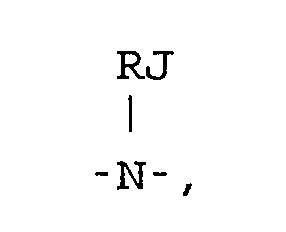

J wie vorstehend festgelegt und eingeschränkt;
s eine ganze Zahl mit einem Wert von 2 bis 8;
p Null oder eine ganze Zahl mit einem Wert vom 1 bis 4;
q Null oder 1; und
r Null oder eine ganze Zahl mit einem Wert von 1 bis 8 unter der Voraussetzung, daß, wenn q gleich 1 ist, r größer ist als Null; und(9)
G ausgewählt aus einem aromatischen Ring mit 6 bis 10 Kohlenstoffatomen, einem heteroaromatischen Ring mit 5 bis 10 Atomen, einem heterocyclischen Ring mit 5 bis 10 Atomen, wobei die heteroaromatischen und heterocyclischen Ringe Atome enthalten, die ausgewählt werden aus der Gruppe, bestehend aus C, N, O und S;
J wie vorstehend festgelegt;
w eine ganze Zahl mit einem Wert zwischen 1 und 8;
E und q wie vorstehend festgelegt;
y 1 oder 2 und
v Null oder eine ganzen Zahl mit einem Wert zwischen 1 und 4 unter der Voraussetzung, daß, wenn q gleich 1 ist, v nicht Null ist. - Chemisch modifizierte Kollagenverbindung, welche mindestens zwei native Kollagenmoleküle umfaßt, die an mindestens einer an jedem der Kollagenmoleküle vorhandenen Lysin-epsilon-Aminogruppe über eine Kupplungsgruppe gekuppelt sind, welche Kupplungsgruppe mindestens zwei Teile aufweist, die mit den Lysin-Aminogruppen direkt verknüpft sind, welche Teile ausgewählt werden aus Carbonyl- und Sulfonylgruppen und welche Carbonyl- und Sulfonylgruppen über gesättigte oder ungesättigte Alkylen-, Arylen- oder gemischte Alkylen-Arylen-Kupplungsketten miteinander verknüpft sind, welche Kupplungsketten weniger als zwanzig Kohlenstoffatome aufweisen, und die wahlweise Heteroatome enthalten, ausgewählt aus Sauerstoff, Schwefel und Stickstoff, wobei das gekuppelte Lysin einen Abschnitt von Lysin-epsilon-Aminogruppen haben, die nicht mit den Kupplungsgruppen verknüpft sind, von denen mindestens 60 Prozent modifizierte Gruppen sind, ausgewählt aus gesättigten oder ungesättigten Alkansulfonamid- und -carboxamidgruppen, Arensulfonamid- und -carboxamidgruppen sowie gemischten gesättigten oder ungesättigten Alkan-Arensulfonamid- und -carboxamidgruppen, welche modifizierte Gruppen 2 bis 20 Kohlenstoffatome aufweisen und durch einen oder zwei Carbonsäure- oder Sulfonsäureteile terminiert sind, wobei jede modifizierte Gruppe wahlweise bis zu 5 Heteroatome enthält, ausgewählt aus Sauerstoff, Schwefel und Stickstoff, und wahlweise in verfügbaren aromatischen und aliphatischen Positionen durch Carboxylgruppen, Alkyl- und Alkoxygruppen mit 1 bis 4 Kohlenstoffatomen und Halogenen substituiert ist.
- Chemisch modifizierte Kollagenverbindung nach Anspruch 4, bei welcher die amin-modifizierende Gruppe die allgemeine Formel hat:
-B-A(B-K)z
worin sind:
B unabhängig CO, SO₂ oder Kombinationen davon; und
A, ausgewählt aus(1) einer aromatischen Gruppe mit 6 bis 20 Kohlenstoffatomen;(2)
Ar unabhängig ausgewählt aus einem aromatischen Ring mit 6 bis 10 Kohlenstoffatomen, einem heteroaromatischen Ring mit Atomen, die ausgewählt werden aus der Gruppe, bestehend aus C, N, O und S, und mit 5 bis 10 Atomen oder Kombinationen davon;
n ist Null oder 1;
a ist Null oder eine ganze Zahl mit einem Wert von 1 und 4; und
D ausgewählt aus O, CO, S, SO, SO₂,

R ausgewählt aus der Gruppe, bestehend aus Phenyl und einer geradkettigen oder verzweigtkettigen Alkyl- oder Acylgruppe mit 1 bis 4 Kohlenstoffatomen;(3) einer aromatischen Gruppe mit 6 bis 10 Kohlenstoffatomen, wobei die aromatische Gruppe wahlweise in verfügbaren Positionen substituiert ist durch Wasserstoff;(4) einer heteroaromatischen Gruppe mit Atomen, die ausgewählt werden aus C, N, O und S, und die 5 bis 14 Ringatome haben, wobei die heteroaromatische Gruppe wahlweise in verfügbaren Positionen durch Wasserstoff substituiert ist;(5) einer aliphatischen oder arylaliphatischen Kette, die eine oder zwei olefinische oder acetylenische Gruppen enthält und die 2 bis 20 Kohlenstoffatome hat, wobei die Kette wahlweise in verfügbaren Positionen durch Wasserstoff substituiert ist;(6) einem alicyclischen Ring, der wahlweise partiell ungesättigt ist, 3 bis 15 Kohlenstoffatome hat, wobei der alicyclische Ring wahlweise in verfügbaren Positionen durch Wasserstoff substituiert ist;(7) einem heterocyclischen Ring (außer einer heteroaromatischen Gruppe 4), der gesättigt oder ungesättigt ist und der Atome enthält, ausgewählt aus C, N, O und S, und der etwa 5 bis 12 Ringatome hat, wobei der heterocyclische Ring wahlweise in verfügbaren Positionen durch Wasserstoff substituiert ist;(8)
t eine ganze Zahl zwischen 1 und 8;
E ausgewählt aus O,

s eine ganze Zahl mit einem Wert von 2 bis 8;
p Null oder eine ganze Zahl mit einem Wert vom 1 bis 4;
q Null oder 1; und
r Null oder eine ganze Zahl mit einem Wert von 1 bis 8 unter der Voraussetzung, daß, wenn q gleich 1 ist, r größer ist als Null; und(9)
G ausgewählt aus einem aromatischen Ring mit 6 bis 10 Kohlenstoffatomen. einem heteroaromatischen Ring mit 5 bis 10 Atomen und einem heterocyclischen Ring mit 5 bis 10 Atomen, wobei die heteroaromatischen und heterocyclischen Ringe Atome enthalten, die ausgewählt werden aus der Gruppe, bestehend aus C, N, O und S;
w eine ganze Zahl mit einem Wert zwischen 1 und 8;
E und q wie vorstehend festgelegt;
y 1 oder 2 und
v Null oder eine ganzen Zahl mit einem Wert zwischen 1 und 4 unter der Voraussetzung, daß, wenn q gleich 1 ist, v nicht Null ist;
und worin z Null, 1 oder 2 ist unter der Voraussetzung, daß, wenn z Null ist, A in verfügbaren Positionen durch Wasserstoff substituiert ist; und K OH ist. - Verfahren zum Herstellen einer chemisch modifizierten Kollagenverbindung nach Anspruch 1, umfassend die Schritte:(a) Zusetzen eines Kupplungsmittels zu einer wässrigen Lösung von mindestens 0,05 Gewichtsprozent nativem Kollagen in einer Menge von 1 bis 600 Molen Kupplungsmittel pro Mol natives Kollagen, welches Kupplungsmittel ausgewählt wird aus Di- und Tricarbonsäurehalogeniden, Di- und Trisulfonsäurehalogeniden, Di- und Trianhydriden, di- und trireaktiven aktiven Estern und Verbindungen mit mindestens zwei Teilen, ausgewählt aus der Gruppe, bestehend aus Carbonsäurehalogenid, Sulfonsäurehalogenid, Anhydrid und aktivem Ester; sowie(b) Umsetzen des nativen Kollagens und des Kupplungsmittels bei einem pH-Wert von oberhalb 8 und bei einer Temperatur von 0° ... 35 °C für eine Dauer, die ausreichend ist, um mindestens 90 Prozent des Kupplungsmittels mit dem Kollagen entweder umzusetzen oder zu hydrolysieren.
- Verfahren nach Anspruch 6, bei welchem das Kupplungsmittel ausgewählt wird aus Terephthaloylchlorid, Bicyclo-(2,2,2)-oct-7-en-2,3,5,6-tetracarbonsäure-2,3,5,6-dianhydrid; 1,2,4,5-Benzoltetracarbonsäuredianhydrid; p-Fluorsulfonylbenzolsulfonylchlorid und wobei der pH-Wert des Reaktionsgemisches anfangs bei 3 ... 5,5 gehalten wird, bevor er auf oberhalb von 8 erhöht wird.
- Verfahren zum Herstellen einer chemisch modifizierten Kollagenverbindung nach Anspruch 4, umfassend die Schritte von Anspruch 6 und den zusätzlichen Schritt:(c) Zusetzen eines monoreaktiven amin-modifizierenden Mittels zu dem genannten Reaktionsgemisch, wobei das amin-modifizierende Mittel ausgewählt wird aus Anhydriden, Säurehalogeniden, Sulfonsäurehalogeniden und aktiven Estern, und zwar in einer Menge von mindestens 100 Molen amin-modifizierendes Mitttel pro Mol natives Kollagen; und(d) Durchführen der Reaktion der Aminmodifikation bei einem pH-Wert oberhalb von 8 und bei einer Temperatur von 0° ... 35 °C für eine ausreichende Dauer, um im wesentlichen das gesamte amin-modifizierende Mittel entweder umzusetzen oder zu hydrolysieren.
- Viskoelastische Kollagenlösung, umfassend 0,5 bis 5,0 Gewichtsprozent einer Kollagenverbindung nach Anspruch 4 oder nach Anspruch 5, aufgelöst in einer physiologischen Pufferlösung.
- Verfahren zum Herstellen einer chemisch modifizierten Kollagenlösung nach Anspruch 4, umfassend die Schritte:(a) Zusetzen eines Kupplungsmittels zu einer wässrigen Lösung von mindestens 0,05 Gewichtsprozent nativem Kollagen in einer Menge von 1 bis 600 Molen Kupplungsmittel pro Mol natives Kollagen und eines monoreaktives amin-modifizierenden Mittels in einer Menge von mindestens 50 Molen amin-modifizierendes Mittel pro Mol natives Kollagen; welches Kupplungsmittel ausgewählt wird aus Di- und Tricarbonsäurehalogeniden, Di- und Trisulfonsäurehalogeniden, Di- und Trianhydriden, di- und trireaktiven aktiven Estern und Verbindungen mit mindestens zwei Teilen, ausgewählt aus Carbonsäurehalogenid, Sulfonsäurehalogenid, Anhydrid und aktivem Ester und worin das amin-modifizierende Mittel ausgewählt wird aus Anhydriden, Säurehalogeniden, Sulfonsäurehalogeniden und aktiven Estern;(b) Reagierenlassen des Raktionsgemisches bei einem pH-Wert von oberhalb 8 und bei einer Temperatur von 0° ... 35 °C für eine Dauer, die ausreichend ist, um im wesentlichen das gesamte Kupplungsmittel und das amin-modifizierende Mittel entweder umzusetzen oder zu hydrolysieren;(c) Zusetzen von zusätzlichem monoreaktiven amin-modifizierenden Mittel zu dem Reaktionsgemisch von Schritt (b) in einer Menge von mindestens 50 Molen des modifizierenden Mittels pro Mol natives Kollagen; und(d) Reagierenlassen des Raktionsgemisches von Schritt (c) bei einem pH-Wert von oberhalb 8 und bei einer Temperatur von 0° ... 35 °C für eine Dauer, die ausreichend ist, um im wesentlichen das gesamte modifizierende Mittel entweder umzusetzen oder zu hydrolysieren.
- Verfahren zum Herstellen einer chemisch modifizierten Kollagenverbindung nach Anspruch 4, umfassend die Schritte:(a) Zusetzen eines monoreaktiven amin-modifizierenden Mittels zu einer wässrigen Lösung von mindestens 0,05 Gewichtsprozent nativem Kollagen in einer Menge von mindestens 25 Molen des amin-modifiziernden Mittels pro Mol natives Kollagen, welches amin-modifizierende Mittel ausgewählt wird aus Anhydriden, Säurehalogeniden, Sulfonsäurehalogeniden und aktiven Estern;(b) Reagierenlassen des Reaktionsgemisches von Schritt (a) bei einem pH-Wert von oberhalb 8 und bei einer Temperatur von 0° ... 35 °C für eine Dauer, die ausreichend ist, um im wesentlichen das gesamte amin-modifizierende Mittel entweder umzusetzen oder zu hydrolysieren;(c) Zusetzen eines in Schritt (b) hergestellten Gemisches eines Kupplungsmittels in einer Menge von 1 bis 600 Molen Kupplungsmittel pro Mol natives Kollagen, welches Kupplungsmittel ausgewählt wird aus Di- und Tricarbonsäurehalogeniden, Di- und Trisulfonsäurehalogeniden, Di- und Trianhydriden, di- und trireaktiven aktiven Estern und Verbindungen mit mindestens zwei Teilen, ausgewählt aus Carbonsäurehalogenid, Sulfonsäurehalogenid, Anhydrid und aktivem Ester; und(d) Reagierenlassen des Raktionsgemisches von Schritt (c) bei einem pH-Wert von oberhalb 8 und bei einer Temperatur von 0° ... 35 °C für eine Dauer, die ausreichend ist, um im wesentlichen das gesamte Kupplungsmittel entweder umzusetzen oder zu hydrolysieren;(e) Zusetzen von zusätzlichem monoreaktiven amin-modifizierenden Mittel zu dem Reaktionsgemisch von Schritt (d) in einer Konzentration von mindestens 75 Molen des modifizierenden Mittels pro Mol natives Kollagen; und(f) Reagierenlassen des Raktionsgemisches von Schritt (d) bei einem pH-Wert von oberhalb 8 und bei einer Temperatur von 0° ... 35 °C für eine Dauer, die ausreichend ist, um im wesentlichen das gesamte amin-modifizierende Mittel entweder umzusetzen oder zu hydrolysieren.
- Viskoelastische physiologische Pufferlösung einer chemisch modifizierten Kollagenverbindung nach Anspruch 1 bis 5.
- Viskoelastische Kollagenlösung nach Anspruch 9 und 12 zum Ersetzen von mindestens einem Teil der wässrigen oder glasartigen Körperflüssigkeit in einem Auge eines Menschen oder Tieres.
- Viskoelastische Kollagenlösung nach Anspruch 9 und 12 zum Verhindern der Bildung von fibrösem Gewebe und daraus folgender Entwicklung von Adhäsion und Narben, die in heilendem Gewebe im Verlaufe des normalen Heilungsprozesses auftreten können.
- Viskoelastische Kollagenlösung nach Anspruch 9 und 12 zum Gleitendmachen eines Gelenks oder Sehne eines Menschen oder Tieres.
- Viskoelastische Kollagenlösung nach Anspruch 9 und 12 zum Separieren von heilenden Geweben und Beibehalten dieser Separation während des normalen Heilungsprozesses nach der Operation.
- Chemisch modifizierte Kollagenverbindung nach Anspruch 1 oder 4 zum Erzielen von Haemostase.
- Chemisch modifizierte Kollagenverbindung nach Anspruch 1 oder 4 zum Vermehren von weichem Gewebe.
Applications Claiming Priority (2)
| Application Number | Priority Date | Filing Date | Title |
|---|---|---|---|
| US77331085A | 1985-09-06 | 1985-09-06 | |
| US773310 | 1985-09-06 |
Publications (3)
| Publication Number | Publication Date |
|---|---|
| EP0214853A2 EP0214853A2 (de) | 1987-03-18 |
| EP0214853A3 EP0214853A3 (en) | 1988-07-06 |
| EP0214853B1 true EP0214853B1 (de) | 1994-11-30 |
Family
ID=25097836
Family Applications (1)
| Application Number | Title | Priority Date | Filing Date |
|---|---|---|---|
| EP86306880A Expired - Lifetime EP0214853B1 (de) | 1985-09-06 | 1986-09-05 | Viskoelastische Kollagenlösung für augenheilkundige Verwendung und Verfahren zur Herstellung |
Country Status (5)
| Country | Link |
|---|---|
| EP (1) | EP0214853B1 (de) |
| JP (1) | JPH0660200B2 (de) |
| AU (1) | AU597899B2 (de) |
| CA (1) | CA1284250C (de) |
| DE (1) | DE3650152T2 (de) |
Cited By (1)
| Publication number | Priority date | Publication date | Assignee | Title |
|---|---|---|---|---|
| US7160264B2 (en) | 2002-12-19 | 2007-01-09 | Medtronic-Xomed, Inc. | Article and method for ocular aqueous drainage |
Families Citing this family (8)
| Publication number | Priority date | Publication date | Assignee | Title |
|---|---|---|---|---|
| US4969912A (en) * | 1988-02-18 | 1990-11-13 | Kelman Charles D | Human collagen processing and autoimplant use |
| US4946450A (en) * | 1989-04-18 | 1990-08-07 | Biosource Genetics Corporation | Glucan/collagen therapeutic eye shields |
| JPH1156897A (ja) * | 1997-08-18 | 1999-03-02 | Koken Co Ltd | コラーゲン眼科手術補助剤 |
| JP2004530452A (ja) * | 2000-11-06 | 2004-10-07 | アルコン,インコーポレイテッド | 外科手術において使用するための非吸引性遷移粘弾性物質 |
| US7820194B2 (en) | 2001-12-21 | 2010-10-26 | Alcon, Inc. | Combinations of viscoelastics for use during surgery |
| US20050215516A1 (en) * | 2004-03-29 | 2005-09-29 | Claudio Bucolo | New free-radical scavenger containing viscoelastic composition, methods of use and package |
| AU2007318210B2 (en) | 2006-10-06 | 2014-02-20 | Celularity Inc. | Native (telopeptide) placental collagen compositions |
| JP5753356B2 (ja) * | 2010-09-13 | 2015-07-22 | 株式会社龍泉堂 | 活性エピトープを有する非変性ii型コラーゲンの抽出方法 |
Citations (1)
| Publication number | Priority date | Publication date | Assignee | Title |
|---|---|---|---|---|
| WO1985004413A1 (en) * | 1984-03-27 | 1985-10-10 | University Of Medicine And Dentistry Of New Jersey | Biodegradable matrix and methods for producing same |
Family Cites Families (4)
| Publication number | Priority date | Publication date | Assignee | Title |
|---|---|---|---|---|
| DE1445839A1 (de) * | 1963-09-24 | 1968-11-21 | Gelatine And Glue Res Ass | Verfahren zur Herstellung von reaktionsfaehigen Umsetzprodukten wasserloeslicher polymerer Amine |
| US4082507A (en) * | 1976-05-10 | 1978-04-04 | Sawyer Philip Nicholas | Prosthesis and method for making the same |
| EP0089145B1 (de) * | 1982-03-08 | 1987-06-16 | Collagen Corporation | Injektierbares vernetztes Kollagen als Implantatmaterial |
| JPS61168363A (ja) * | 1985-01-22 | 1986-07-30 | 株式会社 高研 | ビスコサ−ジヤリ用及び代用硝子体用のスクシニル化アテロコラ−ゲン溶液 |
-
1986
- 1986-08-25 CA CA000516722A patent/CA1284250C/en not_active Expired - Lifetime
- 1986-08-26 AU AU61846/86A patent/AU597899B2/en not_active Expired
- 1986-09-05 EP EP86306880A patent/EP0214853B1/de not_active Expired - Lifetime
- 1986-09-05 JP JP61209418A patent/JPH0660200B2/ja not_active Expired - Lifetime
- 1986-09-05 DE DE3650152T patent/DE3650152T2/de not_active Expired - Lifetime
Patent Citations (1)
| Publication number | Priority date | Publication date | Assignee | Title |
|---|---|---|---|---|
| WO1985004413A1 (en) * | 1984-03-27 | 1985-10-10 | University Of Medicine And Dentistry Of New Jersey | Biodegradable matrix and methods for producing same |
Cited By (1)
| Publication number | Priority date | Publication date | Assignee | Title |
|---|---|---|---|---|
| US7160264B2 (en) | 2002-12-19 | 2007-01-09 | Medtronic-Xomed, Inc. | Article and method for ocular aqueous drainage |
Also Published As
| Publication number | Publication date |
|---|---|
| CA1284250C (en) | 1991-05-14 |
| JPH0660200B2 (ja) | 1994-08-10 |
| EP0214853A2 (de) | 1987-03-18 |
| JPS62103025A (ja) | 1987-05-13 |
| AU597899B2 (en) | 1990-06-14 |
| DE3650152T2 (de) | 1995-06-01 |
| EP0214853A3 (en) | 1988-07-06 |
| DE3650152D1 (de) | 1995-01-12 |
| AU6184686A (en) | 1987-03-12 |
Similar Documents
| Publication | Publication Date | Title |
|---|---|---|
| US4851513A (en) | Viscoelastic collagen solution for opthalmic use and method of preparation | |
| US4713446A (en) | Viscoelastic collagen solution for ophthalmic use and method of preparation | |
| US4883864A (en) | Modified collagen compound and method of preparation | |
| US5476515A (en) | Method of making intraocular lenses with injectable collagen-based compositions | |
| US5103840A (en) | Viscoelastic collagen gel for ophthalmic surgery | |
| US4505855A (en) | Transparent non-fibrilized collagen material by ultracentrifugation | |
| US5631243A (en) | Collagen-based viscoelastic solution for visco-surgery | |
| US5036056A (en) | Methods for treating damaged corneal, uterine, or cartilage tissue | |
| JP4283719B2 (ja) | 架橋ポリマー組成物およびその使用方法 | |
| EP0167363B1 (de) | Vernetzte Glykosaminoglykane und ihre Verwendung | |
| US4581030A (en) | Collagen replacement prothesis for the cornea | |
| TWI388349B (zh) | 眼用裝置及相關方法及組合物 | |
| US4141973A (en) | Ultrapure hyaluronic acid and the use thereof | |
| US4716224A (en) | Crosslinked hyaluronic acid and its use | |
| EP0443094B1 (de) | Nichtresorbierbares Zweiphasen-Hornhautimplantat und Verfahren zu seiner Herstellung | |
| US4983585A (en) | Viscoelastic fluid for use in surgery and other therapies and method of using same | |
| EP0330389A2 (de) | Behandlung von humanem Kollagen und Verwendung als Auto-Implantat | |
| JP2007296401A (ja) | 生体適合性の粘着剤組成物 | |
| US6177544B1 (en) | Collagen-based auxiliary agent for ophthalmic surgery | |
| AU597899B2 (en) | Viscoelastic collagen solution for opthalmic use and method of preparation | |
| EP4393521A1 (de) | Bionische hornhaut und herstellungsverfahren dafür | |
| JP2024531725A (ja) | ポリエチレングリコール化コラーゲン様タンパク質の製造方法及びその使用 | |
| EP0191994B1 (de) | Lösung zur Verwendung in der Viskochirurgie und/oder als Glaskörperersatz | |
| Hoopes | Sodium hyaluronate (Healon®) in anterior segment surgery: A review and a new use in extracapsular surgery | |
| US4748152A (en) | Succinylated atelocollagen solution for use in viscosurgery and as a vitreous substitute |
Legal Events
| Date | Code | Title | Description |
|---|---|---|---|
| PUAI | Public reference made under article 153(3) epc to a published international application that has entered the european phase |
Free format text: ORIGINAL CODE: 0009012 |
|
| AK | Designated contracting states |
Kind code of ref document: A2 Designated state(s): DE FR GB IT SE |
|
| PUAL | Search report despatched |
Free format text: ORIGINAL CODE: 0009013 |
|
| AK | Designated contracting states |
Kind code of ref document: A3 Designated state(s): DE FR GB IT SE |
|
| 17P | Request for examination filed |
Effective date: 19881228 |
|
| 17Q | First examination report despatched |
Effective date: 19901130 |
|
| GRAA | (expected) grant |
Free format text: ORIGINAL CODE: 0009210 |
|
| ITF | It: translation for a ep patent filed | ||
| AK | Designated contracting states |
Kind code of ref document: B1 Designated state(s): DE FR GB IT SE |
|
| REF | Corresponds to: |
Ref document number: 3650152 Country of ref document: DE Date of ref document: 19950112 |
|
| EAL | Se: european patent in force in sweden |
Ref document number: 86306880.5 |
|
| ET | Fr: translation filed | ||
| PLBE | No opposition filed within time limit |
Free format text: ORIGINAL CODE: 0009261 |
|
| STAA | Information on the status of an ep patent application or granted ep patent |
Free format text: STATUS: NO OPPOSITION FILED WITHIN TIME LIMIT |
|
| 26N | No opposition filed | ||
| REG | Reference to a national code |
Ref country code: GB Ref legal event code: IF02 |
|
| PGFP | Annual fee paid to national office [announced via postgrant information from national office to epo] |
Ref country code: GB Payment date: 20050831 Year of fee payment: 20 |
|
| PGFP | Annual fee paid to national office [announced via postgrant information from national office to epo] |
Ref country code: FR Payment date: 20050919 Year of fee payment: 20 |
|
| PGFP | Annual fee paid to national office [announced via postgrant information from national office to epo] |
Ref country code: SE Payment date: 20050921 Year of fee payment: 20 |
|
| REG | Reference to a national code |
Ref country code: GB Ref legal event code: PE20 |
|
| PGFP | Annual fee paid to national office [announced via postgrant information from national office to epo] |
Ref country code: IT Payment date: 20050929 Year of fee payment: 20 |
|
| PGFP | Annual fee paid to national office [announced via postgrant information from national office to epo] |
Ref country code: DE Payment date: 20051031 Year of fee payment: 20 |
|
| PG25 | Lapsed in a contracting state [announced via postgrant information from national office to epo] |
Ref country code: GB Free format text: LAPSE BECAUSE OF EXPIRATION OF PROTECTION Effective date: 20060904 |
|
| EUG | Se: european patent has lapsed |