EP0215539A2 - Plasmide und ihre Komponenten zur Verwendung in filamentösen Pilzen - Google Patents
Plasmide und ihre Komponenten zur Verwendung in filamentösen Pilzen Download PDFInfo
- Publication number
- EP0215539A2 EP0215539A2 EP86302467A EP86302467A EP0215539A2 EP 0215539 A2 EP0215539 A2 EP 0215539A2 EP 86302467 A EP86302467 A EP 86302467A EP 86302467 A EP86302467 A EP 86302467A EP 0215539 A2 EP0215539 A2 EP 0215539A2
- Authority
- EP
- European Patent Office
- Prior art keywords
- plasmid
- dna
- sequence
- chrysogenum
- antibiotic
- Prior art date
- Legal status (The legal status is an assumption and is not a legal conclusion. Google has not performed a legal analysis and makes no representation as to the accuracy of the status listed.)
- Withdrawn
Links
Images



Classifications
-
- C—CHEMISTRY; METALLURGY
- C12—BIOCHEMISTRY; BEER; SPIRITS; WINE; VINEGAR; MICROBIOLOGY; ENZYMOLOGY; MUTATION OR GENETIC ENGINEERING
- C12N—MICROORGANISMS OR ENZYMES; COMPOSITIONS THEREOF; PROPAGATING, PRESERVING, OR MAINTAINING MICROORGANISMS; MUTATION OR GENETIC ENGINEERING; CULTURE MEDIA
- C12N15/00—Mutation or genetic engineering; DNA or RNA concerning genetic engineering, vectors, e.g. plasmids, or their isolation, preparation or purification; Use of hosts therefor
- C12N15/09—Recombinant DNA-technology
- C12N15/63—Introduction of foreign genetic material using vectors; Vectors; Use of hosts therefor; Regulation of expression
- C12N15/79—Vectors or expression systems specially adapted for eukaryotic hosts
- C12N15/80—Vectors or expression systems specially adapted for eukaryotic hosts for fungi
-
- C—CHEMISTRY; METALLURGY
- C12—BIOCHEMISTRY; BEER; SPIRITS; WINE; VINEGAR; MICROBIOLOGY; ENZYMOLOGY; MUTATION OR GENETIC ENGINEERING
- C12N—MICROORGANISMS OR ENZYMES; COMPOSITIONS THEREOF; PROPAGATING, PRESERVING, OR MAINTAINING MICROORGANISMS; MUTATION OR GENETIC ENGINEERING; CULTURE MEDIA
- C12N15/00—Mutation or genetic engineering; DNA or RNA concerning genetic engineering, vectors, e.g. plasmids, or their isolation, preparation or purification; Use of hosts therefor
- C12N15/09—Recombinant DNA-technology
- C12N15/63—Introduction of foreign genetic material using vectors; Vectors; Use of hosts therefor; Regulation of expression
- C12N15/79—Vectors or expression systems specially adapted for eukaryotic hosts
- C12N15/80—Vectors or expression systems specially adapted for eukaryotic hosts for fungi
- C12N15/81—Vectors or expression systems specially adapted for eukaryotic hosts for fungi for yeasts
Definitions
- the present invention relates to novel plasmids and to novel components thereof and processes for their production.
- novel plasmids which constitute vector systems suitable for use in filamentous fungi, especially in antibiotic-producing species such as Acremonium chrysogenum and Penicillium chrysogenum.
- Plasmids capable of acting as efficient vector systems in E. coli are well-known and have been extensively used to modify the genotype of E. coli strains.
- Vector systems are also well-known for various other commonly transformed organisms, such as Saccharomyces cerevisiae.
- vector systems capable of transforming filamentous fungi In contrast, very little is known about vector systems capable of transforming filamentous fungi. To be useful, such vector systems must exhibit an acceptably high transformation frequency and must be so constructed that the desired coding elements introduced into the host organism are efficiently expressed.
- Plasmids are capable of efficiently transforming filamentous fungi only if they include an element which enables them to replicate in the host (hereinafter referred to as an autonomous replication sequence, or ARS). Plasmids which lack an ARS can transform host cells only at very low frequency by integration into the genome.
- a plasmid to be a suitable vector system for a filamentous fungus, it must include, in addition to an ARS, a fungal selectable protein coding element and a further element which directs expression of this coding element (hereinafter referred to as an activator sequence).
- an activator sequence a fungal selectable protein coding element
- E. coli-derived fungal selectable protein-coding elements are not functional in filamentous fungi, such as Acremonium chrysogenum and Penicillium chrysogenum.
- DNA restriction enzyme fragments which are suitable as activator sequences for yeast vector systems, are not necessarily capable of functioning as activator sequences when introduced into cells of a filamentous fungus as a suitably-sited component of a plasmid comprising an ARS and fungal selectable protein coding element.
- restriction enzyme fragments from the genome of Penicillium chrysogenum which can be used as activator sequences in the construction of vector systems for this species, will not necessarily function as an activator sequence when incorporated appropriately into plasmids comprising an ARS and fungal selectable protein-coding elements which are then used to transform Acremonium chrysogenum.
- a plasmid suitable as a vector system for a filamentous fungus especially an antibiotic-producing filamentous fungus such as an antibiotic-producing strain of Acremonium chrysogenum or Penicillium chrysogenum
- said plasmid comprising an autonomous replication sequence which is effective in the intended host, an activator sequence derived from, or copied from, DNA of the intended host and/or one or more other fungi of the same species, and a fungal selectable protein-coding element, transcription of which is directed by the activator sequence.
- a vector system according to the invention will generally include a viral vector or a portion of a 5-l5kb prokaryotic plasmid, conveniently an E. coli-derived plasmid. If a prokaryotic plasmid is used, the portion of the prokaryotic plasmid selected will preferably include those sequences which enable replication and selection in the prokaryote.
- the ARS sequence for construction of a vector system according to the invention which enables replication in the intended host and efficient transformation, will most preferably be derived from isolated total DNA of the intended host and/or one or more other fungi of the same species.
- One or more protein-coding sequences may be under the control of the fungal activator sequence.
- the fungal selectable protein coding element will generally be fused with the fungal activator sequence and can be any DNA sequence which codes for a protein which can be readily directly or indirectly detected in fungal cells, e.g. a sequence coding for a protein which confers resistance to an antibiotic, or one which causes the production of a pigment such as the protein coding region of the tyrosinase gene from Streptomyces antibioticus which confers the ability to produce the dark pigment melanin.
- a vector system according to the invention may, for example, contain the coding region of a neomycin- phosphotransferase gene joined to the fungal activator sequence.
- Fungal cells transformed with such a vector system may be selected using an antibiotic which is normally effective in untransformed fungal cells and which is inactivated when phosphorylated by neomycin phosphotransferase, for example, the aminoglycoside antibiotic G418. It is feasible, in some cases, for the fungal selectable protein coding element to be a coding element required for a desired improvement of the phenotype of the intended host.
- Our preferred method for isolating a fungal activator sequence comprises the steps of:
- the eukaryote chosen for transformation in step (iii) is most desirably, if feasible, the intended host for the vector system under construction or another filamentous fungus selected from the strains suitable as a source of DNA in step (i). If such a fungus has not previously been transformed with a vector system, it is preferable to use a commonly transformed eukaryote, preferably a yeast of the genus Saccharomyces such as Saccharomyces cerevisiae.
- the DNA fragments produced in step (i) will preferably be 0.5-1 kb. All the plasmids may be prepared using recombinant DNA techniques which per se are well known in the art.
- the coding sequence for neomycin phosphotransferase may be chosen, for example, as the fungal selectable protein coding element and transformants in step (iv) may be selected for expression of this coding element using, for example, the antibiotic G418.
- the coding sequence for neomycin phosphotransferase may be conveniently derived from, for example, the transposon Tn5.
- the selected activator sequence may be incorporated into a vector system according to the invention, with or without a fused fungal selectable protein coding element, using recombinant DNA techniques known per se. All the other constructional elements may also be incorporated using conventional recombinant DNA techniques.
- Our preferred method for isolating a fungal ARS comprises the steps of:
- step (i) The most desirable conditions in step (i) and the choice of eukaryote for selection of plasmids are determined by the same factors as for isolation of fungal activator sequences by the method hereinbefore described. All the steps can be carried out using techniques known per se.
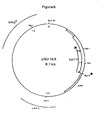
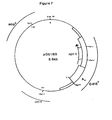
- Figures 4 and 7 of the accompanying figures are structural maps of preferred basic vector systems for Acremonium chrysogenum strains and Penicillium chrysogenum strains respectively which possess an ARS and a fungal selectable marker. These vector systems, designated pGU 291 and pGU 169, are useful starting points for the construction of further vector systems with the same ARS and activator sequence but with one or more additional genetic elements, which are suitable for improving a strain of Acremonium chrysogenum or Penicillium chrysogenum with regard to antibiotic-production.
- Vector systems according to the invention may be constructed for a number of purposes. Such vector systems may, for example, be used to modify the genotype of antibiotic-producing filamentous fungi, such as antibiotic-producing strains of Acremonium chrysogenum and Penicillium chrysogenum, to increase antibiotic production, to change growth characteristics (e.g. to enable growth on novel or alternative carbon sources) or to cause the biosynthesis of novel useful products.
- antibiotic-producing filamentous fungi such as antibiotic-producing strains of Acremonium chrysogenum and Penicillium chrysogenum
- growth characteristics e.g. to enable growth on novel or alternative carbon sources
- the cells may first be converted to protoplasts or, alternatively treated with a metal salt such as lithium acetate for example, as described by Dhawale, S.S., Paiepta, J.V. and Marzluf, G.A. in Current Genetics (1984) 8, pp. 77-79.
- a metal salt such as lithium acetate for example, as described by Dhawale, S.S., Paiepta, J.V. and Marzluf, G.A. in Current Genetics (1984) 8, pp. 77-79.
- a suitable method for protoplast generation from Acremonium chrysogenum is given in our British Patent No. 2,021,640 and similar methods, well known to those in the art, are applicable to other filamentous fungi.
- Tryptone, yeast extract, yeast nitrogen base and bacto-peptone were supplied by Difco Laboratories, Michigan, USA.
- Tryptone soya broth, caesin acid hydrolysate, peptone and agar (number 3) were from Oxoid Ltd, London.
- T4 DNA ligase, calf intestinal phosphatase (molecular biology grade) were supplied from the Boehringer Corporation (London) Ltd.
- Restriction enzymes Bgl II, Sau 3A and Pst I were supplied by P and S Biochemicals Ltd, Liverpool.
- ⁇ CI 857 Sam 7 digested with Hind III ( ⁇ / Hind III) and Bam HI were supplied by BRL (UK) Ltd, Cambridge.
- Novozyme 234 was supplied by Novo Enzyme Products Ltd, Windsor. G418 was supplied by Gibco Ltd, Paisley.
- Acremonium chrysogenum and Penicillium chrysogenum were used as sources of chromosomal DNA, and as recipients of hybrid plasmid DNA, suitable strains being ATCC 14553 and ATCC 10002.
- E. coli NCIB 12046 was used as the source of pBR322::Tn5 DNA.
- E. coli NCIB 11933 was used as a recipient of hybrid plasmid DNA.
- Saccharomyces cerevisiae NCYC 1549 was used as the recipient for hybrid plasmid DNA.
- the vector used was the pBR322 derivative YIp5, E. coli ATCC 37061.
- E.coli ATCC 37061 harbouring YIp5 was grown in 1 1. of L broth (1% tryptone, 0.5% yeast extract, 0.5% NaCl) with shaking at 37°C. At an optical density (OD) 550 of 0.6, chloramphenicol was added to 100 ug/ml final concentration. After an additional 17 hours incubation at 37°C, the bacteria were sedimented at 10,000g for 10 minutes. The bacterial pellet was resuspended in 20 mls of 50mM glucose, 25mM TRIS-HC1 (pH 8.0), lOmM EDTA, and held at 21°C for 5 minutes. This was followed by 40 mls of 0.2N NaOH, 1% SDS.
- the contents were mixed by gentle inversion, and held on ice for 10 minutes.
- 30 mls of ice-cold, 5M potassium acetate was added to the mixture, and the contents mixed by violent inversion, then held on ice for 10 minutes.
- the lysate was centrifuged at 50,000g for 20 minutes, the resulting supernatant collected and retained.
- 0.6 volumes of isopropanol was added to the supernatant, and, after mixing, held at 21°C for 15 minutes.
- DNA was sedimented at 12,000g for 30 minutes.
- the pellet was washed in 70X ethanol, and finally dried in a vacuum.
- the pellet was resuspended in 8 mls of 50mM TRIS-HCL (pH 8.0), 1mM EDTA (pH 8.0). To this was added 8g of solid caesium chloride, and ethidium bromide to 0.6 mg/ml. The mixture was dispensed into centrifuge tubes and centrifuged for 36 hours at 140,000g at 15°C. The plasmid band was observed by illumination with long-wave ultra-violet light, and removed with a needle and syringe. Ethidium bromide was removed by extraction with isoamyl alcohol. Caesium chloride was removed by dialysis against 100 volumes of 10mM Tris-HC1, 10mM NaCl O.lmM EDTA (pH 8.0), (TE) at 4°C, repeated every 4 hours.
- Plasmid DNA concentration was determined by measuring the OD 260 of the solution (An OD 260 of 1.0 in a path-length of 1 cm is equivalent to 50 ug/ml DNA).
- YIp5 5 ug of YIp5 was dissolved in 20 ul of reaction buffer, with a final concentration of: 50mM NaCl; 10mM TRIS-HC1 (pH 7.5); 10mM MgCl 2 ; 1mM dithiothreitol. Restriction endonuclease was added to 1 unit per ug DNA. Complete digestion was achieved after 2 hours, monitored using gel electrophoresis on 0.8X agarose slab gels (8 cm x 10 cm x 0.4 cm). A 0.2 ug DNA sample in 0.4M urea; 5X (w/v) sucrose; 5mM EDTA; 0.01% bromophenol blue was loaded onto the gel. Samples were run for 1 hour at 100 mA.
- the gel was stained in 0.5 ug/ml ethidium bromide for 15 minutes, viewed on a transilluminator (Fotodyne UV300) and photographed using Type 667 Land film on a Polaroid CU-5 camera with a Kodak 22A Wratten filter.
- the mixture was heated to 68°C for 15 minutes, and extracted twice with an equal volume of phenol: chloroform (1 volume of phenol, containing 0.1% 8-hydroxyquinoline and equilibrated with 0.1M TRIS-HC1 (pH 8.0),0.2% B-mercaptoethanol: 1 volume of chloroform).
- the aqueous phase was then extracted twice with ether.
- the DNA solution was adjusted to 0.3M sodium acetate, to which two volumes of ethanol were added. The solution was mixed and held at -25°C for 30 minutes. DNA was sedimented at 13,000g for five minutes, the supernatant discarded, and the DNA pellet dried under vacuum.
- the DNA was dissolved in 5 ul of TE buffer. Confirmation that all molecules were dephosphorylated was as follows. 100 ng of Bam HI-digested and 100 ng of BamHI-digested, calf intestinal phsophatase treated YIp5 were adjusted to 20mM TRIS-HCL (pH 7.6), lOmM MgCl 2 , 10mM dithiothreitol, 0.6mM dATP" 0.1 unit T4-DNA ligase. The reactions were held at 14°C for 16 hours after which they were incubated at 70°C for 10 minutes, and rapidly cooled to 4°C. The reactions underwent gel electrophoresis as described in A (ii). YIp5 was judged to dephosphorylated by the inability of the treated molecule to reform circular molecules in the presence of T4 DNA ligase.
- A.chrysogenum mycelial fragments were inoculated to 100 mls growth medium (Sucrose, 3.0g; glucose, 15.0g; NaCl, 0.5g; K 2 HPO 4 , 0.5 g ; MgS 0 4 .7H 2 0, 0.5 g ; FeSO 4 .7H 2 O, O.Olg; Tryptone Soya Broth, 5.0g; Peptone, 1.0g; Yeast Extract, 2.0g, water to 1000 mls) to a final concentration of 2 x 10 6 colony forming units per ml.
- the culture was incubated for 48 hours at 25.5°C and 200 rpm after which it was used to inoculate 900 mls of the same medium. After a further 48 hour incubation in the same conditions, the mycelium was harvested at 3000g for 1 hour. The mycelium was washed twice in 100 mls sterile distilled water, and resuspended in 100 mls 0.5X B-mercaptoethanol. The mycelium was incubated at 25.5'C for 30 minutes, harvested and washed twice in 100 mls 0.7M KC1, sodium phosphate buffer (pH 5.8) (stabilisation buffer).
- the mycelium was resuspended in 5 mg/ml Novozyme 234 in a final volume of 10 mls stabilisation buffer/2g of mycelium.
- the culture was incubated at 25.5°C for 2 hours at 220 rpm to liberate protoplasts. After protoplasting the culture was washed twice in stabilisation buffer, and resuspended in 5 mls of 100mM EDTA, 1% SDS, 100 mg/ml proteinase K. The mixture was held at 37°C for 2 hours, then moved to 65°C for 10 minutes and allowed to equilibrate to room temperature.
- RNAse was added to the aqueous phase at 40 ug/ml, and incubated for 1 hour at 37°C. The solution was adjusted to 0.3M sodium acetate, and the DNA precipitated with 2 volumes of ethanol for 1 hour at -25°C. DNA was sedimented at 10,000g for 30 minutes, the supernatant discarded, and the pellet washed in 70% ethanol. The pellet was dried under vacuum, and resuspended in TE buffer (pH 8:0).
- the DNA concentration was determined as described in A i).
- chromosomal DNA 1 ug was digested with: 1, 0.5, 0.25, 0.125, 0.0625, 0.035, 0.002 units of Sau 3A for one hour at 37°C in 50mM NaCl, 10mM TRIS-HC1 (pH 7.5). 10mM MgCl 2 , 1mM dithiothreitol. DNA digestion was observed using gel electrophoresis described in A(ii). Fragment size distribution was assessed with ⁇ Hind III. Conditions suitable to give chromosomal fragments of 5 kb were decided (0.09 units/hr/ug).
- A.chrysogenum DNA 100 ug of A.chrysogenum DNA were treated by the conditions described in A v). After 1 hour at 37°C the reaction was stopped by heating to 70°C for 10 minutes followed by rapid cooling to 4°C. The digestion of chromosomal DNA was confirmed by gel electrophoresis described in A ii). The sample was phenol extracted, ether extracted and ethanol precipitated as described in A ii).
- the DNA mixture derived from steps A i)-viii) was used to transform S.cerevisiae NCYC 1549.
- a culture of S.cerevisiae NCYC 1549 was grown overnight at 30°C in 50 mls of 1% yeast extract 2% Difco Bacto Peptone, 2X glucose and 20 mg/l adenine. Cells were harvested at 6,000g for 10 minutes, and washed twice with sterile distilled water. The cells were resuspended in half the original volume of 1M sorbitol, 25mM EDTA (pH 8.0), 50mM dithiothrieitol. The mixture was incubated at 30°C for 30 minutes with gentle agitation. Cells were subsequently sedimented at 6,000g for 10 minutes, then washed twice with 1.2M sorbitol.
- the fungal pellet was resuspended in half the original culture volume of 1.2M sorbitol, 0.01H EDTA, 0.1M sodium citrate (pH 5.8), 1% (v/v) B-glucuronidase.
- the culture was incubated for 2 hours at 30°C to liberate sphaeroplasts. Sphaeroplasts were sedimented at 4,000g for 10 minutes, and gently resuspended in 1.2M sorbitol. This step was repeated 3 times. The sphaeroplasts were finally resuspended in 1.2M sorbitol, 10mM CaCl 2 to give 1 x 10 10 sphaeroplasts/ml.
- the suspension was divided into 0.1 ml aliquots and added to 7 mls of agar; 3X oxoid no.3 agar, 0.67% Difco Yeast Nitrogen Base, 2X glucose, tryptophan 20 ug/l stabilised to 1.2M sorbitol (pH 6.5).
- This agar was plated onto a 2X agar of the same composition. The plates were incubated for 4 days at 30°C.
- the selection procedure was for uracil prototrophs.
- the plasmid YIp5 contains the URA-3 gene from S.cerevisiae, YIp5 does not have an origin of replication (Autonomous Replication Sequence, ARS) the aim of this experiment was to complement the missing ARS function with the DNA cloned from A.chrysogenum.
- ARS Autonomous Replication Sequence
- S.cerevisiae NCYC 1549 URA-3 transformants were inoculated to 10 mls of 0.67% Difco yeast nitrogen base, 2X glucose, 20 ug/ml tryptophan, and incubated at 27.5°C for 48 hours.
- the cells were sedimented at 6000g for 10 minutes, and resuspended in 1.0 ml of 1.0M sorbitol.
- the cells were sedimented at 13,000g for 10 seconds, and resuspended in 0.5 mls 1M sorbitol, 50mM potassium phosphate buffer (pH 7.5) l4mM B-mercaptoethanol and 25 units B-glucuronidase.
- the sphaeroplasts were sedimented at 3000g for 5 minutes, and resuspended in 0.5 mls of 50mM EDTA (pH 8.5) 0.2% SDS. The mixture was heated to 70°C for 15 minutes, then 50 ml of 5M potassium acetate added. The lysate was held on ice for 1 hour. The precipitate was sedimented at 13,000g for 10 minutes. DNA was precipitated from the supernatant with 2 volumes of ethanol at -25°C for 1 hour, and sedimented at 13,000g for 10 minutes.
- the Bacteria were finally resuspended in 12.5 mls of ice cold 0.1M CaCl 2 and held on ice for 20 minutes. The cells were then pelleted, and resuspended in 2.5 mls ice cold 0.1M CaCl 2 .
- the selection was for transformation to ampicillin resistance, an indication of recovery of YIp5-based DNA from the S.cerevisiae NYCY1549 transformants described in A iix) - x).
- Plasmid DNA was prepared from the ampicillin resistant transformants thus.
- a 1 ml culture in L-broth (100 mg/ml ampicillin) was sedimented at 13,000g for 10 seconds and resuspended in 0.1 ml 50mM glucose, 25mM TRIS-HC1 (pH 8.0), 10mM EDTA, and incubated at room temperature for 5 minutes.
- 0.2 mls of 0.2N NaOH, 1% SDS was added, and the lysate held at 4°C for 5 minutes.
- 0.15 mls of 5M potassium acetate (pH 4.8) was added, and the mixture held at 4°C for five minutes.
- the precipitate was sedimented at 13,000g for 10 minutes.
- the supernatant was transferred to a fresh tube, mixed with 1 ml of ethanol, and held at room temperature for 2 minutes. Plasmid DNA was sedimented at 13,000g for 10 minutes. The pellet was washed in 70X ethanol and vacuum dried. The DNA was redissolved in 20 ml of TE (pH 8.0) buffer.
- This DNA was used to transform S.cerevisiae NCYC 1549 as described in A viii).
- YIp5 ars plasmid.
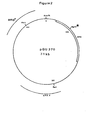
- One such plasmid was pGU270 (figure 2).
- the method used was as described in A ii) except that pGU270 was substituted for YIp5, and in the reaction buffer the NaCl concentration was 10mM, rather than 50mM.
- the gel slice was placed in an Eppendorf tube, frozen in a dry ice-ethanol bath and warmed to room temperature. This step was repeated. Agarose was sedimented by centrifugation at 13,000g for 15 minutes. The supernatant was collected, phenol extracted, ether extracted and ethanol precipitated as described in A iii). After vacuum drying, the pellet was resuspended in 5 ⁇ l of TE (pH 8.0) buffer.
- the material from B vii) was used to transform E.coli NCIB 11933 to ampicillin resistance.
- the process was as described in A x).
- the selection was on L-agar, ampicillin at 100 ⁇ g/ml.
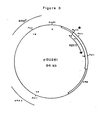
- Plasmid pGU281 was produced by processes Bi) - Bx) ( Figure 3).
- URA-3 transformants were tested on the selective medium described in A viii) with additional G418 at 250 ⁇ g/ml. No URA-3 transformant was resistant to G418 at this level, suggesting that the npt II gene was inactive.
- the DNA vector was dephosphoylated as described in A iii).
- A.chrysogenum DNA 10 ug was digested with Sau 3A (10 units) in the buffer conditions described in A v). The reaction was monitored by gel-electrophoresis described in A ii). On completion of the reaction, the DNA was heated to 70°C for 10 minutes and treated henceforth as described in A vi).
- Material from C vii) was used to transform E.coli NCIB 11933 to ampicillin resistance as described in A x).
- Plasmid DNA was prepared from the ampicillin-resistant transformants described in C vii) by the techniques described in A xi).
- Plasmid DNA thus produced was used to re-transform S.cerevisiae NCYC 1549 as described in A viii). Selection was for URA-3 followed by G418 resistance confirming cotransformation of these markers.
- One such plasmid was termed pGU291 (figure 4).
- a 10 ml slope culture of A.chrysogenum was inoculated to 40 mls of 25 g/1 corn steep liquor; 20 g/1, sucrose; 4.5 g/1, ammonium acetate; 2 g/1, methionine.
- the culture was shaken for 48 hours at 25.5°C.
- the mycelium was harvested by vacuum filtration, and washed twice with sterile distilled water.
- the mycelium were resuspended in 0.7M KC1, 2M sodium phosphate buffer, (pH 5.8), lOmM dithiothreitol.
- the culture was incubated at 25.5°C for 1 hour.
- the treated mycelium was harvested by vacuum filtration, washed twice with 0.7M KC1, 0.2M sodium phosphate buffer pH 5.8, and resuspended in 5 mg/ml Novozyme 234. The mixture was incubated at 25.5°C for 2 hours. Protoplasts were harvested through glass sinters (porosity 2). Protoplasts were sedimented by centrifugation at 700g, for 10 minutes and washed twice in 0.7M KC1.
- the discs were transferred to the same medium excluding 0.7M KC1 with G418 added to 150 ug/ml.
- the plates were incubated at 25.5°C for 35 days. After such times G418 resistant transformants were observed.
- Total DNA was prepared as described in example 1 A iv). Suitable dilutions of the DNA were used to transform E.coli NCIB 11933 as described in Example 1 A x). Alternatively, the chromosomal DNA described was partially digested with Bgl II (1 unit/ug in lOmM NaCl, lOmM TRIS-HC1 (pH 7.5); lOmM MgCl 2 , 1mM dithiothreitol, for 10 minutes). After which it was phenol and ether extracted, and ethanol precipitated as described in Example 1 A iii).
- the DNA pellet was resuspended at 5 ug/ml in 20mM TRIS-HC1 (pH 7.6) lOmM MgCl 2 , lOmM dithiothreitol, 0.6mM ATP, 1 unit/ ⁇ g DNA T4-DNA ligase, and incubated for 76 hours.
- Plasmid YIp5 was treated as described in Example 1 Ai) - iii).
- the culture was grown at 25.5°C for 24 hours then used to inoculate 500 mls of the same medium. After a further two days growth, mycelium was sedimented at 3,000g for 1 hour, washed twice with 100 mls of sterile water and resuspended in 5 mg/ml Novozyme 234 in a final volume of 10 mls stabilisation buffer/2 g mycelium. Protoplast harvesting, lysis and DNA purification were, from then on, as described in Example 1 A iv).
- Protoplasts were prepared as described in Example 3, A ii). The protoplasts were then harvested as described in Example 2 B i).
- Protoplasts were treated with DNA as described in Example 2 B i).
- Protoplasts were finally resuspended in 10 mls of the growth medium described in Example 3 A ii). After 24 hours growth to allow for protoplast-regeneration, regenerates were sedimented at 1000g for ten minutes resuspended in 1 ml of stabilisation buffer and plated as 0.1 ml aliquots on solidified (with Oxoid number 3 agar at 1.5%) growth medium described in Example 3 A ii). The selection was for G418 at 300 ug/ml. After 14 days incubation at 25.5 * C G418 resistant transformants were observed.
- Transformants were grown in the medium described in Example 3 A ii) with G418 at 100 ug/ml, DNA was prepared as described in 4A.
Landscapes
- Life Sciences & Earth Sciences (AREA)
- Health & Medical Sciences (AREA)
- Genetics & Genomics (AREA)
- Engineering & Computer Science (AREA)
- Zoology (AREA)
- Wood Science & Technology (AREA)
- Biomedical Technology (AREA)
- Organic Chemistry (AREA)
- Biotechnology (AREA)
- General Engineering & Computer Science (AREA)
- Chemical & Material Sciences (AREA)
- Bioinformatics & Cheminformatics (AREA)
- Mycology (AREA)
- Microbiology (AREA)
- Physics & Mathematics (AREA)
- Plant Pathology (AREA)
- Molecular Biology (AREA)
- Biochemistry (AREA)
- General Health & Medical Sciences (AREA)
- Biophysics (AREA)
- Micro-Organisms Or Cultivation Processes Thereof (AREA)
Applications Claiming Priority (2)
| Application Number | Priority Date | Filing Date | Title |
|---|---|---|---|
| GB8508800 | 1985-04-04 | ||
| GB858508800A GB8508800D0 (en) | 1985-04-04 | 1985-04-04 | Microbiological process |
Publications (2)
| Publication Number | Publication Date |
|---|---|
| EP0215539A2 true EP0215539A2 (de) | 1987-03-25 |
| EP0215539A3 EP0215539A3 (de) | 1988-07-20 |
Family
ID=10577198
Family Applications (1)
| Application Number | Title | Priority Date | Filing Date |
|---|---|---|---|
| EP86302467A Withdrawn EP0215539A3 (de) | 1985-04-04 | 1986-04-03 | Plasmide und ihre Komponenten zur Verwendung in filamentösen Pilzen |
Country Status (3)
| Country | Link |
|---|---|
| EP (1) | EP0215539A3 (de) |
| JP (1) | JPS61282086A (de) |
| GB (1) | GB8508800D0 (de) |
Cited By (8)
| Publication number | Priority date | Publication date | Assignee | Title |
|---|---|---|---|---|
| EP0200425A3 (en) * | 1985-04-22 | 1988-07-06 | Eli Lilly And Company | Recombinant dna expression vectors and dna compounds |
| EP0225078A3 (de) * | 1985-11-20 | 1988-08-24 | Panlabs, Inc. | Zusammengesetzte Expressionskassetten für die Transformation von Pilzen |
| EP0260762A3 (en) * | 1986-09-16 | 1988-11-02 | Gist-Brocades N.V. | Penicillium transformants and methods for their production |
| EP0376226A1 (de) * | 1988-12-28 | 1990-07-04 | Takeda Chemical Industries, Ltd. | Glyceraldehyd-3-phosphat-dehydrogenase-Promotor und seine Verwendung |
| WO1990010074A1 (en) * | 1989-03-02 | 1990-09-07 | Glaxo Group Limited | Nitrate reductase as marker for filamentous fungi |
| US5695965A (en) * | 1990-03-13 | 1997-12-09 | Hawaii Biotechnology Group, Inc. | Neurospora expression system |
| WO1998039459A1 (es) * | 1997-03-05 | 1998-09-11 | Antibioticos, S.A.U. | PROMOTORES DE LOS GENES GLUTAMATO DESHIDROGENASA, β-N-ACETILHEXOSAMINIDASA η-ACTINA Y SU UTILIZACION EN SISTEMAS DE EXPRESION, SECRECION Y ANTISENTIDO DE HONGOS FILAMENTOSOS |
| US5925515A (en) * | 1990-10-15 | 1999-07-20 | Gist-Brocades B.V. | Direct selection of transformants on acetate-containing media |
Family Cites Families (6)
| Publication number | Priority date | Publication date | Assignee | Title |
|---|---|---|---|---|
| NO840200L (no) * | 1983-01-28 | 1984-07-30 | Cefus Corp | Glukoamylase cdna. |
| US4762786A (en) * | 1984-09-27 | 1988-08-09 | Eli Lilly And Company | Vectors and conditions which allow genetic transformation of cephalosporium |
| ES8605580A1 (es) * | 1984-11-07 | 1986-03-16 | Antibioticos Sa | Un procedimiento para manipular por ingenieria genetica ce- phalosporium acremonium productor de cefalosporina |
| ATE253119T1 (de) * | 1985-04-15 | 2003-11-15 | Dsm Ip Assets Bv | Verwendung des glucoamylasepromotors aus apergillus |
| IL78531A0 (en) * | 1985-04-22 | 1986-08-31 | Lilly Co Eli | Recombinant dna expression vectors and dna compounds which encode isopenicillin n synthetase |
| DE3650202T3 (de) * | 1985-08-29 | 2004-06-03 | Genencor International, Inc., South San Francisco | Expression von heterologen Polypeptiden in filamentösen Pilzen, Verfahren zu deren Herstellung und Vektoren zu deren Herstellung. |
-
1985
- 1985-04-04 GB GB858508800A patent/GB8508800D0/en active Pending
-
1986
- 1986-04-03 EP EP86302467A patent/EP0215539A3/de not_active Withdrawn
- 1986-04-03 JP JP61075680A patent/JPS61282086A/ja active Pending
Cited By (14)
| Publication number | Priority date | Publication date | Assignee | Title |
|---|---|---|---|---|
| EP0200425A3 (en) * | 1985-04-22 | 1988-07-06 | Eli Lilly And Company | Recombinant dna expression vectors and dna compounds |
| EP0225078A3 (de) * | 1985-11-20 | 1988-08-24 | Panlabs, Inc. | Zusammengesetzte Expressionskassetten für die Transformation von Pilzen |
| EP0260762A3 (en) * | 1986-09-16 | 1988-11-02 | Gist-Brocades N.V. | Penicillium transformants and methods for their production |
| US5162228A (en) * | 1988-12-28 | 1992-11-10 | Takeda Chemical Industries, Ltd. | Gylceraldehyde-3-phosphate dehydrogenase gene and promoter |
| EP0376226A1 (de) * | 1988-12-28 | 1990-07-04 | Takeda Chemical Industries, Ltd. | Glyceraldehyd-3-phosphat-dehydrogenase-Promotor und seine Verwendung |
| US5302527A (en) * | 1989-03-02 | 1994-04-12 | Glaxo Group Limited | Nitrate reductase as marker for filamentous fungi |
| WO1990010074A1 (en) * | 1989-03-02 | 1990-09-07 | Glaxo Group Limited | Nitrate reductase as marker for filamentous fungi |
| US5695965A (en) * | 1990-03-13 | 1997-12-09 | Hawaii Biotechnology Group, Inc. | Neurospora expression system |
| US5925515A (en) * | 1990-10-15 | 1999-07-20 | Gist-Brocades B.V. | Direct selection of transformants on acetate-containing media |
| WO1998039459A1 (es) * | 1997-03-05 | 1998-09-11 | Antibioticos, S.A.U. | PROMOTORES DE LOS GENES GLUTAMATO DESHIDROGENASA, β-N-ACETILHEXOSAMINIDASA η-ACTINA Y SU UTILIZACION EN SISTEMAS DE EXPRESION, SECRECION Y ANTISENTIDO DE HONGOS FILAMENTOSOS |
| ES2127697A1 (es) * | 1997-03-05 | 1999-04-16 | Antibioticos Sau | Promotores de los genes glutamato deshidrogenasa, beta-n-acetilhexosaminidasa y gamma-actina y su utilizacion en sistemas de expresion, secrecion y antisentido de hongos filamentosos. |
| ES2149706A1 (es) * | 1997-03-05 | 2000-11-01 | Antibioticos Sa | Promotores de los genes glutamato deshidrogenasa, b-n-acetilhexosaminidasa y y-actina y su utilizacion en sistemas de expresion, secrecion y antisentido de hongos filamentosos. |
| ES2149707A1 (es) * | 1997-03-05 | 2000-11-01 | Antibioticos Sa | Promotores de los genes glutamato deshidrogenasa, b-n-acetilhexosaminidasa y y-actina y su utilizacion en sistemas de expresion, secrecion y antisentido de hongos filamentosos. |
| US6558921B1 (en) | 1997-03-05 | 2003-05-06 | Antibioticos, S.A. | Promoters of the genes glutamate deshydrogenase, β-N-acetylhexosaminidase and γ-actin and their use in filamentous fungi expression, secretion and antisense systems |
Also Published As
| Publication number | Publication date |
|---|---|
| JPS61282086A (ja) | 1986-12-12 |
| EP0215539A3 (de) | 1988-07-20 |
| GB8508800D0 (en) | 1985-05-09 |
Similar Documents
| Publication | Publication Date | Title |
|---|---|---|
| US5869239A (en) | Library screening method | |
| US5063154A (en) | Pheromone - inducible yeast promoter | |
| Ferrari et al. | Construction and properties of an integrable plasmid for Bacillus subtilis | |
| US5015573A (en) | DNA vectors and their use in recombinant DNA technology | |
| US5783385A (en) | Method for homologous-recombination screening of recombinant-DNA clones in yeast host libraries | |
| US4359535A (en) | Autonomously replicating DNA containing inserted DNA sequences | |
| US8481320B2 (en) | Methods for increasing homologous recombination of a nucleic acid sequence | |
| Morrow | [1] Recombinant DNA techniques | |
| EP0215539A2 (de) | Plasmide und ihre Komponenten zur Verwendung in filamentösen Pilzen | |
| US4649119A (en) | Cloning systems for corynebacterium | |
| WO1988010308A1 (en) | Pheromone-inducible yeast promoter | |
| Baulard et al. | Efficient homologous recombination in fast-growing and slow-growing mycobacteria | |
| US4628033A (en) | Novel host strain for transformation of Yarrowia lipolytica | |
| JP4049364B2 (ja) | 多コピー型・ゲノム挿入型の選択両用ベクター | |
| AU693712B2 (en) | Library screening method | |
| Archer et al. | Genetic engineering: yeasts and filamentous fungi | |
| Briggs et al. | RNA polymerase III defects suppress a conditional-lethal poly (A) polymerase mutation in Saccharomyces cerevisiae | |
| Ladendorf et al. | Heterologous transposition in Ustilago maydis | |
| JP2748347B2 (ja) | アスペルギルス・ソーヤ形質転換体 | |
| Churchward et al. | In vitro recombinant DNA technology | |
| Haima et al. | A quantitative analysis of shotgun cloning in Bacillus subtilis protoplasts | |
| Howard-Flanders et al. | Early steps in genetic recombination induced by damaged DNA: cutting in trans in E. coli cells and in protein extracts | |
| Glasunov et al. | Different repair kinetics for short and long DNA double-strand gaps in Saccharomyces cerevisiae | |
| Lin | Expression of the homing endonuclease I-PpoI encoded by the mobile nuclear group I intron PpLSU3 from the ribosomal RNA gene | |
| Shen | Studies of LOS1 and the SOL gene family: Genes involved in transfer RNA processing in Saccharomyces cerevisiae |
Legal Events
| Date | Code | Title | Description |
|---|---|---|---|
| PUAI | Public reference made under article 153(3) epc to a published international application that has entered the european phase |
Free format text: ORIGINAL CODE: 0009012 |
|
| AK | Designated contracting states |
Kind code of ref document: A2 Designated state(s): AT BE CH DE FR GB IT LI LU NL SE |
|
| PUAL | Search report despatched |
Free format text: ORIGINAL CODE: 0009013 |
|
| AK | Designated contracting states |
Kind code of ref document: A3 Designated state(s): AT BE CH DE FR GB IT LI LU NL SE |
|
| 17P | Request for examination filed |
Effective date: 19890111 |
|
| STAA | Information on the status of an ep patent application or granted ep patent |
Free format text: STATUS: THE APPLICATION HAS BEEN WITHDRAWN |
|
| 18W | Application withdrawn |
Withdrawal date: 19900314 |
|
| R18W | Application withdrawn (corrected) |
Effective date: 19900314 |
|
| RIN1 | Information on inventor provided before grant (corrected) |
Inventor name: FOSTER, STEPHEN GEORGE Inventor name: FRASER, MADELEINE JANE |