EP0228835A2 - Pellicule réceptrice pour l'impression par transfert thermique - Google Patents
Pellicule réceptrice pour l'impression par transfert thermique Download PDFInfo
- Publication number
- EP0228835A2 EP0228835A2 EP86309535A EP86309535A EP0228835A2 EP 0228835 A2 EP0228835 A2 EP 0228835A2 EP 86309535 A EP86309535 A EP 86309535A EP 86309535 A EP86309535 A EP 86309535A EP 0228835 A2 EP0228835 A2 EP 0228835A2
- Authority
- EP
- European Patent Office
- Prior art keywords
- sheet
- receptive layer
- image
- wax
- image receptive
- Prior art date
- Legal status (The legal status is an assumption and is not a legal conclusion. Google has not performed a legal analysis and makes no representation as to the accuracy of the status listed.)
- Granted
Links
- 238000010023 transfer printing Methods 0.000 title claims abstract description 12
- 239000000463 material Substances 0.000 claims abstract description 40
- 239000005020 polyethylene terephthalate Substances 0.000 claims abstract description 18
- 229920000139 polyethylene terephthalate Polymers 0.000 claims abstract description 17
- -1 polyethylene terephthalate Polymers 0.000 claims abstract description 13
- 229920001577 copolymer Polymers 0.000 claims abstract description 9
- XTXRWKRVRITETP-UHFFFAOYSA-N Vinyl acetate Chemical compound CC(=O)OC=C XTXRWKRVRITETP-UHFFFAOYSA-N 0.000 claims abstract description 7
- VGGSQFUCUMXWEO-UHFFFAOYSA-N Ethene Chemical compound C=C VGGSQFUCUMXWEO-UHFFFAOYSA-N 0.000 claims abstract description 4
- 239000005977 Ethylene Substances 0.000 claims abstract description 4
- 238000012546 transfer Methods 0.000 claims description 36
- 238000000034 method Methods 0.000 claims description 19
- 230000003068 static effect Effects 0.000 claims description 15
- 229920000098 polyolefin Polymers 0.000 claims description 10
- 229920001400 block copolymer Polymers 0.000 claims description 4
- 239000003086 colorant Substances 0.000 claims description 4
- 229920005996 polystyrene-poly(ethylene-butylene)-polystyrene Polymers 0.000 claims description 2
- 239000000203 mixture Substances 0.000 abstract description 14
- 238000007639 printing Methods 0.000 abstract description 4
- 239000001993 wax Substances 0.000 description 57
- YXFVVABEGXRONW-UHFFFAOYSA-N Toluene Chemical compound CC1=CC=CC=C1 YXFVVABEGXRONW-UHFFFAOYSA-N 0.000 description 39
- 238000000576 coating method Methods 0.000 description 30
- 239000011248 coating agent Substances 0.000 description 29
- 238000003384 imaging method Methods 0.000 description 12
- 239000000123 paper Substances 0.000 description 11
- 239000012188 paraffin wax Substances 0.000 description 9
- XAGFODPZIPBFFR-UHFFFAOYSA-N aluminium Chemical compound [Al] XAGFODPZIPBFFR-UHFFFAOYSA-N 0.000 description 8
- 229910052782 aluminium Inorganic materials 0.000 description 8
- 229920003229 poly(methyl methacrylate) Polymers 0.000 description 8
- 229920000642 polymer Polymers 0.000 description 8
- 239000004926 polymethyl methacrylate Substances 0.000 description 8
- 239000007787 solid Substances 0.000 description 8
- 101150082208 DIABLO gene Proteins 0.000 description 6
- 239000005038 ethylene vinyl acetate Substances 0.000 description 6
- 238000002844 melting Methods 0.000 description 6
- 230000008018 melting Effects 0.000 description 6
- 229920001200 poly(ethylene-vinyl acetate) Polymers 0.000 description 6
- 230000008569 process Effects 0.000 description 6
- 238000002156 mixing Methods 0.000 description 5
- 239000000126 substance Substances 0.000 description 5
- 229920003345 Elvax® Polymers 0.000 description 4
- 229920002633 Kraton (polymer) Polymers 0.000 description 4
- 239000004793 Polystyrene Substances 0.000 description 4
- 239000004902 Softening Agent Substances 0.000 description 4
- 239000011230 binding agent Substances 0.000 description 4
- 239000007788 liquid Substances 0.000 description 4
- 229920002223 polystyrene Polymers 0.000 description 4
- 239000002904 solvent Substances 0.000 description 4
- 238000011282 treatment Methods 0.000 description 4
- ZWEHNKRNPOVVGH-UHFFFAOYSA-N 2-Butanone Chemical compound CCC(C)=O ZWEHNKRNPOVVGH-UHFFFAOYSA-N 0.000 description 3
- ISWSIDIOOBJBQZ-UHFFFAOYSA-N Phenol Chemical compound OC1=CC=CC=C1 ISWSIDIOOBJBQZ-UHFFFAOYSA-N 0.000 description 3
- 239000000654 additive Substances 0.000 description 3
- 235000013871 bee wax Nutrition 0.000 description 3
- 239000012166 beeswax Substances 0.000 description 3
- 238000006243 chemical reaction Methods 0.000 description 3
- 230000000052 comparative effect Effects 0.000 description 3
- 150000001875 compounds Chemical class 0.000 description 3
- 239000004200 microcrystalline wax Substances 0.000 description 3
- 235000019808 microcrystalline wax Nutrition 0.000 description 3
- 229920001610 polycaprolactone Polymers 0.000 description 3
- 238000012360 testing method Methods 0.000 description 3
- 239000004215 Carbon black (E152) Substances 0.000 description 2
- 238000003853 Pinholing Methods 0.000 description 2
- 239000004743 Polypropylene Substances 0.000 description 2
- 235000010724 Wisteria floribunda Nutrition 0.000 description 2
- 238000007792 addition Methods 0.000 description 2
- 239000002318 adhesion promoter Substances 0.000 description 2
- 239000003963 antioxidant agent Substances 0.000 description 2
- 235000013869 carnauba wax Nutrition 0.000 description 2
- 239000004203 carnauba wax Substances 0.000 description 2
- 238000001035 drying Methods 0.000 description 2
- 230000000694 effects Effects 0.000 description 2
- 238000009472 formulation Methods 0.000 description 2
- 229930195733 hydrocarbon Natural products 0.000 description 2
- 150000002430 hydrocarbons Chemical class 0.000 description 2
- 238000010348 incorporation Methods 0.000 description 2
- 230000004048 modification Effects 0.000 description 2
- 238000012986 modification Methods 0.000 description 2
- 235000019809 paraffin wax Nutrition 0.000 description 2
- 235000019271 petrolatum Nutrition 0.000 description 2
- 239000000049 pigment Substances 0.000 description 2
- 239000004632 polycaprolactone Substances 0.000 description 2
- 229920001155 polypropylene Polymers 0.000 description 2
- 229920002689 polyvinyl acetate Polymers 0.000 description 2
- 239000011118 polyvinyl acetate Substances 0.000 description 2
- CTQNGGLPUBDAKN-UHFFFAOYSA-N O-Xylene Chemical compound CC1=CC=CC=C1C CTQNGGLPUBDAKN-UHFFFAOYSA-N 0.000 description 1
- 239000004698 Polyethylene Substances 0.000 description 1
- 230000009471 action Effects 0.000 description 1
- 230000006978 adaptation Effects 0.000 description 1
- 230000001070 adhesive effect Effects 0.000 description 1
- 230000002411 adverse Effects 0.000 description 1
- 238000007754 air knife coating Methods 0.000 description 1
- 230000004075 alteration Effects 0.000 description 1
- 238000004873 anchoring Methods 0.000 description 1
- 230000009286 beneficial effect Effects 0.000 description 1
- 230000000903 blocking effect Effects 0.000 description 1
- DQXBYHZEEUGOBF-UHFFFAOYSA-N but-3-enoic acid;ethene Chemical compound C=C.OC(=O)CC=C DQXBYHZEEUGOBF-UHFFFAOYSA-N 0.000 description 1
- FACXGONDLDSNOE-UHFFFAOYSA-N buta-1,3-diene;styrene Chemical compound C=CC=C.C=CC1=CC=CC=C1.C=CC1=CC=CC=C1 FACXGONDLDSNOE-UHFFFAOYSA-N 0.000 description 1
- 229920002678 cellulose Polymers 0.000 description 1
- 229920002301 cellulose acetate Polymers 0.000 description 1
- 229920006217 cellulose acetate butyrate Polymers 0.000 description 1
- 239000003795 chemical substances by application Substances 0.000 description 1
- 239000008199 coating composition Substances 0.000 description 1
- 238000004040 coloring Methods 0.000 description 1
- 238000001816 cooling Methods 0.000 description 1
- 238000003851 corona treatment Methods 0.000 description 1
- 230000008878 coupling Effects 0.000 description 1
- 238000010168 coupling process Methods 0.000 description 1
- 238000005859 coupling reaction Methods 0.000 description 1
- 238000007766 curtain coating Methods 0.000 description 1
- 230000007547 defect Effects 0.000 description 1
- 230000001419 dependent effect Effects 0.000 description 1
- 230000001627 detrimental effect Effects 0.000 description 1
- JXTHNDFMNIQAHM-UHFFFAOYSA-N dichloroacetic acid Chemical compound OC(=O)C(Cl)Cl JXTHNDFMNIQAHM-UHFFFAOYSA-N 0.000 description 1
- 229960005215 dichloroacetic acid Drugs 0.000 description 1
- 239000000835 fiber Substances 0.000 description 1
- 239000011086 glassine Substances 0.000 description 1
- 239000012943 hotmelt Substances 0.000 description 1
- 239000004615 ingredient Substances 0.000 description 1
- 239000004816 latex Substances 0.000 description 1
- 229920000126 latex Polymers 0.000 description 1
- 239000000155 melt Substances 0.000 description 1
- 230000003287 optical effect Effects 0.000 description 1
- 230000035515 penetration Effects 0.000 description 1
- 239000002985 plastic film Substances 0.000 description 1
- 229920006255 plastic film Polymers 0.000 description 1
- 229920002492 poly(sulfone) Polymers 0.000 description 1
- 229920000515 polycarbonate Polymers 0.000 description 1
- 239000004417 polycarbonate Substances 0.000 description 1
- 229920000728 polyester Polymers 0.000 description 1
- 229920006267 polyester film Polymers 0.000 description 1
- 229920000573 polyethylene Polymers 0.000 description 1
- 239000011148 porous material Substances 0.000 description 1
- 230000005855 radiation Effects 0.000 description 1
- 239000000376 reactant Substances 0.000 description 1
- 230000009467 reduction Effects 0.000 description 1
- 230000035945 sensitivity Effects 0.000 description 1
- 238000000926 separation method Methods 0.000 description 1
- 230000011664 signaling Effects 0.000 description 1
- 239000012177 spermaceti Substances 0.000 description 1
- 229940084106 spermaceti Drugs 0.000 description 1
- 229920003048 styrene butadiene rubber Polymers 0.000 description 1
- 229920000468 styrene butadiene styrene block copolymer Polymers 0.000 description 1
- 239000000725 suspension Substances 0.000 description 1
- 238000010345 tape casting Methods 0.000 description 1
- 238000007651 thermal printing Methods 0.000 description 1
- 238000001931 thermography Methods 0.000 description 1
- 230000000007 visual effect Effects 0.000 description 1
- 238000009736 wetting Methods 0.000 description 1
- 239000008096 xylene Substances 0.000 description 1
Images
Classifications
-
- B—PERFORMING OPERATIONS; TRANSPORTING
- B41—PRINTING; LINING MACHINES; TYPEWRITERS; STAMPS
- B41M—PRINTING, DUPLICATING, MARKING, OR COPYING PROCESSES; COLOUR PRINTING
- B41M5/00—Duplicating or marking methods; Sheet materials for use therein
- B41M5/50—Recording sheets characterised by the coating used to improve ink, dye or pigment receptivity, e.g. for ink-jet or thermal dye transfer recording
- B41M5/52—Macromolecular coatings
- B41M5/5254—Macromolecular coatings characterised by the use of polymers obtained by reactions only involving carbon-to-carbon unsaturated bonds, e.g. vinyl polymers
-
- Y—GENERAL TAGGING OF NEW TECHNOLOGICAL DEVELOPMENTS; GENERAL TAGGING OF CROSS-SECTIONAL TECHNOLOGIES SPANNING OVER SEVERAL SECTIONS OF THE IPC; TECHNICAL SUBJECTS COVERED BY FORMER USPC CROSS-REFERENCE ART COLLECTIONS [XRACs] AND DIGESTS
- Y10—TECHNICAL SUBJECTS COVERED BY FORMER USPC
- Y10S—TECHNICAL SUBJECTS COVERED BY FORMER USPC CROSS-REFERENCE ART COLLECTIONS [XRACs] AND DIGESTS
- Y10S428/00—Stock material or miscellaneous articles
- Y10S428/913—Material designed to be responsive to temperature, light, moisture
-
- Y—GENERAL TAGGING OF NEW TECHNOLOGICAL DEVELOPMENTS; GENERAL TAGGING OF CROSS-SECTIONAL TECHNOLOGIES SPANNING OVER SEVERAL SECTIONS OF THE IPC; TECHNICAL SUBJECTS COVERED BY FORMER USPC CROSS-REFERENCE ART COLLECTIONS [XRACs] AND DIGESTS
- Y10—TECHNICAL SUBJECTS COVERED BY FORMER USPC
- Y10S—TECHNICAL SUBJECTS COVERED BY FORMER USPC CROSS-REFERENCE ART COLLECTIONS [XRACs] AND DIGESTS
- Y10S428/00—Stock material or miscellaneous articles
- Y10S428/914—Transfer or decalcomania
-
- Y—GENERAL TAGGING OF NEW TECHNOLOGICAL DEVELOPMENTS; GENERAL TAGGING OF CROSS-SECTIONAL TECHNOLOGIES SPANNING OVER SEVERAL SECTIONS OF THE IPC; TECHNICAL SUBJECTS COVERED BY FORMER USPC CROSS-REFERENCE ART COLLECTIONS [XRACs] AND DIGESTS
- Y10—TECHNICAL SUBJECTS COVERED BY FORMER USPC
- Y10T—TECHNICAL SUBJECTS COVERED BY FORMER US CLASSIFICATION
- Y10T428/00—Stock material or miscellaneous articles
- Y10T428/24—Structurally defined web or sheet [e.g., overall dimension, etc.]
- Y10T428/24802—Discontinuous or differential coating, impregnation or bond [e.g., artwork, printing, retouched photograph, etc.]
- Y10T428/24893—Discontinuous or differential coating, impregnation or bond [e.g., artwork, printing, retouched photograph, etc.] including particulate material
- Y10T428/24901—Discontinuous or differential coating, impregnation or bond [e.g., artwork, printing, retouched photograph, etc.] including particulate material including coloring matter
-
- Y—GENERAL TAGGING OF NEW TECHNOLOGICAL DEVELOPMENTS; GENERAL TAGGING OF CROSS-SECTIONAL TECHNOLOGIES SPANNING OVER SEVERAL SECTIONS OF THE IPC; TECHNICAL SUBJECTS COVERED BY FORMER USPC CROSS-REFERENCE ART COLLECTIONS [XRACs] AND DIGESTS
- Y10—TECHNICAL SUBJECTS COVERED BY FORMER USPC
- Y10T—TECHNICAL SUBJECTS COVERED BY FORMER US CLASSIFICATION
- Y10T428/00—Stock material or miscellaneous articles
- Y10T428/24—Structurally defined web or sheet [e.g., overall dimension, etc.]
- Y10T428/24942—Structurally defined web or sheet [e.g., overall dimension, etc.] including components having same physical characteristic in differing degree
-
- Y—GENERAL TAGGING OF NEW TECHNOLOGICAL DEVELOPMENTS; GENERAL TAGGING OF CROSS-SECTIONAL TECHNOLOGIES SPANNING OVER SEVERAL SECTIONS OF THE IPC; TECHNICAL SUBJECTS COVERED BY FORMER USPC CROSS-REFERENCE ART COLLECTIONS [XRACs] AND DIGESTS
- Y10—TECHNICAL SUBJECTS COVERED BY FORMER USPC
- Y10T—TECHNICAL SUBJECTS COVERED BY FORMER US CLASSIFICATION
- Y10T428/00—Stock material or miscellaneous articles
- Y10T428/31—Surface property or characteristic of web, sheet or block
-
- Y—GENERAL TAGGING OF NEW TECHNOLOGICAL DEVELOPMENTS; GENERAL TAGGING OF CROSS-SECTIONAL TECHNOLOGIES SPANNING OVER SEVERAL SECTIONS OF THE IPC; TECHNICAL SUBJECTS COVERED BY FORMER USPC CROSS-REFERENCE ART COLLECTIONS [XRACs] AND DIGESTS
- Y10—TECHNICAL SUBJECTS COVERED BY FORMER USPC
- Y10T—TECHNICAL SUBJECTS COVERED BY FORMER US CLASSIFICATION
- Y10T428/00—Stock material or miscellaneous articles
- Y10T428/31504—Composite [nonstructural laminate]
- Y10T428/31786—Of polyester [e.g., alkyd, etc.]
-
- Y—GENERAL TAGGING OF NEW TECHNOLOGICAL DEVELOPMENTS; GENERAL TAGGING OF CROSS-SECTIONAL TECHNOLOGIES SPANNING OVER SEVERAL SECTIONS OF THE IPC; TECHNICAL SUBJECTS COVERED BY FORMER USPC CROSS-REFERENCE ART COLLECTIONS [XRACs] AND DIGESTS
- Y10—TECHNICAL SUBJECTS COVERED BY FORMER USPC
- Y10T—TECHNICAL SUBJECTS COVERED BY FORMER US CLASSIFICATION
- Y10T428/00—Stock material or miscellaneous articles
- Y10T428/31504—Composite [nonstructural laminate]
- Y10T428/31801—Of wax or waxy material
-
- Y—GENERAL TAGGING OF NEW TECHNOLOGICAL DEVELOPMENTS; GENERAL TAGGING OF CROSS-SECTIONAL TECHNOLOGIES SPANNING OVER SEVERAL SECTIONS OF THE IPC; TECHNICAL SUBJECTS COVERED BY FORMER USPC CROSS-REFERENCE ART COLLECTIONS [XRACs] AND DIGESTS
- Y10—TECHNICAL SUBJECTS COVERED BY FORMER USPC
- Y10T—TECHNICAL SUBJECTS COVERED BY FORMER US CLASSIFICATION
- Y10T428/00—Stock material or miscellaneous articles
- Y10T428/31504—Composite [nonstructural laminate]
- Y10T428/31855—Of addition polymer from unsaturated monomers
-
- Y—GENERAL TAGGING OF NEW TECHNOLOGICAL DEVELOPMENTS; GENERAL TAGGING OF CROSS-SECTIONAL TECHNOLOGIES SPANNING OVER SEVERAL SECTIONS OF THE IPC; TECHNICAL SUBJECTS COVERED BY FORMER USPC CROSS-REFERENCE ART COLLECTIONS [XRACs] AND DIGESTS
- Y10—TECHNICAL SUBJECTS COVERED BY FORMER USPC
- Y10T—TECHNICAL SUBJECTS COVERED BY FORMER US CLASSIFICATION
- Y10T428/00—Stock material or miscellaneous articles
- Y10T428/31504—Composite [nonstructural laminate]
- Y10T428/31855—Of addition polymer from unsaturated monomers
- Y10T428/31938—Polymer of monoethylenically unsaturated hydrocarbon
Definitions
- This invention relates to thermal mass transfer printing, and, in particular, to a novel receptor sheet for such printing.
- thermal mass transfer printing an image is formed on a receptor sheet by selectively transferring image-forming material thereto from a donor sheet.
- Material to be transferred from the donor sheet is selected by a thermal printhead, which consists of small, electrically heated elements which are operated by signals from a computer in order to transfer image-forming material from the donor sheet to areas of the receptor sheet in an image-wise manner.
- the image is formed upon the receptor sheet as a result of the imagewise transfer of some chemical reactant from the donor sheet.
- a mobile molecule such as a phenol
- the phenol is transferred by being volatilized by the heat from the thermal printhead, and, upon reaching the receptor sheet, reacts with the leuco compound to convert it from the colorless to the colored form.
- the phenol can be on the receptor sheet and the leuco compound can be on the donor sheet.
- a typical donor sheet that is useful with thermal printers currently on the market comprises a paper or film backing having a layer of a pigmented wax coated thereon.
- a sheet is described in Seto, et al., U.K. Patent application GB 2,069,160 A.
- the layer of transfer material comprises 1 to 20% by weight coloring agent, 20 to 80% by weight binder, and 3 to 25% by weight softening agent.
- a solid wax having a penetration of 10 to 30 is preferred as the binder.
- the softening agent is an easily meltable material such as polyvinyl acetate, polystyrene, etc.
- the wax In order for image transfer to occur in such a system, the wax must soften sufficiently so that it can be released from its backing, and transfer to the receptor sheet in imagewise manner, but it should not become so soft as to run or move about on the receptor sheet. At the instant of transfer, the pigmented wax is held between the competing forces of the backing of the donor sheet and the image receptive surface of the receptor sheet. If the receptor sheet is paper, the transfer occurs by a combination of adhesion, capillary action, and mechanical intermingling of wax and paper fibers. Because the porosity of paper makes the adhesion area of the paper receptor sheet much greater than the surface area occupied by the image on the donor sheet, release from the backing of the donor sheet and transfer to and adhesion on the paper receptor sheet is favored.
- the receptor sheet is polymeric film
- transfer depends entirely upon the adhesion of the softened pigmented wax to the relatively smooth film surface.
- the adhesive properties of the polymeric film surface become critical. Adequate imaging will occur only if the adhesion between the pigmented wax and the film surface of the receptor sheet overcomes the adhesion of the wax to the backing of the donor sheet. It has been found that pigmented wax from a donor sheet does not reliably adhere to bare, untreated polyethylene terephthalate film because lack of compliance of the surfaces of the donor sheet and receptor sheet makes contact between pigmented wax of the donor sheet and image receptive surface of the receptor sheet difficult.
- Corona treatment of the polyethylene terephthalate film just prior to imaging improves wax transfer, but this is not a practical alternative for use in an office setting.
- a further difficulty in the use of bare, untreated polyethylene terephthalate film for thermal transfer imaging is the heat capacity of this material, which limits the range of useable calipers to a maximum of approximately 2 mils (50.8 micrometers). Films having calipers greater than this cannot be heated sufficiently to achieve the temperature needed for imaging.
- a receptor sheet made of polymeric film should have the characteristics of high clarity, reliable feedability in conventional thermal mass transfer printers, good handleability, and good adhesion of image-forming material. Haze should be below 15% as measured on the Gardner hazemeter, a level of 10% or less being preferred.
- the receptor sheet should preferably add no detectable color to the printed image.
- the receptor sheet should preferably feed reliably through the printer without sticking or jamming and without the need for any modification to printers originally designed -o make paper copies.
- the receptor sheet should preferably be capable of being easily handled, without stickiness or susceptibility to excessive fingerprinting, which would add visible defects to the sheet noticeable upon projection. This is particularly important with respect to transparencies made from the receptor sheet.
- Transfer of pigmented wax from the donor sheet to the receptor sheet should preferably be complete in the areas to be imaged, and there should not be excessive wax transfer in areas to be free of the printed image. Sensitivity to small dots and thin lines is a desired feature and solid dark areas should appear solid when projected.
- the receptor sheet should also provide acceptable images for any caliper of film in the range of 1.5 to 7.0 mils.
- This invention involves a receptor sheet made of polymeric film suitable for use with conventional thermal mass transfer printing apparatus.
- the receptor sheet of this invention comprises a backing bearing on at least one major surface thereof a wax-compatible, image receptive layer having a softening temperature in the range of about 30°C to about 90°C. in order to soften and receive donor material, e.g. pigmented wax, from a donor sheet during the thermal imaging operation, the surface of said layer having a higher critical surface tension than the donor material, so that softened donor material from the donor sheet will wet the image receptive layer.
- donor material e.g. pigmented wax
- the image receptive layer of the receptor sheet preferably has a critical surface tension of at least 31 dynes per cm, since this is approximately the critical surface tension of most waxes expected to be borne on the surface of the donor sheet.
- this invention involves a method of imaging the aforementioned receptor sheet.
- the backing can be made of any flexible, polymeric material to which an image recepteive layer can be adhered.
- a preferred backing material is polyethylene terephthalate.
- a preferred image receptive layer can be formed from an ethylene vinyl acetate copolymer blended with a paraffin wax, a microcrystalline wax, or mixture of both. Antioxidants, tackifiers, and other additives may also be contained in the image receptive layer.
- the receptor sheet of this invention is suitable for use in commercially available thermal mass transfer printers.
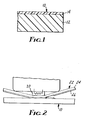
- a receptor sheet 10 comprising a backing 12 and an image receptive layer 14.
- the backing 12 should be sufficiently flexible in order to be able to travel through conventional thermal mass transfer printers. Whenever the receptor sheet 10 is to be used for preparing transparencies for overhead projection, the backing 12 must be transparent to visible light.
- Representative examples of materials that are suitable for the backing 12 include polyesters, polysulfones, polycarbonates, polyolefins, such as polypropylene, polystyrenes, cellulose esters, such as cellulose acetate and cellulose acetate butyrate.
- a preferred backing material is polyethylene terephthalate.
- the image receptive layer 14 must be compatible with wax, since most commercially available donor sheets are wax-based. Because different manufacturers generally use different wax formulations in their donor sheets, the image receptive layer 14 should preferably have an affinity for several different waxes, such as beeswax, carnauba wax, paraffin wax, microcrystalline wax, and other synthetic hydrocarbon waxes.
- a simple, useful test for determining whether a material for the image receptive layer is compatible with wax consists of dissolving 20 grams of wax in 80 grams of hot toluene. In a second container, 20 grams of the material being tested is dissolved in 180 grams of toluene. The two solutions are then mixed and coated onto polyester film at .63 mils wet thickness with a wirewound coating rod, then dried with hot forced air at about 82°C. The haze of the coating resulting therefrom must be less than 15% for the material being tested to be considered compatible with wax. Haze can be measured using a Gardner Model HG 1200 pivoting sphere hazemeter or equivalent instrument according to ASTM D1003 (1977). If toluene is not a suitable solvent for the test, other solvents may be used as long as the dried coating weight is comparable to that described above.
- the critical surface tension of the surface of the image receptive layer 14 must be sufficiently high to assure that the image receptive layer 14 of the receptor sheet 10 is wet by the wax of the donor sheet when the wax is in the molten state. Wetting will occur only if the surface tension of the donor material is below that of the surface of the image receptive layer 14. Since most waxes, particularly in the molten state, have values of surface tension of 31 dynes per centimeter or less, this condition can usually be met by choosing for the image receptive layer 14 polymers having a critical surface tension of at least 31 dynes per centimeter.
- Critical surface tension is a measure of the "wettability" of a solid surface, and surfaces having higher wettability exhibit higher values of critical surface tension. Calculation of the critical surface tension of a material consists of recording contact angles of drops of various liquids on the surface of a layer of material being evaluated, plotting a curve of contact angle against surface tension of the liquid, and extrapolating to a contact angle of zero.
- the critical surface tension is the surface tension which a liquid would have to have in order to just form a droplet with zero contact angle with the surface under consideration.
- Surface tension of liquids can be measured by means of a du Nouy tensiometer, using adaptations of methods given in ASTM D1331 (1980). Materials suitable for image receptive layers should preferably have a critical surface tension above 31 dynes per centimeter, more preferably above 35 dynes per centimeter.
- the image receptive layer 14 should soften at a temperature below the imaging temperature, more specifically, between about 30°C and about 90°C., and preferably between about 60°C and about 80°C.
- the imaging temperature is normally 90°C or higher.
- Softening temperature means Vicat softening temperature determined in accordance with ASTM D1525 (1982) for polymers with no sharp melting point, or, for polymers which do exhibit a sharp melting point, the melting point itself.
- a softening temperature below about 30°C is not desirable, since the layer 14 is then likely to become tacky and soft at normal room temperatures. This would lead to fingerprinting, blocking of stacked film, and other undesirable handling characteristics.
- the softening temperature of image receptive layers formed from certain polymers can be raised by blending wax with the polymer. However, this technique may introduce haze, unless the polymer and wax have a relatively high degree of compatibility.
- a softening temperature above about 90°C is not desirable, since the image receptive layer 14 is unlikely to soften sufficiently to receive wax from the donor sheet at the imaging temperature.
- the proper selection of critical surface tension and softening temperature, as described above, are necessary conditions for a useful receptor sheet 10 for thermal mass transfer printing.
- the receptor sheet 10 in order for the receptor sheet 10 to be useful in a commercial setting, the receptor sheet is preferably non-tacky and handleable under the conditions to which overhead transparencies are normally subjected; it is preferably capable of being fed reliably in conventional thermal mass transfer printers; and it is preferably of sufficient durability so that it will remain useable after such handling and feeding. If the receptor sheet is to be used for preparing transparencies, such as for overhead projection, the image receptive layer should be transparent to visible light.
- a useful measure of how well a particular receptor sheet 10 and image receptive layer 14 thereof meets the commercial requirement of reliable feeding in a conventional thermal mass transfer printer is the coefficient of static friction measured against aluminum according to ASTM D1894 (1978).
- Aluminum was chosen as the reference surface because tests on a variety of receptor sheet samples have shown aluminum to be a reliable indicator of those properties which have been found important in the general handling and feeding of transparency films.
- coefficients of static friction greater than 1.0 indicate rubbery or tacky surfaces.
- Coefficients of static friction above 0.6 indicate, for smooth, non-abrasive surfaces, that the surface may be somewhat soft, but still useable for thermal mass transfer printing.
- An image receptive layer 14 having a coefficient of static friction below 0.5 should handle well and feed reliably in most commercially available thermal mass transfer printers, though the exact coefficient of friction which can be tolerated is dependent upon the mechanical details of a given thermal printer, and upon such features of the backing 12 as beam strength, and hence caliper. For a particular make and model of thermal mass transfer printer, the acceptable range of coefficient of static friction can be determined by feeding sample receptor sheets through that printer.
- the surface of the image receptive layer 14 may tend to be tacky, and consequently, the receptor sheet 10 may be difficult to feed into the printer. This tackiness may also result in unwanted pigment transfer in the unimaged background areas.
- certain waxes at an appropriate level, into the composition from which the image receptive layer is formed, it has been found that, at room temperature, such waxes prevent adjacent sheets from sticking together or single sheets from jamming in the printer. During the printing process, such waxes prevent pigmented wax from the donor sheet from sticking to the image receptive layer 14 in the unimaged background areas. However, at imaging temperatures, which are well above the melting point of the wax, the wax can combine with the softened, pigmented wax of the donor sheet and promote bonding between the pigmented wax and the image receptive layer 14 of the receptor sheet.
- Adhesion of the image receptive layer 14 to the backing 12 is vital to receptor sheet performance. Transfer of the pigmented wax from the donor sheet to the image receptive layer 14 is useful only if the anchoring of the image receptive layer 14 to the backing 12 is sufficiently strong to allow the image receptive layer to remain on the backing. In some cases, adhesion of the image receptive layer to the backing can be improved by incorporation of adhesion promoters into the composition from which the image receptive layer is formed. It is also possible, in some cases, that adhesion promoters may also serve a second function of improving the adhesion of the pigmented wax to the image receptive layer.
- Materials that have been found to be useful for forming the image receptive layer 14 include chlorinated polyolefins, polycaprolactones, blends of chlorinated polyolefin and polymethyl methacrylate, block copolymers of styrene-ethylene/butylene-styrene, and copolymers of ethylene and vinyl acetate.
- copolymers of ethylene and vinyl acetate should contain from about 10% to about 40% vinyl acetate units
- blends of chlorinated polyolefins and polymethyl methacrylate should contain no more than about 50% by weight polymethyl methacrylate.
- Waxes that have been found to be useful for incorporation into the composition for forming the image receptive layer 14 include paraffin wax, microcrystalline wax, beeswax, carnauba wax, and synthetic hydrocarbon waxes.
- the amount of wax used should not exceed 50% by weight of the image receptive layer.
- the amount of wax may comprise up to 20% by weight of the image receptive layer; more preferably, the amount of wax may comprise up to 12% by weight of the image receptive layer.
- additives or modifying agents such as antioxidants and tackifiers may also be included in the image receptive layer.
- the caliper of the receptor sheet 10 can range from about 1.5 mils to about 7 mils.
- a preferred caliper is about 3 mils about 5 mils.
- Typical coating weights for the image receptive layer 14 range from about 0.05 to about 2.0 grams per square foot.
- An opaque sheet may also be adhered to the side of the backing 12 opposite the side bearing the image receptive layer 14 in order to facilitate feeding of the receptor sheet 10 into the thermal mass transfer printing apparatus.
- the receptor sheet 10 can be prepared by introducing the ingredients for making the image receptive layer 14 into suitable solvents, mixing the resulting solutions at ambient temperature, e.g,. 25°C, then coating the resulting mixture onto the backing 12, and drying the resulting coating, preferably in a forced air oven.
- suitable coating techniques include knife coating, roll coating, air knife coating, curtain coating, etc. While the technique described above makes use of coating solutions, other methods of blending or coating may be used. Other possible techniques include latex suspensions and hot melt systems.
- the resulting receptor sheet 10 is useful for thermal mass transfer imaging processes with conventional thermal mass transfer printing apparatus, e.g., "Fuji Xerox Diablo” Model XJ-284 and “Okimate” Models 10 and 20 and conventional thermal mass transfer donor sheets, e.g., "Diablo” T052 Donor and "Okimate” donor ribbon.
- the receptor sheet 10 of this invention can be imaged in a thermal mass transfer printer (not shown) wherein the printing is conducted by a thermal head 20 which heats the donor sheet 22 in an imagewise manner.
- the donor sheet 22 comprises a backing 24 and a layer of donor material 26.
- a useful donor sheet is described in UK Patent Application GB 2,069,160 A, incorporated herein by reference.
- the backing 24 is generally a plastic film or paper, e.g. polyethylene film, polystyrene film, polypropylene film, glassine paper, synthetic paper, laminated paper.
- the donor material 26 is formed from a composition containing 1 to 20% by weight of a coloring agent, 20 to 80% by weight of a binder, and 3 to 25% by weight of a softening agent.
- the binder is normally a wax, e.g. haze wax, beeswax, ceresine wax, spermaceti.
- the softening agent is normally an easily heat meltable material, e.g. polyvinyl acetate, polystyrene, styrene-butadiene copolymer.
- the coloring agent is normally a conventional pigment.
- the thermal head 20 generates heat by pulse signals from a signalling device (not shown) so as to melt the donor material 26 and allow transfer thereof from the donor sheet 22 to the image receptive layer 14 of the receptor sheet 10.
- the image receptive layer 14 is softened by heat from the thermal head 20 that is conducted through the donor sheet 22.
- the thermal mass transfer printer is typically constructed so that pressure-applying means induces intimate contact between the donor sheet 22 and receptor sheet 10 to allow effective transfer of the donor material 26 to the image receptive layer 14.
- a 20% by weight solution of ethylene vinyl acetate copolymer (“Elvax” 310, 25% by weight vinyl acetate, E. I. DuPont de Nemours) was prepared by dissolving 20 grams of solid copolymer in 80 grams of toluene.
- a 20% by weight paraffin wax solution was prepared by dissolving 20 grams of paraffin wax ("Histowax" HX0482-5, EM Science, melting point 56°C) in 80 grams of toluene.
- a wax/copolymer blend was then formed by mixing the foregoing solutions together.
- the resulting solution was coated onto a 4 mil polyethylene terephthalate (PET) backing using an #7 RD S wirewound coating rod at a coating weight of about about 0.05 to about 0.07 gram per square foot. Drying was conducted in a forced air oven at 82°C for two minutes. The dried coating consisted of 50% by weight wax and 50% by weight ethylene vinyl acetate copolymer. Haze was less than 15%. The coefficient of static friction of the image receptive layer against aluminum was 0.2. The critical surface tension of ethylene vinyl acetate is approximately 32 dynes per centimeter.
- the softening temperature of "Elvax" 310 copolymer is 88° C , as measured by the ring and ball method (ASTM E28-67 (1982)), which corresponds to a Vicat softening temperature of approximately 32°C.
- Example I was repeated, the only exception being that the coating solution was applied at a coating weight of 2.0 grams per square foot, instead of .05 to .07 grams per square foot.
- the characteristics of the resulting film were similar to those of the film in Example I, and images formed thereon were also of excellent quality. This illustrates that the performance of the film is relatively insensitive to the coating weight of the image receptive layer over a relatively wide range.
- the softening temperature of polymethyl methacrylate is approximately 107°C, which is outside the prescribed range of 30-90°C.
- the critical surface tension of polymethyl methacrylate is 39 dynes per centimeter.
- Chlorinated polyolefin has a critical surface tension of approximately 38 dynes per centimeter, and a Vicat softening temperature of 57°C.
- the coefficients of static friction of the coatings against aluminum were in the range of .33 to .40.
- Feeding into the printer was acceptable regardless of coating weight. All of the image receptive layers provided acceptable printed images, but the samples having lower coating weights showed slight pinholing in the larger solid fill areas. This pinholing was progressively reduced by going to higher coating weights, until at a coating weight of 2.1 grams per square foot, there were almost no pinholes. This illustrates that even though acceptable copies can be produced over a wide range of coating weights, there can still exist a narrower range of optimum coating weights within the wide range.
- a coating composition consisting of equal parts ethylene vinyl acetate copolymer ("Elvax” 410, 18% vinyl acetate, E. I. DuPont de Nemours) and paraffin wax ("Histowax” HX0482-5) dissolved in toluene was applied to a 4 mil P ET backing and dried at 82°C. for three minutes.
- ethylene vinyl acetate copolymer Elvax 410, 18% vinyl acetate, E. I. DuPont de Nemours
- paraffin wax Histowax
- a 20% by weight solution of polycaprolactone (Union Carbide PCL700) in toluene was coated onto a 4 mil PET backing with a #7 RDS wire wound rod.
- Polycaprolactone has a melting point of 60°C and a critical surface tension of approximately 40 dynes per centimeter.
- the resulting coating was dried at 82°C for five minutes in a forced air oven.
- the image receptive layer had a coefficient of static friction against aluminum of 0.30.
- the receptor sheet fed reliably through the Fuji Xerox Diablo printer and the resulting image exhibited good optical density with no backgrounding.
- the critical surface tension of "Kraton" G-1652 copolymer is estimated to be just over 31 dynes per centimeter, and the Vicat softening temperature this block copolymer is within the prescribed range of 30-90°C.
- the coefficient of static friction of the coating was .26, feeding into the printer was reliable, and image quality was acceptable.
- a 4 mil PET backing was coated as in Example I with a 20% by weight solution of ethylene vinyl acetate copolymer ("Elvax" 310) in toluene, but without any added wax.
- the image receptive layer had a coefficient of static friction against aluminum of 1.50 and a softening temperature of about 88°C. Haze was less than 4%. when fed through the Fuji-Xerox Diablo printer used in Example I, the film jammed and the machine had to be opened to remove the crumpled film. However, images of excellent quality can be formed on the image receptive layer.
Landscapes
- Chemical & Material Sciences (AREA)
- Chemical Kinetics & Catalysis (AREA)
- Thermal Transfer Or Thermal Recording In General (AREA)
- Decoration By Transfer Pictures (AREA)
- Laminated Bodies (AREA)
- Credit Cards Or The Like (AREA)
Applications Claiming Priority (2)
| Application Number | Priority Date | Filing Date | Title |
|---|---|---|---|
| US809494 | 1985-12-16 | ||
| US06/809,494 US4686549A (en) | 1985-12-16 | 1985-12-16 | Receptor sheet for thermal mass transfer printing |
Publications (3)
| Publication Number | Publication Date |
|---|---|
| EP0228835A2 true EP0228835A2 (fr) | 1987-07-15 |
| EP0228835A3 EP0228835A3 (en) | 1988-08-17 |
| EP0228835B1 EP0228835B1 (fr) | 1993-01-27 |
Family
ID=25201475
Family Applications (1)
| Application Number | Title | Priority Date | Filing Date |
|---|---|---|---|
| EP19860309535 Expired - Lifetime EP0228835B1 (fr) | 1985-12-16 | 1986-12-08 | Pellicule réceptrice pour l'impression par transfert thermique |
Country Status (7)
| Country | Link |
|---|---|
| US (1) | US4686549A (fr) |
| EP (1) | EP0228835B1 (fr) |
| JP (1) | JPS62162592A (fr) |
| AU (1) | AU585400B2 (fr) |
| BR (1) | BR8605841A (fr) |
| CA (1) | CA1264550A (fr) |
| DE (1) | DE3687643T2 (fr) |
Cited By (6)
| Publication number | Priority date | Publication date | Assignee | Title |
|---|---|---|---|---|
| US5242888A (en) * | 1990-01-25 | 1993-09-07 | Arkwright, Incorporated | Polymeric matrix for thermal transfer recording |
| EP0683057A1 (fr) * | 1994-05-19 | 1995-11-22 | FELIX SCHOELLER JR. FOTO- UND SPEZIALPAPIERE GmbH & Co. KG. | Papier pour transfert d'images par chaleur sur des surfaces plates et poreuses |
| EP0767070A1 (fr) * | 1995-09-19 | 1997-04-09 | Dai Nippon Printing Co., Ltd. | Feuille réceptrice d'images pour transfert thermique contenant un terpolymère éthylénique |
| WO2004003093A1 (fr) | 2002-07-01 | 2004-01-08 | Ucb, S.A. | Compositions de revetement |
| US6712532B2 (en) | 2001-11-05 | 2004-03-30 | 3M Innovative Properties Company | Method of printing film and articles |
| EP2831865A1 (fr) * | 2012-03-27 | 2015-02-04 | ZIH Corp. | Dispositif d'identification flexible au toucher souple |
Families Citing this family (34)
| Publication number | Priority date | Publication date | Assignee | Title |
|---|---|---|---|---|
| US4870427A (en) * | 1986-11-19 | 1989-09-26 | Brother Kogyo Kabushiki Kaisha | Method of preparing dry transfer sheets by printing via ink ribbon |
| JP2694928B2 (ja) | 1986-12-09 | 1997-12-24 | ポラロイド コーポレーシヨン | 熱画像形成媒体 |
| JP2605307B2 (ja) * | 1987-11-04 | 1997-04-30 | 凸版印刷株式会社 | 熱転写材並びに被熱転写材及びこれらを用いた熱転写記録方法 |
| US4847237A (en) * | 1987-06-25 | 1989-07-11 | Minnesota Mining And Manufacturing Company | Thermal mass transfer imaging system |
| US4873135A (en) * | 1988-01-29 | 1989-10-10 | Minnesota Mining And Manufacturing Company | Preframed transparency film having improved feeding reliability |
| US5034438A (en) * | 1989-03-21 | 1991-07-23 | Minnesota Mining And Manufacturing Company | Anti-stick layer for thermal printing |
| US5264279A (en) * | 1989-09-19 | 1993-11-23 | Dai Nippon Insatsu Kabushiki Kaisha | Composite thermal transfer sheet |
| US5120609A (en) * | 1990-05-23 | 1992-06-09 | Xerox Corporation | Thermoplastic elastomeric sheet transport member |
| US5169468A (en) * | 1990-07-20 | 1992-12-08 | Graphics Technology International Inc. | Acceptor sheet for wax thermal mass transfer printing |
| US5175045A (en) * | 1990-10-05 | 1992-12-29 | Minnesota Mining And Manufacturing Company | Receptor sheet for thermal mass transfer imaging |
| JPH04255394A (ja) * | 1991-02-08 | 1992-09-10 | Matsushita Electric Ind Co Ltd | 熱転写記録用転写体、受像体及び熱転写記録方法 |
| WO1992021514A1 (fr) * | 1991-06-03 | 1992-12-10 | Key-Tech, Inc. | Procede d'impression par fusion de colorants sur du plastique |
| US5200254A (en) * | 1992-03-11 | 1993-04-06 | Minnesota Mining And Manufacturing Company | Receptor sheet manifolds for thermal mass transfer imaging |
| US5670005A (en) * | 1993-02-16 | 1997-09-23 | Minnesota Mining And Manufacturing Company | Method for manufacturing improved data display retroreflective sheeting |
| US5427847A (en) * | 1993-05-20 | 1995-06-27 | Rexham Graphics Inc. | Receptor sheet using low glass transition coating |
| US5464900A (en) * | 1993-10-19 | 1995-11-07 | Minnesota Mining And Manufacturing Company | Water soluble organosiloxane compounds |
| US5445866A (en) * | 1993-10-19 | 1995-08-29 | Minnesota Mining And Manufacturing Company | Water-based transparent image recording sheet |
| US5411787A (en) * | 1993-10-19 | 1995-05-02 | Minnesota Mining And Manufacturing Company | Water based transparent image recording sheet |
| US5460874A (en) * | 1994-09-30 | 1995-10-24 | Minnesota Mining And Manufacturing Company | Water-based coating compositions for imaging applications |
| US6143451A (en) * | 1996-11-26 | 2000-11-07 | E. I. Du Pont De Nemours And Company | Imaged laserable assemblages and associated processes with high speed and durable image-transfer characteristics for laser-induced thermal transfer |
| US6025860A (en) * | 1997-01-28 | 2000-02-15 | Gsi Lumonics, Inc. | Digital decorating system |
| US6999202B2 (en) | 2001-03-27 | 2006-02-14 | Polaroid Corporation | Method for generating a halftone of a source image |
| CN1329211C (zh) * | 2001-05-30 | 2007-08-01 | 宝丽来公司 | 纳孔接收体元件和传质热成象方法 |
| US6937365B2 (en) | 2001-05-30 | 2005-08-30 | Polaroid Corporation | Rendering images utilizing adaptive error diffusion |
| US6842186B2 (en) * | 2001-05-30 | 2005-01-11 | Polaroid Corporation | High speed photo-printing apparatus |
| US6906736B2 (en) | 2002-02-19 | 2005-06-14 | Polaroid Corporation | Technique for printing a color image |
| GB0207089D0 (en) * | 2002-03-26 | 2002-05-08 | Ucb Sa | Printable film |
| US20040171819A1 (en) * | 2002-10-10 | 2004-09-02 | Aventis Pharma S.A. | Mixtures of polysaccharides derived from heparin, their preparation and pharmaceutical compositions containing them |
| US7283666B2 (en) | 2003-02-27 | 2007-10-16 | Saquib Suhail S | Digital image exposure correction |
| US8773685B2 (en) | 2003-07-01 | 2014-07-08 | Intellectual Ventures I Llc | High-speed digital image printing system |
| US7501382B2 (en) * | 2003-07-07 | 2009-03-10 | Eastman Kodak Company | Slipping layer for dye-donor element used in thermal dye transfer |
| US7109147B2 (en) * | 2003-07-07 | 2006-09-19 | Eastman Kodak Company | Slipping layer containing a branched olefin for a dye-donor element used in thermal dye transfer |
| US7078366B2 (en) * | 2003-07-07 | 2006-07-18 | Eastman Kodak Company | Slipping layer containing wax mixture for dye-donor element used in thermal dye transfer |
| US20050009698A1 (en) * | 2003-07-07 | 2005-01-13 | Foster David G. | Slipping layer containing wax mixture for dye-donor element used in thermal dye transfer |
Family Cites Families (11)
| Publication number | Priority date | Publication date | Assignee | Title |
|---|---|---|---|---|
| US3898086A (en) * | 1974-07-12 | 1975-08-05 | Minnesota Mining & Mfg | Sheet material useful in image transfer techniques |
| JPS5698190A (en) * | 1980-01-07 | 1981-08-07 | Fuji Kagakushi Kogyo Co Ltd | Ribbon for color thermotranscription |
| CA1223154A (fr) * | 1983-07-25 | 1987-06-23 | Sadanobu Kawasaki | Feuille de thermodecalcomanie |
| JPS60110491A (ja) * | 1983-11-21 | 1985-06-15 | Toshiba Corp | 熱転写記録用紙とそれを用いる熱転写記録装置 |
| JPS60122192A (ja) * | 1983-12-07 | 1985-06-29 | Matsushita Electric Ind Co Ltd | 昇華型感熱記録装置 |
| JPS60154096A (ja) * | 1984-01-23 | 1985-08-13 | Sony Corp | 熱溶融転写に用いられる熱溶融インクの被転写体 |
| JPS6151385A (ja) * | 1984-08-20 | 1986-03-13 | Ricoh Co Ltd | 熱転写用被転写紙 |
| JPS6154982A (ja) * | 1984-08-27 | 1986-03-19 | Konishiroku Photo Ind Co Ltd | 感熱転写記録方法及び受像要素 |
| JPS61118294A (ja) * | 1984-11-14 | 1986-06-05 | Ricoh Co Ltd | 転写型感熱記録用被転写紙 |
| JPS61127390A (ja) * | 1984-11-27 | 1986-06-14 | Dainippon Printing Co Ltd | 光透過性を有する記録用シ−ト |
| JPS61135791A (ja) * | 1984-12-06 | 1986-06-23 | Sanyo Kokusaku Pulp Co Ltd | 感熱転写記録用シ−ト |
-
1985
- 1985-12-16 US US06/809,494 patent/US4686549A/en not_active Expired - Fee Related
-
1986
- 1986-10-21 CA CA000520993A patent/CA1264550A/fr not_active Expired
- 1986-10-23 AU AU64314/86A patent/AU585400B2/en not_active Ceased
- 1986-11-28 BR BR8605841A patent/BR8605841A/pt not_active IP Right Cessation
- 1986-12-08 DE DE8686309535T patent/DE3687643T2/de not_active Expired - Fee Related
- 1986-12-08 EP EP19860309535 patent/EP0228835B1/fr not_active Expired - Lifetime
- 1986-12-15 JP JP61298590A patent/JPS62162592A/ja active Pending
Cited By (7)
| Publication number | Priority date | Publication date | Assignee | Title |
|---|---|---|---|---|
| US5242888A (en) * | 1990-01-25 | 1993-09-07 | Arkwright, Incorporated | Polymeric matrix for thermal transfer recording |
| EP0683057A1 (fr) * | 1994-05-19 | 1995-11-22 | FELIX SCHOELLER JR. FOTO- UND SPEZIALPAPIERE GmbH & Co. KG. | Papier pour transfert d'images par chaleur sur des surfaces plates et poreuses |
| EP0767070A1 (fr) * | 1995-09-19 | 1997-04-09 | Dai Nippon Printing Co., Ltd. | Feuille réceptrice d'images pour transfert thermique contenant un terpolymère éthylénique |
| US5834397A (en) * | 1995-09-19 | 1998-11-10 | Dai Nippon Printing Co., Ltd. | Thermal transfer image-receiving sheet |
| US6712532B2 (en) | 2001-11-05 | 2004-03-30 | 3M Innovative Properties Company | Method of printing film and articles |
| WO2004003093A1 (fr) | 2002-07-01 | 2004-01-08 | Ucb, S.A. | Compositions de revetement |
| EP2831865A1 (fr) * | 2012-03-27 | 2015-02-04 | ZIH Corp. | Dispositif d'identification flexible au toucher souple |
Also Published As
| Publication number | Publication date |
|---|---|
| BR8605841A (pt) | 1987-08-25 |
| EP0228835B1 (fr) | 1993-01-27 |
| US4686549A (en) | 1987-08-11 |
| CA1264550A (fr) | 1990-01-23 |
| DE3687643T2 (de) | 1993-07-01 |
| AU6431486A (en) | 1987-06-18 |
| JPS62162592A (ja) | 1987-07-18 |
| DE3687643D1 (de) | 1993-03-11 |
| EP0228835A3 (en) | 1988-08-17 |
| AU585400B2 (en) | 1989-06-15 |
Similar Documents
| Publication | Publication Date | Title |
|---|---|---|
| US4686549A (en) | Receptor sheet for thermal mass transfer printing | |
| US5747148A (en) | Ink jet printing sheet | |
| US5242888A (en) | Polymeric matrix for thermal transfer recording | |
| JPH0615267B2 (ja) | 裏面層を有する熱染料転写受容素子 | |
| JP2001180126A (ja) | 熱転写リボン | |
| US4870427A (en) | Method of preparing dry transfer sheets by printing via ink ribbon | |
| US7081284B2 (en) | Thermal transfer recording medium, method of recording same, recorded medium and recorded label | |
| WO1994027830A1 (fr) | Feuille receptrice utilisant un revetement a basse temperature de transition du verre | |
| AU3215195A (en) | Ink jet printing sheet | |
| US5169468A (en) | Acceptor sheet for wax thermal mass transfer printing | |
| US3922438A (en) | Supercoated transfer elements and process for preparing and using same | |
| JPH11348496A (ja) | 転写箔および転写像形成方法 | |
| JPH11151869A (ja) | 感熱転写記録媒体 | |
| JP2011073341A (ja) | 熱転写受像シート | |
| JP2542506B2 (ja) | 熱転写用ohpシ―ト | |
| JP2002192839A (ja) | 熱転写シート | |
| JP2000108524A (ja) | 熱転写シート | |
| JPH05330252A (ja) | 熱転写受像シート及びその製造方法 | |
| JPH08244362A (ja) | 熱転写受像シート | |
| JP3236679B2 (ja) | 熱転写受像シート | |
| JPH03166992A (ja) | 熱転写シート | |
| JP2740269B2 (ja) | 熱転写受像シート | |
| JP3039868B2 (ja) | 受容層転写シート及びその製造方法 | |
| JPS62280084A (ja) | 被熱転写シ−ト | |
| JP3038220B2 (ja) | 感熱転写記録体 |
Legal Events
| Date | Code | Title | Description |
|---|---|---|---|
| PUAI | Public reference made under article 153(3) epc to a published international application that has entered the european phase |
Free format text: ORIGINAL CODE: 0009012 |
|
| AK | Designated contracting states |
Kind code of ref document: A2 Designated state(s): CH DE FR GB IT LI NL |
|
| PUAL | Search report despatched |
Free format text: ORIGINAL CODE: 0009013 |
|
| AK | Designated contracting states |
Kind code of ref document: A3 Designated state(s): CH DE FR GB IT LI NL |
|
| 17P | Request for examination filed |
Effective date: 19890127 |
|
| 17Q | First examination report despatched |
Effective date: 19901026 |
|
| GRAA | (expected) grant |
Free format text: ORIGINAL CODE: 0009210 |
|
| ITF | It: translation for a ep patent filed | ||
| AK | Designated contracting states |
Kind code of ref document: B1 Designated state(s): CH DE FR GB IT LI NL |
|
| REF | Corresponds to: |
Ref document number: 3687643 Country of ref document: DE Date of ref document: 19930311 |
|
| ET | Fr: translation filed | ||
| PLBE | No opposition filed within time limit |
Free format text: ORIGINAL CODE: 0009261 |
|
| STAA | Information on the status of an ep patent application or granted ep patent |
Free format text: STATUS: NO OPPOSITION FILED WITHIN TIME LIMIT |
|
| 26N | No opposition filed | ||
| PGFP | Annual fee paid to national office [announced via postgrant information from national office to epo] |
Ref country code: FR Payment date: 19991117 Year of fee payment: 14 |
|
| PGFP | Annual fee paid to national office [announced via postgrant information from national office to epo] |
Ref country code: GB Payment date: 19991118 Year of fee payment: 14 Ref country code: DE Payment date: 19991118 Year of fee payment: 14 |
|
| PGFP | Annual fee paid to national office [announced via postgrant information from national office to epo] |
Ref country code: NL Payment date: 19991122 Year of fee payment: 14 Ref country code: CH Payment date: 19991122 Year of fee payment: 14 |
|
| PG25 | Lapsed in a contracting state [announced via postgrant information from national office to epo] |
Ref country code: GB Free format text: LAPSE BECAUSE OF NON-PAYMENT OF DUE FEES Effective date: 20001208 |
|
| PG25 | Lapsed in a contracting state [announced via postgrant information from national office to epo] |
Ref country code: LI Free format text: LAPSE BECAUSE OF NON-PAYMENT OF DUE FEES Effective date: 20001231 Ref country code: CH Free format text: LAPSE BECAUSE OF NON-PAYMENT OF DUE FEES Effective date: 20001231 |
|
| PG25 | Lapsed in a contracting state [announced via postgrant information from national office to epo] |
Ref country code: NL Free format text: LAPSE BECAUSE OF NON-PAYMENT OF DUE FEES Effective date: 20010701 |
|
| GBPC | Gb: european patent ceased through non-payment of renewal fee |
Effective date: 20001208 |
|
| REG | Reference to a national code |
Ref country code: CH Ref legal event code: PL |
|
| PG25 | Lapsed in a contracting state [announced via postgrant information from national office to epo] |
Ref country code: FR Free format text: LAPSE BECAUSE OF NON-PAYMENT OF DUE FEES Effective date: 20010831 |
|
| NLV4 | Nl: lapsed or anulled due to non-payment of the annual fee |
Effective date: 20010701 |
|
| REG | Reference to a national code |
Ref country code: FR Ref legal event code: ST |
|
| PG25 | Lapsed in a contracting state [announced via postgrant information from national office to epo] |
Ref country code: DE Free format text: LAPSE BECAUSE OF NON-PAYMENT OF DUE FEES Effective date: 20011002 |
|
| PG25 | Lapsed in a contracting state [announced via postgrant information from national office to epo] |
Ref country code: IT Free format text: LAPSE BECAUSE OF NON-PAYMENT OF DUE FEES;WARNING: LAPSES OF ITALIAN PATENTS WITH EFFECTIVE DATE BEFORE 2007 MAY HAVE OCCURRED AT ANY TIME BEFORE 2007. THE CORRECT EFFECTIVE DATE MAY BE DIFFERENT FROM THE ONE RECORDED. Effective date: 20051208 |