EP0251494B1 - Composé thérapeutique ou radiodiagnostique - Google Patents
Composé thérapeutique ou radiodiagnostique Download PDFInfo
- Publication number
- EP0251494B1 EP0251494B1 EP87304796A EP87304796A EP0251494B1 EP 0251494 B1 EP0251494 B1 EP 0251494B1 EP 87304796 A EP87304796 A EP 87304796A EP 87304796 A EP87304796 A EP 87304796A EP 0251494 B1 EP0251494 B1 EP 0251494B1
- Authority
- EP
- European Patent Office
- Prior art keywords
- compound
- binding protein
- chelate
- pharmaceutical composition
- tumor
- Prior art date
- Legal status (The legal status is an assumption and is not a legal conclusion. Google has not performed a legal analysis and makes no representation as to the accuracy of the status listed.)
- Expired - Lifetime
Links
Images
Classifications
-
- B—PERFORMING OPERATIONS; TRANSPORTING
- B82—NANOTECHNOLOGY
- B82Y—SPECIFIC USES OR APPLICATIONS OF NANOSTRUCTURES; MEASUREMENT OR ANALYSIS OF NANOSTRUCTURES; MANUFACTURE OR TREATMENT OF NANOSTRUCTURES
- B82Y5/00—Nanobiotechnology or nanomedicine, e.g. protein engineering or drug delivery
-
- A—HUMAN NECESSITIES
- A61—MEDICAL OR VETERINARY SCIENCE; HYGIENE
- A61K—PREPARATIONS FOR MEDICAL, DENTAL OR TOILETRY PURPOSES
- A61K47/00—Medicinal preparations characterised by the non-active ingredients used, e.g. carriers or inert additives; Targeting or modifying agents chemically bound to the active ingredient
- A61K47/50—Medicinal preparations characterised by the non-active ingredients used, e.g. carriers or inert additives; Targeting or modifying agents chemically bound to the active ingredient the non-active ingredient being chemically bound to the active ingredient, e.g. polymer-drug conjugates
- A61K47/51—Medicinal preparations characterised by the non-active ingredients used, e.g. carriers or inert additives; Targeting or modifying agents chemically bound to the active ingredient the non-active ingredient being chemically bound to the active ingredient, e.g. polymer-drug conjugates the non-active ingredient being a modifying agent
- A61K47/68—Medicinal preparations characterised by the non-active ingredients used, e.g. carriers or inert additives; Targeting or modifying agents chemically bound to the active ingredient the non-active ingredient being chemically bound to the active ingredient, e.g. polymer-drug conjugates the non-active ingredient being a modifying agent the modifying agent being an antibody, an immunoglobulin or a fragment thereof, e.g. an Fc-fragment
- A61K47/6891—Pre-targeting systems involving an antibody for targeting specific cells
- A61K47/6897—Pre-targeting systems with two or three steps using antibody conjugates; Ligand-antiligand therapies
- A61K47/6898—Pre-targeting systems with two or three steps using antibody conjugates; Ligand-antiligand therapies using avidin- or biotin-conjugated antibodies
-
- A—HUMAN NECESSITIES
- A61—MEDICAL OR VETERINARY SCIENCE; HYGIENE
- A61K—PREPARATIONS FOR MEDICAL, DENTAL OR TOILETRY PURPOSES
- A61K51/00—Preparations containing radioactive substances for use in therapy or testing in vivo
- A61K51/02—Preparations containing radioactive substances for use in therapy or testing in vivo characterised by the carrier, i.e. characterised by the agent or material covalently linked or complexing the radioactive nucleus
- A61K51/04—Organic compounds
- A61K51/08—Peptides, e.g. proteins, carriers being peptides, polyamino acids, proteins
- A61K51/10—Antibodies or immunoglobulins; Fragments thereof, the carrier being an antibody, an immunoglobulin or a fragment thereof, e.g. a camelised human single domain antibody or the Fc fragment of an antibody
- A61K51/1093—Antibodies or immunoglobulins; Fragments thereof, the carrier being an antibody, an immunoglobulin or a fragment thereof, e.g. a camelised human single domain antibody or the Fc fragment of an antibody conjugates with carriers being antibodies
-
- A—HUMAN NECESSITIES
- A61—MEDICAL OR VETERINARY SCIENCE; HYGIENE
- A61K—PREPARATIONS FOR MEDICAL, DENTAL OR TOILETRY PURPOSES
- A61K2123/00—Preparations for testing in vivo
Definitions
- the present invention relates to a a therapeutic or diagnostic compound, and in particular, a radionuclide, to produce target-specific localization of the agent.
- a major focus of current drug research is to improve drug targeting to internal target sites, such as to solid tumors or specific organs.
- the objective of drug targeting is to enhance the effectiveness of the drug by concentrating it at the target site, and minimizing its effects in non-target sites.
- drug targeting allows more effective dosing at the target site with fewer non-tumor related side effects.
- the drug agent is a radionuclide for use in radioimaging
- targeting gives enhanced contrast between the target and background areas, because of reduced background levels of the radionuclide.
- Radionuclides are an important group of pharmaceutical agents for which a variety of targeting strategies have been proposed. Included in this group are radioimaging compounds, such as metal chelates of 111In, 67Ga, 64Cu, 99m Tc, 68Ga, 62Zn, 57Cu, 197Hg, 97Ru, 57Co, or 53Co, which are used to image internal sites, particularly solid tumors, by intravenous administration and systemic uptake of the chelates. Also included are radiotherapeutic agents, such as the metal chelates of 90Y, 197Hg or 67Cu, or conjugates of other radioactive elements, such as 131I which are used in treating tumors and the like, based on localized cell destruction from ionizing radiation. A related group of pharmaceutical agents are non-radioactive metal chelates such as iron, copper or ruthenium chelates, which produce cytotoxic effects through redox mechanisms, and can also potentiate the cytotoxic action of radiation on cells.
- radioimaging compounds such as metal
- these compounds are bifunctional chelating agents which have, as one functional group, a chelating moiety capable of forming a tight complex with a metal ion, and as a second functional group, a chemically reactive moiety, such as a nitro or amine group, through which the compound can be coupled to a targeting or other molecule (Meares, 1976; Goodwin et al, 1975, 1976, 1979).
- EDTA ethylenediamintetraacetic acid
- One of the earliest of these compounds was prepared by alkylating purified bleomymin A2 with a reactive bifunctional compound, such as p-bromoacetamidobenzyl-EDTA (BABE-EDTA), to link the chelate to bleomycin through a sulfonium group (DeRiemer; Goodwin, 1979, 1981; Chang).
- a reactive bifunctional compound such as p-bromoacetamidobenzyl-EDTA (BABE-EDTA)
- One method for increasing the concentration of a dose-limited, but rapidly cleared, target compound is to coadminister the compound in an antibody-complexed form. Because of its relatively large size, the complex is not cleared by the kidneys, but instead, is removed slowly from the bloodstream over a several day period by the reticuloendothelial system (RES).
- RES reticuloendothelial system
- the antibodies when coadministered with BLEDTA-111In, increased the whole body level of BLEDTA-111In after 24 hours between 10-30 times, presumably by retaining the BLEDTA-In compound in a tightly bound systemic form which is cleared slowly from the bloodstream.
- the increased uptake of the compound in the presence of circulating anti-compound antibodies is, however, a relatively non-specific effect, since a variety of organs which were tested for 111In levels also showed significantly increased radioactivity after 24 hours. Therefore, the advantage of enhanced tumor uptake of the compound produced by coadministration of an antibody is partially offset by (1) higher background levels of radioactivity (or a therapeutic agent) in non-tumor organs, and (2), greater total patient exposure to the conjugate, e.g., greater radiation exposure in the case of a conjugate having a chelated radionuclide.
- the system of the invention includes (a) a biotinylated compound containing the agent to be localized (b) an avidin-containing protein capable of localizing selectively at a target site when administered to a subject parenterally, and (c) a clearing agent capable of reacting with the binding protein when circulating in the bloodstream of the subject, to form a macromolecular aggregate which can be cleared by the subject's reticuloendothelial system.
- the invention is designed for use in targeting a therapeutic or diagnostic agent at a specific internal body site, such as a solid tumor or selected organ or tissue site.
- a therapeutic or diagnostic agent at a specific internal body site, such as a solid tumor or selected organ or tissue site.
- the agent which is targeted is a biotinylated compound having a pharmaceutically active therapeutic or diagnostic, particularly radiomaging, moiety (the active moiety), and one or more biotin moieties which can bind specifically and with high affinity to an avidin-containing binding protein.
- the active moiety of the compound is a pharmaceutically active agent, such as a drug, radionuclide, hormone, toxin, metabolite, anti-metaboilite, vitamin, enzyme-cofactor, or the like which can be derivatized to one or more biotin groups without loss of activity.
- active agents include anti-tumor agents, as exemplified by doxorubicin, cisplatin, DNA alkylating or cross-linking agents, and antimetabolites; and antimicrobial agents, such as aminoglycosides and polyene and macrolide antibiotics, such as amphotericin B.
- chelated metals including chelated radionuclides useful for radioimaging, such as 111In, 67 Ga, 64Cu, 99m Tc, 68Ga, 62Zn, 67Cu, 197Hg, 97Ru, 57Co, or 53Co; chelated radionuclides useful for tumor therapy, such as 90Y, 197Hg or 67Cu; and a radio-sensitizing chelated metals, such as chelated iron, copper or ruthenium.
- chelated radionuclides useful for radioimaging such as 111In, 67 Ga, 64Cu, 99m Tc, 68Ga, 62Zn, 67Cu, 197Hg, 97Ru, 57Co, or 53Co
- chelated radionuclides useful for tumor therapy such as 90Y, 197Hg or 67Cu
- a radio-sensitizing chelated metals such as chelated iron, copper or ruthenium.
- the method of the invention requires that the biotinylated compound be sufficiently small and soluble when administered parenterally that it can be cleared rapidly from the kidneys.
- biotinylated compound typically molecules with molecular weights less than 50,000 daltons, and preferably less than 10,000 daltons, and which exist predominantly in monomolecular form in serum generally satisfy these requirements.
- biotinylating compounds at reactive chemical sites, such as carboxyl, amino, nitro, hydroxyl, aldehyde, and sulhydryl sites.
- biotin-NHS N-hydroxysuccinimide ester of biotin
- the amine group may itself may be added to the target compound as a spacer arm, which is also joined to the target compound by standard coupling techniques.
- biotinylated EDTA compound illustrated in Figure 1 was formed by reacting a putrescein (1,4-butanediamine) with p-isothiocyanato benzyl EDTA, to couple the putrescein spacer arm to the bifunctional EDTA compound. Derivatization with biotin-NHS then yielded the desired biotinylated compound.
- Other coupling methods suitable for producing biotinylated target molecules are available and known to those in the art.
- Biotinylated compounds containing two or more biotin groups, to give enhanced binding to avidin or streptavidin may be prepared by the same general methods discussed above.
- the individual groups can be attached to different sites on an active agent, or may be attached at different positions on a single spacer arm attached to the active agent.
- the avidin-containing binding protein in the system of the invention serves both as a targeting agent capable of localizing specifically at an internal target site, and as a binding agent, for binding the biotinylated compound to the target site.
- the binding protein is an antibody capable of binding specifically to a hapten-derivatized compound.
- antibodies offer the advantage that they can be prepared against a wide variety of epitopes
- avidin has the advantage of a very high binding affinity (about 1015 M ⁇ 1) for the epitope biotin, as compared to binding affinities of between 109 to 1012 for hapten/antibody pairs.
- the advantage of the high binding constant in the present invention is that the invention can be practiced using much smaller quantities of injected binding protein.
- the amount of avidin which need be injected can be several orders of magnitude smaller than the amount of antibody needed to produce equivalent levels of bound target compound at the target site. Accordingly, immune reaction problems which may arise by parenteral administration of relatively large doses of foreign protein are greatly minimized.
- Avidin, an egg protein, and streptavidin are commercially available in purified form suitable for use in human therapeutics. These proteins can be derivatized to antibody or antibody fragment molecules by known coupling methods, which include condensation and cross-linking reactions.
- the monoclonal antibody/streptavidin conjugate described in Example 2 was formed using the cross-linking reagents 2-imminothiolane and succinimidyl 4-(N-maleimidomethyl)cyclohexane-1-carboxylate, according to known methods.
- Other coupling agents such as soluble carbodiimides, and di-N-hydroxysuccinimide compounds may also be used.
- the invention relies on the ability of the protein, when administered parenterally, to localize selectively from the bloodstream to the target site. For efficient localization, this requires that the protein (a) have a relatively long circulating half life in the bloodstream, and (b) be capable of accumulating in the target organ.
- avidin, streptavidin, and antibodies or antibody fragments derivatized with either is large enough to prevent rapid renal clearance, but not so large as to promote rapid clearance by the RES.
- Binding proteins, including various types of hybrid proteins discussed below, in the size range between 50-500,000 daltons are most suitable.
- the targeting capability of the binding protein may be based on the ability of the protein to bind specifically to target site antigens, or on protein size or membrane permeability characteristics, or to a combination of these factors.
- Most target sites, including tumor target sites contain tissue-specific surface antigens against which the binding protein can be directed, and antibodies specific against a variety of normal and malignant tissues, such as used in Example 2, have been reported.
- the antibody may be an intact serum, or preferably monoclonal, antibody specific against target tissue antigens, or an antibody fragment, such as the F(ab ⁇ )2 or Fab fragment produced by enzymatic cleavage of intact antibody.
- the antibodies or antibody fragments in the hybrid protein would function is tissue targeting, while the avidin moiety would provide high affinity binding for biotin-labelled compounds which are targeted to the site.
- selective protein localization in the tumor is based on the ability of the protein to penetrate selectively the more permeable, i.e., leaky, capillaries which normally are associated with solid tumors.
- the advantage of this approach is greater simplicity in preparing the binding protein.
- Examples 1 and 2 below illustrate tumor targeting with streptavidin alone (Example 1), and streptavidin conjugated with an anti-tumor monoclonal antibody.
- the clearing agent in the system of the invention functions to bind to and cross-link binding proteins which are circulating in the bloodstream of the treated individual, to promote rapid clearance of the binding protein aggregates by the RES.
- the agent is preferably large enough to avoid rapid renal clearance, and contains sufficient multivalency to cross-link and aggregate circulating binding proteins. Therefore, the protein preferably has a molecular weight of 50,000 daltons or more, and is derivatized with biotin at a mole ratio of about 1:4 protein:biotin or higher.
- protein aggregation by the clearing agent also requires at least two avidin molecules on each binding protein.
- human transferrin can be biotinylated by reaction with biotin in the presence of a suitable condensing agent, such as a soluble carbodiimide, or by reaction with the above biotin-NHS reagent.
- the method of the invention is designed for targeting a therapeutic or radiodiagnostic agent to a selected internal body site, such as a tumor region, an internal organ, or some other specific tissue region.
- the binding protein is administered parenterally, i.e., into the bloodstream, preferably by intravenous (IV) administration. From here, the protein slowly passes from the blood, through the extracellular fluid (ECF), and into the body tissues, including the target site, accumulating preferentially in the tumor site because of the targeting feature of the protein.
- IV intravenous
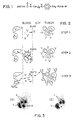
- This initial step is illustrated at the top in Figure 2, which shows slow passage of an avidin-labeled antibody binding protein from the bloodstream (dotted-line column) through the ECF into a tumor site.
- the binding protein is delivered in non-complexed form, i.e., without bound biotinylated compound so that the treated individual is not exposed to the compound during the extended period of protein localization at the tumor site.
- the amount of binding protein which is injected is calculated to yield a selected concentration of the biotinylated compound at the target site, in the final targeting step. This amount will depend on several factors which include: (a) the relative degree of localization of the binding protein in target and non-target regions of the body, (b) the persistence of the binding protein in the blood and, most importantly, (c) the binding constant of the binding protein, when localized at the target site, for the epitopic compound.
- the optimal amount of binding protein which is administered can be approximately determined by combining known binding constant data with empirical studies on animal model systems. Studies conducted in support of the present invention indicate that effective targeting of a biotinylated EDTA compound required an initial avidin or streptavidin doses which are substantially less than the 10-100 mg dose required for achieving the same level of localized chelate using an anti-chelate antibody as the prelocalizing agent.
- the administered binding protein which has a circulating half life in the blood of one to several days, is allowed to localize in the target organ over period of typically about 1-4 days. During this period the binding protein is slowly taken up from the blood by the target tissue, as well as other tissues. In the case of tumors, binding protein accumulation at the target site is enhanced because of the relatively greater leakiness of the capillaries which supply the tumor.
- tumor localization can be based solely on preferential protein (e.g., avidin or streptavidin) leakage into the tumor. This mechanism is illustrated in the targeting methods illustrated in Examples 1 and 2, which both show accumulation of an avidin binding protein in tumor regions 24 hours after intravenous administration.
- the circulating binding protein is cleared rapidly from the bloodstream, to reduce total blood levels of the protein severalfold, without appreciably effecting the levels of binding protein which have accumulated in the target.
- This step which is illustrated in the center frame of Figure 2, is based on the formation in the bloodstream of aggregates of binding proteins and clearing agent, and rapid clearance of these aggregates by the RES.
- the aggregates formed in the bloodstream are shown being removed by the liver, the principle site of uptake by the RES. Because of its rapid removal, the clearing agent does not accumulate appreciably outside the bloodstream, and therefore has little effect on the disposition of binding protein already localized outside the bloodstream.
- the amount of clearing agent which is administered is preferably in a molar ratio of between about 1:5-5:1 with respect to the quantity of binding protein calculated to be the bloodstream of the treated individual at the time of the clearing step.
- the amount of binding protein present in the bloodstream 24 hours after iv administration is typically between 15-25% of the total amount administered.
- the total time allowed for clearance of the binding protein i.e., before the epitopic compound is administered, may be as short as 15 minutes, but typically ranges from 1-4 hours.
- blood levels were reduced about over 40 fold with the chase, as measured by the amount of radiolabelled biotinylated chelate taken up by the blood before and after the clearing step.
- the biotinylated compound is administered parenterally, and preferably intravenously, for selective uptake of the localized binding protein.
- This step which is illustrated at the bottom in Figure 2, involves rapid uptake of the compound by the localized binding protein, in competition with rapid clearance from the bloodstream by the kidneys.
- the amount of biotinylated compound which is administered is calculated to produce a desired concentration of compound at the target site shortly after compound injection, usually within 1-4 hours after injection.
- the optimal dosage can be calculated approximately from studies on a model animal system combined with the known binding affinity of the binding protein for the compound.
- Example 3 In a related study, detailed in Example 3, a monoclonal antibody (not conjugated to avidin) specific against an non-biotinylated EDTA chelate was administered, followed by a chase after 20 hours with transferrin-labelled chelate. One hour later, chelate-57Co was given, and allowed to localize for three hours.
- Figure 3A which shows localization of the label in the kidneys (K), bladder (B) and flank tumor (T).
- the distribution of the label in the tumor, blood and other tissues three hours after label injection is shown in Table 1 in Example 3.
- the data show high tumor-to-organ ratios for blood, and other internal organs. The higher levels of radiolabel in the kidneys seen in the present study is due presumably to slower clearance of the radiolabeled compound from the kidneys.
- Figure 3B shows the same animal imaged in Figure 3A, but imaged 24 hours after compound administration.
- the major difference in the longer-term imaging is an absence of label in the bladder. Good tumor imaging with low background is still achieved.
- the example 3 study indicates the enhancement in tumor imaging that can be achieved by the method of the invention, but differs from the invention in that the antibody (binding protein) levels which must be administered are substantially higher than those needed in the present invention to achieve sufficient concentration of the targeting compound in the target site.
- the method provides selective localization of a therapeutic or radioimaging compound, based on accumulation of a target-specific binding protein at the selected target site. This feature allows for improved therapeutic effect with reduced side effects for therapeutic agents, and improved imaging with reduced background levels, particularly background levels due to circulating radionuclide.
- radionuclides with half lives of about 1-6 hours can be used for radioimaging.
- the method allows both 99m Tc, whose half life is about 6 hours, and 68Ga, whose half life is 68 minutes, to be used at relatively low radioactivity levels for radioimaging of tumors or other internal target sites.
- the particular advantage of 68Ga as a radioimaging agent is its use in photon emission tomography, an imaging technique that allows quantitation of localized radiolabel and resolution down to 5 mm.
- the ability to localize large quantities of the radionuclide in an hour or less is compatible with radionuclide amounts which can be produced with a much less expensive 68Ga generator.
- the rapid clearance of non-localized compound by the kidneys means that the toxicity associated with the compound in systemic form can be reduced substantially.
- 111In radioimaging for example, it has been necessary heretofore to attach the metal to a circulating protein, to achieve high levels of the radionuclide at a localized site. This approach is limited by the amount of protein-conjugated metal which can be safely administered due to high levels of the radionuclide in the bloodstream over a several day period. In the present invention, most of the non-localized radionuclide is cleared in a few hours. This advantage also applies to therapeutic drugs, such as anti-tumor drugs, which must be given in large doses to achieve an effective drug level at the target site.
- Drug treatment has been limited heretofore, for many anti-tumor drugs, by serious side effects associated with large dose levels.
- the specific binding of the drug at the target sites due to the presence there of concentrated binding protein, allows therapeutically effective drug concentrations to be achieved at the tumor site with smaller doses of injected drug.
- the avidin-containing binding protein can be administered in relatively low doses due to its high binding affinity for the biotinylated target compound. Therefore the risk of immune reaction to the administered binding protein is substantially less than where the binding protein is an unconjugated antibody, which must be administered in substantially greater dosage. Further, the cost of treatment materials is reduced.
- Biotin was coupled to p-isothicyanato EDTA through a putrescein spacer, as described above, and the biotinylated chelate compound was labeled with In-111, according to standard methods. The animals retained about 6% of the total radioactivity 6 hours after intravenous injection, and about 2%, 24 hours after injection.
- In-111 compound (0.03 nmoles) was complexed with avidin (0.1 nmole), and administered intravenously, 70% was retained after 24 hours, but was localized mostly in the liver (42%/g liver; 0.03%/g blood%).
- streptavidin was substituted, 75% was retained after 24 hours, but stayed in circulation to a much greater extent (10%/g liver; 6%/g blood).
- mice with KHJJ tumors were pretargeted with 0.25 nmole steptavidin by intravenous injection.
- an iv chase of biotinylated human transferrin was given, followed at 21 hours with 0.016 nmole of the above biotinylated EDTA-In-111 compound.
- the biodistribution of the In-111 compound as measured 3 hours after compound administration, showed a tumor uptake level of 0.45% dose/g, and a tumor/blood ratio of 4.74.
- the tumor/blood ratio was 1.52.
- Mouse monoclonal antibody SIC5 an IgG2a antibody, which is anti-idiotypic to surface IgM on mouse B cell lymphoma 38C-13 was covalently linked to streptavidin using the bifunctional crosslinking reagents 2-imminothiolane and and succinimidyl 4-(N-maleimidomethyl)cyclohexane-1-carboxylate, both obtained from commercial sources.
- Biotinylated EDTA complexed with In-111 was prepared as above.
- the bifunctional chimeric antibody was injected intravenously in C3H mice with 38C-13 flank tumors, and allowed to localize for 20 hours, at which time biotinylated human transferrin was given as a chase.
- the animals were each injected IV with the biotinylated-EDTA-In-111 compound, and organ distribution of radioactivity was measured within 1-3 hours, when renal clearance had lowered the background levels of In-111 sufficiently.
- Control animals were similarly treated but without receiving the chase and/or antibody, and with covalently labeled In-111 chelate conjugates of the SIC5 antibody.
- mice prepared with a KHJJ adenocarcinoma tumor implants in the flank were administered 100 mg of monoclonal antibody specific against an EDTA conjugate. Twenty hours after antibody administration, the animals were given a chase of the transferrin/EDTA-conjugate clearing agent, and one hour later (21 hours after antibody administration), the animal received an injection of the EDTA conjugate complexed with In-111. Three hours later, a whole-body scan, using computer digitation of the whole-body image, was performed on the animals. A representative image obtained for one of the animals in shown in Figure 3A. The image shows a concentration of radiolabel in the kidneys (K), bladder (B), and the tumor region (T).
Landscapes
- Health & Medical Sciences (AREA)
- Life Sciences & Earth Sciences (AREA)
- Chemical & Material Sciences (AREA)
- Engineering & Computer Science (AREA)
- General Health & Medical Sciences (AREA)
- Pharmacology & Pharmacy (AREA)
- Medicinal Chemistry (AREA)
- Proteomics, Peptides & Aminoacids (AREA)
- Nanotechnology (AREA)
- Epidemiology (AREA)
- Animal Behavior & Ethology (AREA)
- Bioinformatics & Cheminformatics (AREA)
- Public Health (AREA)
- Veterinary Medicine (AREA)
- Immunology (AREA)
- Optics & Photonics (AREA)
- Biophysics (AREA)
- Biotechnology (AREA)
- General Engineering & Computer Science (AREA)
- Medical Informatics (AREA)
- Molecular Biology (AREA)
- Crystallography & Structural Chemistry (AREA)
- Physics & Mathematics (AREA)
- Medicines Containing Antibodies Or Antigens For Use As Internal Diagnostic Agents (AREA)
- Medicines That Contain Protein Lipid Enzymes And Other Medicines (AREA)
- Medicinal Preparation (AREA)
- Pharmaceuticals Containing Other Organic And Inorganic Compounds (AREA)
- Acyclic And Carbocyclic Compounds In Medicinal Compositions (AREA)
Claims (9)
- Composition pharmaceutique comprenant des constituants qui localisent un agent de diagnostic ou un agent thérapeutique au niveau d'un site interne choisi comme cible chez un sujet lorsque les constituants sont administrés successivement par voie parentérale au sujet, lesdits constituants comprenant
une protéine de liaison contenant de l'avidine, capable de se localiser sélectivement au niveau du site servant de cible lors de son administration parentérale au sujet ;
un agent de dissipation comprenant une protéine biotinylée, ladite protéine ayant un poids moléculaire d'au moins 50 000 daltons et ayant un rapport protéine:biotine d'au moins 1:4, capable de réagir avec ladite protéine de liaison lors de la circulation dans le courant sanguin du sujet et formant un agrégat macromoléculaire qui est dissipé par le système réticulo-entothélial particulier du sujet ; et
un composé biotinylé contenant l'agent transformé en dérivé avec la biotine. - Composition pharmaceutique suivant la revendication 1, dans laquelle la protéine de liaison est l'avidine ou la streptavidine.
- Composition pharmaceutique suivant la revendication 1, dans laquelle la protéine de liaison est un anticorps conjugué à l'avidine ou à la streptavidine.
- Composition pharmaceutique suivant l'une quelconque des revendications 1 à 3, destinée à être utilisée pour délivrer un radionucléide au site choisi comme cible, dans laquelle le composé biotinylé est un chélate biotinylé complexé avec un radionucléide consistant en un ion métallique pour former un complexe de chélate métallique stable.
- Composition pharmaceutique suivant la revendication 4, dans laquelle le chélate est un chélate métallique de 1-phényl- ou 1-benzyl-EDTA.
- Composition pharmaceutique suivant la revendication 5, dans laquelle le chélate est un chélate métallique comprenant un bras intercalaire thiobutane lié au groupement benzyle.
- Composition pharmaceutique suivant l'une quelconque des revendications 4 à 6, destinée à être utilisée dans le traitement d'une tumeur solide et dans laquelle le chélate métallique est un chélate de ⁹⁰Y, ¹⁹⁷Hg ou ⁶⁷Cu, ou bien destinée à être utilisée dans la radiosensibilisation d'une tumeur somatique et dans laquelle le chélate métallique est un chélate de fer, de cuivre ou de ruthénium.
- Composition pharmaceutique suivant l'une quelconque des revendications 4 à 6, qui est destinée à être utilisée en radio-imagerie d'une tumeur somatique et dans laquelle le chélate métallique est un chélate de ¹¹¹In, ⁶⁷Ga, ⁶⁴Cu, 99mTc, ⁶⁸Ga, ⁶²Zn, ⁶⁷Cu, ¹⁹⁷Hg, ⁹⁷Ru, ⁵⁷Co ou ⁵³Co.
- Composition pharmaceutique suivant l'une quelconque des revendications précédentes, dans laquelle la protéine de liaison peut passer sélectivement à travers les parois des capillaires qui amènent le sang à une tumeur.
Priority Applications (1)
| Application Number | Priority Date | Filing Date | Title |
|---|---|---|---|
| AT87304796T ATE81018T1 (de) | 1986-06-23 | 1987-05-29 | Therapeutische oder radiodiagnostische substanz. |
Applications Claiming Priority (2)
| Application Number | Priority Date | Filing Date | Title |
|---|---|---|---|
| US06/877,327 US4863713A (en) | 1986-06-23 | 1986-06-23 | Method and system for administering therapeutic and diagnostic agents |
| US877327 | 1986-06-23 |
Publications (3)
| Publication Number | Publication Date |
|---|---|
| EP0251494A2 EP0251494A2 (fr) | 1988-01-07 |
| EP0251494A3 EP0251494A3 (en) | 1990-01-10 |
| EP0251494B1 true EP0251494B1 (fr) | 1992-09-30 |
Family
ID=25369744
Family Applications (1)
| Application Number | Title | Priority Date | Filing Date |
|---|---|---|---|
| EP87304796A Expired - Lifetime EP0251494B1 (fr) | 1986-06-23 | 1987-05-29 | Composé thérapeutique ou radiodiagnostique |
Country Status (5)
| Country | Link |
|---|---|
| US (1) | US4863713A (fr) |
| EP (1) | EP0251494B1 (fr) |
| JP (1) | JPH085808B2 (fr) |
| AT (1) | ATE81018T1 (fr) |
| DE (1) | DE3781946T2 (fr) |
Families Citing this family (111)
| Publication number | Priority date | Publication date | Assignee | Title |
|---|---|---|---|---|
| US5283342A (en) * | 1992-06-09 | 1994-02-01 | Neorx Corporation | Biotinylated small molecules |
| US6075010A (en) * | 1992-06-09 | 2000-06-13 | Neorx Corporation | Small molecular weight ligand-hexose containing clearing agents |
| US6416738B1 (en) | 1973-12-07 | 2002-07-09 | Neorx Corporation | Pretargeting methods and compounds |
| US5556982A (en) * | 1985-01-14 | 1996-09-17 | Neorx Corporation | Metal radionuclide labeled proteins for diagnosis and therapy |
| US5525338A (en) * | 1992-08-21 | 1996-06-11 | Immunomedics, Inc. | Detection and therapy of lesions with biotin/avidin conjugates |
| FR2604092B1 (fr) * | 1986-09-19 | 1990-04-13 | Immunotech Sa | Immunoreactifs destines a cibler les cellules animales pour leur visualisation ou leur destruction in vivo |
| US5420105A (en) * | 1988-09-23 | 1995-05-30 | Gustavson; Linda M. | Polymeric carriers for non-covalent drug conjugation |
| US5474772A (en) * | 1989-08-02 | 1995-12-12 | Cobe Laboratories, Inc. | Method of treatment with medical agents |
| FR2652004B1 (fr) * | 1989-09-21 | 1994-10-28 | Immunotech Partners | Nouveaux derives hydrophiles, application au diagnostic et a la therapeutique, kits diagnostiques ou therapeutiques et reactifs immunologiques. |
| US5527528A (en) * | 1989-10-20 | 1996-06-18 | Sequus Pharmaceuticals, Inc. | Solid-tumor treatment method |
| US5620689A (en) * | 1989-10-20 | 1997-04-15 | Sequus Pharmaceuuticals, Inc. | Liposomes for treatment of B-cell and T-cell disorders |
| US5130129A (en) * | 1990-03-06 | 1992-07-14 | The Regents Of The University Of California | Method for enhancing antibody transport through capillary barriers |
| DK176290D0 (da) * | 1990-07-24 | 1990-07-24 | Novo Nordisk As | Terapeutisk og diagnostisk praeparat |
| DE4025788C2 (de) * | 1990-08-10 | 1994-04-14 | Diagnostikforschung Inst | Technetium- und Rhenium-Komplexe, Verfahren zu ihrer Herstellung sowie deren Verwendung in Diagnostik und Therapie |
| US5684137A (en) * | 1990-09-28 | 1997-11-04 | Neorx Corporation | S3 N chelating compounds for the radiolabeling of ligands, anti-ligands or other proteins |
| US5733523A (en) * | 1990-12-10 | 1998-03-31 | Akzo Nobel N.V. | Targeted delivery of a therapeutic entity using complementary oligonucleotides |
| IT1245748B (it) * | 1990-12-21 | 1994-10-14 | Mini Ricerca Scient Tecnolog | Preparazione includente anticorpi monoclonali biotinilati, avidina e biotina, per la diagnosi di affezioni tumorali e suo impiego |
| SE9100142L (sv) | 1991-01-17 | 1992-07-18 | Bengt Sandberg | En metod och ett system foer foerbaettrad in vivo reducering av diagnostiska och/eller terapeutiska substanser medelst extrakorporeal borttagning, och anvaendandet av naemnda substanser foer detta aendamaal |
| US6287792B1 (en) * | 1991-06-17 | 2001-09-11 | The Regents Of The University Of California | Drug delivery of antisense oligonucleotides and peptides to tissues in vivo and to cells using avidin-biotin technology |
| US5326778A (en) * | 1992-03-03 | 1994-07-05 | Research Corporation Technologies, Inc. | Conjugates of biotin and deferoxamine for radioimmunoimaging and radioimmunotherapy |
| US5914312A (en) * | 1992-06-09 | 1999-06-22 | Neorx Corporation | Pretargeting methods and compounds |
| US5624896A (en) * | 1992-06-09 | 1997-04-29 | Neorx Corporation | Clearing agents useful in pretargeting methods |
| US6217869B1 (en) | 1992-06-09 | 2001-04-17 | Neorx Corporation | Pretargeting methods and compounds |
| US5541287A (en) * | 1992-06-09 | 1996-07-30 | Neorx Corporation | Pretargeting methods and compounds |
| US5616690A (en) * | 1992-06-09 | 1997-04-01 | Neorx Corporation | Hexose derivatized human serum albumin clearing agents |
| US6358490B2 (en) | 1992-06-09 | 2002-03-19 | Neorx Corporation | Three-step pretargeting methods and compounds |
| US5578287A (en) * | 1992-06-09 | 1996-11-26 | Neorx Corporation | Three-step pretargeting methods using improved biotin-active agent |
| US5911969A (en) * | 1992-06-09 | 1999-06-15 | Neorx Corporation | Pretargeting protocols for enhanced localization of active agents to target sites |
| EP1138334A3 (fr) * | 1992-06-09 | 2002-04-03 | Neorx Corporation | Procédés et composés de préciblage |
| US6022966A (en) * | 1993-11-22 | 2000-02-08 | Neorx Corporation | Pretargeting methods and compounds |
| US5976535A (en) * | 1992-06-09 | 1999-11-02 | Neorx Corporation | Pretargeting protocols for the enhanced localization of cytotoxins to target sites and cytotoxic combinations useful therefore |
| US6228362B1 (en) | 1992-08-21 | 2001-05-08 | Immunomedics, Inc. | Boron neutron capture therapy using pre-targeting methods |
| US5846741A (en) * | 1992-08-21 | 1998-12-08 | Immunomedics, Inc. | Boron neutron capture therapy using pre-targeting methods |
| GB2289679B (en) * | 1993-01-15 | 1997-02-05 | Imp Cancer Res Tech | Compounds comprising a target cell-specific portion and a portion which has DNA endonucleolytic activity, and uses thereof |
| GB9300686D0 (en) * | 1993-01-15 | 1993-03-03 | Imp Cancer Res Tech | Compounds for targeting |
| IL108388A0 (en) * | 1993-01-21 | 1994-04-12 | Harvard College | Amplified direction of effector groups to specific target cells in an animal |
| WO1994016741A1 (fr) * | 1993-01-28 | 1994-08-04 | The Wellcome Foundation Limited | Reactants immunoreactifs utilisant des heterodimeres |
| WO1994016729A1 (fr) * | 1993-01-28 | 1994-08-04 | Neorx Corporation | Modulation ciblee de synthase d'oxyde nitrique ou de voie d'oxyde nitrique |
| CA2154667A1 (fr) * | 1993-02-02 | 1994-08-18 | Linda M. Gustavson | Biodistribution dirigee de petites molecules |
| US7713528B1 (en) | 1993-02-18 | 2010-05-11 | Enzo Therapeutics, Inc. | Method for in vivo delivery of active compounds using reagent conjugate |
| WO1994020523A1 (fr) * | 1993-03-10 | 1994-09-15 | The Wellcome Foundation Limited | Ciblage de tumeur au moyen de conjugues oligonucleotidiques l-enantiomeres d'immunoreactifs et de radionucleides chelates |
| US5482698A (en) * | 1993-04-22 | 1996-01-09 | Immunomedics, Inc. | Detection and therapy of lesions with biotin/avidin polymer conjugates |
| CA2163107C (fr) * | 1993-05-17 | 2001-04-17 | David Milton Goldenberg | Detection et therapie ameliorees pour les lesions, a l'aide de conjugues d'avidine ou de biotine d'un metal chelate et de proteines |
| US6120768A (en) * | 1993-05-17 | 2000-09-19 | Immunomedics, Inc. | Dota-biotin derivatives |
| CA2164518A1 (fr) * | 1993-06-07 | 1994-12-22 | Cristopher D.V. Black | Agents immunoreactifs utilisant la monoamine-oxydase |
| EP0650735A3 (fr) * | 1993-07-09 | 1999-04-14 | Akzo Nobel N.V. | Kit et méthode de préciblage |
| WO1995005398A1 (fr) * | 1993-08-17 | 1995-02-23 | Neorx Corporation | Composes chelatants de s3n servant au radiomarquage de ligands, d'antiligands ou d'autres proteines |
| KR100361933B1 (ko) | 1993-09-08 | 2003-02-14 | 라 졸라 파마슈티칼 컴파니 | 화학적으로정의된비중합성결합가플랫폼분자및그것의콘주게이트 |
| JPH09506106A (ja) * | 1993-12-07 | 1997-06-17 | ネオルクス コーポレーション | プレターゲティング方法及び化合物 |
| US6015897A (en) * | 1993-12-07 | 2000-01-18 | Neorx Corporation | Biotinamido-n-methylglycyl-seryl-o-succinamido-benzyl dota |
| EP1346730A1 (fr) * | 1993-12-07 | 2003-09-24 | Neorx Corporation | Procedes de preciblage et nouveaux conjugues pour le preciblage |
| IL112372A (en) * | 1994-02-07 | 2001-08-26 | Res Dev Foundation | Non-viral vector for the delivery of genetic information to cells |
| CA2190727C (fr) * | 1994-05-19 | 2006-07-18 | Sudhakar Kasina | Ligands d'atomes donneurs d'azote et de soufre pontes et substitues par amines aromatiques, utilises en imagerie |
| US5716594A (en) * | 1994-06-06 | 1998-02-10 | The Jmde Trust | Biotin compounds for targetting tumors and sites of infection |
| DE4428056A1 (de) * | 1994-07-29 | 1996-02-08 | Schering Ag | Verwendung von Mikropartikelpräparationen zur Eliminierung gelöster, nicht nierengängiger Substanzen aus dem Blut |
| US5670132A (en) * | 1994-09-20 | 1997-09-23 | Immunomedics, Inc. | Modified radioantibody fragments for reduced renal uptake |
| US6172045B1 (en) | 1994-12-07 | 2001-01-09 | Neorx Corporation | Cluster clearing agents |
| US6908903B1 (en) | 1994-12-07 | 2005-06-21 | Aletheon Pharmaceuticals, Inc. | Cluster clearing agents |
| DE19503664C2 (de) * | 1995-01-27 | 1998-04-02 | Schering Ag | Magnetorelaxometrische Detektion von Analyten |
| US5955605A (en) * | 1995-02-21 | 1999-09-21 | Neorx Corporation | Biotinidase resistant biotin-DOTA conjugates |
| EP0837696B1 (fr) * | 1995-06-07 | 2010-02-24 | Immunomedics, Inc. | Apport ameliore d'agents diagnostiques ou therapeutiques a un site cible |
| US5846537A (en) * | 1995-06-07 | 1998-12-08 | University Of Rochester | Modified avidin and streptavidin and methods of use thereof |
| US5780010A (en) * | 1995-06-08 | 1998-07-14 | Barnes-Jewish Hospital | Method of MRI using avidin-biotin conjugated emulsions as a site specific binding system |
| US5958371A (en) * | 1995-06-08 | 1999-09-28 | Barnes-Jewish Hospital | Site specific binding system, nuclear imaging compositions and methods |
| US6548046B1 (en) | 1995-06-08 | 2003-04-15 | Barnes-Jewish Hospital | Site specific binding system, imaging compositions and methods |
| US6821506B2 (en) | 1995-06-08 | 2004-11-23 | Barnes-Jewish Hospital | Site specific binding system, imaging compositions and methods |
| DE19646762B4 (de) * | 1996-11-04 | 2004-05-13 | Schering Ag | Verwendung von Metallverbindungen zur Herstellung von Mitteln zur Strahlentherapie von Tumoren |
| US6432699B1 (en) * | 1997-03-28 | 2002-08-13 | New York University | Viral vectors having chimeric envelope proteins containing the IgG-binding domain of protein A |
| US6005083A (en) | 1997-03-28 | 1999-12-21 | Neorx Corporation | Bridged aromatic substituted amine ligands with donor atoms |
| US6962702B2 (en) * | 1998-06-22 | 2005-11-08 | Immunomedics Inc. | Production and use of novel peptide-based agents for use with bi-specific antibodies |
| US7833528B2 (en) * | 1998-06-22 | 2010-11-16 | Immunomedics, Inc. | Use of multispecific, non-covalent complexes for targeted delivery of therapeutics |
| US7405320B2 (en) | 1998-06-22 | 2008-07-29 | Immunomedics, Inc. | Therapeutic and diagnostic conjugates for use with multispecific antibodies |
| US7387772B1 (en) * | 1999-06-22 | 2008-06-17 | Immunimedics, Inc. | Chimeric, human and humanized anti-CSAP monoclonal antibodies |
| WO1999066951A2 (fr) * | 1998-06-22 | 1999-12-29 | Immunomedics, Inc. | Utilisation d'anticorps bi-specifiques pour diagnostic et therapie de pre-ciblage |
| US7138103B2 (en) * | 1998-06-22 | 2006-11-21 | Immunomedics, Inc. | Use of bi-specific antibodies for pre-targeting diagnosis and therapy |
| US6458953B1 (en) * | 1998-12-09 | 2002-10-01 | La Jolla Pharmaceutical Company | Valency platform molecules comprising carbamate linkages |
| EP2386565A3 (fr) | 1999-01-12 | 2013-11-20 | Cambridge Enterprise Ltd. | Composés et procédés pour inhiber ou augmenter une réponse inflammatoire |
| AU2004202725B2 (en) * | 1999-05-25 | 2006-12-21 | Barnes-Jewish Hospital | Site specific binding system, nuclear imaging compositions and methods |
| WO2001005433A2 (fr) | 1999-07-14 | 2001-01-25 | Board Of Regents, The University Of Texas System | Methodes et compositions pour la liberation et la retention d'agents actifs dans des ganglions lymphatiques |
| US7220401B2 (en) | 1999-09-24 | 2007-05-22 | Barnes-Jewish Hospital | Blood clot-targeted nanoparticles |
| EP1414499A2 (fr) * | 1999-10-04 | 2004-05-06 | Vion Pharmaceuticals, Inc. | Imagerie non invasive de tumeurs par des bacteries ciblees sur des tumeurs |
| US7109303B2 (en) | 2000-02-15 | 2006-09-19 | Fondazione Centro San Raffaele Del Monte Tabor | Modified cytokines for use in cancer therapy |
| IT1317835B1 (it) * | 2000-02-15 | 2003-07-15 | San Raffaele Centro Fond | Citochine modificate per uso nella terapia del cancro. |
| US7309694B2 (en) | 2000-02-15 | 2007-12-18 | Fondazione Centro San Raffaele Del Monte Tabor | Modified cytokines for use in cancer therapy |
| US20040002068A1 (en) * | 2000-03-01 | 2004-01-01 | Corixa Corporation | Compositions and methods for the detection, diagnosis and therapy of hematological malignancies |
| WO2001082871A2 (fr) * | 2000-05-04 | 2001-11-08 | Ambryx Biotechnology, Inc. | Methode d'utilisation d'isotope de zinc dans la therapie et le diagnostique du cancer du colon |
| CN1434726A (zh) * | 2000-06-08 | 2003-08-06 | 拉卓拉药物公司 | 包含高分子量聚环氧乙烷的多价平台分子 |
| US7179449B2 (en) * | 2001-01-30 | 2007-02-20 | Barnes-Jewish Hospital | Enhanced ultrasound detection with temperature-dependent contrast agents |
| AU2002303181A1 (en) * | 2001-03-30 | 2002-10-15 | University Of Massachusetts | Morpholino imaging and therapy |
| DE60232244D1 (de) * | 2001-06-21 | 2009-06-18 | Glycomimetics Inc | Nachweis und behandlung von prostatakrebs |
| CA2478543A1 (fr) * | 2001-10-26 | 2003-04-26 | The Uab Research Foundation | Conjugues de plusieurs medicaments et ligands pour l'administration cible de medicament |
| GB0209896D0 (en) | 2002-04-30 | 2002-06-05 | Molmed Spa | Conjugate |
| CN1767860A (zh) | 2003-01-31 | 2006-05-03 | 免疫医疗公司 | 施用治疗和诊断剂的方法和组合物 |
| JP3931818B2 (ja) * | 2003-02-13 | 2007-06-20 | 株式会社デンソー | 車両用空調装置 |
| ITRM20030196A1 (it) * | 2003-04-24 | 2004-10-25 | Sigma Tau Ind Farmaceuti | Uso di reagenti per la preparazione di un medicamento |
| CA2529027C (fr) * | 2003-06-13 | 2013-09-10 | Immunomedics, Inc. | Peptides d'acides amines d |
| ITMI20040187A1 (it) * | 2004-02-06 | 2004-05-06 | Cosmo Spa | Composizioni farmaceutiche o dietetiche a base di acidi grassi a catena corta e zuccheri complessi per le disfunzioni intestinali |
| ES2665422T3 (es) | 2005-03-03 | 2018-04-25 | Immunomedics Inc. | Anticuerpos L243 humanizados |
| EP2267030A1 (fr) * | 2005-08-25 | 2010-12-29 | Repair Technologies, Inc. | Dispositifs, compositions et méthodes de protection et de réparation de cellules et de tissus |
| EP2674440B1 (fr) | 2005-12-16 | 2019-07-03 | IBC Pharmaceuticals, Inc. | Ensembles bioactifs à base d'immunoglobuline multivalent |
| US20070280418A1 (en) * | 2006-06-05 | 2007-12-06 | Sirius Medicine, Llc | Coupled Carriers for Enhancing Therapy |
| EP3009455A1 (fr) | 2009-09-16 | 2016-04-20 | Immunomedics Inc. | Anticorps anti-cea de classe i et leurs utilisations |
| ES2978177T3 (es) | 2009-12-02 | 2024-09-06 | Immunomedics Inc | Combinación de radio inmunoterapia y conjugados anticuerpo-fármaco para mejorar la terapia contra el cáncer |
| AU2012250924B2 (en) | 2011-05-02 | 2017-05-25 | Immunomedics, Inc. | Ultrafiltration concentration of allotype selected antibodies for small-volume administration |
| WO2013189516A1 (fr) | 2012-06-18 | 2013-12-27 | Apeiron Biologics Ag | Méthode de traitement d'un cancer positif pour gd2 |
| US9840566B2 (en) * | 2013-11-21 | 2017-12-12 | Apeiron Biologics Ag | Preparations and methods for treating a GD2 positive cancer |
| DK3071220T3 (da) | 2013-11-21 | 2020-02-10 | Apeiron Biologics Ag | Præparater til at behandle en gd2-positiv cancer |
| US9139649B2 (en) | 2014-02-25 | 2015-09-22 | Immunomedics, Inc. | Humanized anti-CD22 antibody |
| CN117138060A (zh) | 2014-10-07 | 2023-12-01 | 免疫医疗公司 | 抗体-药物缀合物的新辅助剂用途 |
| WO2016172427A1 (fr) | 2015-04-22 | 2016-10-27 | Immunomedics, Inc. | Isolement, détection, diagnostic et/ou caractérisation de cellules cancéreuses trop-2 positives |
| PL3316885T3 (pl) | 2015-07-01 | 2021-12-06 | Immunomedics, Inc. | Immunokoniugaty przeciwciało-sn-38 z linkerem cl2a |
Family Cites Families (12)
| Publication number | Priority date | Publication date | Assignee | Title |
|---|---|---|---|---|
| US3994966A (en) * | 1972-09-28 | 1976-11-30 | The Board Of Trustees Of The Leland Stanford Junior University | Chelating agents |
| US3935074A (en) * | 1973-12-17 | 1976-01-27 | Syva Company | Antibody steric hindrance immunoassay with two antibodies |
| US4043998A (en) * | 1974-10-09 | 1977-08-23 | The Board Of Trustees Of The Leland Stanford Junior University | 1-(P-benzenediazonium)-ethylenediamine tetraacetic acid |
| US4130462A (en) * | 1976-12-16 | 1978-12-19 | Syva Company | Receptor steric hindrance immunoassay for receptor determination |
| US4311688A (en) * | 1979-10-29 | 1982-01-19 | Serono Laboratories Inc. | Composition and method for cancer detection in humans |
| US4339426A (en) * | 1980-03-18 | 1982-07-13 | Regents Of The University Of California | Bleomycin analog |
| US4699877A (en) * | 1982-11-04 | 1987-10-13 | The Regents Of The University Of California | Methods and compositions for detecting human tumors |
| US4741900A (en) * | 1982-11-16 | 1988-05-03 | Cytogen Corporation | Antibody-metal ion complexes |
| US4624846A (en) * | 1983-07-29 | 1986-11-25 | Immunomedics, Inc. | Method for enhancing target specificity of antibody localization and clearance of non-target diagnostic and therapeutic principles |
| ATE61000T1 (de) * | 1983-07-29 | 1991-03-15 | Milton David Goldenberg | Verfahren zur erhoehung der zielspezifizitaet in antikoerperbestimmungen und zur raeumung von nichtzielspezifischen diagnostischen und therapeutischen faktoren. |
| US4634586A (en) * | 1984-05-21 | 1987-01-06 | The Board Of Trustees Of The Leland Stanford Junior University | Reagent and method for radioimaging leukocytes |
| EP0247156B1 (fr) * | 1985-11-18 | 1993-06-23 | Access Pharmaceuticals Inc. | Agents polychelateurs pour l'amelioration de l'image et du spectre (et pour derive spectrale) |
-
1986
- 1986-06-23 US US06/877,327 patent/US4863713A/en not_active Expired - Lifetime
- 1986-10-03 JP JP61236984A patent/JPH085808B2/ja not_active Expired - Fee Related
-
1987
- 1987-05-29 DE DE8787304796T patent/DE3781946T2/de not_active Expired - Fee Related
- 1987-05-29 EP EP87304796A patent/EP0251494B1/fr not_active Expired - Lifetime
- 1987-05-29 AT AT87304796T patent/ATE81018T1/de not_active IP Right Cessation
Non-Patent Citations (1)
| Title |
|---|
| CHEMICAL ABSTRACTS, vol. 93, no. 22, 01 December 1980, Columbus, OH (US); L.D.URDAL et al., no. 21047z* * |
Also Published As
| Publication number | Publication date |
|---|---|
| ATE81018T1 (de) | 1992-10-15 |
| DE3781946D1 (de) | 1992-11-05 |
| DE3781946T2 (de) | 1993-02-18 |
| JPS635033A (ja) | 1988-01-11 |
| EP0251494A2 (fr) | 1988-01-07 |
| US4863713A (en) | 1989-09-05 |
| JPH085808B2 (ja) | 1996-01-24 |
| EP0251494A3 (en) | 1990-01-10 |
Similar Documents
| Publication | Publication Date | Title |
|---|---|---|
| EP0251494B1 (fr) | Composé thérapeutique ou radiodiagnostique | |
| US5194594A (en) | Modified antibodies | |
| KR100236375B1 (ko) | 진단제 또는 치료제를 목표부위에 타게팅하기 위한 제제 및 키트 | |
| Goodwin et al. | Advances in pretargeting biotechnology | |
| US5851527A (en) | Method for antibody targeting of therapeutic agents | |
| US5990286A (en) | Antibodies with reduced net positive charge | |
| EP0173629B1 (fr) | Complexes d'ions métalliques conjugés avec des anticorps | |
| AU717020B2 (en) | Targeted combination immunotherapy of cancer | |
| US6723318B1 (en) | Targeting of biomolecules | |
| JP2810230B2 (ja) | 感染性及び炎症性病変の検出及び治療のためのキメラ抗体 | |
| JPH03500419A (ja) | 多特異抗白血球結合体及び哺乳動物用非経口的注射剤 | |
| US5846741A (en) | Boron neutron capture therapy using pre-targeting methods | |
| WO1995015770A1 (fr) | Procedes et composes de preciblage | |
| EP0282057A2 (fr) | Produits associés chémo-radio-immunologiques | |
| JP2012131808A (ja) | 減少した正味の正電荷を有する抗体 | |
| JPH10503478A (ja) | 細胞核に毒性放射性同位元素を伝達するための組成物及びその使用 | |
| US5380513A (en) | Methods for reducing non-target retention of immunoconjugates and metabolites thereof | |
| US20030068322A1 (en) | Methods of antibody-directed enzyme-prodrug therapy | |
| WO1997025069A9 (fr) | Anticorps presentant une charge positive nette reduite | |
| CA2005162A1 (fr) | Methode de ciblage par anticorps des agents de diagnostic ou des agents therapeutiques | |
| Endo et al. | Tumor imaging by monoclonal antibodies labeled with radioactive metal ions | |
| MXPA98005565A (en) | Antibodies with positive reduced load |
Legal Events
| Date | Code | Title | Description |
|---|---|---|---|
| PUAI | Public reference made under article 153(3) epc to a published international application that has entered the european phase |
Free format text: ORIGINAL CODE: 0009012 |
|
| AK | Designated contracting states |
Kind code of ref document: A2 Designated state(s): AT BE CH DE ES FR GB GR IT LI LU NL SE |
|
| PUAL | Search report despatched |
Free format text: ORIGINAL CODE: 0009013 |
|
| AK | Designated contracting states |
Kind code of ref document: A3 Designated state(s): AT BE CH DE ES FR GB GR IT LI LU NL SE |
|
| 17P | Request for examination filed |
Effective date: 19900403 |
|
| 17Q | First examination report despatched |
Effective date: 19910408 |
|
| GRAA | (expected) grant |
Free format text: ORIGINAL CODE: 0009210 |
|
| AK | Designated contracting states |
Kind code of ref document: B1 Designated state(s): AT BE CH DE ES FR GB GR IT LI LU NL SE |
|
| PG25 | Lapsed in a contracting state [announced via postgrant information from national office to epo] |
Ref country code: SE Effective date: 19920930 Ref country code: GR Free format text: LAPSE BECAUSE OF FAILURE TO SUBMIT A TRANSLATION OF THE DESCRIPTION OR TO PAY THE FEE WITHIN THE PRESCRIBED TIME-LIMIT Effective date: 19920930 |
|
| REF | Corresponds to: |
Ref document number: 81018 Country of ref document: AT Date of ref document: 19921015 Kind code of ref document: T |
|
| ITF | It: translation for a ep patent filed | ||
| REF | Corresponds to: |
Ref document number: 3781946 Country of ref document: DE Date of ref document: 19921105 |
|
| ET | Fr: translation filed | ||
| PG25 | Lapsed in a contracting state [announced via postgrant information from national office to epo] |
Ref country code: ES Free format text: LAPSE BECAUSE OF FAILURE TO SUBMIT A TRANSLATION OF THE DESCRIPTION OR TO PAY THE FEE WITHIN THE PRESCRIBED TIME-LIMIT Effective date: 19930110 |
|
| PLBE | No opposition filed within time limit |
Free format text: ORIGINAL CODE: 0009261 |
|
| STAA | Information on the status of an ep patent application or granted ep patent |
Free format text: STATUS: NO OPPOSITION FILED WITHIN TIME LIMIT |
|
| 26N | No opposition filed | ||
| EPTA | Lu: last paid annual fee | ||
| PGFP | Annual fee paid to national office [announced via postgrant information from national office to epo] |
Ref country code: ES Payment date: 19970530 Year of fee payment: 11 |
|
| REG | Reference to a national code |
Ref country code: GB Ref legal event code: IF02 |
|
| PGFP | Annual fee paid to national office [announced via postgrant information from national office to epo] |
Ref country code: AT Payment date: 20020502 Year of fee payment: 16 |
|
| PGFP | Annual fee paid to national office [announced via postgrant information from national office to epo] |
Ref country code: NL Payment date: 20020507 Year of fee payment: 16 |
|
| PGFP | Annual fee paid to national office [announced via postgrant information from national office to epo] |
Ref country code: LU Payment date: 20020523 Year of fee payment: 16 |
|
| PGFP | Annual fee paid to national office [announced via postgrant information from national office to epo] |
Ref country code: BE Payment date: 20020606 Year of fee payment: 16 |
|
| PG25 | Lapsed in a contracting state [announced via postgrant information from national office to epo] |
Ref country code: LU Free format text: LAPSE BECAUSE OF NON-PAYMENT OF DUE FEES Effective date: 20030529 Ref country code: AT Free format text: LAPSE BECAUSE OF NON-PAYMENT OF DUE FEES Effective date: 20030529 |
|
| PG25 | Lapsed in a contracting state [announced via postgrant information from national office to epo] |
Ref country code: BE Free format text: LAPSE BECAUSE OF NON-PAYMENT OF DUE FEES Effective date: 20030531 |
|
| BERE | Be: lapsed |
Owner name: THE *BOARD OF TRUSTEES OF THE LELAND STANFORD JUNI Effective date: 20030531 |
|
| PG25 | Lapsed in a contracting state [announced via postgrant information from national office to epo] |
Ref country code: NL Free format text: LAPSE BECAUSE OF NON-PAYMENT OF DUE FEES Effective date: 20031201 |
|
| NLV4 | Nl: lapsed or anulled due to non-payment of the annual fee |
Effective date: 20031201 |
|
| PGFP | Annual fee paid to national office [announced via postgrant information from national office to epo] |
Ref country code: FR Payment date: 20040519 Year of fee payment: 18 |
|
| PGFP | Annual fee paid to national office [announced via postgrant information from national office to epo] |
Ref country code: CH Payment date: 20040524 Year of fee payment: 18 |
|
| PGFP | Annual fee paid to national office [announced via postgrant information from national office to epo] |
Ref country code: GB Payment date: 20040526 Year of fee payment: 18 |
|
| PGFP | Annual fee paid to national office [announced via postgrant information from national office to epo] |
Ref country code: DE Payment date: 20040630 Year of fee payment: 18 |
|
| PG25 | Lapsed in a contracting state [announced via postgrant information from national office to epo] |
Ref country code: IT Free format text: LAPSE BECAUSE OF NON-PAYMENT OF DUE FEES;WARNING: LAPSES OF ITALIAN PATENTS WITH EFFECTIVE DATE BEFORE 2007 MAY HAVE OCCURRED AT ANY TIME BEFORE 2007. THE CORRECT EFFECTIVE DATE MAY BE DIFFERENT FROM THE ONE RECORDED. Effective date: 20050529 Ref country code: GB Free format text: LAPSE BECAUSE OF NON-PAYMENT OF DUE FEES Effective date: 20050529 |
|
| PG25 | Lapsed in a contracting state [announced via postgrant information from national office to epo] |
Ref country code: LI Free format text: LAPSE BECAUSE OF NON-PAYMENT OF DUE FEES Effective date: 20050531 Ref country code: CH Free format text: LAPSE BECAUSE OF NON-PAYMENT OF DUE FEES Effective date: 20050531 |
|
| PG25 | Lapsed in a contracting state [announced via postgrant information from national office to epo] |
Ref country code: DE Free format text: LAPSE BECAUSE OF NON-PAYMENT OF DUE FEES Effective date: 20051201 |
|
| REG | Reference to a national code |
Ref country code: CH Ref legal event code: PL |
|
| GBPC | Gb: european patent ceased through non-payment of renewal fee |
Effective date: 20050529 |
|
| PG25 | Lapsed in a contracting state [announced via postgrant information from national office to epo] |
Ref country code: FR Free format text: LAPSE BECAUSE OF NON-PAYMENT OF DUE FEES Effective date: 20060131 |
|
| REG | Reference to a national code |
Ref country code: FR Ref legal event code: ST Effective date: 20060131 |