EP0256149B1 - Datenverarbeitungsanlage - Google Patents
Datenverarbeitungsanlage Download PDFInfo
- Publication number
- EP0256149B1 EP0256149B1 EP86111200A EP86111200A EP0256149B1 EP 0256149 B1 EP0256149 B1 EP 0256149B1 EP 86111200 A EP86111200 A EP 86111200A EP 86111200 A EP86111200 A EP 86111200A EP 0256149 B1 EP0256149 B1 EP 0256149B1
- Authority
- EP
- European Patent Office
- Prior art keywords
- instruction
- pointer
- program
- address
- pause
- Prior art date
- Legal status (The legal status is an assumption and is not a legal conclusion. Google has not performed a legal analysis and makes no representation as to the accuracy of the status listed.)
- Expired - Lifetime
Links
Images


Classifications
-
- G—PHYSICS
- G06—COMPUTING OR CALCULATING; COUNTING
- G06F—ELECTRIC DIGITAL DATA PROCESSING
- G06F8/00—Arrangements for software engineering
- G06F8/40—Transformation of program code
- G06F8/41—Compilation
- G06F8/45—Exploiting coarse grain parallelism in compilation, i.e. parallelism between groups of instructions
Definitions
- This invention relates to a computer system for executing three types of parallel processing instructions consisting of an open instruction, a close instruction and a pause instruction.
- a sequence control and a servo-control have been effected by a programmable controller (PC) or a computerized numerical controller (CNC).
- PC programmable controller
- CNC computerized numerical controller
- control speed of the PC is limited by the cycle time thereof, a high response speed of less than several milliseconds cannot be obtained.
- number of input/output ports of the PC is also limited, in many cases inputting and outputting of numerical data become impossible.
- the PC it is difficult to judge conditions including an arithmetic computation. As a result, it has been difficult to directly control a sequence system and a servo-system by using the PC.
- a computer control system comprising a central processing unit (CPU); a timer comprising a counter renewed by a definite count at each definite interval and connected to the CPU to be read thereby; a program memory for storing programs of a sequence control and a servo control to be executed by the CPU; a program counter connected to the CPU and the program memory for designating an address of said program memory, the address storing an instruction to be executed next, a content of the program counter being renewed according to a type of an instruction to be executed by the CPU; an address table connected to the CPU and the program counter for registering addresses of programs designated by an open instruction and pause instruction, registered addresses of the address table being searched and erased in accordance with a close instruction; a time table connected to the CPU and written with a predetermined time for starting the execution of a program registered in the address table; and a pointer connected between the address table and the time table and to the CPU for scanning corresponding portions of the address table and the time table.
- CPU central processing unit
- a timer compris
- this computer control system comprises a central processing unit (CPU); an interruption clock which applies an interruption signal to the CPU at a predetermined interval; a program memory for storing programs of a sequence control and a servo-control to be executed by the CPU; a program counter connected to the CPU and the program memory for designating an address of the program memory, the address storing an instruction to be executed next, and content of the program counter being renewed according to a type of an instruction to be executed by the CPU; a plurality of service circuits connected to the CPU and the program counter, each service circuit including an address table connected to the program counter, a service pointer, a top pointer and a catalogue pointer, the pointers being connected to the address table; and a pause pointer controlled by the CPU for selecting one of the service circuits having a shortest pause time at an initial state; the address table being connected to the program counter for registering addresses of programs designated by an open instruction and a pause instruction; registered addresses of the address table being searched and erased in accordance with a close instruction;
- system languages are not used as programming languages for sequence controls and servo-controls, but such languages as BASIC and FORTRAN that can readily be used by persons not skilled in software technique of a computer system are used. If necessary, system languages can also be used together with such words.
- a program utilizing parallel processings proposed to solve this problem can be prepared with system languages, but languages such as BASIC and FORTRAN cannot be used.
- This invention solves this problem by using three types of parallel processing instructions comprising an open instruction, a close instruction and a pause instruction.
- OPEN ⁇ The operation of an open instruction "OPEN ⁇ " is shown by a flow chart in Fig. 1.
- the open instruction OPEN ⁇ starts an execution of a program ⁇ different from a program a now being executed. After executing this instruction, programs ⁇ and ⁇ are simultaneously executed in parallel. Although in the sequence control, a number of sequences are executed in parallel at the same time and in such a case the parallel processings are executed by using the open instruction.
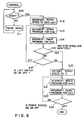
- the operation of the close instruction "CLOSE ⁇ " is shown in Figs. 2 and 3.
- the close instruction forcibly terminates program ⁇ now being executed in parallel in accordance with program ⁇ .
- Execution of program ⁇ forcibly terminates using an instruction now being executed when the close instruction has been executed.
- executions of all programs are forcibly terminated.
- the close instruction CLOSE ⁇ is used, supervision of completions of processings and the terminations of processings can be made by a program exclusively used for this purpose.
- the close instruction can also be used for terminating own program.
- a processing ⁇ is interrupted for an interval (of the order of milliseconds) determined by this parameter, and the following processing is resumed.
- the parameter t is "35”
- the execution of the program ⁇ is interrupted for 35 milliseconds (ms)
- the execution of the program ⁇ is resumed, thus executing a processing ⁇ .
- executions of the other programs are continued without being interrupted.
- a time necessary for waiting for the completion of mechanical operations and input/output can be provided without providing a special timer. Different from a case in which a processing is caused to wait by using a loop, it is not necessary to cause the processings of other sequences to wait during interruption.
- a subprogram ALARM shown in the flow chart normally supervises an error flag in a program SERVO for producing a message when an error occurs in the program.
- the value of an element in an arrangement ERROR is set to "1" depending upon the type of the error. Error messages to be displayed for respective elements in an arrangement ERROR are prestored in corresponding elements in an arrangement TABLE.
- a subprogram ALARM is started by using an open instruction OPEN ALARM in the main program and executed in parallel with the program SERVO. Upon starting, at step S1, a variable R1 is set to "0". After that, at step S2, a judgement is made as to whether an element ERROR (R1) in arrangement ERROR has been set to "1" or not.
- step S3 the variable R1 is incremented by 1 for the purpose of checking the next element in arrangement ERROR for repeating the same operation.
- step S5 after awaiting for 50 ms in accordance with a pause instruction PAUSE 50, the same processings are repeated.
- parallel processing programs comprising an open instruction, a close instruction and a pause instruction, an error check at an interval of 50 ms, an error display and termination of a program in which an error has occurred can be made independently of the program SERVO.
- a start signal is constantly checked at an interval of 30 ms.
- the speed of the servo-system is designated to 200 r.p.m.
- the servo-program is opened every 5 ms.
- judgements are made as to whether a stop signal is inputted and whether a limit switch is ON or OFF. Where there is no stop signal and the limit switch is OFF, the program is returned to step S13, thereby repeating steps S13, S14, S15 and S16.
- step S20 When the stop signal is detected or the limit switch is ON, at step S20, the speed of the servo-system is instructed to be O r.p.m. . After that, at steps S21 and S22, the servo-program is opened every 5 ms. Then at step S23, a check is made as to whether a power source is OFF or ON.
- the central processing unit (CPU) 2 is connected to a program counter 3 and a program memory device 4.
- the program counter 3 designates an address of the program memory device 4 storing a program to be executed next, and the CPU 2 processes an address of the program memory device designated by the content of the program counter 3, the content thereof being renewed in accordance with the type of the instruction executed. More particularly, in the case of a conventional instruction, the program counter operates in the same manner as that of a general purpose computer. For an open instruction, the content of the program counter is renewed to an address of an instruction following an open instruction. To terminate a program containing an executed close instruction the content is renewed to an address selected from an address table 5. In other cases the content is renewed to the address of an instruction following the close instruction.
- the program memory device 4 stores programs of a sequence control, servo-control or the like to be executed.
- the address table 5 stores addresses of programs designated by an open instruction and a pause instruction. More particularly, (1) in the case of the open instruction, the address of a program designated by an argument is written into an idle or vacant portion of the table found by scanning the same. The vacant portion of the table is designated by a pointer 6 utilized at the time of scanning. (2) in the case of a pause instruction, the address of an instruction following the pause instruction is written or registered in the address table. The addresses thus written are searched and erased by a close instruction.
- a timer 1 is connected to CPU 2 and constituted by a counter renewed by a definite count at each definite interval.
- the contents of the counter are readable by CPU 2 and the read out content corresponds to the count at the time of reading.
- the pointer 6 is utilized at the time of scanning the address table 5 and time table 7, the tables 5 and 7 corresponding in one to one relation. Accordingly, the pointer 6 is used in common for both tables and designates corresponding portions of both tables. Further, the pointer 6 is used for writing and reading both tables.
- the time table 7 is written with a predetermined time at which the execution of a program registered in the address table starts.
- the written position is designated by pointer 6 and corresponds to the portion of the address table at which a program is registered. More particularly, (1) in the case of an open instruction, the count of timer 1 corresponds to a predetermined time at which the execution starts. (2) in the case of a pause instruction, the sum of the timer time and a pause time designated by the argument of a pause instruction becomes the predetermined time at which the execution starts.
- a sequence control or a servo-control or the like to be executed is stored in the program memory device 4 and the program counter 3 is holding an execution initiation address of the program.
- the timer 1 is reset by a signal "0".
- Address table 5 and time table 7 are vacant while pointer 6 is set to point the leading or top addresses of the address table 5 and time table 7.
- the CPU 2 repeats the operation of taking and executing an instruction at an address held in a program counter.
- the written instruction is a conventional instruction other than the open instruction, the close instruction and the pause instruction, the instruction is executed in the same manner as in a conventional computer to renew the content of the program counter 3.
- the time table 7 is firstly scanned by pointer 6 so as to find out a vacant portion of the address. Then the value of timer 1 is written into the vacant portion of the time table 7 by CPU 2, and the initial or leading address of the program to be opened is written into the same position as that of the address table 5. After that, the content of the program counter 3 is used to renew the address of an instruction following the open instruction for commencing the execution of the next instruction.
- the written instruction is a close instruction that terminates a program containing the same
- the value of timer 1 is written into CPU 2 and the pointer 6 scans the time table 7 for searching a value smaller than the value of timer 1. In the absence of such value, the value of the timer is written again for repeating the same operation.
- the content of the address table 5 shown by pointer 6 is transferred to program counter 3 so as to erase the contents of time table 7 and address table 5 pointed by pointer 6, whereby the execution of an instruction shown by the content of the program counter 3 is initiated. In this manner, the original program is terminated and the other program is started.
- the pointer 6 scans the address table 5 for erasing a program to be closed as well as the content of the time table 7 at the same position, thereby terminating a program initiated by a close instruction.
- a written instruction is a pause instruction
- pointer 6 causes scanning of the time table 7 for finding out a vacant portion thereof.
- CPU 2 takes in the value of timer 1 and adds the value to a pause time and the sum is written into the vacant portion of the time table 7.
- the address of an instruction succeeding the pause instruction is written in the same position of the address table 5.
- the execution of the program has been paused by the operation described above, and another program that can be executed during the pause is searched.
- the CPU 2 takes in the value of timer 1 and the time table is scanned by the pointer 6 for searching a value smaller than that of timer 1. If such value is absent, the value of timer 1 is read again for repeating the same operation.
- the computer system described above can execute not only a conventional instruction but also an open instruction, a close instruction and a pause instruction.
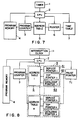
- the open instruction, the close instruction and the pause instruction can be executed based on the value of timer 1. Similar operation can be efficiently made by providing a plurality of service circuits 9 for respective pause instructions as shown in Fig. 8.
- CPU 2 is connected to program counter 3 and program memory device 4, and an instruction of an address stored in the program counter connected to the program memory device 4 is read out and supplied to CPU 2 to be executed thereby.
- An interruption clock 11 is connected to CPU 2 for applying an interruption to CPU 2 at a definite time interval.
- CPU 2 is connected to a plurality of service circuits 9, and to a pause pointer 71 which selects one of the service circuits 9.
- Each service circuit 9 includes an address table 5, a service pointer 61, a top pointer 62 and a catalogue pointer 63.
- the service circuits are selected by a pause pointer 71 corresponding to a pause time.
- the interrupt clock 11 applies an interruption to CPU 2 at a definite interval.
- the CPU 2 determines a time at which the interruption is applied and renews the pause pointer 71 such that one of the service circuits 9 is selected corresponding to the time thus determined.
- the purpose of the service pointer 61 is to show the position of the address table 5 storing the address of a program now being served.
- the service pointer 61 shows the leading position of the address table 5.
- the service pointer is renewed to the next position.
- the renewed content coincides with the content of the top pointer 62, the program would not be executed whereas the content of the service pointer 61 is renewed.
- the purpose of the top pointer 62 is to show the position of the address table 5 in which the leading address of a program is to be served. Thus, in the initial state, the top pointer 62 shows the leading poition of the address table.
- a service circuit 9 including a top pointer 62 is selected the content thereof is transferred to service pointer 61.
- the purpose of the catalogue pointer 63 is to show the position of address table 5 to be written with an instruction in accordance with an open instruction and a pause instruction. Thus in the initial state, the catalogue pointer 63 shows the leading position of the address table 5. Upon execution of an open instruction, the position of the address table is renewed to the next position. When a service circuit 9 containing the catalogue pointer 63 is selected, the content thereof is transferred to top pointer 62.
- the purpose of the pause pointer 71 is to select either one of the service circuit 9. Thus, in the initial state, it selects a service circuit 9 having the shortest pause time.
- the pause pointer 71 is renewed. Although there are many methods of renewal, the following method is preferred. More particularly when an interruption is applied the content of the pause pointer 71 is renewed to select a service circuit 9 having the shortest pause time.
- a service circuit corresponding to a pause time of a length next to that of the pause time of a service circuit 9 which has been selected would be selected.
- a method of executing an conventional instruction, an open instruction a close instruction, and a pause instruction of this invention by utilizing the computer system shown in Fig. 8 is as follows.
- pause pointer 71 selects one of the service circuits 9 corresponding to a pause time.
- Pause pointer 71 is set by CPU 2 such that the service circuits 9 are selected corresponding to predetermined puase times which are measured by interruption clock pulses generated by interruption clock 11.
- the content of top pointer 62 of the selected service circuit 9 is transferred to a service pointer 61, whereas the content of a catalogue pointer 63 is transferred to top pointer 62.
- An address in the address table 5 designated by service pointer 61 is transferred to program counter 3 so that an instruction stored in program memory device 4 designated by program counter 3 is executed by CPU 2. Thereafter, in the same manner as in a conventional computer, the content of program counter 3 is renewed in accordance with an executed instruction, thereby continuing the service operation.
- a starting address of a program to be opened is registered in address table 5 designated by catalogue pointer 63 of a service circuit 9 designated by an added argument, and the content of the catalogue pointer 63 is renewed to show the next position of the address table 5.
- the contents of the service pointer 61 and catalogue pointer 63 are renewed to show the head portion of address table 5 when the last portion thereof is reached.
- the address table 5 of a service circuit 9 designated by an added argument is scanned for erasing a program to be closed.
- the next address of the pause instruction is registered on the address table 5 designated by catalogue pointer 63 of a service circuit 9 designated by an added argument.
- the content of the service pointer 61 of a service circuit 9 selected by pause pointer 71 is renewed to show the next position of the address table 5 for comparing with each other the contents of service pointer 61 and top pointer 62.
- the program is branched to the operation to be executed after starting the operation of the CPU 2.
- the program is branched to the starting operation described above, whereby CPU 2 renews the pause pointer 71.
- the system is constituted by a hardware including address table 5, pointer 6 and time table 7, such system can also be realized with a general purpose computer added with a timer 1 (see Fig. 7) and a suitable software.
- a sequence control and a servo-control can be readily performed with languages such as BASIC and FORTRAN languages different from system languages.
- languages such as BASIC and FORTRAN languages different from system languages.
- ASSEMBLER system languages as ASSEMBLER can be used at the same time.
Landscapes
- Engineering & Computer Science (AREA)
- General Engineering & Computer Science (AREA)
- Theoretical Computer Science (AREA)
- Software Systems (AREA)
- Physics & Mathematics (AREA)
- General Physics & Mathematics (AREA)
- Programmable Controllers (AREA)
- Multi Processors (AREA)
- Hardware Redundancy (AREA)
- Small-Scale Networks (AREA)
- Executing Machine-Instructions (AREA)
Claims (16)
- Computersteuersystem zum Ausführen von drei Arten von Parallelverarbeitungsbefehlen, bestehend aus einem Öffnungsbefehl, einem Schließbefehl und einem Pausebefehl,
gekennzeichnet durch:
eine zentrale Verarbeitungseinheit (CPU) (2);
einen Zeitgeber (1) mit einem Zähler, der in jedem definierten Intervall auf einen neuen definierten Zählwert eingestellt wird und mit der CPU verbunden ist, um von dieser gelesen zu werden;
einen Programmspeicher (4) zum Speichern von Programmen einer Sequenzsteuerung und einer Servosteuerung, die von der CPU ausgeführt werden sollen;
einen Programmzähler (3), der mit der CPU (2) und dem Programmspeicher (4) verbunden ist, um eine Adresse des Programmspeichers (4) zu bestimmen, wobei die Adresse einen als nächsten auszuführenden Befehl speichert und der Inhalt des Programmzählers (3) in Abhängigkeit von der Art eines als nächsten von der CPU auszuführenden Befehls erneuert wird;
eine Adressentabelle (5), die mit der CPU (2) und dem Programmzähler (3) verbunden ist, um Adressen von Programmen zu registrieren, die durch einen Öffnungsbefehl und einen Pausebefehl bestimmt sind, wobei registrierte Adressen der Adressentabelle in Abhängigkeit von einem Schließbefehl aufgesucht und gelöscht werden;
einer Zeittabelle (7), die mit der CPU (2) verbunden und in der eine vorbestimmte Zeit für den Beginn der Ausführung eines in der Adressentabelle (5) registrierten Programms aufgezeichnet ist;
und einem Hinweiser (6), der zwischen die Adressentabelle (5) und die Zeittabelle (7) geschaltet und mit der CPU (2) verbunden ist, um entsprechende Teile der Adressentabelle (5) und der Zeittabelle (7) abzutasten. - Computersteuersystem nach Anspruch 1,
dadurch gekennzeichnet, daß der Inhalt des Programmzählers (3) auf eine Adresse eines Befehls neu eingestellt wird, der einem Öffnungsbefehl folgt, oder auf eine Adresse, die aus der Adressentabelle (5) ausgewählt wird, wenn ein Programm, das einen ausgeführten Schließbefehl enthält, beendet wird, oder auf eine Adresse eines Befehls, der einem Schließbefehl folgt, oder auf eine Adresse, die durch die Adressentabelle (5) in Übereinstimmung mit einem Pausebefehl ausgewählt wird. - Computersteuersystem nach Anspruch 1,
dadurch gekennzeichnet, daß im Falle des Öffnungsbefehls in der Adressentabelle (5) eine Adresse eines Programms registriert ist, die durch ein Argument in einem vakanten Teil der Adressentabelle (5) bestimmt ist, der als Ergebnis der Abtastung der Adressentabelle (5) durch den Hinweiser (6) aufgefunden wurde. - Computersteuersystem nach Anspruch 1,
dadurch gekennzeichnet, daß im Falle des Pausebefehls in der Adressentabelle (5) eine Adresse eines auf einen Pausebefehl folgenden Befehls registriert ist. - Computersteuersystem nach Anspruch 1,
dadurch gekennzeichnet, daß im Falle des Schließbefehls eine Adresse eines Programms, die durch ein Argument bestimmt und in der Adressentabelle (5) registriert ist, in einen freien Teil der Adressentabelle (5) eingeschrieben und als Ergebnis der Abtastung der Adressentabelle (5) gelöscht wird. - Computersteuersystem nach Anspruch 1,
dadurch gekennzeichnet, daß die in der Adressentabelle (5) registrierten Adressen durch den Hinweiser (6) aufgesucht und durch einen Schließbefehl gelöscht werden. - Computersteuersystem nach Anspruch 1,
dadurch gekennzeichnet, daß der Inhalt der Zeittabelle (7) an Positionen, die durch den Hinweiser (6) bestimmt werden, in dem Programmzähler (3) unter der Steuerung der CPU (2) nach der Ausführung des Schließ- oder Pausebefehls übertragen werden, wobei die CPU (2) die Zeittabelle (7) in Übereinstimmung mit einem aus dem Programmspeicher (4) ausgelesenen Befehl steuert. - Computersteuersystem nach Anspruch 1,
dadurch gekennzeichnet, daß der Hinweiser (6) ebenfalls zum Lesen der und Einschreiben in die Adressentabelle (5) und die Zeittabelle (7) verwendet wird. - Computersteuersystem nach Anspruch 1,
dadurch gekennzeichnet, daß das definierte Intervall dem Zählwert eines Zählers (3) zur Zeit eines Öffnungsbefehls oder der Summe des Zählwerts und einer Pausenzeit, die durch ein Argument eines Pausebefehls zur Zeit eines Pausebefehls bestimmt wird, entspricht. - Computersteuersystem zum Ausführen von drei Arten von Parallelverarbeitungsbefehlen, bestehend aus einem Öffnungsbefehl, einem Schließbefehl und einem Pausebefehl,
gekennzeichnet durch:
eine zentrale Verarbeitungseinheit (CPU) (2);
einen Unterbrechungstaktgeber (11), der der CPU (2) in einem vorbestimmten Intervall ein Unterbrechungssignal zuführt;
einen Programmspeicher (4) zum Speichern von Programmen einer Sequenzsteuerung und einer Servosteuerung, die von der CPU ausgeführt werden sollen;
einen mit der CPU (2) und dem Programmspeicher (3) verbundenen Programmzähler (3) zur Bestimmung einer Adresse des Programmspeichers (4), die einen als nächsten auszuführenden Befehl speichert, wobei der Inhalt des Programmzählers (3) in Abhängigkeit von der Art eines durch die CPU (2) auszuführenden Befehls erneuert wird;
eine Vielzahl von Serviceschaltungen (9), die mit der CPU (2) und dem Programmzähler (3) verbunden sind, wobei jede Serviceschaltung eine mit dem Programmzähler (3) verbundene Adressentabelle (5), einen Servicehinweiser (61), einen Haupthinweiser (62) und einen Kataloghinweiser (63) aufweist und die Hinweiser mit der Adressentabelle (5) verbunden sind;
und einen Pausenhinweiser (71), der durch die CPU (2) gesteuert wird, um eine der Serviceschaltungen (9) auszuwählen, die die kürzeste Pausenzeit in einem Anfangszustand aufweist;
wobei die Adressentabelle (5) mit dem Programmzähler (3) verbunden ist, um Adressen von Programmen zu registrieren, die durch einen Öffnungsbefehl und einen Pausebefehl bestimmt werden;
registrierte Adressen der Adressentabelle (5) in Abhängigkeit von einem Schließbefehl aufgesucht und gelöscht werden;
in der Adressentabelle (5) registrierte und durch den Servicehinweiser bestimmte Adressen in den Programmzähler übertragen werden;
der Servicehinweiser (61) eine Position der Adressentabelle (5) bestimmt, die eine Adresse eines gerade bedienten Programms speichert;
der Haupthinweiser (62) eine Leit- oder Anfangsadresse eines Programms, das bedient werden soll und in der Adressentabelle (5) gespeichert ist, bestimmt und
der Kataloghinweiser (63) eine Position in der Adressentabelle (5) bezeichnet, in der ein Öffnungsbefehl und ein Pausenbefehl aufgezeichnet sind. - Computersystem nach Anspruch 10,
dadurch gekennzeichnet, daß die CPU (2) eine Zeit bestimmt, zu der das Unterbrechungssignal zugeführt wird, um den Pausenhinweiser (71) zu erneuern, so daß dieser eine der Serviceschaltungen (9) in Übereinstimmung mit der Pausenzeit auswählt. - Computersteuersystem nach Anspruch 10,
dadurch gekennzeichnet, daß der Inhalt des Servicehinweisers (61) nach Abschluß eines gerade durch einen Schließbefehl und einen Pausebefehl ausgeführten Programms neu auf eine nächste Position eingestellt wird. - Computersteuersystem nach Anspruch 12,
dadurch gekennzeichnet, daß, wenn ein erneuerter Inhalt des Servicehinweisers (61) mit dem Inhalt des Haupthinweisers (62) übereinstimmt, kein Programm ausgeführt und der Inhalt des Servicehinweisers (61) erneuert wird. - Computersteuersystem nach Anspruch 10,
dadurch gekennzeichnet, daß eine Serviceschaltung (9), die einen vorgegebenen Haupthinweiser (62) enthält, durch den Pausenhinweiser (71) ausgewählt und der Inhalt des Haupthinweisers (62) in den Servicehinweiser (61) übertragen wird. - Computersteuersystem nach Anspruch 10,
dadurch gekennzeichnet, daß eine Serviceschaltung (9), die einen vorgegebenen Kataloghinweiser (63) enthält, durch den Pausenhinweiser (71) ausgewählt und der Inhalt des Kataloghinweisers (63) in den Haupthinweiser (62) übertragen wird. - Computersteuersystem nach Anspruch 10,
dadurch gekennzeichnet, daß der Pausenhinweiser (71) erneuert wird, wenn ein Unterbrechungssignal der CPU (2) zugeführt wird oder der Inhalt des Servicehinweisers (61) mit dem des Haupthinweisers (62) übereinstimmt.
Priority Applications (4)
| Application Number | Priority Date | Filing Date | Title |
|---|---|---|---|
| JP60044445A JPS61204704A (ja) | 1985-03-06 | 1985-03-06 | シ−ケンス制御及びサ−ボ制御に適したコンピユ−タシステム |
| DE8686111200T DE3688506T2 (de) | 1986-08-13 | 1986-08-13 | Datenverarbeitungsanlage. |
| AT86111200T ATE89936T1 (de) | 1986-08-13 | 1986-08-13 | Datenverarbeitungsanlage. |
| EP86111200A EP0256149B1 (de) | 1986-08-13 | 1986-08-13 | Datenverarbeitungsanlage |
Applications Claiming Priority (1)
| Application Number | Priority Date | Filing Date | Title |
|---|---|---|---|
| EP86111200A EP0256149B1 (de) | 1986-08-13 | 1986-08-13 | Datenverarbeitungsanlage |
Publications (2)
| Publication Number | Publication Date |
|---|---|
| EP0256149A1 EP0256149A1 (de) | 1988-02-24 |
| EP0256149B1 true EP0256149B1 (de) | 1993-05-26 |
Family
ID=8195336
Family Applications (1)
| Application Number | Title | Priority Date | Filing Date |
|---|---|---|---|
| EP86111200A Expired - Lifetime EP0256149B1 (de) | 1985-03-06 | 1986-08-13 | Datenverarbeitungsanlage |
Country Status (3)
| Country | Link |
|---|---|
| EP (1) | EP0256149B1 (de) |
| AT (1) | ATE89936T1 (de) |
| DE (1) | DE3688506T2 (de) |
Cited By (3)
| Publication number | Priority date | Publication date | Assignee | Title |
|---|---|---|---|---|
| US8145884B2 (en) | 2003-08-28 | 2012-03-27 | Mips Technologies, Inc. | Apparatus, method and instruction for initiation of concurrent instruction streams in a multithreading microprocessor |
| US8266620B2 (en) | 2003-08-28 | 2012-09-11 | Mips Technologies, Inc. | Symmetric multiprocessor operating system for execution on non-independent lightweight thread contexts |
| US9032404B2 (en) | 2003-08-28 | 2015-05-12 | Mips Technologies, Inc. | Preemptive multitasking employing software emulation of directed exceptions in a multithreading processor |
Families Citing this family (1)
| Publication number | Priority date | Publication date | Assignee | Title |
|---|---|---|---|---|
| US5261063A (en) * | 1990-12-07 | 1993-11-09 | Ibm Corp. | Pipeline apparatus having pipeline mode eecuting instructions from plural programs and parallel mode executing instructions from one of the plural programs |
Family Cites Families (1)
| Publication number | Priority date | Publication date | Assignee | Title |
|---|---|---|---|---|
| US4118776A (en) * | 1975-07-17 | 1978-10-03 | Nippon Electric Company, Ltd. | Numerically controlled machine comprising a microprogrammable computer operable with microprograms for macroinstructions and for inherent functions of the machine |
-
1986
- 1986-08-13 DE DE8686111200T patent/DE3688506T2/de not_active Expired - Fee Related
- 1986-08-13 EP EP86111200A patent/EP0256149B1/de not_active Expired - Lifetime
- 1986-08-13 AT AT86111200T patent/ATE89936T1/de not_active IP Right Cessation
Cited By (3)
| Publication number | Priority date | Publication date | Assignee | Title |
|---|---|---|---|---|
| US8145884B2 (en) | 2003-08-28 | 2012-03-27 | Mips Technologies, Inc. | Apparatus, method and instruction for initiation of concurrent instruction streams in a multithreading microprocessor |
| US8266620B2 (en) | 2003-08-28 | 2012-09-11 | Mips Technologies, Inc. | Symmetric multiprocessor operating system for execution on non-independent lightweight thread contexts |
| US9032404B2 (en) | 2003-08-28 | 2015-05-12 | Mips Technologies, Inc. | Preemptive multitasking employing software emulation of directed exceptions in a multithreading processor |
Also Published As
| Publication number | Publication date |
|---|---|
| DE3688506D1 (de) | 1993-07-01 |
| DE3688506T2 (de) | 1993-09-09 |
| ATE89936T1 (de) | 1993-06-15 |
| EP0256149A1 (de) | 1988-02-24 |
Similar Documents
| Publication | Publication Date | Title |
|---|---|---|
| US4683549A (en) | Sequence control method and apparatus | |
| US4852047A (en) | Continuous flow chart, improved data format and debugging system for programming and operation of machines | |
| US4742443A (en) | Programmable controller with function chart interpreter | |
| US5042002A (en) | Programmable controller with a directed sequencer | |
| US4907190A (en) | Computer control system and method for effecting sequence controls and servo-controls | |
| EP0256149B1 (de) | Datenverarbeitungsanlage | |
| CA1259417A (en) | Computer systems suitable for effecting sequence controls and servo-controls | |
| JP3167245B2 (ja) | プログラマブルコントローラ動作状態監視装置 | |
| KR900008536B1 (ko) | 시이퀀스 제어 및 서보제어의 실행에 적합한 컴퓨터제어 시스템 | |
| CN1040588C (zh) | 适用于实现顺序控制和伺服控制的计算机控制系统和方法 | |
| US5148531A (en) | System for executing a conditional statement without reading program data part that does not satisfy the conditional clause | |
| JPH05113818A (ja) | 多重プログラム機能を有する数値制御装置 | |
| JPS6149209A (ja) | 数値制御装置におけるプログラム実行方式 | |
| JPH09160611A (ja) | プログラマブルコントローラ | |
| GB2175112A (en) | Sequence control method and apparatus | |
| EP0353307B1 (de) | Gerät zum steuern einer speicherprogrammierbaren steuerung | |
| KR960002450B1 (ko) | 축소 명령형 피엘씨(pcl) 및 그의 제어 방법 | |
| JP2590336B2 (ja) | 制御プログラム表示装置 | |
| JPH07506204A (ja) | 現在状態から後続状態へのプロセッサ作動状態移行制御装置 | |
| JPH0330164B2 (de) | ||
| JPH08328793A (ja) | 機械制御装置 | |
| JPH0619518A (ja) | プログラム呼出し方式 | |
| EP0474725B1 (de) | Verfahrenssteuerung | |
| JPH07230307A (ja) | シーケンサのプログラム開発装置 | |
| KR19980083128A (ko) | 피엘씨 시스템에서의 다중 타스크 고속 수행장치 |
Legal Events
| Date | Code | Title | Description |
|---|---|---|---|
| PUAI | Public reference made under article 153(3) epc to a published international application that has entered the european phase |
Free format text: ORIGINAL CODE: 0009012 |
|
| 17P | Request for examination filed |
Effective date: 19860825 |
|
| AK | Designated contracting states |
Kind code of ref document: A1 Designated state(s): AT CH DE FR GB IT LI |
|
| 17Q | First examination report despatched |
Effective date: 19881012 |
|
| GRAA | (expected) grant |
Free format text: ORIGINAL CODE: 0009210 |
|
| AK | Designated contracting states |
Kind code of ref document: B1 Designated state(s): AT CH DE FR GB IT LI |
|
| REF | Corresponds to: |
Ref document number: 89936 Country of ref document: AT Date of ref document: 19930615 Kind code of ref document: T |
|
| PGFP | Annual fee paid to national office [announced via postgrant information from national office to epo] |
Ref country code: CH Payment date: 19930624 Year of fee payment: 8 |
|
| PGFP | Annual fee paid to national office [announced via postgrant information from national office to epo] |
Ref country code: AT Payment date: 19930625 Year of fee payment: 8 |
|
| REF | Corresponds to: |
Ref document number: 3688506 Country of ref document: DE Date of ref document: 19930701 |
|
| ET | Fr: translation filed | ||
| PGFP | Annual fee paid to national office [announced via postgrant information from national office to epo] |
Ref country code: FR Payment date: 19930716 Year of fee payment: 8 |
|
| PGFP | Annual fee paid to national office [announced via postgrant information from national office to epo] |
Ref country code: GB Payment date: 19930730 Year of fee payment: 8 |
|
| ITF | It: translation for a ep patent filed | ||
| PGFP | Annual fee paid to national office [announced via postgrant information from national office to epo] |
Ref country code: DE Payment date: 19931026 Year of fee payment: 8 |
|
| PLBI | Opposition filed |
Free format text: ORIGINAL CODE: 0009260 |
|
| 26 | Opposition filed |
Opponent name: ROBERT BOSCH GMBH Effective date: 19940228 |
|
| PG25 | Lapsed in a contracting state [announced via postgrant information from national office to epo] |
Ref country code: GB Effective date: 19940813 Ref country code: AT Effective date: 19940813 |
|
| PG25 | Lapsed in a contracting state [announced via postgrant information from national office to epo] |
Ref country code: LI Effective date: 19940831 Ref country code: CH Effective date: 19940831 |
|
| GBPC | Gb: european patent ceased through non-payment of renewal fee |
Effective date: 19940813 |
|
| PG25 | Lapsed in a contracting state [announced via postgrant information from national office to epo] |
Ref country code: FR Effective date: 19950428 |
|
| REG | Reference to a national code |
Ref country code: CH Ref legal event code: PL |
|
| PG25 | Lapsed in a contracting state [announced via postgrant information from national office to epo] |
Ref country code: DE Effective date: 19950503 |
|
| REG | Reference to a national code |
Ref country code: FR Ref legal event code: ST |
|
| PLBN | Opposition rejected |
Free format text: ORIGINAL CODE: 0009273 |
|
| STAA | Information on the status of an ep patent application or granted ep patent |
Free format text: STATUS: OPPOSITION REJECTED |
|
| 27O | Opposition rejected |
Effective date: 19950516 |
|
| PG25 | Lapsed in a contracting state [announced via postgrant information from national office to epo] |
Ref country code: IT Free format text: LAPSE BECAUSE OF NON-PAYMENT OF DUE FEES;WARNING: LAPSES OF ITALIAN PATENTS WITH EFFECTIVE DATE BEFORE 2007 MAY HAVE OCCURRED AT ANY TIME BEFORE 2007. THE CORRECT EFFECTIVE DATE MAY BE DIFFERENT FROM THE ONE RECORDED. Effective date: 20050813 |