EP0271863A2 - Procédé de fabrication d'agglomérés à base de boulettes cuites - Google Patents
Procédé de fabrication d'agglomérés à base de boulettes cuites Download PDFInfo
- Publication number
- EP0271863A2 EP0271863A2 EP87118525A EP87118525A EP0271863A2 EP 0271863 A2 EP0271863 A2 EP 0271863A2 EP 87118525 A EP87118525 A EP 87118525A EP 87118525 A EP87118525 A EP 87118525A EP 0271863 A2 EP0271863 A2 EP 0271863A2
- Authority
- EP
- European Patent Office
- Prior art keywords
- pellets
- agglomerates
- green pellets
- particle size
- iron ores
- Prior art date
- Legal status (The legal status is an assumption and is not a legal conclusion. Google has not performed a legal analysis and makes no representation as to the accuracy of the status listed.)
- Granted
Links
Images



Classifications
-
- C—CHEMISTRY; METALLURGY
- C22—METALLURGY; FERROUS OR NON-FERROUS ALLOYS; TREATMENT OF ALLOYS OR NON-FERROUS METALS
- C22B—PRODUCTION AND REFINING OF METALS; PRETREATMENT OF RAW MATERIALS
- C22B1/00—Preliminary treatment of ores or scrap
- C22B1/14—Agglomerating; Briquetting; Binding; Granulating
- C22B1/16—Sintering; Agglomerating
-
- C—CHEMISTRY; METALLURGY
- C22—METALLURGY; FERROUS OR NON-FERROUS ALLOYS; TREATMENT OF ALLOYS OR NON-FERROUS METALS
- C22B—PRODUCTION AND REFINING OF METALS; PRETREATMENT OF RAW MATERIALS
- C22B1/00—Preliminary treatment of ores or scrap
- C22B1/14—Agglomerating; Briquetting; Binding; Granulating
- C22B1/24—Binding; Briquetting ; Granulating
- C22B1/242—Binding; Briquetting ; Granulating with binders
- C22B1/243—Binding; Briquetting ; Granulating with binders inorganic
-
- C—CHEMISTRY; METALLURGY
- C22—METALLURGY; FERROUS OR NON-FERROUS ALLOYS; TREATMENT OF ALLOYS OR NON-FERROUS METALS
- C22B—PRODUCTION AND REFINING OF METALS; PRETREATMENT OF RAW MATERIALS
- C22B1/00—Preliminary treatment of ores or scrap
- C22B1/14—Agglomerating; Briquetting; Binding; Granulating
- C22B1/16—Sintering; Agglomerating
- C22B1/20—Sintering; Agglomerating in sintering machines with movable grates
-
- C—CHEMISTRY; METALLURGY
- C22—METALLURGY; FERROUS OR NON-FERROUS ALLOYS; TREATMENT OF ALLOYS OR NON-FERROUS METALS
- C22B—PRODUCTION AND REFINING OF METALS; PRETREATMENT OF RAW MATERIALS
- C22B1/00—Preliminary treatment of ores or scrap
- C22B1/14—Agglomerating; Briquetting; Binding; Granulating
- C22B1/24—Binding; Briquetting ; Granulating
-
- C—CHEMISTRY; METALLURGY
- C22—METALLURGY; FERROUS OR NON-FERROUS ALLOYS; TREATMENT OF ALLOYS OR NON-FERROUS METALS
- C22B—PRODUCTION AND REFINING OF METALS; PRETREATMENT OF RAW MATERIALS
- C22B1/00—Preliminary treatment of ores or scrap
- C22B1/14—Agglomerating; Briquetting; Binding; Granulating
- C22B1/24—Binding; Briquetting ; Granulating
- C22B1/2413—Binding; Briquetting ; Granulating enduration of pellets
-
- C—CHEMISTRY; METALLURGY
- C22—METALLURGY; FERROUS OR NON-FERROUS ALLOYS; TREATMENT OF ALLOYS OR NON-FERROUS METALS
- C22B—PRODUCTION AND REFINING OF METALS; PRETREATMENT OF RAW MATERIALS
- C22B1/00—Preliminary treatment of ores or scrap
- C22B1/14—Agglomerating; Briquetting; Binding; Granulating
- C22B1/24—Binding; Briquetting ; Granulating
- C22B1/242—Binding; Briquetting ; Granulating with binders
- C22B1/244—Binding; Briquetting ; Granulating with binders organic
- C22B1/245—Binding; Briquetting ; Granulating with binders organic with carbonaceous material for the production of coked agglomerates
Definitions
- the reduction degradation index was measured by a method specified by the Ironmaking committee of the Iron and Steel Institute of Japan, which comprises reducing the fired pellets in an amount of 500g charged into an experimental electric furnace by means of a reducing gas comprising 30 vol.% CO and 70 vol.% N2 at a temperature of 550°C for 30 minutes, receiving the thus reduced fired pellets in a drum, rotating the drum by 900 revolutions, sieving the fired pellets taken out from the drum through a 3-mm mesh screen, and measuring the ratio of particles under the screen.
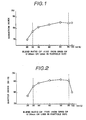
- Fig. 1 of the drawing shows graphically relation of blend ratio of 0.125mm or less fine iron ores contained in those of 8mm or less in particle size, to reduction index of obtained agglomerates of fired pellets.
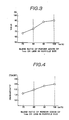
- Fig. 2 graphically shows relation of blend ratio of 0.125mm or less fine iron ores included in those of 8mm or less in particle size, to shatter index of the obtained agglomerates of fire pellets.
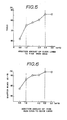
- Fig. 3 graphically shows relation of blend ratio of 1mm or less powder cokes contained in those of 5mm or less in particle size, to the yield of the obtained agglomerates of fired pellets.
- Fig. 4 graphically shows relation of blend ratio of lmm or less powder cokes contained in those of 5mm or less in particle size, to the shatter index of the obtained agglomerates of fired pellets.
- drum type pelletizer being preferably fitted for coating green pellets with powder cokes.
- the addition amount is 1.0 wt.% or more, the yield marks 75% or more. In the case that the addition amount is over 2.5 wt.%, it can be admitted that the yield becomes 85% or more, but the growth of the yield is smaller in proportion, i.e. the increase of quick lime addition amount, after all, extends aspects of demerits.
- the shatter index increases. If the addition amount is 1.0 wt.% or more, the shatter index gets well over 85%. In the case that the addition amount is 2.5 wt.% or more, the shatter index becomes well over 90%, but the growth of shatter index is smaller in proportion.
- the quick lime addition amount ranges 1.0 to 2.5 wt.%. Note that fluxes together with quick limes are, of course, added to fine iron ores so as to keep CaO/SiO2 ratio 1.0 to 2.5.
- the shatter index of the agglomerates of fired pellets As shown in Fig. 9, the more the blend ratio of 5mm or less green pellets becomes, the more the shatter index is deteriorated, since glassy slag of the green pellets increase in proportion with the increase of the blend ratio. If the blend ratio is over 40 wt.%, the shatter index is less than 90%.
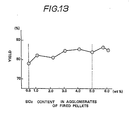
- fine iron ores are pelletized by use of a disc type pelletizer and only with addition of fluxes, and, thereafter, coating with powder cokes is made, and, resultantly, this method is good for the pelletization enough to form good spherical green pellets. Therefore, from the performance of this method, it was found that, during the process of sintering green pellets, SiO2 contained in fine iron ores and CaO contained in fluxes reacted each other, although the SiO2 content was small, to form slag and thereby to allow the fine iron ores to one another be combined and well agglomerated.
- the yield increases as the SiO2 content is going up, and the yield satisfies the level of being well more than 75% even in the SiO2 content range of 0.5 to 5.0 wt.%. If the SiO2 content is lowered less than 0.5 wt.%, the yield rapidly declines.
- Fine iron ores containing 10 to 80 wt.% of those of 0.044mm or less in particle size were mixed with 1.0 to 2.5 wt.% quick limes added thereto, as a flux, to prepare a mixture. Subsequently, the prepared mixture was pelletized by means of a disc type pelletizer into green pellets of 3 to 13mm in particle size (the first pelletization). Furthermore, powder cokes containing 20 to 70 wt.% of those of 0.1.mm or less in particle size were added to the green pellets, in amount of 2.5 to 4.0 wt.% to the fine iron ores, and the fine iron were pelletized, again, by means of a disc type pelletizer to the green pellets coated with the powder cokes (the second pelletization). The green pellets coated with the powder cokes were charged into a grate type sintering machine to manufacture agglomerates of fired pellets composed of fired pellets combined in plurality.
- the reduction index is improved.
- the blend ratio is 10 wt.% or more, the reduction index is high enough to be more than 75%.
- the blend ratio is over 10 wt.%, the density and the strength of the green pellets are improved so high as to allow the shatter index to be well over 80%. But, if the blend ratio is more than 80 wt.%, the following disadvantages occure:
- the fine iron ores consisting of 10 to 80 wt.% of those of 0.044mm or less in particle size and the rest of those more than 0.044mm are preferably used to improve by far the reduction index and the shatter index of the agglomerates of fired pellets. 20 to 80 wt.% of those of 0.044 mm or less in particle size is more preferable.
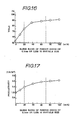
- Fig. 16 graphically shows relation of blend ratio of 0.1mm or less powder cokes contained in those of 5mm or less in particle size for coating green pellets, to yield of obtained agglomerates of fired pellets.
- Fig. 17 graphically shows relation of blend ratio of 0.1mm or less powder cokes contained those of 5mm or less in particle size to productivity of the obtained agglomerates of fired pellets.
- fine iron ores were of 8mm or less in particle size
- green pellets of 3 to 13mm and powder cokes were added in amount of 3.5 wt.%.
- the green pellets get better coated with green pellets and sintered, as the blend ratio of 0.1mm or less powder cokes is increasing. This results in improving the yield of the agglomerates of fired pellets, as shown in Fig. 16. Moreover, if the blend ratio is 20 wt.% or more, the yield is high enough to be 75% or more. When the blend ratio is over 70 wt.%, the yield exceeds 90%, but the growth of the yield is small. In other words, the cost for pulverizing cokes gets expensive in vein. The productivity also is improved more, as shown in Fig. 17, in proportion to the increase of the blend ratio. In the blend ratio range of 20 wt.% or more, the productivity is high enough to be 1.5/T/H/M2 or more. Futhermore, if the blend ratio is over 70%, the productivity exceeds 2.0/T/H/M2, but the growth of the productivity is small, considering the increase of the blend ratio.
- the blend ratio of 0.1mm or less powder cokes in particle size ranges preferably 20 to 70 wt.%.
- 40 to 70 wt.% of the blend ratio of 1mm or less powder cokes in particle size is more preferable.
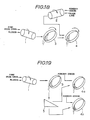
- referential numeral 1 denotes a first mixer of drum type, 2 a second mixer of drum type, 3 a first pelletizer of disc type and 4 a second pelletizer of disc type.
- green pellets to have been pelletized into green pellets by means of first pelletizer 3 are coated with powder cokes which have already been mixed, by means of the second mixer, with binder added to the powder cokes, thereby to coat the surface of the green pellets well with the powder cokes.
- Fine iron ores of 8mm or less in particle sizes and fluxes are introduced into the first mixer, and mixed to form a mixture.
- the mixture is pelletized, with addition of water, into green pellets of 3 to 13mm in particle size.
- the pelletized green pellets are introduced into second pelletizer 4.
- the green pellets are pelletized again with addition of the powder cokes in amount of 2.5 to 4.0 wt.% which are supplied from the second mixer, thereby the green pellets being coated with the powder cokes.
- the powder cokes supplied from the second mixer have already mixed with binder added thereto in the second mixer. Resultantly, thanks to the effect of the binder, the powder cokes coat well the surface of the green pellets when the green pellets are pelletized. For this reason, even coarse powder cokes stick so well to the green pellets that even cokes of relatively coarse grains can coat well the surface of the green pellets.
- Quick lime can be alternated by slacked lime, bentonite, dolomite, blast furnace water-granulated slag.
- Addition amount of the binder to powder cokes ranges preferable 0.1 to 1.0 wt.%. If the addition amount of a binder is less than 0.1 wt.%, effect in allowing powder cokes to well coat is small, while if the addition amount is over 1.0 wt.%, the cost of binder gets expensive, considering the increase in the effect of coating performance.
- CaO/SiO2 ratio of agglomerates of fired pellets is out of a designated range by addition of binder, addition amount of fluxes to fine iron ores is to be reduced as it may be required.
- second mixer 2 is not necessarily of drum type and can be alternated by any device capable of mixing powder cokes with-binder.
- referential numeral 1 denotes a mixer of drum type, 3 a first pelletizer of disc type, 4a and 4b, each, second pelletizers of disc type and 5 screen device.
- green pellets pelletized into by first pelletizer 3 are screened into groups, for example, two groups, depending on particle sizes, so as to allow powder cokes to be added, by weighing an addition amount, more to a group of larger green pellets and to be mixed therewith through each of second mixers 4a and 4b. This is to allow a group composed of larger green pellets in particle size to be well coated.
- Fine iron ores of 8mm or less in particle size and fluxes are introduced into the first mixer and mixed to form a mixture.
- the mixture is introduced into first pelletizer 3 and pelletized with water addition into green pellets of 3 to 13mm in particle size.
- the green pellets are screened by screen device 5 in groups, for example, one group consisting of larger green pellets more than 7mm to 13mm or less in particle size and another group of smaller green pellets 3mm and more to 7mm or less.
- the green pellets of the larger size group are transferred into second pelletizer 4a, and the green pellets of the other group into second pelletizer 4b.
- the green pellets respectively sent, are coated, on their surface, with powder cokes again added thereto in each of second pelletizer 4a and 4b.
- powder cokes are prepared in amount of 2.5 to 4.0 wt.% of green pellets totally to be coated, and are added to green pellets of the larger size group more than those of the other group by means of giving weight differently to addition amounts of the powder coke to each of the two groups.
- This weighing is performed in such a manner as, for example, when 3.5 wt.% powder cokes are totally added to the green pellets, those of 4.0 to 4.5 wt.% of the green pellets of the larger size group are added thereto, namely the addition amount is weighed as much as 0.5 to 1.0 wt.% larger than the total addition amount in wt.%.
- the green pellets of the larger size group can be coated satisfactorily and well, on their surface, with the powder cokes by means of second pelletizer 4a.
- 0.5 to 1.0 wt.% binder can be added in advance, thereby to allow the powder cokes to stick harder to and coat better the green pellets on their surface.
- the amount of powder cokes gets short when the green pellets are coated by second pelletizer 4b.
- those green pellets of smaller size are easy to allow heat to reach upto their center when sintered. Consequently, throughout sintering process, in spite of the small addition amount of the powder cokes, the green pellets can be well sintered, thanks to aid of surplus amount of powder cokes charged together with the green pellets both of larger and smaller size into a sintering machine.
- the shortage in amount of the powder cokes is by no means disadvantageous.
- the green pellets of the smaller size group can be easily coated with the powder cokes by mixing without such strong stirring as employed in pelletization.
- the short coating amount of the powder cokes can be made up for as follows:
- green pellets are screened into two groups depending on their particle size.
- the green pellets can be divided into three groups or more of particle size, to coat the green pellets with powder cokes added.
- the second pelletizer of disc type used in this embodiment can be also alternated by that of drum type.
- Table 1 shows particle size distribution of the powdery fine iron ores
- Table 2 chemical composition of the powdery fine iron ores Table 3 particle size distribution of the coarse grain iron ores
- Table 4 chemical composition of the coarse grain iron ores Table 5 blend ratio of 0.125mm or less powdery fine iron ores in particle size composed of the powdery fine and coarse grain iron ores
- Table 6 particle size distribution of the quick limes Table 7 particle size distribution of the green pellets.
- powder cokes composed of particle sizes as shown in Table 8 were added and the green pellets were coated, through pelletization, with the powder cokes.
- the green pellets were charged into an endless grate type sintering machine to be laid in 400mm thickness on the grate of the sintering machine.
- the green pellets thus laid were moved through zones for drying, igniting and sintering in order, to form fired pellets.
- the large and blocky agglomerates of fired pellets thus formed were discharged from the sintering machine and then crushed by a crusher.
- the crushed agglomerates of fired pellets were screened to remove those agglomerates less than 3mm in particle size from the crushed agglomerates.
- blocky agglomerates composed of combined fired pellets in plurality with the maximum particle size of about 50mm, and agglomerates composed of a single fired pellet of 3 to 13mm in particle size were manufactured.
- the green pellets, thus coated with the powder cokes were charged into an endless grate type sintering machine to be laid in 400mm thickness on the grate of the sintering machine.
- the green pellets thus laid were moved through zones for drying, igniting and sintering in order, to form agglomerates of fired pellets.
- the yields, the productivities, the reduction indexes and the reduction degradation indexes of the agglomerates of fired pellets are shown in Table 14.
- the dispersion of amount of powder cokes coating green pellets of different sizes in each case of Test Nos. 12 and 13 of Examples is less than the dispersion of amount of powder cokes coating green pellets of different sizes in each case of Test Nos. 14 and 15 of Controls.
- the green pellets for Examples were coated on their surface with powder cokes by means of a drum type pelletizer instead of a disc type pelletizer, which was used to coat the green pellets for Controls with powder cokes. Owing to this, as shown in Table 14, the yields and the productivities of those agglomerates of fired pellets of Test Nos.
- the green pellets were charged into an endless grate type sintering machine to be laid in 400mm thick on the grate of the sintering machine. And then, the green pellets were moved through zones for drying, igniting and sintering on the grate in order, to form agglomerates of fired pellets.
- the yields and the shatter indexes of the manufactured agglomerates of fired pellets are shown in Table 15. As seen from Table 15, the manufactured agglomerates of fired pellets of Test Nos.
- the green pellets thus obtained were screened into those of 5mm or less in particle size and those over 5mm, and those of 5mm or less and those over 5mm, each were blended as shown in Table 16.
- 3.5 wt.% powder cokes having the same particle size distribution as those of Example 1 were added and, those green pellets were coated, through pelletization, with the powder cokes on the surface.
- the green pellets were charged into an endless grate type sintering machine to be laid in 400mm thickness on the grate of the sintering machine. And then, the green pellets were moved on the grate, through zones for drying, igniting and sintering in order, to form agglomerates of fired pellets.
- the yields, the productivities and the shatter indexes of the manufactured agglomerates of fired pellets are shown in Table 17.
- the manufactured agglomerates of fired pellets of Test No. 27, as one of Controls, having 10 wt.% or less blend ratio of 5mm or less particle size show its yield being inferior to those yield ratios of the agglomerates of fired pellets of Test Nos. 23 to 26.
- the manufactured agglomerates of fired pellets of Test No. 28 as Controls marks its productivity being inferior to Test Nos. 23 to 26 of Examples.
- the mixture of the fine iron ores with the quick limes and the limestones were pelletized, by means of a disc type pelletizer, into green pellets of 3 to 13mm in particle size with water content of 8 to 9 wt.%. Subsequently, to the green pellets, 3.5 wt.% powder cokes were added, and the green pellets were coated, through pelletization, with the powder cokes.
- the quick limes and the powder cokes used in Example 6 were same as those used in Example 1 in respect to particle size distribution and chemical composition.
- the green pellets were charged into an endless grate type sintering machine to be laid in 400mm thickness on the grate of the sintering machine, and then, were moved through zones for drying, igniting and sintering in order, to form agglomerates of fired pellets.
- the SiO2 contents in the manufactured agglomerates of fired pellets, the yields, the shatter indexes, the reduction indexes and the reduction degradation indexes of the manufactured agglomerates of fired pellets are shown in Table 20. As seen from Table 20, manufactured agglomerates of fired pellets of Test Nos.
- the green pellets were charged into an endless grate type sintering machine to be laid in 400mm thickness on the grate of the machine and then, were moved through zones for drying, igniting and sintering in order, to form agglomerates of fired pellets.
- the reduction indexes and the shatter indexes of the manufactured fired pellets are shown in Table 22.
- Control 42 as one of Controls, having 5% blend ratio of 0.044mm or less in particle size, show its reduction index being low.
- the manufactured agglomerates of fired pellets of Test Nos. 45 to 47 as Examples of the present inventions, having 20 to 70 wt.% blend ratios of 0.1mm or less particle sizes, show good marks of well more than 75% yield and of well over 1.5 T/H/M2 productivity. Their reduction indexes were well more than 80% and their reduction degradation indexes well less than 25%, being maintained almost equal to the values conventionally practiced.
- the manufactured agglomerates of fired pellets of Test Nos. 48 and 49, as controls, having less 20 wt.% blend ratios of 0.1mm or less particle size show poor marks of less than 75% yield and of less 1.5 T/H/M2 productivity.
- powder cokes which quick limes, as binder, had been added to and mixed with in advance, were added to the green pellets by 3.5 wt.%, and then, the green pellets were coated on the surface with the powder cokes, being followed by checking of blend ratio of the powdered cokes to the green pellets by wt.%.
- the particle size distribution of the quick limes added to the powder cokes are as shown in Table 25. With respect to the addition amount of the quick limes to the powder cokes, the two ratios of 0.5 wt.% and 1.0 wt.% were tested.
- powder cokes the two kinds of powder cokes A whose particle size was comparatively coarse, and powder cokes B whose particle size was comparatively fine, respectively as shown in Table 26, were tested.
- powder cokes without addition of quick limes were coated with on the surface of the green pellets, being followed by checking blend ratios of powder cokes to green pellets by wt.% as well. Blend ratio of powder cokes to green pellets by wt.% are shown in Table 27.
- the green pellets were charged into an endless grate type sintering machine to be laid in 400mm thickness on the grate of the sintering machine, and then, were moved through zones for drying, igniting and sintering in order, to form agglomerates of fired pellets.
- the yields and the productivities of the manufactured agglomerates of fired pellets are shown in Table 28.
- powder cokes were added separately in amount as much as shown in Table 29 to green pellets of each of the two groups so as to allow the added amount, by means of weighing, to the larger size group to be more than to the smaller size group, and the green pellets were coated on their surface, through pelletization by a disc type pelletizer, with the powder cokes.
- power cokes were added without weighting, and the green pellets of each of the groups.
- the powdery fine iron ores, the coarse grain iron ores, the quick limes and the powder cokes used Example 10 were same as those used in Example 1. Blend ratios of powder cokes to green pellets were checked, and the results are shown in Table 30.
- the green pellets were charged into an endless grate type sintering machine to be laid in 400mm thickness on the grate of the sintering machine, and then, were transferred through the drying, igniting and sintering zone in order, to sinter agglomerates of fired pellets.
- the yields and productivity of the obtained fired pellets are shown in Table 31.
Landscapes
- Chemical & Material Sciences (AREA)
- Engineering & Computer Science (AREA)
- Manufacturing & Machinery (AREA)
- Geochemistry & Mineralogy (AREA)
- Geology (AREA)
- General Life Sciences & Earth Sciences (AREA)
- Life Sciences & Earth Sciences (AREA)
- Environmental & Geological Engineering (AREA)
- Materials Engineering (AREA)
- Mechanical Engineering (AREA)
- Metallurgy (AREA)
- Organic Chemistry (AREA)
- Inorganic Chemistry (AREA)
- Manufacture And Refinement Of Metals (AREA)
Priority Applications (1)
| Application Number | Priority Date | Filing Date | Title |
|---|---|---|---|
| EP93111020A EP0578253B1 (fr) | 1986-12-15 | 1987-12-14 | Procédé de fabrication d'agglomérés à base de boulettes cuites |
Applications Claiming Priority (20)
| Application Number | Priority Date | Filing Date | Title |
|---|---|---|---|
| JP298442/86 | 1986-12-15 | ||
| JP29668886A JPS63149332A (ja) | 1986-12-15 | 1986-12-15 | 焼成塊成鉱の製造方法 |
| JP296690/86 | 1986-12-15 | ||
| JP296688/86 | 1986-12-15 | ||
| JP29669286A JPS63149336A (ja) | 1986-12-15 | 1986-12-15 | 焼成塊成鉱の製造方法 |
| JP298444/86 | 1986-12-15 | ||
| JP29844386A JPS63153227A (ja) | 1986-12-15 | 1986-12-15 | 焼成塊成鉱用生ペレツトの粉コ−クス被覆方法 |
| JP296687/86 | 1986-12-15 | ||
| JP296691/86 | 1986-12-15 | ||
| JP61298442A JPS63153226A (ja) | 1986-12-15 | 1986-12-15 | 焼成塊成鉱の製造方法 |
| JP29844486A JPS63153228A (ja) | 1986-12-15 | 1986-12-15 | 焼成塊成鉱用生ペレツトの粉コ−クス被覆方法 |
| JP296692/86 | 1986-12-15 | ||
| JP296689/86 | 1986-12-15 | ||
| JP61296689A JPS63149333A (ja) | 1986-12-15 | 1986-12-15 | 焼成塊成鉱用生ペレツトの粉コ−クス被覆方法 |
| JP29669386A JPS63153225A (ja) | 1986-12-15 | 1986-12-15 | 焼成塊成鉱の製造方法 |
| JP29669086A JPS63149334A (ja) | 1986-12-15 | 1986-12-15 | 焼成塊成鉱の製造方法 |
| JP29669186A JPS63149335A (ja) | 1986-12-15 | 1986-12-15 | 焼成塊成鉱の製造方法 |
| JP298443/86 | 1986-12-15 | ||
| JP296693/86 | 1986-12-15 | ||
| JP61296687A JPS63149331A (ja) | 1986-12-15 | 1986-12-15 | 焼成塊成鉱の製造方法 |
Related Child Applications (3)
| Application Number | Title | Priority Date | Filing Date |
|---|---|---|---|
| EP93111020A Division-Into EP0578253B1 (fr) | 1986-12-15 | 1987-12-14 | Procédé de fabrication d'agglomérés à base de boulettes cuites |
| EP93111020A Division EP0578253B1 (fr) | 1986-12-15 | 1987-12-14 | Procédé de fabrication d'agglomérés à base de boulettes cuites |
| EP93111020.9 Division-Into | 1987-12-14 |
Publications (3)
| Publication Number | Publication Date |
|---|---|
| EP0271863A2 true EP0271863A2 (fr) | 1988-06-22 |
| EP0271863A3 EP0271863A3 (en) | 1989-09-06 |
| EP0271863B1 EP0271863B1 (fr) | 1996-03-20 |
Family
ID=27580494
Family Applications (2)
| Application Number | Title | Priority Date | Filing Date |
|---|---|---|---|
| EP87118525A Expired - Lifetime EP0271863B1 (fr) | 1986-12-15 | 1987-12-14 | Procédé de fabrication d'agglomérés à base de boulettes cuites |
| EP93111020A Expired - Lifetime EP0578253B1 (fr) | 1986-12-15 | 1987-12-14 | Procédé de fabrication d'agglomérés à base de boulettes cuites |
Family Applications After (1)
| Application Number | Title | Priority Date | Filing Date |
|---|---|---|---|
| EP93111020A Expired - Lifetime EP0578253B1 (fr) | 1986-12-15 | 1987-12-14 | Procédé de fabrication d'agglomérés à base de boulettes cuites |
Country Status (9)
| Country | Link |
|---|---|
| US (1) | US4851038A (fr) |
| EP (2) | EP0271863B1 (fr) |
| KR (1) | KR910001325B1 (fr) |
| CN (1) | CN1016184B (fr) |
| AU (1) | AU600777B2 (fr) |
| BR (1) | BR8706790A (fr) |
| CA (1) | CA1324493C (fr) |
| DE (2) | DE3751747T2 (fr) |
| IN (1) | IN167132B (fr) |
Cited By (5)
| Publication number | Priority date | Publication date | Assignee | Title |
|---|---|---|---|---|
| EP0415146A1 (fr) * | 1989-08-23 | 1991-03-06 | Nkk Corporation | Procédé de fabrication d'agglomérés à base de boulettes cuites |
| NL9301053A (nl) * | 1993-06-17 | 1995-01-16 | Hoogovens Groep Bv | Werkwijze voor het vervaardigen van gebrande ijzerertspellets. |
| WO2003012152A1 (fr) | 2001-08-02 | 2003-02-13 | Commonwealth Scientific And Industrial Research Organisation | Briquetage de minerai de fer |
| WO2005007899A1 (fr) * | 2003-07-16 | 2005-01-27 | Voest-Alpine Industrieanlagenbau Gmbh & Co | Procede pour produire du minerai avec des agglomerats verts contenant des fines |
| EP3366791A4 (fr) * | 2015-10-23 | 2018-08-29 | Posco | Appareil de traitement de matériau brut, procédé de traitement de matériau brut, et granulés fabriqués au moyen de ces derniers |
Families Citing this family (16)
| Publication number | Priority date | Publication date | Assignee | Title |
|---|---|---|---|---|
| JPH0796689B2 (ja) * | 1989-06-20 | 1995-10-18 | 日本鋼管株式会社 | 非焼成ペレットの製造方法 |
| BE1010766A3 (fr) * | 1996-11-25 | 1999-01-05 | Centre Rech Metallurgique | Procede pour fabriquer une eponge de fer a faible teneur en soufre. |
| US6355088B1 (en) | 1997-08-04 | 2002-03-12 | Bechtel Corporation | Method for direct reduction and upgrading of fine-grained refractory and earthy iron ores and slags |
| WO1999006600A1 (fr) * | 1997-08-04 | 1999-02-11 | Bechtel Corporation | Procede de reduction directe et d'amelioration de la qualite des minerais de fer et des laitiers ferreux et refractaires a grain fin |
| WO2000026420A1 (fr) * | 1998-10-30 | 2000-05-11 | Midrex Technologies, Inc. | Procede de production de fer liquide dans des fours duplex |
| WO2000076698A1 (fr) * | 1999-06-11 | 2000-12-21 | Georgia Tech Research Corporation | Articles metalliques formes par reduction d'articles non metalliques, et procede de production d'articles metalliques |
| CN1073633C (zh) * | 1999-09-29 | 2001-10-24 | 冶金工业部钢铁研究总院 | 炼铁用球团烧结矿的制造方法 |
| US6793079B2 (en) * | 2002-11-27 | 2004-09-21 | University Of Illinois | Method and apparatus for froth flotation |
| US20070141374A1 (en) * | 2005-12-19 | 2007-06-21 | General Electric Company | Environmentally resistant disk |
| CN100379887C (zh) * | 2006-05-18 | 2008-04-09 | 代汝昌 | 用于钢铁冶金行业的烧结热量梯度优化方法 |
| CN104694745A (zh) * | 2015-03-06 | 2015-06-10 | 江苏永钢集团有限公司 | 一种高炉冶炼用球团的制备方法 |
| CN105400952B (zh) * | 2015-11-07 | 2017-07-25 | 衡南扬钢冶金技术有限公司 | 一种应用于炼铁的炉料坯块、球或团的制备方法 |
| CN106148681A (zh) * | 2016-08-30 | 2016-11-23 | 山东钢铁股份有限公司 | 降低烧结机固体燃料消耗的混合料制备装置及制备方法 |
| CN111286567B (zh) * | 2020-03-03 | 2022-05-10 | 首钢京唐钢铁联合有限责任公司 | 一种高炉冶炼提高球团比的控制方法及系统 |
| CN111500857B (zh) * | 2020-04-15 | 2021-08-27 | 山西太钢不锈钢股份有限公司 | 提高碱性球团矿生球团成球率的方法 |
| CN115874048A (zh) * | 2022-12-20 | 2023-03-31 | 鞍钢集团矿业有限公司 | 一种强化粗粒磁铁精矿球团质量的方法 |
Family Cites Families (15)
| Publication number | Priority date | Publication date | Assignee | Title |
|---|---|---|---|---|
| AU407022B2 (en) * | 1967-01-05 | 1970-10-20 | Mcdowell-Wellman Engineering Company | System for producing carbonized and prereduced iron ore pellets |
| AU1895670A (en) * | 1970-08-19 | 1972-02-24 | PROF. DRING. WERNER WENZEL and DR. WERNER LEODEGAR OSWALD | Process for protecting iron sponge pellets from oxidation |
| AU474957B2 (en) * | 1972-12-04 | 1975-05-29 | Ici Australia Limited | Reductive roasting of ores |
| US4042375A (en) * | 1974-10-14 | 1977-08-16 | Ici Australia Limited | Roasting process for the direct reduction of ores |
| US4150917A (en) * | 1977-06-14 | 1979-04-24 | Westinghouse Electric Corp. | Rotor cooling for single and double axial flow turbines |
| JPS5853697B2 (ja) * | 1980-05-21 | 1983-11-30 | 日本鋼管株式会社 | 塊成鋼及びその製造法 |
| JPS589936A (ja) * | 1981-07-10 | 1983-01-20 | Nippon Kokan Kk <Nkk> | 塊成鉱製造法 |
| DE3418468A1 (de) * | 1984-05-18 | 1985-11-21 | Metallgesellschaft Ag, 6000 Frankfurt | Verfahren zum hartbrennen von eisenerzpellets auf einem wanderrost |
| JPS61106728A (ja) * | 1984-10-31 | 1986-05-24 | Nippon Kokan Kk <Nkk> | 塊成鉱及びその製造方法 |
| JPS6237325A (ja) * | 1985-06-27 | 1987-02-18 | Nippon Kokan Kk <Nkk> | 焼成塊成鉱およびその製造方法 |
| JPS6210226A (ja) * | 1985-07-08 | 1987-01-19 | Nippon Kokan Kk <Nkk> | 優れた還元性および強度を有する焼成塊成鉱 |
| JPH0621297B2 (ja) * | 1986-01-27 | 1994-03-23 | 日本鋼管株式会社 | 塊成鉱の製造方法 |
| JPH0621298B2 (ja) * | 1986-01-30 | 1994-03-23 | 日本鋼管株式会社 | 塊成鉱の製造方法 |
| JPS6379922A (ja) * | 1986-06-19 | 1988-04-09 | Nkk Corp | 塊成鉱の製造方法 |
| JPS6383205A (ja) * | 1986-09-29 | 1988-04-13 | Nkk Corp | 高炉操業方法 |
-
1987
- 1987-12-08 IN IN357/BOM/87A patent/IN167132B/en unknown
- 1987-12-08 AU AU82221/87A patent/AU600777B2/en not_active Ceased
- 1987-12-11 CA CA000554134A patent/CA1324493C/fr not_active Expired - Fee Related
- 1987-12-11 US US07/131,660 patent/US4851038A/en not_active Expired - Lifetime
- 1987-12-14 DE DE3751747T patent/DE3751747T2/de not_active Expired - Fee Related
- 1987-12-14 BR BR8706790A patent/BR8706790A/pt not_active IP Right Cessation
- 1987-12-14 EP EP87118525A patent/EP0271863B1/fr not_active Expired - Lifetime
- 1987-12-14 EP EP93111020A patent/EP0578253B1/fr not_active Expired - Lifetime
- 1987-12-14 DE DE3752270T patent/DE3752270T2/de not_active Expired - Fee Related
- 1987-12-15 KR KR1019870014415A patent/KR910001325B1/ko not_active Expired
- 1987-12-15 CN CN87108122A patent/CN1016184B/zh not_active Expired
Cited By (8)
| Publication number | Priority date | Publication date | Assignee | Title |
|---|---|---|---|---|
| EP0415146A1 (fr) * | 1989-08-23 | 1991-03-06 | Nkk Corporation | Procédé de fabrication d'agglomérés à base de boulettes cuites |
| AU632600B2 (en) * | 1989-08-23 | 1993-01-07 | Jfe Steel Corporation | Method for manufacturing agglomerates of sintered pellets |
| NL9301053A (nl) * | 1993-06-17 | 1995-01-16 | Hoogovens Groep Bv | Werkwijze voor het vervaardigen van gebrande ijzerertspellets. |
| WO2003012152A1 (fr) | 2001-08-02 | 2003-02-13 | Commonwealth Scientific And Industrial Research Organisation | Briquetage de minerai de fer |
| WO2005007899A1 (fr) * | 2003-07-16 | 2005-01-27 | Voest-Alpine Industrieanlagenbau Gmbh & Co | Procede pour produire du minerai avec des agglomerats verts contenant des fines |
| CN1329535C (zh) * | 2003-07-16 | 2007-08-01 | 奥地利钢铁联合企业阿尔帕工业设备制造有限及两合公司 | 用于加工包括含细粒的生烧结块的矿石的方法和设备 |
| US7645321B2 (en) | 2003-07-16 | 2010-01-12 | Siemens Vai Metals Technologies Gmbh & Co | Method for the production of ore with green agglomerates containing a proportion of fines |
| EP3366791A4 (fr) * | 2015-10-23 | 2018-08-29 | Posco | Appareil de traitement de matériau brut, procédé de traitement de matériau brut, et granulés fabriqués au moyen de ces derniers |
Also Published As
| Publication number | Publication date |
|---|---|
| BR8706790A (pt) | 1988-07-05 |
| AU8222187A (en) | 1988-07-07 |
| IN167132B (fr) | 1990-09-01 |
| EP0271863B1 (fr) | 1996-03-20 |
| CN1016184B (zh) | 1992-04-08 |
| DE3752270T2 (de) | 1999-09-23 |
| CA1324493C (fr) | 1993-11-23 |
| KR910001325B1 (ko) | 1991-03-04 |
| EP0578253B1 (fr) | 1999-04-14 |
| DE3752270D1 (de) | 1999-05-20 |
| KR880007778A (ko) | 1988-08-29 |
| DE3751747T2 (de) | 1996-08-29 |
| DE3751747D1 (de) | 1996-04-25 |
| EP0578253A1 (fr) | 1994-01-12 |
| AU600777B2 (en) | 1990-08-23 |
| CN87108122A (zh) | 1988-09-07 |
| US4851038A (en) | 1989-07-25 |
| EP0271863A3 (en) | 1989-09-06 |
Similar Documents
| Publication | Publication Date | Title |
|---|---|---|
| US4851038A (en) | Method for manufacturing agglomerates of fired pellets | |
| JP5699567B2 (ja) | 焼結鉱の製造方法 | |
| EP0415146A1 (fr) | Procédé de fabrication d'agglomérés à base de boulettes cuites | |
| EP0199818B1 (fr) | Agglomere et procede de production | |
| US4168966A (en) | Agglomerates for use in a blast furnace and method of making the same | |
| TWI550100B (zh) | 鉻鐵之製造方法 | |
| KR101552145B1 (ko) | 소결광 제조 방법 | |
| JPH02228428A (ja) | 高炉装入物およびその製造方法 | |
| JP3840891B2 (ja) | 製鉄用高品位焼成塊成鉱及びその製造方法 | |
| JP3900721B2 (ja) | 高品質低SiO2 焼結鉱の製造方法 | |
| KR101526451B1 (ko) | 소결광 제조 방법 | |
| KR101541669B1 (ko) | 페로크롬의 제조를 위한 야금 조성물 | |
| US4001007A (en) | Material for sintering emitting a lesser amount of nitrogen oxide and a method for manufacturing the same | |
| JP4781807B2 (ja) | 焼結機を用いた製鋼用脱リン剤の製造方法 | |
| JP2790026B2 (ja) | 焼成塊成鉱の製造方法 | |
| US4409022A (en) | Method of producing low-sulfur, reduced, iron ore pellets | |
| JP2003306723A (ja) | 高炉用焼結鉱の製造方法 | |
| JPH08283876A (ja) | 焼結鉱の製造方法 | |
| RU2829744C2 (ru) | Способ получения чугуна | |
| KR101486869B1 (ko) | 소결광 제조용 브리켓, 그 제조 방법 및 이를 이용한 소결광 제조 방법 | |
| JPS6221055B2 (fr) | ||
| JP7024648B2 (ja) | 焼結用原料の造粒方法 | |
| KR101666059B1 (ko) | 펠렛 및 이를 이용한 소결광 제조 방법 | |
| JPH0621298B2 (ja) | 塊成鉱の製造方法 | |
| JPH0559972B2 (fr) |
Legal Events
| Date | Code | Title | Description |
|---|---|---|---|
| PUAI | Public reference made under article 153(3) epc to a published international application that has entered the european phase |
Free format text: ORIGINAL CODE: 0009012 |
|
| 17P | Request for examination filed |
Effective date: 19871214 |
|
| AK | Designated contracting states |
Kind code of ref document: A2 Designated state(s): DE FR GB IT |
|
| PUAL | Search report despatched |
Free format text: ORIGINAL CODE: 0009013 |
|
| AK | Designated contracting states |
Kind code of ref document: A3 Designated state(s): DE FR GB IT |
|
| 17Q | First examination report despatched |
Effective date: 19920408 |
|
| RAP1 | Party data changed (applicant data changed or rights of an application transferred) |
Owner name: NIPPON KOKAN KABUSHIKI KAISHA |
|
| GRAA | (expected) grant |
Free format text: ORIGINAL CODE: 0009210 |
|
| AK | Designated contracting states |
Kind code of ref document: B1 Designated state(s): DE FR GB IT |
|
| XX | Miscellaneous (additional remarks) |
Free format text: TEILANMELDUNG 93111020.9 EINGEREICHT AM 14/12/87. |
|
| ITF | It: translation for a ep patent filed | ||
| REF | Corresponds to: |
Ref document number: 3751747 Country of ref document: DE Date of ref document: 19960425 |
|
| ET | Fr: translation filed | ||
| PLBE | No opposition filed within time limit |
Free format text: ORIGINAL CODE: 0009261 |
|
| STAA | Information on the status of an ep patent application or granted ep patent |
Free format text: STATUS: NO OPPOSITION FILED WITHIN TIME LIMIT |
|
| 26N | No opposition filed | ||
| PGFP | Annual fee paid to national office [announced via postgrant information from national office to epo] |
Ref country code: DE Payment date: 20001204 Year of fee payment: 14 |
|
| PGFP | Annual fee paid to national office [announced via postgrant information from national office to epo] |
Ref country code: FR Payment date: 20001212 Year of fee payment: 14 |
|
| PGFP | Annual fee paid to national office [announced via postgrant information from national office to epo] |
Ref country code: GB Payment date: 20001213 Year of fee payment: 14 |
|
| PG25 | Lapsed in a contracting state [announced via postgrant information from national office to epo] |
Ref country code: GB Free format text: LAPSE BECAUSE OF NON-PAYMENT OF DUE FEES Effective date: 20011214 |
|
| REG | Reference to a national code |
Ref country code: GB Ref legal event code: IF02 |
|
| PG25 | Lapsed in a contracting state [announced via postgrant information from national office to epo] |
Ref country code: DE Free format text: LAPSE BECAUSE OF NON-PAYMENT OF DUE FEES Effective date: 20020702 |
|
| GBPC | Gb: european patent ceased through non-payment of renewal fee |
Effective date: 20011214 |
|
| PG25 | Lapsed in a contracting state [announced via postgrant information from national office to epo] |
Ref country code: FR Free format text: LAPSE BECAUSE OF NON-PAYMENT OF DUE FEES Effective date: 20020830 |
|
| REG | Reference to a national code |
Ref country code: FR Ref legal event code: ST |
|
| PG25 | Lapsed in a contracting state [announced via postgrant information from national office to epo] |
Ref country code: IT Free format text: LAPSE BECAUSE OF NON-PAYMENT OF DUE FEES;WARNING: LAPSES OF ITALIAN PATENTS WITH EFFECTIVE DATE BEFORE 2007 MAY HAVE OCCURRED AT ANY TIME BEFORE 2007. THE CORRECT EFFECTIVE DATE MAY BE DIFFERENT FROM THE ONE RECORDED. Effective date: 20051214 |