EP0283218B1 - Conversion enzymatique en une étape de la céphalosporine C et dérivés en acide 7-aminocéphalosporamique et dérivés - Google Patents
Conversion enzymatique en une étape de la céphalosporine C et dérivés en acide 7-aminocéphalosporamique et dérivés Download PDFInfo
- Publication number
- EP0283218B1 EP0283218B1 EP88302140A EP88302140A EP0283218B1 EP 0283218 B1 EP0283218 B1 EP 0283218B1 EP 88302140 A EP88302140 A EP 88302140A EP 88302140 A EP88302140 A EP 88302140A EP 0283218 B1 EP0283218 B1 EP 0283218B1
- Authority
- EP
- European Patent Office
- Prior art keywords
- cephalosporin
- amidase
- derivatives
- formula
- producing
- Prior art date
- Legal status (The legal status is an assumption and is not a legal conclusion. Google has not performed a legal analysis and makes no representation as to the accuracy of the status listed.)
- Expired - Lifetime
Links
- 0 CC(*)(C(C12)SCC(*)=C1*=C)C2=O Chemical compound CC(*)(C(C12)SCC(*)=C1*=C)C2=O 0.000 description 1
Classifications
-
- C—CHEMISTRY; METALLURGY
- C12—BIOCHEMISTRY; BEER; SPIRITS; WINE; VINEGAR; MICROBIOLOGY; ENZYMOLOGY; MUTATION OR GENETIC ENGINEERING
- C12N—MICROORGANISMS OR ENZYMES; COMPOSITIONS THEREOF; PROPAGATING, PRESERVING, OR MAINTAINING MICROORGANISMS; MUTATION OR GENETIC ENGINEERING; CULTURE MEDIA
- C12N9/00—Enzymes; Proenzymes; Compositions thereof; Processes for preparing, activating, inhibiting, separating or purifying enzymes
- C12N9/14—Hydrolases (3)
- C12N9/78—Hydrolases (3) acting on carbon to nitrogen bonds other than peptide bonds (3.5)
- C12N9/80—Hydrolases (3) acting on carbon to nitrogen bonds other than peptide bonds (3.5) acting on amide bonds in linear amides (3.5.1)
-
- C—CHEMISTRY; METALLURGY
- C12—BIOCHEMISTRY; BEER; SPIRITS; WINE; VINEGAR; MICROBIOLOGY; ENZYMOLOGY; MUTATION OR GENETIC ENGINEERING
- C12N—MICROORGANISMS OR ENZYMES; COMPOSITIONS THEREOF; PROPAGATING, PRESERVING, OR MAINTAINING MICROORGANISMS; MUTATION OR GENETIC ENGINEERING; CULTURE MEDIA
- C12N1/00—Microorganisms; Compositions thereof; Processes of propagating, maintaining or preserving microorganisms or compositions thereof; Processes of preparing or isolating a composition containing a microorganism; Culture media therefor
- C12N1/20—Bacteria; Culture media therefor
- C12N1/205—Bacterial isolates
-
- C—CHEMISTRY; METALLURGY
- C12—BIOCHEMISTRY; BEER; SPIRITS; WINE; VINEGAR; MICROBIOLOGY; ENZYMOLOGY; MUTATION OR GENETIC ENGINEERING
- C12P—FERMENTATION OR ENZYME-USING PROCESSES TO SYNTHESISE A DESIRED CHEMICAL COMPOUND OR COMPOSITION OR TO SEPARATE OPTICAL ISOMERS FROM A RACEMIC MIXTURE
- C12P35/00—Preparation of compounds having a 5-thia-1-azabicyclo [4.2.0] octane ring system, e.g. cephalosporin
- C12P35/02—Preparation of compounds having a 5-thia-1-azabicyclo [4.2.0] octane ring system, e.g. cephalosporin by desacylation of the substituent in the 7 position
-
- C—CHEMISTRY; METALLURGY
- C12—BIOCHEMISTRY; BEER; SPIRITS; WINE; VINEGAR; MICROBIOLOGY; ENZYMOLOGY; MUTATION OR GENETIC ENGINEERING
- C12R—INDEXING SCHEME ASSOCIATED WITH SUBCLASSES C12C - C12Q, RELATING TO MICROORGANISMS
- C12R2001/00—Microorganisms ; Processes using microorganisms
- C12R2001/01—Bacteria or Actinomycetales ; using bacteria or Actinomycetales
- C12R2001/06—Arthrobacter
-
- Y—GENERAL TAGGING OF NEW TECHNOLOGICAL DEVELOPMENTS; GENERAL TAGGING OF CROSS-SECTIONAL TECHNOLOGIES SPANNING OVER SEVERAL SECTIONS OF THE IPC; TECHNICAL SUBJECTS COVERED BY FORMER USPC CROSS-REFERENCE ART COLLECTIONS [XRACs] AND DIGESTS
- Y10—TECHNICAL SUBJECTS COVERED BY FORMER USPC
- Y10S—TECHNICAL SUBJECTS COVERED BY FORMER USPC CROSS-REFERENCE ART COLLECTIONS [XRACs] AND DIGESTS
- Y10S435/00—Chemistry: molecular biology and microbiology
- Y10S435/8215—Microorganisms
- Y10S435/822—Microorganisms using bacteria or actinomycetales
- Y10S435/83—Arthrobacter
Definitions
- the present invention relates to a process for the one-step conversion of cephalosporin C and derivatives thereof to the corresponding 7-aminocephalosporanic acid (7-ACA) and derivatives comprising treating said cephalosporin C and derivatives with a cephalosporin C amidase derived from Arthrobacter viscosus ATCC 53594, or from any cephalosporin C amidase producing, or potentially producing descendants thereof, or from any expression of the genetic material of said Arthrobacter viscosus ATCC 53594, or any cephalosporin C amidase producing, or potentially producing descendants thereof.
- the present invention involves enzymatic cleavage (deacylation) of the 7-aminoadipoyl sidechain of cephalosporin C. Since the 7-aminoadipoyl sidechain is removed by cleavage of an amide linkage, the particular enzyme which accomplishes the conversion is referred to herein as an amidase.
- Cephalosporin C itself is a fermentation product which is the starting point for nearly all currently marketed cephalosporins. However, synthetic manipulation to produce these various commercial cephalosporins basically starts with the 7-aminocephalosporanic acid, which must be derived from the cephalosporin C by cleavage of the 7-aminoadipoyl sidechain.
- the isolation of 7-ACA as a reaction product does not require that the conversion from cephalosporin C to 7-ACA proceed by way of only one enzymatic transformation, i.e., that it be truly one-step.
- Other enzymes could possibly transform the cephalosporin C into other compounds which could then be susceptible to cleavage by cephalosporin C amidase enzyme.
- Meiji in Japanese Patent Publication 53-94093 described isolation of what they thought to be cephalosporin C amidase, only to find that the transformation from cephalosporin C to 7-ACA involved the prior enzymatic conversion of cephalosporin C to glutaryl-7-ACA by a D- amino acid oxidase.
- the intermediate product, glutaryl-7-ACA was then cleaved by the amidase enzyme to produce 7-ACA. See Shibuya et al ., Agric. Biol. Chem., 45 , 1561-1567 (1981).
- microorganism Arthrobacter viscosus ATCC 53594 or any cephalosporin C amidase producing, or potentially producing descendants thereof.
- an enzyme, cephalosporin C amidase capable of converting a compound of Formula I to a compound of Formula II in one step, said enzyme characterized by having been derived from Arthrobacter viscosus ATCC 53594, or from any cephalosporin C amidase producing, or potentially producing descendants thereof, or from any expression of the genetic material of said Arthrobacter viscosus ATCC 53594, or any cephalosporin C amidase producing, or potentially producing descendants thereof.
- the group R1 defines, in a preferred embodiment, the moiety which is the cephalosporin C 7-aminoadipoyl sidechain.
- both R' and R" are hydrogen. Since conventional covering groups for both the carboxyl and the amino groups of this aminoadipoyl sidechain are well known, R' and R" have also been defined to include readily removable carboxyl or amino covering groups, respectively.
- readily removable carboxyl or amino covering groups means a conventional substituent which takes the place of the hydrogen of the carboxyl or amino group and thereby prevents said group from reacting with any reagents employed in any subsequent synthesis. Such covering of the carboxyl and amino group is often necessary to prevent unwanted competing reactions involving said groups from taking place. Thus, all of these compounds are intermediates.
- the conventional covering substituent must also be "readily removable”, by which is meant that it is selectively removable, i.e., it is not likely to be removed during the course of ordinary procedures which are to be carried out on the cephalosporin nucleus and sidechains, while, on the other hand, it is likely to be removed by procedures which are not so harsh as to disturb the basic ring structure of the cephalosporin nucleus or unprotected substituents thereon.
- R1 also includes any 7-position sidechain known in the art of cephalosporin antibacterial compounds. Since the cephalosporin C amidase of the present invention is capable of recognizing the amide linkage and remaining portion of the cephalosporin C molecule as a whole, it is contemplated that other sidechains known in the art of cephalosporin antibacterial compounds, which all have that amide linkage and remaining portion of the cephalosporin C molecule in common, would not substantially interfere with the enzymatic cleavage, and would thus be removed in a manner analogous to the removal of the 7-aminoadipoyl sidechain of cephalosporin C. Such cleavage of known 7-position sidechains may well be of value in further derivatization of known cephalosporin antibacterial compounds.
- R3 is defined to include various substituents characteristic of typical fermentation products, e.g., for cephalosporin C, R3 would be CH2R4 where R4 is It is contemplated that none of the substituents defining R3 would in any way interfere with the enzymatic action of the cephalosporin C amidase of the present invention, largely for the reasons discussed above.
- the process of one-step enzymatic conversion of cephalosporin C and derivatives to 7-aminocephalosporanic acid and derivatives with which the present invention is concerned may be schematically represented as follows: More particularly, the conversion of cephalosporin C to 7-aminocephalosporanic acid may be illustrated as follows:
- the process of the present invention may be carried out in any way which effectively brings the cephalosporin C amidase of the present invention into contact with the compounds of Formula I so that enzymatic conversion of these compounds to the compounds of Formula II can take place.
- This is the definition of the term "treating" in its broadest context.
- This approach realizes the greatest efficiencies since it does not require any substantial purification of the reactants initially. Of course modifications are possible.
- the reactants may be purified to whatever extent desired before being brought into contact with each other.
- an immobilized enzyme column may be employed for the cephalosporin C amidase with the compound of Formula I being passed through the column.
- Another example of such process technology is that relating to membrane reactors.
- Another alternative process for contacting of the reactants would be to culture the Arthrobacter viscosus ATCC 53594, or descendants, in the same fermentation broth used to produce the cephalosporin C or derivative reactant.
- a satisfactory screen for this purpose is the use of high performance liquid chromatography which can detect the enzymatic cleavage products at very low concentrations, thus clearly establishing that cephalosporin C amidase has been produced by any particular descendant in question. It is also possible that this selection process will provide descendants which produce a more efficient cephalosporin C amidase, thus giving higher yields in the enzymatic conversion of cephalosporin C to 7-aminocephalosporanic acid. All such descendants of Arthrobacter viscosus ATCC 53594, are within the scope of the present invention, as are all of the more efficient cephalosporin C amidases just described.
- introns and other genetic codes may be involved in this process, as is well understood in the art.
- advances in this technology may be readily adapted to such expression.
- the basic purpose of any of the types of expression described above, however, would be the same: to increase the amount of cephalosporin C amidase capable of being produced by the given genetic material of the Arthrobacter viscosus ATCC 53594, or particular descendant in question. It might also be possible, though, to change the genetic material so as to produce a more efficient cephalosporin C amidase in accordance with a specified knowledge of the overall desired binding characteristics of such an enzyme.
- any expression of the genetic material of Arthrobacter viscosus ATCC 53594, or any cephalosporin C amidase producing, or potentially producing descendants thereof which produces a cephalosporin C amidase of the present invention is within the scope of the present invention.
- cephalosporin C amidase producing, or potentially producing descendants simply reflects the fact that not all descendants will be cephalosporin C amidase producing and that these non-producers form no part of the present invention, but that it is possible, on the other hand, that a non-producer has genetic material which can be expressed to produce cephalosporin C amidase, but that expression does not take place because of some other feature encoded in the genetic material.
- a descendant is a "potentially producing” one and clearly does form a part of the present invention.
- Retention time of 7-ACA standard is ca. 6.0 min under these conditions.
- stirred jar fermenter The higher production levels in the stirred jar fermenter will be noted. It is anticipated that enzyme production in stirred jars would be required for industrial application of the present invention.
- Desacetoxycephalosporin C (DOAC) 7-Aminodesacetoxycephalosporanic Acid (7-ADCA)
- desacetoxycephalosporin C may be converted to 7-aminodesacetoxycephalosporanic acid (7-ADCA) using the enzyme and method of the present invention.
- This conversion may be illustrated as follows: Cephalosporin C amidase, prepared as described above in Example 1, was incubated with 2 mg/ml DAOC for 3 hrs at 37 C. The reaction mixture required a pre-chromatography separation step using XAD-16 ® (Rohm and Haas) macroreticular water-insoluble cross-linked adsorbent polymer to remove coeluting contaminants.
- Example 2 Chromatography was carried out in accordance with the procedures described above in Example 1 (except that the mobile phase consisted of 1 liter deionized water, 1.88 g hexyl sodium sulfonate, 2.025 ml phosphoric acid, and 25 ml acetonitrile, pH 2.75), and established that approximately 0.5 to 1.0% of the original DOAC substrate had been converted to 7-ADCA.
- cephalosporin C amidase cleavage was carried out as described above in Example 1; but in addition to measuring formation of 7-ACA by HPLC as described in Example 1, the appearance of the other cleavage product, aminoadipic acid, was measured as well. This was done using a Beckman 6300 High Performance Analyzer. The enzyme was incubated with cephalosporin C (2 mg/ml final concentration) for 4 hours at 37°C. The results are illustrated in the table of values below.
- the one to one molar ratio of isolated products is good evidence for a one-step conversion of cephalosporin C to 7-ACA by the amidase enzyme.
Landscapes
- Chemical & Material Sciences (AREA)
- Life Sciences & Earth Sciences (AREA)
- Engineering & Computer Science (AREA)
- Organic Chemistry (AREA)
- Health & Medical Sciences (AREA)
- Zoology (AREA)
- Wood Science & Technology (AREA)
- Genetics & Genomics (AREA)
- Bioinformatics & Cheminformatics (AREA)
- Biotechnology (AREA)
- General Engineering & Computer Science (AREA)
- Microbiology (AREA)
- Biochemistry (AREA)
- General Health & Medical Sciences (AREA)
- Biomedical Technology (AREA)
- Medicinal Chemistry (AREA)
- Virology (AREA)
- Tropical Medicine & Parasitology (AREA)
- Chemical Kinetics & Catalysis (AREA)
- General Chemical & Material Sciences (AREA)
- Molecular Biology (AREA)
- Preparation Of Compounds By Using Micro-Organisms (AREA)
- Cephalosporin Compounds (AREA)
Claims (5)
- Procédé de transformation en une étape de céphalosporine C et de ses dérivés pour donner l'acide 7-aminocéphalosporanique correspondant et ses dérivés, dans lequel on traite ladite céphalosporine C et ses dérivés avec une céphalosporine C amidase dérivée d'Arthrobacter viscosus ATCC 53594, ou de n'importe lequel de ses descendants producteur ou potentiellement producteur de céphalosporine C amidase.
- Procédé de transformation en une étape de céphalosporine C et de ses dérivés de formule
 R¹ représente
 R² représente -H ;R³ représente -H,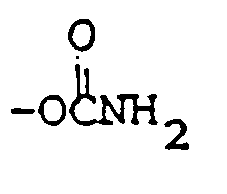
oùR⁴ représente -H, -OH, ou M représente ⊖; -H; un métal alcalin ou un autre sel pharmaceutiquement acceptable ; un ester pharmaceutiquement acceptable ; ou un groupe protecteur de carboxyle facile à enlever ;en un acide 7-aminocéphalosporanique de formule :
on traite un composé de formule I avec une enzyme, la céphalosporine C amidase, capable de transformer un composé de formule I en un composé de formule II en une étape ;
ladite enzyme étant caractérisée en ce qu'elle est dérivée d'Arthrobacter viscosus ATCC 53594, ou de n'importe lequel de ses descendants producteur ou potentiellement producteur de céphalosporine C amidase. - Procédé selon la revendication 2, dans lequel le composé de formule I est la céphalosporine C et le composé de formule II est l'acide 7-aminocéphalosporanique.
- Microorganisme Arthrobacter viscosus ATCC 53594, ou n'importe lequel de ses descendants producteur ou potentiellement producteur de céphalosporine C amidase.
- Arthrobacter viscosus ATCC 53594.
Applications Claiming Priority (4)
| Application Number | Priority Date | Filing Date | Title |
|---|---|---|---|
| US2757887A | 1987-03-18 | 1987-03-18 | |
| US27578 | 1987-03-18 | ||
| US136227 | 1987-12-21 | ||
| US07/136,227 US4981789A (en) | 1987-03-18 | 1987-12-21 | One-step enzymatic conversion of cephalosporin C and derivatives to 7-aminocephalosporanic acid and derivatives |
Publications (3)
| Publication Number | Publication Date |
|---|---|
| EP0283218A2 EP0283218A2 (fr) | 1988-09-21 |
| EP0283218A3 EP0283218A3 (en) | 1990-07-11 |
| EP0283218B1 true EP0283218B1 (fr) | 1993-07-14 |
Family
ID=26702659
Family Applications (1)
| Application Number | Title | Priority Date | Filing Date |
|---|---|---|---|
| EP88302140A Expired - Lifetime EP0283218B1 (fr) | 1987-03-18 | 1988-03-11 | Conversion enzymatique en une étape de la céphalosporine C et dérivés en acide 7-aminocéphalosporamique et dérivés |
Country Status (6)
| Country | Link |
|---|---|
| US (1) | US4981789A (fr) |
| EP (1) | EP0283218B1 (fr) |
| JP (1) | JPS63276498A (fr) |
| CY (1) | CY1892A (fr) |
| DE (1) | DE3882255T2 (fr) |
| HK (1) | HK183795A (fr) |
Cited By (1)
| Publication number | Priority date | Publication date | Assignee | Title |
|---|---|---|---|---|
| US6730497B2 (en) | 2001-04-19 | 2004-05-04 | Bioferma Murcia S.A. | Process for preparing cephalosporanic acid derivatives using β-ketoacid derivatives |
Families Citing this family (10)
| Publication number | Priority date | Publication date | Assignee | Title |
|---|---|---|---|---|
| IT1224252B (it) * | 1988-04-08 | 1990-09-26 | Sclavo Spa | Metodo di protezione del gruppo carbossilico nella chimica dei composti beta lattamici |
| EP0465600B1 (fr) * | 1989-04-04 | 1995-06-07 | Biopure Corporation | Production enzymatique d'acide 7-aminocephalosporanique |
| US5229274A (en) * | 1989-06-27 | 1993-07-20 | Merck & Co., Inc. | Gene encoding one step cephalosporin C amidase and expression thereof in recombinant bacillus |
| ATE167520T1 (de) * | 1990-04-18 | 1998-07-15 | Gist Brocades Nv | Mutierte beta-lactamacylasegene |
| DE4030040A1 (de) * | 1990-09-22 | 1992-03-26 | Bayer Ag | Enzymatische de-acylierung von acyl-aminosorbosen und dessen verwendung bei der herstellung von 1-desoxynojirimicin |
| KR100227711B1 (ko) * | 1991-10-15 | 1999-12-01 | 한스 발터 라벤 | 7-아미노세팔로스포란산 및 7-아미노데아세틸세팔로스포란산 제조를 위한 신규한 생물학적 공정 |
| AU3346295A (en) * | 1994-08-12 | 1996-03-07 | Gist-Brocades B.V. | Mutated penicillin g acylase genes |
| DE4437420A1 (de) * | 1994-10-19 | 1996-04-25 | Hoechst Ag | Verbessertes, induktionsfreies Verfahren zur gentechnischen Herstellung von Glutarylamidase |
| WO1998020120A1 (fr) | 1996-11-05 | 1998-05-14 | Bristol-Myers Squibb Company | Acylases mutantes de la penicilline g |
| HUP0301202A2 (hu) | 2000-09-22 | 2003-09-29 | Bristol-Myers Squibb Company | Glutaril-cefalosporin amidáz Pseudomonas diminuta BS-203-ból |
Family Cites Families (30)
| Publication number | Priority date | Publication date | Assignee | Title |
|---|---|---|---|---|
| US3144395A (en) * | 1962-08-01 | 1964-08-11 | Olin Mathieson | Process for preparing 6-aminopenicillanic acid by bacillus megaterium |
| FR1357977A (fr) * | 1963-05-20 | 1964-04-10 | Merck & Co Inc | Procédé de production d'acide 7-aminocéphalosphalosporanique par voie enzymatique |
| US3239394A (en) * | 1964-06-15 | 1966-03-08 | Merck & Co Inc | Process for producing 7-amino-cephalosporanic acid |
| US3565763A (en) * | 1967-12-19 | 1971-02-23 | Us Agriculture | Nitrogen source for improved productions of microbial polysaccharides |
| US3522250A (en) * | 1968-10-15 | 1970-07-28 | American Home Prod | Derivatives of 7-aminocephalosporanic acid |
| JPS4948760B1 (fr) * | 1970-12-25 | 1974-12-23 | ||
| GB1385685A (en) * | 1971-04-21 | 1975-02-26 | Glaxo Lab Ltd | Cephalosporin derivatives |
| CA979832A (en) * | 1971-05-31 | 1975-12-16 | Kunio Matsumoto | Production of 7-amino desacetoxy cephalosporanic acid from bacillus |
| JPS5341232B2 (fr) * | 1972-06-17 | 1978-11-01 | ||
| JPS5417030B2 (fr) * | 1972-12-06 | 1979-06-27 | ||
| GB1473100A (fr) * | 1973-05-10 | 1977-05-11 | ||
| FR2241557A1 (en) * | 1973-08-22 | 1975-03-21 | Aries Robert | 7-Amino-desacetoxy cephalosporanic acid prepn - from cephalosporin C, using an amido hydrolase enzyme |
| DE2355078A1 (de) * | 1973-11-03 | 1975-05-07 | Bayer Ag | Verfahren zur herstellung von 7-amino-delta hoch 3-cephem-derivaten |
| CH590292A5 (fr) * | 1973-12-20 | 1977-07-29 | Ciba Geigy Ag | |
| JPS5417032B2 (fr) * | 1974-01-23 | 1979-06-27 | ||
| JPS5619999B2 (fr) * | 1974-02-07 | 1981-05-11 | ||
| JPS5282791A (en) * | 1975-12-27 | 1977-07-11 | Toyo Jozo Co Ltd | Preparation of 7-amino compounds |
| JPS5920360B2 (ja) * | 1976-04-19 | 1984-05-12 | 萬有製薬株式会社 | 7−アミノセフアロスポラン酸および其の誘導体の製造法 |
| JPS52143289A (en) * | 1976-05-24 | 1977-11-29 | Meiji Seika Kaisha Ltd | Production of 7-amino-cephem derivatives by filamentous fungi |
| JPS60995B2 (ja) * | 1977-01-27 | 1985-01-11 | 明治製菓株式会社 | 7−アミノ−セフアロスポラン酸およびその誘導体の新規製造法 |
| US4171395A (en) * | 1977-03-30 | 1979-10-16 | Tillotson John G | Method and apparatus for forming a layer of foam urethane on a carpet backing and product |
| JPS54110394A (en) * | 1978-02-14 | 1979-08-29 | Banyu Pharmaceut Co Ltd | Preparation of cephapirin |
| JPS5685298A (en) * | 1979-12-14 | 1981-07-11 | Asahi Chem Ind Co Ltd | Preparation of 7-aminocephem compound |
| JPS58190399A (ja) * | 1982-04-30 | 1983-11-07 | Shionogi & Co Ltd | 6−アミノペニシラン酸の製造方法 |
| US4554250A (en) * | 1983-06-30 | 1985-11-19 | E. R. Squibb & Sons, Inc. | Method of increased production of penicillin acylase and plasmid employed therein |
| JPS60110292A (ja) * | 1983-11-22 | 1985-06-15 | Asahi Chem Ind Co Ltd | セフアロスポリン・アシラ−ゼ産生遺伝情報を担うdνa断片 |
| JPS6121097A (ja) * | 1984-07-10 | 1986-01-29 | Asahi Chem Ind Co Ltd | 7−アミノセフアロスポラン酸及びその誘導体の製造法 |
| DE3447023A1 (de) * | 1984-12-22 | 1986-06-26 | Hoechst Ag, 6230 Frankfurt | Neue d-aminosaeure-transaminase und ihre verwendung |
| JPS61152286A (ja) * | 1984-12-27 | 1986-07-10 | Asahi Chem Ind Co Ltd | セフアロスポリンcアシラ−ゼ産生遺伝情報を担うdna断片 |
| JPH0829114B2 (ja) * | 1986-09-18 | 1996-03-27 | 旭化成工業株式会社 | 7−アミノセフアロスポラン酸およびその誘導体の製造法 |
-
1987
- 1987-12-21 US US07/136,227 patent/US4981789A/en not_active Expired - Fee Related
-
1988
- 1988-03-11 EP EP88302140A patent/EP0283218B1/fr not_active Expired - Lifetime
- 1988-03-11 DE DE88302140T patent/DE3882255T2/de not_active Expired - Fee Related
- 1988-03-18 JP JP63063753A patent/JPS63276498A/ja active Pending
-
1995
- 1995-11-30 HK HK183795A patent/HK183795A/en not_active IP Right Cessation
-
1996
- 1996-08-30 CY CY189296A patent/CY1892A/xx unknown
Cited By (1)
| Publication number | Priority date | Publication date | Assignee | Title |
|---|---|---|---|---|
| US6730497B2 (en) | 2001-04-19 | 2004-05-04 | Bioferma Murcia S.A. | Process for preparing cephalosporanic acid derivatives using β-ketoacid derivatives |
Also Published As
| Publication number | Publication date |
|---|---|
| DE3882255T2 (de) | 1993-12-09 |
| US4981789A (en) | 1991-01-01 |
| JPS63276498A (ja) | 1988-11-14 |
| DE3882255D1 (de) | 1993-08-19 |
| HK183795A (en) | 1995-12-08 |
| EP0283218A2 (fr) | 1988-09-21 |
| EP0283218A3 (en) | 1990-07-11 |
| CY1892A (en) | 1996-08-30 |
Similar Documents
| Publication | Publication Date | Title |
|---|---|---|
| JP3072101B2 (ja) | 7―adcaの生化学的新規製造法 | |
| EP0348901B1 (fr) | Procédé de préparation d'acides organiques optiquement actifs et alpha substitués, micro-organismes et enzymes utilisés à cet effet | |
| SK9796A3 (en) | Manufacturing and isolation process of 7-aminodesacetoxy- -cephalosporane acid, recombinant dna vector and host cell | |
| KR100511734B1 (ko) | 광학활성화합물의제조방법 | |
| EP0283218B1 (fr) | Conversion enzymatique en une étape de la céphalosporine C et dérivés en acide 7-aminocéphalosporamique et dérivés | |
| EP0322032A3 (fr) | Conversion en une étape de céphalosporine C et ses dérivés en acide 7-aminocéphalosporanique et ses dérivés | |
| US4774179A (en) | Process for preparing a 7-aminocephalosporanic acid compound | |
| SK9896A3 (en) | Manufacturing and isolation process of 7-aminodesacetoxy- -cephalosporane acid, recombinant dna vector and host cell | |
| GB2160870A (en) | Process for preparing peptides | |
| EP0739979B1 (fr) | Glucosamine-6-phosphate deaminase et procédé pour sa préparation utilisant un micro-organisme du genre Vibrio | |
| US5104800A (en) | One-step cephalosporin c amidase enzyme | |
| KR20000022109A (ko) | 탈아실화된 세팔로스포린의 발효제조방법 | |
| EP0510712A2 (fr) | Procédé de séparation d'isomères optiques d'acides carboxyliques alpha-substitués | |
| JP4437170B2 (ja) | 微生物、該微生物より得られるラクタマーゼ酵素、およびその使用 | |
| JPH07227296A (ja) | 3−ヒドロキシメチルセファロスポリンの酵素アシル化 | |
| EP0567642A1 (fr) | Procede de production d'acide (r)-malique, hydratase de maleate microbienne et procede de production de cette hydratase | |
| JP3078597B2 (ja) | L−スレオ−3−(3,4−ジヒドロキシフェニル)セリン誘導体の製造法 | |
| WO2002012527A2 (fr) | Preparation de monoesters d'acide dicarboxylique a partir d'esters d'acide cyanocarboxylique | |
| JPS60995B2 (ja) | 7−アミノ−セフアロスポラン酸およびその誘導体の新規製造法 | |
| KR970010133B1 (ko) | D-α-아미노산의 제조방법 | |
| KR100345848B1 (ko) | 고정화균체에의한세파졸린의제조방법 | |
| KR810000048B1 (ko) | 고정화 효소를 이용한 세팔랙신 제조방법 | |
| CN121780499A (zh) | 一种塔格糖-4-差向异构酶及其在制备d-塔格糖中的应用 | |
| CN117247927A (zh) | 一种头孢菌素c酰化酶的人工合成及其突变体应用 | |
| NZ237234A (en) | Preparing a diacetate of 2 hydroxymethyl-butan-1,4-diol from the traicetate using a microbial hydrolase |
Legal Events
| Date | Code | Title | Description |
|---|---|---|---|
| PUAI | Public reference made under article 153(3) epc to a published international application that has entered the european phase |
Free format text: ORIGINAL CODE: 0009012 |
|
| AK | Designated contracting states |
Kind code of ref document: A2 Designated state(s): CH DE FR GB IT LI NL |
|
| ITCL | It: translation for ep claims filed |
Representative=s name: SOCIETA' ITALIANA BREVETTI S.P.A. |
|
| PUAL | Search report despatched |
Free format text: ORIGINAL CODE: 0009013 |
|
| AK | Designated contracting states |
Kind code of ref document: A3 Designated state(s): CH DE FR GB IT LI NL |
|
| 17P | Request for examination filed |
Effective date: 19901212 |
|
| 17Q | First examination report despatched |
Effective date: 19920204 |
|
| GRAA | (expected) grant |
Free format text: ORIGINAL CODE: 0009210 |
|
| AK | Designated contracting states |
Kind code of ref document: B1 Designated state(s): CH DE FR GB IT LI NL |
|
| REF | Corresponds to: |
Ref document number: 3882255 Country of ref document: DE Date of ref document: 19930819 |
|
| ITF | It: translation for a ep patent filed | ||
| ET | Fr: translation filed | ||
| PLBE | No opposition filed within time limit |
Free format text: ORIGINAL CODE: 0009261 |
|
| STAA | Information on the status of an ep patent application or granted ep patent |
Free format text: STATUS: NO OPPOSITION FILED WITHIN TIME LIMIT |
|
| 26N | No opposition filed | ||
| ITTA | It: last paid annual fee | ||
| PGFP | Annual fee paid to national office [announced via postgrant information from national office to epo] |
Ref country code: CH Payment date: 20001213 Year of fee payment: 14 |
|
| PGFP | Annual fee paid to national office [announced via postgrant information from national office to epo] |
Ref country code: GB Payment date: 20001222 Year of fee payment: 14 |
|
| PGFP | Annual fee paid to national office [announced via postgrant information from national office to epo] |
Ref country code: FR Payment date: 20001229 Year of fee payment: 14 |
|
| PGFP | Annual fee paid to national office [announced via postgrant information from national office to epo] |
Ref country code: DE Payment date: 20010223 Year of fee payment: 14 |
|
| PGFP | Annual fee paid to national office [announced via postgrant information from national office to epo] |
Ref country code: NL Payment date: 20010330 Year of fee payment: 14 |
|
| REG | Reference to a national code |
Ref country code: GB Ref legal event code: IF02 |
|
| PG25 | Lapsed in a contracting state [announced via postgrant information from national office to epo] |
Ref country code: GB Free format text: LAPSE BECAUSE OF NON-PAYMENT OF DUE FEES Effective date: 20020311 |
|
| PG25 | Lapsed in a contracting state [announced via postgrant information from national office to epo] |
Ref country code: LI Free format text: LAPSE BECAUSE OF NON-PAYMENT OF DUE FEES Effective date: 20020331 Ref country code: CH Free format text: LAPSE BECAUSE OF NON-PAYMENT OF DUE FEES Effective date: 20020331 |
|
| PG25 | Lapsed in a contracting state [announced via postgrant information from national office to epo] |
Ref country code: NL Free format text: LAPSE BECAUSE OF NON-PAYMENT OF DUE FEES Effective date: 20021001 Ref country code: DE Free format text: LAPSE BECAUSE OF NON-PAYMENT OF DUE FEES Effective date: 20021001 |
|
| GBPC | Gb: european patent ceased through non-payment of renewal fee |
Effective date: 20020311 |
|
| REG | Reference to a national code |
Ref country code: CH Ref legal event code: PL |
|
| PG25 | Lapsed in a contracting state [announced via postgrant information from national office to epo] |
Ref country code: FR Free format text: LAPSE BECAUSE OF NON-PAYMENT OF DUE FEES Effective date: 20021129 |
|
| NLV4 | Nl: lapsed or anulled due to non-payment of the annual fee |
Effective date: 20021001 |
|
| REG | Reference to a national code |
Ref country code: FR Ref legal event code: ST |
|
| PG25 | Lapsed in a contracting state [announced via postgrant information from national office to epo] |
Ref country code: IT Free format text: LAPSE BECAUSE OF NON-PAYMENT OF DUE FEES Effective date: 20050311 |