EP0286807A2 - Verfahren zur Betriebsmittelzugriffsteuerung für konkurrierende Vorgänge - Google Patents
Verfahren zur Betriebsmittelzugriffsteuerung für konkurrierende Vorgänge Download PDFInfo
- Publication number
- EP0286807A2 EP0286807A2 EP88102730A EP88102730A EP0286807A2 EP 0286807 A2 EP0286807 A2 EP 0286807A2 EP 88102730 A EP88102730 A EP 88102730A EP 88102730 A EP88102730 A EP 88102730A EP 0286807 A2 EP0286807 A2 EP 0286807A2
- Authority
- EP
- European Patent Office
- Prior art keywords
- resource
- processor
- lock
- local
- control
- Prior art date
- Legal status (The legal status is an assumption and is not a legal conclusion. Google has not performed a legal analysis and makes no representation as to the accuracy of the status listed.)
- Withdrawn
Links
Images

Classifications
-
- G—PHYSICS
- G06—COMPUTING OR CALCULATING; COUNTING
- G06F—ELECTRIC DIGITAL DATA PROCESSING
- G06F9/00—Arrangements for program control, e.g. control units
- G06F9/06—Arrangements for program control, e.g. control units using stored programs, i.e. using an internal store of processing equipment to receive or retain programs
- G06F9/46—Multiprogramming arrangements
- G06F9/50—Allocation of resources, e.g. of the central processing unit [CPU]
-
- G—PHYSICS
- G06—COMPUTING OR CALCULATING; COUNTING
- G06F—ELECTRIC DIGITAL DATA PROCESSING
- G06F9/00—Arrangements for program control, e.g. control units
- G06F9/06—Arrangements for program control, e.g. control units using stored programs, i.e. using an internal store of processing equipment to receive or retain programs
- G06F9/46—Multiprogramming arrangements
- G06F9/466—Transaction processing
Definitions
- This invention relates to the operation of loosely-coupled multiprocessor syst and provides a lock management method for regulating concurrent accesses to shared system resources by a plurality of transactions executing in one or more central electronic complexes (CECs).
- CECs central electronic complexes
- Distributed processing has been widely used in modern multiprocessor systems because it offers improved system availability and modularity (or extensibility).
- Distributed processing systems range from tightly-coupled to loosely-coupled systems.
- the CECs In tightly-coupled systems, the CECs share a main memory and the control of a single operating system.
- each CEC in a loosely-coupled system runs on a separate memory and each is controlled by an independent operating system.
- Communication between CECs in a loosely-coupled system is accomplished by message exchanges in a network to which the CECs are connected.
- the CECs share access to a common data base.
- a transaction running in a CEC is required to first acquire a lock on an object of the data base before it can have access thereto.
- the locks are controlled by a lock manager which is implemented in either hardware or software.
- the lock manager must be efficient, because a transaction usually must acquire and release many locks in each transaction.
- a lock management scheme that requires a message pair to acquire each lock is too expensive, because it requires both the cost of sending a requesting message and the cost of suspending the transaction until an answering message can be returned to grant the lock.
- the overhead in process switch and message exchange alone would make such a lock manager consume an order of magnitude more instructions per lock request.
- What is needed therefore is a method for maintaining integrity of shared resources that are concurrently accessible by a multiplicity of transactions executing in one or more loosely-coupled CECs, wherein the number of messages that need to be communicated between the complexes is minimised, and wherein the time in which transactions must wait for an access to the resource is also reduced.
- the present invention provides a method for regulating access by concurrent transactions to potentially hierarchically-related resources distributed about a loosely-coupled multiple-processor system wherein each resource has a lock associated therewith, and a plurality of transactions are executing each in a respective processor, and a central processor maintaining a concordance of resource identities, hierarchical relations, if any, among the resources and processor identities (IDs), the method comprising, upon receipt of a request from a transaction for access to a resource, the steps of:
- the method comprises, responsive to a request from a transaction for access to a resource, the steps of: (a) ascertaining at the local processor wherein the requesting transaction is executing whether the local processor has control on the requested resource or its antecedents, the processor having control on the resource or its antecedents when the processor is the only processor accessing the resource or its antecedents; (b) if the local processor has control of the requested resource or its antecedents, granting a lock by the local processor on the requested resource to the requesting transaction if the lock is compatible with a then current combined lock state of the resource; and (c) if the local processor does not have control of the requested resource, then submitting the resource request to other non-local processors.
- Fig. 1 illustrates a multiprocessor system comprising a plurality of central electronic complexes, 1,2 a ,2 b ,..,2 n , such as IBM Systems/370, connected to an IBM 3088 Multisystem Channel Communication Unit 3 in a star network.
- IBM System/370 is described in U.S. Pat. No. 3,400,371 by G. M. Amdahl, et al, entitled, "Data Processing System” and in the "IBM System/370 Principles of Operation," IBM Publication GA22-7000-6.
- An IBM 3088 Multisystem Channel Communication Unit product description can be found in IBM Publication GA22-7081-2.
- Each CEC has a general purpose central processing unit which accesses its own main memory, and also channels for communicating with input/output devices or other peripheral equipment. Each CEC also operates independently under control of an operating system such as the "IBM System/370 Operating System", IBM Publications GS 22-6534, GC 28-0661, and GC 20-1800.
- IBM System/370 Operating System IBM Publications GS 22-6534, GC 28-0661, and GC 20-1800.
- CECs 2 a ,2 b ,...,2 n are transaction processors (TPs) each of which is executing transactions which need access to objects of a common data base 4.
- TPs transaction processors
- CECs 2 a ,2 b ,...,2 n are hereafter also referred to as TPa, TPb,...TPn.
- CEC 1 is a processor which, as will be described hereafter, coordinates accesses to common database 4 by the TP's.
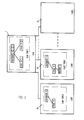
- the multiprocessor system can therefore also be viewed as a hierarchical system as represented logically in Fig. 2.
- each object of the data base 4 has associated therewith a lock.
- a transaction must request, and be granted a lock to an object of data base 4 before it can have access to that object.
- the locks are arranged in a logical hierarchy. It is required that a transaction acquire a lock on an object's parent before acquiring the lock on the object itself.
- the structuring of objects into a hierarchy does not necessarily imply that the data model supported by the data base system must be hierarchical but that the invention is capable of dealing it if it is.
- the levels of lock hierarchy chosen for data base 4 are: - Database - Relation - Page - Tuple.
- Each TP has a Local Lock Manager (LLM) which handles lock requests from local transactions running in that TP.
- LLM Local Lock Manager
- Each LLM has a table in storage that describes all locks held on objects by transactions running in that TP.
- a format of a table entry for a resource object is illustrated in the pseudo code listing of Table 1.
- the LLM locates the parent of the object, and if the parent exists, checks whether it has sole interest in the parent (see lines 401-406 of Appendix).
- the LLM enters the object into its table and puts the transaction on a queue of waiters for a lock on the object (line 601).
- the LLM then sends a message to the Central Lock Manager (CLM) requesting the lock on the object (lines 602-607) and instructs the transaction to wait (line 608).
- CLM Central Lock Manager
- the CLM maintains a table in storage which describes locks held on objects by the various LLM's (on behalf of transactions in their respective CEC).
- An example of the CLM table is found in Fig. 2.
- the CLM's table does not contain all locks held in the system. It includes only locks held on objects by more than one LLM and the highest level lock held on an object by an LLM with sole interest.
- Each CLM table entry indicates the set of LLMs that hold the lock.
- LLM1 When LLM1 needs access to page 14 of database A, it sends a lock request to the CLM. While the CLM adds LLM1's lock to database A, the sole interest to database A is retained in LLM2. The CLM requests LLM2 to send the CLM any locks held on objects directly below database A (i.e. Page 11).
- Page 11 is now marked in the CLM table sole interest to LLM2.
- sole interest to page 11 is registered in the CLM as belonging to LLM2, LLM2's sole interest in database A is dropped.
- the transaction is awakened and notified that the request failed.
- the object is removed from the LLM's table.
- the LLM appends the transaction's request to the waiter queue for the object, suspends the transaction, and forwards the request to the CLM via a message.
- the possible CLM response and associated LLM actions are nearly the same as for the previous case except that when the CLM grants the lock to the LLM there may be other transactions, running on the same complex as the requesting transaction, that hold locks on the object in conflict with the request. In that case, the requesting transaction remains queued behind the local transactions until they release their locks on the object.
- the LLM has sole interest in the parent of the object (See Table 5)
- the LLM has control of the object and need not communicate with the CLM.
- the transaction is kept on the waiter queue until other local transactions that are holding conflicting locks on the object release their locks.
- Table 7 is a pseudo code listing of the LLM routine executed upon receipt of a lock request from a transaction on a remote system.
- an LLM receives a remote request from the CLM, it checks its table for the object involved. If its table does not contain the object, a message granting the lock is returned to the CLM immediately (lines 704-707) and a corresponding table entry is built for the resource.
- the request is checked for compatibility against local current holders and waiters for the lock (line 717). If the request is compatible, a message granting the lock is returned to the CLM immediately. Otherwise, the request is queued behind any other waiting lock requests for the object until the request can be granted (when other transactions release locks on the object), then a message is returned to the CLM granting the lock.
- the LLM When a transaction releases a lock on an object, the LLM examines the queue of waiters to see if any new holders can be accommodated. If so, as many new waiters as are compatible are added to the holder queue, if they are local. Compatible waiters that are remote cause a message to be sent to the CLM granting the request. When the last lock on an object is released on an LLM, a message is sent to the CLM to release the lock.
- Table 9 is a pseudo code listing of the CLM routine upon an unlock request from an LLM. The CLM removes the LLM from the list of lock holders for the object. If only one LLM now remains holding locks on the object, a message ("now sole interest") is sent to that LLM giving it sole interest. CLM further deletes all objects beneath the now sole interest object in its table.
- the remaining LLM When the remaining LLM receives a message from CLM granting sole interest on an object, it marks the corresponding table entry accordingly, thus maximising its local control of the resource.
Landscapes
- Engineering & Computer Science (AREA)
- Software Systems (AREA)
- Theoretical Computer Science (AREA)
- Physics & Mathematics (AREA)
- General Engineering & Computer Science (AREA)
- General Physics & Mathematics (AREA)
- Multi Processors (AREA)
- Information Retrieval, Db Structures And Fs Structures Therefor (AREA)
- Computer And Data Communications (AREA)
Applications Claiming Priority (2)
| Application Number | Priority Date | Filing Date | Title |
|---|---|---|---|
| US3789587A | 1987-04-13 | 1987-04-13 | |
| US37895 | 1987-04-13 |
Publications (2)
| Publication Number | Publication Date |
|---|---|
| EP0286807A2 true EP0286807A2 (de) | 1988-10-19 |
| EP0286807A3 EP0286807A3 (de) | 1990-12-19 |
Family
ID=21896935
Family Applications (1)
| Application Number | Title | Priority Date | Filing Date |
|---|---|---|---|
| EP19880102730 Withdrawn EP0286807A3 (de) | 1987-04-13 | 1988-02-24 | Verfahren zur Betriebsmittelzugriffsteuerung für konkurrierende Vorgänge |
Country Status (2)
| Country | Link |
|---|---|
| EP (1) | EP0286807A3 (de) |
| JP (1) | JPS63263557A (de) |
Cited By (7)
| Publication number | Priority date | Publication date | Assignee | Title |
|---|---|---|---|---|
| EP0389242A3 (de) * | 1989-03-20 | 1993-06-30 | Fujitsu Limited | Multiprozessorsystem verwendendes Datenbasisverarbeitungssystem |
| US5805900A (en) * | 1996-09-26 | 1998-09-08 | International Business Machines Corporation | Method and apparatus for serializing resource access requests in a multisystem complex |
| US6618744B1 (en) * | 1996-06-24 | 2003-09-09 | Oracle Corporation | Efficient lock state transitions in a distributed system |
| US6697901B1 (en) * | 2000-10-24 | 2004-02-24 | Oracle International Corporation | Using secondary resource masters in conjunction with a primary resource master for managing resources that are accessible to a plurality of entities |
| US7209990B2 (en) | 2005-04-05 | 2007-04-24 | Oracle International Corporation | Maintain fairness of resource allocation in a multi-node environment |
| US7447786B2 (en) | 2003-05-09 | 2008-11-04 | Oracle International Corporation | Efficient locking of shared data that is accessed for reads in a cluster database |
| US10459810B2 (en) | 2017-07-06 | 2019-10-29 | Oracle International Corporation | Technique for higher availability in a multi-node system using replicated lock information to determine a set of data blocks for recovery |
Families Citing this family (1)
| Publication number | Priority date | Publication date | Assignee | Title |
|---|---|---|---|---|
| JP5745868B2 (ja) | 2011-01-18 | 2015-07-08 | トヨタ自動車株式会社 | マルチプロセッサシステム |
Family Cites Families (1)
| Publication number | Priority date | Publication date | Assignee | Title |
|---|---|---|---|---|
| DE2963264D1 (en) * | 1978-12-04 | 1982-08-19 | Ibm | Multiprocessor system with enqueue facility for access to sharable data facilities |
-
1988
- 1988-02-19 JP JP3546488A patent/JPS63263557A/ja active Pending
- 1988-02-24 EP EP19880102730 patent/EP0286807A3/de not_active Withdrawn
Cited By (8)
| Publication number | Priority date | Publication date | Assignee | Title |
|---|---|---|---|---|
| EP0389242A3 (de) * | 1989-03-20 | 1993-06-30 | Fujitsu Limited | Multiprozessorsystem verwendendes Datenbasisverarbeitungssystem |
| US5649184A (en) * | 1989-03-20 | 1997-07-15 | Fujitsu Limited | Symmetric/asymmetric shared processing operation in a tightly coupled multiprocessor |
| US6618744B1 (en) * | 1996-06-24 | 2003-09-09 | Oracle Corporation | Efficient lock state transitions in a distributed system |
| US5805900A (en) * | 1996-09-26 | 1998-09-08 | International Business Machines Corporation | Method and apparatus for serializing resource access requests in a multisystem complex |
| US6697901B1 (en) * | 2000-10-24 | 2004-02-24 | Oracle International Corporation | Using secondary resource masters in conjunction with a primary resource master for managing resources that are accessible to a plurality of entities |
| US7447786B2 (en) | 2003-05-09 | 2008-11-04 | Oracle International Corporation | Efficient locking of shared data that is accessed for reads in a cluster database |
| US7209990B2 (en) | 2005-04-05 | 2007-04-24 | Oracle International Corporation | Maintain fairness of resource allocation in a multi-node environment |
| US10459810B2 (en) | 2017-07-06 | 2019-10-29 | Oracle International Corporation | Technique for higher availability in a multi-node system using replicated lock information to determine a set of data blocks for recovery |
Also Published As
| Publication number | Publication date |
|---|---|
| JPS63263557A (ja) | 1988-10-31 |
| EP0286807A3 (de) | 1990-12-19 |
Similar Documents
| Publication | Publication Date | Title |
|---|---|---|
| EP0428006B1 (de) | Mehrstufiges Verriegelungssystem und -verfahren | |
| US5546582A (en) | Extension of two phase commit protocol to distributed participants | |
| US5956712A (en) | Byte range locking in a distributed environment | |
| EP0972240B1 (de) | Agentimplementierte verriegelungsvorrichtung | |
| EP0321723B1 (de) | Vorrichtung für ein Datenverarbeitungssystem mit gleichmengiger Beziehung zwischen einer Vielzahl von zentralen Datenverarbeitungseinheiten | |
| US6502136B1 (en) | Exclusive control method with each node controlling issue of an exclusive use request to a shared resource, a computer system therefor and a computer system with a circuit for detecting writing of an event flag into a shared main storage | |
| US5613139A (en) | Hardware implemented locking mechanism for handling both single and plural lock requests in a lock message | |
| US4965719A (en) | Method for lock management, page coherency, and asynchronous writing of changed pages to shared external store in a distributed computing system | |
| US5390316A (en) | Multicomputer complex having a distributed shared memory system for providing a single system view from multiple consoles | |
| US5469575A (en) | Determining a winner of a race in a data processing system | |
| US5251317A (en) | Computer system with an access control unit for resource | |
| US6697901B1 (en) | Using secondary resource masters in conjunction with a primary resource master for managing resources that are accessible to a plurality of entities | |
| US6185650B1 (en) | High performance locking facility | |
| US6253274B1 (en) | Apparatus for a high performance locking facility | |
| US7114156B2 (en) | System and method for processing multiple work flow requests from multiple users in a queuing system | |
| AU603876B2 (en) | Multiple i/o bus virtual broadcast of programmed i/o instructions | |
| EP0286807A2 (de) | Verfahren zur Betriebsmittelzugriffsteuerung für konkurrierende Vorgänge | |
| US6088757A (en) | Computer program means and device for conducting high performance locking facility in a loosely coupled environment | |
| JPS6265137A (ja) | ユ−ザ・タスクの優先度制御方式 | |
| JPS62232064A (ja) | 分散デ−タベ−スシステムのデツドロツク防止方式 | |
| JPH03260853A (ja) | 透過型通信制御装置 | |
| JPH04274524A (ja) | プロセス間通信制御方式 | |
| JPH02247748A (ja) | マルチプロセッサによるデータベース処理方式 | |
| KR19990053525A (ko) | 실시간 시스템의 자원 공유 방법 | |
| JPH1115683A (ja) | 排他制御処理装置及び排他制御処理方法並びに排他制御処理プログラムを記憶した記憶媒体 |
Legal Events
| Date | Code | Title | Description |
|---|---|---|---|
| PUAI | Public reference made under article 153(3) epc to a published international application that has entered the european phase |
Free format text: ORIGINAL CODE: 0009012 |
|
| AK | Designated contracting states |
Kind code of ref document: A2 Designated state(s): DE FR GB |
|
| 17P | Request for examination filed |
Effective date: 19890222 |
|
| PUAL | Search report despatched |
Free format text: ORIGINAL CODE: 0009013 |
|
| AK | Designated contracting states |
Kind code of ref document: A3 Designated state(s): DE FR GB |
|
| STAA | Information on the status of an ep patent application or granted ep patent |
Free format text: STATUS: THE APPLICATION HAS BEEN WITHDRAWN |
|
| 17Q | First examination report despatched |
Effective date: 19921005 |
|
| 18W | Application withdrawn |
Withdrawal date: 19921016 |