EP0310409A2 - Prostaglandinderivate - Google Patents
Prostaglandinderivate Download PDFInfo
- Publication number
- EP0310409A2 EP0310409A2 EP88309085A EP88309085A EP0310409A2 EP 0310409 A2 EP0310409 A2 EP 0310409A2 EP 88309085 A EP88309085 A EP 88309085A EP 88309085 A EP88309085 A EP 88309085A EP 0310409 A2 EP0310409 A2 EP 0310409A2
- Authority
- EP
- European Patent Office
- Prior art keywords
- prostaglandin
- ester
- cells
- ischemia
- hydrophobic
- Prior art date
- Legal status (The legal status is an assumption and is not a legal conclusion. Google has not performed a legal analysis and makes no representation as to the accuracy of the status listed.)
- Withdrawn
Links
Images






Classifications
-
- C—CHEMISTRY; METALLURGY
- C07—ORGANIC CHEMISTRY
- C07C—ACYCLIC OR CARBOCYCLIC COMPOUNDS
- C07C405/00—Compounds containing a five-membered ring having two side-chains in ortho position to each other, and having oxygen atoms directly attached to the ring in ortho position to one of the side-chains, one side-chain containing, not directly attached to the ring, a carbon atom having three bonds to hetero atoms with at the most one bond to halogen, and the other side-chain having oxygen atoms attached in gamma-position to the ring, e.g. prostaglandins ; Analogues or derivatives thereof
Definitions
- the invention relates to hydrophobic derivatives of prostaglandins, more particularly hydrophobic esters.
- the invention is based on the realisation that certain derivatives of prostaglandin can protect cells by (a) chelating intracellular calcium ions, (b) inhibiting phospholipase and protease activities and, (c) inhibiting various endogenous enzymes which are involved in the cascade of reactions.
- the compounds were also found to protect organs of chronic alcoholic subjects.
- the invention provides a hydrophobic ester of a prostaglandin.
- the ester is an acetoxyalkyl ester, in which the alkyl group has a low number of carbon atoms; specifically preferred are the acetoxymethyl and acetoxyethyl esters.
- the prostaglandin is preferably prostaglandin A1 or E1.
- the invention provides a method of making a hydrophobic ester as defined, the method comprising subjecting a prostaglandin to esterification, preferably by reaction with a halide, eg. bromide, of the desired ester.
- a halide eg. bromide
- the invention provides a pharmaceutical composition
- a pharmaceutical composition comprising a therapeutically effective amount of a hydrophobic ester as defined, and a pharmaceutical carrier or diluent.
- the carrier or diluent may be liquid or solid and of known type.
- the ester derivatives can be administered in a variety of ways, including orally, subcutaneously, intramuscularly, intravenously or topically. Preferred rates of administration (in mg/kg body weight/day) are about 10 for oral administration; about 6 for subcutaneous administration and about 2 for intravenous administration.
- the esters enter cells through the membranes because they have high affinity to lipids. They are decomposed inside the cells by cellular enzymes to become acid form molecules. Since the acid form molecules are less lipid soluble, they tend to stay inside the cells.
- esters were found to have the following properties.
- the alkyl group of the acetoxyalkyl ester preferably has from 1 to 6 carbon atoms in the alkyl group. As indicated, preferred are the acetoxymethyl and acetoxyethyl.
- the protaglandin may be A1 or E1, but it can also be B1 or dehydro (keto) prostaglandin A1, B1 or E1, the acetoxymethyl bromide, acetoxyethyl bromide or ethyl bromo acetate.
- prostaglandin A1 or prostaglandin E1 was dissolved in 10ml ethanol and added to 1.2g crushed solid KOH in a 50ml flask. The mixture was rotated on a reflux apparatus at 70°C for three hours. Ten ml of water was added to make the final base concentration 1 N KOH in 50% alcohol and the mixture was refluxed in an oil bath at 74°C for an additional six hours. The reaction mixture was cooled to room temperature, 11ml isobutanol was added and the pH adjusted to 3 with about 7.5ml 2.3 N HCl04. The precipitate formed was allowed to settle, the supernatant decanted and the precipitate washed with H2O and a small amount of alcohol until white.
- This compound is in an acid form.
- the molecular weight of this compound as determined by vapour pressure osmometry is about 2,200 suggested that the major component of this compound may be hexamers, although trimer, tetramer, pentamer and heptamer are also contained.
- the yield was 70-80%.
- MR-256 50mg of MR-256 was mixed with 0.5ml of ethyldiisopropylamine, 0.1 ml chloroform, and 2 ml of isobutanol. Then 0.2 ml of acetoxymethyl bromide or acetoxyethyl bromide was added and the mixture was stirred in a stoppered flask for 20h. The solution was evaporated in vacuo , the residue taken up in benzene, filtered to remove the undesired ethyldiisopropylammonium bromide, and re-evaporated. The residue was extracted with diethyle ether several times. The extracts were combined and evaporated in vacuo overnight. The yield of the ester form is 60-70%. This ester-form is denoted as MR-356 for identification purpose. MR-356 is not water-soluble, but soluble in ethanol.
- Myocytes isolated cardiac cells
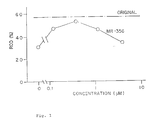
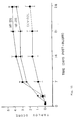
- Myocytes were prepared from the rat heart according to the method of Hohl C, Alathap R A and Brieley G P, (Arch Biochem Biophys 221:197-205, 1983). About 60 to 70% of myocytes were in rod-shape form (a rod-shape indicates intactness of isolated cardiac cells). When these myocytes were kept under nitrogen for 1 hour, about half of the rod-shaped cells were irreversibly damaged and turned into round-shaped cells. MR-356 was added to the suspension before the nitrogen exposure and it was observed that the formation of round-shaped cells was inhibited. At concentrations less than 1 uM, the drug protected myocytes from ischemic damage as indicated by the preservation of rod-shaped cells and as shown graphically in Figure 1.
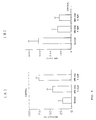
- An isolated rat heart was mounted by tieing the aorta to a catheter in the Langendorff model shown in Figure 2.
- a modified Krebs-Henseleit solution (117 mM NaCl, 6mM KCl, 2.5 mM CaCl2, 1.2 mM, MgC12, 2.4mM phosphate, 24mM NaHC03, 5mM glucose; bubbled with 95% O2-5% CO2 gas; temperature 370; pH 7.4) was circulated by a pump (flow rate: 15ml/min).
- the heart was stimulated 3 beats/seconds by electric pulses (10V; 10msec duration). This system supported the beating heart for more than several hours.
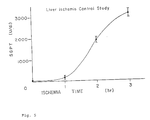
- Another method of measuring protective effect of drugs is to assay the creatine phosphokinase activity (CPK activity) of the circulating solution.
- CPK activity creatine phosphokinase activity
- the dura mater was opened with a 26 gauge needle, and the MCA was ligated by 10-0 suture with a square knot. Immediately, the left CCA was occluded by a microaneurysmal clip. After the operation, the animal was returned to its cage. One hour later, the left CCA clip was released in awake condition.
- the sham-operated control was produced in a similar procedure, except for the ligations and clipping of vessels. The operation was usually finished within 30 minutes.
- the disturbance of motor functions was evaluated by the total score obtained from the inclined plate test, balance beam test and prehensile test. These motor performance tests were designed to quantify the motor weakness in the global ischemia rats.
- the original method was modified to suit to the rat focal ischemia model employed in this study, whose motor deficits may be less severe than that of global ischemia (4-vessel occlusion, 20 min).
- Two trials were given to the animal, and the better score was chosen as its data. To lessen the factor of fatigue, the trial was carried out at intervals of a few minutes.
- a 60 x 30 cm board covered with a thin rubber pad was used as a plate and was fixed at a designated angle (55°).
- the animal was placed at the highest position of the plate and the time which it could stay on the plate was measured until 30 seconds.
- a wooden rod 70 cm long and 3.2 cm diameter, was positioned horizontally 60 cm above a thick sponge pad and the animal was left at the centre of rod. The time that the rat spent on the rod was recorded until 30 second.
- a Nylon rope 70 cm long and 4mm in diameter, was stretched horizontally 60 cm above a thick sponge pad and the rat's forepaws were placed on the rope and then released. The time that the rat spent hanging on the rope was measured until 30 seconds.
- the scoring methods in these three tests were identical and defined as follows; 0:0 second; 1;1-10 seconds; 2:11-20 seconds; 3:21-30 seconds; 4:above 30 seconds. Therefore, the total motor score ranged from 0 to 12 points.
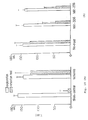
- Figure 9 shows in block diagram from the motor function as determined by three tests (complete paralysis is indicated by motor score 0, and normal condition as 12).
- focal ischemia 3 days later, the animal lost about 50% of motor ability as indicated by the motor score of 7 in non-treated animals.
- these drugs given before ischemia 3mg/kg
- the motor score obtained 7 days after the operation was about 11 indicating that animals were almost completely recovered (they may still have slight motor deficits).
- the apparatus comprised an illuminated large compartment (40x40cm) and a dark small compartment (10x10cm) interconnected by an opening (6x6cm). Grids made of metal conductors were placed at the bottom of the small compartment.
- the rat was placed on a fixed location in the large compartment and was allowed to explore the apparatus for 180 seconds. The time spent in the small compartment was recorded with a stop watch. Then, when the rat was in the small compartment, the opening was closed with a transparent shutter and the rat received a weak electric shock for 30 seconds (to a degree that the rat felt a slight pain). By this method, the rat had an experience of fear (learning) and passive avoidance reaction was established. The retention test was undertaken in the same manner as the first exploration 24 hours after the initial test.
- ISC Irreversibly sickled cells
- Plasmodium Chabaudi Two different kinds of plasmodium were tested: Plasmodium Chabaudi and Plasmodium Vinckei .
- the increase in parasitemia was measured after each mouse was infected by 106 parasite-infected red blood cells. After 8 days, the parasitemia in the non-treated group was almost 30%.
- the effect of MR-256 was not significant, but the increase of parasitemia was almost completely inhibited by MR-356 (20 mg/kg per day).
- the survival rate was also measured together with parasitemia. Since these parasites are so strong, they kill all mice in the end.
Landscapes
- Chemical & Material Sciences (AREA)
- Organic Chemistry (AREA)
- Acyclic And Carbocyclic Compounds In Medicinal Compositions (AREA)
- Pharmaceuticals Containing Other Organic And Inorganic Compounds (AREA)
Applications Claiming Priority (4)
| Application Number | Priority Date | Filing Date | Title |
|---|---|---|---|
| US10471387A | 1987-10-02 | 1987-10-02 | |
| US104713 | 1987-10-02 | ||
| US147839 | 1988-01-25 | ||
| US07/147,839 US4840968A (en) | 1987-10-02 | 1988-01-25 | Preparation and uses of new prostaglandin derivatives which protect cell membranes against ischemic, physical, chemical, and biological injuries |
Publications (2)
| Publication Number | Publication Date |
|---|---|
| EP0310409A2 true EP0310409A2 (de) | 1989-04-05 |
| EP0310409A3 EP0310409A3 (de) | 1989-05-31 |
Family
ID=26801854
Family Applications (1)
| Application Number | Title | Priority Date | Filing Date |
|---|---|---|---|
| EP88309085A Withdrawn EP0310409A3 (de) | 1987-10-02 | 1988-09-30 | Prostaglandinderivate |
Country Status (2)
| Country | Link |
|---|---|
| US (1) | US4840968A (de) |
| EP (1) | EP0310409A3 (de) |
Cited By (1)
| Publication number | Priority date | Publication date | Assignee | Title |
|---|---|---|---|---|
| EP0396024A3 (en) * | 1989-05-05 | 1992-01-08 | Gruenenthal Gmbh | Esters, medicaments containing them and preparation of these esters and medicaments |
Families Citing this family (3)
| Publication number | Priority date | Publication date | Assignee | Title |
|---|---|---|---|---|
| US5324746A (en) * | 1993-02-12 | 1994-06-28 | Mckee Rex N | Method of treating damaged mucosal and epithelial tissues with misoprostol |
| US5994399A (en) * | 1997-03-27 | 1999-11-30 | Mckee; Rex N. | Method of regenerating collagen-containing tissues with misoprostol |
| US7241746B2 (en) * | 2003-08-06 | 2007-07-10 | Regena Therapeutics, Lc | Method and composition for treating periodontal disease |
Family Cites Families (8)
| Publication number | Priority date | Publication date | Assignee | Title |
|---|---|---|---|---|
| US4153808A (en) * | 1973-12-28 | 1979-05-08 | Polis B David | Novel prostaglandin derivatives, certain in vivo and in vitro effects thereof and processes for the preparation of same |
| US4245111A (en) * | 1979-04-02 | 1981-01-13 | The United States Of America As Represented By The Secretary Of The Navy | Method of preparing prostaglandin B1 derivatives |
| US4338466A (en) * | 1981-04-02 | 1982-07-06 | The United States Of America As Represented By The Secretary Of The Navy | Prostaglandin analogs and process of preparation thereof |
| IE53853B1 (en) * | 1981-09-16 | 1989-03-29 | Glaxo Group Ltd | Aminocyclopentane esters and their preparation and pharmaceutical formulation |
| US4663486A (en) * | 1983-05-06 | 1987-05-05 | The United States Of America As Represented By The Secretary Of The Navy | Conversion of prostaglandin analogs into a bicarbonate insoluble oligomeric mixture |
| US4668828A (en) * | 1983-05-06 | 1987-05-26 | The United States Of America As Represented By The Secretary Of The Navy | Conversion of prostaglandin analogs into a bicarbonate insoluble oligomeric mixture |
| JPH0818989B2 (ja) * | 1984-01-12 | 1996-02-28 | 株式会社ミドリ十字 | 脂肪乳剤中のプロスタグランジンの安定化方法 |
| GB2167403A (en) * | 1984-10-26 | 1986-05-29 | Glaxo Group Ltd | Prostanoid aminocyclopentane derivatives, their preparation and pharmaceutical formulation |
-
1988
- 1988-01-25 US US07/147,839 patent/US4840968A/en not_active Expired - Fee Related
- 1988-09-30 EP EP88309085A patent/EP0310409A3/de not_active Withdrawn
Cited By (1)
| Publication number | Priority date | Publication date | Assignee | Title |
|---|---|---|---|---|
| EP0396024A3 (en) * | 1989-05-05 | 1992-01-08 | Gruenenthal Gmbh | Esters, medicaments containing them and preparation of these esters and medicaments |
Also Published As
| Publication number | Publication date |
|---|---|
| EP0310409A3 (de) | 1989-05-31 |
| US4840968A (en) | 1989-06-20 |
Similar Documents
| Publication | Publication Date | Title |
|---|---|---|
| Peters | Croonian lecture-lethal synthesis | |
| Eyer et al. | HLö 7 dimethanesulfonate, a potent bispyridinium-dioxime against anticholinesterases | |
| DE69402173T2 (de) | Hemmung von Thrombin | |
| Gulati et al. | Effect of stroma-free hemoglobin and diaspirin cross-linked hemoglogbin on the regional circulation and systematic hemodynamics | |
| US5280038A (en) | Histidine as a protective agent in cardiac surgery and myocardial ischemic syndrome | |
| US6610702B2 (en) | Ammonium salts of inositol hexaphosphate, and uses thereof | |
| JPH1087483A (ja) | 神経系および心循環系に対する酸化ストレスにより惹起する疾患の予防および治療のためのl−カルニチンまたはその誘導体と抗酸化剤の使用 | |
| EP0590514B1 (de) | Zusammensetzung und Verfahren zur Blutkonservierung | |
| LU85639A1 (fr) | Compositions pharmaceutiques et procede de preparation de compositions de phosphatidylserine utilisables au traitement de desordres du systeme nerveux central sans exercer d'effets sur la coagulation du sang | |
| Wolthuis et al. | Persistence of the anti-cholinesterase soman in rats; antagonism with a non-toxic simulator of this organophosphate | |
| EP0203649A2 (de) | Diphosphonate enthaltende pharmazeutische Zusammensetzungen zur Behandlung von Arthrosis | |
| US9265837B1 (en) | 5α-androstane-3β,5,6β-triol injection and preparation method therefor | |
| SK5796A3 (en) | Use of indenoindole compounds | |
| US4840968A (en) | Preparation and uses of new prostaglandin derivatives which protect cell membranes against ischemic, physical, chemical, and biological injuries | |
| Broome et al. | A new drug for the treatment of fascioliasis in sheep and cattle | |
| CA2351273C (en) | Solution of n-[o-(p-pivaloyloxybenzenesulfonylamino) benzoyl] glycine monosodium salt tetra-hydrate and drug product thereof | |
| Badylak et al. | Effect of allopurinol and dimethylsulfoxide on long-term survival in rats after cardiorespiratory arrest and resuscitation | |
| Wolthuis et al. | Cardiac failure in the rat caused by diisopropyl fluorophosphate (DFP) | |
| US4329290A (en) | Antithrombotic derivatives of ammonium ascorbate | |
| US4954521A (en) | Methods for administering anti-thrombotic compounds | |
| US4164585A (en) | Anti-thrombotic compound and method of making and using the same for pharmaceutical purposes | |
| EP0046143A1 (de) | Lidocain-Derivate und diese als wirksamen Grundstoff enthaltende therapeutische Zusammensetzungen | |
| EP0310410A2 (de) | Kalziumbeschleunigte Kalium-Flut-Kontrolle von geschädigten Körperzellen | |
| Ågren | On the properties of secretin | |
| WO1986000015A1 (fr) | Produit cosmetique pour les soins cutanes |
Legal Events
| Date | Code | Title | Description |
|---|---|---|---|
| PUAI | Public reference made under article 153(3) epc to a published international application that has entered the european phase |
Free format text: ORIGINAL CODE: 0009012 |
|
| AK | Designated contracting states |
Kind code of ref document: A2 Designated state(s): AT BE CH DE ES FR GB GR IT LI LU NL SE |
|
| PUAL | Search report despatched |
Free format text: ORIGINAL CODE: 0009013 |
|
| AK | Designated contracting states |
Kind code of ref document: A3 Designated state(s): AT BE CH DE ES FR GB GR IT LI LU NL SE |
|
| 17P | Request for examination filed |
Effective date: 19891129 |
|
| 17Q | First examination report despatched |
Effective date: 19910604 |
|
| STAA | Information on the status of an ep patent application or granted ep patent |
Free format text: STATUS: THE APPLICATION IS DEEMED TO BE WITHDRAWN |
|
| 18D | Application deemed to be withdrawn |
Effective date: 19911015 |