EP0320960B1 - Complexes bis amino anthracènedione de platine, utiles comme agents antitumeur - Google Patents
Complexes bis amino anthracènedione de platine, utiles comme agents antitumeur Download PDFInfo
- Publication number
- EP0320960B1 EP0320960B1 EP88121072A EP88121072A EP0320960B1 EP 0320960 B1 EP0320960 B1 EP 0320960B1 EP 88121072 A EP88121072 A EP 88121072A EP 88121072 A EP88121072 A EP 88121072A EP 0320960 B1 EP0320960 B1 EP 0320960B1
- Authority
- EP
- European Patent Office
- Prior art keywords
- amino
- bis
- platinum
- compounds
- hydroxy
- Prior art date
- Legal status (The legal status is an assumption and is not a legal conclusion. Google has not performed a legal analysis and makes no representation as to the accuracy of the status listed.)
- Expired - Lifetime
Links
- 0 *C(C*C(C1C(c2c3c(O)ccc2*)=*)C3O)(CC1N)O Chemical compound *C(C*C(C1C(c2c3c(O)ccc2*)=*)C3O)(CC1N)O 0.000 description 1
- SPIYECAASQSXIE-UHFFFAOYSA-N CC(CCC(C1C(c2c3c(C)ccc2N)O)C=[IH])C1C3O Chemical compound CC(CCC(C1C(c2c3c(C)ccc2N)O)C=[IH])C1C3O SPIYECAASQSXIE-UHFFFAOYSA-N 0.000 description 1
Classifications
-
- C—CHEMISTRY; METALLURGY
- C07—ORGANIC CHEMISTRY
- C07H—SUGARS; DERIVATIVES THEREOF; NUCLEOSIDES; NUCLEOTIDES; NUCLEIC ACIDS
- C07H23/00—Compounds containing boron, silicon or a metal, e.g. chelates or vitamin B12
-
- A—HUMAN NECESSITIES
- A61—MEDICAL OR VETERINARY SCIENCE; HYGIENE
- A61P—SPECIFIC THERAPEUTIC ACTIVITY OF CHEMICAL COMPOUNDS OR MEDICINAL PREPARATIONS
- A61P35/00—Antineoplastic agents
-
- C—CHEMISTRY; METALLURGY
- C07—ORGANIC CHEMISTRY
- C07F—ACYCLIC, CARBOCYCLIC OR HETEROCYCLIC COMPOUNDS CONTAINING ELEMENTS OTHER THAN CARBON, HYDROGEN, HALOGEN, OXYGEN, NITROGEN, SULFUR, SELENIUM OR TELLURIUM
- C07F15/00—Compounds containing elements of Groups 8, 9, 10 or 18 of the Periodic Table
- C07F15/0006—Compounds containing elements of Groups 8, 9, 10 or 18 of the Periodic Table compounds of the platinum group
- C07F15/0086—Platinum compounds
- C07F15/0093—Platinum compounds without a metal-carbon linkage
Definitions
- This invention concerns new bis-platinum complexes, a method for their preparation and pharmaceutical compositions containing them.
- Object of this invention are bis-cis-platinum complexes of formula I: wherein X, X', that can be the same or different, are ligands selected from the group consisting of Cl, Br, OH, CH3SOCH3.Cl, CH3SOCH3.Br, CH3SOCH3.OH or, taken together, from the anion of a linear or cyclic, dicarboxylic acids; m is zero, 0.5 or an integer from 1 to 5; Solv is a solvent of crystallization selected in the group of water, C1-C5-alcohols, acetonitrile and ethylacetate; A is a disubstituted 1,4-anthracenedione of formula: wherein each of Rc and Rd, that can be the same or different, are hydrogen or hydroxy; Rb is either a linear or branched C1 -C6 alkyl residue optionally substituted by hydroxy, C1-C3-alkoxy, C2-C8-polyal
- compositions are those with inorganic acids, as hydrohalogenidric acids, e.g. hydrochloric, hydrobromic and hydroiodic acids; or with organic acids such as acetic, succinic, tartaric and fumaric acids.
- hydrohalogenidric acids e.g. hydrochloric, hydrobromic and hydroiodic acids
- organic acids such as acetic, succinic, tartaric and fumaric acids.
- Examples of preferred aminosugars as ligands of the compounds of the invention are: 2-amino-desoxy-D-glucose(D-glucosamine), ⁇ -D-xylo-pyranosylamine, ⁇ -D-lyxo-piranoxylamine, ⁇ -D-manno-pyranosylamine, ⁇ -D-ribo-pyranosylamine, 1-daunosamine, 1-acosamine, 1-ristosamine, 2-amino-2-desoxy-D-galactose (galactosamine, D-chondrosamine), ⁇ -D-arabino-pyranosylamine, 6-amino-6-deoxy- ⁇ -D-glucopyranose, 2-amino-2,6-dideoxy-L-glucose, 3-amino-3-deoxy-D-glucose, 2-amino-2,6-dideoxy-D-glucose, 3-amino-3,6-dideoxy-D
- the compounds of the invention are obtained by mixing the solution of an anthracenedione ligand II: both as a free base or as a salt, wherein Ra, Rc, Rd and n have the above meanings, in a suitable solvent, with at least 2 molar equivalents of a platinum complex III M (+) [PtX''3H2N-Rb] (-) (III) wherein M (+) is a cation, e.g.
- X'' is an univalent anion, preferably halogen (chlorine, bromine, iodine) and Rb is an alkyl residue of an amine or of an amino sugar as above described, dissolved in a suitable solvent, so giving rise to the formation of the compounds Ia: wherein Solv, X'', Ra, Rb, m, n, A have the above meanings.
- Compounds Ia may be optionally reacted with water in suitable medium to obtain compounds Ib: wherein Solv, X'', Ra, Rb, m, n and A are as above defined and X''' is hydroxy; finally, if desired, said compounds Ia, Ib are reacted with dimethylsulphoxide to give other compounds of the invention.
- Said compounds may also be treated with alkali, earth-alkali or silver salts of dicarboxylic acids such as malonic or succinic acids, to give the compounds I wherein X and X', taken together, form the anion of dicarboxylic acid such as malonate, hydroxymalonate, 1,2-cyclohexanedicarboxylate, etc.
- dicarboxylic acids such as malonic or succinic acids
- the compounds of the invention are also salts that, if desired, can be converted into neutral complexes by treatment with equimolar quantities of a base.
- neutral complexes of formula I can be converted into the corresponding salts by reaction with stoichiometric quantities of non toxic pharmaceutically acceptable acids.
- Preferred solvents for the preparation of the reagent are water, mono- or polyhydroxylic C1-C4-alcohols, particularly ethanol, ethylene glycols, polyglycols, acetonitrile, dimethylformamide, formamide, dimethylacetamide and mixtures thereof.
- Solutions of ligands and reagents are preferably mixed at temperatures ranging from -10°C to 40-50°C, preferably from -5°C to room temperature.
- Reaction times range from few minutes to several days, but usually do not exceed 8 hours and periods lasting from few minutes to 2-3 hours are often sufficient to complete the reaction.
- Aquo-complexes of formula Ib are obtained from complexes Ia, and their formation occurs by slow exchange of labile Cl with ligand OH, following to a prolonged treatment with water or aqueous solutions of compounds of formula Ia.
- Aquo-complexes are then obtained from aqueous solution of compound Ib, by precipitation, preferably with low molecular weight alcohols.
- Evaporation of DMSO is generally carried out under vacuum and all the above reactions are preferably carried out under inert gas atmosphere.
- the compounds of the invention wherein the labile ligand contains one and/or two DMSO moles per platinum atom are completely hydrosoluble and do not require dimethylsulphoxide and/or dimethylformamide as co-solvents for their solubilization in water.
- Preferred compounds of the invention are those wherein the anthracenedione ligand is salified at least by an equivalent of a monovalent acid, but more preferably by two equivalents of said acids.
- amino anthracenediones of formula II used in the present invention are mostly known compounds and they are prepared using methods widely known in the literature, see for instance: R.K.Y. Zee-cheng et al., J. Med. Chem., 21 , 291, 1978 and ibidem ; 22, 501, 1979; K.C. Murdock et al. J. Med. Chem., 22 , 1024, 1979; R.K. Hohnson et al., Cancer Chemotherap. Rep. 63 , 425 (1970); R.K.J. Zee-cheng et al., Drugs of the future 8 , 229, 1983 and cited references, U.S. 4.943.007.
- the platinum complexes of general formula III M (+) [PtX''3H2N-Rb] (-) (III) are prepared according to methods usual for these kinds of mono-amino-II-platinum complexes. Detailed teaching are already described for the preparation of compounds III wherein M+ is K+ and Rb-NH2 is tertbutylamine (tba). For instance, the preparation of complex K/PtCl3tba/ is described by E. Bersanetti et al. in Inorg. Chim. Acta, 93 , 167 (1984).
- Neutral dichloroplatinum complexes of formula [PtCl2( am )2] wherein ( am ) is an amino-sugar were disclosed by J.J. Hlavka et al., in U.S. Pat. 4.587.331 as compounds useful to induce regression and/or as palliatives in the treatment of tumors in mammals.
- the antineoplastic activity of said complexes has been proved in several tumor bearing animals. These compounds inhibit tumors such as ascitic leukaemia, Walker 256 carcinosarcoma, mammary tumors induced by dimethylbenzanthracene and ascitic melanoma B-16. Among these compounds cis-diaminodichloroplatinum II (CDDP) is the most studied and it has now entered in the clinical practice. Other platinum II complexes have also been successfully experimented in animals, see for example "Platinum, gold and other metal chemotherapeutic agents; chemistry and biochemistry"; S.J. Lippard Ed., A.C.S. Symp. Series, 209 Washington D.C. (1983).
- CDDP cis-diaminodichloroplatinum II
- Cis platinum compounds currently used correspond to complexes of general formula: wherein A is a carrier ligand, usually an aminic nitrogen residue.
- Said ligand can be monodentate (NH3, R-NH2, R-NH-R) or bidentate, e.g. 1,2-diaminoethane, while X is a leaving group which can also be monodentate (e.g. Cl-) or bidentate, e.g.
- A is a carrier ligand, usually an aminic nitrogen residue.
- Said ligand can be monodentate (NH3, R-NH2, R-NH-R) or bidentate, e.g. 1,2-diaminoethane, while X is a leaving group which can also be monodentate (e.g. Cl-) or bidentate, e.g.
- X is a leaving group which can also be monodentate (e.g. Cl-) or bidentate, e.g.
- Platinum complexes a new
- the function of the carrier ligand is of influencing the activity of the complex conferring to it particular steric and electronic characteristics and determining the basicity of the molecule, while on the leaving groups depends the easiness of hydrolysis of the complex, and then its survival in biological liquids. In other words, the leaving group should influence the possibility of the compound to reach the site of action, where selective release occurs.
- CDDP its activity is displayed in the treatment of genito-urinary tumors, head and neck tumor and osteosarcoma.
- Clinical observation confirms the efficacy of the compound in a number of human tumors, and often in combination with other chemotherapeutic agents. Due to serious gastro-intestinal, renal side effects, haematologic and neurologic complications (ototoxicity) there is an increase in chemical work, with the aim of preparing new derivatives provided with better therapeutical index and a wider spectrum of action.
- cis platinum complexes have been described wherein the leaving group is formed by chelating systems for platinum atom, like those present in a polycyclic quinone, having an hydroxy group in peri position in a ring fused with the quinone ring or by other hydroxyketonic chelating systems, such as for instance those disclosed in U.S. 4.283.342.
- U.S. 4.296.030 describes the preparation of numerous 1,4-bis(amino-substituted)-5,8-dihydroxyanrhracenediones of general formula V: wherein R1 and R2 are hydrogen, C1-C4-alkyl or C2-C4-hydroxyalkyl groups and Q is a divalent alkyl residue (e.g. -(CH2) n ); and n is an integer from 2 to 4, and also the preparation of their chelates with metals are iron, platinum, copper, zinc, chromium, zirconium, cobalt, palladium.
- R1 and R2 are hydrogen, C1-C4-alkyl or C2-C4-hydroxyalkyl groups and Q is a divalent alkyl residue (e.g. -(CH2) n ); and n is an integer from 2 to 4, and also the preparation of their chelates with metals are iron, platinum, copper, zinc, chromium, zirconium, cobalt, palla
- chelates are carried out by heating in a suitable solvent such as water, alcohols, dioxane or mixtures thereof to the reflux temperature for a period from 1 to 6 hours, a diamino-dihydroxyanthracenedione of formula V with an appropriate metal salt, which in case of platinum salts is platinum chloride or potassium tetrachloroplatinum, to give compounds of formula VI: wherein MX can be a bis(platinum chlroride chelate) or a tris(platinum chloride chelate).
- a suitable solvent such as water, alcohols, dioxane or mixtures thereof
- an appropriate metal salt which in case of platinum salts is platinum chloride or potassium tetrachloroplatinum
- the complexes of formula VII are characterized by surprisingly powerful cytotoxic effect, in comparison with other known cis-platinum complexes, this effect as shown by a long term survival of tumor bearing animals treated with the relatively higher dosages.
- anthracenediones themselves can conveniently react with monoamino platinum complexes of formula III, that if taken alone have an almost irrelevant antineoplastic activity, to form new cis-diamino-platinum complexes, having a common anthracenedione carrier and that are able to improve long-term survival of tumor-affected animals, at very low dosages.
- compounds BBR 1734 and BBR 1939 have been compared in leukaemia P388 in rats CD2F1, with cis-platinum and mithoxanthrone (DHAQ.2HCl) as reference compounds.
- 105 leukaemic cells were injected at day 0 and the compounds were administered intraperitoneally the day after, defined as day 1 of the experiment.
- the compounds of the invention are thus considered particularly useful for the treatment of neoplasiae that are resistant to treatment with cis-platinum complexes, and in particular to cis-diammino-dichloro-platinum (cDDP).
- cDDP cis-diammino-dichloro-platinum
- Table III shows some experimental data obtained "in vitro" with respect to other leukaemic forms such as human erythroleukosis K562, as a further proof of the wide spectrum of action of the compounds of the invention and of their high efficacy compared with cis-platinum.
- the compounds of the invention are deemed effective in man when administered at dosages ranging from about 0.05 mg to about 200 mg per m2 of body surface per day.
- the dosage of active principle for a patient weighing 70 kg is ranging from 0.4 mg to about 420 mg, administered in a 24 hours period.
- This schedule can be established individually, in order to allow an optimal therapeutical result.
- the dosage can be administered daily in subdivided parts, while the exact dosage depends obviously on age, weight and overall patient's conditions and the above dosages can be reduced as a consequence of the particular therapeutical situation.
- the active principle can also be administered by intravenous, intramuscular, subcutaneous or intraperitoneal route.
- a therapeutical dosage can also be administered at alternate days and/or at 2 consecutive days followed by 2, 3 or more days without treatment.
- the compounds of the invention can also be administered in experimental protocols of polychemotherapy in combination with other antineoplastic drugs, such as anthracyclines, cyclophosphamide, bleomycine, vinblastine.
- antineoplastic drugs such as anthracyclines, cyclophosphamide, bleomycine, vinblastine.
- compositions containing compounds of the invention must be prepared with the normal care used for the preparation of pharmaceutical compositions containing cis-platinum derivatives and include diluents and conventional supports.
- isotonic aqueous solutions and respectively sterile solutions or suspensions in aqueous or non-aqueous vehicles are used, and they are preferably prepared immediately before use starting from lyophilized products prepared conventionally and containing the active principles of the invention.
- the invention is further illustrated but not limited by the following examples.
- a bis-(aminodiiodoplatinum)[PtI2NH2R b ]2, e.g. [PtI2(H2N-CH2CH2OH)]2 (0.99 g) is suspended in a solution of 1.01 g of silver nitrate in 15 ml of deionized water and kept away from light.
- the mixture is stirred in the dark for two days at room temperature. It is then filtered on celite, and 0.6 g of potassium chloride are added to the clear solution of an aquo-nitrate platinum ethanolamine complex.
- the mixture is then stirred in the dark and at room temperature for 20 hours and filtered.
- Example 7 Using in the procedure of Example 7 a suitable bis-diamino-diiodo-platinum complex wherein the amino bond is selected in the group of 3-hydroxypropylamine, 1,1-dimethyl-2-hydroxyethylamine and trihydroxy-methamine, the following platinum complexes were obtained:
- D(+)-glucosamine HCl (0.43 g 2 mmoles) and K2CO3 (0.138 g, 1 mmole) are added to a suspension of K2PtCl4 (0.83 g, 2 mmoles) in dimethylformamide (60 ml) previously deareated, in inert gas atmosphere and under stirring.
- the reaction mixture is heated for 7 hours at 60°C under inert atmosphere and then concentrated under reduced pressure up to a volume of 5 ml.
- the inorganic precipitate is centrifugated and filtered; the clear solution is diluted with an hexane-ethyl acetate mixture (3/1, v/v; 20 ml) to allow the separation of an oily mass.
- the oily mass is treated with 3 x 20 ml of the hexane-ethylacetate mixture in order to remove dimethylformamide.
- the residual yellow oil is dried under vacuo and then crystallized from ethanol.
- the residue is suspended in 10 ml of dimethylformamide and, after filtration of KCl, the solution is diluted with ethanol (40 ml).
- a crystalline precipitate is obtained which is filtered to give 0.41 g of bis-[( cis -dichloro-platinum-(1)-daunosamine]-N,N-1,4-bis-[2-hydroxyethylamino]-5,8-dihydroxy-anthracene-9,10-dione, as a non-hydrochloride species whose structure is confirmed by the IR spectrum.
Landscapes
- Chemical & Material Sciences (AREA)
- Organic Chemistry (AREA)
- Health & Medical Sciences (AREA)
- General Health & Medical Sciences (AREA)
- Life Sciences & Earth Sciences (AREA)
- Biotechnology (AREA)
- Engineering & Computer Science (AREA)
- Molecular Biology (AREA)
- Genetics & Genomics (AREA)
- Biochemistry (AREA)
- Veterinary Medicine (AREA)
- Public Health (AREA)
- Nuclear Medicine, Radiotherapy & Molecular Imaging (AREA)
- General Chemical & Material Sciences (AREA)
- Animal Behavior & Ethology (AREA)
- Chemical Kinetics & Catalysis (AREA)
- Medicinal Chemistry (AREA)
- Pharmacology & Pharmacy (AREA)
- Pharmaceuticals Containing Other Organic And Inorganic Compounds (AREA)
- Acyclic And Carbocyclic Compounds In Medicinal Compositions (AREA)
- Medicinal Preparation (AREA)
Claims (10)
- Composés de formule 1

m vaut zéro, 0,5 ou est un nombre entier valant de 1 à 5;
Solv est un solvont de cristallisation choisi dans le groupe constitué de l'eau, des alcools en C₁ à C₅, de l'acétonitrile et de l'acétate d'éthyle;
A est une 1,4-anthracénedione di-substituée de formule:
Rb est un résidu alkyle en C₁ à C₆ linéaire ou ramifié, facultativement substitué par des groupes hydroxy, alkoxy en C₁ à C₃, polvalkoxy en C₂ à C₈ ou sulfoniques; ou bien il représente un résidu d'un mono-amino-sucre, sous forme acétalique ou linéaire de formules a et b respectivement: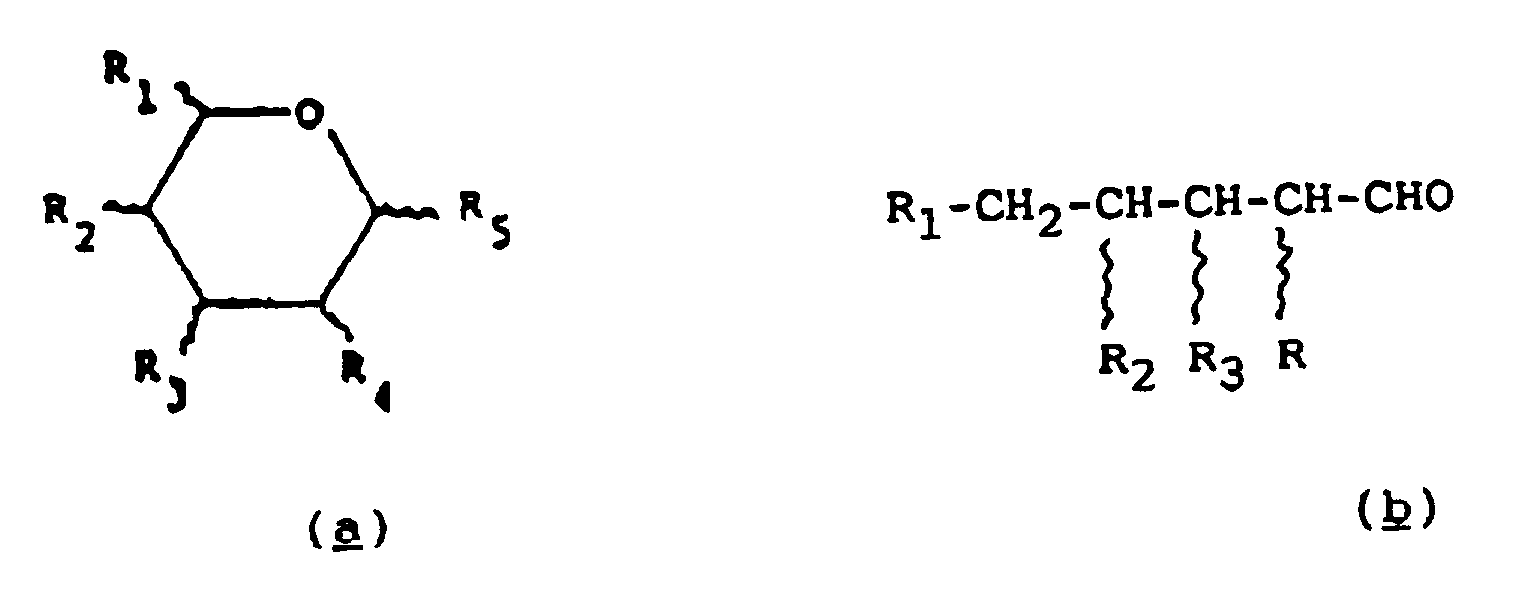
quand R₅ représente un groupe hydroxy, les formules a et b représentent la même structure dans laquelle la forme hémiacétallique cyclique et la forme aldéhydique ouverte sont en équilibre, tandis que lorsque R₅ représente un groupe alkoxy ou benzyloxy, ce peut être soit un α- soit un β-oloside;
Ra représente un atome d'hydrogène, un groupe alkyle en C₁ à C₅, -(CH₂CH₂O)pH, -(CH₂CH₂O)pOCH₃, -(CH₂CH₂O)pC₂H₅;
n est un nombre entier valant de 2 à 3 et p est un nombre entier valant de 1 à 6;
et les sels desdits complexes avec des acides non toxiques et acceptables sur le plan pharmaceutique. - Composés selon la revendication 1, dans lesquels Rc et Rd représentent un atome d'hydrogène.
- Composés selon la revendication 1, dans lesquels Rc et Rd représentent un groupe hydroxy.
- Composés selon l'une quelconque des revendications 1 à 3, dans lesquels X et X' représentent tous les deux un atome de chlore.
- Composés selon l'une quelconque des revendications 1 à 4, dans lesquels n vaut 2.
- Composés selon l'une quelconque des revendications 1 à 5, dans lesquels Rb représente un groupe tert-butyle et Ra représente un groupe hydroxyéthyle.
- Composés selon l'une quelconque des revendications 1 à 5, dans lesquels Rb représente le résidu d'un amino-sucre.
- Composés selon la revendication 7, dans lesquels Rb représente le résidu d'un amino-sucre choisi dans le groupe comprenant le 2-amino-désoxy-D-glucose (D-glucosamine), la α-D-xylo-pyranosylamine, la α-D-lyxo-piranoxylamine, la α-D-manno-pyranosylamine, la α-D-ribo-pyranosylamine, la 1-daunosamine, la 1-acosamine, la 1-ristosamine, le 2-amino-2-désoxy-D-galactose (galactosamine, D-chondrosamine), la α-D-arabino-pyranosylamine, la 6-amino-6-déoxy-α-D-glucopyranose, le 2-amino-2,6-didéoxy-L-glucose, le 3-amino-3-déoxy-D-glucose, le 2-amino-2,6-didéoxy-D-glucose, le 3-amino-3,6-didéoxy-D-mannose (mycosamine).
- Procédé pour la préparation de composés selon les revendications 1 à 6 par réaction d'une anthrecénedione de formule générale II

M(+)[PtX''₃H₂N-Rb](-) (III)
dans laquelle M(+) représente un cation précipitant, X représente un anion univalent, de préférence un halogène (chlore, brome, iode) et Rb est tel que défini ci-dessus, dissous dans un solvant approprié, suivi par une cristallisation et les réactions facultatives ultérieures avec l'eau ou le diméthylsulfoxyde et/ou de salifications. - Compositions pharmaceutiques ayant une activité antinéoplasique contenant comme principe actif un composé selon les revendications 1 à 8, mélangé avec un véhicule approprié.
Priority Applications (1)
| Application Number | Priority Date | Filing Date | Title |
|---|---|---|---|
| AT88121072T ATE89284T1 (de) | 1987-12-18 | 1988-12-16 | Aminoanthracendion-bis-platinkomplexe, nuetzlich als antitumor-agenzien. |
Applications Claiming Priority (4)
| Application Number | Priority Date | Filing Date | Title |
|---|---|---|---|
| IT2309487 | 1987-12-18 | ||
| IT23094/87A IT1223537B (it) | 1987-12-18 | 1987-12-18 | Amino antracenedioni bis platino complessi utili come agenti antitumorali |
| IT4849288 | 1988-10-26 | ||
| IT8848492A IT1235045B (it) | 1988-10-26 | 1988-10-26 | Bis-platino complessi di amino-antracenedioni |
Publications (2)
| Publication Number | Publication Date |
|---|---|
| EP0320960A1 EP0320960A1 (fr) | 1989-06-21 |
| EP0320960B1 true EP0320960B1 (fr) | 1993-05-12 |
Family
ID=26328335
Family Applications (2)
| Application Number | Title | Priority Date | Filing Date |
|---|---|---|---|
| EP89900592A Withdrawn EP0396588A1 (fr) | 1987-12-18 | 1988-12-07 | Complexes de bi-platine et d'amino-anthracenediones utiles comme agents antitumoraux |
| EP88121072A Expired - Lifetime EP0320960B1 (fr) | 1987-12-18 | 1988-12-16 | Complexes bis amino anthracènedione de platine, utiles comme agents antitumeur |
Family Applications Before (1)
| Application Number | Title | Priority Date | Filing Date |
|---|---|---|---|
| EP89900592A Withdrawn EP0396588A1 (fr) | 1987-12-18 | 1988-12-07 | Complexes de bi-platine et d'amino-anthracenediones utiles comme agents antitumoraux |
Country Status (8)
| Country | Link |
|---|---|
| US (1) | US5145848A (fr) |
| EP (2) | EP0396588A1 (fr) |
| JP (1) | JPH03503046A (fr) |
| AU (1) | AU2817589A (fr) |
| CA (1) | CA1327355C (fr) |
| DE (1) | DE3880991T2 (fr) |
| ES (1) | ES2056887T3 (fr) |
| WO (1) | WO1989005815A1 (fr) |
Families Citing this family (7)
| Publication number | Priority date | Publication date | Assignee | Title |
|---|---|---|---|---|
| US5770591A (en) * | 1986-07-25 | 1998-06-23 | The University Of Vermont And State Agricultural College | Bis-platinum complexes as chemotherapeutic agents |
| US5107007A (en) * | 1989-09-01 | 1992-04-21 | The University Of Vermont And State Agricultural College | Bis-platinum complexes as chemotherapeutic agents |
| US5380897A (en) * | 1993-05-25 | 1995-01-10 | Hoeschele; James D. | Tri(platinum) complexes |
| US5409915A (en) * | 1993-09-14 | 1995-04-25 | The University Of Vermont And State Agricultural College | Bis-platinum (IV) complexes as chemotherapeutic agents |
| ZA976421B (en) * | 1996-07-22 | 1998-01-22 | Boehringer Mannheim Italia | New bis-platinum complexes with polyamine ligands as antitumor agents. |
| ZA976422B (en) * | 1996-07-22 | 1998-01-22 | Boehringer Mannheim Italia | New bis-platinum complexes with polymethylene derivatives as ligands having antitumor activity. |
| WO2001036431A1 (fr) * | 1999-11-15 | 2001-05-25 | Parker Hughes Institute | Complexes antitumoraux a base de diamino platine (ii) |
Citations (1)
| Publication number | Priority date | Publication date | Assignee | Title |
|---|---|---|---|---|
| EP0169645A1 (fr) * | 1984-06-27 | 1986-01-29 | Johnson Matthey Public Limited Company | Composés de coordination du platine |
Family Cites Families (2)
| Publication number | Priority date | Publication date | Assignee | Title |
|---|---|---|---|---|
| US4296030A (en) * | 1980-04-09 | 1981-10-20 | American Cyanamid Company | Metal chelates of 1,4-bis(substituted-amino-5,8-dihydroxy-anthraquinones |
| IL76002A0 (en) * | 1984-08-03 | 1985-12-31 | Boehringer Biochemia Srl | Amino-anthracenediones-platinum complexes useful as anti-cancer compounds |
-
1988
- 1988-12-07 EP EP89900592A patent/EP0396588A1/fr not_active Withdrawn
- 1988-12-07 WO PCT/EP1988/001110 patent/WO1989005815A1/fr not_active Ceased
- 1988-12-07 JP JP1500325A patent/JPH03503046A/ja active Pending
- 1988-12-07 US US07/499,405 patent/US5145848A/en not_active Expired - Fee Related
- 1988-12-07 AU AU28175/89A patent/AU2817589A/en not_active Abandoned
- 1988-12-15 CA CA000586002A patent/CA1327355C/fr not_active Expired - Fee Related
- 1988-12-16 ES ES88121072T patent/ES2056887T3/es not_active Expired - Lifetime
- 1988-12-16 DE DE88121072T patent/DE3880991T2/de not_active Expired - Fee Related
- 1988-12-16 EP EP88121072A patent/EP0320960B1/fr not_active Expired - Lifetime
Patent Citations (1)
| Publication number | Priority date | Publication date | Assignee | Title |
|---|---|---|---|---|
| EP0169645A1 (fr) * | 1984-06-27 | 1986-01-29 | Johnson Matthey Public Limited Company | Composés de coordination du platine |
Also Published As
| Publication number | Publication date |
|---|---|
| JPH03503046A (ja) | 1991-07-11 |
| AU2817589A (en) | 1989-07-19 |
| EP0320960A1 (fr) | 1989-06-21 |
| DE3880991D1 (de) | 1993-06-17 |
| EP0396588A1 (fr) | 1990-11-14 |
| CA1327355C (fr) | 1994-03-01 |
| US5145848A (en) | 1992-09-08 |
| WO1989005815A1 (fr) | 1989-06-29 |
| DE3880991T2 (de) | 1994-01-05 |
| ES2056887T3 (es) | 1994-10-16 |
Similar Documents
| Publication | Publication Date | Title |
|---|---|---|
| EP0155705B1 (fr) | Complexe antitumeurs de platine | |
| US4256652A (en) | Platinum complex | |
| US4658048A (en) | Platinum complexes | |
| CA1258865A (fr) | Complexes du platine | |
| NO173390B (no) | Analogifremgangsmaate for fremstilling av terapeutisk virksomme 1,2-bis(aminometyl)-cyklobutan-platinakomplekser | |
| EP0273315B1 (fr) | Complexes de platine ammine-N-hétérocycliques et agents antitumeurs | |
| US5744497A (en) | Trinuclear cationic platinum complexes having antitumor activity and pharmaceutical compositions containing them | |
| US4614811A (en) | Novel organoplatinum(II) complexes and method for the preparation thereof | |
| EP0320960B1 (fr) | Complexes bis amino anthracènedione de platine, utiles comme agents antitumeur | |
| GB2053212A (en) | Cis-platinum(ii)amine lactate complexes | |
| JPH01294683A (ja) | 新規白金錯体および該化合物を有効成分とする抗腫瘍剤並びに該化合物製造用中間体 | |
| EP0163316B1 (fr) | Complexes de platine intercalatifs pour le traitement du cancer | |
| EP0170290B1 (fr) | Complexes d'aminoanthracènediones-platine utiles comme composés anticancéreux | |
| EP1140200B1 (fr) | Medicaments anticancereux a base d'anthraquinone | |
| US4076724A (en) | Polycyclic macrocyclic compounds | |
| KR890004351B1 (ko) | 항 종양성 백금 착체의 제조방법 | |
| EP0308910A2 (fr) | Complexe de platine | |
| EP0310260A2 (fr) | Complexes de platine et leur usage comme agent anti-tumeur | |
| KR910009822B1 (ko) | 백금 착화합물의 제조방법 | |
| EP0343772A2 (fr) | Procédé pour la préparation d'un complexe de platine vert | |
| JPH1149794A (ja) | ジアミノアルキルグリコシドおよびその金属キレート化合物 | |
| JPS6344591A (ja) | 白金グリ−ン錯体の製造法 | |
| EP0215393A2 (fr) | Complexes de platine(II) 1,1-cyclobutane-dicarboxylate, leur procédé de préparation et compositions pharmaceutiques les contenant | |
| JPS63264492A (ja) | アンミン−脂環系アミン白金錯体および抗腫瘍剤 |
Legal Events
| Date | Code | Title | Description |
|---|---|---|---|
| PUAI | Public reference made under article 153(3) epc to a published international application that has entered the european phase |
Free format text: ORIGINAL CODE: 0009012 |
|
| 17P | Request for examination filed |
Effective date: 19881216 |
|
| AK | Designated contracting states |
Kind code of ref document: A1 Designated state(s): AT BE CH DE ES FR GB GR IT LI LU NL SE |
|
| 17Q | First examination report despatched |
Effective date: 19910221 |
|
| RAP1 | Party data changed (applicant data changed or rights of an application transferred) |
Owner name: BOEHRINGER MANNHEIM ITALIA S.P.A. |
|
| GRAA | (expected) grant |
Free format text: ORIGINAL CODE: 0009210 |
|
| AK | Designated contracting states |
Kind code of ref document: B1 Designated state(s): AT BE CH DE ES FR GB GR IT LI LU NL SE |
|
| PG25 | Lapsed in a contracting state [announced via postgrant information from national office to epo] |
Ref country code: SE Effective date: 19930512 Ref country code: NL Effective date: 19930512 Ref country code: GR Free format text: LAPSE BECAUSE OF FAILURE TO SUBMIT A TRANSLATION OF THE DESCRIPTION OR TO PAY THE FEE WITHIN THE PRESCRIBED TIME-LIMIT Effective date: 19930512 Ref country code: BE Effective date: 19930512 Ref country code: AT Effective date: 19930512 |
|
| REF | Corresponds to: |
Ref document number: 89284 Country of ref document: AT Date of ref document: 19930515 Kind code of ref document: T |
|
| REF | Corresponds to: |
Ref document number: 3880991 Country of ref document: DE Date of ref document: 19930617 |
|
| ET | Fr: translation filed | ||
| ITF | It: translation for a ep patent filed | ||
| NLV1 | Nl: lapsed or annulled due to failure to fulfill the requirements of art. 29p and 29m of the patents act | ||
| PG25 | Lapsed in a contracting state [announced via postgrant information from national office to epo] |
Ref country code: LU Free format text: LAPSE BECAUSE OF NON-PAYMENT OF DUE FEES Effective date: 19931231 |
|
| REG | Reference to a national code |
Ref country code: ES Ref legal event code: FG2A Ref document number: 2056887 Country of ref document: ES Kind code of ref document: T3 |
|
| PGFP | Annual fee paid to national office [announced via postgrant information from national office to epo] |
Ref country code: GB Payment date: 19951207 Year of fee payment: 8 |
|
| PGFP | Annual fee paid to national office [announced via postgrant information from national office to epo] |
Ref country code: FR Payment date: 19951212 Year of fee payment: 8 |
|
| PGFP | Annual fee paid to national office [announced via postgrant information from national office to epo] |
Ref country code: ES Payment date: 19951219 Year of fee payment: 8 |
|
| PGFP | Annual fee paid to national office [announced via postgrant information from national office to epo] |
Ref country code: DE Payment date: 19960111 Year of fee payment: 8 |
|
| PGFP | Annual fee paid to national office [announced via postgrant information from national office to epo] |
Ref country code: CH Payment date: 19960124 Year of fee payment: 8 |
|
| PG25 | Lapsed in a contracting state [announced via postgrant information from national office to epo] |
Ref country code: GB Effective date: 19961216 |
|
| PG25 | Lapsed in a contracting state [announced via postgrant information from national office to epo] |
Ref country code: LI Effective date: 19961231 Ref country code: CH Effective date: 19961231 |
|
| GBPC | Gb: european patent ceased through non-payment of renewal fee |
Effective date: 19961216 |
|
| REG | Reference to a national code |
Ref country code: CH Ref legal event code: PL |
|
| PG25 | Lapsed in a contracting state [announced via postgrant information from national office to epo] |
Ref country code: FR Effective date: 19970829 |
|
| PG25 | Lapsed in a contracting state [announced via postgrant information from national office to epo] |
Ref country code: DE Effective date: 19970902 |
|
| REG | Reference to a national code |
Ref country code: FR Ref legal event code: ST |
|
| PG25 | Lapsed in a contracting state [announced via postgrant information from national office to epo] |
Ref country code: ES Free format text: LAPSE BECAUSE OF NON-PAYMENT OF DUE FEES Effective date: 19971217 |
|
| REG | Reference to a national code |
Ref country code: ES Ref legal event code: FD2A Effective date: 19980113 |
|
| PG25 | Lapsed in a contracting state [announced via postgrant information from national office to epo] |
Ref country code: IT Free format text: LAPSE BECAUSE OF NON-PAYMENT OF DUE FEES;WARNING: LAPSES OF ITALIAN PATENTS WITH EFFECTIVE DATE BEFORE 2007 MAY HAVE OCCURRED AT ANY TIME BEFORE 2007. THE CORRECT EFFECTIVE DATE MAY BE DIFFERENT FROM THE ONE RECORDED. Effective date: 20051216 |
|
| PLBE | No opposition filed within time limit |
Free format text: ORIGINAL CODE: 0009261 |
|
| STAA | Information on the status of an ep patent application or granted ep patent |
Free format text: STATUS: NO OPPOSITION FILED WITHIN TIME LIMIT |