EP0322036B1 - Composés à activité anti-inflammatoire et antidégénérative isolés de L-681,512 - Google Patents
Composés à activité anti-inflammatoire et antidégénérative isolés de L-681,512 Download PDFInfo
- Publication number
- EP0322036B1 EP0322036B1 EP88202882A EP88202882A EP0322036B1 EP 0322036 B1 EP0322036 B1 EP 0322036B1 EP 88202882 A EP88202882 A EP 88202882A EP 88202882 A EP88202882 A EP 88202882A EP 0322036 B1 EP0322036 B1 EP 0322036B1
- Authority
- EP
- European Patent Office
- Prior art keywords
- compound
- compounds
- aco
- fermentation
- cuts
- Prior art date
- Legal status (The legal status is an assumption and is not a legal conclusion. Google has not performed a legal analysis and makes no representation as to the accuracy of the status listed.)
- Expired - Lifetime
Links
- 0 CC(C)C(CCC(C)[C@@]1C(C)([C@](C2CC2)OC(C)=O)*(I)=CC1)=CC Chemical compound CC(C)C(CCC(C)[C@@]1C(C)([C@](C2CC2)OC(C)=O)*(I)=CC1)=CC 0.000 description 4
Images

Classifications
-
- C—CHEMISTRY; METALLURGY
- C07—ORGANIC CHEMISTRY
- C07J—STEROIDS
- C07J31/00—Normal steroids containing one or more sulfur atoms not belonging to a hetero ring
- C07J31/006—Normal steroids containing one or more sulfur atoms not belonging to a hetero ring not covered by C07J31/003
-
- A—HUMAN NECESSITIES
- A61—MEDICAL OR VETERINARY SCIENCE; HYGIENE
- A61P—SPECIFIC THERAPEUTIC ACTIVITY OF CHEMICAL COMPOUNDS OR MEDICINAL PREPARATIONS
- A61P11/00—Drugs for disorders of the respiratory system
- A61P11/08—Bronchodilators
-
- A—HUMAN NECESSITIES
- A61—MEDICAL OR VETERINARY SCIENCE; HYGIENE
- A61P—SPECIFIC THERAPEUTIC ACTIVITY OF CHEMICAL COMPOUNDS OR MEDICINAL PREPARATIONS
- A61P17/00—Drugs for dermatological disorders
-
- A—HUMAN NECESSITIES
- A61—MEDICAL OR VETERINARY SCIENCE; HYGIENE
- A61P—SPECIFIC THERAPEUTIC ACTIVITY OF CHEMICAL COMPOUNDS OR MEDICINAL PREPARATIONS
- A61P25/00—Drugs for disorders of the nervous system
- A61P25/04—Centrally acting analgesics, e.g. opioids
-
- A—HUMAN NECESSITIES
- A61—MEDICAL OR VETERINARY SCIENCE; HYGIENE
- A61P—SPECIFIC THERAPEUTIC ACTIVITY OF CHEMICAL COMPOUNDS OR MEDICINAL PREPARATIONS
- A61P29/00—Non-central analgesic, antipyretic or antiinflammatory agents, e.g. antirheumatic agents; Non-steroidal antiinflammatory drugs [NSAID]
-
- C—CHEMISTRY; METALLURGY
- C07—ORGANIC CHEMISTRY
- C07J—STEROIDS
- C07J5/00—Normal steroids containing carbon, hydrogen, halogen or oxygen, substituted in position 17 beta by a chain of two carbon atoms, e.g. pregnane and substituted in position 21 by only one singly bound oxygen atom, i.e. only one oxygen bound to position 21 by a single bond
-
- C—CHEMISTRY; METALLURGY
- C12—BIOCHEMISTRY; BEER; SPIRITS; WINE; VINEGAR; MICROBIOLOGY; ENZYMOLOGY; MUTATION OR GENETIC ENGINEERING
- C12P—FERMENTATION OR ENZYME-USING PROCESSES TO SYNTHESISE A DESIRED CHEMICAL COMPOUND OR COMPOSITION OR TO SEPARATE OPTICAL ISOMERS FROM A RACEMIC MIXTURE
- C12P33/00—Preparation of steroids
Definitions
- ⁇ 1-Antitrypsin is a glycoprotein contained in human serum that has a wide inhibitory spectrum covering, among other enzymes, elastase both from the pancreas and the PMN. This inhibitor is hydrolized by the proteases to form a stable acyl enzyme in which the active site is no longer available. Marked reduction in serum ⁇ 1-antitrypsin, either genetic or due to oxidants, has been associated with pulmonary emphysema, a disease characterized by a progressive loss of lung elasticity and resulting respiratory difficulty.
- a biologically pure sample of the organism from which natural compounds isolated from L-681,512 were produced has been deposited without restriction in, and made a part of, the American Type Culture Collection, Rockville, Maryland, from which it is available under the Accession Number ATCC 20858.
- Cultivation is most productive under nearly neutral pH conditions, preferably within the range of 6.0-8.0.
- a compound of the invention can be administered orally, topically, parenterally, by inhalation spray or rectally in dosage unit formulations containing conventional non-toxic pharmaceutically acceptable carriers, adjuvants and vehicles.
- parenteral as used herein includes subcutaneous injections, intravenous, intramuscular, intrasternal injection or infusion techniques.
- the compounds of the invention are effective in the treatment of humans.
- Syrups and elixirs can be formulated with sweetening agents, for example, glycerol, propylene glycol, sorbitol or sucrose. Such formulations can also contain a demulcent, a preservative and flavoring and coloring agents.
- sweetening agents for example, glycerol, propylene glycol, sorbitol or sucrose.
- Such formulations can also contain a demulcent, a preservative and flavoring and coloring agents.
- creams, ointments, jellies, solutions or suspensions, etc., containing the invention compounds can be employed.
- the specific dose level for any particular patient will depend upon a variety of factors including the activity of the specific compound employed, the age, body weight, general health, sex, diet, time of administration, route of administration, rate of excretion, drug combination and the severity of the particular disease undergoing therapy.
- the soil sample (5 mg) was added to test tubes containing 10 ml of soil isolation medium. After mixing, the contents of each test tube was poured into a 100 mm petri plate. The plates were incubated at 28°C for two weeks and were examined every day for the growth of fungi.
- the cultivated fungi were isolated by means of an agar plug maker and were transferred to potato dextrose agar plates. These plates were incubated at 28°C for seven days and the cultivated fungi were then transferred to potato dextrose agar slants. These slants were incubated at 28°C for seven days and were stored in the cold until needed.
- Fermentation Medium corn steep liquor 5 g tomato paste 40 g oatmeal 10 g cerelose 10 g * trace element mix #2 10 ml distilled water 1000 ml Adjust pH to 6.8. with NaOH
- a 250 ml flask of fermentation medium (containing 50 ml of medium) was inoculated with spores from a slant and was incubated for three days at 28°C on a rotary shaker at 220 rpm.
- Two ml of the seed was transferred to a fresh 250 ml flask of fermentation medium which was incubated at 28°C and 220 rpm for five days. The entire sample was submitted for assay of elastase inhibition.
- the fungus producing the containing compounds was transferred from a fresh YME slant (yeast extract, malt extract peptrase agar medium) to two 250 ml flasks of fermentation medium which were then incubated at 28°C and 220 rpm for three days.
- YME slant yeast extract, malt extract peptrase agar medium
- Two liters of the culture were grown in a combination of 250 ml and 500 ml flasks.
- ATCC 20858 Wt FVM was inoculated into a 250 ml unbaffled erlenmeyer flask containing 50 ml of KF medium sterilized for 20 minutes at 121°C. This flask was cultivated for 53 hours at 28°C with shaking on a rotary shaker at 220 rpm.
- a 14-liter fermentation batch (9 liters) from Example 1-A was filtered through filter aid and the filtrate (pH 7.0, 8.5 liters) was discarded.
- the solids (0.5 liters) were extracted with 1.5 liters of ethyl acetate three times successively while stirring to yield 4 liters of ethyl acetate extract.
- the active fraction was in a large broad zone from 1 to 3.2 column volumes. Two large UV spots were observed at Rf 0.4 and Rf 0.2. on silica gel TLC plates using the solvent system 85:15, CH2Cl2:MeOH.
- This active zone was taken to dryness under vacuum and redissolved in 10 mL of the same solvent noted above and rechromatographed on a new 200 g silica gel column using the same gradient system and collection system. Two zones of activity were recovered: one at 1-1 1/2 column volumes, zone 1; and one at 1 1/2-2 1/4 column volumes, zone 2.
- One UV spot was observed by TLC at Rf 0.4 from zone 1 and two UV spots at Rf 0.4 and Rf 0.2 were observed from zone 2 using the same solvent system mentioned above.
- Zone 2 from the second silica gel column containing 2 UV spots by TLC was taken to dryness under vacuum and dissolved in 2 mL of methanol-water-acetic acid, 90:10:1. A precipitate formed and was filtered off and the solution was charged to a flash reverse phase C-18 column (20 cc) in methanol-water-acetic acid and fractionated. Thirty cuts were taken (4 mL each) and the spot of interest (Rf 0.2) was collected in cuts 9-12 (2-2 1/2 column volumes) determined by TLC.
- Cuts 9-12 were evaporated to dryness under vacuum and redissolved in 500 ⁇ l methanol and two equivalent runs were made, each with 250 ⁇ l of sample on a semi-preparative Whatman ODS-3 Magnum 9 column with an 8-2, methanol-1% acetic acid solvent system at 6 mL/min. detecting at 250 and 220 nm.
- Compound 1 was isolated in cuts 11-14 (6 mL each) and Compound 2 was isolated in cuts 16-18 from each chromatographic run. Analytical HPLC was used to determine purity of compound in each cut. Cuts containing Compound 1 were taken to dryness and had a weight of 12 mg, while the weight of the fractions containing Compound 2 was 8 mg.
- Zone 1 from the second silica gel column containing 1 UV spot by TLC was taken to dryness under vacuum, dissolved in same solvent as zone 2, and charged to an identical flash reverse phase column. Thirty cuts were taken and the UV spot of interest (Rf 0.4) was collected in cuts 6-10 determined by TLC.
- Fractions 6-10 from the flash reverse phase column contained a material (Rf 0.4) with a retention time of 3.05 minutes absorbing at 250 nm, Compound 3, as well as a material absorbing at 220 nm with a retention time of 9.8 minutes, Compound 4.
- Cuts 6-10 were evaporated to dryness and charged to the Magnum 9 Whatman ODS-3 column using the same conditions as for zone 2. Compound 3 was isolated clearly in cut 11 and Compound 4 was isolated in cut 13. Purity was determined by analytical HPLC. The weight of Compound 3, was 10.5 mg, while the weight of Compound 4, was 13.6 mg.
- the zone containing Compound 5 was charged to a Zorbax ODS HPLC preparative column in 10:90, water:methanol, 10 mL cuts collected and Compound 5 isolated in cuts 25-29 from combined chromatographies. Compound 7 was isolated in cuts 30-38.
- Cuts 81-115 containing Compound 6 was taken to dryness under vacuum and dissolved in methanol and charged to a Zorbax ODS preparative HPLC column and isolated in cuts 24 - 28 in duplicate runs (27 mg). Compound 8 was isolated in cuts 35 - 40 of this same isolation.
- Example 1 Two 14 liter isolation batches (18 liters) from Example (1-C) were worked up in a similar manner to Example 2.
- the fermentation broth was filtered and the cake extracted with ethyl acetate.
- the extract was dried, dissolved in 50 mL of methylene chloride and charged to a silica gel column (400 g) employing a 87.5:12.5, methylene chloride: methanol solvent system in which the compounds eluted at 1/3 to 1 column volume in cuts 7-16 detected by UV and RI.
- the active zone was taken to dryness, dissolved in 10 mL methylene chloride, charged to a second silica gel column (200 g) in 95:5, methylene chloride:methanol and eluted with 95:5 for nine 100mL cuts and then 90:10 for eight 100mL cuts.
- cuts 11-12 was determined to contain two compounds by TLC and HPLC. This active zone was dissolved in 3 mL of methanol, solids discarded and solution charged to a 21 mm x 25 cm Zorbax reverse phase HPLC column at 40°C and eluted with a 35:65 water:methanol solvent system. Cuts 48-51 contained Compound 15, (RT 8.1 min.) while cuts 52 - end contained Compound 16 (RT 10.1 min.).
- MS mass spectral
- NMR nuclear magnetic resonance
- One of the most common enzyme assay methods presently followed is typically referred to as a "one point" assay. This method requires separately preparing a control blank; preparing the enzyme samples to be screened; determining the color reading obtained from the enzyme samples; and individually comparing the enzyme sample colors against that of the control blank to not only determine activity, but also determine the degree of activity.
- the new, two point assay method for screening enzyme activity comprises: preparing a plurality of control blanks; preparing a plurality of screening blanks by charging thereto samples of the desired enzymes; charging to the blanks containing the desired enzymes samples of enzyme inhibitors from each fermentation broth to be screened; noting the time and adding a chromogenic medium to all blanks; permitting a predetermined period of time to elapse; and, measuring the color of each blank to immediately determine which fermentation samples exhibit the desired enzyme inhibition activity and the degree of said activity.
- control blanks or wells can be prepared, such as from about 2-5, typically only about 2-3 control wells are used.
- the enzyme of interest is that enzyme against which the inhibitory activity of the fermentation broth samples are being determined and quantified (e.g., PMN elastase). Consequently, all of the remaining wells are charged with the same enzyme of interest. However, several enzymes of interest can be charged to a plurality of wells, and the wells grouped together to facilitate separate identification and assay. When this is done, separate control wells must then also be prepared to correspond to the different enzymes of interest.
- the fermentation broth samples charged to the enzyme-containing wells are typically taken from the extract of each broth; e.g., the methanol broth extract.
- the chromogenic medium is charged to all the wells at substantially the same time and the time of this addition is noted. This is the "zero time” mentioned earlier as it is from that moment that a predetermined time lapse is measured during which sufficient reaction between the fermentation broth samples and the enzyme of interest occurs to enable not only accurate screening of enzyme inhibitory activity, but also the degree of that activity.
- the predetermined time lapse will differ with different enzymes and can be from 1 minute to about 20 minutes, typically from about 2 minutes to about 10 minutes.
- the chromogenic media typically used are aromatic nitro- containing compounds.
- Illustrative of such compounds are Boc-ala-ala-pro-ala-p-nitroanilide, - ⁇ -benzoyl-DL-arginine-p-nitroanilide, N- ⁇ -benzoyl-L-tyrosine-p-nitroanilide, and the like.
- the solid (m.w. 550) was first dissolved in 10.0 ml DMSO. Buffer at pH 7.5 was then added to a final volume of 100 ml.
- Inhibitors cephalosporin sulfone esters to be tested dissolved in DMSO just before use.
- Results were reported as ED50, i.e., effective dosage in micrograms per milliliter ⁇ g/ml) for 50% inhibition of the enzyme activity 2 minutes after zero time.
- the elastase activity in the crude PMN extract may vary from one preparation to another. A control of each new batch is run, and the volume added in the assay procedure is adjusted according to activity.
Landscapes
- Health & Medical Sciences (AREA)
- Chemical & Material Sciences (AREA)
- Organic Chemistry (AREA)
- General Health & Medical Sciences (AREA)
- Life Sciences & Earth Sciences (AREA)
- Engineering & Computer Science (AREA)
- Chemical Kinetics & Catalysis (AREA)
- General Chemical & Material Sciences (AREA)
- Bioinformatics & Cheminformatics (AREA)
- Public Health (AREA)
- Zoology (AREA)
- Medicinal Chemistry (AREA)
- Nuclear Medicine, Radiotherapy & Molecular Imaging (AREA)
- Wood Science & Technology (AREA)
- Pharmacology & Pharmacy (AREA)
- Animal Behavior & Ethology (AREA)
- Veterinary Medicine (AREA)
- Biochemistry (AREA)
- Genetics & Genomics (AREA)
- Pain & Pain Management (AREA)
- General Engineering & Computer Science (AREA)
- Biotechnology (AREA)
- Microbiology (AREA)
- Biomedical Technology (AREA)
- Neurology (AREA)
- Neurosurgery (AREA)
- Dermatology (AREA)
- Rheumatology (AREA)
- Pulmonology (AREA)
- Preparation Of Compounds By Using Micro-Organisms (AREA)
- Pharmaceuticals Containing Other Organic And Inorganic Compounds (AREA)
- Steroid Compounds (AREA)
Claims (10)
- Composé répondant à la formule :
 R est OH ou H ;R¹ et R² peuvent être identiques ou différents et sont =CH₂, -CH₂O- ;R³ est H, OH, HSO₃O, HOCOCH₂CH₂CO₂ ;R⁴ est OH, HOC₁₅H₃₀CO₂, AcO, ou est H, sauf que lorsque R⁴ est H, la double liaison dans le noyau cyclopentane est absente ;R⁵ est O=, OH, AcO ; et,R⁶ est

- Composé selon la revendication 1, qui est un représentant choisi dans le groupe :
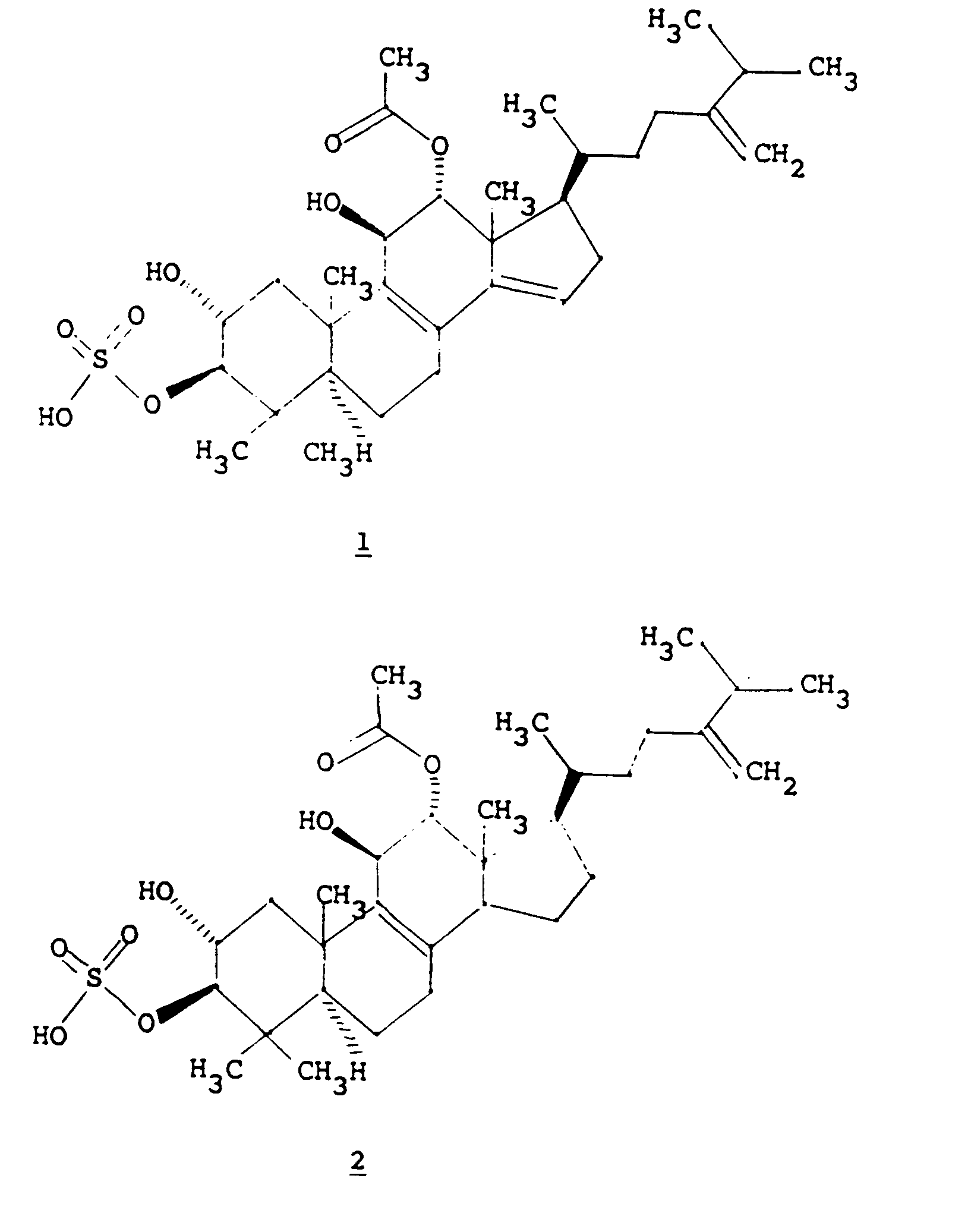


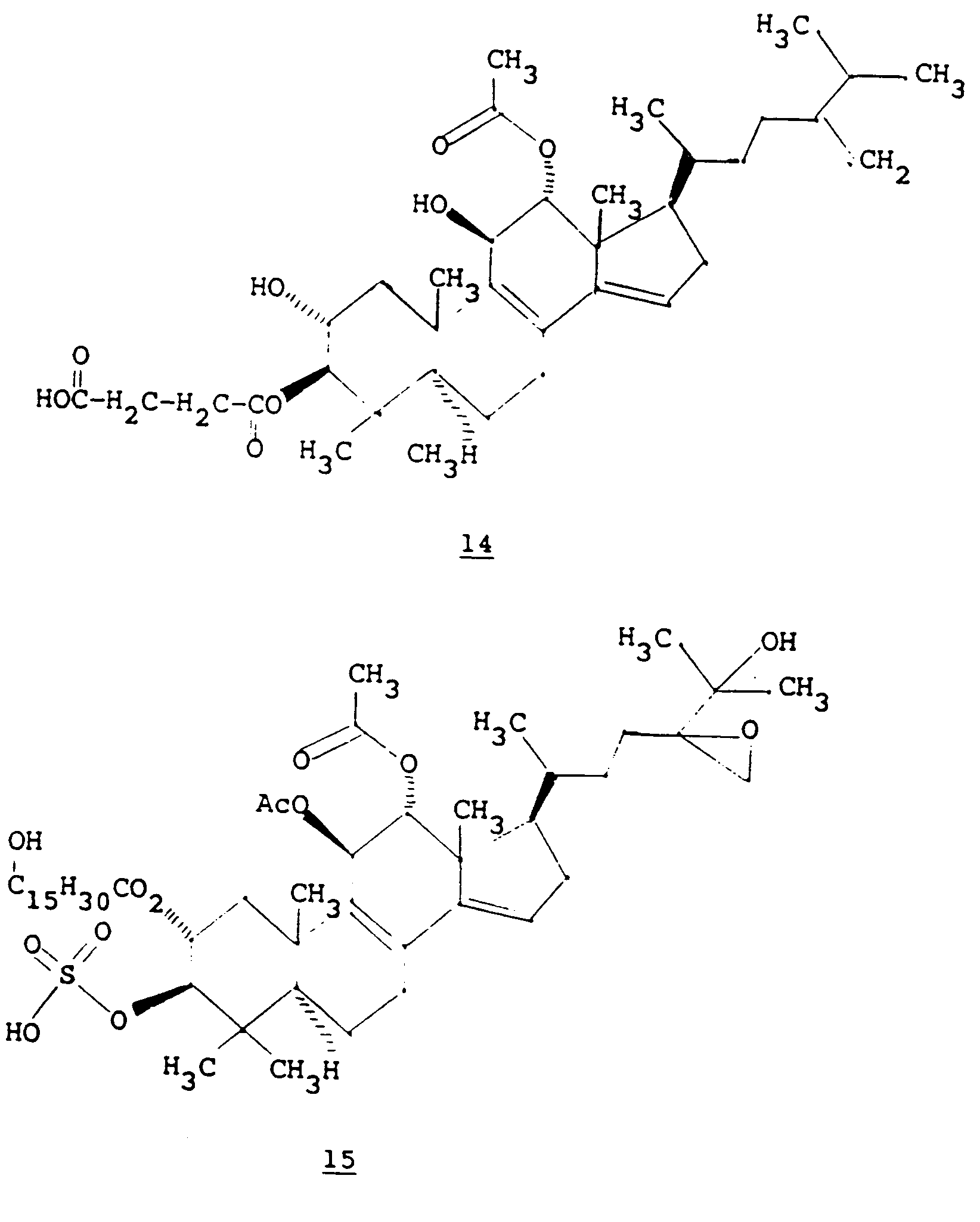
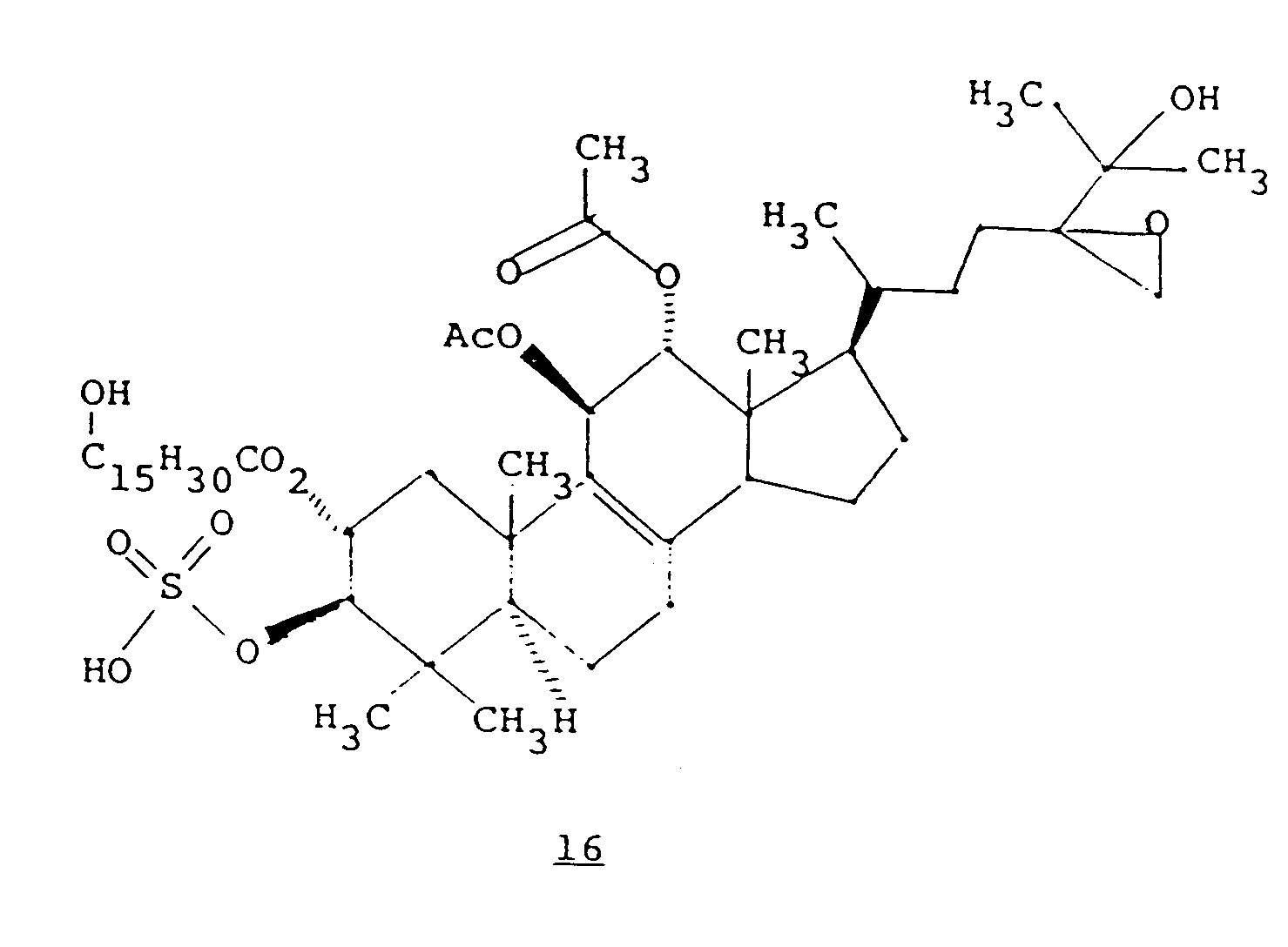
- Utilisation, pour la préparation d'un médicament pour le traitement de l'inflammation et de la dégénérescence chez les mammifères, d'un composé répondant à la formule :
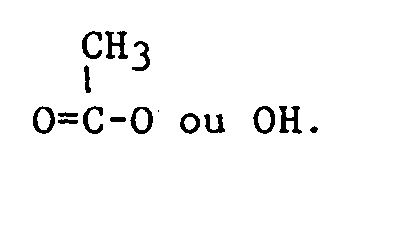
 R est OH ou H ;R¹ et R² peuvent chacun être identiques ou différents et sont =CH₂, -CH₂O- ;R³ est H, OH, HSO₃O, HOCOCH₂CH₂CO₂ ;R⁴ est OH, HOC₁₅H₃₀CO₂, AcO, ou est H ;R⁵ est O=, OH, AcO ; et,R⁶ est
- Utilisation selon la revendication 3, dans laquelle ledit composé est un représentant choisi dans le groupe :


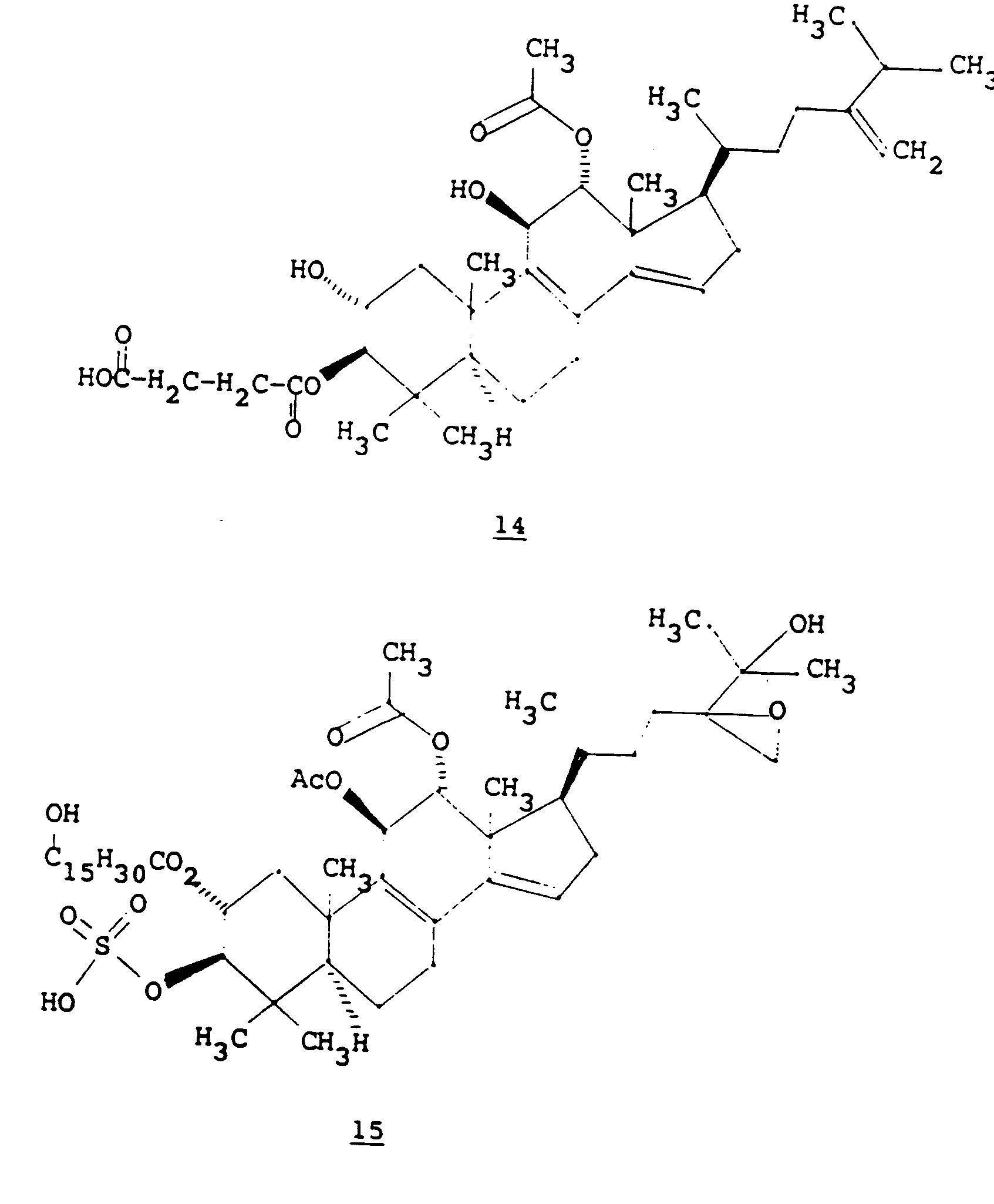

- Composition pharmaceutique utile dans le traitement de l'inflammation et la dégénérescence chez les mammifères qui comprend un véhicule pharmaceutiquement acceptable et une quantité anti-inflammatoire et antidégénérative d'un composé selon la revendication 1.
- Composition selon revendication 5, dans laquelle ledit composé est choisi dans le groupe des composés tels que revendiqués dans la revendication 2.
- Culture biologiquement pure de la souche de l'organisme, dépôt ATCC 20848 à l'"American Type Culture Collection", capable de produire par fermentation des composés utiles dans le traitement des maladies inflammatoires et dégénératives.
- Procédé pour produire les composés 1, 2, 3, 4, 5, 6, 7, 8, 9, 15 et 16 tels que définis dans la revendication 4, qui comprend la culture du microorganisme ATCC 20858 dans un milieu nutritif approprié par fermentation sous des conditions opératoires contrôlées pendant une durée d'environ 24 heures à environ 336 heures ; la séparation des produits obtenus de ladite fermentation ; et la récupération desdits composés.
- Procédé selon la revendication 8, dans lequel les ingrédients nutritifs dudit milieu nitritif comprennent des sources de carbone, d'azote, de phosphore, de souffre et des sources d'ions Cl⁻, Na⁺, K⁺, Ca2+, et CO

- Procédé selon la revendication 9, dans lequel les conditions opératoires contrôlées comprennent des températures d'environ 24°C à environ 30°C et un pH d'environ 6.0 à environ 8.0.
Applications Claiming Priority (2)
| Application Number | Priority Date | Filing Date | Title |
|---|---|---|---|
| US135949 | 1987-12-21 | ||
| US07/135,949 US4871727A (en) | 1987-12-21 | 1987-12-21 | Anti-inflammatory and antidegenerative compounds isolated from L-681,512 |
Publications (2)
| Publication Number | Publication Date |
|---|---|
| EP0322036A1 EP0322036A1 (fr) | 1989-06-28 |
| EP0322036B1 true EP0322036B1 (fr) | 1992-06-17 |
Family
ID=22470522
Family Applications (1)
| Application Number | Title | Priority Date | Filing Date |
|---|---|---|---|
| EP88202882A Expired - Lifetime EP0322036B1 (fr) | 1987-12-21 | 1988-12-14 | Composés à activité anti-inflammatoire et antidégénérative isolés de L-681,512 |
Country Status (4)
| Country | Link |
|---|---|
| US (1) | US4871727A (fr) |
| EP (1) | EP0322036B1 (fr) |
| JP (1) | JPH01221391A (fr) |
| DE (1) | DE3872198T2 (fr) |
Families Citing this family (6)
| Publication number | Priority date | Publication date | Assignee | Title |
|---|---|---|---|---|
| US5703067A (en) * | 1995-05-08 | 1997-12-30 | Merck & Co., Inc. | Inhibitors of farnesyl-protein transferase |
| AU1851597A (en) * | 1996-01-31 | 1997-08-22 | Merck & Co., Inc. | Antifungal agent |
| EP0946584B1 (fr) | 1996-12-20 | 2003-04-23 | Novo Nordisk A/S | Composés regulateurs de meiose |
| US5789438A (en) * | 1997-09-05 | 1998-08-04 | Merck & Co., Inc. | Inhibitors of farnesyl-protein transferase |
| WO2000036132A1 (fr) * | 1998-12-14 | 2000-06-22 | Merck & Co., Inc. | Inhibiteurs de vih integrase |
| US20030138423A1 (en) * | 2001-12-14 | 2003-07-24 | Cedars-Sinai Medical Center | Method of treating inflammation with HIV-1 protease inhibitors and their derivatives |
Family Cites Families (4)
| Publication number | Priority date | Publication date | Assignee | Title |
|---|---|---|---|---|
| US3271390A (en) * | 1963-09-13 | 1966-09-06 | Squibb & Sons Inc | Sulfurenic acid and derivatives thereof |
| US3625194A (en) * | 1969-05-12 | 1971-12-07 | Serdex Soc D Etudes De Rech De | Triterpenic alcohols, process for their preparation and therapeutical compositions containing same |
| JPS5811960B2 (ja) * | 1978-08-25 | 1983-03-05 | 株式会社岡安商店 | シクロブラノ−ルこはく酸エステルアルカリ金属塩 |
| JPS5811959B2 (ja) * | 1978-08-25 | 1983-03-05 | 株式会社岡安商店 | シクロアルテノ−ルこはく酸エステルアルカリ金属塩 |
-
1987
- 1987-12-21 US US07/135,949 patent/US4871727A/en not_active Expired - Fee Related
-
1988
- 1988-12-14 EP EP88202882A patent/EP0322036B1/fr not_active Expired - Lifetime
- 1988-12-14 DE DE8888202882T patent/DE3872198T2/de not_active Expired - Lifetime
- 1988-12-21 JP JP63320763A patent/JPH01221391A/ja active Pending
Also Published As
| Publication number | Publication date |
|---|---|
| JPH01221391A (ja) | 1989-09-04 |
| DE3872198T2 (de) | 1992-12-03 |
| EP0322036A1 (fr) | 1989-06-28 |
| DE3872198D1 (de) | 1992-07-23 |
| US4871727A (en) | 1989-10-03 |
Similar Documents
| Publication | Publication Date | Title |
|---|---|---|
| JPH06184158A (ja) | Fo−1289物質およびその製造法 | |
| EP0274873A2 (fr) | Antibiotique A10255 complexe et facteurs, procédé, micro-organismes pour sa fabrication | |
| US5079263A (en) | Manumycin derivatives and the use thereof | |
| US5443972A (en) | Process to prepare leustroducsins | |
| US4871727A (en) | Anti-inflammatory and antidegenerative compounds isolated from L-681,512 | |
| CA2038497A1 (fr) | Derives de lipopeptides | |
| US4874755A (en) | Anti-inflammatory and antidegenrative compounds isolated from L-681,512 | |
| EP0478061A1 (fr) | Agent antiviral | |
| GB2213262A (en) | Enzyme assay procedure | |
| RU2221870C2 (ru) | Мумбайстатин, способ его получения и его применение в качестве фармацевтического препарата | |
| EP0387712B1 (fr) | Substance WS 7622 A,B,C et D, leurs dérivés, procédés pour leur préparation et leur utilisation | |
| KR100436036B1 (ko) | Wk-5344a 물질 및 wk-5344b 물질 그리고 그의 제조법 | |
| EP0276947B1 (fr) | Dérivés d'acide carboxylique | |
| EP0376177A2 (fr) | TAN-1120, dérivés, production et utilisation | |
| EP0525361B1 (fr) | Antibiotiques NK374186A, NK374186B, NK374186B3 et NK374186C3, leur procédé de préparation et leur utilisation | |
| KR100322240B1 (ko) | 페니실리움 속(Penicillium sp.)F70614(KCTC 8918P)와 α-글루코시다제 저해제 | |
| JPH0613499B2 (ja) | パチュロリドおよびその製造法 | |
| JPH07145161A (ja) | 新規セスキテルペン誘導体 | |
| JP3641013B2 (ja) | 新規な細胞接着阻害剤マクロスフェライドa及びb並びにそれらの製造法 | |
| JP3434860B2 (ja) | Fo−2546物質およびその製造法 | |
| AU665488B2 (en) | New compound, leustroducsin H, its preparation and its therapeutic use | |
| RU2021280C1 (ru) | Способ получения производных соединения ws7622a | |
| JPH09286779A (ja) | 新規化合物レブラスタチン | |
| JPS60199849A (ja) | フエナレン−1−オン誘導体 | |
| JPH0272167A (ja) | Bu―3862t抗腫瘍性抗生物質 |
Legal Events
| Date | Code | Title | Description |
|---|---|---|---|
| PUAI | Public reference made under article 153(3) epc to a published international application that has entered the european phase |
Free format text: ORIGINAL CODE: 0009012 |
|
| AK | Designated contracting states |
Kind code of ref document: A1 Designated state(s): CH DE FR GB IT LI NL |
|
| 17P | Request for examination filed |
Effective date: 19891106 |
|
| 17Q | First examination report despatched |
Effective date: 19910419 |
|
| GRAA | (expected) grant |
Free format text: ORIGINAL CODE: 0009210 |
|
| AK | Designated contracting states |
Kind code of ref document: B1 Designated state(s): CH DE FR GB IT LI NL |
|
| REF | Corresponds to: |
Ref document number: 3872198 Country of ref document: DE Date of ref document: 19920723 |
|
| ET | Fr: translation filed | ||
| ITF | It: translation for a ep patent filed | ||
| PLBE | No opposition filed within time limit |
Free format text: ORIGINAL CODE: 0009261 |
|
| STAA | Information on the status of an ep patent application or granted ep patent |
Free format text: STATUS: NO OPPOSITION FILED WITHIN TIME LIMIT |
|
| 26N | No opposition filed | ||
| PGFP | Annual fee paid to national office [announced via postgrant information from national office to epo] |
Ref country code: CH Payment date: 19930923 Year of fee payment: 6 |
|
| PGFP | Annual fee paid to national office [announced via postgrant information from national office to epo] |
Ref country code: FR Payment date: 19930930 Year of fee payment: 6 |
|
| PGFP | Annual fee paid to national office [announced via postgrant information from national office to epo] |
Ref country code: DE Payment date: 19931125 Year of fee payment: 6 |
|
| PGFP | Annual fee paid to national office [announced via postgrant information from national office to epo] |
Ref country code: NL Payment date: 19931231 Year of fee payment: 6 |
|
| PGFP | Annual fee paid to national office [announced via postgrant information from national office to epo] |
Ref country code: GB Payment date: 19940929 Year of fee payment: 7 |
|
| PG25 | Lapsed in a contracting state [announced via postgrant information from national office to epo] |
Ref country code: LI Effective date: 19941231 Ref country code: CH Effective date: 19941231 |
|
| PG25 | Lapsed in a contracting state [announced via postgrant information from national office to epo] |
Ref country code: NL Effective date: 19950701 |
|
| PG25 | Lapsed in a contracting state [announced via postgrant information from national office to epo] |
Ref country code: FR Effective date: 19950831 |
|
| REG | Reference to a national code |
Ref country code: CH Ref legal event code: PL |
|
| NLV4 | Nl: lapsed or anulled due to non-payment of the annual fee |
Effective date: 19950701 |
|
| PG25 | Lapsed in a contracting state [announced via postgrant information from national office to epo] |
Ref country code: DE Effective date: 19950901 |
|
| REG | Reference to a national code |
Ref country code: FR Ref legal event code: ST |
|
| PG25 | Lapsed in a contracting state [announced via postgrant information from national office to epo] |
Ref country code: GB Effective date: 19951214 |
|
| GBPC | Gb: european patent ceased through non-payment of renewal fee |
Effective date: 19951214 |
|
| PG25 | Lapsed in a contracting state [announced via postgrant information from national office to epo] |
Ref country code: IT Free format text: LAPSE BECAUSE OF NON-PAYMENT OF DUE FEES Effective date: 20051214 |