EP0322870A2 - Synthetisches Plasmid, transformierte Zelle, Katzen-Interferon-Gen und Verfahren zur Herstellung von Katzen-Interferon - Google Patents
Synthetisches Plasmid, transformierte Zelle, Katzen-Interferon-Gen und Verfahren zur Herstellung von Katzen-Interferon Download PDFInfo
- Publication number
- EP0322870A2 EP0322870A2 EP88121737A EP88121737A EP0322870A2 EP 0322870 A2 EP0322870 A2 EP 0322870A2 EP 88121737 A EP88121737 A EP 88121737A EP 88121737 A EP88121737 A EP 88121737A EP 0322870 A2 EP0322870 A2 EP 0322870A2
- Authority
- EP
- European Patent Office
- Prior art keywords
- feline interferon
- cell
- feline
- sugar chain
- carrying
- Prior art date
- Legal status (The legal status is an assumption and is not a legal conclusion. Google has not performed a legal analysis and makes no representation as to the accuracy of the status listed.)
- Granted
Links
Images



Classifications
-
- C—CHEMISTRY; METALLURGY
- C07—ORGANIC CHEMISTRY
- C07K—PEPTIDES
- C07K14/00—Peptides having more than 20 amino acids; Gastrins; Somatostatins; Melanotropins; Derivatives thereof
- C07K14/435—Peptides having more than 20 amino acids; Gastrins; Somatostatins; Melanotropins; Derivatives thereof from animals; from humans
- C07K14/52—Cytokines; Lymphokines; Interferons
- C07K14/555—Interferons [IFN]
-
- A—HUMAN NECESSITIES
- A61—MEDICAL OR VETERINARY SCIENCE; HYGIENE
- A61P—SPECIFIC THERAPEUTIC ACTIVITY OF CHEMICAL COMPOUNDS OR MEDICINAL PREPARATIONS
- A61P37/00—Drugs for immunological or allergic disorders
Definitions
- This invention relates to a synthetic plasmid and its transformant aiming at mass-producing an interferon in which the primary structure of protein is derived from feline genetic information (hereinafter abbreviated to FeIFN) as a medicine (antiviral drug) by gene manipulation technology.
- FeIFN feline genetic information
- This invention further relates to a gene encoding the FeIFN.
- An interferon is a physiologically active substance whose main ingredient is a protein showing antiviral activity and is abbreviated to IFN. And, many literatures have been so far published on the interferon, for example, as Literature 1.
- the present inventors exerted their originalities and ingenuities for the purpose of mass-producing an FeIFN. That is, they prepared a feline C-DNA library by using a commercially available plasmid vector, from which they successfully isolated a plasmid capable of producing an FeIFN by transient expression of simian cultured cells. Furthermore, they succeeded in preparing an FeIFN-producing Chinese hamster ovary cell by using the plasmid to establish a method for mass-producing an FeIFN simply. Whereby, they completed the present invention.
- an object of the present invention is to provide a plasmid making a simian cell express transiently to produce an FeIFN, a transformant of Escherichia coli carrying this plasmid, a Chinese hamster cell transformed with this plasmid, an FeIFN obtained from these transformants, an FeIFN gene encoding a specific amino acid sequence, an FeIFN precursor comprised of a cleavable peptide or a signal peptide being linked to the N termianl of the FeIFN, an FeIFN precursor gene encoding the FeIFN precursor and a method for producing the FeIFN.
- the mass production of an FeIFN becomes possible, so that an antiviral agent and an antitumor agent for a cat can be obtained readily.
- the present synthetic plasmid in which a DNA encoding proteins of an FeIFN can be produced, for example, as follows. That is, poly(A)+ RNA is extracted from cells of a cat to prepare a C-DNA library utilizing a so called expression plasmid vector by using Escherichia coli as a host. From this library, a plasmid having an ability to make a simian COS cell express transiently to produce an antiviral activity can be selected.
- pFeIFN1 and a transformant Escherichia coli carrying pFeIFN1 is E. coli (pFeIFN1) whose accession number is FERM BP-1633.
- An FeIFN-producing cell obtained by the transformation with the present synthetic plasmid can be produced as follows.
- the FeIFN-producing cell can be produced, for example, by transfecting a plasmid extracted from the foregoing E. coli (pFeIFN1) to a DHFR defective mutant cell of CHO strain derived from a Chinese hamster.
- an FeIFN-producing Escherichia coli can be produced, for example, by ligating a DNA encoding protein of an FeIFN with an expression vector of a general Escherichia coli to transform the Escherichia coli .
- the production of an FeIFN is carried out by incubating the foregoing FeIFN-producing cell.
- feline cell As a feline cell as a donor of poly (A)+ RNA, for example, an established cultured cell such as LSA (Literature 5) is convenient for use. However, the feline cell to be used in the present invention is not restricted to the LSA. In case of obtaining poly(A)+ RNA from a cultured cell, it is convenient for it to invenstigate an interferon inducer suitable for the cell to thereby attempt increasing the yield of poly(A)+ RNA.
- LSA Literature 5
- NDV New Castle-disease Virus
- TPA (12-O-tetra- decanoylphorbol 13-acetate) or the like as an inducer at the time of incubation
- a plasmid vector it is convenmerelyient to use the one carrying an expression mechanism in an animal cell and a replicating ability in Escherichia coli , for example, a commercially available plasmid vector such as Okayama-Berg vectors manufactured by Pharmacia Inc.
- E. coli K-12 can be used as a host microorganism.
- the cloning of a plasmid carrying a C-DNA encoding an FeIFN can be carried out by screening a plasmid giving antiviral activity-producing ability to the simian established cell COS1 or COS7 (Literature 18) through the transient expression from a C-DNA library.
- the transient expression of an FeIFN with a plasmid can be carried out according to ordinary methods such as DEAE-dextran method of Literature 14 and calcium phosphate method of LIterature 13.
- E. coli (pFeIFN1) (FERM BP-1633) is an example of a transformant containing plasmid which can make COS1 cells produce antiviral activity through the transient expression.
- the determination of antiviral activity can be carried out by using a feline cultured cell and VSV (Literature 5) and applying ordinary methods such as CPE method described in Literature 12 and the like.
- An FeIFN-producing cell of an eucaryoitic cell can be screened as a transformant having antiviral activity-produc ing ability from clones transformed to be DHFR-positive by cotransfecting the strain CHO-DUK-XB-11 having DHFR defective mutation with a plasmid pFeIFN1 extracted from an Escherichia coli transformant of FERM BP-1633 according to an ordinary method such as that of Literature 17, for example, together with a plasmid having DHFR-expressing ability such as pAdD26SVA (Literature 20).
- An FeIFN-producing cell of a procaryotic cell can be prepared by selecting a transformant having antiviral activity-producing ability from among transformants obtained by transforming E. coli K-12 with an synthetic plasmid prepared according to a common gene manipulation of ligating a DNA part encoding protein of an FeIFN, that is, from a plasmid pFeIFN 1 to a so-called expression vector for Escherichia coli , for example, a trp promoter or the like, on the down-stream of its expression regulating part.
- an FeIFN can be carried out by incubating a Chinese hamster transformant CHO-FeIFN (FERM BP-1634) in a medium in which an established CHO cell grows, preferably in a commercially available medium such as MEM- ⁇ medium (manufactured by GIBCO Inc., Cat. No. 410-2000) containing 5 to 10% FBS.
- a transformant being Escherichia coli
- an FeIFN can be produced by incubating the transformant in an ordinary medium in which Escherichia coli proliferates including, for example, LB medium and M9 medium and then disintegrating the bacterial cells.
- the productivity of an FeIFN can be boosted by the use of an inducer such as indoleacrylic acid or the like.
- the produced FeIFN can be purified according to an ordinary method.
- methods such as affinity chromatography and the like are used preferably.
- a method using a carrier to which a blue pigment is bonded hereinafter abbreviated to "blue carrier", a carrier to which a copper is bonded (hereinafter abbreviated to “copper chelate carrier”), a carrier to which a red pigment is bonded (hereinafter abbreviated to "red carrier”) or the like is used particularly preferably.
- These carriers may be used independently. However, it is preferably to use them in combination in order to increase the purification effect. It is particularly preferable to adopt a method in which blue carrier-using chromatography, copper chelate carrier-using chromatography and red carrier-using chromatography are carried out successively.
- the blue pigment is given the general name of CI reactive blue 2.
- a blue pigment marketed by Ciba-Geigy under the tradename of "Cibacron Blue F3GA” or “Cibacron Blue 3GA” and the like can be enumarated.
- blue agarose gels marketed under the tradenames of "Blue Sepharose CL-6B” (Pharmacia Inc.), “Matrix Gel Blue A” (Amicon Inc.), “Affigel Blue” (Biorad Inc.), etc.; blue cellulose gels marketed under the tradenames of "Blue Trisacryl M” (LKB Inc.), “Blue Cellulofine” (Chisso Corp.), etc.; etc. are suitable and readily available.
- the ones prepared by treating carriers composed of exchangers having chelating ability e.g., biscarboxymethylamine group [-N(CH2COOH)2] and the like being bonded to agarose, cellulose, polyacrylamide gel and the like with a solution of copper salt such as copper sulfate and the like can be enumerated.
- an isoluble polysaccharide carrier such as "Chelating Sepharose” (manufactured by Pharmacia Inc.) or the like chelated with copper is used preferably.
- the red carrier is given the general name of CI reactive red 120.
- a red carrier marketed by ICI Inc under the tradename of "Procion Red HE-3B", etc. can be enumerated.
- carriers to which this pigment is bonded for example, gels marketed under the tradenames of "Red Sepharose CL- 6B” (Pharmacia Inc.), “Matrex Gel Red A” (Amicon Inc.), “Red Toyopearl” (Tosoh K.K.), etc. are suitable and readily available.
- the purification of an FeIFN according to chromatography is carried out as follows. That is, a solution con taining an FeIFN is adsorbed on the above carrier by contact firstly.
- the adsorption may be done by either batch method or column method. However, the column method can yield higher adsorption efficiency. Then, the adsorbed FeIFN is eluted with an eluent.
- the elution of the adsorbed FeIFN from the blue carrier or the red carrier is dependent on the pH value, the ionic strength and the hydrophobicity of an eluent to be used.
- the absorbed FeIFN is eluted at pH 6 to 7 at a higher ionic strength.
- the ionic strength can be increased by raising the concentration of a buffer such as phosphate buffer, acetate buffer, citrate buffer, borate buffer or the like or by the addition of neutral salt such as sodium chloride, potassium chloride or the like (0.2 to 1.0M).
- a buffer such as phosphate buffer, acetate buffer, citrate buffer, borate buffer or the like
- neutral salt such as sodium chloride, potassium chloride or the like
- the elution of the adsorbed FeIFN from the copper chelate carrier is usually carried out with an acidic buffer such as phosphate buffer, acetate buffer, citrate buffer or the like preferably below pH 5.
- an acidic buffer such as phosphate buffer, acetate buffer, citrate buffer or the like preferably below pH 5.
- the elution at a much higher pH becomes possible at a higher ionic strength.
- compositions, the concentration and the amount of an eluent is not restricted particularly. That is, a composition effective for removing impure proteins contained in a crude FeIFN, a concentration required to maintain the pH and the amount of an eluent required to substantially recover the adsorbed FeIFN are employed.
- a feline cell LSA-D4-K17 (Literature 5) as a donor of poly (A)1+ RNA was proliferated by the spinner culture in 200ml of MEM-L15 medium (50% Eagle's MEM - 50% Leibovitz medium) containing 10% FBS. When the cell concnetration reached 105 to 106/ml, TPA (12-O-tetradecanoylphorbol 13-acetate manufactured by Sigma Chemical Co.) was added to a final concentration of 5ng/ml. After continuing the incubation for further 20 hours, the cells were harvested by centrifugation. From the harvested cells, poly(A)+ RNAs were extracted by a modification of guanidiumthiocyanate method described in Literature 15.
- 3 to 5X10⁸ cells were suspended in 20ml of 5mM sodium citrate-0.5% sodium sarkosyl-0.1M mercaptoethanol-6M guanidinethiocyanate and then homogenized by gettin in and out the suspension with a 18G injection needle 10 times. After pouring 1/3 vol. of 0.1M EDTA (pH 7.5)-5.7M CsCl into a polyaroma centrifugal tube, the cell homogenate was layered thereon. The tube and contents were then centrifuged at 35,000rpm at 20°C for 20 hours in a Hitachi RPS40T rotor.
- RNA fractions packed at the bottom of the tube were dissolved in 1ml of TE (10mM Tris ⁇ HCl-1mM EDTA, pH 7.5). After mixing the solution with 0.1ml of 3M sodium acetate solution, the mixture solution was further mixed with 2.5 vol. of cold ethanol and then allowed to stand at -20°C for 2 hours. A pellet formed at the bottom of the tube by the centrifugation was dissolved in 1ml of TE, incubated at 65°C for 4 minutes and then ice-cooled. After adding 1ml of TE to the pellet treated as above, equivalent volume of 1.0M NaCl was mixed thereinto.
- TE Tris ⁇ HCl-1mM EDTA, pH 7.5
- the resultant mixture was passed through a column packed with 0.5ml of oligo(dT) cellulose (Type 3, manufactured by Collaborative Research Inc.) equilibrated with 0.5M NaCl-TE to make poly(A)+ RNAs adsorb on the column. After washing the column with 10ml of 0.5M NaCl-TE, the adsorbed poly(A)+ RNAs were eluted with 5ml of TE. The poly(A)+ RNAs pelleted according to the ethanolic precipition method were dissolved in 30 ⁇ l of TE and preserved at -80°C. From 7x10⁸ cells was obtained 300 ⁇ g of poly(A)+ RNA.
- the mixture solution was incubated at 37°C for 5 minutes and the enzymatic reaction was terminated by placing the culture in ice.
- the number of dCMP residue added to the terminal was calculated to 12 on the average according to Literature 14. From the reaction solution, nucleic acids were recovered according to phenol-chloroform extraction method and double ethanol precipitation method.
- the nucleic acids were dissolved in 40 ⁇ l of 10mM Tris ⁇ HCl (pH 8.0)-60mM NaCl-10mM MgCl2-1mM 2-mercaptoethanol solution, to which 10 units of Hind III restriction enzyme was added. After incubating thus prepared solution at 37°C for 3 hours, DNAs were recovered by the phenol-chloroform extraction and double ethanol precipitation. The recovered DNAs were washed with ethanol, dried and then dissolved in 10 ⁇ l of TE buffer.
- RPMI1640 manufactured by GIBCO Inc.
- the medium was removed therefrom and the 4ml of RPMI1640 medium containing 5 ⁇ g/ml plasmid DNA sample, 50mM Tris ⁇ HCl buffer (pH 7.4), 400 ⁇ g/ml DEAE-dextran (manufactured by Pharmacia Inc.) was poured in the petri dish to continue the incubation at 37°C for 4 hours.
- the medium was exchanged with 4ml of RPMI1640 containing 150 ⁇ M chloroquine.
- the medium was further exchanged with an RPMI1640 medium containing 10% FBS. After the incubation at 37°C for 3 days, the antiviral activity in the medium was determined. All of the RPMI1640 media mentioned above were used by adding 100 unit/ml penicillin and 100 ⁇ g/ml streptomycin.
- each plasmid sample was recognized to have the antiviral activity-producing ability, so that each 100 colonies of the concerned preservation plate were incubated in each 2ml of LB medium. From these media, plasmids were extracted. The aniviral activity-producing ability of each extracted plasmid was determined according to the transient expression method. A plasmid having the highest antiviral activity-producing ability and an Escherichia coli carrying the plasmid were respectively designated as pFeIFN1 and E. coli (pFeIFN1), and this strain was deposited in the Fermentation Research Institute (FERM BP-1633).
- the antiviral activity was determined by using Vesicular Stomatitis Virus as a virus and a feline Fc9 cell (Literature 5) as a sensitive cell according to CPE method.
- a feline Fc9 cell Lithically erature 5
- an HuIFN- ⁇ calculated in terms of NIH's human natural ⁇ IFN was used.
- a CHO cell strain DUK-XB-11 (Literature 18) as a DHFR defective mutant which was subcultured at a dilution rate of 1/10 in a 12-well plate by using MEM ⁇ medium (manufactured by GIBCO Inc., Cat. No. 410-1900) containing 10% FBS and then cultured for 3 days, was cotransfected with 5 ⁇ g of pFeINF1 and 0.5 ⁇ g of pAdD26SVA carrying a DHFR gene (Literature 20) by applying the calcium phosphate method of Literature 13.
- the culture was transplanted to a selective medium of nucleic acid constituent-free MEM ⁇ (manufactured by GIBCO Inc., Cat. No. 410-2000) containing 10% FBS. In the course of incubation, the medium was exchanged twice. After a 10-day incubation in a 9-cm diam. petri dish, 147 colonies were obtained. From among these colonies, 16 colonies were transplanted to 24-well plates and then incubated for 3 to 4 days until the plates became confluent. As a result of determining the antiviral activity of the culture media, 8 culture media were recognized to have an activity of 10,000 unit/ml or more. Active clones were purified according to the single colony isolation method. One of purified colonies was designated as CHO-FeIFN and deposited in the Fermentation Research Institute (FERM BP-1634).
- FERM BP-1634 Fermentation Research Institute
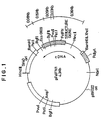
- the pFeIFN1 has a size of 4.3Kb, and the restriction map thereof was shown in Fig. 1.
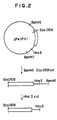
- a vector pMT1 which has SD sequence required for translation downstream to a tryptophan promoter and into which a synthetic oligomer containing translation initiation codon ATG and a recognition site for 5 kinds of restriction enzymes were inserted downstream to the SD sequence instead of human interferon- ⁇ structure gene was prepared.
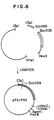
- plasmid pMT1 As shown in Fig. 4, 50 ⁇ g of plasmid pMT1 was completely digested with restriction enzymes ClaI and SmaI, subjected to agarose gel electrophoresis to remove smaller DNA fragments. As the result, approx. 40 ⁇ g of the desired DNA fragment was recovered to obtain ClaI-EcoRI fragments containing a tryptophan promoter as an E. coli expression promoter.
- This part was synthesized on the basis of the results of the determination of base sequences of DNA on the upstream of Eco0109 site in an FeIFN structure gene integrated in the plasmid pFeIFN1.
- the ligation with T4-DNA ligase was carried out by using 3 DNA fragments obtained in the above (1), (3) and (4).
- the ligation was possible because the SmaI and the HincII both had blunt ends.
- the reaction solution was mixed with E. coli MC1061 which was made to be competent to carry out the transformation reaction. Clones grown in an LB plate containing 100 ⁇ g/ml ampicillin were incubated overnight at 37°C in 2ml of LB medium containing 100 ⁇ g/ml ampicillin. From the culture, plasmids were extracted according to alkaline miniscreen method.
- the extracted plasmids were decomposed with ClaI and HindIII to obtain clones in which DNA fragments having the desired size were integrated. 3 clones were seclected from among the obtained clones and subjected to the DNA sequencing with respect to approx. 150 bases containing ClaI-Eco0109 fragments to confirm that the desired plasmids were obtained.
- the strain HB101 transformed with plasmid pFeIFN2 was incubated in 10ml of LB medium containing 100 ⁇ g/ml ampicillin at 30°C for 8 hours. Then, the culture was planted in 50ml of 2XM9 medium (0.6% KH2PO4, 1.2% Na2HPO4, 0.2% NH4 Cl, 0.1% NaCl, 1% casamino acid, 1% glucose, 0.25 ⁇ g/ml MgSO4 ⁇ 7H2O, 0.01 ⁇ g/ml thiamine) at the inoculum size 5% and aerobically incubated overnight at 25%C.
- 2XM9 medium 0.6% KH2PO4, 1.2% Na2HPO4, 0.2% NH4 Cl, 0.1% NaCl, 1% casamino acid, 1% glucose, 0.25 ⁇ g/ml MgSO4 ⁇ 7H2O, 0.01 ⁇ g/ml thiamine
- a BamHI fragment isolated from the pFeIFN1 was inserted into a sequencing vector pUC 18 (manufactured by Takara Shuzo Co., Ltd.).
- a sequencing vector pUC 18 manufactured by Takara Shuzo Co., Ltd.
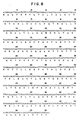
- processed vector was subjected to the determination of C-DNA base sequence of FeIFN according to dideoxy sequencing method using a 7-DEAZA sequencing kit (manufactured by Takara Shuzo Co., Ltd.). Parts having indiscernible autoradiographic bands were confirmed according to Maxam-Gilbert method. Whereby, the DNA base sequence shown in Fig. 8 were determined.
- the medium was changed with 4ml of RPMI1640 medium containing 150 ⁇ M chloroquine. After continuing the incubation at 37°C for 3 hours, the medium was changed with a RPMI1640 medium containing 10% FBS and the incubation was continueded at 37°C for 3 days. All of the above RPMI1640 media were used by adding thereto 100 unit/ml penicillin and 100 ⁇ g/ml streptomycin.
- This crude FeIFN solution contained the FeIFN activity of 2.6X10⁴U/ml and had the specific activity of 2.3X10⁴U/mg protein. 18l of this solution was loaded to a column containing 500ml of Blue Sepharose (fast flow type). After washing the column with 5l of 50mM phosphate buffer (pH 7.0) containing 0.5M sodium chloride, the adsorbed FeIFN was eluted with 0.5l of 50mM phosphate buffer (pH 7.0) containing 1M sodium chloride and 1.0l of 50mM phosphate buffer (pH7.0) containing 1M sodium chloride and 20% ethylene glycol. The eluted FeIFN contained the FeIFN activity of 2.3X10⁵U/ml and had the specific activity of 2.8X10⁶U/mg protein. The recovery of FeIFN activity reached 75% and the specific activity was raised by 121 times.
- FeIFN eluate from the copper chelate carrier was loaded to a column containing 15ml of Red Sepharose (fast flow type). After washing this column with 200ml of phosphate-buffered saline solution (pH 7.0), the adsorbed FeIFN was eluted with 15ml of 50mM phosphate buffer (pH 7.0) containing 1M sodium chloride and 40% ethylene glycol.
- the eluted FeIFN contained the FeIFN activity of 2.0X10⁷U/ml and had the specific activity of 5.9X10⁸U/mg protein. The recovery of FeIFN activity reached 95% and the specific activity was raised by 11 times.
Landscapes
- Health & Medical Sciences (AREA)
- Chemical & Material Sciences (AREA)
- Life Sciences & Earth Sciences (AREA)
- Organic Chemistry (AREA)
- Medicinal Chemistry (AREA)
- General Health & Medical Sciences (AREA)
- Biochemistry (AREA)
- Biophysics (AREA)
- Gastroenterology & Hepatology (AREA)
- Genetics & Genomics (AREA)
- Zoology (AREA)
- Molecular Biology (AREA)
- Proteomics, Peptides & Aminoacids (AREA)
- Toxicology (AREA)
- Engineering & Computer Science (AREA)
- Animal Behavior & Ethology (AREA)
- Immunology (AREA)
- Chemical Kinetics & Catalysis (AREA)
- General Chemical & Material Sciences (AREA)
- Nuclear Medicine, Radiotherapy & Molecular Imaging (AREA)
- Pharmacology & Pharmacy (AREA)
- Bioinformatics & Cheminformatics (AREA)
- Public Health (AREA)
- Veterinary Medicine (AREA)
- Preparation Of Compounds By Using Micro-Organisms (AREA)
- Medicines That Contain Protein Lipid Enzymes And Other Medicines (AREA)
- Peptides Or Proteins (AREA)
- Micro-Organisms Or Cultivation Processes Thereof (AREA)
Applications Claiming Priority (6)
| Application Number | Priority Date | Filing Date | Title |
|---|---|---|---|
| JP33629787 | 1987-12-29 | ||
| JP336297/87 | 1987-12-29 | ||
| JP171490/88 | 1988-07-08 | ||
| JP17149088 | 1988-07-08 | ||
| JP262057/88 | 1988-10-18 | ||
| JP26205788 | 1988-10-18 |
Publications (3)
| Publication Number | Publication Date |
|---|---|
| EP0322870A2 true EP0322870A2 (de) | 1989-07-05 |
| EP0322870A3 EP0322870A3 (en) | 1990-05-09 |
| EP0322870B1 EP0322870B1 (de) | 1995-04-05 |
Family
ID=27323497
Family Applications (1)
| Application Number | Title | Priority Date | Filing Date |
|---|---|---|---|
| EP88121737A Expired - Lifetime EP0322870B1 (de) | 1987-12-29 | 1988-12-27 | Synthetisches Plasmid, transformierte Zelle, Katzen-Interferon-Gen und Verfahren zur Herstellung von Katzen-Interferon |
Country Status (8)
| Country | Link |
|---|---|
| US (2) | US5508291A (de) |
| EP (1) | EP0322870B1 (de) |
| JP (1) | JP2513818B2 (de) |
| AT (1) | ATE120798T1 (de) |
| CA (1) | CA1340857C (de) |
| DE (1) | DE3853523T2 (de) |
| ES (1) | ES2071612T3 (de) |
| GR (1) | GR3015863T3 (de) |
Cited By (8)
| Publication number | Priority date | Publication date | Assignee | Title |
|---|---|---|---|---|
| EP0414355A1 (de) * | 1989-06-29 | 1991-02-27 | Toray Industries, Inc. | Katzeninteferon und Verfahren zur Herstellung mittels eines Seidenraupenvirus als Vektor |
| JPH0459799A (ja) * | 1990-06-28 | 1992-02-26 | Toray Ind Inc | 高純度ネコインターフェロンの製造法 |
| JPH0459800A (ja) * | 1990-06-28 | 1992-02-26 | Toray Ind Inc | 高純度ネコインターフェロンの製造方法 |
| WO2001040313A3 (en) * | 1999-12-01 | 2001-10-18 | Heska Corp | Feline immunoregulatory proteins, nucleic acid molecules, and uses thereof |
| WO2002036627A3 (en) * | 2000-11-03 | 2003-08-28 | Pbl Biomedical Lab | Interferons, uses and compositions related thereto |
| US7183080B2 (en) | 1998-05-29 | 2007-02-27 | Heska Corporation | Cannie IL-5 nucleic acid molecules |
| USRE39614E1 (en) | 1998-05-29 | 2007-05-08 | Heska Corporation | Canine IL-4 immunoregulatory proteins and uses thereof |
| USRE40374E1 (en) | 1998-05-29 | 2008-06-10 | Heska Corporation | Canine IL-13 immunoregulatory proteins and uses thereof |
Families Citing this family (4)
| Publication number | Priority date | Publication date | Assignee | Title |
|---|---|---|---|---|
| ES2071612T3 (es) * | 1987-12-29 | 1995-07-01 | Toray Industries | Plasmido sintetico, transformante, gen del interferon felino y metodo para producir interferon felino. |
| JP3845915B2 (ja) * | 1996-10-31 | 2006-11-15 | 東レ株式会社 | ネコのアトピー性皮膚炎治療剤および治療方法 |
| WO2004096264A1 (ja) * | 1997-10-30 | 2004-11-11 | Tsunesuke Kajimoto | ネコ白血病ウイルス感染症の治療方法 |
| CN1919870B (zh) * | 2006-09-13 | 2010-11-24 | 中国科学院微生物研究所 | 一种猫α干扰素及其编码基因与其应用 |
Family Cites Families (5)
| Publication number | Priority date | Publication date | Assignee | Title |
|---|---|---|---|---|
| IE54592B1 (en) * | 1982-03-08 | 1989-12-06 | Genentech Inc | Anumal interferons, processes involved in their production, compositions containing them, dna sequences coding therefor and espression vehicles containing such sequences and cells transformed thereby |
| JPS62501469A (ja) * | 1984-12-18 | 1987-06-18 | ベ−リンガ− インゲルハイム インタ−ナシヨナル ゲゼルシヤフト ミツト ベシユレンクテル ハフツング | イヌおよびウマインタ−フエロン |
| US4861720A (en) * | 1986-07-03 | 1989-08-29 | Regents Of The University Of California | Oncornavirus vaccines and feline alpha-type interferon |
| ES2071612T3 (es) * | 1987-12-29 | 1995-07-01 | Toray Industries | Plasmido sintetico, transformante, gen del interferon felino y metodo para producir interferon felino. |
| CA2019803C (en) * | 1989-06-29 | 2000-04-25 | Akira Yanai | Feline interferon and process for production thereof |
-
1988
- 1988-12-27 ES ES88121737T patent/ES2071612T3/es not_active Expired - Lifetime
- 1988-12-27 DE DE3853523T patent/DE3853523T2/de not_active Expired - Lifetime
- 1988-12-27 AT AT88121737T patent/ATE120798T1/de not_active IP Right Cessation
- 1988-12-27 EP EP88121737A patent/EP0322870B1/de not_active Expired - Lifetime
- 1988-12-28 CA CA000587163A patent/CA1340857C/en not_active Expired - Fee Related
- 1988-12-28 JP JP63332325A patent/JP2513818B2/ja not_active Expired - Lifetime
- 1988-12-29 US US07/291,597 patent/US5508291A/en not_active Expired - Lifetime
-
1995
- 1995-04-19 GR GR940404158T patent/GR3015863T3/el unknown
- 1995-06-05 US US08/463,242 patent/US5714382A/en not_active Expired - Lifetime
Cited By (18)
| Publication number | Priority date | Publication date | Assignee | Title |
|---|---|---|---|---|
| EP0414355A1 (de) * | 1989-06-29 | 1991-02-27 | Toray Industries, Inc. | Katzeninteferon und Verfahren zur Herstellung mittels eines Seidenraupenvirus als Vektor |
| US5194381A (en) * | 1989-06-29 | 1993-03-16 | Toray Industries, Inc. | Feline interferon and process for production thereof |
| US5480956A (en) * | 1989-06-29 | 1996-01-02 | Toray Industries, Inc. | Feline interferon and process for production thereof |
| JPH0459799A (ja) * | 1990-06-28 | 1992-02-26 | Toray Ind Inc | 高純度ネコインターフェロンの製造法 |
| JPH0459800A (ja) * | 1990-06-28 | 1992-02-26 | Toray Ind Inc | 高純度ネコインターフェロンの製造方法 |
| US7026139B2 (en) | 1998-05-29 | 2006-04-11 | Heska Corporation | Canine IL-13 nucleic acid molecules and fragments thereof |
| US6482403B1 (en) | 1998-05-29 | 2002-11-19 | Heska Corporation | Caniney IL-13 immunoregulatory proteins and uses thereof |
| US7183080B2 (en) | 1998-05-29 | 2007-02-27 | Heska Corporation | Cannie IL-5 nucleic acid molecules |
| USRE39614E1 (en) | 1998-05-29 | 2007-05-08 | Heska Corporation | Canine IL-4 immunoregulatory proteins and uses thereof |
| USRE40374E1 (en) | 1998-05-29 | 2008-06-10 | Heska Corporation | Canine IL-13 immunoregulatory proteins and uses thereof |
| US7427661B2 (en) | 1998-05-29 | 2008-09-23 | Heska Corporation | Canine IL-5 proteins and fragments thereof |
| US7629441B2 (en) | 1998-05-29 | 2009-12-08 | Heska Corporation | Feline interferon-alpha proteins |
| US7780959B2 (en) | 1998-05-29 | 2010-08-24 | Heska Corporation | Feline granulocyte macrophage colony stimulating factor nucleic acid molecules |
| US8263559B2 (en) | 1998-05-29 | 2012-09-11 | Heska Corporation | Feline granulocyte macrophage colony stimulating factor proteins |
| WO2001040313A3 (en) * | 1999-12-01 | 2001-10-18 | Heska Corp | Feline immunoregulatory proteins, nucleic acid molecules, and uses thereof |
| WO2002036627A3 (en) * | 2000-11-03 | 2003-08-28 | Pbl Biomedical Lab | Interferons, uses and compositions related thereto |
| AU2002228886B2 (en) * | 2000-11-03 | 2007-08-30 | Pestka Biomedical Laboratories, Inc. | Interferons, uses and compositions related thereto |
| US7666995B2 (en) | 2000-11-03 | 2010-02-23 | Pestka Biomedical Laboratories | Interferons, uses and compositions related thereto |
Also Published As
| Publication number | Publication date |
|---|---|
| CA1340857C (en) | 1999-12-21 |
| JP2513818B2 (ja) | 1996-07-03 |
| GR3015863T3 (en) | 1995-07-31 |
| JPH02195884A (ja) | 1990-08-02 |
| ES2071612T3 (es) | 1995-07-01 |
| DE3853523T2 (de) | 1995-08-17 |
| EP0322870A3 (en) | 1990-05-09 |
| ATE120798T1 (de) | 1995-04-15 |
| EP0322870B1 (de) | 1995-04-05 |
| DE3853523D1 (de) | 1995-05-11 |
| US5508291A (en) | 1996-04-16 |
| US5714382A (en) | 1998-02-03 |
Similar Documents
| Publication | Publication Date | Title |
|---|---|---|
| EP0569687B1 (de) | Menschliche IL-1 cDNS-Sequenzen die für biologisch aktive menschliche IL-1-Proteine kodieren | |
| FI81118C (fi) | Foerfarande foer framstaellning av vaesentligen rent interleukin-2 protein. | |
| KR860001471B1 (ko) | 인체의 섬유아세포 인터페론(IFN-β)폴리펩티드의 제조방법 | |
| EP0322870A2 (de) | Synthetisches Plasmid, transformierte Zelle, Katzen-Interferon-Gen und Verfahren zur Herstellung von Katzen-Interferon | |
| EP0158198A1 (de) | DNA und ihre Verwendung | |
| US5681720A (en) | DNA encoding human granulocyte colony stimulating factor plasmids and host cells comprising same, and methods of expressing the encoded polypeptide | |
| CS273152B2 (en) | Method of mature human leucocytic interferon production | |
| EP0110044A1 (de) | Human-Immun-Interferon-Protein und dessen Herstellung | |
| HK1060146A (en) | Methods for preparing human thrombopoietin polypeptides by mammalian cell cultures | |
| CN1045539C (zh) | 克隆编码具有人粒性巨噬细胞和嗜伊红细胞生长因子活性多肽的cDNA | |
| EP0161901B1 (de) | Menschliche IL-1-cDNS-Sequenzen die für biologisch aktive menschliche IL-1-Proteine kodieren | |
| CA1335360C (en) | Recombinant natural killer cell activator | |
| US5480956A (en) | Feline interferon and process for production thereof | |
| JPH0657152B2 (ja) | Csf遺伝子類 | |
| JPS6156199A (ja) | 新規ヒトインタ−フエロンα類 | |
| US4939093A (en) | Human IL-2 like polypeptides, DNA sequences and recombinant DNA molecules therefore and methods for the production and use thereof | |
| KR960016704B1 (ko) | 소마토트로핀 암호화 cDNA, 발현 벡터 및 숙주 | |
| CA2225517A1 (en) | Haemopoietic growth factor antagonists and uses therefor | |
| JP2666069B2 (ja) | 組換え型鳥類プロラクチン又は組換え型鳥類プレプロラクチン,組換え型ニワトリプロラクチン,組換え型ニワトリプロラクチン構造遺伝子,組換え型ニワトリプレプロラクチン,組換え型ニワトリプレプロラクチン構造遺伝子,組換えプラスミド,組換えプラスミドを含む微生物 | |
| EP0508672A2 (de) | Fisch-Prolactin | |
| JP2555816B2 (ja) | ヒトインターロイキン−2蛋白質の製造法 | |
| CA2198919A1 (en) | Gradual modification, super agonists and antagonists of signs and peptides | |
| KR940005595B1 (ko) | 연어 성장 호르몬의 정제방법 | |
| EP0281069A1 (de) | Herstellung von menschlichem Granulozyten-Makrophagen "Colony-Stimulating"-Faktor | |
| JPS61115494A (ja) | Dnaプラスミド及びその製造方法 |
Legal Events
| Date | Code | Title | Description |
|---|---|---|---|
| PUAI | Public reference made under article 153(3) epc to a published international application that has entered the european phase |
Free format text: ORIGINAL CODE: 0009012 |
|
| AK | Designated contracting states |
Kind code of ref document: A2 Designated state(s): AT BE CH DE ES FR GB GR IT LI LU NL SE |
|
| PUAL | Search report despatched |
Free format text: ORIGINAL CODE: 0009013 |
|
| AK | Designated contracting states |
Kind code of ref document: A3 Designated state(s): AT BE CH DE ES FR GB GR IT LI LU NL SE |
|
| 17P | Request for examination filed |
Effective date: 19900713 |
|
| 17Q | First examination report despatched |
Effective date: 19920605 |
|
| GRAA | (expected) grant |
Free format text: ORIGINAL CODE: 0009210 |
|
| AK | Designated contracting states |
Kind code of ref document: B1 Designated state(s): AT BE CH DE ES FR GB GR IT LI LU NL SE |
|
| REF | Corresponds to: |
Ref document number: 120798 Country of ref document: AT Date of ref document: 19950415 Kind code of ref document: T |
|
| ET | Fr: translation filed | ||
| REF | Corresponds to: |
Ref document number: 3853523 Country of ref document: DE Date of ref document: 19950511 |
|
| ITF | It: translation for a ep patent filed | ||
| REG | Reference to a national code |
Ref country code: GR Ref legal event code: FG4A Free format text: 3015863 |
|
| REG | Reference to a national code |
Ref country code: ES Ref legal event code: FG2A Ref document number: 2071612 Country of ref document: ES Kind code of ref document: T3 |
|
| PLBE | No opposition filed within time limit |
Free format text: ORIGINAL CODE: 0009261 |
|
| STAA | Information on the status of an ep patent application or granted ep patent |
Free format text: STATUS: NO OPPOSITION FILED WITHIN TIME LIMIT |
|
| 26N | No opposition filed | ||
| REG | Reference to a national code |
Ref country code: GB Ref legal event code: IF02 |
|
| REG | Reference to a national code |
Ref country code: CH Ref legal event code: PFA Owner name: TORAY INDUSTRIES, INC. Free format text: TORAY INDUSTRIES, INC.#2, NIHONBASHI-MUROMACHI, 2-CHOME#CHUO-KU/TOKYO (JP) -TRANSFER TO- TORAY INDUSTRIES, INC.#2, NIHONBASHI-MUROMACHI, 2-CHOME#CHUO-KU/TOKYO (JP) |
|
| PGFP | Annual fee paid to national office [announced via postgrant information from national office to epo] |
Ref country code: LU Payment date: 20071231 Year of fee payment: 20 Ref country code: NL Payment date: 20071203 Year of fee payment: 20 |
|
| PGFP | Annual fee paid to national office [announced via postgrant information from national office to epo] |
Ref country code: CH Payment date: 20071224 Year of fee payment: 20 Ref country code: AT Payment date: 20071212 Year of fee payment: 20 |
|
| PGFP | Annual fee paid to national office [announced via postgrant information from national office to epo] |
Ref country code: SE Payment date: 20071205 Year of fee payment: 20 |
|
| PGFP | Annual fee paid to national office [announced via postgrant information from national office to epo] |
Ref country code: GB Payment date: 20071227 Year of fee payment: 20 Ref country code: ES Payment date: 20080118 Year of fee payment: 20 Ref country code: FR Payment date: 20071210 Year of fee payment: 20 |
|
| PGFP | Annual fee paid to national office [announced via postgrant information from national office to epo] |
Ref country code: DE Payment date: 20071220 Year of fee payment: 20 Ref country code: IT Payment date: 20071228 Year of fee payment: 20 Ref country code: GR Payment date: 20071116 Year of fee payment: 20 |
|
| PGFP | Annual fee paid to national office [announced via postgrant information from national office to epo] |
Ref country code: BE Payment date: 20080314 Year of fee payment: 20 |
|
| BE20 | Be: patent expired |
Owner name: *TORAY INDUSTRIES INC. Effective date: 20081227 |
|
| REG | Reference to a national code |
Ref country code: CH Ref legal event code: PL |
|
| REG | Reference to a national code |
Ref country code: GB Ref legal event code: PE20 Expiry date: 20081226 |
|
| PG25 | Lapsed in a contracting state [announced via postgrant information from national office to epo] |
Ref country code: NL Free format text: LAPSE BECAUSE OF EXPIRATION OF PROTECTION Effective date: 20081227 |
|
| EUG | Se: european patent has lapsed | ||
| NLV7 | Nl: ceased due to reaching the maximum lifetime of a patent |
Effective date: 20081227 |
|
| REG | Reference to a national code |
Ref country code: ES Ref legal event code: FD2A Effective date: 20081229 |
|
| PG25 | Lapsed in a contracting state [announced via postgrant information from national office to epo] |
Ref country code: ES Free format text: LAPSE BECAUSE OF EXPIRATION OF PROTECTION Effective date: 20081229 |
|
| PG25 | Lapsed in a contracting state [announced via postgrant information from national office to epo] |
Ref country code: GB Free format text: LAPSE BECAUSE OF EXPIRATION OF PROTECTION Effective date: 20081226 |