EP0326162B1 - Système de base de données comprenant des notes facsimilées et méthode de gestion de notes facsimilées - Google Patents
Système de base de données comprenant des notes facsimilées et méthode de gestion de notes facsimilées Download PDFInfo
- Publication number
- EP0326162B1 EP0326162B1 EP89101458A EP89101458A EP0326162B1 EP 0326162 B1 EP0326162 B1 EP 0326162B1 EP 89101458 A EP89101458 A EP 89101458A EP 89101458 A EP89101458 A EP 89101458A EP 0326162 B1 EP0326162 B1 EP 0326162B1
- Authority
- EP
- European Patent Office
- Prior art keywords
- memo
- information
- memo information
- record
- data base
- Prior art date
- Legal status (The legal status is an assumption and is not a legal conclusion. Google has not performed a legal analysis and makes no representation as to the accuracy of the status listed.)
- Expired - Lifetime
Links
Images


Classifications
-
- G—PHYSICS
- G06—COMPUTING OR CALCULATING; COUNTING
- G06F—ELECTRIC DIGITAL DATA PROCESSING
- G06F16/00—Information retrieval; Database structures therefor; File system structures therefor
- G06F16/90—Details of database functions independent of the retrieved data types
- G06F16/93—Document management systems
- G06F16/94—Hypermedia
-
- Y—GENERAL TAGGING OF NEW TECHNOLOGICAL DEVELOPMENTS; GENERAL TAGGING OF CROSS-SECTIONAL TECHNOLOGIES SPANNING OVER SEVERAL SECTIONS OF THE IPC; TECHNICAL SUBJECTS COVERED BY FORMER USPC CROSS-REFERENCE ART COLLECTIONS [XRACs] AND DIGESTS
- Y02—TECHNOLOGIES OR APPLICATIONS FOR MITIGATION OR ADAPTATION AGAINST CLIMATE CHANGE
- Y02D—CLIMATE CHANGE MITIGATION TECHNOLOGIES IN INFORMATION AND COMMUNICATION TECHNOLOGIES [ICT], I.E. INFORMATION AND COMMUNICATION TECHNOLOGIES AIMING AT THE REDUCTION OF THEIR OWN ENERGY USE
- Y02D10/00—Energy efficient computing, e.g. low power processors, power management or thermal management
-
- Y—GENERAL TAGGING OF NEW TECHNOLOGICAL DEVELOPMENTS; GENERAL TAGGING OF CROSS-SECTIONAL TECHNOLOGIES SPANNING OVER SEVERAL SECTIONS OF THE IPC; TECHNICAL SUBJECTS COVERED BY FORMER USPC CROSS-REFERENCE ART COLLECTIONS [XRACs] AND DIGESTS
- Y10—TECHNICAL SUBJECTS COVERED BY FORMER USPC
- Y10S—TECHNICAL SUBJECTS COVERED BY FORMER USPC CROSS-REFERENCE ART COLLECTIONS [XRACs] AND DIGESTS
- Y10S707/00—Data processing: database and file management or data structures
- Y10S707/912—Applications of a database
- Y10S707/913—Multimedia
- Y10S707/915—Image
-
- Y—GENERAL TAGGING OF NEW TECHNOLOGICAL DEVELOPMENTS; GENERAL TAGGING OF CROSS-SECTIONAL TECHNOLOGIES SPANNING OVER SEVERAL SECTIONS OF THE IPC; TECHNICAL SUBJECTS COVERED BY FORMER USPC CROSS-REFERENCE ART COLLECTIONS [XRACs] AND DIGESTS
- Y10—TECHNICAL SUBJECTS COVERED BY FORMER USPC
- Y10S—TECHNICAL SUBJECTS COVERED BY FORMER USPC CROSS-REFERENCE ART COLLECTIONS [XRACs] AND DIGESTS
- Y10S707/00—Data processing: database and file management or data structures
- Y10S707/99931—Database or file accessing
Definitions
- the present invention relates to a data base system including memorandum information and a method for managing the memorandum information, and more particularly to a data base management system and a method for managing memorandum information in which a user of the data base system manages personal information (referred to as memorandum information) relating to data of the data base on a work station, in on-line information processing system comprising a host computer including the data base and work stations coupled to the host computer.
- memorandum information personal information
- Information handled in an enterprise may be classified into organization information and personal information.
- Organization information is official information in an organization and shared by the organization members. In order to store, retrieve and updata a large amount of organization information, various types of data base management systems are developed.
- Personal information is not official information in an organization. It is collected and modified by each organization member to smoothly process his assigned jobs. The personal information is normally not opened for use by others but it may be handed to others in the form of memorandum or document with his permission.
- a conventional data base management system is for the organization information in which a data structure (expression and format of data) has been defined before a data is inputted.
- the data can be readily stored, retrieved and updated.
- the personal information has no fixed data structure and, is in many cases, image information such as memorandums and charts.
- Such personal information in memorandum form (memorandum information) is written on memo papers by person in charge, and they are classified and field. In order for these memorandums to be utilized later, they must be well classified and rearranged. It is a very troublesome work and valuable information may be dispersed or a promise to a customer or other section may not be kept. As a result, the person in charge may lose his/her credit.
- the memorandum information of non-fixed (non-routine) data structure may be stored on an optical disk in a compact manner. In order to allow exact retrieval of desired information, it is necessary to assign a search key to each memorandum. This does not make a significant difference from the paper memorandums from the standpoint of classification and rearrangement.
- the data base management system is as claimed in claim 1 and the memorandum information is managed as claimed in claim 5.
- the primary key is not only specified, but also an indication of "latest” or “oldest” must be specified to designate whether the memorandums are to be retrieved from the latest or the oldest.
- paging retrieval is carried out as required.
- a memorandum which has been stored immediately earlier or later than the memorandum which is currently displayed is retrieved and displayed. If a forward paging retrieval command is executed when a memorandum is being displayed, the memorandum which has been stored immediately later than that is displayed, and if a backward paging retrieval command is executed, the memorandum which has been stored immediately earlier than that is displayed.
- the memorandum which is no longer necessary is deleted in the following manner.
- the unnecessary memorandum is deleted in a memorandum deletion process.
- There are three modes in the memorandum deletion that is, a specified memorandum deletion mode, a specified record memorandum deletion mode and total memorandum deletion mode.
- the specified memorandum deletion mode the memorandum to be deleted is displayed on the display (CRT) and the delete command is executed.
- the specified record memorandum deletion mode total memorandums logically added to a record of the data base is deleted. They may be deleted by the total memorandum delete command while one of the memorandums is displayed, or by specifying the primary key which points the record.
- total memorandum deletion mode total memorandum logically added to one data base is collectively deleted by specifying the file name and executing the total memorandum delete command.
- the personal information is processed as if a user of the data base management system pastes his/her personal memorandums to records of the data base. Accordingly, personal information may be sorted and classified by the data base without special rearrangement for the memorandums.
- a record of the data base and the memorandum logically added to the record can be simultaneously retrieved by specifying the primary key indicating record of the data base, with a high retrieval efficiency.
- Fig. 1 shows a configuration of one embodiment of a memorandum information management system of the present invention.
- Numeral 1 denotes a functional image which a user of the present system may understand through a viewer 3 of a work station 2.
- a table drawn in the image 1 is an image of a data base 5 in a host computer 4.
- a row of the table corresponds to a record of the data base.
- the data base 5 is a given one for the user of the system.
- Memorandum (hereinafter referred to as memos) attached to the rows of the table in the image 1 have been prepared by the user and inputted through a memo reader 6 of the work station 2 to logically add to the records. Normally, a plurality of memos are logically added to some rows and they are arranged in an input sequence.
- a frontmost memo is a latest one and a rearmost memo is an oldest one, or vice versa.
- a plurality of persons logically and memos to the records of the data base 5 of the host computer 4.
- the memos of each person should not be disclosed to other persons. If the memos of one user and the memos of other users are logically added to the same rows (record) of the data base 5, the user may be troubled. Accordingly, the memos are to be managed separately by each user.
- the memos are inputted through the memo reader 6 of each work station 2 and stored into a storage medium (memo file) 7 of the work station 2.
- the memos may be keyed in.
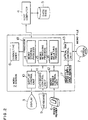
- Fig. 2 shows a configuration of one embodiment of the memorandum information system which attains the above function.
- Numerals 10, 11, 12 and 13 denote display controller, keyboard controller, memo reader controller and optical disk controller, respectively, which are controllers of peripheral equipments of the work station. Those are conventional ones.
- Numerals 14, 15 and 16 denote process for storing a memo by logically adding to the data base of the host computer, process for retrieving the stored memos, and process for deleting the memo, respectively. They are processed by a processor 18.
- the connective retrieval table (connective index) 8 of the work station 2 indicates which record of the data base 5 the input memo is logically added to.
- the connective index 8 may be a table in a storage (not shown) in the work station 2. Where a plurality of optical disks are used as the memo files 7, if the connective indexes of all optical disks are provided in the storage of the work station 2, a large storage capacity is required. Accordingly, a connective index table for each optical disk is provided in each optical disk, and the connective index tables in the optical disks are loaded to the storage of the work station prior to the utilization of the system. In this manner, the utilization efficiency of the storage in the work station is improved and the work station 2 can be shared by a plurality of users by the personal management of the optical disks.
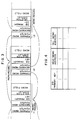
- FIG. 4 An internal structure of the connective index 8 and an internal structure of a memo file 7 are shown in Figs. 4 and 3, respectively.
- the memo files 7 are stored in the storing sequence.
- a head empty area address of the memo file is stored in a register 17 to indicate a place where the next memo is to be stored.
- i 1 , i 2 and i 3 denote storage areas for respective memos in the memo file 7.
- the memo record comprises a memo field which contains an occurrence of the memo, a forward memo pointer field, a backward memo pointer field and a data base (DB) primary key field.
- the memos of a user are stored in the memo file 7 in the input sequence, irrespective of the records of the data base to which the memos are to be logically added. As a result, the storage efficiency of the storage medium of the memo file 7 is enhanced. Because of such storage format, some memos logically added to a record of the data base may be discontinuously stored as shown by i 1 , i 2 and i 3 in Fig. 3.
- the forward memo pointer and backward memo pointer serve to manage the memos added to the same record of the data base, in the storing sequence.
- the storage location of the memo record i 1 (or i 3 ) which has been recorded immediately earlier (or later) than the memo record i 2 is registered as the forward memo pointer (or backward memo pointer) (field) of the memo record i 2 .
- the DB primary key of the memo record is a primary key (uniquely identifying key) of the data base which indicates the record to which the memo is logically added. Since the memos logically attached to a record of the data base are bidirectionally connected by the forward memo pointer and the backward memo pointer, those memos can be retrieved in either first-in first-out sequence or the opposite sequence. A deletion display field of the memo record will be described later.
- the connective index 8 is used to queue the memos logically added to a record of a data base. In the queuing, either the first stored memo or last stored memo is queue. Accordingly, the connective index 8 comprises three fields, DB primary key field, head memo address field and tail memo address field.
- DB primary key field for indicating the record of the data base to which the memo is added
- head memo address field and a tail memo address field for indicating the location in the memo file 7 at which the memo is stored and ended respectively. Since only one memo is logically added to the record at the first time, the content of the head memo address field and the content of the tail memo address field are equal.
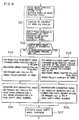
- a memo is read by the memo reader 6 and a primary key which indicates the record of the data base 5 to which the memo is to be logically attached is inputted from the keyboard 9.
- a record of the data base 5 is displayed on the display 3, it may be designated by a cursor to identify the record.
- a step 502 whether the memo is logically attached to the record of the data base 5 at the first time or not, the subsequent steps differ. This is determined by whether primary index of the record is registered or not in the connective index 8.
- steps 503 and 504 are carried out.
- the memo is stored in the memo file 7. Since no memo has been added to the memo record, the forward memo pointer and the backward memo pointer are left blank.
- the primary key (PK) of the record of the data base to which the memo is to be logically added is entered into the DB primary key field.
- the primary key (PK) of the data base to which the memo is to be logically attached is registered in the DB primary key field of the connective index 8 as a new key record, and the head empty area address in the memo file 7 which is the content of the register 17 is registered in both the head memo address field and the tail memo address field.
- steps 505 and 506 are carried out.
- the memo is stored in the memo file 7.
- the step 505 differs from the step 503 in that the memo previously added to the record is referred to.
- the address of the memo previously added is written into the forward memo pointer field of the memo record.
- the address is derived from the connective index.
- the addition of the memo is registered in the connective index 8. Namely, the storage address of the memo is written into the tail memo address field of the key record corresponding to the record.
- a step 507 the address at which the memo next read is to be stored, that is, the head empty area address 17 is updated.
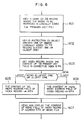
- Figs. 6 and 7 show flow charts of a process for retrieving a specified memo.
- Fig. 6 shows a process to read latest or oldest memo added to a specific record.
- the name of the record of the data base to which the memo to be retrieved has been logically added, that is, the primary key is entered by the keyboard 9 (step 601).
- step 602 either the latest one or oldest one of the memos added to the record specified by the primary key is specified (step 602). Then, the index record where the content of the primary key field in the connective index is equal to the keyed in primary key is obtained (step 603).
- the tail memo address of the obtained index record is written into a MFA (a work area in the storage of the processor 18) if it is the latest one, and the head address of the obtained index record is written into the MFA if it is the oldest one (step 606).
- the memo field of the memo record of the address MFA of the memo file 7 is read and displayed (step 607). Since the above steps are queuing of the memo, the address of the memo in the memo file may be determined by using only the connective index.
- the above steps may be applied to the memos added to the record of the data base to overdisplay the memos on the display (see Fig. 1).
- the number of memos may be readily counted by displaying the memos in such a manner that the rear memo is staggered from the front memo.
- Fig. 7 shows a flow chart of the process in which one of the memos added to the record of the data base is displayed and the following or previous one of the memos is read.
- the storage address in the memo file of the memo currently displayed on the display is set to MFA (step 701).
- the backward memo pointer of the memo record indicated by MFA is registered in MFNA (a work area in the storage of the processor 18) if the paging is forward, and the forward memo pointer of the memo record indicated by MFA is registered in MFNA if the paging is backward (step 704).
- Whether the MFNA is blank or not is checked (step 705), and if it is not blank, the memo field of the memo record designated by the MFNA of the memo file is read and displayed on the display (step 707). If the MFNA is blank, absence of memo to be displayed is displayed (step 708).
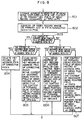
- Fig. 8 shows a flow chart of a process to delete a memo displayed on the display.
- the storage address in the memo file of the memo displayed on the display is registered in the MFA, and the DP primary key of the memo record designated by the MFA is set to PK (step 801).
- the address of the index record whose DB primary key is PK in the connective index is set to PKA (step 802).
- the forward memo pointer is blank in the step 803 and the backward memo pointer is also blank, it indicates that the memo is only one. In this case, the key record at the address PAK of the connective index is deleted (step 804).
- the forward memo pointer is blank and the backward memo pointer is not blank, that is, if the memo is the oldest one of the memos, the head memo address of the key record at the address PAK of the connective index 8 is set to the backward memo pointer of the memo record MFA of the memo file, and the forward memo pointer of the memo record pointed by the backward memo pointer of MFA is rendered blank (step 805).
- a step 807 is carried out.
- the forward memo pointer of the memo record is not blank and the backward memo pointer is blank, that is, when the memo is the latest one, a step 806 is carried out.
- the deleted memo remains in the memo file. It has merely deleted from the memo group to which it belonged. It is risky to delete it from the memo file because it may be needed later.
- the memo file is preferably an optical disk from a storage cost standpoint.
- a write-once type optical disk is used to further reduce the storage cost, it is not possible to update the two pointers in the memo record.
- the deletion of memo may be indicated by the deletion field of the memo record (see Fig. 3).
- Memory cards such as optical memory cards, IC cards and magnetic cards having a large storage capacity may be used for the memo file, and also for the index table storage, depending on applications.
- the display is used as the output device, a printer may be connected to print out the memo information or make a hard copy of the display screen so that the memo information may be carried.
- the memos prepared by the user of the operator may be stored and retrieved in relation to the data base in a later work. Accordingly, the computerization of the work in the marketing activities and general office works which has heretofore been difficult to attain by conventional information processing is attained and a number of jobs may be performed by one person.
- the present invention is attained by merely developing the work station without modifying the existing host system (including the data base). Accordingly, a large manpower is not required to attain the apparatus of the present invention.
Landscapes
- Engineering & Computer Science (AREA)
- Databases & Information Systems (AREA)
- Theoretical Computer Science (AREA)
- Business, Economics & Management (AREA)
- General Business, Economics & Management (AREA)
- Data Mining & Analysis (AREA)
- Physics & Mathematics (AREA)
- General Engineering & Computer Science (AREA)
- General Physics & Mathematics (AREA)
- Information Retrieval, Db Structures And Fs Structures Therefor (AREA)
Claims (13)
- Système de base de données comportant un processeur, une base de données (5) comportant des enregistrements auxquels il est possible d'accéder par l'intermédiaire de clés primaires, et un fichier mémo (7) pour mémoriser des informations mémo relatives à ladite base de données, ledit système comportant en outre :des moyens d'entrée vers ledit processeur pour entrer lesdites informations mémo et la clé primaire de l'enregistrement de ladite base de données (5) auquel lesdites informations mémo doivent être logiquement attachées,des premiers moyens de mémorisation pour mémoriser lesdites informations mémo reçues en entrée dans ledit fichier mémo (7), etdes seconds moyens de mémorisation pour mémoriser ladite clé primaire reçue en entrée en association avec l'adresse de l'emplacement auquel lesdites informations mémo sont physiquement mémorisées dans ledit fichier mémo (7) dans une unité de mémorisation d'index connectifs (8), caractérisé en ce que :pour récupérer des informations mémo, la clé primaire de l'enregistrement auquel lesdites informations mémo à récupérer sont logiquement attachées est utilisée comme un index dans ladite unité de mémorisation d'index connectifs (8), et, pour récupérer ledit enregistrement lui-même, ladite clé primaire dudit enregistrement est utilisée comme un index dans ladite base de données (5).
- Système selon la revendication 1, caractérisé en ce que les informations mémo sont des informations d'image mémorisées conformément à une séquence dans le temps.
- Système selon la revendication 1 ou 2, caractérisé en ce qu'il comporte une unité de commande de mémorisation (13) pour écrire et lire les informations mémo et les informations d'index connectifs correspondantes.
- Système selon l'une quelconque des revendications 1 à 3, caractérisé en ce que ledit fichier mémo (7) est fourni sur un dispositif de mémorisation portatif qui peut être déconnecté dudit processeur.
- Procédé pour gérer des informations mémo dans un système de base de données comportant un processeur, une base de données (5) comportant des enregistrements auxquels il est possible d'accéder par l'intermédiaire de clés primaires, et un fichier mémo (7) pour mémoriser des informations mémo relatives à ladite base de données, ledit procédé comportant les étapes consistant à :entrer dans ledit processeur lesdites informations mémo et la clé primaire de l'enregistrement de ladite base de données (5) auquel lesdites informations mémo doivent être logiquement attachées,mémoriser par l'intermédiaire dudit processeur lesdites informations mémo reçues en entrée dans ledit fichier mémo (7), etmémoriser par l'intermédiaire dudit processeur ladite clé primaire reçue en entrée en association avec l'adresse de l'emplacement auquel lesdites informations mémo sont physiquement mémorisées dans ledit fichier mémo (7) dans une unité de mémorisation d'index connectifs (8), caractérisé en ce que :pour récupérer des informations mémo, la clé primaire de l'enregistrement auquel lesdites informations mémo à récupérer sont logiquement attachées est utilisée comme un index dans ladite unité de mémorisation d'index connectifs (8), et, pour récupérer ledit enregistrement lui-même, ladite clé primaire dudit enregistrement est utilisée comme un index dans ladite base de données (5).
- Procédé selon la revendication 5, caractérisé en outre en ce que l'étape de récupération des informations mémo comporte les étapes consistant à :entrer des informations représentant ledit enregistrement de la base de données,récupérer dans l'unité de mémorisation d'index connectifs (8) l'adresse du fichier mémo correspondant aux informations représentant l'enregistrement de la base de données, etdélivrer en sortie les informations mémo mémorisées à ladite adresse du fichier mémo.
- Procédé pour gérer des informations mémo selon la revendication 6, caractérisé en ce que ladite étape de sortie comporte une étape pour délivrer en sortie les informations mémo mémorisées à l'adresse du fichier mémo selon une relation de correspondance avec l'enregistrement de la base de données correspondant aux informations entrées représentant l'enregistrement de la base de données.
- Procédé pour gérer des informations mémo selon l'une quelconque des revendications 5 à 7, caractérisé en ce qu'une pluralité d'informations mémo est ajoutée à un enregistrement de la base de données, les informations mémo sont enregistrées dans le fichier mémo conformément à une séquence de mémorisation, un pointeur indiquant la séquence de mémorisation est ajouté à un champ d'enregistrement de chaque information mémo, les adresses des informations mémo mémorisées en premier et en dernier sont enregistrées dans l'unité de mémorisation d'index connectifs en tant qu'adresses de tête et de queue du fichier mémo, et la pluralité d'informations mémo est délivrée en sortie conformément à une séquence dans le temps en se référant aux pointeurs et à l'adresse de tête ou à l'adresse de queue lorsque les informations mémo sont récupérées.
- Procédé pour gérer des informations mémo selon l'une quelconque des revendications 5 à 8, caractérisé en ce que les informations mémo sont des informations d'image.
- Procédé pour gérer des informations mémo selon l'une quelconque des revendications 5 à 9, caractérisé en outre en ce qu'il comporte les étapes consistant à :(1) entrer des informations d'enregistrement, représentant des enregistrements de la base de données,(2) afficher les informations contenues dans les enregistrements de la base de données correspondant aux informations d'enregistrement entrées,(3) récupérer l'adresse du fichier mémo correspondant aux informations d'enregistrement entrées dans le fichier d'index connectifs, et(4) afficher les informations mémo mémorisées à l'adresse récupérée sur un affichage selon une relation de correspondance avec les informations contenues dans les enregistrements affichés sur l'affichage.
- Procédé pour gérer des informations mémo selon la revendication 10, caractérisé en ce qu'il existe une pluralité d'informations mémo correspondant aux informations entrées représentant les enregistrements de la base de données, et ladite étape (4) pour afficher les informations mémo inclut une étape consistant à superposer la pluralité d'informations mémo de manière à ce que les informations mémo contenues en arrière plan puissent être partiellement visualisées.
- Procédé pour gérer des informations mémo selon la revendication 11, caractérisé en ce qu'il comporte les étapes consistant à désigner des champs mémo "le plus récent" ou "le plus ancien", et, lorsque le champ mémo "le plus récent" est désigné, à superposer les informations mémo dans la séquence de mémorisation en affichant au tout premier plan les informations mémo les plus récentes dans la séquence d'entrée et en affichant au tout dernier plan les informations mémo les plus anciennes, et, lorsque le champ mémo "le plus ancien" est désigné, en superposant les informations mémo dans la séquence opposée.
- Procédé pour gérer des informations mémo selon la revendication 12, caractérisé en ce qu'il comporte les étapes consistant à désigner des champs de pointeur mémo "avant" ou "arrière", et, lorsque le champ "avant" est désigné, les informations mémo venant juste après les informations mémo affichées au tout premier plan sont affichées par superposition au tout premier plan, et, lorsque le champ "arrière" est désigné, les informations mémo à afficher devant les informations mémo affichées au tout premier plan sont affichées par superposition en tout premier plan.
Applications Claiming Priority (2)
| Application Number | Priority Date | Filing Date | Title |
|---|---|---|---|
| JP63017077A JP3020500B2 (ja) | 1988-01-29 | 1988-01-29 | メモ情報を持つデータベースシステム及びメモ情報の管理方法 |
| JP17077/88 | 1988-01-29 |
Publications (3)
| Publication Number | Publication Date |
|---|---|
| EP0326162A2 EP0326162A2 (fr) | 1989-08-02 |
| EP0326162A3 EP0326162A3 (fr) | 1992-08-12 |
| EP0326162B1 true EP0326162B1 (fr) | 1997-06-04 |
Family
ID=11933916
Family Applications (1)
| Application Number | Title | Priority Date | Filing Date |
|---|---|---|---|
| EP89101458A Expired - Lifetime EP0326162B1 (fr) | 1988-01-29 | 1989-01-27 | Système de base de données comprenant des notes facsimilées et méthode de gestion de notes facsimilées |
Country Status (4)
| Country | Link |
|---|---|
| US (1) | US5109508A (fr) |
| EP (1) | EP0326162B1 (fr) |
| JP (1) | JP3020500B2 (fr) |
| DE (1) | DE68928088T2 (fr) |
Families Citing this family (13)
| Publication number | Priority date | Publication date | Assignee | Title |
|---|---|---|---|---|
| JP2966432B2 (ja) * | 1989-07-07 | 1999-10-25 | シャープ株式会社 | 電子機器 |
| JPH0540757A (ja) * | 1991-01-28 | 1993-02-19 | Fujitsu Ltd | 文書処理装置 |
| JP2862036B2 (ja) * | 1991-09-17 | 1999-02-24 | 三菱電機株式会社 | 数値制御装置 |
| US5428778A (en) * | 1992-02-13 | 1995-06-27 | Office Express Pty. Ltd. | Selective dissemination of information |
| US5555388A (en) * | 1992-08-20 | 1996-09-10 | Borland International, Inc. | Multi-user system and methods providing improved file management by reading |
| JP3311540B2 (ja) * | 1995-04-28 | 2002-08-05 | 富士ゼロックス株式会社 | データ管理システム |
| JP3700733B2 (ja) * | 1995-06-12 | 2005-09-28 | 富士ゼロックス株式会社 | 文書管理装置及び文書管理方法 |
| JP3510042B2 (ja) | 1996-04-26 | 2004-03-22 | 株式会社日立製作所 | データベース管理方法及びシステム |
| US5958005A (en) * | 1997-07-17 | 1999-09-28 | Bell Atlantic Network Services, Inc. | Electronic mail security |
| US6502088B1 (en) | 1999-07-08 | 2002-12-31 | International Business Machines Corporation | Method and system for improved access to non-relational databases |
| US6922685B2 (en) * | 2000-05-22 | 2005-07-26 | Mci, Inc. | Method and system for managing partitioned data resources |
| CA2441120C (fr) * | 2001-03-16 | 2010-06-22 | Netomat, Inc. | Mise en commun, gestion et communication des informations sur un reseau informatique |
| JP4057268B2 (ja) * | 2001-09-26 | 2008-03-05 | 富士フイルム株式会社 | 鑑賞用データ保管方法および装置、注文情報生成方法および装置、鑑賞用データ処理方法および装置並びにプログラム |
Family Cites Families (7)
| Publication number | Priority date | Publication date | Assignee | Title |
|---|---|---|---|---|
| JPS59183458A (ja) * | 1983-04-01 | 1984-10-18 | Hitachi Ltd | 画像検索方式 |
| JPS6039170U (ja) * | 1983-08-24 | 1985-03-18 | シャープ株式会社 | 電子メモ装置 |
| JPS61220027A (ja) * | 1985-03-27 | 1986-09-30 | Hitachi Ltd | 文書ファイリングシステム及び情報記憶検索システム |
| JPH0750483B2 (ja) * | 1985-05-22 | 1995-05-31 | 株式会社日立製作所 | 文書画像追加情報の蓄積方法 |
| JPS62109172A (ja) * | 1985-11-08 | 1987-05-20 | Hitachi Ltd | 画像デ−タ検索システム |
| US4817050A (en) * | 1985-11-22 | 1989-03-28 | Kabushiki Kaisha Toshiba | Database system |
| JPS6319032A (ja) * | 1986-07-11 | 1988-01-26 | Mitsubishi Electric Corp | 文書フアイル処理方式 |
-
1988
- 1988-01-29 JP JP63017077A patent/JP3020500B2/ja not_active Expired - Lifetime
-
1989
- 1989-01-25 US US07/301,662 patent/US5109508A/en not_active Expired - Lifetime
- 1989-01-27 EP EP89101458A patent/EP0326162B1/fr not_active Expired - Lifetime
- 1989-01-27 DE DE68928088T patent/DE68928088T2/de not_active Expired - Fee Related
Also Published As
| Publication number | Publication date |
|---|---|
| JPH01194026A (ja) | 1989-08-04 |
| US5109508A (en) | 1992-04-28 |
| DE68928088D1 (de) | 1997-07-10 |
| DE68928088T2 (de) | 1998-01-29 |
| EP0326162A2 (fr) | 1989-08-02 |
| EP0326162A3 (fr) | 1992-08-12 |
| JP3020500B2 (ja) | 2000-03-15 |
Similar Documents
| Publication | Publication Date | Title |
|---|---|---|
| US5161214A (en) | Method and apparatus for document image management in a case processing system | |
| US5761655A (en) | Image file storage and retrieval system | |
| US5819295A (en) | Document storing and managing system | |
| US4437127A (en) | Document information filing system | |
| CA1188811A (fr) | Methode et appareil de stockage et d'extraction d'information | |
| JP2643094B2 (ja) | 文書用紙認識システム | |
| EP0051258B1 (fr) | Système électronique d'enregistrement d'information documentaire | |
| EP0487331B1 (fr) | Système de gestion de répertoire | |
| JPS63173165A (ja) | 像管理を総合したオフィスオートメーションシステム | |
| US5109508A (en) | Data base system including memorandum information and method for managing memorandum information | |
| EP0389399A2 (fr) | Structure de répertoire pour un support optique WORM | |
| US5133066A (en) | Method for selecting multiple versions of data in a reduced record units text editing system | |
| JPH07239854A (ja) | 画像ファイルシステム | |
| JPH039493B2 (fr) | ||
| JPS5983455A (ja) | 画像情報記憶検索装置 | |
| Hopkinson | Merlin for the cataloguer | |
| Gilson et al. | Use of a microcomputer in a department of medical illustration for retrieval of clinical teaching slides | |
| JP2774655B2 (ja) | 電子ファイリング装置 | |
| EP0323029A2 (fr) | Méthode d'exploitation d'un système électronique, d'information pour distribuer des documents groupés en dossiers | |
| JPH02140878A (ja) | 電子ファイル装置 | |
| JPH0667945A (ja) | 電子ファイリング装置 | |
| Kemper | The Potentials and Problems of Computers | |
| JPS5971176A (ja) | 画像情報記憶検索装置 | |
| JPH07271946A (ja) | 画像情報処理装置 | |
| JPH0877205A (ja) | リレーショナルデータベース管理システム |
Legal Events
| Date | Code | Title | Description |
|---|---|---|---|
| PUAI | Public reference made under article 153(3) epc to a published international application that has entered the european phase |
Free format text: ORIGINAL CODE: 0009012 |
|
| AK | Designated contracting states |
Kind code of ref document: A2 Designated state(s): DE GB |
|
| 17P | Request for examination filed |
Effective date: 19901212 |
|
| PUAL | Search report despatched |
Free format text: ORIGINAL CODE: 0009013 |
|
| AK | Designated contracting states |
Kind code of ref document: A3 Designated state(s): DE GB |
|
| 17Q | First examination report despatched |
Effective date: 19930503 |
|
| GRAG | Despatch of communication of intention to grant |
Free format text: ORIGINAL CODE: EPIDOS AGRA |
|
| GRAH | Despatch of communication of intention to grant a patent |
Free format text: ORIGINAL CODE: EPIDOS IGRA |
|
| GRAH | Despatch of communication of intention to grant a patent |
Free format text: ORIGINAL CODE: EPIDOS IGRA |
|
| GRAA | (expected) grant |
Free format text: ORIGINAL CODE: 0009210 |
|
| AK | Designated contracting states |
Kind code of ref document: B1 Designated state(s): DE GB |
|
| REF | Corresponds to: |
Ref document number: 68928088 Country of ref document: DE Date of ref document: 19970710 |
|
| PLBE | No opposition filed within time limit |
Free format text: ORIGINAL CODE: 0009261 |
|
| STAA | Information on the status of an ep patent application or granted ep patent |
Free format text: STATUS: NO OPPOSITION FILED WITHIN TIME LIMIT |
|
| 26N | No opposition filed | ||
| REG | Reference to a national code |
Ref country code: GB Ref legal event code: IF02 |
|
| PGFP | Annual fee paid to national office [announced via postgrant information from national office to epo] |
Ref country code: GB Payment date: 20031229 Year of fee payment: 16 |
|
| PGFP | Annual fee paid to national office [announced via postgrant information from national office to epo] |
Ref country code: DE Payment date: 20040304 Year of fee payment: 16 |
|
| PG25 | Lapsed in a contracting state [announced via postgrant information from national office to epo] |
Ref country code: GB Free format text: LAPSE BECAUSE OF NON-PAYMENT OF DUE FEES Effective date: 20050127 |
|
| PG25 | Lapsed in a contracting state [announced via postgrant information from national office to epo] |
Ref country code: DE Free format text: LAPSE BECAUSE OF NON-PAYMENT OF DUE FEES Effective date: 20050802 |
|
| GBPC | Gb: european patent ceased through non-payment of renewal fee |
Effective date: 20050127 |