EP0333517A2 - Methode und Mittel zur Hemmung der Bindung von menschlichen polymorphonuklearen Leukozyten an das Endothelium und sie enthaltende Zusammensetzungen - Google Patents
Methode und Mittel zur Hemmung der Bindung von menschlichen polymorphonuklearen Leukozyten an das Endothelium und sie enthaltende Zusammensetzungen Download PDFInfo
- Publication number
- EP0333517A2 EP0333517A2 EP89302702A EP89302702A EP0333517A2 EP 0333517 A2 EP0333517 A2 EP 0333517A2 EP 89302702 A EP89302702 A EP 89302702A EP 89302702 A EP89302702 A EP 89302702A EP 0333517 A2 EP0333517 A2 EP 0333517A2
- Authority
- EP
- European Patent Office
- Prior art keywords
- gly
- peptide
- agent
- gln
- arg
- Prior art date
- Legal status (The legal status is an assumption and is not a legal conclusion. Google has not performed a legal analysis and makes no representation as to the accuracy of the status listed.)
- Withdrawn
Links
Images

Classifications
-
- C—CHEMISTRY; METALLURGY
- C07—ORGANIC CHEMISTRY
- C07K—PEPTIDES
- C07K14/00—Peptides having more than 20 amino acids; Gastrins; Somatostatins; Melanotropins; Derivatives thereof
- C07K14/435—Peptides having more than 20 amino acids; Gastrins; Somatostatins; Melanotropins; Derivatives thereof from animals; from humans
- C07K14/46—Peptides having more than 20 amino acids; Gastrins; Somatostatins; Melanotropins; Derivatives thereof from animals; from humans from vertebrates
- C07K14/47—Peptides having more than 20 amino acids; Gastrins; Somatostatins; Melanotropins; Derivatives thereof from animals; from humans from vertebrates from mammals
- C07K14/4701—Peptides having more than 20 amino acids; Gastrins; Somatostatins; Melanotropins; Derivatives thereof from animals; from humans from vertebrates from mammals not used
- C07K14/4702—Regulators; Modulating activity
- C07K14/4703—Inhibitors; Suppressors
-
- A—HUMAN NECESSITIES
- A61—MEDICAL OR VETERINARY SCIENCE; HYGIENE
- A61P—SPECIFIC THERAPEUTIC ACTIVITY OF CHEMICAL COMPOUNDS OR MEDICINAL PREPARATIONS
- A61P29/00—Non-central analgesic, antipyretic or antiinflammatory agents, e.g. antirheumatic agents; Non-steroidal antiinflammatory drugs [NSAID]
-
- C—CHEMISTRY; METALLURGY
- C07—ORGANIC CHEMISTRY
- C07K—PEPTIDES
- C07K14/00—Peptides having more than 20 amino acids; Gastrins; Somatostatins; Melanotropins; Derivatives thereof
- C07K14/435—Peptides having more than 20 amino acids; Gastrins; Somatostatins; Melanotropins; Derivatives thereof from animals; from humans
- C07K14/78—Connective tissue peptides, e.g. collagen, elastin, laminin, fibronectin, vitronectin or cold insoluble globulin [CIG]
-
- A—HUMAN NECESSITIES
- A61—MEDICAL OR VETERINARY SCIENCE; HYGIENE
- A61K—PREPARATIONS FOR MEDICAL, DENTAL OR TOILETRY PURPOSES
- A61K38/00—Medicinal preparations containing peptides
Definitions
- PMN Polymorphonuclear
- endothelium the cells lining the vessels.
- PMN Polymorphonuclear
- CD11b/CD18 A molecule on the surface of PMN that mediates adhesion to endothelium has recently been defined. That molecule, CD11b/CD18, is thought to mediate adhesion because (a) monoclonal antibodies against CD11b/CD18 inhibit binding of PMN to endothelium in vitro, (b) injection of monoclonal antibodies against CD11b/CD18 into rabbits prevents normal emigration of PMN in response to an inflammatory stimulus, (c) PMN from patients with a genetic defect in the expression of CD11b/CD18 and the related molecules, CD11a/CD18 and CD11c/CD18, fail to bind to endothelial cells in vitro, and (d) the deficient patients fail to recruit PMN to sites of infection.
- CD11b/CD18 has been previously described as a receptor for the third component C3bi [Wright et al., Proc. Natl. Acad. Sci. USA , 80 , 5699-5703 (1983)]. It appears that a single receptor functions in two capacities: mediation of the binding of polymorphonuclear leukocytes (PMN) to endothelial cells; and to C3bi-coated cells.
- PMN polymorphonuclear leukocytes
- CD11b/CD18 binds to a sequence in C3bi that contains the sequence Lys-Tyr-Arg-Gly-Asp (human C3bi) or Lys-Tyr-Leu-Gly-Asp (murine C3bi). This was not completely unexpected since receptors related to CD11b/CD18 such as the fibronectin receptor recognize proteins that have the sequence Arg-Gly-Asp as part of the recognition site [Wright et al., J. Exp. Med.
- CD11b/CD18 An important distinction exists between CD11b/CD18 and other receptors, such as the fibronectin receptor, which recognize Arg-Gly-Asp. Arg-Gly-Asp, in itself, is not recognized by CD11b/CD18. Thus, the identity of the flanking amino acids are critical to recognition by CD11b/CD18, and the Arg may be substituted by an uncharged amino acid if suitable flanking amino acids are present.
- PMN polymorphonuclear leukocytes
- PMN polymorphonuclear leukocytes
- the present invention relates to a method of and compositions for inhibiting the binding of polymorphonuclear leukocytes (PMN) to endothelium and to fibrinogen which comprises administration to a patient in need of such therapy an inhibitory amount of a peptide of the formula H2N-(Ch) - X1-X2-X3-B1-X4-B2-Gly-Asp-(Cx)-H wherein (Ch) and (Cx) are each independently a chain of 0-8 naturally occurring amino acids and B1, B2, X1, X2, X3 and X4 are independently selected from a group consisting of naturally occurring amino acids.
- PMN polymorphonuclear leukocytes
- the present inventions relates to a method of and compositions for inhibiting the binding of polymorphonuclear leukocytes (PMN) to endothelium and to fibrinogen which comprises administration to a patient in need of such therapy an inhibitory amount of a peptide of the formula H2N-(Ch)-X1-X2-X3-B1-X4-B2-Gly-Asp-(Cx)-H (I) wherein Ch and Cx are each independently a chain of 0-8 amino acids and B1, B2, X1, X2, X3 and X4 are independently selected from a group consisting of amino acids with the proviso that the resulting peptide must contain at least ten amino acids.
- PMN polymorphonuclear leukocytes
- amino acids referred to above are the naturally occurring amino acids in either their L, D or DL stereochemical configuration. Throughout this disclosure, they are conveniently referred to by their conventional IUPAC three-letter abbreviations.
- preferred peptides of formula I are those wherein X1 is glycine (Gly) and B1 is lysine (Lys) and are thus represented by the formula H2N-(Ch)-Gly-X2-X3-Lys-X4-B2-Gly-Asp-(Cx)-H wherein Ch and Cx are each independently a chain of 0-8 amino acids and B2, X2, X3 and X4 are each independently selected from the group consisting of amino acids.
- Ch chain of amino acids contains 0-5 amino acids which are selected from the group consisting of basic amino acids, i.e., lysine (Lys), arginine (Arg) and histidine (His).
- a group of preferred peptides are those of formula I wherein B2 is preferably selected from the group consisting of basic amino acids, i.e. lysine (Lys), arginine (Arg) and histidine (His).
- a further preferred group of peptides of formula I utilizable in the present invention is that wherein one or more of the X1, X2, X3 and X4 amino acids are glycine (Gly).
- Another group of highly preferred peptides of formula I utilizable in the present invention contains the subset of amino acids wherein B1-X4-B2-Gly-Asp-(Cx) is the -Lys-Gln-Ala-Gly-Asp-Val- group while another contains the subset of amino acids wherein X4-B2-Gly-Asp-(Cx) is the - Gly-Arg-Gly-Asp-Ala-Val-(C x-1 ) group.
- C x-1 denotes a chain of 1-7 amino acids independently selected from the group consisting of amino acids.
- preferred peptides for use in the methods and compositions of the present invention are those of the formulae: H2N-Leu-Gly-Gly-Ala-Lys-Gln-Ala-Gly-Asp-Val-H; H2N-Gly-Gln-Gln-His-His-Leu-Gly-Gly-Ala-Lys-Gln-Ala-Gly-Asp-Val-H; and H2N-Arg-Leu-Leu-Pro-Gly-Gly-Leu-Gln-Gln-Gly-Arg-Gly-Asp-Ala-Val-Gly-Pro-Glu-Arg-Gly-Cys-H
- Certain of the peptides of the present invention are novel entities. These peptides either contain one or more D-configuration amino acids or contain a sequence derived from the naturally occurring gamma chain of the fibrinogen molecule, i.e., one or more of the amino acids of the sequence of the peptide is different from the sequence of amino acids of the gamma chain of human fibrinogen.
- Other of the peptides utilized in the present invention are novel although they contain sequences that occur in naturally occurring proteins since they have never before been produced as entities apart from the naturally occurring proteins.
- the peptide Pep63 of the formula Arg-Leu-Leu-Pro-Gly-Gly-Leu-Gln-Gln-Gly-Arg-Gly-Asp-Ala-Val-Gly-Pro-Glu-Arg-Gly-Cys is derived from a surface glycoprotein gp 63 of Leishmania promastigotes.
- Pep63 itself in a purified form has heretofore been unknown and unavailable as a therapeutic agent.
- the peptides utilizable in the methods and compositions of the present invention exhibit their utility by inhibiting the binding of PMN to endothelium and also by inhibiting the binding of PMN to the clotting protein fibrinogen.
- peptides of formula I when peptides of formula I are incubated with human PMN, they inhibit the binding of PMN to both endothelium and fibrinogen as determined by standardized assays.
- These peptides of formula I can be utilized to treat a patient in need of therapy due to the damage which would result from the binding of PMN to endothelium and/or to fibrinogen.
- the peptides are preferably prepared using solid phase synthesis, such as that described by Merrifield [ J. Am. Chem. Soc. , 85 , 2149 (1964)], although other equivalent chemical syntheses known in the art can also be used, such as the syntheses of Houghten [ Proc. Natl. Acad. Sci. , 82 , 5132 (1985)].
- Solid-phase synthesis is commenced from the C-terminus of the peptide by coupling a protected amino acid to a suitable resin, as generally set forth in U.S. Patent No. 4,244,946, issued January 21, 1982 to Rivier et al. Examples of syntheses of this general type are set forth in U.S. Patent Nos. 4,305,872 and 4,316,891.
- valine or serine having its alpha-amino group suitably protected is coupled to a chloromethylated polystyrene resin or the like.
- a chloromethylated polystyrene resin or the like After removal of the alpha-amino protecting group, as by using trifluoracetic acid in methylene chloride, the next step in the synthesis is ready to proceed.
- Other standard cleaving reagents and conditions for the removal of specific amino protecting groups may be used, as described in the open literature.
- alpha-amino- and side-chain-protected amino acids are then coupled stepwise in the desired order to obtain an intermediate compound connected to the resin.
- some of them may be coupled to one another prior to the addition to the growing solid-phase chain.
- the selection of the appropriate coupling reagents is within the skill of the art.
- Peptides composed of repeating units of the peptide of formula (I) above are made by the same procedure.
- the intermediate peptide is removed from the resin support by treatment with a reagent, such as liquid HF, which not only cleaves the peptide from the resin, but also cleaves all the remaining side-chain-protecting groups.
- a reagent such as liquid HF
- the polypeptide can then be purified by gel permeation followed by semipreparative HPLC, as described in Rivier et al. [ Peptides: Structure and Biological Function , 125-128 (1979)]. A purity of at least 93% or higher (based upon all peptides present) is reasonably obtainable and is preferred for clinical testing and/or use. Purity of 98% is practical; however, for certain in vitro applications, lower purity may be acceptable. Accordingly, the polypeptide is considered useful when it is in substantially pure form which, for purposes of this Application, means at least about 50 weight percent, based upon all peptides present.
- the peptides of the present invention can be formulated into pharmaceutical compositions for therapeutic, diagnostic or other uses.
- the compositions are dissolved in water containing physiologically compatible substances such as sodium chloride (e.g., 0.1 -2.0 M), glycine, and the like and having buffered pH compatible with physiological conditions.
- physiologically compatible substances such as sodium chloride (e.g., 0.1 -2.0 M), glycine, and the like and having buffered pH compatible with physiological conditions.
- the amount to administer will depend on the activity of the particular compound administered, which can readily be determined by those of ordinary skill in the art.
- the peptides of the present invention can be conjugated with a carrier molecule such as human serum albumin or high molecular weight dextran. This results in a larger molecule which is not cleared so quickly from the bloodstream of the patient. After conjugation, the peptide can then be formulated into suitable compositions for administration to the patient in need of such therapy.
- a carrier molecule such as human serum albumin or high molecular weight dextran.
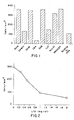
- Figure 1 illustrates the level of inhibition of binding by incubation with monoclonal antibodies against CD11b/CD18 and with the peptide L10
- Figure 2 illustrates the dose dependence of this inhibition.
- Figure 1 illustrates that PMN bind poorly to surfaces coated with human serum albumin, but bind strongly to surfaces coated with fibrinogen.
- the binding of PMN to fibrinogen is mediated by CD11b/CD18 since the monoclonal antibodies OKM10 (against CD11b) and IB4 (against CD18) block binding, while monoclonal antibody against an irrelevant protein (3G8, against the Fc receptor) has no effect.
- Figure 2 illustrates the dose dependence of the inhibition of binding of PMN to fibrinogen by L10.
- FIGS 1 and 2 thus demonstrate that the attachment of PMN to fibrinogen may be inhibited by the method of the invention.
- Figure 3 describes the dose dependence of inhibition caused by the peptide Pep63
- Figure 4 describes the dose dependence of inhibition caused by the peptide G15.
- the experiments are conducted as follows. Purified human PMN were stimulated for 15 min. with 300 ng/ml of phorbol dibutyrate. This stimulation is necessary to enable PMN to bind, and mimics the stimulation of PMN at sites of inflammation.
- Endothelial cells were isolated from human umbilical cords by standard methods [Pawlowski et al., Proc. Natl. Aca. Sci. , 82 , 8202 (1985)] and were cultivated on fibronectin-coated tissue culture surfaces to confluence. The endothelial cells exhibited the morphological features of native endothelium.
- PMN were washed and combined with the indicated doses of Arg-Leu-Leu-Pro-Gly-Gly-Leu-Gln-Gln-Gly-Arg-Gly- Asp-Ala-Val-Gly-Pro-Glu-Arg-Gly-Cys (Pep63) in Figure 3, or with the indicated doses of Gly-Gln-Gln-His-His-Leu-Gly-Gly-Ala-Lys-Gln-Ala-Gly-Asp-Val (G15) in Figure 4.
- the cells were then added to the endothelium and incubated at 37°C for 15 min. Unattached PMN were then washed away and the binding was assessed by microscopy.
- Figures 3 and 4 indicate that the method of the invention is effective in blocking the attachment of stimulated PMN to endothelium.
Landscapes
- Health & Medical Sciences (AREA)
- Chemical & Material Sciences (AREA)
- Organic Chemistry (AREA)
- Life Sciences & Earth Sciences (AREA)
- General Health & Medical Sciences (AREA)
- Medicinal Chemistry (AREA)
- Genetics & Genomics (AREA)
- Biophysics (AREA)
- Proteomics, Peptides & Aminoacids (AREA)
- Toxicology (AREA)
- Molecular Biology (AREA)
- Biochemistry (AREA)
- Gastroenterology & Hepatology (AREA)
- Zoology (AREA)
- Nuclear Medicine, Radiotherapy & Molecular Imaging (AREA)
- Public Health (AREA)
- Pharmacology & Pharmacy (AREA)
- Pain & Pain Management (AREA)
- Animal Behavior & Ethology (AREA)
- Veterinary Medicine (AREA)
- General Chemical & Material Sciences (AREA)
- Rheumatology (AREA)
- Chemical Kinetics & Catalysis (AREA)
- Medicines That Contain Protein Lipid Enzymes And Other Medicines (AREA)
- Peptides Or Proteins (AREA)
Applications Claiming Priority (2)
| Application Number | Priority Date | Filing Date | Title |
|---|---|---|---|
| US17017188A | 1988-03-18 | 1988-03-18 | |
| US170171 | 1988-03-18 |
Publications (2)
| Publication Number | Publication Date |
|---|---|
| EP0333517A2 true EP0333517A2 (de) | 1989-09-20 |
| EP0333517A3 EP0333517A3 (de) | 1990-07-25 |
Family
ID=22618845
Family Applications (1)
| Application Number | Title | Priority Date | Filing Date |
|---|---|---|---|
| EP89302702A Withdrawn EP0333517A3 (de) | 1988-03-18 | 1989-03-20 | Methode und Mittel zur Hemmung der Bindung von menschlichen polymorphonuklearen Leukozyten an das Endothelium und sie enthaltende Zusammensetzungen |
Country Status (3)
| Country | Link |
|---|---|
| EP (1) | EP0333517A3 (de) |
| JP (1) | JPH0276898A (de) |
| AU (1) | AU3149289A (de) |
Cited By (7)
| Publication number | Priority date | Publication date | Assignee | Title |
|---|---|---|---|---|
| WO1990006943A3 (de) * | 1988-12-12 | 1990-08-09 | Basf Ag | Neue tnf-peptide |
| WO1992000751A1 (en) * | 1990-07-06 | 1992-01-23 | Novo Nordisk A/S | A pharmaceutical composition comprising a cell adhesion molecule |
| US5340800A (en) * | 1990-08-27 | 1994-08-23 | Liu David Y | Peptide medicaments for the treatment of disease |
| EP0595659A3 (de) * | 1992-10-30 | 1995-01-11 | Bristol Myers Squibb Co | Rezeptorliganden von der extrazellularen Matrix, die die Leukozytenfunktion modulieren. |
| US5733549A (en) * | 1992-08-14 | 1998-03-31 | Shino-Test Corporation | Peptides including amino acid sequences selected from lipoprotein (a) and apolipoprotein (a), antibodies recognizing these amino acid sequences, and methods of determination using these antibodies |
| WO1998017319A3 (en) * | 1996-10-21 | 1998-06-11 | Andaris Ltd | Platelet substitutes and conjugation methods suitable for their preparation |
| US5932214A (en) * | 1994-08-11 | 1999-08-03 | Biogen, Inc. | Treatment for inflammatory bowel disease with VLA-4 blockers |
Family Cites Families (3)
| Publication number | Priority date | Publication date | Assignee | Title |
|---|---|---|---|---|
| US4661471A (en) * | 1984-04-10 | 1987-04-28 | New England Deaconess Hospital | Method of inhibiting and inducing human platelet aggregation |
| US4666884A (en) * | 1984-04-10 | 1987-05-19 | New England Deaconess Hospital | Method of inhibiting binding of von Willebrand factor to human platelets and inducing interaction of platelets with vessel walls |
| US4683291A (en) * | 1985-10-28 | 1987-07-28 | Scripps Clinic And Research Foundation | Platelet binding inhibitors |
-
1989
- 1989-03-17 AU AU31492/89A patent/AU3149289A/en not_active Abandoned
- 1989-03-18 JP JP1067401A patent/JPH0276898A/ja active Pending
- 1989-03-20 EP EP89302702A patent/EP0333517A3/de not_active Withdrawn
Cited By (9)
| Publication number | Priority date | Publication date | Assignee | Title |
|---|---|---|---|---|
| WO1990006943A3 (de) * | 1988-12-12 | 1990-08-09 | Basf Ag | Neue tnf-peptide |
| WO1992000751A1 (en) * | 1990-07-06 | 1992-01-23 | Novo Nordisk A/S | A pharmaceutical composition comprising a cell adhesion molecule |
| US5340800A (en) * | 1990-08-27 | 1994-08-23 | Liu David Y | Peptide medicaments for the treatment of disease |
| US7176184B2 (en) | 1992-02-12 | 2007-02-13 | Biogen Idec Ma Inc. | Treatment for inflammatory bowel disease with a fibronectin polypeptide |
| US5733549A (en) * | 1992-08-14 | 1998-03-31 | Shino-Test Corporation | Peptides including amino acid sequences selected from lipoprotein (a) and apolipoprotein (a), antibodies recognizing these amino acid sequences, and methods of determination using these antibodies |
| EP0595659A3 (de) * | 1992-10-30 | 1995-01-11 | Bristol Myers Squibb Co | Rezeptorliganden von der extrazellularen Matrix, die die Leukozytenfunktion modulieren. |
| US5932214A (en) * | 1994-08-11 | 1999-08-03 | Biogen, Inc. | Treatment for inflammatory bowel disease with VLA-4 blockers |
| US6482409B1 (en) | 1994-08-11 | 2002-11-19 | Biogen, Inc. | Treatment for inflammatory bowel disease with a vcam-1/1gG fusion protein |
| WO1998017319A3 (en) * | 1996-10-21 | 1998-06-11 | Andaris Ltd | Platelet substitutes and conjugation methods suitable for their preparation |
Also Published As
| Publication number | Publication date |
|---|---|
| JPH0276898A (ja) | 1990-03-16 |
| EP0333517A3 (de) | 1990-07-25 |
| AU3149289A (en) | 1989-09-21 |
Similar Documents
| Publication | Publication Date | Title |
|---|---|---|
| US5756452A (en) | Platelet aggregation inhibitors having high specificity for GP IIb IIIa | |
| US5510332A (en) | Process to inhibit binding of the integrin α4 62 1 to VCAM-1 or fibronectin and linear peptides therefor | |
| US5200397A (en) | Use of peptide analogs of thrombospondin for the inhibition of angiogenic activity | |
| JPH08505628A (ja) | ペプチド型細胞接着阻害薬 | |
| CA2000048A1 (en) | Peptides and antibodies that inhibit integrin-ligand bindin g | |
| JPH05500750A (ja) | 血小板凝集阻害剤 | |
| JPH10506608A (ja) | 白血球接着のインヒビター | |
| JPH07501828A (ja) | セレクチン類で仲介される炎症のペプチド阻害剤 | |
| JPH10502349A (ja) | インテグリンα▲下4▼β▲下1▼のVCAM−1またはフィブロネクチンへの結合を阻害する方法 | |
| EP0593585B1 (de) | Giftigkeit von tnf und lps ausschaltende peptide | |
| BG65065B1 (bg) | Пептидни антиангиогенни лекарствени средства | |
| US5498601A (en) | Platelet aggregation-inhibiting peptides | |
| CA2052022A1 (en) | Peptides having thrombospondin-like activity and their therapeutic use | |
| JPH08508884A (ja) | マクロファージ炎症蛋白変種 | |
| JP4212651B2 (ja) | サソリ由来神経ペプチド | |
| JPWO1998029446A1 (ja) | サソリ由来神経ペプチド | |
| EP0639202B1 (de) | Stabile zusammensetzung von polypeptiden | |
| US5645837A (en) | Peptides that inhibit T cell activation and methods of using the same | |
| EP0333517A2 (de) | Methode und Mittel zur Hemmung der Bindung von menschlichen polymorphonuklearen Leukozyten an das Endothelium und sie enthaltende Zusammensetzungen | |
| JP2005272480A (ja) | トロンボスポンジン−様活性を有するペプチド及びその治療のための使用 | |
| US5338725A (en) | Anti-aggregatory agents for platelets | |
| EP0397635B1 (de) | Peptid mit einer Aktivität gegen Metastasen | |
| US6207639B1 (en) | Compounds and methods for modulating neurite outgrowth | |
| DE69931140T2 (de) | Hemmung der angiogenese durch peptidanaloge der kininogen domäne 5mit hohem molekulargewicht | |
| JP2006117633A (ja) | インターロイキン−8の模倣剤及び疾病の症状の予防、治療、診断及び改善におけるその使用方法 |
Legal Events
| Date | Code | Title | Description |
|---|---|---|---|
| PUAI | Public reference made under article 153(3) epc to a published international application that has entered the european phase |
Free format text: ORIGINAL CODE: 0009012 |
|
| AK | Designated contracting states |
Kind code of ref document: A2 Designated state(s): AT BE CH DE ES FR GB GR IT LI LU NL SE |
|
| PUAL | Search report despatched |
Free format text: ORIGINAL CODE: 0009013 |
|
| AK | Designated contracting states |
Kind code of ref document: A3 Designated state(s): AT BE CH DE ES FR GB GR IT LI LU NL SE |
|
| STAA | Information on the status of an ep patent application or granted ep patent |
Free format text: STATUS: THE APPLICATION IS DEEMED TO BE WITHDRAWN |
|
| 18D | Application deemed to be withdrawn |
Effective date: 19910126 |