EP0338916B1 - Makromolekulare Hämoglobinkomplexe, Verfahren zu ihrer Herstellung und ihre Verwendungen - Google Patents
Makromolekulare Hämoglobinkomplexe, Verfahren zu ihrer Herstellung und ihre Verwendungen Download PDFInfo
- Publication number
- EP0338916B1 EP0338916B1 EP89401076A EP89401076A EP0338916B1 EP 0338916 B1 EP0338916 B1 EP 0338916B1 EP 89401076 A EP89401076 A EP 89401076A EP 89401076 A EP89401076 A EP 89401076A EP 0338916 B1 EP0338916 B1 EP 0338916B1
- Authority
- EP
- European Patent Office
- Prior art keywords
- polymer
- hemoglobin
- site
- groups
- sites
- Prior art date
- Legal status (The legal status is an assumption and is not a legal conclusion. Google has not performed a legal analysis and makes no representation as to the accuracy of the status listed.)
- Expired - Lifetime
Links
- 238000000034 method Methods 0.000 title claims abstract description 92
- 238000002360 preparation method Methods 0.000 title claims abstract description 26
- 229920000642 polymer Polymers 0.000 claims abstract description 332
- QVGXLLKOCUKJST-UHFFFAOYSA-N atomic oxygen Chemical compound [O] QVGXLLKOCUKJST-UHFFFAOYSA-N 0.000 claims abstract description 44
- 229910052760 oxygen Inorganic materials 0.000 claims abstract description 44
- 239000001301 oxygen Substances 0.000 claims abstract description 44
- QAOWNCQODCNURD-UHFFFAOYSA-L sulfate group Chemical group S(=O)(=O)([O-])[O-] QAOWNCQODCNURD-UHFFFAOYSA-L 0.000 claims abstract description 26
- 125000003178 carboxy group Chemical group [H]OC(*)=O 0.000 claims abstract description 8
- 108010054147 Hemoglobins Proteins 0.000 claims description 343
- 102000001554 Hemoglobins Human genes 0.000 claims description 343
- 150000007942 carboxylates Chemical group 0.000 claims description 81
- 229920002307 Dextran Polymers 0.000 claims description 70
- 125000000129 anionic group Chemical group 0.000 claims description 47
- YDSWCNNOKPMOTP-UHFFFAOYSA-N mellitic acid Chemical compound OC(=O)C1=C(C(O)=O)C(C(O)=O)=C(C(O)=O)C(C(O)=O)=C1C(O)=O YDSWCNNOKPMOTP-UHFFFAOYSA-N 0.000 claims description 45
- 229910019142 PO4 Inorganic materials 0.000 claims description 40
- 235000021317 phosphate Nutrition 0.000 claims description 40
- 238000006243 chemical reaction Methods 0.000 claims description 37
- 150000001412 amines Chemical class 0.000 claims description 36
- 230000006870 function Effects 0.000 claims description 35
- NBIIXXVUZAFLBC-UHFFFAOYSA-K phosphate Chemical compound [O-]P([O-])([O-])=O NBIIXXVUZAFLBC-UHFFFAOYSA-K 0.000 claims description 29
- 239000010452 phosphate Substances 0.000 claims description 29
- 150000001299 aldehydes Chemical class 0.000 claims description 27
- 125000002887 hydroxy group Chemical group [H]O* 0.000 claims description 27
- 150000001875 compounds Chemical class 0.000 claims description 20
- 239000000178 monomer Substances 0.000 claims description 20
- 230000015572 biosynthetic process Effects 0.000 claims description 19
- 230000008878 coupling Effects 0.000 claims description 19
- 238000010168 coupling process Methods 0.000 claims description 19
- 238000005859 coupling reaction Methods 0.000 claims description 19
- 125000003277 amino group Chemical group 0.000 claims description 17
- QNSOHXTZPUMONC-UHFFFAOYSA-N benzene-1,2,3,4,5-pentacarboxylic acid Chemical compound OC(=O)C1=CC(C(O)=O)=C(C(O)=O)C(C(O)=O)=C1C(O)=O QNSOHXTZPUMONC-UHFFFAOYSA-N 0.000 claims description 17
- GCAIEATUVJFSMC-UHFFFAOYSA-N benzene-1,2,3,4-tetracarboxylic acid Chemical compound OC(=O)C1=CC=C(C(O)=O)C(C(O)=O)=C1C(O)=O GCAIEATUVJFSMC-UHFFFAOYSA-N 0.000 claims description 17
- UHOVQNZJYSORNB-UHFFFAOYSA-N Benzene Chemical compound C1=CC=CC=C1 UHOVQNZJYSORNB-UHFFFAOYSA-N 0.000 claims description 16
- 239000002609 medium Substances 0.000 claims description 16
- UJMDYLWCYJJYMO-UHFFFAOYSA-N benzene-1,2,3-tricarboxylic acid Chemical compound OC(=O)C1=CC=CC(C(O)=O)=C1C(O)=O UJMDYLWCYJJYMO-UHFFFAOYSA-N 0.000 claims description 15
- -1 carboxylic Chemical class 0.000 claims description 15
- 150000008064 anhydrides Chemical class 0.000 claims description 14
- 229920001223 polyethylene glycol Polymers 0.000 claims description 14
- 239000002202 Polyethylene glycol Substances 0.000 claims description 13
- CYIDZMCFTVVTJO-UHFFFAOYSA-N pyromellitic acid Chemical compound OC(=O)C1=CC(C(O)=O)=C(C(O)=O)C=C1C(O)=O CYIDZMCFTVVTJO-UHFFFAOYSA-N 0.000 claims description 13
- 125000003172 aldehyde group Chemical group 0.000 claims description 11
- 239000012736 aqueous medium Substances 0.000 claims description 11
- 125000004432 carbon atom Chemical group C* 0.000 claims description 11
- 239000003795 chemical substances by application Substances 0.000 claims description 11
- RTZKZFJDLAIYFH-UHFFFAOYSA-N Diethyl ether Chemical compound CCOCC RTZKZFJDLAIYFH-UHFFFAOYSA-N 0.000 claims description 10
- 150000003013 phosphoric acid derivatives Chemical class 0.000 claims description 10
- NGVDGCNFYWLIFO-UHFFFAOYSA-N pyridoxal 5'-phosphate Chemical compound CC1=NC=C(COP(O)(O)=O)C(C=O)=C1O NGVDGCNFYWLIFO-UHFFFAOYSA-N 0.000 claims description 10
- 150000003467 sulfuric acid derivatives Chemical class 0.000 claims description 10
- 230000003281 allosteric effect Effects 0.000 claims description 9
- 230000000890 antigenic effect Effects 0.000 claims description 9
- 150000002466 imines Chemical group 0.000 claims description 9
- 229920001515 polyalkylene glycol Polymers 0.000 claims description 9
- 239000012279 sodium borohydride Substances 0.000 claims description 9
- 229910000033 sodium borohydride Inorganic materials 0.000 claims description 9
- 238000004925 denaturation Methods 0.000 claims description 8
- 230000036425 denaturation Effects 0.000 claims description 8
- 229920000036 polyvinylpyrrolidone Polymers 0.000 claims description 8
- 239000001267 polyvinylpyrrolidone Substances 0.000 claims description 8
- 235000013855 polyvinylpyrrolidone Nutrition 0.000 claims description 8
- 230000009467 reduction Effects 0.000 claims description 8
- 230000004913 activation Effects 0.000 claims description 7
- XNGIFLGASWRNHJ-UHFFFAOYSA-N phthalic acid Chemical compound OC(=O)C1=CC=CC=C1C(O)=O XNGIFLGASWRNHJ-UHFFFAOYSA-N 0.000 claims description 7
- BDAGIHXWWSANSR-UHFFFAOYSA-N Formic acid Chemical compound OC=O BDAGIHXWWSANSR-UHFFFAOYSA-N 0.000 claims description 6
- 239000002253 acid Substances 0.000 claims description 6
- WPYMKLBDIGXBTP-UHFFFAOYSA-N benzoic acid Chemical class OC(=O)C1=CC=CC=C1 WPYMKLBDIGXBTP-UHFFFAOYSA-N 0.000 claims description 6
- ZNFNDZCXTPWRLQ-UHFFFAOYSA-N butane-1,1,1-tricarboxylic acid Chemical compound CCCC(C(O)=O)(C(O)=O)C(O)=O ZNFNDZCXTPWRLQ-UHFFFAOYSA-N 0.000 claims description 6
- 229950006137 dexfosfoserine Drugs 0.000 claims description 6
- 235000019253 formic acid Nutrition 0.000 claims description 6
- 150000004676 glycans Chemical class 0.000 claims description 6
- 231100000252 nontoxic Toxicity 0.000 claims description 6
- 230000003000 nontoxic effect Effects 0.000 claims description 6
- 229920001282 polysaccharide Polymers 0.000 claims description 6
- 239000005017 polysaccharide Substances 0.000 claims description 6
- 235000007682 pyridoxal 5'-phosphate Nutrition 0.000 claims description 6
- 239000011589 pyridoxal 5'-phosphate Substances 0.000 claims description 6
- SRPWOOOHEPICQU-UHFFFAOYSA-N trimellitic anhydride Chemical compound OC(=O)C1=CC=C2C(=O)OC(=O)C2=C1 SRPWOOOHEPICQU-UHFFFAOYSA-N 0.000 claims description 6
- IQVLXQGNLCPZCL-UHFFFAOYSA-N (2,5-dioxopyrrolidin-1-yl) 2,6-bis[(2-methylpropan-2-yl)oxycarbonylamino]hexanoate Chemical compound CC(C)(C)OC(=O)NCCCCC(NC(=O)OC(C)(C)C)C(=O)ON1C(=O)CCC1=O IQVLXQGNLCPZCL-UHFFFAOYSA-N 0.000 claims description 5
- GGAUUQHSCNMCAU-ZXZARUISSA-N (2s,3r)-butane-1,2,3,4-tetracarboxylic acid Chemical compound OC(=O)C[C@H](C(O)=O)[C@H](C(O)=O)CC(O)=O GGAUUQHSCNMCAU-ZXZARUISSA-N 0.000 claims description 5
- IMQLKJBTEOYOSI-GPIVLXJGSA-N Inositol-hexakisphosphate Chemical compound OP(O)(=O)O[C@H]1[C@H](OP(O)(O)=O)[C@@H](OP(O)(O)=O)[C@H](OP(O)(O)=O)[C@H](OP(O)(O)=O)[C@@H]1OP(O)(O)=O IMQLKJBTEOYOSI-GPIVLXJGSA-N 0.000 claims description 5
- 229920001202 Inulin Polymers 0.000 claims description 5
- IMQLKJBTEOYOSI-UHFFFAOYSA-N Phytic acid Natural products OP(O)(=O)OC1C(OP(O)(O)=O)C(OP(O)(O)=O)C(OP(O)(O)=O)C(OP(O)(O)=O)C1OP(O)(O)=O IMQLKJBTEOYOSI-UHFFFAOYSA-N 0.000 claims description 5
- 230000003213 activating effect Effects 0.000 claims description 5
- 150000001408 amides Chemical class 0.000 claims description 5
- YPTUAQWMBNZZRN-UHFFFAOYSA-N dimethylaminoboron Chemical compound [B]N(C)C YPTUAQWMBNZZRN-UHFFFAOYSA-N 0.000 claims description 5
- 150000002148 esters Chemical class 0.000 claims description 5
- 229940029339 inulin Drugs 0.000 claims description 5
- JYJIGFIDKWBXDU-MNNPPOADSA-N inulin Chemical compound O[C@H]1[C@H](O)[C@@H](CO)O[C@@]1(CO)OC[C@]1(OC[C@]2(OC[C@]3(OC[C@]4(OC[C@]5(OC[C@]6(OC[C@]7(OC[C@]8(OC[C@]9(OC[C@]%10(OC[C@]%11(OC[C@]%12(OC[C@]%13(OC[C@]%14(OC[C@]%15(OC[C@]%16(OC[C@]%17(OC[C@]%18(OC[C@]%19(OC[C@]%20(OC[C@]%21(OC[C@]%22(OC[C@]%23(OC[C@]%24(OC[C@]%25(OC[C@]%26(OC[C@]%27(OC[C@]%28(OC[C@]%29(OC[C@]%30(OC[C@]%31(OC[C@]%32(OC[C@]%33(OC[C@]%34(OC[C@]%35(OC[C@]%36(O[C@@H]%37[C@@H]([C@@H](O)[C@H](O)[C@@H](CO)O%37)O)[C@H]([C@H](O)[C@@H](CO)O%36)O)[C@H]([C@H](O)[C@@H](CO)O%35)O)[C@H]([C@H](O)[C@@H](CO)O%34)O)[C@H]([C@H](O)[C@@H](CO)O%33)O)[C@H]([C@H](O)[C@@H](CO)O%32)O)[C@H]([C@H](O)[C@@H](CO)O%31)O)[C@H]([C@H](O)[C@@H](CO)O%30)O)[C@H]([C@H](O)[C@@H](CO)O%29)O)[C@H]([C@H](O)[C@@H](CO)O%28)O)[C@H]([C@H](O)[C@@H](CO)O%27)O)[C@H]([C@H](O)[C@@H](CO)O%26)O)[C@H]([C@H](O)[C@@H](CO)O%25)O)[C@H]([C@H](O)[C@@H](CO)O%24)O)[C@H]([C@H](O)[C@@H](CO)O%23)O)[C@H]([C@H](O)[C@@H](CO)O%22)O)[C@H]([C@H](O)[C@@H](CO)O%21)O)[C@H]([C@H](O)[C@@H](CO)O%20)O)[C@H]([C@H](O)[C@@H](CO)O%19)O)[C@H]([C@H](O)[C@@H](CO)O%18)O)[C@H]([C@H](O)[C@@H](CO)O%17)O)[C@H]([C@H](O)[C@@H](CO)O%16)O)[C@H]([C@H](O)[C@@H](CO)O%15)O)[C@H]([C@H](O)[C@@H](CO)O%14)O)[C@H]([C@H](O)[C@@H](CO)O%13)O)[C@H]([C@H](O)[C@@H](CO)O%12)O)[C@H]([C@H](O)[C@@H](CO)O%11)O)[C@H]([C@H](O)[C@@H](CO)O%10)O)[C@H]([C@H](O)[C@@H](CO)O9)O)[C@H]([C@H](O)[C@@H](CO)O8)O)[C@H]([C@H](O)[C@@H](CO)O7)O)[C@H]([C@H](O)[C@@H](CO)O6)O)[C@H]([C@H](O)[C@@H](CO)O5)O)[C@H]([C@H](O)[C@@H](CO)O4)O)[C@H]([C@H](O)[C@@H](CO)O3)O)[C@H]([C@H](O)[C@@H](CO)O2)O)[C@@H](O)[C@H](O)[C@@H](CO)O1 JYJIGFIDKWBXDU-MNNPPOADSA-N 0.000 claims description 5
- 229940068041 phytic acid Drugs 0.000 claims description 5
- OALOWSOCPRABCP-UHFFFAOYSA-N 3-hydroxy-5-(hydroxymethyl)-2-methylpyridine-4-carbaldehyde;sulfuric acid Chemical compound OS(O)(=O)=O.CC1=NC=C(CO)C(C=O)=C1O OALOWSOCPRABCP-UHFFFAOYSA-N 0.000 claims description 4
- ZKHQWZAMYRWXGA-KQYNXXCUSA-J ATP(4-) Chemical compound C1=NC=2C(N)=NC=NC=2N1[C@@H]1O[C@H](COP([O-])(=O)OP([O-])(=O)OP([O-])([O-])=O)[C@@H](O)[C@H]1O ZKHQWZAMYRWXGA-KQYNXXCUSA-J 0.000 claims description 4
- ZKHQWZAMYRWXGA-UHFFFAOYSA-N Adenosine triphosphate Natural products C1=NC=2C(N)=NC=NC=2N1C1OC(COP(O)(=O)OP(O)(=O)OP(O)(O)=O)C(O)C1O ZKHQWZAMYRWXGA-UHFFFAOYSA-N 0.000 claims description 4
- 108010061951 Methemoglobin Proteins 0.000 claims description 4
- BZQFBWGGLXLEPQ-UHFFFAOYSA-N O-phosphoryl-L-serine Natural products OC(=O)C(N)COP(O)(O)=O BZQFBWGGLXLEPQ-UHFFFAOYSA-N 0.000 claims description 4
- 229910004727 OSO3H Inorganic materials 0.000 claims description 4
- 229920002319 Poly(methyl acrylate) Polymers 0.000 claims description 4
- 239000004372 Polyvinyl alcohol Substances 0.000 claims description 4
- 229920002472 Starch Polymers 0.000 claims description 4
- 125000002947 alkylene group Chemical group 0.000 claims description 4
- 235000010233 benzoic acid Nutrition 0.000 claims description 4
- 150000002367 halogens Chemical class 0.000 claims description 4
- 125000002768 hydroxyalkyl group Chemical group 0.000 claims description 4
- FZWBNHMXJMCXLU-BLAUPYHCSA-N isomaltotriose Chemical compound O[C@@H]1[C@@H](O)[C@H](O)[C@@H](CO)O[C@@H]1OC[C@@H]1[C@@H](O)[C@H](O)[C@@H](O)[C@@H](OC[C@@H](O)[C@@H](O)[C@H](O)[C@@H](O)C=O)O1 FZWBNHMXJMCXLU-BLAUPYHCSA-N 0.000 claims description 4
- BZQFBWGGLXLEPQ-REOHCLBHSA-N phosphoserine Chemical compound OC(=O)[C@@H](N)COP(O)(O)=O BZQFBWGGLXLEPQ-REOHCLBHSA-N 0.000 claims description 4
- DCWXELXMIBXGTH-UHFFFAOYSA-N phosphotyrosine Chemical compound OC(=O)C(N)CC1=CC=C(OP(O)(O)=O)C=C1 DCWXELXMIBXGTH-UHFFFAOYSA-N 0.000 claims description 4
- 229920000193 polymethacrylate Polymers 0.000 claims description 4
- 229920001184 polypeptide Polymers 0.000 claims description 4
- 229920001451 polypropylene glycol Polymers 0.000 claims description 4
- 229920002451 polyvinyl alcohol Polymers 0.000 claims description 4
- 108090000765 processed proteins & peptides Proteins 0.000 claims description 4
- 102000004196 processed proteins & peptides Human genes 0.000 claims description 4
- 229960001327 pyridoxal phosphate Drugs 0.000 claims description 4
- 230000002441 reversible effect Effects 0.000 claims description 4
- 235000019698 starch Nutrition 0.000 claims description 4
- 235000014393 valine Nutrition 0.000 claims description 4
- 150000003680 valines Chemical group 0.000 claims description 4
- XOHUEYCVLUUEJJ-UHFFFAOYSA-I 2,3-Diphosphoglycerate Chemical compound [O-]P(=O)([O-])OC(C(=O)[O-])COP([O-])([O-])=O XOHUEYCVLUUEJJ-UHFFFAOYSA-I 0.000 claims description 3
- 150000007513 acids Chemical class 0.000 claims description 3
- PFKFTWBEEFSNDU-UHFFFAOYSA-N carbonyldiimidazole Chemical compound C1=CN=CN1C(=O)N1C=CN=C1 PFKFTWBEEFSNDU-UHFFFAOYSA-N 0.000 claims description 3
- 239000003153 chemical reaction reagent Substances 0.000 claims description 3
- 230000001747 exhibiting effect Effects 0.000 claims description 3
- ANSXAPJVJOKRDJ-UHFFFAOYSA-N furo[3,4-f][2]benzofuran-1,3,5,7-tetrone Chemical compound C1=C2C(=O)OC(=O)C2=CC2=C1C(=O)OC2=O ANSXAPJVJOKRDJ-UHFFFAOYSA-N 0.000 claims description 3
- 229910052736 halogen Inorganic materials 0.000 claims description 3
- 230000003647 oxidation Effects 0.000 claims description 2
- 238000007254 oxidation reaction Methods 0.000 claims description 2
- 238000010647 peptide synthesis reaction Methods 0.000 claims description 2
- 229920003169 water-soluble polymer Polymers 0.000 claims description 2
- KHIWWQKSHDUIBK-UHFFFAOYSA-N periodic acid Chemical compound OI(=O)(=O)=O KHIWWQKSHDUIBK-UHFFFAOYSA-N 0.000 claims 1
- 238000007348 radical reaction Methods 0.000 claims 1
- 230000008569 process Effects 0.000 description 49
- 239000000243 solution Substances 0.000 description 38
- HEMHJVSKTPXQMS-UHFFFAOYSA-M Sodium hydroxide Chemical compound [OH-].[Na+] HEMHJVSKTPXQMS-UHFFFAOYSA-M 0.000 description 24
- FAPWRFPIFSIZLT-UHFFFAOYSA-M Sodium chloride Chemical compound [Na+].[Cl-] FAPWRFPIFSIZLT-UHFFFAOYSA-M 0.000 description 22
- 125000002924 primary amino group Chemical group [H]N([H])* 0.000 description 21
- XLYOFNOQVPJJNP-UHFFFAOYSA-N water Substances O XLYOFNOQVPJJNP-UHFFFAOYSA-N 0.000 description 20
- FPQQSJJWHUJYPU-UHFFFAOYSA-N 3-(dimethylamino)propyliminomethylidene-ethylazanium;chloride Chemical compound Cl.CCN=C=NCCCN(C)C FPQQSJJWHUJYPU-UHFFFAOYSA-N 0.000 description 18
- RMMXLENWKUUMAY-UHFFFAOYSA-N telmisartan Chemical compound CCCC1=NC2=C(C)C=C(C=3N(C4=CC=CC=C4N=3)C)C=C2N1CC(C=C1)=CC=C1C1=CC=CC=C1C(O)=O RMMXLENWKUUMAY-UHFFFAOYSA-N 0.000 description 18
- 229920005646 polycarboxylate Polymers 0.000 description 16
- LMDZBCPBFSXMTL-UHFFFAOYSA-N 1-Ethyl-3-(3-dimethylaminopropyl)carbodiimide Substances CCN=C=NCCCN(C)C LMDZBCPBFSXMTL-UHFFFAOYSA-N 0.000 description 15
- 239000000203 mixture Substances 0.000 description 13
- 239000011780 sodium chloride Substances 0.000 description 11
- 150000001718 carbodiimides Chemical class 0.000 description 10
- INGWEZCOABYORO-UHFFFAOYSA-N 2-(furan-2-yl)-7-methyl-1h-1,8-naphthyridin-4-one Chemical compound N=1C2=NC(C)=CC=C2C(O)=CC=1C1=CC=CO1 INGWEZCOABYORO-UHFFFAOYSA-N 0.000 description 9
- WFDIJRYMOXRFFG-UHFFFAOYSA-N Acetic anhydride Chemical compound CC(=O)OC(C)=O WFDIJRYMOXRFFG-UHFFFAOYSA-N 0.000 description 9
- ZMXDDKWLCZADIW-UHFFFAOYSA-N N,N-Dimethylformamide Chemical compound CN(C)C=O ZMXDDKWLCZADIW-UHFFFAOYSA-N 0.000 description 9
- 108010064719 Oxyhemoglobins Proteins 0.000 description 9
- 239000007983 Tris buffer Substances 0.000 description 9
- 239000007864 aqueous solution Substances 0.000 description 9
- 238000000502 dialysis Methods 0.000 description 9
- 239000012636 effector Substances 0.000 description 9
- 150000003254 radicals Chemical class 0.000 description 9
- LENZDBCJOHFCAS-UHFFFAOYSA-N tris Chemical compound OCC(N)(CO)CO LENZDBCJOHFCAS-UHFFFAOYSA-N 0.000 description 9
- QGZKDVFQNNGYKY-UHFFFAOYSA-N Ammonia Chemical group N QGZKDVFQNNGYKY-UHFFFAOYSA-N 0.000 description 8
- 230000009471 action Effects 0.000 description 8
- 108010002255 deoxyhemoglobin Proteins 0.000 description 8
- 210000004369 blood Anatomy 0.000 description 7
- 239000008280 blood Substances 0.000 description 7
- 238000010828 elution Methods 0.000 description 7
- 230000002035 prolonged effect Effects 0.000 description 7
- 238000006722 reduction reaction Methods 0.000 description 7
- 238000003786 synthesis reaction Methods 0.000 description 7
- IJGRMHOSHXDMSA-UHFFFAOYSA-N Atomic nitrogen Chemical compound N#N IJGRMHOSHXDMSA-UHFFFAOYSA-N 0.000 description 6
- 239000004698 Polyethylene Substances 0.000 description 6
- 241001080024 Telles Species 0.000 description 6
- 238000011033 desalting Methods 0.000 description 6
- 229920000447 polyanionic polymer Polymers 0.000 description 6
- 229920000573 polyethylene Polymers 0.000 description 6
- ABFYEILPZWAIBN-UHFFFAOYSA-N 3-(iminomethylideneamino)-n,n-dimethylpropan-1-amine;hydrochloride Chemical compound Cl.CN(C)CCCN=C=N ABFYEILPZWAIBN-UHFFFAOYSA-N 0.000 description 5
- 241000287107 Passer Species 0.000 description 5
- 239000003633 blood substitute Substances 0.000 description 5
- 239000000356 contaminant Substances 0.000 description 5
- 230000000694 effects Effects 0.000 description 5
- 239000008363 phosphate buffer Substances 0.000 description 5
- ARCGXLSVLAOJQL-UHFFFAOYSA-N trimellitic acid Chemical compound OC(=O)C1=CC=C(C(O)=O)C(C(O)=O)=C1 ARCGXLSVLAOJQL-UHFFFAOYSA-N 0.000 description 5
- KXDAEFPNCMNJSK-UHFFFAOYSA-N Benzamide Chemical compound NC(=O)C1=CC=CC=C1 KXDAEFPNCMNJSK-UHFFFAOYSA-N 0.000 description 4
- TWRXJAOTZQYOKJ-UHFFFAOYSA-L Magnesium chloride Chemical compound [Mg+2].[Cl-].[Cl-] TWRXJAOTZQYOKJ-UHFFFAOYSA-L 0.000 description 4
- UIIMBOGNXHQVGW-UHFFFAOYSA-M Sodium bicarbonate Chemical compound [Na+].OC([O-])=O UIIMBOGNXHQVGW-UHFFFAOYSA-M 0.000 description 4
- 238000001727 in vivo Methods 0.000 description 4
- 230000036961 partial effect Effects 0.000 description 4
- 239000000047 product Substances 0.000 description 4
- YMWUJEATGCHHMB-UHFFFAOYSA-N Dichloromethane Chemical compound ClCCl YMWUJEATGCHHMB-UHFFFAOYSA-N 0.000 description 3
- WQZGKKKJIJFFOK-GASJEMHNSA-N Glucose Natural products OC[C@H]1OC(O)[C@H](O)[C@@H](O)[C@@H]1O WQZGKKKJIJFFOK-GASJEMHNSA-N 0.000 description 3
- 241000699670 Mus sp. Species 0.000 description 3
- GTDPSWPPOUPBNX-UHFFFAOYSA-N ac1mqpva Chemical compound CC12C(=O)OC(=O)C1(C)C1(C)C2(C)C(=O)OC1=O GTDPSWPPOUPBNX-UHFFFAOYSA-N 0.000 description 3
- 230000007059 acute toxicity Effects 0.000 description 3
- 231100000403 acute toxicity Toxicity 0.000 description 3
- KRKNYBCHXYNGOX-UHFFFAOYSA-N citric acid Chemical compound OC(=O)CC(O)(C(O)=O)CC(O)=O KRKNYBCHXYNGOX-UHFFFAOYSA-N 0.000 description 3
- VFNGKCDDZUSWLR-UHFFFAOYSA-L disulfate(2-) Chemical compound [O-]S(=O)(=O)OS([O-])(=O)=O VFNGKCDDZUSWLR-UHFFFAOYSA-L 0.000 description 3
- 238000000338 in vitro Methods 0.000 description 3
- 239000003446 ligand Substances 0.000 description 3
- 230000003287 optical effect Effects 0.000 description 3
- 210000000056 organ Anatomy 0.000 description 3
- 230000002688 persistence Effects 0.000 description 3
- 230000035484 reaction time Effects 0.000 description 3
- 238000006268 reductive amination reaction Methods 0.000 description 3
- JQWHASGSAFIOCM-UHFFFAOYSA-M sodium periodate Chemical compound [Na+].[O-]I(=O)(=O)=O JQWHASGSAFIOCM-UHFFFAOYSA-M 0.000 description 3
- SFLSHLFXELFNJZ-QMMMGPOBSA-N (-)-norepinephrine Chemical compound NC[C@H](O)C1=CC=C(O)C(O)=C1 SFLSHLFXELFNJZ-QMMMGPOBSA-N 0.000 description 2
- UCTWMZQNUQWSLP-VIFPVBQESA-N (R)-adrenaline Chemical compound CNC[C@H](O)C1=CC=C(O)C(O)=C1 UCTWMZQNUQWSLP-VIFPVBQESA-N 0.000 description 2
- 229930182837 (R)-adrenaline Natural products 0.000 description 2
- XOHUEYCVLUUEJJ-UHFFFAOYSA-N 2,3-Bisphosphoglyceric acid Chemical compound OP(=O)(O)OC(C(=O)O)COP(O)(O)=O XOHUEYCVLUUEJJ-UHFFFAOYSA-N 0.000 description 2
- OZAIFHULBGXAKX-UHFFFAOYSA-N 2-(2-cyanopropan-2-yldiazenyl)-2-methylpropanenitrile Chemical compound N#CC(C)(C)N=NC(C)(C)C#N OZAIFHULBGXAKX-UHFFFAOYSA-N 0.000 description 2
- HZAXFHJVJLSVMW-UHFFFAOYSA-N 2-Aminoethan-1-ol Chemical compound NCCO HZAXFHJVJLSVMW-UHFFFAOYSA-N 0.000 description 2
- UXVMQQNJUSDDNG-UHFFFAOYSA-L Calcium chloride Chemical compound [Cl-].[Cl-].[Ca+2] UXVMQQNJUSDDNG-UHFFFAOYSA-L 0.000 description 2
- BRLQWZUYTZBJKN-UHFFFAOYSA-N Epichlorohydrin Chemical compound ClCC1CO1 BRLQWZUYTZBJKN-UHFFFAOYSA-N 0.000 description 2
- VEXZGXHMUGYJMC-UHFFFAOYSA-N Hydrochloric acid Chemical compound Cl VEXZGXHMUGYJMC-UHFFFAOYSA-N 0.000 description 2
- VMHLLURERBWHNL-UHFFFAOYSA-M Sodium acetate Chemical compound [Na+].CC([O-])=O VMHLLURERBWHNL-UHFFFAOYSA-M 0.000 description 2
- 241000897276 Termes Species 0.000 description 2
- 229910021529 ammonia Inorganic materials 0.000 description 2
- 230000008901 benefit Effects 0.000 description 2
- 229960004365 benzoic acid Drugs 0.000 description 2
- NAJAZZSIKSSBGH-UHFFFAOYSA-N butane-1,1,1,2-tetracarboxylic acid Chemical compound CCC(C(O)=O)C(C(O)=O)(C(O)=O)C(O)=O NAJAZZSIKSSBGH-UHFFFAOYSA-N 0.000 description 2
- 239000001110 calcium chloride Substances 0.000 description 2
- 235000011148 calcium chloride Nutrition 0.000 description 2
- 229910001628 calcium chloride Inorganic materials 0.000 description 2
- 239000000969 carrier Substances 0.000 description 2
- 239000003054 catalyst Substances 0.000 description 2
- 239000003638 chemical reducing agent Substances 0.000 description 2
- 230000000052 comparative effect Effects 0.000 description 2
- 238000009833 condensation Methods 0.000 description 2
- 230000005494 condensation Effects 0.000 description 2
- 230000000959 cryoprotective effect Effects 0.000 description 2
- 238000006392 deoxygenation reaction Methods 0.000 description 2
- 238000009792 diffusion process Methods 0.000 description 2
- 229960005139 epinephrine Drugs 0.000 description 2
- 239000008103 glucose Substances 0.000 description 2
- 201000001505 hemoglobinuria Diseases 0.000 description 2
- 238000004128 high performance liquid chromatography Methods 0.000 description 2
- 238000001802 infusion Methods 0.000 description 2
- 239000003999 initiator Substances 0.000 description 2
- 150000002500 ions Chemical class 0.000 description 2
- 230000000302 ischemic effect Effects 0.000 description 2
- IXHBTMCLRNMKHZ-LBPRGKRZSA-N levobunolol Chemical compound O=C1CCCC2=C1C=CC=C2OC[C@@H](O)CNC(C)(C)C IXHBTMCLRNMKHZ-LBPRGKRZSA-N 0.000 description 2
- 229910001629 magnesium chloride Inorganic materials 0.000 description 2
- 235000019799 monosodium phosphate Nutrition 0.000 description 2
- 229910052757 nitrogen Inorganic materials 0.000 description 2
- 229960002748 norepinephrine Drugs 0.000 description 2
- SFLSHLFXELFNJZ-UHFFFAOYSA-N norepinephrine Natural products NCC(O)C1=CC=C(O)C(O)=C1 SFLSHLFXELFNJZ-UHFFFAOYSA-N 0.000 description 2
- 239000000546 pharmaceutical excipient Substances 0.000 description 2
- 229910052698 phosphorus Inorganic materials 0.000 description 2
- 238000000746 purification Methods 0.000 description 2
- 239000001632 sodium acetate Substances 0.000 description 2
- 235000017281 sodium acetate Nutrition 0.000 description 2
- 235000017557 sodium bicarbonate Nutrition 0.000 description 2
- 229910000030 sodium bicarbonate Inorganic materials 0.000 description 2
- AJPJDKMHJJGVTQ-UHFFFAOYSA-M sodium dihydrogen phosphate Chemical compound [Na+].OP(O)([O-])=O AJPJDKMHJJGVTQ-UHFFFAOYSA-M 0.000 description 2
- 229910000162 sodium phosphate Inorganic materials 0.000 description 2
- 230000000087 stabilizing effect Effects 0.000 description 2
- 230000001629 suppression Effects 0.000 description 2
- 238000012360 testing method Methods 0.000 description 2
- 125000006158 tetracarboxylic acid group Chemical group 0.000 description 2
- KQTIIICEAUMSDG-UHFFFAOYSA-N tricarballylic acid Chemical compound OC(=O)CC(C(O)=O)CC(O)=O KQTIIICEAUMSDG-UHFFFAOYSA-N 0.000 description 2
- 238000000108 ultra-filtration Methods 0.000 description 2
- 239000001124 (E)-prop-1-ene-1,2,3-tricarboxylic acid Substances 0.000 description 1
- SMZOUWXMTYCWNB-UHFFFAOYSA-N 2-(2-methoxy-5-methylphenyl)ethanamine Chemical compound COC1=CC=C(C)C=C1CCN SMZOUWXMTYCWNB-UHFFFAOYSA-N 0.000 description 1
- NIXOWILDQLNWCW-UHFFFAOYSA-N 2-Propenoic acid Natural products OC(=O)C=C NIXOWILDQLNWCW-UHFFFAOYSA-N 0.000 description 1
- QEGKXSHUKXMDRW-UHFFFAOYSA-N 2-chlorosuccinic acid Chemical compound OC(=O)CC(Cl)C(O)=O QEGKXSHUKXMDRW-UHFFFAOYSA-N 0.000 description 1
- YGYCECQIOXZODZ-UHFFFAOYSA-N 4415-87-6 Chemical compound O=C1OC(=O)C2C1C1C(=O)OC(=O)C12 YGYCECQIOXZODZ-UHFFFAOYSA-N 0.000 description 1
- VQVIHDPBMFABCQ-UHFFFAOYSA-N 5-(1,3-dioxo-2-benzofuran-5-carbonyl)-2-benzofuran-1,3-dione Chemical compound C1=C2C(=O)OC(=O)C2=CC(C(C=2C=C3C(=O)OC(=O)C3=CC=2)=O)=C1 VQVIHDPBMFABCQ-UHFFFAOYSA-N 0.000 description 1
- 0 COSc(cc1SO)c(*)cc1S Chemical compound COSc(cc1SO)c(*)cc1S 0.000 description 1
- QOSSAOTZNIDXMA-UHFFFAOYSA-N Dicylcohexylcarbodiimide Chemical compound C1CCCCC1N=C=NC1CCCCC1 QOSSAOTZNIDXMA-UHFFFAOYSA-N 0.000 description 1
- GKQLYSROISKDLL-UHFFFAOYSA-N EEDQ Chemical compound C1=CC=C2N(C(=O)OCC)C(OCC)C=CC2=C1 GKQLYSROISKDLL-UHFFFAOYSA-N 0.000 description 1
- SQUHHTBVTRBESD-UHFFFAOYSA-N Hexa-Ac-myo-Inositol Natural products CC(=O)OC1C(OC(C)=O)C(OC(C)=O)C(OC(C)=O)C(OC(C)=O)C1OC(C)=O SQUHHTBVTRBESD-UHFFFAOYSA-N 0.000 description 1
- 229920001612 Hydroxyethyl starch Polymers 0.000 description 1
- 238000012404 In vitro experiment Methods 0.000 description 1
- NQTADLQHYWFPDB-UHFFFAOYSA-N N-Hydroxysuccinimide Chemical compound ON1C(=O)CCC1=O NQTADLQHYWFPDB-UHFFFAOYSA-N 0.000 description 1
- 229910002651 NO3 Inorganic materials 0.000 description 1
- NHNBFGGVMKEFGY-UHFFFAOYSA-N Nitrate Chemical compound [O-][N+]([O-])=O NHNBFGGVMKEFGY-UHFFFAOYSA-N 0.000 description 1
- OAICVXFJPJFONN-UHFFFAOYSA-N Phosphorus Chemical compound [P] OAICVXFJPJFONN-UHFFFAOYSA-N 0.000 description 1
- 229920003171 Poly (ethylene oxide) Polymers 0.000 description 1
- 229920002732 Polyanhydride Polymers 0.000 description 1
- 229920000388 Polyphosphate Polymers 0.000 description 1
- 240000008042 Zea mays Species 0.000 description 1
- 150000008065 acid anhydrides Chemical class 0.000 description 1
- 229940091181 aconitic acid Drugs 0.000 description 1
- 239000012190 activator Substances 0.000 description 1
- 125000000217 alkyl group Chemical group 0.000 description 1
- BFNBIHQBYMNNAN-UHFFFAOYSA-N ammonium sulfate Chemical compound N.N.OS(O)(=O)=O BFNBIHQBYMNNAN-UHFFFAOYSA-N 0.000 description 1
- 229910052921 ammonium sulfate Inorganic materials 0.000 description 1
- 239000001166 ammonium sulphate Substances 0.000 description 1
- 235000011130 ammonium sulphate Nutrition 0.000 description 1
- 239000012298 atmosphere Substances 0.000 description 1
- 230000004888 barrier function Effects 0.000 description 1
- KKEYFWRCBNTPAC-UHFFFAOYSA-N benzene-dicarboxylic acid Natural products OC(=O)C1=CC=C(C(O)=O)C=C1 KKEYFWRCBNTPAC-UHFFFAOYSA-N 0.000 description 1
- QTPILKSJIOLICA-UHFFFAOYSA-N bis[hydroxy(phosphonooxy)phosphoryl] hydrogen phosphate Chemical compound OP(O)(=O)OP(O)(=O)OP(O)(=O)OP(O)(=O)OP(O)(O)=O QTPILKSJIOLICA-UHFFFAOYSA-N 0.000 description 1
- 230000000903 blocking effect Effects 0.000 description 1
- 239000000872 buffer Substances 0.000 description 1
- 239000001273 butane Substances 0.000 description 1
- GGAUUQHSCNMCAU-UHFFFAOYSA-N butane-1,2,3,4-tetracarboxylic acid Chemical compound OC(=O)CC(C(O)=O)C(C(O)=O)CC(O)=O GGAUUQHSCNMCAU-UHFFFAOYSA-N 0.000 description 1
- 150000001732 carboxylic acid derivatives Chemical class 0.000 description 1
- 238000001311 chemical methods and process Methods 0.000 description 1
- 238000004587 chromatography analysis Methods 0.000 description 1
- GTZCVFVGUGFEME-IWQZZHSRSA-N cis-aconitic acid Chemical compound OC(=O)C\C(C(O)=O)=C\C(O)=O GTZCVFVGUGFEME-IWQZZHSRSA-N 0.000 description 1
- 230000001276 controlling effect Effects 0.000 description 1
- 238000004132 cross linking Methods 0.000 description 1
- 239000007857 degradation product Substances 0.000 description 1
- BNIILDVGGAEEIG-UHFFFAOYSA-L disodium hydrogen phosphate Chemical compound [Na+].[Na+].OP([O-])([O-])=O BNIILDVGGAEEIG-UHFFFAOYSA-L 0.000 description 1
- 229910000397 disodium phosphate Inorganic materials 0.000 description 1
- 235000019800 disodium phosphate Nutrition 0.000 description 1
- 239000012153 distilled water Substances 0.000 description 1
- 230000008030 elimination Effects 0.000 description 1
- 238000003379 elimination reaction Methods 0.000 description 1
- 210000003743 erythrocyte Anatomy 0.000 description 1
- 125000001495 ethyl group Chemical group [H]C([H])([H])C([H])([H])* 0.000 description 1
- 238000002474 experimental method Methods 0.000 description 1
- 238000011049 filling Methods 0.000 description 1
- 125000000524 functional group Chemical group 0.000 description 1
- 238000002523 gelfiltration Methods 0.000 description 1
- 150000002395 hexacarboxylic acids Chemical class 0.000 description 1
- MNWFXJYAOYHMED-UHFFFAOYSA-N hexane carboxylic acid Natural products CCCCCCC(O)=O MNWFXJYAOYHMED-UHFFFAOYSA-N 0.000 description 1
- 229940050526 hydroxyethylstarch Drugs 0.000 description 1
- 230000006872 improvement Effects 0.000 description 1
- 229960000367 inositol Drugs 0.000 description 1
- CDAISMWEOUEBRE-GPIVLXJGSA-N inositol Chemical compound O[C@H]1[C@H](O)[C@@H](O)[C@H](O)[C@H](O)[C@@H]1O CDAISMWEOUEBRE-GPIVLXJGSA-N 0.000 description 1
- 230000003993 interaction Effects 0.000 description 1
- 125000003010 ionic group Chemical group 0.000 description 1
- JEIPFZHSYJVQDO-UHFFFAOYSA-N iron(III) oxide Inorganic materials O=[Fe]O[Fe]=O JEIPFZHSYJVQDO-UHFFFAOYSA-N 0.000 description 1
- 210000003734 kidney Anatomy 0.000 description 1
- 229920002521 macromolecule Polymers 0.000 description 1
- 230000004048 modification Effects 0.000 description 1
- 238000012986 modification Methods 0.000 description 1
- PSHKMPUSSFXUIA-UHFFFAOYSA-N n,n-dimethylpyridin-2-amine Chemical compound CN(C)C1=CC=CC=N1 PSHKMPUSSFXUIA-UHFFFAOYSA-N 0.000 description 1
- IJDNQMDRQITEOD-UHFFFAOYSA-N n-butane Chemical compound CCCC IJDNQMDRQITEOD-UHFFFAOYSA-N 0.000 description 1
- OFBQJSOFQDEBGM-UHFFFAOYSA-N n-pentane Natural products CCCCC OFBQJSOFQDEBGM-UHFFFAOYSA-N 0.000 description 1
- 229910000069 nitrogen hydride Inorganic materials 0.000 description 1
- 230000010412 perfusion Effects 0.000 description 1
- 230000000737 periodic effect Effects 0.000 description 1
- 150000002978 peroxides Chemical class 0.000 description 1
- 125000002467 phosphate group Chemical group [H]OP(=O)(O[H])O[*] 0.000 description 1
- 239000011574 phosphorus Substances 0.000 description 1
- 229920001467 poly(styrenesulfonates) Polymers 0.000 description 1
- 229920000768 polyamine Polymers 0.000 description 1
- 239000001205 polyphosphate Substances 0.000 description 1
- 235000011176 polyphosphates Nutrition 0.000 description 1
- 238000004321 preservation Methods 0.000 description 1
- 235000018102 proteins Nutrition 0.000 description 1
- 102000004169 proteins and genes Human genes 0.000 description 1
- 108090000623 proteins and genes Proteins 0.000 description 1
- 230000001105 regulatory effect Effects 0.000 description 1
- 230000000717 retained effect Effects 0.000 description 1
- CDAISMWEOUEBRE-UHFFFAOYSA-N scyllo-inosotol Natural products OC1C(O)C(O)C(O)C(O)C1O CDAISMWEOUEBRE-UHFFFAOYSA-N 0.000 description 1
- 239000001488 sodium phosphate Substances 0.000 description 1
- 230000006641 stabilisation Effects 0.000 description 1
- 238000011105 stabilization Methods 0.000 description 1
- 239000000126 substance Substances 0.000 description 1
- 238000006467 substitution reaction Methods 0.000 description 1
- 229910021653 sulphate ion Inorganic materials 0.000 description 1
- 238000010408 sweeping Methods 0.000 description 1
- 208000024891 symptom Diseases 0.000 description 1
- 150000000000 tetracarboxylic acids Chemical class 0.000 description 1
- HFRXJVQOXRXOPP-UHFFFAOYSA-N thionyl bromide Chemical compound BrS(Br)=O HFRXJVQOXRXOPP-UHFFFAOYSA-N 0.000 description 1
- 231100000419 toxicity Toxicity 0.000 description 1
- 230000001988 toxicity Effects 0.000 description 1
- GTZCVFVGUGFEME-UHFFFAOYSA-N trans-aconitic acid Natural products OC(=O)CC(C(O)=O)=CC(O)=O GTZCVFVGUGFEME-UHFFFAOYSA-N 0.000 description 1
- 230000007704 transition Effects 0.000 description 1
- 238000013519 translation Methods 0.000 description 1
- 150000003628 tricarboxylic acids Chemical class 0.000 description 1
- 230000002792 vascular Effects 0.000 description 1
Images


Classifications
-
- C—CHEMISTRY; METALLURGY
- C07—ORGANIC CHEMISTRY
- C07K—PEPTIDES
- C07K14/00—Peptides having more than 20 amino acids; Gastrins; Somatostatins; Melanotropins; Derivatives thereof
- C07K14/795—Porphyrin- or corrin-ring-containing peptides
- C07K14/805—Haemoglobins; Myoglobins
-
- A—HUMAN NECESSITIES
- A61—MEDICAL OR VETERINARY SCIENCE; HYGIENE
- A61K—PREPARATIONS FOR MEDICAL, DENTAL OR TOILETRY PURPOSES
- A61K47/00—Medicinal preparations characterised by the non-active ingredients used, e.g. carriers or inert additives; Targeting or modifying agents chemically bound to the active ingredient
- A61K47/50—Medicinal preparations characterised by the non-active ingredients used, e.g. carriers or inert additives; Targeting or modifying agents chemically bound to the active ingredient the non-active ingredient being chemically bound to the active ingredient, e.g. polymer-drug conjugates
- A61K47/51—Medicinal preparations characterised by the non-active ingredients used, e.g. carriers or inert additives; Targeting or modifying agents chemically bound to the active ingredient the non-active ingredient being chemically bound to the active ingredient, e.g. polymer-drug conjugates the non-active ingredient being a modifying agent
- A61K47/56—Medicinal preparations characterised by the non-active ingredients used, e.g. carriers or inert additives; Targeting or modifying agents chemically bound to the active ingredient the non-active ingredient being chemically bound to the active ingredient, e.g. polymer-drug conjugates the non-active ingredient being a modifying agent the modifying agent being an organic macromolecular compound, e.g. an oligomeric, polymeric or dendrimeric molecule
- A61K47/61—Medicinal preparations characterised by the non-active ingredients used, e.g. carriers or inert additives; Targeting or modifying agents chemically bound to the active ingredient the non-active ingredient being chemically bound to the active ingredient, e.g. polymer-drug conjugates the non-active ingredient being a modifying agent the modifying agent being an organic macromolecular compound, e.g. an oligomeric, polymeric or dendrimeric molecule the organic macromolecular compound being a polysaccharide or a derivative thereof
-
- A—HUMAN NECESSITIES
- A61—MEDICAL OR VETERINARY SCIENCE; HYGIENE
- A61K—PREPARATIONS FOR MEDICAL, DENTAL OR TOILETRY PURPOSES
- A61K47/00—Medicinal preparations characterised by the non-active ingredients used, e.g. carriers or inert additives; Targeting or modifying agents chemically bound to the active ingredient
- A61K47/50—Medicinal preparations characterised by the non-active ingredients used, e.g. carriers or inert additives; Targeting or modifying agents chemically bound to the active ingredient the non-active ingredient being chemically bound to the active ingredient, e.g. polymer-drug conjugates
- A61K47/51—Medicinal preparations characterised by the non-active ingredients used, e.g. carriers or inert additives; Targeting or modifying agents chemically bound to the active ingredient the non-active ingredient being chemically bound to the active ingredient, e.g. polymer-drug conjugates the non-active ingredient being a modifying agent
- A61K47/62—Medicinal preparations characterised by the non-active ingredients used, e.g. carriers or inert additives; Targeting or modifying agents chemically bound to the active ingredient the non-active ingredient being chemically bound to the active ingredient, e.g. polymer-drug conjugates the non-active ingredient being a modifying agent the modifying agent being a protein, peptide or polyamino acid
- A61K47/64—Drug-peptide, drug-protein or drug-polyamino acid conjugates, i.e. the modifying agent being a peptide, protein or polyamino acid which is covalently bonded or complexed to a therapeutically active agent
- A61K47/6445—Haemoglobin
-
- A—HUMAN NECESSITIES
- A61—MEDICAL OR VETERINARY SCIENCE; HYGIENE
- A61P—SPECIFIC THERAPEUTIC ACTIVITY OF CHEMICAL COMPOUNDS OR MEDICINAL PREPARATIONS
- A61P7/00—Drugs for disorders of the blood or the extracellular fluid
- A61P7/08—Plasma substitutes; Perfusion solutions; Dialytics or haemodialytics; Drugs for electrolytic or acid-base disorders, e.g. hypovolemic shock
-
- A—HUMAN NECESSITIES
- A61—MEDICAL OR VETERINARY SCIENCE; HYGIENE
- A61K—PREPARATIONS FOR MEDICAL, DENTAL OR TOILETRY PURPOSES
- A61K38/00—Medicinal preparations containing peptides
Definitions
- the invention relates to new macromolecular conjugates, their preparation process and their applications as oxygen transporters, in particular in the context of transfusions.
- hemoglobin does not stay in the bloodstream but diffuses outside the vascular system, in particular due to its small size.
- hemoglobin has been attached to water-soluble, non-antigenic, hemocompatible macromolecules.
- hemoglobins modified by the chemical fixation of water-soluble polymers show that the residence time of hemoglobin in the body can be greatly increased.
- hemoglobin thus modified by direct fixation of these polymers, has oxyphoric properties ill-suited to use in blood transfusion.
- a blood substitute can play a role equivalent to that assumed by native intraerythrocytic hemoglobin only insofar as the combination that it forms with oxygen is reversible, that is to say that it is capable of fixing oxygen, (hemoglobin is then in oxygenated form) but also capable of easily releasing oxygen (hemoglobin is then in deoxygenated form).
- This property with respect to oxygen is characterized by the curve (called the Barcroft curve) which corresponds to the variation in the quantity of oxygen retained per unit mass of the transporter as a function of the partial pressure of the oxygen contained in the atmosphere to which hemoglobin is exposed.
- P50 semi-saturation pressure
- the curve of FIG. 1 representing the percentage of oxygen combined with hemoglobin under determined partial pressures of oxygen, undergoes a translation towards the left compared to the curve corresponding to the native hemoglobin.
- the pressure P50 of the modified hemoglobin is lower than that of the hemoglobin native; in other words, the modified hemoglobin has too strong an affinity for oxygen, which has the disadvantage that oxygen cannot be restored quickly to the irrigated tissues.
- Macromolecular conjugates of hemoglobin whose size is such that their extravascular diffusivity is limited or even canceled, which have been protected against dissociative plasma conditions, have also been proposed in France patent application No. 2,600,894.
- the oxyphoric properties are not altered, but improved compared to those of free hemoglobin, and the preparation of which limits the number of reaction steps on hemoglobin.
- the Applicant Company unexpectedly found a new process, on the one hand, making it possible to prepare some of the conjugates which are the subject of application France No. 2,600,894 and, on the other hand, making it possible to extend the of a person skilled in the art to new conjugates which have good properties oxyphoric making them suitable for use in vivo as a blood substitute.
- deoxyhemoglobin has a site (allosteric ⁇ site) lined with amine functions capable of associating vigorously with structures containing anionic groups.
- the polymers carrying anionic charges will therefore react preferentially at this level and if they carry reactive functions such as carboxyl, aldehyde or OH, react inside this site to give conjugates where the deoxy hemoglobin is stabilized, by on the other hand, when the hemoglobin is in oxygenated form, the salt bridges no longer exist, and the corresponding amines can therefore react with the whatever polymer.
- the result of this coupling leads to conjugates in which hemoglobin is difficult to oxygenate, the amines modified by the polymer can no longer establish the salt bridges stabilizing the deoxy form of hemoglobin.
- the ⁇ site is very disorganized and the orientation effect by the anionic groups of the polymer can no longer play. One thus obtains conjugates having a very low P50.
- One of the aims of the invention is to provide a new process making it possible to easily obtain physiologically compatible macromolecular conjugates which are capable of reversibly fixing oxygen.
- One of the objects of the invention is to provide a new process making it possible to easily obtain macromolecular conjugates capable of restoring oxygen more easily than free hemoglobin.
- One of the aims of the invention is to propose a new process making it possible to obtain macromolecular conjugates which are easy to synthesize on an industrial scale.
- One of the other aims of the invention is to provide a new method making it possible to obtain macromolecular conjugates of hemoglobin, by subjecting the hemoglobin to at most two steps, and generally to a single step.
- One of the other aims of the invention is to propose a new process which makes it possible to easily obtain large volumes of aqueous solutions containing macromolecular conjugates of hemoglobin capable of being used as a blood substitute, in particular in procedures requiring transfusions or organ perfusion.
- One of the other aims of the invention is to provide a new process making it possible to easily obtain hemoglobin solutions whose oxyphoric properties, revealed by an increase in P50 in vitro compared to free hemoglobin, remain stable in vivo.
- One of the other aims of the invention is to propose a new process making it possible to easily obtain macromolecular hemoglobin compounds having both a moderate affinity with respect to oxygen, as well as a high hydrodynamic volume, causing during transfusion experiments, increasing the intravascular persistence of hemoglobin by suppression of hemoglobinuria.
- One of the other aims of the invention is to propose a new method making it possible to obtain easily macromolecular hemoglobin conjugates which exhibit excellent oxyphoric properties revealed by an increase in P50 in vitro compared to free hemoglobin, in which the polymer used, placed in the presence of hemoglobin but under non-coupling conditions with hemoglobin, does not necessarily lead to an increase in P50 compared to free hemoglobin.
- One of the aims of the invention is to propose new macromolecular conjugates exhibiting excellent oxyphoric properties revealed by an increase in P50 in vitro and the P50 of which can be adjusted correlatively to the number of ionic bonds established between the polymer and l 'hemoglobin.
- site Z corresponds to site Z after attachment to the polymer.
- carboxylate is used to denote the anionic charge - originating from a carboxylic group - which intervenes in the ionic bond between the polymer and hemoglobin and the adjective “carboxylic” to denote the function - also originating from a carboxylic group, but different from the preceding one - which establishes the covalent bond between the polymer and the hemoglobin.
- carboxylic also includes the anhydride formed from two carboxylic groups.
- anionic charge originating from a carboxylate can also come from an anhydride function.
- this method is only applicable if an ionic bond and a covalent bond are established between the polymer and the hemoglobin, via at least one Z site carrying the appropriate groups.
- activating agent used to activate the function Y of the compound ZY which is discussed above, we mean for example those chosen from the group consisting of carbodiimides or carbonyldiimidazole.
- a radical initiator such as for example nitrate or ceric ammonium sulphate or any other agent capable of creating free radicals on the polymer chain (azobis isobutyronitrile, peroxides, etc ).
- all the Z sites which are involved in the covalent bonds between the polymer and the hemoglobin are the same as the Z sites which are involved in the ionic bonds between the polymer and the hemoglobin .
- the polar groups of the polymer are ionizable and if they are not all involved in bonds with the Z sites, these polar groups are preferably blocked in order to avoid subsequent interactions with the proteins in vivo plasma.
- polar groups are amines
- those which are not engaged in bonds with the Z sites can be blocked for example using acetic anhydride.
- the polar groups are carboxylic, these can be blocked for example using ethanolamine.
- the process of the invention is advantageously carried out under conditions such that the polar groups of the polymer are all engaged in the bonds with the Z sites, which has the consequence that there is no longer any blocking to be carried out on the groups polar.
- control of the number of Z sites can be very interesting insofar as it intervenes in the variation of P50, through the density of the negative charge coming from the Z site.
- the number of amino groups can be modulated by controlling the above reaction, which consists in reacting epichlorohydrin on the dextran in the presence of catalyst.
- This control can be done by varying the reaction time or by varying the amount of catalyst.
- the control of their fixation is done independently of the polar groups, by modulating the quantity radical initiator used during the grafting reaction.
- anionic charge it has been found that at least one anionic charge (whether sulfate, phosphate or carboxylate) is sufficient per Z site, and that at least one such Z site is sufficient by polymer.
- the process of the invention is applicable to the preparation of conjugates comprising at least one anionic group, and in particular only one anionic group per polymer (which anionic group is not involved in the coupling covalent between the polymer and hemoglobin), to form between the polymer and hemoglobin an ionic bond.
- a necessary condition for the macromolecular conjugates obtained by the process of the invention to be water-soluble, devoid of toxicity, preferably non-antigenic, and hemocompatible is that the polymers P, capable of entering into the constitution of the abovementioned macromolecular conjugates are water-soluble, non-toxic, preferably non-antigenic, and hemocompatible.
- these effectors allow hemoglobin to reversibly transport oxygen, and in particular to easily release oxygen into the tissues which are irrigated.
- the covalent bond is such that it confers on the macromolecular conjugate obtained by the process of the invention a stability making it non-biodegradable or not very biodegradable in plasma medium, during the time during which the macromolecular conjugate must ensure oxyphoric functions, it is ie 2 to 3 days, which suppresses the extrarenal and extravascular diffusion of hemoglobin.
- the hemoglobin is linked to the polymer by at least one covalent bond but beyond a critical number of covalent bonds between the polymers and the hemoglobin, in particular when there is he phenomenon of intermolecular crosslinking, this affects the properties of hemoglobin.
- This critical number of covalent bonds corresponds to the fact that the weight-average molecular mass of the macromolecular conjugates of the invention must not be greater than approximately 1,000,000.
- the polymers which form part of the macromolecular conjugates obtained by the process of the invention which are degraded in the plasma medium have a weight average molecular weight of approximately 1,000 to 500,000.
- the polymers which enter into the constitution of the macromolecular conjugates obtained by the process of the invention and which are not degraded in the organism must have an average molecular mass by weight equal to or less than approximately 10,000, because beyond this value polymers hardly pass the kidney barrier and therefore accumulate in the body.
- polyalkylene glycols polyvinylpyrrolidone, polymethylacrylate or certain polysaccharides, which are not biodegradable and must have a weight average molecular mass equal to or less than about 10,000.
- the polymers which form part of the macromolecular conjugates obtained by the process of the invention must be used in a range of molecular weight in which they are preferably non-antigenic.
- the first stage of preparation of the macromolecular conjugates of the invention which consists in fixing Z sites on the polymer, can be carried out by known methods.
- the first stage of preparation of the macromolecular conjugates of the invention can also be carried out using compounds of the Z-Y type in which Y is an aldehyde, carboxylic, amine, hydroxyl or halogen function.
- Z-Y compounds can be used using conventional chemical techniques; one can for example fix benzene penta- or hexacarboxylic acid, 2,3-diphosphoro-glyceric acid, pyridoxal-5′-phosphate on a polymer previously polyamine.
- the second step mentioned above is a reaction step between the polymer and the hemoglobin and can, if necessary, be optionally preceded by a polymer activation phase before the polymer is reacted with the hemoglobin. ; but this activation can be practically simultaneous with the reaction between the polymer and the hemoglobin.
- the polymer reacts with hemoglobin and on the one hand the ionic bonds between the Z sites of the polymer and the hemoglobin and on the other hand the covalent bonds between the polymer and the hemoglobin are formed.
- the reagents conventionally used in peptide synthesis such as the water-soluble carbodiimides, in particular N′-ethyl-N- (3-dimethylaminopropyl) carbodiimide hydrochloride (EDCI), N-hydroxysuccinimide, or ethyl ethoxy-2-quinoline-1-carboxylate (EEDQ).
- EDCI N′-ethyl-N- (3-dimethylaminopropyl) carbodiimide hydrochloride
- EEDQ ethyl ethoxy-2-quinoline-1-carboxylate
- the bond obtained is then an amide bond.
- Reductive amination of an aldehyde consists of forming an imine by the action of an amine, and simultaneously reducing the imine to an amine using a reducing agent such as NaBH4, NaCNBH3, dimethylaminoborane or HCOOH.
- the bond obtained is then an amine bond.
- aldehyde groups can be formed, for example by periodic oxidation, in particular using from NaIO4.
- the bond obtained between these aldehyde groups and the hemoglobin amines is then an imine bond, which can be stabilized in amine by reduction, for example with NaBH4.
- the Z sites contain neither aldehyde groups nor carboxylic groups, but comprise one or more OH functions
- the Z sites can be brought into play on NH2 groups of hemoglobin using an appropriate reagent such as carbonyldiimidazole .
- the bond obtained is a carbamate bond
- Macromolecular conjugates of hemoglobin in which the covalent bonds between the polymer are imine bonds may not be stable in the organism, this is why it is necessary to stabilize the imine function in amine, for example by reduction by NaBH4, NaCNBH3 , or dimethylaminoborane.
- the hemoglobin is in any case not subjected to more than two reaction stages, and in the other cases, whether or not there is activation of the polymer P, the hemoglobin is subjected to a single stage reaction, which is particularly advantageous since the limited number of reaction steps on hemoglobin (at most equal to two) is one of the essential conditions so that, in addition to the reaction yield, hemoglobin does not is not denatured.
- the hemoglobin undergoes during the formation of the macromolecular conjugate of the invention, neither significant denaturation, nor appreciable reduction in the relative mobility of the various entities which constitute it in order to preserve , at least in part, its oxyphoric properties.
- the second reaction step takes place in an aqueous medium, buffered or not, at a pH of approximately 5 to approximately 9, optionally in the presence of an activator as indicated above, for a sufficient duration and preferably less than that at from which there is significant formation of methemoglobin (greater than about 5%), at a temperature ensuring correct preservation of the hemoglobin.
- the aqueous medium is buffered with buffers conventionally used, to stabilize the pH at the desired value.
- the reaction time is from about 30 min to about 20 h, and preferably from about 1 h to about 8 h, at a temperature of from about 3 to about 30 ° C.
- the reaction time depends in particular on the temperature at which one is working.
- the hemoglobin used is in oxygenated form, and a 10% hemoglobin solution is advantageously used.
- the ratio of the molar concentrations between the polymer and the hemoglobin must also be such that most of the hemoglobin molecules are covalently linked with the polyanionic polymer.
- the process of the invention is such that no ionic bond and no covalent bond is capable of being established elsewhere than between the respective appropriate groups of the Z sites of the polymer and the hemoglobin.
- the relationship between the number of Z sites and of monomers is statistical insofar as for example, when it is indicated that there is at least one Z site per polymer chain, this means that certain polymer chains cannot contain any Z site and certain other chains can have two sites, but it is obvious that, in order to be active with respect to hemoglobin, a polymer chain must contain at least one Z site.
- hemoglobin conjugates obtained by implementation according to this variant of the process of the invention are new.
- the method according to the invention is characterized in that the covalent bonds between the polymer P and the hemoglobin are established between at least one carboxylic group or aldehyde or OH carried by the Z sites and at least one hemoglobin amine located in the allosteric hemoglobin site, in particular the amine of at least one of the two ⁇ -terminal valines of hemoglobin.
- the salt bridges between the NH3+ groups and the internal COO ⁇ groups of the hemoglobin are intact when the hemoglobin is in deoxygenated form.
- Salt bridges denote certain intramolecular bonds which form between NH3+ ions and COO ⁇ anions, when the hemoglobin is in deoxygenated form.
- the salt bridges in the macromolecular conjugates obtained by the process of the invention should preferably be intact, because if the ions which participate in the formation of these salt bridges, are engaged in other bonds, the passage of hemoglobin from the oxygenated form to the deoxygenated form is very difficult and incomplete.
- intact salt bridges means that at least 50% of the salt bridges are not altered, and that advantageously 80 to 90%, or even 100%, of the salt bridges are not altered.
- the macromolecular conjugates of the invention are such that the polymers are chosen from polysaccharides, in particular hydroxyalkyl starches whose alkyl group contains from 2 to 4 carbon atoms, inulin, dextran and its derivatives, in particular the amino dextran, polyvinyl alcohol, polyvinylpyrrolidone, polymethacrylate and its derivatives, polypeptides, polyalkylene glycols in which the alkylene group contains from 2 to 5 carbon atoms, in particular polyethylene glycol and polypropylene glycol.
- polysaccharides in particular hydroxyalkyl starches whose alkyl group contains from 2 to 4 carbon atoms
- inulin, dextran and its derivatives in particular the amino dextran, polyvinyl alcohol, polyvinylpyrrolidone, polymethacrylate and its derivatives
- polypeptides polyalkylene glycols in which the alkylene group contains from 2 to 5 carbon atoms, in particular polyethylene glycol and poly
- the hemoglobin conjugates obtained according to the process of the invention are such that the ionic bonds between the polymer and the hemoglobin are established between the phosphate, sulfate or carboxylate groups of the Z sites of the polymer and the amino groups of the hemoglobin.
- the macromolecular conjugates are such that the ionic bonds are established between the carboxylate groups of the Z sites of the polymer and the NH2 groups of the hemoglobin.
- the Z sites comprise OSO3H or OPO3H2.
- the Z sites originate from pyridoxalsulfate, epinephrine disulfate, epinephrine trisulfate, norepinephrine disulfate, norepinephrine trisulfate, phenolphthalene disulfate.
- the Z sites originate from pyridoxalphosphate, adenosine triphosphate, phosphotyrosine, phosphoserine, inositolhexaphosphate and its derivatives, from inositol tri-, tetra- , pentaphosphate and its derivatives.
- the Z sites comprise the following groups: n varying 1 to 4.
- Z comes from hydroxy-2-formyl-5-phosphoserine benzamide of formula: or formyl-4-phosphoserine benzamide of formula:
- the nature of the bond which connects Z to the polymer depends on the reaction elements present and on the reaction conditions.
- bonds which unite Z to the polymer are ether, ester, amide or amine bonds.
- the ether bond is obtained by radical grafting of acrylic acid, or by the action of chlorosuccinic acid, on the OH groups of the polymers; the amide bond is obtained by reaction between the carboxylate groups of the Z groups and the NH2 groups of the polymers; the amine bond is obtained by reaction between the aldehyde groups of the Z groups and the NH2 groups of the polymers, followed by a reduction. This last reaction can also be carried out simultaneously with the first: reductive amination.
- the carbodiimides used depend on the medium in which the polymer is soluble.
- the polymer is polyethylene glycol, it is possible to use a carbodiimide soluble in water or in an organic medium.
- the carbodiimide used is advantageously N′-ethyl-N (3-dimethylaminopropyl) carbodiimide hydrochloride (EDCI).
- polymers containing OH groups there may be mentioned: dextran, polyethylene glycol.
- site Z in which the carboxylic groups are in anhydride form is understood as well Z sites comprising two carboxylic groups in anhydride form (monoanhydrides) than those comprising an even number of carboxylic groups in which each pair of carboxylic groups is in anhydride form (polyanhydrides: for example dianhydride or trianhydride).
- sites Z in which the carboxylic groups are in anhydride form mention may be made, in addition to polycarboxylic acid anhydrides, such as benzene-1,2,4,5-tetracarboxylic-dianhydride, benzene-1,2, 4-tricarboxylic anhydride, also cyclobutane-1,2,3,4-tetracarboxylic-dianhydride, benzophenone-tetracarboxylic dianhydride, anhydride of aconitic acid.
- polycarboxylic acid anhydrides such as benzene-1,2,4,5-tetracarboxylic-dianhydride, benzene-1,2, 4-tricarboxylic anhydride, also cyclobutane-1,2,3,4-tetracarboxylic-dianhydride, benzophenone-tetracarboxylic dianhydride, anhydride of aconitic acid.
- the process of the invention advantageously uses, as site Z, the polycarboxylic acid dianhydride in which one of the carboxylic groups of one of the anhydride functions is engaged in the covalent bond between the polymer and the hemoglobin, and the other carboxylic groups (including those originating from the anhydride functions) serve for the ionic bond and the covalent bond between the Z site and the hemoglobin.
- the medium in which the first step, described above, is carried out is water.
- the medium can be water or an organic medium such as dimethylformamide.
- the covalent bonds between the polymer and the hemoglobin are established between the NH2 groups of the hemoglobin and the carboxylic groups, aldehyde or OH, which are found on the Z sites.
- the covalent bond between the polymer and the hemoglobin is an amide, imine, amine or carbamate bond.
- the covalent bonds are established between carboxylic groups of the Z sites of the polymer and NH2 groups of hemoglobin.
- the macromolecular conjugates obtained by the process of the invention have the advantage of being easily synthesized, with little or no formation of methemoglobin, (less than 5%) and of involving only a limited number of reactions on the hemoglobin , which avoids its denaturation.
- the macromolecular conjugates obtained by the process of the invention do not contain small molecular weight effectors, which are not linked, which cause in in vitro experiments an increase in P50, but which can be easily eliminated by extrarenal diffusion. or extravascular during in vivo tests, the effect of which is quickly canceled.
- the macromolecular conjugates obtained by the process of the invention have the advantage of having for oxygen only a moderate affinity, and of having a high hydrodynamic volume, which during transfusion operations increases the intravascular persistence of l hemoglobin by suppression of hemoglobinuria.
- hemoglobin conjugates linked irreversibly to polyanionic polymers prepared according to the invention can, when dissolved in aqueous solutions of suitable composition, play the role of blood substitutes, in particular in interventions requiring transfusions or the infusion of 'organ.
- the invention therefore also relates to aqueous solutions containing the conjugates obtained according to the methods described above and in particular solutions made isotonic with blood, by prolonged dialysis against a Tyrode solution (of composition NaCl 8 g / l; KCl 0 , 2 g / l; CaCl2 0.2 g / l; MgCl2 0.1g / l; NaH2PO4 0.05 g / l; NaHCO3 1 g / l; D. glucose 1 g / l) for example and concentration by ultrafiltration until obtaining for hemoglobin, a concentration of 7%.
- a Tyrode solution of composition NaCl 8 g / l; KCl 0 , 2 g / l; CaCl2 0.2 g / l; MgCl2 0.1g / l; NaH2PO4 0.05 g / l; NaHCO3 1 g / l; D. glucose
- these compounds can be used to supply ischemic tissues with significant amounts of oxygen. They can also be used in transfusion and be administered to patients, in the form of an aqueous solution made isotonic with blood, in the presence or not of excipients. The compounds can also be lyophilized in the presence or not of a cryoprotective or atomized, and be redissolved in water before use.
- the macromolecular conjugates obtained by the method of the invention were tested on mice for acute toxicity as indicated below.
- polymers are dissolved in distilled water at a concentration between 2.5 g and 5 g / l and the pH is adjusted to 7.4. 0.5 ml of each solution is then injected intraperitoneally into 5 mice, whose behavior is then observed over a period of 7 days. These tests did not detect any symptoms of acute toxicity.
- this class of new macromolecular conjugates has interesting oxyphoric properties
- macromolecular hemoglobin conjugates in which the conditions between nature, the number of anionic charges at a Z site, and the number of Z sites per chain of polymer are the same but different from the conjugates defined above in that the covalent bond is established between a carboxylic group, aldehyde or OH which is not located on the site Z (which contains the anionic group), have a little or no interesting oxyphoric activity.
- all the Z sites which are involved in the covalent bonds between the polymer and the hemoglobin are the same as the Z sites which are involved in the ionic bonds between the polymer and the hemoglobin.
- An advantageous class of macromolecular conjugates of hemoglobin according to the invention consists of those in which the covalent bonds between the polymer P and the hemoglobin are established between at least one carboxylic group or aldehyde or OH carried by the Z sites and at least an amine of hemoglobin located in the allosteric hemoglobin site, in particular the amine of at least one of the two ⁇ -terminal valines of hemoglobin.
- Another advantageous class of macromolecular hemoglobin conjugates according to the invention consists of those in which the salt bridges between the NH3+ groups and the internal COO ⁇ groups of the hemoglobin are intact when the hemoglobin is in oxygenated form.
- Another advantageous class of macromolecular conjugates according to the invention consists of those in which the polymer P is chosen from polysaccharides, in particular hydroxyalkyl starches whose alkyl radical contains from 2 to 4 carbon atoms, inulin, dextran and its derivatives, in particular amino dextran, polyvinyl alcohol, polyvinylpyrrolidone, polymethacrylate and its derivatives, polypeptides, polyalkylene glycols in which the alkylene group contains from 2 to 5 carbon atoms, in particular polyethylene glycol and polypropylene glycol.
- polysaccharides in particular hydroxyalkyl starches whose alkyl radical contains from 2 to 4 carbon atoms, inulin, dextran and its derivatives, in particular amino dextran, polyvinyl alcohol, polyvinylpyrrolidone, polymethacrylate and its derivatives, polypeptides, polyalkylene glycols in which the alkylene group contains from 2 to 5 carbon atoms, in particular
- Another advantageous class of macromolecular conjugates according to the invention consists of those in which the polymer P has an average molecular mass of less than or equal to 70,000, when it is constituted by dextran and its derivatives, and a lower molecular mass or equal to 10,000 when chosen from polyalkylene glycols, polyvinylpyrrolidone or polymethylacrylate.
- Another advantageous class of macromolecular conjugates according to the invention consists of those in which the site Z is linked to the polymer via an ester, ether, amide or amine function.
- site Z comprises groups OSO3H, OPO3H2, O-CH (COOH) 2, -O-CH (COOH) -CH2-COOH, n varying from 1 to about 4, or comes from pyridoxalsulfate, pyridoxalphosphate, adenosine triphosphate, phosphotyrosine, phosphoserine, inositolhexaphosphate and its derivatives, of polycarboxylic acid containing from 2 to 10 carbon atoms on the main chain, of benzenecarboxylic acid comprising at least three carboxylic functions, of 2,3 diphosphoglycerate.
- Another advantageous class of compounds according to the invention consists of those in which no ionic bond and no covalent bond is capable of being established elsewhere than between the respective appropriate groups of the Z sites of the polymer and the hemoglobin.
- Another advantageous class of macromolecular conjugates according to the invention consists of those in which the covalent bonds between the polymer and the hemoglobin are established from the carboxylic groups originating from the Z sites attached to the polymer and from the NH2 groups of the hemoglobin .
- Another advantageous class of macromolecular conjugates according to the invention consists of those in which the ionic bonds between the polymer P and the hemoglobin are established between the carboxylate groups of the Z sites and the hemoglobin.
- the new macromolecular conjugates according to the invention can be obtained either from a process using oxyhemoglobin, or from a process using deoxyhemoglobin.
- the conjugates according to the invention can also be obtained according to the process described in French application No. 2,600,894.
- hemoglobin conjugates linked irreversibly to polyanionic polymers prepared according to the invention can, when dissolved in aqueous solutions of suitable composition, play the role of blood substitutes, in particular in interventions requiring transfusions or the infusion of 'organ.
- the invention therefore also relates to the aqueous solutions containing the conjugates described above and in particular the solutions made isotonic with blood, by prolonged dialysis against a Tyrode solution (of composition NaCl 8 g / l; KCl 0.2 g / l; CaCl2 0.2 g / l; MgCl2 0.1 g / l; NaH2PO4 0.05 g / l; NaHCO3 1 g / l; D. glucose 1 g / l) for example and concentration by ultrafiltration until obtaining for hemoglobin, a concentration of 7%.
- a Tyrode solution of composition NaCl 8 g / l; KCl 0.2 g / l; CaCl2 0.2 g / l; MgCl2 0.1 g / l; NaH2PO4 0.05 g / l; NaHCO3 1 g / l; D. glucose 1 g / l
- conjugates can be used to supply ischemic tissues with significant amounts of oxygen. They can also be used in transfusion and be administered to patients, in the form of an aqueous solution made isotonic with blood, in the presence or not of excipients.
- the compounds can also be lyophilized in the presence or not of a cryoprotective or atomized, and be redissolved in water before use.
- the macromolecular conjugates according to the invention have been tested for acute toxicity.
- EXAMPLE 1 Synthesis of a covalent conjugate of hemoglobin and dextran-benzenepentacarboxylate (MM of dextran 40000). Coupling with oxyhemoglobin.
- Amino dextran containing 5.10 ⁇ 4 moles of NH2 per g of dry product (ie 8 moles of NH2 per 100 moles of glucopyranose) is prepared according to P. HUBERT et al, Proc. Natl. Acad. Sci. USA 1978, 75 , 3143, by the action of ammonia on dextran activated with epichlorohydrin.
- the solution containing the polyanionic polymer is lyophilized.
- the compound is kept cold under vacuum.
- the dextran polycarboxylate obtained contains 2.10 ⁇ 4 moles of benzene-pentacarboxylate (B.P.C.) per g of polymer.
- EXAMPLE 2 Synthesis of a covalent conjugate of hemoglobin and dextran-benzenepentacarboxylate (MM of dextran 10000). Coupling with oxyhemoglobin.
- the polymer is prepared from an amino dextran containing 4.10 ⁇ 4 moles of NH2 per g of dry product, prepared in the same way as that of Example 1.
- benzene hexacarboxylic acid B.H.C.
- EDCI N′-ethyl-N- (3-dimethyl-aminopropyl) -carbodiimide hydrochloride
- the reaction is continued for 1 day at 20 ° C.
- the mixture is treated with acetic anhydride to block the unsubstituted amine functions of dextran.
- the solution containing the polyanionic polymer is lyophilized.
- the compound is kept cold under vacuum.
- the dextran polycarboxylate obtained contains 3.5 ⁇ 10 ⁇ 4 moles of B.P.C. per g of polymer.
- dextran polycarboxylate 2.5 g are dissolved in 150 ml of 0.05 M aqueous NaCl. 100 ml of a 10% hemoglobin solution are added. The pH is adjusted to 7.5 with 0.1 M sodium hydroxide and made up to 300 ml with 0.05 M aqueous NaCl.
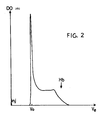
- Figure 2 shows the optical density as a function of the elution volume and shows that there is no longer any free hemoglobin.
- Vo corresponds to the volume excluded from the column and the arrow under Hb corresponds to the elution volume of free hemoglobin, that is to say not coupled to the polymer.
- EXAMPLE 3 Synthesis of a covalent conjugate of hemoglobin and dextran-benzenetricarboxylate (MM of dextran 10,000). Coupling with oxyhemoglobin.
- the polymer is prepared from an amino dextran containing 4.10 ⁇ 4 moles of NH2 per g of dry polymer.
- the dextran polycarboxylate obtained contains 3.2 ⁇ 10 ⁇ 4 moles of benzenetricarboxylate per g of polymer.
- this dextran polycarboxylate 0.5 g are dissolved in 25 ml of 0.05 M aqueous NaCl. 10 ml of a 10% hemoglobin solution are added. The pH is adjusted to 7.5 with 0.1M sodium hydroxide and made up to 40 ml with 0.05 M aqueous NaCl.
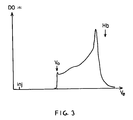
- Figure 3 shows the optical density as a function of the elution volume and shows that there is no longer any free hemoglobin.
- the arrow under Vo corresponds to the volume excluded from the column and the arrow under Hb corresponds to the volume of elution of free hemoglobin, that is to say uncoupled.
- EXAMPLE 4 Synthesis of a covalent conjugate of hemoglobin is dextran-butanetricarboxylate (MM of dextran 10,000). Coupling with oxyhemoglobin.
- the polymer is prepared in the same way as that of Example 3 using n-butane 1,2,3,4-tetracarboxylic acid (Bu.T.C.).
- the dextran polycarboxylate obtained contains 4.10 ⁇ 4 moles of butanetricarboxylate per g of polymer.
- EXAMPLE 5 Synthesis of a covalent conjugate of hemoglobin and of monomethoxypolyoxyethylene-benzene pentacarboxylate (MM of polyoxyethylene: 5000. Coupling with oxyhemoglobin.
- Amino monomethoxypolyoxyethylene (MPOE-NH2, 2 10 ⁇ 4 moles of NH2 per g of dry product) is prepared according to M. LEONARD et al, Tetrahedron 1984, 40 , 1581, by action of thionyl bromide on MPOE, followed by substitution with ammonia.
- FIG. 4 corresponds to the variation of the optical density as a function of the elution volume and shows that there is no longer any free hemoglobin.
- Vo corresponds to the volume excluded from the column; the arrow under Hb corresponds to the elution volume of free hemoglobin, that is to say uncoupled, and that under MPOE-PCB corresponds to the elution volume of the polymer not bound to hemoglobin.
- the dextran-benzenedicarboxylate is prepared by reacting 7.5 g of benzene 1,2,4 tricarboxylic anhydride with 32 g of dextran in an aqueous medium at pH 9 for 15 h; The solution is then freed from the residual 1,2,4 tricarboxylic acid benzene by desalting on a column of Ultrogel AcA 202 (IBF-France) with a 0.2M phosphate buffer, pH 7.2.
- dextran polycarbolate contains 6.3 ⁇ 10 ⁇ 4 moles of benzenedicarboxylate (B.D.C) per g of polymer.
- the hemoglobin conjugate obtained is a new conjugate.
- the mixture is chromatographed on Ultrogel AcA 54 (IBF France) to remove the free hemoglobin and the co-contaminants.
- the dextran-benzenetricarboxylate is prepared by reacting 26 g of benzene 1,2,4,5 tetracarboxylic dianhydride with 20 g of dextran in an aqueous medium at pH 9 for 15 h; The solution is then freed from residual 1,2,4,5 tetracarboxylic acid by desalting on a column of Ultrogel AcA 202 (IBF-France) with a 0.2M phosphate buffer, pH 7.2.
- Dextran polycarboxylate contains 1.15.10 ⁇ 3 moles of benzenetricarboxylate (B.T.C.) per g of polymer.
- dextran polycarboxylate 5 g of dextran polycarboxylate are dissolved in 250 ml of water. The pH is adjusted to 7.0 and 150 ml of a 10% hemoglobin solution are added. 120 mg of N′-ethyl-N (3 dimethylaminopropyl) -carbodiimide hydrochloride (EDCI) are then added and the reaction is continued at 20 ° C for 2 hours.
- EDCI N′-ethyl-N (3 dimethylaminopropyl) -carbodiimide hydrochloride
- the mixture is chromatographed on Ultrogel AcA 54 (IBF France) to remove the free hemoglobin and the contaminants.
- the conjugate defined above can also be prepared using dextran and benzene acid 1,2,4,5 tetracarboxylic, in the presence of water-soluble carbodiimide such as N′-ethyl-N hydrochloride (3 dimethylaminopropyl) carbodiimide (EDCI).
- water-soluble carbodiimide such as N′-ethyl-N hydrochloride (3 dimethylaminopropyl) carbodiimide (EDCI).
- the conjugate of hemoglobin and of polyethylene glycol-benzenetricarboxylic acid is prepared according to the protocol described in Examples 6 and 7.
- benzene-tetracarboxylic acid dianhydride is reacted with polyethylene glycol in an organic medium, such as dimethylformamide.
- organic medium such as dimethylformamide.
- the solution is then freed from the residual benzene tetracarboxylic acid, for example by desalting on a column of Ultrogel AcA 202 (IBF-France) with a 0.2M phosphate buffer, pH 7.2.
- the solution containing the polymer is lyophilized.
- the polyethylene glycol polycarboxylate is dissolved in water.
- the pH is adjusted to 7.0 and a hemoglobin solution, for example 10%, is added.
- N′-ethyl-N (3 dimethylaminopropyl) -carbodiimide hydrochloride (EDCI) is then added and the reaction is continued at 20 ° C for 2 hours.
- the mixture is chromatographed on Ultrogel AcA 54 (IBF France) to remove the free hemoglobin and the contaminants.
- Polyethylene glycols - benzene polycarboxylates can also be prepared by reacting the benzenepolycarboxylic acids on the OH functions of the polymer in the presence of dicyclohexylcarbodiimide / dimethylaminopyridine in dimethylformamide.
- the purpose of this example is to compare the P50 obtained by implementing the method of the invention for preparing hemoglobin conjugates in which the covalent bond is established between an aldehyde group not carried by the site Z on which the group is located anionic phosphate.
- Dextran phosphate is prepared using starting dextran with a molecular mass of approximately 10,000 which is transformed into disodium phosphate containing 8% of phosphorus, in accordance with the protocol described in example 1 of the application France n ° 2 600 894.
- Dextran phosphate is activated by sodium periodate so as to obtain 13 aldehydes per 100 glucosidic units.
- This aldehyde dextran phosphate is reacted with hemoglobin in the proportion 1.5 by mass (mass of dextran / mass of hemoglobin), at pH 8; The reaction is continued at 4 ° C for 24 h. Then a solution of NaBH4 in NaOH 10 ⁇ 3N is added. The mixture is chromatographed to check that there is no longer any free hemoglobin (HPLC on a TSK G 3000 SW Beckman column).
- the P50 of the hemoglobin conjugate is 3380 Pa (25 ° C, 0.05 M Tris, pH 7.2).
- the P50 of free hemoglobin is 450 Pa.
- the P50 of the hemoglobin conjugate is 425 Pa (25 ° C, 0.05 M Tris, pH 7.2).
- the P50 of free hemoglobin P50 is 430 Pa.
- This comparative example shows that the process for the preparation of hemoglobin conjugates using oxygenated hemoglobin is not applicable when the covalent bond is established between an aldehyde group (carboxylic or OH) not attached to the site Z containing the anionic charges.
- an aldehyde group carboxylic or OH
Landscapes
- Health & Medical Sciences (AREA)
- Chemical & Material Sciences (AREA)
- Life Sciences & Earth Sciences (AREA)
- Medicinal Chemistry (AREA)
- Engineering & Computer Science (AREA)
- Bioinformatics & Cheminformatics (AREA)
- General Health & Medical Sciences (AREA)
- Proteomics, Peptides & Aminoacids (AREA)
- Veterinary Medicine (AREA)
- Organic Chemistry (AREA)
- Pharmacology & Pharmacy (AREA)
- Public Health (AREA)
- Animal Behavior & Ethology (AREA)
- Molecular Biology (AREA)
- Epidemiology (AREA)
- Biochemistry (AREA)
- Gastroenterology & Hepatology (AREA)
- Genetics & Genomics (AREA)
- Biophysics (AREA)
- Hematology (AREA)
- Nuclear Medicine, Radiotherapy & Molecular Imaging (AREA)
- Diabetes (AREA)
- Chemical Kinetics & Catalysis (AREA)
- General Chemical & Material Sciences (AREA)
- Medicines That Contain Protein Lipid Enzymes And Other Medicines (AREA)
- Addition Polymer Or Copolymer, Post-Treatments, Or Chemical Modifications (AREA)
- Peptides Or Proteins (AREA)
- Medicinal Preparation (AREA)
- Other Resins Obtained By Reactions Not Involving Carbon-To-Carbon Unsaturated Bonds (AREA)
Claims (34)
um einerseits mindestens eine ionische Bindung zwischen mindestens einer der Stellen Z auf dem Polymeren und dem Hämoglobin und andererseits mindestens eine kovalente Bindung zwischen der sleichen genannten Stelle Z auf dem Polymeren und dem Hämoglobin zu bilden,

um einerseits mindestens eine ionische Bindung zwischen mindestens einer der Stellen Z auf dem Polymeren und dem Hämoglobin und andererseits mindestens eine kovalente Bindung zwischen der gleichen Stelle Z auf dem Polymeren und dem Hämoglobin zu erzeugen.


Priority Applications (1)
| Application Number | Priority Date | Filing Date | Title |
|---|---|---|---|
| AT89401076T ATE77753T1 (de) | 1988-04-20 | 1989-04-18 | Makromolekulare haemoglobinkomplexe, verfahren zu ihrer herstellung und ihre verwendungen. |
Applications Claiming Priority (2)
| Application Number | Priority Date | Filing Date | Title |
|---|---|---|---|
| FR8805240 | 1988-04-20 | ||
| FR8805240A FR2630329B1 (fr) | 1988-04-20 | 1988-04-20 | Conjugues macromoleculaires d'hemoglobine, leur procede de preparation et leurs applications |
Publications (2)
| Publication Number | Publication Date |
|---|---|
| EP0338916A1 EP0338916A1 (de) | 1989-10-25 |
| EP0338916B1 true EP0338916B1 (de) | 1992-07-01 |
Family
ID=9365495
Family Applications (1)
| Application Number | Title | Priority Date | Filing Date |
|---|---|---|---|
| EP89401076A Expired - Lifetime EP0338916B1 (de) | 1988-04-20 | 1989-04-18 | Makromolekulare Hämoglobinkomplexe, Verfahren zu ihrer Herstellung und ihre Verwendungen |
Country Status (8)
| Country | Link |
|---|---|
| US (1) | US5110909A (de) |
| EP (1) | EP0338916B1 (de) |
| JP (1) | JPH0242023A (de) |
| AT (1) | ATE77753T1 (de) |
| DE (1) | DE68901944T2 (de) |
| ES (1) | ES2043054T3 (de) |
| FR (1) | FR2630329B1 (de) |
| GR (1) | GR3005220T3 (de) |
Cited By (6)
| Publication number | Priority date | Publication date | Assignee | Title |
|---|---|---|---|---|
| US8017739B2 (en) | 2004-03-11 | 2011-09-13 | Fresenius Kabi Deutschland Gmbh | Conjugates of hydroxyalkyl starch and a protein |
| US8287850B2 (en) | 2004-03-11 | 2012-10-16 | Fresenius Kabi Deutschland Gmbh | Conjugates of hydroxyalkyl starch and a protein, prepared by reductive amination |
| US8404834B2 (en) | 2007-12-14 | 2013-03-26 | Fresenius Kabi Deutschland Gmbh | Hydroxyalkyl starch derivatives and process for their preparation |
| US8466277B2 (en) | 2002-03-06 | 2013-06-18 | Fresenius Kabi Deutschland Gmbh | Coupling low-molecular substances to a modified polysaccharide |
| US8475765B2 (en) | 2002-09-11 | 2013-07-02 | Fresenius Kabi Deutschland Gmbh | Hydroxyalkyl starch derivatives |
| US8916518B2 (en) | 2002-03-06 | 2014-12-23 | Fresenius Kabi Deutschland Gmbh | Coupling proteins to a modified polysaccharide |
Families Citing this family (22)
| Publication number | Priority date | Publication date | Assignee | Title |
|---|---|---|---|---|
| IE912365A1 (en) * | 1990-07-23 | 1992-01-29 | Zeneca Ltd | Continuous release pharmaceutical compositions |
| FR2680369B1 (fr) * | 1991-08-14 | 1993-11-05 | Pasteur Merieux Serums Vaccins | Derives d'hemoglobine humaine, leur procede de preparation, produits en derivant et utilisation de ces derives et produits. |
| WO1996032130A1 (en) * | 1995-04-10 | 1996-10-17 | Baxter International Inc. | The use of cross-linked hemoglobin in treating subarachnoid hemorrhage |
| US5928916A (en) * | 1996-04-25 | 1999-07-27 | Medtronic, Inc. | Ionic attachment of biomolecules with a guanidino moiety to medical device surfaces |
| DE19628705A1 (de) * | 1996-07-08 | 1998-01-15 | Fresenius Ag | Neue Sauerstoff-Transport-Mittel, diese enthaltende Hämoglobin-Hydroxyethylstärke-Konjugate, Verfahren zu deren Herstellung, sowie deren Verwendung als Blutersatzstoffe |
| US6018035A (en) * | 1997-07-21 | 2000-01-25 | Baxter International Inc. | Reagents for isotropic size enhancement of a peptide, protein, nucleotide or other substrate |
| US5981710A (en) * | 1997-07-21 | 1999-11-09 | Baxter International, Inc. | Therapeutic hemoglobin composition having isotropically increased size |
| JP2001518556A (ja) * | 1997-10-03 | 2001-10-16 | ガレニカ ファーマシューティカルズ, インコーポレイテッド | イミン形成ポリサッカライド、その調製、ならびにアジュバントおよび免疫刺激剤としてのその使用 |
| CA2233725A1 (en) * | 1998-03-31 | 1999-09-30 | Hemosol Inc. | Hemoglobin-hydroxyethyl starch complexes |
| US6573245B1 (en) | 1998-04-28 | 2003-06-03 | Galenica Pharmaceuticals, Inc. | Modified polysaccharide adjuvant-protein antigen conjugates, the preparation thereof and the use thereof |
| AU6912500A (en) * | 1999-08-25 | 2001-03-19 | Gmp Companies, Inc. | Enhanced oxygen delivery in mammals, methods and reagents related thereto |
| CA2319966A1 (en) * | 2000-09-19 | 2002-03-19 | Dextro-Sang Corporation | Improved dextran-hemoglobin conjugate as potential blood substitute |
| DE10112825A1 (de) | 2001-03-16 | 2002-10-02 | Fresenius Kabi De Gmbh | HESylierung von Wirkstoffen in wässriger Lösung |
| JP2005529938A (ja) * | 2002-06-06 | 2005-10-06 | ユニバーシティ オブ ワシントン | 癌の発症を予防または遅延するためのアルテミシニン様化合物を使用する方法 |
| WO2004032971A1 (en) | 2002-10-08 | 2004-04-22 | Fresenius Kabi Deutschland Gmbh | Pharmaceutically active oligosaccharide conjugates |
| PL1660134T3 (pl) * | 2003-08-08 | 2011-05-31 | Fresenius Kabi Deutschland Gmbh | Koniugaty hydroksyalkiloskrobi i G-CSF |
| KR100580642B1 (ko) * | 2004-01-12 | 2006-05-16 | 삼성전자주식회사 | 표면에 활성화된 카르복실기를 갖는 기판을 이용하여 생물분자를 고체 기판상에 고밀도로 고정화하는 방법 및 그에 의하여 제조되는 마이크로어레이 |
| EP2279752A3 (de) * | 2004-03-11 | 2011-08-24 | Fresenius Kabi Deutschland GmbH | Konjugate von hydroxyalkylstärke und einem protein hergestellt durch native chemische ligation |
| WO2005103080A2 (en) * | 2004-04-21 | 2005-11-03 | Albert Einstein College Of Medicine Of Yeshiva University | Stable oxidation resistant powdered hemoglobin, methods of preparing same, and uses thereof |
| JP2008532966A (ja) * | 2005-03-11 | 2008-08-21 | フレゼニウス・カビ・ドイチュラント・ゲゼルシャフト・ミット・ベシュレンクテル・ハフツング | 不活性出発物質からの生理活性糖タンパク質の生成 |
| EP1762250A1 (de) * | 2005-09-12 | 2007-03-14 | Fresenius Kabi Deutschland GmbH | Konjugate welche durch chemische Ligation zwischen Hydroxyalkylstärken und aktiven Substanzen mit Bildung eines Thiazolidin-Ringes entstehen |
| EP2070951A1 (de) * | 2007-12-14 | 2009-06-17 | Fresenius Kabi Deutschland GmbH | Verfahren zur Herstellung eines Hydroxyalkylstärkederivats mit zwei Linkern |
Family Cites Families (5)
| Publication number | Priority date | Publication date | Assignee | Title |
|---|---|---|---|---|
| CA1055932A (en) * | 1975-10-22 | 1979-06-05 | Hematech Inc. | Blood substitute based on hemoglobin |
| FR2551660B1 (fr) * | 1983-09-13 | 1986-11-14 | Centre Nat Rech Scient | Hemoglobine modifiee chimiquement, sa preparation, solutions aqueuses en contenant et leur utilisation |
| GB8328917D0 (en) * | 1983-10-28 | 1983-11-30 | Fisons Plc | Blood substitute |
| DE3501349A1 (de) * | 1985-01-17 | 1986-07-17 | Battelle-Institut E.V., 6000 Frankfurt | Blutersatz |
| FR2600894B1 (fr) * | 1986-07-02 | 1989-01-13 | Centre Nat Rech Scient | Conjugues macromoleculaires d'hemoglobine, leur procede de preparation et leurs applications |
-
1988
- 1988-04-20 FR FR8805240A patent/FR2630329B1/fr not_active Expired - Lifetime
-
1989
- 1989-04-18 AT AT89401076T patent/ATE77753T1/de not_active IP Right Cessation
- 1989-04-18 DE DE8989401076T patent/DE68901944T2/de not_active Expired - Lifetime
- 1989-04-18 ES ES89401076T patent/ES2043054T3/es not_active Expired - Lifetime
- 1989-04-18 EP EP89401076A patent/EP0338916B1/de not_active Expired - Lifetime
- 1989-04-20 US US07/340,826 patent/US5110909A/en not_active Expired - Fee Related
- 1989-04-20 JP JP1099007A patent/JPH0242023A/ja active Pending
-
1992
- 1992-07-16 GR GR920401548T patent/GR3005220T3/el unknown
Cited By (8)
| Publication number | Priority date | Publication date | Assignee | Title |
|---|---|---|---|---|
| US8466277B2 (en) | 2002-03-06 | 2013-06-18 | Fresenius Kabi Deutschland Gmbh | Coupling low-molecular substances to a modified polysaccharide |
| US8916518B2 (en) | 2002-03-06 | 2014-12-23 | Fresenius Kabi Deutschland Gmbh | Coupling proteins to a modified polysaccharide |
| US8475765B2 (en) | 2002-09-11 | 2013-07-02 | Fresenius Kabi Deutschland Gmbh | Hydroxyalkyl starch derivatives |
| US8618266B2 (en) | 2002-09-11 | 2013-12-31 | Fresenius Kabi Deutschland Gmbh | Hasylated polypeptides |
| US8017739B2 (en) | 2004-03-11 | 2011-09-13 | Fresenius Kabi Deutschland Gmbh | Conjugates of hydroxyalkyl starch and a protein |
| US8287850B2 (en) | 2004-03-11 | 2012-10-16 | Fresenius Kabi Deutschland Gmbh | Conjugates of hydroxyalkyl starch and a protein, prepared by reductive amination |
| US8840879B2 (en) | 2004-03-11 | 2014-09-23 | Fresenius Kabi Deutschland Gmbh | Conjugates of hydroxyalkyl starch and a protein |
| US8404834B2 (en) | 2007-12-14 | 2013-03-26 | Fresenius Kabi Deutschland Gmbh | Hydroxyalkyl starch derivatives and process for their preparation |
Also Published As
| Publication number | Publication date |
|---|---|
| GR3005220T3 (de) | 1993-05-24 |
| DE68901944D1 (de) | 1992-08-06 |
| EP0338916A1 (de) | 1989-10-25 |
| FR2630329A1 (fr) | 1989-10-27 |
| FR2630329B1 (fr) | 1991-07-05 |
| ES2043054T3 (es) | 1993-12-16 |
| ATE77753T1 (de) | 1992-07-15 |
| DE68901944T2 (de) | 1992-12-10 |
| US5110909A (en) | 1992-05-05 |
| JPH0242023A (ja) | 1990-02-13 |
Similar Documents
| Publication | Publication Date | Title |
|---|---|---|
| EP0259197B1 (de) | Makromolekulare Hämoglobinkonjugate, Verfahren zu ihrer Herstellung und ihre Verwendungen | |
| EP0338916A1 (de) | Makromolekulare Hämoglobinkomplexe, Verfahren zu ihrer Herstellung und ihre Verwendungen | |
| US4598064A (en) | Alpha-alpha cross-linked hemoglobins | |
| EP0089880B1 (de) | Kovalente Konjugate,die ein Enzym und einen Antikörper verbinden und medikamentöse Zubereitungen,die diese Konjugate enthalten | |
| US6083909A (en) | Haemoglobin-hydroxyethyl starch conjugates as oxygen carriers | |
| US4377512A (en) | Oxygen carrier for blood substitute | |
| JP2707241B2 (ja) | 代用血漿剤 | |
| JP4674289B2 (ja) | ヘモグロビン−多糖結合体 | |
| FR2600255A1 (fr) | Substituant acellulaire des hematies | |
| EP0428182B1 (de) | Derivate von Dextran mit antikoagulierenden und antikomplementären Eigenschaften, ihre Herstellung und ihre biologischen Anwendungen | |
| JPH07506123A (ja) | 酸化開環サッカライドによるヘモグロビンの選択的架橋 | |
| FR2551660A1 (fr) | Hemoglobine modifiee chimiquement, sa preparation, solutions aqueuses en contenant et leur utilisation | |
| JPH11512437A (ja) | S−ニトロソチオールを負荷した赤血球およびその使用 | |
| CA2089853C (fr) | Conjugues polyethyleneglycol-hirudine, leur procede de preparation et leur emploi pour le traitement des thromboses | |
| US5998361A (en) | Polymerized hemoglobin | |
| JP3950477B2 (ja) | 架橋ヘモグロビンからの未修飾ヘモグロビンの分離 | |
| US5349054A (en) | Activated benzenepentacarboxylate-crosslinked low oxygen affinity hemoglobin | |
| FR2466252A2 (fr) | Nouveaux produits ayant notamment des proprietes anticancereuses a base de chaine a de la ricine et d'une proteine | |
| US8609815B2 (en) | Methods for preparing stable deoxygenated PEG-hemoglobin conjugate solutions comprising an antioxidant | |
| EP0735879B1 (de) | Verwendung von aminierten cyclodextrinen zum löslichmachen von als antiepileptika anzuwendenden dibenzazepinderivaten | |
| FR2640141A1 (fr) | Conjugues macromoleculaires d'hemoglobine, leur procede de preparation et leurs applications | |
| CA2266174A1 (en) | Hemoglobin-antioxidant conjugates | |
| EP0528716A1 (de) | Derivate von humanem Hämoglobin, Verfahren zu deren Herstellung, davon abgeleitete Produkte und Verwendung dieser Derivate und Produkte | |
| FR2696935A1 (fr) | Nouveau substitut plasmatique. | |
| FR2575160A1 (fr) | Composes ionophores carboxyliques monovalents |
Legal Events
| Date | Code | Title | Description |
|---|---|---|---|
| PUAI | Public reference made under article 153(3) epc to a published international application that has entered the european phase |
Free format text: ORIGINAL CODE: 0009012 |
|
| AK | Designated contracting states |
Kind code of ref document: A1 Designated state(s): AT BE CH DE ES FR GB GR IT LI LU NL SE |
|
| 17P | Request for examination filed |
Effective date: 19891208 |
|
| 17Q | First examination report despatched |
Effective date: 19901001 |
|
| RAP1 | Party data changed (applicant data changed or rights of an application transferred) |
Owner name: PASTEUR MERIEUX SERUMS ET VACCINS |
|
| GRAA | (expected) grant |
Free format text: ORIGINAL CODE: 0009210 |
|
| AK | Designated contracting states |
Kind code of ref document: B1 Designated state(s): AT BE CH DE ES FR GB GR IT LI LU NL SE |
|
| REF | Corresponds to: |
Ref document number: 77753 Country of ref document: AT Date of ref document: 19920715 Kind code of ref document: T |
|
| ITF | It: translation for a ep patent filed | ||
| REF | Corresponds to: |
Ref document number: 68901944 Country of ref document: DE Date of ref document: 19920806 |
|
| GBT | Gb: translation of ep patent filed (gb section 77(6)(a)/1977) | ||
| REG | Reference to a national code |
Ref country code: GR Ref legal event code: FG4A Free format text: 3005220 |
|
| PLBE | No opposition filed within time limit |
Free format text: ORIGINAL CODE: 0009261 |
|
| STAA | Information on the status of an ep patent application or granted ep patent |
Free format text: STATUS: NO OPPOSITION FILED WITHIN TIME LIMIT |
|
| 26N | No opposition filed | ||
| REG | Reference to a national code |
Ref country code: ES Ref legal event code: FG2A Ref document number: 2043054 Country of ref document: ES Kind code of ref document: T3 |
|
| EPTA | Lu: last paid annual fee | ||
| EAL | Se: european patent in force in sweden |
Ref document number: 89401076.8 |
|
| PGFP | Annual fee paid to national office [announced via postgrant information from national office to epo] |
Ref country code: LU Payment date: 19960301 Year of fee payment: 8 |
|
| PGFP | Annual fee paid to national office [announced via postgrant information from national office to epo] |
Ref country code: AT Payment date: 19960325 Year of fee payment: 8 |
|
| PGFP | Annual fee paid to national office [announced via postgrant information from national office to epo] |
Ref country code: NL Payment date: 19960328 Year of fee payment: 8 |
|
| PGFP | Annual fee paid to national office [announced via postgrant information from national office to epo] |
Ref country code: GR Payment date: 19960329 Year of fee payment: 8 |
|
| PGFP | Annual fee paid to national office [announced via postgrant information from national office to epo] |
Ref country code: BE Payment date: 19960409 Year of fee payment: 8 |
|
| PGFP | Annual fee paid to national office [announced via postgrant information from national office to epo] |
Ref country code: GB Payment date: 19960412 Year of fee payment: 8 Ref country code: ES Payment date: 19960412 Year of fee payment: 8 |
|
| PGFP | Annual fee paid to national office [announced via postgrant information from national office to epo] |
Ref country code: FR Payment date: 19960416 Year of fee payment: 8 |
|
| PGFP | Annual fee paid to national office [announced via postgrant information from national office to epo] |
Ref country code: SE Payment date: 19960418 Year of fee payment: 8 |
|
| PGFP | Annual fee paid to national office [announced via postgrant information from national office to epo] |
Ref country code: DE Payment date: 19960422 Year of fee payment: 8 |
|
| PGFP | Annual fee paid to national office [announced via postgrant information from national office to epo] |
Ref country code: CH Payment date: 19960426 Year of fee payment: 8 |
|
| PG25 | Lapsed in a contracting state [announced via postgrant information from national office to epo] |
Ref country code: LU Free format text: LAPSE BECAUSE OF NON-PAYMENT OF DUE FEES Effective date: 19970418 Ref country code: GB Effective date: 19970418 Ref country code: AT Effective date: 19970418 |
|
| PG25 | Lapsed in a contracting state [announced via postgrant information from national office to epo] |
Ref country code: SE Effective date: 19970419 Ref country code: ES Free format text: LAPSE BECAUSE OF NON-PAYMENT OF DUE FEES Effective date: 19970419 |
|
| PG25 | Lapsed in a contracting state [announced via postgrant information from national office to epo] |
Ref country code: LI Free format text: LAPSE BECAUSE OF NON-PAYMENT OF DUE FEES Effective date: 19970430 Ref country code: CH Free format text: LAPSE BECAUSE OF NON-PAYMENT OF DUE FEES Effective date: 19970430 Ref country code: BE Effective date: 19970430 |
|
| BERE | Be: lapsed |
Owner name: PASTEUR MERIEUX SERUMS ET VACCINS Effective date: 19970430 |
|
| PG25 | Lapsed in a contracting state [announced via postgrant information from national office to epo] |
Ref country code: GR Free format text: THE PATENT HAS BEEN ANNULLED BY A DECISION OF A NATIONAL AUTHORITY Effective date: 19971031 |
|
| PG25 | Lapsed in a contracting state [announced via postgrant information from national office to epo] |
Ref country code: NL Effective date: 19971101 |
|
| REG | Reference to a national code |
Ref country code: GR Ref legal event code: MM2A Free format text: 3005220 |
|
| GBPC | Gb: european patent ceased through non-payment of renewal fee |
Effective date: 19970418 |
|
| REG | Reference to a national code |
Ref country code: CH Ref legal event code: PL |
|
| PG25 | Lapsed in a contracting state [announced via postgrant information from national office to epo] |
Ref country code: FR Free format text: LAPSE BECAUSE OF NON-PAYMENT OF DUE FEES Effective date: 19971231 |
|
| PG25 | Lapsed in a contracting state [announced via postgrant information from national office to epo] |
Ref country code: DE Free format text: LAPSE BECAUSE OF NON-PAYMENT OF DUE FEES Effective date: 19980101 |
|
| NLV4 | Nl: lapsed or anulled due to non-payment of the annual fee |
Effective date: 19971101 |
|
| EUG | Se: european patent has lapsed |
Ref document number: 89401076.8 |
|
| REG | Reference to a national code |
Ref country code: FR Ref legal event code: ST |
|
| REG | Reference to a national code |
Ref country code: ES Ref legal event code: FD2A Effective date: 19990301 |
|
| PG25 | Lapsed in a contracting state [announced via postgrant information from national office to epo] |
Ref country code: IT Free format text: LAPSE BECAUSE OF NON-PAYMENT OF DUE FEES Effective date: 20050418 |