EP0339252B1 - Dérivés disubstitués en 2,5 de la pyrazine, dérivés de la pyrimidine, et cristaux liquides les contenant - Google Patents
Dérivés disubstitués en 2,5 de la pyrazine, dérivés de la pyrimidine, et cristaux liquides les contenant Download PDFInfo
- Publication number
- EP0339252B1 EP0339252B1 EP89104962A EP89104962A EP0339252B1 EP 0339252 B1 EP0339252 B1 EP 0339252B1 EP 89104962 A EP89104962 A EP 89104962A EP 89104962 A EP89104962 A EP 89104962A EP 0339252 B1 EP0339252 B1 EP 0339252B1
- Authority
- EP
- European Patent Office
- Prior art keywords
- compound
- liquid crystal
- phase
- mixture
- fluoro
- Prior art date
- Legal status (The legal status is an assumption and is not a legal conclusion. Google has not performed a legal analysis and makes no representation as to the accuracy of the status listed.)
- Expired - Lifetime
Links
- 0 *c1ccc(*c(cc2)ccc2ON*)cc1 Chemical compound *c1ccc(*c(cc2)ccc2ON*)cc1 0.000 description 2
Classifications
-
- C—CHEMISTRY; METALLURGY
- C07—ORGANIC CHEMISTRY
- C07D—HETEROCYCLIC COMPOUNDS
- C07D239/00—Heterocyclic compounds containing 1,3-diazine or hydrogenated 1,3-diazine rings
- C07D239/02—Heterocyclic compounds containing 1,3-diazine or hydrogenated 1,3-diazine rings not condensed with other rings
- C07D239/24—Heterocyclic compounds containing 1,3-diazine or hydrogenated 1,3-diazine rings not condensed with other rings having three or more double bonds between ring members or between ring members and non-ring members
- C07D239/26—Heterocyclic compounds containing 1,3-diazine or hydrogenated 1,3-diazine rings not condensed with other rings having three or more double bonds between ring members or between ring members and non-ring members with only hydrogen atoms, hydrocarbon or substituted hydrocarbon radicals, directly attached to ring carbon atoms
-
- C—CHEMISTRY; METALLURGY
- C07—ORGANIC CHEMISTRY
- C07D—HETEROCYCLIC COMPOUNDS
- C07D241/00—Heterocyclic compounds containing 1,4-diazine or hydrogenated 1,4-diazine rings
- C07D241/02—Heterocyclic compounds containing 1,4-diazine or hydrogenated 1,4-diazine rings not condensed with other rings
- C07D241/10—Heterocyclic compounds containing 1,4-diazine or hydrogenated 1,4-diazine rings not condensed with other rings having three double bonds between ring members or between ring members and non-ring members
- C07D241/12—Heterocyclic compounds containing 1,4-diazine or hydrogenated 1,4-diazine rings not condensed with other rings having three double bonds between ring members or between ring members and non-ring members with only hydrogen atoms, hydrocarbon or substituted hydrocarbon radicals, directly attached to ring carbon atoms
-
- C—CHEMISTRY; METALLURGY
- C09—DYES; PAINTS; POLISHES; NATURAL RESINS; ADHESIVES; COMPOSITIONS NOT OTHERWISE PROVIDED FOR; APPLICATIONS OF MATERIALS NOT OTHERWISE PROVIDED FOR
- C09K—MATERIALS FOR MISCELLANEOUS APPLICATIONS, NOT PROVIDED FOR ELSEWHERE
- C09K19/00—Liquid crystal materials
- C09K19/04—Liquid crystal materials characterised by the chemical structure of the liquid crystal components, e.g. by a specific unit
- C09K19/06—Non-steroidal liquid crystal compounds
- C09K19/34—Non-steroidal liquid crystal compounds containing at least one heterocyclic ring
- C09K19/3441—Non-steroidal liquid crystal compounds containing at least one heterocyclic ring having nitrogen as hetero atom
- C09K19/345—Non-steroidal liquid crystal compounds containing at least one heterocyclic ring having nitrogen as hetero atom the heterocyclic ring being a six-membered aromatic ring containing two nitrogen atoms
- C09K19/3452—Pyrazine
Definitions
- This invention relates to a 2,5-disubstituted pyrazine derivative, a 2,5-disubstituted pyrimidine derivative, each useful as an electrooptical display material, a liquid crystal composition comprising the same and a ferroelectric liquid crystal display device wherein said composition is used.
- liquid crystal display cells excellent in high-speed response wherein ferroelectric liquid crystals proposed by N.A. Clark et al. are used, have been applied to large-sized liquid crystal displays.
- the light switching of a chiral smectic C phase (which will be called an "S C * phase” hereinafter) is applied to these display cells.
- a chiral smectic liquid crystal mixture obtained by adding a chiral compound to a liquid crystal mixture showing a smectic C phase (which will be called an "S C phase” hereinafter) is effective as the above-mentioned liquid crystal material showing an S C * phase.
- the chiral smectic liquid crystal mixture shows the S C * phase over a wide range of temperature.
- a common method for the preparation of a smectic liquid crystal mixture showing an S C phase over a wide range of temperature comprises mixing smectic liquid crystals showing an S C phase within a low temperature range with those showing an S C phase within a high temperature range.
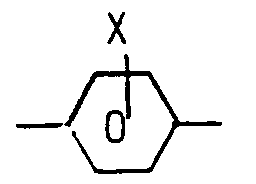
- the present invent ion provides a compound of the following general formula (I): wherein R1 and R2 each independently represents a straight-chain or branched alkyl group containing 1 to 20 carbon atoms; represents the pyrazine-2-5-diyl group or the pyrimidine-2,5-diyl group represents with the proviso that represents when represents
- the compound of the general formula (I) of the present invention may be prepared by the following methods.
- the fluor substituted 4-alkoxyphenylamidine hydrochloride of the formula (VI) is reacted with the 3-dimethylamino-2-(4-alkylphenyl)-2-propene-N,N-dimethyl iminium perchlorate of the formula (VII) in an absolute alcohol in the presence of a basic material such as an alcoholate at the refluxing temperature.
- the obtained reaction mixture is cooled to room temperature and then water is added thereto.
- the crystals thus precipitated are filtered, washed with water and vacuum-dried.
- the crude crystals thus obtained are purified by silica gel column chromatography and further recrystallized from ethanol to thereby give the compound (I-b) of the present invention.
- the fluor substituted 4-alkoxyphenylamidine hydrochloride of the formula (VI) may be prepared by, for example, the following method. Namely, a fluor substituted 4-cyanophenol is converted into an alcoholate with the use of an alkali such as potassium hydroxide. The alcoholate is then reacted with an alkyl halide to thereby give a halogen substituted 4-alkoxyphenylbenzonitrile which is then reacted with ethanol and hydrochloric acid to thereby give an imino ester hydrochloride. Subsequently the product is reacted with ammonia. Thus the aimed fluor substituted 4-alkoxyphenylacetamidine hydrochloride of the formula (VI) is obtained.
- the 3-dimethylamino-2-(4-alkylphenyl)-2-propene-N,N-dimethyliminium perchlorate of the formula (VII) may be prepared by, for example, the following method.
- a 4-alkylacetophenone is reacted with sulfur and morpholine to thereby synthesize a 4-[2-(4-alkylphenyl)-1-thioxoethyl]morpholine which is then hydrolyzed to thereby give 4-alkylphenylacetic acid.
- the 4-alkylphenylacetic acid thus obtained is reacted with a Vilsmeier reagent, obtained from phosphorus oxychloride and dimethylformamide, and treated with a perchlorate.
- a Vilsmeier reagent obtained from phosphorus oxychloride and dimethylformamide
- Table 1 summarizes the phase transition temperatures of typical examples of the compound (I) thus obtained.
- phase transition temperatures of each compound are determined with a polarization microscope provided with a temperature control stage and a differential scanning calorimeter (DSC).
- DSC differential scanning calorimeter
- C represents a crystal phase
- S c represents a smectic C phase
- S A represents a smectic A phase
- N represents a nematic phase
- I represents an isotropic liquid phase
- ° represents the presence of the corresponding phase
- - represents the absence of the same.
- pyrazine derivatives in particular, such 2,5-disubstituted pyrazines as the one of the formula (I) according to the present invention, wherein three rings are bound to each other via no binding group and the pyrazine ring is located at the center, have each a symmetric structure where the substituent at the 2-position of the pyrazine ring is the same as that at the 5-position of the same (cf. H. Schubert et al., J. Prakt. Chem. (4), 37 , 12 (1968)).
- JP-A-58-43961 discloses pyrazine derivatives wherein the substituent at the 2-position of the pyrazine ring is different from that at the 5-position of the same, it describes nothing about the liquid crystal phase of these compounds. In addition, most of these derivatives have high melting points.
- the compounds of the formula (I) of the present invention generally show a wide range of the S C phase temperature of about 50 to 70°C, though it varies depending on the chain-lengths of the alkyl groups. Even the compound No. 1, wherein R is a methyl group, shows an S C phase (cf. Table 1), which indicates that the compounds of the formula (I) of the present invention are highly useful from the viewpoint of the viscosity of the liquid crystals.
- each compound of the formula (I) of the present invention shows no higher-order smectic phase than that of the S C phase. This fact suggests that no higher-order smectic phase would appear in the preparation of a smectic liquid crystal mixture showing an S C phase.
- Table 1 further indicates that the compounds of the present invention wherein both of the R1 and R2 groups have sufficient numbers of carbon atoms and either R1 or R2 groups is a branched alkyl group, such as the compounds No. 32, No. 33 and No. 34, show each a larger decrease in the melting point than those wherein both of the R1 and R2 groups are straight-chain alkyl groups such as the compound No. 26 does. Although the compounds No. 30 and No. 31 show each rather an increase in the melting point, these compounds would cause a larger decrease in the melting point when formulated into a mixture, than the compound No. 26 does.
- the maternal liquid crystals (A) comprises 35% by weight of 35% by weight of and 30% by weight of
- Example 2 0.5 g of the 2-(3-fluoro-4-methoxyphenyl)-5-(4 n-hexylphenyl)pyrazine obtained in Example 1 was added to 50 ml of acetic acid. To the resulting mixture, was added 50 ml of a 47% hydrobromic acid. The obtained mixture was stirred under reflux for eight hours.
- reaction mixture was diluted with ethyl acetate, washed with dilute hydrochloric acid and with a 30% aqueous solution of sodium hydroxide and then repeatedly washed with water until the washing liquor showed a pH value of approximately 7. Then the ethyl acetate phase was dehydrated over sodium sulfate and the solvent was distilled off. Thus 0.48 g of a crude reaction product was obtained.
- the crude reaction product was purified by silica gel column chromatography and recrystallized from acetone. Thus 0.41 g of the title compound was obtained.
- Example 1 The procedure of Example 1 was repeated except that the 4-(1-oxo-2-bromoethyl)-n-hexylbenzene was substituted with 34.5 g of 4-(1-oxo-2-bromoethyl)-n-nonylbenzene and that the reactants were dissolved in 400 ml of ethanol. Thus 3.98 g of the title compound was obtained.
- Example 9 0.5 g of the 2-(3-fluoro-4-methoxyphenyl)-5-(4-n-nonylphenyl)pyrazine obtained in Example 9 was treated in the same manner as described in Example 2 to thereby give 0.49 g of crude 2-(3-fluoro-4-hydroxyphenyl)-5-(4-n-nonylphenyl)pyrazine.
- the compound No. 31 shown in Table 1 was obtained by the same manner as described in Example 30 except that the 4-methylhexyl tosylate was replaced with 4-mehylheptyl tosylate.
- the compound No. 32 shown in Table 1 was obtained by the same manner as described in Example 30 except that the 4-methylhexyl tosylate was replaced with 8-methyldecyl tosylate.
- the compound No. 33 shown in Table 1 was obtained by the same manner as described in Example 30 except that the 4-methylhexyl tosylate was replaced with 8-methylnonyl tosylate.
- the compound No. 34 shown in Table 1 was obtained by the same manner as described in Example 30 except that the 4-methylhexyl tosylate was replaced with 6-methylnonyl tosylate.
- the compound No. 35 shown in Table 1 was obtained by the same manner as described in Example 30 except that the p-n-octylacetophenone was replaced with p-n-heptylacetophenone and the 4-methylhexyl tosylate was replaced with 2-methylbutyl tosylate.
- Example 2 50% by weight of the compound obtained in Example 2 (Compound No. 8 in Table 1) was mixed with 50% by weight of the compound obtained in Example 7 (Compound No. 6 in Table 1) to thereby give a liquid crystal mixture (B).
- Table 3 shows the phase transition temperatures of the compounds No. 6 and No. 8 as well as those of the liquid crystal mixture (B).
- Table 3 Phases and Phase Transition Temperatures (°C) C S c S A N I Cpd. No. 6 ° 95.6 ° 178.2 ° 180.1 ° 181.1 ° Cpd. No. 8 ° 93.0 ° 170.5 ° 172.2 - ° Liquid Crystal Mixture (B) ° 80 ° 172 ° 176 - °
- Table 3 obviously indicates that the mixing of the compounds No. 6 and No. 8 causes a considerable decrease in the melting point. It may be understood, therefore, that a liquid crystal mixture showing an S C phase over a wide temperature range can be obtained thereby.
- Example 14 The compound obtained in Example 14 (Compound No. 13 in Table 1) was mixed with 4-[2-(trans-4-n-propylcyclohexyl)-ethyl]phenyl 4-decyloxy-3-fluorobenzoate (Compound No. R-l described in JP-A-63-188653) at a ratio by weight of 26:74 or 57:43.
- liquid crystal mixtures (C) and (D) were obtained.
- Table 4 shows the phase transition temperatures of the compounds No. 13 and No. R-l as well as those of the liquid crystal mixtures (C) and (D).
- Table 4 Phases and Phase Transition Temperatures (°C) C S c S A N I Cpd. No.
- Table 4 obviously indicates that the compound No. 13 shows an S C phase over a wide temperature range; that it can show an S A phase within a higher temperature range than that of the S C phase when mixed with the compound No. R-l which shows no S A phase; and that it shows no higher-order smectic phase than that of the S C phase. It can be understood, therefore, that these liquid crystal mixtures suffer from no irregular orientation of the S C phase in the formation of a cell. It can be further understood that the compound No. 13 shows a significant decrease in melting point when mixed with the compound No. R-l and that it can provide a liquid crystal mixture showing an S C phase over a wide temperature range.
- Example 16 The compound obtained in Example 16 (Compound No. 16 in Table 1) was mixed with the compound obtained in Example 27 (Compound No. 27 in Table 1) at a ratio by weight of 51:49 or 14.5:85.5. Thus liquid crystal mixtures (E) and (F) were obtained.
- Table 5 shows the phase transition temperatures of the compounds No. 16 and No. 27 as well as those of the liquid crystal mixtures (E) and (F).
- Table 5 Phases and Phase Transition Temperatures (°C) C S C S A N I Cpd. No. 16 ° 92.2 ° 174.1 - - ° Cpd. No.
- Table 5 obviously indicates that the mixing of the compounds No. 16 and No. 27 results in a liquid crystal mixture showing an S A phase, which is observed neither in these compounds. Thus it can be understood that the liquid crystal mixture thus obtained suffers from no irregular orientation of the S C phase in the formation of a display cell. It can be further understood that the compound No. 16 shows a considerable decrease in the melting point when mixed with the compound No. 27; and that it can thus provide a liquid crystal mixture showing an S C phase over a wide range of temperature.
- Example 10 63% by weight of the compound obtained in Example 10 (Compound No. 14 in Table 1) was added to a liquid crystal mixture (G) comprising a bicyclic pyrimidine derivative and a bicyclic alkoxyphenyl benzoate derivative to thereby give a liquid crystal mixture (H).
- Table 6 shows the phase transition temperatures of the compound No. 14 as well as those of the liquid crystal mixtures (G) and (H).
- Table 6 Phases and Phase Transition Temperatures (°C) S C S A N I Cpd. No. 14 ° 175.4 ° 176.7 - ° Liquid Crystal Mixture (G) ° 56 - ° 72 ° Liquid Crystal Mixture (H) ° 62 ° 64 ° 77 °
- the liquid crystal mixture (G) comprising 24% of 27% of 6% of 3% of 10% of 10% of 10% of and 10% of
- Table 6 obviously indicates that the addition of the compound No. 14 can give a liquid crystal mixture showing an S A phase which is never observed in the liquid crystal mixture (G). Thus it can be understood that the obtained liquid crystal mixture suffers from no irregular orientation of the S C phase in the formation of a display cell. Further it can be understood that the addition of the compound No. 14 can elevate the upper limit of the S C phase of the liquid crystal mixture by 6°C; and thus a liquid crystal mixture showing an S C phase over a wide temperature range can be obtained thereby.
- a liquid crystal mixture comprising 17% of 17% of 33% of and 33% of showed an Sc phase at 19° to 54°C. 60% of this liquid crystal mixture was mixed with 25% of the compound No. 26 in Table 1 obtained in Example 26 and 15% of the compound No. 29 in Table 1 obtained in Example 29. The obtained liquid crystal mixture showed an Sc phase at 5° to 78°C. Thus a liquid crystal composition capable of showing an Sc phase over a wide temperature range involving room temperature was obtained thereby.
- a liquid crystal mixture comprising 35% of 35% of and 30% of showed an Sc phase at 14° to 57°C. 85% by weight of this liquid crystal mixture was mixed with 15% weight of the compound No. 31 in Table 1 obtained in Example 31.
- the obtained liquid crystal mixture showed an Sc phase at 6° to 63.5°C.
- a liquid crystal composition capable of showing an Sc phase over a wide temperature range involving room temperature was obtained thereby.
- a liquid crystal mixture comprising 21% of 21% of 18% of 18.3% of 6.7% of and 15% by weight of the compound No. 6 in Table 1 showed an S C * phase at 62.5°C or below.
- This liquid crystal mixture was packed within a cell having about 2 ⁇ m thiekness, which had been orientated, and slowly cooled from an isotropic liquid phase. Thus a highly excellent orientation was observed.
- a liquid crystal mixture comprising 26.3% of 26.3% of 22.6% of 11.7% of 4.3% of and 8.4% of the compound No. 14 in Table 1 showed S C * phase 68°C or below.
- the electrooptical response speed of this liquid crystal mixture was determined in the same manner as described in Example 43. As a result, it showed a high speed response of 25 ⁇ sec at 25°C.
- Example 40 90% of the liquid crystal mixture showing an S C phase 4 to 62°C prepared in Example 40 was mixed with 10% by weight of optically active 4'- ⁇ (S)-2-methylbutoxycarbonyl ⁇ biphenyl-4-yl 4- ⁇ (S)-2-propoxypropanoyloxy ⁇ benzoate.
- the obtained liquid crystal mixture showed an S C * phase at 1 to 55°C.
- a liquid crystal composition showing an S C * phase over a wide temperature range involving room temperature was obtained.
- Example 41 90% of the liquid crystal mixture showing an Sc phase at 5° to 78°C obtained in Example 41 was mixed with 10% by weight of optically active 4-[4'-dodecyloxy-4-biphenylcarbonyloxy]phenyl 2-n-octyloxypropionate.
- the obtained composition showed an S C * phase at -3 to 79°C.
- an liquid crystal composition showing an S C * phase over a wide temperature range involving room temperature was obtained.
- a liquid crystal mixture comprising 23.6% of 23.6% of 20.3% of 18.3% of 6.7% of and 7.5% of the compound No. 29 in Table 1 showed an S C * phase at 60°C or below.
- the electrooptical response speed of this liquid crystal mixture was determined in the same manner as described in Example 43. As a result, it showed a high speed response of 48 ⁇ sec at 25°C.
- Example 49 The compounds shown in Example 49 were mixed at a ratio of 23.5%, 23.5%, 20.2%, 12.3%, 3.7% and 16.8%, respectively.
- the liquid crystal mixture thus obtained showed an S C * phase at 68°C or below.
- the electrooptical response speed of this liquid crystal mixture was determined in the same manner as descriebd in Example 43. As a result, it showed a high speed response of 40 ⁇ sec at 25°C.
- a chiral dopant comprising 73% of and 27% of was prepared.
- Example 42 80% of the liquid crystal mixture showing an S C phase at 6° to 63.5°C obtained in Example 42 was mixed with 20% of the above chiral dopant.
- the obtained liquid crystal composition showed an S C * phase at 63°C or below, an S A phase at 68°C or below and an N* phase at 70°C or below.
- the electrooptical response of the liquid crystal misture thus obtained was determined in the same manner as described in Example 43. As a result, it showed a high speed response of 39 ⁇ sec at 25°C.
- the tilting angle thereof was 17°.
- Example 51 The procedure of Example 51 was repeated except that the compound No. 31 in Table 1 was replaced with the compound No. 32.
- the liquid crystal mixture thus obtained showed an S C * phase at 63.5°C or below, an S A phase at 68°C or below and an N* phase at 71°C or below.
- the compound of the formula (I) of the present invention showed a smectic C phase a wide temperature range.
- a composition showing a smectic C phase or a chiral smectic C phase it can show a smectic C phase or a chiral smectic C phase over a wide temperature range.
- the compound (I) can be readily prepared in an industrial manner. It is colorless per se and highly stable against light, moisture and heat. These properties make it highly useful in practice.
Landscapes
- Chemical & Material Sciences (AREA)
- Organic Chemistry (AREA)
- Crystallography & Structural Chemistry (AREA)
- Engineering & Computer Science (AREA)
- Materials Engineering (AREA)
- Liquid Crystal Substances (AREA)
Claims (15)
- Composé représenté par la formule générale (I) ci-dessous:


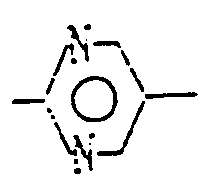


- Composé selon la revendication 1, dans lequel
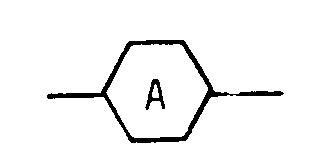

- Composé selon la revendication 2, dans lequel

- Composé selon la revendication 3, dans lequel R¹ et R² représentent chacun indépendamment un groupe alkyle à chaîne droite contenant 1 à 20 atomes de carbone.
- Composé selon la revendication 3, dans lequel R¹ est un groupe alkyle ramifié contenant 1 à 20 atomes de carbone et R² est un groupe alkyle à chaîne droite contenant 1 à 20 atomes de carbone.
- Composé selon la revendication 1, dans lequel la fraction ramifiée dudit groupe alkyle ramifié est un groupe méthyle.
- Composé selon la revendication 1, dans lequel


- Composé selon la revendication 7, dans lequel


- Composé selon la revendication 8, dans lequel R¹ et R² représentent chacun indépendamment un groupe alkyle à chaîne droite contenant 1 à 20 atomes de carbone.
- Composé selon la revendication 8, dans lequel R¹ est un groupe alkyle ramifié contenant 1 à 20 atomes de carbone et R² est un groupe alkyle à chaîne droite contenant 1 à 20 atomes de carbone.
- Composé selon la revendication 10, dans lequel la fraction ramifiée dudit groupe alkyle ramifié est un groupe méthyle.
- Composition de cristaux liquides comprenant un composé représenté par la formule générale (I) de la revendication 1.
- Composition de cristaux liquides selon la revendication 12, qui présente une phase smectique C.
- Composition de cristaux liquides selon la revendication 12, qui présente une phase smectique C chirale.
- Dispositif d'affichage à cristaux liquides ferroélectriques utilisant une composition de cristaux liquides qui présente une phase smectique C chirale et qui comprend un composé représenté par la formule générale (I) de la revendication 1.
Applications Claiming Priority (6)
| Application Number | Priority Date | Filing Date | Title |
|---|---|---|---|
| JP100255/88 | 1988-04-25 | ||
| JP63100255A JP2632694B2 (ja) | 1988-04-25 | 1988-04-25 | 2,5−ジ置換ピラジン誘導体及び該化合物を含有する液晶組成物 |
| JP63150230A JPH01319465A (ja) | 1988-06-20 | 1988-06-20 | 2,5‐ジ置換ピリミジン誘導体 |
| JP150230/88 | 1988-06-20 | ||
| JP1024265A JPH02204484A (ja) | 1989-02-02 | 1989-02-02 | 2,5―ジ置換ピリミジン誘導体 |
| JP24265/89 | 1989-02-02 |
Publications (3)
| Publication Number | Publication Date |
|---|---|
| EP0339252A2 EP0339252A2 (fr) | 1989-11-02 |
| EP0339252A3 EP0339252A3 (en) | 1990-11-22 |
| EP0339252B1 true EP0339252B1 (fr) | 1996-06-12 |
Family
ID=27284579
Family Applications (1)
| Application Number | Title | Priority Date | Filing Date |
|---|---|---|---|
| EP89104962A Expired - Lifetime EP0339252B1 (fr) | 1988-04-25 | 1989-03-20 | Dérivés disubstitués en 2,5 de la pyrazine, dérivés de la pyrimidine, et cristaux liquides les contenant |
Country Status (3)
| Country | Link |
|---|---|
| US (2) | US4997942A (fr) |
| EP (1) | EP0339252B1 (fr) |
| DE (1) | DE68926635T2 (fr) |
Families Citing this family (9)
| Publication number | Priority date | Publication date | Assignee | Title |
|---|---|---|---|---|
| US4780240A (en) * | 1985-08-02 | 1988-10-25 | Chisso Corporation | Liquid crystal composition |
| JPS6463571A (en) * | 1987-09-03 | 1989-03-09 | Chisso Corp | Optically active-2,5-diphenylpyridines |
| DE4236104A1 (de) * | 1992-10-26 | 1994-04-28 | Hoechst Ag | Bifunktionelle Vorprodukte zur Herstellung von Flüssigkristallen |
| US5464941A (en) * | 1994-10-19 | 1995-11-07 | Hoechst Celanese Corporation | Biphenyl pyrazine compounds |
| JP4198221B2 (ja) * | 1997-06-13 | 2008-12-17 | 株式会社半導体エネルギー研究所 | 光学活性化合物、反強誘電性液晶組成物、反強誘電性液晶組成物のしきい値を低減する方法及び光学活性化合物の製造方法 |
| JPH1129557A (ja) * | 1997-07-08 | 1999-02-02 | Chisso Corp | ピリミジン誘導体、これを含む液晶組成物およびこれを用いた液晶表示素子 |
| HUP0400179A3 (en) * | 2001-06-12 | 2004-10-28 | Neurogen Corp Branford | 2,5-diarylpyrazines, 2,5-diarylpyridines and 2,5-diarylpyrimidines, their use and pharmaceutical compositions containing them |
| EP1932896B1 (fr) * | 2006-12-11 | 2010-10-27 | Merck Patent GmbH | Dérivés de stilbène, mélanges à base de cristaux liquides et affichages électro-optiques |
| WO2011162142A1 (fr) * | 2010-06-22 | 2011-12-29 | Jnc株式会社 | Composé présentant un groupe alkyle ramifié ou un groupe alcényle ramifié, milieu de cristaux liquides isotropes et élément optique |
Family Cites Families (12)
| Publication number | Priority date | Publication date | Assignee | Title |
|---|---|---|---|---|
| EP0084194B1 (fr) * | 1982-01-14 | 1986-04-30 | MERCK PATENT GmbH | Mélanges de cristaux liquides |
| DE3315295A1 (de) * | 1983-04-27 | 1984-10-31 | Merck Patent Gmbh, 6100 Darmstadt | Fluorhaltige pyrimidinderivate |
| JPS6092276A (ja) * | 1983-10-27 | 1985-05-23 | Chisso Corp | ピラジン誘導体 |
| DE3515374C2 (de) * | 1985-04-27 | 1998-02-26 | Hoechst Ag | Chirale getilte smektische flüssigkristalline Phasen und deren Verwendung in elektrooptischen Anzeigeelementen |
| DE3515373A1 (de) * | 1985-04-27 | 1986-11-06 | Merck Patent Gmbh, 6100 Darmstadt | Stickstoffhaltige heterocyclen |
| DE3518734A1 (de) * | 1985-05-24 | 1986-11-27 | Merck Patent Gmbh, 6100 Darmstadt | Smektische fluessigkristalline phasen |
| JPS6222889A (ja) * | 1985-07-23 | 1987-01-31 | Chisso Corp | ゲストホスト型表示素子用強誘電性液晶組成物 |
| EP0225195B1 (fr) * | 1985-12-04 | 1993-11-24 | Ajinomoto Co., Inc. | Composés à base de phénylpyrimidines et compositions de cristaux liquides les contenant |
| DE3600052A1 (de) * | 1986-01-03 | 1987-07-09 | Merck Patent Gmbh | Heterocyclische verbindungen |
| JPH0780850B2 (ja) * | 1986-01-21 | 1995-08-30 | チッソ株式会社 | 含ハロゲンヘテロ環化合物及び液晶組成物 |
| JPH0696559B2 (ja) * | 1986-09-16 | 1994-11-30 | チッソ株式会社 | 3,6−ジフエニルピリダジン類 |
| JPS63253075A (ja) * | 1987-04-10 | 1988-10-20 | Dainippon Ink & Chem Inc | 新規ピリミジン誘導体 |
-
1989
- 1989-03-20 DE DE68926635T patent/DE68926635T2/de not_active Expired - Fee Related
- 1989-03-20 EP EP89104962A patent/EP0339252B1/fr not_active Expired - Lifetime
- 1989-03-20 US US07/325,813 patent/US4997942A/en not_active Expired - Lifetime
-
1990
- 1990-10-31 US US07/606,662 patent/US5128472A/en not_active Expired - Lifetime
Also Published As
| Publication number | Publication date |
|---|---|
| US5128472A (en) | 1992-07-07 |
| EP0339252A2 (fr) | 1989-11-02 |
| DE68926635D1 (de) | 1996-07-18 |
| EP0339252A3 (en) | 1990-11-22 |
| DE68926635T2 (de) | 1997-01-02 |
| US4997942A (en) | 1991-03-05 |
Similar Documents
| Publication | Publication Date | Title |
|---|---|---|
| EP0197677B1 (fr) | Composé liquide cristallin optiquement actif contenant des halogènes et composition liquide cristalline le contenant | |
| US4062798A (en) | Phenylpyrimidine derivatives | |
| US4876027A (en) | Optically active composition, mesomorphic compound and liquid crystal device | |
| US4961876A (en) | Liquid crystalline ferroelectric derivatives of branched acyclic alpha-chlorocarboxylic acids | |
| EP0339252B1 (fr) | Dérivés disubstitués en 2,5 de la pyrazine, dérivés de la pyrimidine, et cristaux liquides les contenant | |
| US4855429A (en) | Chiral esters formed from α-substituted carboxylic acids and mesogenic hydroxyl compounds, and their use as dopants in liquid-crystalline phases | |
| US5051506A (en) | Ferroelectric liquid crystal compounds containing chiral haloalkyoxy tail units and compositions containing them | |
| KR100283163B1 (ko) | 시클로헥센일 코아를 갖는 강유전성 액정 화합물 및 이들을 함유하는 조성물 | |
| US5380460A (en) | Ferroelectric liquid crystal compounds containing chiral haloalkoxy tail units and compositions containing them | |
| JP2000502688A (ja) | ジフルオロフェニルピリミジルピリジン誘導体と、液晶混合物へのそれらの使用 | |
| EP0470590B1 (fr) | Composés d'éthers fluoro-substitués | |
| US5326497A (en) | Nitrogen heterocycles and liquid crystalline mixtures containing them | |
| US4826979A (en) | Liquid crystal compound | |
| JPH02209873A (ja) | 光学活性2,5―ジ置換ピリミジン誘導体 | |
| Kelly et al. | 4-(5-Alkyl-2-pyridinyl) phenyl alkanoates: Some novel smectic materials for display devices | |
| US5366659A (en) | Ferroelectric liquid crystals containing pyrimidine and chiral compounds and liquid crystal compositions containing the same | |
| JP2558476B2 (ja) | 液晶性化合物 | |
| EP0256307B1 (fr) | Composés optiquement actifs ayant une structure biphénylique, composition à base de cristaux liquides et commutateur optique les contenant | |
| JP2900482B2 (ja) | オキシメチレン結合を有する化合物 | |
| EP0351822B1 (fr) | Dérivés tricyclique de cyclohexénylcyclohexane | |
| EP0354355A1 (fr) | Composé optiquement actif et composition de cristaux liquides | |
| JPS62149669A (ja) | 光学活性フエニルピリミジン化合物および液晶 | |
| JP2632694B2 (ja) | 2,5−ジ置換ピラジン誘導体及び該化合物を含有する液晶組成物 | |
| JP3054177B2 (ja) | ピリジン系液晶化合物 | |
| JPH02204484A (ja) | 2,5―ジ置換ピリミジン誘導体 |
Legal Events
| Date | Code | Title | Description |
|---|---|---|---|
| PUAI | Public reference made under article 153(3) epc to a published international application that has entered the european phase |
Free format text: ORIGINAL CODE: 0009012 |
|
| AK | Designated contracting states |
Kind code of ref document: A2 Designated state(s): CH DE GB LI |
|
| PUAL | Search report despatched |
Free format text: ORIGINAL CODE: 0009013 |
|
| AK | Designated contracting states |
Kind code of ref document: A3 Designated state(s): CH DE GB LI |
|
| 17P | Request for examination filed |
Effective date: 19910404 |
|
| 17Q | First examination report despatched |
Effective date: 19930415 |
|
| GRAH | Despatch of communication of intention to grant a patent |
Free format text: ORIGINAL CODE: EPIDOS IGRA |
|
| GRAH | Despatch of communication of intention to grant a patent |
Free format text: ORIGINAL CODE: EPIDOS IGRA |
|
| GRAA | (expected) grant |
Free format text: ORIGINAL CODE: 0009210 |
|
| AK | Designated contracting states |
Kind code of ref document: B1 Designated state(s): CH DE GB LI |
|
| REF | Corresponds to: |
Ref document number: 68926635 Country of ref document: DE Date of ref document: 19960718 |
|
| GRAH | Despatch of communication of intention to grant a patent |
Free format text: ORIGINAL CODE: EPIDOS IGRA |
|
| PLBE | No opposition filed within time limit |
Free format text: ORIGINAL CODE: 0009261 |
|
| STAA | Information on the status of an ep patent application or granted ep patent |
Free format text: STATUS: NO OPPOSITION FILED WITHIN TIME LIMIT |
|
| 26N | No opposition filed | ||
| PGFP | Annual fee paid to national office [announced via postgrant information from national office to epo] |
Ref country code: CH Payment date: 19990309 Year of fee payment: 11 |
|
| REG | Reference to a national code |
Ref country code: GB Ref legal event code: 732E |
|
| PG25 | Lapsed in a contracting state [announced via postgrant information from national office to epo] |
Ref country code: CH Free format text: LAPSE BECAUSE OF NON-PAYMENT OF DUE FEES Effective date: 20000331 Ref country code: LI Free format text: LAPSE BECAUSE OF NON-PAYMENT OF DUE FEES Effective date: 20000331 |
|
| REG | Reference to a national code |
Ref country code: CH Ref legal event code: PL |
|
| REG | Reference to a national code |
Ref country code: GB Ref legal event code: IF02 |
|
| PGFP | Annual fee paid to national office [announced via postgrant information from national office to epo] |
Ref country code: GB Payment date: 20060316 Year of fee payment: 18 |
|
| PGFP | Annual fee paid to national office [announced via postgrant information from national office to epo] |
Ref country code: DE Payment date: 20060324 Year of fee payment: 18 |
|
| GBPC | Gb: european patent ceased through non-payment of renewal fee |
Effective date: 20070320 |
|
| PG25 | Lapsed in a contracting state [announced via postgrant information from national office to epo] |
Ref country code: DE Free format text: LAPSE BECAUSE OF NON-PAYMENT OF DUE FEES Effective date: 20071002 |
|
| PG25 | Lapsed in a contracting state [announced via postgrant information from national office to epo] |
Ref country code: GB Free format text: LAPSE BECAUSE OF NON-PAYMENT OF DUE FEES Effective date: 20070320 |