EP0344939A2 - Système de rétention gastrique pour administrer un médicament sous contrôle - Google Patents
Système de rétention gastrique pour administrer un médicament sous contrôle Download PDFInfo
- Publication number
- EP0344939A2 EP0344939A2 EP89304873A EP89304873A EP0344939A2 EP 0344939 A2 EP0344939 A2 EP 0344939A2 EP 89304873 A EP89304873 A EP 89304873A EP 89304873 A EP89304873 A EP 89304873A EP 0344939 A2 EP0344939 A2 EP 0344939A2
- Authority
- EP
- European Patent Office
- Prior art keywords
- attached
- tablet
- retention
- receptacle
- controlled release
- Prior art date
- Legal status (The legal status is an assumption and is not a legal conclusion. Google has not performed a legal analysis and makes no representation as to the accuracy of the status listed.)
- Granted
Links
Images
Classifications
-
- A—HUMAN NECESSITIES
- A61—MEDICAL OR VETERINARY SCIENCE; HYGIENE
- A61K—PREPARATIONS FOR MEDICAL, DENTAL OR TOILETRY PURPOSES
- A61K9/00—Medicinal preparations characterised by special physical form
-
- A—HUMAN NECESSITIES
- A61—MEDICAL OR VETERINARY SCIENCE; HYGIENE
- A61K—PREPARATIONS FOR MEDICAL, DENTAL OR TOILETRY PURPOSES
- A61K9/00—Medicinal preparations characterised by special physical form
- A61K9/0012—Galenical forms characterised by the site of application
- A61K9/0053—Mouth and digestive tract, i.e. intraoral and peroral administration
- A61K9/0065—Forms with gastric retention, e.g. floating on gastric juice, adhering to gastric mucosa, expanding to prevent passage through the pylorus
-
- A—HUMAN NECESSITIES
- A61—MEDICAL OR VETERINARY SCIENCE; HYGIENE
- A61K—PREPARATIONS FOR MEDICAL, DENTAL OR TOILETRY PURPOSES
- A61K9/00—Medicinal preparations characterised by special physical form
- A61K9/20—Pills, tablets, discs, rods
- A61K9/2072—Pills, tablets, discs, rods characterised by shape, structure or size; Tablets with holes, special break lines or identification marks; Partially coated tablets; Disintegrating flat shaped forms
-
- A—HUMAN NECESSITIES
- A61—MEDICAL OR VETERINARY SCIENCE; HYGIENE
- A61M—DEVICES FOR INTRODUCING MEDIA INTO, OR ONTO, THE BODY; DEVICES FOR TRANSDUCING BODY MEDIA OR FOR TAKING MEDIA FROM THE BODY; DEVICES FOR PRODUCING OR ENDING SLEEP OR STUPOR
- A61M31/00—Devices for introducing or retaining media, e.g. remedies, in cavities of the body
-
- A—HUMAN NECESSITIES
- A61—MEDICAL OR VETERINARY SCIENCE; HYGIENE
- A61M—DEVICES FOR INTRODUCING MEDIA INTO, OR ONTO, THE BODY; DEVICES FOR TRANSDUCING BODY MEDIA OR FOR TAKING MEDIA FROM THE BODY; DEVICES FOR PRODUCING OR ENDING SLEEP OR STUPOR
- A61M31/00—Devices for introducing or retaining media, e.g. remedies, in cavities of the body
- A61M31/002—Devices for releasing a drug at a continuous and controlled rate for a prolonged period of time
Definitions
- This invention relates to an oral drug delivery system having delayed gastrointestinal transit. More specifically it relates to a gastric retention system for controlled release of drugs to the gastrointestinal tract.
- the system comprises one or more non-continuous compressible elements, i.e., retention arms, and an attached controlled release device and which in the expanded form resists gastrointestinal transit.
- It further relates to a modular system for use therein comprising one or more non-continuous compressible elements and an attached receptacle means for receiving and holding a drug-containing orally administrable controlled release device and which in the expanded form resists gastrointestinal transit.
- IMC interdigestive myoelectric complex
- U.S. Patent 3,976,764 issued August 24, 1976, describes hollow globular shells having an undercoating of a cellulose acetate-phthalate copolymer and an outer coating of ethyl and hydroxypropyl celluloses in combination with a pharmaceutically active ingredient. Said coated globular shells are reported to float in the gastric juices when taken internally to provide prolonged release of the active ingredient. Other flotation devices are described in U.S Patents 4,140,755 and 4,167,558.
- EP Application 0168862 published January 22, 1986, describes biodegradable hollow fibers containing an active substance in their cavities for controlled release of said substance when implanted subcutaneously in mammals.
- U.S. Patent Application Serial No. 38189, filed April 14, 1987 describes drug-containing fibers having an axial ratio of at least about 8 which are useful for retention in the gastrointestinal tract.
- the barrier film serves to control the rate of release of the drug and also provides buoyancy to the delivery system by virtue of air bubbles between it and the carrier film.
- the composite is generally cut into long narrow strips 2.1 x 14 cm2, optionally pleated before being packed into gelatin capsules.
- EP 202159 published November 20, 1986, describes gastric retention devices comprising a continuous solid-stick figure, a planar figure or ring figure made from polymers.
- a drug may be dispersed within the device as an integral part thereof, or may be attached as a controlled release drug module to the aforementioned retention devices.
- Orally administrable devices of variable geometry i.e., devices which have one configuration designed to permit their oral administration and which, when in the environment of use, assume a second configuration designed to prevent their expulsion are known in the literature. Principle focus upon such devices has occurred in animal husbandry and particularly in the treatment of ruminants. Representative of such devices are those disclosed in U.S. Patent 3,844,285 and 4,601,893.
- This invention relates to an oral drug delivery system for human or animal use.
- the system a gastric retention system, exhibits delayed gastrointestinal transit. It comprises one or more retention arms, said arms being a non-continuous compressible element, and an attached controlled release device and which in the expanded form resists gastric transit; and to a modular system for use therein comprising a non-continuous compressible element and an attached receptacle means for receiving and holding a drug-containing orally administrable controlled release device and which in the expanded form resists gastric transit.
- It especially relates to such systems to which are attached two or more flexible retention arms. More specifically it relates to such systems wherein the non-continuous elements, e.g.
- retention arms are compressible about the device or the receptacle means to an overall size suitable for oral administration thereof and which, in a liquid use environment, are expandable to an overall size sufficient to prevent passage thereof through a pylorus, said receptacle means and/or said non-continuous elements being erodible in the use environment.
- orally administrable controlled release device as used herein is intended to refer to tablets and capsules generally described as prolonged, controlled, delayed or sustained release devices designed for oral administration.
- the mechanism by which such devices operate is immaterial to the present invention.
- the controlled release devices can, on the basis of their construction, be referred to as matrix, laminate (or sandwich), coated matrix, reservoir or osmotic devices. Alternatively, from the standpoint of their mechanism of action they can be characterized as diffusion or osmotic devices.
- the matrix type includes tablets having the drug dissolved or suspended in them, and laminated devices such as those wherein the drug-containing carrier is sandwiched or interposed between non-drug containing layers of a carrier.
- the reservoir devices comprise a drug supply or drug plus excipient core surrounded by a wall formed by a polymeric or wax carrier.
- an osmotic device is one which comprises a water-insoluble, water permeable polymer, optionally comprising a porosigen dispersed therein and containing within the reservoir an osmotic enhancing agent and drug supply.
- controlled release is intended to embrace not only the concept of sustained release of drug over a prolonged period of time; i.e., relative to the time period the drug response is realized by administration of a single dose of the drug; but those of predictability and reproducibility.
- this invention permits both rate-wise and time-wise release of drug; i.e., drug is released at a fixed, reproducible rate over a predetermined period of time.
- the herein described gastric retention system extends the term to include drug release primarily at a pre-determined site; namely, the proximal region of the gastrointestinal tract.
- receptacle and “receptacle means” refer to any means for receiving and holding a controlled release tablet or controlled release capsule. It can, by definition, have any of a variety of configurations and dimensions depending upon the size and shape of the device (tablet or capsule) to be used. For convenient use for oral administration of drugs, its maximum size is, of course, limited by the host to be treated; e.g. humans or animals. Again, for convenience and ease of administration, it should have no sharp or projecting features and is desirably round, circular or elliptical.
- the receptacle can, in one modification of this invention, be in the form of a collar or a belt which fits about, i.e. contains, a given controlled release device so as to hold it until such time as it is to be expelled from the host to whom it was administered.
- the receptacle means is an open-ended container, i.e., a cup-shaped container; the overall configuration and dimensions of which are determined by those of the controlled release device it is to contain.
- the receptacle is a collar or an open-ended container, it can be constructed from a solid impermeable polymer since in many situations there will be sufficient exposure of the controlled release device to the liquid of the environment.
- the receptacle means can be a closed container; i.e. one having a top, a bottom and sides, which completely enclose the controlled release device, having substantially the same configuration but somewhat larger dimensions to accommodate the device.
- the receptacle is generally constructed of a polymer which is permeable, including microporous, as discussed below with respect to the retention arms.
- it can be constructed from an impermeable or semipermeable polymer in which macroperforations have been made to permit passage of environmental liquid into the receptacle and passage of environmental liquid plus drug into the environment.
- drug includes physiologically or pharmacologically active substances which produce a systemic or localized effect or effects in a mammal, including humans and animals. Included in this term are sedatives such as phenobarbital, thiopental and sodium pentobarbital; analgesics such as codeine, morphine and mependine; levo-dopa; tranquilizers such as reserpine, chlorpromazine and fluphenazine; antibacterials such as tetracycline, oxytetracycline, penicillin, sulfonamides and chloramphenicol; antifungals such as tioconazole, griseofulvin and nystatin; antiinflammatories such as aspirin and salicylamide; nutritional agents such as essential amino acids, vitamins C and B12; bronchodilators such as pirbuterol; diuretics such as furosemide; antihypertensives such as prazo
- the amount of a given drug which must be used in a delivery system of this invention to achieve a given release rate, or the release rate of a given system of this invention is determined by an in vitro test as those skilled in the art will recognize. In general, such a test involves placing one or more of the systems in question in an environment approximating the ambient environment of ultimate use intended for said drug delivery system and measuring by appropriate methodology known to those skilled in the art the amount of drug released to said environment over a given period of time and/or by determining the amount of drug remaining in the system after a given period of time.
- solubility of a given drug there is no upper limit since the release rate can be regulated by judicious choice of polymer or polymers.
- the drug should be of sufficient solubility to permit achievement of a beneficial dose of the drug from the maximum number of systems which can be practically administered to a given subject.
- retention arm refers to any ribbon, ribbon-like, fiber, or fiber-like structure in which one dimension, e.g., length, is significantly greater than the other dimensions, e.g., width, thickness, or diameter.
- Said aforementioned structures can be solid or hollow and, if hollow, can be closed at the end or ends.
- the retention arms can themselves serve as controlled release devices for the same or different drug from that of the controlled release device (tablet or capsule). Thus, the opportunity for concurrent controlled release of more than one drug in a convenient and simple manner is made available.
- retention arms which are not themselves controlled release devices since such systems are simpler to construct.
- the retention arms can comprise a material which is bioerodible and, especially when the retention arms are to serve as a controlled release device, it can be permeable, including microporous, semipermeable or impermeable.
- permeable retention arm is meant one comprising a polymer, which allows passage of environmental fluid and of drug.
- a semi-permeable retention arm is one which is permeable to environmental fluid and essentially impermeable to the drug or vice-versa.
- An impermeable retention arm is one comprising material essentially impermeable to environmental fluid and drug.
- the selected material can, in addition, be non-erodible or bioerodible in the use environment.
- the retention arm material which is used must be non-toxic to the mammal, including a human, to which the drug delivery system is to be administered, and sufficiently flexible to permit ease of administration and to avoid infliction of puncture wounds during and subsequent to administration.
- Representative of the polymeric materials which can be used are polyethylene, polypropylene, polystyrene, polytetrafluoroethylene, polyvinyl chloride, cellulose acetate, cellulose nitrate, cellulose triacetate, ethylene vinylacetate, polyesters, polyanhydrides, polyorthoesters, hydroxylated-ethylene vinylacetate, hydroxyethyl cellulose, acetylated hydroxyethyl cellulose, fibroin, polyglycolic acid, polylactic acid, poly(lactic-glycolic)acid, cellulose acetate succinate, cellulose ethers, poly(vinylmethyl ether) copolymers, cellulose acetate laurate, polyacrylates, organosilicon polymers,
- the "arm” can be constructed of a metal or metal alloy.
- a polymeric system of interest comprises a polymer which is "enteric”; i.e., a polymer which is insoluble at gastric pH and soluble at intestinal pH (e.g. cellulose acetate-phthalate).
- the entire oral drug delivery system or only a portion thereof can be made from polymers which lose strength via erosion by dissolution, hydrolysis or enzymatic degradation.
- These polymers includes: polyethylene glycol, polyethylene oxide, polyacrylic acid, polyvinyl alcohol, dextran, gelatin, polyvinyl pyrrolidone, hydroxypropylmethylcellulose, cellulose acetate phthalate, hydroxypropylcellulose, hydroxypropylmethylcellulose phthalate, polyvinylacetate phthalate, polyacrylamide, polysaccharides, gum arabic, Eudragit E100 (copolymer of dimethylaminoethyl methacrylate and methacrylic acid ester), Eudragit L100 (copolymer of methacrylic acid and methacrylic acid ester), polyorthoesters, polyphosphates, glutamic acid and ethyl glutamate copolymer, polyglycolic acid, polylactic acid, copolymer of lactide and ⁇ -capro
- Non-polymeric additives which dissolve upon hydration to decrease the strength of the stiff component of the device include: organic substances such as citric acid, glucose and the like; and inorganic salts such as sodium bicarbonate, sodium chloride and the like.
- Part of the device can also be made from polymers which lose strength upon hydration.
- These polymers include crosslinked hydrogels such as polyhydroxyethylmethacrylate and the like.
- Methods to combine materials to give the desired properties include blending, laminating, casting, coextrusion, injection molding and compression molding of polymers; adding organic substances, inorganic salts or rubber particles to a polymer, with or without coupling agents such as organic titanates and silanes; crosslinking of two polymers with hydrolyzable bonds; and copolymerization.
- the retention arms can be attached directly to the controlled release device by appropriate means such as by gluing or by fusing them to said device. This latter method is particularly convenient when the device and retention arms are constructed from the same polymer.
- the fusion can be accomplished by thermal means for certain polymers e.g. polyethylene; or by means of a suitable solvent. In either instance, the retention arms and device become an integrated unit.
- the receptacle and retention arms may be constructed as a single piece from a material which possesses the requisite properties to support gastric retention and to insure eventual loss of physical integrity in order to assure safe passage out of the stomach. It may in certain situations be difficult to conclude how many retention arms are attached to a given device. In order to avoid semantic problems on this issue it is intended, for purposes of this invention, that when any retention arms extends beyond a given edge of the controlled release device it is considered a separate retention arm.
- the retention arms must be flexible enough to prevent puncture of the stomach or intestinal wall and to permit their being wrapped or otherwise compressed about the device or receptacle means for administration purposes.
- the desired flexibility is related to the length of the arm used. Long arms require a greater degree of flexibility than do short arms. They must also possess the ability, in the use environment, of expanding from their compressed state to, or approximately to, their configuration prior to their being compressed.
- the suitability of a particular arm length is detemined by empirical determination of gastrointestinal transit time assayed, for example, by X-ray radiography or scintigraphy.
- the flexibility of materials used in constructing retention arms found acceptable by either of these methods is then measured, if desired, by the American National Standard ANSI/ASTM Standard Test Method for Stiffness of Fabrics, D1388-64, Option B Double Cantilever Test.
- the above described X-ray radiography or scintigraphy methods are also used to determine the retention time of a given system in the host to which it is administered.
- the overall dimensions of the orally administrable systems of this invention are determined by the anatomy and physiology of the mammal to which they are to be administered. In the unused condition they must be of a size suitable for oral administration to the mammal to be treated.
- the largest dimension of the systems in the expanded condition can vary from 2.5 to 6.0 cm, and preferably from 3.0 to 5.0 cm.
- the herein described systems can have a variety of configurations determined in part by that of the controlled release device used. When the system is other than round or circular, the minimum and maximum dimensions are 2.5 and 6.0 cm, respectively for the expanded form.
- the major factors responsible for retaining the herein described delivery systems in the gastrointestinal tract are their overall dimensions (length and width), their configuration and the stiffness of the arms. Thus, for systems having arms of identical dimensions but different stiffness, the least flexible will be retained for a longer period of time.
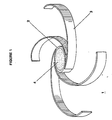
- the preferred configuration for the oral drug delivery systems of this invention is that of a coil or spiral.
- the controlled release device, or the module is located at the center of the coil; i.e., the retention arm is coiled around the said device or module.
- the controlled release device or module is located at the center of the coil.
- a preferred embodiment of this invention is one in which a single retention arm is attached to and coiled about the controlled release tablet or capsule, either directly or via a receptacle, and in which the retention arm uncoils at least partially in the environment of use, to form a coil or coil-like configuration around the controlled release device.
- the retention arm may possess a fiber-like or a ribbon-like shape.
- the preferred retention am length for this embodiment depends upon the stiffness of the material from which the retention arm is constructed; for a stiffer material, a shorter length may be required.
- the diameter of the coil formed by the retention arm is preferably greater than approximately 3 cm.
- the length of the retention arm in this embodiment is typically 10-30 cm.
- a more preferred embodiment is one in which two or more, most preferably four, retention arms are attached to and coiled about the controlled release tablet or capsule, either directly or preferably via a receptacle, and in which the retention arms uncoil at least partially in the environment of use.
- the retention arms preferably possess a ribbon-like shape.
- the preferred retention arm length for this embodiment depends upon the stiffness of the material from which the retention arm is constructed; for a stiffer material, a shorter length may be required.
- the diameter of the gastric retention system is preferably greater than approximately 3 cm. The length of the retention arms in such embodiment is typically 2-6 cm.
- the receptacle and/or the retention arms, and/or the adhesive which attaches the retention arms to the receptacle or directly to the drug delivery device are constructed from materials which soften, disintegrate, dissolve or degrade in the biological environment of use, in order to permit safe timely exit from the stomach and safe passage through the distal GI tract, with no danger of intestinal obstruction.
- a procedure of value in determining the release rates of the herein described drug containing device is as follows.
- the procedure, an in vitro procedure comprises placing the device or devices in an environment approximating that of the gastrointestinal tract and measuring the amount of drug released to said environment as a function of time.
- In vivo release of drug from oral drug delivery systems of this invention is determined by administering them to dogs and measuring the amount of drug released over a period of time by determining the amount of drug present in, for example, the animals' blood or urine.
- the retention arms are preferably symmetrically placed about the controlled release device or the receptacle means containing such a device since, for a given system wherein all retention arms are substantially of equal flexibility and overall dimensions, they are retained for longer periods than those systems having non-symmetrical arrangement of retention ams.
- the dogs were concurrently dosed with the oral delivery system and with a radiopaque non-disintegrating BaSO4 tablet to serve as internal control. Dogs were fed at 7 hours post-dose.
- I/I control tablet in stomach/delivery system in stomach
- O/I tablet out/delivery system in
- O/O tablet out/delivery system out
- NM not measured.
- diam diameter.
- Fasted beagle dogs were dosed with the capsule, which contained both the fiber and the tablet, and were x-rayed at various times after dosing in order to assess the positions of the fiber and tablet in the GI tract.
- the dogs were fed their normal daily food ration at ⁇ 7 hours post-dose.
- Table I demonstrates that the fiber was consistently retained longer than the tablet in the stomach. While the tablet was generally emptied from the stomach in 1-2 hours, the fiber was consistently gastrically retained for >24 hours. This gastric retention was particularly significant because it was observed in the unfed state, which is characterized by housekeeper waves which remove indigestible material from the stomach.
- the fiber retention arms were loaded with a small quantity of steel powder, as a radiopaque agent. Each device was loaded into a #00 capsule, along with a control radiopaque tablet. Table I presents the observed extent of gastric retention in unfed dogs of a 0.4 cm x 0.15 cm tablet with a 10 cm PE fiber retention arm attached, and of a 0.4 cm x 0.15 cm tablet with two 5 cm PE fiber retention arms attached. The tablet with a single 10 cm PE fiber retention arm was retained for only one hour longer than the control tablet in one dog, and was not retained at all in two other dogs. This result was surprising, since a 10 cm PE fiber alone was consistently gastrically retained for >24 hours (Table I). These observations demonstrate that attachment of a tablet to a fiber can result in a large decrease in the ability of the fiber to withstand "housekeeper waves" and be retained in the stomach. Thus, design of an effective gastric retention device for a tablet is not a trivial matter.
- Table I demonstrates that, in two out of three unfed dogs, this device was gastrically retained significantly longer than a control tablet. In one case, the tablet/fiber device was retained for at least 24 hours. In one dog, both the device and the control tablet were retained for less than one hour. These data demonstrate that a tablet with two fiber retention arms can be gastrically retained for a significantly longer time than a control tablet. However, the duration of retention is variable.
- Radiopaque non-disintegrating tablets (0.64 cm diameter x 0.32 cm thickness) were prepared with two attached hollow radiopaque PE fiber retention arms (5 cm length x 0.1 cm diameter), as described above in Example 1 ( Figure 1B). These tablets were significantly larger than those reported in Example 1 (0.4 cm x 0.15 cm).
- Table II presents the duration of gastric retention of these devices in unfed beagle dogs. In one dog, the device was gastrically retained for only one hour longer than a control tablet. In the other two dogs tested, the device was retained no longer than the control tablet. Gastric retention data for the 0.4 cm tablet with two attached 5 cm fiber retention arms are also included in Table II. It is clear that the device with the smaller tablet is better retained.
- a radiopaque non-disintegrating tablet (0.64 cm diameter x 0.32 cm thickness) was prepared and a 0.24 cm hole was drilled through the entire tablet at the center of the tablet face.
- a 20 cm piece of hollow PE fiber (20 cm length x 0.24 cm diameter) was wound into a coil with an ⁇ 3 cm diameter, and was held in this configuration with a piece of autoclave tape. The PE coil was placed in a 75°C oven for 1 hour, to permit the PE to set in its coiled configuration.
- a 20 cm piece of nylon monofilament fiber (20 cm length x 0.13 cm diameter) was similarly coiled and taped, and was "set" in a 125°C oven for 1 hour.
- the coiled nylon monofilament was thread into the coiled hollow PE fiber, stainless steel powder was poured into the void space between the nylon and PE to provide radiopacity, and the ends of the fiber were sealed with cyanoacrylate glue. The end of the fiber was thread into the tablet hole and glued.
- the final device consisted of an ⁇ 3.5 cm diameter coil, with a tablet attached to one end (via the tablet face). The fiber retention arm on the tablet/fiber coil device was compressed, and the device was placed in a #000 gelatin capsule. When a device of this type was placed in water or aqueous buffer at 37°C, the gelatin capsule dissolved within 5-15 minutes and the fiber retention arm uncoiled partially so that the overall diameter of the uncoiled tablet/fiber device was ⁇ 4 cm.
- Table IV presents the duration of gastric retention of tablet/fiber coil devices in fasted beagle dogs who were fed their normal daily food ration at ⁇ 7 hours post-dose. In all cases, the tablet/fiber coil device was gastrically retained for >24 hours, while the control tablet was retained for ⁇ 2 hours.
- This embodiment of the invention is a preferred one because (a) a >24 hours gastric retention is observed, and (b) a large controlled release tablet can be incorporated to deliver a high sustained dose exclusively in the stomach, thus improving bioavailability and eliminating the "window of absorption" problem.
- a tablet with an attached concentric coil was prepared.
- the coil did not consist of a fiber, but consisted of a nylon ribbon of dimensions 20 cm length x 0.5 cm diameter x 0.05 cm thickness.
- This ribbon was attached to the side of a non-disintegrating BaSO4 tablet (0.64 cm diameter x 0.32 cm thick) by cyanoacrylate glue, coiled around the tablet edge, partially uncoiled to an overall diameter (tablet plus concentric coil) of ⁇ 4 cm, set by heating at 70°C for 6 hours, recoiled, and placed in a #000 gelatin capsule, as in Example 4.
- the nylon ribbon retention arm on this device was significantly more flexible than the PE/nylon fiber retention arm of Example 4.
- Tablet/ribbon coil devices prepared as described above were dosed to fasted beagle dogs who were fed their normal daily food ration at ⁇ 7 hours post-dose.
- Table V presents the duration of gastric retention of these devices in beagle dogs. Gastric retention of the devices was variable, with observed retention durations of 0, 4 and 24 hours in three dogs. Radiographs of devices in the small intestine indicated that the concentric nylon ribbon retention arm was deformed and followed the tablet in its transit down the small intestine. Thus attachment of a single flexible concentric nylon ribbon retention arm of the flexibility used herein is not sufficient to reproducibly hold a tablet in the stomach for ⁇ 24 hours.
- a device was prepared consisting of a tablet with four curved nylon ribbon retention arms attached to the tablet edge.
- a tightly fitting cylindrical polyvinyl-chloride sleeve was placed around the edge of a non-disintegrating radiopaque BaSO4 tablet (0.64 cm diameter x 0.32 cm thickness).
- the dimensions of the tablet plus concentrically attached sleeve were 1.03 cm diameter x 0.32 cm thickness.
- One end of each of four nylon ribbons was glued to the outer edge of the sleeve with a cyanoacrylate glue, in a tangential fashion.
- the dimensions of each ribbon were 4 cm length x 0.4 cm width x 0.05 cm thickness.
- these ribbons were approximately the same width and thickness as the nylon ribbon used in Example 5, and had the same degree of flexibility.
- the four ribbon retention arms (attached to the tablet) were coated with a small amount of cyanoacrylate glue, and were sprinkled with stainless steel powder, to make the ribbons radiopaque.
- the ribbon retention arms were coiled tightly around the sleeve edge, then were placed in an aluminum foil container which permitted the device to partially uncoil to an overall diameter of ⁇ 3.5-4.0 cm (tablet plus sleeve plus inwardly curved ribbon retention arms).
- the partially uncoiled device was heated at 70°C for 6 hours to permit the nylon ribbon retention arms to set in said configuration.
- the tablet/sleeve/ribbon coil device was tightly recoiled and was placed in a #13 veterinary gelatin capsule.
- This device was dosed (along with a radiopaque control tablet) to a fasted beagle dog, which was fed its normal daily food ration at ⁇ 7 hours post-dose. Gastric retention was assessed by radiography at 6 and 24 hours. The tablet/sleeve/ribbon coil device was observed to be present in the stomach at 24 hours, while the control tablet had exited the stomach by 6 hours post-dose.
- a preferred embodiment of the current invention is one in which the gastric retention device is retained in the stomach effectively indefinitely, and moves out of the stomach when the device changes shape, falls apart, degrades or dissolves.
- the duration of retention can be dictated by the design of the degradation mechanism, minimizing the effects of patient-to-patient variability in gastric physiology.
- This example demonstrates an approach for achieving a device which performs this way. This device is similar to that described in Example 6, but incorporates a mechanism for disintegration.
- a disintegrating device was prepared as follows.
- a radiopaque non-disintegrating BaSO4 tablet (1.03 cm diameter x 0.32 cm thickness) was prepared.
- a cylindrical sleeve (1.03 cm inner diameter; 1.11 cm outer diameter) composed of 95% polyvinylacetate phthalate (PVAP) and 5% Hycar rubber particles to decrease brittleness was prepared.
- PVAP is an "enteric" material, i.e. one which retains its physical properties at low pH but softens and dissolves at neutral to high pH.
- the cylindrical PVAP sleeve was placed over the tablet and was firmly attached to the tablet with a cyanoacrylate glue.
- nylon ribbons (4 cm length x 0.4 cm width x 0.05 cm thickness) were attached with cyanoacrylate glue to the outer edge of the cylindrical PVAP sleeve in a tangential fashion.
- These nylon ribbon retention arms possessed approximately the same degree of flexibility as those in Examples 5 and 6.
- the four ribbons were coated with a small amount of glue, and were sprinkled with stainless steel powder to make the ribbons radiopaque.
- the ribbon retention arms were coiled tightly around the sleeve edge, then were placed in an aluminum foil container which permitted the device to partially uncoil to an overall diameter of ⁇ 3.5-4.0 cm (tablet plus sleeve plus inwardly curved ribbon retention arms).
- the partially uncoiled device (in the foil container) was heated at 70°C for 6 hours to permit the nylon ribbon retention arms to set in said configuration. Approximately one day prior to dosing, the tablet/sleeve/ribbon coil device was tightly recoiled, and was placed in a #13 veterinary gelatin capsule. Devices of this type opened to an overall diameter of ⁇ 3.6 cm when removed from the capsule.
- Example 6 The devices of this Example (and Example 6), which had 4 short ribbon retention arms arranged concentrically around the tablet edge, were effective gastric retention devices.
- the devices of Example 5 which had a single ribbon retention arm arranged concentrically around the tablet, exhibited variable gastric retention. In both cases, the devices opened to a diameter of ⁇ 4 cm. Thus successful retention of these devices depended not only upon the size of the device, but also upon the configuration of the attached ribbon retention arms which formed the expanded coil.
- Controlled release tablets containing the antidiabetic drug glipizide were inserted into receptacles of radiopaque GI retention devices as described in Example 7. These devices were dosed to three fasted beagle dogs, which were subsequently fed at 12 hours post-dose. In a control experiment, the same dogs were dosed with identical controlled release glipizide tablets without GI retention devices. Blood was drawn at various times post-dose, and glipizide plasma levels were determined, using an HPLC assay. In the case of dosing without a GI retention device, the average T max (time at which peak plasma concentration was observed) was 2.7 hours and the average AUC (area under the plasma concentration vs. time curve) was 35 microgm-hr/ml.
- a GI retention system of the current invention can be used to improve the performance of a controlled release drug delivery system, by assuring that the drug is delivered in an absorbable form to the upper portion of the small intestine, where absorption is generally most efficient.
Landscapes
- Health & Medical Sciences (AREA)
- Public Health (AREA)
- Veterinary Medicine (AREA)
- Life Sciences & Earth Sciences (AREA)
- Animal Behavior & Ethology (AREA)
- General Health & Medical Sciences (AREA)
- Chemical & Material Sciences (AREA)
- Medicinal Chemistry (AREA)
- Engineering & Computer Science (AREA)
- Pharmacology & Pharmacy (AREA)
- Epidemiology (AREA)
- Biomedical Technology (AREA)
- Hematology (AREA)
- Heart & Thoracic Surgery (AREA)
- Anesthesiology (AREA)
- Bioinformatics & Cheminformatics (AREA)
- Physiology (AREA)
- Nutrition Science (AREA)
- Medicinal Preparation (AREA)
- Medicines Containing Plant Substances (AREA)
- Medicines That Contain Protein Lipid Enzymes And Other Medicines (AREA)
- Measuring And Recording Apparatus For Diagnosis (AREA)
- Processing Of Solid Wastes (AREA)
- Surgical Instruments (AREA)
- Infusion, Injection, And Reservoir Apparatuses (AREA)
- Pharmaceuticals Containing Other Organic And Inorganic Compounds (AREA)
Applications Claiming Priority (2)
| Application Number | Priority Date | Filing Date | Title |
|---|---|---|---|
| US200801 | 1988-05-31 | ||
| US07/200,801 US5002772A (en) | 1988-05-31 | 1988-05-31 | Gastric retention system for controlled drug release |
Publications (3)
| Publication Number | Publication Date |
|---|---|
| EP0344939A2 true EP0344939A2 (fr) | 1989-12-06 |
| EP0344939A3 EP0344939A3 (en) | 1990-01-24 |
| EP0344939B1 EP0344939B1 (fr) | 1993-01-27 |
Family
ID=22743251
Family Applications (1)
| Application Number | Title | Priority Date | Filing Date |
|---|---|---|---|
| EP89304873A Expired - Lifetime EP0344939B1 (fr) | 1988-05-31 | 1989-05-15 | Système de rétention gastrique pour administrer un médicament sous contrôle |
Country Status (20)
| Country | Link |
|---|---|
| US (2) | US5002772A (fr) |
| EP (1) | EP0344939B1 (fr) |
| JP (1) | JPH0229268A (fr) |
| KR (1) | KR910009396B1 (fr) |
| AT (1) | ATE84977T1 (fr) |
| AU (1) | AU609995B2 (fr) |
| CA (1) | CA1335351C (fr) |
| DE (1) | DE68904596T2 (fr) |
| DK (1) | DK262789A (fr) |
| ES (1) | ES2037419T3 (fr) |
| FI (1) | FI99081C (fr) |
| GR (1) | GR3007271T3 (fr) |
| HU (1) | HUT50626A (fr) |
| IE (1) | IE62761B1 (fr) |
| IL (1) | IL90395A (fr) |
| MY (1) | MY104026A (fr) |
| NO (1) | NO178426C (fr) |
| NZ (1) | NZ229324A (fr) |
| PT (1) | PT90702B (fr) |
| ZA (1) | ZA894053B (fr) |
Cited By (45)
| Publication number | Priority date | Publication date | Assignee | Title |
|---|---|---|---|---|
| WO1996029025A1 (fr) * | 1995-03-23 | 1996-09-26 | Advanced Animal Technology Limited | Dispositif d'administration d'une substance |
| WO2006000272A3 (fr) * | 2004-06-26 | 2007-01-25 | Raumedic Ag | Dispositif permettant la liberation ciblee de substances dans une cavite |
| EP1846080A4 (fr) * | 2005-01-19 | 2010-05-19 | Sentinel Group Llc | Systeme et procede de distribution d'agent therapeutique |
| EP2133045A3 (fr) * | 2008-06-12 | 2010-07-21 | Biotronik VI Patent AG | Dispositif implantable |
| EP2324822A3 (fr) * | 2009-11-20 | 2012-01-04 | Tyco Healthcare Group LP | Formes pharmaceutiques orales pour la délivrance d'agents thérapeutiques comprenant un système d'attache méchanique |
| US9603550B2 (en) | 2008-07-08 | 2017-03-28 | Proteus Digital Health, Inc. | State characterization based on multi-variate data fusion techniques |
| US9649066B2 (en) | 2005-04-28 | 2017-05-16 | Proteus Digital Health, Inc. | Communication system with partial power source |
| US9756874B2 (en) | 2011-07-11 | 2017-09-12 | Proteus Digital Health, Inc. | Masticable ingestible product and communication system therefor |
| CN107161363A (zh) * | 2017-05-27 | 2017-09-15 | 芜湖思科生产力促进中心有限公司 | 一种物料的均分装箱装置 |
| US9796576B2 (en) | 2013-08-30 | 2017-10-24 | Proteus Digital Health, Inc. | Container with electronically controlled interlock |
| US9883819B2 (en) | 2009-01-06 | 2018-02-06 | Proteus Digital Health, Inc. | Ingestion-related biofeedback and personalized medical therapy method and system |
| EP3148514A4 (fr) * | 2014-06-02 | 2018-02-07 | Teva Pharmaceutical Industries Ltd. | Forme posologique à rétention gastrique expansible |
| US9941931B2 (en) | 2009-11-04 | 2018-04-10 | Proteus Digital Health, Inc. | System for supply chain management |
| US9962107B2 (en) | 2005-04-28 | 2018-05-08 | Proteus Digital Health, Inc. | Communication system with enhanced partial power source and method of manufacturing same |
| US10084880B2 (en) | 2013-11-04 | 2018-09-25 | Proteus Digital Health, Inc. | Social media networking based on physiologic information |
| US10175376B2 (en) | 2013-03-15 | 2019-01-08 | Proteus Digital Health, Inc. | Metal detector apparatus, system, and method |
| US10187121B2 (en) | 2016-07-22 | 2019-01-22 | Proteus Digital Health, Inc. | Electromagnetic sensing and detection of ingestible event markers |
| US10182985B2 (en) | 2014-06-11 | 2019-01-22 | Massachusetts Institute Of Technology | Residence structures and related methods |
| CN109310639A (zh) * | 2016-05-27 | 2019-02-05 | 林德拉有限公司 | 用于胃驻留系统的材料结构 |
| US10207093B2 (en) | 2010-04-07 | 2019-02-19 | Proteus Digital Health, Inc. | Miniature ingestible device |
| US10223905B2 (en) | 2011-07-21 | 2019-03-05 | Proteus Digital Health, Inc. | Mobile device and system for detection and communication of information received from an ingestible device |
| US10238604B2 (en) | 2006-10-25 | 2019-03-26 | Proteus Digital Health, Inc. | Controlled activation ingestible identifier |
| US10398161B2 (en) | 2014-01-21 | 2019-09-03 | Proteus Digital Heal Th, Inc. | Masticable ingestible product and communication system therefor |
| US10441194B2 (en) | 2007-02-01 | 2019-10-15 | Proteus Digital Heal Th, Inc. | Ingestible event marker systems |
| US10517506B2 (en) | 2007-05-24 | 2019-12-31 | Proteus Digital Health, Inc. | Low profile antenna for in body device |
| US10529044B2 (en) | 2010-05-19 | 2020-01-07 | Proteus Digital Health, Inc. | Tracking and delivery confirmation of pharmaceutical products |
| US10588544B2 (en) | 2009-04-28 | 2020-03-17 | Proteus Digital Health, Inc. | Highly reliable ingestible event markers and methods for using the same |
| US10596110B2 (en) | 2014-06-11 | 2020-03-24 | Massachusetts Institute Of Technology | Residence structures and related methods |
| US11051543B2 (en) | 2015-07-21 | 2021-07-06 | Otsuka Pharmaceutical Co. Ltd. | Alginate on adhesive bilayer laminate film |
| US11149123B2 (en) | 2013-01-29 | 2021-10-19 | Otsuka Pharmaceutical Co., Ltd. | Highly-swellable polymeric films and compositions comprising the same |
| WO2022060820A1 (fr) * | 2020-09-16 | 2022-03-24 | Eli Lilly And Company | Dispositif d'administration de médicament par voie orale avec bande d'expansion |
| US11464423B2 (en) | 2007-02-14 | 2022-10-11 | Otsuka Pharmaceutical Co., Ltd. | In-body power source having high surface area electrode |
| EP3880177A4 (fr) * | 2018-11-15 | 2022-10-12 | Massachusetts Institute of Technology | Composants d'actionnement et procédés associés |
| US11504511B2 (en) | 2010-11-22 | 2022-11-22 | Otsuka Pharmaceutical Co., Ltd. | Ingestible device with pharmaceutical product |
| US11529071B2 (en) | 2016-10-26 | 2022-12-20 | Otsuka Pharmaceutical Co., Ltd. | Methods for manufacturing capsules with ingestible event markers |
| US11547839B2 (en) | 2017-12-04 | 2023-01-10 | Clexio Biosciences Ltd. | Long acting gastric residence system |
| US11576866B2 (en) | 2016-09-30 | 2023-02-14 | Lyndra Therapeutics, Inc. | Gastric residence systems for sustained delivery of adamantane-class drugs |
| US11576859B2 (en) | 2015-10-23 | 2023-02-14 | Lyndra Therapeutics, Inc. | Gastric residence systems for sustained release of therapeutic agents and methods of use thereof |
| US11577061B2 (en) | 2016-12-02 | 2023-02-14 | Clexio Biosciences Ltd. | Gastric residence system |
| US11612321B2 (en) | 2007-11-27 | 2023-03-28 | Otsuka Pharmaceutical Co., Ltd. | Transbody communication systems employing communication channels |
| US11744481B2 (en) | 2013-03-15 | 2023-09-05 | Otsuka Pharmaceutical Co., Ltd. | System, apparatus and methods for data collection and assessing outcomes |
| US20230381098A1 (en) * | 2020-09-16 | 2023-11-30 | Eli Lilly And Company | Oral drug delivery device with expanding arms |
| US11928614B2 (en) | 2006-05-02 | 2024-03-12 | Otsuka Pharmaceutical Co., Ltd. | Patient customized therapeutic regimens |
| US11992552B2 (en) | 2015-12-08 | 2024-05-28 | Lyndra Therapeutics, Inc. | Geometric configurations for gastric residence systems |
| US12023406B2 (en) | 2017-06-09 | 2024-07-02 | Lyndra Therapeutics, Inc. | Gastric residence systems with release rate-modulating films |
Families Citing this family (114)
| Publication number | Priority date | Publication date | Assignee | Title |
|---|---|---|---|---|
| US5002772A (en) * | 1988-05-31 | 1991-03-26 | Pfizer Inc. | Gastric retention system for controlled drug release |
| NZ228382A (en) * | 1989-03-17 | 1992-08-26 | Carter Holt Harvey Plastic Pro | Drug administering coil-like device for insertion in body cavity of animal |
| JPH03163011A (ja) * | 1989-08-31 | 1991-07-15 | Yamanouchi Pharmaceut Co Ltd | 胃内滞留デバイス |
| US5591454A (en) * | 1989-09-05 | 1997-01-07 | Alza Corporation | Method for lowering blood glucose |
| US6361795B1 (en) * | 1989-09-05 | 2002-03-26 | Alza Corporation | Method for lowering blood glucose |
| US5091190A (en) * | 1989-09-05 | 1992-02-25 | Alza Corporation | Delivery system for administration blood-glucose lowering drug |
| US5024843A (en) * | 1989-09-05 | 1991-06-18 | Alza Corporation | Oral hypoglycemic glipizide granulation |
| US5922342A (en) * | 1990-10-01 | 1999-07-13 | Pharmacia & Upjohn Company | Lateral edge coated controlled release pharmaceutical compositions |
| US5232704A (en) * | 1990-12-19 | 1993-08-03 | G. D. Searle & Co. | Sustained release, bilayer buoyant dosage form |
| US5683718A (en) * | 1995-04-04 | 1997-11-04 | Time-Cap Labs, Inc. | Enteric coated tablet with raised identification character and method of manufacture |
| ES2234139T3 (es) * | 1997-08-11 | 2005-06-16 | Alza Corporation | Forma de dosificacion de un agente activo de liberacion prolongada adaptada para la retencion gastrica. |
| IN186245B (fr) | 1997-09-19 | 2001-07-14 | Ranbaxy Lab Ltd | |
| US6635281B2 (en) | 1998-12-23 | 2003-10-21 | Alza Corporation | Gastric retaining oral liquid dosage form |
| US6797283B1 (en) | 1998-12-23 | 2004-09-28 | Alza Corporation | Gastric retention dosage form having multiple layers |
| US7815590B2 (en) | 1999-08-05 | 2010-10-19 | Broncus Technologies, Inc. | Devices for maintaining patency of surgically created channels in tissue |
| US7462162B2 (en) | 2001-09-04 | 2008-12-09 | Broncus Technologies, Inc. | Antiproliferative devices for maintaining patency of surgically created channels in a body organ |
| IL133196A0 (en) | 1999-11-29 | 2001-03-19 | Yissum Res Dev Co | Gastroretentive controlled release pharmaceutical dosage forms |
| DE10014588A1 (de) | 2000-03-27 | 2001-10-04 | Basf Ag | Wirkstoffhaltige Schwimmformen enthaltend Polyvinylacetat und Polyvinylpyrrolidon, deren Verwendung und Herstellung |
| US7674480B2 (en) * | 2000-06-23 | 2010-03-09 | Teva Pharmaceutical Industries Ltd. | Rapidly expanding composition for gastric retention and controlled release of therapeutic agents, and dosage forms including the composition |
| EP1245227A1 (fr) * | 2001-03-31 | 2002-10-02 | Jagotec Ag | Comprimé pharmaceutique flottant dans l'estomac destiné à la libération programmée du principe actif et procédé pour produire le matériel flottant compris dans le comprimé |
| US7708712B2 (en) * | 2001-09-04 | 2010-05-04 | Broncus Technologies, Inc. | Methods and devices for maintaining patency of surgically created channels in a body organ |
| US20050060041A1 (en) * | 2001-09-04 | 2005-03-17 | Broncus Technologies, Inc. | Methods and devices for maintaining surgically created channels in a body organ |
| US20030050648A1 (en) | 2001-09-11 | 2003-03-13 | Spiration, Inc. | Removable lung reduction devices, systems, and methods |
| NZ514279A (en) * | 2001-09-20 | 2004-02-27 | Ashmont Holdings Ltd | Intraruminal device for dispensing medication where device has arms that open to keep the device in the animal's rumen after a constraint device dissolves |
| US7612112B2 (en) | 2001-10-25 | 2009-11-03 | Depomed, Inc. | Methods of treatment using a gastric retained gabapentin dosage |
| US20060159743A1 (en) * | 2001-10-25 | 2006-07-20 | Depomed, Inc. | Methods of treating non-nociceptive pain states with gastric retentive gabapentin |
| US6592594B2 (en) * | 2001-10-25 | 2003-07-15 | Spiration, Inc. | Bronchial obstruction device deployment system and method |
| CA2409552A1 (fr) * | 2001-10-25 | 2003-04-25 | Depomed, Inc. | Forme posologique orale pouvant etre retenue dans l'estomac dont la liberation est limitee a la partie inferieure du tube digestif |
| TWI312285B (en) | 2001-10-25 | 2009-07-21 | Depomed Inc | Methods of treatment using a gastric retained gabapentin dosage |
| US20030091630A1 (en) * | 2001-10-25 | 2003-05-15 | Jenny Louie-Helm | Formulation of an erodible, gastric retentive oral dosage form using in vitro disintegration test data |
| US20030104052A1 (en) * | 2001-10-25 | 2003-06-05 | Bret Berner | Gastric retentive oral dosage form with restricted drug release in the lower gastrointestinal tract |
| US6929637B2 (en) * | 2002-02-21 | 2005-08-16 | Spiration, Inc. | Device and method for intra-bronchial provision of a therapeutic agent |
| US20030181922A1 (en) | 2002-03-20 | 2003-09-25 | Spiration, Inc. | Removable anchored lung volume reduction devices and methods |
| US20030216769A1 (en) | 2002-05-17 | 2003-11-20 | Dillard David H. | Removable anchored lung volume reduction devices and methods |
| CA2501345A1 (fr) * | 2002-10-11 | 2004-04-22 | Depomed Development, Ltd. | Forme gastro-retentive pour administrer du levodopa |
| US7485322B2 (en) * | 2002-12-24 | 2009-02-03 | Lek Pharmaceuticals D.D. | Modified release pharmaceutical composition |
| US7100616B2 (en) | 2003-04-08 | 2006-09-05 | Spiration, Inc. | Bronchoscopic lung volume reduction method |
| US8308682B2 (en) | 2003-07-18 | 2012-11-13 | Broncus Medical Inc. | Devices for maintaining patency of surgically created channels in tissue |
| US7554452B2 (en) * | 2003-07-18 | 2009-06-30 | Cary Cole | Ingestible tracking and locating device |
| US8002740B2 (en) | 2003-07-18 | 2011-08-23 | Broncus Technologies, Inc. | Devices for maintaining patency of surgically created channels in tissue |
| US7533671B2 (en) | 2003-08-08 | 2009-05-19 | Spiration, Inc. | Bronchoscopic repair of air leaks in a lung |
| US8409167B2 (en) | 2004-07-19 | 2013-04-02 | Broncus Medical Inc | Devices for delivering substances through an extra-anatomic opening created in an airway |
| IL166183A0 (en) * | 2005-01-06 | 2006-01-15 | Yissum Res Dev Co | Novel diagnostic and imaging techniques of the gi tract |
| US8836513B2 (en) | 2006-04-28 | 2014-09-16 | Proteus Digital Health, Inc. | Communication system incorporated in an ingestible product |
| US8730031B2 (en) | 2005-04-28 | 2014-05-20 | Proteus Digital Health, Inc. | Communication system using an implantable device |
| US9198608B2 (en) | 2005-04-28 | 2015-12-01 | Proteus Digital Health, Inc. | Communication system incorporated in a container |
| US8912908B2 (en) | 2005-04-28 | 2014-12-16 | Proteus Digital Health, Inc. | Communication system with remote activation |
| US8216266B2 (en) * | 2005-06-16 | 2012-07-10 | Hively Robert L | Gastric bariatric apparatus with selective inflation and safety features |
| US8021384B2 (en) * | 2005-07-26 | 2011-09-20 | Ram Weiss | Extending intrabody capsule |
| EP1906830B1 (fr) * | 2005-07-26 | 2013-09-04 | Ram Weiss | Capsule intracorporelle extensible |
| US8547248B2 (en) | 2005-09-01 | 2013-10-01 | Proteus Digital Health, Inc. | Implantable zero-wire communications system |
| US20090176882A1 (en) * | 2008-12-09 | 2009-07-09 | Depomed, Inc. | Gastric retentive gabapentin dosage forms and methods for using same |
| US7691151B2 (en) | 2006-03-31 | 2010-04-06 | Spiration, Inc. | Articulable Anchor |
| US9011930B2 (en) * | 2006-05-01 | 2015-04-21 | Zycal Bioceuticals Healthcare Company, Inc. | Nutritional supplement and use thereof |
| US20080020037A1 (en) * | 2006-07-11 | 2008-01-24 | Robertson Timothy L | Acoustic Pharma-Informatics System |
| KR20090065524A (ko) * | 2006-09-04 | 2009-06-22 | 파나세아 바이오테크 리미티드 | 프로그래머블 부력전달기술 |
| EP2069004A4 (fr) | 2006-11-20 | 2014-07-09 | Proteus Digital Health Inc | Récepteurs de signaux de santé personnelle à traitement actif du signal |
| CA2672602C (fr) * | 2006-12-18 | 2014-05-20 | Electronic Dietary Foods Inc. | Dispositif d'administration d'une substance |
| WO2008112577A1 (fr) | 2007-03-09 | 2008-09-18 | Proteus Biomedical, Inc. | Dispositif dans le corps ayant un émetteur multidirectionnel |
| US9270025B2 (en) | 2007-03-09 | 2016-02-23 | Proteus Digital Health, Inc. | In-body device having deployable antenna |
| US20080287371A1 (en) * | 2007-05-17 | 2008-11-20 | Tranzyme Pharma Inc. | Macrocyclic antagonists of the motilin receptor for modulation of the migrating motor complex |
| PT2192946T (pt) | 2007-09-25 | 2022-11-17 | Otsuka Pharma Co Ltd | Dispositivo no corpo com amplificação de sinal dipolo virtual |
| JP2011513865A (ja) | 2008-03-05 | 2011-04-28 | プロテウス バイオメディカル インコーポレイテッド | マルチモード通信の摂取可能なイベントマーカーおよびシステム、ならびにそれを使用する方法 |
| US8287902B2 (en) * | 2008-07-23 | 2012-10-16 | Rainbow Medical Ltd. | Enhanced-diffusion capsule |
| US8540633B2 (en) | 2008-08-13 | 2013-09-24 | Proteus Digital Health, Inc. | Identifier circuits for generating unique identifiable indicators and techniques for producing same |
| ES2740360T3 (es) | 2008-08-15 | 2020-02-05 | Assertio Therapeutics Inc | Composiciones farmacéuticas de retención gástrica para el tratamiento y la prevención de trastornos del SNC |
| US8055334B2 (en) | 2008-12-11 | 2011-11-08 | Proteus Biomedical, Inc. | Evaluation of gastrointestinal function using portable electroviscerography systems and methods of using the same |
| SG172847A1 (en) | 2009-01-06 | 2011-08-29 | Proteus Biomedical Inc | Pharmaceutical dosages delivery system |
| US8540664B2 (en) | 2009-03-25 | 2013-09-24 | Proteus Digital Health, Inc. | Probablistic pharmacokinetic and pharmacodynamic modeling |
| US9149423B2 (en) | 2009-05-12 | 2015-10-06 | Proteus Digital Health, Inc. | Ingestible event markers comprising an ingestible component |
| AU2010265863C1 (en) * | 2009-06-26 | 2012-11-01 | Taris Biomedical Llc | Implantable drug delivery devices and methods of making the same |
| EP2467707A4 (fr) | 2009-08-21 | 2014-12-17 | Proteus Digital Health Inc | Appareil et procédé pour mesurer des paramètres biochimiques |
| UA109424C2 (uk) | 2009-12-02 | 2015-08-25 | Фармацевтичний продукт, фармацевтична таблетка з електронним маркером і спосіб виготовлення фармацевтичної таблетки | |
| WO2011111068A2 (fr) | 2010-03-09 | 2011-09-15 | Council Of Scientific And Industrial Research | Composition à libération prolongée, à rétention gastrique d'agent thérapeutique |
| US8709034B2 (en) | 2011-05-13 | 2014-04-29 | Broncus Medical Inc. | Methods and devices for diagnosing, monitoring, or treating medical conditions through an opening through an airway wall |
| WO2012158553A2 (fr) | 2011-05-13 | 2012-11-22 | Broncus Technologies, Inc. | Procédés et dispositifs d'excision de tissu |
| US9050335B1 (en) | 2011-05-17 | 2015-06-09 | Mallinckrodt Llc | Pharmaceutical compositions for extended release of oxycodone and acetaminophen resulting in a quick onset and prolonged period of analgesia |
| US8858963B1 (en) | 2011-05-17 | 2014-10-14 | Mallinckrodt Llc | Tamper resistant composition comprising hydrocodone and acetaminophen for rapid onset and extended duration of analgesia |
| US9235683B2 (en) | 2011-11-09 | 2016-01-12 | Proteus Digital Health, Inc. | Apparatus, system, and method for managing adherence to a regimen |
| WO2013078235A1 (fr) | 2011-11-23 | 2013-05-30 | Broncus Medical Inc | Procédés et dispositifs pour le diagnostic, la surveillance ou le traitement d'affections médicales par une ouverture à travers une paroi des voies aériennes |
| AU2012345659B2 (en) | 2011-12-02 | 2017-09-28 | Synchroneuron Inc. | Acamprosate formulations, methods of using the same, and combinations comprising the same |
| KR20150038038A (ko) | 2012-07-23 | 2015-04-08 | 프로테우스 디지털 헬스, 인코포레이티드 | 섭취 가능한 부품을 포함하는 섭취 가능한 이벤트 마커를 제조하기 위한 기술 |
| DK2910013T3 (en) | 2012-10-18 | 2018-08-06 | Proteus Digital Health Inc | Apparatus, system and method for adaptive optimization for power output and transmit power in a power source for a communication device |
| WO2014197744A1 (fr) | 2013-06-05 | 2014-12-11 | Synchroneuron, Inc. | Formulations d'acamprosate, procédés d'utilisation de celles-ci, et combinaisons comprenant celles-ci |
| US9492396B2 (en) | 2014-07-15 | 2016-11-15 | Yossi Gross | Enhanced drug delivery pill |
| US9617230B2 (en) | 2014-12-22 | 2017-04-11 | Farmington Pharma Development | Creatine prodrugs, compositions and methods of use thereof |
| WO2016178971A1 (fr) | 2015-05-01 | 2016-11-10 | Massachusetts Institute Of Technology | Dispositifs d'induction à mémoire de forme pouvant être déclenchés |
| JP2018536007A (ja) * | 2015-12-01 | 2018-12-06 | クレキシオ バイオサイエンシーズ エルティーディー. | 胃保持性装置 |
| JP2018537201A (ja) * | 2015-12-02 | 2018-12-20 | クレキシオ バイオサイエンシーズ エルティーディー. | 胃保持型投与形態を調整する装置および方法 |
| US11207272B2 (en) | 2017-05-17 | 2021-12-28 | Massachusetts Institute Of Technology | Tissue anchoring articles |
| US11541015B2 (en) | 2017-05-17 | 2023-01-03 | Massachusetts Institute Of Technology | Self-righting systems, methods, and related components |
| JP7288435B2 (ja) * | 2017-09-20 | 2023-06-07 | リンドラ セラピューティクス, インコーポレイティド | 胃内滞留システムのカプセル封入 |
| JP7394775B2 (ja) * | 2017-11-28 | 2023-12-08 | マサチューセッツ インスティテュート オブ テクノロジー | 胃滞在電子機器 |
| US11332438B2 (en) | 2017-12-01 | 2022-05-17 | Ultragenyx Pharmaceutical Inc. | Creatine prodrugs, compositions and methods of use thereof |
| US11202903B2 (en) | 2018-05-17 | 2021-12-21 | Massachusetts Institute Of Technology | Systems for electrical stimulation |
| CN114191307A (zh) | 2020-09-17 | 2022-03-18 | 上海汉都医药科技有限公司 | 一种口腔滞留装置及其制备方法 |
| EP3797818B1 (fr) | 2018-05-23 | 2023-01-18 | Shanghai WD Pharmaceutical Co., Ltd | Système à libération contrôlée d'un principe actif pharmaceutique et son procédé de préparation |
| US11911513B2 (en) | 2018-05-23 | 2024-02-27 | Shanghai Wd Pharmaceutical Co., Ltd | Controlled-release system of active pharmaceutical ingredient and preparation method therefor |
| WO2019232291A1 (fr) | 2018-05-31 | 2019-12-05 | Massachusetts Institute Of Technology | Articles d'administration de médicament pour une posologie de l'ordre du gramme |
| US10675248B2 (en) | 2018-08-14 | 2020-06-09 | Alma Therapeutics Ltd. | Expandable pill |
| WO2020102648A1 (fr) * | 2018-11-15 | 2020-05-22 | Massachusetts Institute Of Technology | Systèmes à multi-aiguilles pour l'administration de médicaments œsophagiens |
| US11771829B2 (en) | 2019-02-01 | 2023-10-03 | Massachusetts Institute Of Technology | Systems and methods for liquid injection |
| EP3968980A1 (fr) | 2019-05-14 | 2022-03-23 | Clexio Biosciences Ltd. | Traitement de symptômes nocturnes et de l'akinésie matinale chez des sujets atteints de la maladie de parkinson |
| EP4054538A4 (fr) * | 2019-11-08 | 2024-02-07 | Lyndra Therapeutics, Inc. | Systèmes gastriques à demeure dotés d'un filament pour un séjour gastrique amélioré |
| US11541216B2 (en) | 2019-11-21 | 2023-01-03 | Massachusetts Institute Of Technology | Methods for manufacturing tissue interfacing components |
| WO2022026267A2 (fr) * | 2020-07-30 | 2022-02-03 | Verily Life Sciences Llc | Pilule avec système de distribution d'aiguille présentant un actionnement mécanique s'étendant vers l'extérieur |
| WO2022056108A1 (fr) * | 2020-09-09 | 2022-03-17 | Massachusetts Institute Of Technology | Détection en boucle fermée et traitement de la radioexposition et d'agents toxiques |
| TW202224672A (zh) * | 2020-10-30 | 2022-07-01 | 大陸商南京三迭紀醫藥科技有限公司 | 胃滯留藥物劑型 |
| US11529310B2 (en) | 2020-12-08 | 2022-12-20 | Ruminant Biotech Corp Limited | Devices and methods for delivery of substances to animals |
| US20240148299A1 (en) * | 2021-03-12 | 2024-05-09 | Celero Systems, Inc. | Ingestible anxiety monitoring and treatment system |
| WO2022195476A1 (fr) | 2021-03-15 | 2022-09-22 | Clexio Biosciences Ltd. | Dispositifs de rétention gastrique pour l'évaluation d'états intragastriques |
| EP4209208A1 (fr) * | 2022-01-06 | 2023-07-12 | ETH Zurich | Dispositif d'administration de médicaments avalable auto-extensible et ses utilisations |
| IL314378A (en) * | 2022-01-19 | 2024-09-01 | Lyndra Therapeutics Inc | Dosage forms for gastric preservation |
| USD1116079S1 (en) * | 2023-11-15 | 2026-03-03 | Triastek, Inc. | Capsule for pharmaceutical products |
Family Cites Families (13)
| Publication number | Priority date | Publication date | Assignee | Title |
|---|---|---|---|---|
| AU449029B2 (en) * | 1969-08-28 | 1974-04-17 | Commonwealth Scientific And Industrial Research Organisation | Device for administration to ruminants |
| AU470538B2 (en) * | 1972-05-15 | 1976-03-18 | Commonwealth Scientific And Industrial Research Organisation | Magnesium capsules |
| AU514312B2 (en) * | 1976-06-02 | 1981-02-05 | Malz Nominees Pty. Ltd | Device for administration to ruminant animals |
| AU520409B2 (en) * | 1977-05-25 | 1982-01-28 | Commonwealth Scientific And Industrial Research Organisation | Controlled release composition |
| US4312347A (en) * | 1980-02-25 | 1982-01-26 | Iowa State University Research Foundation, Inc. | Positive pressure drug releasing device |
| US4416659A (en) * | 1981-11-09 | 1983-11-22 | Eli Lilly And Company | Sustained release capsule for ruminants |
| NZ200564A (en) * | 1982-05-10 | 1987-03-06 | Ahi Operations Ltd | Device for slowly releasing chemicals into body cavities of animals |
| US4601893A (en) * | 1984-02-08 | 1986-07-22 | Pfizer Inc. | Laminate device for controlled and prolonged release of substances to an ambient environment and method of use |
| AU588828B2 (en) * | 1984-09-14 | 1989-09-28 | Commonwealth Scientific And Industrial Research Organisation | Controlled release capsule |
| US4687480A (en) * | 1984-09-14 | 1987-08-18 | Commonwealth Scientific And Industrial Research Organization | Controlled release capsule |
| DE3680024D1 (de) * | 1985-05-10 | 1991-08-08 | Merck & Co Inc | Abgabesystem fuer arzneimittel, das waehrend einer kontrollierten zeitspanne im magen zurueckgehalten werden kann. |
| JPS6226215A (ja) * | 1985-05-10 | 1987-02-04 | メルク エンド カムパニ− インコ−ポレ−テツド | 一定に制御した時間内胃中に保持できる薬剤移送装置 |
| US5002772A (en) * | 1988-05-31 | 1991-03-26 | Pfizer Inc. | Gastric retention system for controlled drug release |
-
1988
- 1988-05-31 US US07/200,801 patent/US5002772A/en not_active Expired - Fee Related
-
1989
- 1989-05-15 DE DE8989304873T patent/DE68904596T2/de not_active Expired - Fee Related
- 1989-05-15 AT AT89304873T patent/ATE84977T1/de not_active IP Right Cessation
- 1989-05-15 ES ES198989304873T patent/ES2037419T3/es not_active Expired - Lifetime
- 1989-05-15 EP EP89304873A patent/EP0344939B1/fr not_active Expired - Lifetime
- 1989-05-24 IL IL90395A patent/IL90395A/xx not_active IP Right Cessation
- 1989-05-27 MY MYPI89000725A patent/MY104026A/en unknown
- 1989-05-29 NZ NZ229324A patent/NZ229324A/xx unknown
- 1989-05-29 ZA ZA894053A patent/ZA894053B/xx unknown
- 1989-05-29 CA CA000601034A patent/CA1335351C/fr not_active Expired - Fee Related
- 1989-05-29 NO NO892153A patent/NO178426C/no unknown
- 1989-05-30 AU AU35826/89A patent/AU609995B2/en not_active Ceased
- 1989-05-30 HU HU892732A patent/HUT50626A/hu unknown
- 1989-05-30 KR KR1019890007222A patent/KR910009396B1/ko not_active Expired
- 1989-05-30 DK DK262789A patent/DK262789A/da not_active Application Discontinuation
- 1989-05-30 FI FI892619A patent/FI99081C/fi not_active IP Right Cessation
- 1989-05-31 JP JP1138998A patent/JPH0229268A/ja active Pending
- 1989-06-01 PT PT90702A patent/PT90702B/pt not_active IP Right Cessation
- 1989-06-12 IE IE178289A patent/IE62761B1/en not_active IP Right Cessation
-
1990
- 1990-12-24 US US07/632,877 patent/US5443843A/en not_active Expired - Fee Related
-
1993
- 1993-03-09 GR GR930400492T patent/GR3007271T3/el unknown
Cited By (81)
| Publication number | Priority date | Publication date | Assignee | Title |
|---|---|---|---|---|
| US6436069B1 (en) | 1995-03-23 | 2002-08-20 | Advanced Animal Technology Limited | Substance delivery device |
| WO1996029025A1 (fr) * | 1995-03-23 | 1996-09-26 | Advanced Animal Technology Limited | Dispositif d'administration d'une substance |
| WO2006000272A3 (fr) * | 2004-06-26 | 2007-01-25 | Raumedic Ag | Dispositif permettant la liberation ciblee de substances dans une cavite |
| EP1846080A4 (fr) * | 2005-01-19 | 2010-05-19 | Sentinel Group Llc | Systeme et procede de distribution d'agent therapeutique |
| US9681842B2 (en) | 2005-04-28 | 2017-06-20 | Proteus Digital Health, Inc. | Pharma-informatics system |
| US10517507B2 (en) | 2005-04-28 | 2019-12-31 | Proteus Digital Health, Inc. | Communication system with enhanced partial power source and method of manufacturing same |
| US10542909B2 (en) | 2005-04-28 | 2020-01-28 | Proteus Digital Health, Inc. | Communication system with partial power source |
| US9962107B2 (en) | 2005-04-28 | 2018-05-08 | Proteus Digital Health, Inc. | Communication system with enhanced partial power source and method of manufacturing same |
| US11476952B2 (en) | 2005-04-28 | 2022-10-18 | Otsuka Pharmaceutical Co., Ltd. | Pharma-informatics system |
| US10610128B2 (en) | 2005-04-28 | 2020-04-07 | Proteus Digital Health, Inc. | Pharma-informatics system |
| US9649066B2 (en) | 2005-04-28 | 2017-05-16 | Proteus Digital Health, Inc. | Communication system with partial power source |
| US11928614B2 (en) | 2006-05-02 | 2024-03-12 | Otsuka Pharmaceutical Co., Ltd. | Patient customized therapeutic regimens |
| US11357730B2 (en) | 2006-10-25 | 2022-06-14 | Otsuka Pharmaceutical Co., Ltd. | Controlled activation ingestible identifier |
| US10238604B2 (en) | 2006-10-25 | 2019-03-26 | Proteus Digital Health, Inc. | Controlled activation ingestible identifier |
| US10441194B2 (en) | 2007-02-01 | 2019-10-15 | Proteus Digital Heal Th, Inc. | Ingestible event marker systems |
| US11464423B2 (en) | 2007-02-14 | 2022-10-11 | Otsuka Pharmaceutical Co., Ltd. | In-body power source having high surface area electrode |
| US10517506B2 (en) | 2007-05-24 | 2019-12-31 | Proteus Digital Health, Inc. | Low profile antenna for in body device |
| US11612321B2 (en) | 2007-11-27 | 2023-03-28 | Otsuka Pharmaceutical Co., Ltd. | Transbody communication systems employing communication channels |
| US8062352B2 (en) | 2008-06-12 | 2011-11-22 | Biotronik Vi Patent Ag | Implantable device |
| EP2133045A3 (fr) * | 2008-06-12 | 2010-07-21 | Biotronik VI Patent AG | Dispositif implantable |
| US11217342B2 (en) | 2008-07-08 | 2022-01-04 | Otsuka Pharmaceutical Co., Ltd. | Ingestible event marker data framework |
| US10682071B2 (en) | 2008-07-08 | 2020-06-16 | Proteus Digital Health, Inc. | State characterization based on multi-variate data fusion techniques |
| US9603550B2 (en) | 2008-07-08 | 2017-03-28 | Proteus Digital Health, Inc. | State characterization based on multi-variate data fusion techniques |
| US9883819B2 (en) | 2009-01-06 | 2018-02-06 | Proteus Digital Health, Inc. | Ingestion-related biofeedback and personalized medical therapy method and system |
| US10588544B2 (en) | 2009-04-28 | 2020-03-17 | Proteus Digital Health, Inc. | Highly reliable ingestible event markers and methods for using the same |
| US10305544B2 (en) | 2009-11-04 | 2019-05-28 | Proteus Digital Health, Inc. | System for supply chain management |
| US9941931B2 (en) | 2009-11-04 | 2018-04-10 | Proteus Digital Health, Inc. | System for supply chain management |
| EP2324822A3 (fr) * | 2009-11-20 | 2012-01-04 | Tyco Healthcare Group LP | Formes pharmaceutiques orales pour la délivrance d'agents thérapeutiques comprenant un système d'attache méchanique |
| US9421169B2 (en) | 2009-11-20 | 2016-08-23 | Covidien Lp | Oral dosage forms for delivery of therapeutic agents |
| US10806700B2 (en) * | 2009-11-20 | 2020-10-20 | Covidien Lp | Oral dosage forms for delivery of therapeutic agents |
| US20160338950A1 (en) * | 2009-11-20 | 2016-11-24 | Covidien Lp | Oral Dosage Forms for Delivery of Therapeutic Agents |
| US11173290B2 (en) | 2010-04-07 | 2021-11-16 | Otsuka Pharmaceutical Co., Ltd. | Miniature ingestible device |
| US10207093B2 (en) | 2010-04-07 | 2019-02-19 | Proteus Digital Health, Inc. | Miniature ingestible device |
| US10529044B2 (en) | 2010-05-19 | 2020-01-07 | Proteus Digital Health, Inc. | Tracking and delivery confirmation of pharmaceutical products |
| US11504511B2 (en) | 2010-11-22 | 2022-11-22 | Otsuka Pharmaceutical Co., Ltd. | Ingestible device with pharmaceutical product |
| US11229378B2 (en) | 2011-07-11 | 2022-01-25 | Otsuka Pharmaceutical Co., Ltd. | Communication system with enhanced partial power source and method of manufacturing same |
| US9756874B2 (en) | 2011-07-11 | 2017-09-12 | Proteus Digital Health, Inc. | Masticable ingestible product and communication system therefor |
| US10223905B2 (en) | 2011-07-21 | 2019-03-05 | Proteus Digital Health, Inc. | Mobile device and system for detection and communication of information received from an ingestible device |
| US11149123B2 (en) | 2013-01-29 | 2021-10-19 | Otsuka Pharmaceutical Co., Ltd. | Highly-swellable polymeric films and compositions comprising the same |
| US10175376B2 (en) | 2013-03-15 | 2019-01-08 | Proteus Digital Health, Inc. | Metal detector apparatus, system, and method |
| US11744481B2 (en) | 2013-03-15 | 2023-09-05 | Otsuka Pharmaceutical Co., Ltd. | System, apparatus and methods for data collection and assessing outcomes |
| US9796576B2 (en) | 2013-08-30 | 2017-10-24 | Proteus Digital Health, Inc. | Container with electronically controlled interlock |
| US10421658B2 (en) | 2013-08-30 | 2019-09-24 | Proteus Digital Health, Inc. | Container with electronically controlled interlock |
| US10084880B2 (en) | 2013-11-04 | 2018-09-25 | Proteus Digital Health, Inc. | Social media networking based on physiologic information |
| US11950615B2 (en) | 2014-01-21 | 2024-04-09 | Otsuka Pharmaceutical Co., Ltd. | Masticable ingestible product and communication system therefor |
| US10398161B2 (en) | 2014-01-21 | 2019-09-03 | Proteus Digital Heal Th, Inc. | Masticable ingestible product and communication system therefor |
| US11648198B2 (en) | 2014-06-02 | 2023-05-16 | Clexio Biosciences Ltd. | Expandable gastroretentive dosage form |
| US10485758B2 (en) * | 2014-06-02 | 2019-11-26 | Clexio Biosciences Ltd. | Expandable gastroretentive dosage form |
| US11285102B2 (en) | 2014-06-02 | 2022-03-29 | Clexio Biosciences Ltd. | Expandable gastroretentive dosage form |
| EP3148514A4 (fr) * | 2014-06-02 | 2018-02-07 | Teva Pharmaceutical Industries Ltd. | Forme posologique à rétention gastrique expansible |
| US10532027B2 (en) | 2014-06-11 | 2020-01-14 | Massachusetts Institute Of Technology | Residence structures and related methods |
| US10610482B2 (en) | 2014-06-11 | 2020-04-07 | Massachusetts Institute Of Technology | Residence structures and related methods |
| US10517819B2 (en) | 2014-06-11 | 2019-12-31 | Massachusetts Institute Of Technology | Residence structures and related methods |
| US10716752B2 (en) | 2014-06-11 | 2020-07-21 | Massachusetts Institute Of Technology | Residence structures and related methods |
| US10716751B2 (en) | 2014-06-11 | 2020-07-21 | Massachusetts Institute Of Technology | Residence structures and related methods |
| US11246829B2 (en) | 2014-06-11 | 2022-02-15 | Massachusetts Institute Of Technology | Residence structures and related methods |
| US10182985B2 (en) | 2014-06-11 | 2019-01-22 | Massachusetts Institute Of Technology | Residence structures and related methods |
| US10517820B2 (en) | 2014-06-11 | 2019-12-31 | Massachusetts Institute Of Technology | Residence structures and related methods |
| US11357723B2 (en) | 2014-06-11 | 2022-06-14 | Massachusetts Institute Of Technology | Residence structures and related methods |
| US10596110B2 (en) | 2014-06-11 | 2020-03-24 | Massachusetts Institute Of Technology | Residence structures and related methods |
| US11389399B2 (en) | 2014-06-11 | 2022-07-19 | Massachusetts Institute Of Technology | Residence structures and related methods |
| US11051543B2 (en) | 2015-07-21 | 2021-07-06 | Otsuka Pharmaceutical Co. Ltd. | Alginate on adhesive bilayer laminate film |
| US11576859B2 (en) | 2015-10-23 | 2023-02-14 | Lyndra Therapeutics, Inc. | Gastric residence systems for sustained release of therapeutic agents and methods of use thereof |
| US11992552B2 (en) | 2015-12-08 | 2024-05-28 | Lyndra Therapeutics, Inc. | Geometric configurations for gastric residence systems |
| EP3463313A4 (fr) * | 2016-05-27 | 2019-12-18 | Lyndra, Inc. | Architecture de matériaux destinée à des systèmes pour séjour gastrique |
| US12109305B2 (en) | 2016-05-27 | 2024-10-08 | Lyndra Therapeutics, Inc. | Materials architecture for gastric residence systems |
| CN109310639A (zh) * | 2016-05-27 | 2019-02-05 | 林德拉有限公司 | 用于胃驻留系统的材料结构 |
| US10797758B2 (en) | 2016-07-22 | 2020-10-06 | Proteus Digital Health, Inc. | Electromagnetic sensing and detection of ingestible event markers |
| US10187121B2 (en) | 2016-07-22 | 2019-01-22 | Proteus Digital Health, Inc. | Electromagnetic sensing and detection of ingestible event markers |
| US11576866B2 (en) | 2016-09-30 | 2023-02-14 | Lyndra Therapeutics, Inc. | Gastric residence systems for sustained delivery of adamantane-class drugs |
| US11793419B2 (en) | 2016-10-26 | 2023-10-24 | Otsuka Pharmaceutical Co., Ltd. | Methods for manufacturing capsules with ingestible event markers |
| US11529071B2 (en) | 2016-10-26 | 2022-12-20 | Otsuka Pharmaceutical Co., Ltd. | Methods for manufacturing capsules with ingestible event markers |
| US11577061B2 (en) | 2016-12-02 | 2023-02-14 | Clexio Biosciences Ltd. | Gastric residence system |
| CN107161363A (zh) * | 2017-05-27 | 2017-09-15 | 芜湖思科生产力促进中心有限公司 | 一种物料的均分装箱装置 |
| CN107161363B (zh) * | 2017-05-27 | 2018-10-26 | 芜湖思科生产力促进中心有限公司 | 一种物料的均分装箱装置 |
| US12023406B2 (en) | 2017-06-09 | 2024-07-02 | Lyndra Therapeutics, Inc. | Gastric residence systems with release rate-modulating films |
| US11964120B2 (en) | 2017-12-04 | 2024-04-23 | Clexio Biosciences Ltd. | Long acting gastric residence system |
| US11547839B2 (en) | 2017-12-04 | 2023-01-10 | Clexio Biosciences Ltd. | Long acting gastric residence system |
| EP3880177A4 (fr) * | 2018-11-15 | 2022-10-12 | Massachusetts Institute of Technology | Composants d'actionnement et procédés associés |
| US20230381098A1 (en) * | 2020-09-16 | 2023-11-30 | Eli Lilly And Company | Oral drug delivery device with expanding arms |
| WO2022060820A1 (fr) * | 2020-09-16 | 2022-03-24 | Eli Lilly And Company | Dispositif d'administration de médicament par voie orale avec bande d'expansion |
Also Published As
| Publication number | Publication date |
|---|---|
| ATE84977T1 (de) | 1993-02-15 |
| KR910009396B1 (ko) | 1991-11-15 |
| US5443843A (en) | 1995-08-22 |
| EP0344939A3 (en) | 1990-01-24 |
| NO892153L (no) | 1989-12-01 |
| DK262789A (da) | 1989-12-01 |
| ES2037419T3 (es) | 1993-06-16 |
| IE62761B1 (en) | 1995-02-22 |
| ZA894053B (en) | 1991-01-30 |
| US5002772A (en) | 1991-03-26 |
| PT90702B (pt) | 1993-09-30 |
| GR3007271T3 (fr) | 1993-07-30 |
| NZ229324A (en) | 1990-09-26 |
| IL90395A0 (en) | 1990-01-18 |
| FI892619L (fi) | 1989-12-01 |
| FI892619A0 (fi) | 1989-05-30 |
| IL90395A (en) | 1993-01-14 |
| PT90702A (pt) | 1989-12-29 |
| NO178426B (no) | 1995-12-18 |
| KR900017569A (ko) | 1990-12-19 |
| DE68904596T2 (de) | 1993-05-19 |
| IE891782L (en) | 1989-11-30 |
| EP0344939B1 (fr) | 1993-01-27 |
| FI99081C (fi) | 1997-10-10 |
| DE68904596D1 (de) | 1993-03-11 |
| AU609995B2 (en) | 1991-05-09 |
| JPH0229268A (ja) | 1990-01-31 |
| AU3582689A (en) | 1989-12-07 |
| NO892153D0 (no) | 1989-05-29 |
| MY104026A (en) | 1993-10-30 |
| FI99081B (fi) | 1997-06-30 |
| HUT50626A (en) | 1990-03-28 |
| DK262789D0 (da) | 1989-05-30 |
| NO178426C (no) | 1996-03-27 |
| CA1335351C (fr) | 1995-04-25 |
Similar Documents
| Publication | Publication Date | Title |
|---|---|---|
| EP0344939B1 (fr) | Système de rétention gastrique pour administrer un médicament sous contrôle | |
| CA1296632C (fr) | Fibres contentant un medicament a liberation controlee | |
| Klausner et al. | Expandable gastroretentive dosage forms | |
| PT93170B (pt) | Processo para a preparacao de dispositivos distribuidores nomeadamente, de capsulas contendo um ingrediente activo | |
| US3901232A (en) | Integrated device for administering beneficial drug at programmed rate | |
| US4735804A (en) | Drug delivery device which can be retained in the stomach for a controlled period of time | |
| US4434153A (en) | Drug delivery system comprising a reservoir containing a plurality of tiny pills | |
| JP4679020B2 (ja) | 胃内滞留性制御放出医薬剤形 | |
| US3944064A (en) | Self-monitored device for releasing agent at functional rate | |
| US4649043A (en) | Drug delivery system for delivering a plurality of tiny pills in the gastrointestinal tract | |
| US20040219186A1 (en) | Expandable gastric retention device | |
| US4764380A (en) | Drug delivery system comprising a volume increasing matrix containing a plurality of tiny pills | |
| EP0202159B1 (fr) | Dispositif pour la libération d'un médicament pouvant être retenu dans l'estomac pendant un laps de temps contrôlé | |
| US5861166A (en) | Delivery device providing beneficial agent stability | |
| Singh et al. | Pulsatile drug delivery system: an approach of medication according to circadian rhythm | |
| US4659558A (en) | Oral delivery system comprising a plurality of tiny pills for delivering drug in the stomach and intestine | |
| CA2456976A1 (fr) | Dispositif de retention gastrique expansible | |
| JPH05506845A (ja) | 徐放性製剤 | |
| EP3880177A1 (fr) | Composants d'actionnement et procédés associés | |
| JPH06507912A (ja) | 疎水性装填薬剤を含む長期的投与デイバイス | |
| CN110731950A (zh) | 一种胃内滞留长效制剂及其制备方法 | |
| Marzouk | Pulsatile Drug Delivery Systems: A Review | |
| CN112807283A (zh) | 一种胃肠道新型口服微丸给药系统 | |
| AU2002225872A1 (en) | Expandable gastric retention device |
Legal Events
| Date | Code | Title | Description |
|---|---|---|---|
| PUAI | Public reference made under article 153(3) epc to a published international application that has entered the european phase |
Free format text: ORIGINAL CODE: 0009012 |
|
| PUAL | Search report despatched |
Free format text: ORIGINAL CODE: 0009013 |
|
| 17P | Request for examination filed |
Effective date: 19890523 |
|
| AK | Designated contracting states |
Kind code of ref document: A2 Designated state(s): AT BE CH DE ES FR GB GR IT LI LU NL SE |
|
| AK | Designated contracting states |
Kind code of ref document: A3 Designated state(s): AT BE CH DE ES FR GB GR IT LI LU NL SE |
|
| 17Q | First examination report despatched |
Effective date: 19910404 |
|
| GRAA | (expected) grant |
Free format text: ORIGINAL CODE: 0009210 |
|
| AK | Designated contracting states |
Kind code of ref document: B1 Designated state(s): AT BE CH DE ES FR GB GR IT LI LU NL SE |
|
| REF | Corresponds to: |
Ref document number: 84977 Country of ref document: AT Date of ref document: 19930215 Kind code of ref document: T |
|
| ET | Fr: translation filed | ||
| REF | Corresponds to: |
Ref document number: 68904596 Country of ref document: DE Date of ref document: 19930311 |
|
| ITF | It: translation for a ep patent filed | ||
| REG | Reference to a national code |
Ref country code: ES Ref legal event code: FG2A Ref document number: 2037419 Country of ref document: ES Kind code of ref document: T3 |
|
| REG | Reference to a national code |
Ref country code: GR Ref legal event code: FG4A Free format text: 3007271 |
|
| PLBE | No opposition filed within time limit |
Free format text: ORIGINAL CODE: 0009261 |
|
| STAA | Information on the status of an ep patent application or granted ep patent |
Free format text: STATUS: NO OPPOSITION FILED WITHIN TIME LIMIT |
|
| 26N | No opposition filed | ||
| EPTA | Lu: last paid annual fee | ||
| EAL | Se: european patent in force in sweden |
Ref document number: 89304873.6 |
|
| PGFP | Annual fee paid to national office [announced via postgrant information from national office to epo] |
Ref country code: SE Payment date: 19980316 Year of fee payment: 10 |
|
| PGFP | Annual fee paid to national office [announced via postgrant information from national office to epo] |
Ref country code: DE Payment date: 19980319 Year of fee payment: 10 |
|
| PGFP | Annual fee paid to national office [announced via postgrant information from national office to epo] |
Ref country code: FR Payment date: 19980324 Year of fee payment: 10 |
|
| PGFP | Annual fee paid to national office [announced via postgrant information from national office to epo] |
Ref country code: NL Payment date: 19980325 Year of fee payment: 10 |
|
| PGFP | Annual fee paid to national office [announced via postgrant information from national office to epo] |
Ref country code: GB Payment date: 19980401 Year of fee payment: 10 |
|
| PGFP | Annual fee paid to national office [announced via postgrant information from national office to epo] |
Ref country code: BE Payment date: 19980402 Year of fee payment: 10 Ref country code: AT Payment date: 19980402 Year of fee payment: 10 |
|
| PGFP | Annual fee paid to national office [announced via postgrant information from national office to epo] |
Ref country code: GR Payment date: 19980430 Year of fee payment: 10 |
|
| PGFP | Annual fee paid to national office [announced via postgrant information from national office to epo] |
Ref country code: CH Payment date: 19980512 Year of fee payment: 10 |
|
| PGFP | Annual fee paid to national office [announced via postgrant information from national office to epo] |
Ref country code: ES Payment date: 19980520 Year of fee payment: 10 |
|
| PGFP | Annual fee paid to national office [announced via postgrant information from national office to epo] |
Ref country code: LU Payment date: 19980526 Year of fee payment: 10 |
|
| PG25 | Lapsed in a contracting state [announced via postgrant information from national office to epo] |
Ref country code: LU Free format text: LAPSE BECAUSE OF NON-PAYMENT OF DUE FEES Effective date: 19990515 Ref country code: GB Free format text: LAPSE BECAUSE OF NON-PAYMENT OF DUE FEES Effective date: 19990515 Ref country code: AT Free format text: LAPSE BECAUSE OF NON-PAYMENT OF DUE FEES Effective date: 19990515 |
|
| PG25 | Lapsed in a contracting state [announced via postgrant information from national office to epo] |
Ref country code: SE Free format text: LAPSE BECAUSE OF NON-PAYMENT OF DUE FEES Effective date: 19990516 |
|
| PG25 | Lapsed in a contracting state [announced via postgrant information from national office to epo] |
Ref country code: ES Free format text: LAPSE BECAUSE OF NON-PAYMENT OF DUE FEES Effective date: 19990517 |
|
| PG25 | Lapsed in a contracting state [announced via postgrant information from national office to epo] |
Ref country code: LI Free format text: LAPSE BECAUSE OF NON-PAYMENT OF DUE FEES Effective date: 19990531 Ref country code: GR Free format text: LAPSE BECAUSE OF NON-PAYMENT OF DUE FEES Effective date: 19990531 Ref country code: CH Free format text: LAPSE BECAUSE OF NON-PAYMENT OF DUE FEES Effective date: 19990531 Ref country code: BE Free format text: LAPSE BECAUSE OF NON-PAYMENT OF DUE FEES Effective date: 19990531 |
|
| BERE | Be: lapsed |
Owner name: PFIZER INC. Effective date: 19990531 |
|
| PG25 | Lapsed in a contracting state [announced via postgrant information from national office to epo] |
Ref country code: NL Free format text: LAPSE BECAUSE OF NON-PAYMENT OF DUE FEES Effective date: 19991201 |
|
| REG | Reference to a national code |
Ref country code: CH Ref legal event code: PL |
|
| GBPC | Gb: european patent ceased through non-payment of renewal fee |
Effective date: 19990515 |
|
| EUG | Se: european patent has lapsed |
Ref document number: 89304873.6 |
|
| PG25 | Lapsed in a contracting state [announced via postgrant information from national office to epo] |
Ref country code: FR Free format text: LAPSE BECAUSE OF NON-PAYMENT OF DUE FEES Effective date: 20000131 |
|
| NLV4 | Nl: lapsed or anulled due to non-payment of the annual fee |
Effective date: 19991201 |
|
| PG25 | Lapsed in a contracting state [announced via postgrant information from national office to epo] |
Ref country code: DE Free format text: LAPSE BECAUSE OF NON-PAYMENT OF DUE FEES Effective date: 20000301 |
|
| REG | Reference to a national code |
Ref country code: FR Ref legal event code: ST |
|
| REG | Reference to a national code |
Ref country code: ES Ref legal event code: FD2A Effective date: 20010503 |
|
| PG25 | Lapsed in a contracting state [announced via postgrant information from national office to epo] |
Ref country code: IT Free format text: LAPSE BECAUSE OF NON-PAYMENT OF DUE FEES;WARNING: LAPSES OF ITALIAN PATENTS WITH EFFECTIVE DATE BEFORE 2007 MAY HAVE OCCURRED AT ANY TIME BEFORE 2007. THE CORRECT EFFECTIVE DATE MAY BE DIFFERENT FROM THE ONE RECORDED. Effective date: 20050515 |