EP0352530A2 - Substituierte tricyclische Verbindungen, Verfahren zu ihrer Herstellung und ihre Verwendung als Insektizide - Google Patents
Substituierte tricyclische Verbindungen, Verfahren zu ihrer Herstellung und ihre Verwendung als Insektizide Download PDFInfo
- Publication number
- EP0352530A2 EP0352530A2 EP89112510A EP89112510A EP0352530A2 EP 0352530 A2 EP0352530 A2 EP 0352530A2 EP 89112510 A EP89112510 A EP 89112510A EP 89112510 A EP89112510 A EP 89112510A EP 0352530 A2 EP0352530 A2 EP 0352530A2
- Authority
- EP
- European Patent Office
- Prior art keywords
- ppm
- formula
- compounds
- halogen
- given above
- Prior art date
- Legal status (The legal status is an assumption and is not a legal conclusion. Google has not performed a legal analysis and makes no representation as to the accuracy of the status listed.)
- Withdrawn
Links
- 0 C#*C(C*1)=CCC1O Chemical compound C#*C(C*1)=CCC1O 0.000 description 3
Classifications
-
- C—CHEMISTRY; METALLURGY
- C07—ORGANIC CHEMISTRY
- C07D—HETEROCYCLIC COMPOUNDS
- C07D407/00—Heterocyclic compounds containing two or more hetero rings, at least one ring having oxygen atoms as the only ring hetero atoms, not provided for by group C07D405/00
- C07D407/02—Heterocyclic compounds containing two or more hetero rings, at least one ring having oxygen atoms as the only ring hetero atoms, not provided for by group C07D405/00 containing two hetero rings
- C07D407/12—Heterocyclic compounds containing two or more hetero rings, at least one ring having oxygen atoms as the only ring hetero atoms, not provided for by group C07D405/00 containing two hetero rings linked by a chain containing hetero atoms as chain links
-
- C—CHEMISTRY; METALLURGY
- C07—ORGANIC CHEMISTRY
- C07D—HETEROCYCLIC COMPOUNDS
- C07D307/00—Heterocyclic compounds containing five-membered rings having one oxygen atom as the only ring hetero atom
- C07D307/77—Heterocyclic compounds containing five-membered rings having one oxygen atom as the only ring hetero atom ortho- or peri-condensed with carbocyclic rings or ring systems
- C07D307/91—Dibenzofurans; Hydrogenated dibenzofurans
-
- A—HUMAN NECESSITIES
- A01—AGRICULTURE; FORESTRY; ANIMAL HUSBANDRY; HUNTING; TRAPPING; FISHING
- A01N—PRESERVATION OF BODIES OF HUMANS OR ANIMALS OR PLANTS OR PARTS THEREOF; BIOCIDES, e.g. AS DISINFECTANTS, AS PESTICIDES OR AS HERBICIDES; PEST REPELLANTS OR ATTRACTANTS; PLANT GROWTH REGULATORS
- A01N43/00—Biocides, pest repellants or attractants, or plant growth regulators containing heterocyclic compounds
- A01N43/34—Biocides, pest repellants or attractants, or plant growth regulators containing heterocyclic compounds having rings with one nitrogen atom as the only ring hetero atom
- A01N43/40—Biocides, pest repellants or attractants, or plant growth regulators containing heterocyclic compounds having rings with one nitrogen atom as the only ring hetero atom six-membered rings
-
- A—HUMAN NECESSITIES
- A01—AGRICULTURE; FORESTRY; ANIMAL HUSBANDRY; HUNTING; TRAPPING; FISHING
- A01N—PRESERVATION OF BODIES OF HUMANS OR ANIMALS OR PLANTS OR PARTS THEREOF; BIOCIDES, e.g. AS DISINFECTANTS, AS PESTICIDES OR AS HERBICIDES; PEST REPELLANTS OR ATTRACTANTS; PLANT GROWTH REGULATORS
- A01N43/00—Biocides, pest repellants or attractants, or plant growth regulators containing heterocyclic compounds
- A01N43/48—Biocides, pest repellants or attractants, or plant growth regulators containing heterocyclic compounds having rings with two nitrogen atoms as the only ring hetero atoms
- A01N43/54—1,3-Diazines; Hydrogenated 1,3-diazines
-
- A—HUMAN NECESSITIES
- A01—AGRICULTURE; FORESTRY; ANIMAL HUSBANDRY; HUNTING; TRAPPING; FISHING
- A01N—PRESERVATION OF BODIES OF HUMANS OR ANIMALS OR PLANTS OR PARTS THEREOF; BIOCIDES, e.g. AS DISINFECTANTS, AS PESTICIDES OR AS HERBICIDES; PEST REPELLANTS OR ATTRACTANTS; PLANT GROWTH REGULATORS
- A01N43/00—Biocides, pest repellants or attractants, or plant growth regulators containing heterocyclic compounds
- A01N43/48—Biocides, pest repellants or attractants, or plant growth regulators containing heterocyclic compounds having rings with two nitrogen atoms as the only ring hetero atoms
- A01N43/60—1,4-Diazines; Hydrogenated 1,4-diazines
-
- A—HUMAN NECESSITIES
- A01—AGRICULTURE; FORESTRY; ANIMAL HUSBANDRY; HUNTING; TRAPPING; FISHING
- A01N—PRESERVATION OF BODIES OF HUMANS OR ANIMALS OR PLANTS OR PARTS THEREOF; BIOCIDES, e.g. AS DISINFECTANTS, AS PESTICIDES OR AS HERBICIDES; PEST REPELLANTS OR ATTRACTANTS; PLANT GROWTH REGULATORS
- A01N43/00—Biocides, pest repellants or attractants, or plant growth regulators containing heterocyclic compounds
- A01N43/72—Biocides, pest repellants or attractants, or plant growth regulators containing heterocyclic compounds having rings with nitrogen atoms and oxygen or sulfur atoms as ring hetero atoms
- A01N43/74—Biocides, pest repellants or attractants, or plant growth regulators containing heterocyclic compounds having rings with nitrogen atoms and oxygen or sulfur atoms as ring hetero atoms five-membered rings with one nitrogen atom and either one oxygen atom or one sulfur atom in positions 1,3
- A01N43/78—1,3-Thiazoles; Hydrogenated 1,3-thiazoles
-
- C—CHEMISTRY; METALLURGY
- C07—ORGANIC CHEMISTRY
- C07D—HETEROCYCLIC COMPOUNDS
- C07D405/00—Heterocyclic compounds containing both one or more hetero rings having oxygen atoms as the only ring hetero atoms, and one or more rings having nitrogen as the only ring hetero atom
- C07D405/02—Heterocyclic compounds containing both one or more hetero rings having oxygen atoms as the only ring hetero atoms, and one or more rings having nitrogen as the only ring hetero atom containing two hetero rings
- C07D405/12—Heterocyclic compounds containing both one or more hetero rings having oxygen atoms as the only ring hetero atoms, and one or more rings having nitrogen as the only ring hetero atom containing two hetero rings linked by a chain containing hetero atoms as chain links
-
- C—CHEMISTRY; METALLURGY
- C07—ORGANIC CHEMISTRY
- C07D—HETEROCYCLIC COMPOUNDS
- C07D409/00—Heterocyclic compounds containing two or more hetero rings, at least one ring having sulfur atoms as the only ring hetero atoms
- C07D409/02—Heterocyclic compounds containing two or more hetero rings, at least one ring having sulfur atoms as the only ring hetero atoms containing two hetero rings
- C07D409/12—Heterocyclic compounds containing two or more hetero rings, at least one ring having sulfur atoms as the only ring hetero atoms containing two hetero rings linked by a chain containing hetero atoms as chain links
-
- C—CHEMISTRY; METALLURGY
- C07—ORGANIC CHEMISTRY
- C07D—HETEROCYCLIC COMPOUNDS
- C07D417/00—Heterocyclic compounds containing two or more hetero rings, at least one ring having nitrogen and sulfur atoms as the only ring hetero atoms, not provided for by group C07D415/00
- C07D417/02—Heterocyclic compounds containing two or more hetero rings, at least one ring having nitrogen and sulfur atoms as the only ring hetero atoms, not provided for by group C07D415/00 containing two hetero rings
- C07D417/12—Heterocyclic compounds containing two or more hetero rings, at least one ring having nitrogen and sulfur atoms as the only ring hetero atoms, not provided for by group C07D415/00 containing two hetero rings linked by a chain containing hetero atoms as chain links
Definitions
- the compounds of formula I and their salts with acids are suitable for controlling insects. They can be used particularly preferably to control fleas, in particular against Pulex irritans, Xenopsylla cheopis, Ctenocephalides canis, Ctenocephalides felis, Ceratophyllus gallinae, Echidnophaga gallinacea, Tunga penetrans.
- the compounds of the formula I have insect-inhibiting properties. They can therefore be used against all or individual stages of the development of insects, especially fleas.
- X represents O, S, CH2, Y stands for O, Z stands for O, R1 represents identical or different radicals from the group consisting of hydrogen, halogen and chlorine, R2 for identical or different radicals from the group hydrogen, chlorine, bromine, C1 ⁇ 4-alkyl such as methyl, ethyl, i-propyl, t-butyl, C2 ⁇ 4-alkenyl such as allyl, C1 ⁇ 4-haloalkyl such as trifluoromethyl, C1 ⁇ 4-alkoxy, C1 ⁇ 4-haloalkoxy such as trifluoromethoxy, R3 represents hydrogen, C1 ⁇ 4-alkyl such as methyl, ethyl, R4 for hydrogen, C1 ⁇ 4-alkyl such as methyl, ethyl, propyl, butyl, C1 ⁇ 4-haloalkyl such as trifluoromethyl, C1 ⁇ 4-alkoxy-C1 ⁇ 4-al
- the compounds of formula II are new, their preparation is described below.
- the compounds of formula III are known.
- the reaction is carried out by heating the compounds II and III in the presence of diluents, bases and, if appropriate, catalysts.
- the reaction takes place at temperatures of 0-200 ° C, preferably at 20-100 ° C, particularly preferably at the boiling point of the diluent.
- inert organic solvents are suitable as diluents. These include in particular aliphatic and aromatic, optionally halogenated Hydrocarbons such as pentane, hexane, heptane, cyclohexane, petroleum ether, gasoline, ligroin, benzene, toluene, methylene chloride, ethylene chloride, carbon tetrachloride, chlorobenzene and o-dichlorobenzene, furthermore ethers such as diethyl and dibutyl ether, glycol dimethyl ether and diglycol dimethyl ether and tetrahydrofuran, tetrahydrofuran, tetrahydrofuran, and tetrahydrofuran Ketones, such as acetone, methyl ethyl, methyl isopropyl and methyl isobutyl ketone, also esters, such as methyl acetate and ethyl ester, also nit
- Inorganic and organic bases can be used as bases.
- bases alkali and alkaline earth metal hydroxides, carbonates, bicarbonates, alcoholates, amides such as in particular tertiary amines e.g. Trimethylamine, triethylamine, N-methylmorpholine, pyridine, picoline, N-ethylpyrrolidine, diazabicyclo (4,3,0) -undecane (DBU), 1,4-diazabicyclo (2,2,2) octane (DABCO), diazabicyclo (3rd , 2,0) nonen (DBN).
- tertiary amines e.g. Trimethylamine, triethylamine, N-methylmorpholine, pyridine, picoline, N-ethylpyrrolidine, diazabicyclo (4,3,0) -undecane (DBU), 1,4-diazabicyclo (2,2,2) octane (DABCO), diaza
- phase transfer catalysts such as tris- [2- (2-methoxyethoxy)] ethylamine (TDA-1), benzyltriethylammonium chloride (TEBA), 1,4,7,10,13,16-hexaoxacyclooctadecane (18- Crown-6), tetrabutylammonium bromide, tetrabutylammonium hydrogen sulfate, tetrabutylammonium iodide, methyltrialkyl (C8-C10) ammonium chloride (Adogen 464).
- TDA-1 tris- [2- (2-methoxyethoxy)] ethylamine
- TEBA benzyltriethylammonium chloride
- TEBA 1,4,7,10,13,16-hexaoxacyclooctadecane (18- Crown-6
- tetrabutylammonium bromide tetrabutylammoni
- the compounds of the formulas II and III are used in an approximately equimolar ratio to one another. An excess of one or the other component has no significant advantage.
- the diluent is distilled off and the compounds of the formula I are isolated in a manner known per se, for example by from the residue with a suitable solvent e.g. Be extracted ether.
- the compounds of formula I can then be used in the usual manner e.g. can be purified by distillation.
- the method is preferably used when the compound of formula V contains an amino group.
- the compounds of formula IV are new, their preparation is described below.
- the compounds of formula V are known.
- the reaction is carried out by heating the compounds IV and V in the presence of diluents, bases and, if appropriate, catalysts.
- the reaction takes place at temperatures of 0-200 ° C, preferably at 20-100 ° C, particularly preferably at the boiling point of the diluent.
- inert organic solvents are suitable as diluents. These include in particular aliphatic and aromatic, optionally halogenated hydrocarbons, such as pentane, hexane, heptane, cyclohexane, petroleum ether, gasoline, ligroin, benzene, toluene, methylene chloride, ethylene chloride, carbon tetrachloride, chlorobenzene and o-dichlorobenzene, and also ethers such as diethyl and dibutyl ether, Glycol dimethyl ether and diglycol dimethyl ether, tetrahydrofuran and dioxane, also ketones, such as acetone, methyl ethyl, methyl isopropyl and methyl isobutyl ketone, also esters, such as methyl acetate and ethyl ester, and also nitriles, such as acetonitrile and propionitrile,
- Inorganic and organic bases can be used as bases.
- tertiary amines e.g. Trimethylamine, triethylamine, N-methylmorpholine, pyridine, picoline, N-ethylpyrrolidine, diazabicyclo (4,3,0) -undecane (DBU), 1,4-diazabicyclo (2,2,2) octane (DABCO), diazabicy
- phase transfer catalysts such as methyltrialkyl (C8-C10) ammonium chloride (Adogen 464), 1,4,7,10,13,16-hexaoxacyclooctadecane (18-Crown-6), tetrabutylammonium bromide, tris- [2- (2-methoxyaethoxy) -aethyl] amine (TDA-1), benzyltriethylammonium chloride (TEBA).
- phase transfer catalysts such as methyltrialkyl (C8-C10) ammonium chloride (Adogen 464), 1,4,7,10,13,16-hexaoxacyclooctadecane (18-Crown-6), tetrabutylammonium bromide, tris- [2- (2-methoxyaethoxy) -aethyl] amine (TDA-1), benzyltriethylammonium chloride (TEBA).
- the compounds of the formulas IV and V are used in an approximately equimolar ratio to one another. An excess of one or the other component has no significant advantage.
- the diluent is distilled off and the compounds of the formula I are isolated in a manner known per se, for example by removing them from the residue with a suitable solvent, for example ether be extracted.
- the compounds of the formula I can then be purified in the customary manner, for example by distillation.
- Process 2c can be used to prepare the compounds of the formula I in which the radicals R 2 are halogen. It can be represented by the following formula:
- halogenation is carried out using suitable halogenating agents, if appropriate at elevated temperature and in the presence of diluents.
- halogenating agents elemental halogen, especially bromine, copper (II) halides, especially CuBr2, sulfuryl chloride.
- the halogenating agents are generally used in an approximately stoichiometric amount to the compounds of the formula I in which R 2 is hydrogen and the other substitutions have the meaning given above.
- An up to 5-fold, preferably up to 1.5-fold excess of halogenating agent can be advantageous.
- the halogenation is carried out between -10 and + 150 ° C, preferably between 0 and 100 ° C. It is further preferred to work at the boiling point of the diluent.
- Suitable diluents are optionally substituted aliphatic or aromatic hydrocarbons such as pentane, hexane, heptane, cyclohexane, gasoline, benzene, ligroin, petroleum ether, toluene, methylene chloride, ethylene chloride, chloroform, carbon tetrachloride, chlorobenzene, o-dichlorobenzene.
- alcohols such as methanol, ethanol, esters such as ethyl acetate and glacial acetic acid may also be mentioned.
- Halogenation with bromine is preferably carried out in the presence of equimolar amounts of hydrobromic acid.
- reaction mixture is worked up after the reaction has ended in a manner known per se.
- the following compounds of the formula VII may be mentioned individually: Propylene oxide, 1-chloro-2,3-epoxypropane, 1-fluoro-2,3-epoxypropane, 3,3,3-trifluoro-1,2-epoxypropane, butyl-2,3-epoxypropyl ether, 2,3-epoxypropyl isopropyl ether, allyl glycidyl ether, 1-bromo-2,3-epoxypropane, 1,3-butadiene monoxide, cyclopentene oxide, cyclohexene oxide, cycloheptene oxide, 1,2-hexene oxide, 1,2-decene oxide, 1,2-dodecene oxide, 1,2-hexadecene oxide, 2,2-dimethyl-1-methoxyethylene oxide, 1,2-epoxy-3-methoxypropane, 1,5-hexadiene monoxide, tert-butyl-2,3-epoxypropyl
- the reaction is carried out by heating a mixture of the starting compounds in a diluent and water in the presence of bases and, if appropriate, in the presence of a catalyst.
- the reaction takes place at temperatures from 0 to 200 ° C, in particular at 50 - 150 ° C.
- Pentane Pentane, hexane, heptane, cyclohexane, petroleum ether, gasoline, ligroin, benzene, toluene, xylene, diethyl ether, dibutyl ether, diglycol dimethyl ether, dioxane, dimethyl sulfoxide.
- the bases are: Alkali and alkaline earth hydroxides, carbonates.
- catalysts Tetrabutylammonium bromide, tetrabutylammonium hydrogen sulfate. Tetrabuylammonium iodide, triethylbenzylammonium chloride (TEBA), methyl (C8-C10) ammonium chloride (Adogen 464), hexadecyl-tributylphosphonium bromide, tetraethylammonium iodide.
- TEBA triethylbenzylammonium chloride
- Adogen 464 methyl (C8-C10) ammonium chloride
- Adogen 464 hexadecyl-tributylphosphonium bromide
- tetraethylammonium iodide hexadecyl-tributylphosphonium bromide
- the organic phase is separated from the water phase; after drying over e.g. Sodium sulfate is distilled off from the organic diluent, from the residue the compounds of the formula II are converted in a conventional manner, e.g. purified by distillation.
- the compounds of the formula VI are reacted with compounds of the formula VII by heating a mixture of the starting compounds in a diluent and water in the presence of bases and catalysts.
- This type of reaction is preferably chosen in order to arrive at compounds of the formula I in which R3 is a radical other than hydrogen.
- the reaction takes place at temperatures from 0 to 200 ° C, in particular at 50 - 150 ° C.
- Pentane Pentane, hexane, heptane, cyclohexane, petroleum ether, gasoline, ligroin, benzene, toluene, xylene, diethyl ether, dibutyl ether, diglycol dimethyl ether, dioxane, dimethyl sulfoxide.
- Alkali and alkaline earth hydroxides, carbonates are mentioned; Alkali and alkaline earth hydroxides, carbonates.
- Tetrabutylammonium bromide Tetrabutylammonium bromide, tetrabutylammonium hydrogen sulfate, tetrabutylammonium iodide, triethylbenzylammonium chloride (TEBA), methyl (C8-C10) ammonium chloride (Adogen 464), hexadecyl-tributylphosphonium bromide, tetraethylammonium.
- TEBA triethylbenzylammonium chloride
- Adogen 464 methyl (C8-C10) ammonium chloride
- the organic phase is separated from the water phase; after drying over e.g. Sodium sulfate is distilled off from the organic diluent, from the residue the compounds of the formula II are converted in a conventional manner e.g. purified by distillation.
- the reaction takes place at temperatures from 0 to 200 ° C, in particular at 70 - 130 ° C.
- diluents Water !, benzene, toluene, diglycol dimethyl ether, acetone, methyl ethyl ketone, methyl isopropyl ketone, acetonitrile, propionitrile, glutaronitrile, N, N-dimethylformamide.
- the bases are: Alkali and alkaline earth hydroxides, carbonates.
- catalysts Tetrabutylammonium bromide, sodium iodide, potassium iodide.
- the diluent is distilled off and the compounds of formula IV are isolated by e.g. from the residue with a suitable solvent such as e.g. Be extracted ether.
- the compounds of formula IV can subsequently be e.g. can be purified by distillation.
- the active ingredients are used directly or in the form of suitable preparations, dermally, enterally or parenterally, or by treating the environment or with the aid of shaped articles containing active ingredients, e.g. Ribbons, collars, limb straps, marking devices.
- the dermal application takes place, for example, in the form of dipping (dipping), spraying (spraying) or pouring on (pour-on and spot-on) and powdering.
- Preparations for dermal use are e.g. Solutions, suspension and emulsion concentrates as well as microemulsions, which are diluted with water before use, infusion formulations, powders and dusts, aerosols and molded articles containing active ingredients.
- Solutions, suspension and emulsion concentrates as well as microemulsions that are diluted with water before use, powders, dusts and aerosol formulations are used to treat the environment of the pets.
- compositions are made in a known manner, e.g. by mixing the active ingredient with extenders, e.g. liquid solvents, if appropriate using surface-active agents, that is to say emulsifiers and / or dispersants. If water is used as an extender, e.g. organic solvents can also be used as auxiliary solvents.
- extenders e.g. liquid solvents
- surface-active agents that is to say emulsifiers and / or dispersants.
- water e.g. organic solvents can also be used as auxiliary solvents.
- the liquid diluents include alcohols such as methanol, ethanol, isopropanol, n-butanol, amyl alcohol, octanol; Glycols such as propylene glycol, 1,3-butylene glycol, ethyl glycol, dipropylene glycol monomethyl ether; Glycerin; aromatic alcohols such as benzyl alcohol; Carboxylic acid esters such as, for example, ethyl acetate, benzyl benzoate, butyl acetate, propylene carbonate, lactic acid ethyl ester; aliphatic hydrocarbons such as paraffins, cyclohexane, methylene chloride, ethylene chloride; aromatic hydrocarbons such as xylene, toluene, alkylnaphthalenes, chlorobenzenes; Ketones such as acetone and methyl ethyl ketone, methyl isobuty
- the surfactants include: Emulsifiers and wetting agents such as anionic surfactants, for example alkyl sulfonates, alkyl sulfates, aryl sulfonates, sodium lauryl sulfates, fatty alcohol ether sulfates, mono / dialkyl polyglycol ether orthophosphoric acid ester monoethanolamine salt, calcium alkylarylsulfonate; cationic surfactants, for example cetyltrimethylammonium chloride; ampholytic surfactants, for example di-Na-N-lauryl-beta-iminodipropionate or lecithin; nonionic surfactants, for example polyoxyethylated castor oil, polyoxyethylated sorbitan monooleate, polyoxyethylated sorbitan monostearate, glycerol monostearate, polyoxyethylene stearate, alkylphenol polyglycol ethers, polyoxyethy
- the preparations can also contain: Adhesion promoter, for example carboxymethyl cellulose, methyl cellulose and other cellulose and starch derivatives, polyacrylates, alginates, gelatin, gum arabic, polyvinyl pyrrolidone, polyvinyl alcohol, copolymers of methyl vinyl ether and maleic anhydride, polyethylene glycols, paraffins, oils, waxes, hydrogenated castor oil and synthetic oil, lecithins.
- Adhesion promoter for example carboxymethyl cellulose, methyl cellulose and other cellulose and starch derivatives, polyacrylates, alginates, gelatin, gum arabic, polyvinyl pyrrolidone, polyvinyl alcohol, copolymers of methyl vinyl ether and maleic anhydride, polyethylene glycols, paraffins, oils, waxes, hydrogenated castor oil and synthetic oil, lecithins.
- the formulations may contain dyes such as inorganic pigments, e.g. iron oxide, titanium oxide, ferrocyan blue and organic dyes such as alizarin, azo and metal phthalocyanine dyes.
- dyes such as inorganic pigments, e.g. iron oxide, titanium oxide, ferrocyan blue and organic dyes such as alizarin, azo and metal phthalocyanine dyes.
- the preparations can contain spreading agents, for example silicone oils of various viscosities, fatty acid esters such as ethyl stearate, di-n-butyl adipate, hexyl laurate, dipropylene glycol pelargonate, esters of a branched fatty acid of medium chain length with saturated fatty alcohols C16-C18, isopropyl myristate, isopropyl / capric acid, capr saturated fatty alcohols of chain length C12-C18, isopropyl stearate, oleic acid oleyl ester, oleic acid decyl ester, ethyl oleate, lactic acid ethyl ester, waxy fatty acid esters, dibutyl phthalate, diisopropyl adipate, the latter related ester mixtures, inter alia; Triglycerides such as caprylic / capric triglyceride, triglyceride
- the active ingredient is mixed with suitable carriers, if appropriate with the addition of auxiliaries, and brought into the desired shape.
- Inorganic and organic substances serve as such.
- Inorganic substances are broken and fractionated, e.g. synthetic and natural rock powders such as kaolins, talc, chalk, diatomaceous earth, table salt, aluminum oxides, silicas, clays, precipitated or colloidal silicon dioxide.
- Organic substances are lactose, starch and cellulose or cellulose derivatives.
- Excipients are preservatives, antioxidants, dyes, which have already been listed above.
- auxiliaries are lubricants and lubricants such as Magnesium stearate, stearic acid, talc, bentonite.
- the active compounds can also be encapsulated in the form of their solid or liquid formulations mentioned above.
- the active ingredients can also be used in the form of an aerosol.
- the active ingredient is finely distributed in a suitable formulation under pressure.
- active substances may also be advantageous to use the active substances in formulations which release the active substance with a delay.
- active substance-containing shaped articles such as Called plates, tapes, strips, collars, limb tapes, marking devices.
- the active ingredients can be present in the formulations alone or in a mixture with other active ingredients or synergists.
- Formulations used directly contain between 10 ⁇ 7 and 5 percent by weight, preferably between 10 ⁇ 4 and 1 percent by weight of active ingredient.
- Formulations that are only used after further dilution contain 1-95 percent by weight, preferably 5-90 percent by weight of active ingredient.
- Active ingredient according to example 2 (100%) 1.00 g Polyoxyethylene stearate 0.50 g Sorbitan sesquioleate 0.40 g water 4.00 g Polyethylene glycol 200 ad 100 ml
- composition Active ingredient according to example 1 (100%) 0.50 g Silicone oil 100 30.00 g Butyl acetate ad 100 ml
- the active ingredient is dispersed in the lipophilic components (eumulgin, cetiol, benzyl alcohol, isopropyl myristate).
- the lipophilic components eumulgin, cetiol, benzyl alcohol, isopropyl myristate.
- microemulsion looks like a clear solution.
- composition Active ingredient according to example 1 (100%) 20 g Emulsifier Toximul®3 7 g (Mixture of alkylbenzenesulfonate-Ca and nonionic emulsifiers and methanol) Toximul S® emulsifier 5 g (Mixture of alkylbenzenesulfonate Ca and nonionic emulsifier and methanol) Sovesso 200® ad 100 ml (Alkyl naphthalene mixture of high-boiling petroleum fractions)
- the active ingredient is weighed together with the remaining components, stirred and diluted to the application concentration with water before use.
- Test object All stages (eggs, larvae, pupae, adults) of Ctenocephalides felis
- the substance to be tested is distributed in the desired concentration homogeneously in blood meal.
- flea eggs which were collected from flea-infested cats, are brought and at 80% rel. Humidity and 25 ° C incubated.
- the active ingredient according to Example 1 shows 100% activity at 5 ppm.
- Test object eggs, larvae, pupae of Ctenocephalides felis in the vicinity of dogs / cats, adult fleas on dogs / cats.
- a 100% effect means that dogs / cats are not affected by fleas and 0% effect that dogs / cats are affected by fleas.
- the active ingredient according to Example 1 shows 100% activity.
- a mixture of 1 m compound of formula II and about 1.1 to 3 times the molar amount of compound of formula III, about 6 times the molar amount of Na-OH powder, about 1.1 times the amount of K2CO3- Powder and about 0.02 times the amount of the phase transfer catalyst tris (2- (2-methoxyethoxy) ethyl) amine is boiled in toluene for about 36 hours at reflux. After cooling, the toluene phase is washed with water, dried over Na2SO4 and concentrated in vacuo. The resulting product is further purified by bulb tube distillation. According to this regulation, the following are obtained:
- the salt with HCl has an mp of 109 ° C.
- 3 to 5 mol of epoxide of the formula VII are in the presence of 2 to 3 mol of NaOH, 0.005 to 0.02 mol of phase transfer catalyst tetrabutylammonium bromide in a mixture of 1 l of toluene and approx. 340 ml of water at 50 to 130 ° per mol of compound of the formula VI C stirred for 48 hours. After cooling, the mixture is mixed with saturated NaCl solution and the toluene phase is separated off. Toluene is distilled off in vacuo and the residue is distilled.
Landscapes
- Chemical & Material Sciences (AREA)
- Organic Chemistry (AREA)
- Life Sciences & Earth Sciences (AREA)
- Wood Science & Technology (AREA)
- Environmental Sciences (AREA)
- Plant Pathology (AREA)
- Health & Medical Sciences (AREA)
- Engineering & Computer Science (AREA)
- Dentistry (AREA)
- General Health & Medical Sciences (AREA)
- Agronomy & Crop Science (AREA)
- Zoology (AREA)
- Pest Control & Pesticides (AREA)
- Agricultural Chemicals And Associated Chemicals (AREA)
- Pyridine Compounds (AREA)
- Plural Heterocyclic Compounds (AREA)
- Furan Compounds (AREA)
- Nitrogen And Oxygen Or Sulfur-Condensed Heterocyclic Ring Systems (AREA)
- Pharmaceuticals Containing Other Organic And Inorganic Compounds (AREA)
- Heterocyclic Carbon Compounds Containing A Hetero Ring Having Oxygen Or Sulfur (AREA)
Abstract

X für O, S, NH, -CH₂-, -CHCH₃-, -C(CH₃)₂-steht,
Y für O oder S steht,
Z für O oder S steht,
R¹ für gleiche oder verschiedene Reste aus der Gruppe Wasserstoff, Halogen, Alkyl, Alkoxy, Halogenalkyl steht,
R² für gleiche oder verschiedene Reste aus der Gruppe Wasserstoff, Halogen, Alkyl, Alkenyl, Halogen alkyl, Alkoxy, Alkylthio, Halogenalkoxy, Halogenalkylthio, steht,
R³ für Wasserstoff, Alkyl, Halogenalkyl, Alkoxyalkyl, Alkenoxyalkyl, Alkenyl, Alkinyl steht,
R⁴ für die bei R³ angegebenen Reste steht,
R³ und R⁴ gemeinsam mit den angrenzenden C-Atomen für gesättigte oder ungesättigte 5- bis 7-gliedrige carbocyclische Ringe stehen können,
m für 1 oder 2 steht,
n für 1 oder 2 steht,
o für 1, 2 oder 3 steht und
Het für gegebenenfalls substituiertes Heteroaryl steht, das nicht über das Heteroatom an den übrigen Rest gebunden ist,
Verfahren zu ihrer Herstellung sowie ihre Verwendung zur Bekämpfung von Insekten, insbesondere Flöhen.
Description
- Die vorliegende Erfindung betrifft substituierte tricyclische Verbindungen, Verfahren zu ihrer Herstellung, Zwischenprodukte dafür sowie ihre Verwendung als Insektizide.
- 1. Es wurden die neuen substituierten tricyclischen Verbindungen der Formel I gefunden

X für O, S, NH, -CH₂-, -CHCH₃-, C(CH₃)₂- steht,
Y für O oder S steht,
Z für O oder S steht,
R¹ für gleiche oder verschiedene Reste aus der Gruppe Wasserstoff, Halogen, Alkyl, Alkoxy, Halogenalkyl steht,
R² für gleiche oder verschiedene Reste aus der Gruppe Wasserstoff, Halogen, Alkyl, Alkenyl, Halogenalkyl, Alkoxy, Alkylthio, Halogenalkoxy, Halogenalkylthio, steht,
R³ für Wasserstoff, Alkyl, Halogenalkyl, Alkoxyalkyl, Alkenoxyalkyl, Alkenyl, Alkinyl steht,
R⁴ für die bei R³ angegebenen Reste steht,
R³ und R⁴ gemeinsam mit den angrenzenden C-Atomen für gesättigte oder ungesättigte 5- bis 7-gliedrige carbocyclische Ringe stehen können,
m für 1 oder 2 steht,
n für 1 oder 2 steht,
o für 1, 2 oder 3 steht und
Het für gegebenenfalls substituiertes Heteroaryl steht, das nicht über das Heteroatom an den übrigen Rest gebunden ist.
sowie deren Salze mit Säuren. - 2. Es wurden Verfahren zur Herstellung der substituierten tricyclischen Verbindungen der Formel I gefunden

X für O, S, NH, -CH₂-, -CHCH₃-, -C(CH₃)₂-steht,
Y für O oder S steht,
Z für O oder S steht,
R¹ für gleiche oder verschiedene Reste aus der Gruppe Wasserstoff, Halogen, Alkyl, Alkoxy, Halogenalkyl steht,
R² für gleiche oder verschiedene Reste aus der Gruppe Wasserstoff, Halogen, Alkyl, Alkenyl, Halogenalkyl, Alkoxy, Alkylthio, Halogenalkoxy, Halogenalkylthio, steht,
R³ für Wasserstoff, Alkyl, Halogenalkyl, Alkoxyalkyl, Alkenoxyalkyl, Alkenyl, Alkinyl steht,
R⁴ für die bei R³ angegebenen Reste steht,
R³ und R⁴ gemeinsam mit den angrenzenden C-Atomen für gesättigte oder ungesättigte 5- bis 7-gliedrige carbocyclische Ringe stehen können,
m für 1 oder 2 steht,
n für 1 oder 2 steht,
o für 1, 2 oder 3 steht und
Het für gegebenenfalls substituiertes Heteroaryl steht, das nicht über das Heteroatom an den übrigen Rest gebunden ist,
die dadurch gekennzeichnet sind, daß man- a) Verbindungen der Formel II

R¹, R², R³, R⁴, X, Y, Z, m, n, o die oben angegebene Bedeutung haben,
mit Halogenheterocyclen der Formel III
Hal-Het III
in welcher
Hal für Halogen steht und
Het die oben angegebene Bedeutung hat,
umsetzt, oder - b) Verbindungen der Formel IV

R¹, R², R³, R⁴, X, Y, m, n, o die oben angegebene Bedeutung haben, und
Hal für Halogen steht,
mit Hydroxy oder Thio-heterocyclen der Formel V
H-O(S)-Het V
in welcher
Het die oben angegebene Bedeutung hat,
umsetzt, oder - c) für den Fall, daß in Formel I R² für Halogen steht, man Verbindungen der Formel I, in welcher R² für Wasserstoff steht und die übrigen Substituenten die oben angegebenen Bedeutungen haben, mit Halogenierungsmitteln umsetzt.
- a) Verbindungen der Formel II
- 3. Die Verbindungen der Formel II

R¹, R², R³, R⁴, X, Y, Z, m, n, o die oben angegebene Bedeutung haben,
sind neu. - 4. Sie werden hergestellt, indem man Verbindungen der Formel VI

R¹, R², X, Y die oben angegebene Bedeutung haben,
mit Verbindungen der Formeln VII oder VIII
R³ und R⁴ die oben angegebene Bedeutung haben,
Hal, R³, R⁴, Z, m, n, o die oben angegebene Bedeutung haben,
umsetzt. - 5. Die Verbindungen der Formel IV

R¹, R², R³, R⁴, X, Y, Z, m, n, o die oben angegebene Bedeutung haben, und
Hal für Halogen steht,
sind neu. - 6. Sie werden hergestellt, indem man
- a) Verbindungen der Formel VI
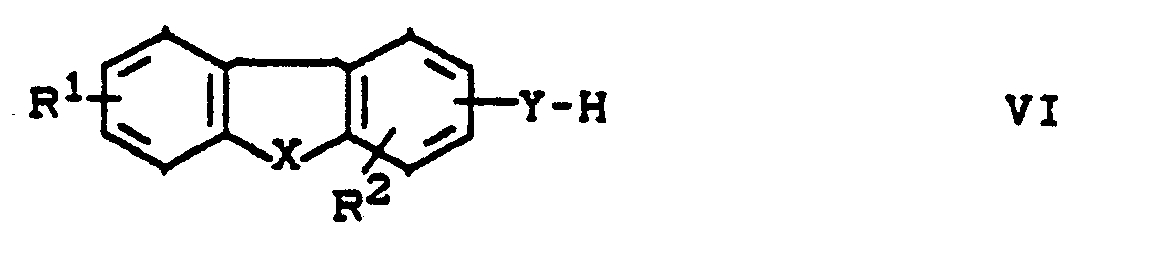
R¹, R², X, Y die oben angegebene Bedeutung haben,
mit 1,n-Dihalogenverbindungen der Formel XI
Hal, R³, R⁴, m, n, o die oben angegebene Bedeutung haben,
umsetzt, oder indem man - b) Verbindungen der Formel II

R¹, R², R³, R⁴, X, Y, Z, m, n, o die oben angegebene Bedeutung haben,
mit Halogenierungsmitteln umsetzt.
- a) Verbindungen der Formel VI
- Die Verbindungen der Formel I sowie ihre Salze mit Säuren eignen sich zur Bekämpfung von Insekten. Sie lassen sich besonders bevorzugt zur Bekämpfung von Flöhen einsetzen, insbesondere gegen Pulex irritans, Xenopsylla cheopis, Ctenocephalides canis, Ctenocephalides felis, Ceratophyllus gallinae, Echidnophaga gallinacea, Tunga penetrans. Die Verbindungen der Formel I besitzen die Entwicklung von Insekten hemmende Eigenschaften. Sie können daher gegen alle oder einzelne Entwicklungsstadien von Insekten, insbesondere der Flöhe eingesetzt werden.
- Bevorzugt sind Verbindungen der Formel I,
in welcher
X für O, S, CH₂ steht,
Y für O steht,
Z für O steht,
R¹ für gleiche oder verschiedene Reste aus der Gruppe Wasserstoff, Halogen wie Chlor steht,
R² für gleiche oder verschiedene Reste aus der Gruppe Wasserstoff, Chlor, Brom, C₁₋₄-Alkyl wie Methyl, Ethyl, i-Propyl, t-Butyl, C₂₋₄-Alkenyl wie Allyl, C₁₋₄-Halogenalkyl wie Trifluormethyl, C₁₋₄-Alkoxy, C₁₋₄-Halogenalkoxy wie Trifluormethoxy, steht,
R³ für Wasserstoff, C₁₋₄-Alkyl wie Methyl, Ethyl steht,
R⁴ für Wasserstoff, C₁₋₄-Alkyl wie Methyl, Ethyl, Propyl, Butyl, C₁₋₄-Halogenalkyl wie Trifluormethyl, C₁₋₄-Alkoxy-C₁₋₄-alkyl wie Methoxymethyl, n- oder t-Butoxymethyl, i-Propoxymethyl, C₂₋₄-Alkenyl wie Allyl, C₂₋₄-Alkenoxy-C₁₋₄-alkyl wie Alkyloxymethyl steht,
R³ und R⁴ gemeinsam mit den angrenzenden C-Atomen für Cyclopentyl oder Cyclohexyl stehen können,
m für 1 oder 2 steht,
n für 1 steht,
o für 1, 2 oder 3 steht,
Het für Pyridyl, Pyrimidinyl, Pyridazinyl, Pyrazinyl, Thiazolyl, Benzthiazolyl, die gegebenenfalls durch Halogen, C₁₋₄-Alkyl wie Methyl, Ethyl, C₁₋₄-Halogenalkyl wie Trifluormethyl, Amino, Acylamino wie z.B. substituiertes Phenylureido, Morpholinyl, Dimethylmorpholinyl, Piperazinyl, N-Alkylpiperazinyl, substituiert sein können, steht. - Besonders bevorzugt sind Verbindungen der Formel I,
in welcher
X für O, S steht,
Y für O steht,
Z für O steht,
R¹ für Wasserstoff steht,
R² für Wasserstoff, Halogen, insbesondere Chlor oder Brom, C₁₋₄-Alkyl, C₂₋₄-Alkenyl, insbesondere Alkyl steht,
R³ für Wasserstoff steht,
R⁴ für Wasserstoff, C₁₋₆-Alkyl, insbesondere Methyl, Ethyl, Propyl, Butyl, C₂₋₄-Alkenyl, insbesondere Allyl, C₁₋₄-Alkoxy-C₁₋₄-alkyl, insbesondere Methoxy-, Ethoxy-, Isopropoxy-, Butoxymethyl, C₂₋₄-Alkenoxy-C₁₋₄-alkyl, insbesondere Allyloxymethyl steht,
R³ und R⁴ gemeinsam mit den angrenzenden C-Atomen für Cyclopentyl oder Cyclohexyl stehen,
m für 1 oder 2 steht,
n für 1 oder 2 steht,
o für 1, 2 oder 3 steht,
Het für Pyridyl, Pyrimidinyl, Pyrazinyl, Thiazolyl, die gegebenenfalls durch C₁₋₄-Alkyl, C₁₋₄-Halogenalkyl, insbesondere Trifluormethyl, Amino, Halogen, insbesondere Chlor, C₁₋₄-Alkylureido, insbesondere Methylureido, Arylureido, insbesondere Phenylureido, wobei der Phenylring gegebenenfalls durch Halogen, Alkyl, Alkoxy, Halogenalkyl, Halogenalkoxy, substituiert sein kann, steht. - Im einzelnen seien genannt:


- Setzt man bei Verfahren 2a zur Herstellung der erfindungsgemäßen Verbindungen als Verbindung der Formel II 2-Hydroxyisopropoxydibenzofuran und als Verbindung der Formel III 3-Chlorpyridin ein, läßt sich der Reaktionsverlauf durch folgendes Formelschema kennzeichnen:

- Bevorzugt werden Verbindungen der Formel II und III eingesetzt, in denen R¹, R², R³, R⁴, X, Y, Z, Het, m, n, o die bei den Verbindungen der Formel I angegebenen bevorzugten oder besonders bevorzugten Bedeutungen besitzen.
- Im einzelnen seien folgende Verbindungen der Formel II genannt:
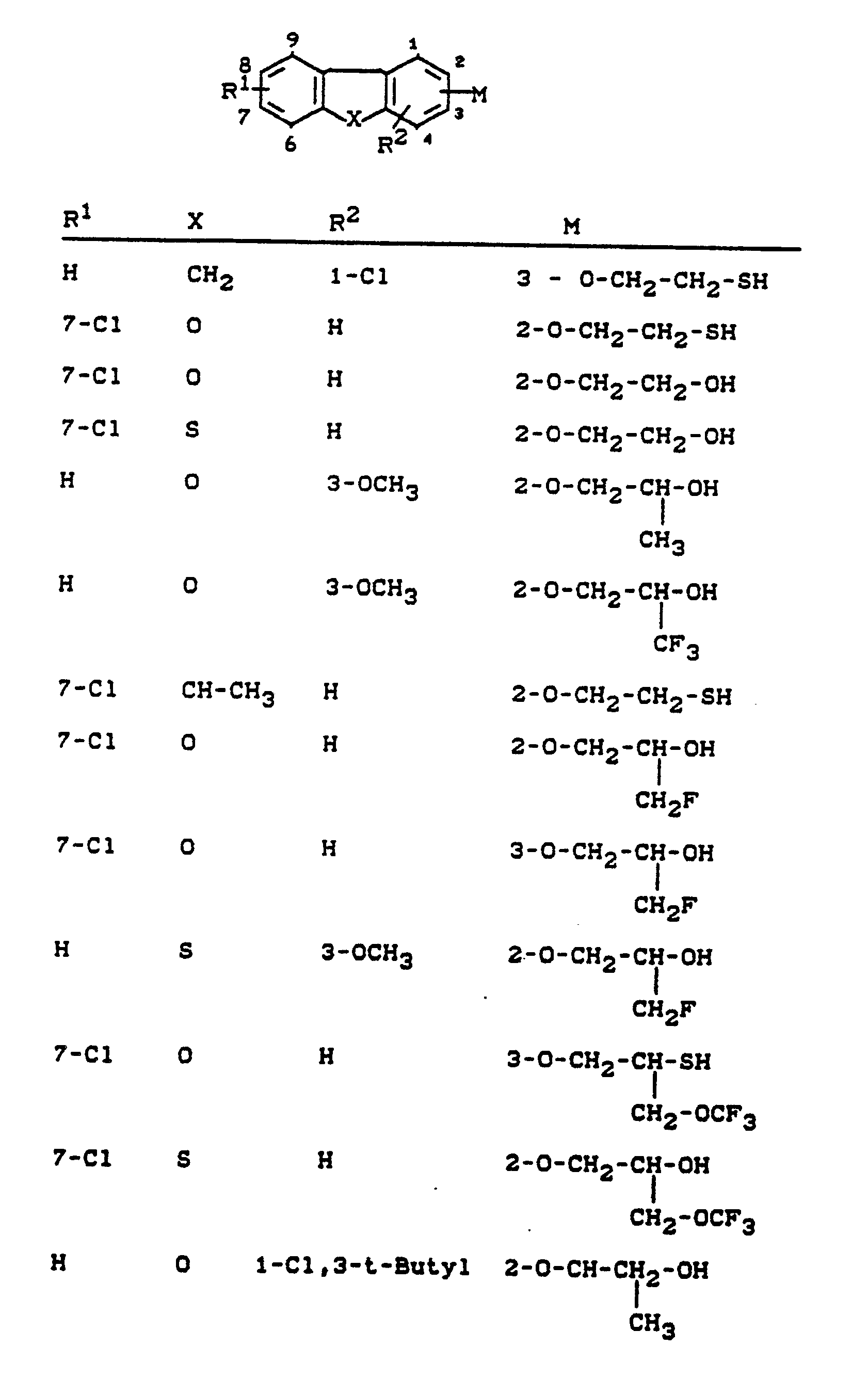
- In einzelnen seien folgende Verbindungen der Formel III genannt: 2-Chlorpyridin, 2-Brompyridin, 2-Chlorpyrimidin, 2-Brompyrimidin, 3-Chlorpyridin, 3-Brompyridin, 2-Chlor-5-trifluormethylpyridin, 2-Brom-5-methylpyridin, 4-Chlorpyridin, 2-Chlorbenzothiazol, 2-Chlorpyrazin, 2-Bromthiazol, 2-Chlor-6-methylpyridin, 5-Brompyrimidin, 2-Bromthiophen, 3-Bromthiophen, 3-Chlor-2,5-dimethylpyrazin, 4-Chlor-2-methylthiopyrimidin, 2-Chlorthiophen, 2,3-Dichlorpyridin, 2,5-Dichlorpyridin, 2,6-Dichlorpyridin, 2,6-Dibrompyridin, 3,5-Dichlorpyridin, 2,4-Dichlor-6-methylpyrimidin, 2,4-Dichlorpyrimidin, 4,6-Dichlor-pyrimidin, 2,6-Difluorpyridin, 4,6-Dichlor-2-methylthiopyrimidin, 2,6-Dichlor-pyrazin, 3,6-Dichlorpyridazin, 3-Chlor-6-N′-Alkylpiperazinyl-pyridazin, 3-Chlor-6-dimethylmorpholinyl-pyridazin.
- Die Verbindungen der Formel II sind neu, ihre Herstellung wird weiter unten beschrieben. Die Verbindungen der Formel III sind bekannt.
- Die Umsetzung erfolgt durch Erhitzen der Verbindungen II und III in Gegenwart von Verdünnungsmitteln, Basen sowie gegebenenfalls Katalysatoren.
- Die Umsetzung erfolgt bei Temperaturen von 0 - 200° C, bevorzugt bei 20 - 100° C, besonders bevorzugt bei Siedetemperatur des Verdünnungsmittels.
- Als Verdünnungsmittel kommen alle inerten organischen Lösungsmittel in Frage. Hierzu gehören insbesondere aliphatische und aromatische, gegebenenfalls halogenierte Kohlenwasserstoffe, wie Pentan, Hexan, Heptan, Cyclohexan, Petrolether, Benzin, Ligroin, Benzol, Toluol, Methylenchlorid, Ethylenchlorid, Tetrachlorkohlenstoff, Chlorbenzol und o-Dichlorbenzol, ferner Ether wie Diethyl- und Dibutylether, Glykoldimethylether und Diglykoldimethylether, Tetrahydrofuran und Dioxan, weiterhin Ketone, wie Aceton, Methylethyl-, Methylisopropyl- und Methylisobutylketon, außerdem Ester, wie Essigsäuremethylester und -ethylester, ferner Nitrile, wie z.B. Acetonitril und Propionitril, Benzonitril, Glutarsäuredinitril, darüber hinaus Amide, wie z.B. Dimethylformamid, Dimethylacetamid und N-Methylpyrrolidon, sowie Dimethylsulfoxid, Tetramethylensulfon und Hexamethylphosphorsäuretriamid.
- Als Basen kommen anorganische und organische Basen in Frage. Als Basen seien genannt Alkali- und Erdalkalihydroxide, -carbonate, -hydrogencarbonate, -alkoholate, ferner Amide wie insbesondere tertiäre Amine z.B. Trimethylamin, Triethylamin, N-Methylmorpholin, Pyridin, Picoline, N-Ethylpyrrolidin, Diazabicyclo(4,3,0)-undecan(DBU), 1,4-Diazabicyclo(2,2,2)octan (DABCO), Diazabicyclo(3,2,0)nonen (DBN).
- Als Katalysatoren kommen z.B. in Frage Phasentransferkatalysatoren wie Tris-[2-(2-methoxyethoxy)]-ethyl-amin (TDA-1), Benzyltriethylammoniumchlorid (TEBA), 1,4,7,10,13,16-Hexaoxacyclooctadecan (18-Crown-6), Tetrabutylammoniumbromid, Tetrabutylammoniumhydrogensulfat, Tetrabutylammoniumjodid, Methyltrialkyl (C₈-C₁₀)-ammoniumchlorid (Adogen 464).
- Die Verbindungen der Formeln II und III werden in etwa äquimolarem Verhältnis zueinander eingesetzt. Ein Überschuß der einen oder anderen Komponente bringt keinen wesentlichen Vorteil.
- Nach erfolgter Umsetzung wird das Verdünnungsmittel abdestilliert und die Verbindungen der Formel I in an sich bekannter Weise isoliert, indem sie z.B. aus dem Rückstand mit einem geeigneten Lösungsmittel z.B. Ether extrahiert werden. Die Verbindungen der Formel I können anschließend in üblicher Weise z.B. durch Destillation gereinigt werden.
- Setzt man bei Verfahren 2b zur Herstellung der Verbindungen der Formel I als Verbindung der Formel IV 3-Chlorpropyloxy-dibenzofuran und als Verbindung der Formel V 3-Amino-4-Mercaptopyridin ein, läßt sich der Reaktionsverlauf durch folgendes Formelschema wiedergeben:

- Das Verfahren wird bevorzugt angewendet, wenn die Verbindung der Formel V eine Aminogruppe enthält.
- Bevorzugt werden Verbindungen der Formeln IV und V eingesetzt, in denen R¹, R², R³, R⁴, X, Y, Z, Het, m, n, o die bei den Verbindungen der Formel I angegebenen bevorzugten oder besonders bevorzugten Bedeutungen besitzen.
- Im einzelnen seien folgende Verbindungen der Formel IV genannt:


- In einzelnen seien folgende Verbindungen der Formel V genannt: 2-Hydroxypyridin, 2-Mercaptopyridin, 2-Hydroxypyrimidin, 3-Hydroxypyridin, 2-Amino-3-hydroxypyridin, 2-Chlor-3-hydroxypyridin, 2,3-Dihydroxypyridin.
- Die Verbindungen der Formel IV sind neu, ihre Herstellung wird weiter unten beschrieben. Die Verbindungen der Formel V sind bekannt.
- Die Umsetzung erfolgt durch Erhitzen der Verbindungen IV und V in Gegenwart von Verdünnungsmitteln, Basen sowie gegebenenfalls Katalysatoren.
- Die Umsetzung erfolgt bei Temperaturen von 0 - 200° C, bevorzugt bei 20 - 100° C, besonders bevorzugt bei Siedetemperatur des Verdünnungsmittels.
- Als Verdünnungsmittel kommen alle inerten organischen Lösungsmittel in Frage. Hierzu gehören insbesondere aliphatische und aromatische, gegebenenfalls halogenierte Kohlenwasserstoffe, wie Pentan, Hexan, Heptan, Cyclohexan, Petrolether, Benzin, Ligroin, Benzol, Toluol, Methylenchlorid, Ethylenchlorid, Tetrachlorkohlenstoff, Chlorbenzol und o-Dichlorbenzol, ferner Ether wie Diethyl- und Dibutylether, Glykoldimethylether und Diglykoldimethylether, Tetrahydrofuran und Dioxan, weiterhin Ketone, wie Aceton, Methylethyl-, Methylisopropyl- und Methylisobutylketon, außerdem Ester, wie Essigsäuremethylester und -ethylester, ferner Nitrile, wie z.B. Acetonitril und Propionitril, Benzonitril, Glutarsäure dinitril, darüber hinaus Amide, wie z.B. Dimethylformamid, Dimethylacetamid und N-Methylpyrrolidon, sowie Dimethylsulfoxid, Tetramethylensulfon und Hexamethylphosphorsäuretriamid.
- Als Basen kommen anorganische und organische Basen in Frage. Als Basen seien genannt Alkali- und Erdalkalihydroxide, -carbonate, -hydrogencarbonate, -alkoholate, ferner Amine wie insbesondere tertiäre Amine z.B. Trimethylamin, Triethylamin, N-Methylmorpholin, Pyridin, Picoline, N-Ethylpyrrolidin, Diazabicyclo(4,3,0)-undecan(DBU), 1,4-Diazabicyclo(2,2,2)octan (DABCO), Diazabicyclo(3,2,0)nonen (DBN).
- Als Katalysatoren kommen z.B. in Frage Phasentransferkatalysatoren wie Methyltrialkyl (C₈-C₁₀)-ammoniumchlorid (Adogen 464), 1,4,7,10,13,16-Hexaoxacyclooctadecan (18-Crown-6), Tetrabutylammoniumbromid, Tris-[2-(2-methoxyaethoxy)-aethyl]-amin (TDA-1), Benzyltriethylammoniumchlorid (TEBA).
- Die Verbindungen der Formeln IV und V werden in etwa äquimolarem Verhältnis zueinander eingesetzt. Ein Überschuß der einen oder anderen Komponente bringt keinen wesentlichen Vorteil.
- Nach erfolgter Umsetzung wird das Verdünnungsmittel abdestilliert und die Verbindungen der Formel I in an sich bekannter Weise isoliert, indem sie z.B. aus dem Rückstand mit einem geeigneten Lösungsmittel z.B. Ether extrahiert werden. Die Verbindungen der Formel I können anschließend in üblicher Weise z.B. durch Destillation gereinigt werden.
- Verfahren 2c kann zur Herstellung der Verbindungen der Formel I eingesetzt werden, in denen die Reste R² für Halogen stehen. Es läßt sich durch folgendes Formelschema darstellen:

- Die Halogenierung wird mit geeigneten Halogenierungsmitteln, gegebenenfalls bei erhöhter Temperatur und in Gegenwart von Verdünnungsmitteln, durchgeführt.
- Als Halogenierungsmittel seien genannt: elementares Halogen, insbesondere Brom, Kupfer(II)halogenide, insbesondere CuBr₂, Sulfurylchlorid. Die Halogenierungsmittel werden im allgemeinen in etwa stöchiometrischer Menge zu den Verbindungen der Formel I, in welcher R² für Wasserstoff steht und die übrigen Substitutionen die oben angegebene Bedeutung haben, eingesetzt. Ein bis zu 5-facher, bevorzugt bis 1,5-facher Überschuß Halogenierungsmittel kann vorteilhaft sein.
- Die Halogenierung wird zwischen -10 und +150°C, bevorzugt zwischen 0 und 100°C, durchgeführt. Weiter bevorzugt ist das Arbeiten bei Siedetemperatur des Verdünnungsmittels.
- Es wird bevorzugt bei Normaldruck gearbeitet. Geeignete Verdünnungsmittel sind gegebenenfalls substituierte aliphatische oder aromatische Kohlenwasserstoffe wie Pentan, Hexan, Heptan, Cyclohexan, Benzin, Benzol, Ligroin, Petrolether, Toluol, Methylenchlorid, Ethylenchlorid, Chloroform, Tetrachlorkohlenstoff, Chlorbenzol, o-Dichlorbenzol. Für die Durchführung der Halogenierung mit Brom oder CuBr₂ seien außerdem genannt Alkohole wie Methanol, Ethanol, Ester wie Essigsäurethylester, Eisessig.
- Die Halogenierung mit Brom erfolgt bevorzugt in Gegenwart von äquimolaren Mengen Bromwasserstoffsäure.
- Die Aufarbeitung der Reaktionsmischung nach Beendigung der Reaktion erfolgt in an sich bekannter Weise.
- Setzt man bei Verfahren 4 zur Herstellung der Verbindungen der Formel II als Verbindung der Formel VI 3-Hydroxy-dibenzofuran ein und als Verbindung der Formel VII Propylenoxid, so läßt sich der Reaktionsablauf durch folgendes Formelschema darstellen:
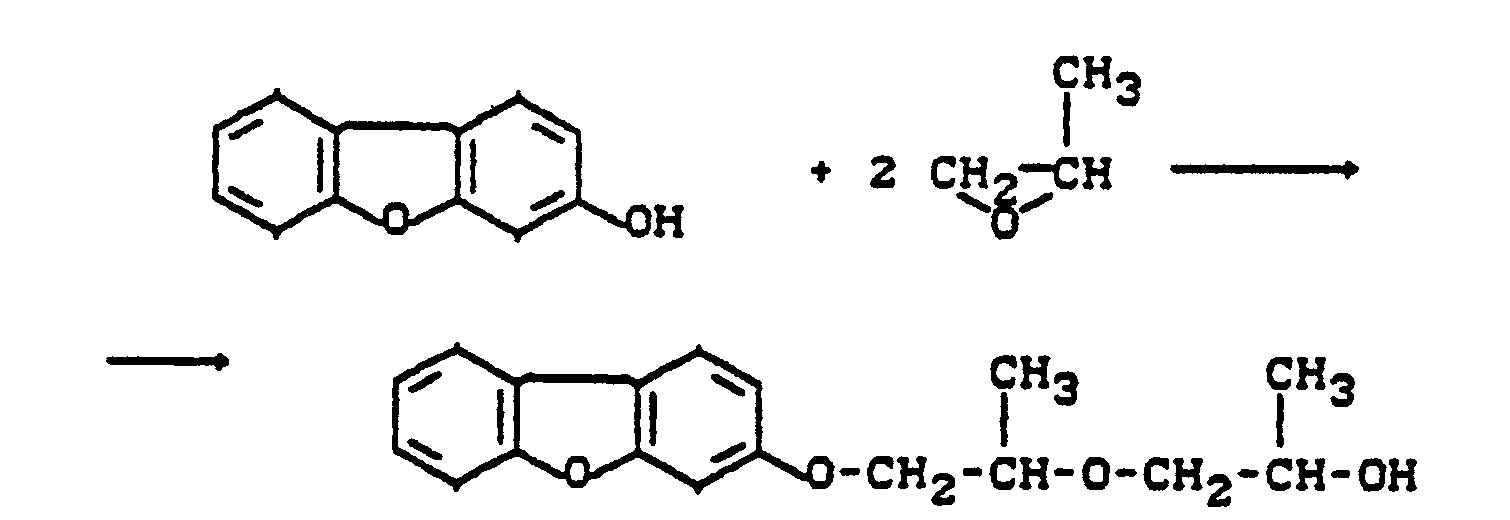
- Bevorzugt werden Verbindungen der Formeln VI und VII eingesetzt, in welchen R¹, R², R³, R⁴, X, Y die bei den Verbindungen der Formel I angegebenen bevorzugten Bedeutungen besitzen.
- Im einzelnen seien folgende Verbindungen der Formel VI genannt:
2-Hydroxy-dibenzofuran, 2-Hydroxy-dibenzothiophen, 3-Hydroxy-dibenzofuran, 3-Hydroxy-dibenzothiophen, 2-Hydroxyfluoren, 3-Hydroxyfluoren, 7-Chlor-2-hydroxydibenzofuran, 2-Hydroxy-3-tert.-butyl-dibenzofuran, 2-Hydroxy-3-methoxy-dibenzofuran, 1-Allyl-2-hydroxy-dibenzofuran, 2-Hydroxy-3-allyl-dibenzofuran, 2-Mercaptodibenzofuran, 3-Mercapto-dibenzofuran, 2-Mercapto-dibenzothiophen, 2-Mercapto-fluoren. - Im einzelnen seien folgende Verbindungen der Formel VII genannt:
Propylenoxid, 1-Chlor-2,3-epoxypropan, 1-Fluor-2,3-epoxypropan, 3,3,3-Trifluoro-1,2-epoxypropan, Butyl-2,3-epoxypropylether, 2,3-Epoxypropyl-isopropylether, Allylglycidylether, 1-Brom-2,3-epoxypropan, 1,3-Butadienmonoxid, Cyclopentenoxid, Cyclohexenoxid, Cycloheptenoxid, 1,2-Hexenoxid, 1,2-Decenoxid, 1,2-Dodecenoxid, 1,2-Hexadecenoxid, 2,2-Dimethyl-1-methoxyaethylenoxid, 1,2-Epoxy-3-methoxypropan, 1,5-Hexadienmonoxid, tert.-Butyl-2,3-epoxypropylether, 3-Methoxy-2,2-dimethylenpoxypropan, 1,2-Butylenoxid, 2,2-Dimethyloxiran, 2,3-Dimethyloxiran. - Die Verbindungen der Formeln VI und VII sind bekannt.
- Die Umsetzung erfolgt durch Erhitzen einer Mischung der Ausgangsverbindungen in einem Verdünnungsmittel und Waser in Gegenwart von Basen sowie gegebenenfalls in Gegenwart eines Katalysators.
- Die Umsetzung erfolgt bei Temperaturen von 0 bis 200°C, insbesondere bei 50 - 150°C.
- Als Verdünnungsmittel seien genannt:
Pentan, Hexan, Heptan, Cyclohexan, Petrolether, Benzin, Ligroin, Benzol, Toluol, Xylol, Diethylether, Dibutylether, Diglykoldimethylether, Dioxan, Dimethylsulfoxid. - Als Basen seien genannt:
Alkali- und Erdalkalihydroxide, -carbonate. - Als Katalysatoren seien genannt:
Tetrabutylammoniumbromid, Tetrabutylammoniumhydrogensulfat. Tetrabuylammoniumjodid, Triethylbenzylammoniumchlorid (TEBA), Methyl (C₈-C₁₀)-ammoniumchlorid (Adogen 464), Hexadecyl-tributylphosphoniumbromid, Tetraethylammoniumjodid. - Die Verbindungen VI und VII werden in äquimolarem Verhältnis zueinander eingesetzt, wenn Verbindungen der Formel II erhalten werden sollen, bei denen der Index o = 1 ist. Soll der Index o für 2 oder 3 stehen, werden entsprechende molare Verhältnisse gewählt.
- Nach erfolgter Umsetzung erfolgt die Aufarbeitung wie folgt:
- Die organische Phase wird von der Wasserphase abgetrennt; nach dem Trocknen über z.B. Natriumsulfat wird vom org.Verdünnungsmittel abdestilliert, aus dem Rückstand werden die Verbindungen der Formel II in üblicher Weise z.B. durch Destillation gereinigt.
- Die Umsetzung der Verbindungen der Formel VI mit Verbindungen der Formel VII erfolgt durch Erhitzen einer Mischung der Ausgangsverbindungen in einem Verdünnungsmittel und Wasser in Gegenwart von Basen und Katalysatoren.
- Diese Art der Umsetzung wird bevorzugt gewählt, um zu Verbindungen der Formel I zu gelangen, in denen R³ für andere Reste als Wasserstoff steht.
- Die Umsetzung erfolgt bei Temperaturen von 0 bis 200°C, insbesondere bei 50 - 150°C.
- Als Verdünnungsmittel seien genannt:
Pentan, Hexan, Heptan, Cyclohexan, Petrolether, Benzin, Ligroin, Benzol, Toluol, Xylol, Diethylether, Dibutylether, Diglykoldimethylether, Dioxan, Dimethylsulfoxid. - Als Basen seien genannt;
Alkali- und Erdalkalihydroxide-, carbonate. - Als Katalysatoren seien genannt:
- Tetrabutylammoniumbromid, Tetrabutylammoniumhydrogensulfat, Tetrabutylammoniumjodid, Triethylbenzylammoniumchlorid (TEBA), Methyl (C₈-C₁₀)-ammoniumchlorid (Adogen 464), Hexadecyl-tributylphosphoniumbromid, Tetraethylammoniumjodid.
- Die Verbindungen VI und VII werden in äquimolarem Verhältnis zueinander eingesetzt, wenn Verbindungen der Formel II erhalten werden sollen, bei denen der Index o = 1 ist. Soll der Index o für 2 oder 3 stehen, werden entsprechende molare Verhältnisse gewählt.
- Nach erfolgter Umsetzung erfolgt die Aufarbeitung wie folgt:
- Die organische Phase wird von der Wasserphase abgetrennt; nach dem Trocknen über z.B. Natriumsulfat wird vom organischen Verdünnungsmittel abdestilliert, aus dem Rückstand werden die Verbindungen der Formel II in üblicher Weise z.B. durch Destillation gereinigt.
- Setzt man bei Verfahren 6 zur Herstellung der Verbindungen der Formel IV als Verbindung der Formel VI 3-Hydroxy-dibenzothiophen ein und als 1,n-Dihalogenverbindung der Formel IX 1,2-Dibrompropan ein, so läßt sich der Reaktionsablauf durch folgendes Formelschema wiedergeben:

- Bevorzugt werden Verbindungen der Formeln VI und IX eingesetzt, in welchen R¹, R², R³, R⁴, X, Y, m, n, o die oben angegebenen bevorzugten und besonders bevorzugten Bedeutungen haben und Hal für Chlor oder Brom, insbesondere für Brom steht.
- Im einzelnen seien die bei Verfahren 4 genannten Verbindungen der Formel VI genannt.
- Im einzelnen seien folgende Verbindungen der Formel IX genannt:
1,2-Dibrompropan,
1,3-Dibrompropan,
1,2-Dibrom-3-fluorpropan,
1-Brom-2-Chlorpropan, - Die Umsetzung erfolgt bei Temperaturen von 0 bis 200°C, insbesondere bei 70 - 130°C.
- Als Verdünnungsmittel seien genannt:
Wasser!, Benzol, Toluol, Diglykoldimethylether, Aceton, Methyl-ethylketon, Methyl-isopropylketon, Acetonitril, Propionitril, Glutarsäuredinitril, N,N-Dimethylformamid. - Als Basen seien genannt:
Alkali- und Erdalkalihydroxide, -carbonate. - Als Katalysatoren seien genannt:
Tetrabutylammoniumbromid, Natriumjodid, Kaliumjodid. - Die Verbindungen VI und IX werden in äquimolarem Verhältnis zueinander eingesetzt, wenn Verbindungen der Formel IV erhalten werden sollen, bei denen der Index o = 1 ist.
- Nach erfolgter Umsetzung erfolgt die Aufarbeitung wie folgt:
- Das Verdünnungsmittel wird abdestilliert, und die Verbindungen der Formel IV werden isoliert, indem sie z.B. aus dem Rückstand mit einem geeigneten Lösungsmittel wie z.B. Ether extrahiert werden. Die Verbindungen der Formel IV können anschließend in üblicher Weise z.B. durch Destillation gereinigt werden.
- Sollen Verbindungen der Formel IV erhalten werden, in denen R² für Halogen steht, werden gemäß Verfahren 6b Verbindungen der Formel II, in denen R² für Wasserstoff steht, mit Halogenierungsmitteln umgesetzt. Die Durchführung des Verfahrens erfolgt wie weiter oben bei Verfahren 2c) beschrieben.
- Die Anwendung der Wirkstoffe erfolgt direkt oder in Form von geeigneten Zubereitungen, dermal, enteral oder parenteral, oder durch Behandlung der Umgebung oder mit Hilfe wirkstoffhaltiger Formkörper wie z.B. Bänder, Halsbänder, Gliedmaßenbänder, Markierungsvorrichtungen.
- Die dermale Anwendung geschieht z.B. in Form des Tauchens (Dippen), Sprühens (Sprayen) oder Aufgießens (pour-on und spot-on) und des Einpuderns.
- Zubereitungen zur dermalen Anwendung sind z.B. Lösungen, Suspensions- und Emulsionskonzentrate sowie Mikroemulsionen, die vor Anwendung mit Wasser verdünnt werden, Aufgußformulierungen, Pulver und Stäube, Aerosole und wirkstoffhaltige Formkörper.
- Lösungen, Suspensions- und Emulsionskonzentrate sowie Mikroemulsionen die vor der Anwendung mit Wasser verdünnt werden, Pulver, Stäube und Aerosolformulierungen werden zur Behandlung der Umgebung der Haustiere eingesetzt.
- Diese Zubereitungen werden in bekannter Weise hergestellt, z.B. durch Vermischen des Wirkstoffs mit Streckmitteln, also z.B. flüssigen Lösungsmitteln, gegebenenfalls unter Verwendung von oberflächenaktiven Mitteln, also Emulgiermitteln und/oder Dispergiermitteln. Im Falle der Benutzung von Wasser als Streckmittel können z.B. auch organische Lösungsmittel als Hilfslösungsmittel verwendet werden.
- Zu den flüssigen Verdünnungsmitteln zählen neben Wasser Alkohole wie Methanol, Ethanol, Isopropanol, n-Butanol, Amylalkohol, Octanol;
Glykole wie Propylenglykol, 1,3-Butylenglykol, Ethylglykol, Dipropylenglykolmonomethylether;
Glycerin;
aromatische Alkohole wie Benzylalkohol;
Carbonsäureester wie z.B. Ethylacetat, Benzylbenzoat, Butylacetat, Propylencarbonat, Milchsäureethylester;
aliphatische Kohlenwasserstoffe wie Paraffine, Cyclohexan, Methylenchlorid, Ethylenchlorid;
aromatische Kohlenwasserstoffe wie Xylol, Toluol, Alkylnaphthaline, Chlorbenzole;
Ketone wie z.B. Aceton und Methylethylketon, Methylisobutylketon, Cyclohexanon;
natürliche und synthetische Mono- und Triglyceride mit natürlichen Fettsäuren wie Baumwollsaatöl, Erdnußöl, Maiskeimöl, Olivenöl, Ricinusöl, Sesamöl;
weiterhin Dimethylsulfoxid, Dimethylacetamid, Dimethylformamid, N-Methylpyrrolidon, Dioxan, 2,2-Dimethyl-4-oxymethyl-1,3-dioxolan. - Zu den oberflächenaktiven Stoffen zählen:
Emulgatoren und Netzmittel wie anionaktive Tenside, z.B. Alkylsulfonate, Alkylsulfate, Arylsulfonate, Na-Laurylsulfate, Fettalkoholethersulfate, Mono/Dialkylpolyglykoletherorthophosphorsäureester-Monoethanolaminsalz, Calciumalkylarylsulfonat;
kationaktive Tenside, z.B. Cetyltrimethylammoniumchlorid;
ampholytische Tenside, z.B. Di-Na-N-lauryl-beta-iminodipropionat oder Lecithin;
nichtionogene Tenside, z.B. polyoxyethyliertes Ricinusöl, polyoxyethyliertes Sorbitan-Monooleat, polyoxyethyliertes Sorbitan-Monostearat, Glycerinmonostearat, Polyoxyethylenstearat, Alkylphenolpolyglykolether, polyoxyethyliertes Sorbitanmonopalmitat, Polyoxyethylenlaurylether, Polyoxyethylen-oleylether, Polyoxyethylenmannitanmonolaurat, Alkylpolyglykolether, Oleylpolyglykolether, Dodecylpolyglykolether, ethoxyliertes Nonylphenol, Isooctylphenolpolyethoxyethanol. - Die Zubereitungen können außerdem enthalten:
Haftvermittler, z.B. Carboxymethylcellulose, Methylcellulose und andere Cellulose- und Stärke-Derivate, Polyacrylate, Alginate, Gelatine, Gummi arabicum, Polyvinylpyrrolidon, Polyvinylalkohol, Copolymere aus Methylvinylether und Maleinsäureanhydrid, Polyethylenglykole, Paraffine, Öle, Wachse, hydriertes Rizinusöl, Lecithine und synthetische Phospholipide. - Die Zubereitungen können Farbstoffe wie anorganische Pigmente, z.B.Eisenoxid, Titanoxid, Ferrocyanblau und organische Farbstoffe, wie Alizarin-, Azo- und Metallphthalocyaninfarbstoffe enthalten.
- Die Zubereitungen können Spreitmittel enthalten, z.B. Silikonöle verschiedener Viskosität, Fettsäureester wie Ethylstearat, Di-n-butyl-adipat, Laurinsäurehexylester, Dipropylen-glykolpelargonat, Ester einer verzweigten Fettsäure mittlerer Kettenlänge mit gesättigten Fettalkoholen C₁₆-C₁₈, Isopropylmyristat, Isopropylpalmitat, Capryl/Caprinsäureester von gesättigten Fettalkoholen der Kettenlänge C₁₂-C₁₈, Isopropylstearat, Ölsäureoleylester, Ölsäuredecylester, Ethyloleat, Milchsäureethylester, wachsartige Fettsäureester, Dibutylphthalat, Adipinsäurediisopropylester, letzterem verwandte Estergemische u.a.;
Triglyceride wie Capryl/Caprinsäuretriglycerid, Triglyceridgemische mit Pflanzenfettsäuren der Kettenlänge C₈-C₁₂ oder anderen speziell ausgewählten natürlichen Fettsäuren, Partialglyceridgemische gesättigter oder ungesättigter evtl. auch hydroxylgruppenhaltige Fettsäuren, Monodiglyceride der C₈/C₁₀-Fettsäuren und andere;
Fettalkohole wie Isotridecylalkohol, 2-Octyldodecanol, Cetylstearylalkohol, Oleylalkohol. - Zur Herstellung von Pulvern und Stäuben wird der Wirkstoff mit geeigneten Trägerstoffen gegebenenfalls unter Zusatz von Hilfsstoffen vermischt und in die gewünschte Form gebracht.
- Als Trägerstoffe seien genannt alle physiologisch verträglichen festen Inertstoffe. Als solche dienen anorganische und organische Stoffe. Anorganische Stoffe sind gegebenenfalls gebrochene und fraktionierte, z.B. synthetische und natürliche Gesteinsmehle wie Kaoline, Talkum, Kreide, Diatomeenerde, Kochsalz, Aluminiumoxide, Kieselsäuren, Tonerden, gefälltes oder kolloidales Siliciumdioxid. Organische Stoffe sind Laktose, Stärke und Cellulose bzw. Cellulosederivate.
- Hilfsstoffe sind Konservierungsstoffe, Antioxidantien, Farbstoffe, die bereits weiter oben aufgeführt worden sind.
- Weitere geeignete Hilfsstoffe sind Schmier- und Gleitmittel wie z.B. Magnesiumstearat, Stearinsäure, Talkum, Bentonite.
- Die Wirkstoffe können in Form ihrer oben erwähnten festen oder flüssigen Formulierungen auch eingekapselt vorliegen.
- Die Wirkstoffe können auch in Form eines Aerosols angewendet werden. Dazu wird der Wirkstoff in geeigneter Formulierung unter Druck fein verteilt.
- Es kann auch vorteilhaft sein, die Wirkstoffe in Formulierungen anzuwenden, die den Wirkstoff verzögert freigeben. Als solche seien wirkstoffhaltige Formkörper wie z.B. Platten, Bänder, Streifen, Halsbänder, Gliedmaßenbänder, Markierungsvorrichtungen genannt.
- Die Wirkstoffe können in den Formulierungen allein oder in Mischung mit anderen Wirkstoffen oder Synergisten vorliegen.
- Direkt angewendete Formulierungen enthalten zwischen 10⁻⁷ und 5 Gewichtsprozent, bevorzugt zwischen 10⁻⁴ und 1 Gewichtsprozent Wirkstoff.
- Formulierungen die erst nach weiterer Verdünnung angewendet werden enthalten 1 - 95 Gewichtsprozent, bevorzugt 5 - 90 Gewichtsprozent Wirkstoff.
-
1. Herstellung eines Emulsionskonzentrates a) Wirkstoff gemäß Beispiel 1 (100 %) 25,00 g nichtionischer Emulgator (Emulgator 368® = Alkylarylpolyglycolether MG ca. 1165) 25,00 g Dipropylenglykolmonomethylether ad 100,00 ml - Die Substanzen werden zusammen gewogen und so lange gerührt, bis eine klare Lösung entstanden ist.
- Vor Gebrauch wird die Lösung auf ihre Anwendungskonzentration verdünnt.
b) Wirkstoff gemäß Beispiel 2 (100 %) 1,00 g Polyoxyethylenstearat 0,50 g Sorbitan-Sesquioleat 0,40 g Wasser 4,00 g Polyethylenglykol 200 ad 100 ml - Herstellung und Anwendung wie bei 1a
2. Herstellung einer pour-on-Formulierung a) Zusammensetzung Wirkstoff gemäß Beispiel 1 (100 %) 5,00 g Isopropylmyristat 30,00 g 2-Octyldodecanol 20,00 g Isopropanol ad 100 ml - Die Substanzen werden zusammen gewogen und bis zur klaren Lösung gerührt.
b) Zusammensetzung Wirkstoff gemäß Beispiel 1 (100 %) 0,50 g Silikonöl 100 30,00 g Butylacetat ad 100 ml - Herstellung wie bei Beispiel a)
3. Herstellung einer Mikroemulsion Wirkstoff gemäß Beispiel 1 (100 %) 13,00 g Eumulgin B3®(Alkylarylpolyglycolether) 30,00 g Cetiol HE® (Polyolfettsäureester) 30,00 g Isopropylmyristat 5,00 g Benzylalkohol 3,00 g Wasser ad 100 ml - Der Wirkstoff wird in den lipophilen Komponenten (Eumulgin, Cetiol, Benzylalkohol, Isopropylmyristat) dispergiert.
- Nach Erwärmen auf 60°C wird Wasser der gleichen Temperatur zugemischt und abgekühlt. Die entstandene Mikroemulsion gleicht außerlich einer klaren Lösung.
-
Zusammensetzung Wirkstoff gemäß Beispiel 1 (100 %) 20 g Emulgator Toximul®3 7 g (Mischung aus Alkylbenzolsulfonat-Ca und nichtionogenen Emulgatoren und Methanol) Emulgator Toximul S® 5 g (Mischung aus Alkylbenzolsulfonat-Ca und nichtionogenem Emulgator und Methanol) Sovesso 200® ad 100 ml (Alkylnaphthalin-Gemisch hochsiedender Erdölfraktionen) - Der Wirkstoff wird mit den restlichen Komponenten zusammen gewogen, gerührt und vor Anwendung mit Wasser auf die Anwendungskonzentration verdünnt.
- Die zu testende Substanz wird in der gewünschten Konzentration homogen in Blutmehl verteilt. In dieses Gemisch aus Blutmehl und Testsubstanz werden Floheier, die von flohbefallenen Katzen gesammelt wurden, gebracht und bei 80 % rel. Feuchte und 25°C inkubiert.
- Nach Ablauf der Entwicklungszeit von 3 bis 4 Wochen wird festgestellt, ob adulte Flöhe zur Entwicklung gekommen sind. Dabei bedeutet eine 100 %ige Wirkung, daß keine adulten Flöhe festgestellt wurden und 0 %, daß lebende adulte Flöhe festgestellt wurden.
- Der Wirkstoff gemäß Beispiel 1 zeigt bei 5 ppm 100 % Wirkung.
- Läger von flohfreien Hunden/Katzen in Boxen werden mit der zu testenden Substanz in der gewünschten Anwendungskonzentration besprüht. Zu bestimmten Zeiten nach der Applikation werden Eier von Ctenocephalides felis, die von behandelten Katzen gesammelt wurden, auf die Läger der Hunde/Katzen gebracht. Es wird festgestellt, ob und zu welchem Zeitpunkt die in den Boxen befindlichen Hunde/Katzen von adulten Flöhen befallen werden.
- Dabei bedeutet eine 100 %ige Wirkung, daß Hunde/Katzen keinen Flohbefall aufweisen und 0 % Wirkung, daß Hunde/Kazen von Flöhen befallen sind.
- Der Wirkstoff gemäß Beispiel 1 zeigt 100 % Wirkung.
- Ein Gemisch aus 1 m Verbindung der Formel II und der etwa 1,1- bis 3-fachen molaren Menge Verbindung der Formel III, der etwa 6-fachen molaren Menge Na-OH-Pulver, der etwa 1,1-fachen Menge K₂CO₃-Pulver sowie der etwa 0,02-fachen Menge des Phasentransferkatalysators Tris-(2-(2-methoxyethoxy)-ethyl)-amin wird in Toluol ca. 36 Stunden am Rückfluß gekocht. Nach dem Abkühlen wird die Toluolphase mit Wasser gewaschen, über Na₂SO₄ getrocknet und in Vakuum eingeengt. Das entstandene Produkt wird durch Kugelrohrdestillation weiter gereinigt. Gemäß dieser Vorschrift werden erhalten:
-

8,20 ppm (m, H-6′); 8,13 ppm (m, H-9); 7,80 ppm (m, H-1); 7,72 ppm (m, H-4′); 7,67 ppm (m, H-4); 7,60 ppm (m, H-6); 7,51 ppm (m, H-7); 7,39 ppm (m, H-8); 7,13 ppm (m, H-3); 6,99 ppm (m, H-5′); 6,84 ppm (m, H-3′); 5,60 ppm (m, -CH-O); 4,28 ppm (m, 2H, -OCH₂); 1,45 ppm (d, J = 6,4 Hz; CH₃). - Das Salz mit HCl hat einen Fp von 109°C.
-
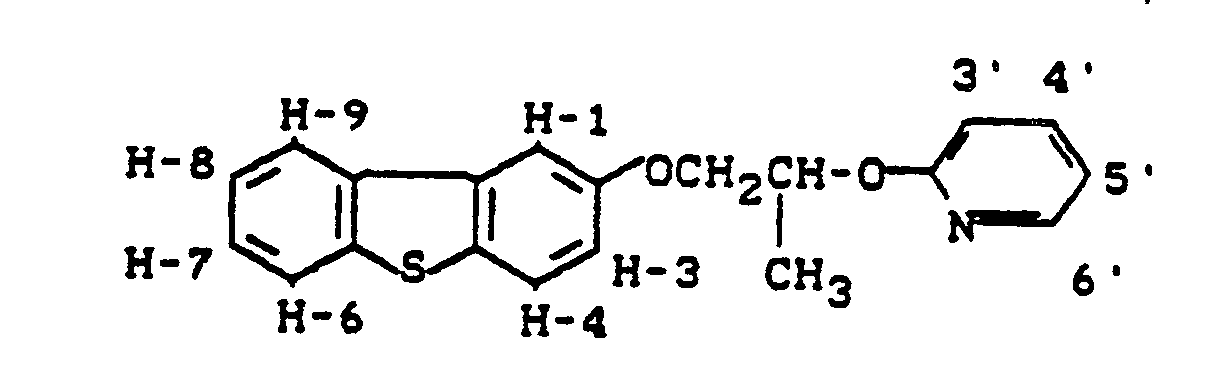
8,18 ppm (m, H-6′); 8,08 ppm (m, H-9); 7,81 ppm (m, H-4′); 7,70 ppm (m, H-4); 7,68 ppm (m, H-1); 7,58-7,4 ppm (m, 2H, H-7, H-6); 7,1 ppm (m, H-3); 6,85 ppm (m, H-5′); 6,76 ppm (m, H-3′); 5,65 ppm (m, CH); 4,33 ppm + 4,20 ppm (m, 2H, OCH₂); 1,51 ppm (d, CH₃). -

8,16 ppm (m, H-6′); 7,85 ppm (m, H-9); 7,55 ppm (m, H-4′); 7,50 ppm (m, H-4); 7,48 ppm (m, H-1); 7,4 ppm (m, 2H, H-7, H-6); 7,29 ppm (m, H-8); 7,05 ppm (m, H-3); 6,83 ppm (m, H-5′); 6,76 ppm (m, H-3′); 5,57 ppm (m, 1H, CH); 4,27 ppm (m, 2H, OCH₂); 1,91-1,45 ppm (m, 6H, Butyl CH₂); 0,91 ppm (t, 3H, CH₃). -

8,10 ppm (m, H-6′); 7,88 ppm (m, H-9); 7,52 ppm (m, H-4); 7,50 ppm (m, H-4′); 7,45-7,40 ppm (m, 3H, H-1, H-6, H-7); 7,40 ppm (m, H-8); 7,03 ppm (m, H-3); 6,78 ppm (m, H-5′); 6,74 ppm (m, H-3′); 5,45 ppm (m, 1H, CHA); 4,2-3,5 ppm (m, 11H); 1,10 ppm (m, 12H, CH₃). -

8,45 ppm (s, H-6′); 7,85 ppm (m, H-9); 7,74 ppm (d, H-4′); 7,51 ppm (m, H-4); 7,45 ppm (m, 3H; H-1, H-6, H-7); 7,3 ppm (m, H-8); 7,05 ppm (m, H-3); 6,80 ppm (d, H-3′); 5,69 ppm (m, CH); 4,28 ppm+4,18 ppm (m, 2H, OCH₂); 1,52 ppm (d, CH₃). -

7,97 ppm (s, H-6′); 7,88 ppm (m, H-9); 7,52 ppm (m, H-4); 7,47 ppm (m, H-1); 7,40 ppm (m, 2H, H-7, H-6); 7,39 ppm (d, H-4′); 7,30 ppm (m, H-8); 7,08 ppm (m, H-3); 6,68 ppm (d, H-3′); 5,59 ppm (m, CH); 4,29 ppm+4,16ppm (m, 2H, OCH₂); 2,22 ppm (s, CH₃ Pyridin); 1,51 ppm (d, J = 6,4 Hz, CH₃). -

7,87 ppm (m, H-9); 7,53 ppm (m, H-4); 7,41 ppm (m, 3H, H-1, H-6, H-7); 7,30 ppm (m, H-8); 7,14 ppm (d, J = 3,8 Hz, HA oder HB); 7,05 ppm (m, H-3); 6,68 ppm (d, J = 3,8 Hz, HB oder HA); 5,50 ppm (m, CH); 4,26 ppm (m, CH₂, 2H); 1,58 ppm (d, J = 6,4 Hz, CH₃). -

8,25 ppm (d, J = 1,3 Hz, H-3′); 8,12 ppm (d, J = 2,8 Hz, H-6′); 8,07 ppm (dd, H-5′); 7,89 ppm (m, H-9); 7,54 ppm (m, H-4); 7,48 ppm (m, H-1); 7,45 ppm (m, 2H, H-6), H-7); 7,30 ppm (m, H-8); 7,05 ppm (m, H-3); 5,61 ppm (m, CH); 4,30 ppm und 4,19 ppm (m, 2H, CH₂); 1,53 ppm (d, J = 6,4 Hz, CH₃). -

8,12 ppm (m, H-6′); 7,85 ppm (m, H-9); 7,52 ppm (m, H-4′); 7,5-7,4 ppm (m, 4H; H-1), H-4, H-6, H-7); 7,25 ppm (m, H-8); 7.08 ppm (m, H-3); 6,82 ppm (m, H-5′); 6,79 ppm (m, H-3′); 5,89 ppm (m, 1H, CH = CH₂); 5,72 ppm (m, -CH-O); 5,28+5,18 ppm (m, 2H, CH = CH₂); 4,39-3,90 ppm (m, 6H, CH2A + CH2B + CH2C). -

8.09 ppm (m, H-6′); 7,85 ppm (m, H-9); 7,50 ppm (m, H-4); 7,48 ppm (m, H-4′); 7,38 ppm (m, 3H, H-1, H-6, H-7); 7,28 ppm (m, H-8); 7,00 ppm (m, H-3); 6,78 ppm (m, H-5′); 6,73 ppm (m, H-3′); 5,88 ppm (m, 2H, -CH = CH₂); 5,80-5,60 ppm (m, 4H, CH = CH₂); 5,52 ppm (m, 1H, CHB); 4,2-3,6 ppm (m, 13H), CH2A-F, CHA). -

¹H-NMR, CDCl₃:
8,15 ppm (m, H-6′); 7,85 ppm (m, H-9); 7,54 ppm (m, H-4′); 7,50 ppm (m, H-4); 7,48 ppm (m, H-1); 7,4 ppm (m, 2H, H-6, H-7); 7,29 ppm (m, H-8); 7,08 ppm (m, H-3); 6,85 ppm (m, H-5′); 6,80 ppm (m, H-3′); 5,7 ppm (m, -CH-O); 4,38 ppm+3,87 ppm (d, 4H, CH₂X₁, CH₂X₂); 3,52 ppm (t, 2H, -OCH₂(CH₂)₂CH₃); 1,57 ppm (m, 2H, -OCH₂-CH₂-CH₂CH₃); 1,32 ppm (m, 2H, -OCH₂CH₂CH₂CH₃); 0,88 ppm (t, 3H, -O-(CH₂)₃-CH₃). -

8,11 ppm (m, H-6′); 7,86 ppm (m, H-9); 7,53 ppm (m, H-4); 7,52 ppm (m, H-4′); 7,45 ppm (m, 3H, H-1, H-6, H-7); 7,29 ppm (m, H-8); 7,02 ppm (m, H-3); 6,79 ppm (m, H-5′); 6,74 ppm (m, H-3′); 5,5 ppm (m, CHA); 4,15 ppm (m, 2H, CH2A); 4,00 ppm (m, 3H, CH2B + CHB); 3,75 ppm+3,62 ppm (m, 4H, CH2C + CH2G); 3,48 ppm (m, 4H, CH2D + CH2H); 1,52 ppm (m, 4H, CH2E + CH2I); 1,35 ppm (m, 4H, CH2F + CH2J); 0,88 ppm+0,87 ppm (t, 6H, CH3A + CH3B). -

8,17-8,15 ppm (m, H-6′); 8,13-8,10 ppm (m, H-9); 7,75 ppm (m, H-1); 7,72 ppm (m, H-4′); 7,67 ppm (m, H-4); 7,59 ppm (m, H-6); 7,51 ppm (m, H-7); 7,38 ppm (m, H-8); 7,09 ppm (m, H-3); 6,97 ppm (m, H-5′); 6,83 ppm (m, H-3′); 4,43-4,40 ppm (m, 2H); 4,24-4,21 ppm (m, 2H); 3,88-3,84 ppm (m, 4H). -

8,17 ppm (m, H-6′); 7,89 ppm (m, H-9); 7,56 ppm (m, H-4′); 7,55-7,41 ppm (m, 4H, H-1, H-4, H-6, H-7); 7,31 ppm (m, H-8); 7,10 ppm (m, H-3); 6,90 ppm (m, H-5′); 6,83 ppm (m, H-3′); 4,74 ppm (t, J = 4,9 Hz, CH2B); 4,43 ppm (t, CH2A). -

8,18 ppm (m, H-6′); 8,12 ppm (m, H-9); 7,80 ppm (m, H-1); 7,65 ppm (m, 2H, H-4 und H-4′); 7,55 ppm (m, H-6); 7,51 ppm (m, H-7); 7,38 ppm (m, H-8); 7,08 ppm (m, H-3); 6,95 ppm (m, H-5′); 6,68 ppm (m, H-3′); 5,32-5,27 ppm (m, HA); 4,61-4,54 ppm (m, HB); 2,20-1,46 ppm (m, 8H). -

8,14 ppm (m, H-9); 7,77 ppm (m, 2H, H-1 + H-4′); 7,66 ppm (m, H-4); 7,60 ppm (m, H-6); 7,51 ppm (m, H-7); 7,38 ppm (m, H-8); 7,11 ppm (m, 2H, H-3 + H-5′); 5,50 ppm (m, CH); 4,27 ppm (m, OCH₂); 1,44 ppm (d, J = 6,4 Hz, CH₃). -

8,20-8,18 ppm (m, H-6′); 8,10-8,07 ppm (m, H-9); 7,84-7,83 ppm (m, H-1); 7,73 ppm (m, H-4′); 7,66 ppm (m, H-4); 7,62-7,59 ppm (m, H-6); 7,51 ppm (m, H-7); 7,38 ppm (m, H-8); 7,19-7,16 ppm (m, H-3); 7,02-6,97 ppm (m, H-5′); 6,88-6,85 ppm (m, H-3′); 5,48-5,46 ppm (m, HB); 4,97-4,95 ppm (m, HA); 2,27-1,84 ppm (m, 6H). -

8,64-8,62 ppm (m, 2H, H-4′ + H-6′); 8,15-8,12 ppm (m, H-9); 7,8-7,79 ppm (m, H-1); 7,68-7,65 ppm (m, H-4); 7,62-7,59 ppm (m, H-6); 7,51 ppm (m, H-7); 7,39 ppm (m, H-8); 7,15-7,10 ppm (m, 2H, H-5′ + H-3). -

2 Hauptisomere i.V. ∼ 3:1
8,20-8,18 ppm (m, H-6′); 8,18-8,12 ppm (m, H-9); 7,75-7,72 ppm (m, H-4′); 7,75 ppm (m, 1H); 7,69-7,65 ppm (m, 1H); 7,53-7,48 ppm (m, 2H, H-6, H-7); 7,38-7,33 ppm (m, H-8); 7,26-7,21 ppm (m, 1H); 7,00-6,96 ppm (m, H-5′); 6,83-6,77 ppm (m, H-3′); 6,78 ppm (m, CH A = CH₂); 6,55-6,50 ppm (m, 2H, CHA = CH₂); 5,65 ppm (m, -CH-CH₃, 1H); 4,2 ppm (m, OCH₂); 2,06-1,85 ppm (m, -CH₂-CH=CH₂); 1,42 ppm (d, J = 6,4 Hz, CH₃ Hauptisomeres); 1,22 ppm (d, J = 6,2 Hz, CH₃ Nebenisomeres). -

8,15-8,10 ppm (m, 2H, H-9, H-6′); 7,74 ppm (m, H-1); 7,71-7,65 ppm (m, 2H, H-4, H-4′); 7,61-7,58 ppm (m, H-6); 7,53-7,48 ppm (m, H-7); 7,4-7,35 ppm (m, H-8); 7,13-7,09 ppm (m, H-3); 7,00-6,94 ppm (m, H-5′); 6,83-6,8 ppm (m, H-3′); 4,38-4,35 ppm (m, 2H); 4,21-4,18 ppm (m, 2H); 3,82-3,74 ppm (m, 4H); 3,65-3,62 ppm (m, 4H). - Ein Gemisch aus ca. 20 mmol Verbindung der Formel IV und der etwa 1,5 - bis 2-fachen molaren Menge Verbindung der Formel V, der etwa 0,05-fachen Menge des Phasentransferkatalysators (Adogen 464) wird in 30 ml 45 %iger NaOH und 30 ml Methylenchlorid 18 Stunden bei 50 bis 70°C gerührt. Nach dem Abkühlen wird mit 0,5 l Wasser verdünnt, dreimal mit jeweils 50 ml Methylenchlorid extrahiert, die Methylenchloridphasen eingeengt und der verbleibende Rückstand aus Diethylether umkristallisiert. Gemäß dieser Vorschrift wird erhalten:
-

8,11 ppm (m, H-9); 7,75 ppm (m, H-1); 7,68 ppm (m, H-4); 7,60 ppm (m, H-6); 7,50 ppm (m, H-7, H-6′); 7,37 ppm (m, H-8); 7,12 ppm (m, H-3); 7,02 ppm (m, H-4′); 6,5 ppm (m, H-5′); 4,30 ppm und 4,12 ppm (t, CH2A und CH2C); 2,25 ppm (m, CH2B). - 9,4 mmol Verbindung der Formel I werden mit 29,6 mmol Sulfurylchlorid in 100 ml trockenem Toluol gerührt. Nach 18 Stunden wird das Lösungsmittel abdestilliert und der Rückstand chromatographisch an Kieselgel mit Methylenchlorid/Cyclohexan = 1:1 als Laufmittel gereinigt.
- Gemäß diesem Verfahren wird erhalten:
-

8,29 ppm (m, H-9); 8,17 ppm (m, H-6′); 8,00 ppm (s, H-4); 7,76 ppm (m, H-6); 7,68 ppm (m, H-4′); 7,65 ppm (m, H-7); 7,48 ppm (m, H-8); 6,98 ppm (m, H-5′); 6,78 ppm (m, H-3′); 5,59 ppm (m, CH); 4,25 ppm (m, CH₂); 1,48 ppm (d, J = 6,6 Hz, CH₃). -

- 1,3 g (4,1 mmol) substituiertes Dibenzofuran der Formel I wird mit 1,6 g (10 mmol) Brom in 70 ml Eisessig 24 Stunden bei Raumtemperatur gerührt. Anschließend wird der entstandene orangerote Niederschlag abfiltriert, mit Wasser gewaschen und getrocknet.
Ausbeute: 80 %
¹H-NMR, DMSO-d₆:
8,20 ppm (m, H-6′); 8,15 ppm (m, H-9); 8,00 ppm (s,H-4); 7,99 ppm (S, H-1); 7,82 ppm (m,H-4′); 7,69 ppm (m, H-6); 7,55 ppm (m, H-7); 7,40 ppm (m, H-8); 7,05 ppm (m, H-5′); 6,99 ppm (m, H-3′); 5,61 ppm (m, CH); 4,36 ppm (m, CH₂); 1,50 ppm (d,J=7Hz, CH₃). - Pro mol Verbindung der Formel VI werden 3 bis 5 mol Epoxid der Formel VII in Gegenwart von 2 bis 3 mol NaOH, 0,005 bis 0,02 mol Phasentransferkatalysator Tetrabutylammoniumbromid in einer Mischung aus 1 l Toluol und ca. 340 ml Wasser bei 50 bis 130°C 48 Stunden gerührt. Nach dem Abkühlen wird das Gemisch mit gesättigter NaCl-Lösung versetzt, und die Toluolphase abgetrennt. Toluol wird im Vakuum abdestilliert und der Rückstand destilliert.
- Gemäß dieser Vorschrift werden erhalten:
-

8,14 ppm (m, H-9); 7,73 ppm (d, J = 2,6 Hz, H-1); 7,66 ppm (m, H-4); 7,59 ppm (m, H-6); 7,50 ppm (m, H-7); 7,38 ppm (m, H-8); 7,10 ppm (m, H-3); 5,0 ppm (s, breit, OH); 4,01 ppm (m,
-

8,13 ppm (m, H-9); 7,73 ppm (m, H-1); 7,66 ppm (m, H-4); 7,59 ppm (m, H-6); 7,51 ppm (m, H-7); 7,38 ppm (m, H-8); 7,10 ppm (m, H-3); 4,59-4,57 ppm und 4,15 ppm (m, HA + HB); 2,21-1,24 ppm (m, 6H, Ring). -

8,15 ppm (m, H-9); 7,80 ppm (m, H-1); 7,66 ppm (m, H-4); 7,58 ppm (m, H-6); 7,50 ppm (m, H-7); 7,38 ppm (m, H-8); 7,14 ppm (m, H-3);
Cycloalkyl: 4,11 ppm (m, 1H; 3,58 ppm (m, 1H); 2,09 ppm (m, 1H); 1,89-1,32 ppm (m, 7H). -

Siedepunkt: 250°C/0,6 mm -

-

-

-


8,11 ppm (m, H-9); 7,72 ppm (s, H-1); 7,64 ppm (m, H-6); 7,52 ppm (s, H-4); 7,46 ppm (m, H-7); 7,36 ppm (m, H-8); 4,12 ppm (m, 1H, CH-CH₃); 4,10-3,94 ppm (m, 2H, OCH₂); 1,46 ppm (s, 9H, tert.-Butyl); 1,31 ppm (d, 3H, -CH-CH₃, J = 6,2 Hz). -

- 15 g 2-Hydroxydibenzofuran wird mit 38 g 2-Bromethanol in Gegenwart von 50 g K₂CO₃ und 6 g KJ in 400 ml Acetonitril ca. 24 Stunden am Rückfluß erhitzt. Nach dem Abkühlen wird vom Lösungsmittel abdestilliert, der verbleibende Rückstand mit Natronlauge und Toluol gewaschen und anschließend die Toluolphase über Na₂SO₄ getrocknet. Es wird erneut vom Lösungsmittel abdestilliert. Man erhält gemäß dieser Vorschrift:

8,15 ppm (m, H-9); 7,75 ppm (m, H-1); 7,68 ppm (m, H-4); 7,62 ppm (m, H-6); 7,52 ppm (m, H-7); 7,39 ppm (m, H-8); 7,13 ppm (m, H-3); 5,35 ppm (s, breit, OH); 4,13 ppm und 3,82 ppm (t, J = 5,0 Hz, -O-CH₂CH₂-O, 4H). -

Siedepunkt: 230-250°C/0,5 mm -

Siedepunkt: 230-250°C/0,5 mm -

Siedepunkt: 250°C/0,4 mm
Claims (11)

X für O, S, NH, -CH₂-, -CHCH₃, -C(CH₃)₂-steht,
Y für O oder S steht,
Z für O oder S steht,
R¹ für gleiche oder verschiedene Reste aus der Gruppe Wasserstoff, Halogen, Alkyl, Alkoxy, Halogenalkyl steht,
R² für gleiche oder verschiedene Reste aus der Gruppe Wasserstoff, Halogen, Alkyl, Alkenyl, Halogenalkyl, Alkoxy, Alkylthio, Halogenalkoxy, Halogenalkylthio, steht,
R³ für Wasserstoff, Alkyl, Halogenalkyl, Alkoxyalkyl, Alkenoxyalkyl, Alkenyl, Alkinyl steht,
R⁴ für die bei R³ angegebenen Reste steht,
R³ und R⁴ gemeinsam mit den angrenzenden C-Atomen für gesättigte oder ungesättigte 5- bis 7-gliedrige carbocyclische Ringe stehen können,
m für 1 oder 2 steht,
n für 1 oder 2 steht,
o für 1, 2 oder 3 steht und
Het für gegebenenfalls substituiertes Heteroaryl steht, das nicht über das Heteroatom an den übrigen Rest gebunden ist.

X für O, S, NH, -CH₂-, -CHCH₃-, -C(CH₃)₂-steht,
Y für O oder S steht,
Z für O oder S steht,
R¹ für gleiche oder verschiedene Reste aus der Gruppe Wasserstoff, Halogen, Alkyl, Alkoxy, Halogenalkyl steht,
R² für gleiche oder verschiedene Reste aus der Gruppe Wasserstoff, Halogen, Alkyl, Alkenyl, Halogenalkyl, Alkoxy, Alkylthio, Halogenalkoxy, Halogenalkylthio, steht,
R³ für Wasserstoff, Alkyl, Halogenalkyl, Alkoxyalkyl, Alkenoxyalkyl, Alkenyl, Alkinyl steht,
R⁴ für die bei R³ angegebenen Reste steht,
R³ und R⁴ gemeinsam mit den angrenzenden C-Atomen für gesättigte oder ungesättigte 5- bis 7-gliedrige carbocyclische Ringe stehen können,
m für 1 oder 2 steht,
n für 1 oder 2 steht,
o für 1, 2 oder 3 steht und
Het für gegebenenfalls substituiertes Heteroaryl steht, das nicht über das Heteroatom an den übrigen Rest gebunden ist,
die dadurch gekennzeichnet sind, daß man

R¹, R², R³, R⁴, X, Y, Z, m, n, o die oben angegebene Bedeutung haben,
mit Halogenheterocyclen der Formel III
Hal-Het III
in welcher
Hal für Halogen steht und
Het die oben angegebene Bedeutung hat,
umsetzt, oder
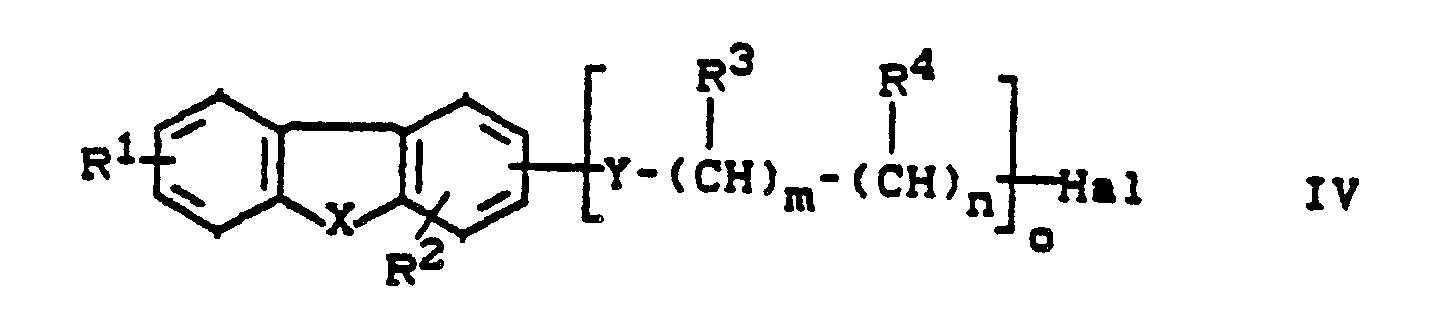
R¹, R², R³, R⁴, X, Y, m, n, o die oben angegebene Bedeutung haben, und
Hal für Halogen steht,
mit Hydroxy- oder Thioheterocyclen der Formel V
H-O(S)-Het V
in welcher
Het die oben angegebene Bedeutung hat,
umsetzt, oder

R¹, R², R³, R⁴, X, Y, Z, m, n, o die oben angegebene Bedeutung haben.

R¹, R², X, Y die oben angegebene Bedeutung haben,
mit Verbindungen der Formeln VII oder VIII

R³ und R⁴ die oben angegebene Bedeutung haben,

Hal, R³, R⁴, Z, m, n, o die oben angegebene Bedeutung haben,
umsetzt.

R¹, R², R³, R⁴, X, Y, m, n, o die oben angegebene Bedeutung haben, und
Hal für Halogen steht.

R¹, R², X, Y die oben angegebene Bedeutung haben,
mit 1,n-Dihalogenverbindungen der Formel IX
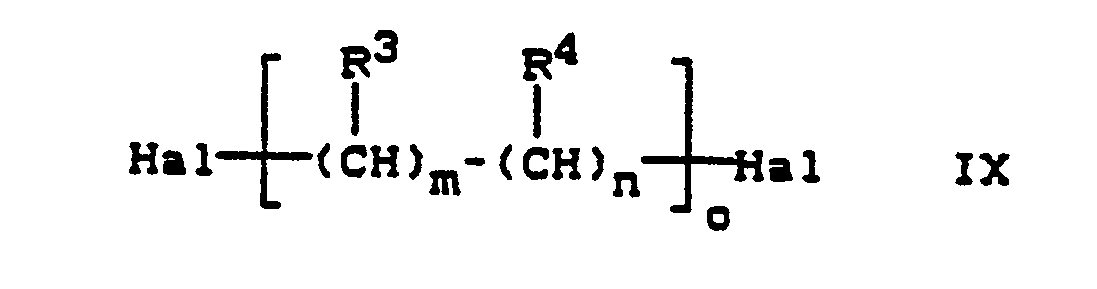
Hal, R³, R⁴, m, n, o die oben angegebene Bedeutung haben,
umsetzt, oder daß man

R¹, R², R³, R⁴, X, Y, Z, m, n, o die oben angegebene Bedeutung haben,
mit Halogenierungsmitteln umsetzt.
Applications Claiming Priority (2)
| Application Number | Priority Date | Filing Date | Title |
|---|---|---|---|
| DE3825173A DE3825173A1 (de) | 1988-07-23 | 1988-07-23 | Substituierte tricyclische verbindungen, verfahren zu ihrer herstellung und ihre verwendung als insektizide |
| DE3825173 | 1988-07-23 |
Publications (2)
| Publication Number | Publication Date |
|---|---|
| EP0352530A2 true EP0352530A2 (de) | 1990-01-31 |
| EP0352530A3 EP0352530A3 (de) | 1990-08-22 |
Family
ID=6359465
Family Applications (1)
| Application Number | Title | Priority Date | Filing Date |
|---|---|---|---|
| EP89112510A Withdrawn EP0352530A3 (de) | 1988-07-23 | 1989-07-08 | Substituierte tricyclische Verbindungen, Verfahren zu ihrer Herstellung und ihre Verwendung als Insektizide |
Country Status (10)
| Country | Link |
|---|---|
| EP (1) | EP0352530A3 (de) |
| JP (1) | JPH0288574A (de) |
| KR (1) | KR900001690A (de) |
| AU (1) | AU3702889A (de) |
| BR (1) | BR8903635A (de) |
| DE (1) | DE3825173A1 (de) |
| DK (1) | DK361789A (de) |
| IL (1) | IL91051A0 (de) |
| NZ (1) | NZ230006A (de) |
| ZA (1) | ZA895565B (de) |
Family Cites Families (8)
| Publication number | Priority date | Publication date | Assignee | Title |
|---|---|---|---|---|
| US3929802A (en) * | 1970-06-11 | 1975-12-30 | Richardson Merrell Inc | Bis-basic ethers of dibenzofuran |
| DE2321331A1 (de) * | 1973-04-27 | 1974-11-07 | Bayer Ag | Anthrachinonfarbstoffe |
| DE3103069A1 (de) * | 1981-01-30 | 1982-08-26 | Basf Ag, 6700 Ludwigshafen | Dibenzofuranderivate, verfahren zu ihrer herstellung und ihre verwendung als fungizide |
| DE3217963A1 (de) * | 1982-05-13 | 1983-11-17 | Basf Ag, 6700 Ludwigshafen | Dibenzofuranoxyalkyl-imidazoliumsalze, verfahren zu ihrer herstellung und ihre verwendung als mikrozide |
| DE3234176A1 (de) * | 1982-09-15 | 1984-03-15 | Basf Ag, 6700 Ludwigshafen | Quartaere ammoniumsalze von benzofuranderivaten und diese enthaltende fungizide |
| JPS59199673A (ja) * | 1983-04-25 | 1984-11-12 | Sumitomo Chem Co Ltd | 含窒素複素環化合物、その製造法およびそれを有効成分とする有害生物防除剤 |
| DE3408879A1 (de) * | 1984-03-10 | 1985-09-12 | Basf Ag, 6700 Ludwigshafen | Pyridiniumsalze und diese enthaltende fungizide und bakterizide |
| EP0315370A3 (de) * | 1987-11-04 | 1990-11-22 | Sumitomo Chemical Company, Limited | Ätherverbindungen und ihre Herstellung und sie enthaltende insektizide und/oder akarizide Zusammensetzungen |
-
1988
- 1988-07-23 DE DE3825173A patent/DE3825173A1/de not_active Withdrawn
-
1989
- 1989-06-26 AU AU37028/89A patent/AU3702889A/en not_active Abandoned
- 1989-07-08 EP EP89112510A patent/EP0352530A3/de not_active Withdrawn
- 1989-07-20 NZ NZ230006A patent/NZ230006A/en unknown
- 1989-07-20 IL IL91051A patent/IL91051A0/xx unknown
- 1989-07-21 DK DK361789A patent/DK361789A/da not_active Application Discontinuation
- 1989-07-21 KR KR1019890010331A patent/KR900001690A/ko not_active Withdrawn
- 1989-07-21 JP JP1187591A patent/JPH0288574A/ja active Pending
- 1989-07-21 BR BR898903635A patent/BR8903635A/pt unknown
- 1989-07-21 ZA ZA895565A patent/ZA895565B/xx unknown
Also Published As
| Publication number | Publication date |
|---|---|
| BR8903635A (pt) | 1990-03-13 |
| DK361789D0 (da) | 1989-07-21 |
| EP0352530A3 (de) | 1990-08-22 |
| DK361789A (da) | 1990-01-24 |
| JPH0288574A (ja) | 1990-03-28 |
| DE3825173A1 (de) | 1990-03-22 |
| KR900001690A (ko) | 1990-02-27 |
| AU3702889A (en) | 1990-01-25 |
| ZA895565B (en) | 1990-04-25 |
| IL91051A0 (en) | 1990-02-09 |
| NZ230006A (en) | 1990-11-27 |
Similar Documents
| Publication | Publication Date | Title |
|---|---|---|
| DE3875546T2 (de) | Herbizide fluorphenoxy-phenoxyalkancarbonsaeure und ihre derivate. | |
| DD151038A5 (de) | Herbizides mittel | |
| EP0893434A1 (de) | Zwischenprodukte für die Herstellung von Oximäthern | |
| EP0041476B1 (de) | Neue Aryl-Phenyl-Acetylen-Verbindungen | |
| DE69016687T2 (de) | Pyridazinone mit insektizider und acarizider Wirkung und diese enthaltende Zusammensetzungen. | |
| EP0433233B1 (de) | Heterocyclische Verbindungen | |
| DE3340595A1 (de) | Imidazolinone, verfahren zu ihrer herstellung und ihre verwendung im pflanzenschutz | |
| DE2428372A1 (de) | Fluoralkoxyphenyl-substituierte stickstoffheterozyklen, verfahren zu deren herstellung und diese verbindungen enthaltende zusammensetzungen zur steuerung des pflanzenwachstums | |
| EP0388682A1 (de) | Substituierte Heteroarylphenylether, Verfahren zu ihrer Herstellung und ihre Verwendung als Insektizide | |
| DE3422824A1 (de) | Neue herbizid wirksame sulfonylharnstoffe | |
| DE2812914A1 (de) | Neue heterocyclisch substituierte imidazo eckige klammer auf 1,2-a eckige klammer zu pyridine | |
| EP0135155B1 (de) | Barbitursäurederivate | |
| EP0430885A2 (de) | Anthelminthika | |
| DE3730748A1 (de) | Neue polyoxygenierte labdanderivate, ein verfahren zu ihrer herstellung und ihre verwendung als arzneimittel | |
| DE2213958A1 (de) | Substituierte 3-Benzylpyridine, ihre Herstellung und ihre Verwendung | |
| EP0068260A2 (de) | Substituierte Phenoxypropionate, Verfahren zu ihrer Herstellung und ihre Verwendung als Herbizide | |
| EP0191474A1 (de) | Barbitursäurederivate | |
| EP0391849B1 (de) | Pyridyl-methylenamino-1,2,4-triazinone | |
| DE3139457A1 (de) | Neue substituierte benzanilidether, verfahren zu ihrer herstellung, ihre verwendung als fungizide und zwischenprodukte hierfuer | |
| DE3825173A1 (de) | Substituierte tricyclische verbindungen, verfahren zu ihrer herstellung und ihre verwendung als insektizide | |
| EP0356797A2 (de) | Substituierte Pyridine, Verfahren zu ihrer Herstellung und ihre Verwendung als Insektizide | |
| DE3820538A1 (de) | Substituierte 3-(pyridylcarbonyl-aza-, -oxa- und thiacyclohex-5-en-2,4-dione, ihre benzo (b) - oder 5,6-dihydroderivate, herstellung und ihre verwendung als herbizid | |
| DD234603A5 (de) | Antifungische zusammensetzung | |
| EP0129507B1 (de) | Mikrobizide Mittel | |
| EP0288976A2 (de) | Mittel zum Schutz gegen Pflanzenkrankheiten |
Legal Events
| Date | Code | Title | Description |
|---|---|---|---|
| PUAI | Public reference made under article 153(3) epc to a published international application that has entered the european phase |
Free format text: ORIGINAL CODE: 0009012 |
|
| 17P | Request for examination filed |
Effective date: 19890710 |
|
| AK | Designated contracting states |
Kind code of ref document: A2 Designated state(s): AT BE CH DE ES FR GB IT LI NL |
|
| PUAL | Search report despatched |
Free format text: ORIGINAL CODE: 0009013 |
|
| AK | Designated contracting states |
Kind code of ref document: A3 Designated state(s): AT BE CH DE ES FR GB IT LI NL |
|
| 17Q | First examination report despatched |
Effective date: 19901221 |
|
| STAA | Information on the status of an ep patent application or granted ep patent |
Free format text: STATUS: THE APPLICATION IS DEEMED TO BE WITHDRAWN |
|
| 18D | Application deemed to be withdrawn |
Effective date: 19910409 |