EP0353311A1 - Nucleoside oxydase et procede analytique l'utilisant - Google Patents
Nucleoside oxydase et procede analytique l'utilisant Download PDFInfo
- Publication number
- EP0353311A1 EP0353311A1 EP89902177A EP89902177A EP0353311A1 EP 0353311 A1 EP0353311 A1 EP 0353311A1 EP 89902177 A EP89902177 A EP 89902177A EP 89902177 A EP89902177 A EP 89902177A EP 0353311 A1 EP0353311 A1 EP 0353311A1
- Authority
- EP
- European Patent Office
- Prior art keywords
- nucleoside
- enzyme
- oxidase
- reaction
- activity
- Prior art date
- Legal status (The legal status is an assumption and is not a legal conclusion. Google has not performed a legal analysis and makes no representation as to the accuracy of the status listed.)
- Granted
Links
- GDOPTJXRTPNYNR-UHFFFAOYSA-N CC1CCCC1 Chemical compound CC1CCCC1 GDOPTJXRTPNYNR-UHFFFAOYSA-N 0.000 description 1
Images


Classifications
-
- C—CHEMISTRY; METALLURGY
- C12—BIOCHEMISTRY; BEER; SPIRITS; WINE; VINEGAR; MICROBIOLOGY; ENZYMOLOGY; MUTATION OR GENETIC ENGINEERING
- C12N—MICROORGANISMS OR ENZYMES; COMPOSITIONS THEREOF; PROPAGATING, PRESERVING, OR MAINTAINING MICROORGANISMS; MUTATION OR GENETIC ENGINEERING; CULTURE MEDIA
- C12N9/00—Enzymes; Proenzymes; Compositions thereof; Processes for preparing, activating, inhibiting, separating or purifying enzymes
- C12N9/0004—Oxidoreductases (1.)
- C12N9/0006—Oxidoreductases (1.) acting on CH-OH groups as donors (1.1)
-
- C—CHEMISTRY; METALLURGY
- C12—BIOCHEMISTRY; BEER; SPIRITS; WINE; VINEGAR; MICROBIOLOGY; ENZYMOLOGY; MUTATION OR GENETIC ENGINEERING
- C12N—MICROORGANISMS OR ENZYMES; COMPOSITIONS THEREOF; PROPAGATING, PRESERVING, OR MAINTAINING MICROORGANISMS; MUTATION OR GENETIC ENGINEERING; CULTURE MEDIA
- C12N1/00—Microorganisms; Compositions thereof; Processes of propagating, maintaining or preserving microorganisms or compositions thereof; Processes of preparing or isolating a composition containing a microorganism; Culture media therefor
- C12N1/20—Bacteria; Culture media therefor
- C12N1/205—Bacterial isolates
-
- C—CHEMISTRY; METALLURGY
- C12—BIOCHEMISTRY; BEER; SPIRITS; WINE; VINEGAR; MICROBIOLOGY; ENZYMOLOGY; MUTATION OR GENETIC ENGINEERING
- C12Q—MEASURING OR TESTING PROCESSES INVOLVING ENZYMES, NUCLEIC ACIDS OR MICROORGANISMS; COMPOSITIONS OR TEST PAPERS THEREFOR; PROCESSES OF PREPARING SUCH COMPOSITIONS; CONDITION-RESPONSIVE CONTROL IN MICROBIOLOGICAL OR ENZYMOLOGICAL PROCESSES
- C12Q1/00—Measuring or testing processes involving enzymes, nucleic acids or microorganisms; Compositions therefor; Processes of preparing such compositions
- C12Q1/26—Measuring or testing processes involving enzymes, nucleic acids or microorganisms; Compositions therefor; Processes of preparing such compositions involving oxidoreductase
-
- C—CHEMISTRY; METALLURGY
- C12—BIOCHEMISTRY; BEER; SPIRITS; WINE; VINEGAR; MICROBIOLOGY; ENZYMOLOGY; MUTATION OR GENETIC ENGINEERING
- C12Y—ENZYMES
- C12Y101/00—Oxidoreductases acting on the CH-OH group of donors (1.1)
- C12Y101/03—Oxidoreductases acting on the CH-OH group of donors (1.1) with a oxygen as acceptor (1.1.3)
- C12Y101/03028—Nucleoside oxidase (1.1.3.28)
-
- C—CHEMISTRY; METALLURGY
- C12—BIOCHEMISTRY; BEER; SPIRITS; WINE; VINEGAR; MICROBIOLOGY; ENZYMOLOGY; MUTATION OR GENETIC ENGINEERING
- C12R—INDEXING SCHEME ASSOCIATED WITH SUBCLASSES C12C - C12Q, RELATING TO MICROORGANISMS
- C12R2001/00—Microorganisms ; Processes using microorganisms
- C12R2001/01—Bacteria or Actinomycetales ; using bacteria or Actinomycetales
- C12R2001/38—Pseudomonas
-
- Y—GENERAL TAGGING OF NEW TECHNOLOGICAL DEVELOPMENTS; GENERAL TAGGING OF CROSS-SECTIONAL TECHNOLOGIES SPANNING OVER SEVERAL SECTIONS OF THE IPC; TECHNICAL SUBJECTS COVERED BY FORMER USPC CROSS-REFERENCE ART COLLECTIONS [XRACs] AND DIGESTS
- Y10—TECHNICAL SUBJECTS COVERED BY FORMER USPC
- Y10S—TECHNICAL SUBJECTS COVERED BY FORMER USPC CROSS-REFERENCE ART COLLECTIONS [XRACs] AND DIGESTS
- Y10S435/00—Chemistry: molecular biology and microbiology
- Y10S435/8215—Microorganisms
- Y10S435/822—Microorganisms using bacteria or actinomycetales
- Y10S435/874—Pseudomonas
Definitions
- the present invention relates to a novel enzyme for catalyzing the oxidation reaction of nucleosides, and more particularly to a novel nucleoside oxidase YT-1 for causing a neucleoside to react with molecular oxygen to form a nucleoside-5'-carboxylic acid via a nucleoside 5'- aldehyde without forming hydrogen peroxide as a by- procuct, a process for producing the enzyme, a novel microorganism capable of producing the enzyme, and a novel assay method utilizing the enzyme.
- nucleoside oxidases for catalyzing the oxidation reaction thereof represented by the following equations.
- Nucleoside oxidase is usually isolated from microorganisms typical of which is, for example, Pseudomonas putida, and the oxidase as purified is used for preparing nucleoside-S'-carboxylic acids, quantitative determination of nucleosides and systems for determining the activity of enzymes or the like wherein a nucleoside is produced or the amount thereof descreases due to a reaction.
- the method has the disadvantage that peroxidase must be used.
- the method further has the disadvantage, for example, of necessitating a complex determination system (see, for example, Unexamined Japanese Patent Publications SHO 57-58883, SHO 57-68794 and SHO 57-94300).
- nucleoside oxidases derived, for example, from microorganisms and found that a strain belonging to the genus Pseudomonas and newly isolated from soil has ability to produce an enzyme which catalyzes an oxidation reaction different from those involving the activity of the conventional nucleoside oxidases.
- the present invention has been accomplished.
- the present invention provides an enzyme for catalyzing oxidation reaction of a nucleoside, i.e., a novel nucleoside oxidase YT-1 characterized in that the oxidase causes the nuceloside to react with molecular oxygen to produce a nucleoside-5'-carboxylic acid via a nucleoside-5'-aldehyde without producing hydrogen peroxide, a process for producing the enzyme, a novel microorganism having ability to produce the enzyme, and a method of assaying a system containing or for producing a nucleoside by causing the nucleoside oxidase YT-1 to act on a mixture of the system and a chromogenic reagent forming a color on oxidation and measuring the degree of color formation by the chromogenic reagent which is proportional to the quantity of nucleoside in the system.
- a nucleoside i.e., a novel nucleoside oxidase
- nucleoside oxidation reaction catalyzed by the enzyme of the invention is represented by the equations (1) and (2) given below and distinctly differs from the known oxidation reactions effected by nucleoside oxidases. Of course, no nucleoside oxidase is known which catalyzes the reaction represented by the equations (1) and (2).
- nucleoside oxidase YT-1 of the present invention effects the nucleoside oxidation reaction of the above equations and, at the same time, exhibits laccase-like activity in accordance with the amount of nucleoside as the unique characteristics of the enzyme.
- the present enzyme is entirely different from the conventional nucleoside oxidases also in this feature.
- the degree of color formation is measured, for example, in terms of absorbance utilizing the laccase-like activity which is unique to the enzyme. Such assay can not be practiced with use of the conventional nucleoside oxidase.
- the enzyme of the invention can be produced using strains belonging to the genus Pseudomonas and capable of producing the enzyme.
- the enzyme producing strain is, for example, a strain newly isolated by the present inventors and having the following characteristics.
- the present strain was taxonomically investigated with reference to Bergery's Manual of Systematic Bacteriology (1984) and found to belong to the genus Pseudomonas because the present strain (1) is a Gram-negative rod and does not form spores, (2) is catalase-positive, (3) is motile with polar flagellae, (4) decomposes glucose through oxidation, and (5) grows briskly on common agar media at a pH of 7.0.
- the strain was found identical with Pseudomonas maltophilia in such characteristics that the strain (1) requires cystine or methionine for growth, (2) is arginine dihydrolase- negative, (3) does not accumulate poly-s-hydroxybutyrate, (4) form yellow colonies, (5) does not produce xanthomonadines and (6) has a weak or negative oxidase reaction.
- the nucleoside oxidase YT-1 of the present invention can be produced by incubating the microorganisms including the strain LB-86 and variants thereof, belonging to the genus Pseudomonas and having ability to produce the nucleoside oxidase YT-1.
- microorganisms can be incubated in a suitable nutrient-containing medium, which can be any of the synthetic media, semisynthetic media and natural media generally used for incubating microorganisms of the genus Pseudomonas and containing carbon sources, nitrogen sources, inorganic substances, etc.
- a suitable nutrient-containing medium can be any of the synthetic media, semisynthetic media and natural media generally used for incubating microorganisms of the genus Pseudomonas and containing carbon sources, nitrogen sources, inorganic substances, etc.
- useful carbon sources are carbon compounds which can be assimilated by the microorganism, such as higher fatty acid, starch decomposition product (dextrin), maltose, lactose, glucose, molasses and fructose. These carbon compounds can be used singly, or at least two of them are usable in combination.
- useful nitrogen sources are peptone, meat extract, yeast extract, soybean flour, cotton seed flour, corn steep liquor and the like.
- useful inorganic substances are common salt, and phosphates, sulfates and like inorganic salts of potassium, sodium, magnesium, calcium, zinc, iron and like inorganic metals. Such inorganic substances can be used suitably when required.
- the microorganism can be incubated in a liquid or solid. It is usually desirable to conduct the incubation aerobically with stirring for aeration.
- the incubating conditions such as the pH of the medium, incubating temperature and incubating time, are selected from among those which are suitble for the growth of the microorganism to be cultured and which will give the desired enzyme in the highest possible yield.
- the pH of the medium be in the range of about 6 to about 8
- the incubating temperature be in the range of about 20 to about 35°C.
- the incubating time to be determined is such that it will result in the greatest accumulation of the desired enzyme produced. Usually, it is in the range of about 12 to about 48 hours.
- the culture thus obtained contains the desired enzyme usually as accumulated in its cell fraction.
- the enzyme can be collected and purified by various methods which are conventionally employed in processes for producing enzymes or the like utilizing microorganisms.
- useful purifying means includes means wherein solvent solubility is utilized, means wherein a difference in ion coupling force is utilized, means wherein a difference in molecular weight is utilized, means utilizing a difference in isoelectric point, means utilizing a difference in hydrophobicity, etc. These means can be employed singly or in a suitable combination.
- the desired enzyme is collected from the cell fraction by the method to be described below in detail.
- wet cells are collected by centrifuging or like usual method and then subspended in a phosphate buffer, Tris buffer or the like.
- the suspension is treated by a suitable combination of cell treating methods such as sonication, French press treatment and lysozyme treatment to obtain a liquid containing crude enzyme.
- the crude enzyme-containing liquid is purified by a usual method to obtain a purified enzyme product.
- a precipitate is collected from the liquid, for example, by fractional precipitaion using ethanol, acetone or like organic solvent, or by salting out with use of ammonium sulfate, aluminum sulfate or the like.
- the precipitate is then chromatographically treated using ion exchange means such as diethylaminoethyldextran, or gel filtration agent such as polyacrylamide gel.
- the purified enzyme product can further be treated as by lyophilization to obtain a purified powder.
- the enzyme of the present invention thus obtained is characterized in that it has enzymatic activity to catalyze the oxidation reaction represented by the foregoing equations (1) and (2), and is also characterized in that it has the following physicochemical properties.
- nucleoside oxidase YT-1 having the foregoing properties can be utilized for the quantitative determination of nucleosides like conventional nucleoside oxidases. More specifically stated, the present enzyme oxidizes nucleosides with molecular oxygen serving as an electron acceptor and is therefore usable for the quantitative determination of the nucleoside by measuring the amount of oxygen consumption.
- the present enzyme is usable for assaying of the enzymes whose substrates or reaction products contain nucleosides.
- the enzyme is usable for measurement of 5'-nucleotidase activity.
- the enzyme is usable for measuring the fish freshness by measuring the amount of nucleoside in an extract of the fish muscle.
- the present enzyme is also useful, for example, for producing nucleoside-5'-carboxylic acids.
- the enzyme of the invention has the unique property that when effecting the oxidation reaction of a nucleoside, the enzyme effects a laccase-like reaction in corresponding relation to the amount of nucleoside present. Moreover, the activity to effect the laccase-like reaction is completely in proportion to the amount of nucleoside. Accordingly, this property can be utilized for oxidizing typical laccase substrates such as hydro quinone and also for coupling 4-aminoantipyrine with phenol or an aniline-type compounds or the like to produce quinoneimine, as with laccase from Polyporous versicolor.
- the amount of nucleoside can be quantitatively determined by measuring the amount of pigment thus produced. Additionally, the initial velocity of an enzymatic reaction for releasing a nucleoside can be measured spectroscopically accurately and easily using the enzyme of the invention.
- the present invention also provides a novel method of assaying liquid specimens utilizing the unique laccase-like activity of the present enzyme.
- the assay method will be described in detail. This method is used for a system containing or for producing a nucleoside and is practiced by causing the nucleoside oxidase YT-1 to act on a mixture of the system and a chromogenic reagent for forming a color on oxidation and measuring the degree of color formation by the chromogenic reagent which degree is proportional to the quantity of nucleoside in the system.
- the liquid specimen to be assayed by this method can be any system containing a nucleoside or for producing a free nucleoside (nucleoside producing or releasing enzyme reaction system). Typical examples of such specimens are given below.
- examplary of the enzymatic activity measuring specimen (1) i.e. nucleoside releasing enzyme reaction system
- the assay method of the invention is practiced for the system, the activity of 5'- nucleotidase in the human serum is measured. This method is very useful for testing the liver function.
- the conventional methods for measuring the activity of 5'- nucleotidase in the human serum include a method wherein 5'-AMP is used as a substrate to determine the resulting free inorganic phosphor, and an enzymatic method utilizing adenosine deaminase or glutamic acid dehydrogenase, whereas the method wherein inorganic phosphor is determined requires a prolonged reaction time, complex procedure and compensastion of the activity of alkali phosphatase conjointly present.
- the enzymatic method has the drawbacks of necessitating a complex measuring system and preliminary reaction for about 30 minutes prior to the start of the reaction.
- the present assay method can be practiced by a very simple procedure with a higher sensitivity than heretofore possible usually within a very short period of time, i.e., about 2 to about 5 minutes, to measure the contemplated activity of 5'- nucleotidase in the human serum.
- the chromogenic reagents which form a color on oxidation include reagents which are each in the form of a single compound and exhibit absorption in the visible region on oxidation, and those which are each in the form of a combination.of at least two compounds and exhibit absorption in the visible region on oxidation.
- useful single compounds are various laccase substrates such as o-tolidine, o-toluidine, o-dianisidine, 10-N-methylcarbamoyl-3,7-dimethylamino-10-H-phenothiazine, bis [3-bis(4-chlorophenyl)-methyl-4-dimethylaminophenyl] amine and like aniline-type substances, etc.
- Exemplary of the combination of at least two compounds is the combination of a so-called coupler and a Trinder's reagent (hydrogen donator), such as 4-aminoantipyrine and phenol, as generally used conventionally as a clinical diagnosing chemical.
- a Trinder's reagent such as 4-aminoantipyrine and phenol
- useful couplers are, besides 4-aminoantipyrine (4-AA), 2,6-dibromoaminophenol, 3-methyl- benzothiazolinone-hydrazone, etc.
- Trinder's reagents are, besides phenol, a-chlorophenol, 2,4-dichlorophenol, 2,6-dichlorophenol, N,N-dimethylaniline (DMA), N-ethyl-N-(2-hydroxy-3-sulfopropyl)-m-anisidine (ADOS), N-ethyl-N-(2-hydroxy-3-sulfopropyl)-aniline (ALOS), N-ethyl-N-(2-hydroxy-3-sulfopropyl)-m-toluidine (TOOS), N-ethyl-N-sulfopropyl)-m-anisidine (ADPS), N-ethyl-N-sulfopropylaniline (ALPS), N-ethyl-N-sulfopropyl-3,5-dimethoxyaniline-sodium salt (DAPS), N-ethyl-N-(2-hydroxy-3
- the enzyme of the invention is caused to act on the mixture of specimen and chromogenic reagent. This can be done usually by adding the chromogenic reagent to the specimen and further adding the present enzyme thereto, or adding the present enzyme to the chromogenic reagent and further adding the specimen thereto, and thereafter allowing the resulting mixture to stand at a specified temperature for a predetermined period of time.
- the reagent then forms a color due to an enzymatic reaction.
- the specimen is usable as suitably diluted. Examples of useful diluents are various buffers such as phosphate buffer and Tris buffer, water, etc.
- the amount of reagent to be used in the enzyme reaction system is not limited specifically but is determined suitably. It is usually such that the concentration of the chromogenic reagent in the reaction system is about 0.1 to about 10 mM. It is suitable that the present enzyme be used in an amount of about 0.05 to about 10 units per milliliter of the reaction system, and that the specimen be used in such an amount that the concentration of the nucleoside in the specimen is in the range of about 0 to not higher than about 0.2 mM in the reaction system.
- the reaction conditions for the enzyme reaction system are not limited specifically, the temperature is usually about 20 to about 40°C to be suitable.
- the reaction time can be determined suitably in accordance with the amount of the present enzyme, reaction temperature, pH, etc. and is generally very short. The reaction is completed within about 20 minutes.
- the pH of the reaction system is usually in the range of about 3 to about 10, and the reaction proceeds satisfactorily in this range. Generally, the pH is suitably in the range of about 4 to about 8.
- the degree of color formation effected in the enzyme reaction mixture is measured to determine the resulting variation in the amount of nucleoside in the specimen.
- the degree of color formation can be measured in the usual method by specroscopically measuring the absorption in the visible region of the pigment or like substance produced by the enzyme reaction and exihibiting absorption in the visible region. For example, with a system wherein 4-aminoantipyrine and phenol produce quinoneimine pigment, the degree of color formation can be determined by measuring the absorbance at 500 nm with a spectrophotometer. Typical examples of other systems and absorbance measuring procedures in these systems will be described in detail in examples to follow.
- the reaction to be effected by the present enzyme is conducted in the cell of the spectrophotometer to determine the resulting increase in absorbance per unit time, whereby the enzymatic activity of the nucleotidase or the like can be measured.
- the present invention provides a novel assay method which utilizes the enzyme of the invention and which is very useful for the quantitative determination of necleosides and also for measurig the activity of enzymes in systems for producing or releasing nucleosides.
- the present invention will be described in greater detail with reference to the following examples.
- the activity of the nucleoside oxidase was measured by the following method.
- a 1 ml quantity of 100 mM phosphate buffer (pH 6.0) containing 7 mM inosine is placed into the cell of an enzyme electrode, 5 ⁇ l of enzyme sample is further placed in, and the initial rate of oxygen consumption is measured at 25°C by measuring with time the decrease in the amount of dissolved oxygen which is about 250 ⁇ M in saturated state at 25°C, using the enzyme electrode.
- the consumption of 1 uM of oxygen per minute is taken as 1 unit (U).
- a 100 ml quantity of bouillon medium (1% meat extract, 1% peptone and 0.5% NaCl, the same as hereinafter) as placed in a 500-ml Sakaguchi flask was inoculated with Pseudomonas maltophilia LB-86, PERM BP-2252), followed by incubation with shaking (110 r.p.m.) at 25°C for 12 hours to obtain a culture.
- the extract was 1.2 U/ml in nucleoside oxidase activity.
- a 100 ml quantity of bouillon medium placed in a 500-ml Sakaguchi flask was inoculated with Pseudomonas maltophilia LB-86, followed by incubation with shaking (110 r.p.m.) at 25°C for 12 hours to obtain a culture.
- a 100 ml of sterilized yeast extract-glucose medium (2.5% yeast extract, 3% glucose, 0.1% KC1, 0.1% KH 2 P0 4 and 0.05% MgS0 4 7H 2 0, pH 7.2) placed in a 500-ml Sakaguchi flask was inoculated with-the resulting culture in an amount of 2%.
- the culture was incubated for 24 hours at a temperature of 25°C with shaking at 110 r.p.m. After the completion of incubation, the cells were collected and suspended in phosphate buffer (pH 7.0) placed in flasks, each containing 30 ml of the buffer. The suspension was thereafter sonicated under the same conditions as in Example 1 to obtain a cell extract.
- the extract was 7.0 U/ml in nucleoside oxidase activity.
- the dialyzate was applied to DEAE- Toyopearl 650M column (product of Tosoh Co.) as equilibrated with 20 mM phosphate buffer (pH 6.0), followed by thorough washing with the same buffer and linear gradient elution with 0 to 0.5M common salt.
- the active fraction was concentrated with Amicon membrane (product of Amicon), 20000 in fractionating molecular weight.
- Amicon membrane product of Amicon
- the concentrate was applied to Sephacryl S-200 column (product of Pharmacia) equilibrated with 20 mM phosphate buffer (pH 6.0).
- the active eluate fractions were collected, concentrated again with Amicon membrane, 20000 in fractionating molecular weight and then subjected to gel filtration with Sephacryl S-200.
- the active eluate fractions were collected and lyophilized, giving a purified nucleoside oxidase YT-1.
- the pure product was found single by disk electrophoresis.
- Table 1 shows the result of purification.
- HPLC high performance liquid chromatography
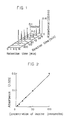
- Fig. 1 shows the result obtained during the specified period.
- the retention time (min) is plotted as x-axis, the reaction time (incubation time, min) as y-axis, and the absorbance at 260 nm as z-axis.
- Fig. 1 reveals the following.
- the amount of inosine decreased with time, and two peaks (P-l and P-2) appeared.
- the peak P-1 enlarged in the initial stage of the reaction, then diminished and thereafter disappeared.
- the peak P-2 only remained eventually.
- the enzyme sample (100 U) accommodated in a dializer tube was placed into 100 ml of aqueous inosine solution(2 mg/ml), followed by reaction at 37°C overnight with stirring for aeration to produce P-2. After removing the tube, the reaction mixture was adjusted to a pH of 3.0 with hydrochloric acid, and the resulting crystals of P-2 were collected by centrifugation, washed with a hydrochloric acid solution (pH3.0) and dried in a vacuum, giving about 190 mg of P-2 crystals.
- the enzyme sample (10 U) as placed in a dializer tube was reacted with an aqueous solution of inosine in the same manner as for the preparation of P-2.
- the reaction mixture was collected from time to time and analyzed by HPLC. When the accumulation of P-1 increased (37°C, about 30 minutes), the enzyme-containing tube was removed to terminate the reaction.
- the reaction mixture was concentrated in a vacuum and subjected to HPLC to separate off a P-1 fraction, which was then purified by lyophilization to obtain P-1 powder.
- P-1, P-2 and inosine were each hydrolyzed with 1N hydrochloric acid at 100°C for 1 hour. Each mixture obtained was analyzed to identify the base and sugar contained therein.
- the sugar anlaysis by the thin-layer chromatography detected D-ribose from the decomposition mixture of inosine but revealed a spot at a different position from D-ribose for the decomposition mixtures of P-1 and P-2. This indicates that P-1 and P-2 contain the sugar portion of inosine as oxidized.
- Table 2 shows the signals determined in view of the chemical shift, binding constant, etc. Consequently, P-2 was identified as inosine-5'-carboxylic acid.
- One U of the enzyme sample was added to 1 ml of 100 mM phosphate buffer containing 50 nanomoles of inosine.
- the amount of oxygen consumption was determined by an oxygen electrode, the amount of P-2 produced from the peak area of HPLC, and the amount of hydrogen peroxide by the phenol-4-aminoantipyrine peroxidase method and the ferrithiocyanide method (Ronald Thurman et al., Eur. J. Biochem., 25, 420-430 (1972)).
- one U of the enzyme sample was added to 1 ml of 100 mM phosphate buffer containing 100 nanomoles of P-1 to similarly determine the amount of oxygen consumption, amount of P-2 produced and amount of hydrogen peroxide.
- the enzyme of the invention oxidizes 1 mole of inosine with 1/2 mole of oxygen as an electron acceptor to form one mole of inosine-5'-aldehyde and 1 mole of water, and further oxidizes 1 mole of inosine-5'-aldehyde with 1/2 mole of oxygen as an electron acceptor to form 1 mole of inosine-5'-carboxylic acid.
- One U of the enzyme sample was added to 1 ml of 100 mM phosphate buffer (pH 7.0) containing 0.5 ⁇ M of inosine and 0.2 pM of 1,4-hydroquinone to effect reaction at room temperature for 10 minutes.
- the reaction product was analyzed by HPLC.
- reaction product was also found identical with the standard product in UV spectrum.
- reaction product was identified as p-quinone.
- One U of the enzyme sample was added to 1 ml of 100 mM phosphate buffer (pH 7.0) containing 0.06 ⁇ M of inosine and 0.12 ⁇ M of 1,4-hydroquinone to effect reaction at room temperature for 10 minutes, and the amount of oxygen consumed was measured using an oxygen electrode.
- the amount of oxygen consumption was found to be 0.115 pM. It therefore follows that 0.055 ⁇ M of oxygen which is 0.115 ⁇ M minus 0.06 pM, the amount of oxygen used for oxidizing inosine, was used for oxidizing 0.12 ⁇ M of 1,4-hydroquinone.
- the present enzyme oxidizes 1 mole of 1,4-hydroquinone with 1/2 mole of oxygen to produce 1 mole of p-quinone and 1 mole of water.
- This reaction is therefore identical with the reaction of laccase (Laccase EC 1.10.3.2) already known.
- One U of the present enzyme was caused to act on 1 ml of 100 mM phosphate buffer (pH 7.0) containing 0.06 pM of inosine and 0.02, 0.06, 0.12 or 0.6 ⁇ M of 1,4-hydroquinone to determine the amount of resulting oxygen consumption and the amount of p-quinone formed.
- Table 3 shows the result.
- Table 3 reveals that when oxidizing 1 mole of nucleoside with 1 mole of oxygen as an electron acceptor, the present enzyme effects the laccase reaction with 1 mole of oxygen as an electron.acceptor, concurrently with but separately from the nucleoside oxidation.
- the present enzyme causes phenol and 4-aminoantipyrine to undergo a coupling reaction through oxidation in the presence of a nucleoside to produce red quinoneimine pigment.
- the red pigment thus produced is found identical with the quinoneimine pigment produced by the conventional oxidation reaction between phenol and 4-aminoantipyrine effected by peroxidase in the presence of hydrogen peroxide, from the UV and visible absorption spectra, HPLC elution position, etc. of the pigment.
- the present enzyme was tested for the relationship between the preduction of quinoneimine pigment (degree of color formation) and the amount of nucleoside as will be described below.
- Inosine serving as the nucleoside was added at a specified concentration to 3 ml of 100 mM phosphate buffer (pH 7.0) containing 10 mM phenol and 4-aminoantipyrine, and 1 U of the present enzyme was also added to the buffer to effect reaction and color formation.
- Fig. 2 shows the result.
- the concentration of inosine (in nanomoles) is plotted as abscissa, and the absorbance at 500 nm as ordinate.
- Fig. 2 shows that there is a linear relationship between the amount of nucleoside and color formation, consequently indicating that the present enzyme is usable for the colorimetry of nucleosides utilizing the above reaction.
- the activity of the present enzyme thereon was determined (relative to the activity thereof on inosine, taken as 100).
- Table 4 shows that the present enzyme acts on nucleosides but does not act on nucleic acid bases or sugars as present singly, nor does it act on nucleotides.
- the sugar portion of the nucleoside on which the enzyme acts may be ribose or deoxyribose, and the base portion can be various.
- the present enzyme was tested for the substrate specificity of its laccase-like activity in the presence of 7 mM inosine in the following manner.
- One unit of the present enzyme was added to a specimen containing 7 mM of inosine and 1 mM of the laccase substrate shown in Table 5, and the mixture was allowed to stand for 5 minutes.
- the absorption spectrum of the specimen was obtained before and after the addition of the enzyme. Table 5 shows the result.
- Table 5 shows that the present enzyme acts on various laccase substrates in the presence of inosine.
- nucleosides such as those listed in Table 4, which serve as substrates for various nucleoside oxidases are useful for causing the present enzyme to exhibit the laccase-like activity.
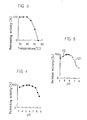
- the present enzyme was treated in 100 ml of phosphate buffer (pH 6.0) for 15 minutes and thereafter checked for remaining activity.
- the present enzyme was treated at varying pH values at 37°C for 60 minutes and thereafter checked for remaining activity at pH 6.0.
- the oxygen electrode for use in measuring the activity of the present enzyme is unable to give accurate measurements at temperatures exceeding 40°C. Within the range of up to 40°C, the enzyme exhibited the highest activity at 40°C.
- the molecular weight of the present enzyme was measured by gel filtration method on a column (2.5 cm in diameter, and 90 cm in length) of Sephacryl S-200 (product of Pharmacia).
- the molecular weight thus determined was 130,000.
- the enzyme was electrophoresced with cooling (4°C) for 48 hours using Carrier-Ampholite of pH 3.5- 10.5 (LKB-Adapter AB. Sweden) and an electrofocusing device produced by LKB to determine the isoelectric point of the enzyme.
- the isoelectric point of the present enzyme thus determined was pH 5.3.
- a solution of the present enzyme (0.02 U) was caused to act on inosine at pH 6.0 and 25°C for 10 minutes in the presence of various inhibitors, and the enzymatic activity was thereafter measured.
- Table 6 shows that the present enzyme is inhibited by potassium cyanate, sodium azide, N-bromosuccinimide, etc.
- the present enzyme was subjected to spectral analysis in 100 mM phosphate buffer (pH 6.0).
- Fig. 6 shows the result.
- Atomic absorption spectrophotometry revealed that the enzyme contained iron, whereas none of molybdenum, copper, manganese and zinc were detected.
- a solution of the enzyme (0.02 U) was caused to act on inosine at pH 6.0 and 25°C for 10 minutes in the presence of various metal ions, and the activity of the enzyme was thereafter measured to check the influence of the metal ions on the activity.
- the apparent Km value for inosine was found to be 4.4 x 10 -5 M.
- the present enzyme was hydrolyzed in a vacuum with use of 6N hydrochloric acid for 24, 48 or 72 hours. After thoroughly removing the acid, the decomposition mixture was dissolved in 0.09M citrate buffer (pH 2.2), and the solution was used for amino acid analysis by using automatic amino acid analyzer, Model JLC200A, product of Nippon Denshi Co., Ltd.
- Trp tryptophan
- Cys cystine
- the enzyme was oxidized with performic acid, then decomposed with hydrochloric acid and thereafter analyzed (S. Moore, J. Biol. Chem., 238, 235(1963)).
- the present enzyme was subjected to disk electrophoresis in two lanes according to the method of Davis (J.B. Davis, Ann. N.Y. Acad. Sci., 121, 404(1964)) using 7% polyacrylamide gel (pH 9.5). One lane was used for protein staining, the other was cut into 1-mm units and usd for the determination of activity to check the electrophoretic mobility.
- a 10 ⁇ l quantity of nucleoside oxidase (0.35 U) was added to 2.0 ml of chromogenic solution of the above composition. Subsequently, 0.3 ml of test sample containing a specified concentration of adenosine was added to the solution, the mixture was reacted at 30°C for 20 minutes, and absorbance at 500 nm was then measured.
- Fig. 7 shows that the adenosine in the test sample can be quantitatively determined easily and -accurately by measuring the absorbance.
- nucleoside oxidase (0.35 U) was added to 2.0 ml of chromogenic solution of the above composition. Subsequently, 0.3 ml of test sample containing inosine, guanosine or deoxyadenosine at a specified concentration was added to the solution. The mixture was reacted at 30°C for 20 minutes and then checked for absorbance at 630 nm.
- the diagrams indicate that the nucleosides in the test samples can be quantitatively determined easily and accurately by measuring the absorbance.
- nucleoside oxidase (0.35 U) was added to 2.0 ml of chromogenic solution of the above composition. Subsequently, 0.1 ml of test sample containing 5'-nucleotidase (product of Sigma, 5'-ND control E) at a specified concentration was added to the solution, 0.2 ml of 11.5 mM 5'-adenylic acid (5'-AMP) solution as a substrate was further added, and the mixture was checked for the increase in the absorbance at 555 nm per unit time for about 5 minutes using a spectrophotometer.
- 5'-nucleotidase product of Sigma, 5'-ND control E
- 5'-AMP 11.5 mM 5'-adenylic acid
- Fig. 11 in which the increase in absorbance per minute is plotted as ordinate, and concentration of 5'-nucleotidase (U/liter) as abscissa.
- Fig. 11 shows that the nucleotidase in the test sample can be quantitatively determined easily and accurately by measuring the absorbance.
- a 10 ⁇ l quantity of nucleoside oxidase (0.35 U) was aded to 2.0 ml of chromogenic solution of the above composition. Subsequently, 0.1 ml of test sample containing 3'-nucleotidase (product of Sigma) at a specified concentration was added to the solution, followed by the addition of the solution of 0.2 ml of 11.f mM 3'-adenylic acid (3'-AMP) as a substrate. The mixture was checked for the increase in the absorbance at 505 nm per unit time for abut 5 minutes using a spectrophotometer.
- 3'-nucleotidase product of Sigma
- the diagram reveals that the nucleotidase in the test sample can be quantitatively determined easily, promptly and accurately.
- Example 6 To the same chromogenic solution as used in Example 6 were added 10 pl (0.35 U) of nucleoside oxidase and 0.1 ml of human serum. Subsequently, 0.2 ml of 5'-AMP(11.5 mM) was added to the mixture, and the increase in absorbance at 555 nm was measured by a spectrophotometer to determine the activity of 5'-nucleotidase in the human serum.
- Table 9 below shows the result obtained by repeating the above procedure 15 times using the same serum sample.
- Fig. 13 shows the results obtained.
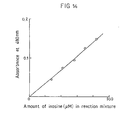
- a 1 ml quantity of 1 mM o-toluidine solution was added to 2 ml of 100 mM phosphate buffer (pH 6.0) containing inosine at a speicified concentration, 10 ul of nucleoside oxidase (0.35 U) was further added, and the mixture was reacted at 37°C for 15 minutes and thereafter checked for absorbance at 480 nm.
- the diagram indicates that the amount of inosine in the samples can be measured accurately utilizing the proportional relationship between the inosine content of the samples and the absorbance thereof.
- Pseudomonas maltophilia LB-86 for use in the present invention has been deposited with the above designation and deposition number FERM P-9813 in the Fermentation Research Institute, Agency of Industrial Science and Technology, MITI since January 14, 1988, with the deposition number changed to FERM BP-2252 on January 20, 1989.
Landscapes
- Chemical & Material Sciences (AREA)
- Life Sciences & Earth Sciences (AREA)
- Organic Chemistry (AREA)
- Health & Medical Sciences (AREA)
- Engineering & Computer Science (AREA)
- Wood Science & Technology (AREA)
- Zoology (AREA)
- Bioinformatics & Cheminformatics (AREA)
- Genetics & Genomics (AREA)
- General Engineering & Computer Science (AREA)
- Biotechnology (AREA)
- General Health & Medical Sciences (AREA)
- Biochemistry (AREA)
- Microbiology (AREA)
- Medicinal Chemistry (AREA)
- Molecular Biology (AREA)
- Biomedical Technology (AREA)
- Proteomics, Peptides & Aminoacids (AREA)
- Tropical Medicine & Parasitology (AREA)
- Virology (AREA)
- Physics & Mathematics (AREA)
- Analytical Chemistry (AREA)
- Biophysics (AREA)
- Immunology (AREA)
- Measuring Or Testing Involving Enzymes Or Micro-Organisms (AREA)
- Enzymes And Modification Thereof (AREA)
Abstract
Applications Claiming Priority (5)
| Application Number | Priority Date | Filing Date | Title |
|---|---|---|---|
| JP2546288 | 1988-02-04 | ||
| JP25462/88 | 1988-02-04 | ||
| JP196632/88 | 1988-08-05 | ||
| JP63196632A JPH0272873A (ja) | 1988-02-04 | 1988-08-05 | ヌクレオシドオキシダーゼ及びこれを利用した分析法 |
| PCT/JP1989/000105 WO1989007137A1 (fr) | 1988-02-04 | 1989-02-01 | Nucleoside oxydase et procede analytique l'utilisant |
Publications (3)
| Publication Number | Publication Date |
|---|---|
| EP0353311A1 true EP0353311A1 (fr) | 1990-02-07 |
| EP0353311A4 EP0353311A4 (en) | 1991-10-02 |
| EP0353311B1 EP0353311B1 (fr) | 1995-01-18 |
Family
ID=26363081
Family Applications (1)
| Application Number | Title | Priority Date | Filing Date |
|---|---|---|---|
| EP89902177A Expired - Lifetime EP0353311B1 (fr) | 1988-02-04 | 1989-02-01 | Nucleoside oxydase et procede analytique l'utilisant |
Country Status (4)
| Country | Link |
|---|---|
| US (1) | US5156955A (fr) |
| EP (1) | EP0353311B1 (fr) |
| DE (1) | DE68920659T2 (fr) |
| WO (1) | WO1989007137A1 (fr) |
Families Citing this family (4)
| Publication number | Priority date | Publication date | Assignee | Title |
|---|---|---|---|---|
| US5489296A (en) * | 1993-12-17 | 1996-02-06 | Autogenics | Heart valve measurement tool |
| US5667531A (en) * | 1995-05-15 | 1997-09-16 | Novo Nordisk A/S | Dye compositions containing purified polyporus laccases and nucleic acids encoding same |
| JP2014505059A (ja) | 2011-01-18 | 2014-02-27 | ジェネラル アトミクス | ヒドロラーゼ酵素基質およびその使用 |
| CN112147239B (zh) * | 2019-06-26 | 2021-11-26 | 上海医药工业研究院 | 猪苓中核苷含量的检测方法 |
Family Cites Families (2)
| Publication number | Priority date | Publication date | Assignee | Title |
|---|---|---|---|---|
| US3150058A (en) * | 1960-08-09 | 1964-09-22 | Ajinomoto Kk | Process for preparing inosinic acid |
| DE3153683C2 (fr) * | 1980-08-12 | 1992-05-14 | Toyo Jozo K.K., Tagata, Shizuoka, Jp |
-
1989
- 1989-02-01 US US07/425,217 patent/US5156955A/en not_active Expired - Fee Related
- 1989-02-01 EP EP89902177A patent/EP0353311B1/fr not_active Expired - Lifetime
- 1989-02-01 DE DE68920659T patent/DE68920659T2/de not_active Expired - Fee Related
- 1989-02-01 WO PCT/JP1989/000105 patent/WO1989007137A1/fr not_active Ceased
Non-Patent Citations (2)
| Title |
|---|
| AGRICULTURAL AND BIOLOGICAL CHEMISTRY, vol. 52, no. 8, August 1988, pages 2135-2136, Tokyo, JP; Y. ISONO et al.: "Some characteristics of a new enzyme, nucleoside oxidase" * |
| See also references of WO8907137A1 * |
Also Published As
| Publication number | Publication date |
|---|---|
| EP0353311A4 (en) | 1991-10-02 |
| DE68920659D1 (de) | 1995-03-02 |
| US5156955A (en) | 1992-10-20 |
| EP0353311B1 (fr) | 1995-01-18 |
| DE68920659T2 (de) | 1995-07-06 |
| WO1989007137A1 (fr) | 1989-08-10 |
Similar Documents
| Publication | Publication Date | Title |
|---|---|---|
| EP0012446B1 (fr) | Uricase acide, sa préparation et son utilisation pour la détermination de l'acide urique | |
| EP0135092A2 (fr) | Méthode pour la détermination de l'ammoniaque | |
| US5871949A (en) | Method of quantitative assay for 1,5-anhydroglucitol and reagent for quantitative assay | |
| EP0016845B1 (fr) | Methode et test pour la determination d'un substrat de xanthine-oxidase au moyen d'une nouvelle xanthine-oxidase et procede pour sa preparation | |
| AU722636B2 (en) | Method for quantitative determination of 1,5-anhydroglucitol | |
| US4341868A (en) | Method and test composition for the determination of the substrate for xanthine oxidase | |
| EP0353311B1 (fr) | Nucleoside oxydase et procede analytique l'utilisant | |
| EP0148950B1 (fr) | Procede de preparation d'oxydase de bilirubine | |
| CA1173767A (fr) | Nucleoside oxydase, production et utilisation | |
| JPS6279780A (ja) | 1,5―アンヒドログルシトールの定量法 | |
| JPH0373276B2 (fr) | ||
| JPH0544273B2 (fr) | ||
| JP2872983B2 (ja) | 1,5−アンヒドログルシトールの定量法及び定量用試薬 | |
| JP2879351B2 (ja) | 魚介類の鮮度測定法 | |
| US5250416A (en) | Method for highly sensitive determination of NADH using kinase | |
| EP0119332B1 (fr) | Pyranose oxydase, procédé de préparation et son utilisation et compositions d'essai utilisables à cet égard | |
| EP0097949A2 (fr) | Acide L-glutamique oxydase, sa production et son utilisation | |
| JP3065754B2 (ja) | 新規なキサンチンデヒドロゲナーゼ−t酵素、およびこれを用いた測定法並びに該酵素を含有する分析用組成物 | |
| CA1339794C (fr) | Determination enzymatique de la theophylline | |
| FR2517698A1 (fr) | Procede de dosage de l'ethanolamine | |
| JPH0616703B2 (ja) | 耐熱性ペルオキシダ−ゼ、その製法および該酵素を用いる分析試薬 | |
| JPWO1997031103A1 (ja) | 1,5−アンヒドログルシトールの定量法 | |
| JPH05168474A (ja) | L−フコースデヒドロゲナーゼ、その製造方法及びl−フコースの定量法 | |
| JPH0644878B2 (ja) | 胆汁酸測定用試薬 |
Legal Events
| Date | Code | Title | Description |
|---|---|---|---|
| PUAI | Public reference made under article 153(3) epc to a published international application that has entered the european phase |
Free format text: ORIGINAL CODE: 0009012 |
|
| AK | Designated contracting states |
Kind code of ref document: A1 Designated state(s): DE FR GB |
|
| 17P | Request for examination filed |
Effective date: 19900108 |
|
| RBV | Designated contracting states (corrected) |
Designated state(s): DE FR GB IT |
|
| A4 | Supplementary search report drawn up and despatched |
Effective date: 19910813 |
|
| AK | Designated contracting states |
Kind code of ref document: A4 Designated state(s): DE FR GB |
|
| 17Q | First examination report despatched |
Effective date: 19930317 |
|
| GRAA | (expected) grant |
Free format text: ORIGINAL CODE: 0009210 |
|
| AK | Designated contracting states |
Kind code of ref document: B1 Designated state(s): DE FR GB IT |
|
| ITF | It: translation for a ep patent filed | ||
| REF | Corresponds to: |
Ref document number: 68920659 Country of ref document: DE Date of ref document: 19950302 |
|
| ET | Fr: translation filed | ||
| PLBE | No opposition filed within time limit |
Free format text: ORIGINAL CODE: 0009261 |
|
| STAA | Information on the status of an ep patent application or granted ep patent |
Free format text: STATUS: NO OPPOSITION FILED WITHIN TIME LIMIT |
|
| 26N | No opposition filed | ||
| PGFP | Annual fee paid to national office [announced via postgrant information from national office to epo] |
Ref country code: FR Payment date: 20000128 Year of fee payment: 12 |
|
| PGFP | Annual fee paid to national office [announced via postgrant information from national office to epo] |
Ref country code: GB Payment date: 20000131 Year of fee payment: 12 |
|
| PGFP | Annual fee paid to national office [announced via postgrant information from national office to epo] |
Ref country code: DE Payment date: 20000222 Year of fee payment: 12 |
|
| PG25 | Lapsed in a contracting state [announced via postgrant information from national office to epo] |
Ref country code: GB Free format text: LAPSE BECAUSE OF NON-PAYMENT OF DUE FEES Effective date: 20010201 |
|
| GBPC | Gb: european patent ceased through non-payment of renewal fee |
Effective date: 20010201 |
|
| PG25 | Lapsed in a contracting state [announced via postgrant information from national office to epo] |
Ref country code: FR Free format text: LAPSE BECAUSE OF NON-PAYMENT OF DUE FEES Effective date: 20011031 |
|
| REG | Reference to a national code |
Ref country code: FR Ref legal event code: ST |
|
| PG25 | Lapsed in a contracting state [announced via postgrant information from national office to epo] |
Ref country code: DE Free format text: LAPSE BECAUSE OF NON-PAYMENT OF DUE FEES Effective date: 20011201 |
|
| PG25 | Lapsed in a contracting state [announced via postgrant information from national office to epo] |
Ref country code: IT Free format text: LAPSE BECAUSE OF NON-PAYMENT OF DUE FEES;WARNING: LAPSES OF ITALIAN PATENTS WITH EFFECTIVE DATE BEFORE 2007 MAY HAVE OCCURRED AT ANY TIME BEFORE 2007. THE CORRECT EFFECTIVE DATE MAY BE DIFFERENT FROM THE ONE RECORDED. Effective date: 20050201 |