EP0356183B1 - Olefinpolymerisationskatalysator - Google Patents
Olefinpolymerisationskatalysator Download PDFInfo
- Publication number
- EP0356183B1 EP0356183B1 EP89308451A EP89308451A EP0356183B1 EP 0356183 B1 EP0356183 B1 EP 0356183B1 EP 89308451 A EP89308451 A EP 89308451A EP 89308451 A EP89308451 A EP 89308451A EP 0356183 B1 EP0356183 B1 EP 0356183B1
- Authority
- EP
- European Patent Office
- Prior art keywords
- transition metal
- magnesium
- halogen
- formula
- catalyst
- Prior art date
- Legal status (The legal status is an assumption and is not a legal conclusion. Google has not performed a legal analysis and makes no representation as to the accuracy of the status listed.)
- Expired - Lifetime
Links
- 239000003054 catalyst Substances 0.000 title claims abstract description 83
- 238000006116 polymerization reaction Methods 0.000 title claims abstract description 34
- JRZJOMJEPLMPRA-UHFFFAOYSA-N olefin Natural products CCCCCCCC=C JRZJOMJEPLMPRA-UHFFFAOYSA-N 0.000 title description 3
- 150000001336 alkenes Chemical class 0.000 title description 2
- 239000011777 magnesium Substances 0.000 claims abstract description 73
- 239000000203 mixture Substances 0.000 claims abstract description 71
- 229910052749 magnesium Inorganic materials 0.000 claims abstract description 65
- FYYHWMGAXLPEAU-UHFFFAOYSA-N Magnesium Chemical compound [Mg] FYYHWMGAXLPEAU-UHFFFAOYSA-N 0.000 claims abstract description 61
- 229910052723 transition metal Inorganic materials 0.000 claims abstract description 49
- 150000003624 transition metals Chemical class 0.000 claims abstract description 49
- 150000001875 compounds Chemical class 0.000 claims abstract description 40
- 229910052736 halogen Inorganic materials 0.000 claims abstract description 30
- 150000002367 halogens Chemical class 0.000 claims abstract description 28
- 239000012442 inert solvent Substances 0.000 claims abstract description 27
- 229910052782 aluminium Inorganic materials 0.000 claims abstract description 26
- 229910052796 boron Inorganic materials 0.000 claims abstract description 24
- ZOXJGFHDIHLPTG-UHFFFAOYSA-N Boron Chemical compound [B] ZOXJGFHDIHLPTG-UHFFFAOYSA-N 0.000 claims abstract description 21
- 229910052799 carbon Inorganic materials 0.000 claims abstract description 21
- OKTJSMMVPCPJKN-UHFFFAOYSA-N Carbon Chemical compound [C] OKTJSMMVPCPJKN-UHFFFAOYSA-N 0.000 claims abstract description 19
- XAGFODPZIPBFFR-UHFFFAOYSA-N aluminium Chemical compound [Al] XAGFODPZIPBFFR-UHFFFAOYSA-N 0.000 claims abstract description 18
- 239000001257 hydrogen Substances 0.000 claims abstract description 17
- 229910052739 hydrogen Inorganic materials 0.000 claims abstract description 17
- 229910052710 silicon Inorganic materials 0.000 claims abstract description 17
- 239000010703 silicon Substances 0.000 claims abstract description 17
- 238000000034 method Methods 0.000 claims abstract description 14
- 229910052809 inorganic oxide Inorganic materials 0.000 claims abstract description 11
- XUIMIQQOPSSXEZ-UHFFFAOYSA-N Silicon Chemical compound [Si] XUIMIQQOPSSXEZ-UHFFFAOYSA-N 0.000 claims abstract description 10
- 150000001732 carboxylic acid derivatives Chemical class 0.000 claims abstract description 10
- 125000005843 halogen group Chemical group 0.000 claims abstract description 10
- 239000002245 particle Substances 0.000 claims abstract description 9
- HCHKCACWOHOZIP-UHFFFAOYSA-N Zinc Chemical compound [Zn] HCHKCACWOHOZIP-UHFFFAOYSA-N 0.000 claims abstract description 6
- 125000001183 hydrocarbyl group Chemical group 0.000 claims abstract description 6
- 230000000737 periodic effect Effects 0.000 claims abstract description 6
- 230000008569 process Effects 0.000 claims abstract description 6
- 229910052725 zinc Inorganic materials 0.000 claims abstract description 6
- 239000011701 zinc Substances 0.000 claims abstract description 6
- 125000003545 alkoxy group Chemical group 0.000 claims abstract description 3
- 239000010936 titanium Substances 0.000 claims description 43
- 229910052719 titanium Inorganic materials 0.000 claims description 38
- VYPSYNLAJGMNEJ-UHFFFAOYSA-N Silicium dioxide Chemical compound O=[Si]=O VYPSYNLAJGMNEJ-UHFFFAOYSA-N 0.000 claims description 35
- RTAQQCXQSZGOHL-UHFFFAOYSA-N Titanium Chemical compound [Ti] RTAQQCXQSZGOHL-UHFFFAOYSA-N 0.000 claims description 35
- 125000004432 carbon atom Chemical group C* 0.000 claims description 35
- 238000006243 chemical reaction Methods 0.000 claims description 32
- 239000002002 slurry Substances 0.000 claims description 26
- 229910052751 metal Inorganic materials 0.000 claims description 11
- 239000002184 metal Substances 0.000 claims description 11
- 239000000377 silicon dioxide Substances 0.000 claims description 10
- ZDHXKXAHOVTTAH-UHFFFAOYSA-N trichlorosilane Chemical compound Cl[SiH](Cl)Cl ZDHXKXAHOVTTAH-UHFFFAOYSA-N 0.000 claims description 8
- 239000005052 trichlorosilane Substances 0.000 claims description 8
- 125000000217 alkyl group Chemical group 0.000 claims description 7
- 238000004519 manufacturing process Methods 0.000 claims description 7
- 239000011541 reaction mixture Substances 0.000 claims description 7
- 239000005046 Chlorosilane Substances 0.000 claims description 6
- 239000002253 acid Substances 0.000 claims description 6
- 239000007795 chemical reaction product Substances 0.000 claims description 5
- KOPOQZFJUQMUML-UHFFFAOYSA-N chlorosilane Chemical compound Cl[SiH3] KOPOQZFJUQMUML-UHFFFAOYSA-N 0.000 claims description 5
- 125000005233 alkylalcohol group Chemical group 0.000 claims description 4
- 230000000379 polymerizing effect Effects 0.000 claims description 2
- 239000011148 porous material Substances 0.000 claims description 2
- 125000004435 hydrogen atom Chemical group [H]* 0.000 claims 2
- UFHFLCQGNIYNRP-UHFFFAOYSA-N Hydrogen Chemical compound [H][H] UFHFLCQGNIYNRP-UHFFFAOYSA-N 0.000 abstract description 10
- 229910052801 chlorine Inorganic materials 0.000 abstract description 6
- 150000002431 hydrogen Chemical group 0.000 abstract description 5
- 229910052794 bromium Inorganic materials 0.000 abstract description 4
- 230000004044 response Effects 0.000 abstract description 4
- VLKZOEOYAKHREP-UHFFFAOYSA-N n-Hexane Chemical compound CCCCCC VLKZOEOYAKHREP-UHFFFAOYSA-N 0.000 description 42
- IMNFDUFMRHMDMM-UHFFFAOYSA-N N-Heptane Chemical compound CCCCCCC IMNFDUFMRHMDMM-UHFFFAOYSA-N 0.000 description 34
- -1 polyethylene Polymers 0.000 description 33
- VXNZUUAINFGPBY-UHFFFAOYSA-N 1-Butene Chemical compound CCC=C VXNZUUAINFGPBY-UHFFFAOYSA-N 0.000 description 30
- IJGRMHOSHXDMSA-UHFFFAOYSA-N Atomic nitrogen Chemical compound N#N IJGRMHOSHXDMSA-UHFFFAOYSA-N 0.000 description 24
- 239000000047 product Substances 0.000 description 24
- 239000007788 liquid Substances 0.000 description 21
- VGGSQFUCUMXWEO-UHFFFAOYSA-N Ethene Chemical compound C=C VGGSQFUCUMXWEO-UHFFFAOYSA-N 0.000 description 20
- 239000005977 Ethylene Substances 0.000 description 20
- 239000002904 solvent Substances 0.000 description 17
- 238000002360 preparation method Methods 0.000 description 15
- 229920001577 copolymer Polymers 0.000 description 13
- ORYGRKHDLWYTKX-UHFFFAOYSA-N trihexylalumane Chemical compound CCCCCC[Al](CCCCCC)CCCCCC ORYGRKHDLWYTKX-UHFFFAOYSA-N 0.000 description 13
- 229910052757 nitrogen Inorganic materials 0.000 description 12
- 229920000642 polymer Polymers 0.000 description 12
- 125000002496 methyl group Chemical group [H]C([H])([H])* 0.000 description 10
- PASDCCFISLVPSO-UHFFFAOYSA-N benzoyl chloride Chemical compound ClC(=O)C1=CC=CC=C1 PASDCCFISLVPSO-UHFFFAOYSA-N 0.000 description 9
- 239000012456 homogeneous solution Substances 0.000 description 9
- 238000001035 drying Methods 0.000 description 8
- 239000000463 material Substances 0.000 description 8
- 239000011347 resin Substances 0.000 description 8
- 229920005989 resin Polymers 0.000 description 8
- 239000000741 silica gel Substances 0.000 description 8
- 229910002027 silica gel Inorganic materials 0.000 description 8
- 150000002148 esters Chemical class 0.000 description 7
- 125000001495 ethyl group Chemical group [H]C([H])([H])C([H])([H])* 0.000 description 7
- 238000010438 heat treatment Methods 0.000 description 7
- 229930195733 hydrocarbon Natural products 0.000 description 7
- 239000004215 Carbon black (E152) Substances 0.000 description 6
- 150000004820 halides Chemical class 0.000 description 6
- 150000002430 hydrocarbons Chemical class 0.000 description 6
- QWTDNUCVQCZILF-UHFFFAOYSA-N isopentane Chemical compound CCC(C)C QWTDNUCVQCZILF-UHFFFAOYSA-N 0.000 description 6
- 125000001436 propyl group Chemical group [H]C([*])([H])C([H])([H])C([H])([H])[H] 0.000 description 6
- 238000010926 purge Methods 0.000 description 6
- 239000000460 chlorine Substances 0.000 description 5
- 239000007789 gas Substances 0.000 description 5
- 239000008187 granular material Substances 0.000 description 5
- 150000002901 organomagnesium compounds Chemical class 0.000 description 5
- 150000002902 organometallic compounds Chemical class 0.000 description 5
- 239000002685 polymerization catalyst Substances 0.000 description 5
- VOITXYVAKOUIBA-UHFFFAOYSA-N triethylaluminium Chemical compound CC[Al](CC)CC VOITXYVAKOUIBA-UHFFFAOYSA-N 0.000 description 5
- YIWUKEYIRIRTPP-UHFFFAOYSA-N 2-ethylhexan-1-ol Chemical compound CCCCC(CC)CO YIWUKEYIRIRTPP-UHFFFAOYSA-N 0.000 description 4
- SNOJPWLNAMAYSX-UHFFFAOYSA-N 2-methylpropan-1-ol;titanium Chemical compound [Ti].CC(C)CO.CC(C)CO.CC(C)CO.CC(C)CO SNOJPWLNAMAYSX-UHFFFAOYSA-N 0.000 description 4
- ZAMOUSCENKQFHK-UHFFFAOYSA-N Chlorine atom Chemical compound [Cl] ZAMOUSCENKQFHK-UHFFFAOYSA-N 0.000 description 4
- TWRXJAOTZQYOKJ-UHFFFAOYSA-L Magnesium chloride Chemical compound [Mg+2].[Cl-].[Cl-] TWRXJAOTZQYOKJ-UHFFFAOYSA-L 0.000 description 4
- 239000004698 Polyethylene Substances 0.000 description 4
- 238000009835 boiling Methods 0.000 description 4
- 125000000484 butyl group Chemical group [H]C([*])([H])C([H])([H])C([H])([H])C([H])([H])[H] 0.000 description 4
- 238000001704 evaporation Methods 0.000 description 4
- 230000008020 evaporation Effects 0.000 description 4
- 239000000155 melt Substances 0.000 description 4
- 239000012071 phase Substances 0.000 description 4
- 229920000573 polyethylene Polymers 0.000 description 4
- MCULRUJILOGHCJ-UHFFFAOYSA-N triisobutylaluminium Chemical compound CC(C)C[Al](CC(C)C)CC(C)C MCULRUJILOGHCJ-UHFFFAOYSA-N 0.000 description 4
- UHOVQNZJYSORNB-UHFFFAOYSA-N Benzene Chemical compound C1=CC=CC=C1 UHOVQNZJYSORNB-UHFFFAOYSA-N 0.000 description 3
- VEXZGXHMUGYJMC-UHFFFAOYSA-M Chloride anion Chemical compound [Cl-] VEXZGXHMUGYJMC-UHFFFAOYSA-M 0.000 description 3
- YXFVVABEGXRONW-UHFFFAOYSA-N Toluene Chemical compound CC1=CC=CC=C1 YXFVVABEGXRONW-UHFFFAOYSA-N 0.000 description 3
- WETWJCDKMRHUPV-UHFFFAOYSA-N acetyl chloride Chemical compound CC(Cl)=O WETWJCDKMRHUPV-UHFFFAOYSA-N 0.000 description 3
- 239000012346 acetyl chloride Substances 0.000 description 3
- 125000001931 aliphatic group Chemical group 0.000 description 3
- 239000003795 chemical substances by application Substances 0.000 description 3
- 238000001816 cooling Methods 0.000 description 3
- 125000000113 cyclohexyl group Chemical group [H]C1([H])C([H])([H])C([H])([H])C([H])(*)C([H])([H])C1([H])[H] 0.000 description 3
- 125000002704 decyl group Chemical group [H]C([H])([H])C([H])([H])C([H])([H])C([H])([H])C([H])([H])C([H])([H])C([H])([H])C([H])([H])C([H])([H])C([H])([H])* 0.000 description 3
- AFABGHUZZDYHJO-UHFFFAOYSA-N dimethyl butane Natural products CCCC(C)C AFABGHUZZDYHJO-UHFFFAOYSA-N 0.000 description 3
- SHZIWNPUGXLXDT-UHFFFAOYSA-N ethyl hexanoate Chemical compound CCCCCC(=O)OCC SHZIWNPUGXLXDT-UHFFFAOYSA-N 0.000 description 3
- 125000004051 hexyl group Chemical group [H]C([H])([H])C([H])([H])C([H])([H])C([H])([H])C([H])([H])C([H])([H])* 0.000 description 3
- 125000001997 phenyl group Chemical group [H]C1=C([H])C([H])=C(*)C([H])=C1[H] 0.000 description 3
- 230000001376 precipitating effect Effects 0.000 description 3
- QQONPFPTGQHPMA-UHFFFAOYSA-N propylene Natural products CC=C QQONPFPTGQHPMA-UHFFFAOYSA-N 0.000 description 3
- 125000004805 propylene group Chemical group [H]C([H])([H])C([H])([*:1])C([H])([H])[*:2] 0.000 description 3
- 238000000926 separation method Methods 0.000 description 3
- 150000003609 titanium compounds Chemical class 0.000 description 3
- CMAOLVNGLTWICC-UHFFFAOYSA-N 2-fluoro-5-methylbenzonitrile Chemical compound CC1=CC=C(F)C(C#N)=C1 CMAOLVNGLTWICC-UHFFFAOYSA-N 0.000 description 2
- LQIIEHBULBHJKX-UHFFFAOYSA-N 2-methylpropylalumane Chemical compound CC(C)C[AlH2] LQIIEHBULBHJKX-UHFFFAOYSA-N 0.000 description 2
- NMVXHZSPDTXJSJ-UHFFFAOYSA-L 2-methylpropylaluminum(2+);dichloride Chemical compound CC(C)C[Al](Cl)Cl NMVXHZSPDTXJSJ-UHFFFAOYSA-L 0.000 description 2
- XKRFYHLGVUSROY-UHFFFAOYSA-N Argon Chemical compound [Ar] XKRFYHLGVUSROY-UHFFFAOYSA-N 0.000 description 2
- WKBOTKDWSSQWDR-UHFFFAOYSA-N Bromine atom Chemical compound [Br] WKBOTKDWSSQWDR-UHFFFAOYSA-N 0.000 description 2
- MVECFARLYQAUNR-UHFFFAOYSA-N CCCC[Mg]CC Chemical compound CCCC[Mg]CC MVECFARLYQAUNR-UHFFFAOYSA-N 0.000 description 2
- HEDRZPFGACZZDS-UHFFFAOYSA-N Chloroform Chemical compound ClC(Cl)Cl HEDRZPFGACZZDS-UHFFFAOYSA-N 0.000 description 2
- RTZKZFJDLAIYFH-UHFFFAOYSA-N Diethyl ether Chemical compound CCOCC RTZKZFJDLAIYFH-UHFFFAOYSA-N 0.000 description 2
- LRHPLDYGYMQRHN-UHFFFAOYSA-N N-Butanol Chemical compound CCCCO LRHPLDYGYMQRHN-UHFFFAOYSA-N 0.000 description 2
- JKRZOJADNVOXPM-UHFFFAOYSA-N Oxalic acid dibutyl ester Chemical compound CCCCOC(=O)C(=O)OCCCC JKRZOJADNVOXPM-UHFFFAOYSA-N 0.000 description 2
- QCWXUUIWCKQGHC-UHFFFAOYSA-N Zirconium Chemical compound [Zr] QCWXUUIWCKQGHC-UHFFFAOYSA-N 0.000 description 2
- SXSVTGQIXJXKJR-UHFFFAOYSA-N [Mg].[Ti] Chemical compound [Mg].[Ti] SXSVTGQIXJXKJR-UHFFFAOYSA-N 0.000 description 2
- 125000002723 alicyclic group Chemical group 0.000 description 2
- 125000005234 alkyl aluminium group Chemical group 0.000 description 2
- 125000002877 alkyl aryl group Chemical group 0.000 description 2
- PNEYBMLMFCGWSK-UHFFFAOYSA-N aluminium oxide Inorganic materials [O-2].[O-2].[O-2].[Al+3].[Al+3] PNEYBMLMFCGWSK-UHFFFAOYSA-N 0.000 description 2
- JPUHCPXFQIXLMW-UHFFFAOYSA-N aluminium triethoxide Chemical compound CCO[Al](OCC)OCC JPUHCPXFQIXLMW-UHFFFAOYSA-N 0.000 description 2
- 125000002029 aromatic hydrocarbon group Chemical group 0.000 description 2
- 125000003118 aryl group Chemical group 0.000 description 2
- HQMRIBYCTLBDAK-UHFFFAOYSA-M bis(2-methylpropyl)alumanylium;chloride Chemical compound CC(C)C[Al](Cl)CC(C)C HQMRIBYCTLBDAK-UHFFFAOYSA-M 0.000 description 2
- FNJDZTVBKCBTNF-UHFFFAOYSA-M bis(4-methylpentyl)alumanylium;chloride Chemical compound [Cl-].CC(C)CCC[Al+]CCCC(C)C FNJDZTVBKCBTNF-UHFFFAOYSA-M 0.000 description 2
- ILAHWRKJUDSMFH-UHFFFAOYSA-N boron tribromide Chemical compound BrB(Br)Br ILAHWRKJUDSMFH-UHFFFAOYSA-N 0.000 description 2
- GDTBXPJZTBHREO-UHFFFAOYSA-N bromine Substances BrBr GDTBXPJZTBHREO-UHFFFAOYSA-N 0.000 description 2
- XSIFPSYPOVKYCO-UHFFFAOYSA-N butyl benzoate Chemical compound CCCCOC(=O)C1=CC=CC=C1 XSIFPSYPOVKYCO-UHFFFAOYSA-N 0.000 description 2
- 239000003153 chemical reaction reagent Substances 0.000 description 2
- DFGSACBYSGUJDZ-UHFFFAOYSA-M chloro(dihexyl)alumane Chemical compound [Cl-].CCCCCC[Al+]CCCCCC DFGSACBYSGUJDZ-UHFFFAOYSA-M 0.000 description 2
- HYZXMVILOKSUKA-UHFFFAOYSA-K chloro(dimethyl)alumane;dichloro(methyl)alumane Chemical compound C[Al](C)Cl.C[Al](Cl)Cl HYZXMVILOKSUKA-UHFFFAOYSA-K 0.000 description 2
- IMPYJAYVDUIIJV-UHFFFAOYSA-M chloro-bis(2-ethylhexyl)alumane Chemical compound CCCCC(CC)C[Al](Cl)CC(CC)CCCC IMPYJAYVDUIIJV-UHFFFAOYSA-M 0.000 description 2
- 125000000853 cresyl group Chemical group C1(=CC=C(C=C1)C)* 0.000 description 2
- 125000000753 cycloalkyl group Chemical group 0.000 description 2
- 125000001511 cyclopentyl group Chemical group [H]C1([H])C([H])([H])C([H])([H])C([H])(*)C1([H])[H] 0.000 description 2
- JGHYBJVUQGTEEB-UHFFFAOYSA-M dimethylalumanylium;chloride Chemical compound C[Al](C)Cl JGHYBJVUQGTEEB-UHFFFAOYSA-M 0.000 description 2
- 238000009826 distribution Methods 0.000 description 2
- GCPCLEKQVMKXJM-UHFFFAOYSA-N ethoxy(diethyl)alumane Chemical compound CCO[Al](CC)CC GCPCLEKQVMKXJM-UHFFFAOYSA-N 0.000 description 2
- TVQGDYNRXLTQAP-UHFFFAOYSA-N ethyl heptanoate Chemical compound CCCCCCC(=O)OCC TVQGDYNRXLTQAP-UHFFFAOYSA-N 0.000 description 2
- MDUJPDJIABVTQO-UHFFFAOYSA-M ethyl(2-methylpropyl)alumanylium;chloride Chemical compound CC[Al](Cl)CC(C)C MDUJPDJIABVTQO-UHFFFAOYSA-M 0.000 description 2
- UAIZDWNSWGTKFZ-UHFFFAOYSA-L ethylaluminum(2+);dichloride Chemical compound CC[Al](Cl)Cl UAIZDWNSWGTKFZ-UHFFFAOYSA-L 0.000 description 2
- 239000008240 homogeneous mixture Substances 0.000 description 2
- 229920001519 homopolymer Polymers 0.000 description 2
- 238000011065 in-situ storage Methods 0.000 description 2
- PNDPGZBMCMUPRI-UHFFFAOYSA-N iodine Chemical compound II PNDPGZBMCMUPRI-UHFFFAOYSA-N 0.000 description 2
- 229920000092 linear low density polyethylene Polymers 0.000 description 2
- 239000004707 linear low-density polyethylene Substances 0.000 description 2
- 239000007791 liquid phase Substances 0.000 description 2
- 229920001684 low density polyethylene Polymers 0.000 description 2
- 239000004702 low-density polyethylene Substances 0.000 description 2
- 229910001629 magnesium chloride Inorganic materials 0.000 description 2
- YHNWUQFTJNJVNU-UHFFFAOYSA-N magnesium;butane;ethane Chemical compound [Mg+2].[CH2-]C.CCC[CH2-] YHNWUQFTJNJVNU-UHFFFAOYSA-N 0.000 description 2
- CIKVOVDLYAFSMH-UHFFFAOYSA-M methyl(2-methylpropyl)alumanylium;chloride Chemical compound CC(C)C[Al](C)Cl CIKVOVDLYAFSMH-UHFFFAOYSA-M 0.000 description 2
- YSTQWZZQKCCBAY-UHFFFAOYSA-L methylaluminum(2+);dichloride Chemical compound C[Al](Cl)Cl YSTQWZZQKCCBAY-UHFFFAOYSA-L 0.000 description 2
- UAEPNZWRGJTJPN-UHFFFAOYSA-N methylcyclohexane Chemical compound CC1CCCCC1 UAEPNZWRGJTJPN-UHFFFAOYSA-N 0.000 description 2
- 125000000740 n-pentyl group Chemical group [H]C([H])([H])C([H])([H])C([H])([H])C([H])([H])C([H])([H])* 0.000 description 2
- 125000001624 naphthyl group Chemical group 0.000 description 2
- 125000001400 nonyl group Chemical group [H]C([*])([H])C([H])([H])C([H])([H])C([H])([H])C([H])([H])C([H])([H])C([H])([H])C([H])([H])C([H])([H])[H] 0.000 description 2
- 125000002347 octyl group Chemical group [H]C([*])([H])C([H])([H])C([H])([H])C([H])([H])C([H])([H])C([H])([H])C([H])([H])C([H])([H])[H] 0.000 description 2
- 125000000913 palmityl group Chemical group [H]C([*])([H])C([H])([H])C([H])([H])C([H])([H])C([H])([H])C([H])([H])C([H])([H])C([H])([H])C([H])([H])C([H])([H])C([H])([H])C([H])([H])C([H])([H])C([H])([H])C([H])([H])C([H])([H])[H] 0.000 description 2
- 239000007790 solid phase Substances 0.000 description 2
- 125000004079 stearyl group Chemical group [H]C([*])([H])C([H])([H])C([H])([H])C([H])([H])C([H])([H])C([H])([H])C([H])([H])C([H])([H])C([H])([H])C([H])([H])C([H])([H])C([H])([H])C([H])([H])C([H])([H])C([H])([H])C([H])([H])C([H])([H])C([H])([H])[H] 0.000 description 2
- 238000003756 stirring Methods 0.000 description 2
- 238000003860 storage Methods 0.000 description 2
- 239000000725 suspension Substances 0.000 description 2
- VZGDMQKNWNREIO-UHFFFAOYSA-N tetrachloromethane Chemical compound ClC(Cl)(Cl)Cl VZGDMQKNWNREIO-UHFFFAOYSA-N 0.000 description 2
- VXUYXOFXAQZZMF-UHFFFAOYSA-N titanium(IV) isopropoxide Chemical compound CC(C)O[Ti](OC(C)C)(OC(C)C)OC(C)C VXUYXOFXAQZZMF-UHFFFAOYSA-N 0.000 description 2
- 238000012546 transfer Methods 0.000 description 2
- 150000003623 transition metal compounds Chemical class 0.000 description 2
- SQBBHCOIQXKPHL-UHFFFAOYSA-N tributylalumane Chemical compound CCCC[Al](CCCC)CCCC SQBBHCOIQXKPHL-UHFFFAOYSA-N 0.000 description 2
- FAQYAMRNWDIXMY-UHFFFAOYSA-N trichloroborane Chemical compound ClB(Cl)Cl FAQYAMRNWDIXMY-UHFFFAOYSA-N 0.000 description 2
- JLTRXTDYQLMHGR-UHFFFAOYSA-N trimethylaluminium Chemical compound C[Al](C)C JLTRXTDYQLMHGR-UHFFFAOYSA-N 0.000 description 2
- CNWZYDSEVLFSMS-UHFFFAOYSA-N tripropylalumane Chemical compound CCC[Al](CCC)CCC CNWZYDSEVLFSMS-UHFFFAOYSA-N 0.000 description 2
- USJZIJNMRRNDPO-UHFFFAOYSA-N tris-decylalumane Chemical compound CCCCCCCCCC[Al](CCCCCCCCCC)CCCCCCCCCC USJZIJNMRRNDPO-UHFFFAOYSA-N 0.000 description 2
- 229910052726 zirconium Inorganic materials 0.000 description 2
- HNAGHMKIPMKKBB-UHFFFAOYSA-N 1-benzylpyrrolidine-3-carboxamide Chemical compound C1C(C(=O)N)CCN1CC1=CC=CC=C1 HNAGHMKIPMKKBB-UHFFFAOYSA-N 0.000 description 1
- VFWCMGCRMGJXDK-UHFFFAOYSA-N 1-chlorobutane Chemical compound CCCCCl VFWCMGCRMGJXDK-UHFFFAOYSA-N 0.000 description 1
- LIKMAJRDDDTEIG-UHFFFAOYSA-N 1-hexene Chemical compound CCCCC=C LIKMAJRDDDTEIG-UHFFFAOYSA-N 0.000 description 1
- ULBMGRYYBCJEDM-UHFFFAOYSA-N 1-hexoxyhexane;magnesium Chemical compound [Mg].CCCCCCOCCCCCC ULBMGRYYBCJEDM-UHFFFAOYSA-N 0.000 description 1
- VRZGRGWHNBDJTQ-UHFFFAOYSA-N 1-icosoxyicosane;magnesium Chemical compound [Mg].CCCCCCCCCCCCCCCCCCCCOCCCCCCCCCCCCCCCCCCCC VRZGRGWHNBDJTQ-UHFFFAOYSA-N 0.000 description 1
- HFZLSTDPRQSZCQ-UHFFFAOYSA-N 1-pyrrolidin-3-ylpyrrolidine Chemical compound C1CCCN1C1CNCC1 HFZLSTDPRQSZCQ-UHFFFAOYSA-N 0.000 description 1
- QBFKMOACQMEFLE-UHFFFAOYSA-N 1-tetracosoxytetracosane;titanium Chemical compound [Ti].CCCCCCCCCCCCCCCCCCCCCCCCOCCCCCCCCCCCCCCCCCCCCCCCC QBFKMOACQMEFLE-UHFFFAOYSA-N 0.000 description 1
- SZNYYWIUQFZLLT-UHFFFAOYSA-N 2-methyl-1-(2-methylpropoxy)propane Chemical compound CC(C)COCC(C)C SZNYYWIUQFZLLT-UHFFFAOYSA-N 0.000 description 1
- ZXMXJBKNJSXYMJ-UHFFFAOYSA-N 2-methylbutan-2-olate titanium(4+) Chemical compound [Ti+4].CCC(C)(C)[O-].CCC(C)(C)[O-].CCC(C)(C)[O-].CCC(C)(C)[O-] ZXMXJBKNJSXYMJ-UHFFFAOYSA-N 0.000 description 1
- QUVMSYUGOKEMPX-UHFFFAOYSA-N 2-methylpropan-1-olate;titanium(4+) Chemical compound [Ti+4].CC(C)C[O-].CC(C)C[O-].CC(C)C[O-].CC(C)C[O-] QUVMSYUGOKEMPX-UHFFFAOYSA-N 0.000 description 1
- GRWPYGBKJYICOO-UHFFFAOYSA-N 2-methylpropan-2-olate;titanium(4+) Chemical compound [Ti+4].CC(C)(C)[O-].CC(C)(C)[O-].CC(C)(C)[O-].CC(C)(C)[O-] GRWPYGBKJYICOO-UHFFFAOYSA-N 0.000 description 1
- SZQVEGOXJYTLLB-UHFFFAOYSA-N 3-cyclopentylpropanoyl chloride Chemical compound ClC(=O)CCC1CCCC1 SZQVEGOXJYTLLB-UHFFFAOYSA-N 0.000 description 1
- WSSSPWUEQFSQQG-UHFFFAOYSA-N 4-methyl-1-pentene Chemical compound CC(C)CC=C WSSSPWUEQFSQQG-UHFFFAOYSA-N 0.000 description 1
- CAHQGWAXKLQREW-UHFFFAOYSA-N Benzal chloride Chemical compound ClC(Cl)C1=CC=CC=C1 CAHQGWAXKLQREW-UHFFFAOYSA-N 0.000 description 1
- PFUKRKPUQSMNQH-UHFFFAOYSA-N C[SiH](Cl)CC1=CC=CC=C1 Chemical compound C[SiH](Cl)CC1=CC=CC=C1 PFUKRKPUQSMNQH-UHFFFAOYSA-N 0.000 description 1
- KZBUYRJDOAKODT-UHFFFAOYSA-N Chlorine Chemical compound ClCl KZBUYRJDOAKODT-UHFFFAOYSA-N 0.000 description 1
- VYZAMTAEIAYCRO-UHFFFAOYSA-N Chromium Chemical compound [Cr] VYZAMTAEIAYCRO-UHFFFAOYSA-N 0.000 description 1
- XDTMQSROBMDMFD-UHFFFAOYSA-N Cyclohexane Chemical compound C1CCCCC1 XDTMQSROBMDMFD-UHFFFAOYSA-N 0.000 description 1
- DKMROQRQHGEIOW-UHFFFAOYSA-N Diethyl succinate Chemical compound CCOC(=O)CCC(=O)OCC DKMROQRQHGEIOW-UHFFFAOYSA-N 0.000 description 1
- XEKOWRVHYACXOJ-UHFFFAOYSA-N Ethyl acetate Natural products CCOC(C)=O XEKOWRVHYACXOJ-UHFFFAOYSA-N 0.000 description 1
- JIGUQPWFLRLWPJ-UHFFFAOYSA-N Ethyl acrylate Chemical compound CCOC(=O)C=C JIGUQPWFLRLWPJ-UHFFFAOYSA-N 0.000 description 1
- ICMAFTSLXCXHRK-UHFFFAOYSA-N Ethyl pentanoate Chemical compound CCCCC(=O)OCC ICMAFTSLXCXHRK-UHFFFAOYSA-N 0.000 description 1
- KRHYYFGTRYWZRS-UHFFFAOYSA-M Fluoride anion Chemical compound [F-] KRHYYFGTRYWZRS-UHFFFAOYSA-M 0.000 description 1
- PXGOKWXKJXAPGV-UHFFFAOYSA-N Fluorine Chemical compound FF PXGOKWXKJXAPGV-UHFFFAOYSA-N 0.000 description 1
- QPJVMBTYPHYUOC-UHFFFAOYSA-N Methyl benzoate Natural products COC(=O)C1=CC=CC=C1 QPJVMBTYPHYUOC-UHFFFAOYSA-N 0.000 description 1
- VVQNEPGJFQJSBK-UHFFFAOYSA-N Methyl methacrylate Chemical compound COC(=O)C(C)=C VVQNEPGJFQJSBK-UHFFFAOYSA-N 0.000 description 1
- 239000004743 Polypropylene Substances 0.000 description 1
- XBDQKXXYIPTUBI-UHFFFAOYSA-M Propionate Chemical compound CCC([O-])=O XBDQKXXYIPTUBI-UHFFFAOYSA-M 0.000 description 1
- NINIDFKCEFEMDL-UHFFFAOYSA-N Sulfur Chemical compound [S] NINIDFKCEFEMDL-UHFFFAOYSA-N 0.000 description 1
- ACHBORSTNUQXRY-UHFFFAOYSA-K [Cl-].C(C)OCC.[B+3].[Cl-].[Cl-] Chemical compound [Cl-].C(C)OCC.[B+3].[Cl-].[Cl-] ACHBORSTNUQXRY-UHFFFAOYSA-K 0.000 description 1
- NOHQXARQOSSBSF-UHFFFAOYSA-L [Cl-].C(CCC)[Al+]CCCC.[Cl-].C(CC)[Al+]CCC Chemical compound [Cl-].C(CCC)[Al+]CCCC.[Cl-].C(CC)[Al+]CCC NOHQXARQOSSBSF-UHFFFAOYSA-L 0.000 description 1
- IEDOAANUMGJXGA-UHFFFAOYSA-K [Cl-].C1(=CC=CC=C1)OC1=CC=CC=C1.[B+3].[Cl-].[Cl-] Chemical compound [Cl-].C1(=CC=CC=C1)OC1=CC=CC=C1.[B+3].[Cl-].[Cl-] IEDOAANUMGJXGA-UHFFFAOYSA-K 0.000 description 1
- NDNSGJNXEHLGNN-UHFFFAOYSA-L [Cl-].[Cl-].C(C)OCC.[B+2] Chemical compound [Cl-].[Cl-].C(C)OCC.[B+2] NDNSGJNXEHLGNN-UHFFFAOYSA-L 0.000 description 1
- KDXCYJBEDSZTEF-UHFFFAOYSA-L [Cl-].[Cl-].C(CCCCC)OCCCCCC.[B+2] Chemical compound [Cl-].[Cl-].C(CCCCC)OCCCCCC.[B+2] KDXCYJBEDSZTEF-UHFFFAOYSA-L 0.000 description 1
- AWEAYUDIDNTYMK-UHFFFAOYSA-N [Mg].CCOCC Chemical compound [Mg].CCOCC AWEAYUDIDNTYMK-UHFFFAOYSA-N 0.000 description 1
- KXKVLQRXCPHEJC-UHFFFAOYSA-N acetic acid trimethyl ester Natural products COC(C)=O KXKVLQRXCPHEJC-UHFFFAOYSA-N 0.000 description 1
- 150000007513 acids Chemical class 0.000 description 1
- BAPJBEWLBFYGME-UHFFFAOYSA-N acrylic acid methyl ester Natural products COC(=O)C=C BAPJBEWLBFYGME-UHFFFAOYSA-N 0.000 description 1
- 238000013019 agitation Methods 0.000 description 1
- 150000001338 aliphatic hydrocarbons Chemical class 0.000 description 1
- 150000004703 alkoxides Chemical class 0.000 description 1
- 125000005119 alkyl cycloalkyl group Chemical group 0.000 description 1
- 150000004791 alkyl magnesium halides Chemical class 0.000 description 1
- SMZOGRDCAXLAAR-UHFFFAOYSA-N aluminium isopropoxide Chemical compound [Al+3].CC(C)[O-].CC(C)[O-].CC(C)[O-] SMZOGRDCAXLAAR-UHFFFAOYSA-N 0.000 description 1
- SNAAJJQQZSMGQD-UHFFFAOYSA-N aluminum magnesium Chemical compound [Mg].[Al] SNAAJJQQZSMGQD-UHFFFAOYSA-N 0.000 description 1
- TZIHFWKZFHZASV-UHFFFAOYSA-N anhydrous methyl formate Natural products COC=O TZIHFWKZFHZASV-UHFFFAOYSA-N 0.000 description 1
- 229910052786 argon Inorganic materials 0.000 description 1
- 125000003710 aryl alkyl group Chemical group 0.000 description 1
- 239000012298 atmosphere Substances 0.000 description 1
- 230000008901 benefit Effects 0.000 description 1
- MTZQAGJQAFMTAQ-UHFFFAOYSA-N benzoic acid ethyl ester Natural products CCOC(=O)C1=CC=CC=C1 MTZQAGJQAFMTAQ-UHFFFAOYSA-N 0.000 description 1
- UDEWPOVQBGFNGE-UHFFFAOYSA-N benzoic acid n-propyl ester Natural products CCCOC(=O)C1=CC=CC=C1 UDEWPOVQBGFNGE-UHFFFAOYSA-N 0.000 description 1
- AQIHMSVIAGNIDM-UHFFFAOYSA-N benzoyl bromide Chemical compound BrC(=O)C1=CC=CC=C1 AQIHMSVIAGNIDM-UHFFFAOYSA-N 0.000 description 1
- XRBZWUQAUXLFDY-UHFFFAOYSA-N benzyl(dichloro)silane Chemical compound Cl[SiH](Cl)CC1=CC=CC=C1 XRBZWUQAUXLFDY-UHFFFAOYSA-N 0.000 description 1
- 150000001639 boron compounds Chemical class 0.000 description 1
- YHWCPXVTRSHPNY-UHFFFAOYSA-N butan-1-olate;titanium(4+) Chemical compound [Ti+4].CCCC[O-].CCCC[O-].CCCC[O-].CCCC[O-] YHWCPXVTRSHPNY-UHFFFAOYSA-N 0.000 description 1
- IRXBNHGNHKNOJI-UHFFFAOYSA-N butanedioyl dichloride Chemical compound ClC(=O)CCC(Cl)=O IRXBNHGNHKNOJI-UHFFFAOYSA-N 0.000 description 1
- OBNCKNCVKJNDBV-UHFFFAOYSA-N butanoic acid ethyl ester Natural products CCCC(=O)OCC OBNCKNCVKJNDBV-UHFFFAOYSA-N 0.000 description 1
- 229940038926 butyl chloride Drugs 0.000 description 1
- DBKNQKMXXOSIOX-UHFFFAOYSA-N butyl(dichloro)silane Chemical compound CCCC[SiH](Cl)Cl DBKNQKMXXOSIOX-UHFFFAOYSA-N 0.000 description 1
- 239000006227 byproduct Substances 0.000 description 1
- 150000001721 carbon Chemical group 0.000 description 1
- 239000012986 chain transfer agent Substances 0.000 description 1
- SOYVLBDERBHIME-UHFFFAOYSA-N chloro(diethyl)silicon Chemical compound CC[Si](Cl)CC SOYVLBDERBHIME-UHFFFAOYSA-N 0.000 description 1
- YGZSVWMBUCGDCV-UHFFFAOYSA-N chloro(methyl)silane Chemical compound C[SiH2]Cl YGZSVWMBUCGDCV-UHFFFAOYSA-N 0.000 description 1
- BSXATJGGEPYACB-UHFFFAOYSA-N chloro-methyl-propan-2-ylsilane Chemical compound CC(C)[SiH](C)Cl BSXATJGGEPYACB-UHFFFAOYSA-N 0.000 description 1
- 229910052804 chromium Inorganic materials 0.000 description 1
- 239000011651 chromium Substances 0.000 description 1
- 230000000052 comparative effect Effects 0.000 description 1
- 239000002131 composite material Substances 0.000 description 1
- 239000006071 cream Substances 0.000 description 1
- GCRJFBMKIMGBIY-UHFFFAOYSA-N cyclohexyloxycyclohexane;magnesium Chemical compound [Mg].C1CCCCC1OC1CCCCC1 GCRJFBMKIMGBIY-UHFFFAOYSA-N 0.000 description 1
- UNJIGALTJKOEIR-UHFFFAOYSA-N dibenzyl(chloro)silane Chemical compound C=1C=CC=CC=1C[SiH](Cl)CC1=CC=CC=C1 UNJIGALTJKOEIR-UHFFFAOYSA-N 0.000 description 1
- JBSLOWBPDRZSMB-FPLPWBNLSA-N dibutyl (z)-but-2-enedioate Chemical compound CCCCOC(=O)\C=C/C(=O)OCCCC JBSLOWBPDRZSMB-FPLPWBNLSA-N 0.000 description 1
- VJRUISVXILMZSL-UHFFFAOYSA-M dibutylalumanylium;chloride Chemical compound CCCC[Al](Cl)CCCC VJRUISVXILMZSL-UHFFFAOYSA-M 0.000 description 1
- KGTZBTUOZOIOBJ-UHFFFAOYSA-N dichloro(ethenyl)silicon Chemical compound Cl[Si](Cl)C=C KGTZBTUOZOIOBJ-UHFFFAOYSA-N 0.000 description 1
- PFMKUUJQLUQKHT-UHFFFAOYSA-N dichloro(ethyl)silicon Chemical compound CC[Si](Cl)Cl PFMKUUJQLUQKHT-UHFFFAOYSA-N 0.000 description 1
- KTQYJQFGNYHXMB-UHFFFAOYSA-N dichloro(methyl)silicon Chemical compound C[Si](Cl)Cl KTQYJQFGNYHXMB-UHFFFAOYSA-N 0.000 description 1
- MJVFSDBAXDCTOC-UHFFFAOYSA-N dichloro(prop-2-enyl)silicon Chemical compound Cl[Si](Cl)CC=C MJVFSDBAXDCTOC-UHFFFAOYSA-N 0.000 description 1
- HAKOAQCVDUCPTM-UHFFFAOYSA-N dichloro(propan-2-yl)silane Chemical compound CC(C)[SiH](Cl)Cl HAKOAQCVDUCPTM-UHFFFAOYSA-N 0.000 description 1
- SJTARAZFCVDEIM-UHFFFAOYSA-N dichloro(propyl)silane Chemical compound CCC[SiH](Cl)Cl SJTARAZFCVDEIM-UHFFFAOYSA-N 0.000 description 1
- MPZYOORVNSAACS-UHFFFAOYSA-M didodecylalumanylium;chloride Chemical compound [Cl-].CCCCCCCCCCCC[Al+]CCCCCCCCCCCC MPZYOORVNSAACS-UHFFFAOYSA-M 0.000 description 1
- DLRHRQTUCJTIIV-UHFFFAOYSA-N diethoxy(ethyl)alumane Chemical compound CC[O-].CC[O-].CC[Al+2] DLRHRQTUCJTIIV-UHFFFAOYSA-N 0.000 description 1
- JJSGABFIILQOEY-UHFFFAOYSA-M diethylalumanylium;bromide Chemical compound CC[Al](Br)CC JJSGABFIILQOEY-UHFFFAOYSA-M 0.000 description 1
- JXBPQTICIGKQRH-UHFFFAOYSA-L diethylalumanylium;dipropylalumanylium;dichloride Chemical compound [Cl-].[Cl-].CC[Al+]CC.CCC[Al+]CCC JXBPQTICIGKQRH-UHFFFAOYSA-L 0.000 description 1
- YNLAOSYQHBDIKW-UHFFFAOYSA-M diethylaluminium chloride Chemical compound CC[Al](Cl)CC YNLAOSYQHBDIKW-UHFFFAOYSA-M 0.000 description 1
- 239000003085 diluting agent Substances 0.000 description 1
- 238000004090 dissolution Methods 0.000 description 1
- 238000004821 distillation Methods 0.000 description 1
- NQGIJDNPUZEBRU-UHFFFAOYSA-N dodecanoyl chloride Chemical compound CCCCCCCCCCCC(Cl)=O NQGIJDNPUZEBRU-UHFFFAOYSA-N 0.000 description 1
- 239000011363 dried mixture Substances 0.000 description 1
- ZPUKPAPWEWUPTC-UHFFFAOYSA-N ethyl 4-ethylbenzoate Chemical compound CCOC(=O)C1=CC=C(CC)C=C1 ZPUKPAPWEWUPTC-UHFFFAOYSA-N 0.000 description 1
- UKFXDFUAPNAMPJ-UHFFFAOYSA-N ethylmalonic acid Chemical compound CCC(C(O)=O)C(O)=O UKFXDFUAPNAMPJ-UHFFFAOYSA-N 0.000 description 1
- 239000012530 fluid Substances 0.000 description 1
- 239000011737 fluorine Substances 0.000 description 1
- 229910052731 fluorine Inorganic materials 0.000 description 1
- WBJINCZRORDGAQ-UHFFFAOYSA-N formic acid ethyl ester Natural products CCOC=O WBJINCZRORDGAQ-UHFFFAOYSA-N 0.000 description 1
- 238000012685 gas phase polymerization Methods 0.000 description 1
- 125000003187 heptyl group Chemical group [H]C([*])([H])C([H])([H])C([H])([H])C([H])([H])C([H])([H])C([H])([H])C([H])([H])[H] 0.000 description 1
- 238000010348 incorporation Methods 0.000 description 1
- 239000011261 inert gas Substances 0.000 description 1
- 150000002681 magnesium compounds Chemical class 0.000 description 1
- KRPXAHXWPZLBKL-UHFFFAOYSA-L magnesium;diphenoxide Chemical compound [Mg+2].[O-]C1=CC=CC=C1.[O-]C1=CC=CC=C1 KRPXAHXWPZLBKL-UHFFFAOYSA-L 0.000 description 1
- 238000005259 measurement Methods 0.000 description 1
- ITNVWQNWHXEMNS-UHFFFAOYSA-N methanolate;titanium(4+) Chemical compound [Ti+4].[O-]C.[O-]C.[O-]C.[O-]C ITNVWQNWHXEMNS-UHFFFAOYSA-N 0.000 description 1
- GYNNXHKOJHMOHS-UHFFFAOYSA-N methyl-cycloheptane Natural products CC1CCCCCC1 GYNNXHKOJHMOHS-UHFFFAOYSA-N 0.000 description 1
- 239000005048 methyldichlorosilane Substances 0.000 description 1
- 238000002156 mixing Methods 0.000 description 1
- 238000012986 modification Methods 0.000 description 1
- 230000004048 modification Effects 0.000 description 1
- 239000000178 monomer Substances 0.000 description 1
- 238000000465 moulding Methods 0.000 description 1
- YKYONYBAUNKHLG-UHFFFAOYSA-N n-Propyl acetate Natural products CCCOC(C)=O YKYONYBAUNKHLG-UHFFFAOYSA-N 0.000 description 1
- XNLBCXGRQWUJLU-UHFFFAOYSA-N naphthalene-2-carbonyl chloride Chemical compound C1=CC=CC2=CC(C(=O)Cl)=CC=C21 XNLBCXGRQWUJLU-UHFFFAOYSA-N 0.000 description 1
- 239000012299 nitrogen atmosphere Substances 0.000 description 1
- KSCKTBJJRVPGKM-UHFFFAOYSA-N octan-1-olate;titanium(4+) Chemical compound [Ti+4].CCCCCCCC[O-].CCCCCCCC[O-].CCCCCCCC[O-].CCCCCCCC[O-] KSCKTBJJRVPGKM-UHFFFAOYSA-N 0.000 description 1
- YWAKXRMUMFPDSH-UHFFFAOYSA-N pentene Chemical compound CCCC=C YWAKXRMUMFPDSH-UHFFFAOYSA-N 0.000 description 1
- 125000001147 pentyl group Chemical group C(CCCC)* 0.000 description 1
- PNJWIWWMYCMZRO-UHFFFAOYSA-N pent‐4‐en‐2‐one Natural products CC(=O)CC=C PNJWIWWMYCMZRO-UHFFFAOYSA-N 0.000 description 1
- 229920003023 plastic Polymers 0.000 description 1
- 239000004033 plastic Substances 0.000 description 1
- 229920001155 polypropylene Polymers 0.000 description 1
- 229910021426 porous silicon Inorganic materials 0.000 description 1
- 238000012545 processing Methods 0.000 description 1
- HKJYVRJHDIPMQB-UHFFFAOYSA-N propan-1-olate;titanium(4+) Chemical compound CCCO[Ti](OCCC)(OCCC)OCCC HKJYVRJHDIPMQB-UHFFFAOYSA-N 0.000 description 1
- RZWZRACFZGVKFM-UHFFFAOYSA-N propanoyl chloride Chemical compound CCC(Cl)=O RZWZRACFZGVKFM-UHFFFAOYSA-N 0.000 description 1
- 229940090181 propyl acetate Drugs 0.000 description 1
- 230000035945 sensitivity Effects 0.000 description 1
- 235000012239 silicon dioxide Nutrition 0.000 description 1
- 239000011949 solid catalyst Substances 0.000 description 1
- 229910052717 sulfur Inorganic materials 0.000 description 1
- 239000011593 sulfur Substances 0.000 description 1
- 239000006228 supernatant Substances 0.000 description 1
- 230000000153 supplemental effect Effects 0.000 description 1
- 238000010557 suspension polymerization reaction Methods 0.000 description 1
- 238000003786 synthesis reaction Methods 0.000 description 1
- 238000012360 testing method Methods 0.000 description 1
- JMXKSZRRTHPKDL-UHFFFAOYSA-N titanium ethoxide Chemical compound [Ti+4].CC[O-].CC[O-].CC[O-].CC[O-] JMXKSZRRTHPKDL-UHFFFAOYSA-N 0.000 description 1
- XJDNKRIXUMDJCW-UHFFFAOYSA-J titanium tetrachloride Chemical compound Cl[Ti](Cl)(Cl)Cl XJDNKRIXUMDJCW-UHFFFAOYSA-J 0.000 description 1
- DPNUIZVZBWBCPB-UHFFFAOYSA-J titanium(4+);tetraphenoxide Chemical compound [Ti+4].[O-]C1=CC=CC=C1.[O-]C1=CC=CC=C1.[O-]C1=CC=CC=C1.[O-]C1=CC=CC=C1 DPNUIZVZBWBCPB-UHFFFAOYSA-J 0.000 description 1
- 125000005425 toluyl group Chemical group 0.000 description 1
- CYRMSUTZVYGINF-UHFFFAOYSA-N trichlorofluoromethane Chemical compound FC(Cl)(Cl)Cl CYRMSUTZVYGINF-UHFFFAOYSA-N 0.000 description 1
- XULXHMHKGIVYCV-UHFFFAOYSA-N trihexylalumane;trioctylalumane Chemical compound CCCCCC[Al](CCCCCC)CCCCCC.CCCCCCCC[Al](CCCCCCCC)CCCCCCCC XULXHMHKGIVYCV-UHFFFAOYSA-N 0.000 description 1
- LFXVBWRMVZPLFK-UHFFFAOYSA-N trioctylalumane Chemical compound CCCCCCCC[Al](CCCCCCCC)CCCCCCCC LFXVBWRMVZPLFK-UHFFFAOYSA-N 0.000 description 1
- NQPDZGIKBAWPEJ-UHFFFAOYSA-N valeric acid Chemical compound CCCCC(O)=O NQPDZGIKBAWPEJ-UHFFFAOYSA-N 0.000 description 1
- 229910052720 vanadium Inorganic materials 0.000 description 1
- GPPXJZIENCGNKB-UHFFFAOYSA-N vanadium Chemical compound [V]#[V] GPPXJZIENCGNKB-UHFFFAOYSA-N 0.000 description 1
- 238000005406 washing Methods 0.000 description 1
- XLYOFNOQVPJJNP-UHFFFAOYSA-N water Substances O XLYOFNOQVPJJNP-UHFFFAOYSA-N 0.000 description 1
- 239000008096 xylene Substances 0.000 description 1
- 150000003738 xylenes Chemical class 0.000 description 1
Classifications
-
- C—CHEMISTRY; METALLURGY
- C08—ORGANIC MACROMOLECULAR COMPOUNDS; THEIR PREPARATION OR CHEMICAL WORKING-UP; COMPOSITIONS BASED THEREON
- C08F—MACROMOLECULAR COMPOUNDS OBTAINED BY REACTIONS ONLY INVOLVING CARBON-TO-CARBON UNSATURATED BONDS
- C08F4/00—Polymerisation catalysts
- C08F4/06—Metallic compounds other than hydrides and other than metallo-organic compounds; Boron halide or aluminium halide complexes with organic compounds containing oxygen
-
- C—CHEMISTRY; METALLURGY
- C08—ORGANIC MACROMOLECULAR COMPOUNDS; THEIR PREPARATION OR CHEMICAL WORKING-UP; COMPOSITIONS BASED THEREON
- C08F—MACROMOLECULAR COMPOUNDS OBTAINED BY REACTIONS ONLY INVOLVING CARBON-TO-CARBON UNSATURATED BONDS
- C08F10/00—Homopolymers and copolymers of unsaturated aliphatic hydrocarbons having only one carbon-to-carbon double bond
Definitions
- This invention relates to a supported catalyst composition for polymerization of 1-olefins, to the preparation of such catalysts, and to a process of polymerizing 1-olefins using such catalysts.
- U.S. Patent No. 4,328,121 teaches preparation of 1-olefin polymerization catalysts by a method which includes using aluminum alkyls or aluminum alkylhalides as a precipitating agent for a hydrocarbon solution of a titanium alkoxide and a magnesium alkoxide.
- Organic acid halides, including benzoyl chloride, are among those listed as being suitable precipitating agents.
- U.S. Patent No. 4,420,417 teaches preparation of an ethylene polymerization catalyst by reacting a titanium alkoxide and a magnesium alkoxide in a hydrocarbon solvent with acetylchloride until the solvent phase has no chloride or titanium, after which the by-product ester is removed by distillation and the hydrocarbon suspension is activated by addition of an alkylaluminum halide.
- Organic acid halides having an alkyl group of 1 to 12 carbon atoms are described as suitable and as generically exemplified by the acetylchloride.
- U.S. Patent No. 4,379,758 teaches preparation of ethylene polymerization catalysts by combining alkylaluminum halide treated particulate silica with magnesium chloride and titanium chloride dissolved in an ether as an electron donor solvent, followed by drying the mixture, then slurrying the dried mixture with a hydrocarbon solvent and reacting the slurried mixture with a boron halide, followed by another drying step and then treatment of the dried boron halide treated impregnated silica with an aluminum alkylhalide.
- Magnesium diethyloxide is said to be a suitable substitute for the magnesium chloride.
- Esters of aliphatic and aromatic carboxylic acids are said to be suitable electron donor solvents.
- US Patent 4,175,170 teaches the preparation of 1-olefin polymerization catalysts by impregnating finely divided porous silicon dioxide with an aluminum alkyl or aluminumalkylhalide in a hydrocarbon solvent, removal of the solvent to recover the solid phase, combining it with a titanium alkoxy-halide or titanium tetrahalide in a hydrocarhon solvent, then recovering the final solid phase product as the catalyst.
- a titanium alkoxy-halide or titanium tetrahalide in a hydrocarhon solvent Listed among magnesium compounds as suitable are magnesium dihydrocarbyloxides.
- U.S. Patent no. 4,526,941 teaches preparation of 1-olefin polymerization catalysts by reacting a chlorosilane and an organomagnesium compound (typically formed by reacting an alkylmagnesium halide and a trialkylaluminum, but which, it is said, may be a magnesium alkoxide), then combining that reaction product first with an electron donor ester of a nitrogen- or sulfur-containing heteroxyclic acid or an ester of a hydrocarbylcarboxylic acid, followed next by a titanium compound, in some instances a titanium alkoxide.
- an organomagnesium compound typically formed by reacting an alkylmagnesium halide and a trialkylaluminum, but which, it is said, may be a magnesium alkoxide
- the organomagnesium compound may be treated with an electron donor (halides and esters of hydrocarbylcarboxylic acids are mentioned) before reacting the product of that treatment with a chlorosilane.
- the chlorosilane reaction with either the treated or untreated organomagnesium compound may be conducted in the presence of a silica or silica-alumina support.
- This invention provides a supported catalyst for polymerization of a-olefins, comprising first and second catalyst components, said first catalyst component being formed by reacting a halogen-containing compound of the formula : wherein
- Magnesium dihydrocarbyloxide compositions which are used in preparing the first mentioned catalyst component are of the formula: wherein R 2 is the same or different and is a hydrocarbyl radical containing from 1 to 20 carbon atoms;
- hydrocarbyl radicals are from groups including alkyl groups such as methyl, ethyl, propyl, butyl, pentyl, hexyl and decyl groups; cycloalkyl groups such as the cyclohexyl group, aryl groups such as the phenyl groups and combination groups such as alkylaryl groups, arylalkyl groups, for example and toluyl groups, and alkylcycloalkyl groups. Of these groups, alkyl groups are preferred and more preferably, alkyl groups in which the carbon number is 6 or greater.
- magnesium dialkoxides such as magnesium di-hexyloxide, and magnesium di-2-ethylhexyloxide.
- Other suitable examples include magnesium dieicosyloxide, magnesium dicyclohexyloxide, magnesium diphenoxide and magnesium diben- zyloxide.
- titanium tetrahydrocarbyloxides are the preferred titanium compounds because they produce excellent results and are readily available.
- Suitable titanium tetrahydrocarbyloxide compounds include those expressed by the general formula Ti(OR 2 ) 4 , wherein each R 2 may be the same as defined above and is individually selected from an alkyl, cycloalkyl, aryl, alkylaryl, and arylalkyl hydrocarbon radical containing from 1 to 20 carbon atoms per radical, each of which can be the same or different. Titanium tetrahydrocarbyloxides in which the hydrocarbyl group contains from 1 to 10 carbon atoms per radical are most preferably employed because they are more readily available.
- Suitable titanium tetrahydrocarbyloxides include, for example, titanium tetramethoxide, titanium dimethoxydiethoxide, titanium tetraethoxide, titanium tetrapropoxide, titanium tetraisopropoxide, titanium tetra-n-butoxide, titanium tetra isobutoxide, titanium tetra- tertbutoxide, titanium tetrapentoxide, titanium tetra-tert-pentoxide, titanium tetrahexyloxide, titanium tetra n-heptoxide, titanium tetra-n-octoxide, titanium tetradecycloxide, titanium tetraeicosyloxide, titanium tetracyclohexyloxide, titanium tetrabenzyloxide, titanium tetra-p-tolyloxide, and titanium tetraphenoxide, and mixtures thereof.
- titanium tetrahydrocarbyloxides titanium tetraalkoxides are generally preferred, and titanium tetraisobutoxide or tetrabutyloxide are particularly preferred because of the excellent results obtained employing this material and its general availability at a reasonable cost.
- the molar ratio of the magnesium dihydrocarbyloxide to the transition metal compound can be selected over a relatively broad range.
- the molar ratio is within the range of 0.5 to 50.
- the magnesium dihydrocarbyloxide and the transition metal hydrocarbyloxide may be brought together in an inert solvent essentially free of water under a dry oxygen-free nitrogen atmosphere.
- inert means that the solvent does not chemically react with the components dissolved or mixed in the solvent or with products formed in the solvent.
- solvents include hexane, heptane, cyclohexane, methylcyclohexane, toluene, xylenes and benzene.
- the magnesium dihydrocarbyloxide and the transition metal hydrocarbyloxide suitably may be brought together by mixing the latter with a slurry of the former and adding solvent followed by heating, or by dissolving the magnesium dihydrocarbyloxide in the inert solvent and then adding the transition metal hydrocarbyloxide in liquid form to that solution.
- the amount of solvent used is within a broad range, suitably from 5 to 100 ml per gram of magnesium dihydrocarbyloxide.
- the dissolution suitably is at room temperature without supplemental heating or cooling, but heating or cooling can be within a broad range from 15 ° C to the boiling point of the solvent.
- the magnesium dihydrocarbyloxide is produced in situ in the inert solvent, and the transition metal hydrocarbyloxide in liquid form is then combined with the magnesium dihydrocarbyloxide so produced.
- a magnesium dihydrocarbyl compound suitably a magnesium dialkyl compound, for example, ethylbutyl magnesium, in an inert solvent, suitably heptane
- a hydrocarbyl alcohol suitably an alkyl alcohol, preferably an alkyl alcohol in which the hydrocarbyl group has 6 or more carbon atoms, for example, 2-ethylhexanol.
- the reaction is highly exothermic. Since heat is evolved, the hydrocarbylalcohol is added to the dissolved magnesium hydrocarbyl compound at a rate to maintain a desired temperature range.
- the solution of dissolved magnesium dihydrocarbyloxide and transition metal hydrocarbyloxide is combined with a finely divided porous inorganic oxide support material, suitably a finely divided particulate micropheroidal silica or silica composite such as silica-aluminum.
- the oxide support is 99 percent or better Si0 2 .
- a suitable silica support is Davison 948 silica gel available from W. R. Grace.
- the support material is preferably substantially dry when used. Drying is suitably accomplished by heating for several hours at a temperature of 500 ° C (less if drying is under reduced pressures).
- the porous oxide support and the solution of dissolved magnesium dihydrocarbyloxide and transition metal hydrocarbyloxide may be combined by adding that solution to a slurry of the oxide support in an inert solvent for the magnesium dihydrocarbyloxide and the transition metal hydrocarbyloxide, or the support may be added to a solution of the magnesium dihydrocarbyloxide and transition metal hydrocarbyloxide in an inert solvent.
- the oxide support is allowed to remain in the inert solvent in contact with the dissolved titanium metal hydrocarboxyloxides and magnesium dihydrocarbyloxide at a temperature and for a time effective for the hydrocarbyloxide compound to impregnate the carrier.
- a temperature and for a time effective for the hydrocarbyloxide compound to impregnate the carrier may be at ambient temperature for about a half hour, but heating may be employed.
- the solution of the dissolved magnesium dihydrocarbyloxide and transition metal hydrocarbyloxide is combined with the particulate porous inorganic oxide support, the solution is reacted with a carboxylic acid derivative, dissolved in an inert solution, and having the formula: wherein
- the amount of the carboxylic acid derivative used is such that the molar ratio of the carboxylic acid derivative to the total of magnesium dihydrocarbyloxide and transition metal hydrocarbyloxide suitable is from 0.001 to 10, preferably from 0.01 to 3, and most preferably 0.9:1.
- the hydrocarboxylic acid derivative is combined with the solution of magnesium dihydrocarbyloxide and transition metal hydrocarbyloxide suitably by adding the derivative to the solution.
- the reaction is exothermic and may be controlled by the rate of addition and applying cooling or heating.
- the reaction may be allowed to occur at ambient temperature. Heating may be controlled within the range from 15°C to the boiling point of the solvent.
- a homogeneous solution is formed as the reaction ends.
- the solution containing the reaction product is then combined with the slurry of particulate porous inorganic oxide and the reaction product is permitted to impregnate the oxide, as already has been described.
- the amount of halogen-containing compound used is such that the molar ratio of it to the total of magnesium dihydrocarbyloxide and transition metal hydrocarbyloxide broadly is from 100 to 0.1.
- the molar ratio is from 10 to 1.0.
- the reaction of the halogen-containing compound with the slurry reaction mixture is exothermic.
- the halogen-containing compound is added at a rate over a period of time adequate to control the reaction to completion.
- the reaction is permitted to occur at ambient temperature for about a half-hour.
- the organometallic compounds include organoaluminum compounds, organomagnesium compounds and organozinc compounds. Of these organometallic compounds, organoaluminum compounds are preferred.
- organoaluminum compounds include trialkylaluminums such as trimethylaluminum, triethylaluminum, tri-n-propylaluminum, triisopropylaluminum, tri-n-butylaluminum, triisobutylaluminum, tri-n-hexylaluminum tri-n-octylaluminum, tri-n-decylaluminum, tri-n-dodecyclaluminum, trihexadecyclaluminum and aluminum isoprenyl; dialkylaluminum halides such as dimethylaluminum chloride, diethylaluminum chloride di-n-propylaluminum chloride, di-n-butylaluminum chloride, diisobutylaluminum chloride, di-n-hexylaluminum chloride, diisohexylaluminum chloride, di(2-ethylhexyl)aluminum
- the molar ratio of the organometallic compound to the transition metal hydrocarbyloxide can be selected over a broad range from 0.5 to 5:1.
- the organometallic compound in an inert solvent is combined, suitably by addition, with the slurry solution resulting upon addition of the halogen-containing compound to the slurry reaction mixture.
- the slurry solution is mixed, suitably by stirring or other agitation, for from 0.5 to 5 hours, suitably at temperatures in the range from 15 ° C to the boiling point of the solvent for a period of time adequate to assure that reaction is complete. Generally, reaction is complete after one-half hour at ambient temperature.
- the resultant slurry may be charged directly to the polymerization reaction zone or may be dried and stored under a dry inert gas such as nitrogen or argon for future use.
- the catalyst compositions of this invention are useful in the production of homopolymers and copolymers of C 2 to C 8 1-olefins, preferably the 1-olefins ethylene and propylene, and especially to prepare copolymers of 90 mol percent or greater ethylene and 10 mol percent or less of one or more C 3 to C 8 1- olefins, preferably propylene, butene-1, pentene-1, hexene-1, 4-methylpentene-1.
- Polymerization may be conducted by suspension, liquid or gas phase processes. Suspension polymerization may be accomplished at a temperature in the range from 50 ° C to 100°C suitably 85 °C, under total pressures in the range from 3.445 to 68.9 bar (50 psia to 1000 psia,) suitably about 3.445 to 34.45 bar (50 - 500 psia).
- a polymerization medium suitably an aliphatic hydrocarbon such as hexane or heptane, is provided in a dried reactor and under an inert atmosphere.
- the reactor may be charged with an organoaluminum compound, for example, trialkylaluminums (such as trimethylaluminum, triethylaluminum, tri-n-propyl-aluminum, triisopropylaluminum, tri-n-butyl-aluminum, triisobutylaluminum, tri-n-hexylaluminum, tri-n-octylaluminum, tri-n-decylaluminum, tri-n-dodecyclaluminum, trihexadecyclaluminum and aluminum isoprenyl), dialkylaluminum halides (such as dimethylaluminum chloride, diethylaluminum chloride, di-n-propylaluminum chloride di-n-butylaluminum chloride, diisobutylaluminum chloride, di-n-hexylaluminum chloride, diisohexylaluminum chloride,
- the 1- olefin is introduced, pressurizing the system to the desired level, and the catalyst is charged.
- the liquid phase polymerization is more suitable for the higher molecular weight 1-olefins which have higher boiling points, for example propylene or 1-butene, using the liquid olefin as the polymerization medium at temperatures in the range from 50 ° C to 300 °C and pressures in the range from 6.89 to 68.9 bar (100 psia to 1000 psia).
- Gas phase polymerization most advantageously is accomplished in a fluidized bed reactor, suitably at temperatures in the range from 50 ° C to 100°C at pressures from 3.445 to 34.45 bar (50 psia to 500 psia).
- Ethylene homopolymers and copolymers prepared with the catalyst compositions of this invention may have a melt index from 0.001 dg/min up to 1000 dg/min and a melt index ratio of from 20 to 300.
- the products prepared with the catalysts of this invention also have bulk densities at least as good as those products made with prior art catalysts.
- the resin products are suitable for conventional molding, and other applications.
- this invention provides a facile method for producing a supported magnesium-titanium complex catalyst systems which exhibits a combination of desirable catalyst properties not likewise exhibited by various state of the art supported magnesium-titanium complex catalyst systems which are more difficult to produce.
- the catalyst system is produced by liquid phase reactions with liquid reagent solutions without the need for intermediate drying or separation steps.
- Chief among the desirable properties exhibited is the ability of catalyst systems of this invention to polymerize the slurry or gas phase production of high bulk density polymer granules at a high rate of catalyst productivity.
- the high productivity rate enhances the rate at which polymer product can be produced and eliminates the need to subject the product polymer to a deashing operation.
- catalyst systems of this invention facilitates the storage, handling and transfer of the product polymer granules making such product polymer a more desirably feed material for subsequent fabricating operations.
- An additional benefit obtained with catalyst systems of this invention is its capability to produce product polymer granules to a larger average particle size (APS), and when used for production of copolymers of ethylene with another a-olefin monomer, its enhanced comonomer response. Further, catalyst systems of this invention exhibit an enhanced hydrogen response for control of the molecular weight of the produced polymer product.
- melt index (MI) and melt index ratio (MIR) were determined in accordance with ASTM Test D-1238 (2.1 kg weight at 190°C).
- the bulk density was determined by allowing approximately 120 ml of resin to fall from the bottom of a polyethylene funnel across a gap of 2.54 cm (1 inch) into a tared 100 ml plastic cylinder (2.6 cm in diameter by 19.0 cm high).
- the funnel bottom was covered with a piece of cardboard until the funnel was filled with the sample. The entire sample was then allowed to fall into the cylinder. Without agitating the sample, excess resin was scraped away so that the container was completely filled without excess.
- the weight of the resin in the 100 ml cylinder was determined. This measurement was repeated 3 times and the average value recorded.
- the contents of the first vial were then syringed into the vial containing the chlorinated silica and allowed to react for one hour at room temperature. 6.8 mmoles of benzoyl chloride was added and stirring continued at room temperature for one hour. TiCI 4 was added (2.3 mmoles Ti) and reacted at room temperature for one hour. The catalyst was then filtered. After washing with hexane, the catalyst was dried in vacuo. The final catalyst was cream colored and found to contain 1.13 wt% TI.
- a titanium containing product was prepared identically as in Example A except that tri-n-hexylaluminum (TNHAL) in an inert solvent (hexane or isopentane) was added to the titanium containing product in an amount sufficient to provide the catalyst system with an aluminum to titanium molar ratio of from 2:1 to 4:1 before the catalyst was dried.
- TSHAL tri-n-hexylaluminum
- inert solvent hexane or isopentane
- the resulting supported catalyst composition was utilized to produce a butene-1 LLDPE as follows.
- a continuous gas fluidized bed reactor was used to carry out the polymerization.
- the catalyst was injected continuously into the fluidized bed reactor at 85 ° C.
- Ethylene, 1-butene, hydrogen, and nitrogen were continuously supplied to the reactor to provide a total pressure of 10.34 bar (150 psi).
- a molar ratio of 1-butene to ethylene of 0.42:1 and a molar ratio of hydrogen to 1-butene of 0.070:1 were maintained during the polymerization.
- the reaction was run continuously and smoothly for 36 hours at a space time yield of 6 Ib/hourlft 3 (0.096 g/h/ml) while producing a butene-1 LLDPE product having a 0.918 g/ml gradient density, 1.0 MI, 29.0 MIR, and 27.8 lb/ft 3 (0.4453 g/ml) bulk density.
- the productivity of the catalyst was 2500 g polymer/g catalyst while producing a granular polymer product having an average particle size of 0.69 mm (0.027 inch.)
- TNHAL tri-n-hexylaluminum
- Polymerization A was repeated except that 80 mmole of H 2 was added to the reactor. After the reaction, 195 grams of resin was recovered having an MI of 0.30 dg/min and an MIR of 47.0.
- a 2.2 liter autoclave was used for the polymerization reaction.
- the freshly cleaned reactor was heated to 60 ° C and flushed with purified nitrogen for 30 minutes. It was cooled to room temperature, and 850 ml of dried, oxygen-free hexane was added.
- a 0.4 ml aliquot of triethylaluminum in heptane solution (1.67 M) was injected into the reactor, as a cocatalyst.
- the reactor was heated to 85 ° C.
- the amounts of 90 mmole of H 2 and 20 ml of 1-butene were added to the reactor.
- the reactor was then pressurized to 10.34 barG (150 psig) with ethylene.
- the reaction was started by injecting 50 mg of the catalyst into the reactor. The reaction was allowed to proceed for 40 minutes. At the end of the reaction period, 97.3 grams of resin was obtained having an MI of 0.8 dg/min, an MIR of 26.4, and a bulk density of 0.34
- magnesium di-2-methylpentyloxide, in heptane solution, and liquid titanium tetraalkoxide were mixed in a vial to form a homogeneous solution.
- a 4.3 mmolar amount of liquid benzoyl chloride was then added to this solution to form a homogeneous mixture.
- this mixture was injected into a flask containing a slurry made of 30 ml of hexane and 5.0 grams of Davison 948 silica gel previously dried at 500 ° C. The resulting mixture was allowed to react at room temperature for 30 minutes.
- a 19.8 mmolar amount of trichlorosilane was added to the flask and allowed to react at room temperature for 30 minutes.
- the titanium hydrocarbyloxide used in Examples 3-8 is titanium tetra isobutyloxide.
- the titanium hydrocarbyloxide used in Examples 9-17 is titanium tetra-n-butyloxide.
- the trialkylaluminum in Example 7 is tri-isobutylaluminum and in Examples 3-6 and 8-17 is tri-n-hexylaluminum.
- a continuous gas fluidized bed reactor was used to carry out the polymerization.
- the catalyst prepared as described in the preceding paragraph and a cocatalyst with Al/Ti ratio in the range of 30:1 to 60:1 were injected continuously into the fluidized bed reactor at 85 ° C; 20.67 bar (300 psi) total pressure; butene-1 as comonomer; and the hydrogen as chain transfer agent.
- a molar ratio of 1-butene to ethylene of 0.32:1 and a molar ratio of hydrogen to ethylene of 0.005:1 were maintained during the polymerization.
- the reaction was run continuously and smoothly at a space time yield of 3-6 Ib/hourlft 3 (0.048 to 0.096 g/h/ml) while producing a low density polyethylene butene-1 copolymer with a 0.914-0.919 g/cc gradient density, MI of 2.1 - 1.2 dg/min, and bulk density of 0.352 g/ml (22 Ib/ft 3 ).
- a copolymer material was produced under an a molar ratio of 1-ubtene to ethylene (C 4 /C 2 ) of 0.32:1 and a molar ratio of hydrogen to ethylene (H 2 /C 2 ) of 0.045:1 to provide the material with a gradient density (d) of 0.918 g/ml and a melt index (MI) of 1.0 for purposes of comparison to the copolymer material produced in Example AA.
- the polymerization result of Example 19 is favorably compared with that of Example AA in Table II.
- This solution was injected into a vial containing a slurry made of 30 ml of hexane and 5.0 grams of Davison 948 silica gel previously dried at 500 ° C. The resulting mixture was allowed to react at room temperature for 30 minutes. The amount of 19.7 mmole of liquid trichlorosilane was injected into the vial and the mixture was allowed to react at room temperature for 30 minutes. Finally, 1.4 mmole of TNHAL in heptane solution (0.65 M) was added to the mixture at room temperature and the mixture was stirred for 30 minutes. The mixture turned brown after the addition of TNHAL. The product was dried by first purging with nitrogen followed by evaporation under vacuum.
- the polymerization was carried out under similar conditions as polymerization C. At the end of the reaction period, 112 grams of resin is obtained with an MI of 1.10 dg/min and a 27.8 MIR.
Landscapes
- Chemical & Material Sciences (AREA)
- Health & Medical Sciences (AREA)
- Chemical Kinetics & Catalysis (AREA)
- Medicinal Chemistry (AREA)
- Polymers & Plastics (AREA)
- Organic Chemistry (AREA)
- Engineering & Computer Science (AREA)
- Materials Engineering (AREA)
- Transition And Organic Metals Composition Catalysts For Addition Polymerization (AREA)
- Addition Polymer Or Copolymer, Post-Treatments, Or Chemical Modifications (AREA)
Claims (11)

mit einer Mischung gebildet wird, die durch Kontaktieren eines porösen anorganischen Oxidträgers in einem inerten Lösungsmittel mit einer Lösung hergestellt wird, die durch Kombinieren von in inertem Lösungsmittel gelöstem Magnesiumdikohlenwasserstoffoxid mit der Formel

mit einem Übergangsmetallkohlenwasserstoffoxid mit der Formel

wobei die halogenhaltige Verbindung mit der Mischung in einem Molverhältnis von 100 bis 0,1 Mol pro Mol des Magnesiumdikohlenwasserstoffoxids und Übergangsmetallkohlenwasserstoffoxids umgesetzt worden ist, der Oxidträger in einer Menge von 1 bis 10 000 Gewichtsteilen Oxid pro Gewicht des Übergangsmetalls verwendet wird und das Magnesiumdikohlenwasserstoffoxid mit der Übergangsmetallkohlenwasserstoffoxidverbindung in einem Mg/M2-Molverhältnis von 0,5 bis 50 kombiniert wird, und wobei die zweite Katalysatorkomponente eine Organometallverbindung mit der Formel

und die zweite Katalysatorkomponente in Mengen von 0,5 bis 5 Mol pro Mol Übergangsmetallkohlenwasserstoffoxid vorhanden ist.

umgesetzt worden ist, bevor die Mischung durch Kontaktieren des porösen anorganischen Oxidträgers in einem inerten Lösungsmittel hergestellt worden ist, wobei die Kohlenwasserstoffcarbonsäurederivate mit der Lösung in einem Molverhältnis von 0,01 bis 3,0 Mol pro Mol bezogen auf die Summe aus Magnesiumdikohlenwasserstoffoxid und Übergangsmetallkohlenwasserstoffoxid umgesetzt werden.

mit einem Übergangsmetallkohlenwasserstoffoxid mit der Formel

kombiniert wird, um eine erste Lösung herzustellen, wobei die jeweiligen Mengen an Magnesiumdikohlenwasserstoffoxid und Übergangsmetallkohlenwasserstoffoxid so sind, daß das Molverhältnis von Mg/M2 in der Lösung 0,5 bis 50 beträgt,
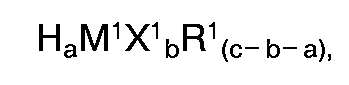
für eine effektive Zeitdauer kombiniert wird, um die wesentliche Vollendung der Umsetzung mit der halogenhaltigen Verbindung unter Bildung einer Suspensionsreaktionsmischung zu gestatten, und

in einer Menge von 0,5 bis 5,0 Mol pro Mol des Übergangsmetallkohlenwasserstoffoxidsgegeben wird, um die Katalysatorzusammensetzung herzustellen.
Applications Claiming Priority (2)
| Application Number | Priority Date | Filing Date | Title |
|---|---|---|---|
| US234231 | 1988-08-19 | ||
| US07/234,231 US4935394A (en) | 1988-08-19 | 1988-08-19 | Catalyst for olefin polymerization |
Publications (3)
| Publication Number | Publication Date |
|---|---|
| EP0356183A2 EP0356183A2 (de) | 1990-02-28 |
| EP0356183A3 EP0356183A3 (de) | 1991-05-29 |
| EP0356183B1 true EP0356183B1 (de) | 1994-12-14 |
Family
ID=22880493
Family Applications (1)
| Application Number | Title | Priority Date | Filing Date |
|---|---|---|---|
| EP89308451A Expired - Lifetime EP0356183B1 (de) | 1988-08-19 | 1989-08-21 | Olefinpolymerisationskatalysator |
Country Status (8)
| Country | Link |
|---|---|
| US (1) | US4935394A (de) |
| EP (1) | EP0356183B1 (de) |
| JP (1) | JP2888552B2 (de) |
| KR (1) | KR900003215A (de) |
| AT (1) | ATE115591T1 (de) |
| AU (1) | AU3998789A (de) |
| CA (1) | CA1334404C (de) |
| DE (1) | DE68919940T2 (de) |
Families Citing this family (19)
| Publication number | Priority date | Publication date | Assignee | Title |
|---|---|---|---|---|
| US5077357A (en) * | 1990-10-22 | 1991-12-31 | Shell Oil Company | Olefin polymerization catalyst |
| US5082907A (en) * | 1990-10-18 | 1992-01-21 | Shell Oil Company | Olefin polymerization catalyst |
| US5066737A (en) * | 1990-10-22 | 1991-11-19 | Shell Oil Company | Olefin polymerization catalyst |
| FI91968C (fi) * | 1989-11-28 | 1994-09-12 | Borealis Polymers Oy | -olefiinien polymerointiin tarkoitettu prokatalyyttikompositio, sen valmistus ja käyttö |
| FI85981C (fi) * | 1989-12-28 | 1992-06-25 | Neste Oy | Foerfarande foer framstaellning av en prokatalytkomposition avsedd foer polymerisering av olefiner samt anvaendning av kompositionen. |
| US5142006A (en) * | 1990-01-29 | 1992-08-25 | Shell Oil Company | Polymerization of cyclic olefins |
| US5141910A (en) * | 1990-10-18 | 1992-08-25 | Shell Oil Company | Olefin polymerization catalyst |
| US5124298A (en) * | 1990-10-22 | 1992-06-23 | Shell Oil Company | Olefin polymerization catalyst |
| US5132263A (en) * | 1990-10-22 | 1992-07-21 | Shell Oil Company | Olefin polymerization catalyst |
| US5276119A (en) * | 1992-12-29 | 1994-01-04 | Shell Oil Company | Transition metal hydrides as co-catalysts for olefin polymerization |
| US5316994A (en) * | 1992-12-31 | 1994-05-31 | Shell Oil Company | Copper hydrides as co-catalysts for olefin polymerization |
| US5405924A (en) * | 1993-07-22 | 1995-04-11 | Shell Oil Company | Imido transition metal complex metathesis catalysts |
| EP0797596B1 (de) * | 1993-12-16 | 1999-03-03 | Exxon Chemical Patents Inc. | Olefinpolymerisationskatalysator |
| US5379274A (en) * | 1994-05-04 | 1995-01-03 | Lee; Vincent K. W. | Inclination adjusting means for a liquid-ornamental desk clock |
| US5661097A (en) * | 1994-08-12 | 1997-08-26 | The Dow Chemical Company | Supported olefin polymerization catalyst |
| DE19639016A1 (de) * | 1996-09-23 | 1998-03-26 | Basf Ag | Mesoporöses Siliciumdioxid, Verfahren zu seiner Herstellung und seiner Verwendung |
| GB0320473D0 (en) * | 2003-09-01 | 2003-10-01 | Solvay | Process for the polymerization of olefins |
| KR102926272B1 (ko) | 2018-09-27 | 2026-02-12 | 셰브론 필립스 케미컬 컴퍼니 엘피 | 불화된 고체 산화물을 제조하는 방법 및 메탈로센계 촉매 시스템에서의 이의 용도 |
| US11214633B2 (en) * | 2019-09-10 | 2022-01-04 | Braskem America, Inc. | Ziegler-Natta catalyst systems and methods of controlling particle size |
Family Cites Families (11)
| Publication number | Priority date | Publication date | Assignee | Title |
|---|---|---|---|---|
| US4328121A (en) * | 1980-08-04 | 1982-05-04 | Phillips Petroleum Company | Polymerization catalyst and process |
| DE3172367D1 (en) * | 1980-11-11 | 1985-10-24 | Asahi Chemical Ind | Process and catalyst for polymerization of olefins |
| FR2510586A1 (fr) * | 1981-07-30 | 1983-02-04 | Charbonnages Ste Chimique | Catalyseur homogene comprenant un metal de transition et du magnesium, son procede de preparation et son application a la polymerisation de l'ethylene |
| US4472521A (en) * | 1982-12-20 | 1984-09-18 | Stauffer Chemical Company | Supported catalyst for polymerization of olefins |
| US4458027A (en) * | 1983-03-18 | 1984-07-03 | E. I. Du Pont De Nemours And Company | Olefin polymerization catalysts |
| US4562168A (en) * | 1984-05-17 | 1985-12-31 | Phillips Petroleum Company | Catalyst and olefin polymerization |
| US4626520A (en) * | 1984-08-06 | 1986-12-02 | Exxon Research & Engineering Co. | Polymerization catalyst, production and use |
| JPH0674292B2 (ja) * | 1984-11-30 | 1994-09-21 | 東燃株式会社 | エチレン重合用触媒成分の製造法 |
| US4607019A (en) * | 1984-12-12 | 1986-08-19 | Exxon Research & Engineering Co. | Polymerization catalyst, production and use |
| JPH072777B2 (ja) * | 1985-01-28 | 1995-01-18 | 東燃株式会社 | オレフイン重合用触媒成分 |
| GB2184448B (en) * | 1985-12-23 | 1990-01-24 | Mobil Oil Corp | Catalyst conversion for polymerizing alpha-olefin polymers of relatively narrow molecular weight distribution and high melt index |
-
1988
- 1988-08-19 US US07/234,231 patent/US4935394A/en not_active Expired - Lifetime
-
1989
- 1989-08-03 CA CA000607454A patent/CA1334404C/en not_active Expired - Fee Related
- 1989-08-18 AU AU39987/89A patent/AU3998789A/en not_active Abandoned
- 1989-08-18 KR KR1019890011770A patent/KR900003215A/ko not_active Withdrawn
- 1989-08-18 JP JP1212835A patent/JP2888552B2/ja not_active Expired - Fee Related
- 1989-08-21 EP EP89308451A patent/EP0356183B1/de not_active Expired - Lifetime
- 1989-08-21 DE DE68919940T patent/DE68919940T2/de not_active Expired - Fee Related
- 1989-08-21 AT AT89308451T patent/ATE115591T1/de not_active IP Right Cessation
Also Published As
| Publication number | Publication date |
|---|---|
| KR900003215A (ko) | 1990-03-26 |
| EP0356183A2 (de) | 1990-02-28 |
| US4935394A (en) | 1990-06-19 |
| ATE115591T1 (de) | 1994-12-15 |
| DE68919940D1 (de) | 1995-01-26 |
| JPH02255809A (ja) | 1990-10-16 |
| AU3998789A (en) | 1990-02-22 |
| CA1334404C (en) | 1995-02-14 |
| DE68919940T2 (de) | 1995-05-04 |
| EP0356183A3 (de) | 1991-05-29 |
| JP2888552B2 (ja) | 1999-05-10 |
Similar Documents
| Publication | Publication Date | Title |
|---|---|---|
| US5064798A (en) | Catalyst for olefin polymerization | |
| US4935394A (en) | Catalyst for olefin polymerization | |
| US5747405A (en) | Catalyst compositions and process for preparing polyolefins | |
| US5081090A (en) | Dry olefin polymerization catalyst | |
| KR100199686B1 (ko) | 기체상 올레핀 중합법 | |
| EP0117929B1 (de) | Polymerisation von alpha-Olefinen, katalytische Komponenten und katalytisches System hierfür | |
| EP0188099B1 (de) | Polymerisationskatalysator, seine Herstellung und seine Anwendung | |
| EP0250230B1 (de) | Katalysator für Olefinpolymerisation | |
| CA1249574A (en) | Ethylene polymerization catalyst | |
| HK1006174B (en) | Olefin polymerization catalyst | |
| US4199476A (en) | Olefin polymerization catalyst | |
| EP0173485A1 (de) | Polymerisationskatalysator, seine Herstellung und seine Anwendung | |
| US4711865A (en) | Olefin polymerization catalysts, production and use | |
| US4707530A (en) | Polymerization catalyst | |
| GB2058093A (en) | Olefin polymerization and catalyst composition for use therein | |
| JPS6187704A (ja) | 重合用触媒 | |
| JP4089968B2 (ja) | 新規の触媒組成物およびそれを用いたオレフィン重合およびアルファオレフィンとのオレフィン共重合のための方法 | |
| EP0294168B1 (de) | Verfahren zur Herstellung eines Ethylenpolymers | |
| JPH072789B2 (ja) | 重合用触媒 | |
| US4339351A (en) | Process for producing olefin polymers | |
| EP0677066A1 (de) | Olefinpolymerisatiionskatalysator | |
| JPH0859731A (ja) | オレフィン重合触媒の製造方法 | |
| EP0518944B1 (de) | Polymerisationskatalysator zur herstellung von 1-olefinpolymeren mit einer breiten molekulargewichtsverteilung | |
| US4618596A (en) | Polymerization catalyst, production and use | |
| US4866144A (en) | Polymerization catalyst, production and use |
Legal Events
| Date | Code | Title | Description |
|---|---|---|---|
| PUAI | Public reference made under article 153(3) epc to a published international application that has entered the european phase |
Free format text: ORIGINAL CODE: 0009012 |
|
| 17P | Request for examination filed |
Effective date: 19890904 |
|
| AK | Designated contracting states |
Kind code of ref document: A2 Designated state(s): AT BE CH DE ES FR GB GR IT LI LU NL SE |
|
| PUAL | Search report despatched |
Free format text: ORIGINAL CODE: 0009013 |
|
| AK | Designated contracting states |
Kind code of ref document: A3 Designated state(s): AT BE CH DE ES FR GB GR IT LI LU NL SE |
|
| 17Q | First examination report despatched |
Effective date: 19921126 |
|
| GRAA | (expected) grant |
Free format text: ORIGINAL CODE: 0009210 |
|
| AK | Designated contracting states |
Kind code of ref document: B1 Designated state(s): AT BE CH DE ES FR GB GR IT LI LU NL SE |
|
| PG25 | Lapsed in a contracting state [announced via postgrant information from national office to epo] |
Ref country code: IT Free format text: LAPSE BECAUSE OF FAILURE TO SUBMIT A TRANSLATION OF THE DESCRIPTION OR TO PAY THE FEE WITHIN THE PRE;WARNING: LAPSES OF ITALIAN PATENTS WITH EFFECTIVE DATE BEFORE 2007 MAY HAVE OCCURRED AT ANY TIME BEFORE 2007. THE CORRECT EFFECTIVE DATE MAY BE DIFFERENT FROM THE ONE RECORDED.SCRIBED TIME-LIMIT Effective date: 19941214 Ref country code: LI Effective date: 19941214 Ref country code: GR Free format text: LAPSE BECAUSE OF FAILURE TO SUBMIT A TRANSLATION OF THE DESCRIPTION OR TO PAY THE FEE WITHIN THE PRESCRIBED TIME-LIMIT Effective date: 19941214 Ref country code: AT Effective date: 19941214 Ref country code: CH Effective date: 19941214 Ref country code: ES Free format text: THE PATENT HAS BEEN ANNULLED BY A DECISION OF A NATIONAL AUTHORITY Effective date: 19941214 |
|
| REF | Corresponds to: |
Ref document number: 115591 Country of ref document: AT Date of ref document: 19941215 Kind code of ref document: T |
|
| REF | Corresponds to: |
Ref document number: 68919940 Country of ref document: DE Date of ref document: 19950126 |
|
| ET | Fr: translation filed | ||
| PG25 | Lapsed in a contracting state [announced via postgrant information from national office to epo] |
Ref country code: SE Effective date: 19950314 |
|
| REG | Reference to a national code |
Ref country code: CH Ref legal event code: PL |
|
| PG25 | Lapsed in a contracting state [announced via postgrant information from national office to epo] |
Ref country code: LU Free format text: LAPSE BECAUSE OF NON-PAYMENT OF DUE FEES Effective date: 19950831 |
|
| PLBE | No opposition filed within time limit |
Free format text: ORIGINAL CODE: 0009261 |
|
| STAA | Information on the status of an ep patent application or granted ep patent |
Free format text: STATUS: NO OPPOSITION FILED WITHIN TIME LIMIT |
|
| 26N | No opposition filed | ||
| REG | Reference to a national code |
Ref country code: GB Ref legal event code: IF02 |
|
| PGFP | Annual fee paid to national office [announced via postgrant information from national office to epo] |
Ref country code: GB Payment date: 20030702 Year of fee payment: 15 |
|
| PGFP | Annual fee paid to national office [announced via postgrant information from national office to epo] |
Ref country code: NL Payment date: 20030707 Year of fee payment: 15 |
|
| PGFP | Annual fee paid to national office [announced via postgrant information from national office to epo] |
Ref country code: FR Payment date: 20030804 Year of fee payment: 15 |
|
| PGFP | Annual fee paid to national office [announced via postgrant information from national office to epo] |
Ref country code: DE Payment date: 20030829 Year of fee payment: 15 |
|
| PGFP | Annual fee paid to national office [announced via postgrant information from national office to epo] |
Ref country code: BE Payment date: 20030923 Year of fee payment: 15 |
|
| PG25 | Lapsed in a contracting state [announced via postgrant information from national office to epo] |
Ref country code: GB Free format text: LAPSE BECAUSE OF NON-PAYMENT OF DUE FEES Effective date: 20040821 |
|
| PG25 | Lapsed in a contracting state [announced via postgrant information from national office to epo] |
Ref country code: BE Free format text: LAPSE BECAUSE OF NON-PAYMENT OF DUE FEES Effective date: 20040831 |
|
| BERE | Be: lapsed |
Owner name: *EXXON CHEMICAL PATENTS INC. Effective date: 20040831 |
|
| PG25 | Lapsed in a contracting state [announced via postgrant information from national office to epo] |
Ref country code: NL Free format text: LAPSE BECAUSE OF NON-PAYMENT OF DUE FEES Effective date: 20050301 Ref country code: DE Free format text: LAPSE BECAUSE OF NON-PAYMENT OF DUE FEES Effective date: 20050301 |
|
| GBPC | Gb: european patent ceased through non-payment of renewal fee |
Effective date: 20040821 |
|
| PG25 | Lapsed in a contracting state [announced via postgrant information from national office to epo] |
Ref country code: FR Free format text: LAPSE BECAUSE OF NON-PAYMENT OF DUE FEES Effective date: 20050429 |
|
| NLV4 | Nl: lapsed or anulled due to non-payment of the annual fee |
Effective date: 20050301 |
|
| REG | Reference to a national code |
Ref country code: FR Ref legal event code: ST |
|
| BERE | Be: lapsed |
Owner name: *EXXON CHEMICAL PATENTS INC. Effective date: 20040831 |