EP0360135A1 - Méthode de traitement de signaux d'interruption dans un ordinateur - Google Patents
Méthode de traitement de signaux d'interruption dans un ordinateur Download PDFInfo
- Publication number
- EP0360135A1 EP0360135A1 EP19890116890 EP89116890A EP0360135A1 EP 0360135 A1 EP0360135 A1 EP 0360135A1 EP 19890116890 EP19890116890 EP 19890116890 EP 89116890 A EP89116890 A EP 89116890A EP 0360135 A1 EP0360135 A1 EP 0360135A1
- Authority
- EP
- European Patent Office
- Prior art keywords
- time
- operating system
- program
- real
- operating
- Prior art date
- Legal status (The legal status is an assumption and is not a legal conclusion. Google has not performed a legal analysis and makes no representation as to the accuracy of the status listed.)
- Granted
Links
Images


Classifications
-
- G—PHYSICS
- G06—COMPUTING OR CALCULATING; COUNTING
- G06F—ELECTRIC DIGITAL DATA PROCESSING
- G06F9/00—Arrangements for program control, e.g. control units
- G06F9/06—Arrangements for program control, e.g. control units using stored programs, i.e. using an internal store of processing equipment to receive or retain programs
- G06F9/46—Multiprogramming arrangements
-
- G—PHYSICS
- G06—COMPUTING OR CALCULATING; COUNTING
- G06F—ELECTRIC DIGITAL DATA PROCESSING
- G06F9/00—Arrangements for program control, e.g. control units
- G06F9/06—Arrangements for program control, e.g. control units using stored programs, i.e. using an internal store of processing equipment to receive or retain programs
- G06F9/46—Multiprogramming arrangements
- G06F9/48—Program initiating; Program switching, e.g. by interrupt
- G06F9/4806—Task transfer initiation or dispatching
- G06F9/4843—Task transfer initiation or dispatching by program, e.g. task dispatcher, supervisor, operating system
- G06F9/4881—Scheduling strategies for dispatcher, e.g. round robin, multi-level priority queues
- G06F9/4887—Scheduling strategies for dispatcher, e.g. round robin, multi-level priority queues involving deadlines, e.g. rate based, periodic
-
- G—PHYSICS
- G06—COMPUTING OR CALCULATING; COUNTING
- G06F—ELECTRIC DIGITAL DATA PROCESSING
- G06F9/00—Arrangements for program control, e.g. control units
- G06F9/06—Arrangements for program control, e.g. control units using stored programs, i.e. using an internal store of processing equipment to receive or retain programs
- G06F9/44—Arrangements for executing specific programs
- G06F9/455—Emulation; Interpretation; Software simulation, e.g. virtualisation or emulation of application or operating system execution engines
- G06F9/45533—Hypervisors; Virtual machine monitors
Definitions
- the invention relates to an operating program for a data processing system with a time sharing operating system with interrupt processing, in which the computing time of a data processor is allocated to user programs in predetermined time segments for general data processing.
- Operating programs serve the purpose of controlling hardware-oriented components of a data processing system, for example a data processor, memory input / output devices, data transmission devices, and others, and of providing their functions for application-specific programs. This enables the user to call up these functions in his program using simple, standardized commands, which the operating program converts into corresponding, sometimes very complex, machine-oriented program sequences. For example, if a file is to be loaded from disk storage into the main memory of a data processor, the user only has to specify the logical name of the file together with a transfer command. The specific implementation of this name in the physical address of the memory as well as the execution of the command by providing the input / output channels, monitoring the data for error-free data transmission, data backup, calculation of the memory addresses, etc. takes over the operating program. The efficiency of a data processing system is essentially dependent on the structure and function of an operating program Right.
- Known operating programs have a time-sharing operating system in which the computing time of the data processor is divided into time slices and assigned to several users.
- the data processor actually serves the users one after the other, the high computing speed of the data processor means that several users can use the data processing system in parallel and almost simultaneously.
- Such an operating system is therefore particularly suitable for general data processing tasks in which slow processes are processed in relation to the computing speed.
- Such tasks include e.g. word processing, database information, database management, sorting of data and similar applications.
- the time-sharing operating system uses various hardware components to accomplish its tasks.
- the control of these components requires the evaluation of events such as the start and end of a process, the occurrence of an error, etc., which are often time-critical.
- the time-optimal evaluation of such events is therefore not carried out using the relatively slow time-sharing method, but rather by means of interrupt processing, in which the program currently running is interrupted by an event that is physically represented by an interrupt signal.
- interrupt processing in which the interrupt event is evaluated and, if necessary, a reaction is immediately given to it, the interrupted program which is running in time sharing mode is continued.
- the program status is recorded before the program is interrupted, which is done by storing relevant program parameters.
- Time sharing operating systems have come in numerous forms application cases have proven themselves and are therefore widespread.
- the users are interested in the fact that such operating systems have a uniform structure in order to be able to process the user programs once developed on various data processing systems independently of a data processor and the further hardware structure of the data processing system.
- the software manufacturers have standardized the operating systems and guarantee the compatibility of the user programs running with these operating systems on various data processing systems. Interfering with the operating system would remove this compatibility.
- Such a standardized time-sharing operating system is, for example, the UNIX operating system from AT & T.
- data processing systems are also used to control technical processes, whereby they are directly integrated into the technical process sequence and thus become part of the process control. Examples of this are the fast measurement data processing for the control of measurement systems, the signal processing and switching of subscriber connections in telecommunication systems, the control of chemical processes, the use in production technology for CIM (Computer Integrated Manufacturing), the robot control (Robotic) and similar types of industrial applications.
- Linking the application-specific programs with the data processor requires an operating system that has short reaction times to external process events in real-time operation.
- An example of such an operating system is the NICOS operating system from Nixdorf Computer AG.
- Process control tasks often include the management of process data, the renewal of databases, access to database information and the like. for which a standardized time sharing operating system is particularly suitable. However, this operating system fails to handle time-critical process control tasks.
- a real-time operating system is also provided for controlling technical processes, the real-time programs, possibly interrupt-controlled, are processed, each interrupt is recorded centrally, examined for its affiliation with one of the two operating systems, and examined therein Operating system is processed, and that the real-time operating system is activated when a real-time interrupt occurs even when the time-sharing operating system is active, for which purpose the time-sharing operating system is interrupted.
- the operating program according to the invention now comprises two operating systems, a time sharing operating system and one Real-time operating system, which together only need one data processor.
- the interrupt signals triggering a program interruption or an interrupt can be generated either by the technical process or by general data processing. They either cause the real-time operating system to start a real-time program or provide a user program that is processed by the time-sharing operating system in the time period provided for the user program. Since only one operating system can be active in connection with the data processor, one of the operating systems must be switched on, ie activated, and the other interrupted. In order to detect program interruptions for both operating systems, they are recorded centrally and their affiliation with one of the two operating systems is determined. In the operating system in question, an interrupt routine belonging to the interrupt is first processed.
- This interrupt routine generally only requires a short execution time in which, for example, a message is generated, data is transferred or an initial state is set. After this routine has been processed, the operating program is returned to. This ensures that each interrupt is reported to the associated operating system, which can start the corresponding programs using the time-sharing method or the real-time method.
- the real-time operating system is activated each time a real-time interrupt occurs.
- a possibly running time sharing operating system is interrupted.
- the real-time programs After the real-time programs have been processed in response to the real-time interrupt, it is possible to return to the time-sharing operating system.
- the interaction of the operating systems makes the operating program like a real for a user who does not need to be familiar with the internal relationships of the operating program time operating system with a subordinate time sharing operating system.
- a data processing system can be used both for controlling a technical process with high demands on the response time and for general data processing.
- the time sharing operating system itself is not changed in the invention, so that the full compatibility of user programs is maintained when using a standardized operating system.
- the performance of a data processing system equipped with a data processor is significantly increased by the invention.
- a further development of the invention is characterized in that a real-time operating system is provided, the real-time programs of which are processed as a function of their priority, and that the priority of the real-time program is compared centrally with the priority of a possibly running user program of the time-sharing operating system.
- Real-time operating systems with priority-controlled real-time programs are known per se. Each event of a process is assigned a rank or priority that corresponds to its importance. Corresponding priorities are assigned to the real-time programs reacting to the events. If an event triggers an interrupt, the priority of the real-time program to be activated is determined and the corresponding real-time program is only executed if if the priority is higher than that of the program currently running. If this is not the case, the real-time program with a lower priority is entered in a waiting list and is only processed at a later time. In the case of the measure according to the invention, the priority of the real-time program is subjected to a comparison and a decision is immediately made as to which operating system should function or continue to work.
- a further development of the invention is characterized in that in a real-time operating system or a time-sharing operating system whose real-time programs or user programs are processed as a function of a program priority, the priority of the program currently running is determined centrally, and that the activation of the respective operating system is carried out by depends on the program priority of the current program.
- This development provides that the real-time operating system is activated in the event of a real-time interrupt only on the condition that the priority of the real-time program is higher than that of the current user program. Conversely, it is possible that a higher priority interrupt of the time sharing operating system interrupts the real time operating system, the time sharing operating system is activated and an appropriate user program is started. With this measure, both operating systems have the same rank and are only activated depending on their priorities. This Wei Training can be used particularly advantageously where both operating systems are supposed to control processes with short reaction times or where there are processes in the real-time operating system that are not time-critical and can therefore have a lower priority than user programs.
- the time-sharing operating system when the system is running, the time-sharing operating system is loaded first and then the real-time operating system.
- This measure ensures that the time sharing operating system is already operational and access to the operating functions controlled by the time sharing operating system, e.g. Disk storage access is possible if the real-time operating system is to be loaded.
- Disk storage access is possible if the real-time operating system is to be loaded.
- a further embodiment is characterized in that, when an interrupt occurs, a branch is made to an evaluation program which controls the activation and interruption of the operating systems and whose program address is indicated by an interrupt jump address stored in a memory.
- the change change program is preferably called up and processed when the operating program is activated.
- the address change program is preferably defined as a user program or as a real-time program, and can thus be called up and started either by a user through the time-sharing operating system or process-controlled by an interrupt via the real-time operating system.
- a preferred further development is characterized in that a different area of the work memory of the data processor is permanently assigned to each of the two operating systems. This ensures that the operating systems and their programs cannot interfere with each other.
- the operating program thus has the effect of two separate data processing systems with separate memory areas working in parallel.
- both will also be operating systems are assigned a common memory area.
- the common memory area is used for data exchange between the two operating systems.
- data can be transferred from the memory area assigned to an operating system to the common memory area and temporarily stored, and data can be read from the common area.
- the data traffic is carried out similarly to that between two separate computer systems.
- the position and the size of the areas in the main memory can advantageously be changed when the system is activated, i.e. when the system is started up.
- This variant makes it possible to optimally adapt the division of the working memory into the individual areas to the respective application and the resulting memory requirement of the operating systems or in the case of different expansion levels of the working memory.
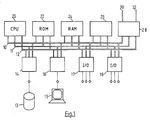
- FIG. 1 shows the block diagram of a data processing system which can be used for the application of the invention.
- a data processor 20 which may be a commercially available microprocessor, is connected to further hardware components via an address bus 10, a data bus 11 and a control data bus 12. These are a timer 26, an interrupt control module 28, a read-only memory 22, which is designed as a ROM memory and, among other things. contains a load program for the system start-up, a read / write memory 24 serving as main memory and an interface control module 14 which connects a mass memory 13 to the data buses 10, 11, 12.
- a first input / output interface 16 which is connected to a screen terminal 15, a second input / output interface 17, which is provided for data traffic with peripheral devices of general data processing, and a third input / output interface 18, which is suitable for the control of technical processes.
- the interrupt control module 28 is programmable and detects process-dependent interrupt signals via an interrupt data line 30 and 32 internal interrupt signals of the data processing system via a further interrupt data line 32. When an interrupt signal occurs, the interrupt control module 28 issues a message and an interrupt jump address, which the data processor 20 evaluates in order to initiate an interrupt or a program interruption. The various interrupt signals can already be evaluated according to priorities by the interrupt control module 28.
- the operating program with the time-sharing operating system, the real-time operating system and with the user programs and real-time programs managed by the operating systems is stored in the mass storage device 13.
- the time-sharing operating system which in this example is a UNIX operating system from AT&T, is loaded via the load program stored in the read-only memory 22. It should be noted here that other time sharing operating systems can also be used.
- the data processing system works under the control of the UNIX operating system.
- the commands defined in the UNIX operating system can therefore be used to load the real-time operating system and other programs.
- the real-time operating system is loaded as a so-called "special file", with a special loading address being assigned to it.
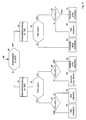
- an interrupt 40 reported by the interrupt control module 28 is examined for its affiliation with one of the operating systems.
- an interrupt routine is first processed, for which purpose a program jump into the real-time operating system is carried out.
- the interrupt is registered in the interrupt routine, interrupt parameters are provided and any necessary steps, such as the generation of acknowledgment signals and the like, are carried out.
- work step 46 of the operating program is returned and the state of the operating program prevailing before the interrupt is queried.
- Priority P (z) of the interrupt present in the current state z is compared with the priority P (z-1) of the interrupted program. If the priority P (z) is greater than that of the previous state P (z-1), the process branches to step 50, in which a higher-ranking real-time program of the real-time operating system is started. If the priority P (z) is lower, the interrupted real-time program is continued in step 52. A real-time program belonging to the current interrupt, in which the process event signaled by the interrupt is reacted to, can then be processed at a later time, if there are no higher-ranking programs, according to a queuing process.
- a program jump to the time-sharing operating system is carried out in the next step 58, and the program interrupted there is continued. That through real time interrupt, as a response to a process event, requested real-time program with a lower priority is only started at a later point in time after higher-ranking programs have been processed.
- step 42 The steps which follow step 42 are described below if an interrupt belonging to the time-sharing operating system is found as interrupt 40.
- an interrupt routine is first run in the time-sharing operating system in step 60 in order to transmit corresponding interrupt parameters to it.
- a further branch takes place in the next work step 62 of the operating program, depending on the state in which the operating system was before the interruption. If the time-sharing operating system was active before the interruption, the interrupted user program is continued in step 64.
- a special user program requested by the interrupt is started in a time period provided for this purpose according to the time-sharing operating method.
- FIG. 3 shows the change between the operating systems controlled by the operating program.
- the time sharing operating system UNIX and the real time operating system NICOS from Nixdorf Computer AG used.
- the activity of the real-time operating system NICOS is shown, in the lower part of the picture that of the time-sharing operating system UNIX over time t.
- the user programs U1, U2, U3 are each processed with the same priority;
- the real-time program N1 has priority 1 and the real-time program N2 has higher priority 2.
- the UNIX operating system is active in the period from t0 to t1, and the user programs U1 and U2 are processed in the time slices assigned to them.
- a real-time interrupt occurs at time t1, which interrupts the UNIX operating system and therefore also the user program U2 and then activates the NICOS operating system.
- This starts the real-time program N1 in response to the process event triggering the interrupt. While this is being processed, another real-time interrupt with a higher priority occurs at time t2, which causes the higher-ranking program N2 to start. Only after the real-time program N2 has been completely processed is it returned to the real-time program N1 and this is ended. Since no further real-time programs are to be processed, the NICOS operating system is interrupted and switched to the UNIX operating system. There, the previously interrupted user program U2 is processed in alternation with the other user programs U1 and U3.
- the UNIX operating system is only interrupted again at time t5 by another real-time interrupt, which initiates a change to the NICOS
- FIG. 4 shows the arrangement of the working memory 80 of the data processor in three areas 82, 84, 86.
- the storage area 82 is assigned to the time-sharing operating system, the storage area 86 to the real-time operating system.
- a common area 84 on which both operating systems can be accessed is arranged between the two areas 82, 86 and directly adjacent to them.
- the data 88 In order to transfer data 88 from the storage area 82 to the storage area 86, the data 88 must be temporarily stored in the common storage area 84.
- the known methods of memory delivery with the control information “memory free”, “memory occupied”, “data available”, as are customary in the communication between separate memory systems, can be used for data transfer.
- a data transfer in the opposite direction, ie from the memory area 86 to the memory area 82, is possible in an analogous manner.
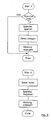
- data transfer programs A, B are provided, the flow diagrams of which are shown in FIG. As an example, it is assumed here that data from the real-time operating system are to be transmitted to the time-sharing operating system.
- this program parameter such as Source addresses of the data, data size, line address of the data are given
- this memory section is blocked from access by other programs, the data is stored in the memory section, a message is sent to the time-sharing operating system with the aid of an interrupt about the creation of the data in the memory section, and the data transfer program A is ended.
- the time-sharing operating system After processing the interrupt, the time-sharing operating system starts a data transfer program B which fetches the data from the common data area and in the protected area Storage area of the time sharing operating system. The memory section blocked by the data transfer program A is then released again. Finally, an interrupt is sent to the real-time operating system, with which the completed data transfer is signaled. Corresponding data transfer programs are also provided for data traffic in the reverse data direction.
- FIG. 6 shows a telecommunications system with a switching matrix K and similar subscriber line circuits TA.
- the subscriber line circuits TA are each connected to the switching matrix K via two information and signaling channels SK (corresponding to ISDN).
- the subscriber stations TNA, TNB are pure voice terminals.
- the subscriber stations T1, T2, T4 are "multifunctional terminals" with which both voice and data communication is possible.
- An information channel for voice transmission is provided at the subscriber station TNC, and the second information channel is used for data traffic via a screen work station T3.
- Each of these information channels also has its own signaling channel, which is not shown in FIG. 6.
- the controller ST of the telecommunications system has a connection SB to control the switching matrix K and the Subscriber connection line TA also has at least one further connection I with which it can access the information channels which are switched through in the switching matrix.
- the two alternating operating systems RS and TS are shown as the inner block of the control.
- a transfer area UB is drawn between the operating systems for communication between programs of both operating systems.
- the real-time operating system RS handles all the requirements that result from the control of a telecommunications system, in particular the connection setup and clearing down.
- General data processing programs are processed with the time sharing operating system TS, e.g. Phonebook, fee evaluation and word processing.
- subscriber stations can also be connected directly to the control ST, which only work with the time-sharing operating system TS without being transferred by the real-time operating system RS.
- Such a subscriber station is designated T5 in FIG.
Landscapes
- Engineering & Computer Science (AREA)
- Software Systems (AREA)
- Theoretical Computer Science (AREA)
- Physics & Mathematics (AREA)
- General Engineering & Computer Science (AREA)
- General Physics & Mathematics (AREA)
- Multi Processors (AREA)
- Stored Programmes (AREA)
- Debugging And Monitoring (AREA)
- Hardware Redundancy (AREA)
Applications Claiming Priority (2)
| Application Number | Priority Date | Filing Date | Title |
|---|---|---|---|
| DE3831048 | 1988-09-12 | ||
| DE3831048A DE3831048A1 (de) | 1988-09-12 | 1988-09-12 | Betriebsprogramm fuer eine datenverarbeitungsanlage |
Publications (2)
| Publication Number | Publication Date |
|---|---|
| EP0360135A1 true EP0360135A1 (fr) | 1990-03-28 |
| EP0360135B1 EP0360135B1 (fr) | 1993-03-03 |
Family
ID=6362819
Family Applications (2)
| Application Number | Title | Priority Date | Filing Date |
|---|---|---|---|
| EP89910093A Pending EP0433350A1 (fr) | 1988-09-12 | 1989-09-12 | Programme d'exploitation d'un ordinateur |
| EP89116890A Expired - Lifetime EP0360135B1 (fr) | 1988-09-12 | 1989-09-12 | Méthode de traitement de signaux d'interruption dans un ordinateur |
Family Applications Before (1)
| Application Number | Title | Priority Date | Filing Date |
|---|---|---|---|
| EP89910093A Pending EP0433350A1 (fr) | 1988-09-12 | 1989-09-12 | Programme d'exploitation d'un ordinateur |
Country Status (7)
| Country | Link |
|---|---|
| EP (2) | EP0433350A1 (fr) |
| JP (1) | JPH03505383A (fr) |
| KR (1) | KR930009633B1 (fr) |
| AU (1) | AU4225489A (fr) |
| DE (2) | DE3831048A1 (fr) |
| ES (1) | ES2041920T3 (fr) |
| WO (1) | WO1990002996A1 (fr) |
Cited By (8)
| Publication number | Priority date | Publication date | Assignee | Title |
|---|---|---|---|---|
| WO1999038073A1 (fr) | 1998-01-21 | 1999-07-29 | Nokia Mobile Phones Limited | Systeme integre |
| EP1054322A3 (fr) * | 1999-05-21 | 2003-10-01 | Hitachi, Ltd. | Système d'ordinateur opérant avec plusieurs systèmes d'exploitations |
| WO2004090719A2 (fr) | 2003-04-09 | 2004-10-21 | Jaluna Sa | Systemes d'exploitation |
| WO2006018307A2 (fr) | 2004-08-18 | 2006-02-23 | Jaluna Sa | Systemes d'exploitation |
| WO2006043040A1 (fr) * | 2004-10-18 | 2006-04-27 | Ttpcom Limited | Fonction de commande d'interruptions adaptee pour commander l'execution de demandes d'interruption de criticite differente |
| EP1879108A1 (fr) | 2003-04-09 | 2008-01-16 | Jaluna SA | Procédé et système pour redémarrer un système d'exploitation sans interrompre les opérations d'autres systèmes d'exploitation exécutés parallélement |
| US8024742B2 (en) | 2003-09-30 | 2011-09-20 | Jaluna S.A. | Common program for switching between operation systems is executed in context of the high priority operating system when invoked by the high priority OS |
| US8612992B2 (en) | 2003-04-09 | 2013-12-17 | Jaluna Sa | Operating systems |
Families Citing this family (3)
| Publication number | Priority date | Publication date | Assignee | Title |
|---|---|---|---|---|
| DE19648422C2 (de) * | 1996-11-22 | 2000-03-30 | Hans Beckhoff | Verfahren und Vorrichtung zum Implementieren eines echtzeitfähigen Steuerprogramms in einem nicht-echtzeitfähigen Betriebsprogramm |
| DE29620374U1 (de) * | 1996-11-22 | 1998-04-02 | Beckhoff Hans | Interruptsystem zum Implementieren eines echtzeitfähigen Steuerprogramms in einem nicht-echtzeitfähigen Betriebsprogramm |
| JP3404322B2 (ja) * | 1999-05-25 | 2003-05-06 | 株式会社エルミックシステム | 割込処理方法、os支援システム、情報処理装置、記録媒体 |
Citations (5)
| Publication number | Priority date | Publication date | Assignee | Title |
|---|---|---|---|---|
| EP0024434A1 (fr) * | 1979-02-21 | 1981-03-11 | Fujitsu Limited | Systeme de machine virtuelle |
| EP0196661A2 (fr) * | 1985-04-03 | 1986-10-08 | Honeywell Bull Inc. | Facilité de liaison pour soutenir de multiples systèmes d'exploitation à travers une enveloppe |
| FR2580096A1 (fr) * | 1985-04-04 | 1986-10-10 | Nec Corp | |
| US4744048A (en) * | 1985-10-09 | 1988-05-10 | American Telephone And Telegraph Company | Display context switching arrangement |
| US4747040A (en) * | 1985-10-09 | 1988-05-24 | American Telephone & Telegraph Company | Dual operating system computer |
Family Cites Families (4)
| Publication number | Priority date | Publication date | Assignee | Title |
|---|---|---|---|---|
| JPS5150745A (ja) * | 1974-10-28 | 1976-05-04 | Sumitomo Electric Industries | Hikaridensoyofuaibaano seizohoho |
| JPS58181149A (ja) * | 1982-04-16 | 1983-10-22 | Hitachi Ltd | 計算機システムの制御方式 |
| JPS6027033A (ja) * | 1983-07-25 | 1985-02-12 | Hitachi Ltd | 仮想計算機のシミユレ−シヨン方式 |
| JPS61143858A (ja) * | 1984-12-18 | 1986-07-01 | Hitachi Ltd | 複数のオペレ−テイングシステムの下におけるフアイルの共用方法 |
-
1988
- 1988-09-12 DE DE3831048A patent/DE3831048A1/de not_active Withdrawn
-
1989
- 1989-09-12 ES ES198989116890T patent/ES2041920T3/es not_active Expired - Lifetime
- 1989-09-12 KR KR1019900701005A patent/KR930009633B1/ko not_active Expired - Fee Related
- 1989-09-12 JP JP1509613A patent/JPH03505383A/ja active Pending
- 1989-09-12 DE DE8989116890T patent/DE58903650D1/de not_active Expired - Fee Related
- 1989-09-12 WO PCT/EP1989/001064 patent/WO1990002996A1/fr not_active Ceased
- 1989-09-12 EP EP89910093A patent/EP0433350A1/fr active Pending
- 1989-09-12 AU AU42254/89A patent/AU4225489A/en not_active Abandoned
- 1989-09-12 EP EP89116890A patent/EP0360135B1/fr not_active Expired - Lifetime
Patent Citations (5)
| Publication number | Priority date | Publication date | Assignee | Title |
|---|---|---|---|---|
| EP0024434A1 (fr) * | 1979-02-21 | 1981-03-11 | Fujitsu Limited | Systeme de machine virtuelle |
| EP0196661A2 (fr) * | 1985-04-03 | 1986-10-08 | Honeywell Bull Inc. | Facilité de liaison pour soutenir de multiples systèmes d'exploitation à travers une enveloppe |
| FR2580096A1 (fr) * | 1985-04-04 | 1986-10-10 | Nec Corp | |
| US4744048A (en) * | 1985-10-09 | 1988-05-10 | American Telephone And Telegraph Company | Display context switching arrangement |
| US4747040A (en) * | 1985-10-09 | 1988-05-24 | American Telephone & Telegraph Company | Dual operating system computer |
Cited By (10)
| Publication number | Priority date | Publication date | Assignee | Title |
|---|---|---|---|---|
| WO1999038073A1 (fr) | 1998-01-21 | 1999-07-29 | Nokia Mobile Phones Limited | Systeme integre |
| EP1054322A3 (fr) * | 1999-05-21 | 2003-10-01 | Hitachi, Ltd. | Système d'ordinateur opérant avec plusieurs systèmes d'exploitations |
| WO2004090719A2 (fr) | 2003-04-09 | 2004-10-21 | Jaluna Sa | Systemes d'exploitation |
| EP1879108A1 (fr) | 2003-04-09 | 2008-01-16 | Jaluna SA | Procédé et système pour redémarrer un système d'exploitation sans interrompre les opérations d'autres systèmes d'exploitation exécutés parallélement |
| US8201170B2 (en) | 2003-04-09 | 2012-06-12 | Jaluna Sa | Operating systems are executed on common program and interrupt service routine of low priority OS is modified to response to interrupts from common program only |
| US8612992B2 (en) | 2003-04-09 | 2013-12-17 | Jaluna Sa | Operating systems |
| US8024742B2 (en) | 2003-09-30 | 2011-09-20 | Jaluna S.A. | Common program for switching between operation systems is executed in context of the high priority operating system when invoked by the high priority OS |
| WO2006018307A2 (fr) | 2004-08-18 | 2006-02-23 | Jaluna Sa | Systemes d'exploitation |
| EP2296089A2 (fr) | 2004-08-18 | 2011-03-16 | Jaluna SA | Systèmes d'exploitation |
| WO2006043040A1 (fr) * | 2004-10-18 | 2006-04-27 | Ttpcom Limited | Fonction de commande d'interruptions adaptee pour commander l'execution de demandes d'interruption de criticite differente |
Also Published As
| Publication number | Publication date |
|---|---|
| KR900702453A (ko) | 1990-12-07 |
| DE3831048A1 (de) | 1990-03-15 |
| DE58903650D1 (de) | 1993-04-08 |
| EP0360135B1 (fr) | 1993-03-03 |
| KR930009633B1 (ko) | 1993-10-08 |
| JPH03505383A (ja) | 1991-11-21 |
| ES2041920T3 (es) | 1993-12-01 |
| EP0433350A1 (fr) | 1991-06-26 |
| AU4225489A (en) | 1990-04-02 |
| WO1990002996A1 (fr) | 1990-03-22 |
Similar Documents
| Publication | Publication Date | Title |
|---|---|---|
| DE69809254T2 (de) | Architektur eines hybriden echzeitsteuerungssystems und verfahren zu seinem betrieb | |
| EP0525432B1 (fr) | Méthode de changement des données de configuration de système dans un système de commutation de télécommunications | |
| EP0333123B1 (fr) | Système de communication RNIS à structure modulaire | |
| DE4125389C1 (fr) | ||
| DE1499288B2 (de) | Datenverarbeitungsanlage | |
| DE2431379B2 (de) | Datenverarbeitungseinrichtung | |
| EP0635784A1 (fr) | Système multiprocesseur | |
| EP0360135B1 (fr) | Méthode de traitement de signaux d'interruption dans un ordinateur | |
| DE19535546B4 (de) | Verfahren zum Betreiben eines durch ein Realzeit-Betriebssystem gesteuerten Realzeit-Computersystems | |
| EP3538960B1 (fr) | Commande de déroulement de modules de programme | |
| DE4426001A1 (de) | Verfahren zur Überlastvermeidung bei einem Systemanlauf eines Mehrrechnersystems und Mehrrechnersystem dafür | |
| DE2935101C2 (fr) | ||
| DE4445651A1 (de) | Verfahren zur Steuerung von technischen Vorgängen | |
| EP3200034A1 (fr) | Procede et dispositif d'acces a des donnees ou des fonctions d'une commande par programme enregistre a l'aide d'un web service | |
| EP1119801A1 (fr) | Procede d'exploitation d'un systeme d'automatisation | |
| EP0503256B1 (fr) | Dispositif de commande et de réglage programmable | |
| DE102004002020A1 (de) | Steuerungssoftwarearchitektur zur Realisierung einer dezentralisierten kooperativen Steuerung mehrerer elektronischer Steuerungsvorrichtungen, die über ein Netzwerk verbunden sind | |
| DE2845218B1 (de) | Mikroprogrammgesteuerte Ein-/Ausgabeeinrichtung und Verfahren zum Durchfuehren von Ein-/Ausgabeoperationen | |
| DE19520740C2 (de) | Infrastruktur für ein System von verteilten Objektmanager-Komponenten | |
| EP0528060B1 (fr) | Procédé d'exécution d'operations d'entrée/sortie dans des systèmes de traitement de données | |
| EP1227379A1 (fr) | Procédé et dispositif pour la commande d'une machine dans un système de fabrication | |
| DE3427026C2 (fr) | ||
| EP0257314A2 (fr) | Méthode pour garantir l'opération d'un central de commutation commandé par programme | |
| DE102006038696B4 (de) | System und Verfahren zur Steuerung einer fördertechnischen Anlage mit einer Kommunikationsvorrichtung zur Umwandlung von Daten zwischen unterschiedlichen Datenformaten | |
| EP0531559B1 (fr) | Dispositif de commande pour commander une transmission de données entre un, parmi plusieurs modules d'entrée et de sortie et une mémoire de travail d'un dispositif de traitement de données |
Legal Events
| Date | Code | Title | Description |
|---|---|---|---|
| PUAI | Public reference made under article 153(3) epc to a published international application that has entered the european phase |
Free format text: ORIGINAL CODE: 0009012 |
|
| AK | Designated contracting states |
Kind code of ref document: A1 Designated state(s): ES GR |
|
| RAP3 | Party data changed (applicant data changed or rights of an application transferred) |
Owner name: SIEMENS NIXDORF INFORMATIONSSYSTEME AKTIENGESELLSC |
|
| 17P | Request for examination filed |
Effective date: 19900927 |
|
| RBV | Designated contracting states (corrected) |
Designated state(s): DE ES FR GB GR |
|
| XX | Miscellaneous (additional remarks) |
Free format text: VERBUNDEN MIT 89910093.7/0433350 (EUROPAEISCHE ANMELDENUMMER/VEROEFFENTLICHUNGSNUMMER) DURCH ENTSCHEIDUNG VOM 24.01.92. |
|
| RTI1 | Title (correction) | ||
| 17Q | First examination report despatched |
Effective date: 19920416 |
|
| RAP1 | Party data changed (applicant data changed or rights of an application transferred) |
Owner name: SIEMENS AKTIENGESELLSCHAFT |
|
| GRAA | (expected) grant |
Free format text: ORIGINAL CODE: 0009210 |
|
| AK | Designated contracting states |
Kind code of ref document: B1 Designated state(s): DE ES FR GB GR |
|
| PG25 | Lapsed in a contracting state [announced via postgrant information from national office to epo] |
Ref country code: GR Free format text: LAPSE BECAUSE OF FAILURE TO SUBMIT A TRANSLATION OF THE DESCRIPTION OR TO PAY THE FEE WITHIN THE PRESCRIBED TIME-LIMIT Effective date: 19930303 |
|
| XX | Miscellaneous (additional remarks) |
Free format text: VERBUNDEN MIT 89910093.7/0433350 (EUROPAEISCHE ANMELDENUMMER/VEROEFFENTLICHUNGSNUMMER) DURCH ENTSCHEIDUNG VOM 24.01.92. |
|
| REF | Corresponds to: |
Ref document number: 58903650 Country of ref document: DE Date of ref document: 19930408 |
|
| ET | Fr: translation filed | ||
| GBT | Gb: translation of ep patent filed (gb section 77(6)(a)/1977) |
Effective date: 19930511 |
|
| PGFP | Annual fee paid to national office [announced via postgrant information from national office to epo] |
Ref country code: GB Payment date: 19930816 Year of fee payment: 5 |
|
| PGFP | Annual fee paid to national office [announced via postgrant information from national office to epo] |
Ref country code: ES Payment date: 19930826 Year of fee payment: 5 |
|
| PGFP | Annual fee paid to national office [announced via postgrant information from national office to epo] |
Ref country code: FR Payment date: 19930917 Year of fee payment: 5 |
|
| REG | Reference to a national code |
Ref country code: ES Ref legal event code: FG2A Ref document number: 2041920 Country of ref document: ES Kind code of ref document: T3 |
|
| PLBE | No opposition filed within time limit |
Free format text: ORIGINAL CODE: 0009261 |
|
| STAA | Information on the status of an ep patent application or granted ep patent |
Free format text: STATUS: NO OPPOSITION FILED WITHIN TIME LIMIT |
|
| 26N | No opposition filed | ||
| PG25 | Lapsed in a contracting state [announced via postgrant information from national office to epo] |
Ref country code: DE Effective date: 19940601 |
|
| PG25 | Lapsed in a contracting state [announced via postgrant information from national office to epo] |
Ref country code: GB Effective date: 19940912 |
|
| PG25 | Lapsed in a contracting state [announced via postgrant information from national office to epo] |
Ref country code: ES Free format text: LAPSE BECAUSE OF THE APPLICANT RENOUNCES Effective date: 19940913 |
|
| GBPC | Gb: european patent ceased through non-payment of renewal fee |
Effective date: 19940912 |
|
| PG25 | Lapsed in a contracting state [announced via postgrant information from national office to epo] |
Ref country code: FR Effective date: 19950531 |
|
| REG | Reference to a national code |
Ref country code: FR Ref legal event code: ST |
|
| REG | Reference to a national code |
Ref country code: ES Ref legal event code: FD2A Effective date: 20001009 |