EP0363675B1 - Dérivés du facteur basique de croissance humain/bovin pour des fibroblastes - Google Patents
Dérivés du facteur basique de croissance humain/bovin pour des fibroblastes Download PDFInfo
- Publication number
- EP0363675B1 EP0363675B1 EP89117112A EP89117112A EP0363675B1 EP 0363675 B1 EP0363675 B1 EP 0363675B1 EP 89117112 A EP89117112 A EP 89117112A EP 89117112 A EP89117112 A EP 89117112A EP 0363675 B1 EP0363675 B1 EP 0363675B1
- Authority
- EP
- European Patent Office
- Prior art keywords
- amino acid
- human
- bfgf
- preparation
- bovine
- Prior art date
- Legal status (The legal status is an assumption and is not a legal conclusion. Google has not performed a legal analysis and makes no representation as to the accuracy of the status listed.)
- Expired - Lifetime
Links
Images


Classifications
-
- C—CHEMISTRY; METALLURGY
- C12—BIOCHEMISTRY; BEER; SPIRITS; WINE; VINEGAR; MICROBIOLOGY; ENZYMOLOGY; MUTATION OR GENETIC ENGINEERING
- C12N—MICROORGANISMS OR ENZYMES; COMPOSITIONS THEREOF; PROPAGATING, PRESERVING, OR MAINTAINING MICROORGANISMS; MUTATION OR GENETIC ENGINEERING; CULTURE MEDIA
- C12N15/00—Mutation or genetic engineering; DNA or RNA concerning genetic engineering, vectors, e.g. plasmids, or their isolation, preparation or purification; Use of hosts therefor
- C12N15/09—Recombinant DNA-technology
-
- C—CHEMISTRY; METALLURGY
- C07—ORGANIC CHEMISTRY
- C07K—PEPTIDES
- C07K14/00—Peptides having more than 20 amino acids; Gastrins; Somatostatins; Melanotropins; Derivatives thereof
- C07K14/435—Peptides having more than 20 amino acids; Gastrins; Somatostatins; Melanotropins; Derivatives thereof from animals; from humans
- C07K14/475—Growth factors; Growth regulators
- C07K14/50—Fibroblast growth factor [FGF]
- C07K14/503—Fibroblast growth factor [FGF] basic FGF [bFGF]
-
- A—HUMAN NECESSITIES
- A61—MEDICAL OR VETERINARY SCIENCE; HYGIENE
- A61P—SPECIFIC THERAPEUTIC ACTIVITY OF CHEMICAL COMPOUNDS OR MEDICINAL PREPARATIONS
- A61P17/00—Drugs for dermatological disorders
-
- A—HUMAN NECESSITIES
- A61—MEDICAL OR VETERINARY SCIENCE; HYGIENE
- A61P—SPECIFIC THERAPEUTIC ACTIVITY OF CHEMICAL COMPOUNDS OR MEDICINAL PREPARATIONS
- A61P35/00—Antineoplastic agents
-
- A—HUMAN NECESSITIES
- A61—MEDICAL OR VETERINARY SCIENCE; HYGIENE
- A61P—SPECIFIC THERAPEUTIC ACTIVITY OF CHEMICAL COMPOUNDS OR MEDICINAL PREPARATIONS
- A61P43/00—Drugs for specific purposes, not provided for in groups A61P1/00-A61P41/00
-
- C—CHEMISTRY; METALLURGY
- C12—BIOCHEMISTRY; BEER; SPIRITS; WINE; VINEGAR; MICROBIOLOGY; ENZYMOLOGY; MUTATION OR GENETIC ENGINEERING
- C12N—MICROORGANISMS OR ENZYMES; COMPOSITIONS THEREOF; PROPAGATING, PRESERVING, OR MAINTAINING MICROORGANISMS; MUTATION OR GENETIC ENGINEERING; CULTURE MEDIA
- C12N15/00—Mutation or genetic engineering; DNA or RNA concerning genetic engineering, vectors, e.g. plasmids, or their isolation, preparation or purification; Use of hosts therefor
- C12N15/09—Recombinant DNA-technology
- C12N15/11—DNA or RNA fragments; Modified forms thereof; Non-coding nucleic acids having a biological activity
-
- A—HUMAN NECESSITIES
- A61—MEDICAL OR VETERINARY SCIENCE; HYGIENE
- A61K—PREPARATIONS FOR MEDICAL, DENTAL OR TOILETRY PURPOSES
- A61K38/00—Medicinal preparations containing peptides
Definitions
- the present invention relates to new molecular entity derivatives of basic fibroblast growth factor (bFGF) to their production by recombinant DNA techniques, as well as to related expression plasmids and DNA coding sequences.
- the new molecular bFGF variants of the invention can act as antagonists and/or superagonists of the wild type molecule in the angiogenic process.
- the localized induction of rapid endothelial cell proliferation may involve the release of endothelial cell mitogens from cells in response to environmental cues.
- bFGF basic fibroblast growth factor
- Thomas K. Fibroblast growth factors, FASEB J., 1 p. 434-440, 1987; Gospodarowicz D., Neufeld G, and Schweigerer L.: Fibroblast growth factor: structural and biological properties, J. Cell. Physiol., 5 p. 15-26, 1987).
- Basic FGF has been purified from most mesoderm- or neuroectoderm- derived tissues or cells.
- bFGF is a single chain polypeptide made of 146 amino acids, which can also exist in NH2-terminally truncated forms missing the first 10-20 amino acids.
- the truncated forms of FGF are as potent as native bFGF as demonstrated by radioreceptor binding and biological assays (Gospodarowicz D., Neufeld G. and Schweigerer L.: Fibroblast growth factor, Mol. Cell. Endocrin. 46 p. 187-206, 1986; Gospodarowicz D., Neufeld G. and Schweigerer L.: Molecular and biological characterization of fibroblast growth factor: an angiogenic factor which also controls the proliferation and differentiation of mesoderm and neuroectoderm derived cells., Cell. Differ., 19 p. 1-17, 1986; Thomas K. and Gimenez-Gallego G.: Fibroblast growth factors: broad spectrum mitogens with potent angiogenic activity. Trends Biochem. Sci. 11 p. 81-84, 1986).
- microheterogeneity of FGFs seems to be due, at least in part, to partial proteolysis near the amino termini that occurs either in vivo or during purification. However, because the various forms appear to be equally active, the microheterogeneity is probably physiologically irrelevant.
- fibroblast growth factor an angiogenic factor which also controls the proliferation and differentiation of mesoderm and neuroectoderm derived cells., Cell. Differ., 19 p. 1-17, 1986).
- Acidic FGF is a 140-amino acid polypeptide that can also exist in an NH2-terminally truncated form missing the first 6 amino acids (Gimenez-Gallego G., Conn G., Hatcher V.B. and Thomas K.A.: The complete amino acid sequence of human brain-derived acidic fibroblast growth factor. Biochem. Biophys.Res.Commun. 138 , p. 611-617, 1986).
- Basic FGF and acidic FGF possess two potential binding domains for heparin, one located near their NH2 terminus, the other near the COOH-terminus. Both domains could be involved in the strong affinity of FGF toward heparin (Gospodarowicz D., Neufeld G. and Schweigerer L.: Fibroblast growth factor, Mol. Cell. Endocrin. 46 p. 187-206, 1986; Gospodarowicz D., Neufeld G. and Schweigerer L.: Molecular and biological characterization of fibroblast growth factor: an angiogenic factor which also controls the proliferation and differentiation of mesoderm and neuroectoderm derived cells., Cell. Differ., 19 p.
- Tumolo A. Friedman J., Hjerrild K.A., Gospodarowicz D. and Fiddes J.C.: Nucleotide sequence of a bovine clone encoding the angiogenic protein, basic fibroblast growth factor. Science 233 , p 545-548, 1986; Jaye M., Howk R., Burgess G.A., Ricca W., Chiu I.M., Ravera M.W., O'Brien S.J., Modi W.S., Maciag T. and Drolian W.N.: Human endothelial cell growth factor:Cloning nucleotide sequence and chromosome localization. Science 233 , p. 541-545, 1986).
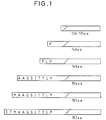
- Figure 1 summarizes the different forms of basic FGF isolated to date or deduced by the cDNA sequence.
- Fig. 2 shows the primary structure of the 155 amino acids form.
- the present invention relates to molecular variants of human basic FGF. These new molecular entities, never found in nature before, have been obtained by site-directed mutagenesis of the gene coding for the 155-amino acids form.
- angiogenesis is a tightly controlled process which can assume a pathological significance for it contributes to the development of solid tumors.
- variants of this molecule which can compete with endogenous FGF while being biologically inactive could be valuable tools in the anticancer therapy.
- analogues of bFGF with increased biological activity could span a number of potential applications such as healing burns, wounds (including corneal) and surgical incisions; treating skin ulcers, including bedsores; restarting blood flow after heart attacks by revascularizing the damaged tissue; and treating some musculoskeletal injures.
- the object of the present invention is therefore the design and production of recombinant analogues of basic FGF that have modified biological activity.
- This family of proteins includes acidic FGF as well as hst and int-2, two oncogene products recently discovered (Yoshida T., Miyagawa K., Odagiri H., Sakamoto H., Little P.F.R., Terada M. and Sugimura T.: Genomic sequence of hst, a transforming gene encoding a protein homologous to fibroblast growth factors and the int-2-encoded protein. Proc. Natl. Acad. Sci. USA. 84 p. 7305-7309, 1987; Delli Bovi P., Curatola A.M., Kern F.G., Greco A., Ittmann M. and Basilico C.: An oncogene isolated by transfection of kaposi's sarcoma DNA encodes a growth factor that is a member of the FGF family. Cell 50 p. 729-737, 1987).
- the authors of the present invention have constructed, by genetic engineering techniques, new derivatives of human and bovine basic FGF which, in one case, have lost amino acid sequences within different regions of the bFGF molecule and, in a second case, have amino acid substitutions in specific positions.
- the modifications were chosen according to homologies and differences among several known growth factors. The molecular characteristics of the mutants are described below.
- Analogues can be otained as recombinant proteins in a selected expression system
- bFGF gene it is meant a DNA sequence that can be obtained by cloning from a cDNA library or by assembling synthetic oligonucleotides (Maniatis T., Frisch E.F. and Sambrook J.: Molecular cloning. A laboratory manual. Cold Spring Harbour Laboratory. Cold Spring Harbour, NY, 1982).
- the invention concerns also a recombinant DNA method for the production of bFGF and its derivatives.
- 'analogues','mutants' or 'derivatives' molecules of bFGF with altered amino acid sequence. All the natural forms of bFGF isolated to date and described in the introduction, can be altered to obtain equivalent analogues. Preferred analogues are mutants of the 155 amino acids form. Both the human and the bovine sequence have been modified in the present invention.
- the new bFGF derivatives were constructed by oligonucleotide-directed mutagenesis.
- oligonucleotides were designed and synthesized to cause deletions of coding regions within the human and bovine bFGF genes.
- the mutagenesis technique used to obtain the mutants is described in detail in the "Methods" section.
- the mutated genes are then inserted in E. coli expression vectors which can direct the synthesis of the new bFGF derivatives.
- the recombinant molecules are then purified, characterized and ultimately produced in large amounts.
- Numbering of the amino acids corresponds to the 155 residues form, a methionine being residue number 1 and a serine being residue 155.
- all the described forms of bFGF can be changed to obtain the same deletions.
- both the bovine and the human form can be used for the construction of the mutants.
- Preferred bFGF derivatives are the following:
- Polypeptides with additional amino acid residues added to either the NH2 or the COOH terminus, or to both, are considered within the present invention. Such extentions may be necessary for technical reasons in the expression of the mutants by recombinant DNA techniques (Courtney M., Jallat S., Tessier L.H. Benavente A. and Crystal R.G.: Synthesis in E. coli of alfa1-antitrypsin variants of therapeutic potential for emphysema and thrombosis. Nature, 313 , p. 149-151, 1985; Nagai K. and Thogersen H.C.: Generation of ⁇ -globin by sequence specific proteolysis of a hybrid protein produced in E. coli . Nature, 309 , p. 810-812, 1984).
- the additional residues may serve to enhance the pharmacological efficacy of the mutants, for example by prolonging their circulating half life in plasma.
- This procedure is based on the fermentation of strains of E. coli modified by genetic engineering techniques so as to express, at high levels, the mutated genes.
- the overlapping oligonucleotides were joined to form a double stranded DNA chain, gaps being filled in with DNA polymerase and with T4 ligase.
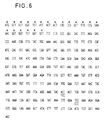
- nucleotide sequence was modified as illustrated in fig. 6.
- the wild type bFGF sequence was changed in order to achieve the desired deletions. This was achieved modifying the gene by site directed mutagenesis (Norris K., Norris F., Christiansen L. and Fiil N.: Efficient site-directed mutagenesis by simultaneous use of two primers, Nucleic Acid Research, 11 , 5103-5112, 1983).
- the principle of this method is to subclone the bFGF gene into a vector which can be obtained in a single strand form such as the phage vector M13.
- the recombinant single strand is annealed with a complementary synthetic oligodeoxyribonucleotide coding for the desired modifications.
- DNA polymerase and ligase are then used to extend the new strand and to ligate it into a circular form.
- the newly created heteroduplex DNA is used to transform a cell line into which it can replicate and yield a progeny where the phage bearing the wild type gene or the gene with the desired deletion will segregate in two different molecular species.
- the starting mutagenic oligonucleotides can then be used as probes to recognize the mutated genes.
- the site-directed mutagenesis technique is described in detail in the Methods' section.
- the synthetic sequence for wild type bFGF alternatively bovine or human, was inserted in an M13 vector and the resulting single strand used as mutagenesis template (Norris K.; Norris F.,Christiansen L. and Fiil N.: Efficient site-directed mutagenesis by simultaneous use of two primers, Nucleic Acid Research, 11 , 5103-5112, 1983).
- the promoter Ptrp was obtained from the commercially available plasmid pDR720 (Pharmacia).
- the Shine-Dalgarno CII sequence was obtained by chemical synthesis according to the published sequence (Hendrix R.W., Roberts J.W., Stahl F.W., and Weisberg R.A.: Lambda II Cold Spring Harbour Laboratory, Cold Spring Harbour, N.Y. 1983).
- a typical expression vector for the wild type bFGF and its derivatives is illustrated in fig. 7. More particularly, it was constructed by assembling the following fragments:
- the recombinant mutants can be purifed from bacterial lysates and tested for their biological characteristics in comparison with the wild type bFGF.
- a typical purification process is the following: cells are disrupted by sonication, centrifuged and the supernatant is applied on a ion-exchange S-Sepharose column.
- the protein is eluted with a sodium chloride gradient and directly loaded on a heparin-Sepharose affinity column.
- the protein is eluted with a sodium chloride gradient and desalted by gel filtration before lyophilization.
- Purified analogues can be subsequently tested for their biological activity.
- the new molecules of the present invention can act as antagonists and/or superagonists of the wild-type bFGF molecule.
- the bFGF agonistic activity was evaluated, for example, on the basis of the capability of increasing proliferation of endothelial cells according to a test procedure analogous to that described by Presta et al in Molecular and Cellular Biol. 6 , p. 4060, 1986.
- the bFGF antagonistic activity was evaluated, e.g., on the basis of the inhibition of the binding of 125I-bFGF according to a test procedure analogous to that described by Baird et al in Proc. Notl. Acad. Sci. USA, 85 , p. 2324, 1988.
- the compound of the invention identified by the abbreviation M6b was found to produce 50% increase of endothelial cell proliferation at the dose of 1 ng/ml, which is indicative of a particularly appreciable b-FGF agonistic activity.
- the compounds of the invention identified as M3-bFGF and M6a were found to produce about 20% and, respectively, about 70% inhibition of binding of 125I-bFGF(3 ng/ml) in the presence of 300 ng/ml of mutant, which is indicative of bFGF antagonistic activity.
- the compounds of the invention can act as promoters of vascularization, cell growth or cell survival, and, therefore, find application in, e.g., tissue repair, for instance healing of wounds, burns, bone fractures, surgical abrasions, ulcers, including tissue repair during ischaemia and miocardial infarction.
- tissue repair for instance healing of wounds, burns, bone fractures, surgical abrasions, ulcers, including tissue repair during ischaemia and miocardial infarction.
- the compounds of the invention may act as angiogenesis inhibitors and be, therefore, useful for, e.g., the treatment of diseases where neovascularization is a dominant patology, e.g. retinopathies of the eye; neovascular glaucoma; skin disorders such as, e.g., psoriasis; chronic inflammation; rheumatoid arthritis; as well as, as already mentioned before, in the treatment of certain neoplasms, particularly angiogenic neoplasms, as a valuable tool for inhibiting tumoral angiogenesis.
- diseases where neovascularization is a dominant patology e.g. retinopathies of the eye
- neovascular glaucoma e.g., skin disorders such as, e.g., psoriasis; chronic inflammation; rheumatoid arthritis
- skin disorders such as, e.g., psoriasis
- chronic inflammation e.
- the compounds of the invention may be administered to mammals, including humans, in combination with one or more pharmaceutically acceptable carriers and/or diluents to form a pharmaceutical composition.
- the required dosage of the active substance will vary depending on the age, weight and conditions of the patient to be treated as well as on the administration route and on the duration of the desired treatment.
- compositions which may be for, e.g., topical, eye, oral, intravenous, subcutaneous or intramuscular administration, can be prepared in a conventional way using the conventional excipients.
- compositions for topical application such as, e.g., creams, lotions or pastes, may be, e.g., prepared by admixing the active ingredient with a conventional oleaginous or emulsifying excipient.
- Lotions for topical administration may contain, e.g., from 10 mg/ml to 100 mg/ml of active substance and be applied up to 7 times a day to the affected area.
- Formulations in buffer or physiological saline or other appropriate excipient may be suitable as eyedrop formulation.
- Formulations for oral administration such as, e.g., tablets or capsules, may contain, together with the active compound, diluents, e.g. lactose, dextrose, saccharose, cellulose, corn starch or potato starch; lubricants, e.g. silica, talc, stearic acid, magnesium or calcium stearate, and/or polyethylene glycols; binding agents, e.g. starches, arabic gums, gelatin, methylcellulose, carboxymethylcellulose or polyvinil pyrrolidone; disaggregating agents, e.g.
- diluents e.g. lactose, dextrose, saccharose, cellulose, corn starch or potato starch
- lubricants e.g. silica, talc, stearic acid, magnesium or calcium stearate, and/or polyethylene glycols
- binding agents e.g. starches, arabic gums, gelatin, methyl
- a starch alginic acid, alginates or sodium starch glycolate; effervescing mixtures; dyestuff; sweeteners; wetting agents, such as lecithin, polysorbates, laurysulphates; and, in general, non-toxic and pharmacologically inactive substances used in pharmaceutical formulations.
- Said pharmaceutical preparations may be manufactured in known manner, for example, by means of mixing, granulating, tabletting, sugar-coating, or film-coating processes.
- the suspensions or solutions for intramuscular injections may contain, together with the active compound, a pharmaceutically acceptable carrier, e.g. sterile water, olive oil, ethyl oleate, glycols, e.g. propylene glycol, and, if desired, a suitable account of lidocaine hydrochloride.
- a pharmaceutically acceptable carrier e.g. sterile water, olive oil, ethyl oleate, glycols, e.g. propylene glycol, and, if desired, a suitable account of lidocaine hydrochloride.
- the solutions for intravenous injections or infusione may contain as carrier, for example, sterile water or, preferably, they may be in the form of sterile, aqueous, isotonic saline solutions.
- the compounds of the invention may be administered either as such as in the form of pharmaceutically acceptable salts or complexes.
- salts are acid addition salts with both inorganic acids, such as, for instance hydrochloric, hydrobromic, sulphuric and phosphoric acid, and organic acid such as, for instance, maleic, citric, acetic, benzoic, succinic, ascorbic and tartaric acid.
- inorganic acids such as, for instance hydrochloric, hydrobromic, sulphuric and phosphoric acid
- organic acid such as, for instance, maleic, citric, acetic, benzoic, succinic, ascorbic and tartaric acid.
- complexes are, e.g. zinc or iron complexes.
- Synthetic DNA fragments were obtained by synthesizing oligonucleotides with overlapping sequences on an automatic DNA synthesizer Applied Biosystem 380B model.
- Nucleotide sequences were determined by the dideoxy method following subcloning of fragments into M13 vectors (Messing J.: Methods Enzymol, 101 p. 20-78, 1983).
- E. coli cells were transformed according to standard procedures (Maniatis T., Frisch E.F. and Sambrook J.: Molecular cloning. A laboratory manual. Cold Spring Harbour Laboratory, Cold Spring Harbour, NY 1982).
- the oligonucletoides used to cause the desired mutations were radiolabeled using 150 ⁇ Ci ( ⁇ -32 P) ATP (New England Nuclear, 6000 Ci/mmol), in 70 mM Tris-HCl buffer pH 8. containing 10 mM MgCl2, 5mM DTT and 10 units of T4 Polynucleotide Kinase (Boehringer Mannheim) in a 50 ⁇ l reaction mixture which was incubated for 30 min at 37°C. The labeled oligonucleotides were then used for plaque hybridization to the mutagenized phage DNAs.
- Hybridization proceeded overnight at 65°C in 10 mM Tris-HCl pH 8 containing 3x SSC, 0.1% SDS, 10x Denhardt's and 0.2 mg/ml denatured salmon sperm DNA.
- Nitrocellulose Filters were washed for 30 min in 0.4x SSC, 0.1% SDS at 65°C with several changes and exposed overnight to X-ray films. Plaques indicating positive hybridization were selected for Sanger dideoxynucleotide sequencing using the Amersham M13 Sequencing Kit.
- Luria broth with tetraciclin (3 ⁇ g/ml) was used to grow plasmid bearing cells.
- M9 medium supplemented with 0.4% glucose, 0.4% casamino acids and 10 mg/ml thiamine was used for induction of gene expression under triptophan promoter.
- cells were disrupted with lysozyme or by sonication and the soluble and insoluble fractions, separated by centrifugation, were analyzed separately.
- Fig. 1 Schematic representation of the different natural forms of basic FGF isolated to date. The 155-amino acid form has been deduced from the cDNA nucleotide sequence.
- Fig. 2 The amino acid sequence of human and bovine FGF is illustrated. The two sequences differ in positions 121 and 137. THe amino acids corresponding to the bovine form are shown in bold character.
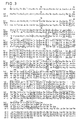
- Fig. 3 This figure has already been published (Yoshida T., Miyagawa K., Odagiri H., Sakamoto H., Little P.F.R., Terada M. and Sugimura T.: Genomic sequence of hst, a transforming gene encoding a protein homologous to fibroblast growth factors and the int-2-encoded protein. Proc. Natl. Acad. Sci.USA 84 p.7305-7309, 1987).
- hst protein Entire amino acid sequences of the hst protein, human basic FGF (hbFGF), human acidic FGF (hAFGF) and the mouse int-2 protein are aligned and compared. Dashes indicate gaps inserted for optimal alignment. Residues identical to the hst sequence are boxed. Numbers above the sequence lines refer to the hst residues.
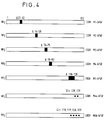
- Fig. 4 Schematic representation of basic FGF derivatives. Numbers refer to the 155-amino acid form.
- Filled regions represent the deleted amino acid sequences. Black points represent single amino acid substitutions.
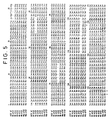
- Fig. 5 The entire amino acid sequences of human bFGF and of its mutants are aligned. Dashes indicate deleted amino acids. Asteriscs represent single amino acid substitutions.
- Fig. 6 Nucleotide sequence of human and bovine bFGF.
- pDS20 represents the general plasmid background which has been utilized for the construction of the bFGF expression plasmids.
- Replacement of the galK gene with the bFGF gene and insertion of the expression signals Ptrp and the Shine-Dalgarno sequence "cII" from phage lambda bring to the construction of pFC80.
- the present invention concerns the isolation of new molecular derivatives of basic FGF.
- the basic FGF molecule of reference can be of either human or bovine origin.
- the authors of the present invention have carried out mutations in regions of the bFGF molecule, well distinct from this heterogeneous NH2-terminal domain.
- the new molecules of the invention can act as antagonists and/or superagonists of the wild-type bFGF molecule.
- antagonists of bFGF could be, in particular, valuable tools for the inhibition of tumoral angiogenesis.
- Superagonists of bFGF could display improved pharmacological properties compared to the native sequence.
- the evaluation of the biological activity of the compounds of the present invention has allowed to individuate some regions of the bFGF molecule which appear to be particularly important for the biological and biochemical properties of bFGF.
- the present invention includes these further mutations within its scope.
- the present invention also concerns a recombinant DNA procedure for the production of these new molecular entities. Interestingly, this procedure can be successfully applied to the production of the wild-type bFGF, as well. Again, all these considerations are valid for the human and bovine basic FGF sequences.
- the recombinant DNA procedure is based on strains of the bacterium E. coli transformed with plasmid DNA carrying the gene coding for the desired FGF molecule.
- E. coli strain used as host for the production of basic FGF. It is known, in fact, that the type of strain is one of the major parameters influencing the heterologous gene expression in E. coli (Harris T.J.R. and Emtage J.S.: Expression of heterologous genes in E. coli Microbiological Sciences 3 , p. 28-31, 1986).
- E. coli strains of type B are very efficient hosts for the production of a recombinant bFGF, as well as for bFGF derivatives. Indeed, the same bFGF expression vectors, when inserted in other E. coli strain (type K-12, type C, etc) do not yield as much bFGF.
- a second characteristic of the present procedure is the introduction of some "optimized codons" within the genes coding for the different bFGF molecules.
- the authors have, in fact, found that it was necessary to modify a certain number of DNA codons, keeping the same amino acid sequence, in order to increase levels of expression.
- the preferred DNA coding sequence is disclosed within the text of the present invention (see fig. 6).
Landscapes
- Health & Medical Sciences (AREA)
- Life Sciences & Earth Sciences (AREA)
- Chemical & Material Sciences (AREA)
- Engineering & Computer Science (AREA)
- Organic Chemistry (AREA)
- Genetics & Genomics (AREA)
- Bioinformatics & Cheminformatics (AREA)
- General Health & Medical Sciences (AREA)
- Zoology (AREA)
- Biomedical Technology (AREA)
- Wood Science & Technology (AREA)
- General Engineering & Computer Science (AREA)
- Medicinal Chemistry (AREA)
- Biotechnology (AREA)
- Molecular Biology (AREA)
- Pharmacology & Pharmacy (AREA)
- Nuclear Medicine, Radiotherapy & Molecular Imaging (AREA)
- Chemical Kinetics & Catalysis (AREA)
- General Chemical & Material Sciences (AREA)
- Biochemistry (AREA)
- Biophysics (AREA)
- Veterinary Medicine (AREA)
- Public Health (AREA)
- Animal Behavior & Ethology (AREA)
- Plant Pathology (AREA)
- Physics & Mathematics (AREA)
- Microbiology (AREA)
- Dermatology (AREA)
- Gastroenterology & Hepatology (AREA)
- Toxicology (AREA)
- Proteomics, Peptides & Aminoacids (AREA)
- Peptides Or Proteins (AREA)
- Preparation Of Compounds By Using Micro-Organisms (AREA)
- Medicines That Contain Protein Lipid Enzymes And Other Medicines (AREA)
- Medicines Containing Material From Animals Or Micro-Organisms (AREA)
- Micro-Organisms Or Cultivation Processes Thereof (AREA)
- Eye Examination Apparatus (AREA)
Claims (22)
- Dérivé du facteur de croissance de fibroblastes, basique humain ou bovin, caractérisé par la délétion des résidus d'amino-acides 27 à 32 (Lys-Asp-Pro-Lys-Arg- Leu), la numérotation des résidus d'amino-acides précités correspondant à la forme à 155 amino-acides du FGF basique humain ou bovin.
- Dérivé du facteur de croissance de fibroblastes, basique humain ou bovin, caractérisé par la délétion des résidus d'amino-acides 54 à 58 (Glu-Lys-Ser-Asp-Pro), la numérotation des résidus d'amino-acides précités correspondant à la forme à 155 amino-acides du FGF basique humain ou bovin.
- Dérivé du facteur de croissance de fibroblastes, basique humain ou bovin, caractérisé par la délétion des résidus d'amino-acides 70 à 75 (Gly-Val-Val -Ser-Ile-Lys), la numérotation des résidus d'amino-acides précités correspondant à la forme à 155 amino-acides du FGF basique humain ou bovin.
- Dérivé du facteur de croissance de fibroblastes, basique humain ou bovin, caractérisé par la délétion des résidus d'amino-acides 78 à 83 (Cys-Ala-Asn-Arg-Tyr-Leu), la numérotation des résidus d'amino-acides précités correspondant à la forme à 155 amino-acides du FGF basique humain ou bovin.
- Dérivé du facteur de croissance de fibroblastes, basique humain ou bovin, caractérisé par la délétion des résidus d'amino-acides 110 à 120 (Asn-Asn-Tyr-Asn-Thr-Tyr-Arg-Ser-Arg-Lys-Tyr), la numérotation des résidus d'amino-acides précités correspondant à la forme à 155 amino-acides du FGF basique humain ou bovin.
- Dérivé du facteur de croissance de fibroblastes, basique humain ou bovin, caractérisé par le remplacement des résidus d'amino-acides 128 (Lys) et 129 (Arg) par des résidus de glutamine (Gln), la numérotation des résidus d'amino-acides précités correspondant à la forme à 155 amino-acides du FGF basique humain ou bovin.
- Dérivé du facteur de croissance de fibroblastes, basique humain ou bovin, caractérisé par le remplacement de tous les résidus d'amino-acides 118 (Arg), 119 (Lys), 128 (Lys) et 129 (Arg) par des résidus de glutamine (Gln), la numérotation des résidus d'amino-acides précités correspondant à la forme à 155 amino-acides du FGF basique humain ou bovin.
- Dérivé du facteur de croissance de fibroblastes, basique humain ou bovin, constitué de n'importe quelle autre forme naturelle de bFGF humain ou bovin avec les mutations selon l'une quelconque des revendications précédentes.
- Dérivé de bFGF selon l'une quelconque des revendications précédentes, constitué par ailleurs de résidus d'amino-acides additionnels au niveau de la terminaison NH₂ et/ou COOH.
- Dérivé de bFGF selon l'une quelconque des revendications précédentes avec ou sans chaînes latérales glycosidiques.
- Dérivé de bFGF selon l'une quelconque des revendications précédentes susceptible pour utilisation comme superagoniste du bFGF.
- Dérivé de bFGF selon l'une quelconque des revendications précédentes pour utilisation comme antagoniste du bFGF.
- Dérivé de bFGF selon la revendication 12 pour inhiber une angiogenèse tumorale.
- Procédé d'ADN recombinant pour la préparation d'un dérivé du facteur de croissance basique de fibroblastes selon l'une quelconque des revendications 1 à 10.
- Plasmide d'expression pFC80 selon la figure 7 pour l'expression de l'ADN génomique, du cADN, des gènes synthétiques ou modifiés codant pour une séquence d'amino-acides de bFGF humain ou bovin naturelle ou modifiée.
- Plasmide d'expression selon la revendication 15 comprenant au moins un gène conférant une résistance à un antibiotique ou à n'importe quel autre marqueur sélectionnable.
- Plasmide d'expression selon la revendication 15 ou 16 pour l'expression d'un gène codant pour un dérivé selon l'une quelconque des revendications 1 à 10.
- Emploi de souches-hôtes de E. coli du type B pour la production d'un dérivé recombinant selon l'une quelconque des revendications 1 à 10.
- Emploi d'un plasmide selon la revendication 15 ou 16 et de souches hôtes de E. coli du type B pour la production d'un dérivé selon l'une quelconque des revendications 1 à 10.
- Séquence codante d'ADN telle que montrée dans la figure 6.
- Emploi combiné de souches hôtes de E. coli du type B et d'une séquence d'ADN telle que montrée dans la figure 6 pour la production d'un bFGF humain ou bovin recombinant.
- Emploi combiné de souches hôtes de E. coli du type B et d'une séquence d'ADN telle que montrée dans la figure 6 pour la production d'un dérivé recombinant selon l'une quelconque des revendications 1 à 10.
Priority Applications (1)
| Application Number | Priority Date | Filing Date | Title |
|---|---|---|---|
| AT89117112T ATE98693T1 (de) | 1988-09-16 | 1989-09-15 | Derivate des basischen mensch-/rinderfibroblastwachstumsfaktors. |
Applications Claiming Priority (2)
| Application Number | Priority Date | Filing Date | Title |
|---|---|---|---|
| GB8821795 | 1988-09-16 | ||
| GB888821795A GB8821795D0 (en) | 1988-09-16 | 1988-09-16 | New derivatives of human/bovine basic fibroplast growth factor |
Publications (2)
| Publication Number | Publication Date |
|---|---|
| EP0363675A1 EP0363675A1 (fr) | 1990-04-18 |
| EP0363675B1 true EP0363675B1 (fr) | 1993-12-15 |
Family
ID=10643728
Family Applications (2)
| Application Number | Title | Priority Date | Filing Date |
|---|---|---|---|
| EP89117112A Expired - Lifetime EP0363675B1 (fr) | 1988-09-16 | 1989-09-15 | Dérivés du facteur basique de croissance humain/bovin pour des fibroblastes |
| EP89910440A Pending EP0396664A1 (fr) | 1988-09-16 | 1989-09-15 | Nouveaux derives du facteur de croissance de fibroblaste humain/bovin |
Family Applications After (1)
| Application Number | Title | Priority Date | Filing Date |
|---|---|---|---|
| EP89910440A Pending EP0396664A1 (fr) | 1988-09-16 | 1989-09-15 | Nouveaux derives du facteur de croissance de fibroblaste humain/bovin |
Country Status (21)
| Country | Link |
|---|---|
| EP (2) | EP0363675B1 (fr) |
| JP (1) | JP2888575B2 (fr) |
| KR (1) | KR900702027A (fr) |
| CN (1) | CN1041181A (fr) |
| AT (1) | ATE98693T1 (fr) |
| AU (1) | AU620925B2 (fr) |
| CA (1) | CA1340834C (fr) |
| DE (1) | DE68911461T2 (fr) |
| DK (1) | DK120290A (fr) |
| ES (1) | ES2061855T3 (fr) |
| FI (1) | FI902391A7 (fr) |
| GB (1) | GB8821795D0 (fr) |
| HU (1) | HUT53937A (fr) |
| IL (1) | IL91615A0 (fr) |
| MY (1) | MY104910A (fr) |
| NO (1) | NO902176L (fr) |
| NZ (1) | NZ230621A (fr) |
| PT (1) | PT91719B (fr) |
| WO (1) | WO1990002800A1 (fr) |
| YU (1) | YU179489A (fr) |
| ZA (1) | ZA897020B (fr) |
Families Citing this family (16)
| Publication number | Priority date | Publication date | Assignee | Title |
|---|---|---|---|---|
| US5143829A (en) * | 1990-03-29 | 1992-09-01 | California Biotechnology Inc. | High level expression of basic fibroblast growth factor having a homogeneous n-terminus |
| US5478804A (en) * | 1990-09-19 | 1995-12-26 | The Salk Institute For Biological Studies | Treatment of tumorigenic pathophysiological conditions with FGF-cytoxic conjugates |
| JP3135138B2 (ja) * | 1990-12-19 | 2001-02-13 | 科研製薬株式会社 | 骨疾患治療剤 |
| US6833354B1 (en) | 1990-12-19 | 2004-12-21 | Kaken Pharmaceutical Co., Ltd. | Agent for the treatment of bone diseases |
| EP0505108B1 (fr) * | 1991-03-21 | 1995-10-18 | The Procter & Gamble Company | Compositions régulatrices des rides de la peau contenant des peptides comportant la séquence arg-ser-arg-lys |
| JP3303211B2 (ja) * | 1991-04-26 | 2002-07-15 | 武田薬品工業株式会社 | bFGFムテインおよびその製造法 |
| TW275068B (fr) * | 1993-09-24 | 1996-05-01 | American Cyanamid Co | |
| AUPO247496A0 (en) | 1996-09-23 | 1996-10-17 | Resmed Limited | Assisted ventilation to match patient respiratory need |
| US6214795B1 (en) * | 1996-11-12 | 2001-04-10 | Praecis Pharmaceuticals, Inc. | Peptide compounds useful for modulating FGF receptor activity |
| US6274712B1 (en) | 1997-12-23 | 2001-08-14 | 3-Dimensional Pharmaceuticals, Inc. | Analogs of human basic fibroblast growth factor mutated at one or more of the positions glutamute 89, aspartate 101 or leucine 137 |
| FR2780416B1 (fr) * | 1998-06-10 | 2002-12-20 | Rhone Poulenc Nutrition Animal | Procede industriel de production de proteines heterologues chez e. coli et souches utiles pour le procede |
| AU6634400A (en) | 1999-08-13 | 2001-03-13 | Chiron Corporation | Dose of an angiogenic factor and method of administering to improve myocardial blood flow |
| EP1248844B8 (fr) * | 1999-12-22 | 2006-10-25 | Ortho-McNeil Pharmaceutical, Inc. | Analogues du facteur de croissance fibroblastique basique humain |
| CN100357443C (zh) | 2000-11-27 | 2007-12-26 | 株式会社载体研究所 | 编码血管生成基因的副粘病毒载体及其应用 |
| WO2013090919A1 (fr) * | 2011-12-16 | 2013-06-20 | Wisconsin Alumni Research Foundation | Fgf-2 ayant une stabilité accrue |
| CN106957359B (zh) * | 2016-08-31 | 2020-04-24 | 黄志锋 | Fgf1突变体及其医药应用 |
Family Cites Families (5)
| Publication number | Priority date | Publication date | Assignee | Title |
|---|---|---|---|---|
| DK122687A (da) * | 1986-03-14 | 1987-09-15 | Takeda Chemical Industries Ltd | Polypeptid, dna og anvendelse deraf |
| JPH01501840A (ja) * | 1987-01-16 | 1989-06-29 | アムジエン・インコーポレーテツド | 繊維芽細胞成長因子の産生 |
| JP2526965B2 (ja) * | 1987-02-24 | 1996-08-21 | 武田薬品工業株式会社 | ムテイン,dnaおよびその用途 |
| AU629176B2 (en) * | 1987-07-07 | 1992-10-01 | Scios Nova Inc. | Recombinant fibroblast growth factors |
| EP0326907A1 (fr) * | 1988-01-26 | 1989-08-09 | Takeda Chemical Industries, Ltd. | Polypeptide, DNA et leur utilisation |
-
1988
- 1988-09-16 GB GB888821795A patent/GB8821795D0/en active Pending
-
1989
- 1989-09-12 NZ NZ230621A patent/NZ230621A/en unknown
- 1989-09-12 IL IL91615A patent/IL91615A0/xx unknown
- 1989-09-14 MY MYPI89001258A patent/MY104910A/en unknown
- 1989-09-14 CA CA000611335A patent/CA1340834C/fr not_active Expired - Fee Related
- 1989-09-14 ZA ZA897020A patent/ZA897020B/xx unknown
- 1989-09-14 PT PT91719A patent/PT91719B/pt not_active IP Right Cessation
- 1989-09-14 CN CN89107069A patent/CN1041181A/zh active Pending
- 1989-09-15 FI FI902391A patent/FI902391A7/fi not_active IP Right Cessation
- 1989-09-15 YU YU01794/89A patent/YU179489A/xx unknown
- 1989-09-15 ES ES89117112T patent/ES2061855T3/es not_active Expired - Lifetime
- 1989-09-15 AT AT89117112T patent/ATE98693T1/de not_active IP Right Cessation
- 1989-09-15 DE DE68911461T patent/DE68911461T2/de not_active Expired - Fee Related
- 1989-09-15 EP EP89117112A patent/EP0363675B1/fr not_active Expired - Lifetime
- 1989-09-15 JP JP1509755A patent/JP2888575B2/ja not_active Expired - Lifetime
- 1989-09-15 EP EP89910440A patent/EP0396664A1/fr active Pending
- 1989-09-15 AU AU43171/89A patent/AU620925B2/en not_active Ceased
- 1989-09-15 WO PCT/EP1989/001075 patent/WO1990002800A1/fr not_active Ceased
- 1989-09-16 HU HU895573A patent/HUT53937A/hu unknown
-
1990
- 1990-05-15 DK DK120290A patent/DK120290A/da not_active Application Discontinuation
- 1990-05-15 NO NO90902176A patent/NO902176L/no unknown
- 1990-05-16 KR KR1019900701019A patent/KR900702027A/ko not_active Withdrawn
Also Published As
| Publication number | Publication date |
|---|---|
| EP0396664A1 (fr) | 1990-11-14 |
| ZA897020B (en) | 1990-08-29 |
| JP2888575B2 (ja) | 1999-05-10 |
| KR900702027A (ko) | 1990-12-05 |
| CN1041181A (zh) | 1990-04-11 |
| AU620925B2 (en) | 1992-02-27 |
| EP0363675A1 (fr) | 1990-04-18 |
| ES2061855T3 (es) | 1994-12-16 |
| DE68911461T2 (de) | 1994-05-19 |
| JPH03501855A (ja) | 1991-04-25 |
| AU4317189A (en) | 1990-04-02 |
| NZ230621A (en) | 1992-06-25 |
| HUT53937A (en) | 1990-12-28 |
| NO902176L (no) | 1990-07-13 |
| YU179489A (en) | 1991-10-31 |
| DE68911461D1 (de) | 1994-01-27 |
| FI902391A0 (fi) | 1990-05-14 |
| PT91719B (pt) | 1995-05-31 |
| GB8821795D0 (en) | 1988-10-19 |
| ATE98693T1 (de) | 1994-01-15 |
| IL91615A0 (en) | 1990-04-29 |
| NO902176D0 (no) | 1990-05-15 |
| DK120290D0 (da) | 1990-05-15 |
| CA1340834C (fr) | 1999-11-30 |
| WO1990002800A1 (fr) | 1990-03-22 |
| PT91719A (pt) | 1990-03-30 |
| HU895573D0 (en) | 1990-11-28 |
| FI902391A7 (fi) | 1990-05-14 |
| DK120290A (da) | 1990-07-16 |
| MY104910A (en) | 1994-06-30 |
Similar Documents
| Publication | Publication Date | Title |
|---|---|---|
| CA1340834C (fr) | Derives du facteur de croissance du fibroblaste de base chez l'homme et le bovin | |
| Fox et al. | Production, biological activity, and structure of recombinant basic fibroblast growth factor and an analog with cysteine replaced by serine. | |
| US6737404B2 (en) | Methods of using analogs of human basic fibroblast growth factor mutated at one or more of the positions glutamate 89, aspartate 101 or leucine 137 | |
| US5352589A (en) | Deletion mutant of basic fibroblast growth factor and production thereof | |
| US5491220A (en) | Surface loop structural analogues of fibroblast growth factors | |
| JP2953574B2 (ja) | 組換え繊維芽細胞成長因子 | |
| WO1989004832A1 (fr) | Analogues du facteur de croissance de fibroblastes | |
| US5223483A (en) | Cysteine-modified acidic fibroblast growth factor | |
| AU680533B2 (en) | Heparin binding site structural analogues of fibroblast growth factors | |
| JPH04287688A (ja) | 繊維芽細胞増殖因子の活性フラグメント | |
| JP4280786B2 (ja) | 同一のn末端を有する塩基性繊維芽細胞増殖因子の高レベル発現 | |
| NZ245047A (en) | Hybrid transforming growth factor and recombinant dna encoding such a hybrid | |
| EP1248844B1 (fr) | Analogues du facteur de croissance fibroblastique basique humain | |
| EP0319052B1 (fr) | Mutéine de facteur de croissance de fibroblaste | |
| CZ98097A3 (en) | Acid fibroblast growth factor analogs exhibiting increased stability and biological activity | |
| US5312911A (en) | Cysteine-modified acidic fibroblast growth factor | |
| US6103880A (en) | HARP family growth factors |
Legal Events
| Date | Code | Title | Description |
|---|---|---|---|
| PUAI | Public reference made under article 153(3) epc to a published international application that has entered the european phase |
Free format text: ORIGINAL CODE: 0009012 |
|
| AK | Designated contracting states |
Kind code of ref document: A1 Designated state(s): ES GR |
|
| 17P | Request for examination filed |
Effective date: 19900323 |
|
| 17Q | First examination report despatched |
Effective date: 19921014 |
|
| XX | Miscellaneous (additional remarks) |
Free format text: VERBUNDEN MIT 89910440.0/0396664 (EUROPAEISCHE ANMELDENUMMER/VEROEFFENTLICHUNGSNUMMER) DURCH ENTSCHEIDUNG VOM 01.04.93. |
|
| GRAA | (expected) grant |
Free format text: ORIGINAL CODE: 0009210 |
|
| AK | Designated contracting states |
Kind code of ref document: B1 Designated state(s): AT BE CH DE ES FR GB GR IT LI NL SE |
|
| PG25 | Lapsed in a contracting state [announced via postgrant information from national office to epo] |
Ref country code: NL Effective date: 19931215 Ref country code: LI Effective date: 19931215 Ref country code: GR Free format text: LAPSE BECAUSE OF FAILURE TO SUBMIT A TRANSLATION OF THE DESCRIPTION OR TO PAY THE FEE WITHIN THE PRESCRIBED TIME-LIMIT Effective date: 19931215 Ref country code: CH Effective date: 19931215 Ref country code: BE Effective date: 19931215 Ref country code: AT Effective date: 19931215 |
|
| REF | Corresponds to: |
Ref document number: 98693 Country of ref document: AT Date of ref document: 19940115 Kind code of ref document: T |
|
| XX | Miscellaneous (additional remarks) |
Free format text: VERBUNDEN MIT 89910440.0/0396664 (EUROPAEISCHE ANMELDENUMMER/VEROEFFENTLICHUNGSNUMMER) DURCH ENTSCHEIDUNG VOM 01.04.93. |
|
| REF | Corresponds to: |
Ref document number: 68911461 Country of ref document: DE Date of ref document: 19940127 |
|
| ITF | It: translation for a ep patent filed | ||
| ET | Fr: translation filed | ||
| REG | Reference to a national code |
Ref country code: CH Ref legal event code: PL |
|
| NLV1 | Nl: lapsed or annulled due to failure to fulfill the requirements of art. 29p and 29m of the patents act | ||
| PLBE | No opposition filed within time limit |
Free format text: ORIGINAL CODE: 0009261 |
|
| STAA | Information on the status of an ep patent application or granted ep patent |
Free format text: STATUS: NO OPPOSITION FILED WITHIN TIME LIMIT |
|
| 26N | No opposition filed | ||
| REG | Reference to a national code |
Ref country code: ES Ref legal event code: FG2A Ref document number: 2061855 Country of ref document: ES Kind code of ref document: T3 |
|
| EAL | Se: european patent in force in sweden |
Ref document number: 89117112.6 |
|
| PGFP | Annual fee paid to national office [announced via postgrant information from national office to epo] |
Ref country code: GB Payment date: 19990304 Year of fee payment: 10 |
|
| PGFP | Annual fee paid to national office [announced via postgrant information from national office to epo] |
Ref country code: SE Payment date: 19990316 Year of fee payment: 10 |
|
| PGFP | Annual fee paid to national office [announced via postgrant information from national office to epo] |
Ref country code: FR Payment date: 19990325 Year of fee payment: 10 Ref country code: ES Payment date: 19990325 Year of fee payment: 10 |
|
| PGFP | Annual fee paid to national office [announced via postgrant information from national office to epo] |
Ref country code: DE Payment date: 19990331 Year of fee payment: 10 |
|
| PG25 | Lapsed in a contracting state [announced via postgrant information from national office to epo] |
Ref country code: GB Free format text: LAPSE BECAUSE OF NON-PAYMENT OF DUE FEES Effective date: 19990915 |
|
| PG25 | Lapsed in a contracting state [announced via postgrant information from national office to epo] |
Ref country code: ES Free format text: LAPSE BECAUSE OF NON-PAYMENT OF DUE FEES Effective date: 19990916 |
|
| PG25 | Lapsed in a contracting state [announced via postgrant information from national office to epo] |
Ref country code: SE Free format text: THE PATENT HAS BEEN ANNULLED BY A DECISION OF A NATIONAL AUTHORITY Effective date: 19990929 |
|
| GBPC | Gb: european patent ceased through non-payment of renewal fee |
Effective date: 19990915 |
|
| EUG | Se: european patent has lapsed |
Ref document number: 89117112.6 |
|
| PG25 | Lapsed in a contracting state [announced via postgrant information from national office to epo] |
Ref country code: FR Free format text: LAPSE BECAUSE OF NON-PAYMENT OF DUE FEES Effective date: 20000531 |
|
| PG25 | Lapsed in a contracting state [announced via postgrant information from national office to epo] |
Ref country code: DE Free format text: LAPSE BECAUSE OF NON-PAYMENT OF DUE FEES Effective date: 20000701 |
|
| REG | Reference to a national code |
Ref country code: FR Ref legal event code: ST |
|
| REG | Reference to a national code |
Ref country code: ES Ref legal event code: FD2A Effective date: 20001013 |
|
| PG25 | Lapsed in a contracting state [announced via postgrant information from national office to epo] |
Ref country code: IT Free format text: LAPSE BECAUSE OF NON-PAYMENT OF DUE FEES Effective date: 20050915 |